

Table of Contents
As someone who has spent a lifetime navigating the hidden alleys and historical veins of this city, I’ve realized that the true soul of Vietnam doesn’t always reside where the tour buses park in rows of ten.
Sometimes, the soul of a nation hides in the quiet dust of an ancient fortress 15 kilometers north of the city center. I’m talking about Co Loa Citadel.
If you’re planning a Hanoi city tour and you’ve only budgeted for the Old Quarter, Hoan Kiem Lake, and maybe a temple or two, read this first. Because Co Loa Citadel isn’t a side trip. It’s the beginning of the whole story.
What Is Co Loa Citadel, and Why Does It Even Matter?
The Ancient Capital That History Almost Forgot

Co Loa Citadel – its name literally means “snail citadel” in Vietnamese, because of its spiral-shaped layout – is one of the oldest citadels in Southeast Asia. Built around the 3rd century BCE by King An Dương Vương of the Âu Lạc kingdom, it predates Hanoi as we know it by over a thousand years.
Let that sink in. When this fortress was already standing, Hanoi didn’t yet exist.
The site sits in Đông Anh District, about 16 kilometers north of Hanoi’s city center. It’s close enough to fold into a half-day Hanoi city tour, but far enough that most tourists never make it out there. Which is, honestly, a tragedy.
Co Loa Citadel was built with three concentric earthen ramparts, arranged in a spiral pattern – hence the name. The outer wall once stretched for nearly 1,600 meters. The inner sections held the royal palace. Today, much of the structure has been reclaimed by fields and time, but the bones are still there if you know how to look.
Before your visit, it helps to know what you’re actually looking at. I’d suggest reading Co Loa Citadel – What to Know About Vietnam’s Oldest Fortress first. It’ll change the way you see the place entirely.
The Legend That Built the Place
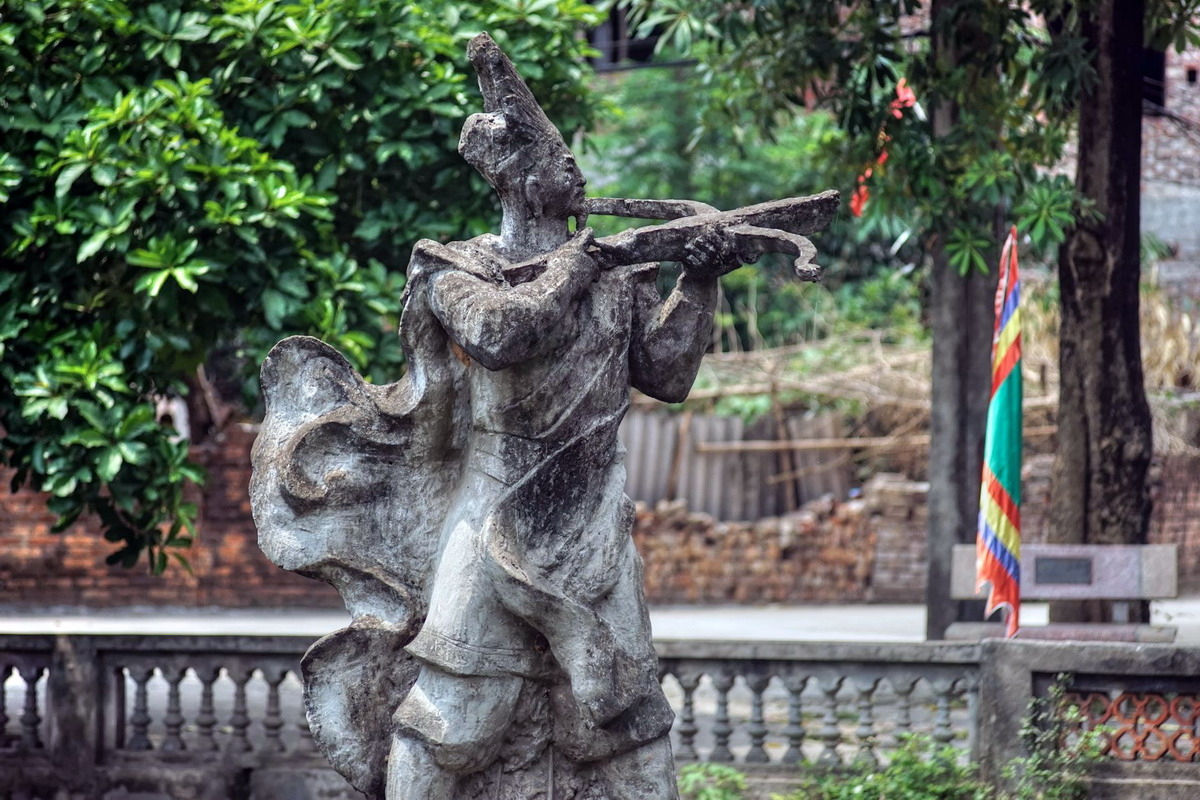
You can’t understand Co Loa Citadel without understanding the legend of the golden turtle.
King An Dương Vương, so the story goes, was trying to build his citadel but kept failing – the walls kept collapsing overnight. A magical golden turtle, Kim Quy, appeared in the moat and helped him complete the fortress. The turtle also gave the king one of its claws to craft a magic crossbow, a weapon of incredible power.
Years later, the kingdom fell – not through military defeat, but through love and betrayal. The king’s daughter, Mỵ Châu, gave the crossbow’s secret to her husband, Trọng Thủy, a spy sent by the enemy kingdom of Triệu. When the invasion came, the king fled south, and when he realized his daughter’s role, he killed her at the shore. The golden turtle then appeared and called Mỵ Châu a traitor.
This isn’t just folklore. It’s a story about trust, loyalty, national security, and the cost of naivety – themes that still feel uncomfortably relevant. Standing inside Co Loa Citadel, knowing this story, the place stops being a ruin and becomes a lesson.
What You’ll Actually See at Co Loa Citadel
The Earthen Ramparts
The most immediately visible feature of Co Loa Citadel is the earthen walls themselves. The outer rampart is the most intact, rising several meters above the surrounding flatland in places, covered in green grass and shade trees.
Walking along the top of the rampart is one of those quiet, strange experiences. You’re literally standing on something that people built by hand over 2,300 years ago, and there’s almost nobody around. No crowds. No queues. No audio tour narrating every ten seconds.
Just you, the birds, and a few thousand years of history.
Am Công Temple and the Inner Citadel
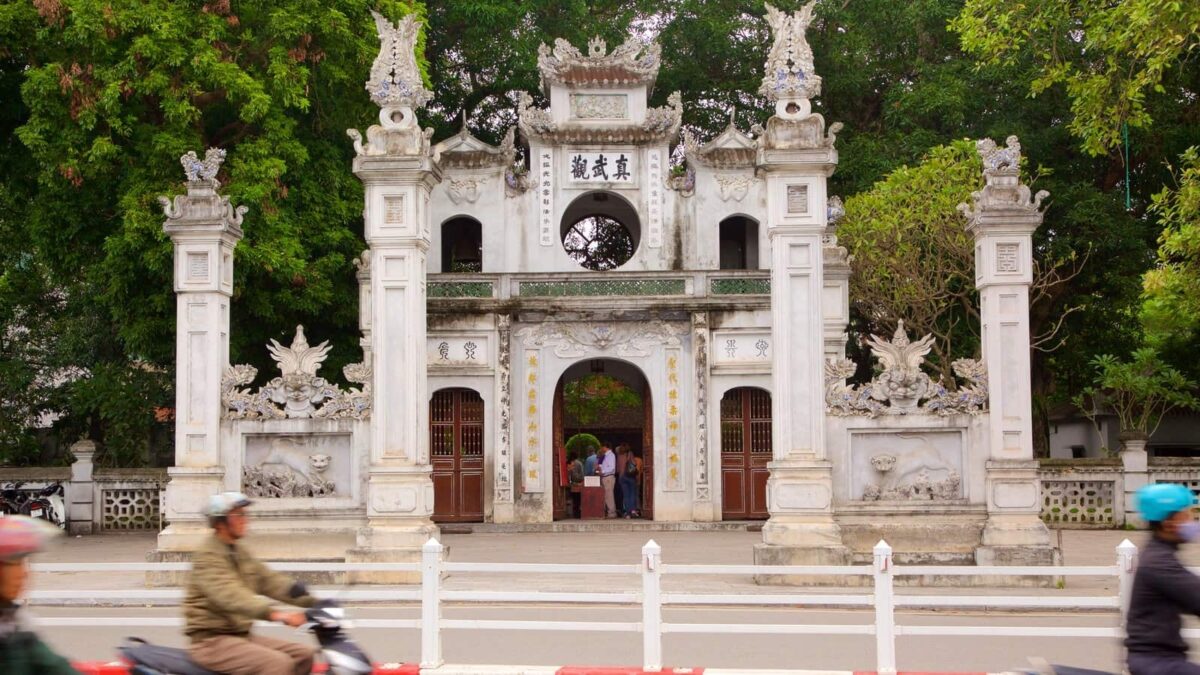
Inside the walls of Co Loa Citadel, you’ll find Am Công Temple – a beautifully maintained worship site dedicated to King An Dương Vương. The main hall is elegant without being flashy, surrounded by old trees and a still pond that reflects the sky on clear days.
Locals still come here to pray, especially during the annual Co Loa Festival in the lunar new year period. Seeing actual devotion – incense smoke, quiet offerings, elderly women in áo dài – rather than tourist performance is something you simply cannot manufacture. It’s real, and it’s moving.
There’s also a separate shrine to Mỵ Châu, the king’s daughter. The statue there shows her kneeling. Locals hold complicated feelings about her – some see her as a tragic victim, others as a cautionary figure. That ambiguity is part of what makes Co Loa Citadel so layered.
The Moat System
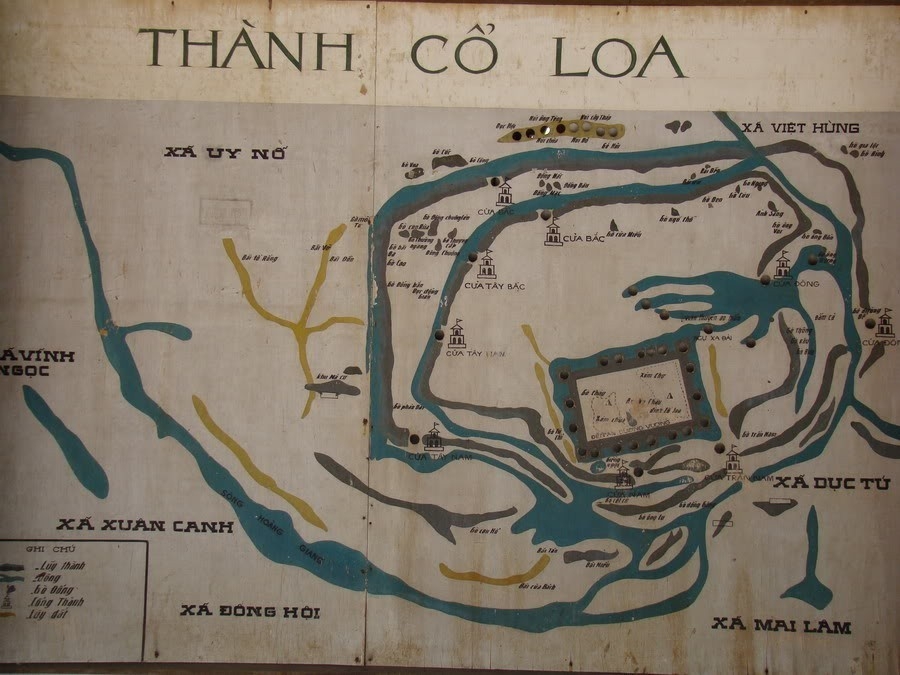
One of the most impressive engineering feats of Co Loa Citadel is its moat network. Three moats once surrounded the citadel’s concentric walls, drawing from the Hoàng Giang River. Parts of the outer moat are still filled with water today – a tranquil stretch where locals fish in the late afternoon.
Standing at the moat’s edge at golden hour, watching the light change on the water while a man pulls in his fishing line, is the kind of image that doesn’t make it onto Instagram, but it stays with you for years.
How Co Loa Citadel Fits Into a Hanoi City Tour
The Case for Going North
Most Hanoi city tour itineraries are heavily weighted toward the south and center: Hoan Kiem, the Temple of Literature, the Ho Chi Minh Mausoleum, the Old Quarter. These are all worth your time – don’t skip them. But they’re also crowded, well-documented, and increasingly polished for tourist consumption.
Co Loa Citadel is different. It’s lived-in. The surrounding village of Cổ Loa is a real working community, and the site itself isn’t overdeveloped. When you walk out to the ramparts, you’re walking on a path that villagers use daily.
Adding Co Loa Citadel to your Hanoi city tour takes maybe half a day. Leave the Old Quarter by 8 or 9AM, hire a xe ôm or grab a Grab car, and you can be back in Hanoi for lunch. It’s completely doable.
Not sure how to fit it in with everything else you want to see? 👉Check out our Suggested Hanoi Itineraries Featuring Co Loa Citadel.
Best Time to Visit
Co Loa Citadel is worth visiting year-round, but here’s my honest local breakdown:
- October to April: The dry, cooler months. The ramparts are walkable, the light is clean, and the crowds (such as they are) are manageable. This is when I’d go.
- May to September: Hot and often rainy. The site is more lush and green, which looks incredible, but afternoon downpours are common. Bring rain gear.
- Tết and Co Loa Festival (1st–6th of the first lunar month): The most alive the site ever gets. Traditional games, processions, offerings. It’s chaotic and beautiful. If your Hanoi city tour lines up with this, go.
Getting There
From Hanoi’s city center, Co Loa Citadel is about 30–45 minutes by motorbike or car, depending on traffic. The road north through Đông Anh has improved a lot in recent years.
Options:
- Grab car/Xanh SM or taxi: Easiest. Ask the driver to wait – they usually will for a fee.
- Motorbike rental: Good if you’re comfortable riding in Vietnamese traffic. The route is mostly highway and then local roads.
- Guided Hanoi city tour: Some local tour operators include Co Loa Citadel as a stop on half-day or full-day tours. Worth checking – a guide who knows the legends makes the whole experience richer.
What Most Tourists Miss About Co Loa Citadel
The Village Itself
Co Loa Citadel doesn’t exist in isolation. The village around it – also called Cổ Loa – has been continuously inhabited since the citadel’s founding era. Walking through the village lanes, you’ll find traditional tube houses, communal wells, and old banyan trees that have watched centuries pass.
Stop at one of the small food stalls near the main entrance. Order a bowl of bún ốc (snail noodle soup) – the local specialty, and very much on-theme given the citadel’s name. The woman who runs the stall near the eastern gate has been there for over twenty years. She won’t speak much English. That’s fine.
The Archaeology Museum on Site
There’s a small museum inside the Co Loa Citadel complex that most visitors walk right past. It’s modest, but it holds genuinely interesting artifacts: bronze arrowheads, ancient pottery, traces of the life that once filled these walls.
The collection isn’t huge, but context matters here. Holding your eyes on a 2,000-year-old bronze arrowhead – possibly from the very crossbow of legend – and knowing where you’re standing changes how you feel about the place.
The Quiet
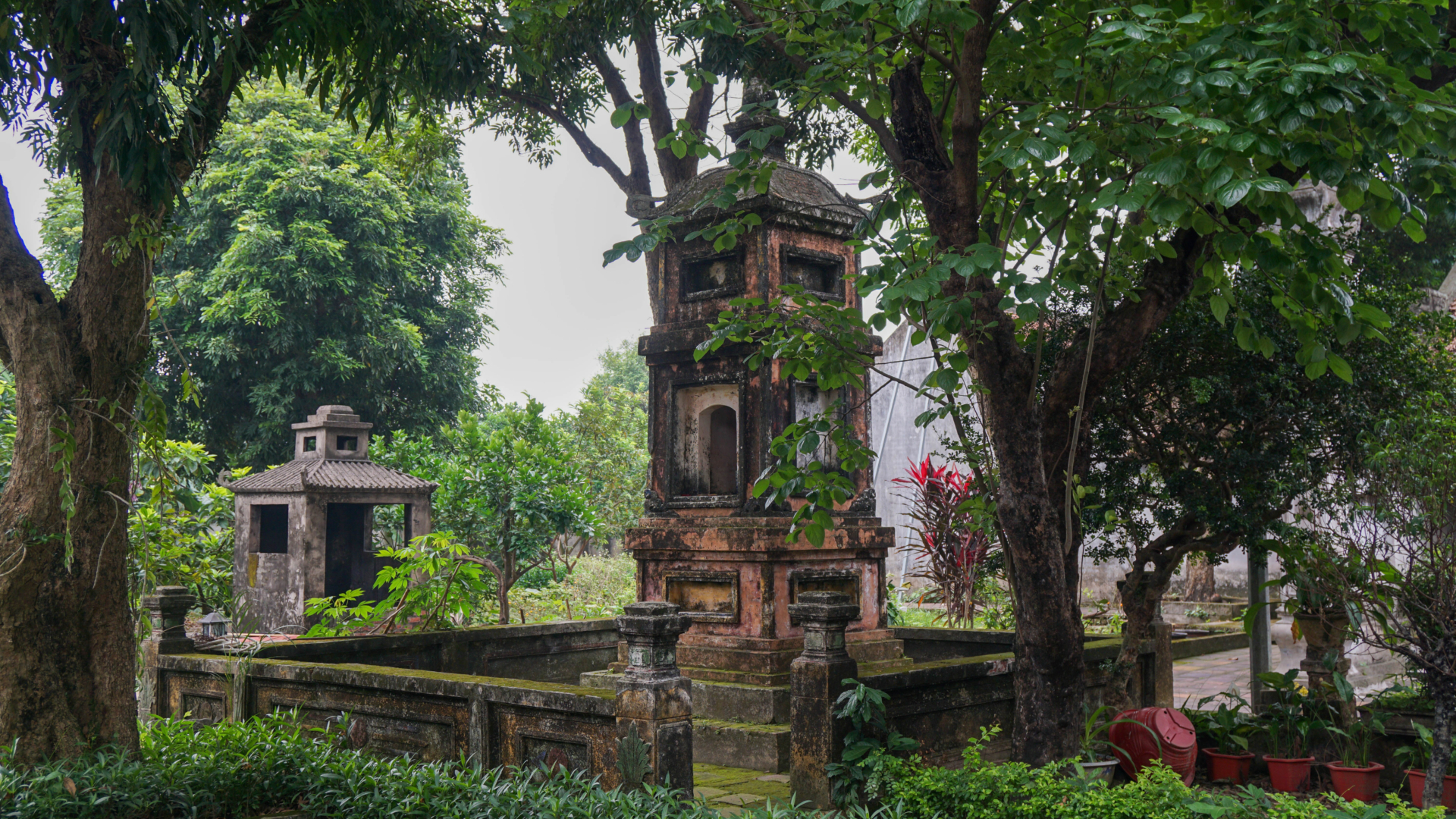
I keep coming back to this. Co Loa Citadel is quiet in a way that almost nothing near Hanoi is anymore. The city is loud, wonderful, relentless. Out here, for a couple of hours, you can actually hear yourself think.
That’s not nothing. For many travelers – especially those midway through a packed Southeast Asia itinerary – that quiet is exactly what they didn’t know they needed.
Practical Tips Before You Go
Entrance and Costs
Co Loa Citadel charges a small entrance fee, typically around 10,000–15,000 VND per person as of my last visit, though this can vary slightly. The cost is negligible. Budget travelers and high-end tourists alike will find this absurdly affordable for what you’re getting.
What to Wear
The site involves a fair amount of walking on uneven terrain. Wear comfortable shoes – not sandals. The ramparts can be slippery after rain.
If you’re visiting any of the temple structures inside Co Loa Citadel, dress modestly. Shoulders and knees covered. This is a living worship site, not just a museum.
Photography
Co Loa Citadel is photogenic in an understated way. The rampart walls with their green tops, the temple reflected in the pond, the moat at dusk – none of these are “wow” Instagram shots in the obvious sense. They’re more subtle than that.
Come with patience and a good eye rather than expecting a postcard.
Why “Only Once” Is the Wrong Frame
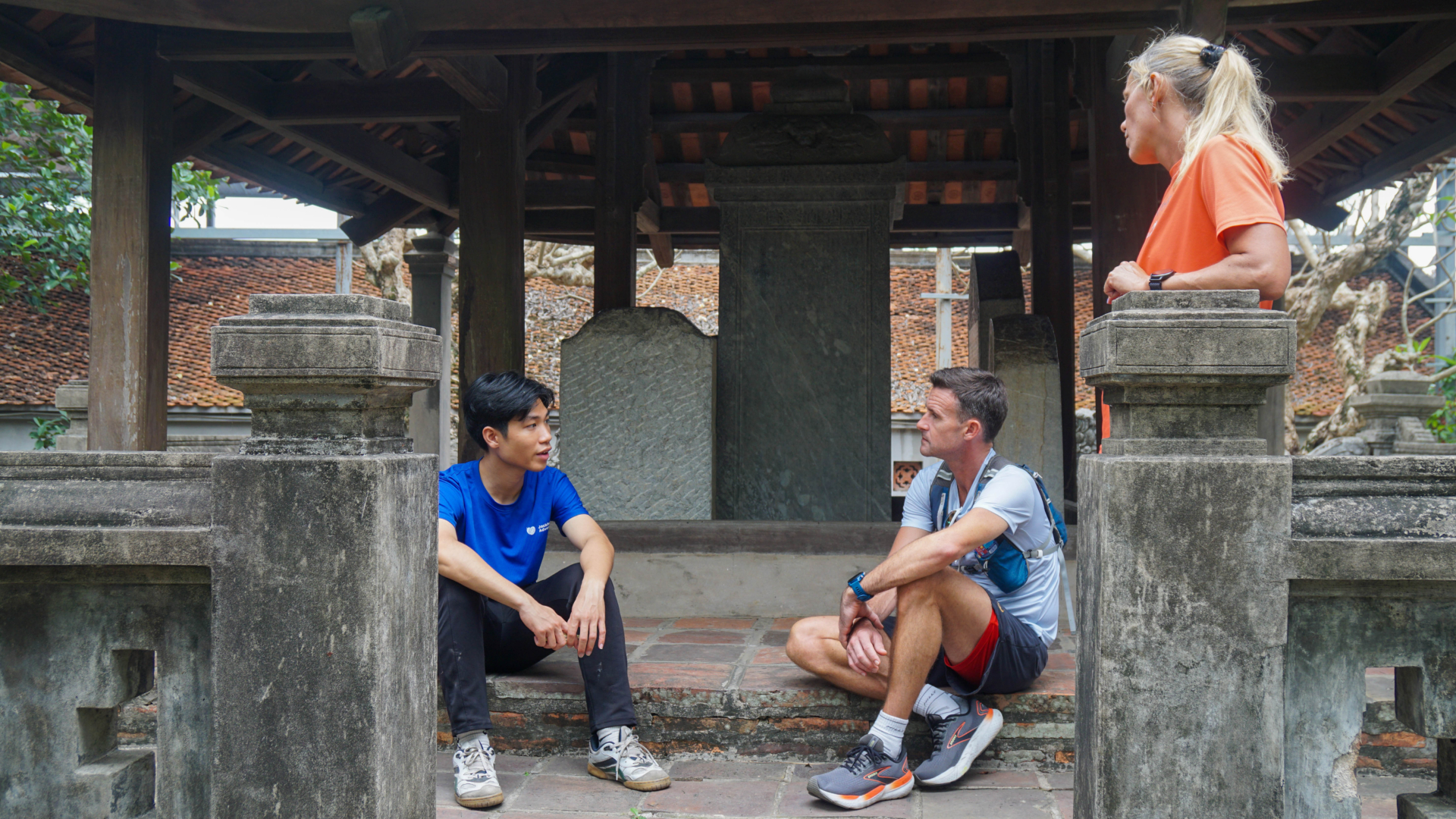
I named this article “why you should visit Co Loa Citadel only once” – and I want to come clean: it’s a trick.
Because I’ve been to Co Loa Citadel more times than I can count. Every time I bring a group through on a Hanoi city tour, I notice something new. A carving I hadn’t paid attention to. The way the afternoon light hits the rampart differently in different seasons. A festival preparation I happened to stumble on.
The honest answer to “how many times should you visit Co Loa Citadel?” is: As many as you can. At minimum, once. But probably more.
Co Loa Citadel rewards familiarity. The first time, you’re orienting yourself. The second time, you start to feel the weight of history. The third time, you realize why people have been coming here to pray and remember for over two thousand years.
Reclaiming the Past
If you take one thing from this article, let it be this: Co Loa Citadel is not a backup plan for when the Temple of Literature is too crowded. It’s not a half-hearted footnote on a Hanoi city tour itinerary. It’s one of the most historically significant, atmospherically rich, and genuinely moving sites in all of northern Vietnam – and most tourists leave the country without ever seeing it.
Don’t be like most tourists.
The legends, the spiral ramparts, the living village, the quiet moat at golden hour – Co Loa Citadel has all of it. And the fact that it’s still not overrun makes now the best time to go.
Ready to See Co Loa Citadel for Yourself?

If you want to experience Co Loa Citadel the right way – with the stories, the context, and the local knowledge that turns ruins into something real – join our Ride to the Lost Kingdom: Cycle Hanoi to Ancient Cổ Loa today!
Wait, one last thing…
When you stand by the headless statue of Mi Chau, take a deep breath. Listen. The stones have a lot to say, if you’re willing to hear them. See you at the citadel!