

Table of Contents
The Hanoi ceramic mosaic mural is a 6-kilometre stretch of ceramic tile artwork running along the Red River dike – and it’s one of the most undervisited things in this city. I’ve lived here my whole life, I’ve walked that dike road more times than I can count, and I still stop when a certain panel catches the morning light in a way I haven’t seen before.
Most visitors walk past 200 meters of it near Long Bien Bridge and think they’ve seen it. They haven’t. The real Hanoi ceramic mosaic mural – the full 6km from Phuc Tan all the way toward Nhat Tan – takes about 90 minutes by bicycle, and it’s worth every minute.
If you’ve heard about the Hanoi ceramic road and wondered what the fuss is about, or if someone mentioned the great wall Hanoi and you’re picturing something like China’s – stop right there. This is something uniquely Hanoian. And in this guide, I’ll walk you through everything you need to know to experience it properly.
What Is the Hanoi Ceramic Mosaic Mural?
The Hanoi ceramic mosaic mural is not just a painted wall. It’s a 6-kilometre stretch of ceramic tile art running along the Red River dike, from Phuc Tan all the way past the Long Bien Bridge toward Nhat Tan. It was created to celebrate the 1,000th anniversary of Thang Long – Hanoi’s founding – and officially completed in 2010.
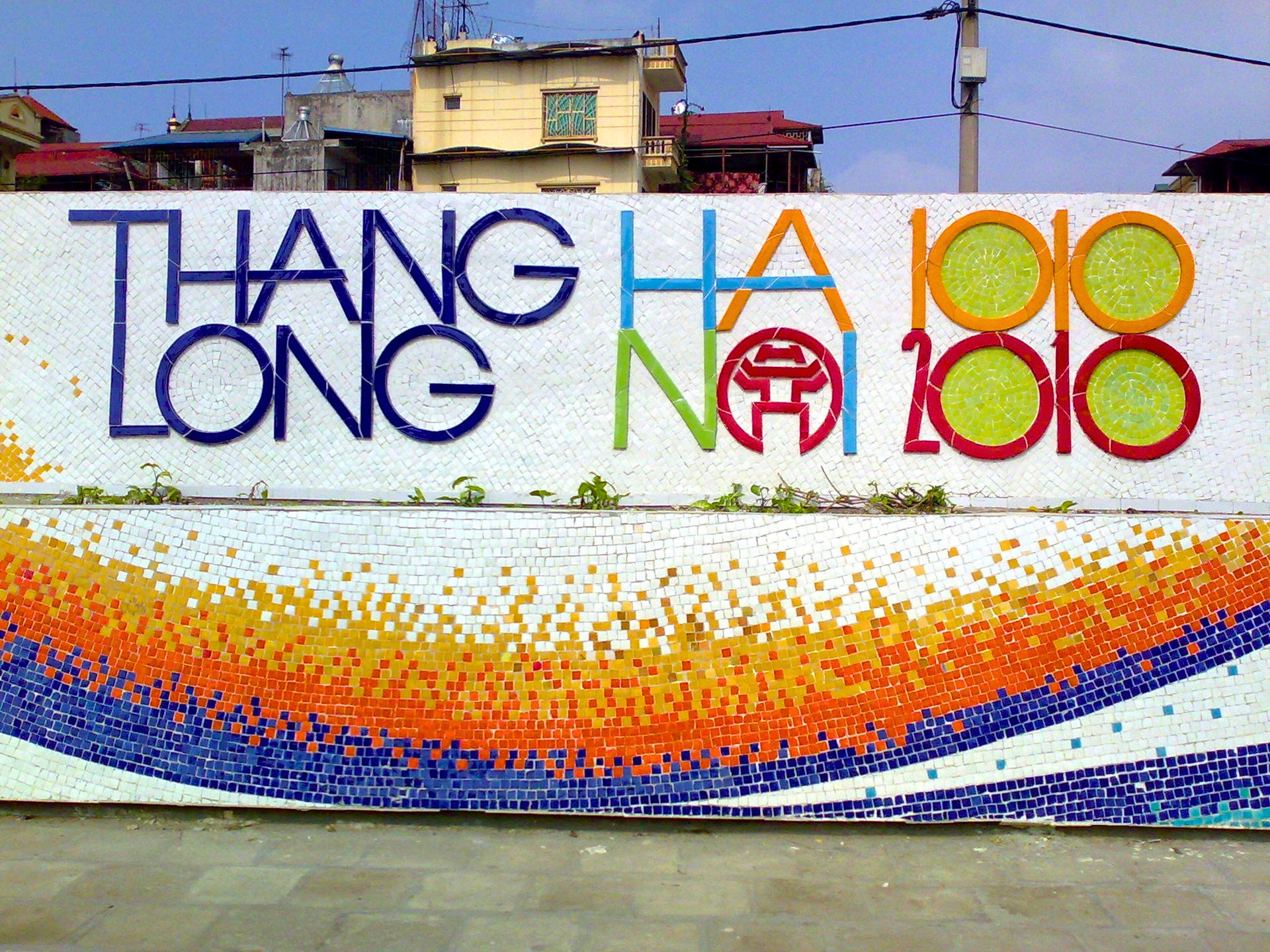
The project involved thousands of artists: Vietnamese painters, sculptors, schoolchildren, international contributors, and everyday residents of Hanoi. Each section tells a different story – ancient mythology, daily life in the old quarters, the French colonial era, wartime memories, scenes of agricultural Vietnam. Together, they form one of the longest ceramic mosaic artworks in the world.
Guinness World Records recognized the Hanoi ceramic mosaic mural as a record-breaker. But honestly, you don’t need a certificate to feel its scale. You just need to stand in front of it.
Why Do Locals Call It the “Great Wall Hanoi”?
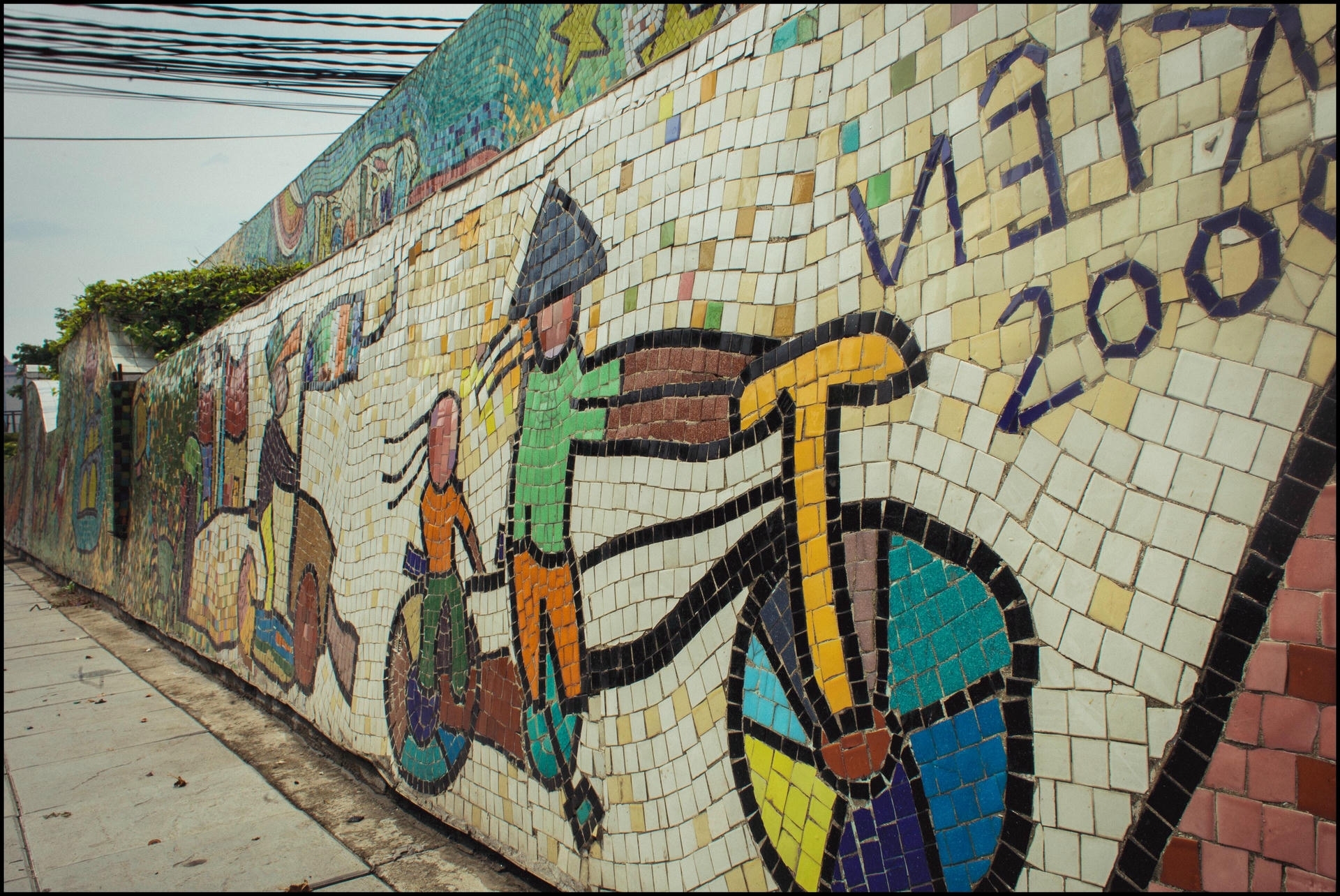
The nickname great wall Hanoi didn’t come from the tourist brochures. It came from locals – half joking, half genuinely proud.
The comparison to China’s Great Wall isn’t really about length or fortification. It’s about the sense that this thing keeps going, that it represents a collective effort, that it’s been built into the identity of a city. Walking or cycling alongside the Hanoi ceramic mosaic mural, you get that same feeling of something monumental that belongs to an entire people, not just a government or an artist.
The dike wall itself has been here for centuries – it’s what protects the inner city from Red River floods. So layering this artwork onto the dike gave the project a sense of deep history. This isn’t decorating a new structure. It’s honoring an old one.
What Does Each Section of the Hanoi Ceramic Road Actually Look Like?
Walking or cycling the Hanoi ceramic road isn’t a quick tick-box experience. There’s a rhythm to it. Each section has its own mood, its own palette, and its own story worth slowing down for.
The Ancient History Panels (Phuc Tan to Long Bien)
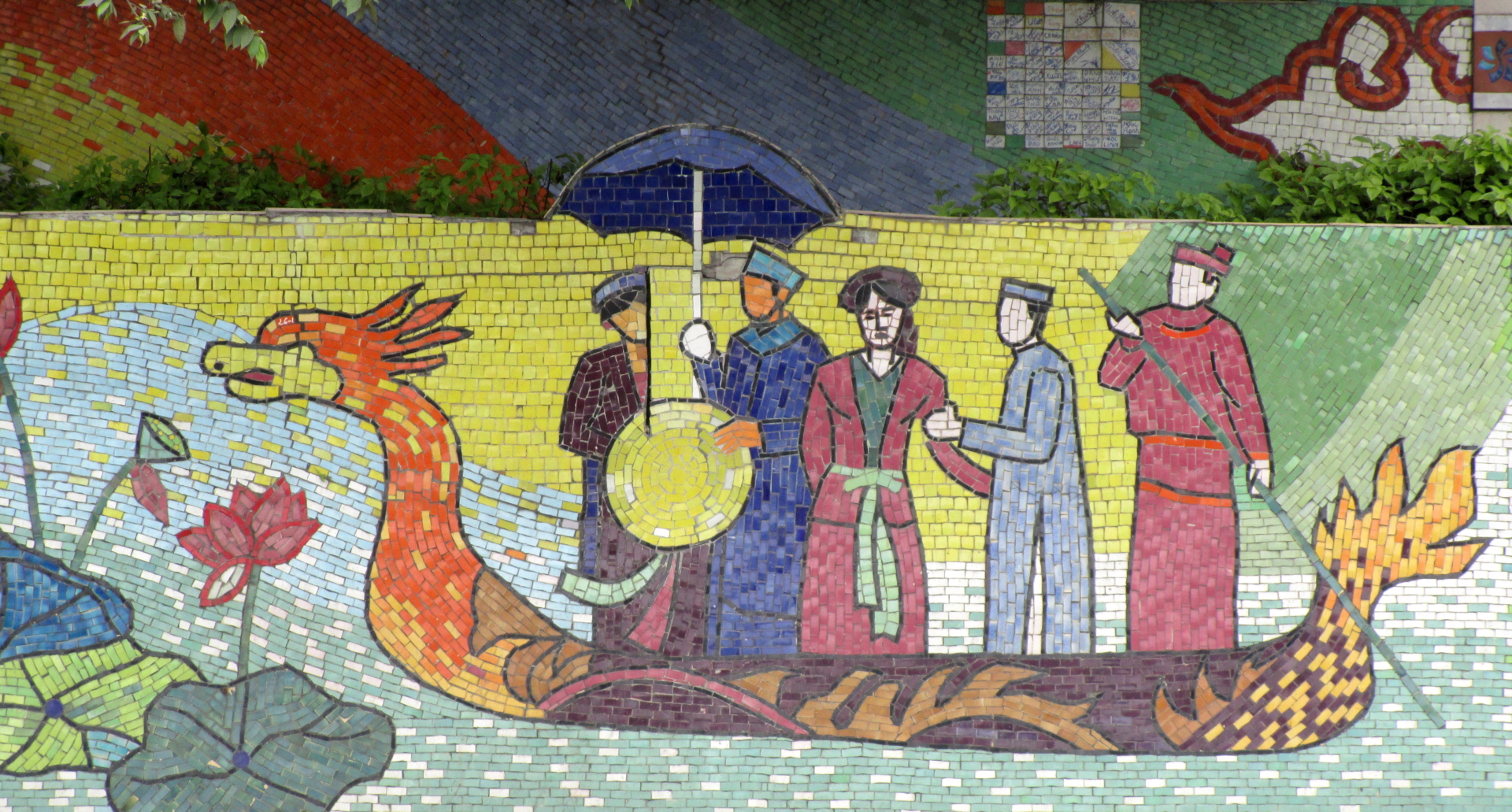
This is where the mural first opens up. The tiles draw heavily from Dong Son bronze drum iconography – geometric patterns, dancing figures, birds in flight. The color is earthy: ochre, terracotta, deep blue-green. Much of this section was designed by Vietnam Fine Arts University students, and it shows. There’s academic precision to the figures, but also youthful energy.
The Old Quarter Life Panels (Near Long Bien Bridge)
If the ancient panels feel formal, this section feels like coming home. The tiles here depict street vendors carrying bamboo poles, cyclo drivers, women in ao dai, the cramped shophouses of the 36 streets. Familiar Hanoi textures, preserved in ceramic.
This stretch of the Hanoi ceramic road is also where you’ll find some of the most photographed panels – the composition is tighter, the colors warmer, and the Long Bien Bridge looms in the background as a ready-made backdrop.
The International Contribution Panels
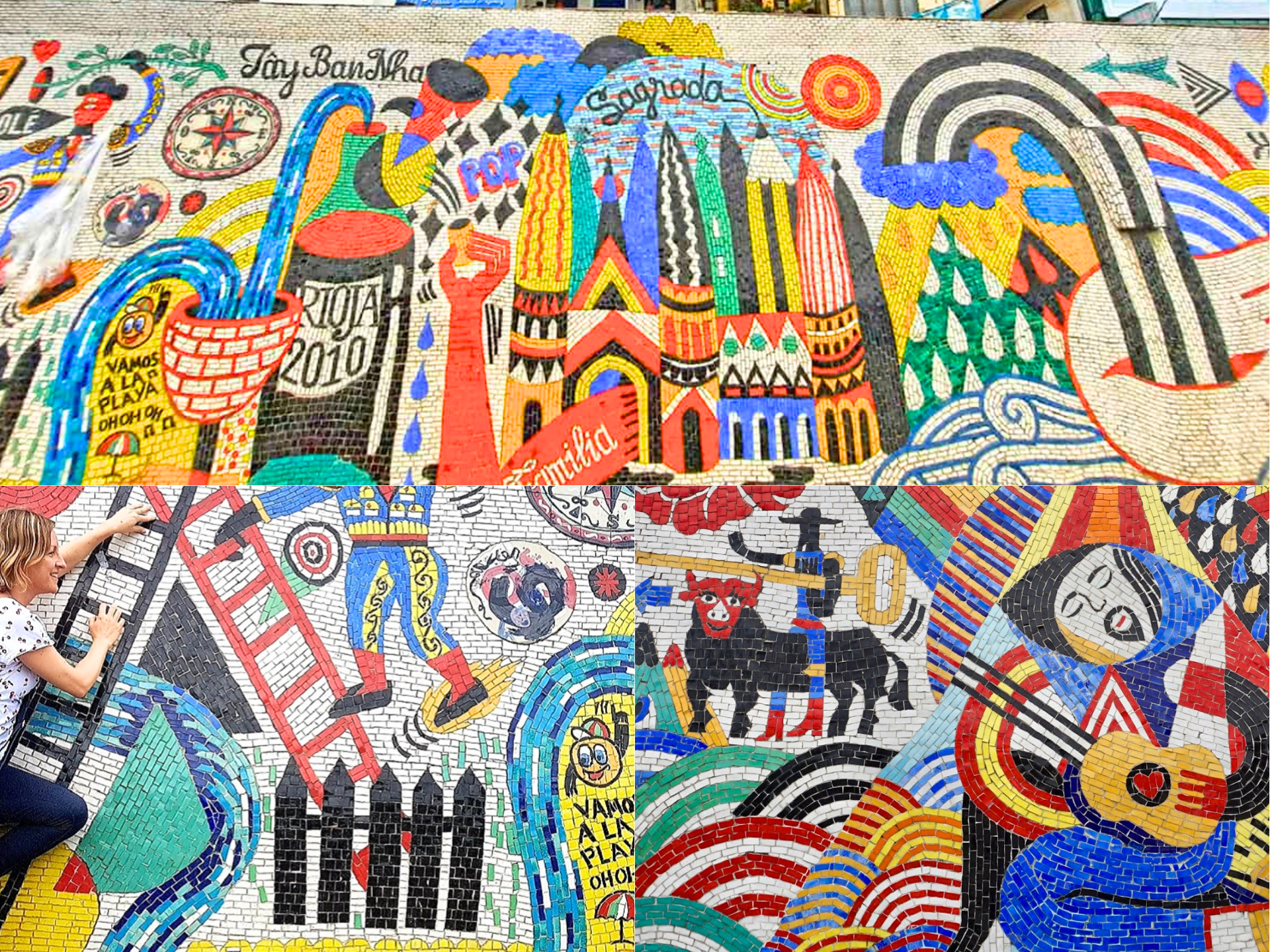
One of the most interesting things about this stretch of the Hanoi ceramic road is that it’s not entirely Vietnamese. International artists from countries including France, Germany, Mexico, and China contributed panels in different sections. Some are clearly “foreign” in their style – more abstract, less figurative than the Vietnamese sections. A few are jarring at first, but they’re also a reminder that Hanoi has always been a city shaped by outside contact.
The Modern Hanoi Panels (Toward Nhat Tan)
As you move along the Hanoi ceramic road toward the Nhat Tan Bridge end, the panels shift into the contemporary era. Urban Hanoi, the rise of motorbikes, children playing in the streets, festivals. The tile work here feels more experimental – some panels use a mosaic technique closer to traditional Roman or Byzantine styles.
It ends near Nhat Tan quietly, without fanfare. One moment you’re looking at tiles, and then the dike is just a dike again. I always find that ending oddly moving.
The Cultural Weight Behind the Hanoi Ceramic Mosaic Mural
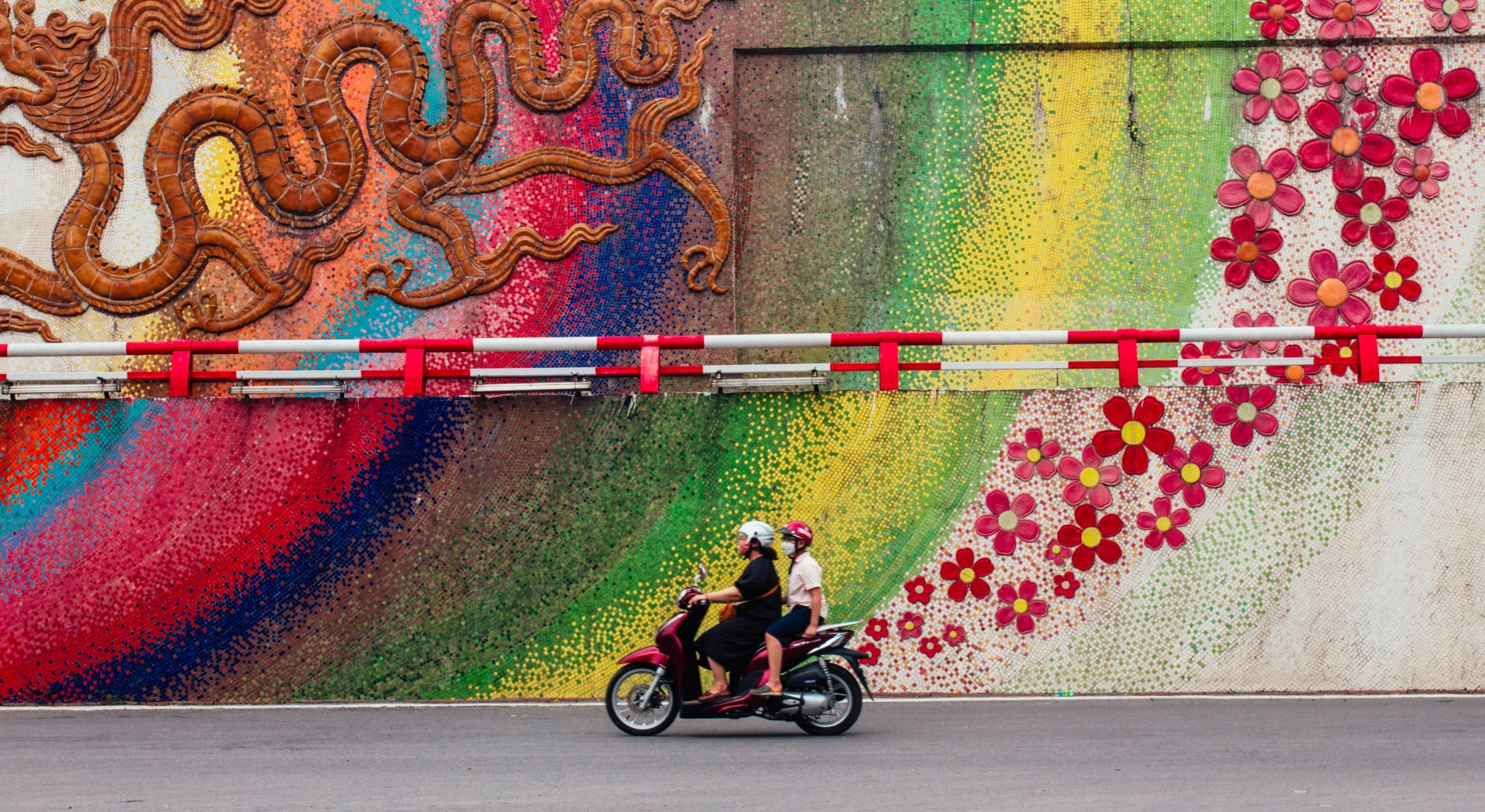
I want to say something here that I don’t see written about very often.
The Hanoi ceramic mosaic mural was completed in 2010, but the process of making it took nearly four years and involved some of the most contentious public art discussions Hanoi has ever had. Residents along the dike were consulted – and many disagreed with specific panel choices. Some felt that certain foreign contributions didn’t represent Vietnamese identity. Others felt the project was too rushed near the deadline.
What came out the other side isn’t perfect. A few panels are inconsistent. A few sections feel out of step with their neighbors. Some tiles have cracked or faded and not all of them have been restored well.
But I think that imperfection is part of what makes the Hanoi ceramic mosaic mural feel genuinely alive. It wasn’t made by a single studio with a unified vision. It was made by a city, with all the contradictions and negotiations that involves. You can feel that when you walk it slowly.
When Is the Best Time to Visit the Hanoi Ceramic Mosaic Mural?
| Time | Why it works | Watch out for |
| 6–8am (weekdays) | Soft light, thin crowds, local morning life in full swing | Need to wake up early |
| 4–6pm | Golden afternoon light, warm colors on the tiles | Busier on weekends near Long Bien |
| Midday (avoid) | Exposed dike, no shade, 38–40°C in summer | |
| Oct–Apr | Best season overall: cool, low humidity, clean light for photos | Peak tourist season nearby |
| May–Sep | Hot and humid, ceramic is durable but you won’t be comfortable |
My honest advice: 6:30am on a Tuesday or Wednesday. The dike road near Phuc Tan is almost empty at that hour. You’ll have entire panels to yourself.
How Do You Get to the Hanoi Ceramic Mosaic Mural?
The Hanoi ceramic road runs along the entire dike road (Đường Đê), accessible from multiple points across Hanoi’s urban core.
Best entry points:
- Phuc Tan (near Chuong Duong Bridge): Best for starting the ancient history panels from the beginning.
- Long Bien Bridge area: Most central, easiest from the Old Quarter – walk across Long Bien Bridge and you’re there.
- Tay Ho / Nhat Tan area: Northern entry point for the Hanoi ceramic road, good if you’re staying in the Tay Ho district.
Getting there:
- By bicycle: The most natural way. Cycling is slow enough to actually see the panels, and the narrow dike path favors bikes over motorbikes.
- On foot: Fine for one section, but 6km in Hanoi heat is a commitment.
- By Grab: Drop off at Đường Đê Phúc Xá (southern start) or Đường Đê Yên Phụ (middle section).
How to Pair the Hanoi Ceramic Mosaic Mural with a Cycling Tour
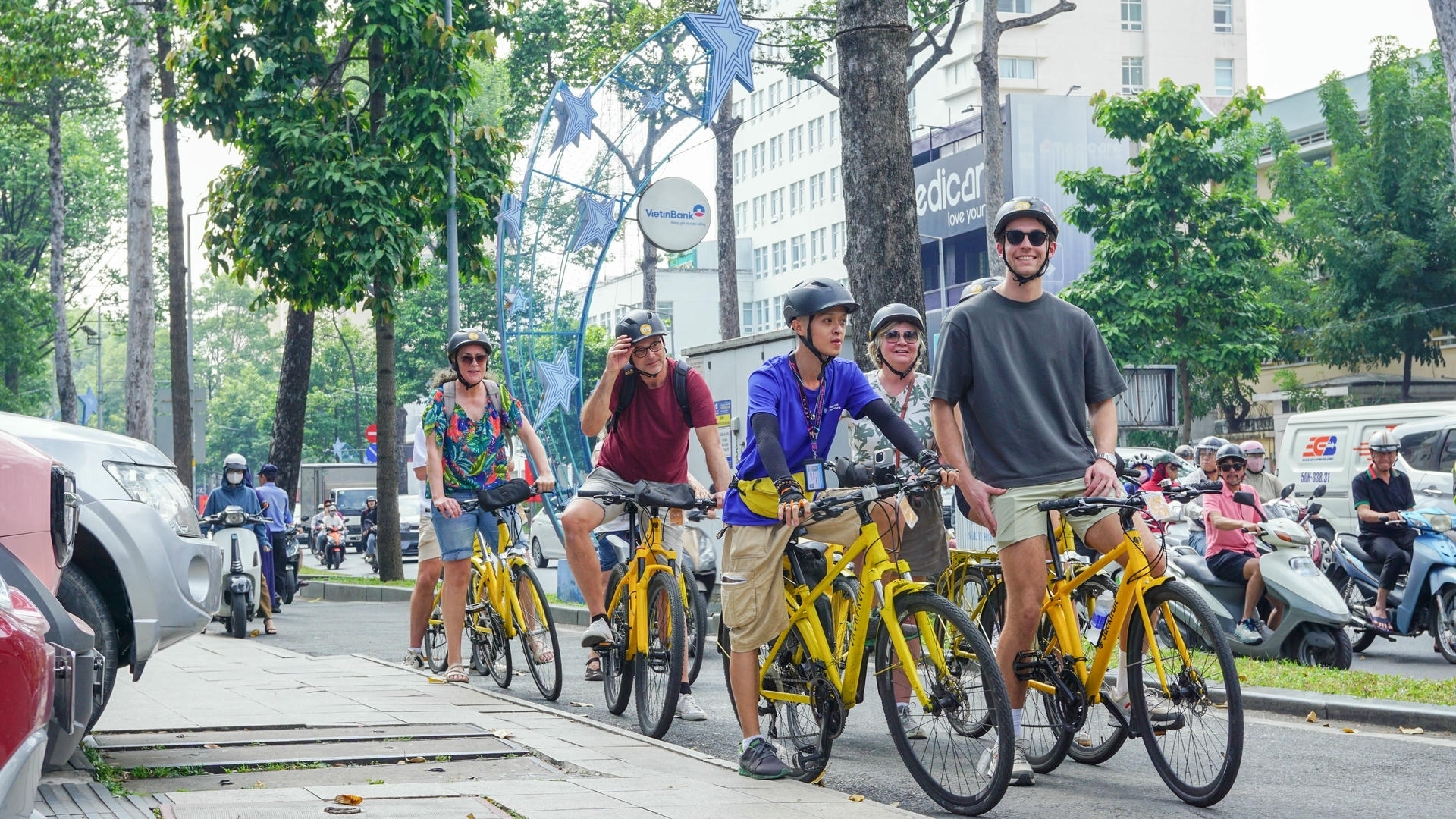
One of the most natural ways to experience the Hanoi ceramic road is by bicycle – and if you want context to go with the visual experience, joining a guided cycling tour makes a real difference.
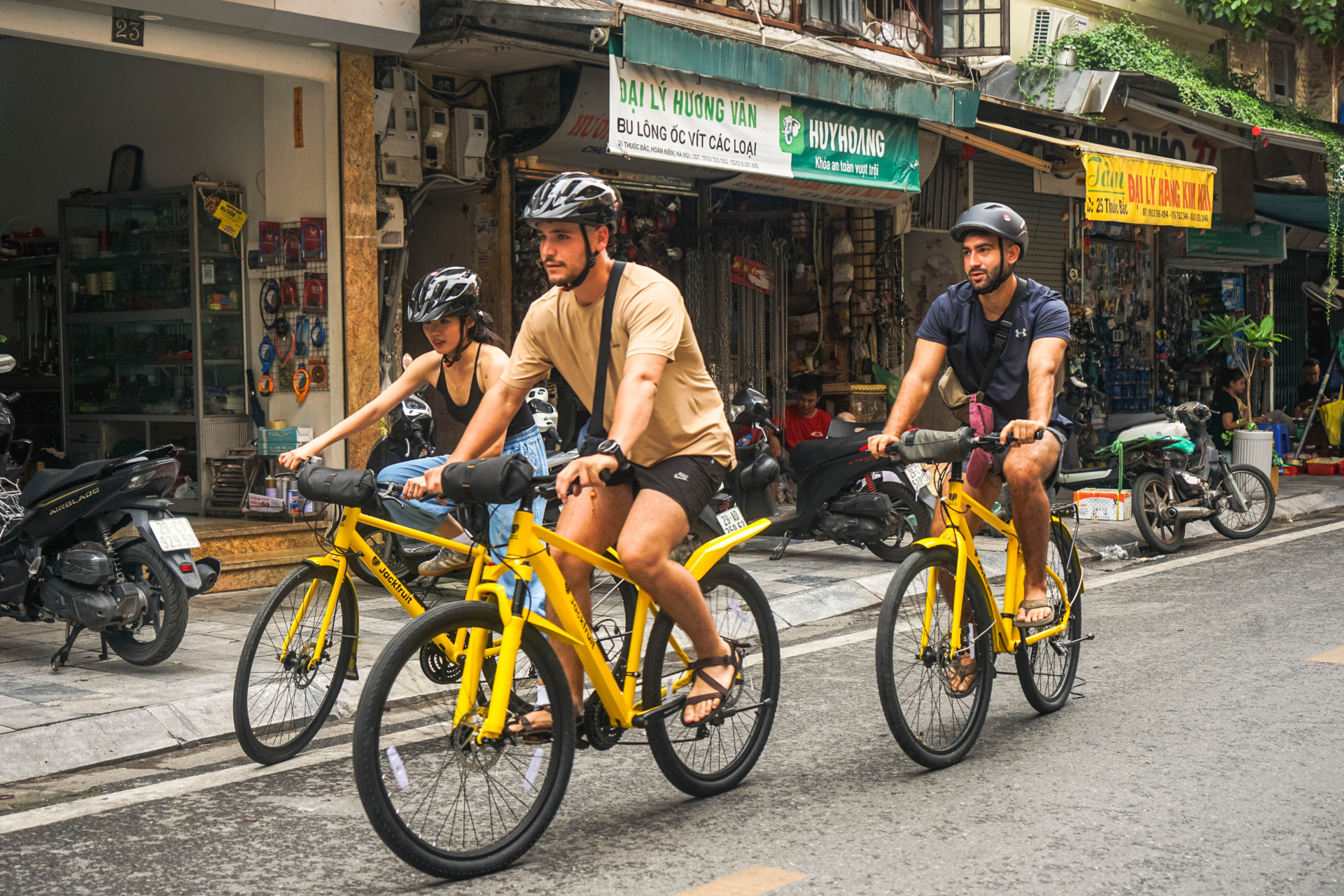
Jackfruit Adventure’s Tour de Hanoi: Old Quarter, Iconic Landmarks & Hidden Corners covers the Old Quarter, Dong Xuan Market, Hoan Kiem Lake, the Imperial Citadel of Thang Long, and more – all from the saddle of a bicycle. It’s exactly the kind of ride that gives you the streets-and-stories layer that makes the mural panels click. Understanding the districts around the dike, the history of the Red River, and the communities that live along the Hanoi ceramic mosaic mural before you see the wall changes how you read it.
Designed by locals, for people who want to understand the city – not just photograph it.
Hanoi Ceramic Road: Essential FAQs
Discover Hanoi With Your Own Two Eyes
The Hanoi ceramic mosaic mural is one of those places in Hanoi that rewards patience. It’s not photogenic in the Instagram-first-glance way. It’s better than that. It stays with you because you have to work a little to understand it – to see the whole thing, to feel its scale, to recognize the faces and stories embedded in the tiles.
Walk the Hanoi ceramic road slowly. Go at dawn if you can. Bring a friend who knows the city, or find a good guide. And when you find the panel that stops you – because one of them will – stay there a while.
The great wall Hanoi isn’t trying to compete with anything. It just is.
And if your Vietnam journey continues south, the same instinct for slow travel and local neighborhoods will serve you well in Saigon – where Jackfruit Adventure runs a 2-Hour Saigon Off-the-Beaten Path Tour through the backstreets of District 4. Different city, same philosophy.