

Table of Contents
Quan Thanh Temple has stood at the corner of Thanh Nien and Quan Thanh streets for over a thousand years – and most visitors only give it twenty minutes on the way to West Lake.
That’s a shame, because this place is one of the quietest and most atmospheric spots left in Hanoi. I grew up about ten minutes from here, and I still stop by whenever I need a moment of calm in the middle of the city’s noise. The smell of incense drifting through the old banyan trees, the muted sound of the bronze bell, the late-afternoon light hitting the carved dragon gate – it all hits differently when you know the full story behind what you’re looking at.
Quan Thanh Temple in Hanoi isn’t just another old structure on the tourist trail. It’s one of four sacred temples that were built to spiritually guard the ancient capital of Thang Long – the city we now call Hanoi. In this guide, I’m going to tell you everything you actually need to know before you visit: the history, the architecture, the best time to go, and a few insider details that most travel blogs completely miss.
What Is Quan Thanh Temple – and Why Does It Matter?
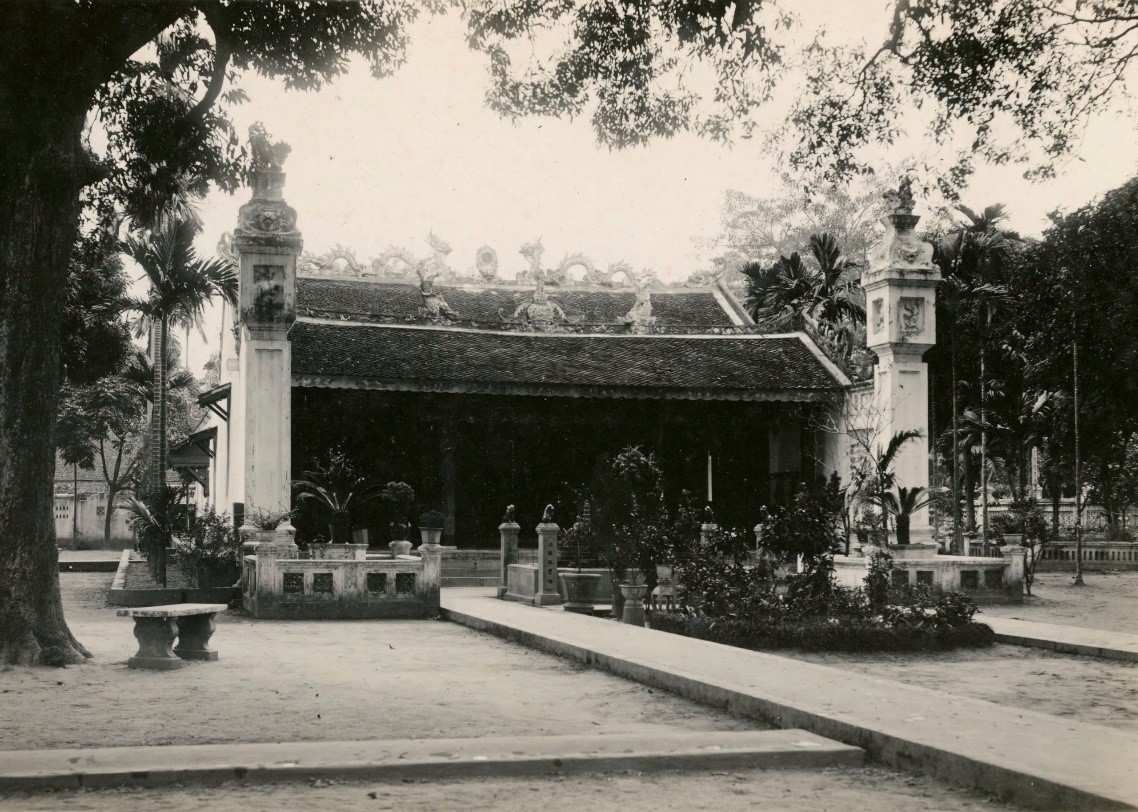
Quan Thanh Temple (also called Tran Vu Temple, or Đền Quán Thánh in Vietnamese) is a Taoist temple built in 1010 under Emperor Ly Thai To. When the emperor moved Vietnam’s capital from Hoa Lu in Ninh Binh to Thang Long – present-day Hanoi – he ordered the construction of four guardian temples to protect the city from evil spirits in each direction.
Quan Thanh Temple was assigned to guard the North.
The other three temples are Bach Ma Temple in the East (on Hang Buom Street), Kim Lien Temple in the South, and Voi Phuc Temple in the West. Together, the four are called Thang Long Tu Tran – the Four Sacred Temples of Thang Long. It’s a system of spiritual protection that has surrounded this city for more than ten centuries.
The temple is dedicated to Huyen Thien Tran Vu, a powerful Taoist deity associated with the North, water control, and the protection against evil. His symbols – a serpent and a turtle – appear throughout the temple’s carvings and most famously in the massive bronze statue at the heart of the main hall.
In 1962, Quan Thanh Temple was officially recognised as a National Historical and Cultural Relic. It has undergone seven major renovations between 1618 and 1941, each dynasty leaving its own architectural mark.
Is Quan Thanh Temple in Hanoi Worth Visiting?
Yes – and I say that as someone who has been here dozens of times.
Quan Thanh Temple in Hanoi sits right along the southern shore of West Lake, surrounded by old trees that make it feel removed from the traffic outside. The entrance fee is just 10,000 VND ($0.40) for adults. For that, you get access to one of the oldest continuously active religious sites in Vietnam, including the most jaw-dropping bronze statue I have ever seen in any temple in this country.
If you’re already planning to walk along Thanh Nien Street, or visit Tran Quoc Pagoda just across the road, stopping at Quan Thanh Temple adds maybe 45 minutes to your day. It’s barely out of the way – and completely worth it.
What Does Quan Thanh Temple Look Like? A Quick Tour
The Gate: Four Phoenixes and a Dragon on the Roof
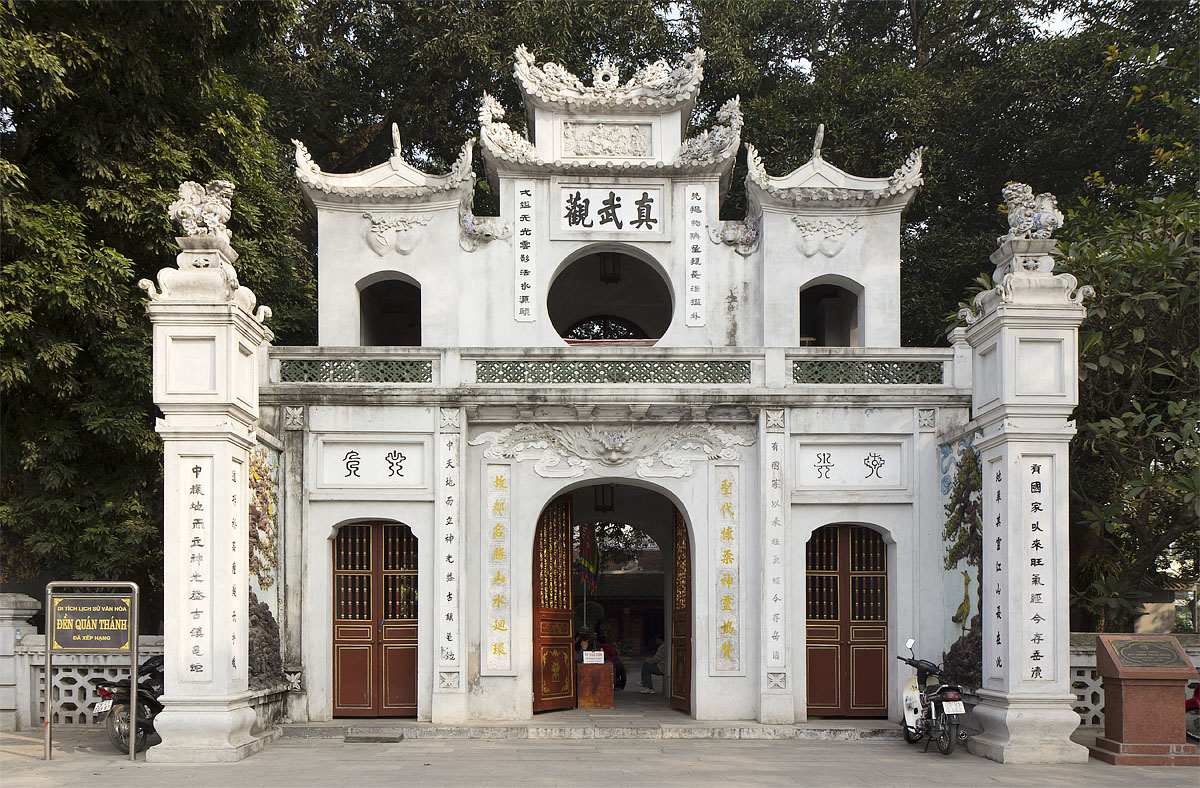
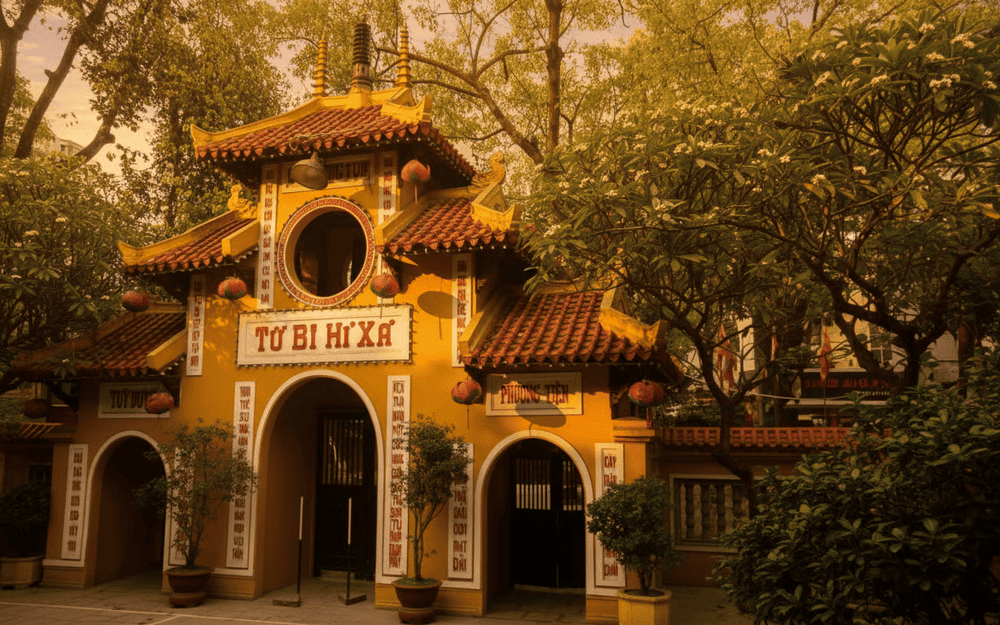
The first thing you notice is the three-entrance gate – the Tam Quan. It’s a two-storey pavilion with a bell tower on top, housing a large bronze bell cast in the 17th century.
Four pillars frame the entrance, each topped with a Vietnamese phoenix. Look closer and you’ll spot carp turning into dragons, tigers descending mountains, and red lacquered couplets carved into the stone. The roof carries an ascending dragon, rendered with real precision. Two folding screens with embossed tiger images flank either side – in Vietnamese temple design, tigers ward off harmful spirits.
The Courtyard: Where Locals Actually Come to Pray
Past the gate, the courtyard opens up – shaded by old trees, dotted with penjings, and genuinely quiet on most mornings. On the 1st and 15th of the lunar month, Quan Thanh Temple comes alive here: people arrive early with incense and offerings, kneeling on the stone floor in front of portable burners.
There’s a brick furnace where people burn votive paper – money and goods believed to reach ancestors in the afterlife. It’s an everyday ritual for Hanoians, and one that visitors tend to find unexpectedly moving.
The Main Hall: Home to the 4-Ton Bronze Giant
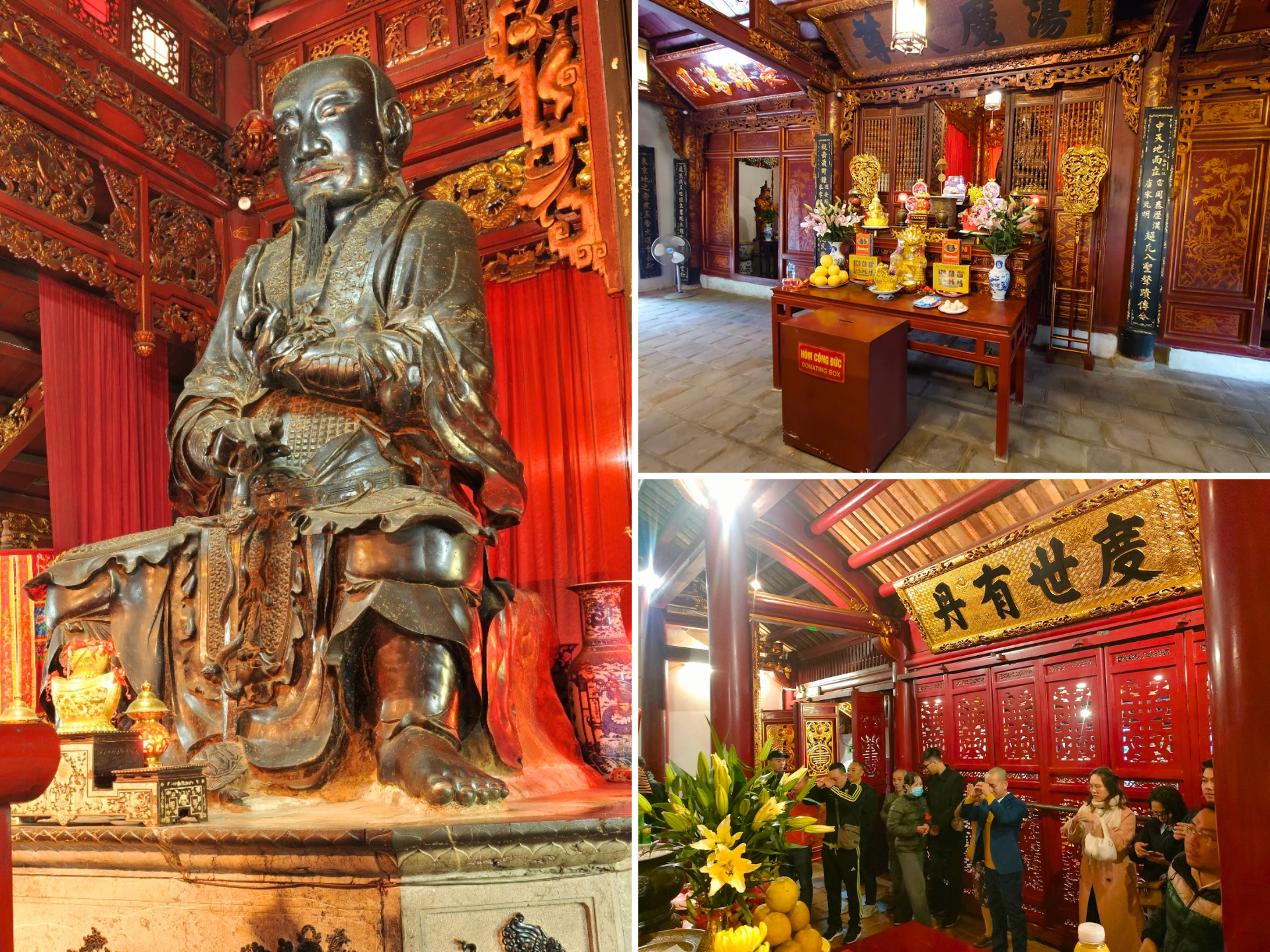
The centerpiece of Quan Thanh Temple is the bronze statue of Huyen Thien Tran Vu – cast in 1677 by artisans from the Ngu Xa village. The numbers: 3.96 metres tall, roughly 4 tons, seated on a marble plinth 1.2 metres high. His left hand forms a ritual seal; his right holds a sword wrapped by a serpent, standing on a turtle’s back.
It’s considered Vietnam’s second largest bronze statue and a genuine masterpiece of 17th-century craftsmanship. Beside it stands a smaller bronze figure of Trum Trong, the master artisan who cast it – placed there by the temple as a permanent acknowledgment of his work.
The lacquered board overhead reads Tran Vu Quan – the temple’s original name. Beams and walls throughout are carved with dragons, phoenixes, pine, bamboo, chrysanthemum, and apricot: the four noble plants of classical Vietnamese iconography.
Quan Thanh Temple in Hanoi: Visitor Info at a Glance
| Detail | Information |
| Address | 190 Quan Thanh Street, Ba Dinh District, Hanoi |
| Opening Hours (Regular) | 8:00 AM – 5:00 PM daily |
| Opening Hours (1st & 15th lunar days) | 6:00 AM – 8:00 PM |
| Lunar New Year’s Eve | Open all day |
| Entrance Fee (Adults) | 10,000 VND (~$0.40) |
| Entrance Fee (Children/Students) | 5,000 VND |
| Nearest Landmarks | West Lake, Tran Quoc Pagoda, Ho Chi Minh Mausoleum |
| Getting There | Bus routes 50, 45, 22A stop on Quan Thanh Street |
When Is the Best Time to Visit Quan Thanh Temple?
Early Morning on a Weekday
My top pick: show up at Quan Thanh Temple between 8–9 AM on a Tuesday or Wednesday. The courtyard is nearly empty, morning light filters through the trees at a low angle, and incense smoke drifts up in slow curls. It feels sacred instead of staged.
The 1st and 15th of the Lunar Month
These are Quan Thanh Temple’s busiest – and best – days. Families, elderly women in áo dài, students in uniform all come to offer incense and pray for health, luck, and good grades. The temple opens at 6 AM; the first two hours are worth the early alarm.
One thing most travel sites skip: students specifically pray here before exams. The Tran Vu deity is believed to help with academic success, so come late May or June and you’ll find clusters of teenagers kneeling with incense and handwritten prayers. It’s one of those small moments that tells you something real about Hanoi.
The Annual Festival: 3rd Day of the 3rd Lunar Month
This is Quan Thanh Temple’s biggest day – a traditional festival marking the birthday of Huyen Thien Tran Vu. Morning religious rites give way to lion dances, palanquin processions, and folk games. If your trip lines up, plan around it.
Lunar New Year’s Eve
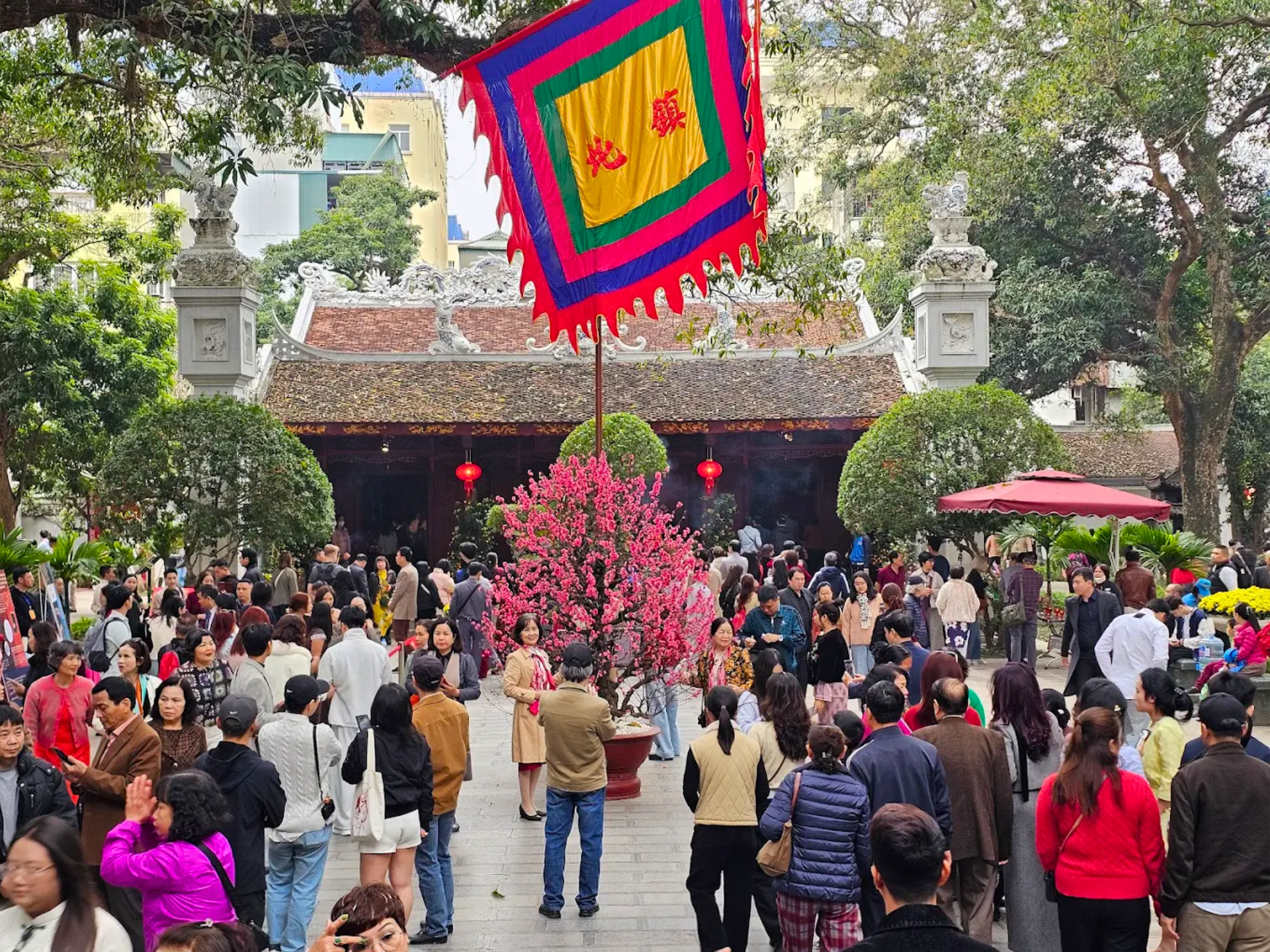
Quan Thanh Temple stays open all night. Thousands of Hanoians brave the January cold to offer incense at midnight – the ritual called đi lễ đầu năm, being the first to pray in the new year. Candle smoke, lantern light, the low ring of the old bronze bell. It’s something else entirely.
Dress Code and Etiquette at Quan Thanh Temple
Quan Thanh Temple is an active place of worship, not a museum. That means a few basic things apply:
- Cover your shoulders and knees. No tank tops, no short shorts. This is non-negotiable.
- Speak quietly in the main hall. People are genuinely praying.
- Photography is generally allowed, but avoid using flash near the altars and don’t photograph worshippers up close without their awareness.
- Don’t touch the artifacts or lean on the carvings – the woodwork and bronze are centuries old.
- Remove your shoes if signs indicate it (usually in the inner sanctuary area).
When in doubt, watch what the locals do and follow their lead.
Why Quan Thanh Temple Feels Different From Other Hanoi Temples
Most visitors to Hanoi will pass through Ngoc Son Temple on Hoan Kiem Lake or St. Joseph’s Cathedral near the Old Quarter. Both are worth seeing – and if you want a fuller picture, there’s a solid rundown of the Top 7 Best Hanoi Temples worth bookmarking before your trip. But Quan Thanh Temple in Hanoi has something neither of those places quite has: a sense of genuine, ongoing spiritual life that hasn’t been packaged for tourism.
The older women who come here every lunar month have been doing so for decades. The incense has been burning in this courtyard since 1010 in one form or another. The sound of that 17th-century bell has been ringing over West Lake for longer than most countries have existed.
That continuity is what you feel when you stand in the courtyard at Quan Thanh Temple, and it’s what makes the place worth slowing down for.
FAQs: Quan Thanh Temple in Hanoi
Next steps for your Hanoi adventure
Quan Thanh Temple is one of the oldest, most spiritually significant, and most beautifully underrated sites in Hanoi. Whether you visit on a quiet weekday morning to take in the architecture and the incense smoke, or arrive on the 1st of the lunar month to witness the full ritual life of the temple, it rewards anyone who takes a little time to understand what they’re looking at.
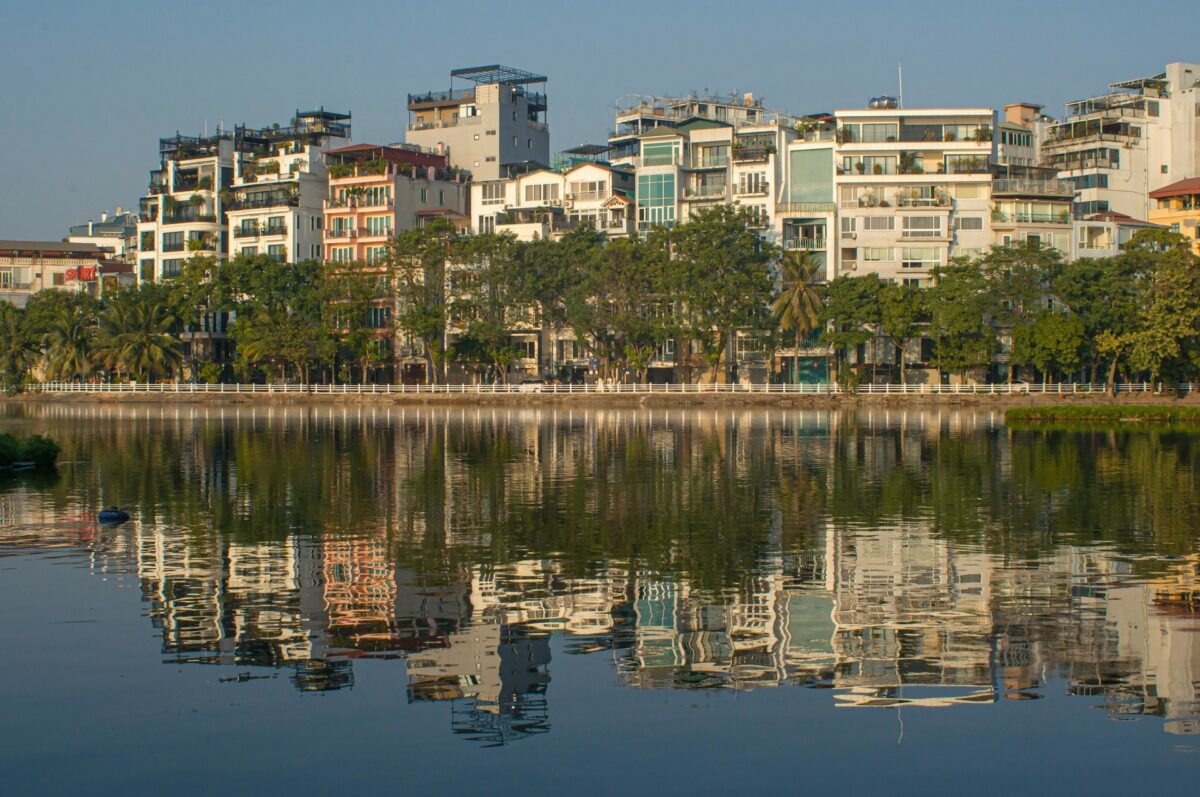
If you’re exploring the Ba Dinh and West Lake area of Hanoi – which you absolutely should – Quan Thanh Temple belongs at the top of your list, not as an afterthought. Pair it with Tran Quoc Pagoda across the road, cycle the Thanh Nien lakeside path, and let the neighbourhood show you the side of Hanoi that doesn’t appear on most itineraries.
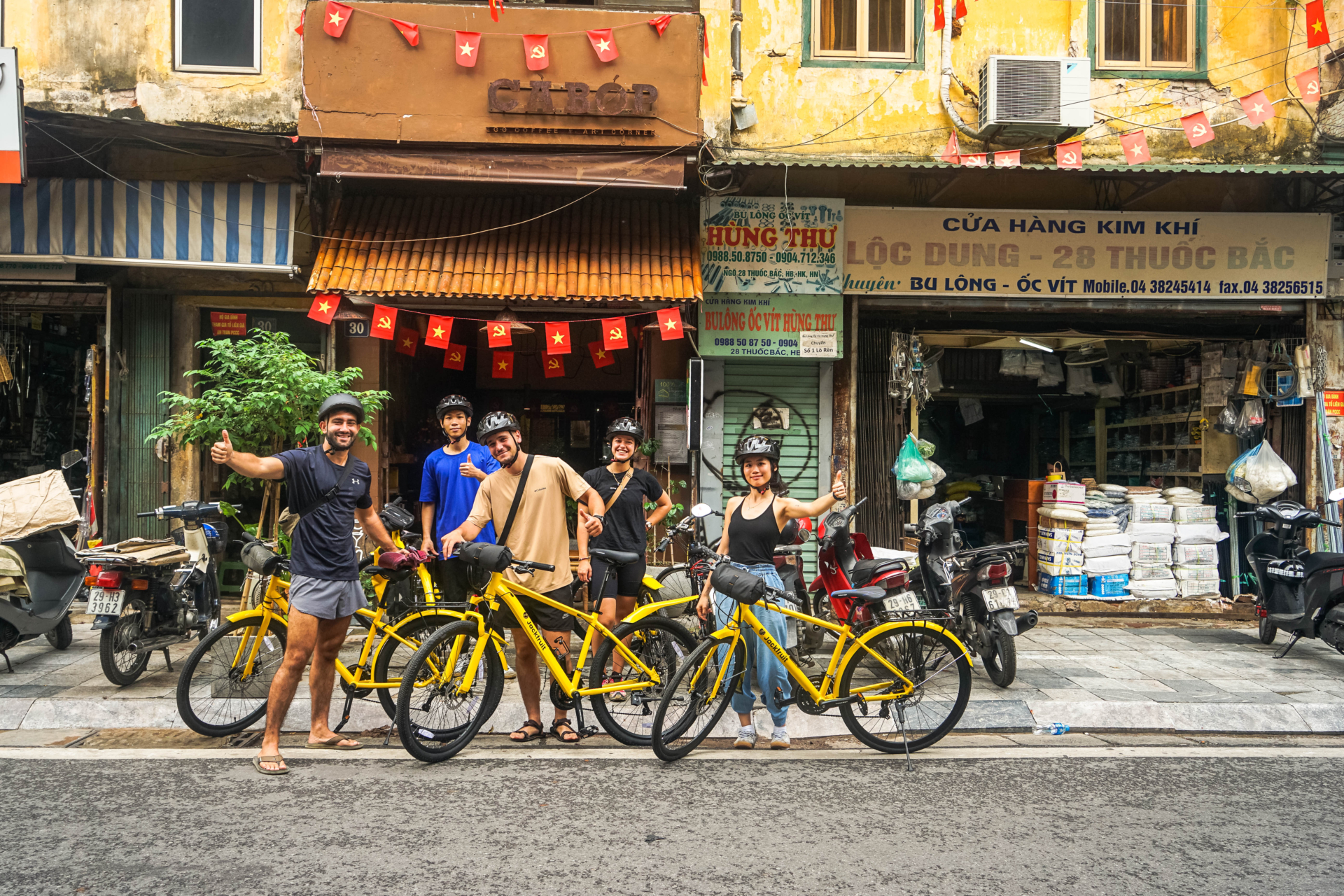
Cycling through Hanoi’s backstreets is honestly one of the best ways to stumble across places like Quan Thanh Temple, the kind of spots you’d walk right past otherwise. If that sounds like your kind of morning, Jackfruit Adventure’s Hanoi cycling tour is worth a look.