

Table of Contents
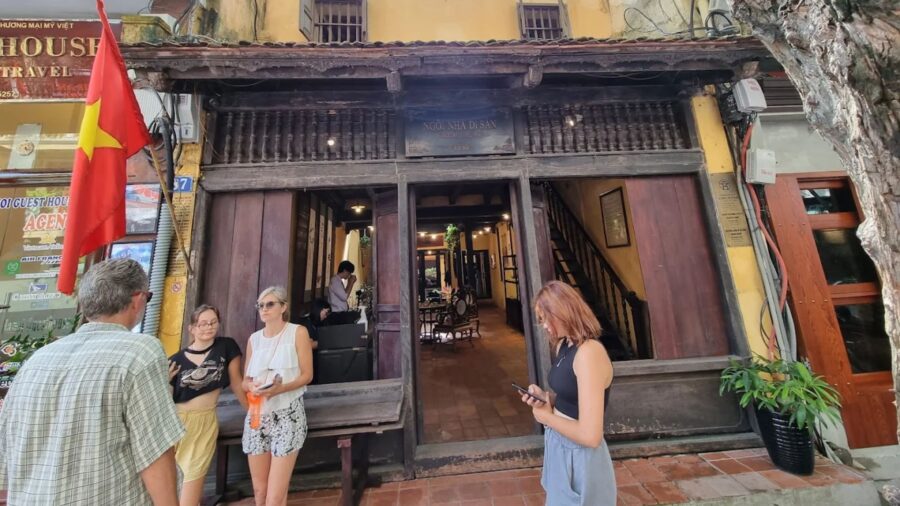
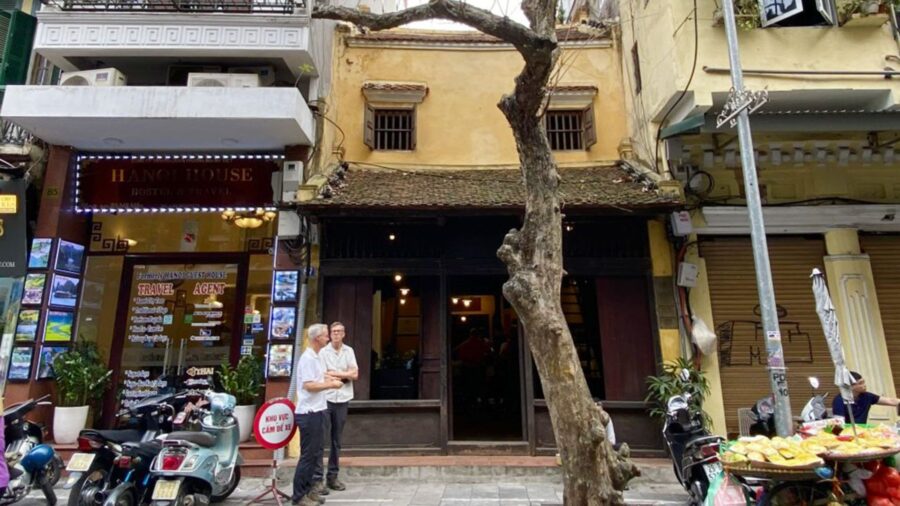
In the busy and lively streets of Hanoi’s Old Quarter, Hanoi Ancient House, also known as Ma May Ancient House, offers a rare moment of calm. Located at 87 Ma May Street, this historic house takes visitors back to the rhythm of Hanoi more than a century ago.
Ma May Ancient House charms people with its warm and authentic atmosphere. Its wooden doors, tiled roof, inner courtyards, and old furniture all remind visitors of a way of life that was once very common in the famous “36 streets” of old Hanoi.
This is not just an old house to look at. It is a place where visitors can understand how Hanoians in the past lived, traded, worshipped their ancestors, and preserved their family traditions. For anyone interested in history, architecture, and local culture, Hanoi Ancient House is a meaningful stop while exploring Hanoi’s Old Quarter.
1. Useful Information Before Visiting
- Address: at 87 Ma May Street, Hang Buom Ward, Hoan Kiem District, Hanoi
- Opening Hours: 8h00 – 12h00, 13h30 – 20h00 everyday. Opening hours may vary depending on the source, season, or special events. Because schedules can change, it is a good idea to check the latest opening hours before your visit.
- Entrance Fee: The entrance fee is generally very affordable, usually around 10,000 – 20,000 VND per person. Visitors should confirm the current price at the entrance.
- Ideal Visiting Time: The best time to visit is in the morning or late afternoon, when the house feels quieter and more comfortable. A typical visit takes about 30 to 45 minutes.
Today, Ma May Street is a lively area filled with hotels, restaurants, shops, and people passing by throughout the day. Because of that, stepping through the entrance of house number 87 often feels like leaving the modern street behind and entering a different Hanoi.
Because land in Hanoi’s Old Quarter was narrow and expensive, and the area was busy with trade, people often combined their shop and living space in the same house. This helped families earn a living while still keeping private areas for daily family life. In the past, houses like Ma May Ancient House were not only homes, but also part of a busy trading network in the old merchant streets.
2. The History of Ma May Ancient House
Origins in the Late 19th Century
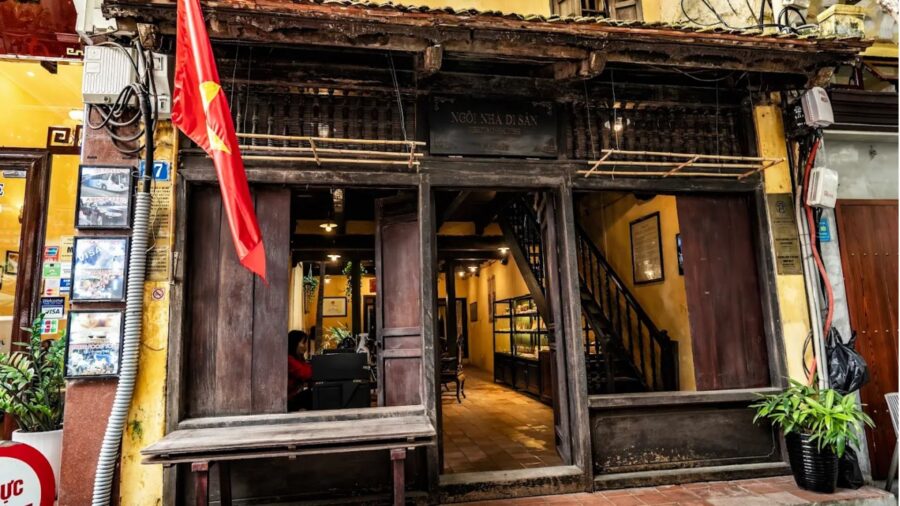
Ma May Ancient House Hanoi was built in the late 19th century, when Hanoi’s Old Quarter was developing as an important center of trade and daily life. Today, it is often considered one of the most typical ancient houses still preserved in Hanoi.
Before 1945, the house was closely linked to trading activities, including a period when the owner sold rice. Later, it was used by a Chinese-Vietnamese family who lived there and sold traditional medicine.
Changes After 1954
After 1954, Hanoi entered a new period of urban management, while the demand for housing continued to grow. Many large merchant houses in the Old Quarter, including Ma May Ancient House, came under state management and were shared by several families living together. This was a common chapter in the history of many old houses in Hanoi, as homes that once belonged to merchant families gradually became shared spaces for different households.
Restoration in the Late 1990s
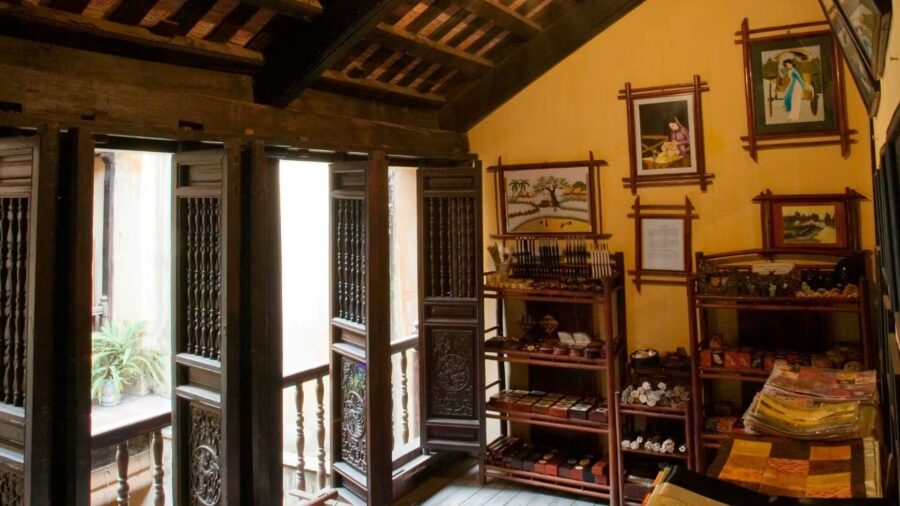
In the late 1990s, Ma May Ancient House Hanoi was restored through a heritage cooperation project between Hanoi and the city of Toulouse in France. Ma May Ancient House was chosen for restoration because it is a typical example of the architecture and lifestyle of Hanoi’s Old Quarter in the past. The house has kept most of its original structure, design, and interior, making it a suitable model for a heritage preservation project.
In addition, its location in the heart of the Old Quarter makes it an ideal place for cultural visits and learning. Restoring and preserving Ma May Ancient House helps protect the memory of old urban life in Hanoi.
Recognition as a Heritage Site
In 2004, the house was recognized as a national heritage site, confirming its historical, architectural, and cultural value. From a private home and trading space, Ma May Ancient House became a heritage site where both locals and visitors can learn about old urban life in Hanoi.
3. The Architecture of Ma May Ancient House
A Typical Tube House of the Old Quarter
Ma May Ancient House is a typical example of a tube house, a traditional house style commonly found in Hanoi’s Old Quarter. These houses usually have a narrow front and a long depth, which suited the dense streets and busy trading activities of old Hanoi.
The Ancient House is about 28 meters long. Its front is about 5 meters wide, while the back is about 6 meters wide. The total area of the house is approximately 157.6 square meters.
Architecture Shaped by Urban Life
The tube house was not only an architectural choice. It also reflected land conditions, business habits, and the way Hanoians organized their daily lives. The front area was often used for trading, welcoming guests, or interacting with the street, while the deeper sections were reserved for family life.
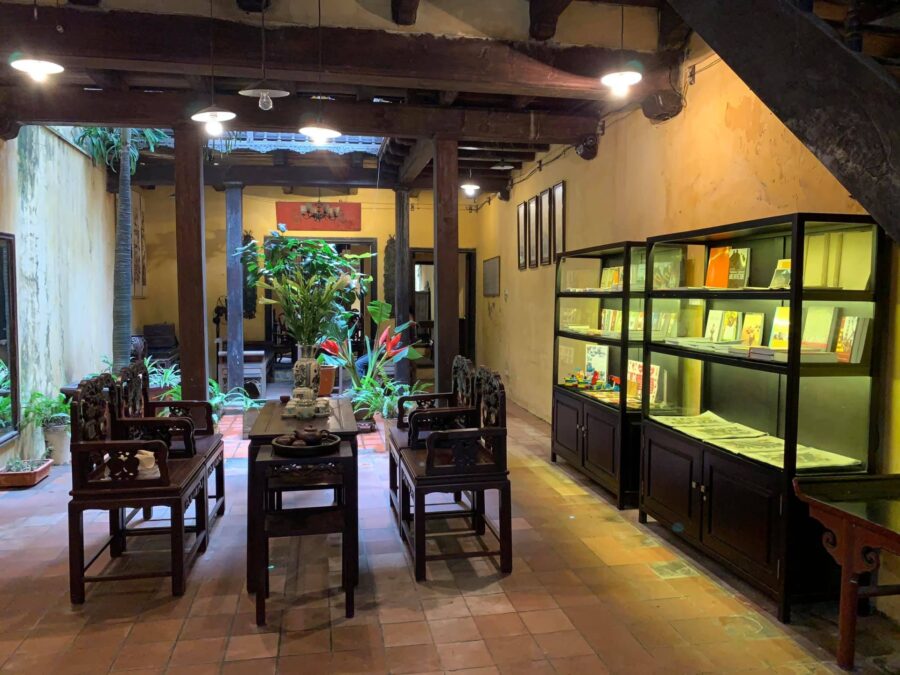
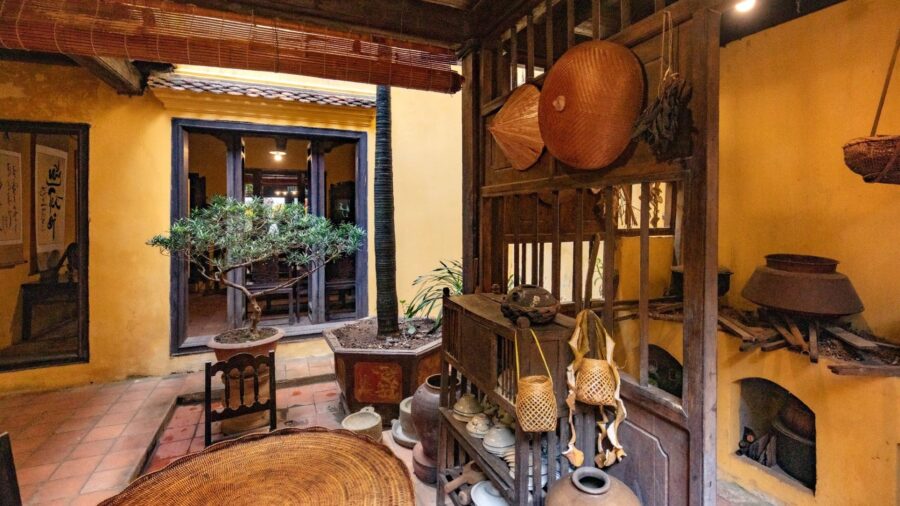
The tube-house design of Hanoi Ancient House is special because of the way the interior space is arranged. Although the house has a narrow front and a long layout, it does not feel cramped thanks to the open courtyards placed between separate spaces, which is a very unique feature. These open areas bring in natural light, fresh air, and ventilation for the whole house. The design not only supports living and business activities, but also creates a smooth transition from the noisy streets outside to the quiet family space inside.
Wood Materials and a Traditional Feeling
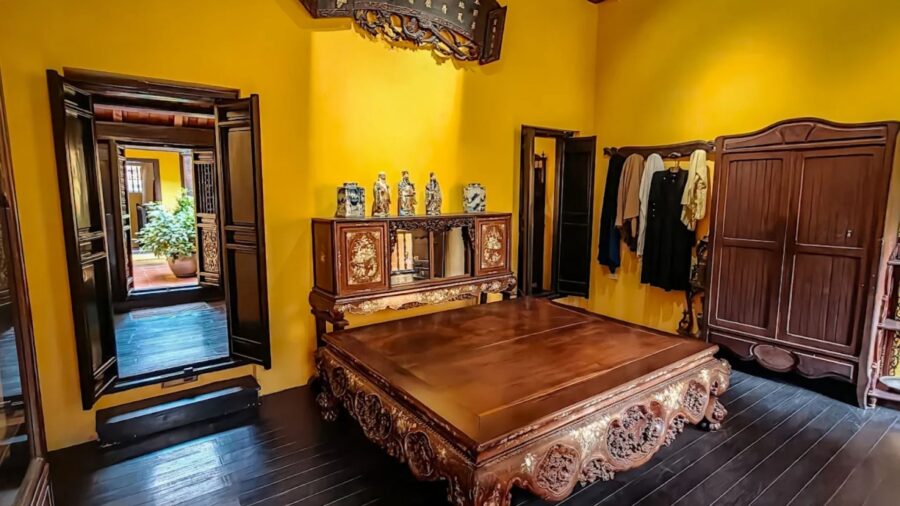
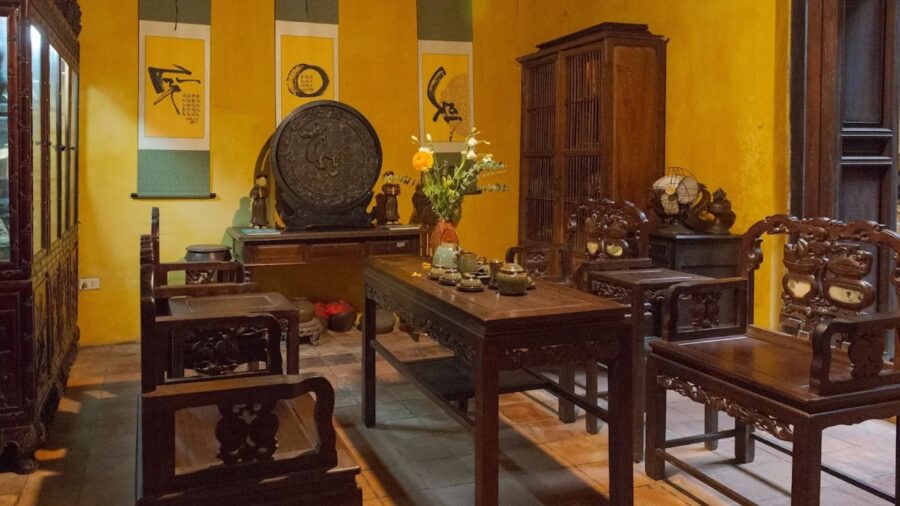
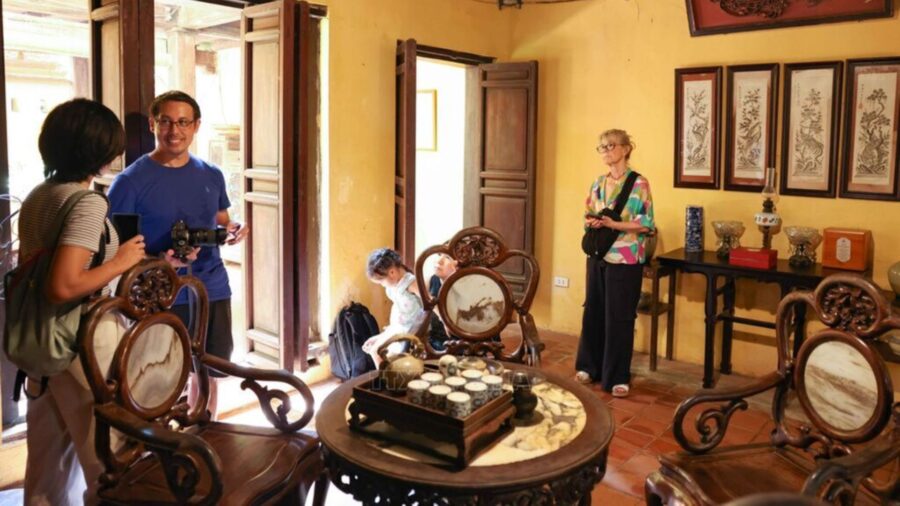
Wood appears throughout the house, from the structure to the furniture and decorative details: wooden columns, beams, stairs, doors, tables, chairs, carved elements,… Because it was a common traditional material in old Vietnamese houses, creating a warm feeling. The carved details are not overly complicated, but instead focus on elegance, balance, and refinement. This gives the house a simple and rustic beauty while still reflecting the neat and well-organized lifestyle of old Hanoi families.
Smart Design for Northern Vietnam’s Climate
Living smart in northern Vietnam’s climate Northern Vietnam summers are hot and humid with heavy rain, the winters are cold and damp. Despite the long, narrow tube house shape of Ma May Ancient House, the interior space doesn’t feel too cramped.
The ancient house is divided into different areas for different purposes and the inner courtyards help keep the space airy in summer and reduce dampness in winter. At the same time, the design still creates a warm and comfortable feeling for family life.
4. A Living Space Where Business, Family Life, and Worship Coexisted
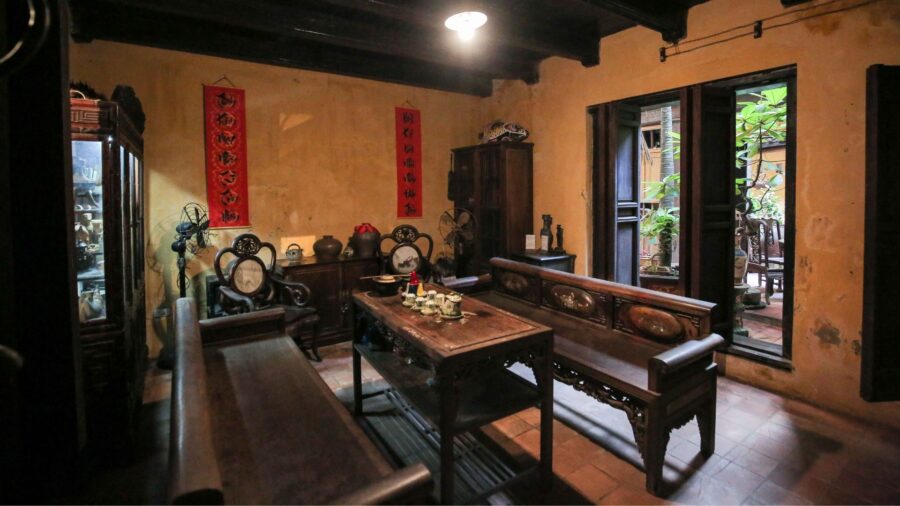
One special feature of Ma May Ancient House is the way it combines business space with family space. This was a common lifestyle among merchant families in the Old Quarter, where the shop and the home were part of the same building.
The Front Area: Facing the Street
The front part of the house was usually the area most connected to the street. It was suitable for business, receiving guests, and showing the family’s style, order, and social position.
The Inner Area: Private Family Life
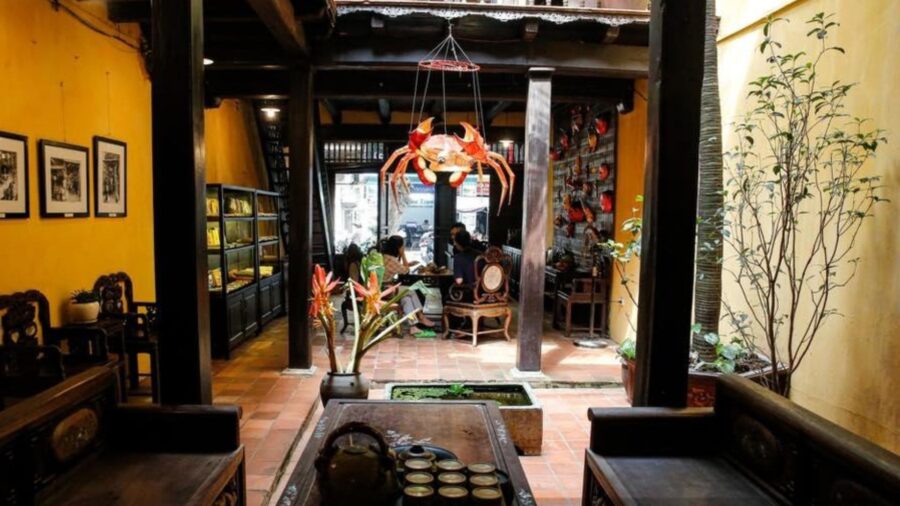
The spaces deeper inside the house were more private and used for daily living, resting, and family activities. The transition from the front to the back reflects a traditional way of life that valued privacy, order, and family structure.
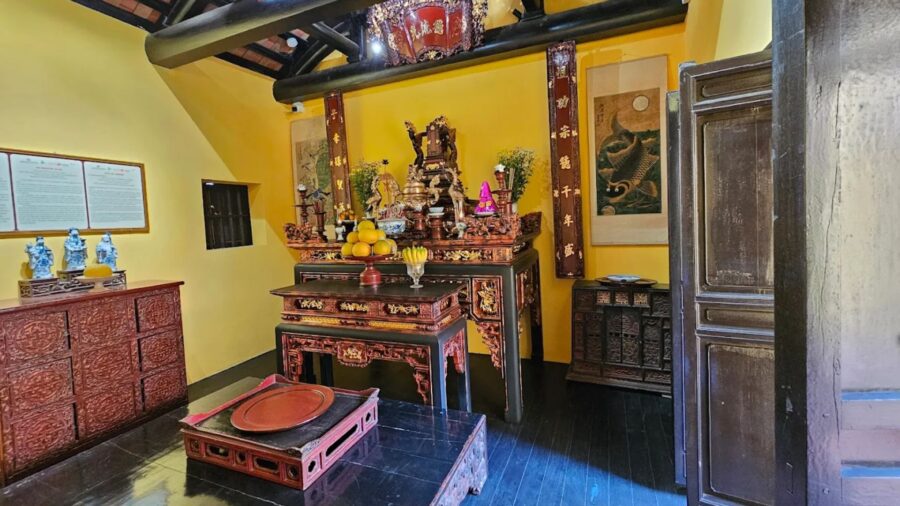
Ancestor Worship in a Traditional Vietnamese Home
The worship space is an important part of a traditional Vietnamese house. The ancestral altar is not only a place for spiritual practice, but also a symbol of family roots, respect, and connection between generations.
The mix of business, family life, and worship gives Ma May Ancient House deep cultural meaning. It is not just a display space, but a real window into how Hanoians once organized their lives inside the Old Quarter.
5. Why Do Foreign Tourists Love Visiting Ma May Ancient House?
A Living Glimpse of Old Hanoi
One interesting thing about the house is that it does not feel frozen or distant like a museum with objects locked behind glass. Ma May Ancient House still feels alive and closely connected to visitors. It is easy to imagine the sounds of conversations, trading activities, footsteps on the wooden stairs, and the daily life of the many generations who once lived here.
Ma May Ancient House does not need large or elaborate objects to impress visitors. Its value lies in the whole experience: the way sunlight falls into the inner courtyard, the smell of old wood, the quiet tiled roof, and the feeling that time still remains in every small corner. The rooms are arranged one after another, creating an interesting journey from the busy street into the deeper parts of the house. Each space slowly reveals another part of old Hanoi life and traditions.
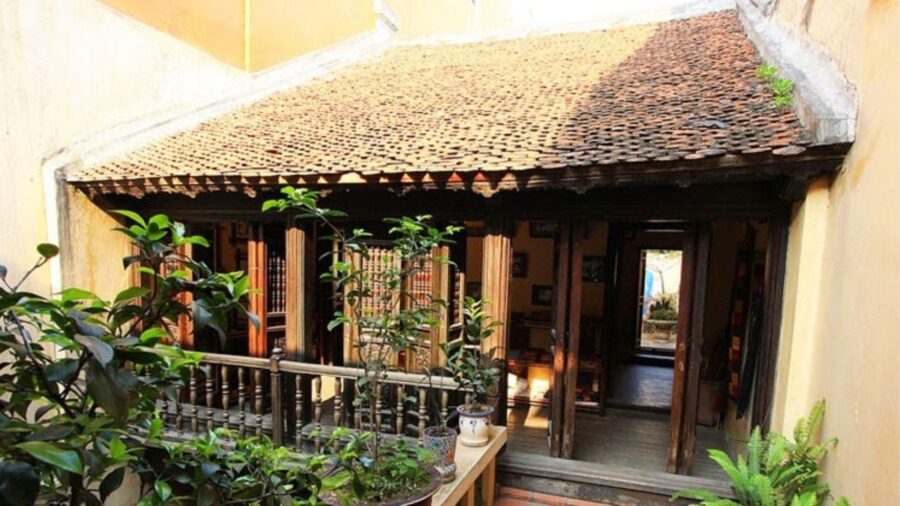
The house helps visitors understand that Hanoi’s Old Quarter is not only about shops, food, and photo spots. Behind the narrow street fronts is a thoughtful way of living that reflects Hanoi’s economic history, family life, and cultural values. It recreates a small part of old Hanoi in the middle of modern Hanoi.
For international visitors, Ma May Ancient House is an easy and meaningful way to understand Vietnamese culture and daily life. Instead of seeing Hanoi only through temples, museums, or large monuments, visitors can discover the culture and people through a humble house filled with stories.
Traditional Performances and Cultural Experiences
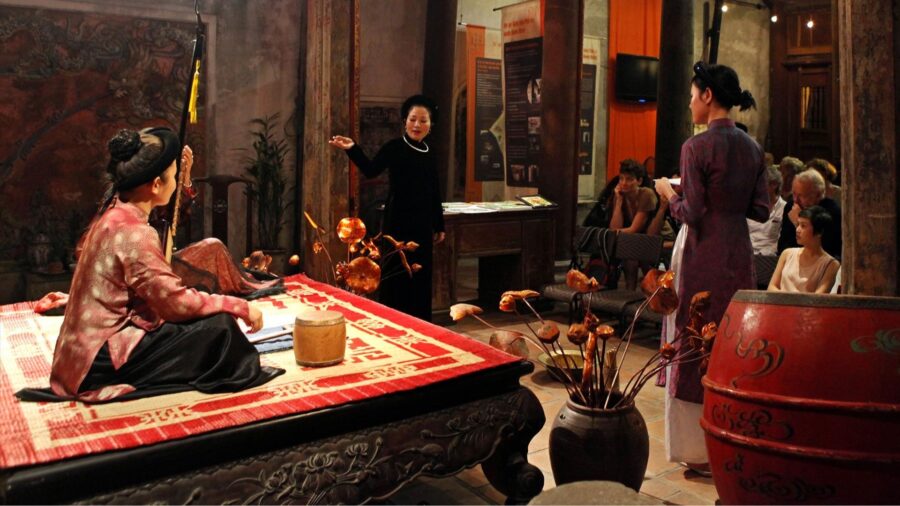
Besides visiting the ancient house, visitors can also enjoy cultural activities such as traditional music performances like ca tru, cheo, hat xam, and Vietnamese folk instruments, as well as exhibitions of folk paintings, calligraphy, and traditional handicrafts. These activities are often held during cultural festivals, Lunar New Year (Tet), Mid-Autumn Festival, weekends, or special tourism events in Hanoi’s Old Quarter.
In addition, Ma May Ancient House sometimes offers cultural experiences such as tea-making, calligraphy writing, and introductions to traditional family customs and ancestor worship in old Hanoi homes. Through these activities, international visitors can not only see the heritage, but also better understand Vietnamese daily life and culture.
6. Notes for Visiting Hanoi Ancient House
- When visiting, please keep your voice low, avoid touching objects unless allowed, and be respectful around worship areas.
- Visitors should follow the instructions of the staff, walk carefully, and avoid using flash when taking photos.
- Do not leave rubbish behind or bring food and drinks into display areas.
- Since this is a heritage space with old furniture, narrow corridors, and spiritual corners, the experience becomes more meaningful when visitors take their time, observe it with care, and show respect for both the place and other visitors.
7. How to Visit Hanoi Ancient House?
You can visit Ma May Ancient House Hanoi in several easy ways. The most popular option is to walk from Hoan Kiem Lake through the Old Quarter, but you can also take a taxi, use a ride-hailing app, or combine it with nearby stops such as Bach Ma Temple, O Quan Chuong Gate, Dong Xuan Market, and Ta Hien Street.
For a more memorable experience, you can visit Hanoi Ancient House as part of Jackfruit’s city tour in Hanoi, which offers off-the-beaten-path cycling experiences in Hanoi. Exploring by bike lets you move slowly through the Old Quarter, feel the rhythm of local streets, discover hidden corners, and see the ancient house not just as a single attraction, but as part of Hanoi’s wider living heritage.