

Table of Contents
Almost every Friday or Saturday around 8 PM, I do something I’ve been doing since I learned to ride a motorbike. I head straight to Hanoi’s walking street. It’s not a tourist thing for me. It’s just what weekends are.
The moment those metal barriers go up and the streets close to traffic, the entire energy of downtown Hanoi shifts. Suddenly, Hoan Kiem Lake isn’t just a landmark anymore, it becomes the city’s living room.
If you’re visiting Hanoi and want to understand what makes this city come alive on weekends, this is where you need to be. Not the temples, not the museums – here! Because this is where locals actually go to unwind. Where kids weave through crowds on roller skates, dodging street musicians. Where you’ll catch grandmothers dancing together under strings of lights, completely unbothered.
I’m going to walk you through it the way I experience it. No fluff, no generic travel blog nonsense, just the real deal.
What exactly is Hanoi Walking Street?
Hanoi Walking Street Then & Now

Before 2016, the roads circling Hoan Kiem Lake were pure, unadulterated Hanoi traffic – a continuous stream of motorbikes, cars, and buses. It was chaotic, beautiful, and sometimes overwhelming.

The entire pedestrian initiative officially started in September 2016 as a groundbreaking experiment by the city government. The goal was to give residents and visitors a safe, car-free space to enjoy the historic quarter without the constant need to dodge motorbikes. The change was immediately embraced. Within weeks, the silent streets filled with spontaneous cultural performances, traditional folk games, and an infectious, relaxed energy. It proved that Hanoians deeply craved this moment of calm. Today, the Hanoi walking street has become one of the most popular gathering spots in the entire city, a vibrant expression of our community spirit.
You might hear this weekend spectacle called by several names: the Hanoi Walking Street, the Hoan Kiem Lake Pedestrian Zone, or perhaps the most common local term, Sword Lake Walking Street. No matter which name you use, they all refer to the same incredible urban transformation that takes place every week in the heart of our capital.
Hanoi Walking Street Has How Many Streets?
The Hanoi Walking Street officially refers to a network of over 26 pedestrianized roads in the Old Quarter, all centered around Hoàn Kiếm Lake.
The primary area that closes to all vehicular traffic runs along the main streets leading into the Old Quarter, such as Hàng Đào and Đồng Xuân, and extends through key arteries like Hàng Ngang, Hàng Đào, and, crucially, the entire northern shore of the lake.
Why Locals Actually Love It

Here’s what the tourism websites won’t tell you: Hanoi Walking Street isn’t just for tourists. On any given Saturday night, you’ll find Vietnamese families pushing strollers, elderly couples doing their evening exercise, teenagers practicing dance routines, and street musicians trying to make a few extra thousand đồng.
I love it because it’s one of the few places in Hanoi where I can walk without constantly looking over my shoulder for motorbikes. My city is loud, chaotic, and wonderful, but sometimes you just want to walk in a straight line without playing real-life Frogger.
When to Visit Hanoi Walking Street
The transformation begins like clockwork.
- When: Every weekend, starting from Friday evening at 7:00 PM and lasting until Sunday midnight (12:00 AM).
- Where: The zone wraps entirely around the scenic Hoan Kiem Lake, extending into key parts of the Old Quarter, including streets like Hang Dao, Hang Ngang, Luong Van Can, and even the lively Ta Hien (the famous Beer Street). If you want to see the full area, you can look up the list of all 26 pedestrianized roads!
My favorite time for Hanoi walking street:
Friday Night (8 – 9 PM): This is when I usually go. The street is lively but not overwhelmingly crowded. You can actually walk at a normal pace and stop to browse without getting swept along by the crowd. The energy is building, musicians are setting up, and the food vendors are fresh and ready.
Saturday Afternoon (4 – 6 PM): Technically the street isn’t fully closed yet, but the lake area is already pedestrian-friendly. This is my pick for a quieter experience. Grab a cà phê sữa đá from a lakeside café, sit on the low wall overlooking the water, and watch the city transition from day to night. The light is beautiful for photos too.
Saturday Night (9 – 11 PM): Peak Chaos & Festival Energy. Shoulder-to-shoulder crowds, maximum energy, and every performer, vendor, and visitor is out in full force. Crucially, this is when you often find larger, organized outdoor performances – think massive public dancing, group concerts, or sometimes traditional shows near the Ly Thai To Monument. If you love people-watching and don’t mind dense crowds, this is your moment. I only do this when I have out-of-town friends who want the “full experience”.
Sunday Evening: Similar to Saturday but slightly calmer. Families dominate more than the younger party crowd.
Getting There and Parking
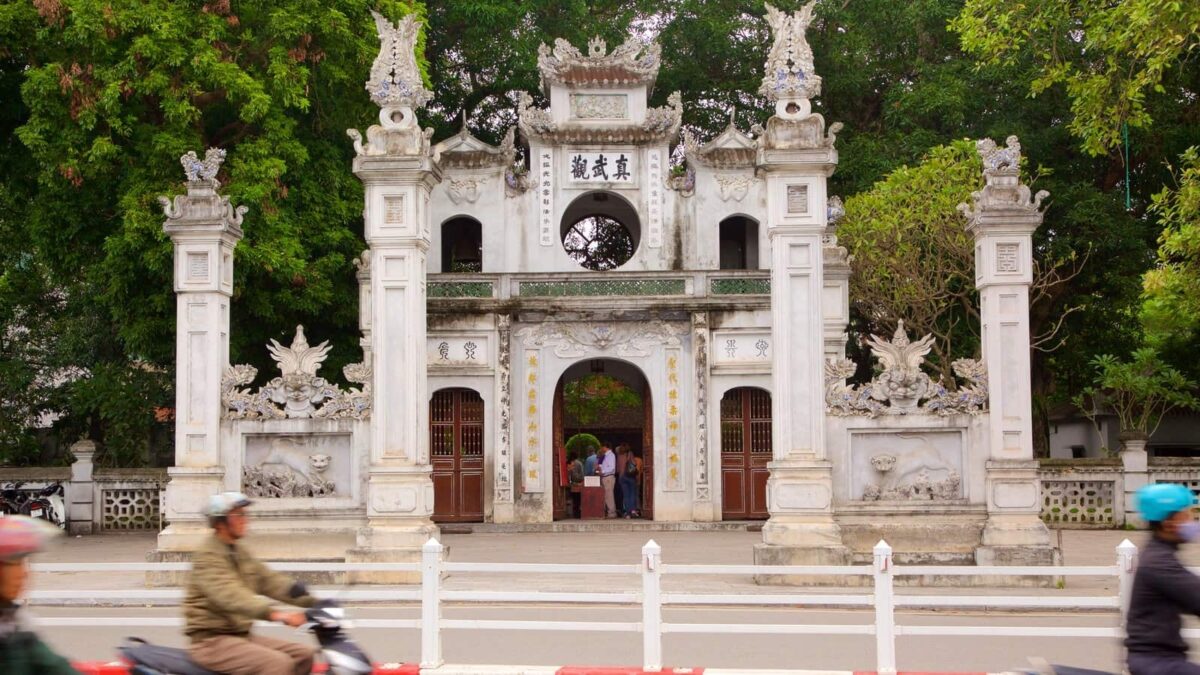
From anywhere in the Old Quarter, just head toward the northern edge of Hoan Kiem Lake, you’ll see the crowds. The most recognizable landmark is Ngoc Son Temple sitting on the island in the lake.

If you’re riding a motorbike (like most of us do), there are several parking spots around the perimeter: near Dong Xuan Market, along Trang Tien Street on the south side of the lake, or near the Hanoi Opera House. Parking usually runs you about 20,000 – 50,000 VND ($0.75 – $1.90 USD).
Get there before 7:30 PM on Saturdays or parking gets messy. Most spots are attended, so you’ll get a ticket. Don’t lose it.
How I Usually Spend My Evening on Hanoi Walking Street (and fun things I just want to share with you)
I don’t have a strict route anymore – I’ve walked these streets hundreds of times – but there’s a rhythm I tend to follow. Let me walk you through a typical weekend night for me.
Catching Spontaneous Live Music at Dong Kinh Nghia Thuc Square

I usually start at Dong Kinh Nghia Thuc Square, right next to Hoan Kiem Lake. This is ground zero. There’s almost always live music here, sometimes it’s a student band covering Vietnamese pop songs, other times it’s traditional instruments like the đàn bầu or dan . I’ve seen everything from breakdancers to a guy doing magic tricks with nothing but a deck of cards and a Bluetooth speaker.
The square gets packed fast, but I like hanging near the back, just watching. You’ll see street vendors weaving through the crowd selling street foods, iced tea in plastic bags tied with rubber bands, and colorful cotton candy.
Admiring Portrait Paintings on Le Thai To Street: The Quieter Side
From the square, I usually drift toward Le Thai To Street, which runs along the northern edge of the lake. This stretch is quieter, less performative, more contemplative. You’ll see couples sitting on the steps talking, street artists sketching portraits for 100,000 VND (about $4), and the occasional elderly man doing calligraphy on the pavement with a water brush. It disappears in minutes. I really love that.

There’s also a section where people set up small art stalls selling paintings, handmade jewelry, and ceramic pieces.
Must-try fun: Commission a portrait! It’s a cheap, fun souvenir and supports a local artist.
Hang Dao Street: Snack-Hopping and Shopping the Night Market

If you want the full Hanoi walking street experience, you need to walk down Hang Dao Street. This is where it gets dense. Shoulder-to-shoulder, slow-moving crowds, with street food carts lining both sides. The smell of grilled squid, corn slathered in butter, and chè (Vietnamese sweet soup) hangs thick in the air. I’ve stopped trying to resist.
Must-try fun: When you’re wandering through the dense crowd, be sure to pick up a bag of Roasted Chestnuts (Hạt dẻ nướng) – the smoky, sweet aroma is pure heaven – and a refreshing cup of iced lemon tea.
Dinh Tien Hoang Street: Joining Folk Games

By the time I loop around to Dinh Tien Hoang Street, it’s usually later in the evening, and the vibe shifts completely. This stretch is where families post up. Kids zoom past on roller skates and scooters through Ly Thai To flower garden, parents chase after them half-heartedly while scrolling their phones, and there are usually groups of older women dancing in sync to pop music from a portable speaker. Sometimes I stop and just watch. There’s something grounding about it – seeing three generations in one space, all just enjoying a Friday night without needing an excuse or a plan.
Must-try fun: Head over to the area near the Post Office to find the folk games area. You can join in a group game of Bamboo Dancing (Nhảy Sạp) or watch locals play the highly skilled Feathercock (Đá Cầu). There’s something grounding about seeing three generations in one space, all just enjoying a weekend night without needing an excuse or a plan.
What to Eat on Hanoi Walking Street
Let me be honest, Hanoi Walking Street is not where you’ll find the absolute best street food in the city. Those legendary spots are usually down residential alleys where motorbikes can barely squeeze through, run by families who’ve been making the same dish for three generations. But the food here is convenient, always available, and definitely good enough to keep you snacking as you walk.

Here’s what I actually eat when I’m strolling around:
- Mixed Rice Paper (Bánh Tráng Trộn): This is my personal go-to snack. It’s rice paper torn into pieces, mixed with dried beef, quail eggs, green mango, and a super tangy sauce. It might sound weird, but trust me, it tastes incredible. You’ll usually find a popular cart selling it on Hang Dao Street, just look for the crowd of teenagers. Around 20,000-30,000 VND ($0.75–$1.30 USD)
- Grilled Squid and Corn: The smell will find you before you find the cart. Squid on skewers, grilled over charcoal, brushed with spicy sauce. Corn gets slathered in butter and scallion oil. Simple, messy, delicious. 30,000-50,000 VND ($1.15–$1.90 USD) each.
- Roasted Chestnuts: Especially good in winter (November to February). There’s usually a cart near Dong Kinh Nghia Thuc Square. 50,000 VND ($1.90 USD) for a warm paper bag that you’ll finish before you realize it.
- Iced Lemon Tea (Trà Chanh): Not food, but essential. Sweet, tart, ice-cold, and served in a plastic bag with a straw. Perfect for humid nights. 10,000-15,000 VND ($0.40–$0.55 USD).
- Trang Tien Ice Cream: Not exactly street food too, but the iconic Trang Tien ice cream shop is right at the southern end of the walking street. This place has been around since 1958. Get the classic vanilla or the nutty mung bean flavor. It’s nostalgia in a cone. 15,000-25,000 VND ($0.55–$0.95 USD).
- Sweet Soup (Chè): If you need something sweet and refreshing, head to Chè 4 Mùa at 4 Hang Can Street after you’ve done enough walking. Try the chè thập cẩm (mixed sweet soup) or chè đậu đỏ (red bean). 25,000-35,000 VND ($0.95–$1.30 USD).

About Dong Xuan Market: If you have time, Dong Xuan Market is just a 10-minute walk north from the main walking street area. The food court on the upper floors has more variety – Bánh Tôm (shrimp cakes), Bún Ốc (snail noodle soup), Cháo Sườn (rib porridge). It’s convenient if you want to try several dishes in one sitting without wandering around. Nothing life-changing, but solid and authentic enough. Here’s our Ultimate guide for shopping and explore Dong Xuan market, make sure to check it before visiting the market!
I never leave without eating at least two things. It’s just how it works.
Shopping on Hanoi Walking Street
The streets are lined with shops selling everything from hand-embroidered silk to mass-produced “I ❤️ Hanoi” t-shirts. Here’s my local filter:
Worth your time: Small galleries showing contemporary Vietnamese art, boutique shops selling redesigned áo dài (traditional Vietnamese dress), or genuine silk scarves (look for the ones that cost actual money, not $5 knockoffs), and shops specializing in lacquerware or ceramics from Bat Trang village. There’s also this little shop I stop by sometimes called CULCAT – Art Print & Gifts at 9C Dinh Liet Street. They sell stuff with artwork that’s mostly cats – prints, postcards, t-shirts. As someone who’s borderline obsessed with cats, it’s kind of perfect.

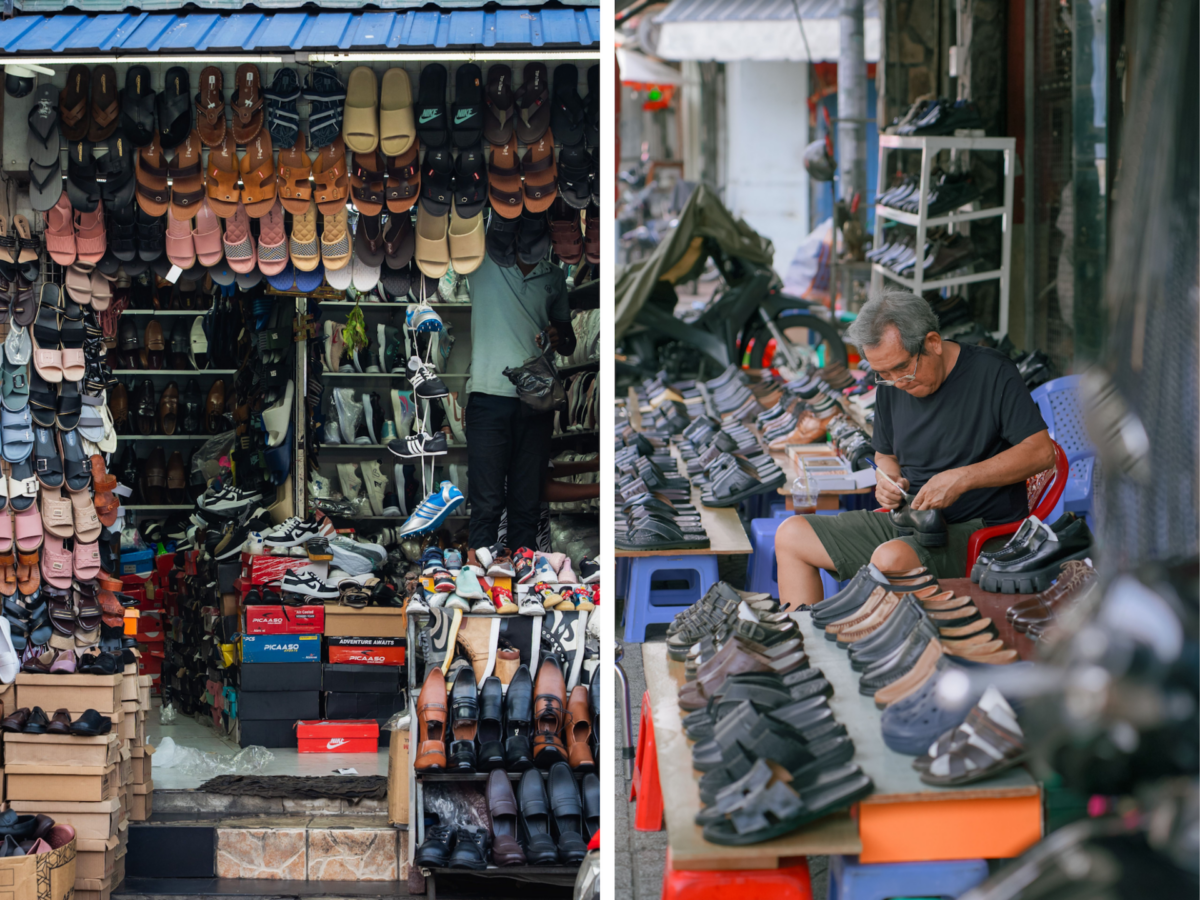
Skip: Anything with your name spelled wrong in “traditional Vietnamese calligraphy”, cheaply made conical hats that will fall apart in your suitcase, and knock-off North Face jackets. You can find better quality and better prices in the actual markets.
Practical Tips for Actually Enjoying Hanoi Walking Street
1. Wear Comfortable Shoes
I can’t stress this enough. You’re going to walk. A lot. The pavement isn’t always even, and you’ll be stopping and starting constantly. Flip-flops are fine. Sneakers are better. Heels are not. I once wore new sandals and regretted it for three days.
2. Bring Cash
Most vendors don’t take cards. Some take mobile payments if you have a Vietnamese bank account, but cash is king. I usually bring around 200,000 VND ($8 USD) for snacks and small purchases. That’s more than enough for an evening of casual eating and maybe one small souvenir.
3. Weather Considerations
Hot Season (May-September): It gets humid. Bring a small hand towel, wear breathable clothes, and stay hydrated. Lakeside cafés have fans and AC if you need to cool down.
Rainy Season (June-September): Rain can hit suddenly. Bring a compact umbrella or light rain jacket. Vendors sell cheap plastic ponchos for 20,000 VND if you get caught off guard. The walking street doesn’t close for rain, and honestly, it’s kind of beautiful when it’s drizzling and the lights reflect off the wet pavement.
Cool Season (November-February): Perfect weather. Maybe bring a light jacket for evening, but you’ll warm up quickly when you’re walking in the crowd.
4. Go with the Flow
Don’t fight the crowd. There’s no point. If you try to rush or weave through aggressively, you’ll just stress yourself out. I’ve learned to just move at the pace of the group. It’s actually kind of meditative once you stop resisting.
Walk on the right. Just like traffic, there’s an informal flow. Stick to the right side of the street to avoid the frustrated sighs of people trying to get past you.
5. Watch Your Belongings
Hanoi is generally very safe, but the walking street gets packed, which means you need to be mindful. Keep your phone and wallet in front pockets or a cross-body bag with the zipper facing your body. Pickpocketing is rare but can happen in very dense crowds, especially near the lake railings where people stop to take photos.
I’ve walked here hundreds of times and never had an issue, but I also never leave my phone sticking out of my back pocket.
What Makes Hanoi Walking Street Special

If you come to Hanoi Walking Street with high expectations about cleanliness, you’re going to be disappointed. Sometimes the sound systems from competing performers clash into an auditory mess. Sometimes there’s trash on the ground. Sometimes overly aggressive vendors will follow you for half a block trying to push their services or sell you stuff you clearly don’t want.
But that’s Hanoi. The magic isn’t in the polish – it’s in the authenticity. This is a city where ancient traditions and modern chaos collide on every street corner, where a thousand-year-old temple sits next to a smartphone repair shop, where you can eat a 35,000 VND bowl of phở that tastes better than anything you’ll find in a sit-down restaurant.
Hanoi Walking Street captures all of that. It’s messy, it’s loud, it’s overwhelming, and it’s absolutely worth experiencing.
Experiencing Hanoi Walking Street with Jackfruit Adventure
Look, I’m local, so I can navigate Hanoi Walking Street in my sleep. But if you’re visiting and want to experience it with someone who actually knows the stories behind the streets, which food cart has the best bánh tráng trộn (because yes, there’s a difference), and those hidden artist corners where tourists never go, that’s where Jackfruit Adventure comes in.
We offer curated experiences that go beyond the surface – street food crawls that take you to the real spots (including that alley I mentioned where the truly great food hides), cycling tours through the Old Quarter, and personalized routes based on what you’re actually interested in, not some one-size-fits-all itinerary.
If you want to explore the area more deeply on your own first, check out our guide 10 Awesome Things to Do in Hanoi Old Quarter 2025.

Or if you prefer a guided experience where someone else handles the navigation and insider knowledge, we have a cycling tour that honestly captures the energy perfectly, which is Tour de Hanoi: Old Quarter, Iconic Landmarks & Hidden Corners.
Book your Hanoi experience with Jackfruit Adventure today and see the city the way locals do – messy, loud, delicious, and unforgettable.