

Table of Contents
Compared to Ho Chi Minh City, Hanoi often feels more expensive when it comes to cafés, restaurants, or even a night out. Yet at the same time, it is a city shaped by old temples, colonial-era streets, and wide public spaces. Much of its charm is tied to heritage and daily life, which makes it surprisingly easy to experience without paying anything at all. Hanoi Vietnam may carry the weight of history, but that very character is what opens it up to travelers in the simplest ways.
That is why I believe Hanoi is one of the most approachable cities in Vietnam. It invites you to slow down, to watch, to listen, and to take part in moments that cost nothing but time. You can get a true sense of the Vietnamese capital through its culture, people, and atmosphere, and you do not need a ticket to do so. What follows is my personal checklist of free things to do in Hanoi, the experiences that capture its heart without touching your budget.
Free things to do in Hanoi Vietnam
1. Join morning exercise at Hoan Kiem Lake
- Address: Hoan Kiem Lake, Hang Trong Ward, Hoan Kiem District, Hanoi
- Opening hours: Open 24 hours (best 5:00–7:00 AM and weekend nights)
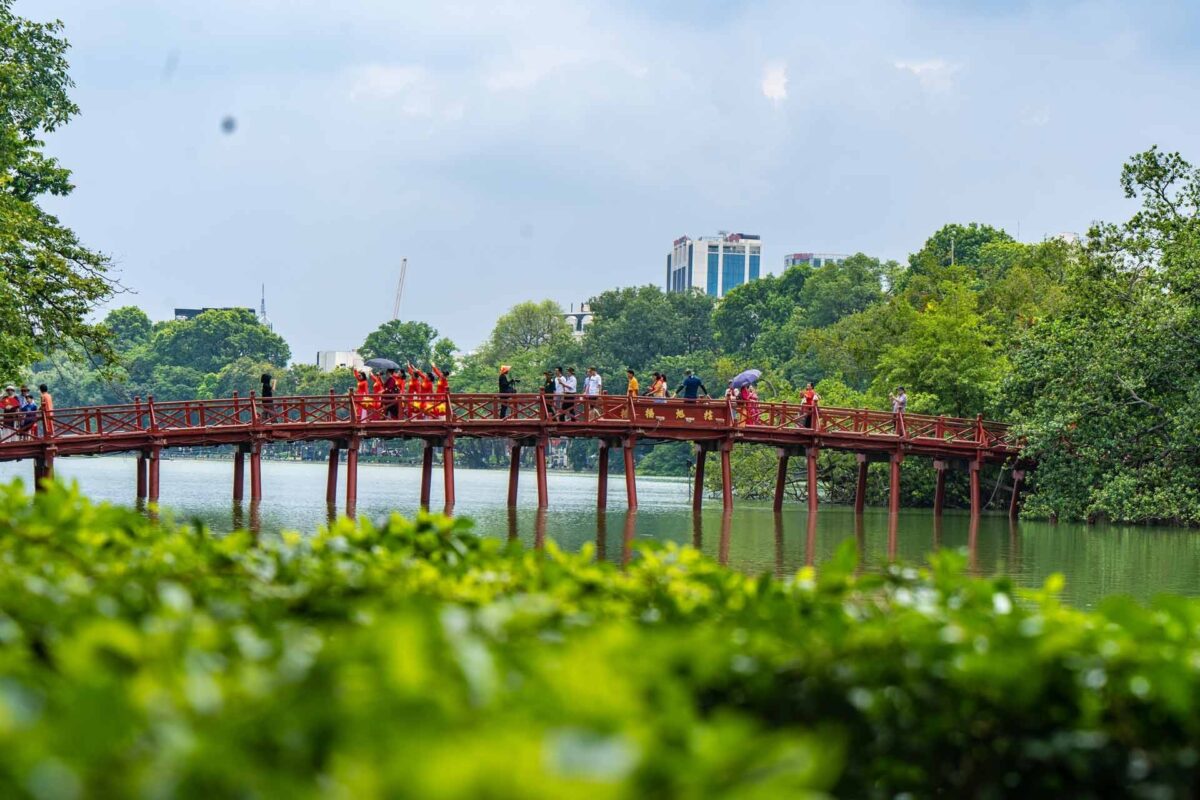
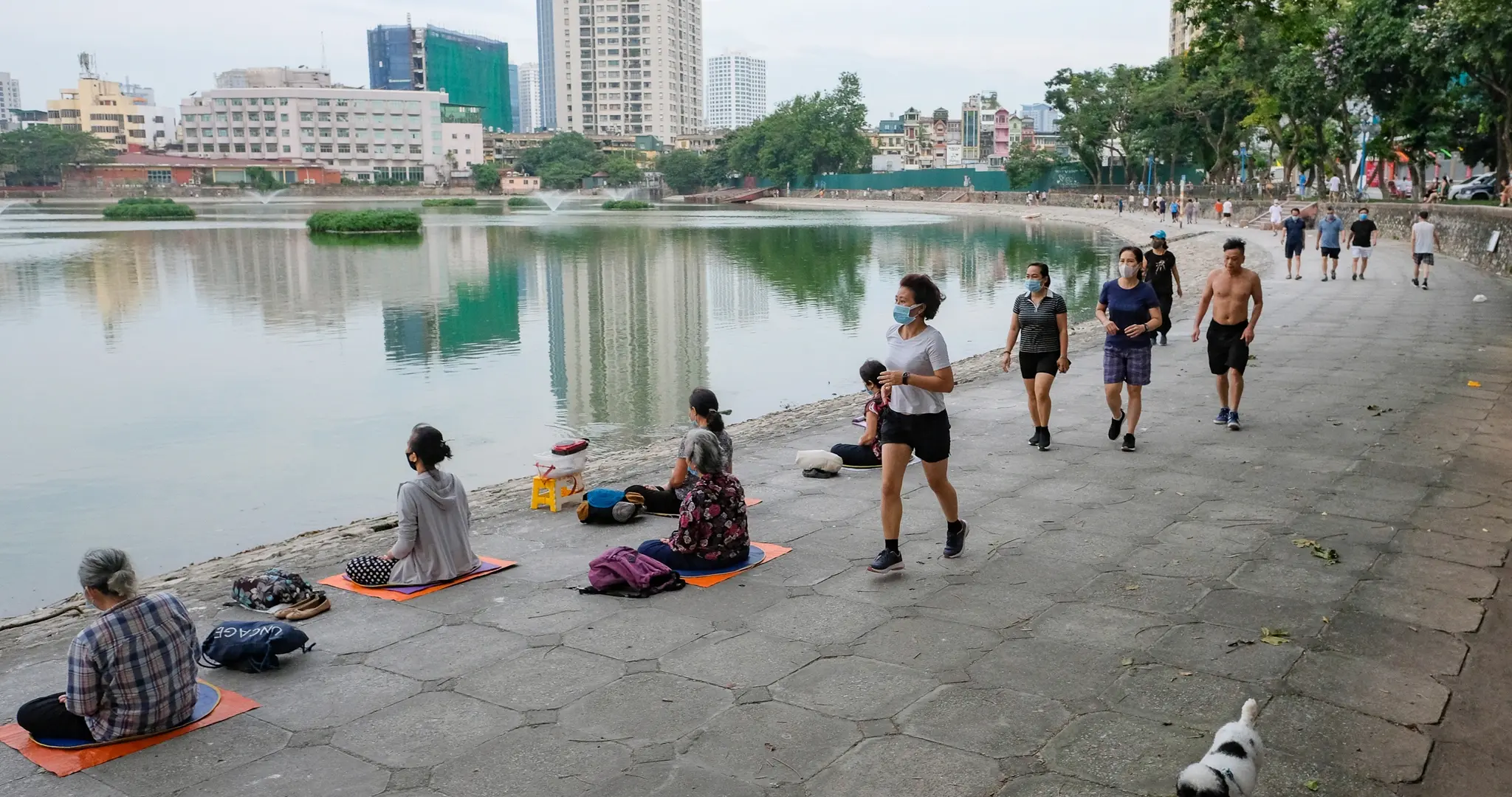
Early morning at Hoan Kiem Lake shows you a different side of Hanoi. Before the streets get busy, the lake turns into the city’s outdoor gym. People practice tai chi, jog, or chat while the Turtle Tower stands quietly in the middle. The atmosphere is calm but buzzing with energy, and it often surprises first-time visitors. Some foreigners even pick up the habit after staying here for a while.
Hoàn Kiếm Lake is also tied to the legend of the magical sword, when a golden turtle returned it to the depths. That story, along with the view of the Turtle Tower in the morning light, makes it one of the most iconic symbols of Vietnam’s capital. Personally, I love this energy so much that if I were showing you Hanoi, the day would begin right here.
But the lake is not only beautiful in the morning. On weekend nights, the streets around Hoan Kiem Lake close to traffic and turn into a lively walking area. You will find families strolling, children playing, and street performers filling the air with music. My favorite is a small band of blind musicians who often play traditional songs near the water’s edge. Locals sometimes join in, singing or dancing with them, and the whole scene feels spontaneous and warm. Watching this simple joy under the lights of the lake is one of the best free experiences you can have in Hanoi.
2. Dive into the buzz of Hanoi night market
- Address: Hang Dao – Hang Ngang – Hang Duong – Hang Khoai Streets, Hoan Kiem District, Hanoi
- Opening hours: Friday – Sunday, 6:30 PM – 11:30 PM
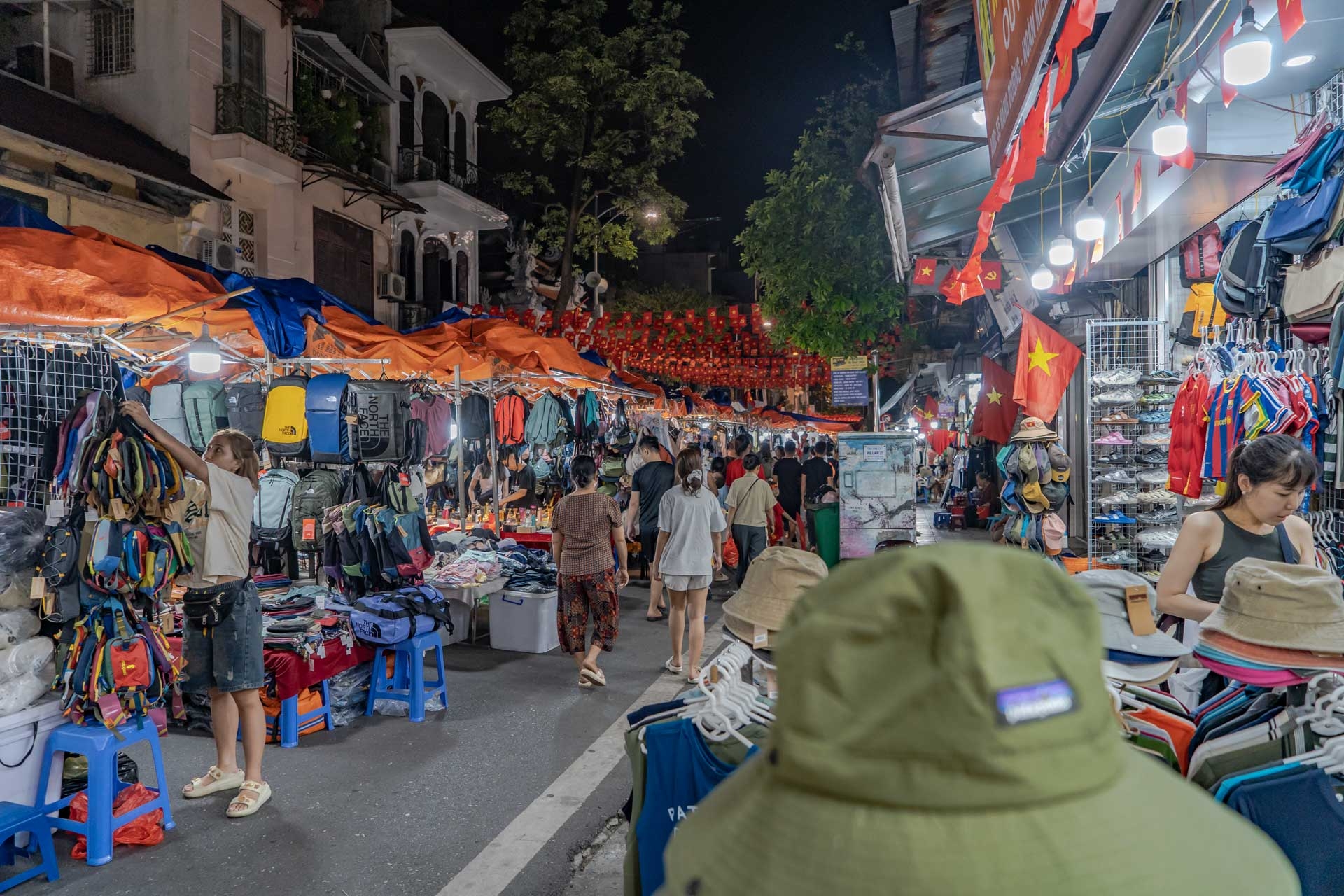
Every weekend, the Old Quarter transforms into Hanoi Night Market, stretching more than three kilometers through Hang Dao, Hang Ngang, Hang Duong, and Hang Khoai streets. From 6:30 PM to 11:30 PM on Friday, Saturday, and Sunday, the entire strip becomes pedestrian-only, packed with stalls, lights, and the energy of thousands of visitors.
Here you can browse souvenirs, handicrafts, and fashion items at some of the most affordable prices in the city. Stalls line the streets with souvenirs, fashion, and cheap things, while the air fills with the aromas of Vietnamese street food. Locals, students, and travelers weave together in the same flow, creating a night that feels festive yet authentic. If you want to explore Hanoi nightlife without spending much, this is one of the most budget-friendly ways to experience the city’s culture.
3. Browse the aisles of Dong Xuan Market
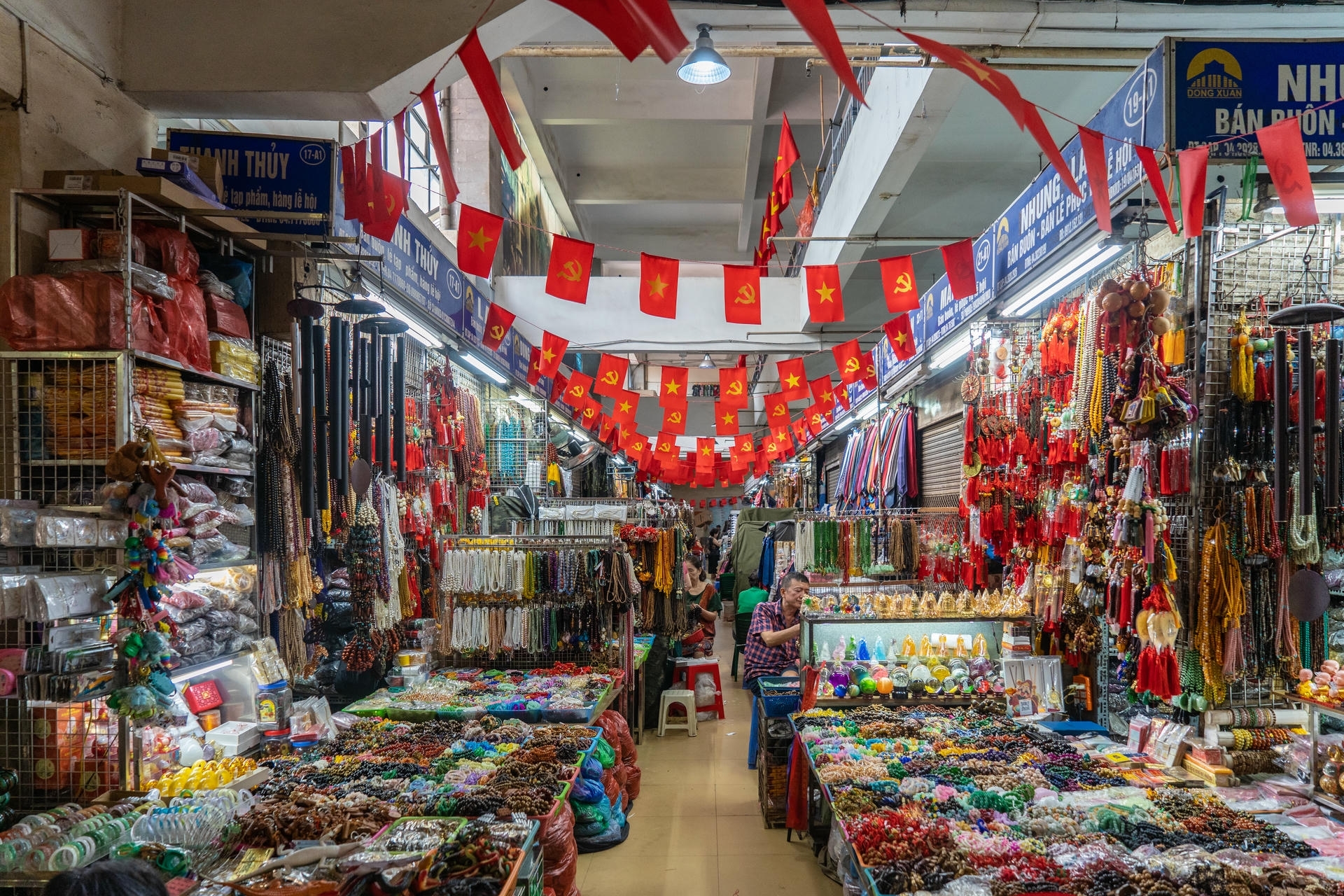
- Address: Dong Xuan Street, Hoan Kiem District, Hanoi
- Opening hours: Daily, 6:00 AM – 6:00 PM
Dong Xuan Market is the largest indoor market in Hanoi Vietnam, just a short walk from the Old Quarter. You can browse for free through rows of stalls selling fabrics, souvenirs, and household items, and the experience itself is already worth it. The food section, however, is where most visitors get hooked. The smell of herbs, sizzling pans, and simmering broths makes it nearly impossible to leave without trying something.
On a rainy day, this market becomes one of the best places to be. You stay dry while watching the rhythm of local markets unfold, and chances are you will end up joining what feels like your own mini food tour. For me, resisting a bowl of phở or bún chả here has never been an option.
4. Step into Hanoi’s Hidden Black Market
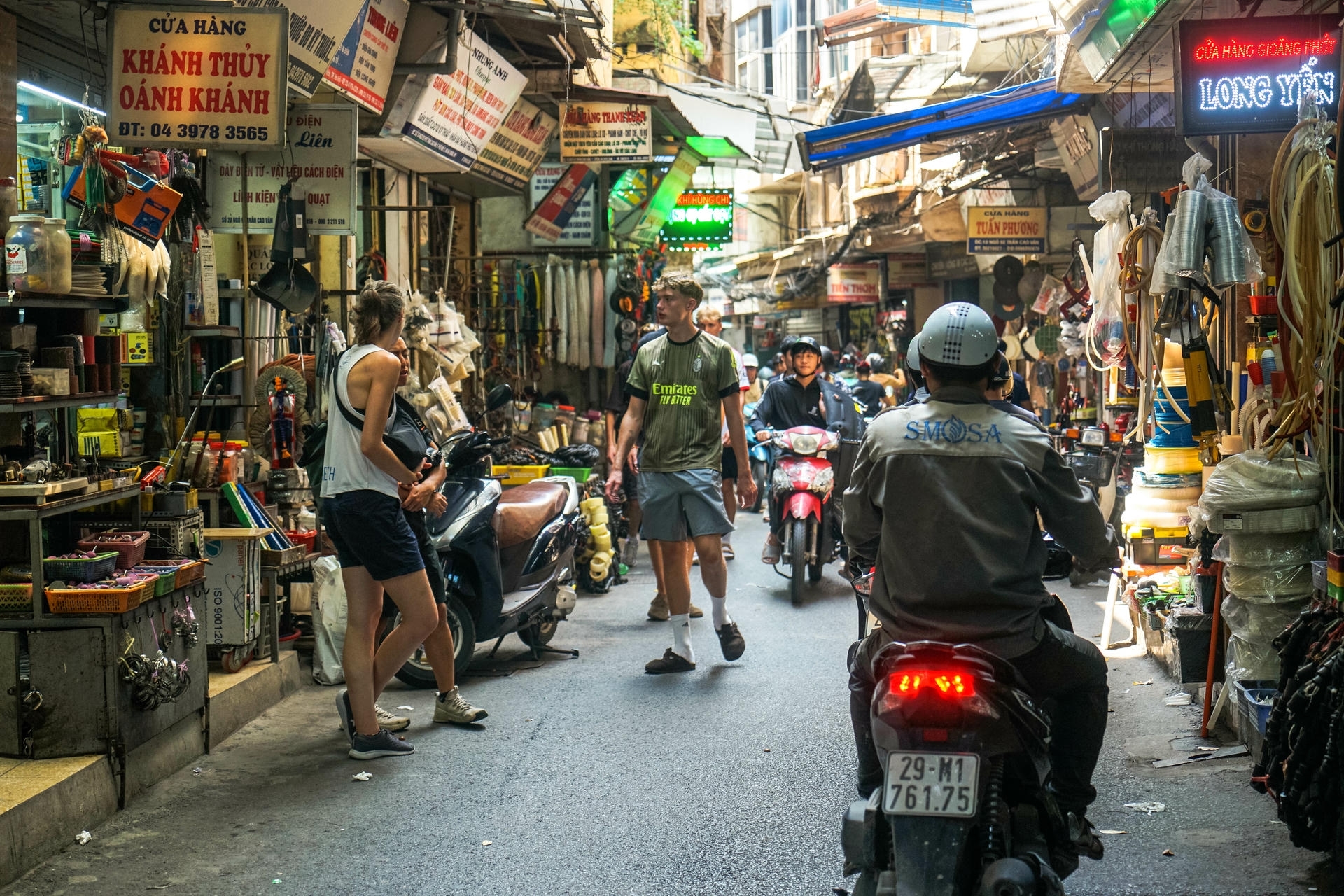
- Address: 33 Thịnh Yên Street, Phố Huế, Hai Bà Trưng District, Hanoi
- Opening hours: Daily, 6:00 AM – 8:00 PM
Among the most unique things to do in Hanoi, exploring the Black Market — or Chợ Giời as locals call it — gives you a glimpse into a side of the city few travelers ever see. The name might sound intimidating, but it’s more curious than shady. Locals still joke that if you lose something in Hanoi, chances are it will end up here.
Chợ Giời has been around since the French colonial period and became especially busy between 1945 and 1955, when goods were hard to find and people relied on informal markets to trade. Over time, it turned into a symbol of Hanoi’s resourcefulness and its knack for fixing and reusing almost anything.
Today, the market is packed with narrow alleys full of old electronics, motorbike parts, used tools, and vintage household items. The air buzzes with the sound of bargaining and clinking metal, and the scene feels both chaotic and alive. Around the market, you will notice old apartment blocks with iron balconies, tangled wires, and walls covered in fading paint. It is the kind of place where you can see how Hanoi keeps its history in plain sight.
Even if you are not planning to buy anything, it is worth coming here to feel the atmosphere and see a side of local life that has survived decades of change.
If you want to see more than just the market stalls, you can join the Hanoi Off the Beaten Path Tour by Jackfruit Adventure. The route takes you through this neighborhood’s backstreets and old apartment blocks, uncovering the untold stories of wartime Hanoi. You will pass through areas that still carry traces of the Christmas Bombings and hear how local families lived through that time. Walking or cycling here with a local guide adds depth to what you see, turning a simple visit into a glimpse of living history.
5. Pay respects at the Ho Chi Minh Mausoleum
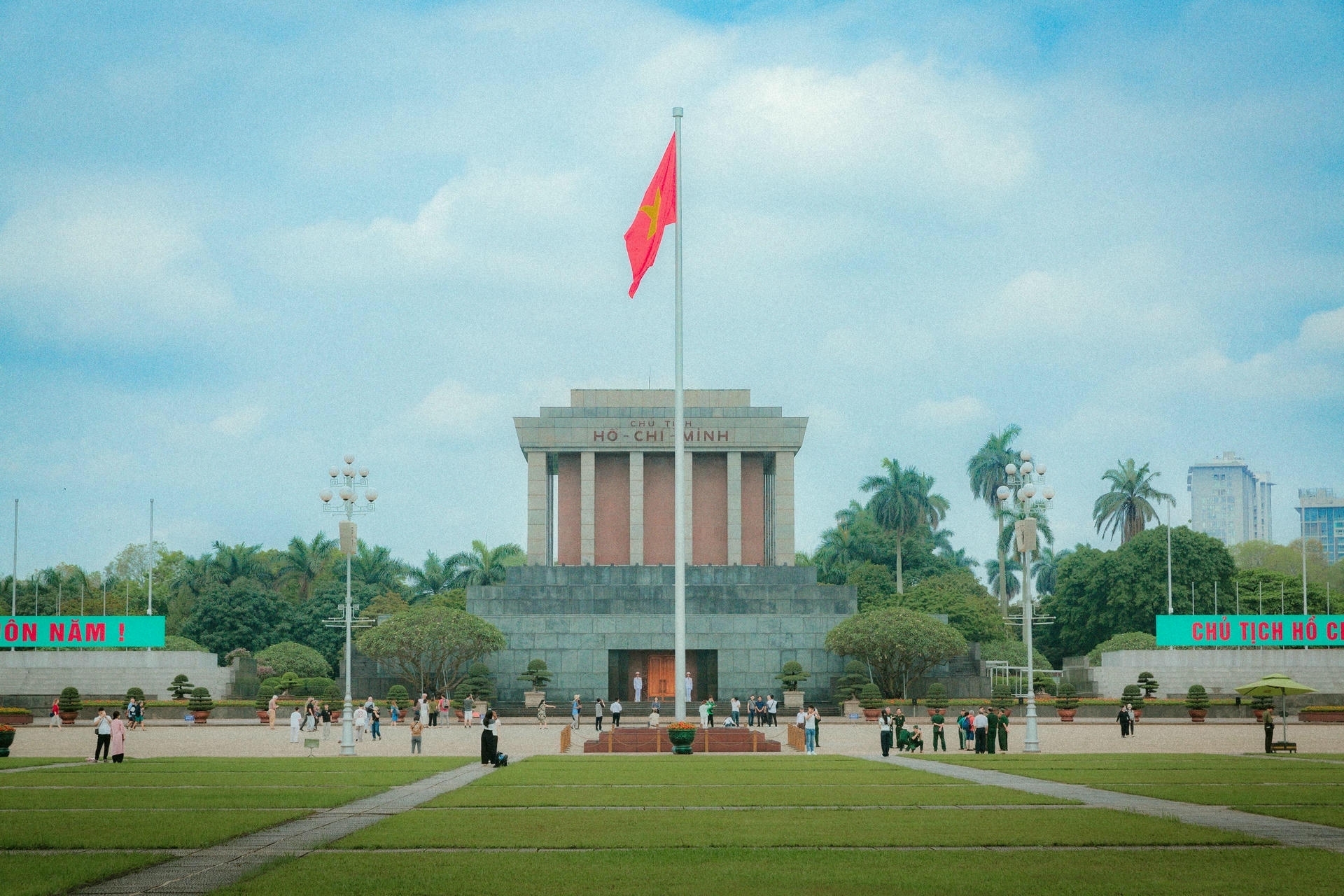
- Address: 2 Hung Vuong Street, Ba Dinh District, Hanoi
- Opening hours: April–October: 7:30 AM–10:30 AM | November–March: 8:00 AM–11:00 AM | Closed Mondays & Fridays
The Ho Chi Minh Mausoleum in Ba Dinh Square is one of the most important landmarks in Hanoi Vietnam. Inside, Uncle Ho rests in state, making this both a solemn place of remembrance and a symbol of the Vietnamese capital’s resilience. For many Vietnamese people, a visit here is an act of respect, while for travelers it is a chance to witness living history.
Visiting the mausoleum is free, but you need to check the opening hours carefully:
- April to October: 7:30 AM – 10:30 AM
- November to March: 8:00 AM – 11:00 AM
- Closed on Mondays and Fridays (except national holidays).
After paying your respects, you can visit the Presidential Palace, see Uncle Ho’s stilt house, and stop at the One Pillar Pagoda, all located nearby. For a deeper perspective, the Ho Chi Minh Museum is worth visiting. The museum not only presents personal artifacts and photographs but also offers thematic exhibitions that explain his influence on Vietnam’s history. Visiting both the mausoleum and the Ho Chi Minh Museum together gives you a fuller understanding of his life and legacy.
6. Witness the flag raising at Ba Dinh Square

- Address: Ba Dinh Square, Hung Vuong Street, Ba Dinh District, Hanoi
- Opening hours: Flag raising 6:00 AM (summer) / 6:30 AM (winter); lowering 9:00 PM daily
At sunrise, Ba Đình Square takes on a solemn atmosphere as guards in crisp white uniforms march in formation from the side of the Ho Chi Minh Mausoleum. They carry the red flag with a gold star, and as the national anthem begins, the flag is slowly raised high into the morning sky. The ritual is brief but powerful, showing how national pride and Vietnam’s history remain central to daily life in the capital.
The ceremony has been held every day since 2001, in summer at 6:00 AM and in winter at 6:30 AM. Watching it is completely free, and many locals come to witness the moment before starting their day. If you are interested in Vietnam culture, staying to observe how people gather around the square is just as meaningful as the ceremony itself.
7. Admire the gothic beauty of St. Joseph’s Cathedral
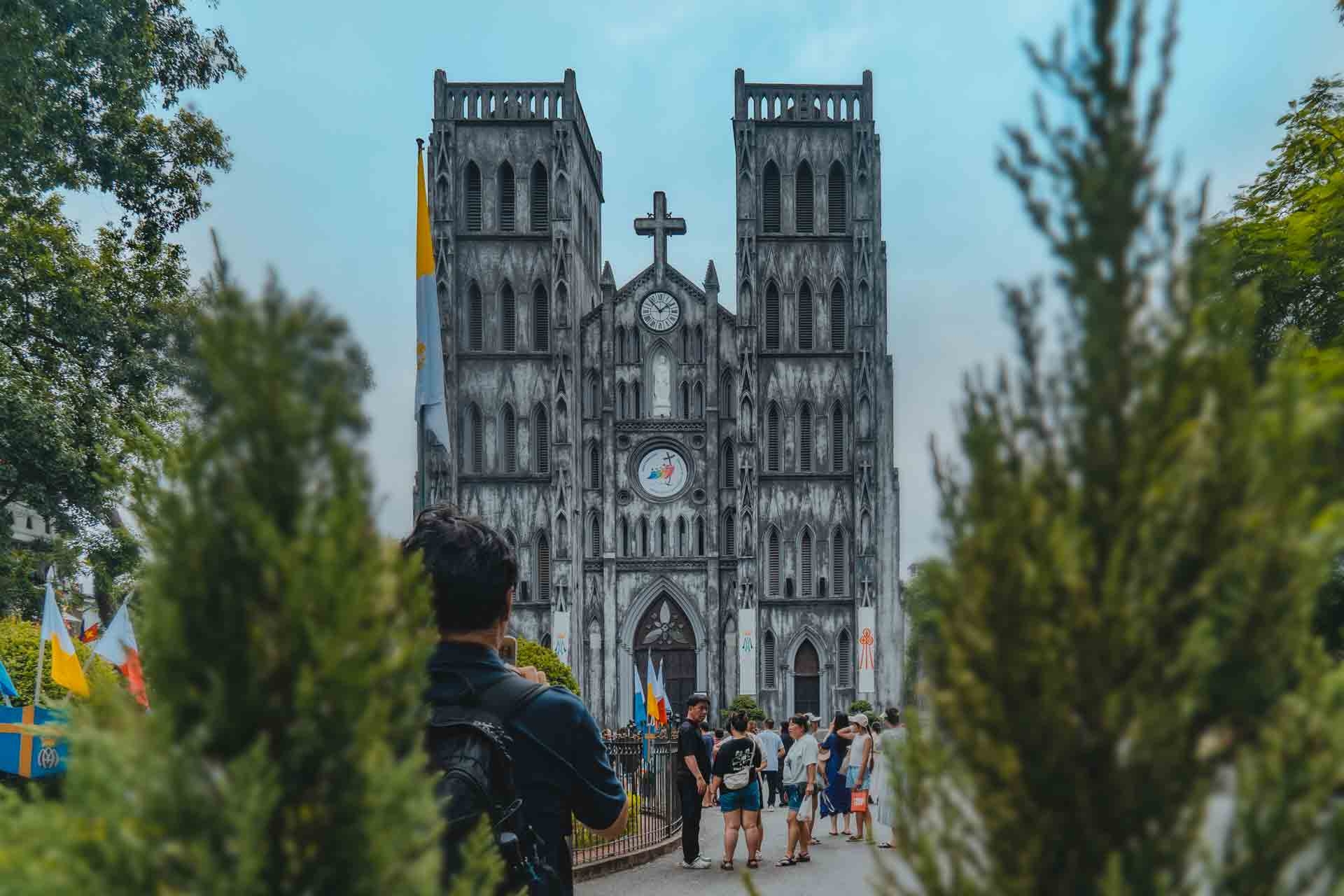
- Address: 40 Nha Chung Street, Hoan Kiem District, Hanoi
- Opening hours: Daily, 8:00 AM–12:00 PM & 2:00 PM–6:00 PM
Built in 1886 by the French colonists, St. Joseph’s Cathedral is the oldest church in Hanoi and one of the most enduring symbols of Hanoi. Its neo-Gothic architecture, with twin bell towers, stained-glass windows, and stone arches, recalls the style of Notre-Dame in Paris, though on a smaller scale. Stepping inside, you find high ceilings and colorful glasswork that still host daily Mass, keeping the cathedral alive as both a place of worship and a historical landmark.
The square in front of the cathedral has long been a favorite gathering place. Visitors often stop here for a photo opportunity with the towering facade, while locals sip iced tea at small sidewalk cafés. In autumn, try a simple serving of xôi cốm, green sticky rice with mung bean, as you sit among the lively crowd. The blend of French architecture and Vietnamese street life makes this corner of Hanoi one of the most atmospheric spots in Hanoi.
8. Take photos of the Opera House in the French Quarter
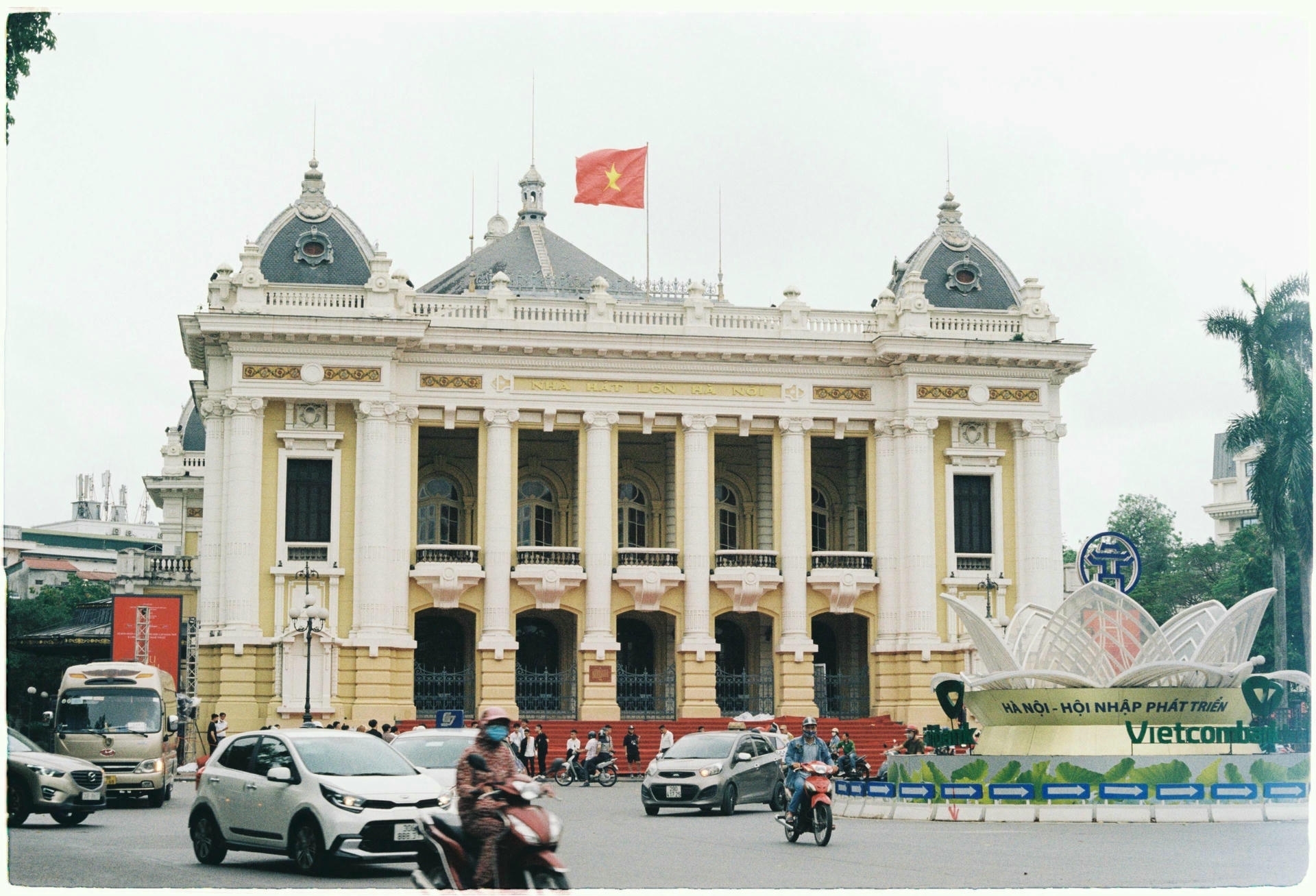
- Address: 1 Trang Tien Street, Hoan Kiem District, Hanoi
- Opening hours: Exterior open anytime; performances vary by schedule (usually evenings after 7:00 PM)
The Hanoi Opera House, built by the French colonists between 1901 and 1911, was modeled on Paris’s Palais Garnier and remains one of the finest examples of French colonial architecture in Southeast Asia. Its neoclassical design, with grand columns, arched windows, and ornate balconies, makes it a standout landmark in the French Quarter.
Over the decades, the Opera House has hosted everything from French opera and ballet to political gatherings and Vietnamese performances. Today, it remains a cultural landmark where you can watch concerts, ballet, and local arts shows that highlight the city’s creativity. It is free to admire the exterior, but buying a ticket to experience a performance inside is truly one of the best things to do in Hanoi.
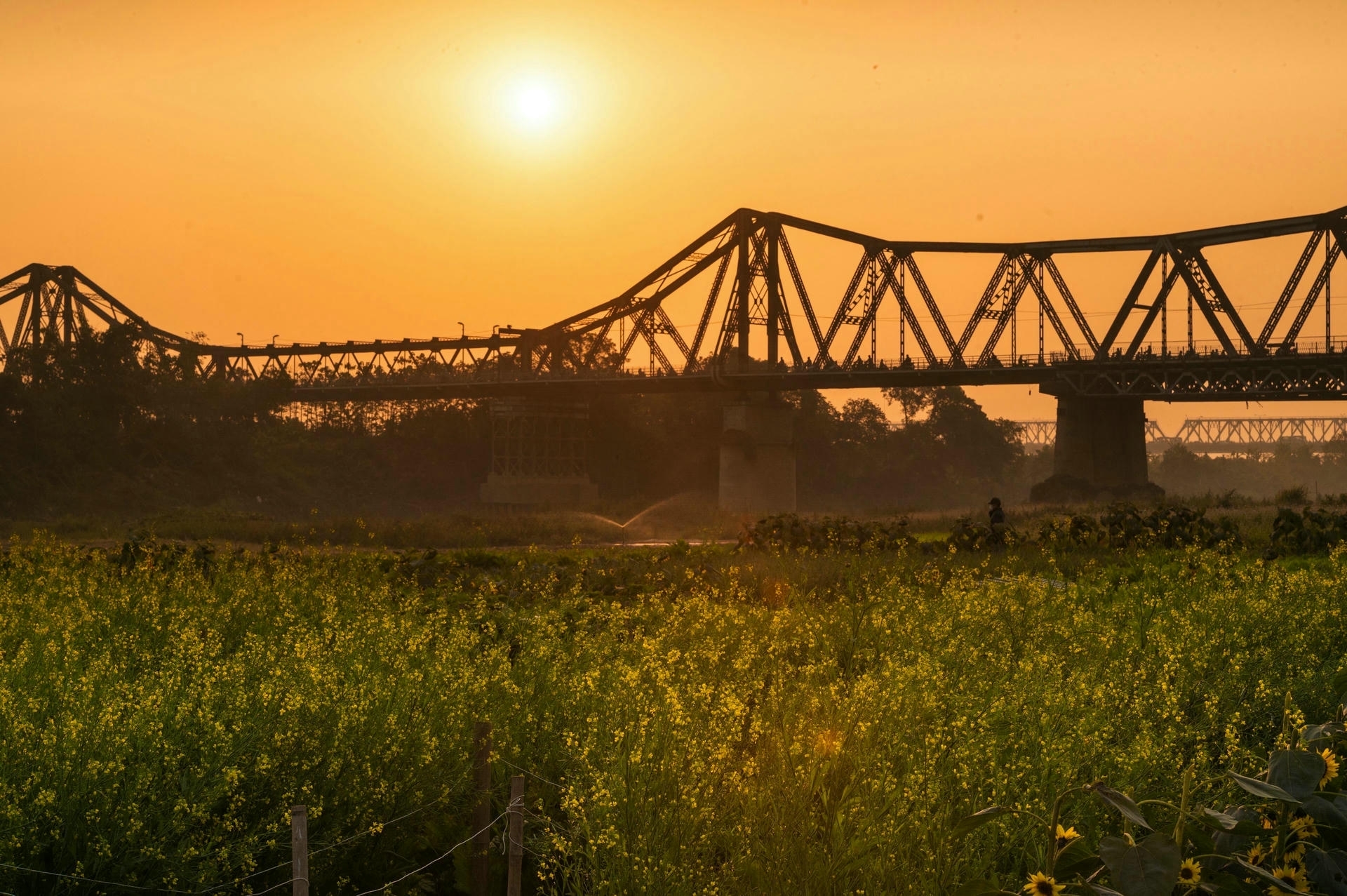
9. Enjoy panoramic Red River views from Long Bien Bridge
- Address: 1 Trang Tien Street, Hoan Kiem District, Hanoi
- Opening hours: Exterior open anytime; performances vary by schedule
Long Bien Bridge stretches across the Red River, linking Hoan Kiem with Long Bien district. Completed in 1902 and once called Paul Doumer Bridge, it was among the longest in Asia at the time. Its iron framework carries not just trains and motorbikes but also the weight of over a century of Hanoi’s history. Damaged several times during the Vietnam War and repaired each time, it remains a powerful symbol of resilience.
Today the bridge is part of daily life, with trains rumbling through the center and vendors setting up small stalls along its edges. From above, you can see banana plantations, vegetable gardens, and markets spread out across the fertile riverbanks. The views are most striking at sunrise or sunset, when the river glows softly under changing light.
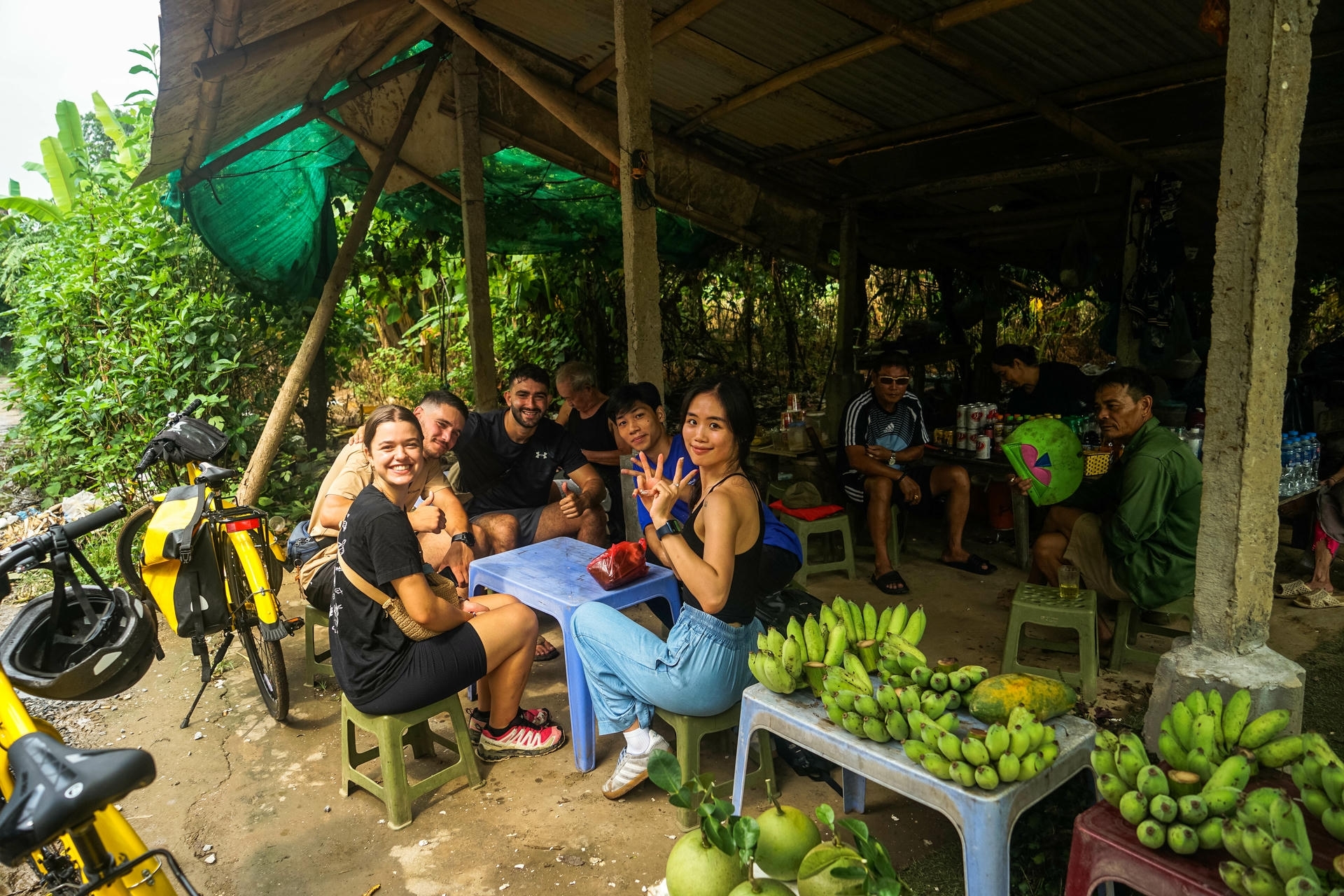
10. Pick and eat free bananas on Banana Island
- Address: Bãi Giữa, under Long Bien Bridge, Phuc Tan Ward, Hoan Kiem District, Hanoi
- Opening hours: Open 24 hours (best early morning or late afternoon)
Hidden below Long Bien Bridge, Banana Island is one of the calmest corners of Hanoi. The island stretches along the Red River, covered in banana gardens and vegetable plots that locals have tended for generations. You can walk or cycle through the narrow dirt paths, passing small wooden houses and friendly farmers working in the fields.
During harvest season, the banana trees glow with ripe fruit. Locals sometimes smile and hand you one to try, a simple act of hospitality that feels deeply Hanoian. Some even invite you to pick one yourself, turning an ordinary walk into something unexpectedly warm. It is the kind of moment that makes you slow down and notice how life flows differently by the river.
Joining the Tour de Hanoi with Jackfruit Adventure is another way to experience this place. The route crosses Long Bien Bridge and winds through Banana Island, stopping to meet the families who live by the water. Riding under the shade of banana trees and listening to stories of the island gives you a new sense of how peaceful Hanoi can be.
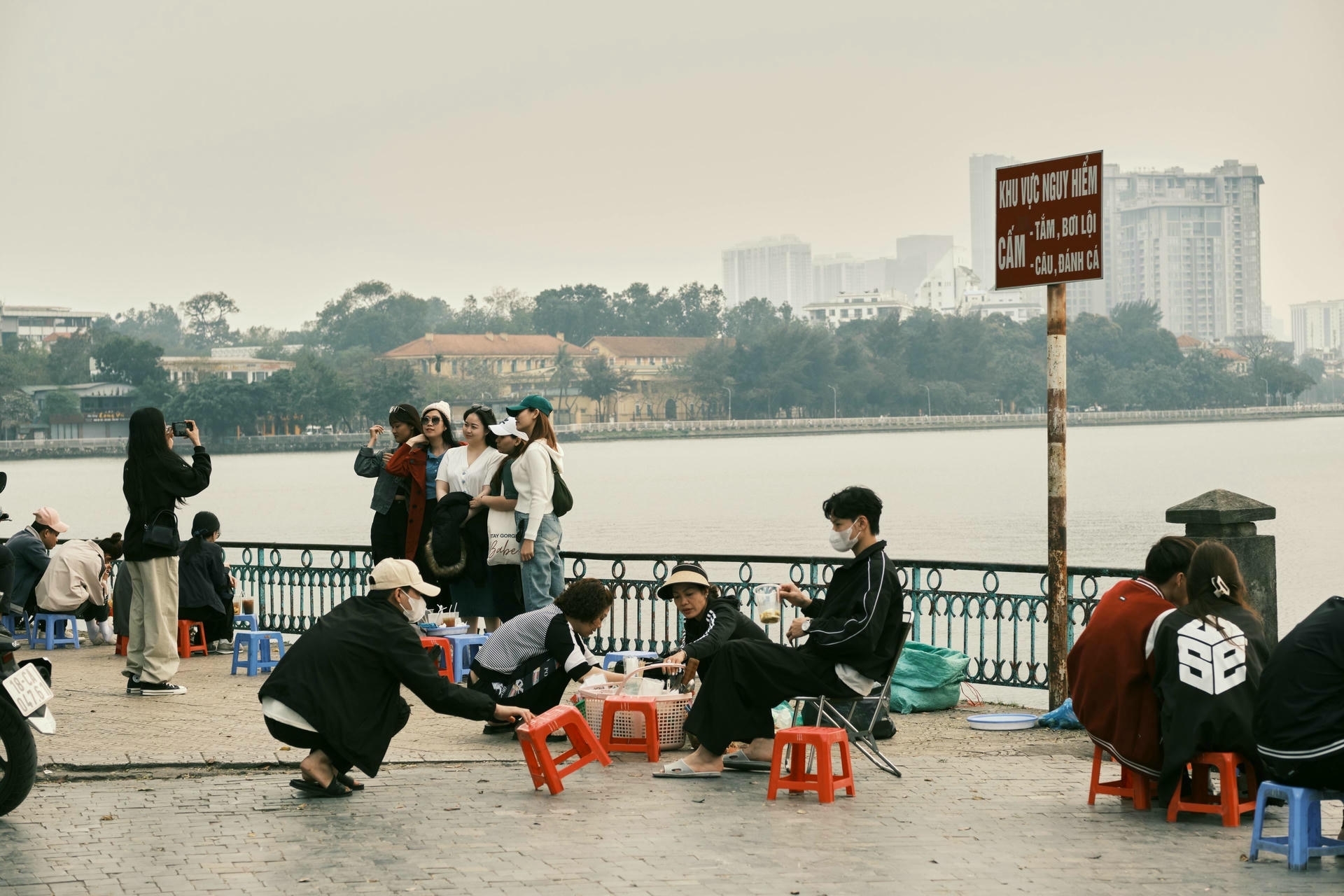
11. Stroll around scenic West Lake
- Address: Ngoc Thuy Ward, Long Bien District, Hanoi
- Opening hours: Open 24 hours (best at sunrise or sunset)
Hồ Tây, or West Lake, is Hanoi’s largest lake, stretching about 17 kilometers around. You can stroll by the water or rent a bicycle to make the full loop. Along the way are cultural landmarks like Tran Quoc Pagoda, one of Vietnam’s oldest Buddhist temples, and Quan Thanh Temple, dedicated to a revered Taoist deity.
Bike rental shops and TNGO stations are easy to find, and with just a little extra money it becomes one of the most relaxing ways to see Hanoi. Many food tours also include this area, since lakeside stalls and cafés serve local snacks, fresh drinks, and simple meals that make the ride even more rewarding.
12. Step into the oldest Buddhist temple in Hanoi
- Address: Thanh Nien Street, Yen Phu Ward, Tay Ho District, Hanoi
- Opening hours: Daily, 7:30 AM – 6:00 PM
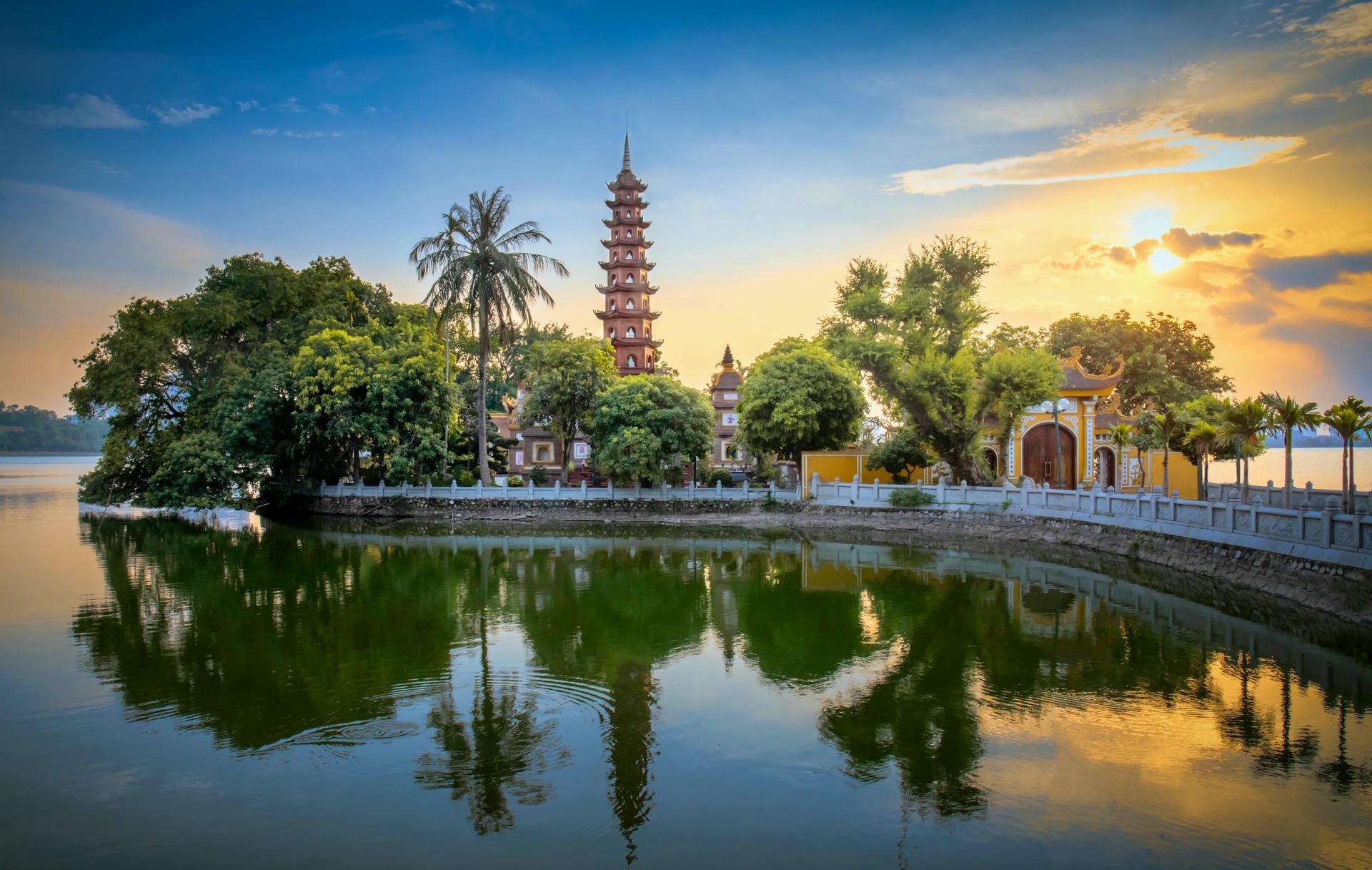
As you make your way around West Lake, Tran Quoc Pagoda is the stop that most travelers find unforgettable. Originally built in the 6th century and moved to this small islet in 1615, it is recognized as the oldest Buddhist temple in Hanoi. Its architecture blends Vietnamese and Chinese traditions, with tiled roofs, carved wooden halls, and an eleven-story lotus tower holding gemstone Buddhas on each level.
In the courtyard stands a Bodhi tree grown from a cutting gifted from India in 1959, linking the site to the roots of Buddhism itself. Monks continue to hold daily rituals, and the mix of chanting, incense smoke, and the reflection of the red tower on the water creates a scene both spiritual and serene. Visiting here as part of your stroll around West Lake makes the loop feel even more rewarding.
13. Discover Hanoi’s mosaic wall and mural streets
- Address: Yen Phu Road and Phung Hung Street, Hoan Kiem District, Hanoi
- Opening hours: Open 24 hours (best 3:00–5:30 PM)
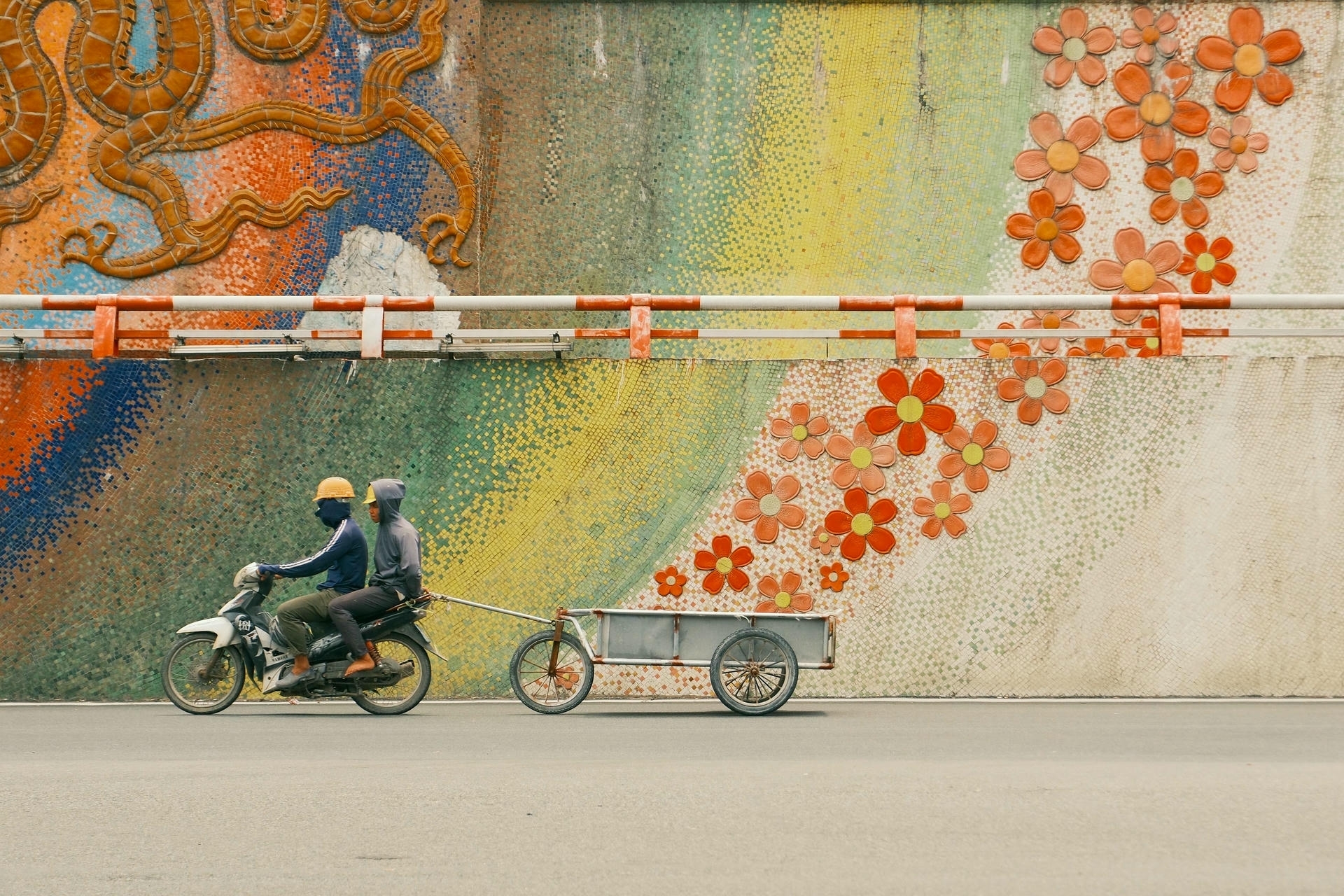
Stretching nearly 4 kilometers along the Red River dike, the Hanoi Ceramic Mosaic Wall holds the Guinness World Record as the world’s largest ceramic mosaic. Created for Hanoi’s millennium in 2010, it was designed by artist Nguyen Thu Thuy with contributions from local artisans, international artists, and even schoolchildren. The wall’s 21 sections depict dragons, folklore, rural landscapes, and everyday life, using thousands of tiles from the traditional pottery village of Bat Trang.
Not far away, Phung Hung Mural Street has transformed old railway arches into a vibrant open-air gallery. Vietnamese and Korean artists painted life-sized murals here, bringing scenes of Hanoi’s past back to life, from traditional markets to vintage trains. Walking through this area feels like stepping into both history and imagination, and it is especially popular for photos. Together, the mosaic wall and Phung Hung murals show how Hanoi blends heritage with modern creativity, making them colorful free stops worth adding to your city walk.
Personally, I love coming here on quiet afternoons, when the murals seem to glow in the soft light and the streets feel like an open sketchbook.
14. Experience the thrill of Hanoi Train Street
- Address: Tran Phu Street / Phung Hung Street, Hoan Kiem District, Hanoi
- Opening hours: Cafés typically open 8:00 AM – 9:00 PM
- Train times: Around 3:30 PM, 5:30 PM, 7:30 PM, and 9:00 PM
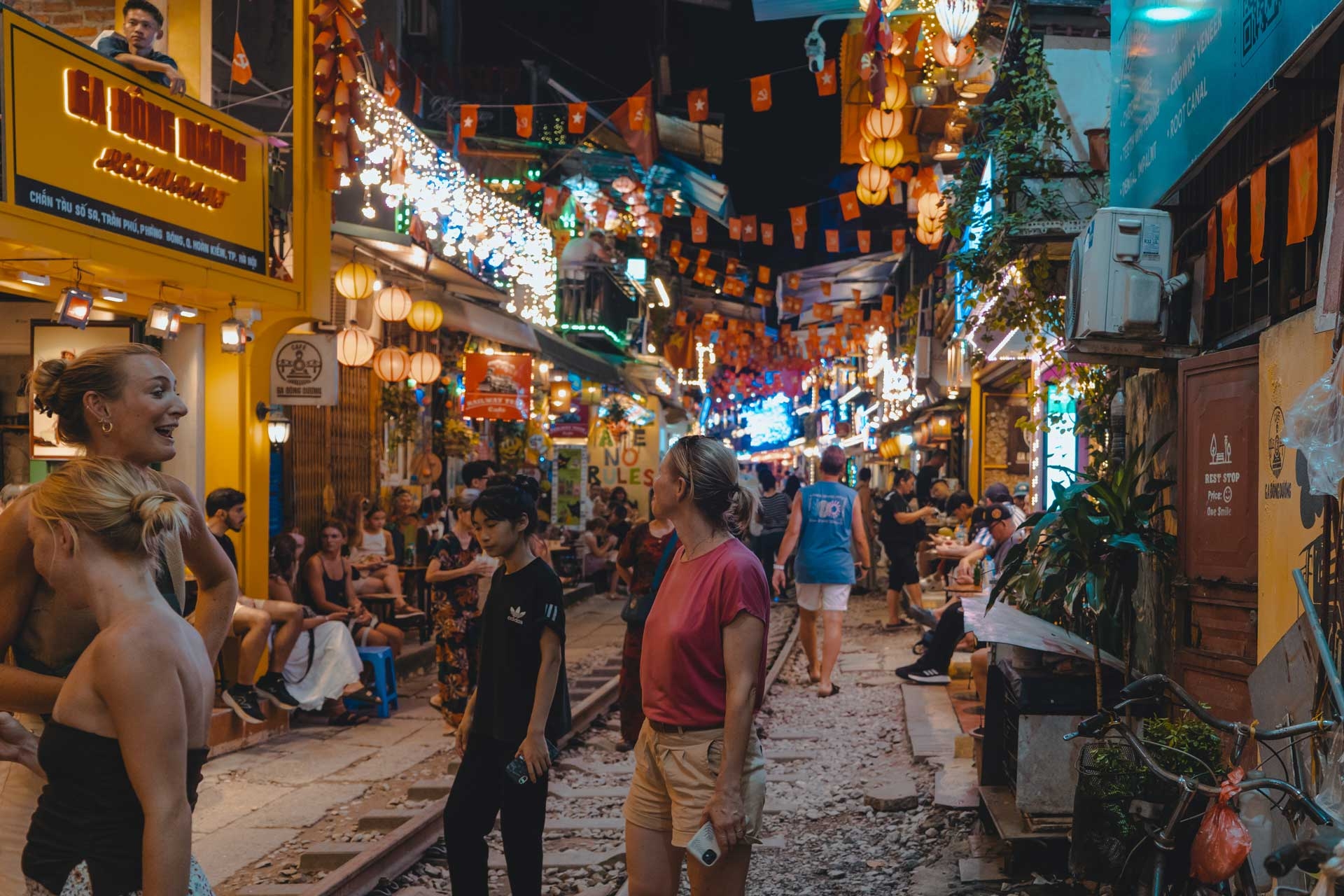
Hanoi’s Train Street is one of the city’s most unusual attractions, where a working train track cuts straight through a narrow alley lined with homes and cafés. First built in 1902, it is still in use today, which makes the setting both historic and alive with daily routines.
Many foreign visitors find it exciting to sit at a café table only a few feet away and wait for the train to pass. Sharing the moment with other travellers adds to the buzz, especially when everyone pulls out their cameras as the train approaches. The trains usually pass around 3:30 PM, 5:30 PM, 7:30 PM, and 9 PM, so timing your visit makes the wait easier.
I find Train Street fascinating, especially how families turned their doorsteps into little cafés and adjusted to life along the track. I once joined a tour here and loved hearing those stories, even if the alley felt crowded at times. For me, buying a drink, keeping a bit of space, and then watching the train fly by just inches away is a thrill that never gets old.
15. Relax under the shade in Thong Nhat Park
- Address: 354 Le Duan Street, Dong Da District, Hanoi
- Opening hours: Daily, 5:00 AM – 10:00 PM
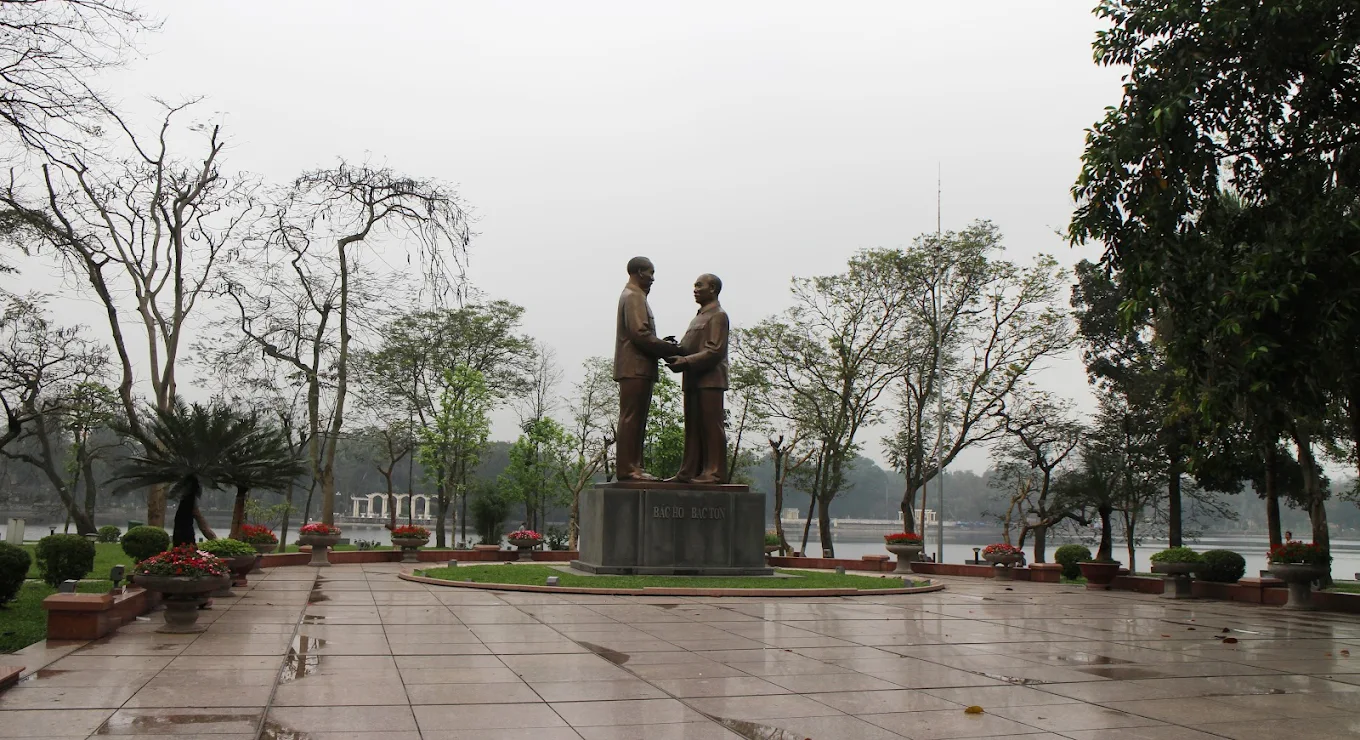
Thong Nhat Park, also known as Reunification Park, is one of the largest green spaces in Hanoi, covering nearly 50 hectares with Bay Mau Lake at its center. Open daily from 5 AM to 10 PM, the park is free to enter and offers tree-lined paths, shady benches, and quiet corners that locals use for exercising. Statues of Ho Chi Minh and Ton Duc Thang add a historical touch, reflecting the park’s role as a symbol of unity.
For visitors, it is a refreshing place to slow down and experience everyday life in Hanoi. Families rent paddle boats, children play in small amusement areas, and young people gather by the lake at sunset. You can also grab a drink at a lakeside café like The Sipping Bar and watch the light shimmer on the water, making this a simple yet memorable stop during your stay in the city.
16. Wander the hidden gems of Quang Ba Flower Market
- Address: 236 Au Co Street, Quang An Ward, Tay Ho District, Hanoi
- Opening hours: Daily, 8:00 PM – 6:00 AM (peak 2:00 AM – 4:00 AM)
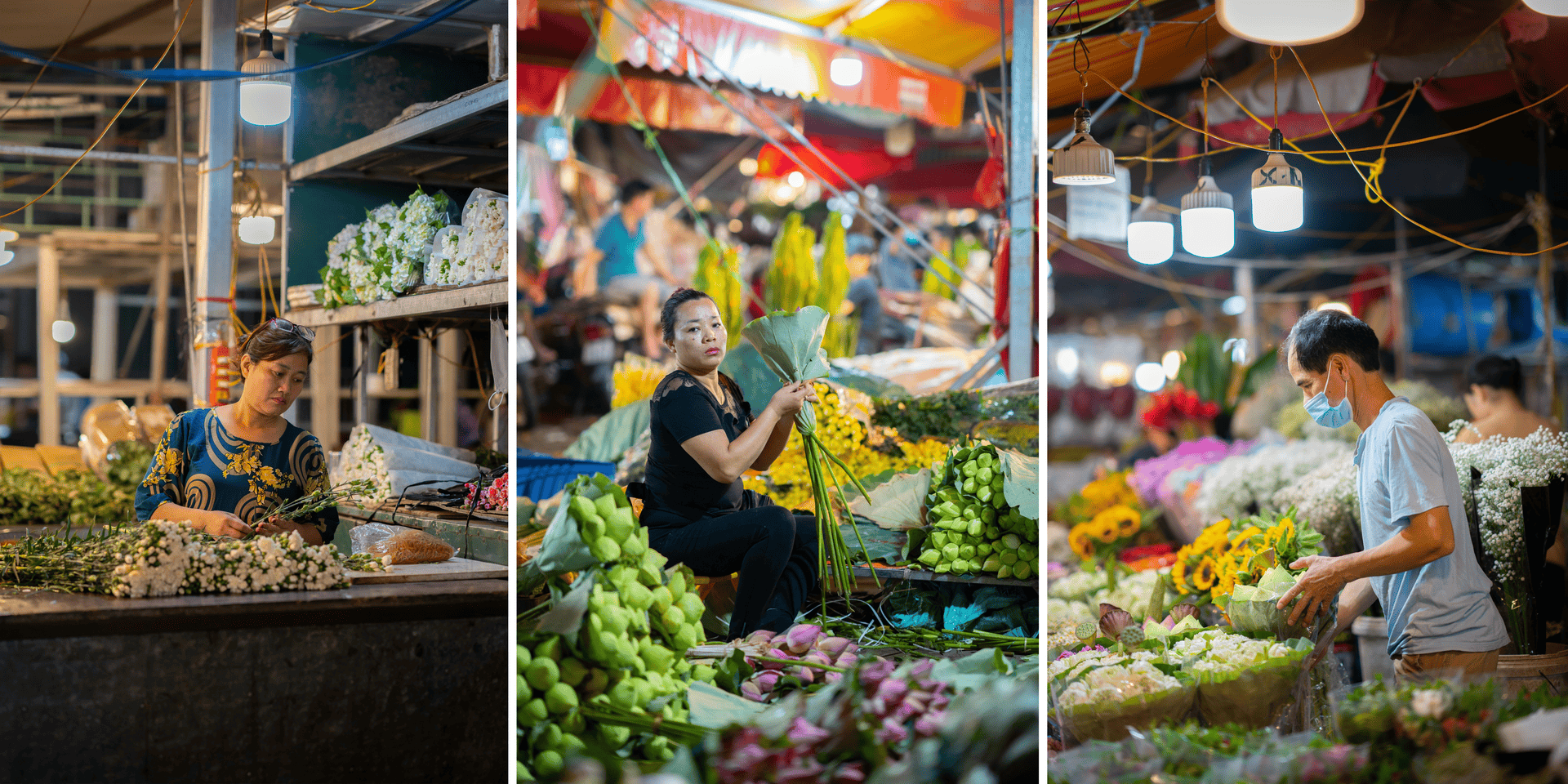
For a different side of Hanoi nightlife, head to Quang Ba Flower Night Market near West Lake. Open every night from around 8 PM until dawn, it is busiest between 2 AM and 4 AM when truckloads of fresh flowers arrive from the countryside. The narrow lanes fill with colors, scents, and the lively sounds of bargaining, creating an atmosphere that feels both chaotic and charming.
Exploring this night market is a free and authentic local experience, whether you are watching porters unload baskets of roses and orchids or sipping a late-night coffee among the vendors. During Tet, the market bursts with peach blossoms and kumquat trees, making it even more festive.
I love wandering here with a cup of late-night coffee, watching vendors laugh, bargain, and arrange flowers as if the whole city runs on this hidden rhythm.
17. Join a tip-based walking tour of Hanoi Vietnam
Free tours in Hanoi are one of the best ways to explore the city without spending much. Led by student volunteers or young tour guides, these walks usually cover the Old Quarter, St. Joseph’s Cathedral, the French Quarter, and sometimes hidden spots like the Ancient House at Ma May street.
Walking with a local guide makes the experience more personal, since you hear stories about daily life, legends such as the magic sword of Hoàn Kiếm Lake, and even tips on other tours worth joining. I once joined one of these free tours and it felt like exploring Hanoi with a friend, full of small conversations and cultural insights that no guidebook could capture.
Cheap things to do in Hanoi
While many of Hanoi’s treasures are free to enjoy, some of the city’s most important cultural landmarks do have a small entry fee. The good news is that they often waive tickets on Vietnam’s Independence Day (September 2) and other national holidays, making them free to visit if your timing is right. Even when tickets apply, they remain very affordable compared to international standards, so you can still explore the depth of Vietnam’s history, arts, and culture without breaking your budget.
16. Vietnam National Museum of History
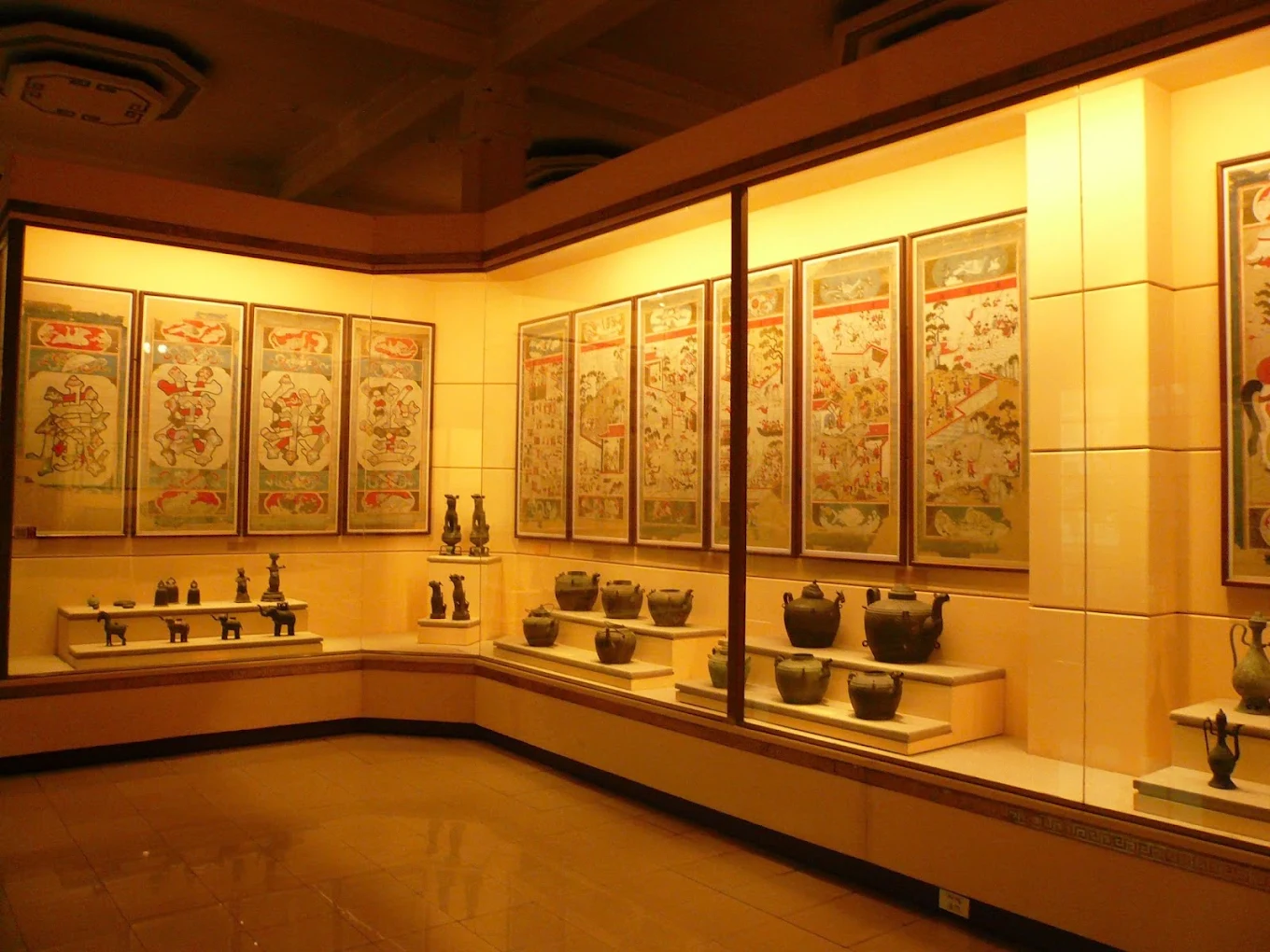
- Address: 1 Trang Tien Street, Hoan Kiem District, Hanoi
- Price: 40,000 VND (Free on Vietnam’s Independence Day)
- Opening hours: Tuesday to Sunday, 8:00 AM–12:00 PM and 1:30 PM–5:00 PM, closed on Monday
Set inside two colonial-era buildings near the Opera House, this museum gives you a broad look at the country’s past. Highlights include Champa sculptures, royal treasures, and exhibits about American POWs that reflect more recent conflicts. With over 200,000 artifacts on display, it remains one of the best cheap things to do in Hanoi if you want to go beyond temples and markets.
17. Vietnam National Fine Arts Museum
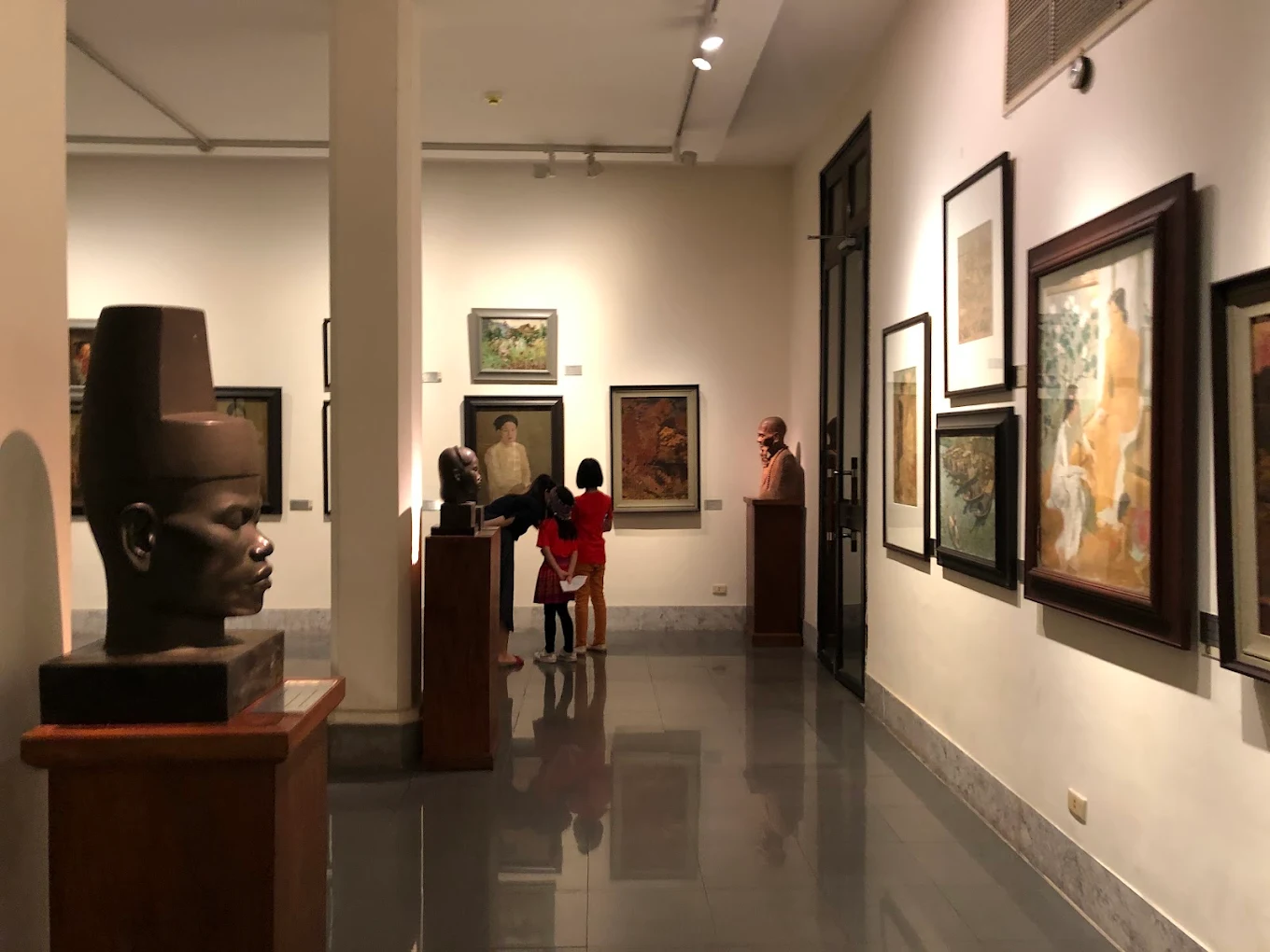
- Address: 66 Nguyen Thai Hoc Street, Ba Dinh District, Hanoi
- Price: 40,000 VND (Free on Vietnam’s Independence Day)
- Opening hours: Tuesday to Sunday, 8:30 AM–5:00 PM, closed on Monday
Located across from the Temple of Literature, this museum is a showcase of Vietnam’s artistic heritage. Galleries display lacquerware, folk sculptures, and paintings that span centuries. Highlights include powerful works that capture the emotions of the Vietnam War and rare collections of Buddhist and folk art. For travelers who want to see both traditional and modern creativity, this is one of Hanoi’s most rewarding and inexpensive stops.
18. Vietnamese Women’s Museum
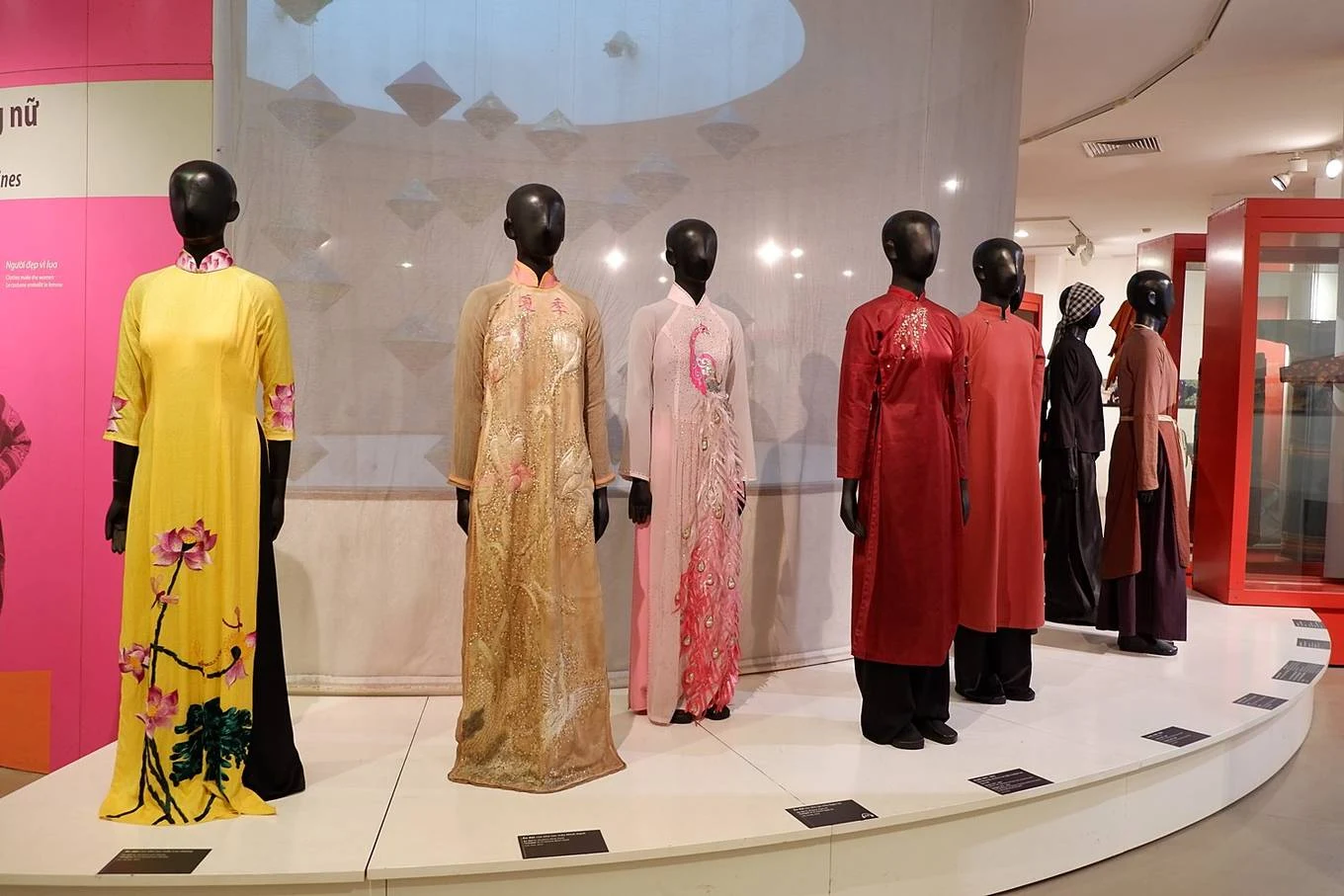
- Address: 36 Ly Thuong Kiet Street, Hoan Kiem District, Hanoi
- Price: 40,000 VND (Free on Vietnam’s Independence Day)
- Opening hours: Daily, 8:00 AM–5:00 PM
Vietnamese Women’s Museum highlights the role of women in Vietnamese society through family traditions, spiritual practices, and contributions during wartime. Exhibits range from clothing of 54 ethnic groups to personal stories of mothers during the Vietnamese War. Marriage customs, childbirth rituals, and the resilience of women in history are all covered. Affordable and centrally located, it is both educational and inspiring, and one of the most meaningful museums in the capital.
19. Co Loa Citadel
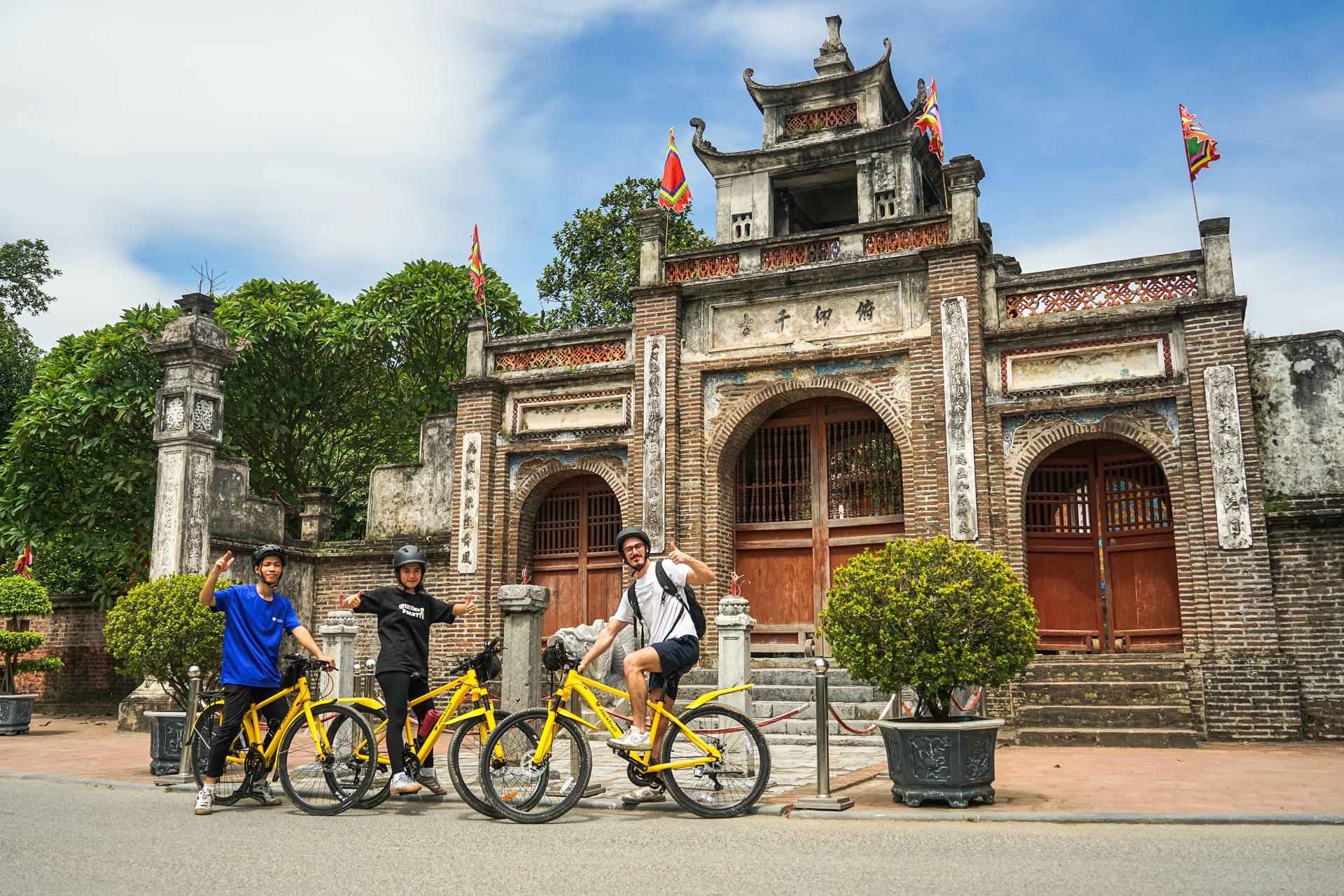
- Address: Co Loa Commune, Dong Anh District, Hanoi (about 20 km north of city center)
- Price: 30,000 VND
- Opening hours: Daily, 7:30 AM–11:30 AM and 1:30 PM–5:30 PM
About 20 kilometers from central Hanoi, Co Loa Citadel is linked to the legend of King An Duong Vuong and the magic crossbow of the Golden Turtle. Built in the 3rd century BC, it was once the capital of the ancient Âu Lạc Kingdom. Walking through its spiral-shaped ramparts, moats, and temples gives you a glimpse into how the Vietnamese people lived and defended their land more than two thousand years ago.
The citadel is also tied to Vietnam’s earliest struggles against foreign invasions and remains one of the most important archaeological and cultural sites near Hanoi. You can spend a quiet morning wandering between the pagodas and old village gates, or join a local festival if your visit coincides with one.
If you want to make the journey more meaningful, you can join the Ride to the Lost Kingdom tour by Jackfruit Adventure. The route takes you by bicycle from the Old Quarter through rice fields, local craft villages, and riverside farms before reaching Co Loa. Along the way, you will stop for tea with local families and hear stories about the myths that still echo through the ancient capital. It is one of the most immersive ways to connect Hanoi’s countryside with its earliest history.
20. Duong Lam Ancient Village
- Address: Son Tay Town, Hanoi (approx. 50 km from center)
- Price: 20,000 VND
- Opening hours: Daily, 8:00 AM–5:00 PM
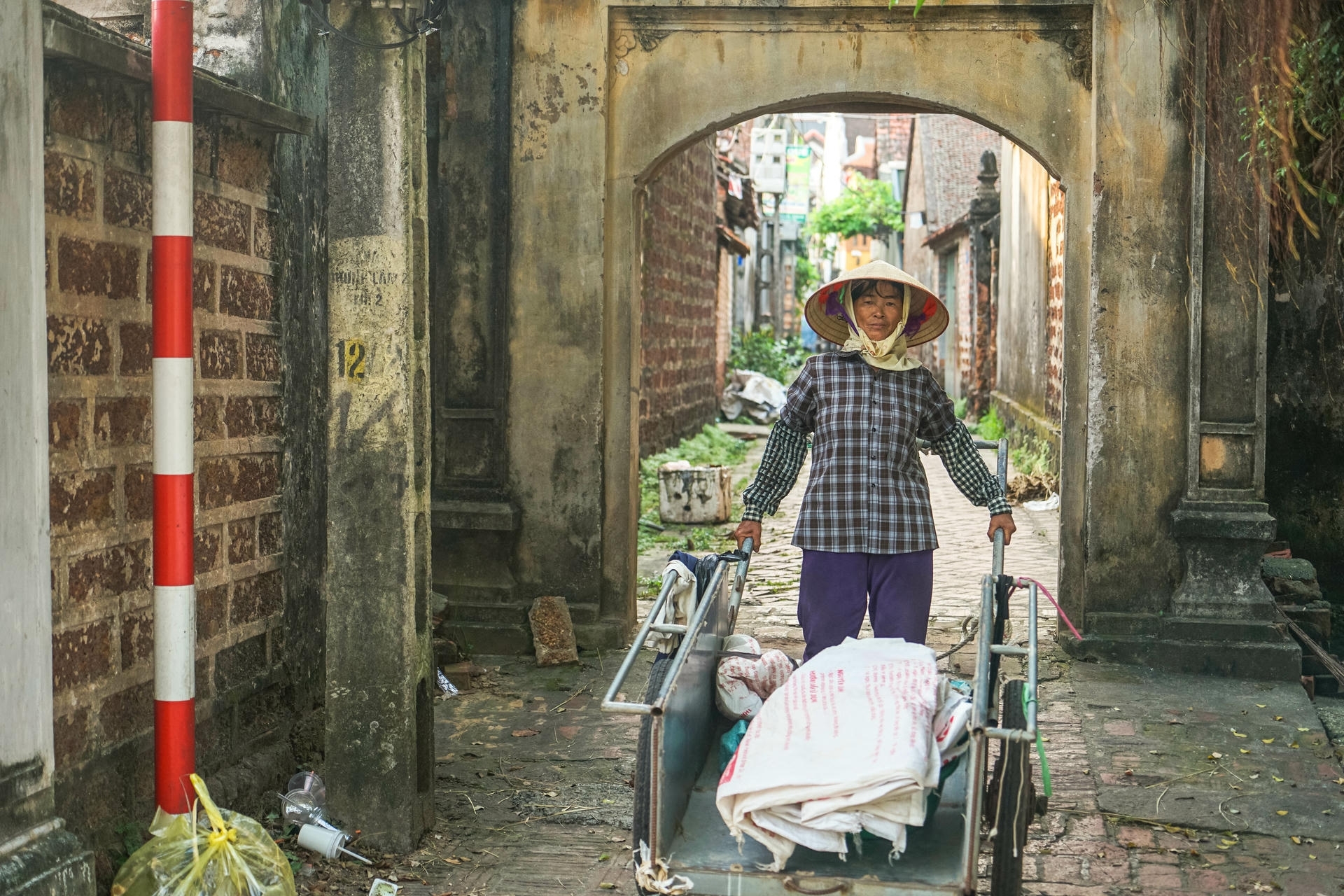
Located about 50 kilometers from Hanoi, Duong Lam was the first village recognized as a National Heritage Site. Its laterite houses, mossy gates, and centuries-old temples make it one of the best places to experience authentic Vietnamese culture. Cycling through narrow lanes or sitting down with a local family reveals a slower rhythm of life. Duong Lam is also the birthplace of two national heroes, Ngo Quyen and Phung Hung. For those who want to explore hidden gems beyond the Old Quarter, this village offers one of the most affordable and rewarding day trips.
Budget-friendly street food in Hanoi Vietnam
Street food in Hanoi is both delicious and affordable, making it one of the best ways to experience Vietnamese food and Vietnamese cuisine. With just a few dollars, you can try a variety of dishes at small stalls tucked into busy alleys or near lively markets. Locals often say the most authentic meals are found where daily life unfolds, far from the more touristy spots. Joining a food tour is also a great option, as it takes you to hidden places and adds stories that make each bite more meaningful.
Bun Cha
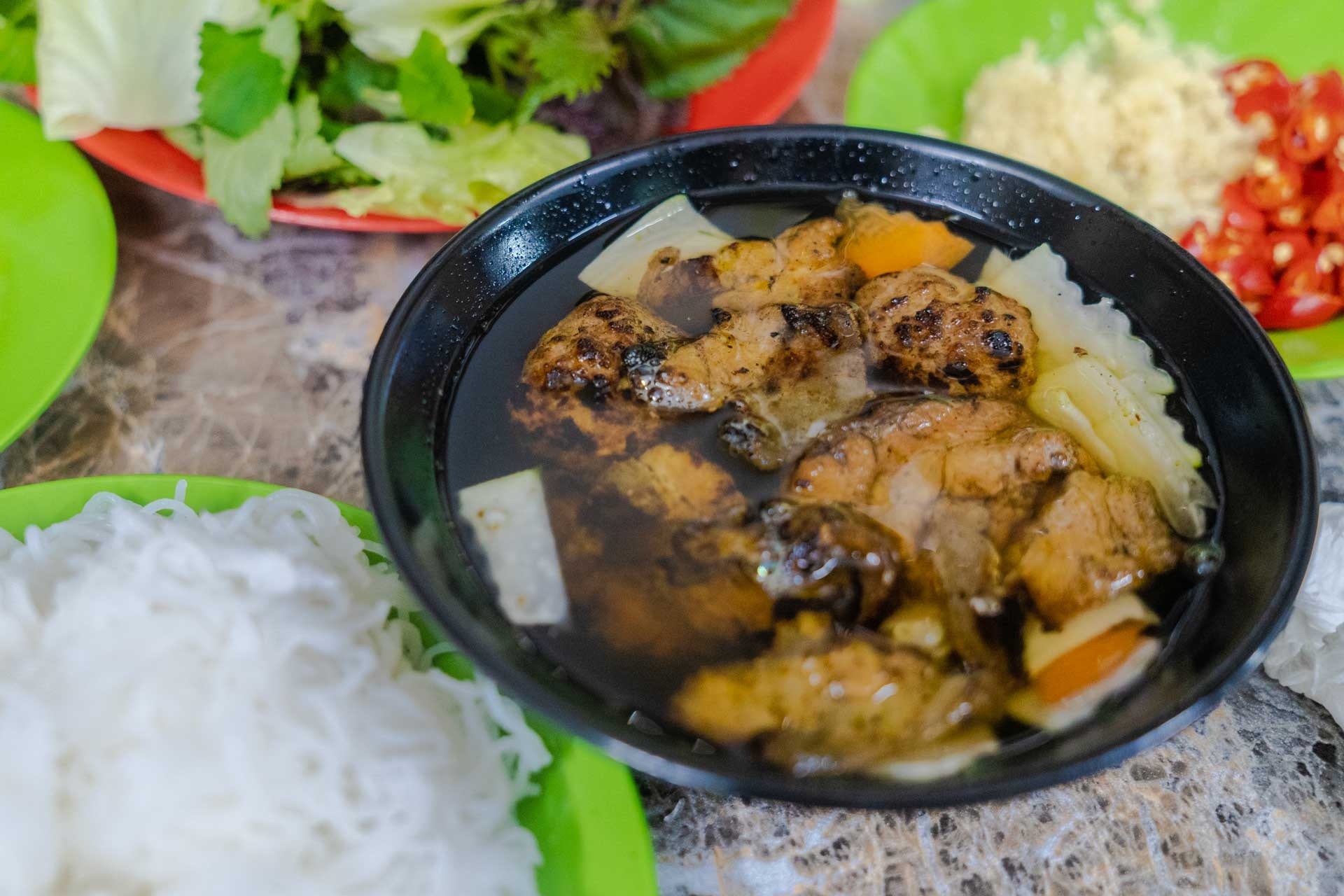
Grilled pork patties and slices of pork belly served with rice noodles, herbs, and a tangy dipping sauce make bún chả one of Hanoi’s most memorable dishes. A serving usually costs between 30,000–50,000 VND, and you will find it almost everywhere in the city.
Locals often debate which place makes the best version, from small sidewalk stalls to long-standing restaurants. Some say the key is in the dipping sauce, others swear by the charcoal grill. If you want to try a few and see the difference for yourself, check out my guide to the top places to eat Bun cha in Hanoi — it covers both iconic and lesser-known spots that locals actually eat at.
Popular names include Bún Chả Đắc Kim on Hang Manh Street and Bún Chả Hương Liên, where President Obama once shared a meal. But wherever you go, the smoky aroma drifting from a roadside grill is always a good sign you are close to something delicious.
Pho
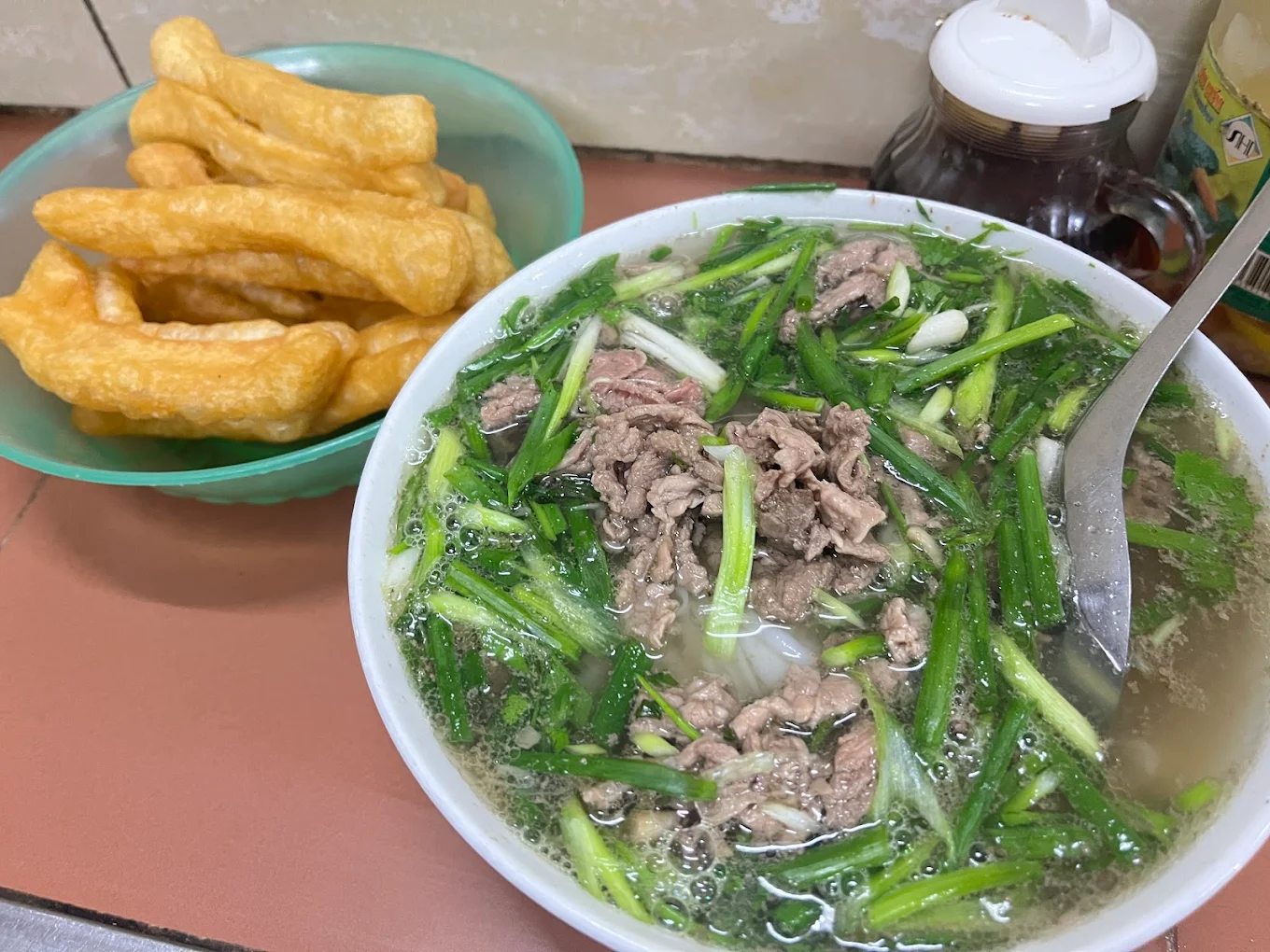
Phở is a must-try noodle soup, usually eaten at breakfast or late at night. A steaming bowl of beef or chicken phở ranges from 30,000–50,000 VND, depending on the stall. Local favorites such as Phở Bát Đàn, Phở Thìn, and Phở 10 Lý Quốc Sư are busy but well worth the wait.
Banh Mi
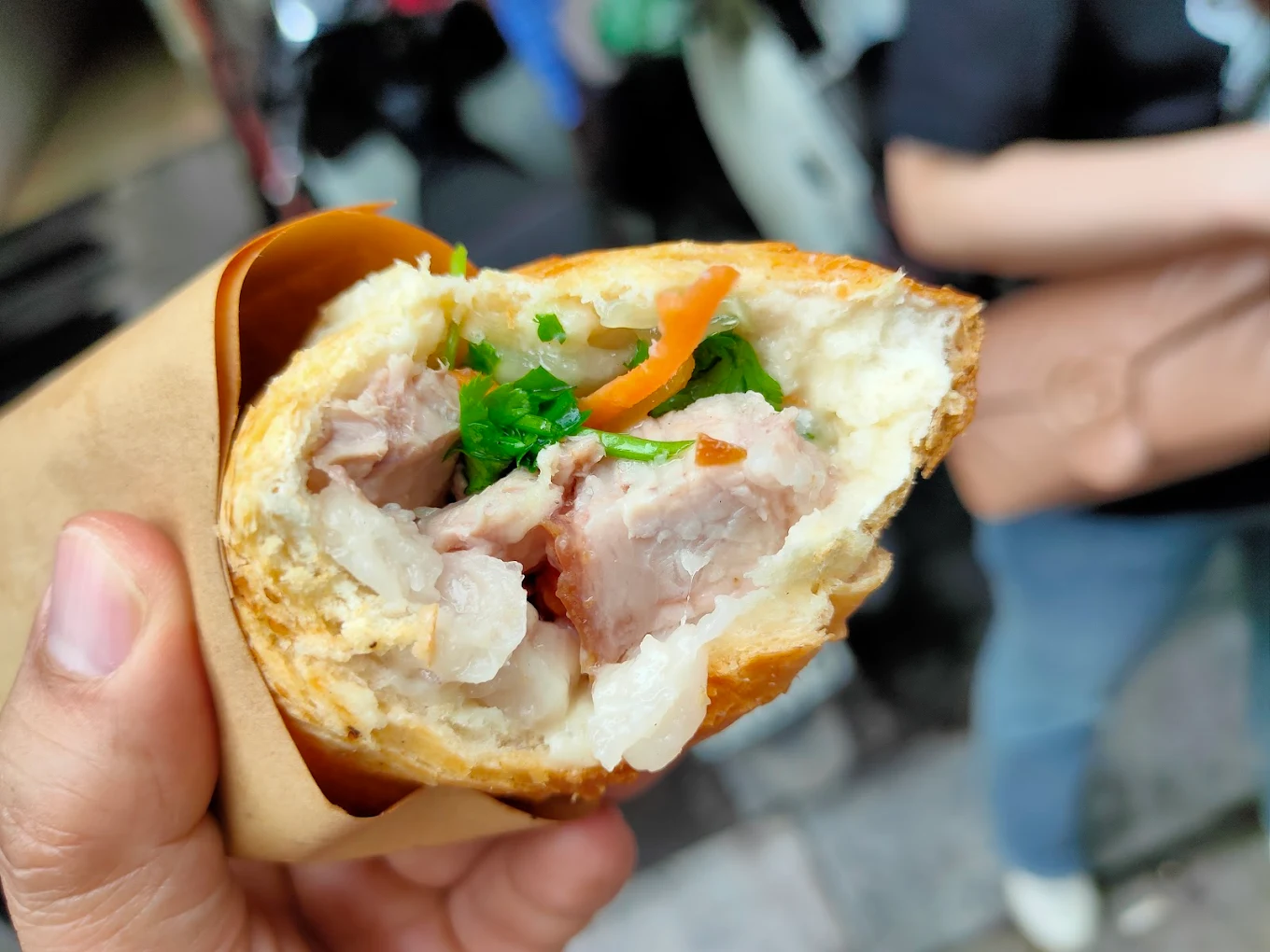
Hanoi’s version of the famous Vietnamese baguette is filled with pâté, cold cuts, pickled vegetables, and chili. It is one of the city’s best quick bites, usually costing 35,000–45,000 VND. Places like Bánh Mì 25 attract both locals and travelers looking for a satisfying snack.
Sticky Rice (Xoi)
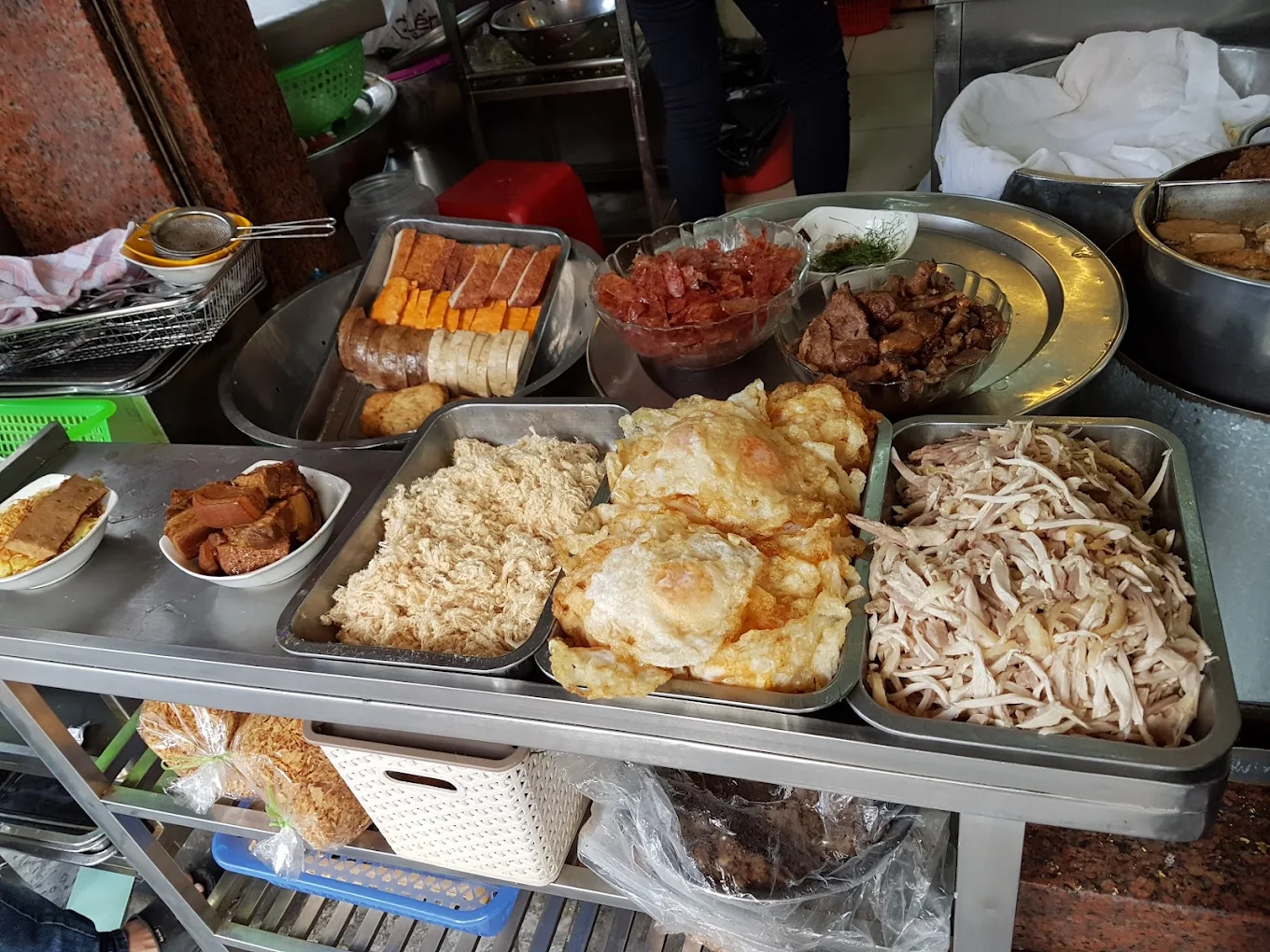
Sticky rice is a humble breakfast found everywhere in the city, often topped with mung bean, pork floss, or green rice. At around 20,000–30,000 VND, it is one of the cheapest ways to enjoy a filling and authentic taste of Hanoi. You will see students and office workers eating xôi on the go, especially near Hoan Kiem lake.
Cheap Beer on Ta Hien Street
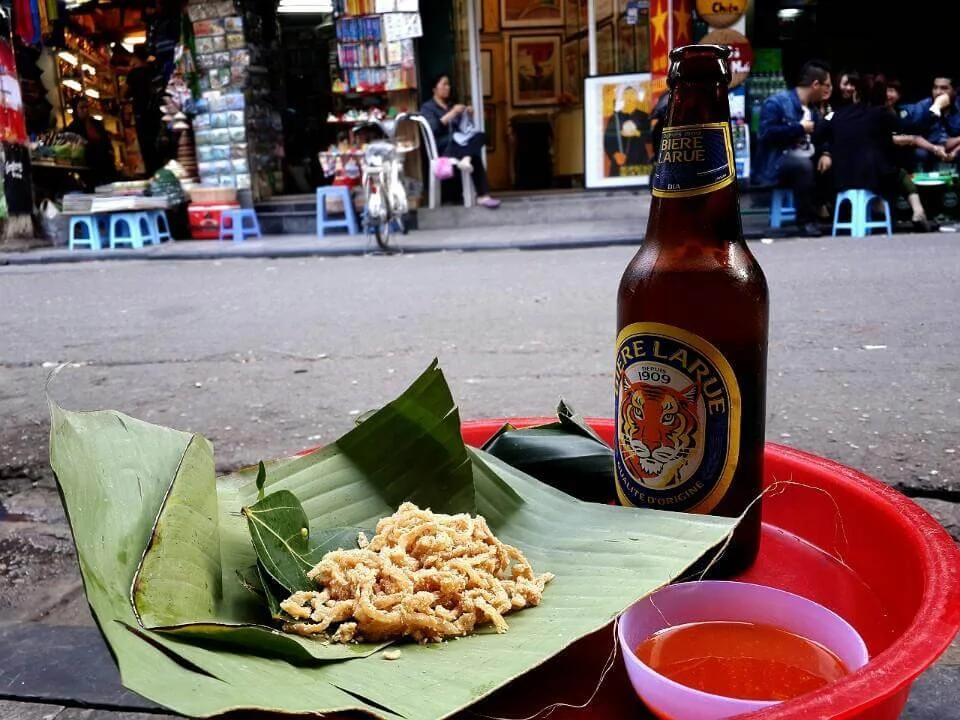
For Hanoi nightlife, nothing captures the local spirit quite like bia hơi. This fresh draft beer costs only 10,000 VND per glass and is best enjoyed on a low plastic stool along Tạ Hiện Street. The mix of locals, backpackers, and curious travelers makes this corner one of the liveliest budget-friendly spots in the Old Quarter.
Travel tips: More things to do in Hanoi
Free activities give you a good start, but a few extra stops and resources will make your trip more complete:
- Plan smart: Learn about the best time to visit Vietnam and check out more fun things to do in Hanoi to balance your days.
- Explore heritage sites: The Temple of Literature, Hoa Lo Prison, and the Thang Long Imperial Citadel are three landmarks that reveal the capital’s academic, political, and wartime history.
- Experience Hanoi after dark: From night markets to cultural shows, the best things to do in Hanoi at night show how the city changes once the sun sets. Don’t miss a water puppet show if you want to see a performance unique to Vietnam.
Upgrade your Hanoi trip with a cycling tour
Hanoi’s free and budget-friendly experiences are spread across many corners of the city. Walking lets you see some, but cycling makes it easier to connect them and to notice the details in between.
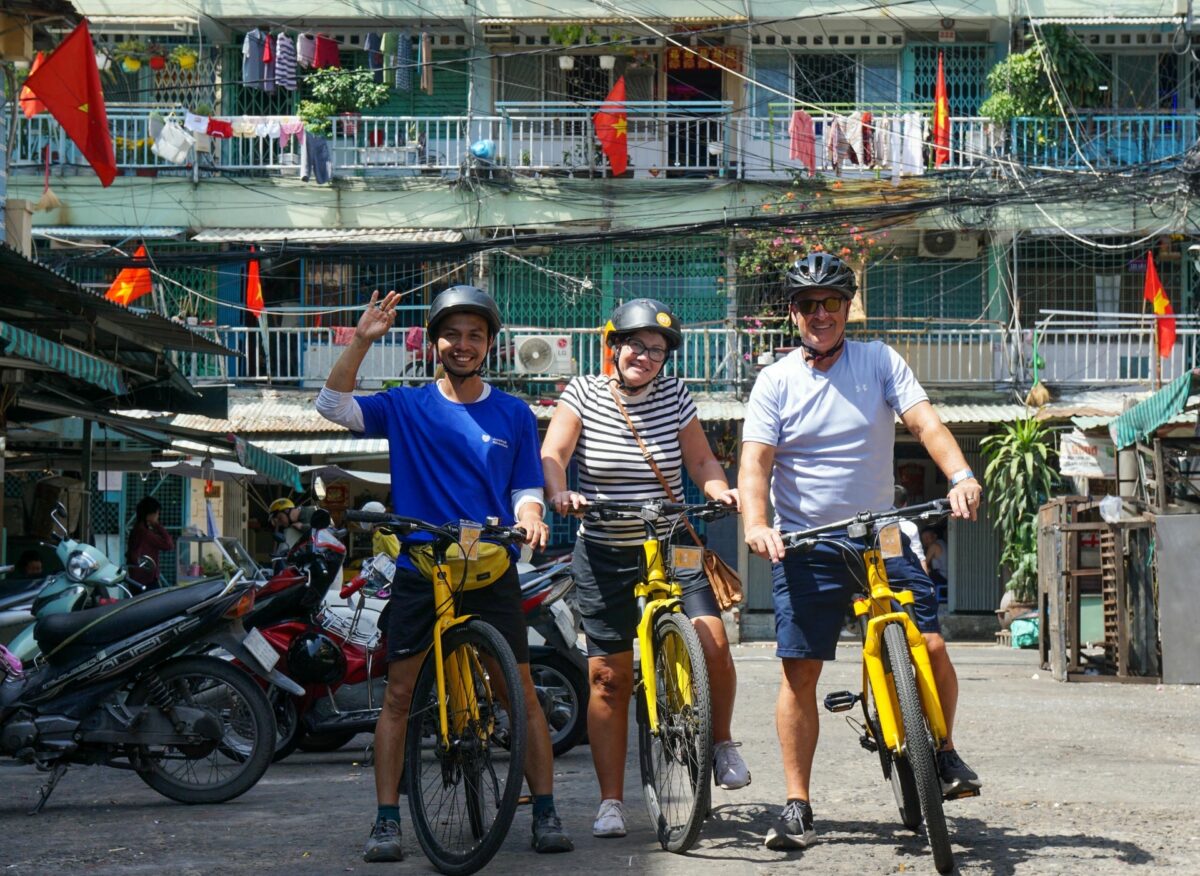
For travelers who enjoy slow days, Jackfruit Adventure’s local cycling tours are a beautiful way to see more of the capital. Each route reveals a different layer of Hanoi, from hidden neighborhoods to the calm countryside that still feels close to the city.
The Tour de Hanoi follows the Red River, crossing Long Bien Bridge and gliding down to Banana Island, where small farms and floating houses rest quietly by the water. You can stop to greet farmers, try a fresh banana, or simply take in the stillness just minutes from the Old Quarter.
Those who love local stories will find the Hanoi Off the Beaten Path Cycling Tour fascinating. It winds through old apartments, small markets, and the legendary Black Market area, where stories from the Christmas Bombings still echo through narrow alleys.
Further out, the Ride to the Lost Kingdom takes you past rice fields and quiet villages toward Cổ Loa Citadel, the ancient capital wrapped in the legend of King An Dương Vương and his magic crossbow.
And if food is what draws you in, there is a tour that blends it all together. The Hanoi Foodie Cycling Tour takes you through the evening streets, stopping at local eateries for phở, bún chả, bánh mì, and sweet treats. It is a fun, delicious way to understand how food connects people in Hanoi.