

Table of Contents
Unique things to do in Hanoi
Hanoi can be noisy at first. The traffic, the voices, the constant movement make it feel like the city never pauses. But the longer I stay, the more I notice things that hide behind that noise. Every walk seems to lead somewhere unexpected, and every corner holds something quietly beautiful once you stop rushing past it.
This city carries more than a thousand years of history, and it shows in small, unspoken ways. You can feel it in the rhythm of daily life, in the smell of old things from a narrow doorway, and in the patience of people who keep doing things the old way even when the world moves faster around them.
If you are curious enough to follow those quiet hints, you will see a side of Hanoi that most travelers never reach.
1. Carve a memory at Phuc Loi art stamp shop

- Location: 6 Hàng Quạt, Hoàn Kiếm District
- Opening hours: 7:30 AM – 6 PM
- Price: From 50,000 VND for basic designs
Hidden among the craft shops of Hàng Quạt Street, Phúc Lợi Art Stamp Shop is one of those tiny places that still keep Hanoi’s quiet traditions alive. The family has been carving stamps since 1993, passing the craft down from father to son. Inside, the air smells faintly of wood and red ink. Shelves are lined with wooden blocks and stone slabs, while an old man bends over his desk, chiseling delicate patterns with slow, deliberate movements.
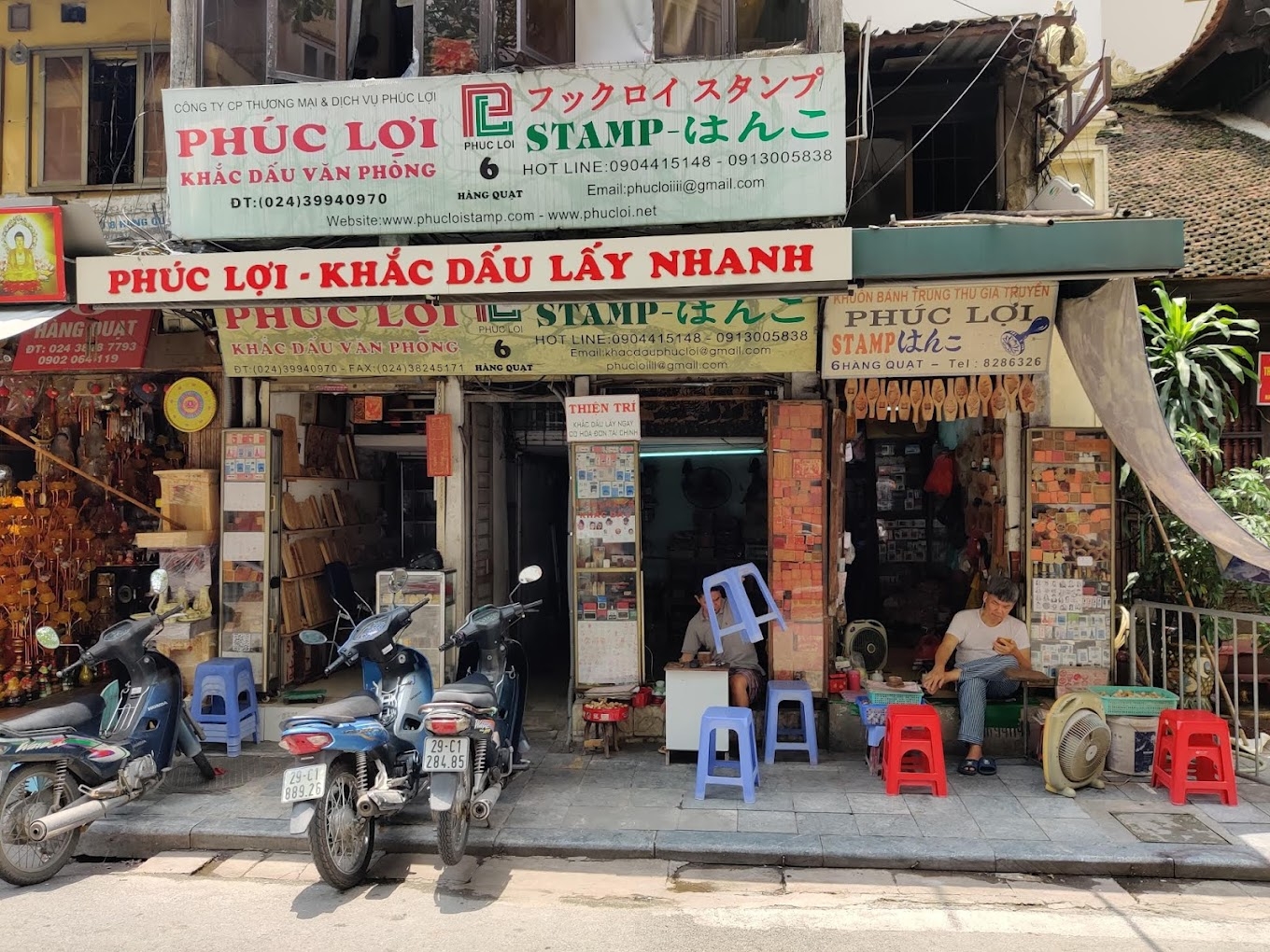
The shop may be small but it’s full of charm. Shelves display seals engraved with lotus flowers, turtles, and Hanoi’s iconic landmarks. The craftsman says he once made stamps for offices, but today travelers come to take home a handmade keepsake that captures a little piece of Hanoi’s spirit.
You can pause to watch him work or ask for a custom seal of your own. Simple designs take about 15 to 20 minutes and cost between 50,000 and 70,000 VND. Once finished, you can press your new seal into red ink and leave your first imprint, a small mark that feels entirely personal.
2. Find living heritage inside Quang Dong Assembly Hall
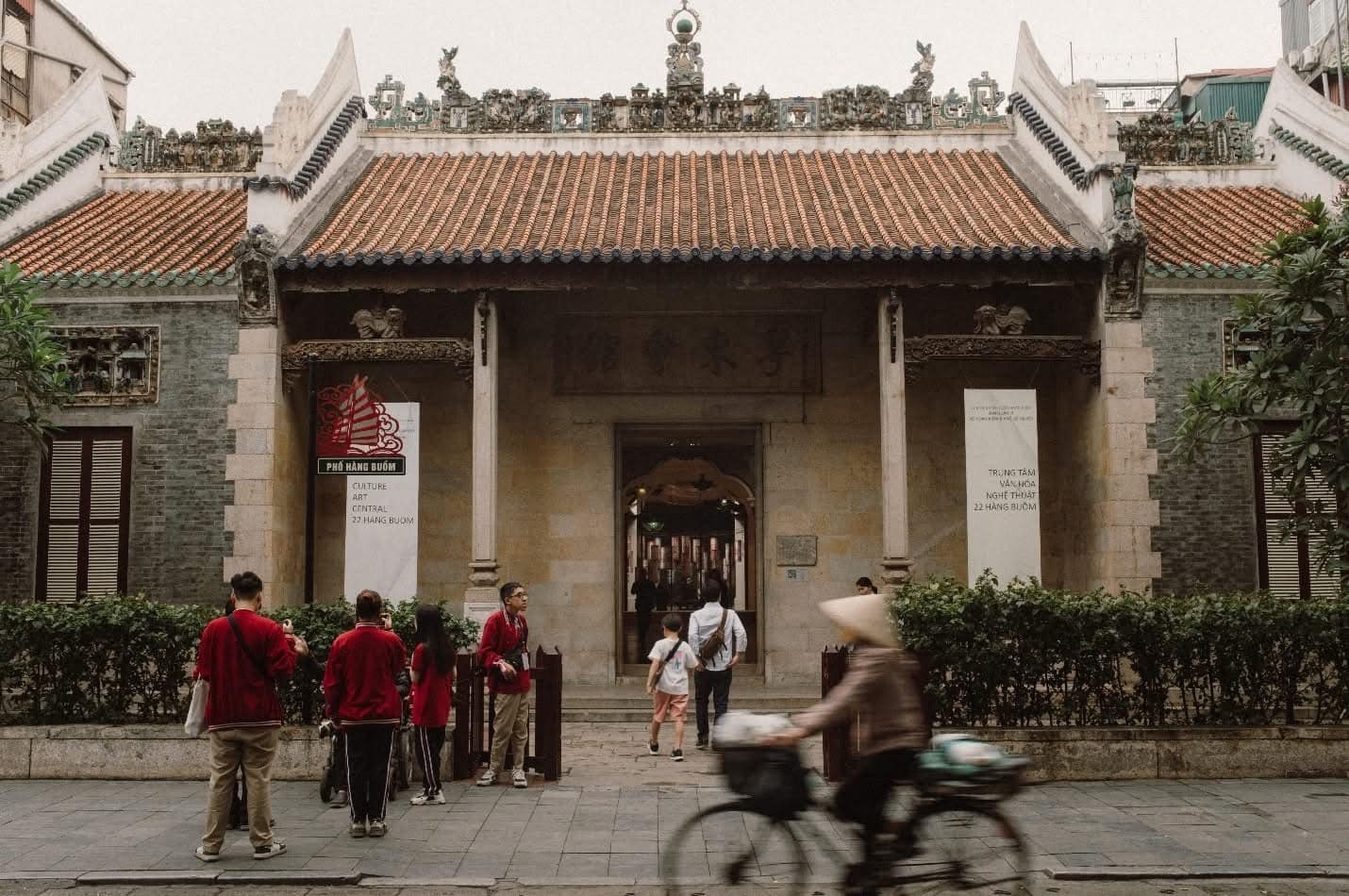
- Location: 22 Hang Buom, Hoan Kiem District, Hanoi
- Opening hours: 8 AM – 12 AM; 1:30 PM – 5:30 PM
- Entrance ticket: 20.000 VND
At the end of Hàng Buồm Street, the noise of shops and motorbikes softens as you step through the gates of the Quảng Đông Assembly Hall. Built in the late 18th century by Cantonese merchants, the hall once served as a gathering place, a temple, and a cultural center for the southern Chinese community that settled in Hanoi. Today, it still carries the scent of incense and echoes of the conversations that once filled its courtyards.
The structure is small but ornate, with red columns, tiled roofs, and carvings of dragons and phoenixes winding along the beams. Inside, colorful mosaics glimmer under soft light. You can pause to admire the altars or simply sit for a moment in the courtyard, where a few bonsai trees grow between stone lanterns.
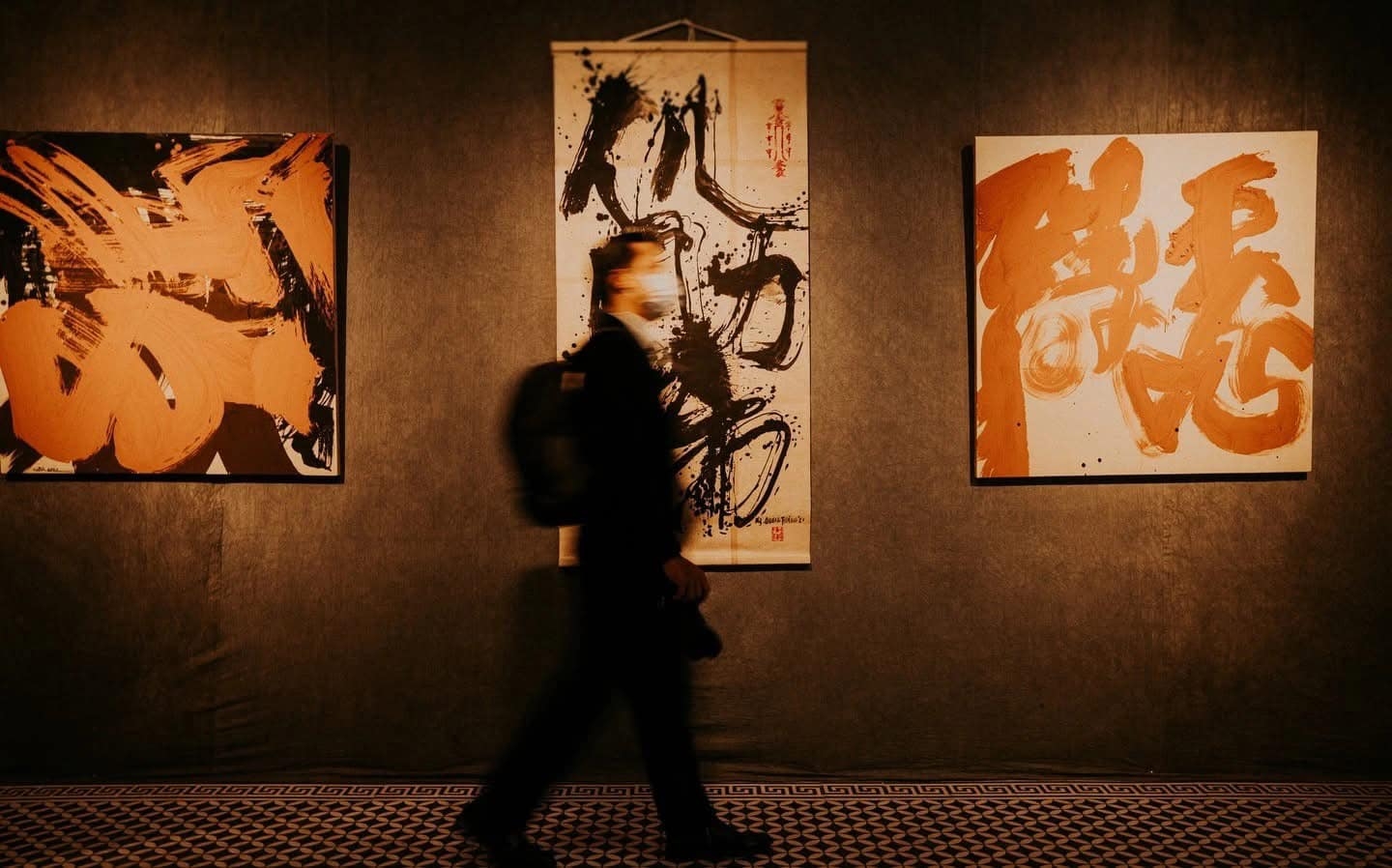
In recent years, the hall has taken on a new life as part of the Hanoi Art and Culture Center. Exhibitions, craft workshops, and traditional music performances often take place here, connecting the city’s multicultural past with its creative present. On quiet mornings, you might find an artist sketching in a corner or hear faint melodies drifting from a small performance.
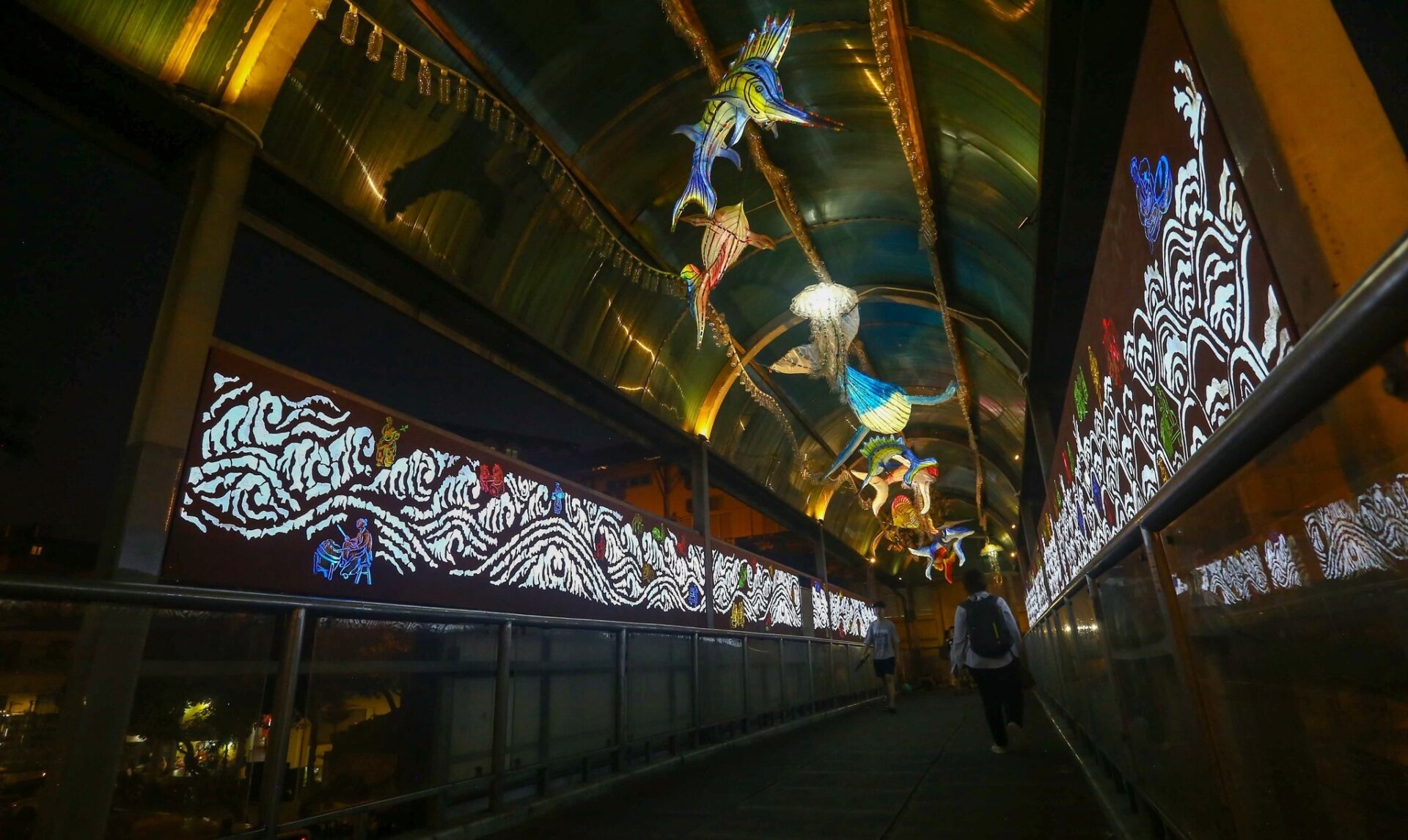
3. Walk through Hanoi’s glowing outdoor aquarium on Tran Nhat Duat Bridge
- Location: Tran Nhat Duat Street, Hoan Kiem District, Hanoi
- Opening hours: Open all day and night (art installation active in evenings)
- Entrance ticket: Free (public art installation)
Once a plain concrete walkway, the Tran Nhat Duat pedestrian bridge has transformed into a colorful public artwork. As the sun sets, the walkway glows with whales, jellyfish, and stingrays made from recycled plastic and metal. The effect feels like walking through an open-air aquarium while the city hums below.
The installation was created by local artists using recycled materials under the theme of Water. It celebrates Hanoi’s connection to the Red River and the growing awareness of sustainability among young creators. The pieces may look playful, but they carry a quiet message about the balance between human life and nature in a city that is changing every day.
People come here in the evenings to take photos, walk their dogs, or bring their children for a short stroll before dinner. Couples pause to watch the colors ripple across the walls, and cyclists slow down just to enjoy the view. It’s a small but surprising reminder of how Hanoi keeps reinventing itself through art.
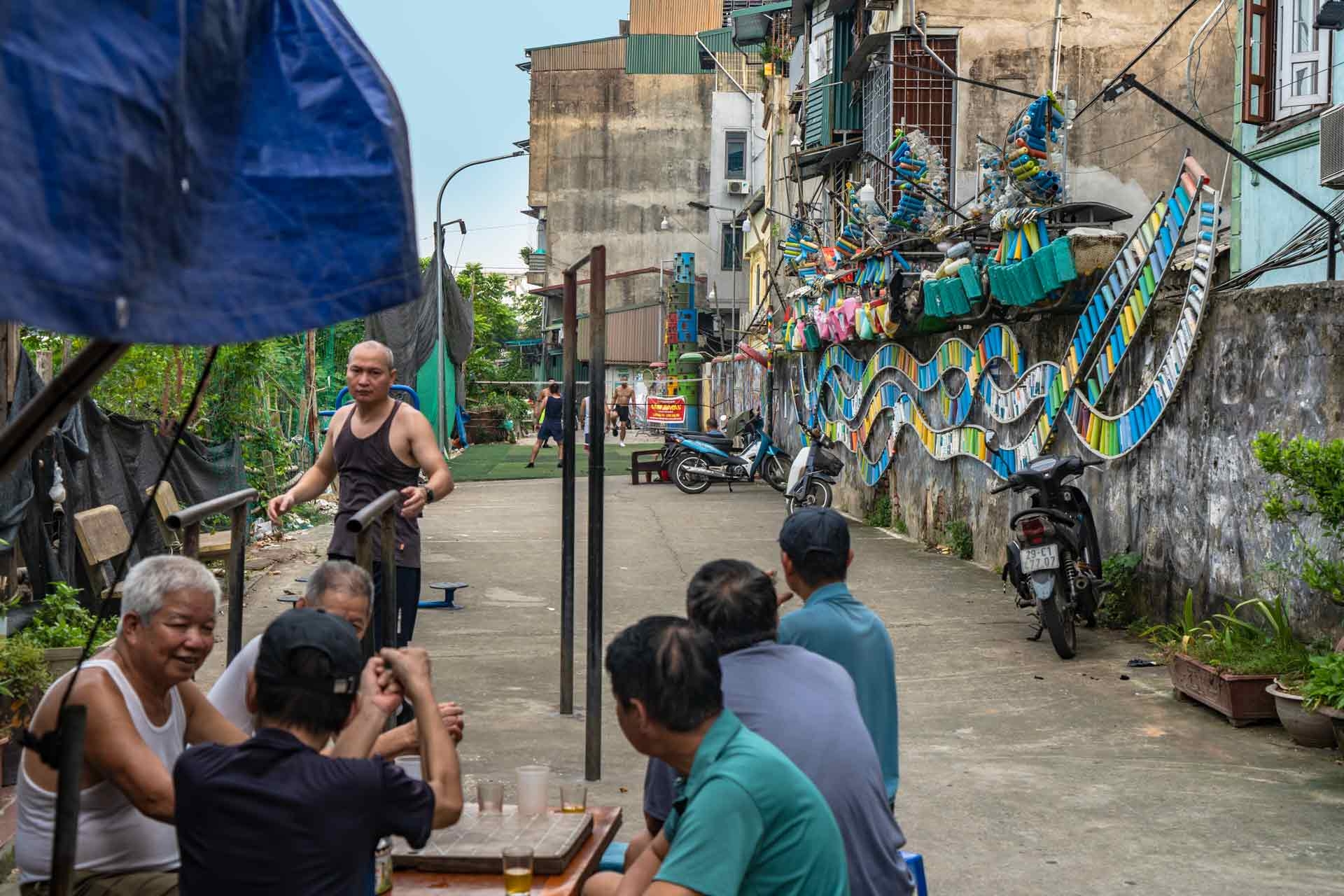
4. See creativity bloom by the river at Phuc Tan Art Space
- Location: Phuc Tan Ward, Hoan Kiem District, Hanoi
- Opening hours: Open all day
- Entrance ticket: Free
Beneath the eastern end of Long Biên Bridge, the neighborhood of Phúc Tân has quietly transformed into one of Hanoi’s most creative corners. What was once a neglected strip of land between the dike and the Red River is now alive with murals, sculptures, and small gardens. Local artists and residents worked together to tell the story of the city’s past and its renewal through art made from recycled wood, metal, and plastic.
Each piece carries a fragment of Hanoi’s identity. A mosaic of Long Biên Bridge glows in the sun. Figures of farmers, traders, and fishers emerge from layers of paint and rusted iron. Even the walls themselves, once gray and broken, have become canvases of color and memory. The sounds of the river mix with laughter from children playing nearby, and for a moment it feels as though the whole neighborhood is breathing again.
A short walk further east brings you to Phúc Tân Forest Park, a small green space built on what used to be a dump site. Now it is filled with shady trees, handmade playgrounds, and benches built from reclaimed materials. Locals come here to rest, read, or enjoy the breeze from the river in the late afternoon.
Take a self-guided art walk through Hanoi’s Old Quarter
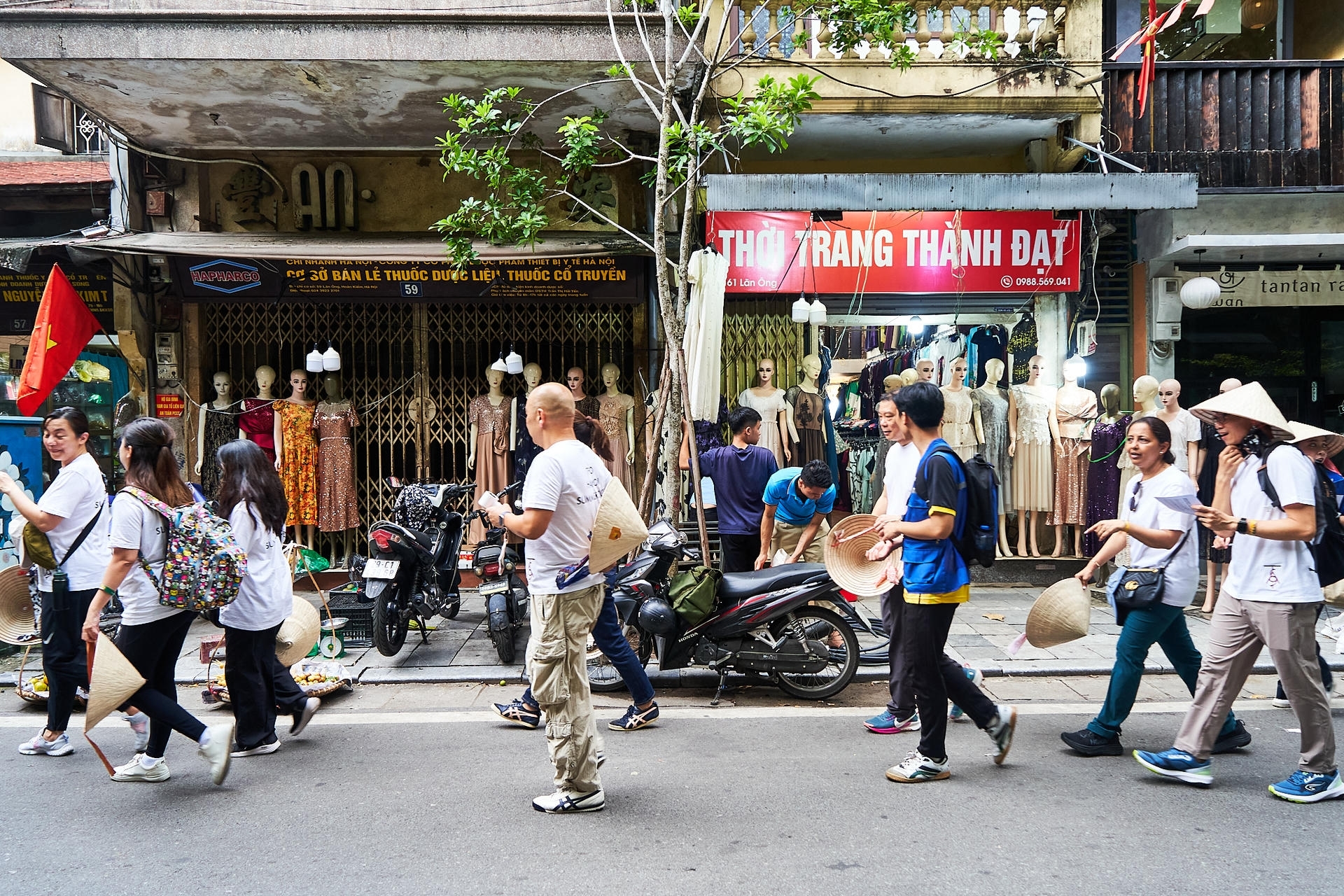
All five spots above sit close together, forming a small route that’s perfect for a slow afternoon walk through Hanoi’s creative heart.
Follow this path: Phuc Loi Art Stamp Shop → Quang Dong Assembly Hall → Tran Nhat Duat pedestrian bridge → Phuc Tan Art Space.
The loop takes about 3 hours and is best enjoyed in the late afternoon, when the light softens and the breeze from the Red River cools the streets.
5. Pause for calm at Son Hai Temple by the Red River
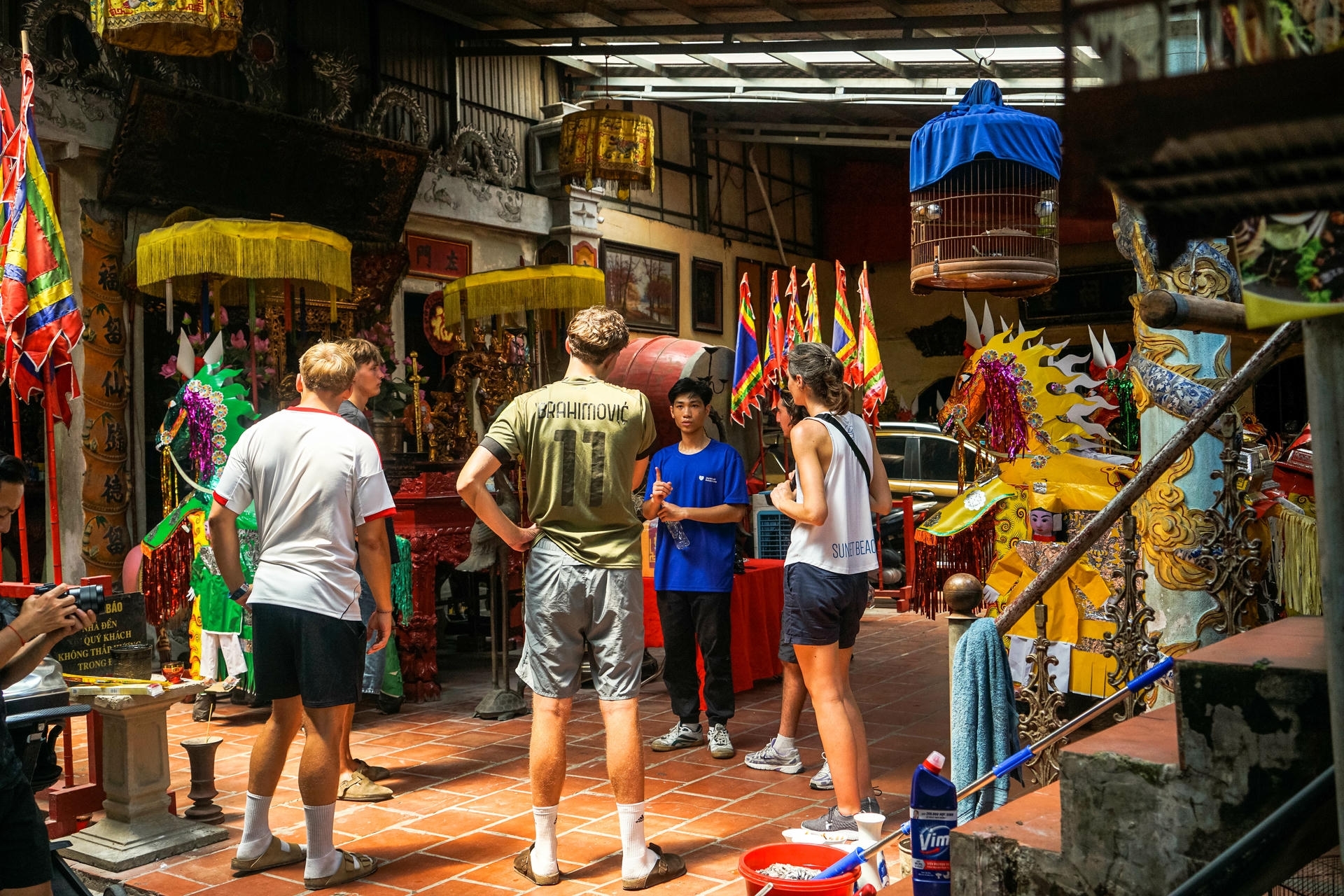
Just beyond the colorful murals of Phúc Tân, the path narrows and the sound of the city begins to fade. Under the shade of old trees, a small temple appears beside the Red River. This is Sơn Hải Temple, one of Hanoi’s most respected riverside shrines and a place where history and faith have quietly endured for centuries.
- Location: 139 Chương Dương Độ, Hoàn Kiếm District, Hanoi
- Opening hours: 8 AM – 6 PM
- Entrance ticket: Free
The temple is dedicated to Trần Hưng Đạo, his sons, and General Phạm Ngũ Lão, the heroes who led Vietnam to victory against Mongol invasions during the 13th century. Over time, the structure has been rebuilt many times after floods and wars, but the spirit of reverence remains unchanged. The air smells faintly of incense, and you might hear the soft rhythm of wooden bells carried by the wind.
Locals come here to pray for peace, good fortune, and success at the start of the year or during the annual festival. Visitors are welcome to step inside, light a stick of incense, and take a quiet moment by the altar. The temple’s walls are decorated with faded carvings, and the view of the river beyond the courtyard adds to its sense of calm.
6. Stand before history at B52 Lake
- Location: Alley 135 Doi Can, Ngoc Ha, Ba Dinh District, Hanoi
- Opening hours: Open all day
- Entrance ticket: Free
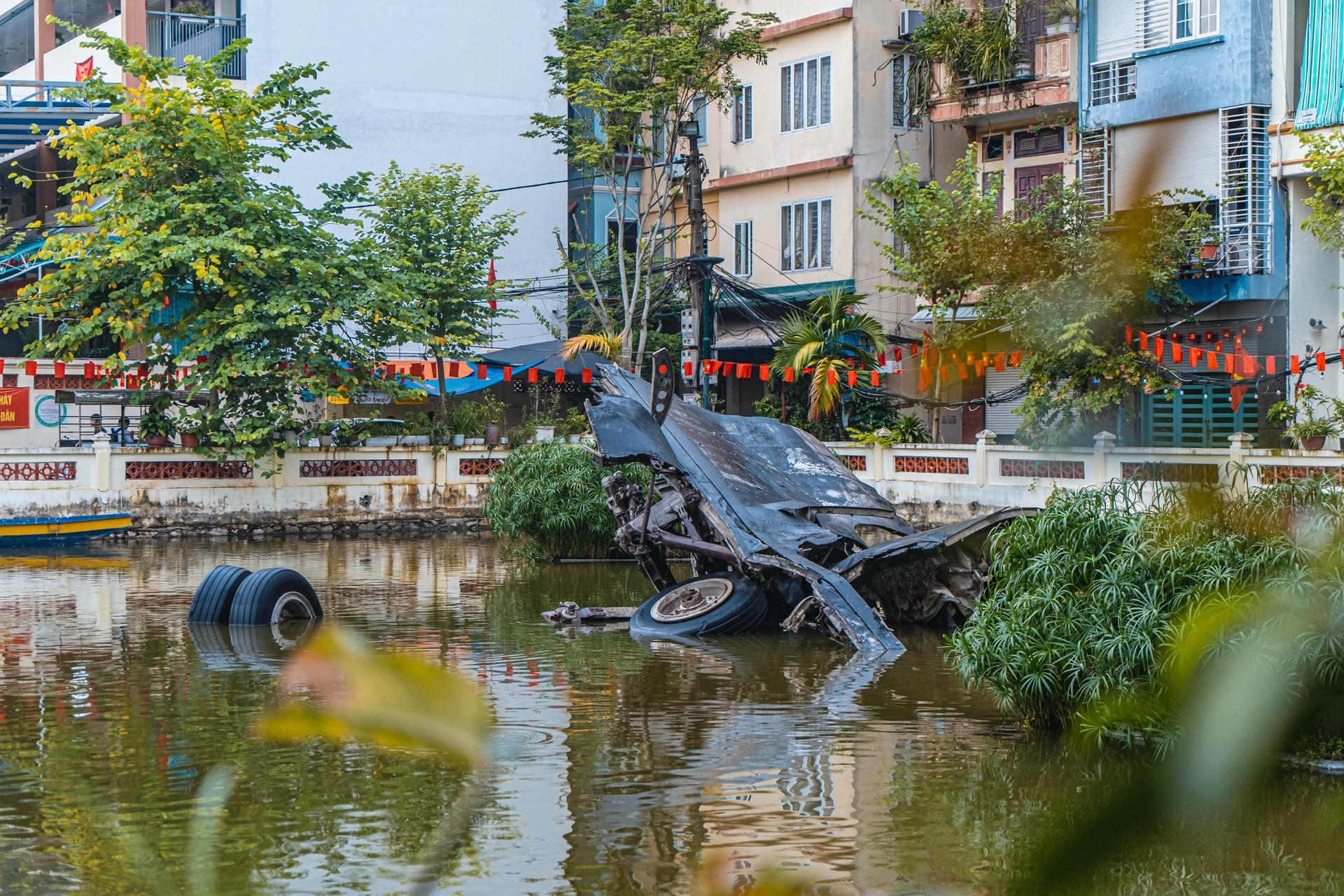
When speaking of Vietnam’s history, it’s impossible not to think of the years when the country endured heavy bombing during the war. The destruction left deep marks, and B52 Lake, or Huu Tiep Lake, is one of the few places where that past remains visible. In the middle of this small lake lies the wreckage of an American B52 bomber that was shot down in 1972. The twisted metal still rises partly above the surface, left just as it fell more than fifty years ago
The aircraft was shot down during a December night in 1972, when Hanoi faced some of the heaviest bombings of the war. Instead of clearing the remains, the local community chose to leave them here as a quiet reminder of what the city endured. Over the decades, life has continued around the lake. Houses were rebuilt, new generations grew up, and the wreck became part of the landscape, as natural to locals as the trees or the sky above..
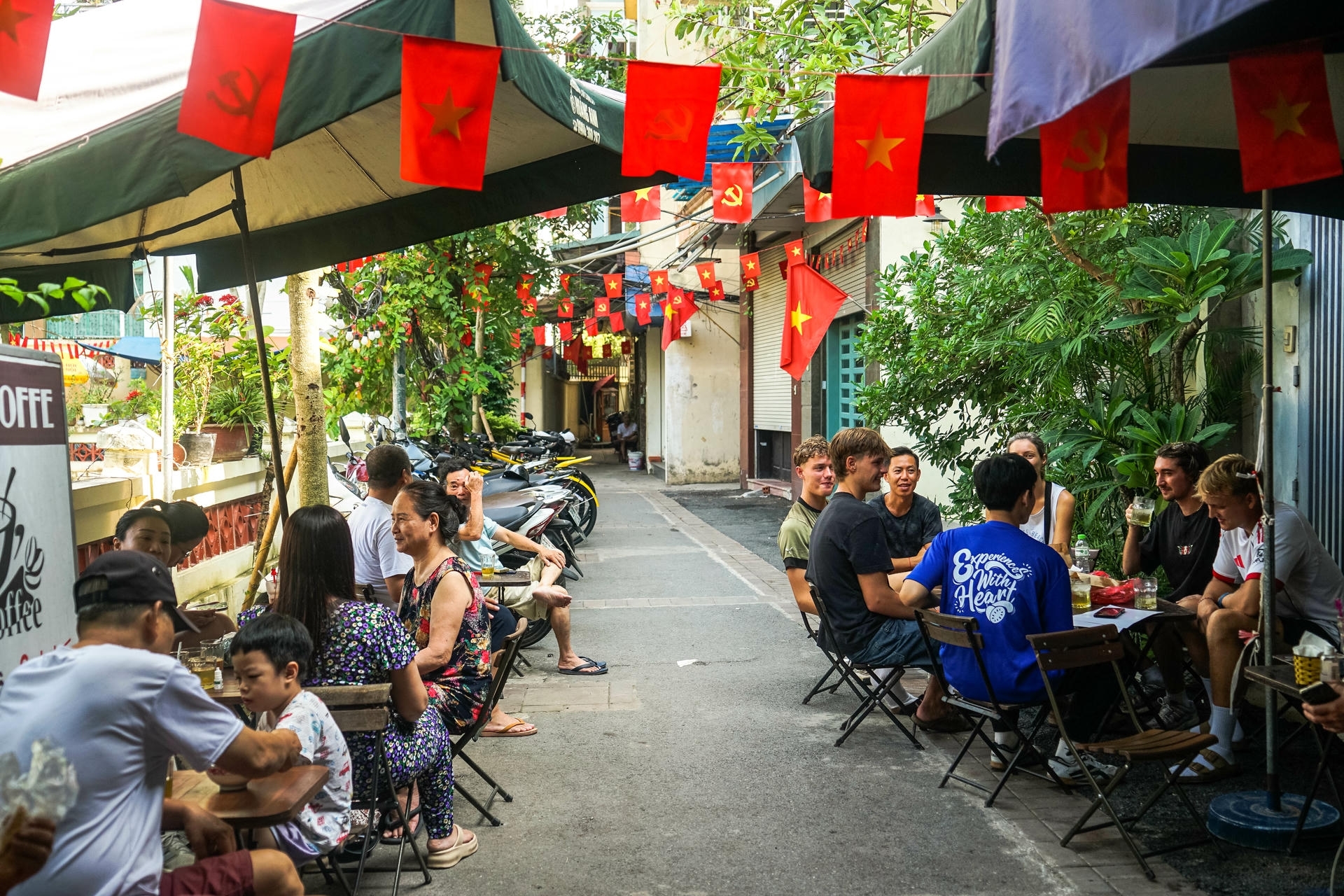
Standing by the railing, it feels surreal to see war and daily life coexist in one small frame. Across the street, a café overlooks the water. You can sit with a cup of coffee and watch the reflections move across the surface while the metal silhouette stays still beneath. The contrast is striking yet peaceful, showing how Hanoi carries its past not as a burden but as part of its everyday rhythm.
7. Find traces of the past inside Bao Dai Mansion
- Location: Alley 186 Ngoc Ha Street, Ba Dinh District, Hanoi
- Opening hours: Open all day
- Entrance ticket: Free
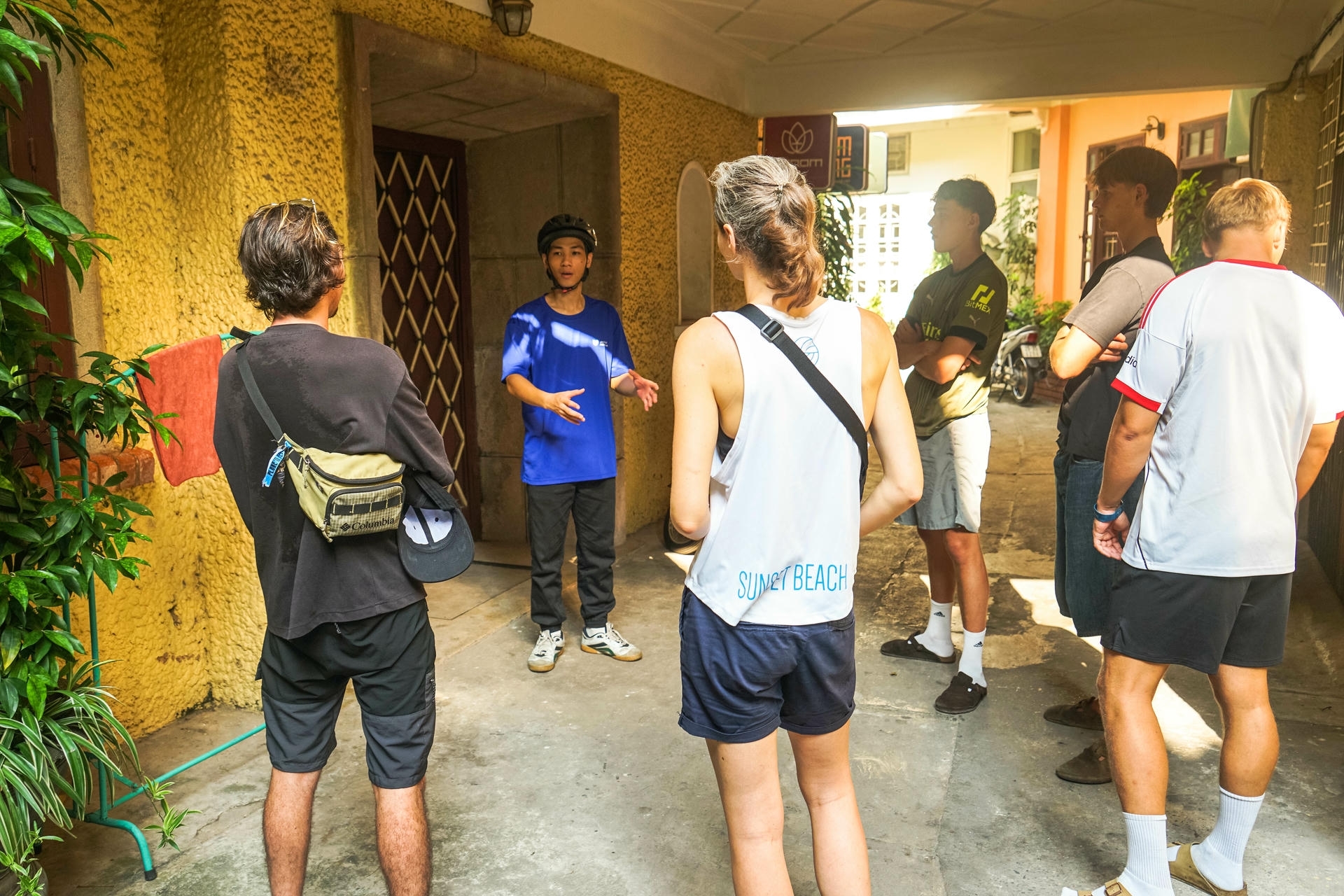
Walk a few minutes from B52 Lake and you’ll reach a small alley that ends at a quiet garden. Behind the trees stands a faded yellow-green villa with tall shutters and curved balconies. Locals call it Dinh Bảo Đại, after Vietnam’s last emperor. Few visitors know it exists, and even fewer step inside, yet the building holds an understated kind of elegance that time has not erased.
The villa blends French and Vietnamese design, with arched doorways, high ceilings, and a roof decorated with dragon motifs. The garden is overgrown, and vines climb the outer walls, softening what was once a symbol of wealth. Inside, wide staircases spiral upward to rooms that once hosted gatherings of Hanoi’s upper class. The walls are peeling, but if you look closely, you can still see the traces of painted flowers and gilded borders that hint at its former life.
There is no signboard or ticket booth, just the quiet presence of a place that has witnessed the city’s changes. Locals nearby often stop to chat under the trees, treating the villa as part of their daily scenery. Standing by the gate, you can almost hear the echo of music that once filled the halls, blending with the sound of modern Hanoi drifting in from the street.
8. Get lost among old treasures at Hanoi’s Black Market
- Location: 319 Pho Hue Street, Hoan Kiem District, Hanoi
- Opening hours: 11 AM – 12 AM
- Entrance ticket: Free
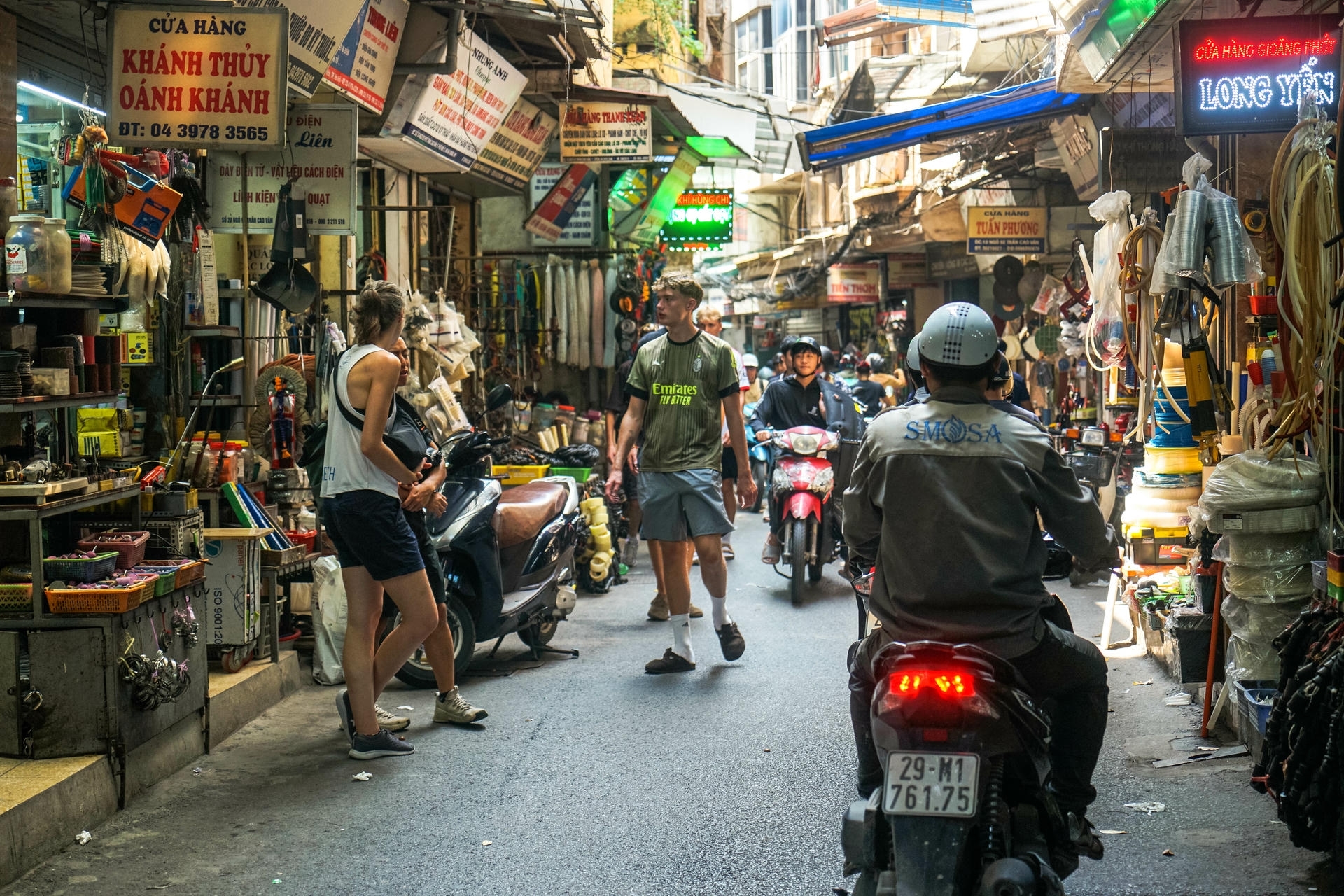
Among Hanoi’s more unusual historic places is Chợ Giời, or the Black Market, a lively reminder of the city’s trading spirit. It first appeared in the 1950s, during the subsidy era, when many goods were scarce and people relied on informal markets to find what state shops couldn’t supply. Bicycle parts, radios, and household tools once passed from hand to hand here, and the market became a symbol of resourcefulness and survival in hard times.
Walking through today, you’ll see narrow alleys packed with tiny screws, Soviet-era electronics, old motorbikes, and used appliances of every kind. The air hums with haggling and the clatter of metal. Locals like to joke that if you ever lose something in Hanoi, you might just find it here. Even if you’re not planning to buy anything, it’s worth a wander to experience a raw, unpolished part of the city where repair, reuse, and persistence still shape everyday life.
Join a ride through the city’s untold stories
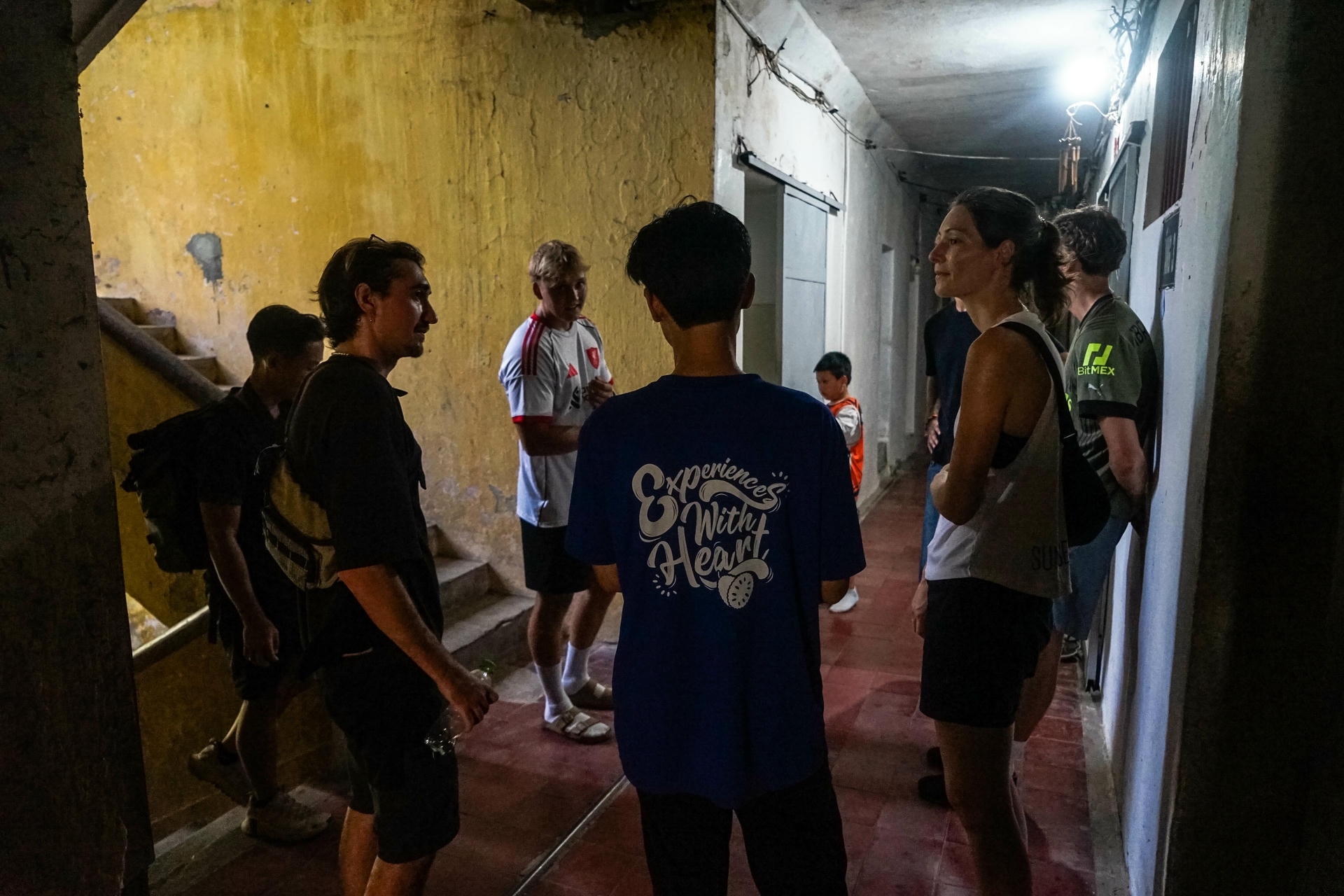
After seeing Hanoi’s temples, lakes, and traces of history, you’ll realize the city’s stories don’t live in monuments alone. They hide in back alleys, riverside homes, and markets that never made it to the tourist map. Some places have names, some don’t, but each one holds a piece of daily life that locals move through without thinking twice.
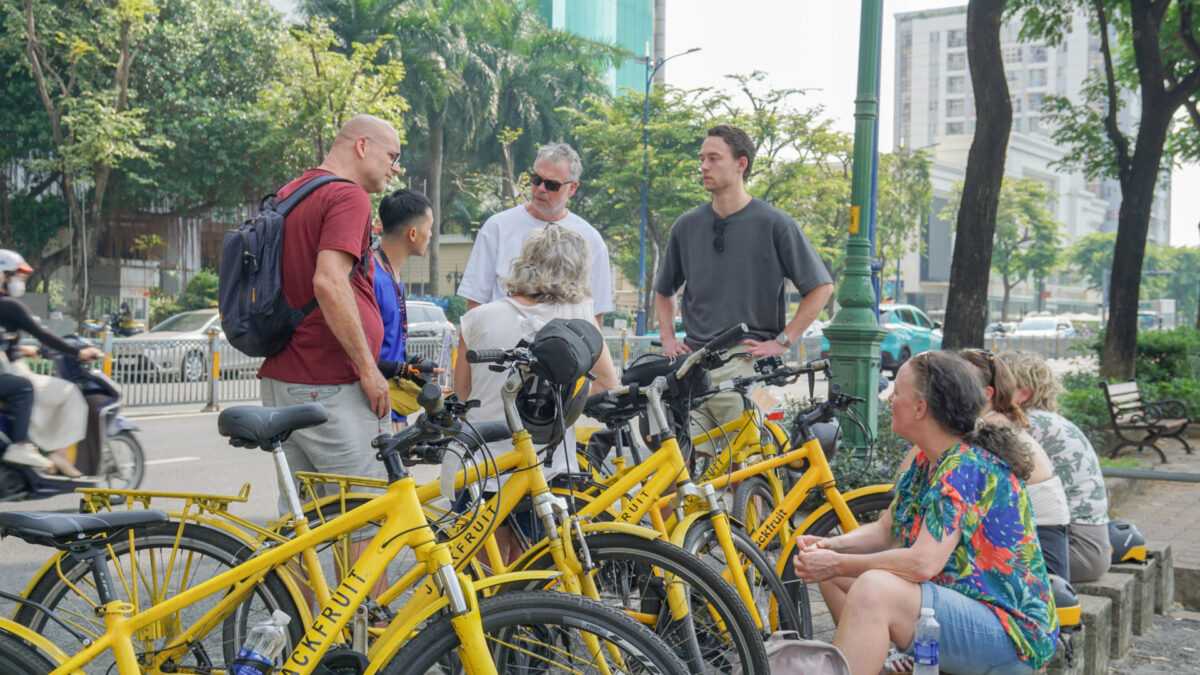
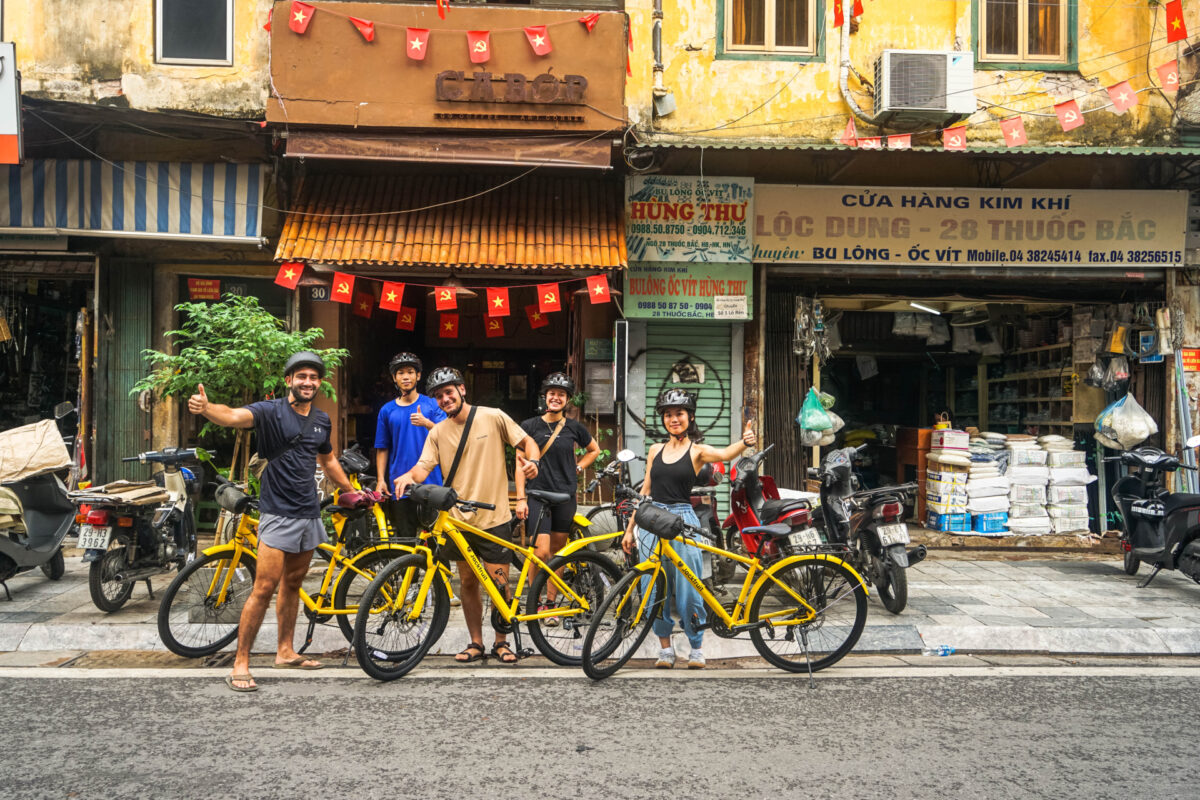
The Hanoi off the beaten path cycling tour by Jackfruit Adventure weaves all of these fragments together into one meaningful ride. You’ll pedal through quiet neighborhoods, talk with people who’ve watched the city change, and see how Hanoi’s soul lives between its old walls and its present rhythm. One moment you might stop by a local wet market or a bomb-marked apartment still filled with life, and the next you’ll find yourself crossing Long Bien Bridge or passing through a community art space where creativity grows out of everyday stories.
It’s not a perfectly paved experience. You’ll sweat, get a little dusty, and maybe lose your way for a moment, but you’ll come back with stories that stay long after the ride ends. If you want to see the Hanoi that locals know and love, this is the one ride I’d tell you not to miss.
9. Watch the sunset settle over Bac Cau Village
Long Biên Bridge stretches across the Red River like a thread connecting Hanoi’s heart to its quieter edges. Most people cross without stopping, but if you follow the small road beneath the bridge and turn left toward Ngọc Thụy Street, you’ll reach Bắc Cầu Village. Its name simply means “north of the bridge,” and that’s exactly where it sits, between banana gardens, shrines, and clusters of tiled houses that have watched generations grow up by the river.
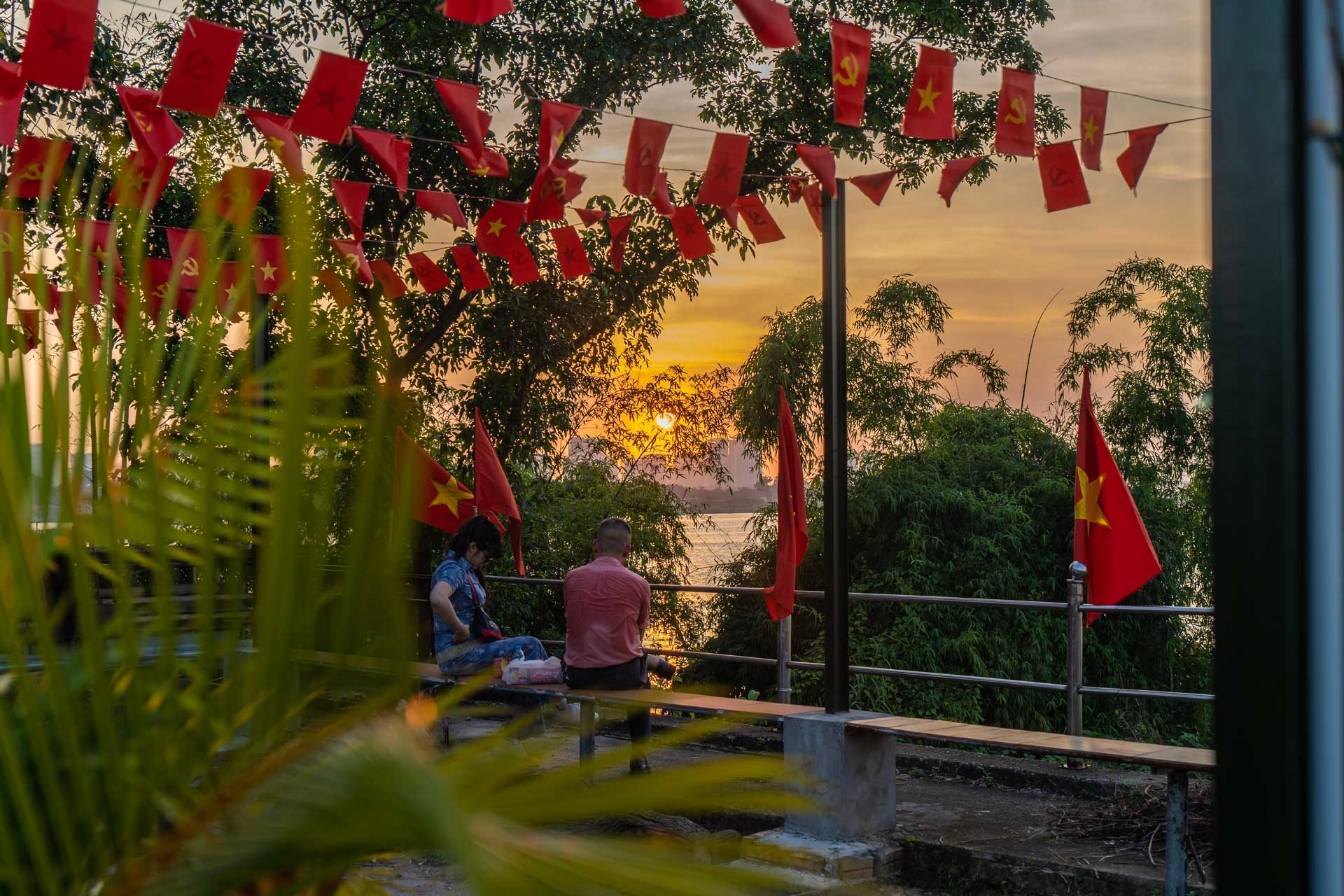
As the afternoon light softens, the whole area takes on a calm glow. Locals come out to tend their gardens or sit by the water with a cup of tea. A few children ride bicycles along the dusty paths, laughing as the last sunlight reaches the fields. From here, you can look back at Long Biên Bridge darkening against the orange sky. The city skyline glimmers faintly in the distance, yet this place feels a world away.
Life here moves slowly, marked by the rhythm of the river and the sound of trains crossing above. You can cycle or walk through the quiet lanes that wind between fruit gardens and small workshops. In recent years, Bắc Cầu has become a quiet haven for local artists who rent small studios hidden among the trees. If you’re lucky, you might see one at work and even bring home a handmade piece that carries the spirit of the river.
At the tip of the island stands a small riverside temple, watching over the water as it flows past. It is one of the most peaceful spots to sit and watch the sunset over Nhật Tiến Bridge, when the light deepens and boats drift slowly downstream.
Local Tip: If you know your way around, there is a small ferry that crosses from Bắc Cầu to the far side of the river. Beyond it lies Cổ Loa Citadel, Vietnam’s first kingdom, where rice fields, quiet villages, and centuries of legend still shape the landscape.
10. Follow the hidden path to Banana Island’s green calm
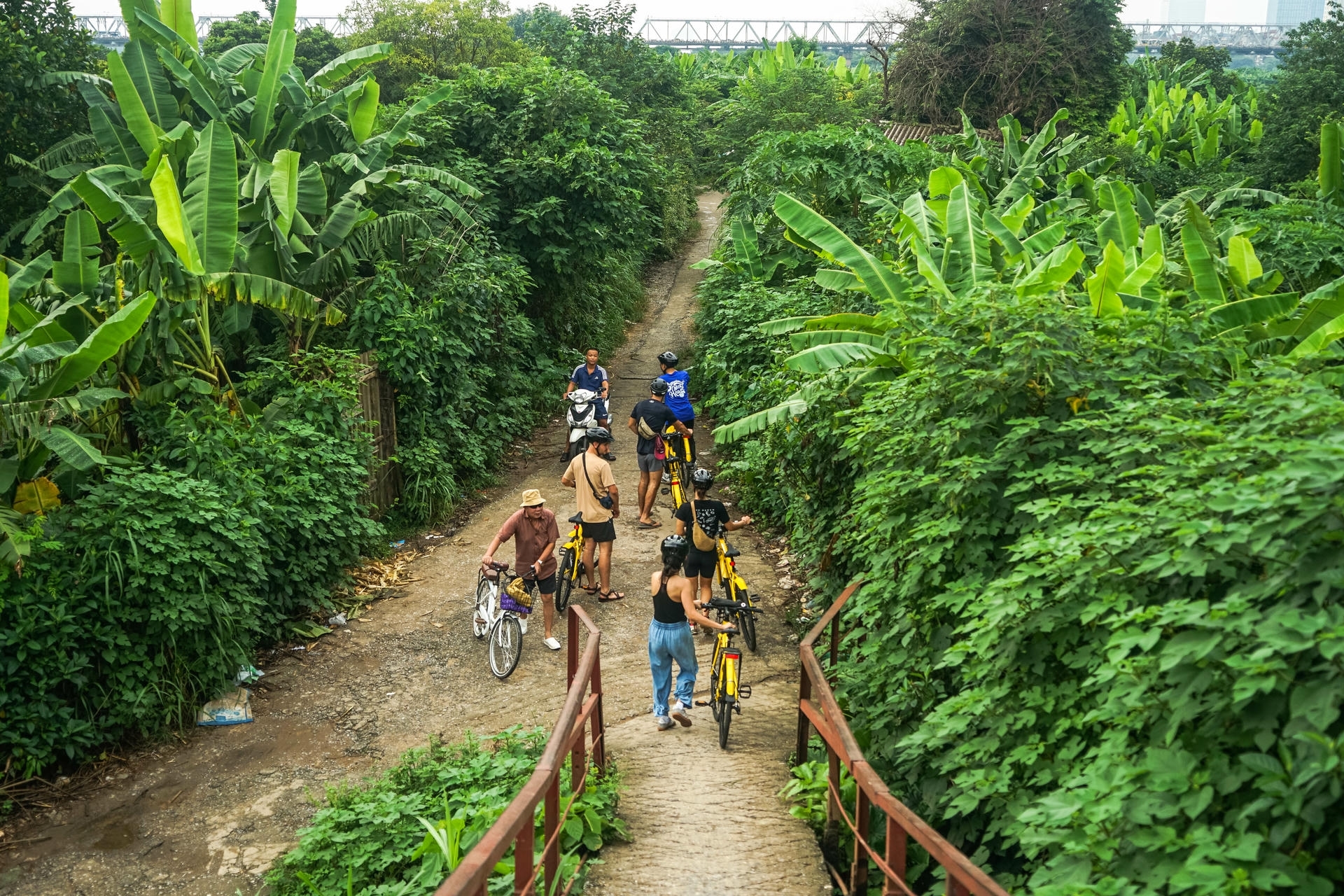
Halfway across Long Biên Bridge, a narrow staircase leads down to a world you wouldn’t expect to find in Hanoi. The city noise fades almost instantly, replaced by the rustle of leaves and the quiet sound of the Red River flowing past. Locals call it Bãi Giữa, or Banana Island, a green stretch of land that has somehow stayed untouched while the rest of the city keeps changing.
Here, the skyline gives way to banana gardens and small vegetable plots that seem to go on forever. Narrow dirt paths wind through the fields, passing simple wooden homes where families still live off farming and fishing. Life feels unhurried here. You might see someone watering their crops, hear a radio playing softly from a small house, or watch kids running barefoot along the paths.
You can rent a bicycle and ride under the shade of the banana trees, or simply walk and take your time. The air feels cooler, the rhythm slower. Bring a camera if you can, because the light filtering through the leaves and the reflections on the river are beautiful, especially near sunset. Some locals come here for picnics or even a swim on warm days, making it a peaceful spot to pause and breathe.
Meet the people of Banana Island
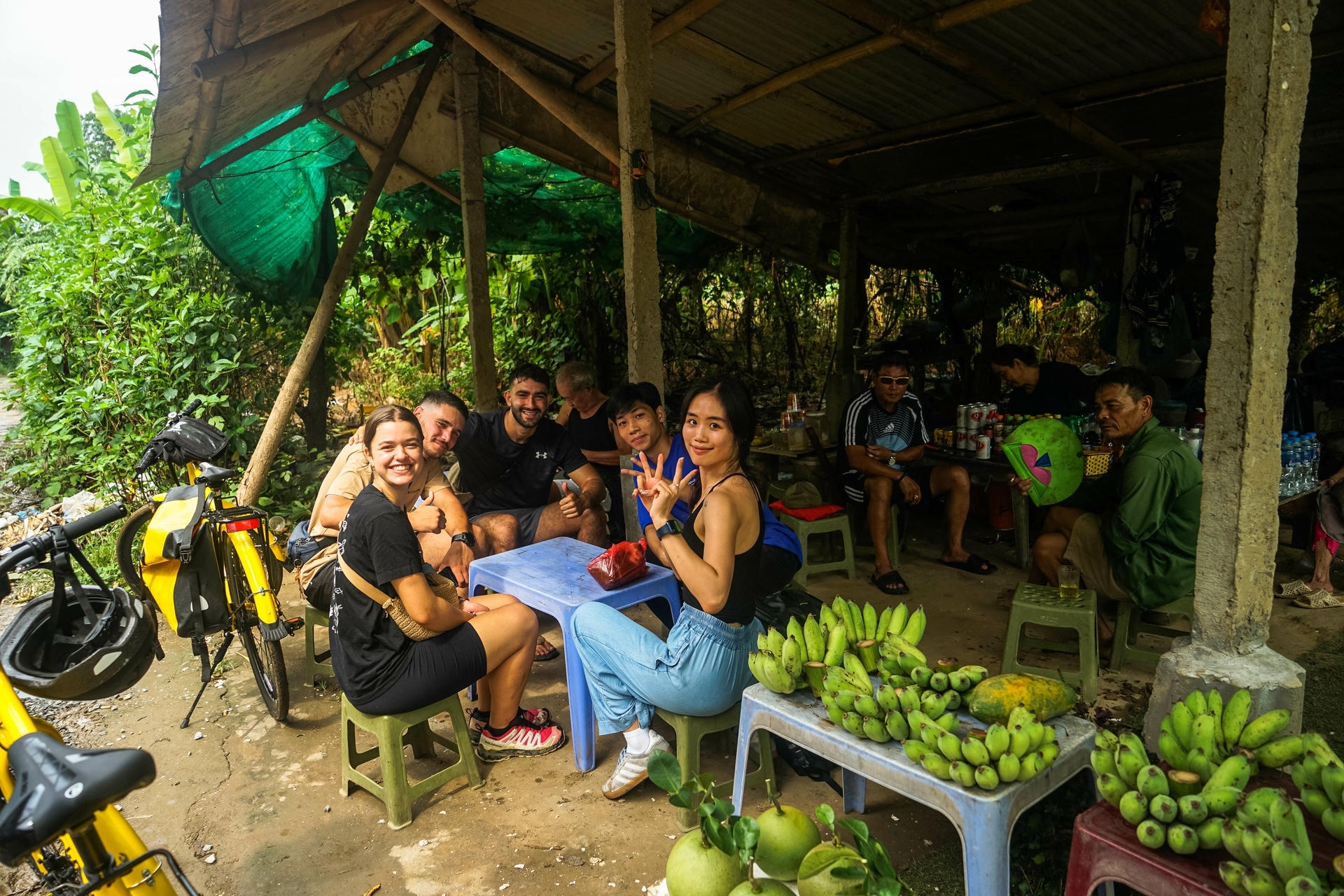
Near the riverside, you’ll find a small banana stall where you can rest for a while. The owner sells fresh bananas and bottled drinks and usually keeps a few chairs under a small shaded roof. Even if you don’t speak Vietnamese, a smile or a wave is often enough to start a friendly exchange.
If you’d like to go deeper, join the Tour de Hanoi by Jackfruit Adventure. The ride passes through Hanoi’s iconic landmarks and crosses Banana Island where it stops for a short break, giving you the chance to meet the people who live by the river and hear their stories firsthand.
11. Join locals for a lakeside sunset at West Lake cafés
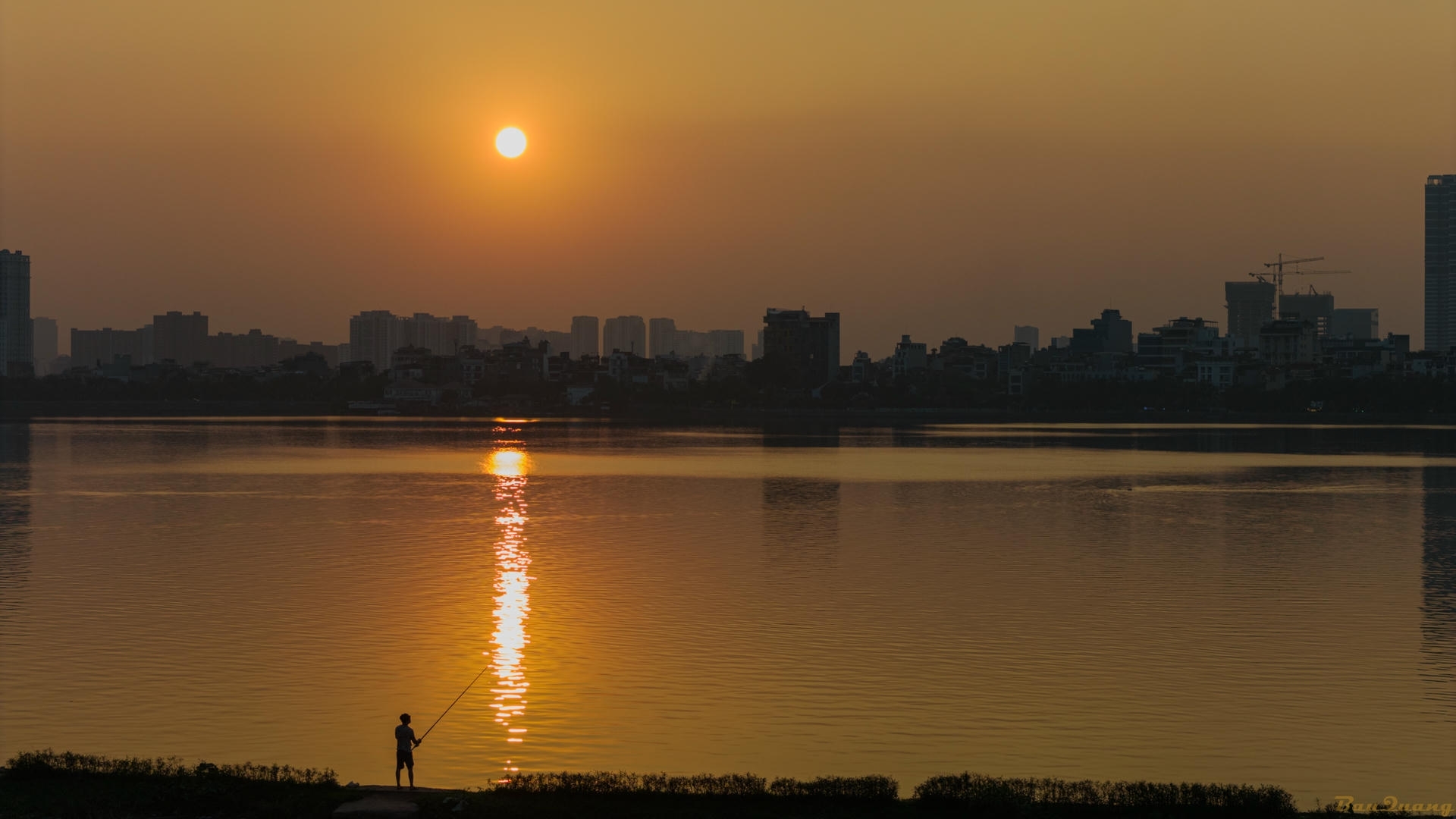
If you return to the city before evening, there’s another place where Hanoi slows down in its own quiet way. Around five or six in the afternoon, the road around West Lake begins to fill with cyclists, couples, and friends meeting after work. The air carries the scent of coffee and the sound of soft conversation as the sun starts to dip behind the water.
Watching the sunset here feels like stepping into a daily ritual shared by everyone in the city. The light spreads across the lake in shades of gold and pink, and the reflections ripple gently with the breeze. No matter how many times you see it, the view still feels new.
You can walk or ride a bicycle along the lakeside path, stopping wherever the view feels right. Here are a few spots worth trying:
- Maldives Coffee – 1A Quảng Bá Street. Known for its open terrace and wide view of West Lake.
- ABC Coffee Roaster – 10 Quảng Khánh Street. A favorite for strong brews and a calm view of the water.
- Two Chairs – 34 Yên Hoa Street. A simple spot by the edge of the lake where you can sit in silence and watch the sun fade over the water.
12. Sip coffee inside a vintage villa at Loading T
- Location: 8 Chan Cam Street, Hoan Kiem District, Hanoi
- Opening hours: 8 AM – 6 PM
- Price: 40,000 VND – 90,000 VND
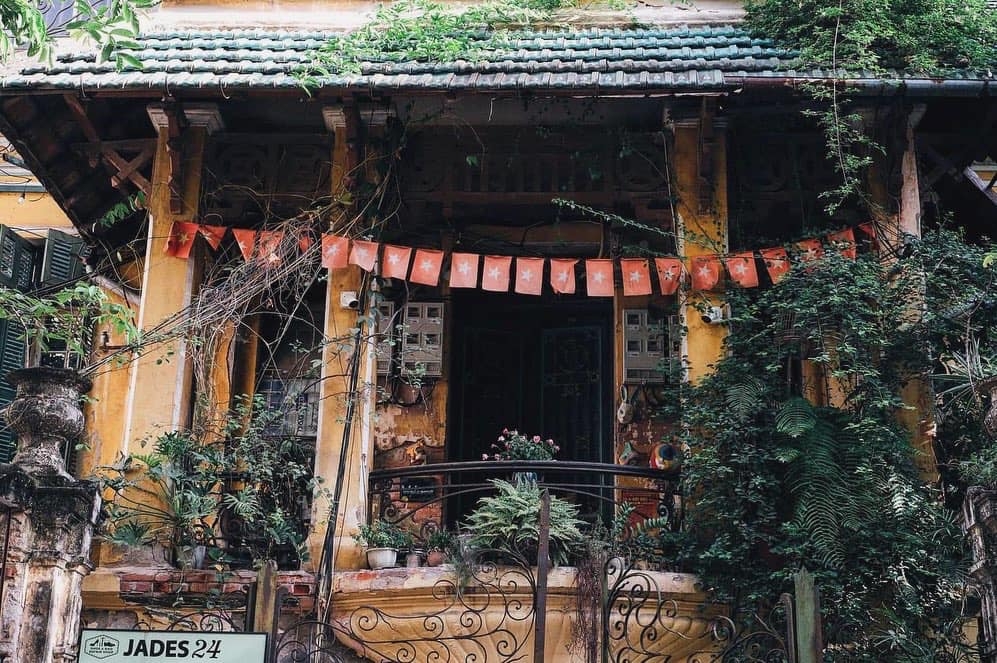
Hanoi isn’t just known for its lakeside cafés around West Lake but also for its timeless coffee spots tucked inside old villas. One of the most charming is Loading T, hidden within a yellow French villa from the 1930s. Just a few steps from St. Joseph’s Cathedral and Phở 10 Lý Quốc Sư, the café moves at its own slow pace behind creaky wooden doors. You climb a narrow staircase into quiet rooms with patterned tiles, high ceilings, and the warm scent of roasted coffee mixed with old wood.
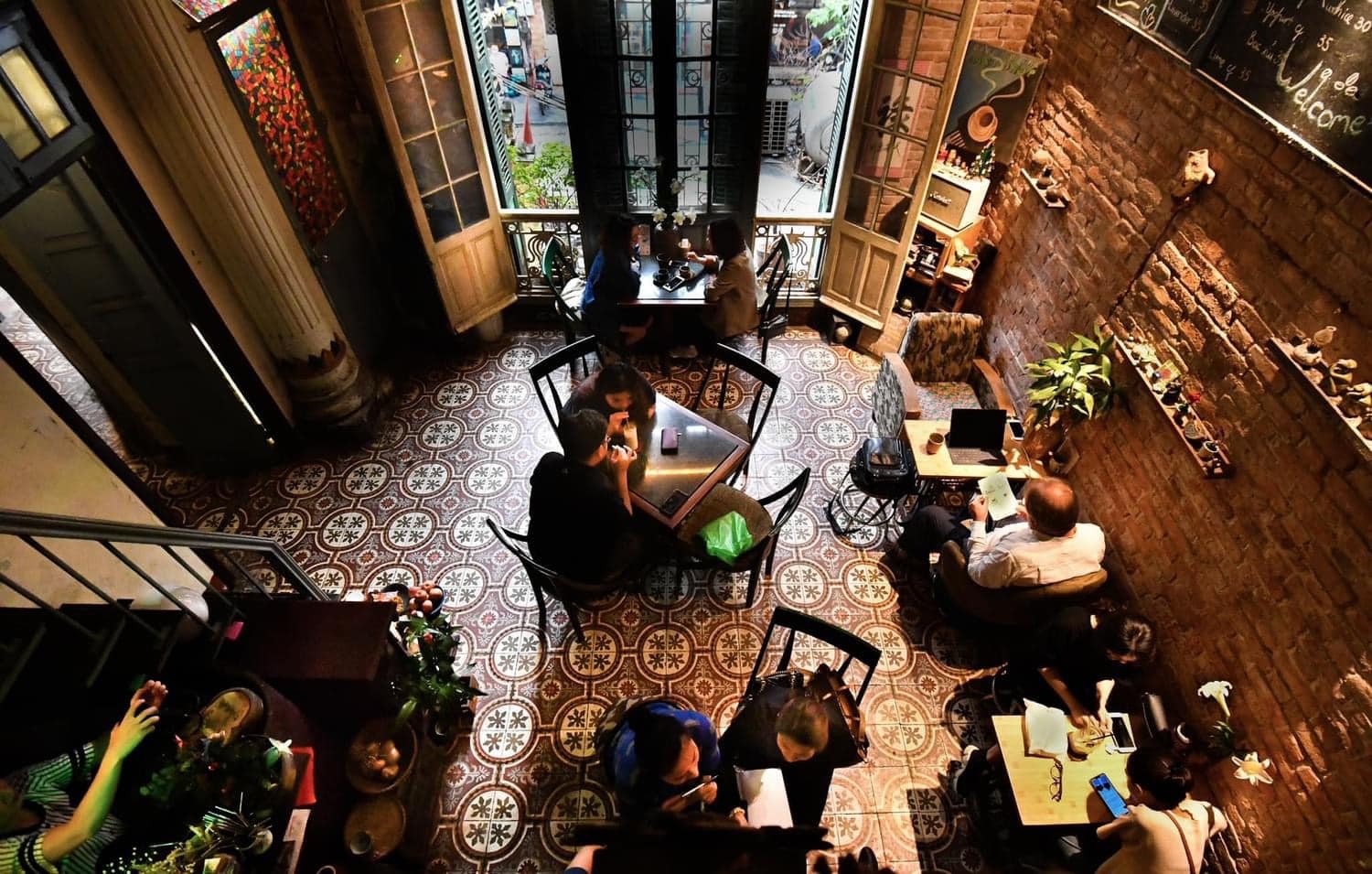
The space feels cozy and nostalgic, with antique cameras, flower vases, and soft French songs playing in the background. The balcony is a favorite spot, where you can sit above the street and watch daily life drift by.
Try their signature egg coffee
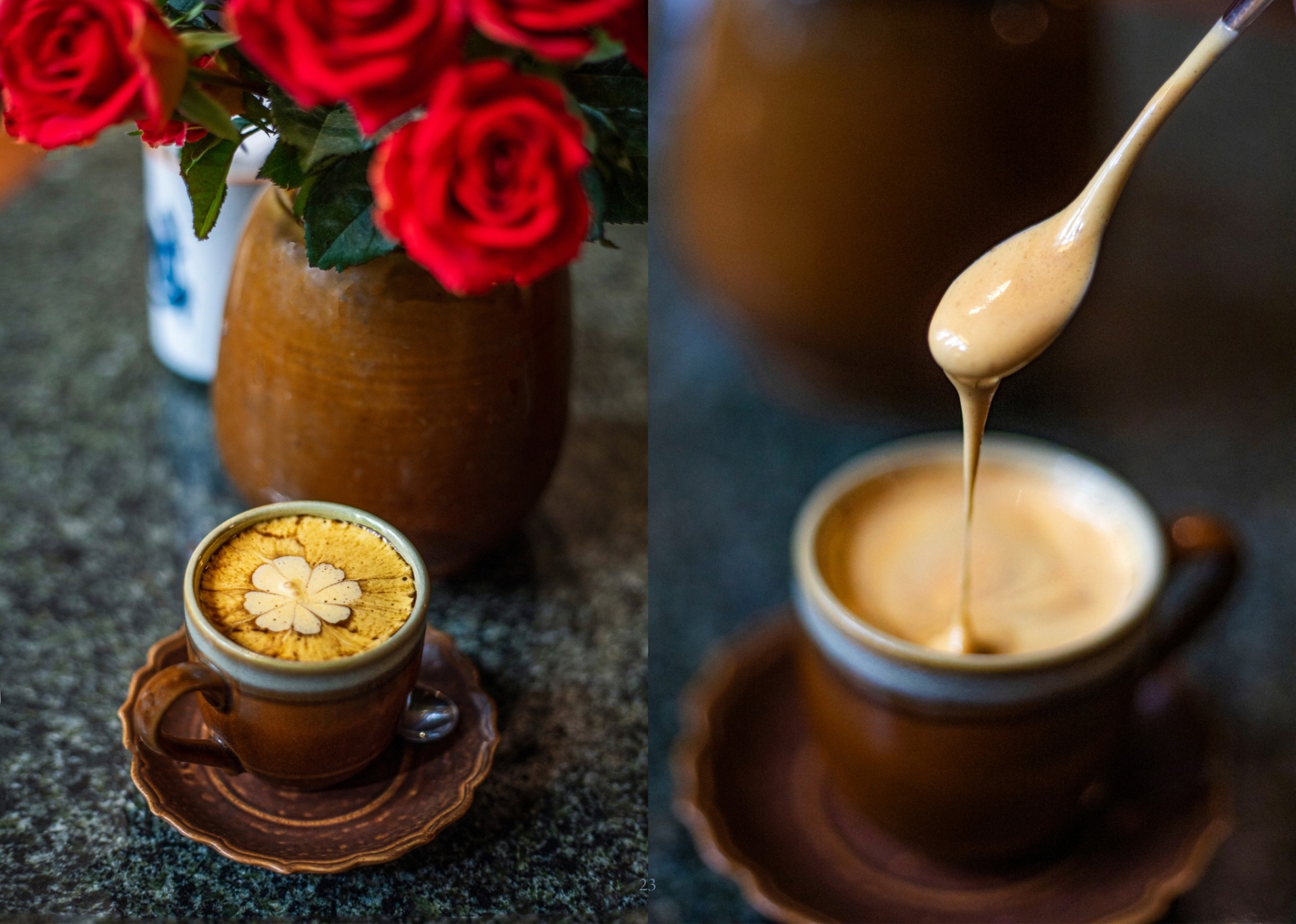
Order the signature egg coffee, the drink that made this place beloved among locals. It’s creamy, aromatic, and topped with a hint of cinnamon. The flavor here is stronger and less sweet than many other versions in the city, best enjoyed slowly as you watch the street below wake up or wind down.
13. Try Hanoi’s Michelin recognized eel vermicelli on Chan Cam Street
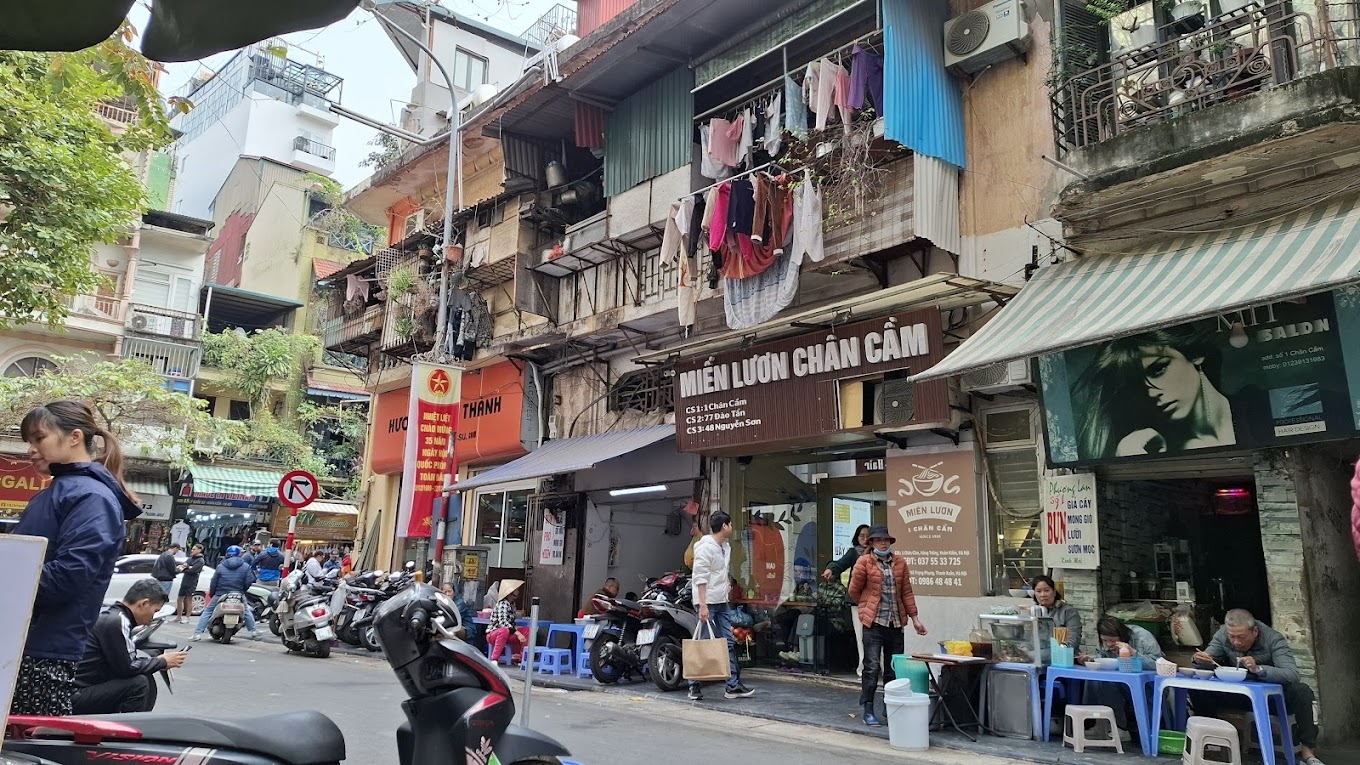
- Location: 1 Chan Cam Street, Hoan Kiem District, Hanoi
- Opening hours: 7 AM – 10 PM
- Price: 40,000 VND – 50,000 VND
Just a few doors away from Loading T Café, the scent of fried eel and broth fills the air. This is Miến Lươn Bà Lan, a small noodle shop that has been serving eel vermicelli since 1988. What began as a family business has grown into one of Hanoi’s most respected local eateries, now listed in the Michelin Selected category for its authenticity and consistency.
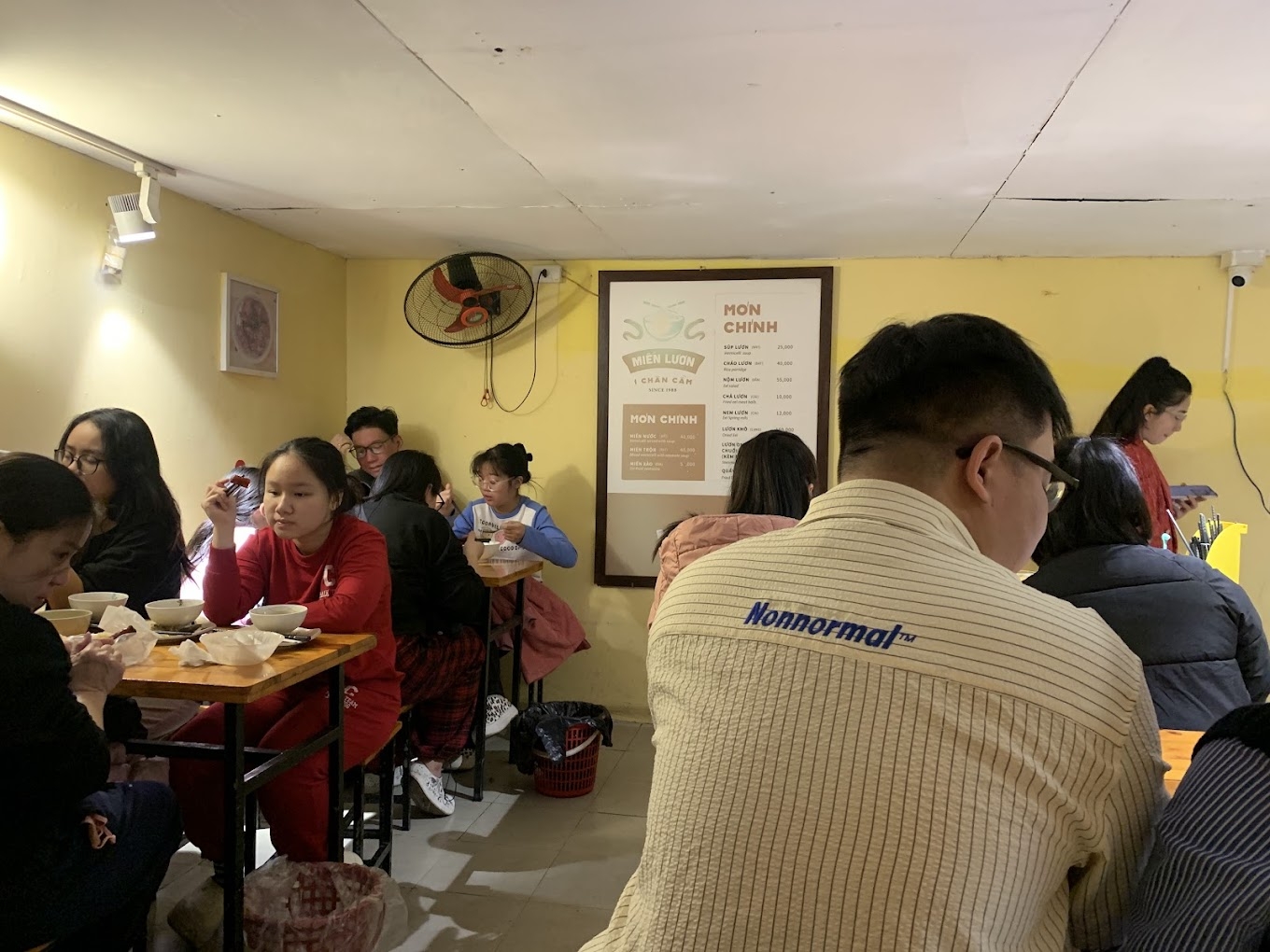
It’s a modest space with a few metal tables on the sidewalk and air-conditioned seats inside. The service is quick, the atmosphere is casual, and the food is what keeps people coming back.
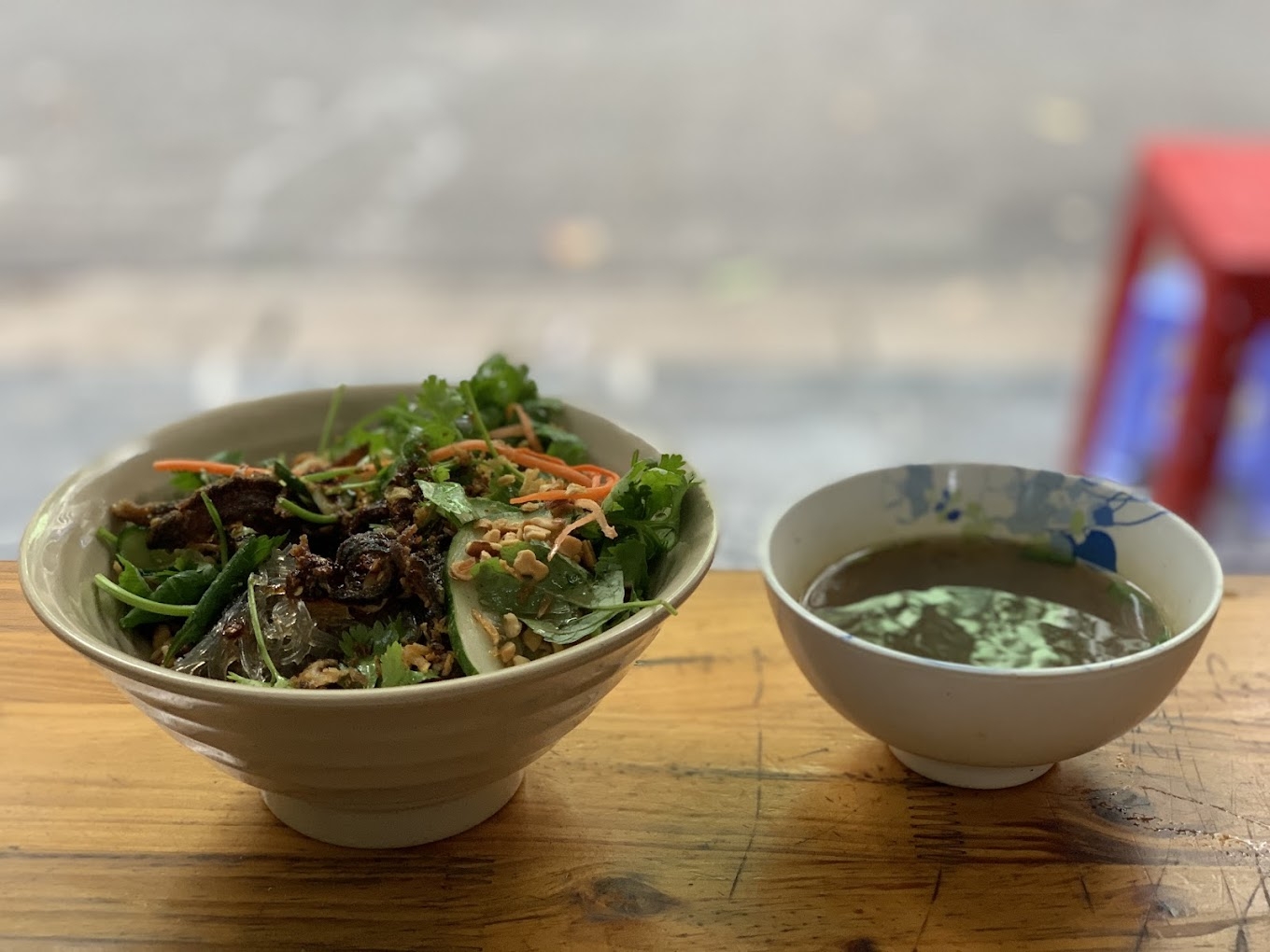
The bowl comes with glass noodles, fried or boiled eel, scallions, and a light, clear pork-bone broth. Many regulars order the soup and a side of crispy eel to enjoy both textures at once. The mix of sweetness in the broth and the crunch of the eel is what earned this little shop its praise from Michelin inspectors, who called it a hidden gem in the Old Quarter.
14. Cool off with traditional sweet soups at Che 4 Mua
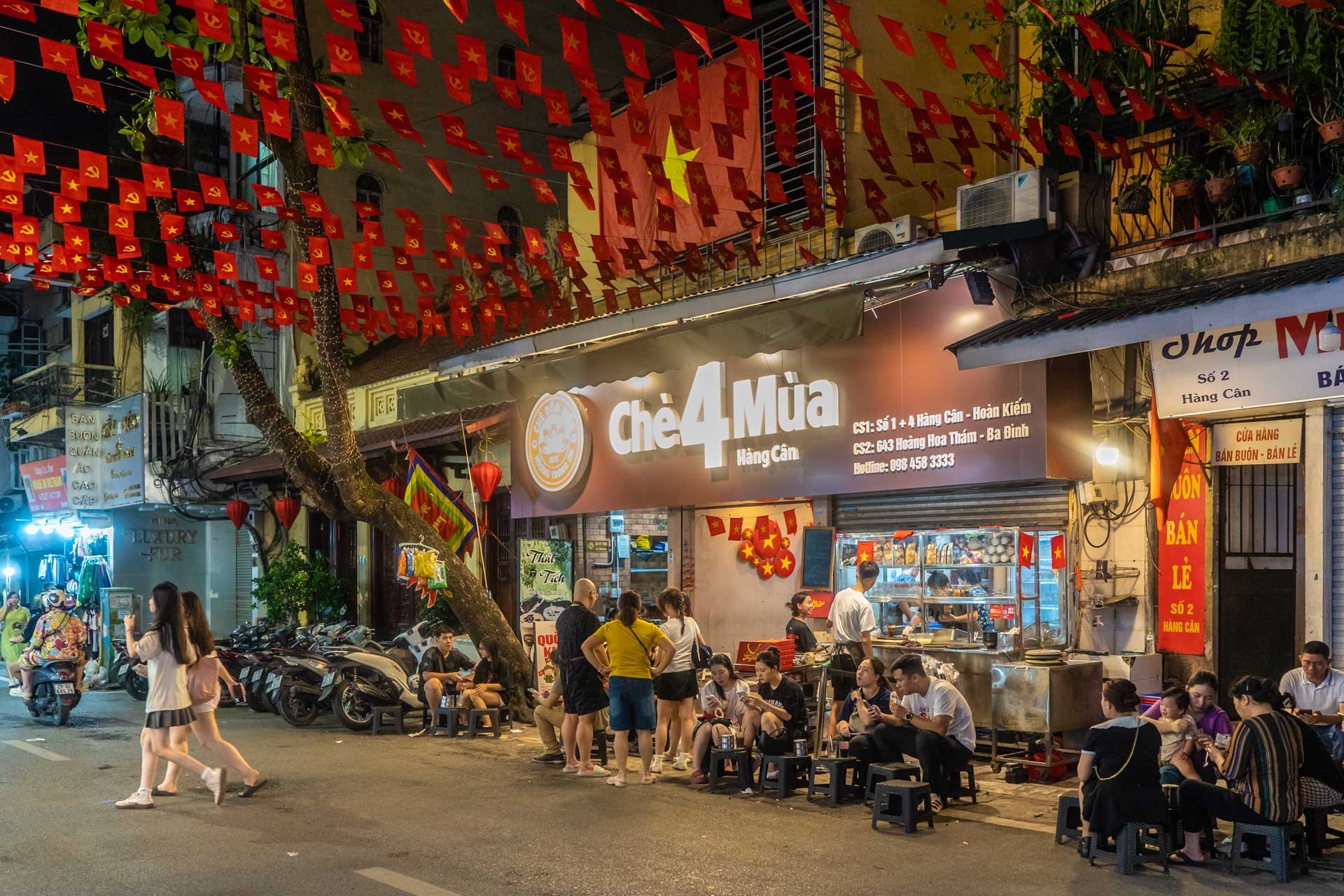
- Location: 4 Hang Can Street, Hoan Kiem District, Hanoi
- Opening hours: 8:30 AM – 12 AM
- Price: 20,000 VND – 35,000 VND
As you continue wandering through the Old Quarter, you’ll find Chè 4 Mùa, a family shop that has been serving Hanoi’s favorite sweet soups since before 1975. The place still keeps its old wooden counter and glass jars, with seats inside and a few small tables by the sidewalk.
True to its name, Chè 4 Mùa means “four seasons sweet soup”, and the menu changes with the weather. In summer, locals cool down with chè sen đá, a chilled lotus seed dessert that has become one of the shop’s most loved dishes. When winter comes, people line up for bánh trôi tàu, glutinous rice dumplings in warm ginger syrup. These two are what made the shop famous, but there are many others worth trying, like chè sen nhãn, chè khúc bạch, and chè đỏ sen. Each bowl is light, fragrant, and captures the comforting sweetness that Hanoi people never seem to tire of.
16. Enjoy a late-night bowl of Huyen Anh cartilage porridge
- Location: 14 Đồng Xuân Street, Hoàn Kiếm District, Hanoi (original night branch) and 4 Hàng Vải Street, Hoàn Kiếm District, Hanoi (daytime branch)
- Opening hours: 6 PM – 3 AM (Đồng Xuân Market) | 8 AM – 10 PM (Hàng Vải)
- Price: 30,000 VND – 50,000 VND
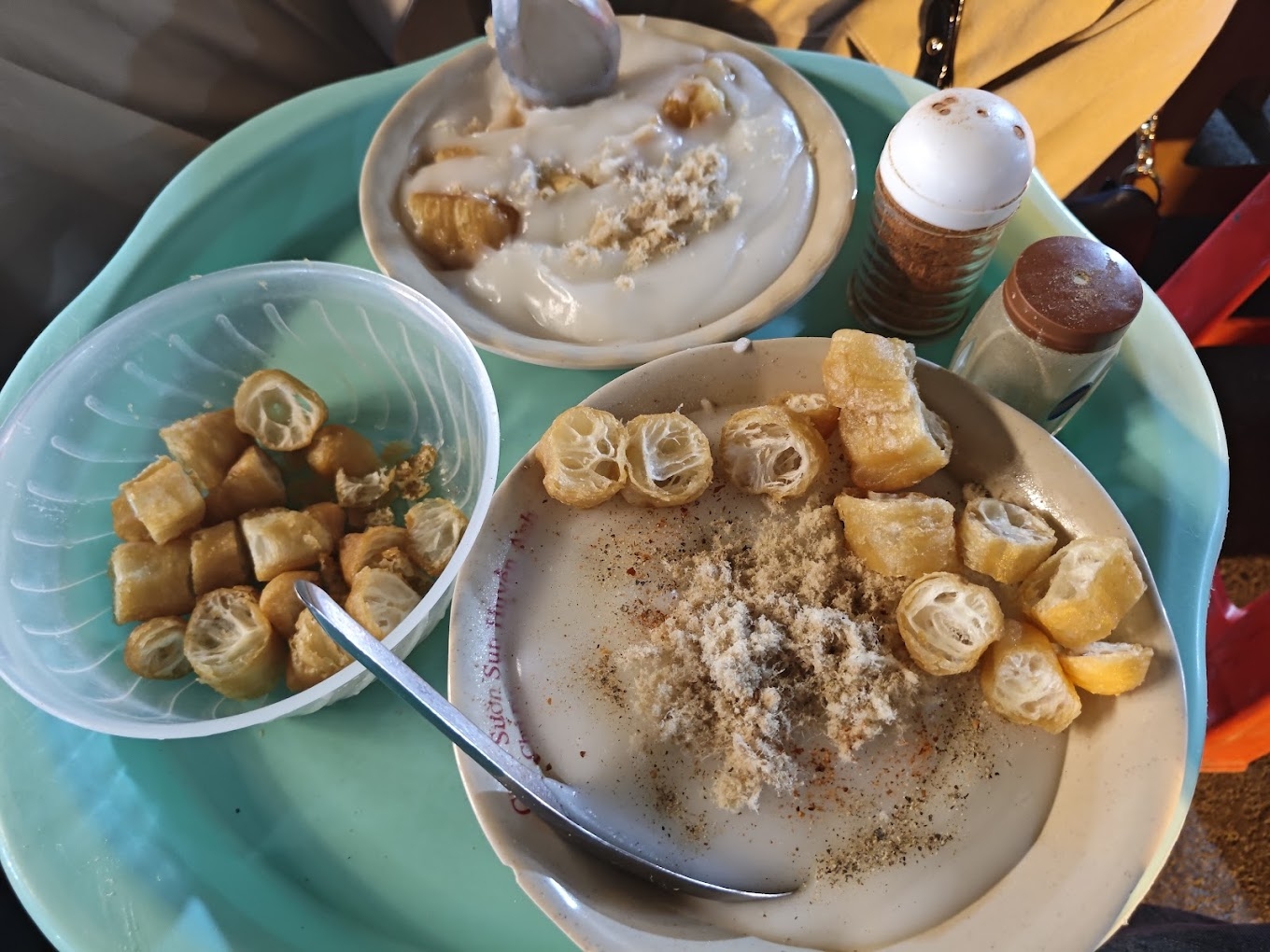
When the streets grow quiet and the air turns cool, follow the stream of people heading toward Đồng Xuân Market. There, under the yellow light, you’ll find Cháo sườn sụn Huyền Anh, a spot that has become part of Hanoi’s nightly rhythm. The stall sits at number 14 Đồng Xuân, right across from the market gate. It opens only in the evening, yet it’s rarely empty.
There are no tables or signs, only rows of low plastic stools and the sound of ladles scraping against the sides of steaming pots. The owner, Huyền Anh, has been serving this porridge for years, and people still come from all over the city for a bowl. The porridge is thick, smooth, and white like milk. Hidden beneath are soft chunks of cartilage ribs that look small but are surprisingly plentiful. They are tender enough to chew and still keep a little crunch that makes every bite satisfying.
Each bowl is topped with ground pork, pork floss, and a handful of fried quẩy. The quẩy is crispy, a bit oily, and perfect for dipping into the hot porridge. A bowl costs around 35,000 VND, a little pricier than other places, but few people mind. The flavor feels worth it, and so does the moment. Sitting on a low stool by the market, you can watch the steam rise, listen to the clatter of bowls, and feel the warmth spread through your hands.
If you prefer to visit during the day, the Hàng Vải branch opens from morning to evening, but the night stall has a charm of its own. Maybe it’s the cooler air or the hum of the late-night crowd, but eating here feels like something you should do at least once when you’re in Hanoi.
16. Wander the red-brick lanes of Duong Lam Ancient Village
- Location: Sơn Tây District (1 hour from Hanoi)
- Opening hours: 8 AM – 5 PM
- Entrance fee: 20,000 VND
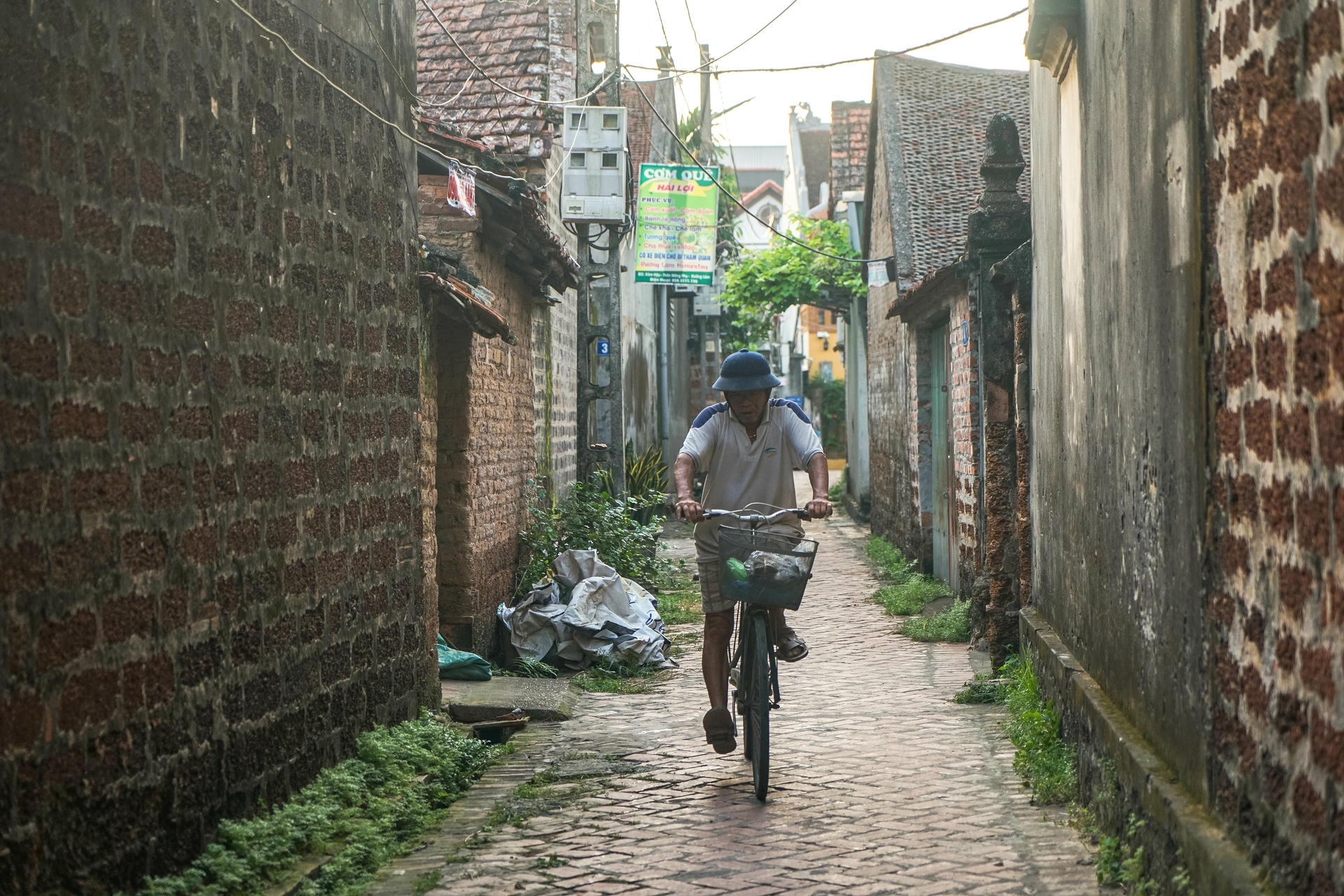
An hour’s drive from the city, Đường Lâm offers a rare glimpse of what the northern countryside looked like centuries ago. The village is known as Vietnam’s first officially recognized heritage village, where laterite walls, red-tiled roofs, and brick-paved lanes have been preserved through generations. Life here moves at a slower rhythm, shaped by the seasons and the fields that surround it.
Enter through the gate of Mông Phụ, and you’ll find quiet lanes lined with ancestral homes. Wooden doors open to reveal courtyards shaded by fruit trees and altars filled with incense and family photos. The communal house still hosts local ceremonies and festivals, while the wells and temples nearby remain gathering spots for villagers. It feels less like visiting a museum and more like walking into a living memory.
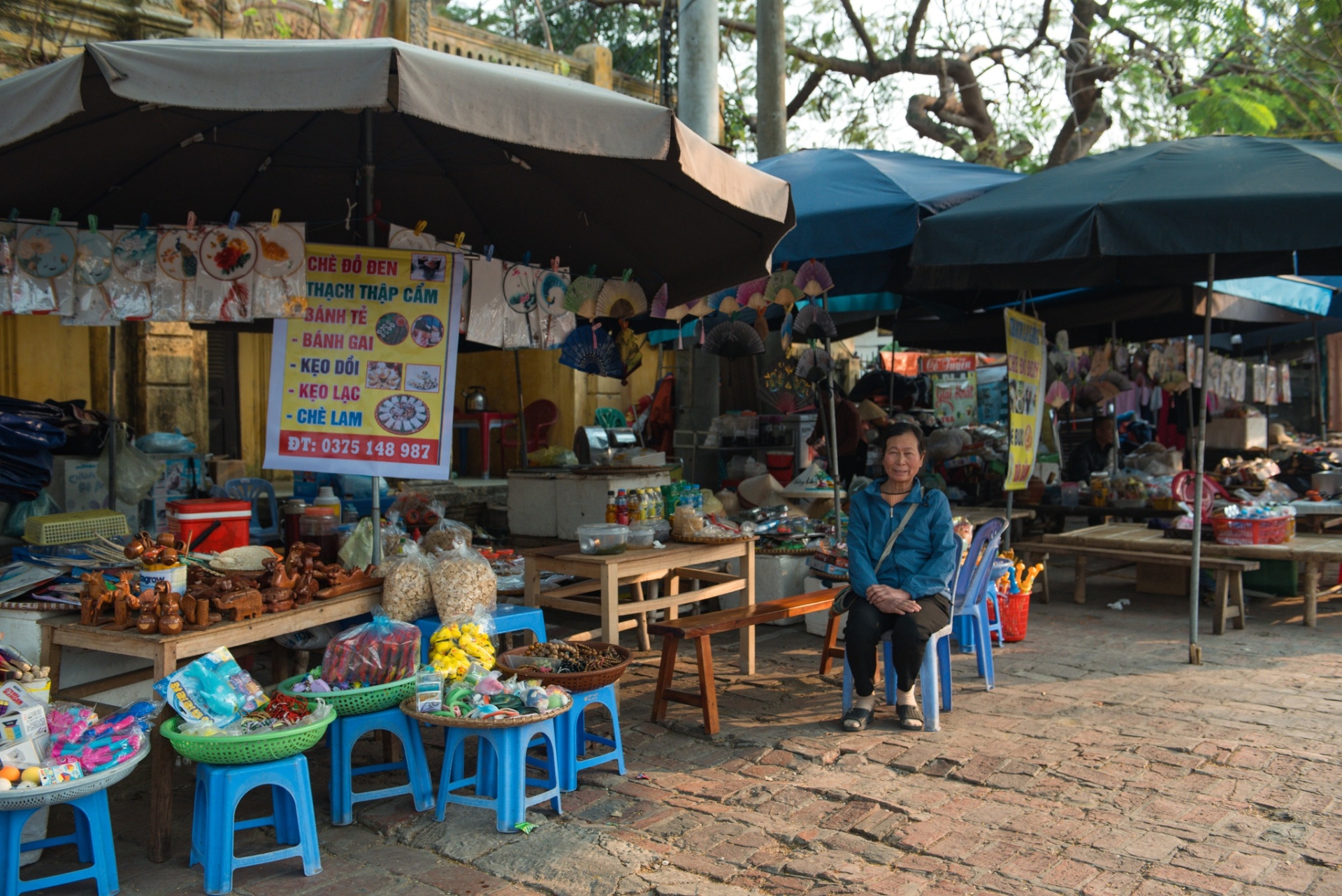
Beyond its timeless scenery, Duong Lam is a place to slow down and taste village life. You can try local dishes like gà mía (free-range chicken), thịt quay đòn (roasted pork), or chè lam (sweet rice candy). In summer, families prepare a “lotus feast”, a seasonal meal inspired by the lotus ponds around the village, with dishes wrapped, flavored, or steamed in lotus leaves.
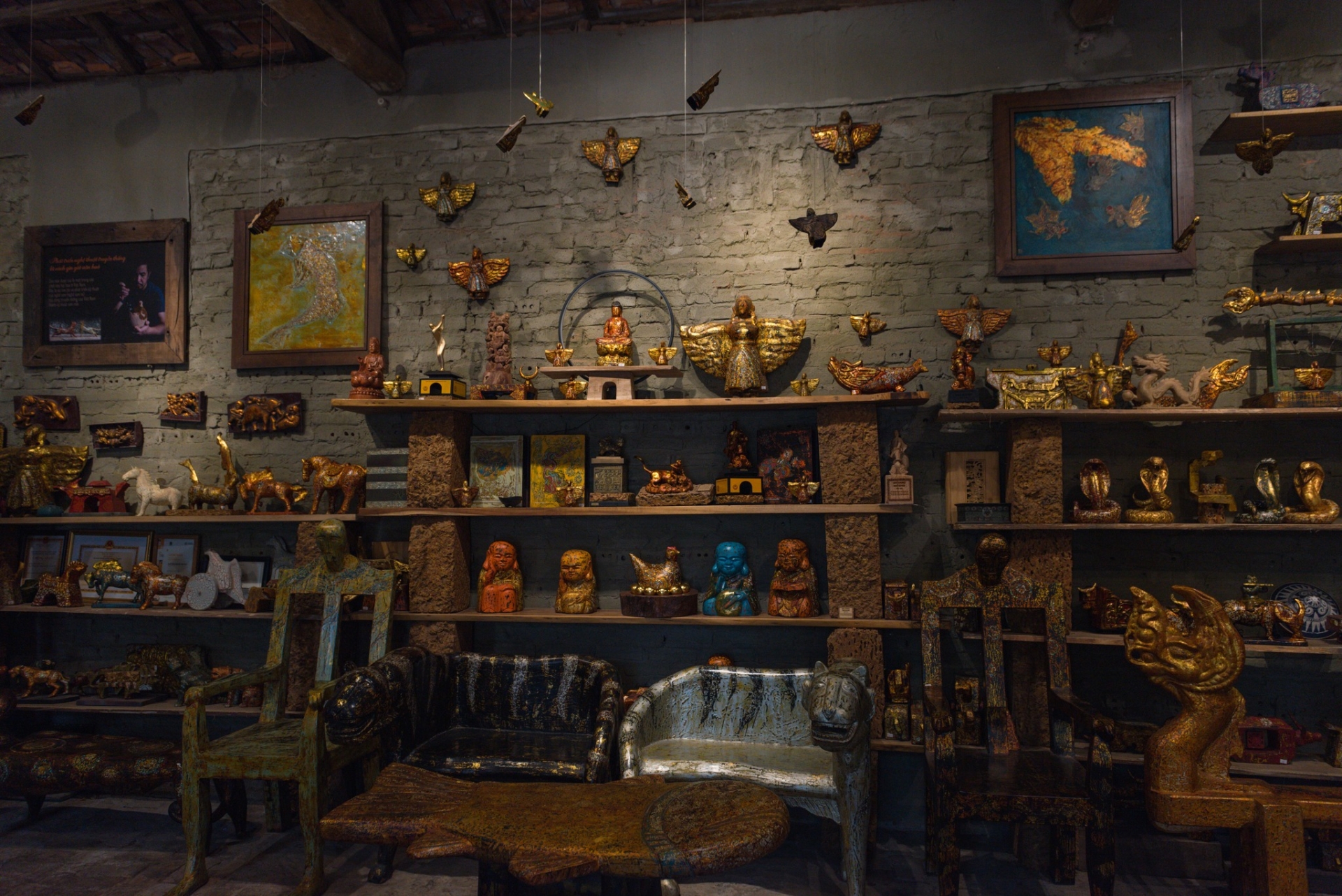
Duong Lam also has a creative side. At Phát Studio, artisans craft lacquer artworks and straw puppets from natural materials like coconut shells and laterite. Nearby, Đoài Creative Studio offers hands-on workshops where you can paint tiles, make crafts, or learn about traditional design. These small spaces bring new life to the old village while keeping its spirit intact.
It’s best to start your visit early, around 8 AM, and spend the full day wandering through the alleys, stopping for tea, and letting the stories of this thousand-year-old village reveal themselves slowly.
17. See discarded silk turn into art at Vun Art
- Location: 16 Phố Lụa, Vạn Phúc, Hà Đông District
- Opening hours: 8 AM – 5:30 PM
- Price: From 100,000 VND
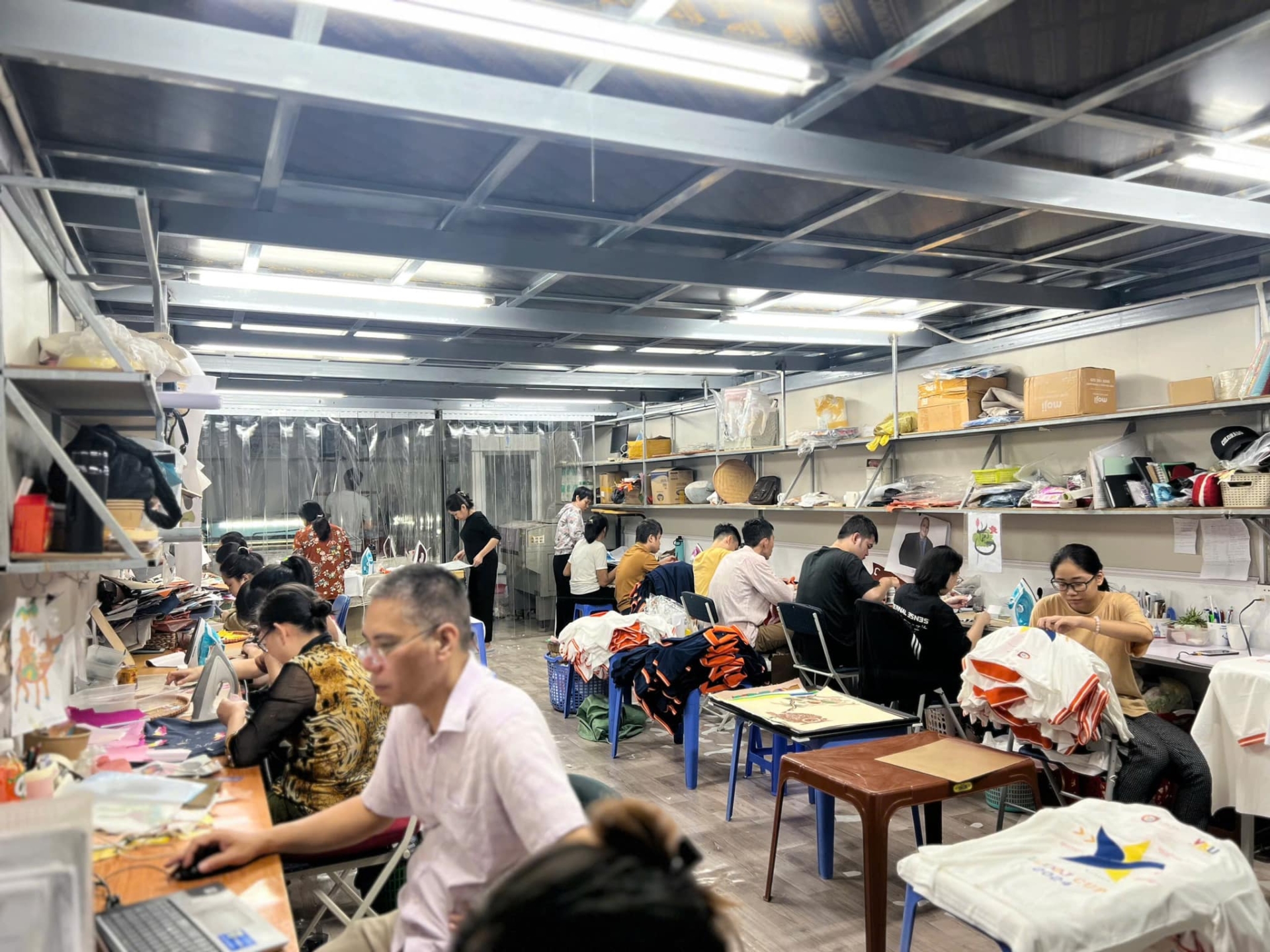
In the silk-weaving village of Vạn Phúc, a small workshop called Vụn Art is quietly turning leftover fabric into something meaningful. Founded as a social enterprise, Vụn Art provides jobs for people with disabilities and gives new life to silk scraps that would otherwise go to waste. Inside the studio, around 40 artisans sit at long tables, layering tiny silk pieces into colorful collages that capture village temples, water puppets, and familiar corners of Hanoi.
Visiting Vụn Art is not only about watching. You can join a creative workshop where the artisans guide you to make your own small artwork from silk fragments. As you work, they share stories about their lives, the patience the craft requires, and how each small piece finds its place in a larger picture.
Through this experience, you also learn about the deeper values behind their work. The team introduces visitors to the silk-making heritage of Vạn Phúc Village, the beauty of Vietnamese folk art, and how recycling fabric helps protect the environment while keeping traditional crafts alive.
From what once seemed like waste, these artisans create vibrant wall art, tote bags, and souvenirs filled with care and meaning. Recognized by UNESCO as a model of cultural innovation and sustainability, Vụn Art reminds visitors that beauty often begins from what others overlook.
Local recommendation: Join a short workshop at Vụn Art to try silk collage making yourself. It’s a simple, hands-on experience that leaves you with a handmade keepsake and a deeper appreciation for the people who keep Hanoi’s crafts alive.
18. Trace ancient legends at Co Loa Citadel
- Location: Đông Anh District (20 km from Hanoi Center)
- Opening hours: 7:30 AM – 5:30 PM
- Entrance fee: 20,000 VND
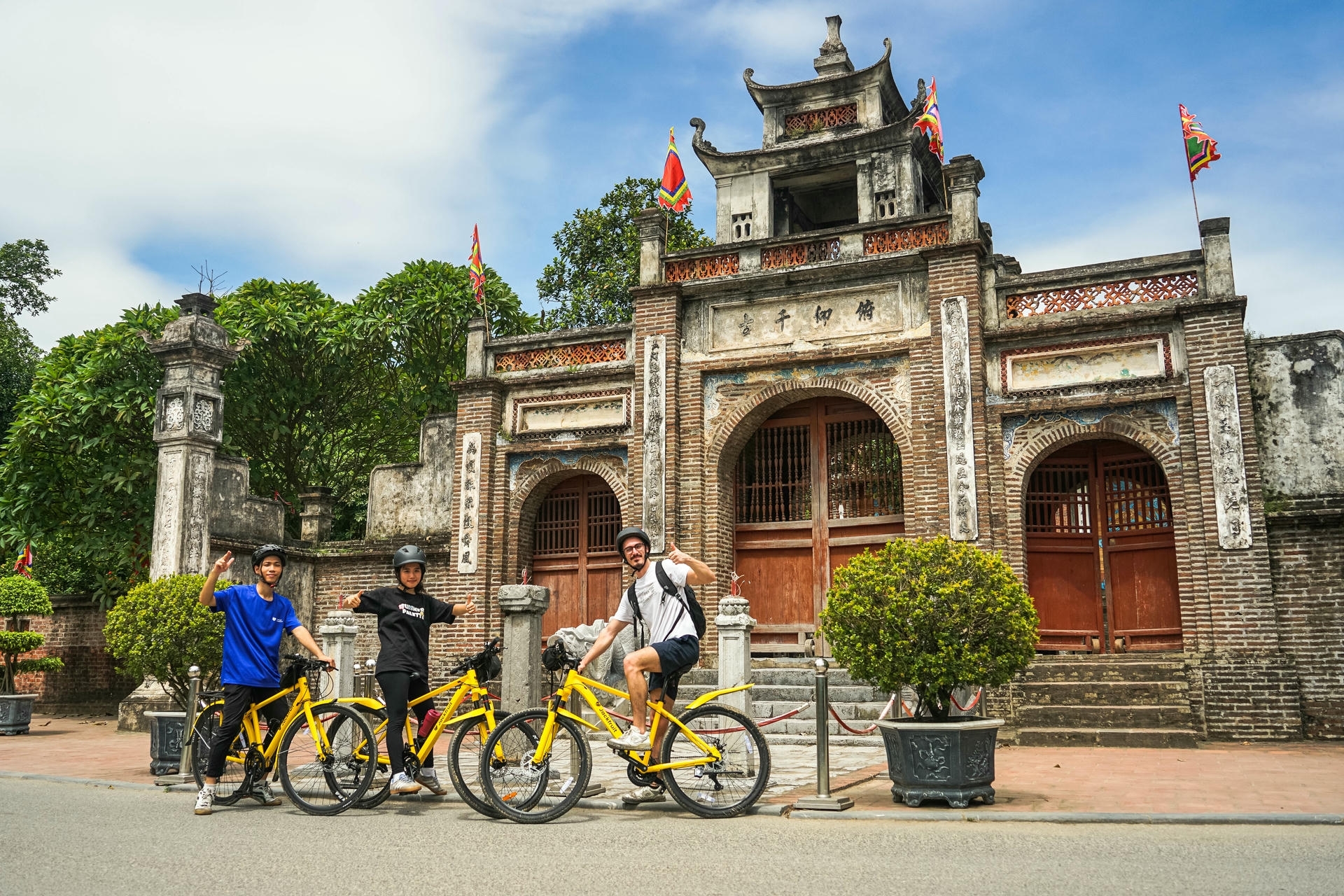
Cổ Loa is often called the birthplace of Vietnam’s first kingdom. Built in the 3rd century BCE by King An Dương Vương, it served as the capital of Âu Lạc and remains one of the oldest fortified sites in Southeast Asia. The citadel was laid out in a spiral design of three concentric walls and moats, a structure that once protected the kingdom and still shapes the village’s layout today.
History here blends easily with legend. Every local child grows up hearing the story of the golden turtle and the magic crossbow that could fire a hundred arrows at once. The tale of Princess Mỵ Châu and Prince Trọng Thủy, filled with loyalty, love, and loss, is tied deeply to the land. Walking through Cổ Loa, it’s easy to see why myth and reality have become inseparable.
Beyond the ruins, Cổ Loa remains a living village with communal halls, ancient wells, rice paddies, and a busy local market. The 20-kilometer trip from Hanoi takes you through ponds, bamboo groves, and green fields before you step into a place where daily life and deep history overlap.
19. Try the king’s favorite noodles in Mach Trang Village
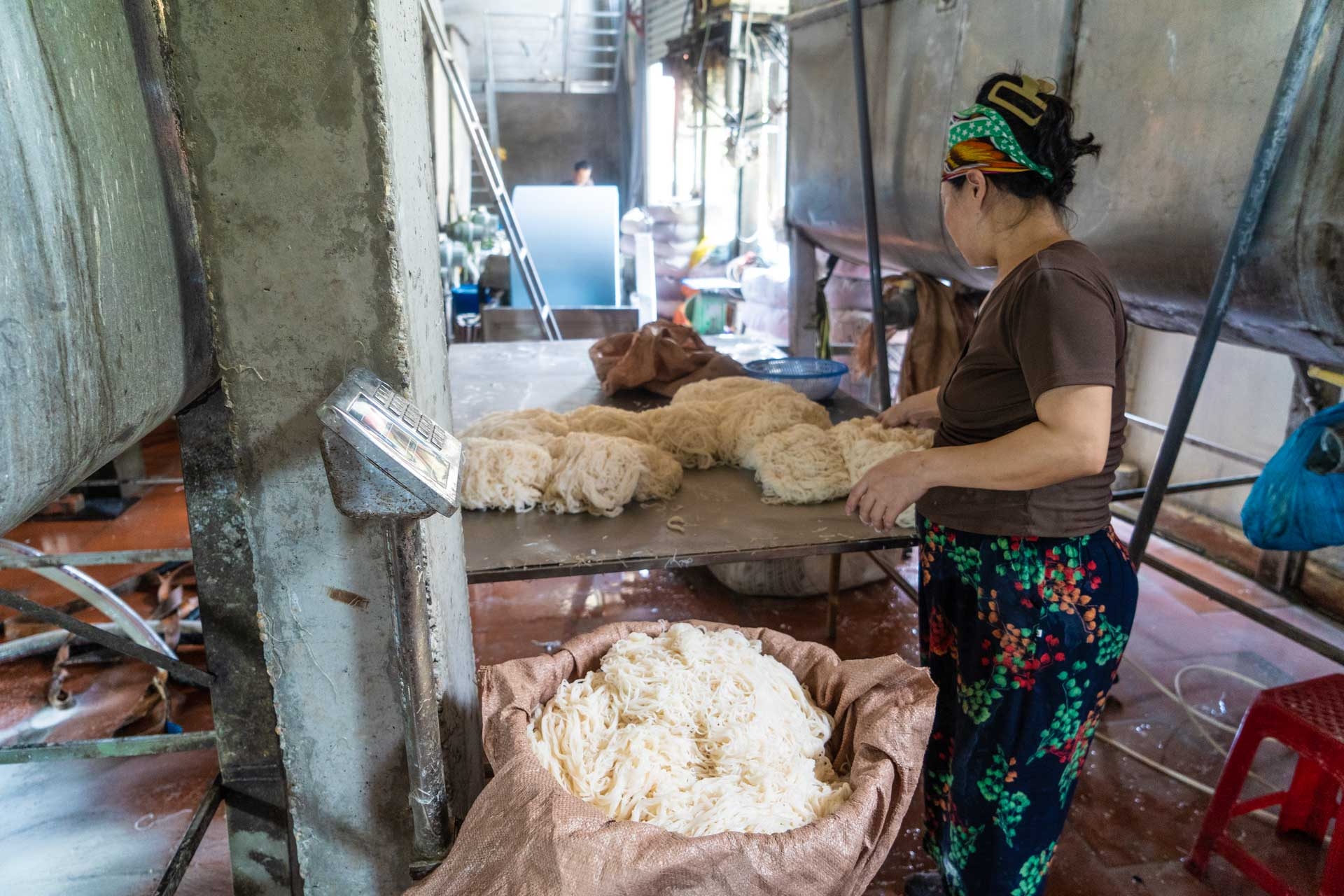
If you make the trip to Cổ Loa, it’s worth stopping by nearby Mạch Tràng Village, known for a local specialty called bún Mạch Tràng or “King’s Noodles”. The story goes that the dish was first created by accident during a royal banquet for Princess Mỵ Châu. The texture and flavor were so unique that King An Dương Vương asked for it to be served again, and it soon became a favorite in the royal kitchen.
What makes bún Mạch Tràng different is the way it is prepared. Instead of using fresh rice flour straight away, the rice is soaked and fermented for several days before being ground, producing noodles that are smooth, chewy, and slightly tangy. They keep their freshness for days without preservatives and still appear at local markets and festivals in Cổ Loa.
20. Share a home-cooked meal in a local home
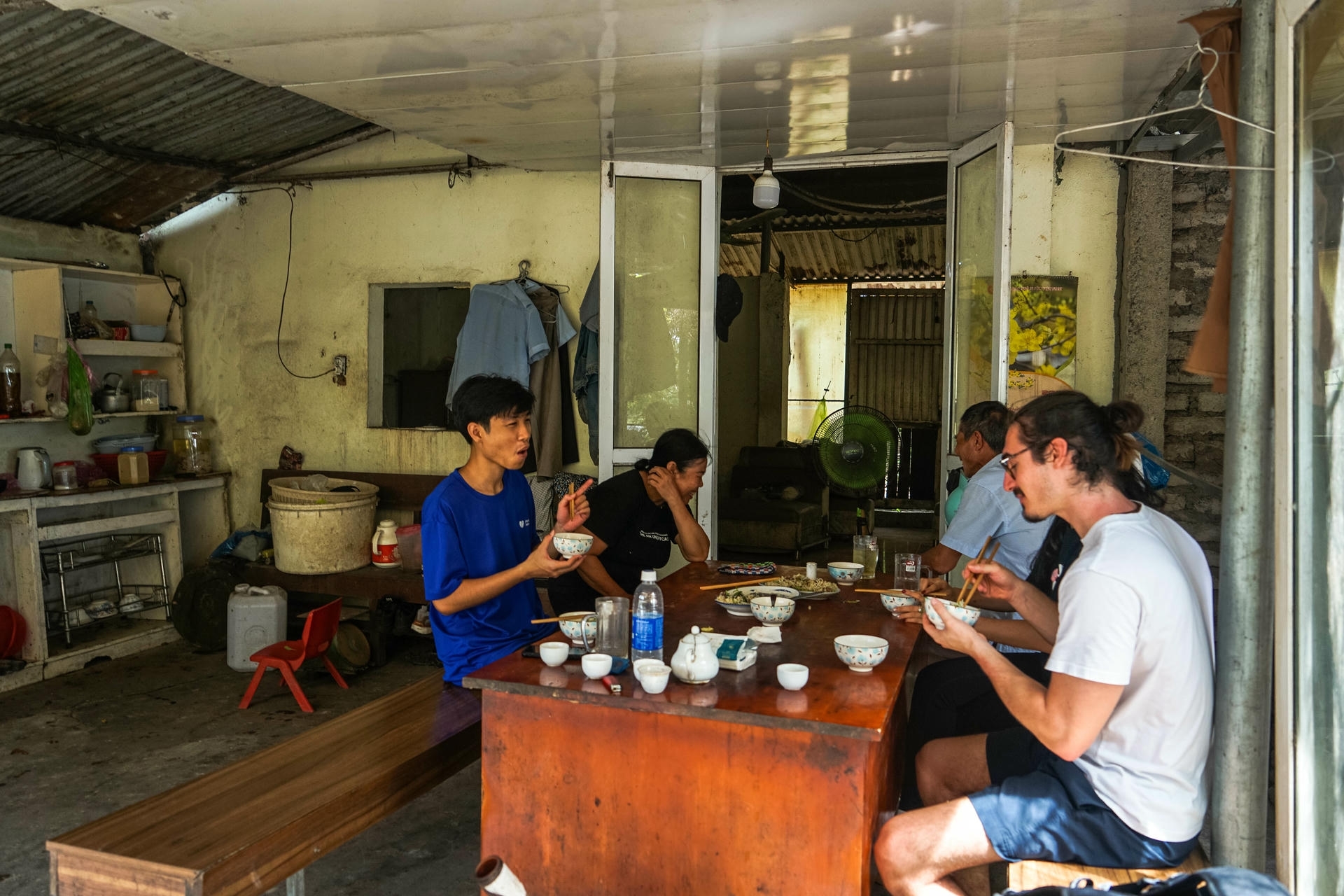
Sharing a meal with a local family gives you an intimate look into daily life that no restaurant can offer. In Vietnam, especially in the north, the dinner table is where everyone gathers to talk about the day and show care for one another.
You’ll sit around a low table in a neighborhood home, eat from shared dishes, and follow small customs such as inviting elders to begin first or serving food into each other’s bowls.
The menu changes with the season and with what the host finds fresh at the market. A clay pot of braised fish, a light sour soup, boiled morning glory with chili–garlic fish sauce, or quick pickled vegetables are common. Hosts often explain where ingredients come from or why certain dishes are tied to a time of year. The table naturally becomes a place for both food and conversation.
Ride to the Lost Kingdom
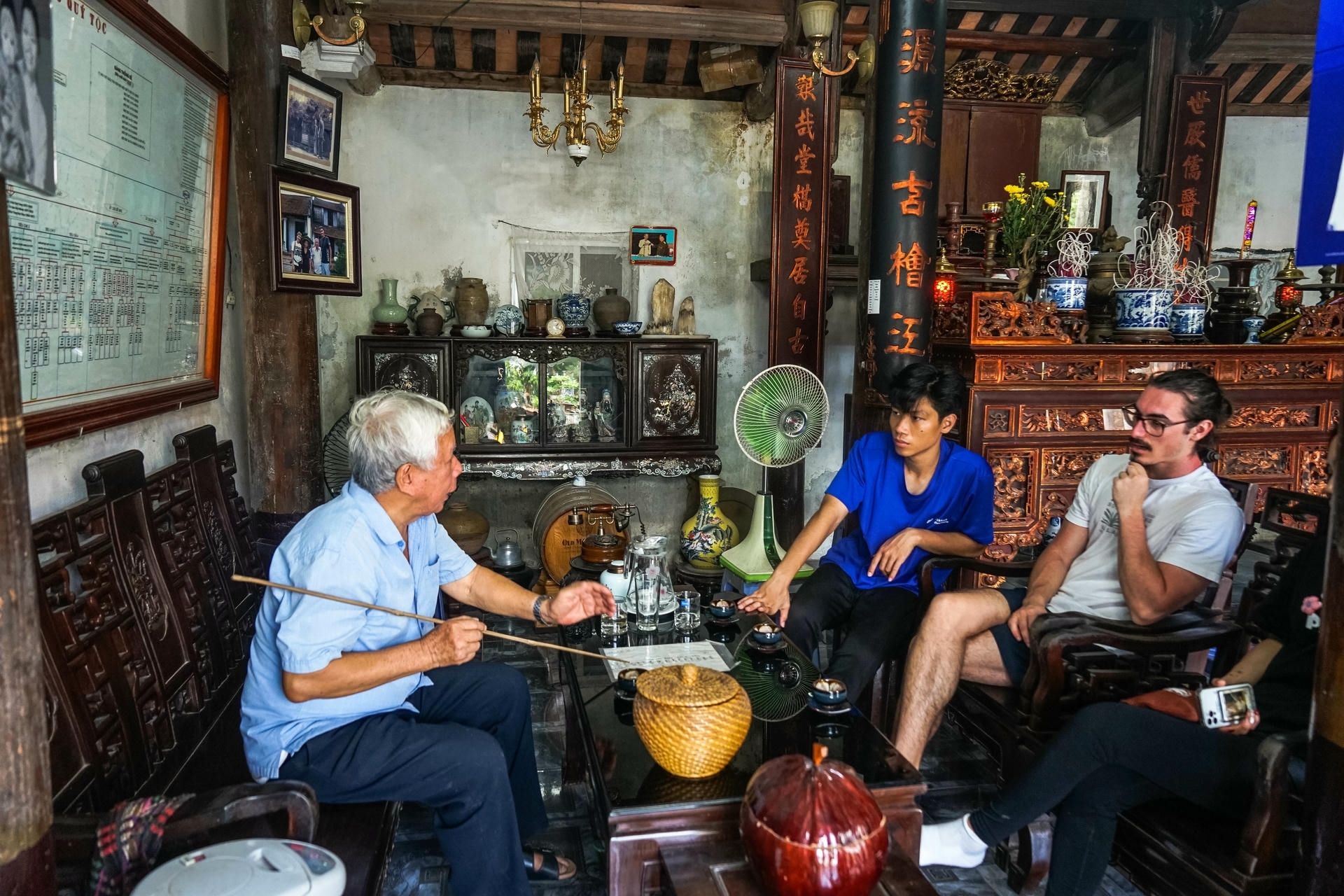
If you’ve ever shared a home-cooked meal with a local family, you know how quickly a stranger can become a friend. Outside the city, that warmth feels even stronger. In Vietnam’s countryside, doors stay open and teapots wait for whoever might pass by. Stories aren’t written in books here. They’re shared through laughter and the quiet gesture of someone refilling your cup.
That’s why I want to tell you about the Ride to the Lost Kingdom tour. You’ll cycle through craft villages, meet families who have lived by the Red River for generations, and share a simple homemade lunch before reaching Cổ Loa, Vietnam’s first ancient capital. There, you can walk along the old spiral walls, hear stories of King An Dương Vương, and taste the legendary “king’s noodles” of Mạch Tràng Village.
With a little curiosity and a local guide to lead the way, the countryside opens up in ways you could never imagine.
More things to do in Hanoi
I have small tips and guides to make your trip easier and a little more local.
- Plan smart: Check the best time to visit Vietnam so you can pace your days well.
- Explore local life: Step into non-touristy corners of Hanoi or check out free things to do in Hanoi for experiences that bring you closer to the city’s everyday rhythm.
- See the heritage side: Visit the Temple of Literature, Hoa Lo Prison, and the Thang Long Imperial Citadel to understand how Hanoi’s stories were built over time.
- Experience Hanoi after dark: From night markets to quiet lakeside cafés, the best things to do in Hanoi at night show how the city slows down but never really sleeps.
- Stay and travel easy: Check out the best areas to stay in Hanoi and where to exchange money for a smooth start to your trip.
Or, if you’d rather skip the searching, subscribe below to get fresh local notes and hidden-gem updates straight to your inbox.