

Table of Contents
The first Vietnamese phrase most travelers learn is usually “Cảm ơn.”
Not because someone tells them to, but because they quickly realize how often they’ll use it. At a coffee shop, after a bowl of phở, or when a stranger helps them cross the street, that simple phrase almost always earns a smile.
That’s the nice thing about traveling in Vietnam. You don’t need to speak fluent Vietnamese to get around. English is common in many hotels, cafés, and tourist areas. But learning a few basic Vietnamese phrases often changes the way people respond to you.
You’re not trying to sound like a local. You’re simply showing that you’re happy to meet people halfway.
Before You Learn Any Phrases, Here’s One Thing That Surprises Most Travelers
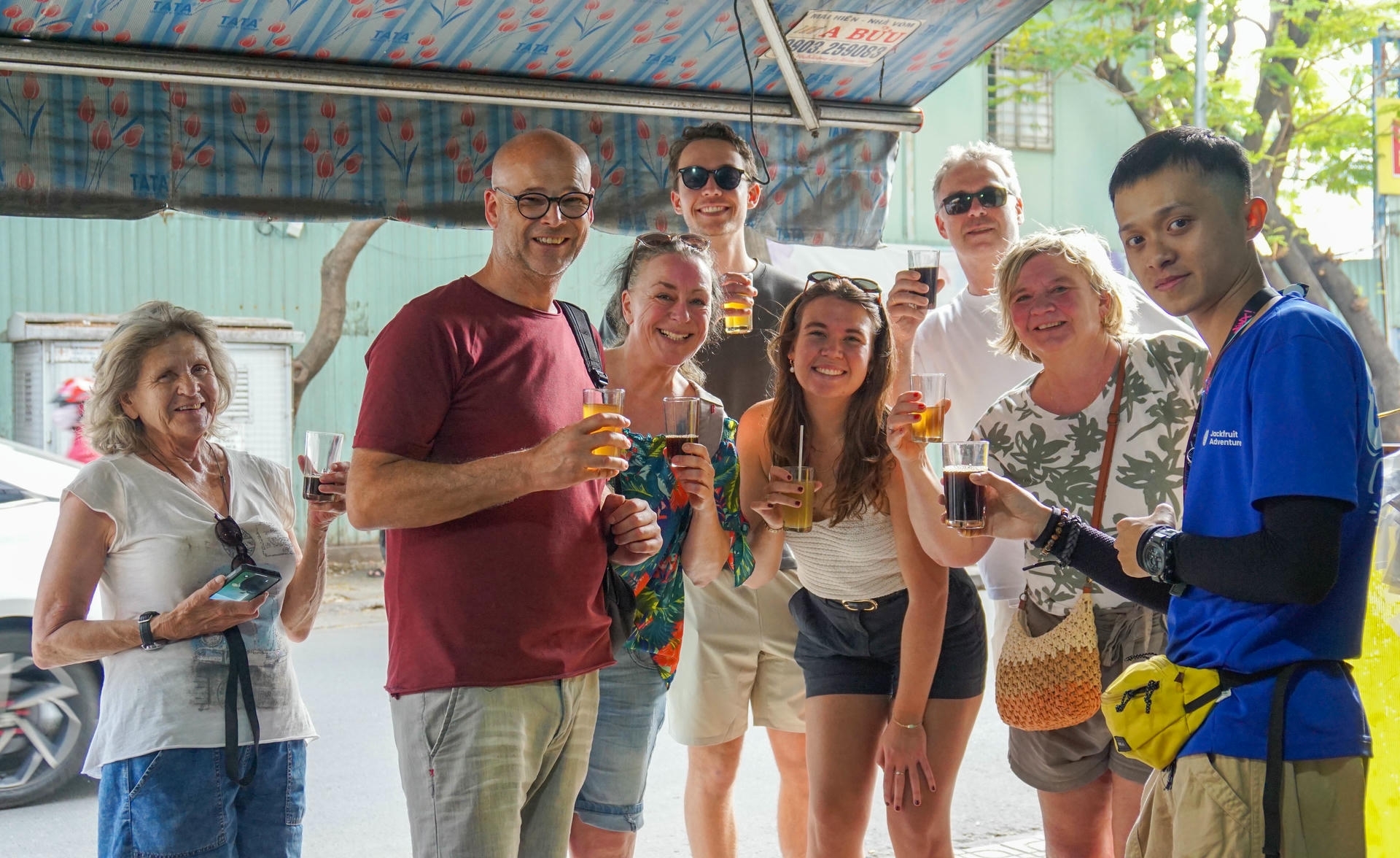
Almost every phrasebook starts with “Xin chào,” which means “Hello.”
It’s useful to know-but here’s something that surprises many visitors: locals don’t actually say it as often as you’d expect.
Instead, people usually greet each other by calling “Anh ơi,” “Chị ơi,” or “Em ơi,” depending on who they’re talking to. These words come from Vietnam’s family-style way of addressing people, and you’ll hear them everywhere, from coffee shops to local markets.
Don’t worry about memorizing them all before your trip.
A friendly smile, “Xin chào,” and “Cảm ơn” will already take you a long way. People understand you’re visiting, and most appreciate the effort far more than perfect pronunciation.
Explore more: A Short Story of the Vietnamese Language: A Soulful Melody of Resilience
Basic Vietnamese Phrases You’ll Actually Use
1. Basic Vietnamese Greetings
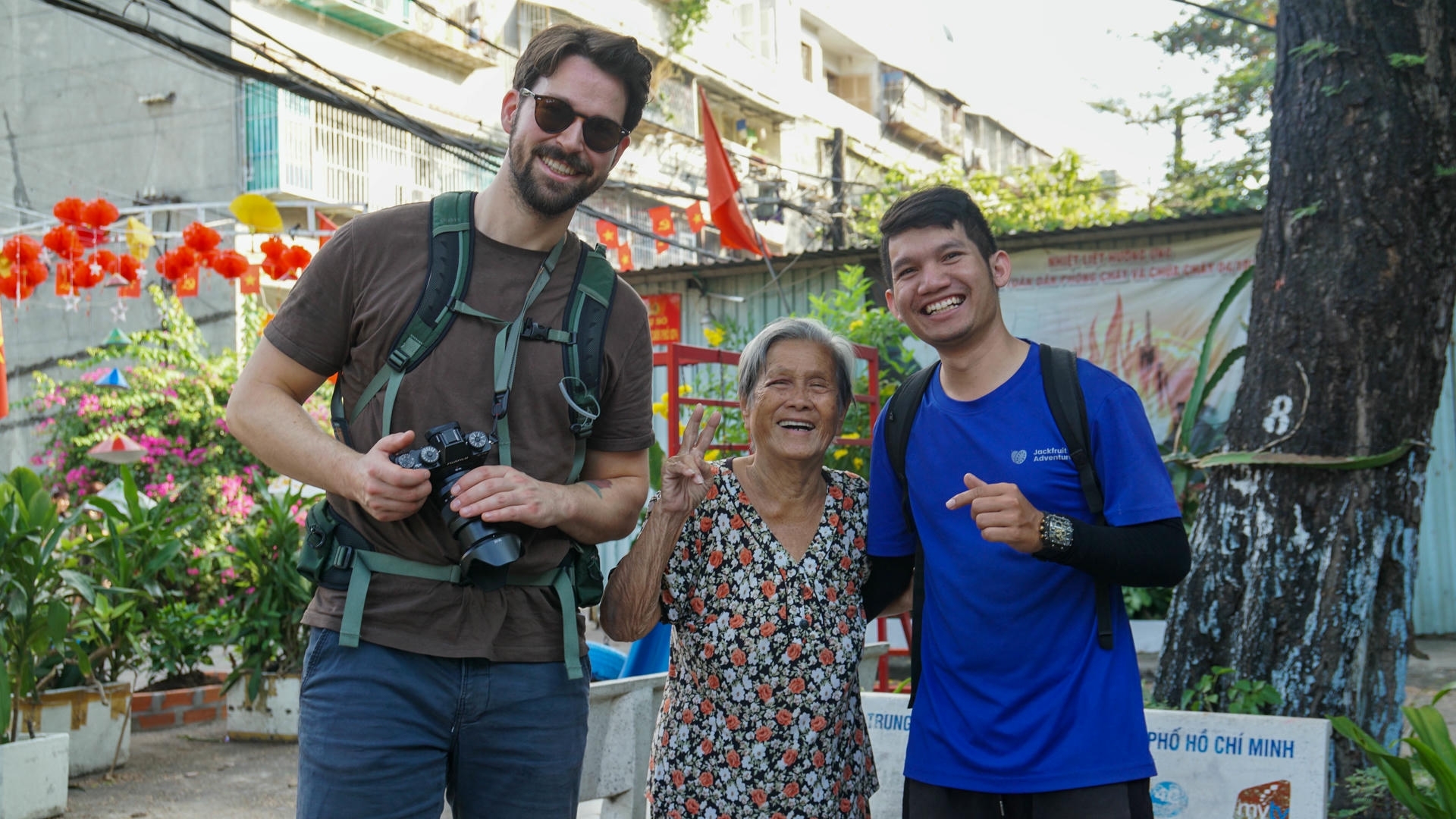
Here are the phrases worth knowing before your first interaction in Vietnam:
| English | Vietnamese | Sounds like |
|---|---|---|
| Hello | Xin chào | sin chow |
| Goodbye | Tạm biệt | tahm bee-et |
| Thank you | Cảm ơn | gahm uhn |
| Excuse me / Sorry | Xin lỗi | sin loy |
| Nice to meet you | Rất vui được gặp bạn | zut vui dook gap ban |
Don’t worry if your pronunciation isn’t perfect. A smile and a genuine effort matter far more than getting every tone exactly right.
2. Basic Vietnamese Phrases for Ordering Coffee
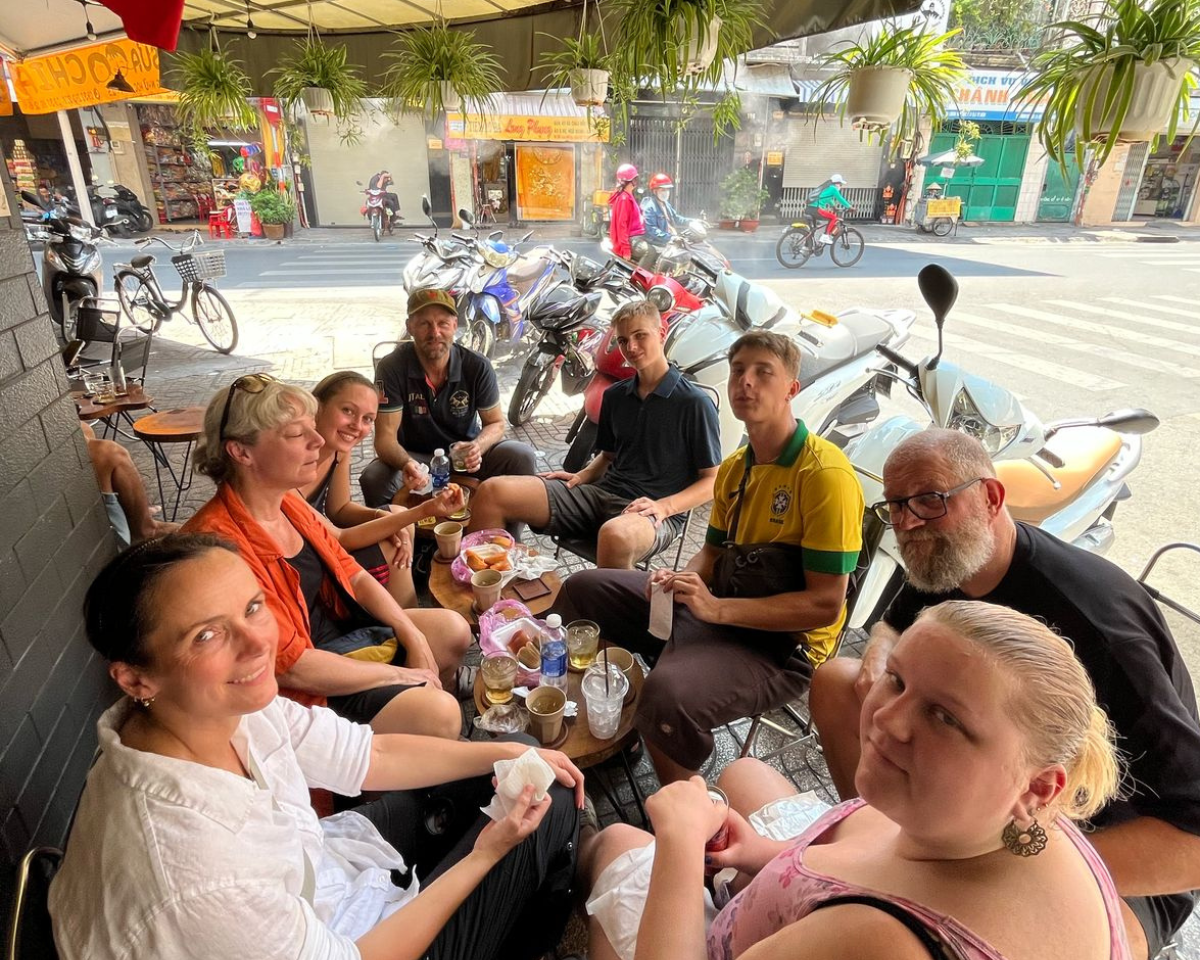
Coffee is part of everyday life in Vietnam. Whether you’re sitting on a tiny plastic stool outside a street-side café or ordering coconut coffee in Hanoi, you’ll probably use these phrases more often than you expect.
One morning, I watched a traveler spend almost five minutes practicing “Cho tôi một cà phê sữa đá.” He finally ordered, stumbled over half the sentence, and the lady behind the counter simply smiled, nodded, and made exactly what he wanted.
That pretty much sums up what speaking Vietnamese as a traveler is like.
| English | Vietnamese | Sounds like |
|---|---|---|
| One coffee, please | Cho tôi một cà phê | chor toy moat kah-feh |
| Iced coffee with milk | Cà phê sữa đá | kah-feh soo-ah dah |
| Black coffee | Cà phê đen | kah-feh den |
| Less sugar | Ít đường | it doong |
| No ice | Không đá | khom dah |
| To take away | Mang đi | mang dee |
| For here | Uống tại đây | oong tie day |
| Delicious! | Ngon quá! | ngon kwa |
Even if you only remember “Cảm ơn” when you leave, you’ll already sound more local than you think.
Wanna explore some hidden coffee in Saigon and Hanoi?
→Top 5 Hidden Saigon Coffee Shops to Add to Your Must-Visit List
→11 Secret Hanoi Coffee Shops You’ll Love at First Sight
3. Basic Vietnamese Phrases for Street Food and Restaurants
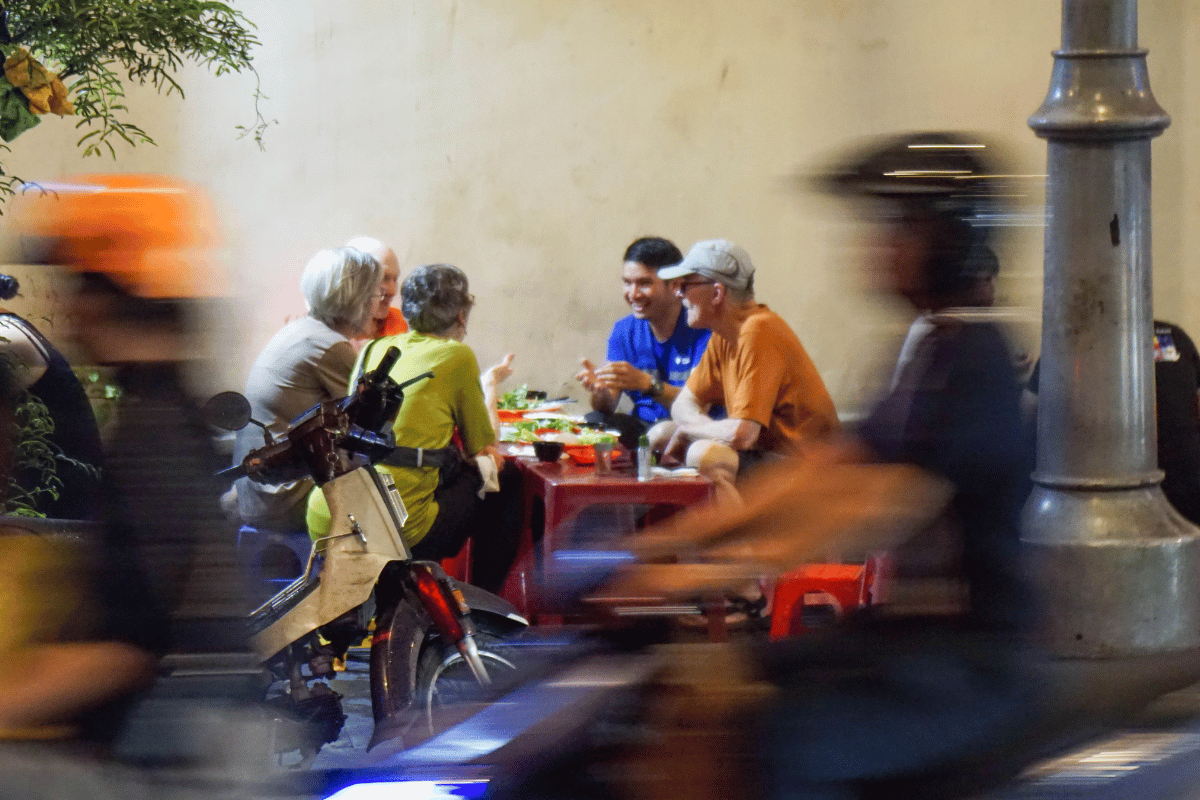
If there’s one place where learning basic Vietnamese phrases pays off, it’s around food.
Many small restaurants don’t have English menus, and some street food stalls don’t have menus at all. Instead, you point, smile, and hope you’ve picked something good.
Fortunately, that’s part of the fun.
| English | Vietnamese | Sounds like |
|---|---|---|
| How much is it? | Bao nhiêu tiền? | bow nyew tee-en |
| One bowl, please | Một tô, làm ơn | moat toh lahm uhn |
| Not spicy | Không cay | khom kai |
| A little spicy | Ít cay | it kai |
| I’m vegetarian | Tôi ăn chay | toy an chai |
| The bill, please | Tính tiền | teeng tee-en |
| Very delicious | Ngon lắm | ngon lum |
| Thank you | Cảm ơn | gahm uhn |
One phrase always gets a reaction: “Ngon quá!”
Say it after your meal, and don’t be surprised if the person cooking looks up with a big smile.
4. Basic Vietnamese Phrases for Shopping at Local Markets
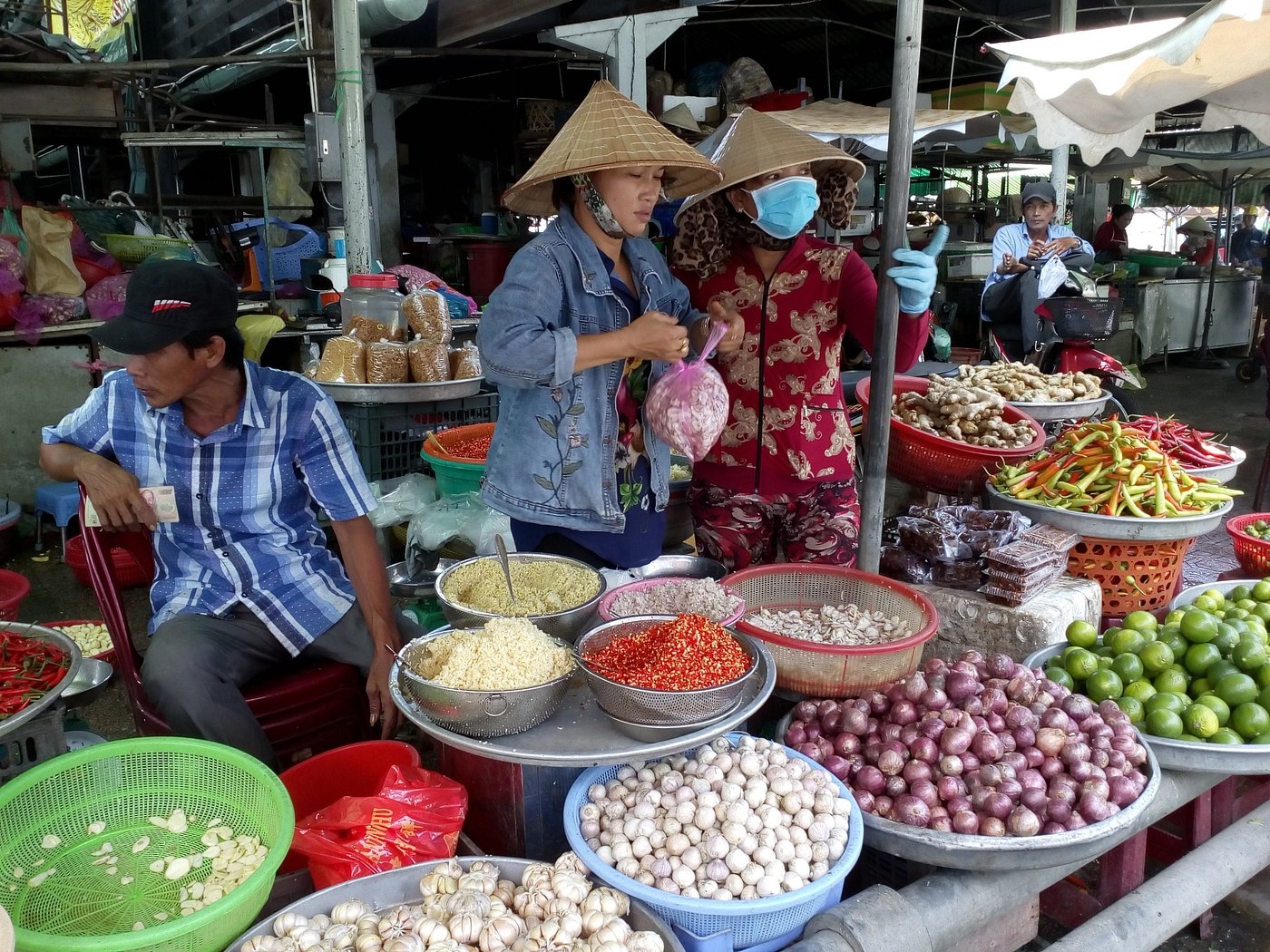
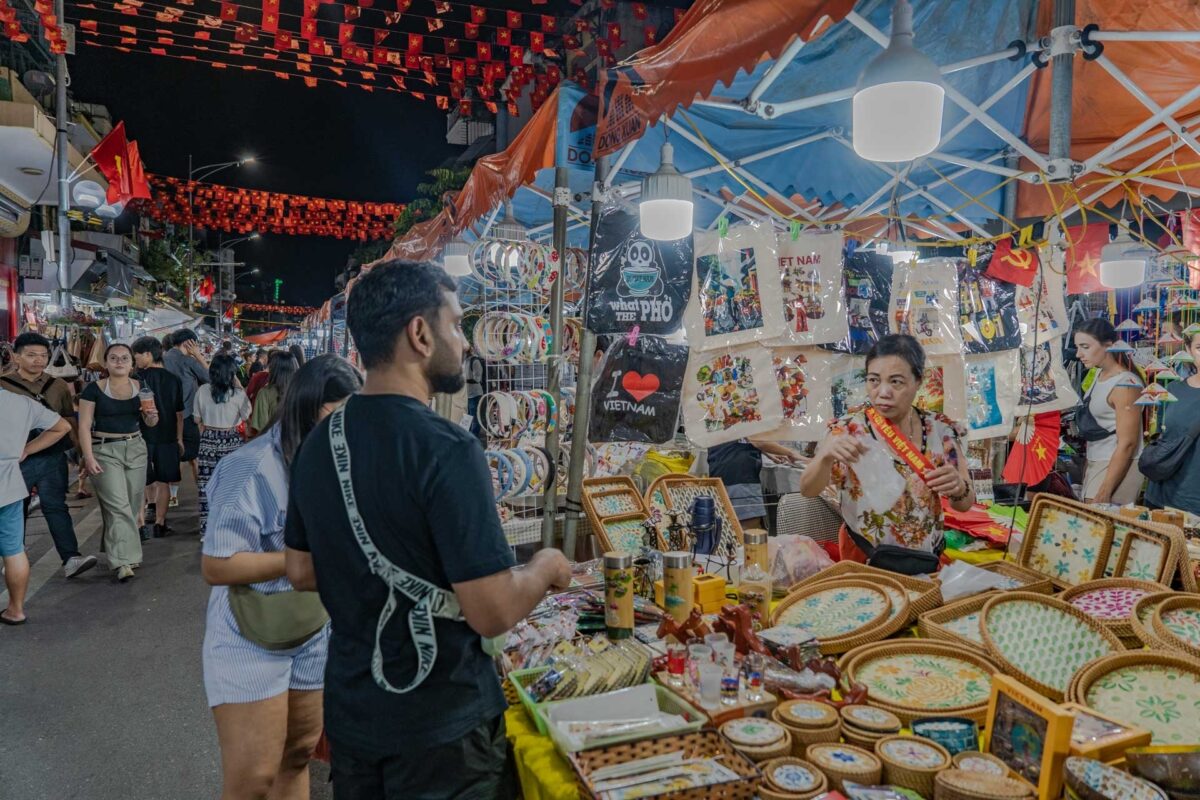
Markets are where conversations happen naturally.
You might ask the price of a basket, chat with someone selling fruit, or simply browse without buying anything. Most interactions only last a minute or two, so you don’t need a huge vocabulary.
| English | Vietnamese | Sounds like |
|---|---|---|
| How much? | Bao nhiêu? | bow nyew |
| That’s expensive. | Đắt quá. | dut kwa |
| Can you make it cheaper? | Bớt được không? | but dook khom |
| I’ll take this one. | Lấy cái này. | lay kai nai |
| I’m just looking. | Tôi chỉ xem thôi. | toy che xem toy |
| Thank you | Cảm ơn | gahm uhn |
A friendly attitude goes much further than aggressive bargaining. Most vendors appreciate a relaxed conversation just as much as making a sale.
5. Basic Vietnamese Phrases for Getting Around
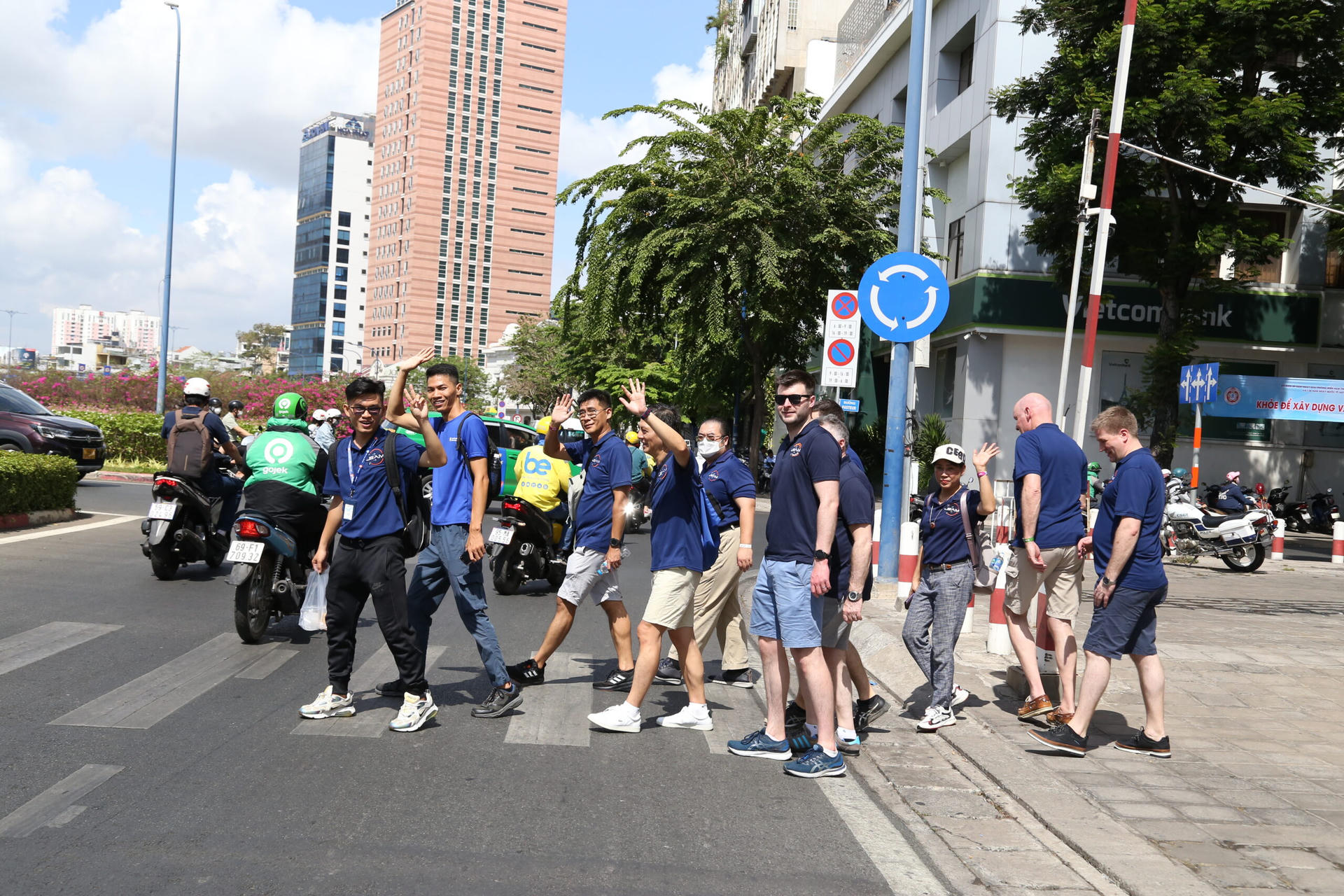
Whether you’re taking a Grab, hopping in a taxi, or asking for directions, these are some of the most useful Vietnamese phrases you’ll use throughout your trip.
The truth is, Google Maps usually does most of the work these days. But knowing a few words still helps.
| English | Vietnamese | Sounds like |
|---|---|---|
| Please take me here | Cho tôi đến đây | chor toy den day |
| Stop here, please | Dừng ở đây | zoong uh day |
| Turn left | Rẽ trái | reh chai |
| Turn right | Rẽ phải | reh fy |
| Airport | Sân bay | sun bye |
| Train station | Ga tàu | gah tao |
| Thank you | Cảm ơn | gahm uhn |
6. Basic Vietnamese Phrases for Asking for Help
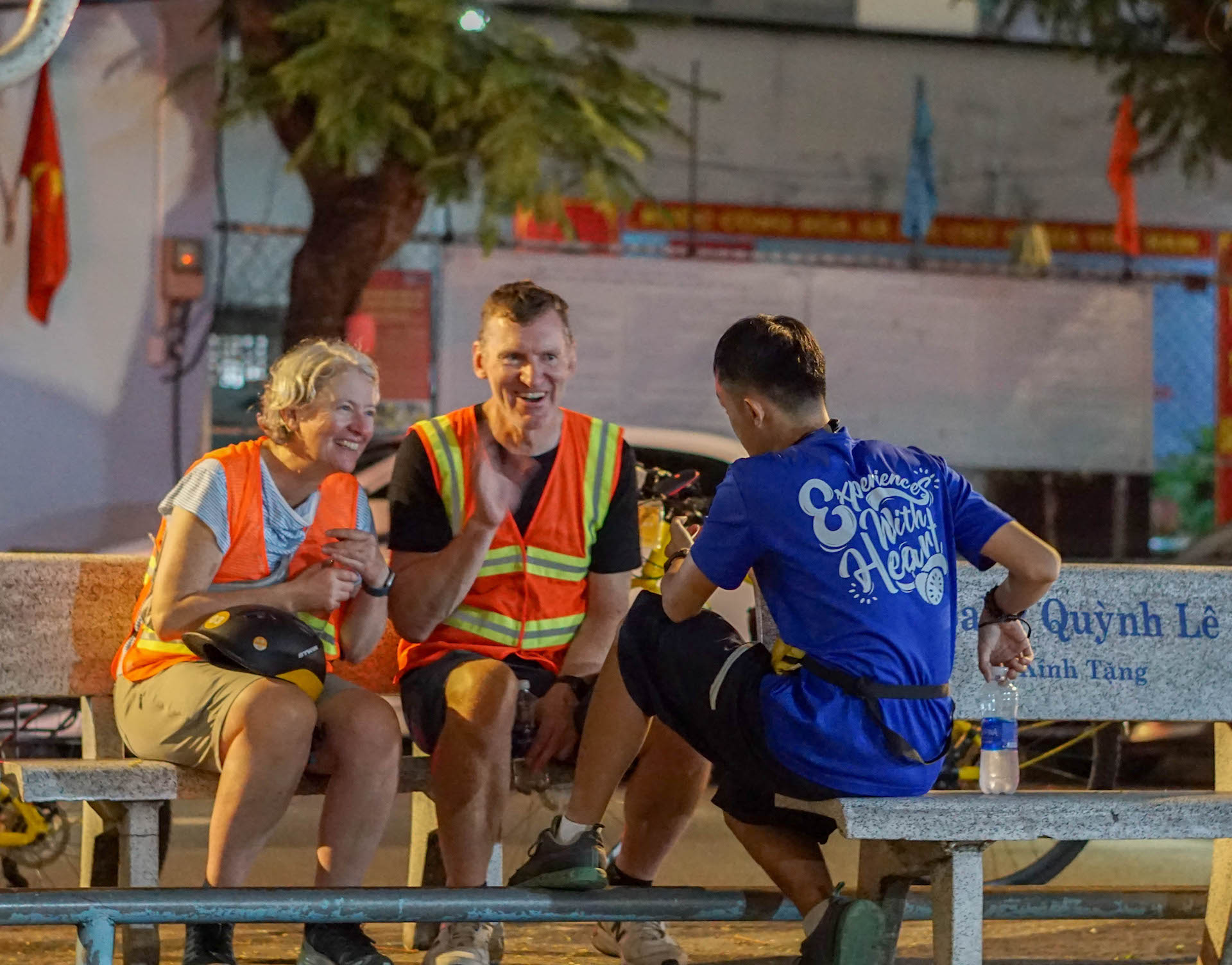
Hopefully, you won’t need these often. Still, they’re worth learning before your trip.
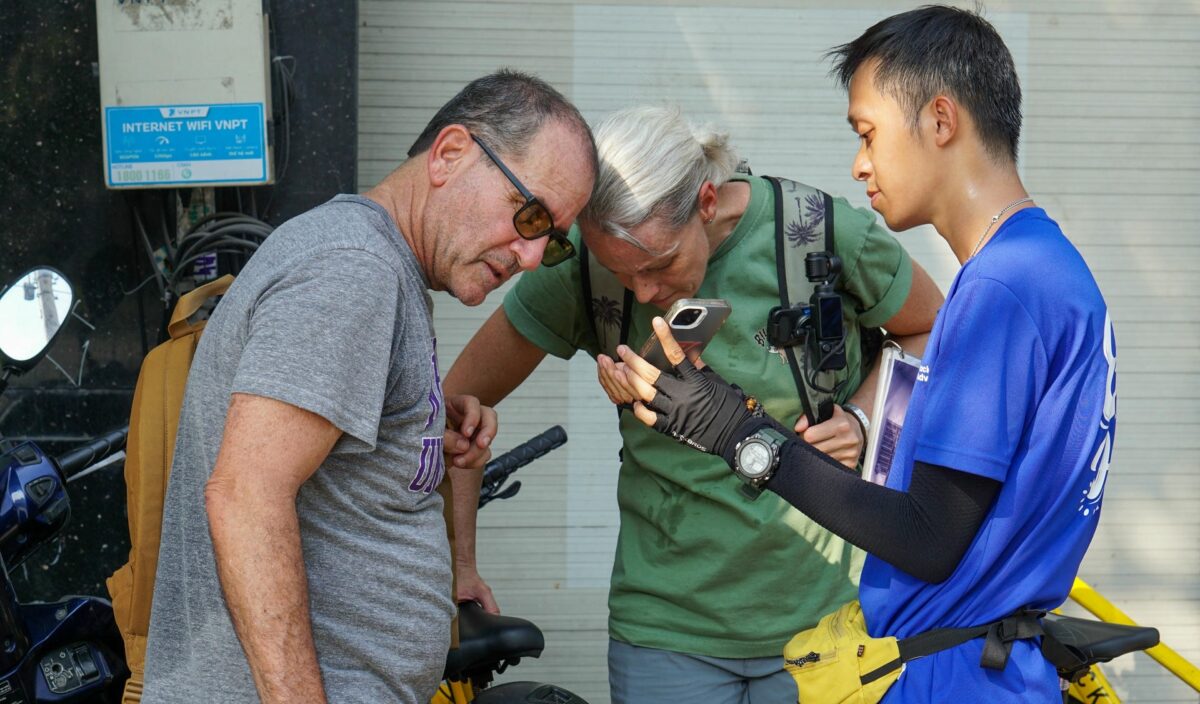
Vietnamese people are generally happy to help, even if you don’t share a common language. More often than not, someone nearby will step in to translate.
| English | Vietnamese | Sounds like |
|---|---|---|
| Do you speak English? | Bạn nói tiếng Anh không? | bahn noy tee-eng anh khom |
| I don’t understand. | Tôi không hiểu. | toy khom hyew |
| Can you help me? | Bạn giúp tôi được không? | bahn zoop toy dook khom |
| Where is the restroom? | Nhà vệ sinh ở đâu? | nya veh-seen uh dow |
| Pharmacy | Nhà thuốc | nya took |
| Hospital | Bệnh viện | ben vin |
Most of the time, a smile, a map on your phone, and a few basic Vietnamese phrases are enough to solve the problem together.
The One Vietnamese Phrase That Opens More Doors Than You’d Expect
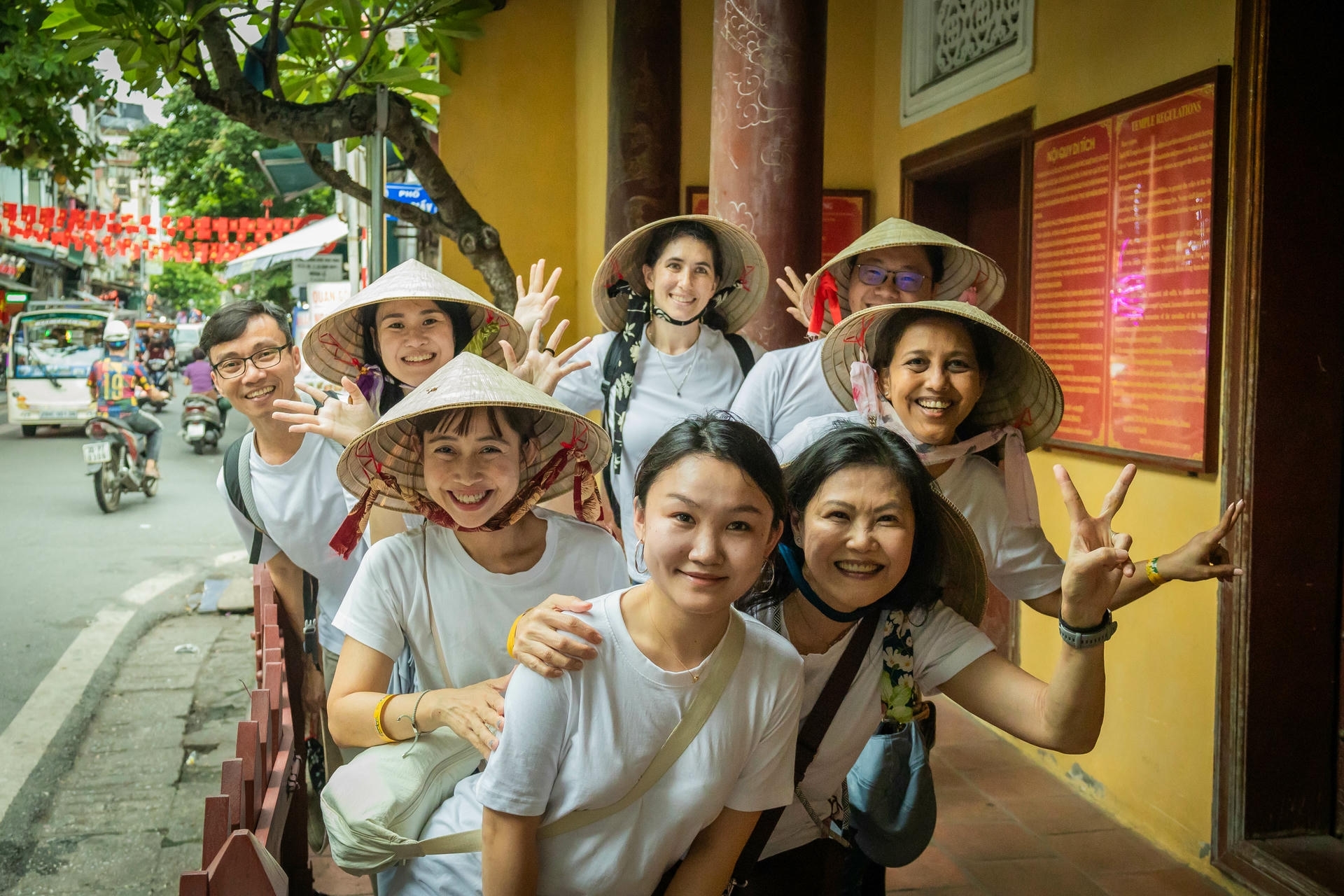
You’ll probably forget a few phrases from this guide, and that’s perfectly fine. But “Cảm ơn” is one that’s worth holding onto. It’s simple, useful, and fits into almost every day of your trip. More importantly, it reminds people that you’re making an effort to meet them halfway – and that often matters more than perfect Vietnamese.
Don’t Worry Too Much About Pronunciation
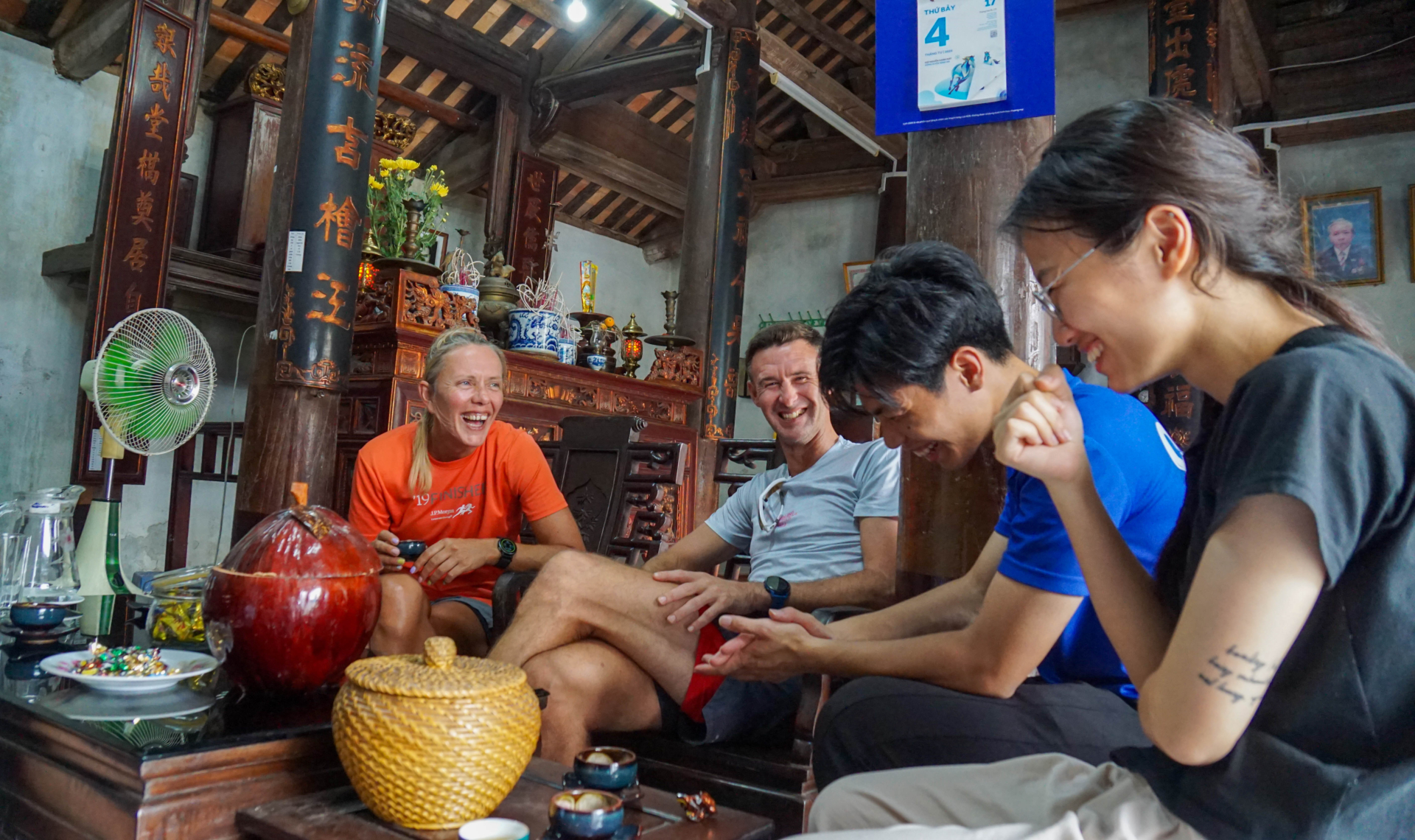
One question I hear surprisingly often is, “What if I pronounce everything wrong?”
Honestly, that’s part of the experience.
Vietnamese is a tonal language, so some words can sound completely different if you change the tone. But as a visitor, nobody expects you to get every sound exactly right. Most of the time, people understand what you’re trying to say from the situation.
If you’re standing at a coffee counter saying, “Cho tôi một cà phê,” while pointing at the menu, nobody is going to be confused if your pronunciation isn’t perfect.
The biggest mistake isn’t saying a word incorrectly. It’s being too nervous to try.
I’ve seen travelers spend five minutes practicing a sentence under their breath, only to realize the conversation lasted ten seconds and ended with both people smiling anyway. So don’t worry about sounding like a local.
Focus on being friendly, speak a little more slowly than usual, and enjoy the interaction.
The Best Place to Practice Basic Vietnamese Phrases

One thing I’ve noticed is that the phrases people remember aren’t usually the ones they practiced in their hotel room. They’re the ones that caught them by surprise.
Maybe it’s thanking the woman who hands over your morning bánh mì. Maybe it’s asking for the bill at a tiny noodle shop, then realizing you understood the reply without needing your phone. Sometimes it’s simply hearing the same phrase over and over until it starts to feel familiar.
That’s how most people end up learning a little Vietnamese.
Not by sitting down with a phrasebook, but by hearing the same words in cafés, markets, convenience stores, and Grab rides every day. After a while, you stop translating everything in your head. You just know that “Cảm ơn” comes naturally when someone hands you your coffee, or that “Bao nhiêu tiền?” is probably the next thing you’ll ask at a local market.
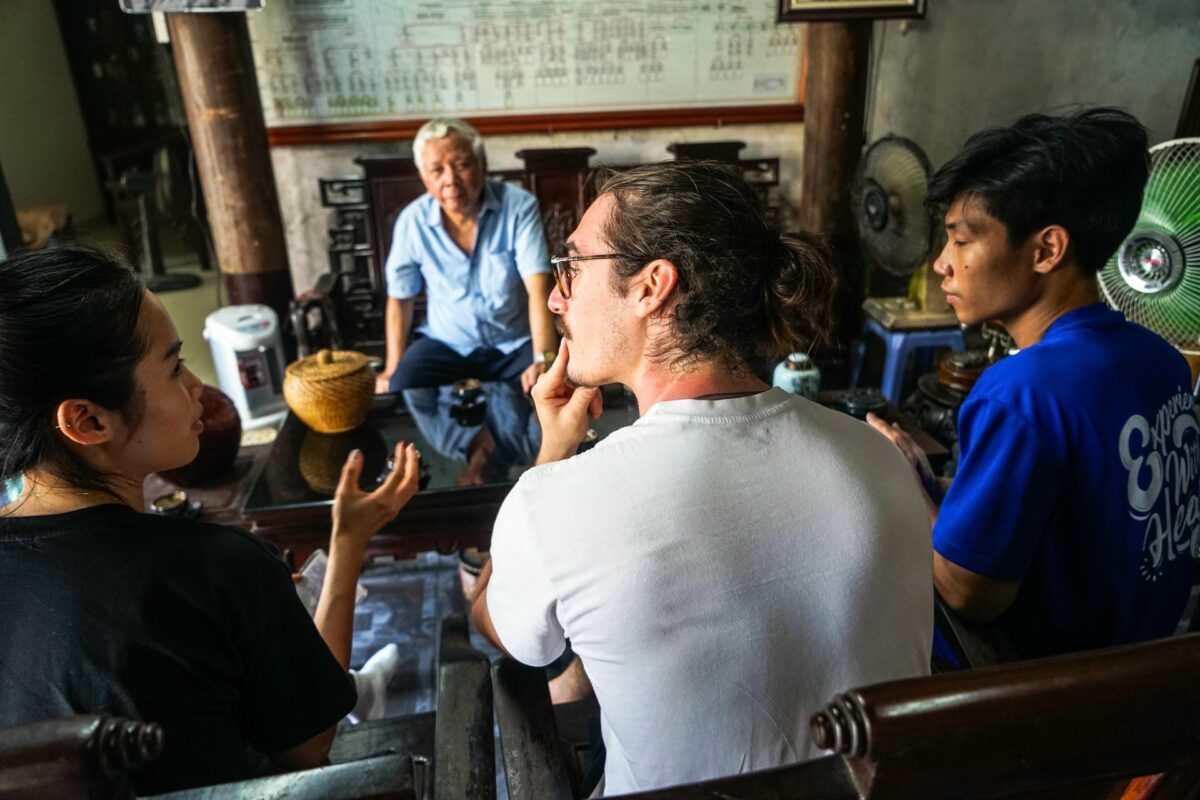
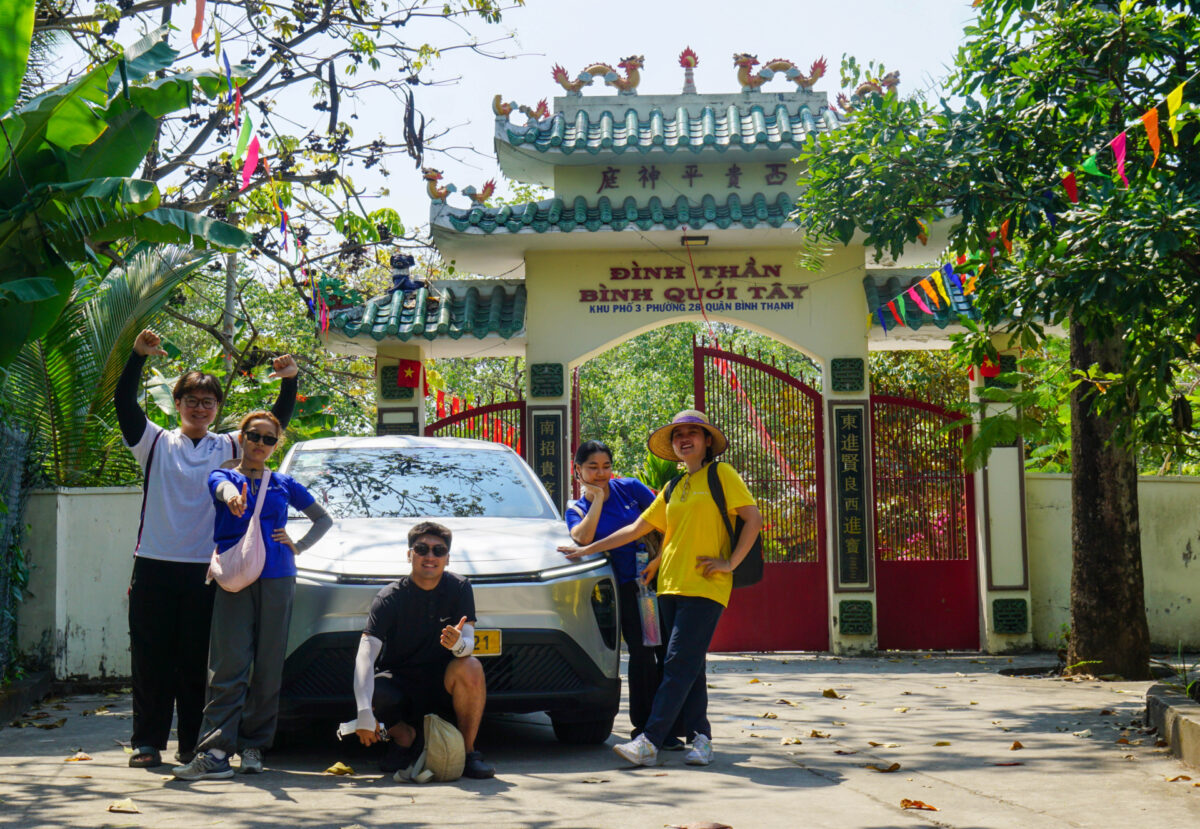
If you’re the kind of traveler who enjoys spending time beyond the usual attractions, you’ll naturally have more opportunities to use these phrases. Wandering through neighborhood markets, stopping at family-run cafés, or joining a local experience often leads to small conversations that become part of the trip itself.
And that’s probably the nicest thing about learning a few basic Vietnamese phrases. They’re not there to impress anyone. They simply make everyday moments feel a little less like transactions – and a little more like real conversations.
In case practising a few phrases with locals leaves you wanting to learn more, let’s explore these 5 great places to learn Vietnamese in Ho Chi Minh City.
Ready to put these basic Vietnamese phrases into practice?
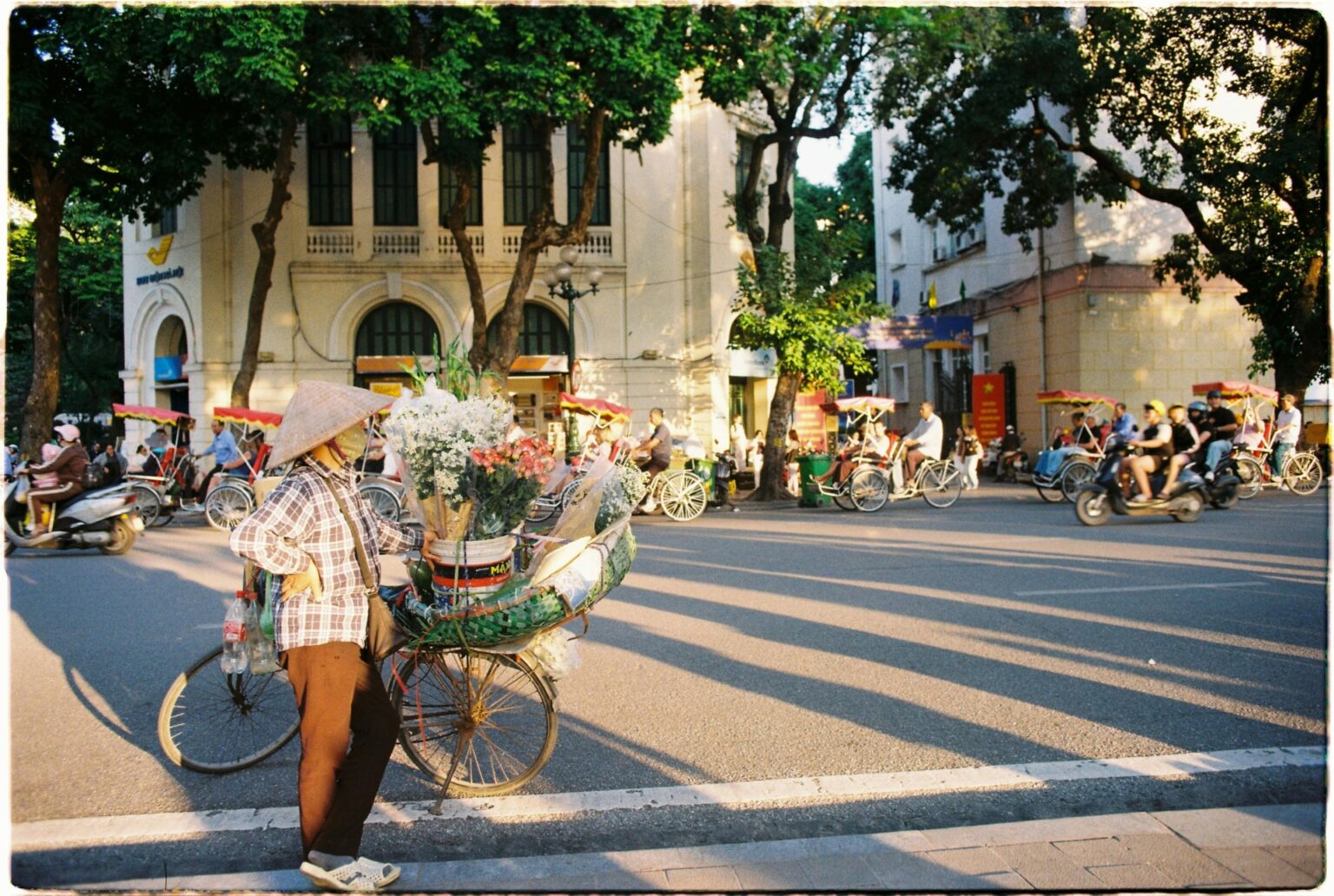
Honestly, you probably won’t use every phrase in this guide. You’ll forget a few, mix up the pronunciation, and maybe end up laughing at yourself once or twice. That’s completely normal. What matters is being willing to try.
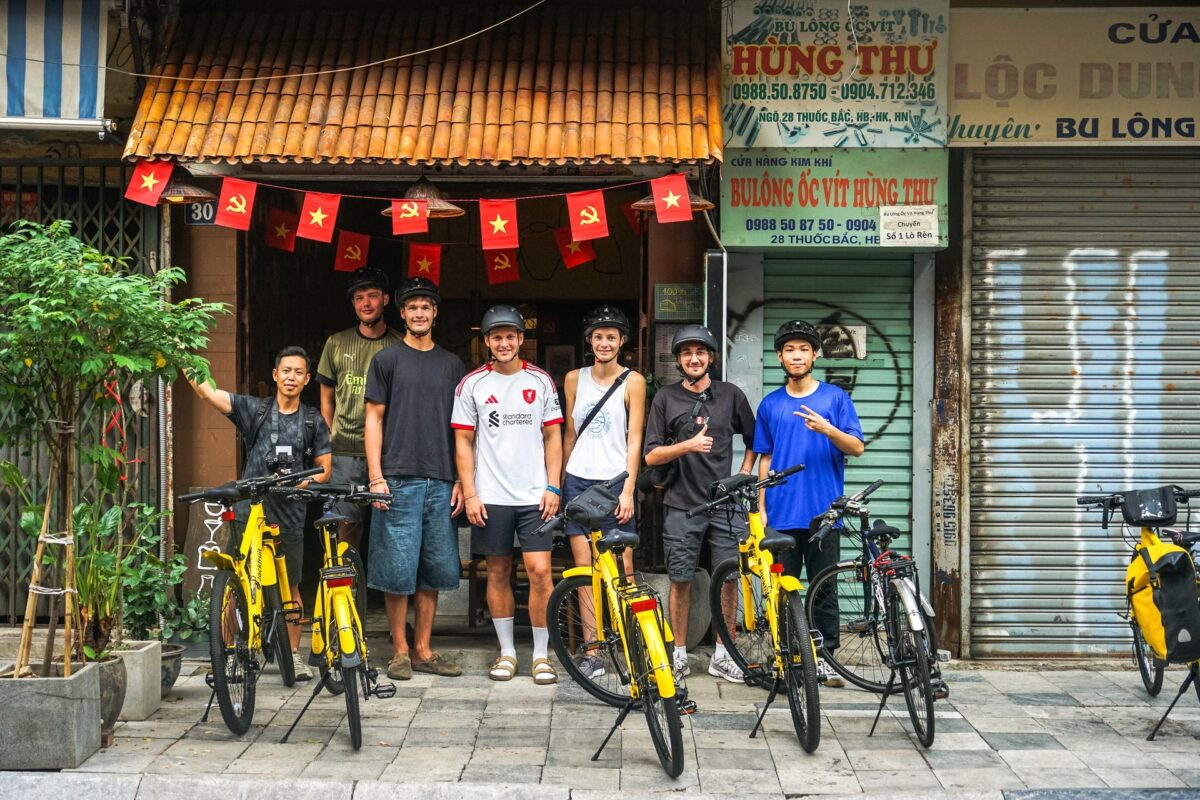
Some of the nicest travel memories come from those little exchanges over a cup of coffee, at a street food stall, or while asking someone for directions. If that’s the kind of experience you’re looking for, our 3 Days in Ha Noi Community Tours are built around those everyday moments-not just the famous landmarks.
Come along, meet the people behind the places you’re visiting, and let your first few Vietnamese phrases become part of the journey – not just something you learned before the trip.
FAQs for First-Time Visitors to Vietnam
English is commonly spoken in hotels, airports, and many tourist areas, especially in larger cities like Hanoi and Ho Chi Minh City. However, learning a few basic Vietnamese phrases can make everyday interactions much easier, particularly at local markets, street food stalls, and family-run cafés.