

Table of Contents
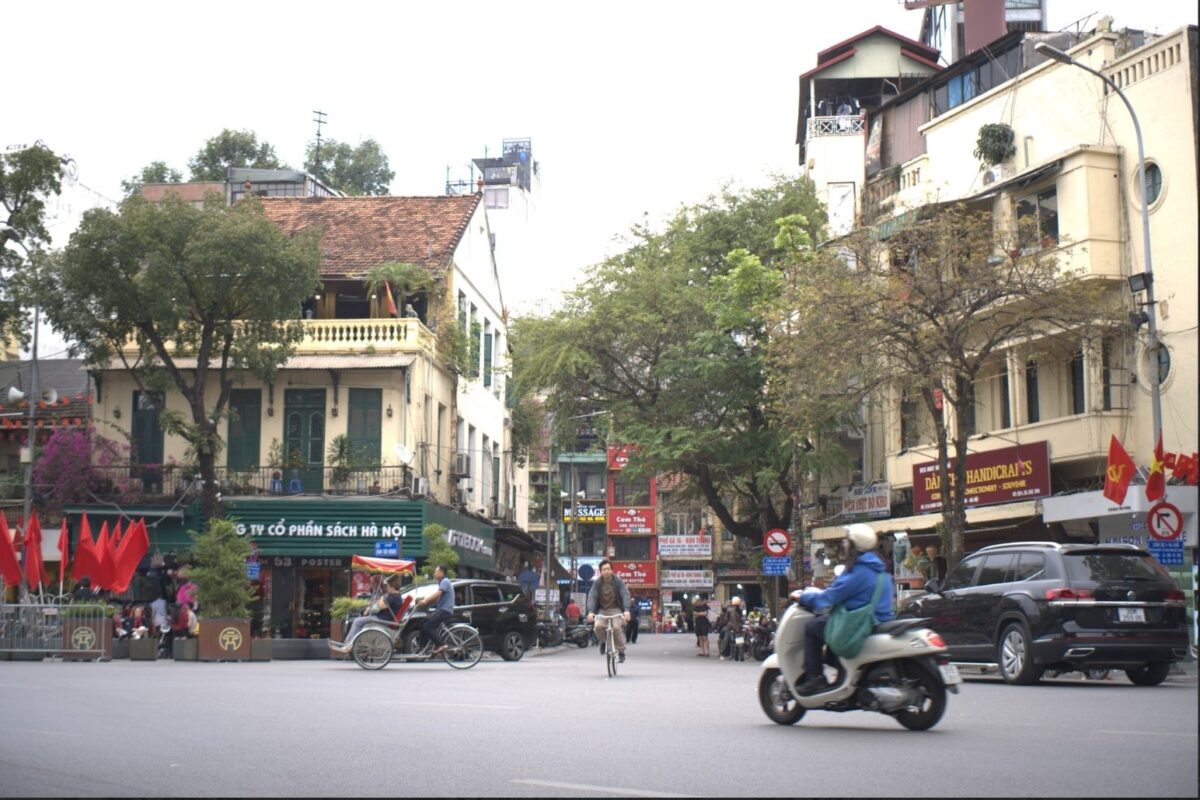
Hey there! If the buzzing motorbikes and non-stop energy of Hanoi have you craving a quiet breath of fresh air, you don’t have to travel far to find it. While most tourists immediately book a bus to the crowded valleys of Sapa or the limestone caves of Ninh Binh, there is a much closer, deeply authentic pocket of Vietnamese history hiding just an hour outside the city centre.
That place is Duong Lam Ancient Village.
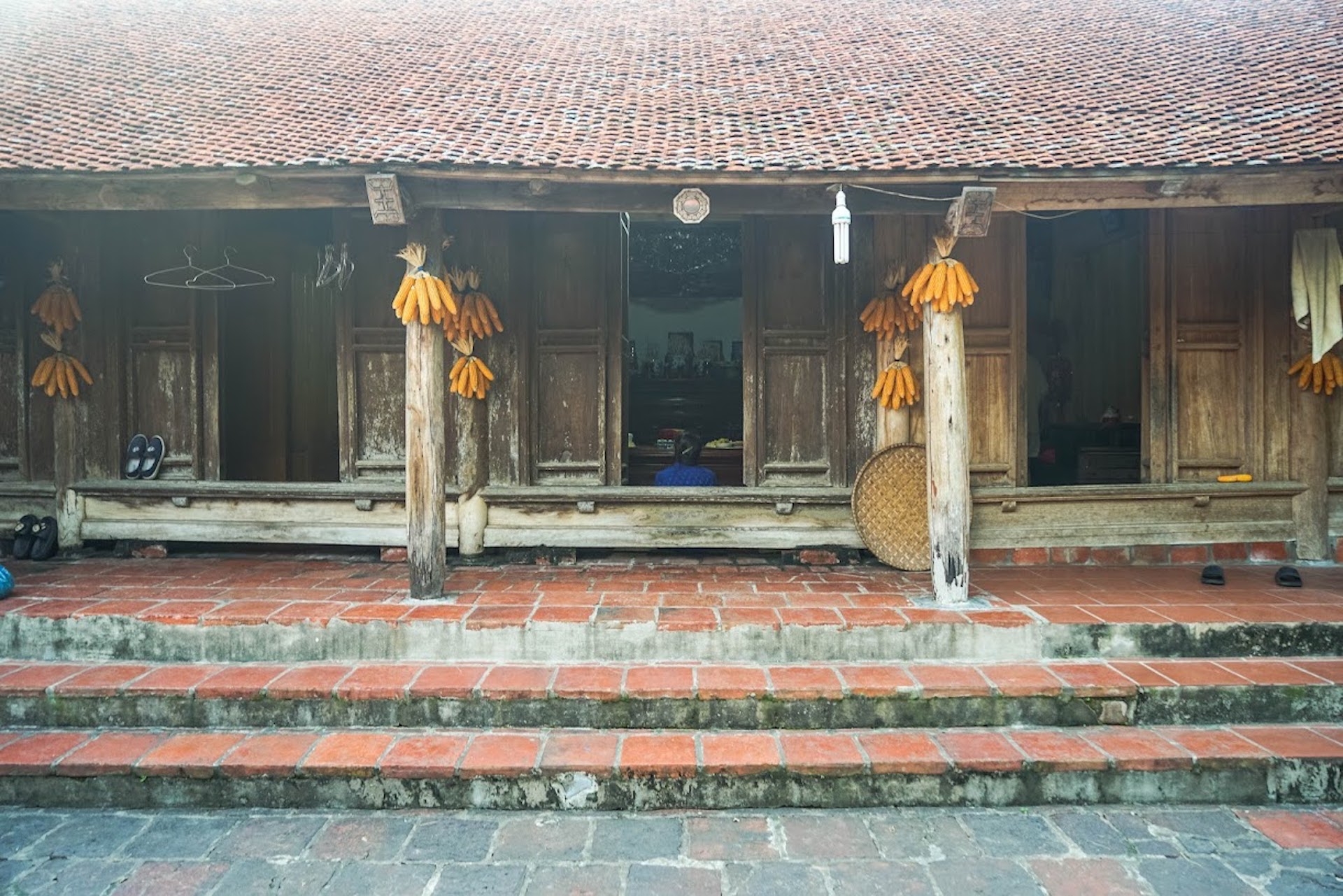
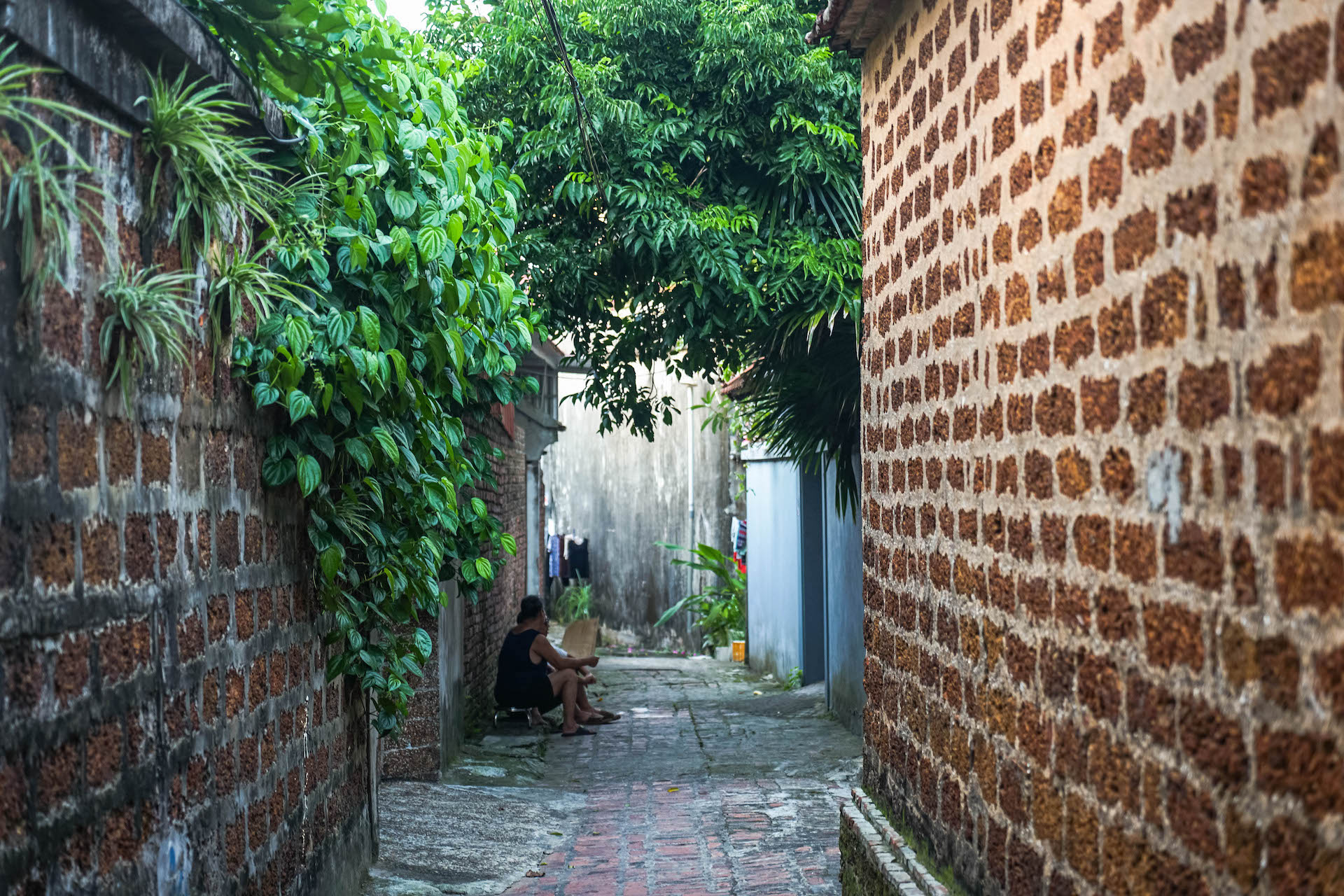
Stepping into this neighbourhood feels less like a standard tourist excursion and more like slipping through a portal into the 17th century. It is a living museum where ancient red-laterite houses still stand tall, and generations of families continue to live the quiet, agricultural lifestyle of their ancestors.
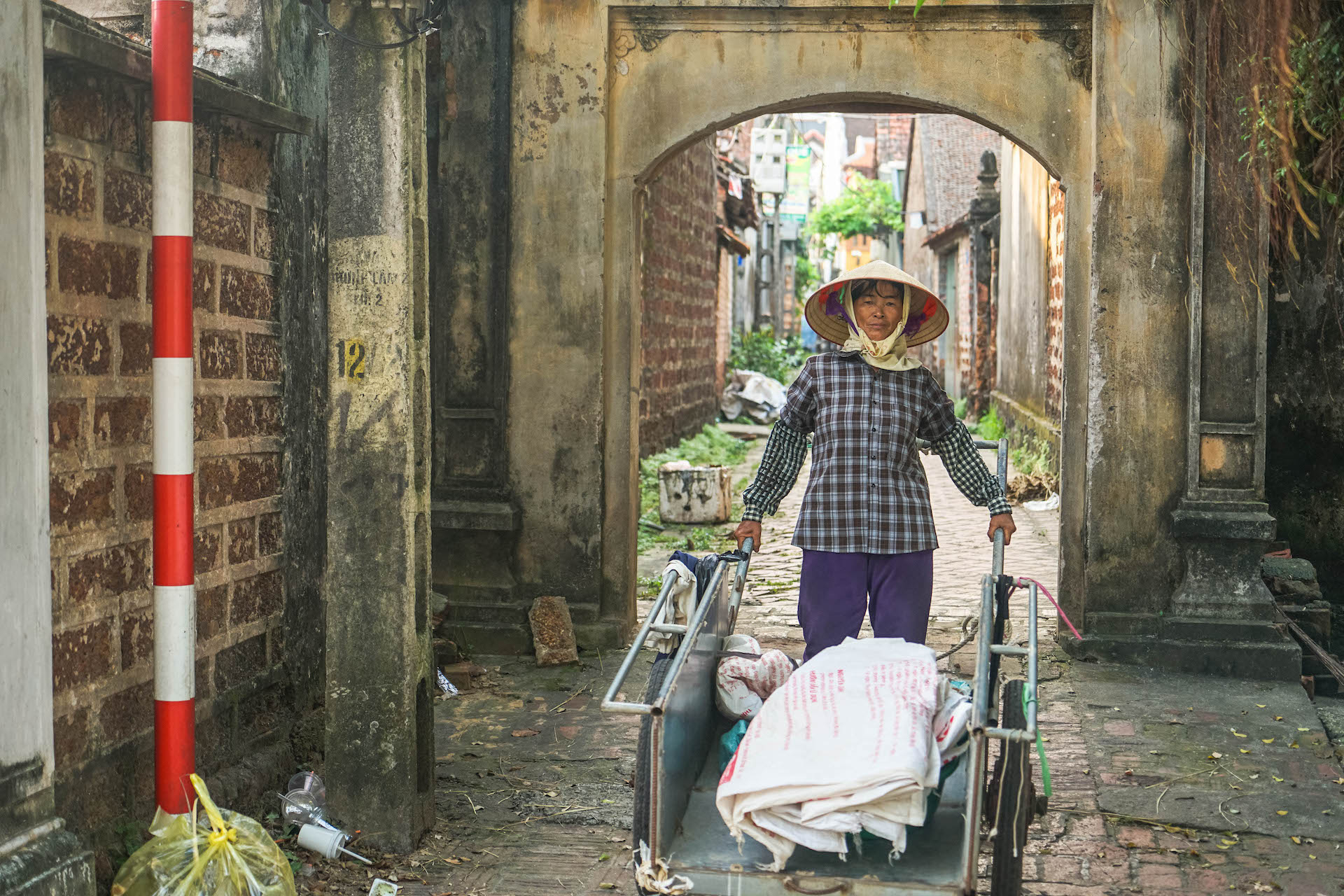
For me, the real charm here lies in the raw, architectural roots. We’re talking about original houses built from mud-orange laterite stone, ancient water wells, and brick alleys that have survived for generations. What I love most about Duong Lam village is that it’s completely alive. Families still farm the surrounding fields, cook over traditional wood fires, and live in the exact homes their ancestors built.
Locals also affectionately call Duong Lam ancient village “the land of two kings” because it’s the birthplace of Phung Hung (who ruled in the 8th century) and Ngo Quyen (who famously defeated the Southern Han army to end a thousand years of Chinese rule in the 10th century). For international travellers, visiting this village is the ultimate way to understand the true roots of northern Vietnamese culture.
As a local friend, let me walk you through the perfect itinerary, the unwritten rules of exploring the Duong Lam village, and some hidden corners that most tour buses completely breeze past.

Getting To Duong Lam Ancient Village: Practical Details
Since it’s only an hour’s drive from Hanoi, Duong Lam village makes for an easy day trip. I usually suggest renting a private car or grabbing a taxi for the day. It’s the most comfortable option, and it lets us stop on the road whenever we want to snap a few photos.
If you want a rugged local experience, we could hop on a motorbike, but the highway traffic out of Hanoi can get pretty chaotic. There are local buses, but they require transfers and take much longer, so a private ride keeps our trip to Duong Lam ancient village smooth and stress-free.
The Perfect 1-Day Duong Lam Ancient Village Itinerary
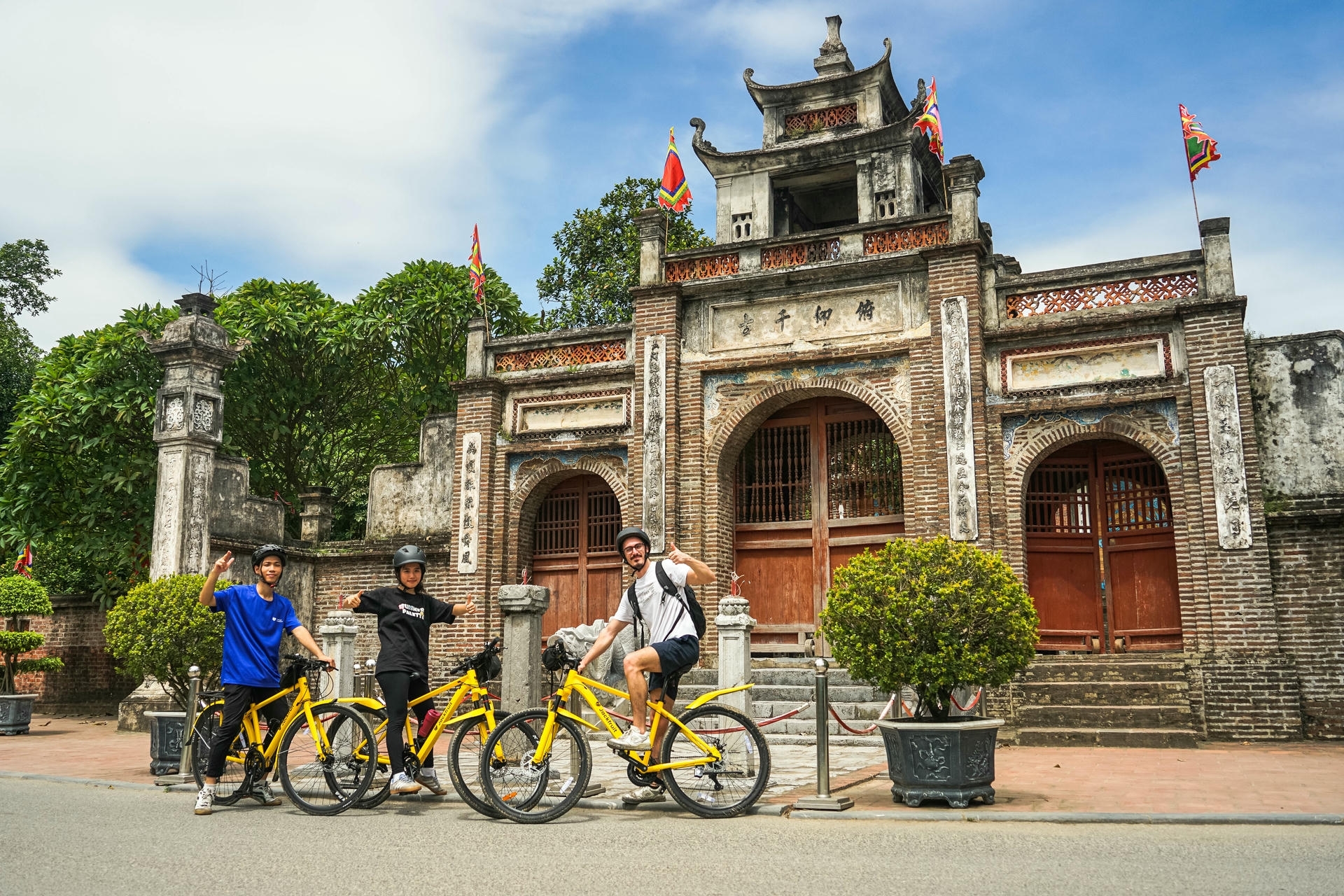
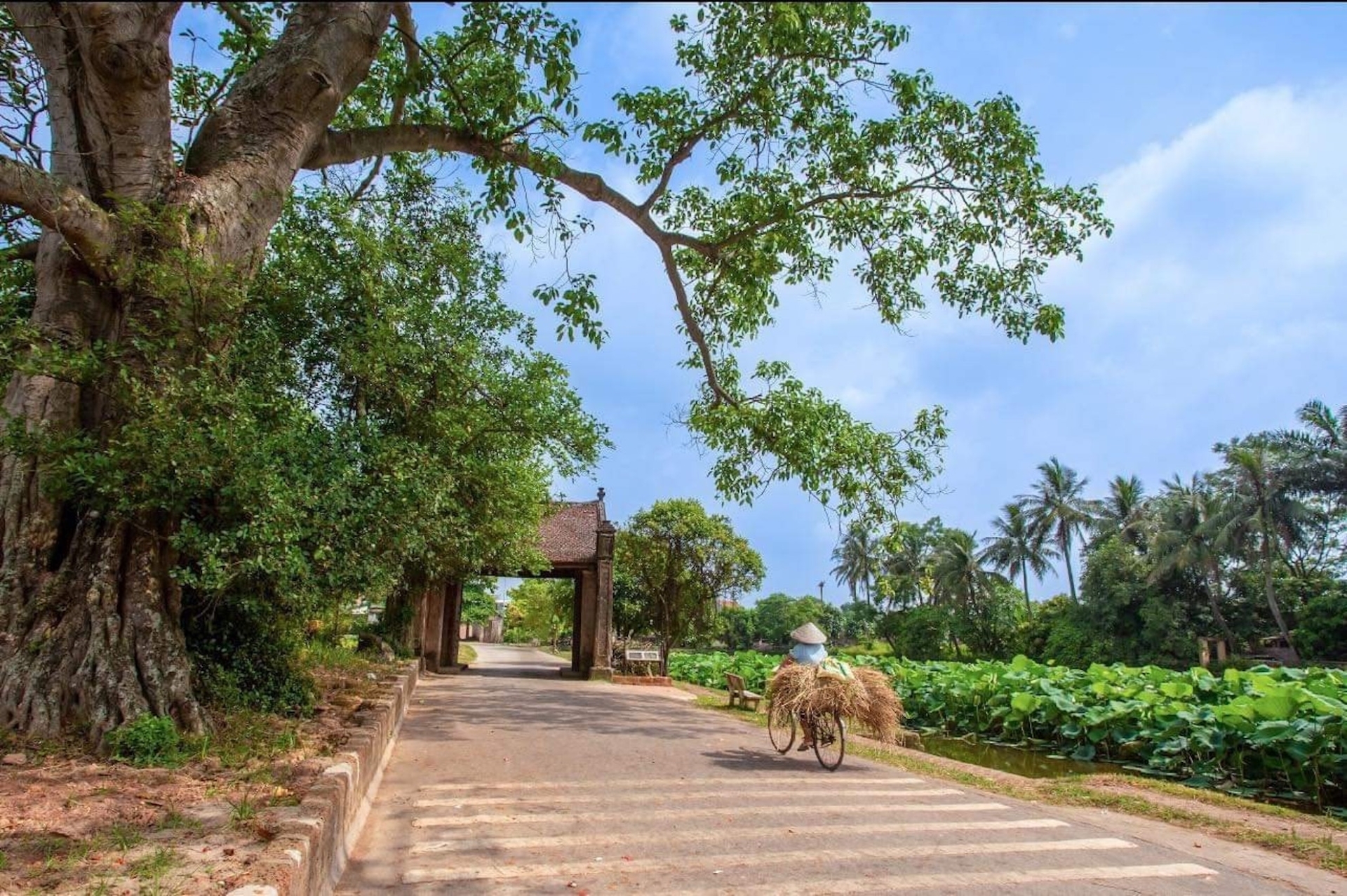
To get the most out of your day, I suggest starting your journey at the iconic Mong Phu Village Gate. Built back in 1553 during the Le Than Tong dynasty, this is the only ancient village gate left intact in the entire Red River Delta region. It features a sweeping curved roof made of old tiles and sits right next to a massive, ancient banyan tree that has shaded generations of farmers coming home from the rice fields.
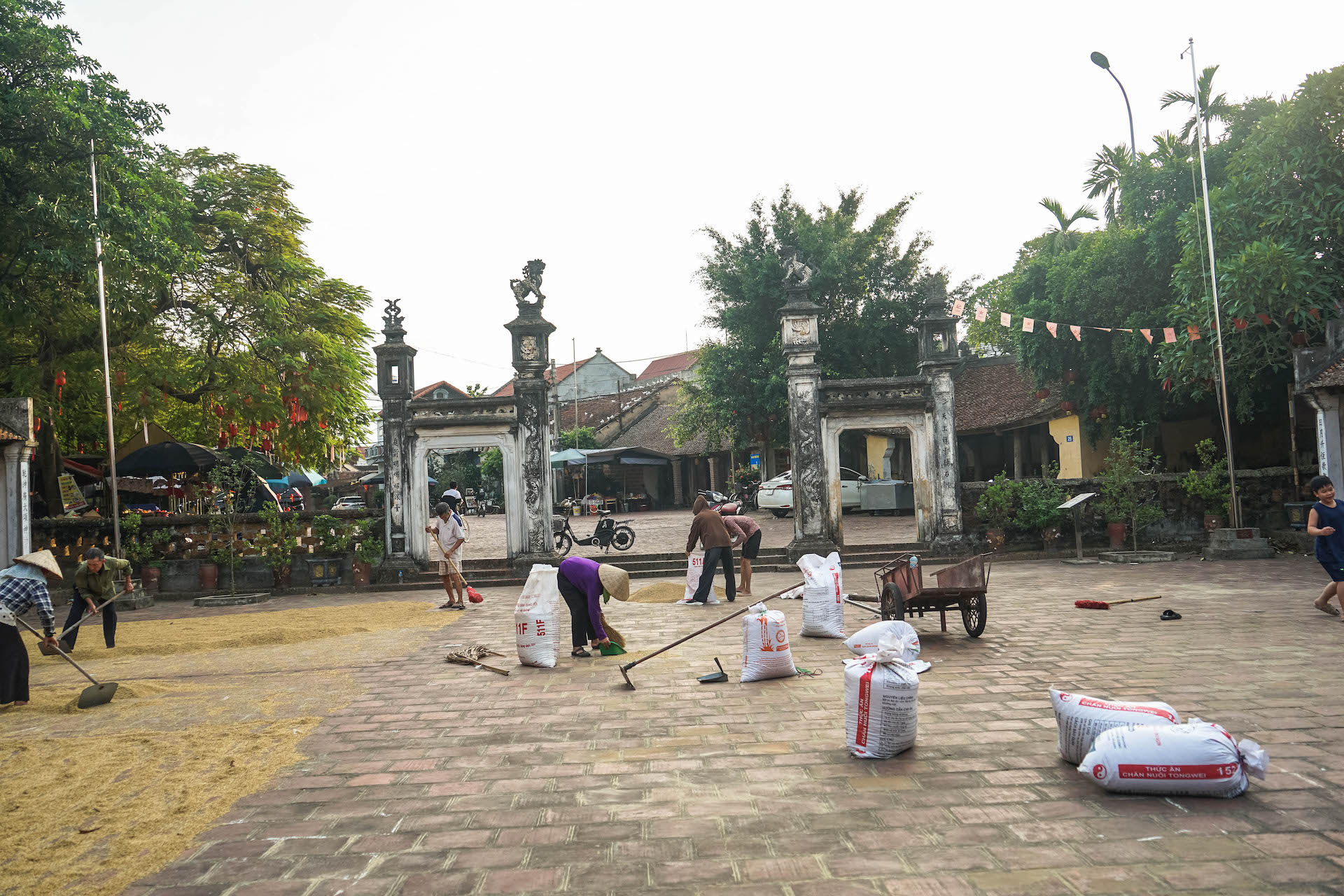
From the gate, follow the red bricks right into the heart of the commune to visit the Mong Phu Communal House.
This architectural masterpiece was built in 1684 and serves as the community’s spiritual anchor. The floor is raised off the ground to protect it from old tropical floods, and the wooden pillars inside are carved with incredible detail. It’s a quiet place where elderly locals still gather to drink green tea and discuss village news.
- Opening Hours: 8:00 AM – 5:00 PM daily (including holidays and Tet).
- Entrance Fee: 20,000 VNĐ (less than $1 USD) per person.
- Parking & Getting Around: If you arrive on two wheels, motorbike parking is available nearby for 10,000 VNĐ per turn. To explore the winding, maze-like alleyways comfortably, you can choose between renting a bicycle and hopping on an electric shuttle bus. Bicycle rentals run about 30,000 to 50,000 VNĐ per hour (or 80,000 to 100,000 VNĐ for the whole day), while the electric shuttle bus costs around 50,000 VNĐ per person.
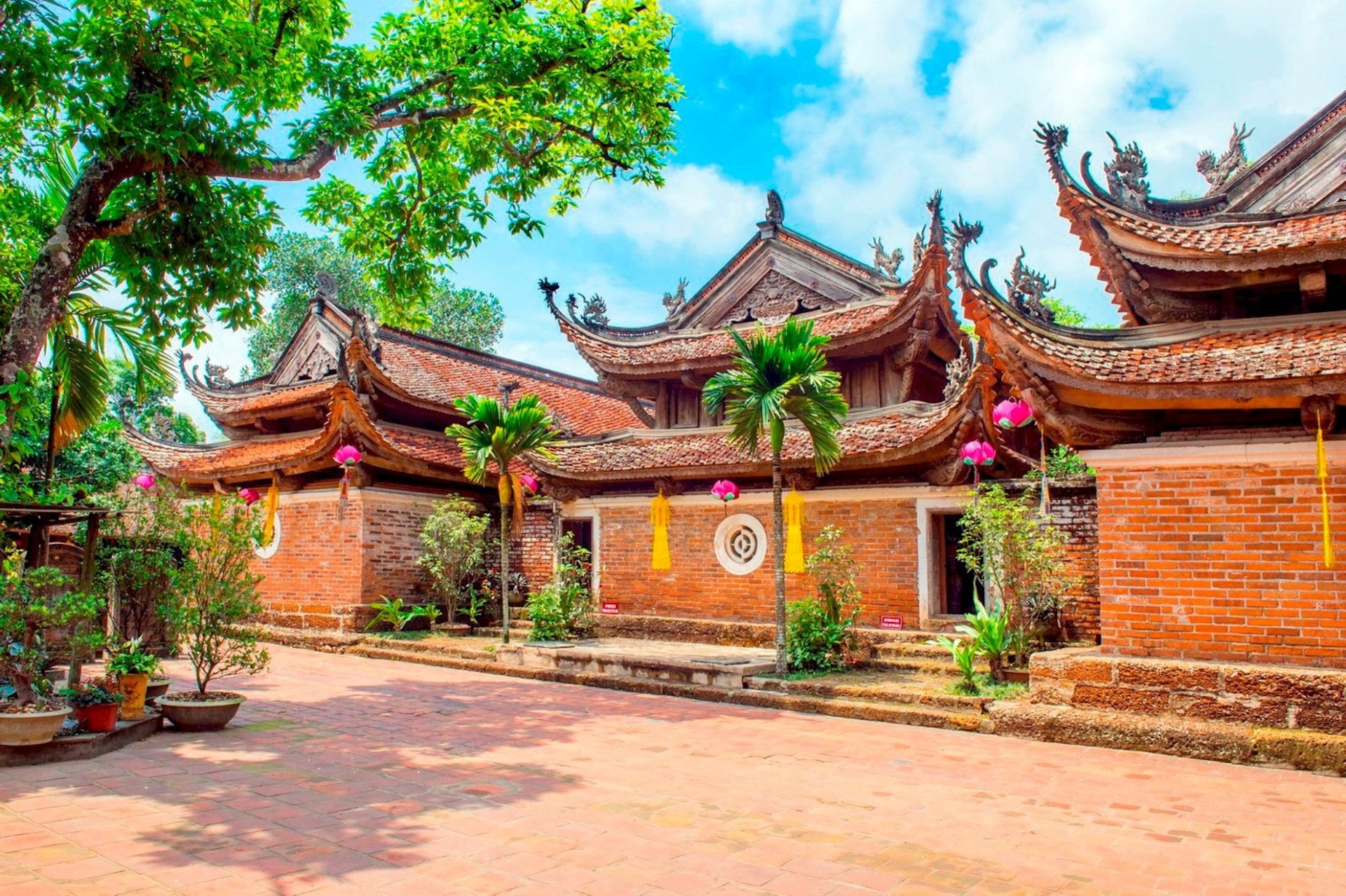
Next, take a short, scenic bike ride through the quiet backlanes to Mia Pagoda.
This temple is famous for housing 287 stunning ancient Buddhist statues made of bronze, clay, and wood. The atmosphere here is thick with incense and completely peaceful, offering a massive contrast to the roaring temples you see inside Hanoi’s center.
- Opening Hours: 7:00 AM – 5:00 PM daily (including holidays and Tet).
- Entrance Fee: Free (donations welcome).
Must-Try Local Treats in Duong Lam Ancient Village
You cannot leave the village without sitting down on a low wooden stool for a midday break. The local sweet speciality here is che lam, an incredibly comforting, chewy snack made with sticky rice flour, fresh ginger, cane sugar, and roasted peanuts. It is cooked down with a lot of care over a slow fire until it reaches a perfect, doughy texture, then dusted with fine rice powder. Pairing a piece of chelam with a steaming cup of bitter green tea is the ultimate local ritual.
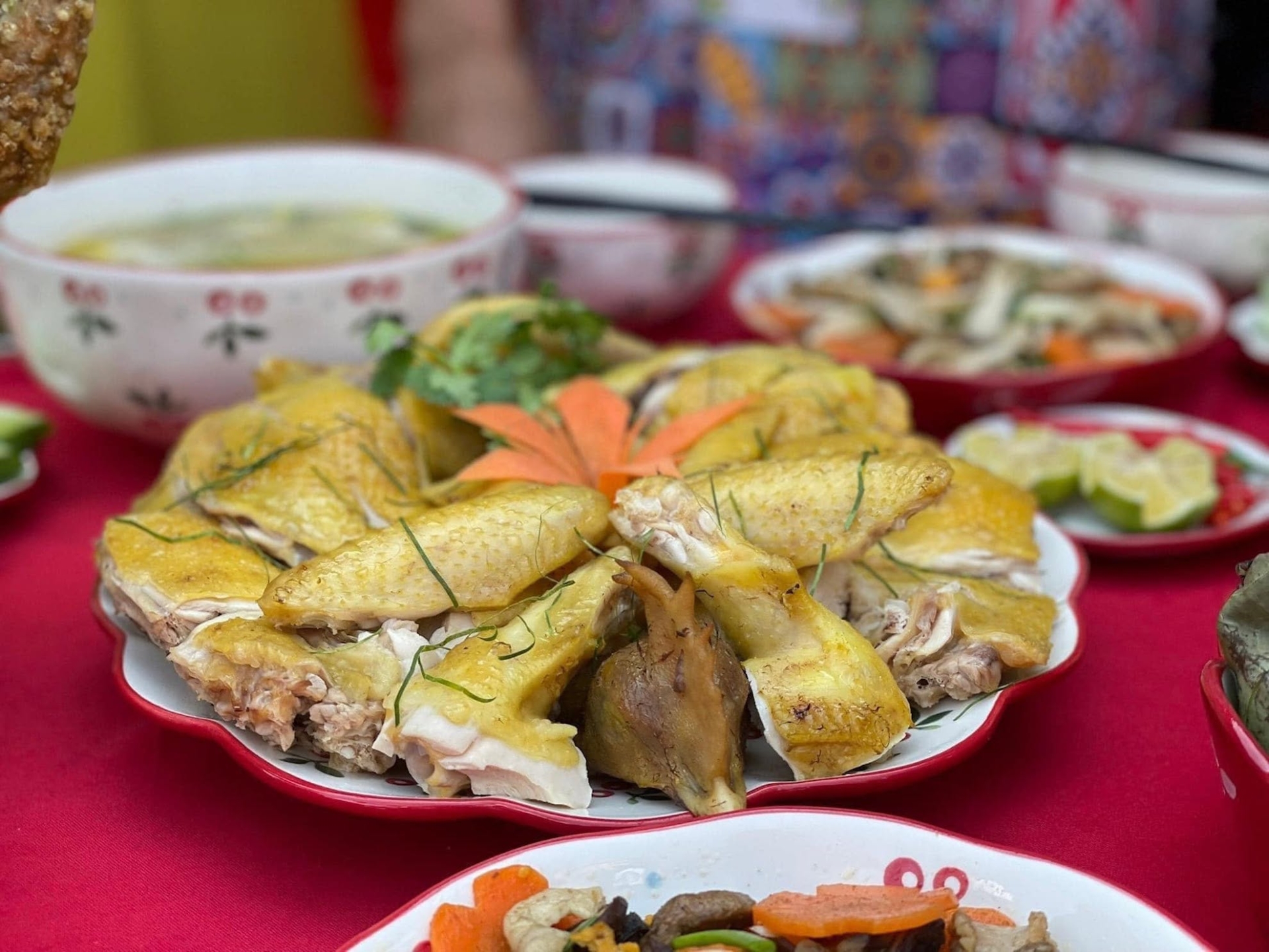
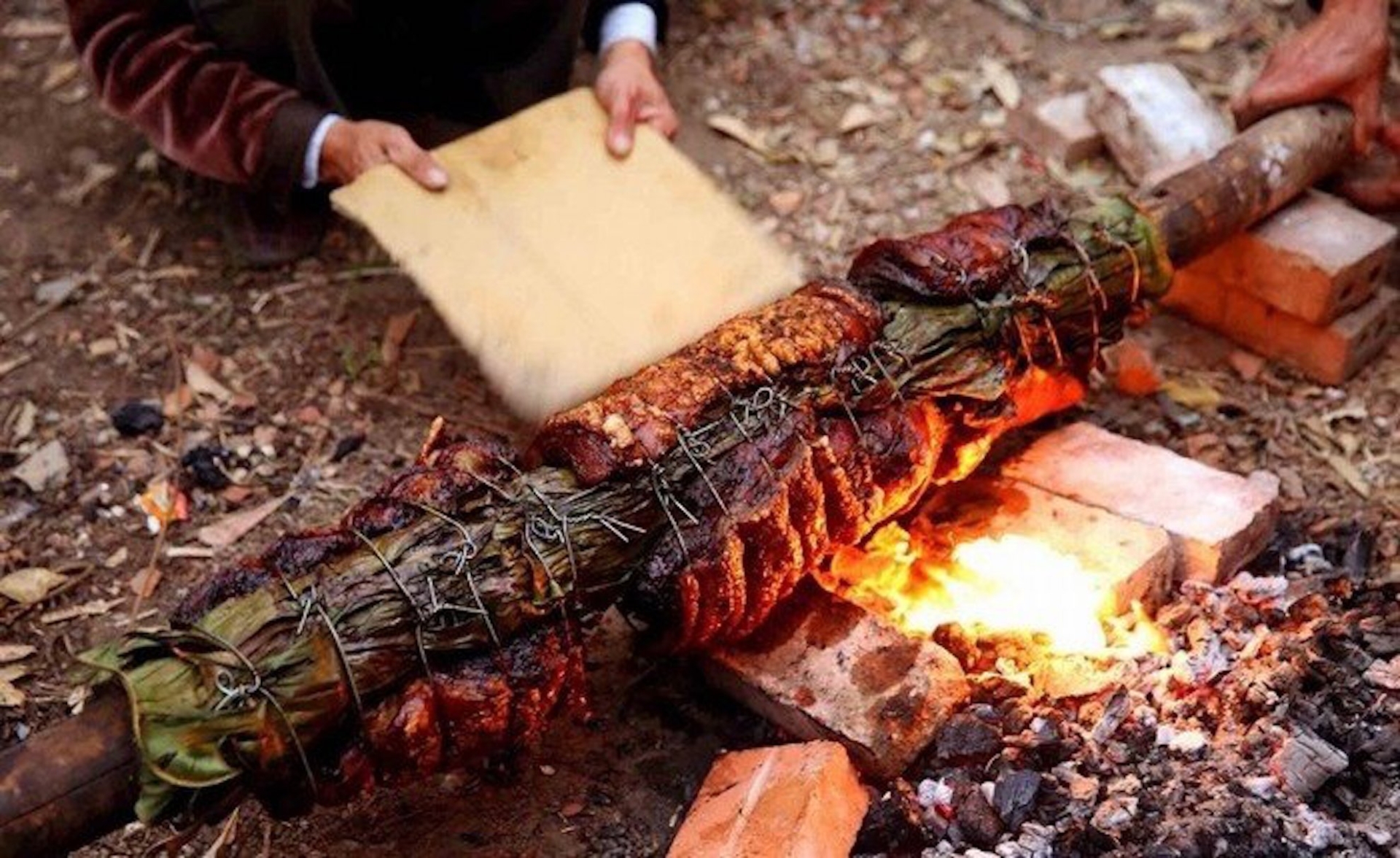
But if you’re looking for a hearty lunch, Duong Lam has two legendary savoury dishes that people travel miles for: crackle-skin roast pork (thịt quay đòn) and roasted Mia chicken (gà Mía nướng).
The pork is marinated in local herbs and wrapped tightly around giant bamboo skewers, then slowly roasted over fragrant sugarcane charcoal for hours until the skin turns into a bubbly, crispy golden-brown sheet while the meat stays incredibly juicy.
Right next to it, you’ll see the famous local Mia chicken being roasted. Historically, this specific breed of chicken was so premium it was reserved only for kings. The meat is small but incredibly firm, lean, and sweet, brushed with a thin layer of local honey or spices before hitting the grill.
If you are a true food lover looking to discover more culinary treasures and authentic bites across the capital, make sure to dive into our curated list of Hanoi’s top local culinary spots before planning your next dinner.
Pro-Tip for a Respectful Duong Lam Ancient Village Visit
While you can visit Duong Lam ancient village year-round, the absolute best time is during the rice harvest seasons, around May and September.
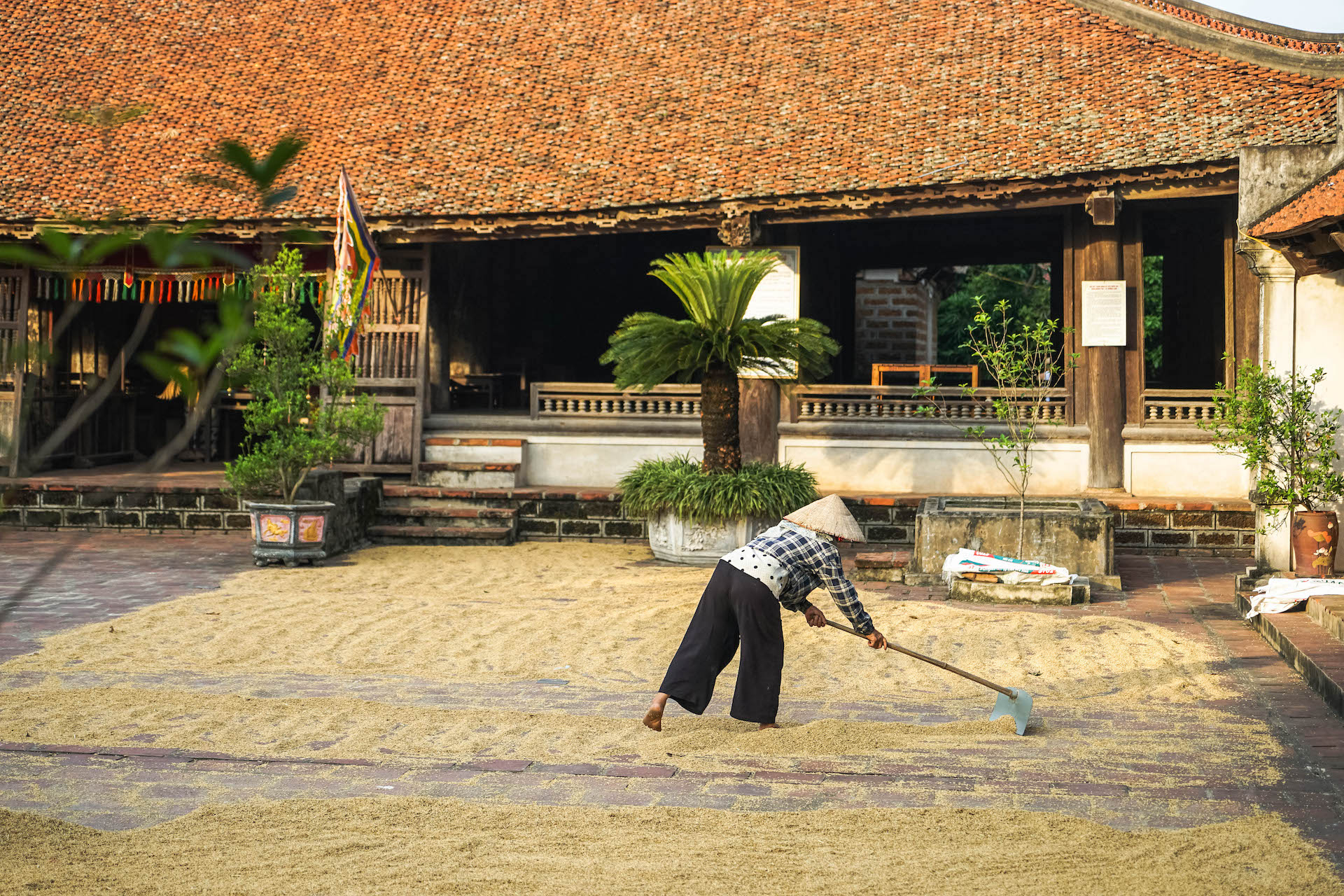
This is when the fields surrounding Duong Lam village turn a brilliant golden yellow. You’ll see farmers drying straw right on the brick roads, and the whole countryside smells amazing. Another good option is late autumn, which lets us combine the village trip with a visit to Ba Vi National Park nearby to see the wild sunflowers in bloom.
Experience Duong Lam Ancient Village the Insider Way
Most travellers only see the busy, modern side of Vietnam’s cities. For me, Duong Lam ancient village is the perfect window into our rural past. It’s a chance to step away from the crowds, talk to local farmers, and see a side of my country that has kept its identity intact over the years.
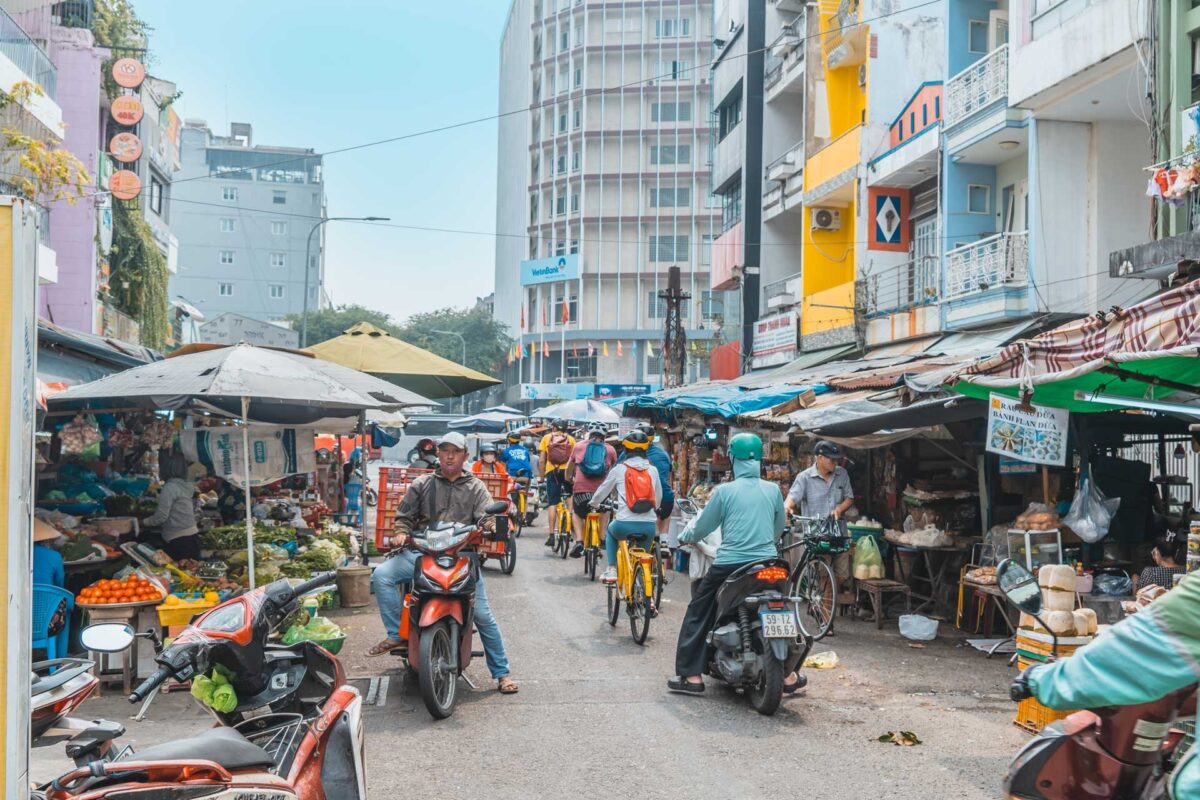
Want a smooth, hassle-free way to explore? The best insider trick is to kick off your adventure with our Hanoi Cycling Tour by Jackfruit first to get a good feel for the area on two wheels. After wrapping up the cycling tour, hopping on an electric cart to cruise along the village outskirts and green fields is the ultimate way to wind down.
To discover more off-the-beaten-path locations and local secrets across the city, browse our latest:
- Hanoi Train Street, a unique check-in point in Vietnam.
- Exploring Hoa Lo prison in Hanoi.
- A guide to explore Hanoi on bikes – Cycling in Hanoi.