

Table of Contents
Cycling in Hanoi is not just a means of transportation; it’s an immersive journey into the heart and soul of Vietnam’s bustling capital. Offering a blend of adventure, culture, and sustainability, biking through Ha noi’s streets and countryside provides a unique perspective that can’t be replicated by any other mode of transport. Let’s dive deeper into the intricacies of cycling in Hanoi:
Hanoi bike tour
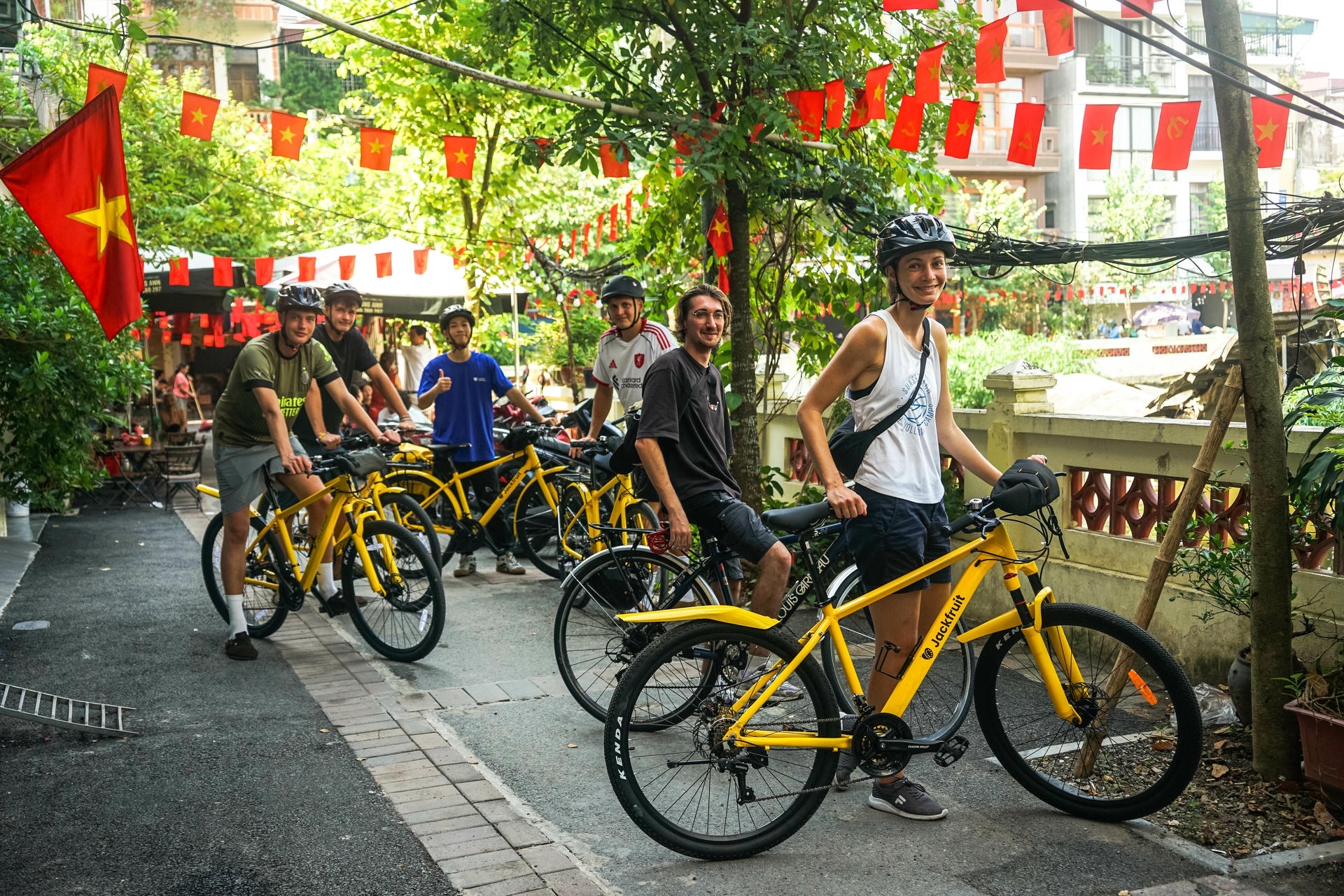
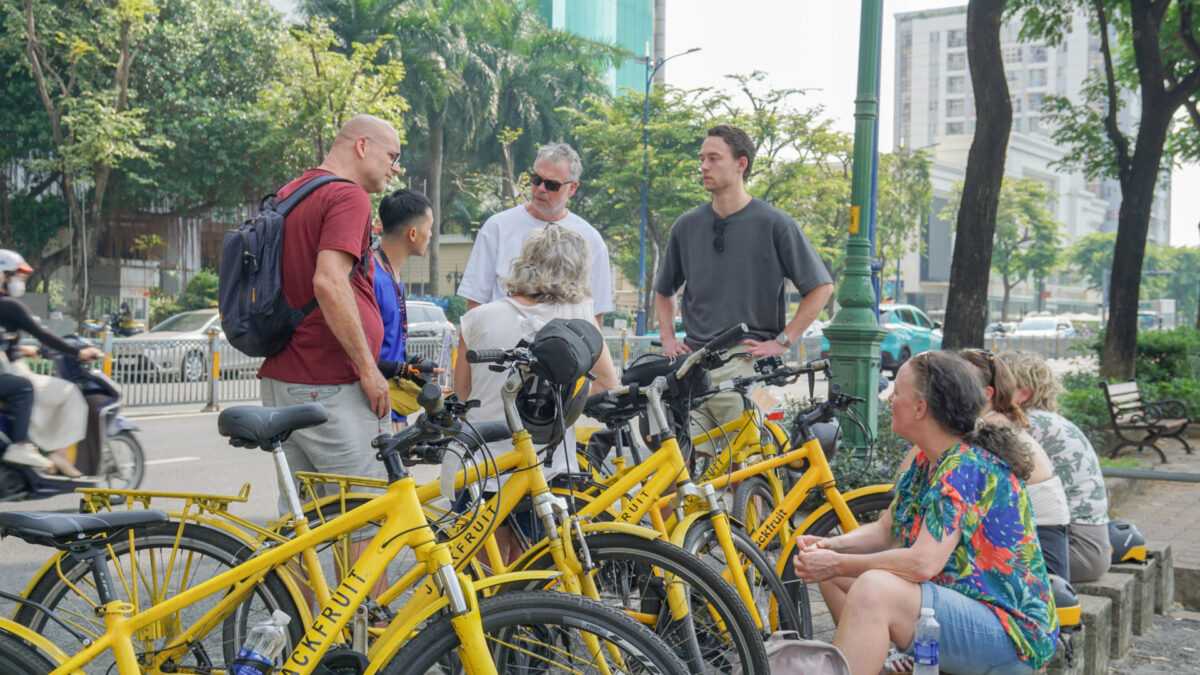
Cycling through Hanoi is one of the best ways to see how the city truly breathes. A guided Hanoi bike tour takes you beyond postcard landmarks into narrow alleys, lively markets, and quiet courtyards where daily life unfolds at its own pace. With a local guide, you not only see Hanoi’s famous spots but also discover the small stories and familiar faces that make the city unforgettable.
What makes cycling in Hanoi special is that it goes deeper than sightseeing. Each stop becomes a chance to connect with people, to listen, and to understand how Hanoi’s culture and traditions have been passed down through generations. From the historic charm of the Old Quarter to the calm of West Lake and the countryside by the Red River, every route shows a different shade of the city.
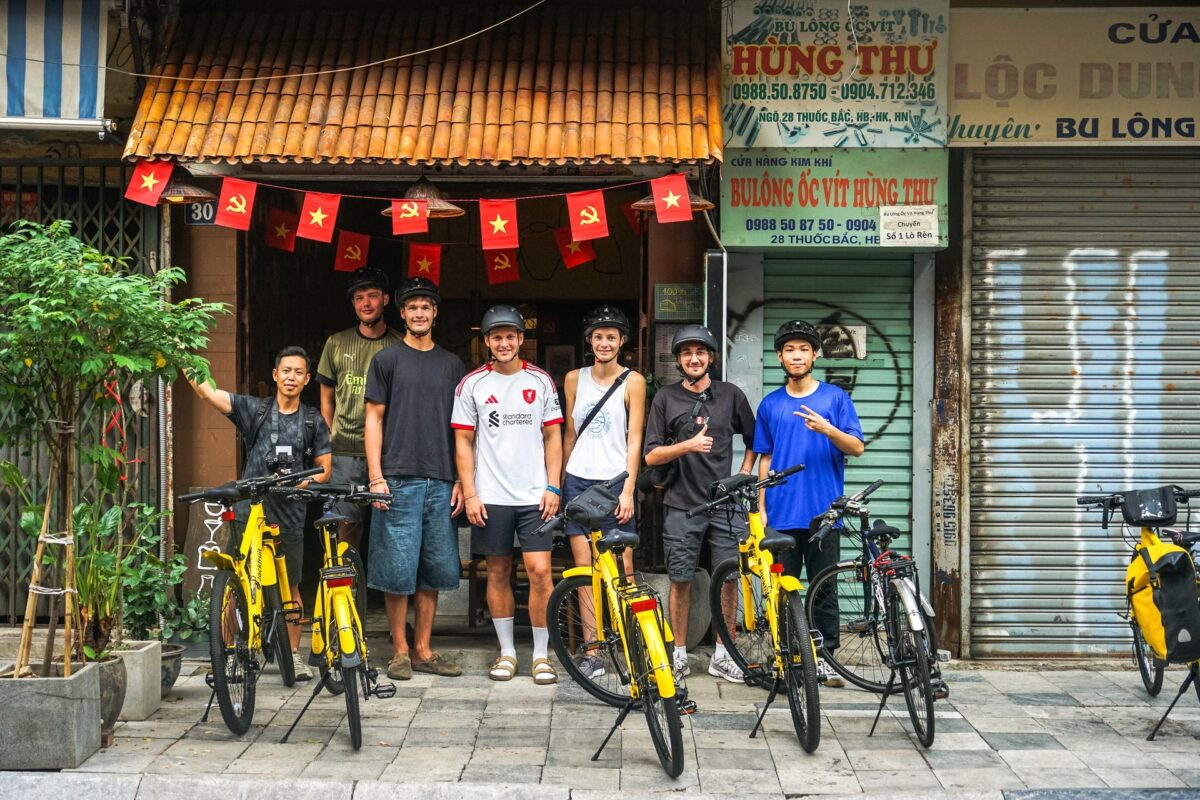
Cycling itself isn’t new in Hanoi, but the way we ride is. Jackfruit Adventure’s tours stay small and easygoing because the best part of Hanoi isn’t a landmark. It’s the people you meet along the way. Guided by locals, we ride slowly through the streets, stop for coffee where the regulars sit, wave to aunties selling breakfast, and share the stories we grew up hearing.
For us, each ride is a way to share what we love about this city. The people, the food, the history, and the quiet corners that remind us why Hanoi always feels like home. You can join any of our Hanoi cycling tours to see Hanoi the way we do.
What to expect when cycling in Hanoi
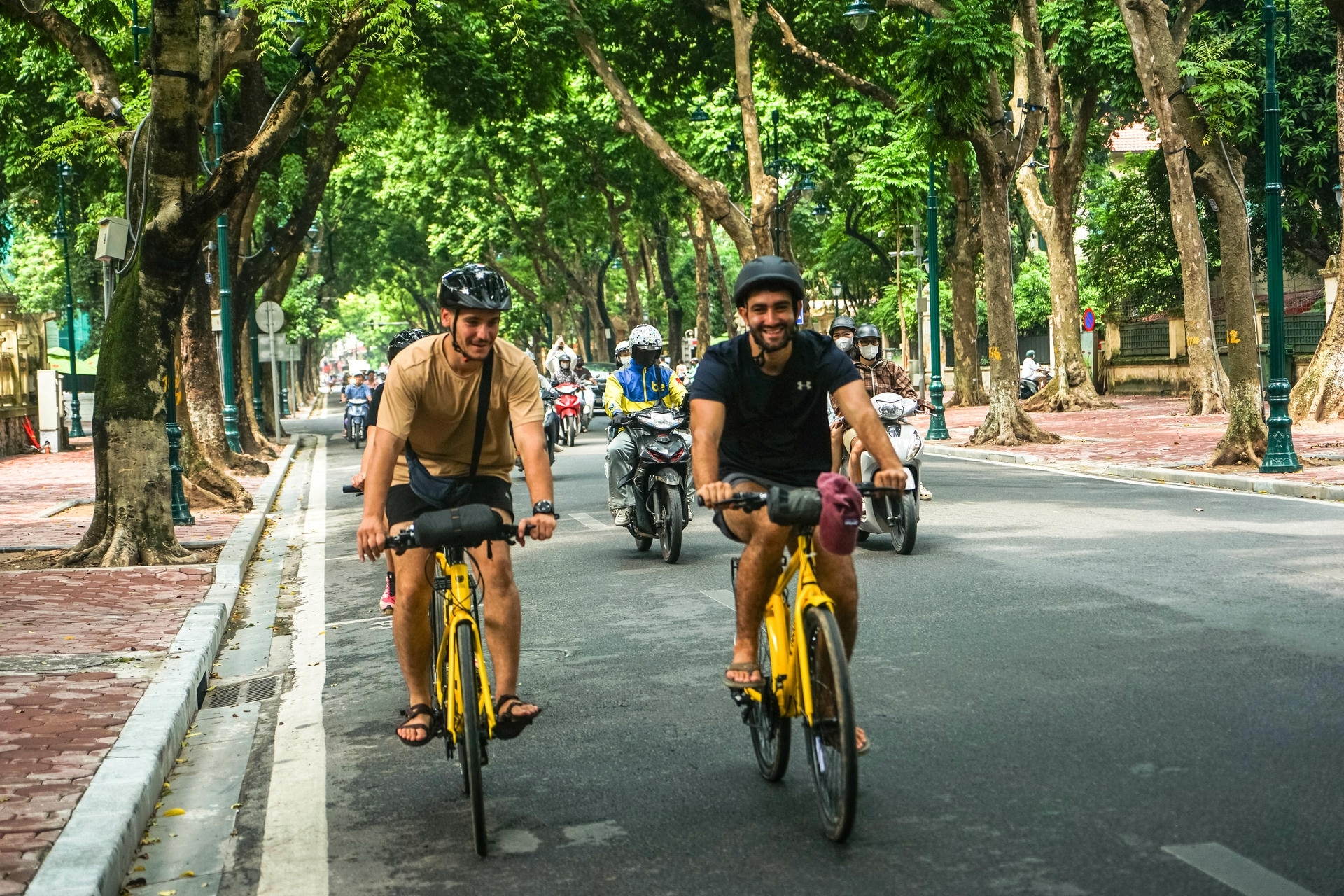
There are many ways to experience cycling in Hanoi, but the most rewarding routes often combine both city and countryside scenery. In about half a day, you can cycle from the Old Quarter to well-known landmarks such as St. Joseph’s Cathedral, Hanoi Train Street, and the Ho Chi Minh Mausoleum. Each stop tells a story about how old and new Hanoi continue to blend together.
The highlight of any Hanoi bike tour is not just the destinations but the journey itself. As you ride, you’ll pass through narrow car-free alleys, hidden courtyards, and local markets where daily life feels unchanged for decades. The route around West Lake offers calm water views and quiet pagodas, while the Red River Delta reveals Hanoi’s countryside charm with banana plantations, vegetable gardens, and small riverside homes.
If you want to see more, there are plenty of choices beyond the usual half-day rides. You can join a full-day cycling tour in Hanoi that goes deeper into the outskirts, or take on a countr yside ride through the Red River Delta, which stretches all the way to Ninh Binh and Halong Bay.
Safety when cycling in Hanoi
Cycling in Hanoi can feel chaotic at first, but once you understand the rhythm, it becomes surprisingly natural. Here are a few simple things to keep in mind before you ride.
1. Understanding Hanoi traffic
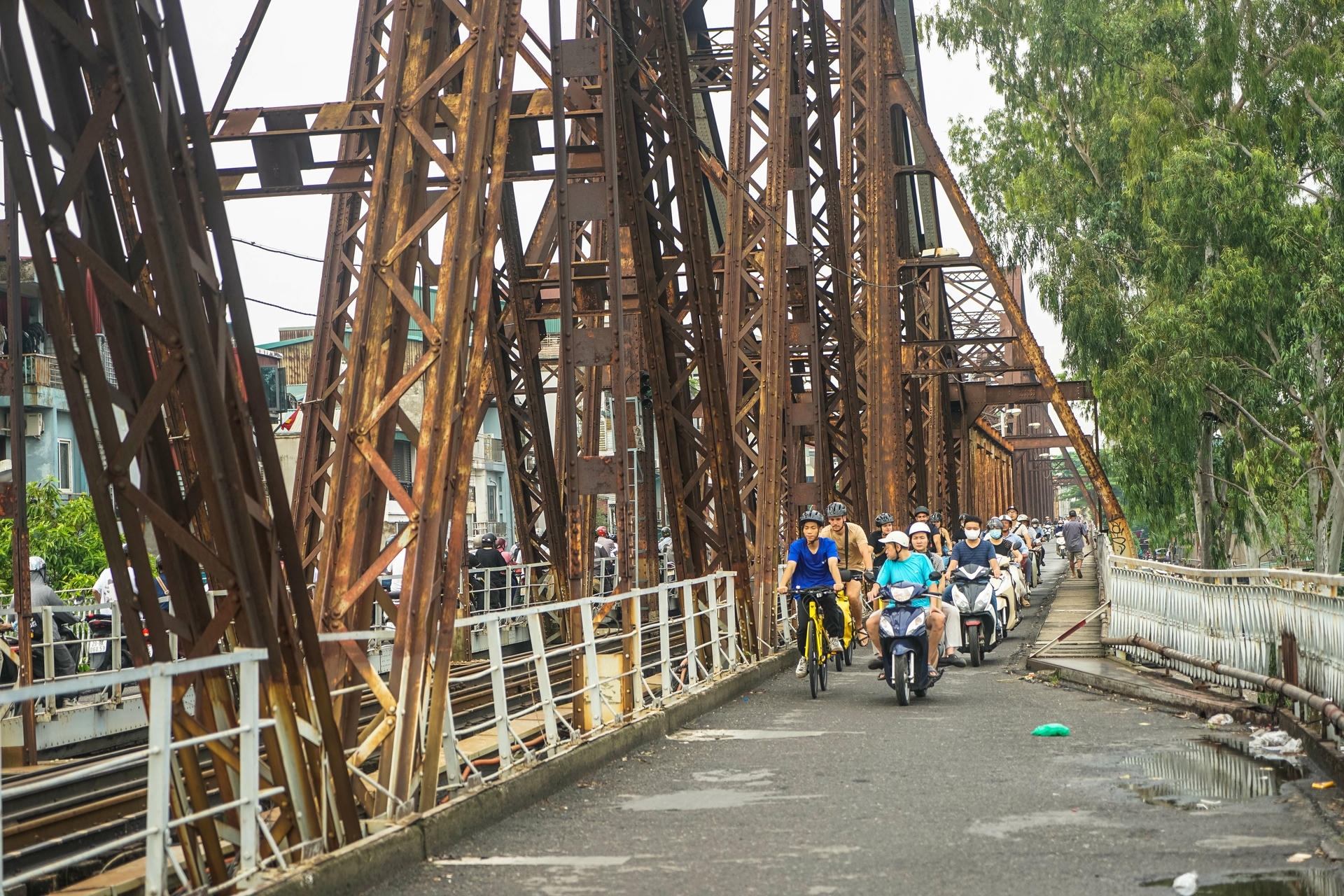
Traffic in Hanoi may look chaotic, but it moves in a slow and steady flow. Cars, scooters, and bicycles weave around each other with a kind of silent agreement. The key is to stay calm and predictable. Keep a steady speed, avoid sudden stops, and look ahead.
If you are cycling in the Old Quarter or city center, stay to the right side of the road and avoid riding in the middle. At intersections, always check both ways even if it looks clear. When stopping for a break or to take photos, pull over to the side and step off your bike completely.
2. Watch the weather
Hanoi’s weather can change quickly. From March to September, expect hot, humid days and sudden rain showers. Streets can get slippery, especially on concrete or tiled surfaces. Carry a light rain jacket or poncho, and wear sunglasses to protect your eyes from dust and sunlight.
If you plan to ride early in the morning or after sunset, make sure your bike has working lights at the front and back. A reflective vest or strap will also help you stay visible to cars and motorbikes.
If you’re planning your trip, check out our guide to the best time to visit Hanoi for smooth rides and perfect weather.
3. Renting a bike in Hanoi
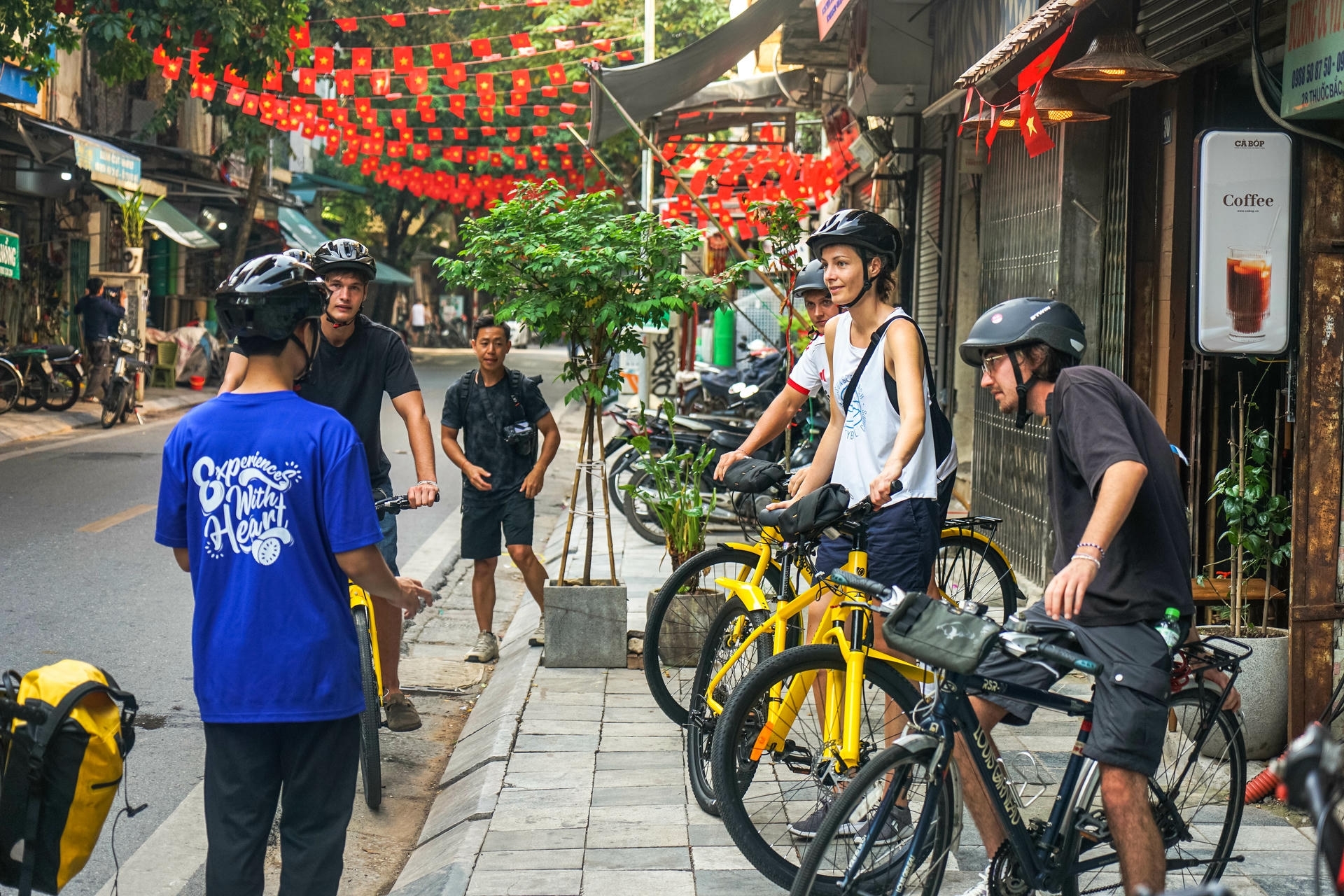
Renting a bicycle in Hanoi is not as common, and there are only a few shops that offer this service. Typically, renting a bicycle includes a helmet. Though not mandatory, wearing a helmet is strongly advised. Rental costs can range from around $5 for 2 hours to $15 for a full day, depending on the location and the quality of the bike.
Regardless of the rental cost, it’s crucial to ensure that the bicycle is in good working condition. Check the brakes, gears, and overall quality, especially if you plan on embarking on longer biking trips. For multi-day trips, verify the functionality of lights, and consider bringing electric lights, a tire repair kit, and a basic bicycle repair kit.
4. Road conditions
When cycling in Hanoi, you’ll find a mix of smooth roads, brick alleys, and countryside paths. Inside the city, expect potholes and tight corners. On the outskirts, especially near Long Biên Bridge or the Red River Delta, the paths can get muddy or uneven.
Wear closed shoes, bring water, and keep your phone charged with offline maps ready. If you plan to explore rural areas, go slowly and stay alert for motorbikes or animals crossing the road.
5. Staying hydrated and riding smart
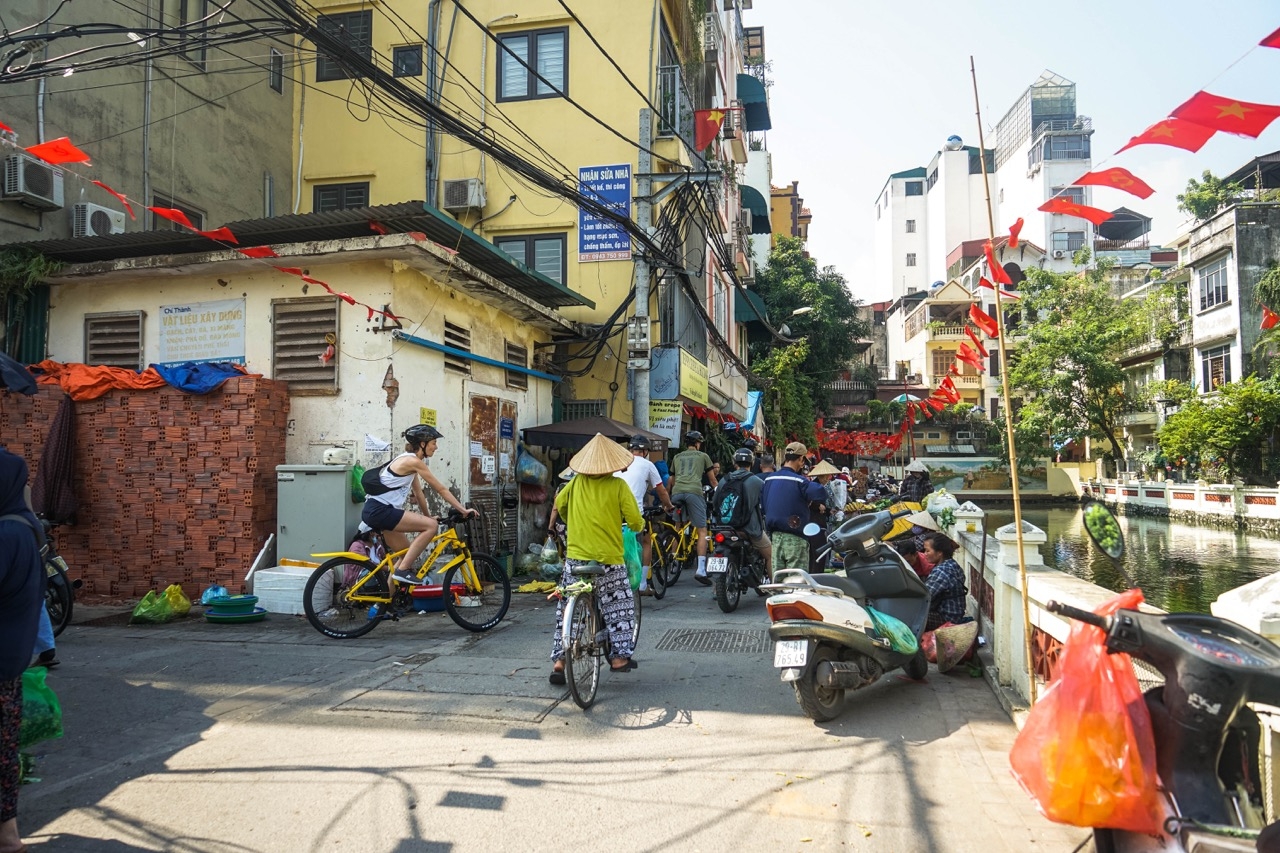
Hanoi can get hot and humid, even early in the day, so drink water often. Keep a reusable bottle and refill at cafés or convenience stores along your route. Avoid pushing yourself too hard, especially in midday heat. Take breaks in shaded areas, rest when you need to, and enjoy the ride.
If you’re exploring smaller alleys or rough paths, don’t hesitate to walk your bike through tricky spots. The slower pace lets you take in more of the city and stay safe at the same time.
Hanoi cycling routes
For those interested in self-guided cycling, there are several routes you can explore within Hanoi and its surrounding areas. Here are some example routes:
1. Old Quarter highlights
Route summary
Old Quarter → Hàng Bạc → Hàng Mã → Đồng Xuân Market → Ô Quan Chưởng Gate → St. Joseph’s Cathedral → Hoan Kiem Lake → Train Street
Practical info
- Duration: 2–3 hours
- Distance: Around 10 km
- Level: Beginner-friendly
- Best time: Early morning or late afternoon
- Terrain: Flat and easy to navigate
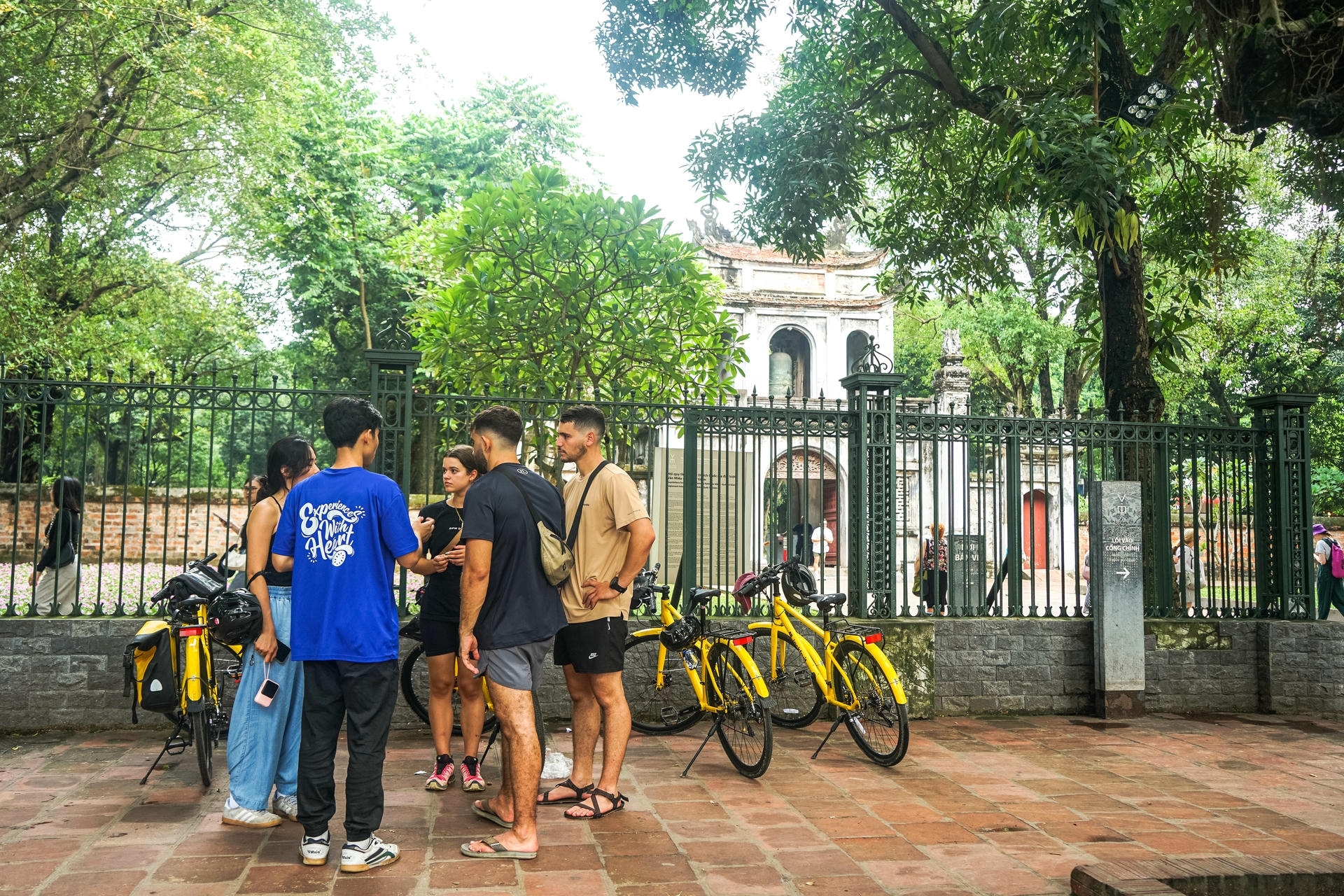
If you have time for one ride in Hanoi, start here. Hanoi’s Old Quarter is the city’s oldest neighborhood and still its liveliest. The streét twist and turn like a maze, each one with its own craft and character. Cruise along Hàng Bạc, once the home of silversmiths, then roll through Hàng Mã, bright with paper lanterns and festival colors.
At Đồng Xuân Market, you’ll see the Old Quarter at full speed, with vendors shouting prices, scooters balancing baskets of vegetables, and the smell of broth drifting from street stalls. A few minutes away, Ô Quan Chưởng Gate stands quietly at the edge of the chaos, the last gate from the old city walls that once surrounded Thăng Long.
From here, follow the narrow lanes south toward St. Joseph’s Cathedral. Its twin towers rise above the rooftops, and the cafés around it are perfect for a short break. Order an egg coffee or a cold lemon tea, watch people pass by, and you’ll feel how the city moves at its own calm pace beneath the noise.
End your ride at Hoan Kiem Lake or make one last detour to Hanoi Train Street, where cafés sit close enough to the tracks that you can feel the vibration as the train passes. Trains usually come around 3:20 PM, 7:00 PM, and 9:00 PM, though schedules sometimes shift, so it’s best to arrive early. Grab an egg coffee, find a seat, and wait. The moment when the train rushes past is always worth it.
And if you’re in the mood to ride a little farther but still want it to feel easy, join our Tour de Hanoi. We’ll take you from the Old Quarter to landmarks like the Ho Chi Minh Mausoleum, the Imperial Citadel of Thang Long, and the French Quarter, before looping back through hidden alleys that even locals forget exist. We make it like a day hanging out with local friends who know where to find the best lemon tea, the quietest backstreets, and the stories that never make it into guidebooks.
2. The West Lake loop
Route summary
Old Quarter → Ho Chi Minh Complex → Thanh Niên Street → Trấn Quốc Pagoda → Quán Thánh Temple → Trúc Bạch Lake → Yên Phụ Street (detour) → West Lake → Return to Old Quarter
Practical info
- Duration: 2–3 hours
- Distance: Around 17 km
- Level: Easy
- Best time: Early morning or sunset
- Terrain: Flat, smooth roads
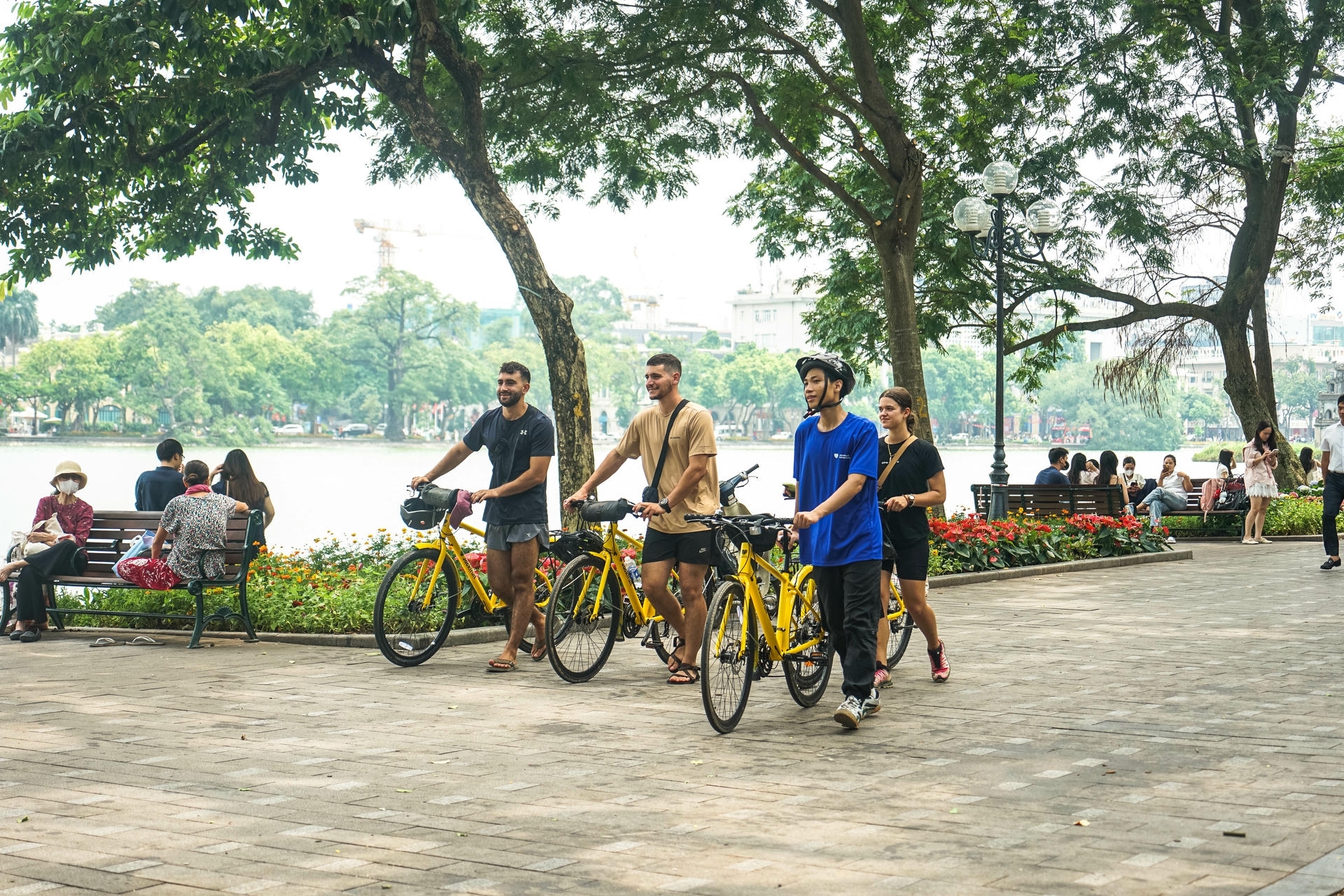
This is one of the rides locals love most when cycling in Hanoi. West Lake, or Hồ Tây, is where people come to slow down before or after a busy day. The road around the lake is wide and shaded, perfect for a relaxing ride that shows a greener, quieter side of the city.
Start from the Old Q uarter and head toward Ba Đình. You can pause outside the Ho Chi Minh Mausoleum to take in the size of the square and the surrounding colonial buildings. If you want to explore further, there’s a parking area nearby where you can leave your bike and walk to the Presidential Palace, One Pillar Pagoda, or the Ho Chi Minh Museum.
Continue north along Thanh Niên Street, the narrow tree-lined road that separates West Lake and Trúc Bạch Lake. Stop at Trấn Quốc Pagoda, the oldest Buddhist temple in Hanoi, sitting quietly on a small islet c onnected by a red bridge. Just across the street stands Quán Thánh Temple, known for its bronze statue of Trấn Vũ, the guardian of the North.
As you keep pedaling, the city softens. The view opens to the calm water of Trúc Bạch Lake, where locals gather for morning coffee or gentle exercise by the edge.
At the end of Thanh Niên, take a short detour into Yên Phụ Street. It’s one of Hanoi’s oldest neighborhoods, following the Red River dike. The road passes by brick homes, shrines, and street vendors selling lotus flowers or fresh fish from the river. It feels more like a small riverside village than part of the capital. From here, rejoin the lakeside road and continue around West Lake, where cafés, temples, and parks line the water.
Good spots to rest:
- Highlands Coffee – Trấn Quốc Pagoda
- Café 24 – Trúc Bạch Lake
- Maldives Coffee – 1A Quảng Bá
- ABC Coffee Roaster – 10 Quảng Khánh
- Two Chairs – 34 Yên Hoa
3. Sunset ride to Bac Cau area
Route summary
Old Quarter → Long Biên Bridge → Red River Dyke Road → Banana Island → Bắc Cầu Village → Nhật Tiến Bridge Viewpoint → Return to Old Quarter
Practical info
- Duration: 2–2.5 hours
- Distance: Around 12–15 km round trip
- Level: Easy
- Best time: 4:30–6:30 PM for sunset
- Terrain: Flat with a mix of paved and dirt paths
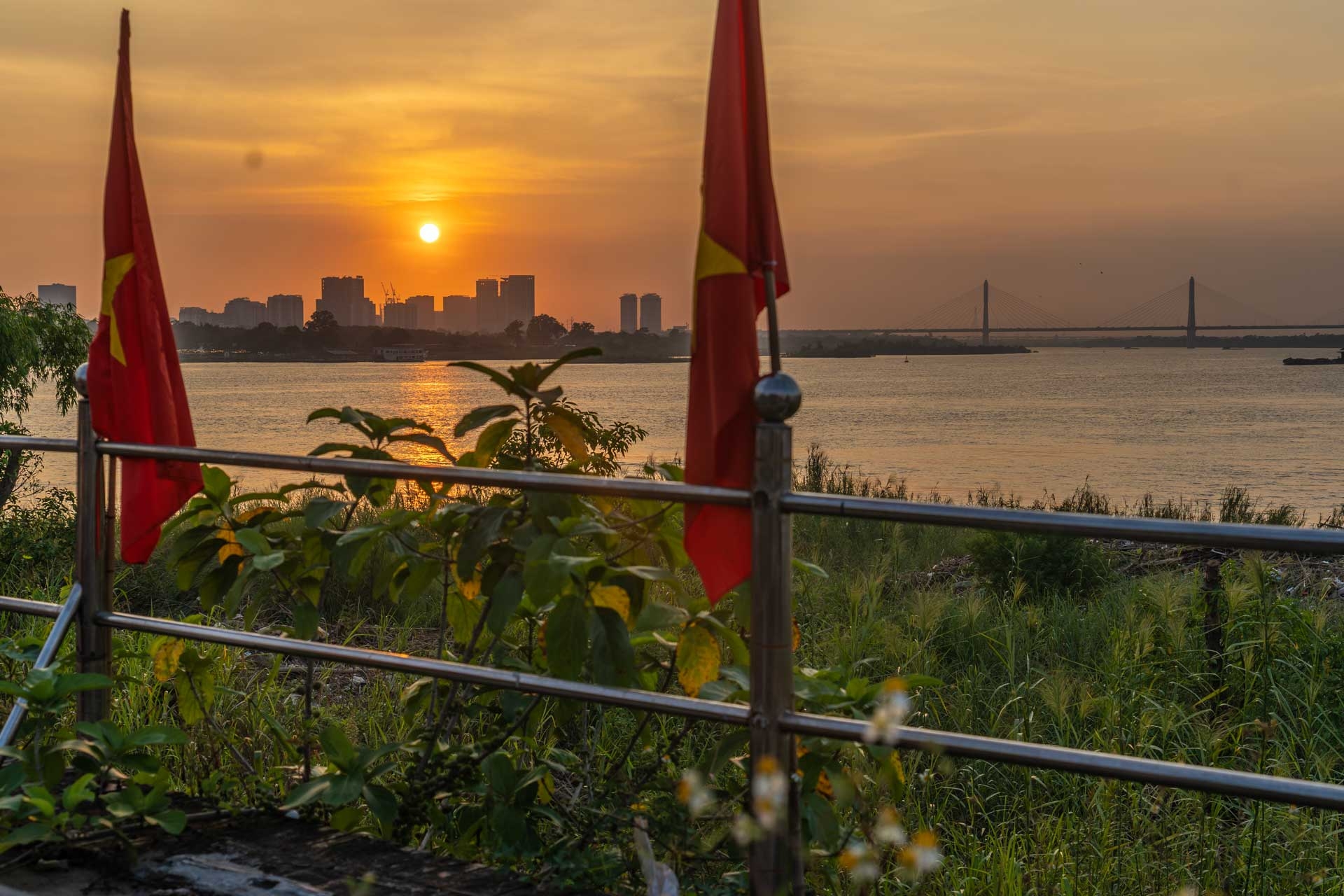
Watching the sunset is one of the simple joys of cycling in Hanoi, and few places capture it better than the Bắc Cầu area. While many head to West Lake or Long Biên Bridge for the view, this route takes you a little farther north to where the Red River glows quietly under the evening light.
The ride starts from the Old Quarter and crosses Long Bien Bridge, where trains and motorbikes still share the old steel frame. Once across, follow the dyke road along the river. The noise fades as the air turns cooler, carrying the smell of soil and burning wood from small homes below.
Turn toward Banana Island and continue north into Bắc Cầu Village, a small riverside community that feels untouched by the city rush. Here, locals sit under banyan trees sipping tea, fishermen cast their lines, and artists paint in quiet studios hidden between gardens. The light softens as the sun begins to dip behind Hanoi’s skyline in the distance.
Continue riding north until you reach Nhật Tiến Bridge, where a small temple overlooks the river. This is one of Hanoi’s best hidden sunset spots. The water turns gold, boats drift by, and the sky fades from orange to soft pink. You can rest at a small drink stall nearby or simply sit by the railing and take in the view before cycling back toward the city.
4. Countryside ride to Co Loa Citadel
Route Summary
Old Quarter → Long Biên Bridge → Red River Countryside → Mach Tràng Village → Cổ Loa Ancient Citadel → Duong River Embankment → Return to Hanoi
Practical Info
- Duration: 5–6 hours
- Distance: Around 30–35 km
- Level: Beginner to Moderate
- Best time: Morning to early afternoon
- Terrain: Mostly flat
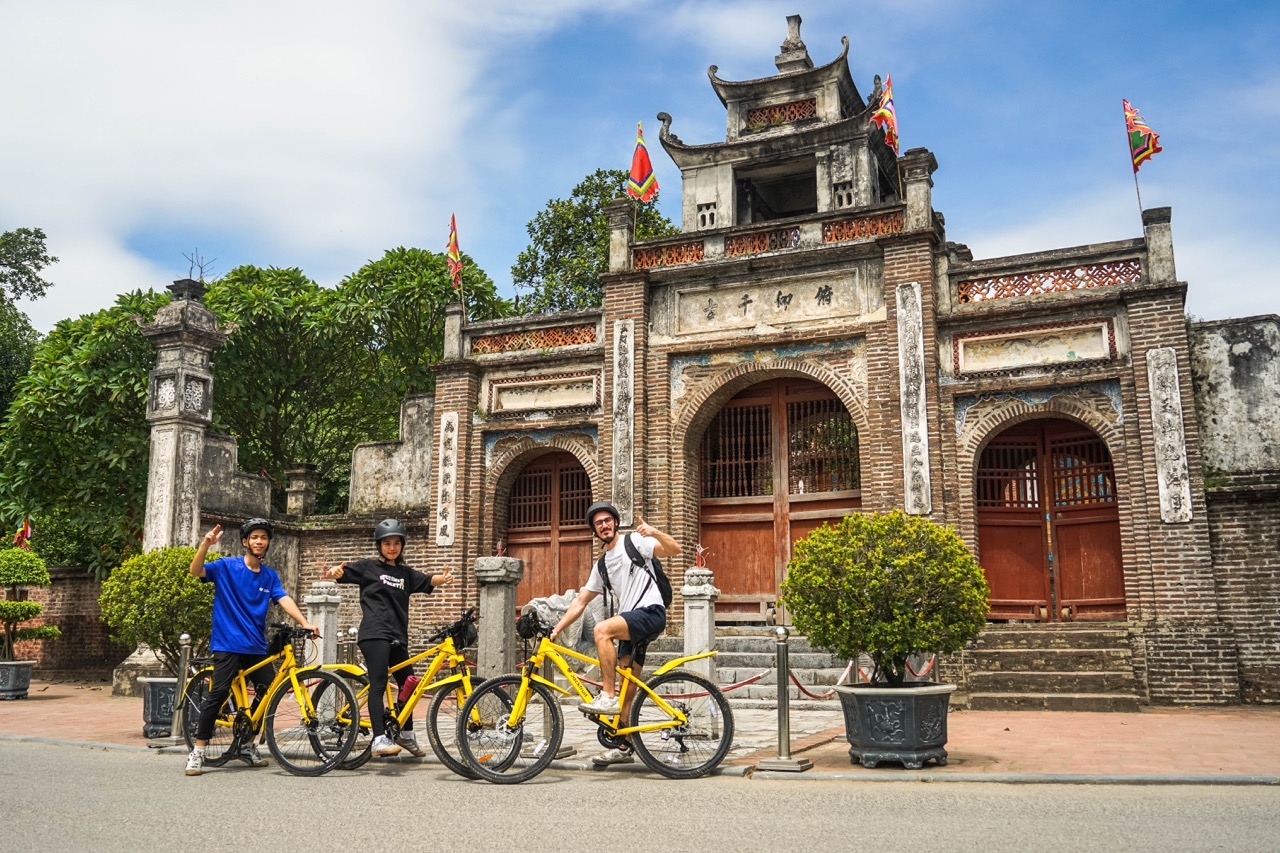
This route gives your legs a little challenge but rewards you with peace and open air. It’s one of the best countryside routes for cycling in Hanoi, especially if you want to see where the city’s story first began.
The destination is Cổ Loa Citadel, Vietnam’s first capital built more than two thousand years ago. Its spiral-shaped walls still mark the outline of the old kingdom, surrounded by temples, ponds, and quiet farming villages. The place carries both history and calm, making it a ride worth taking slow.
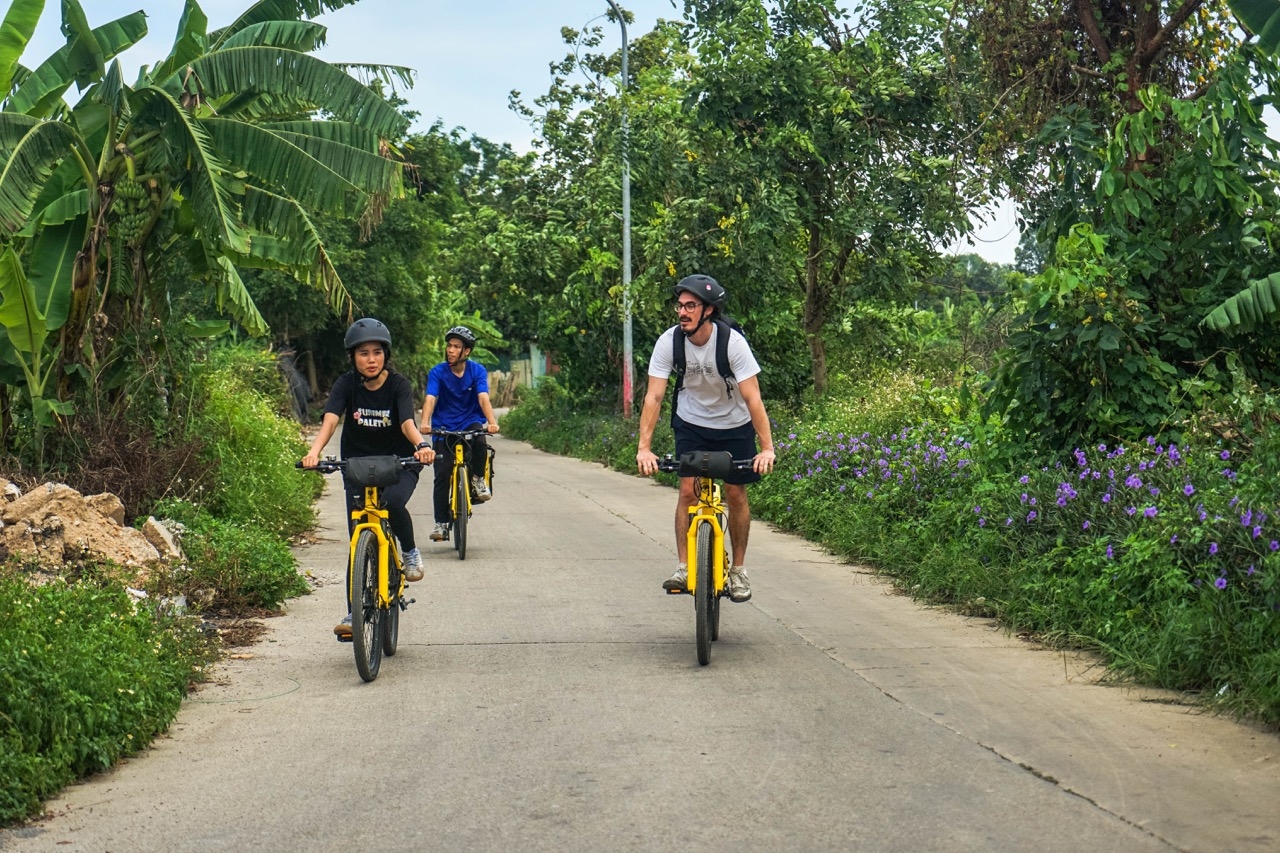
You’ll start from the Old Quarter and cross Long Biên Bridge, leaving behind the city’s noise as you enter the Red River countryside. The road winds through open rice fields and small hamlets where life moves slowly. Around Mạch Tràng Village, you can stop to see the place known for its traditional noodle craft, said to have once served the ancient king himself.
Once you leave the city, the streets get quieter, so it’s best to check your bike carefully and keep the contact number of the rental shop with you. The ride is long but steady, and every turn opens a new view of the river, the fields, and the distant citadel waiting at the end.
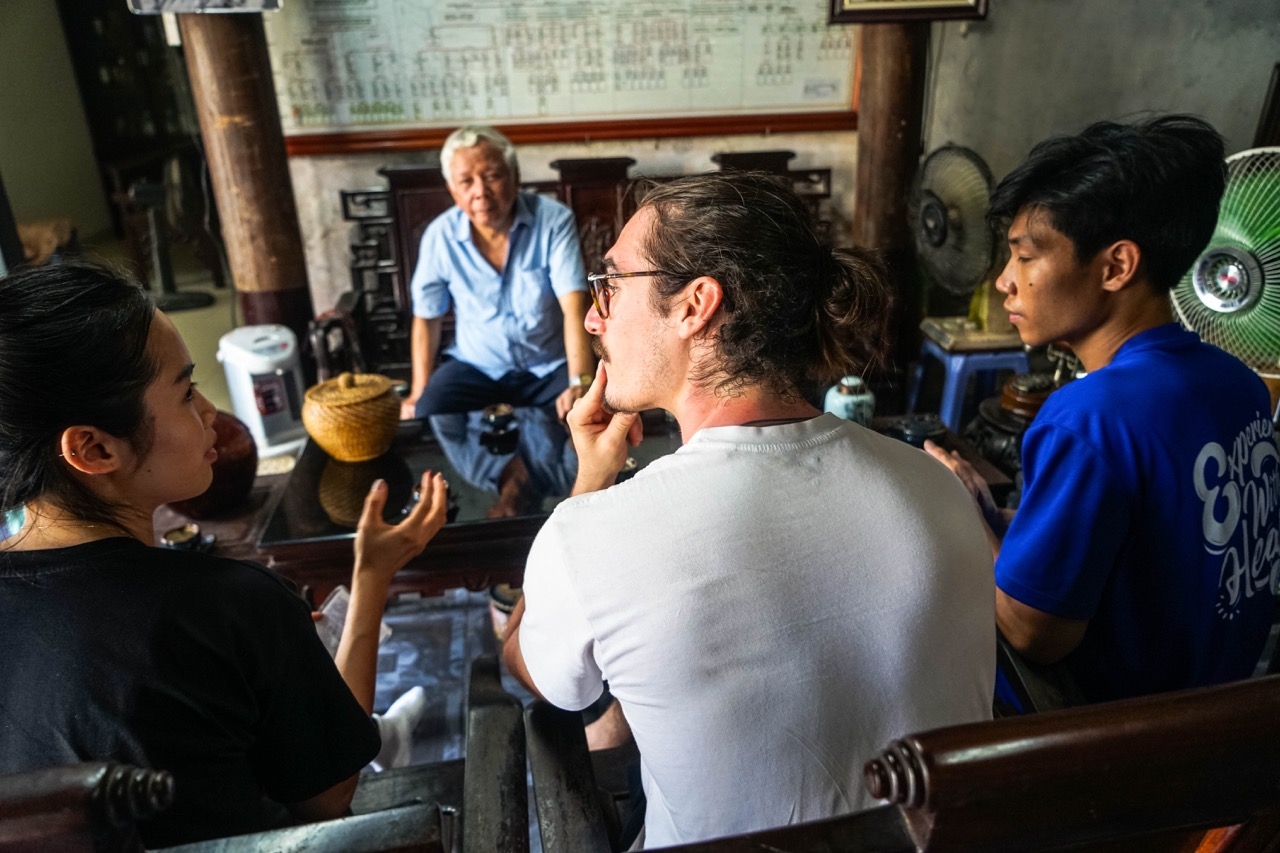
If you want to take the experience a little further, our Ride to the Lost Kingdom tour includes a home-cooked meal with a local family near Cổ Loa. You’ll share simple dishes, hear family stories, and see how daily life unfolds in the countryside. The road there can be dusty and the sun can burn a little, but that’s part of what makes it real. What stays with you isn’t the distance, but the people, the stories, and the quiet beauty along the way.
5. Bat Trang & Kim Lan ceramic village ride
Route summary
Old Quarter → Long Biên Bridge → Red River Countryside → Bát Tràng Ceramic Village → Kim Lan Ceramic Village → Return to Hanoi
Practical info
- Duration: Full day (around 6 hours including stops)
- Distance: About 25–30 km round trip
- Level: Beginner-friendly
- Best time: Morning to late afternoon
- Terrain: Flat country side roads
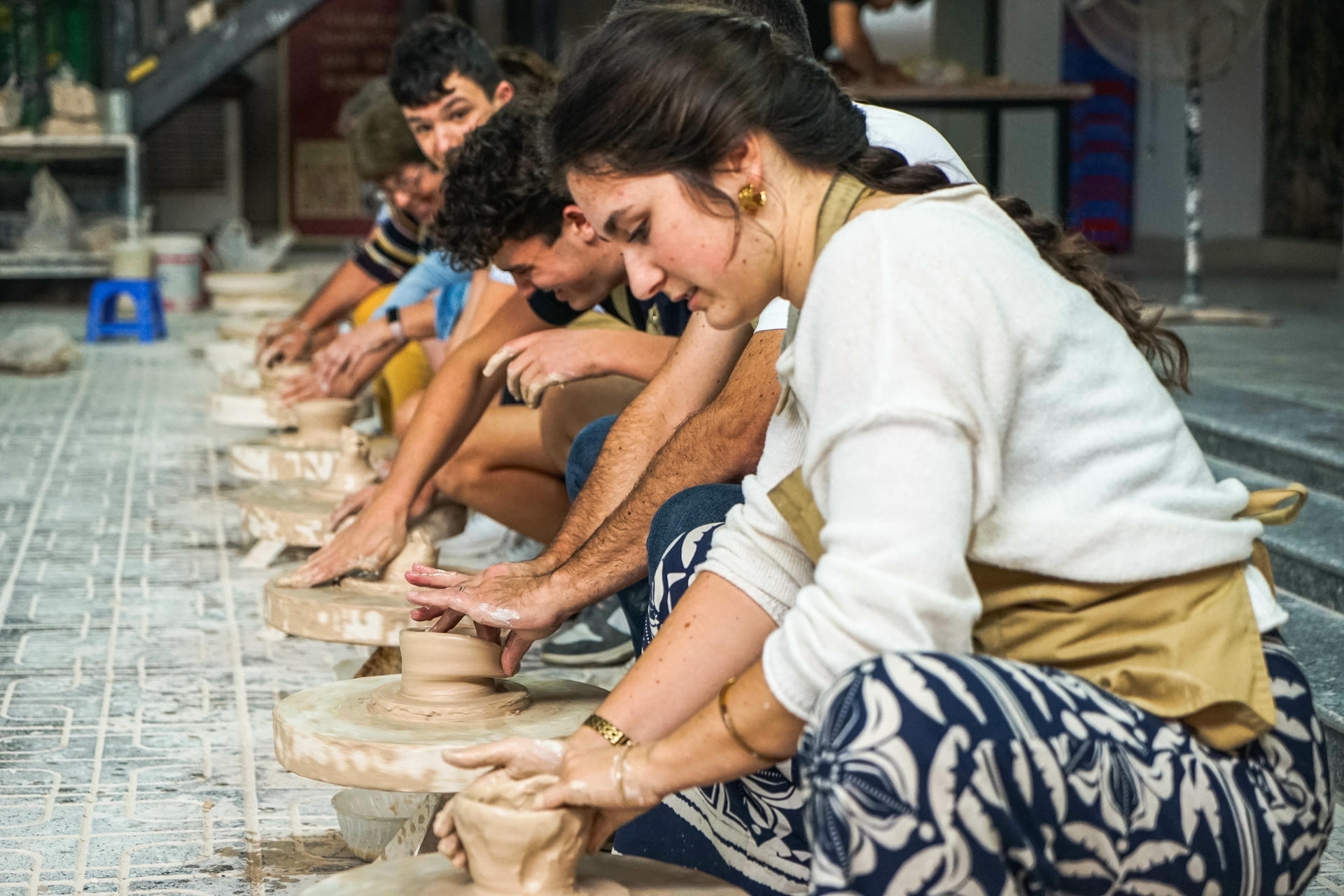
Among Hanoi’s many craft villages, Bát Tràng is the best known and one of the most rewarding to visit by bike. For more than seven centuries, local families have shaped the alluvial clay of the Red River into bowls, jars, and fine porcelain that travel across Vietnam. The ride itself is part of the experience, following quiet river paths beyond Long Biên Bridge, where the sound of traffic fades into rustling leaves and distant boat horns.
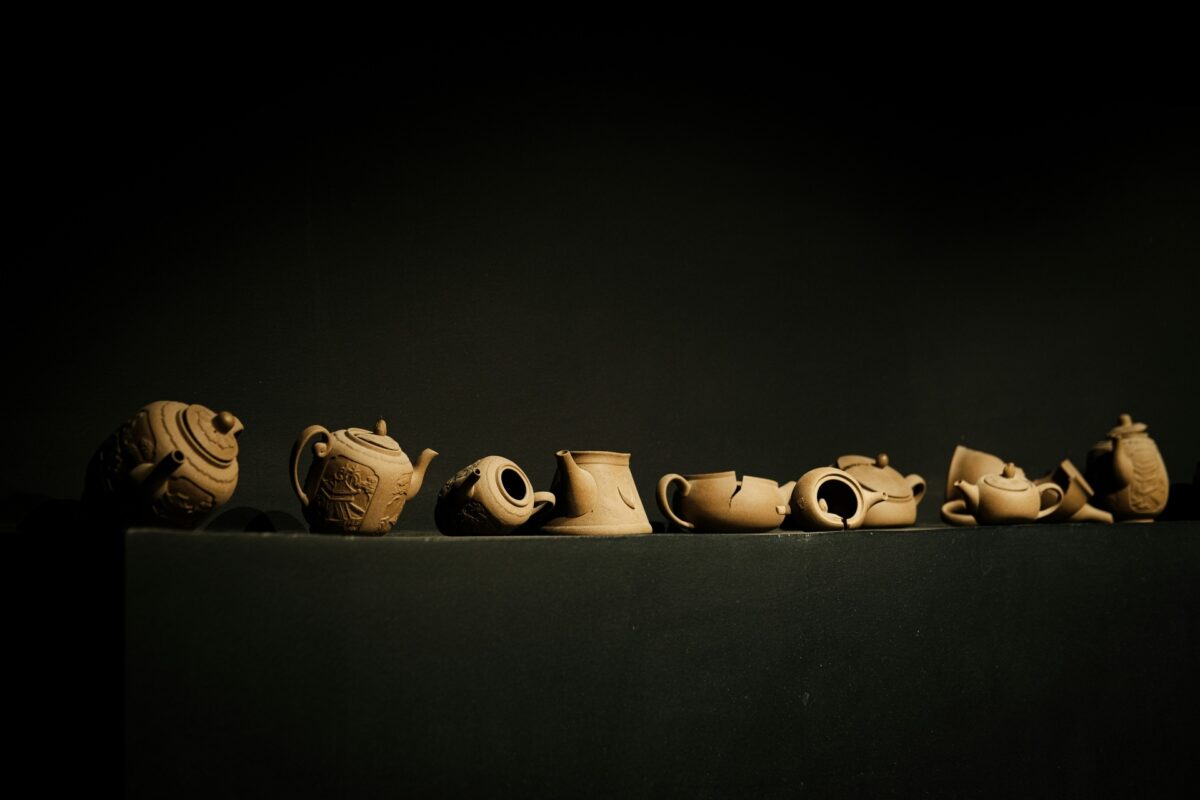
When you arrive, wander through Bát Tràng’s maze-like lanes filled with pottery kilns, small shops, and workshops. You can try molding a clay cup, paint your own bowl, or watch the artisans working with techniques that have hardly changed through generations. The main market also sells a wide range of ceramics, from daily wares to intricate decorative pieces, all made locally.
A short ride away, across the Bắc Hưng Hải Canal, lies Kim Lan, a village even older than Bát Tràng. Archaeologists trace its ceramic tradition back more than a thousand years, when local potters made household wares for the royal capital of Thăng Long. Today, Kim Lan is quieter, its lanes lined with brick houses, small shrines, and open courtyards where pottery cools in the sun.
Compared to Bát Tràng’s colorful market, Kim Lan feels simpler and more grounded. The pottery here is known for its rustic beauty — plain surfaces, balanced shapes, and a gentle glow achieved by firing at nearly 1,300 degrees Celsius. If you visit the Kim Lan Pottery Cooperative or the Ancient Kiln Site, you can watch the firing process and talk with the artisans who still use traditional methods. Some of them are happy to let you try pouring clay into molds or painting a small piece.
Expect this to be a slow, easy day trip. The distance is short, but both villages deserve time to wander, watch, and talk with the people who keep these crafts alive. Along the way, you’ll see how the Red River continues to nurture not only the land but also the heritage of the people who live beside it.
6. Hidden stories ride: Hanoi off the beaten path
Route summary
Old Quarter → B52 Lake → Last Emperor’s Mansion → Black Market → Wartime Apartment → Hidden Alleys & Local Markets → Long Biên Bridge → Return to Old Quarter
Practical Info
- Duration: 3–4 hours
- Distance: Around 16–18 km
- Level: Beginner-friendly
- Best time: Morning or late afternoon
- Terrain: Mostly flat, with narrow local streets
This is a route you could try on your own, but you’d never really know what you were passing by. Do you know why? Because behind every turn, every old gate, and every crack in the wall is a story that only locals remember.
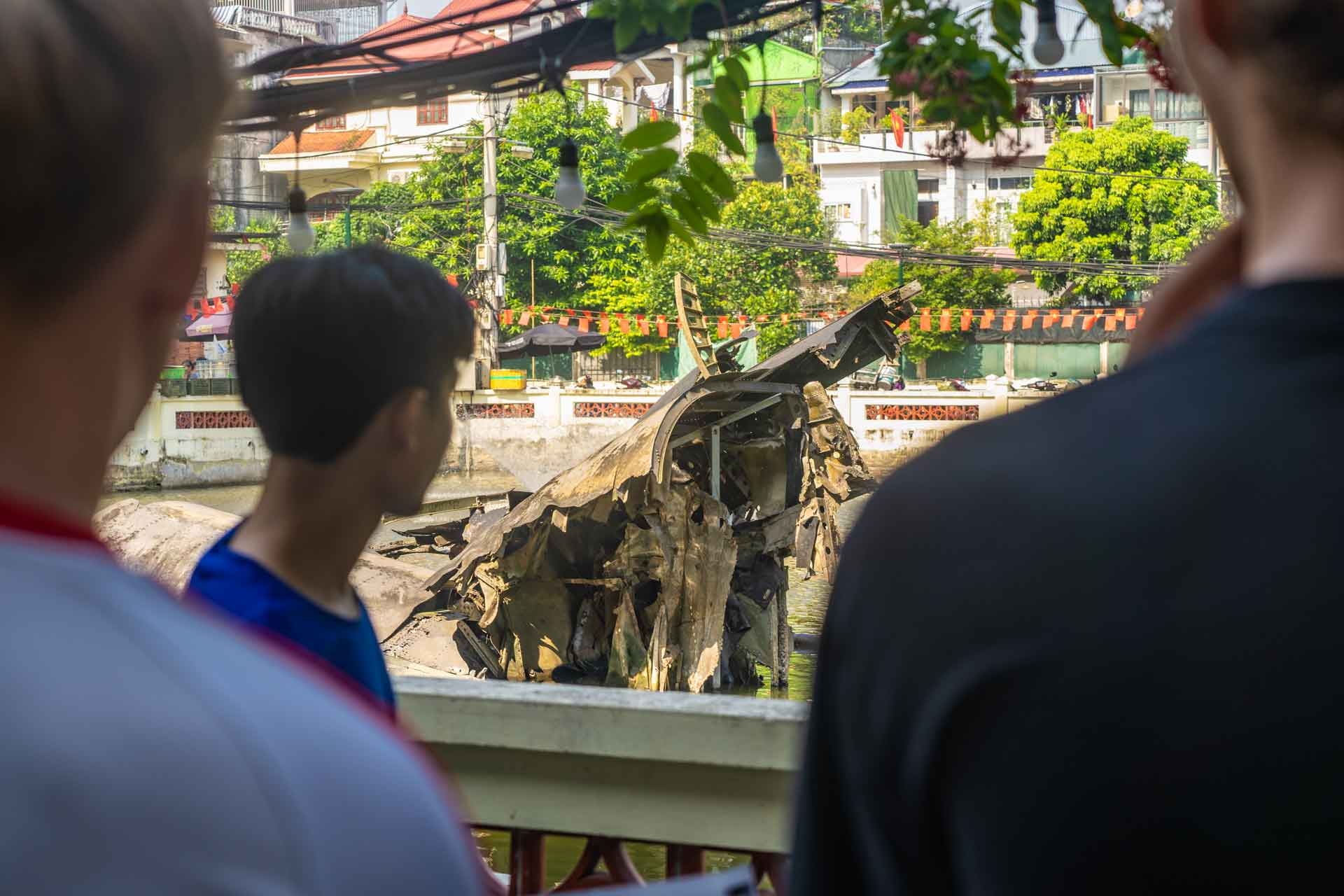
The ride begins in the Old Quarter and heads toward B52 Lake, where the wreck of a bomber still rests in the water. It’s a quiet place now, with small coffee shops nearby where locals sit and talk as if the lake has always been part of daily life.
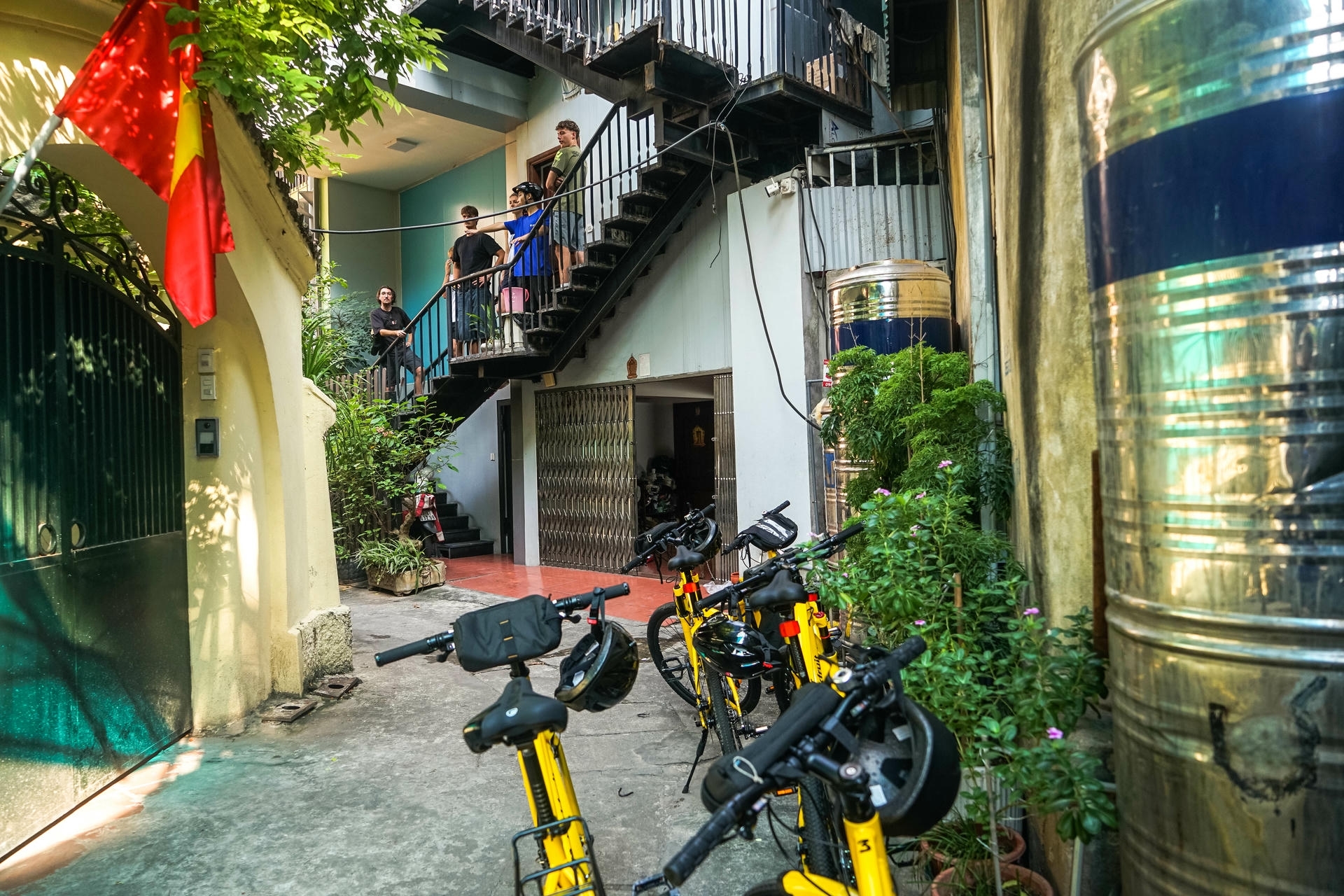
A few streets away is the last emperor’s mansion, or Bao Dai mansion, hidden behind narrow alleys and modern homes. The old yellow house stands quietly, surrounded by families who have lived there for generations. It’s easy to miss if you don’t know where to look.
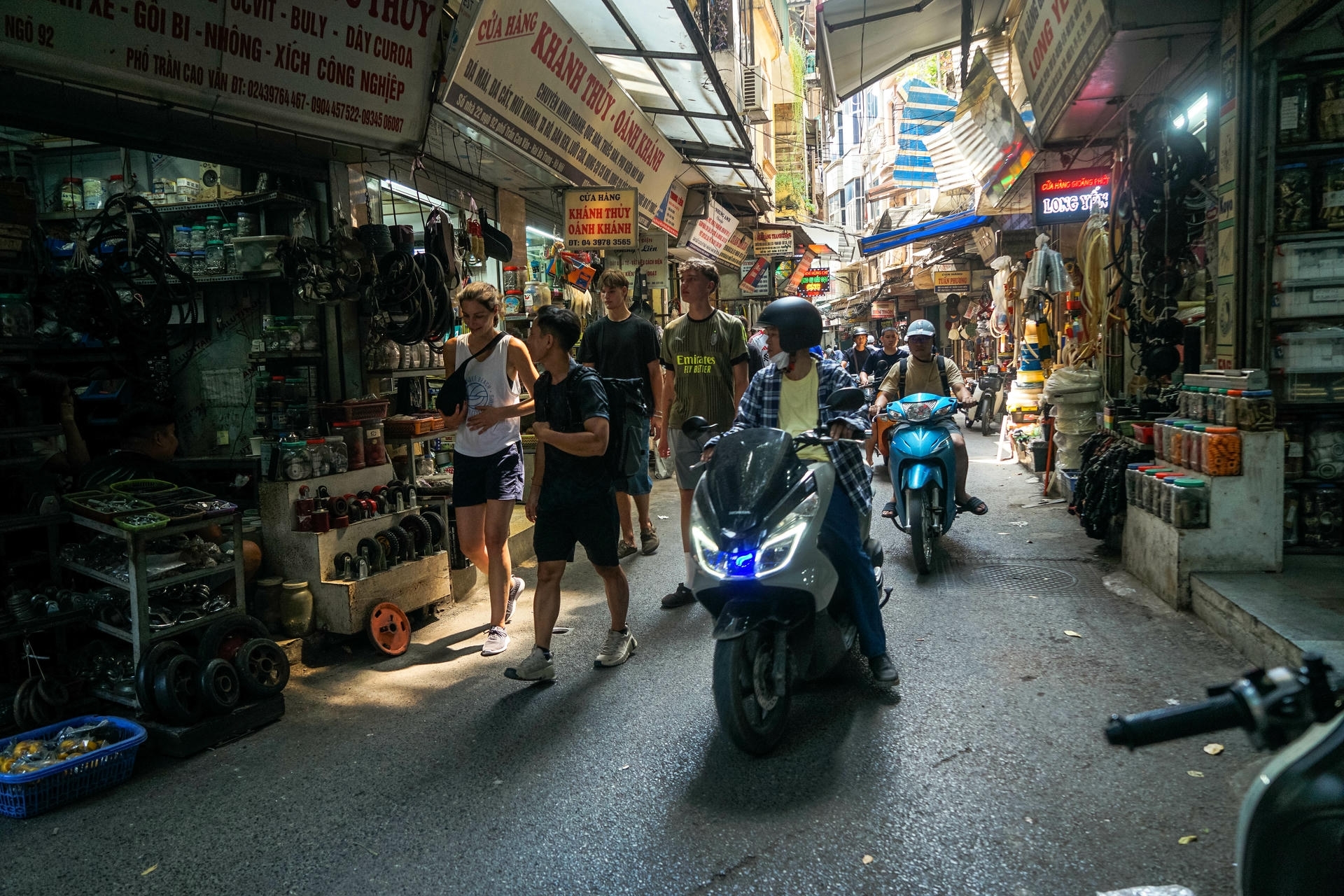
The next stop takes you to what used to be Hanoi’s black market, once the busiest place in the city for trading secondhand goods and spare parts. It’s not chaotic anymore, but you can still feel the same energy in the tool shops, old repair stalls, and narrow lanes where life keeps humming. Inside one of the apartment blocks here, there are still traces of wartime Hanoi. During the 1972 bombings, families took shelter in these stairwells, and some of the older residents still remember those nights or the stories passed down to them.
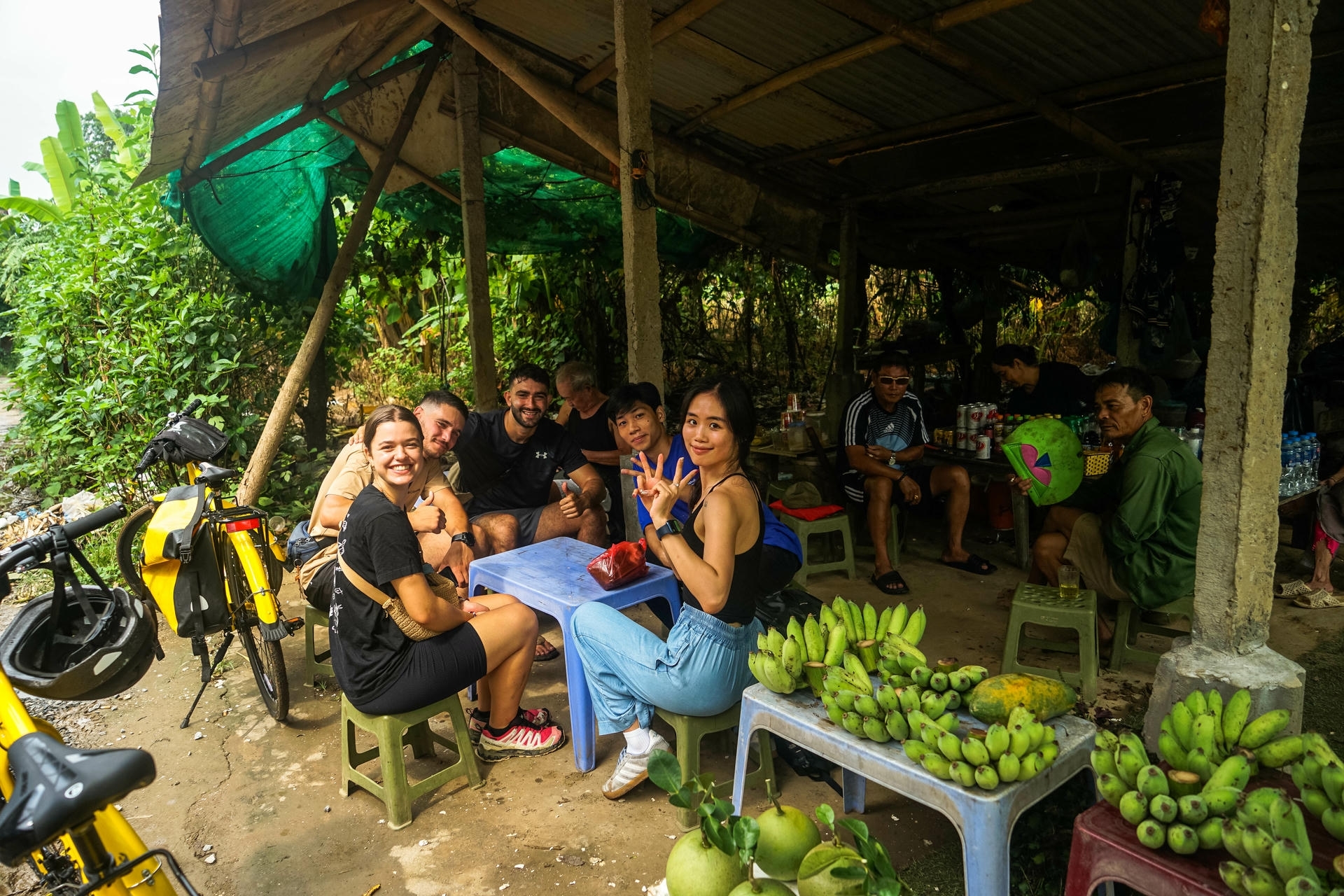
The route ends at Long Biên Bridge, where the Red River stretches below. You can roll down to Banana Island for a short break, where farmers grow vegetables and a small stall sells bananas and bottled drinks. It’s the kind of quiet spot that feels far away from the city, even though it’s just under the bridge.
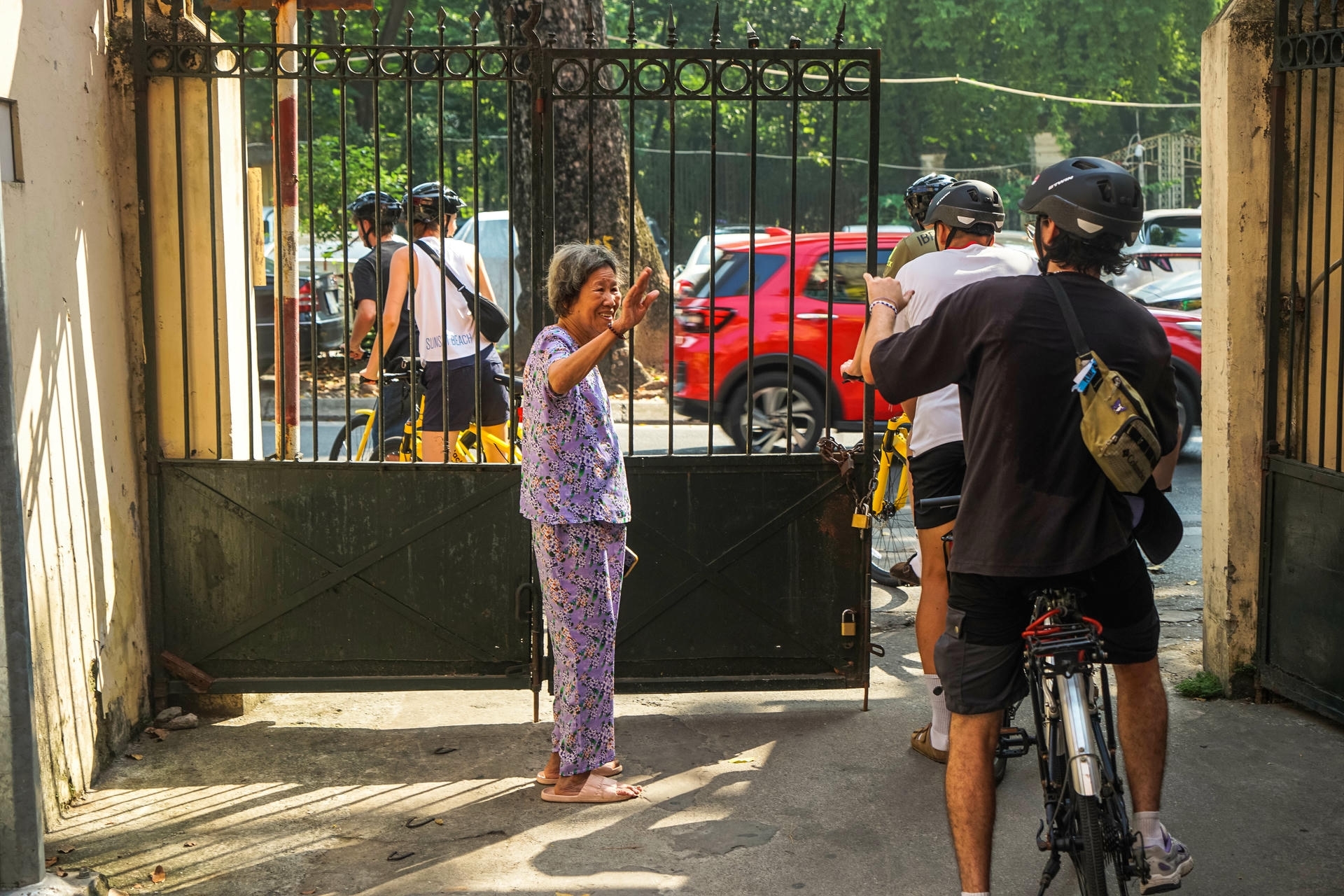
And do you know where to find all of this? It’s in our Hanoi Off the Beaten Path ride. We know where to go, who to talk to, and how to listen. Some stories come from planned stops, others from random conversations along the way, and together they show a Hanoi that few ever get to know.
Is cycling in Hanoi dangerous?
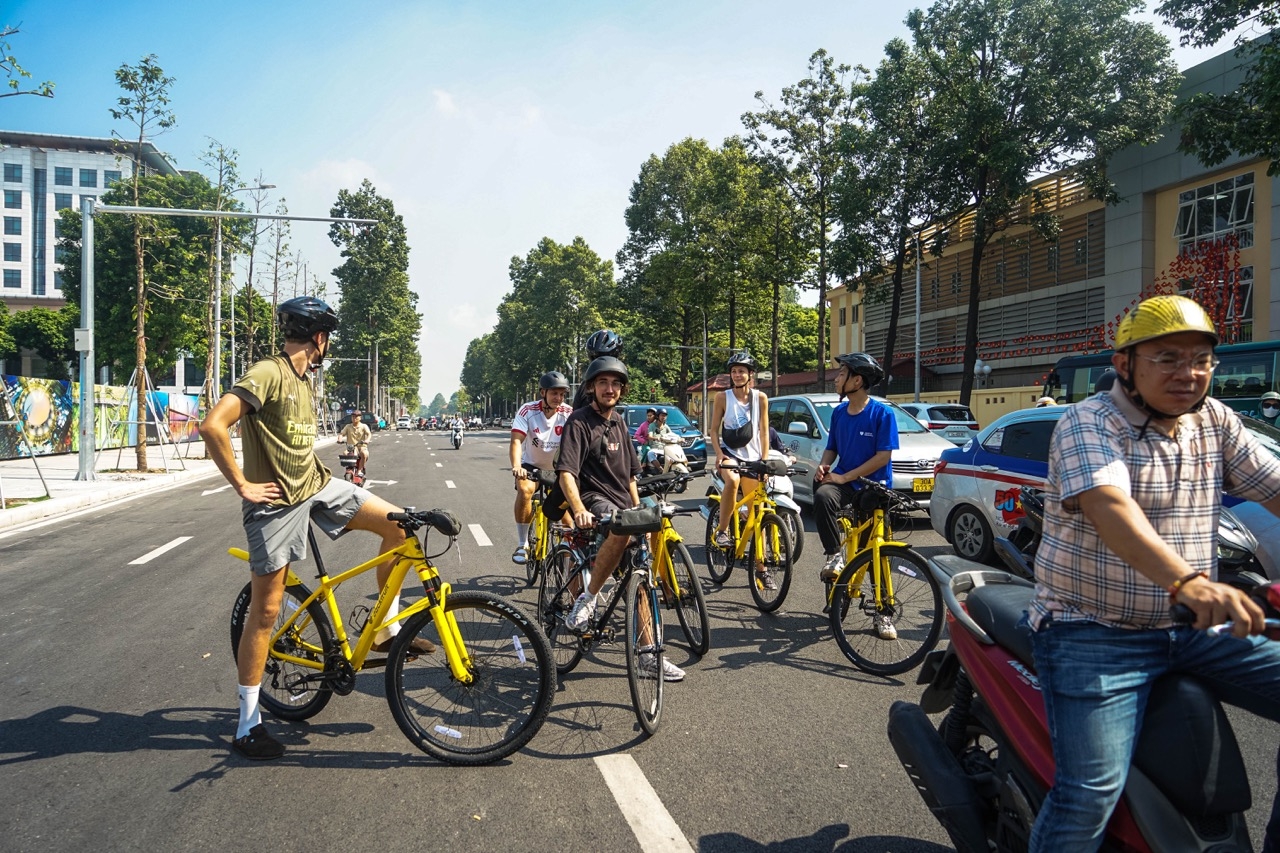
At first glance, cycling in Hanoi might seem intimidating. The traffic moves in every direction, scooters flow like rivers, and car horns echo from every corner. But once you join the rhythm, it starts to make sense. The movement follows its own quiet order, slow and steady, where everyone somehow understands each other.
The key is to stay calm and predictable. Keep your speed even, look ahead, and avoid stopping suddenly. Hanoi’s drivers are used to sharing the road, and they will adjust if they can read your movement. Stay to the right, give way at intersections, and pull over completely when you want to stop for photos or a short break.
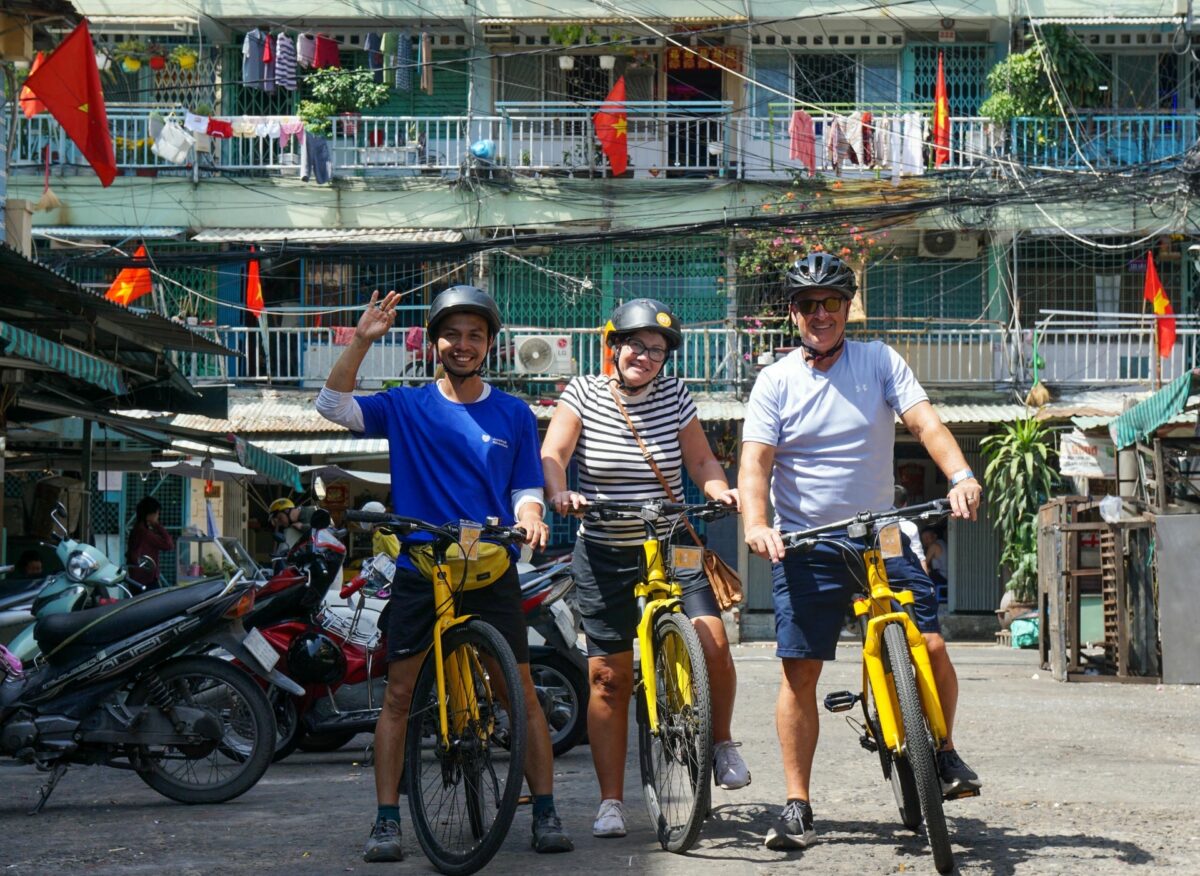
If you are new to the city, joining a Hanoi bike tour is the best way to start. Riding with local guides removes the stress of navigation and lets you focus on what really matters: the people, the scenery, and the feeling of being part of the city instead of just passing through it.
Most guided tours keep the pace slow and choose routes with light traffic, mixing quiet alleys with lakeside roads. You will have plenty of time to rest, take photos, and ask questions along the way. With a helmet, a good bike, and a bit of awareness, cycling in Hanoi is not only safe but also one of the most enjoyable ways to explore the city.
Why should your try cycling in Hanoi?
Whether you are pedaling around the Old Quarter, circling West Lake, or crossing Long Biên Bridge into the countryside, cycling in Hanoi offers something unique. It lets you see the city up close, hear its sounds, and feel part of its rhythm.
A Hanoi bike tour with Jackfruit Adventure is more than sightseeing. It is a day spent connecting with locals, learning stories, and discovering small moments that remind you why Hanoi feels like home. So hop on a yellow bike, take a deep breath, and see the city the way we do — slow, curious, and full of life.