

Table of Contents
I still remember my parents taking me to Bat Trang Pottery Village when I was 8 years old. The sound of pottery wheels spinning, the earthy smell of wet clay, and the sight of skilled artisans shaping beautiful ceramics left an imprint on my soul that never faded.
Bat Trang isn’t just a tourist attraction to me – it’s part of our heritage. Located about 13 kilometers southeast of Hanoi’s Old Quarter, this 700-year-old ceramic village has been producing some of Vietnam’s finest pottery since the 14th century. If you’re planning to visit Bat Trang ceramic village in 2025, I want to share everything I know as someone who grew up watching this craft evolve, who knows the best workshops, the quietest corners, and the stories that don’t make it into guidebooks.
This guide will walk you through every aspect of visiting Bat Trang Pottery Village – from its rich history to practical tips on getting there, what to do, where to eat, and how to bring home authentic pieces that will last a lifetime.
Looking Back at the 500-Year History of Bat Trang Pottery Village
Let me start with what makes Bat Trang Pottery Village so special beyond just being a place that makes bowls and vases.
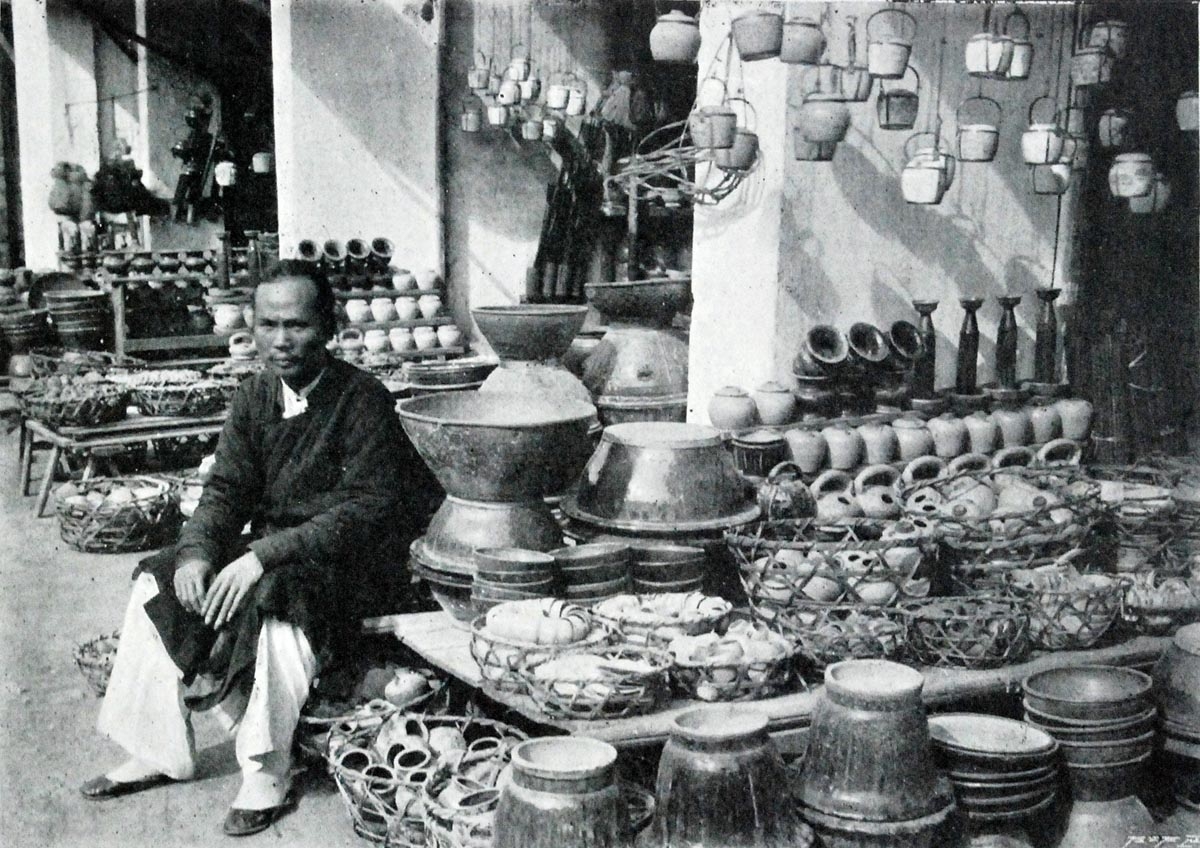
The village dates back to the Ly Dynasty (1010-1225), though it truly flourished during the 15th century under the Le Dynasty. My grandfather used to tell stories passed down through generations about how Bat Trang potters supplied the royal court in Thang Long (old Hanoi) with exquisite ceramics for daily use and ceremonial purposes.
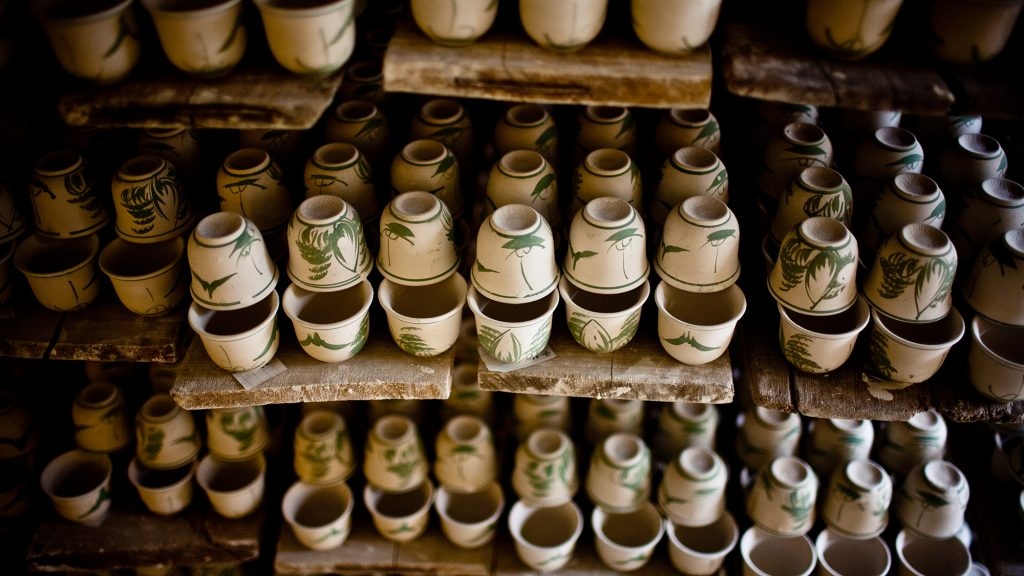
What sets Bat Trang apart from other ceramic villages in Vietnam is the unique white clay found along the Red River banks. This clay, combined with centuries of refined techniques, produces pottery with distinctive durability and aesthetic appeal. The traditional cobalt blue patterns you’ll see everywhere – those intricate floral motifs and geometric designs – have been painted the same way for generations.
During the French colonial period, Bat Trang adapted by creating Western-style tableware while maintaining traditional Vietnamese designs. When I walk through the village today, I see this beautiful fusion everywhere – teapots that blend French elegance with Vietnamese sensibilities, decorative plates that marry traditional patterns with modern minimalism.
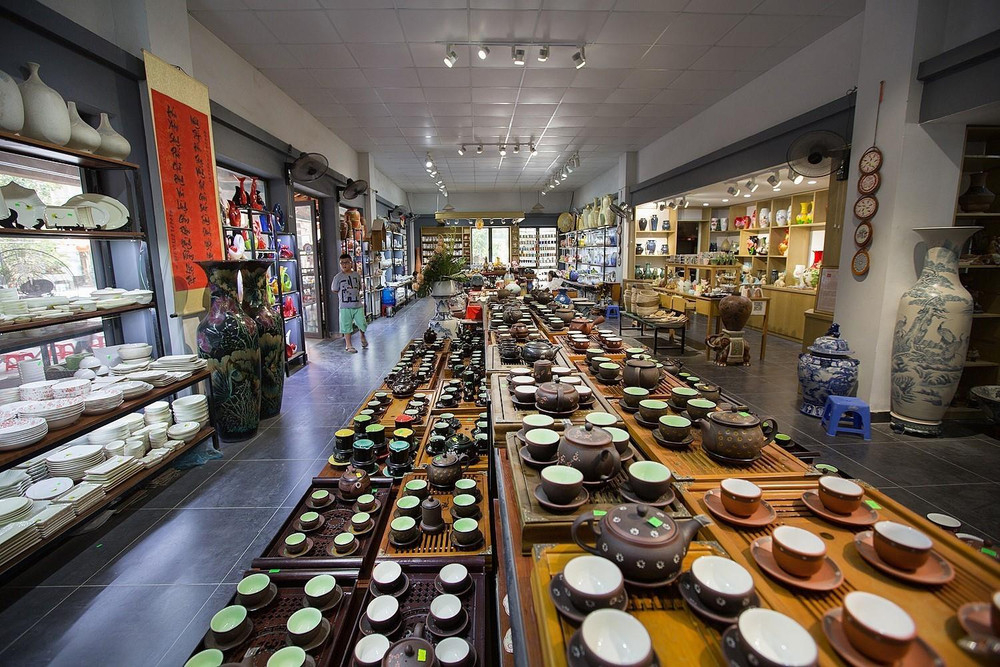
In recent years, the village has transformed into a living museum and creative hub. Young artisans return from art schools in Hanoi to experiment with contemporary designs while honoring ancestral techniques. This evolution makes Bat Trang Pottery Village more vibrant than ever in 2025.
Where is Bat Trang Pottery Village?
- Address: Bát Tràng Commune, Gia Lâm District, Hanoi, Vietnam.
- Opening hours: 8:00 AM – 6:00 PM daily
It is FREE to enter the village. You can walk the ancient alleys, browse the main ceramic market, and look into the workshops without paying any entrance fee.

How to Get to Bat Trang Pottery Village from Hanoi
Getting to Bat Trang Pottery Village is straightforward once you know your options. As someone who travels this route constantly, I can break down the best methods for you.
By Motorbike
This is my personal favorite way to reach Bat Trang. If you’re comfortable riding a motorbike in Vietnamese traffic, rent one in Hanoi’s Old Quarter (costs around 150,000 – 200,000 VND per day ($6-8 USD). The journey takes 30 – 45 minutes depending on traffic.
From downtown Hanoi, head towards Chuong Duong Bridge or Vinh Tuy Bridge, cross it, then follow signs toward Gia Lam, or Long Bien – Xuan Quan dike road. The ride itself offers glimpses of rural life just outside Hanoi – rice paddies, small villages, and the Red River flowing alongside the road.
By Taxi or Grab/Xanh SM
The most convenient option for first-time visitors is booking a Grab car or traditional taxi. From Hanoi center, expect to pay 150,000 – 200,000 VND one way ($6-8 USD). The ride takes approximately 30 – 40 minutes based on the traffic situation.
Insider Tip: I always recommend booking a return trip or keeping the driver’s number as finding taxis in Bat Trang can be challenging during off-peak hours.
By Bus

Bus number 47A departs from Long Bien Bus Station and goes directly to Bat Trang, there’s also bus number 47B, 52B, 69. It’s the most budget-friendly option at about 10,000 VND ($0.38 USD) per person. You can easily check the routes via BusMap Web, just type the bus number then it will show you the whole route. However, it’s also the slowest, taking up to 90 minutes with multiple stops. Honestly, I only recommend this if you’re traveling on a tight budget or want a very local experience.
Best Time to Visit Bat Trang Pottery Village
I suggest arriving between 8.00 – 9.00 AM or after 2.00 PM, but remember it opens from 8.00 AM – 6.00 PM. Mid-morning to early afternoon gets busy with tour groups, making workshops crowded and harder to navigate. Early morning offers cooler temperatures and calmer streets – perfect for photography and genuine interactions with local artisans.
What to Do at Bat Trang Pottery Village
Now, let’s talk about what makes a visit to Bat Trang Pottery Village truly memorable. This isn’t a place where you just walk around for twenty minutes and leave. If you want to experience it properly, plan to spend at least 3–4 hours here.
1. Join a Pottery-Making Workshop: Get Your Hands Clay-Covered
This is absolutely essential. I’ve watched countless visitors light up when they feel wet clay spinning beneath their fingers for the first time. Most sessions last 45 – 90 minutes. You’ll sit at a traditional kick wheel or electric pottery wheel with a patient instructor guiding you.
My favorite workshops you should try:
- “I am an Artisan” (Tôi làm nghệ nhân) at Vietnamese Craft Village Heritage Center: Around 130,000 VND/adult ($5.20 USD) and 50,000 VND/child (under 1.1m) ($2 USD) (includes pottery making and taking your creation home).
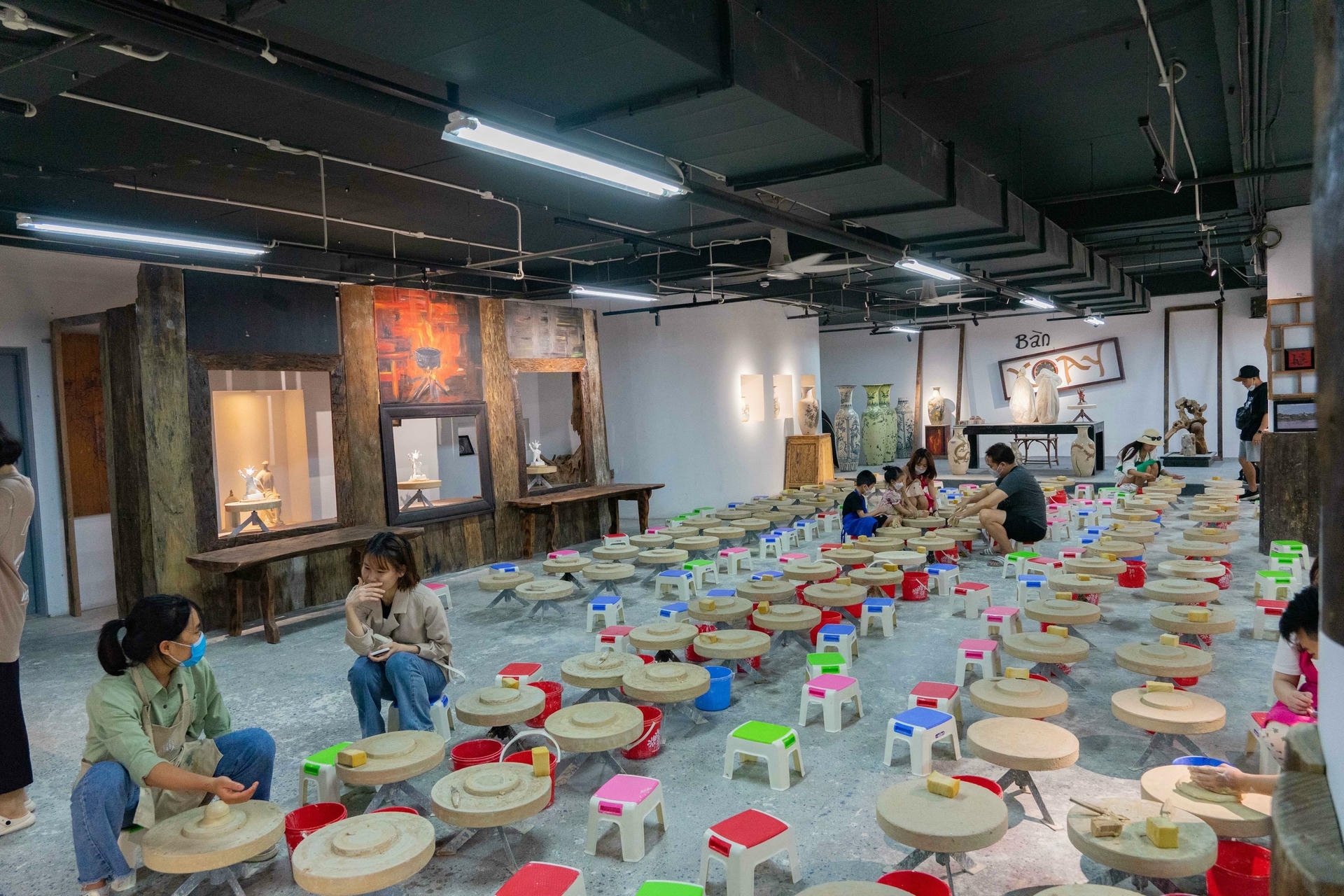
- Free-form experience (small workshops/pottery markets): Run by families who’ve been potters for generations, offering authentic experiences. Around 50,000 – 70,000 VND/person ($2-3 USD) for one session on the pottery wheel, no time limit. Firing fee for finished products (if applicable): Additional 40,000 – 60,000 VND ($1.60-2.40 USD).
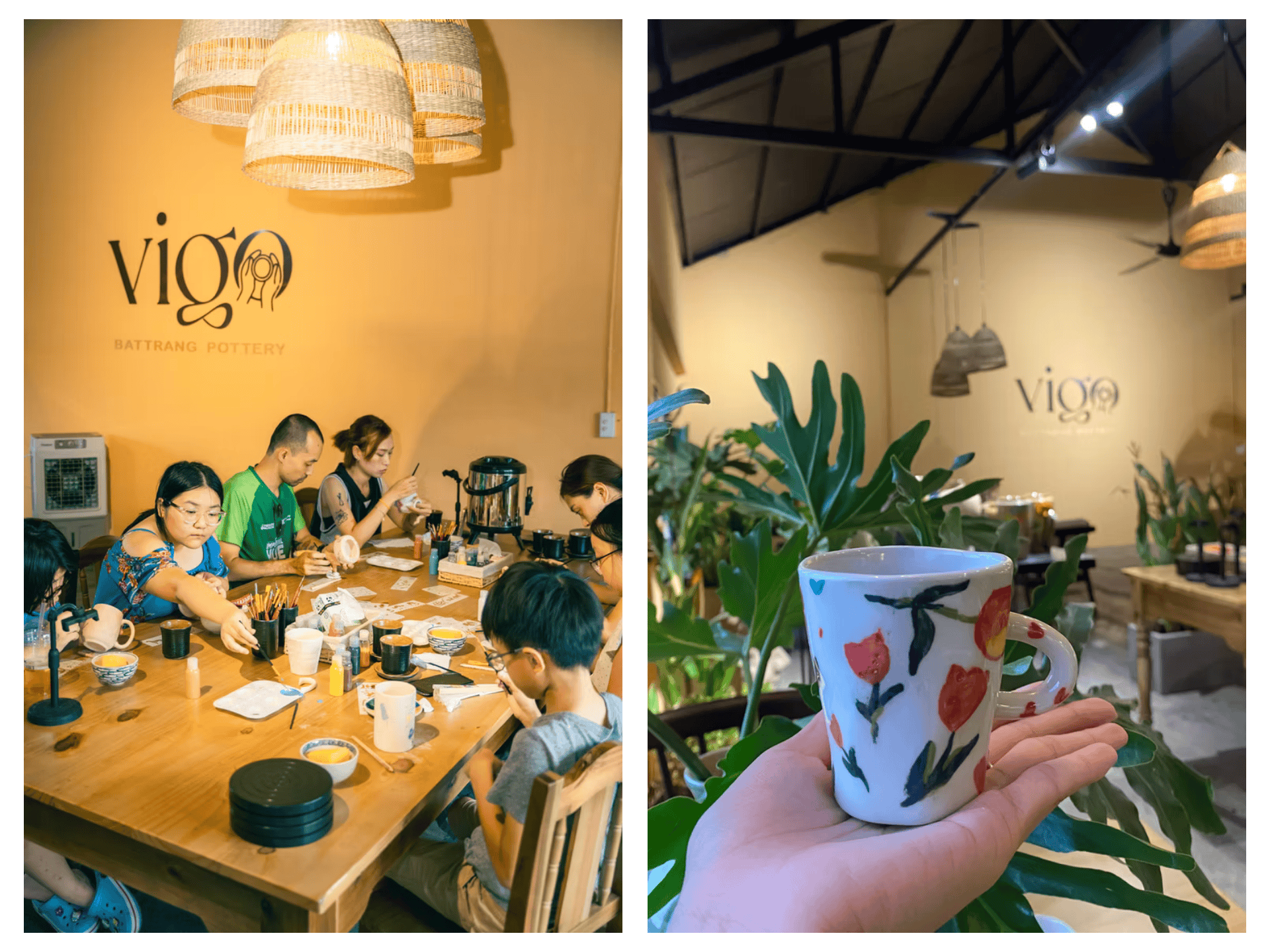
- Vigo Bát Tràng – Lạc Việt Gallery: Their staffs and service are incredibly nice last time I visited their Ceramic Painting (Vẽ gốm) workshop. They offer two types of workshops, which are Ceramic Painting and Pottery Making. The price ranges from 180,000 – 450,000 VND (about $7 – $18 USD), which is on the higher side, but I found the price matches the quality and service provided.
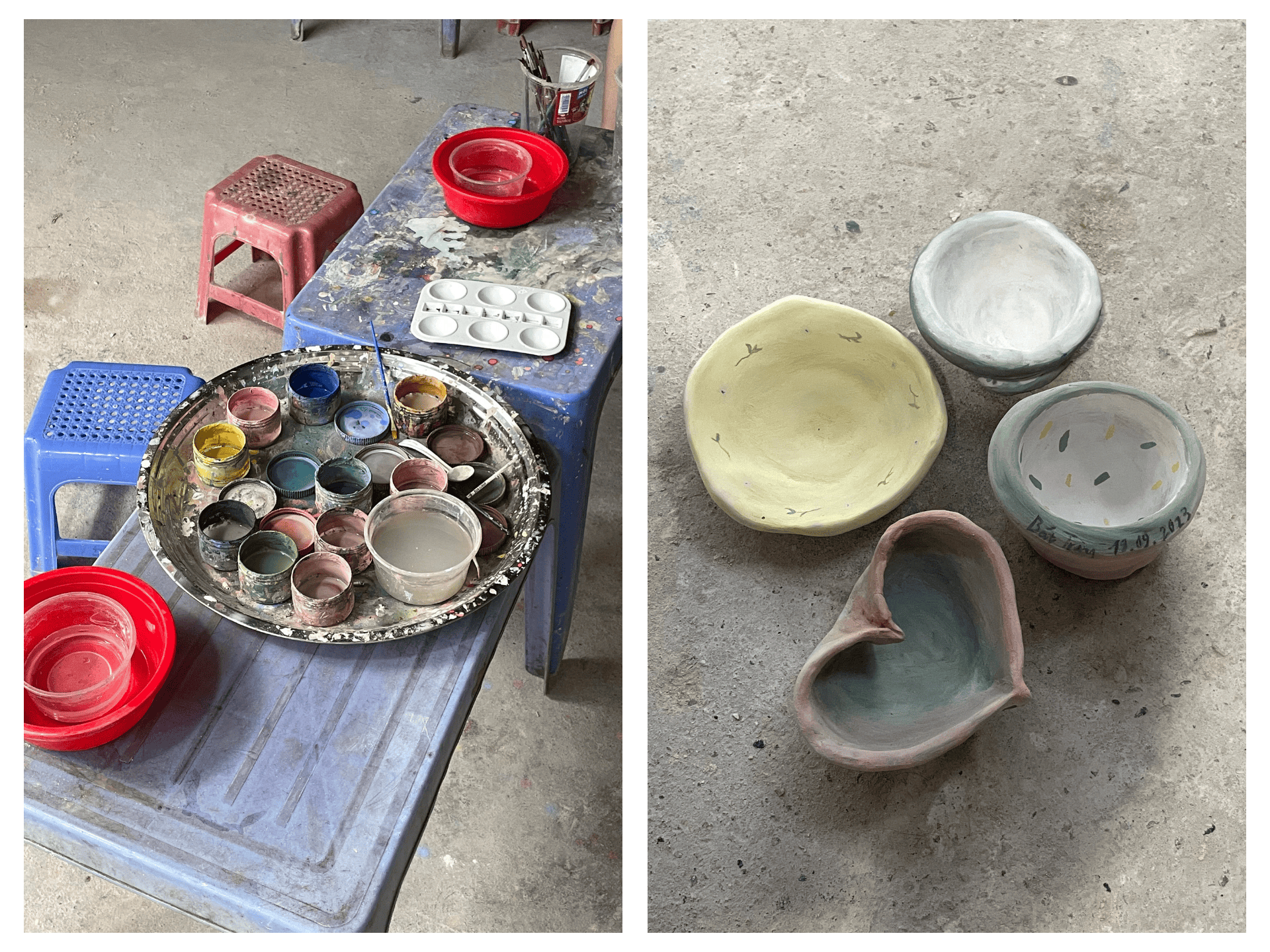
Local Advice: Your first piece will probably look wonky, so do I. That’s completely normal. The clay has its own personality, and learning to center it takes practice. Embrace the imperfection! That lopsided bowl will become your favorite souvenir.
Most workshops can fire and glaze your creation, then ship it to your home country for an additional fee (usually $15–30 USD). If you’re staying in Hanoi, they can have it ready for pickup or shipping within 5 – 7 days.
2. Explore the Bat Trang Ceramic Museum

Located near the village entrance, this small museum provides context for everything you’ll see. Admission is only 60,000 VND ($2.40 USD), and it’s worth every dong.
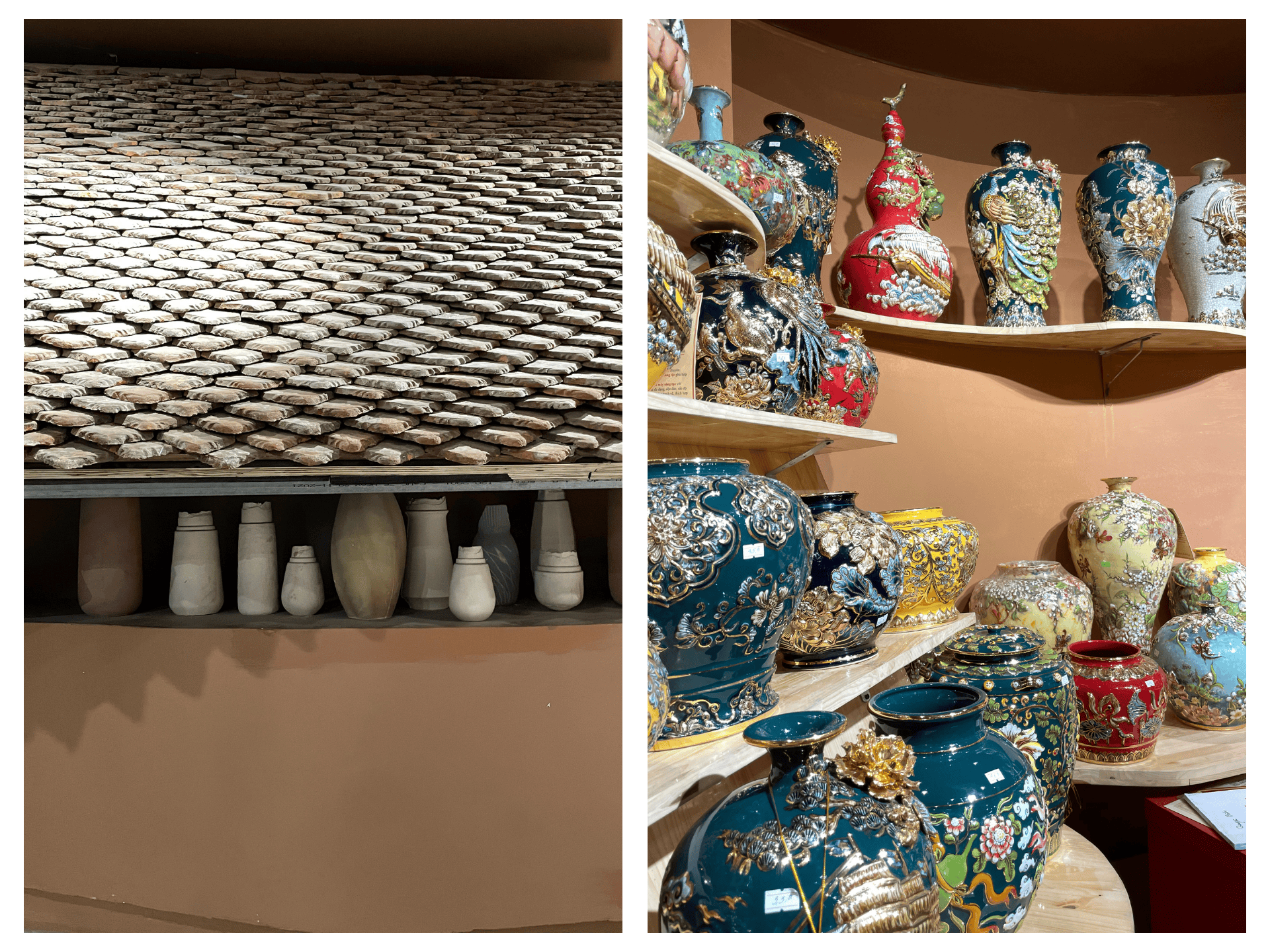
The museum displays pottery spanning seven centuries – from ancient pieces discovered in archaeological digs to contemporary installations by young Vietnamese artists. I always spend time in the section showing traditional production techniques: ancient kick wheels, original kilns carved into hillsides, and tools handmade from bamboo and metal.
3. Wander Through Ceramic Streets and Shops
The main road running through Bat Trang Pottery Village is lined with hundreds of shops displaying everything imaginable made from clay. Quality varies dramatically, so here’s where local insight helps.

You should probably look for shops where:
- The owner or family members are actually present and working.
- You see pottery wheels or kilns in the back (indicates they produce on-site).
- Pieces show slight variations (handmade vs. factory molded).
Don’t be afraid to ask questions. Most shop owners in Bat Trang love talking about their work, especially if you show genuine interest. Ask about clay sources, firing techniques, or even family history.
4. Visit Active Kilns and Workshops
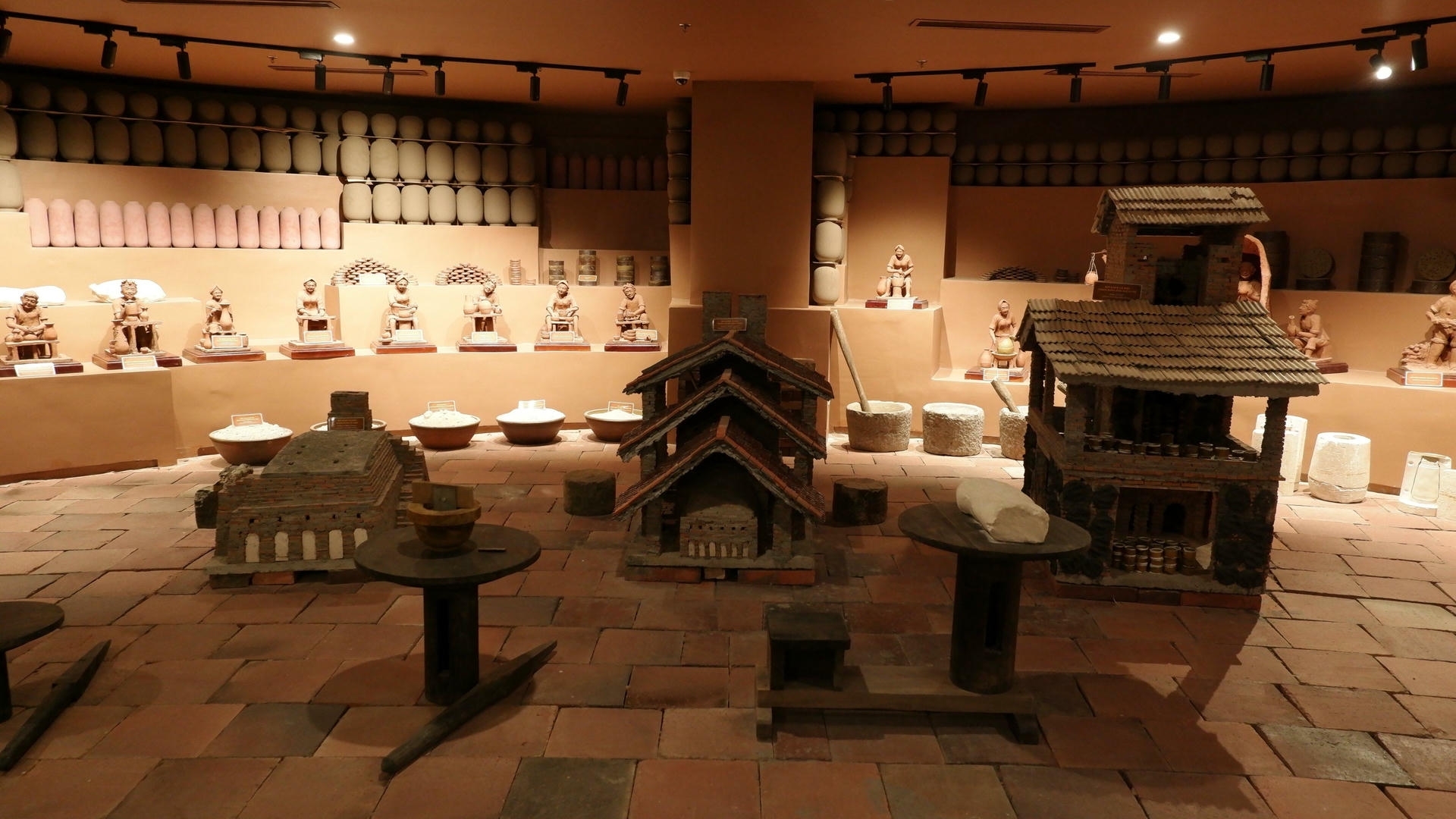
While wandering, you’ll notice smoke rising from various locations – these are active kilns firing pottery. Many workshops welcome visitors to observe the process, though always ask permission before entering or taking photos.
I’ve spent hours watching master craftspeople paint intricate designs freehand. Witnessing someone paint a perfectly symmetrical dragon or lotus flower in under two minutes is genuinely mesmerizing. Some workshops also offer pottery painting classes, like at Vigo workshop, where you decorate pre-made blanks, which is easier than throwing clay on a wheel and still results in a beautiful hand-crafted souvenir.
Shopping smart at Bat Trang Pottery Village
I’ve seen too many visitors and friends either overpay dramatically or buy low-quality pieces. Let me share some insider knowledge about shopping in Bat Trang Pottery Village.
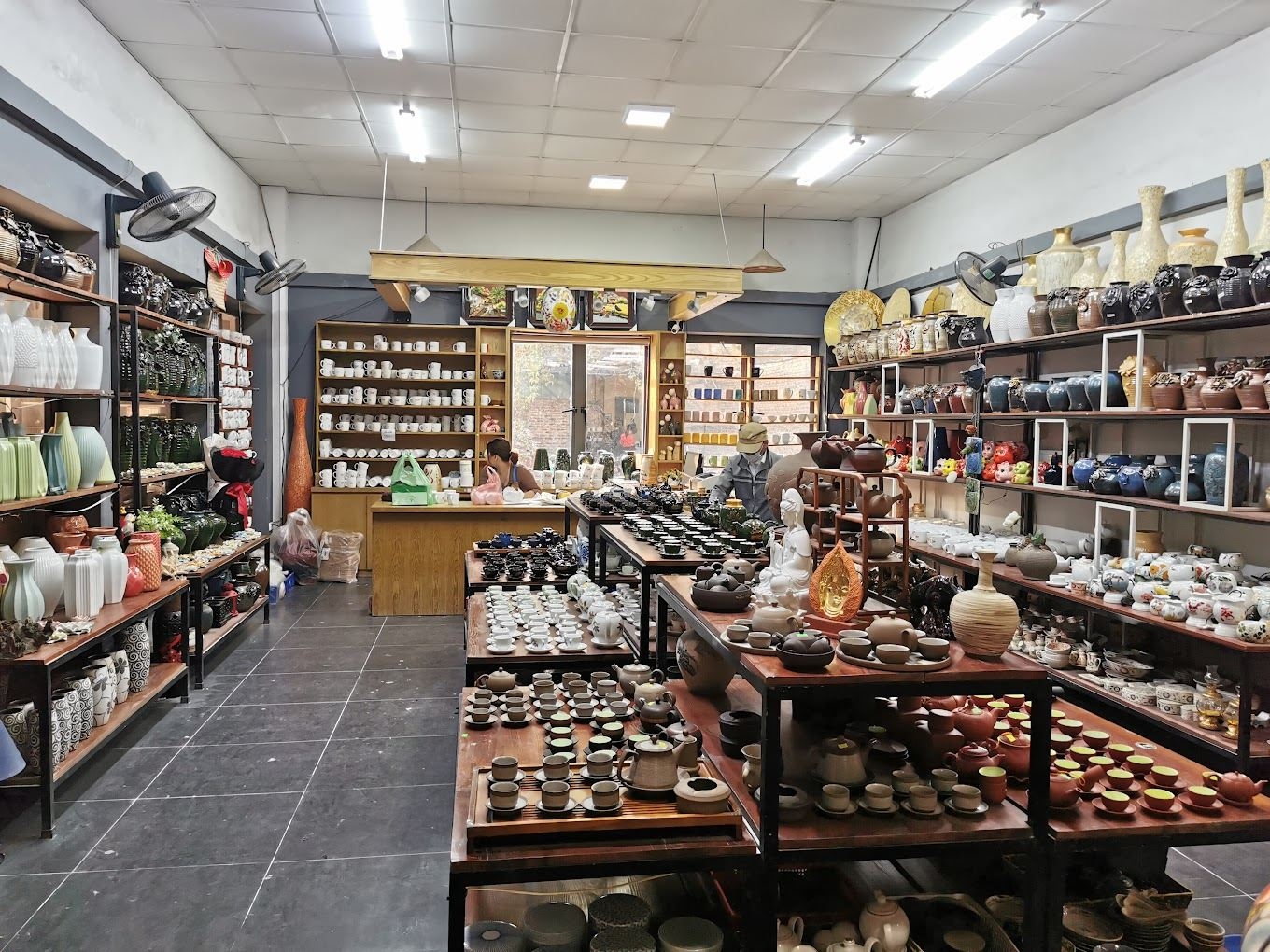
Understanding Quality Differences
Not all Bat Trang pottery is created equal. Here’s how to identify quality pieces:
| Feature | High-Quality Pottery | Lower-Quality Pottery |
| Feel | Substantial, dense. | Unusually light or excessively heavy. |
| Sound | Produces a clear, ringing tone when gently tapped. | Sounds dull when tapped (indicates air bubbles or poor firing) |
| Glaze | Even glaze, no drips or bare patches. | Uneven glaze, drips, or missing spots. |
| Pattern | Hand-painted details (look for brush strokes) | Stamped or transfer-printed designs (perfectly uniform) |
Bargaining etiquette
Bargaining is expected in Bat Trang, but there’s an art to it. The key is maintaining friendliness throughout. Remember, it’s a conversation, not a battle.
- Show genuine interest and ask the price politely.
- Expect initial prices to be 30–50% higher than the acceptable rate.
- Counter with about 60–70% of their asking price.
- Meet somewhere in the middle with good humor.
Tip: Buying multiple items from one shop gives you leverage for better overall pricing. I often say, “If I buy three pieces, what’s your best price for everything?”. Luckily, this usually results in 10 – 15% off the total.
What I Recommend Buying
Based on what survives international shipping and holds its value:’
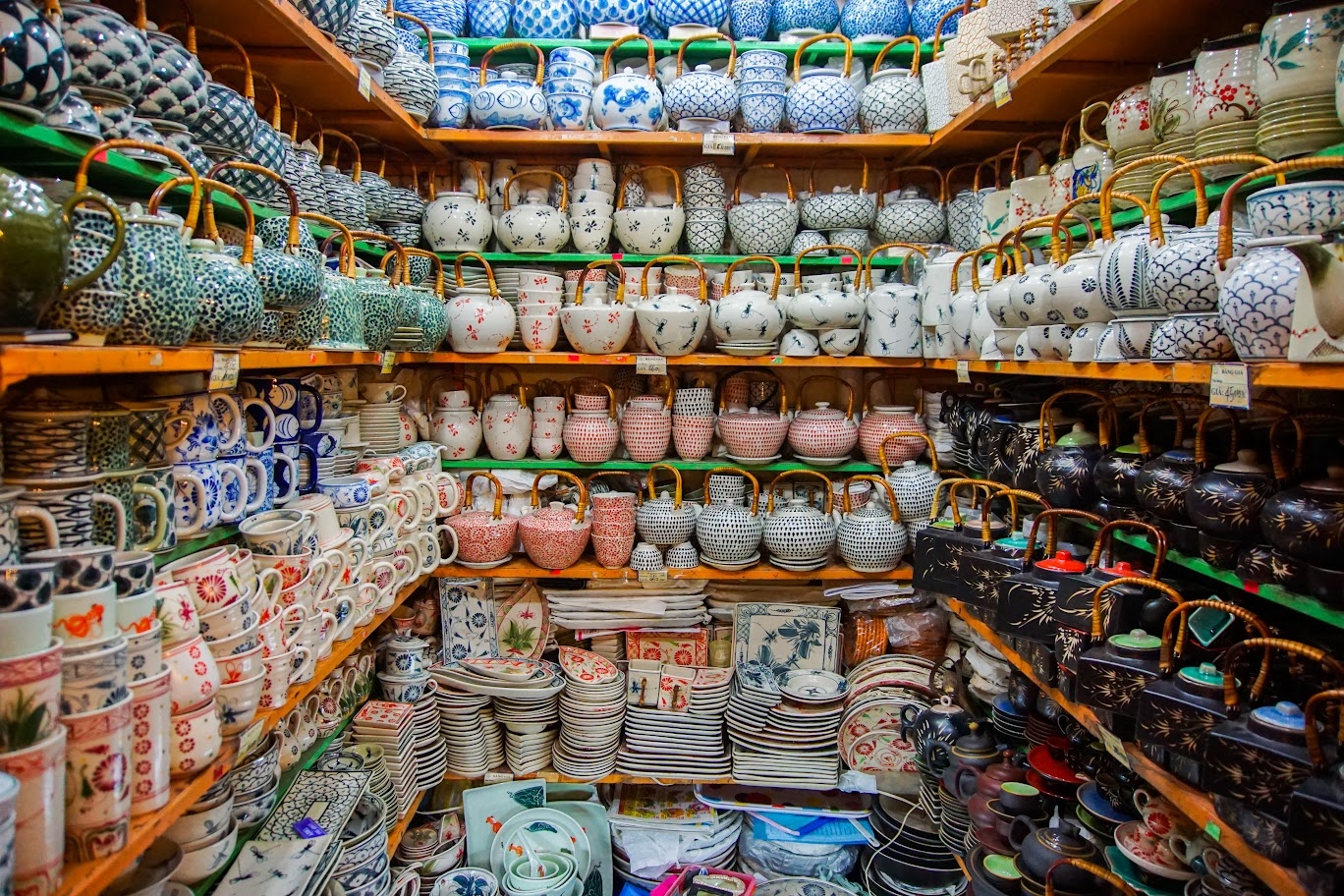
Best purchases: Tea sets (traditional Vietnamese style or modern minimalist designs), rice bowls and chopstick rests, incense holders, and small decorative plates.
Skip these: Extremely large or heavy items (unless you’re shipping), or anything priced significantly below the market (likely factory-made, not authentic Bat Trang).
What to eat in Bat Trang Pottery Village
Food isn’t Bat Trang’s main attraction, but you’ll need sustenance. Let me point you toward options that won’t disappoint.
- Tinh Hoa Restaurant – 4th Floor, Vietnamese Craft Village Heritage Center: This restaurant serves a variety of delicious Vietnamese dishes, and their Mâm cỗ Bát Tràng (traditional feast tray) is an absolute must-try. A traditional Bat Trang feast tray typically features 4 bowls and 6 plates, or 6 bowls and 8 plates for larger gatherings. Be sure to taste the Canh măng mực (bamboo shoot and dried squid soup), a signature dish unique to Bat Trang that’s definitely worth the experience.

- Bánh Khoai Nướng Cốt Dừa (Grilled Sweet Potato Cake with Coconut): As you wander through the pottery market, you’ll easily catch the rich aroma of grilled sweet potato cakes. Sweet potatoes are boiled until soft, mashed smooth, then mixed with freshly shredded coconut, sprinkled with sesame seeds on top, and grilled over charcoal embers. This is a perfect choice for a snack.

- Chè Kho Bát Tràng (Bat Trang Braised Sweet Soup): If you visit Bat Trang during Lunar New Year, you’ll get to try the signature chè kho. This sweet soup made from mung beans, sugar, and fat is carefully cooked to achieve a golden, smooth, lump-free texture with a delicate sweetness.
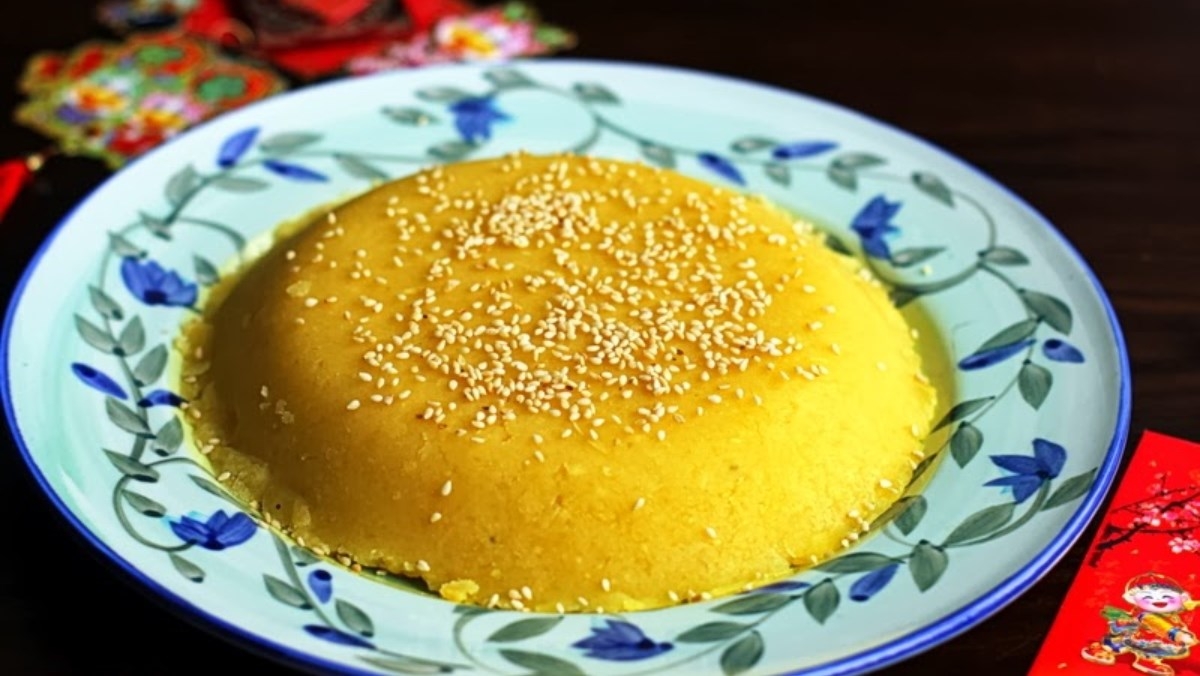
Overall, there are plenty of good food spots around Bat Trang Pottery Village. Just look around and see where the locals are eating, maybe Bún chả, Phở,…chances are those places will be solid. I’ve tried this method before and it worked out pretty well.
Cultural etiquette and Practical tips
As someone who has been to Bat Trang Pottery Village since I was a kid, I want to share some etiquette points that will make your visit smoother and more respectful.
- Dress appropriately: Wear modest, practical clothing and closed-toe shoes. Expect to get clay on your clothes if you join a workshop.
- Photography etiquette: Always ask permission before photographing people, especially artisans working. A simple gesture usually works.
- Respect working spaces: Remember that Bat Trang is home to families. When you enter workshops, you’re entering someone’s work area. Keep noise levels reasonable and don’t block work areas.
- What to bring: Cash (many small shops don’t accept cards), sunscreen and a hat, and a small backpack for purchases.
- Supporting Local Artisans: The best way to support Bat Trang is by buying directly from the artisans themselves rather than through middlemen or tourist shops back in Hanoi. Complimenting someone’s work and showing genuine interest in their craft goes a long way with local artisans. I’ve watched master potters light up with pride when I ask thoughtful questions about their techniques or family history, it really means something to them.
Bat Trang Pottery Village: A Lasting Legacy

After all these years visiting Bat Trang, I’m still convinced it’s one of the most authentic and rewarding experiences Hanoi has to offer. This is a living, breathing community where families have been practicing the same craft for seven centuries while somehow staying relevant in modern times.
When you visit Bat Trang, you’re not just watching pottery get made, you’re stepping into a cultural legacy. You’re supporting artisans who’ve chosen to keep traditional crafts alive in an increasingly digital world. And when you take home a piece, you’re taking something that carries real stories of Vietnamese history, family pride, and human creativity literally shaped by hand.
The pottery wheels keep spinning, the kilns keep firing, and the Red River clay keeps giving up its treasures to skilled hands. I hope this guide helps you experience Bat Trang the way I do – as a place where art, tradition, and community come together in something truly beautiful.
Ready to Experience Bat Trang Pottery Village with us?
Don’t just read about Bat Trang – come experience it for yourself. If you want the real local perspective with insider access to the best workshops and artisans, reach out to Jackfruit Adventure today! Our knowledgeable local guides can show you exactly why Bat Trang has captivated visitors and kept its craft traditions alive for over 700 years.

We also offer an unforgettable Hanoi Cycling Tour! Pedal through the city’s hidden alleys, vibrant markets, and peaceful rice paddies for an authentic glimpse into local life that goes beyond the typical tourist routes.
The best part? Whether it’s a ceramics trip or a cycling journey, Jackfruit Adventure can customize your experience! Tell us where you want to go and what you want to see, and we’ll design the perfect, personalized itinerary just for you.
Want to explore more of Hanoi? Check out our guides on 15 Cool Things to Do in Hanoi You Won’t Find in Guidebooks or 8 Perfect Relaxing Things to Do in Hanoi for Slow-Travel Lovers. Plus, there are tons of historical locations you can discover in the Where to Go section on Jackfruit Adventure.