

Table of Contents
Having spent most of your trip immersed into Hanoi culture and modern architecture? Then let me take you to somewhere completely different. Right in the heart of the capital, there’s a green retreat where life slows down and people still farm, harvest, and raise livestock. An Oasis tucked within the Red River, where you can witness the hidden peaceful side of Hanoi. If you are curious, follow me as we’ll go on a journey to discover Banana Island, a tranquil green world where time seems to stop beneath the banana leaves.
Where is Banana Island?
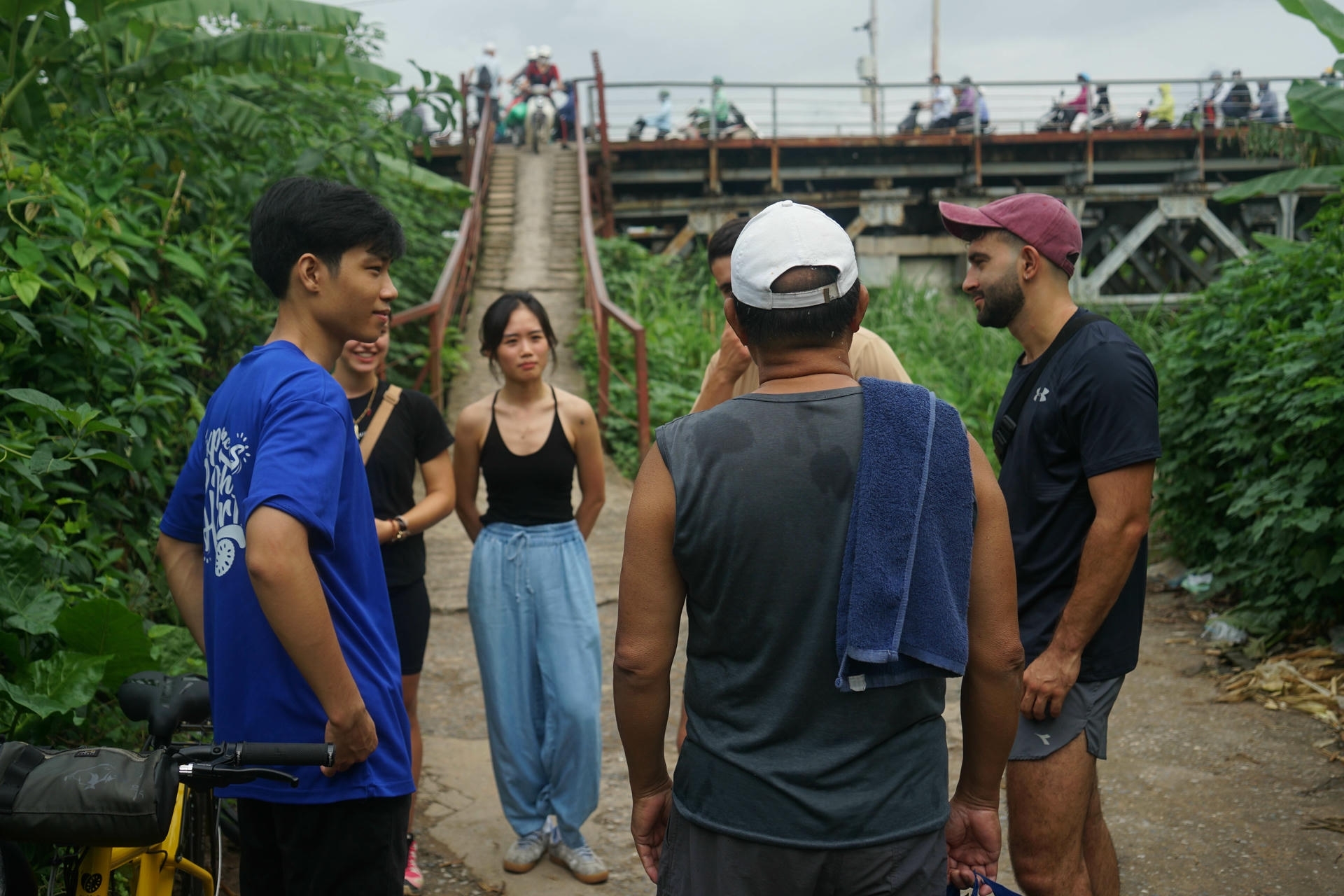
Banana Island sits right under the Long Bien bridge. You can visit the island on foot, by bicycle or even by a small boat. But the most common way is from Long Bien bridge, here’s how you can make it:
- Head to Long Bien Bridge: this is the main starting point.
- Once on the bridge, walk or cycle toward the middle section.
- Look carefully on the left side (if coming from Hoàn Kiếm) for a small, narrow staircase leading down.
- It’s easy to miss because it’s tucked between the bridge beams and railings.
- When you see locals going up and down carrying tools, veggies, or fishing nets, you’re at the right spot.
- Go down the staircase slowly (it can be steep), carry your bike with you if you prefer 2 wheels for your journey.
- At the bottom, you’ll arrive on a dirt path that leads straight into the banana fields and farmland, then bingo, Welcome to Banana Island.
The Lush Landscape of Banana Island
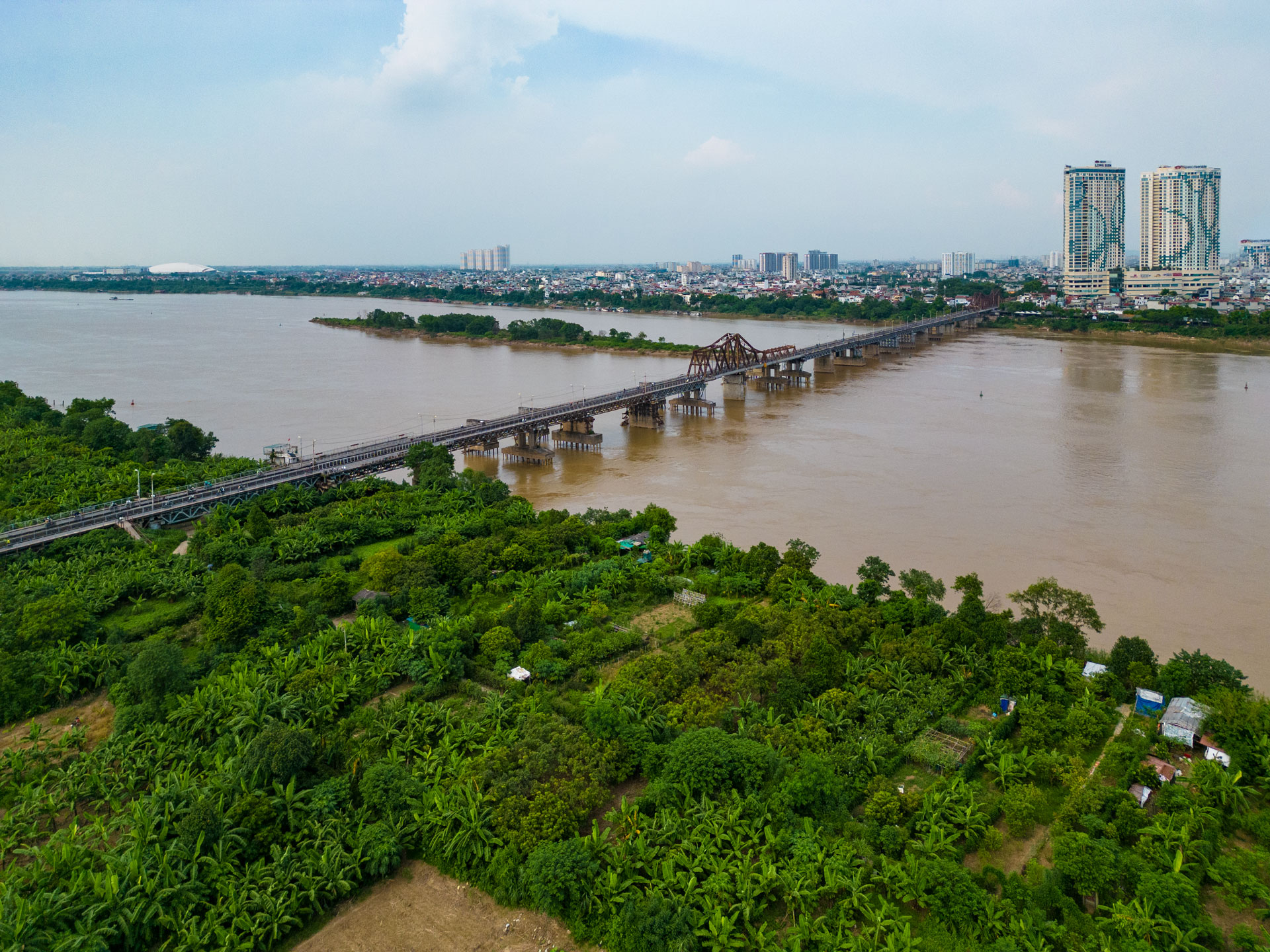
The moment you step onto Banana Island, it feels like you’ve entered a greenish hidden oasis right in the middle of Hanoi. Stretching out toward the horizon, the island is covered by endless rows of banana trees. While the Long Bien bridge above hums with traffic and heat, Banana Island greets you with the rustling sound of leaves, playful birds calling on branches and the rhythm of Red River waves lapping against the shores. Most of the land here is used for farming, which explains why everything feels so calm, spacious, and slow.
Among the island’s surprises is a small yet spiritual shrine. While most shrines in Vietnam are dedicated to goddesses or ancestors, the Shrine of the Two Sisters (Miếu Hai Cô) has a different story. It was first built as a resting place for two unknown ladies whose bodies were discovered on the riverbank a long time ago. Over time, locals begin to worship anyone who lost their lives in the Red River, turning the shrine into a place for remembrance.
However, the serene beauty may not remain untouched forever. Several construction plans have been discussed with a purpose to rebuild the Island into a retreat area or recreational camp site for tourism. It’s hard to imagine Long Bien bridge without its leafy island beneath.
Why So Many Banana Trees?
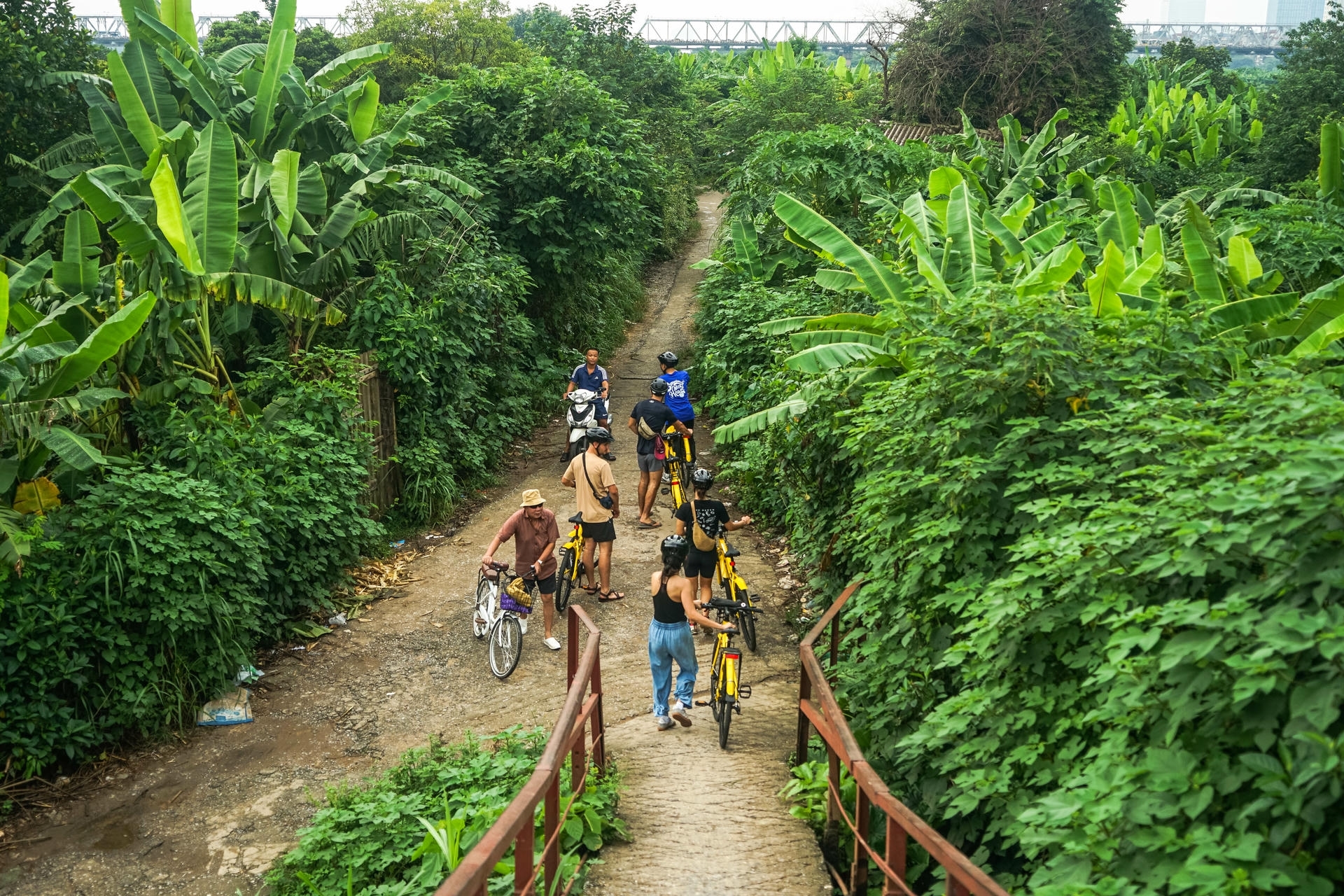
This was also the question that bumped in my head when I first came here. After chatting with locals and a couple of reporters, I finally understood why this place is covered in bananas. The trees love moist, nutrient-rich soil and nowhere can be better than this quiet oasis amid the Red River. With steady water and fertile land, banana trees here grow almost effortlessly without much care or the need for expensive fertilizers.
Bananas also have a special place in Vietnamese daily life. They’re a staple offering at family altars, celebrations, and ceremonies, so they’re always in demand. So long story short, the banana never goes out of style in Hanoi. If you are lucky enough to visit the Island when Tet holiday is coming, you’ll be surprised to witness the bustling trade of a huge bundle of bananas here.
There are two types of bananas grown here: the familiar green banana you normally see at the market and the pink banana. The pink one has the same greenish-yellow fruit but its trunks have a unique pink cover. The taste of the pink bananas is also sweet but mixed with a little sour. Locals love to say that you would never differentiate these two unless you’re the one who grows them. Selling bananas doesn’t bring huge income, but with the low investment and minimal care combined with the naturally rich farmland, families still thrive on growing bananas on the island.
People Live on Banana Island
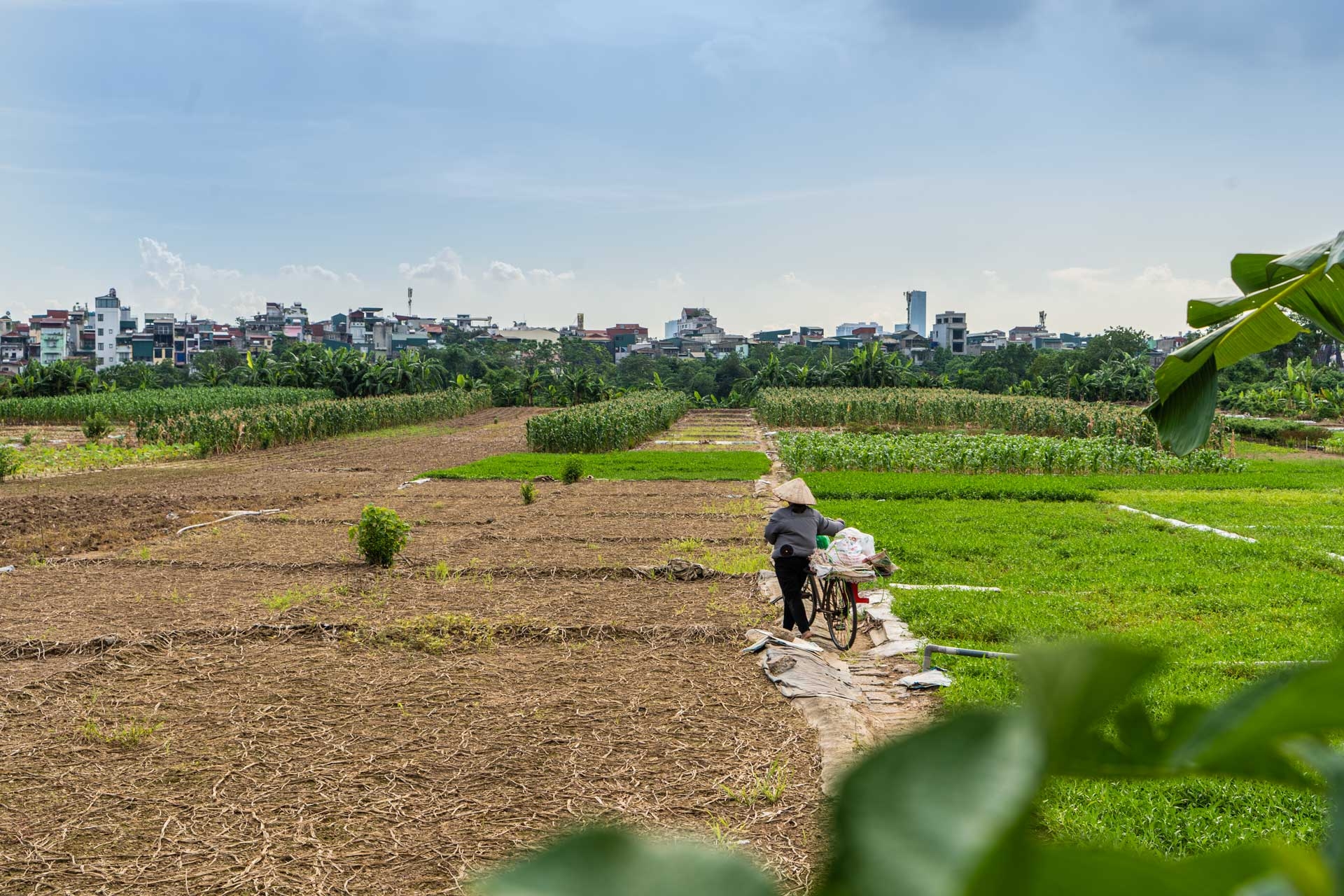
Up to this time, there are around 30 families that live on Banana Island. Their houses are simple wooden structures built on foundations supported by floating barrels, which help maintain the house to stand still on the soft riverbank and safe during floods and rising tides.
Despite the inconvenience of this place, the locals still make it work. Solar panels and lead-acid batteries provide electricity, while water comes either from hand-dug wells or fresh water brought in from the city. Their small, cozy village is known as ‘Xom Phao’ which translates to ‘Float Village’, a name that perfectly describes how every house looks like in the village. Each family also owns a small boat or a raft made from banana tree trunks, used for daily travel and to stay safe during heavy flooding.
Because only a few families live on the island, there are no road signs or clear paths. We recommend exploring the Island with a local guide as the trails are narrow and winding, which are also hidden by rows of banana trees and cornfields.
When I asked the villagers how they truly feel about life on Banana Island, their answers were more surprising than I thought. They enjoy the peace, love the fresh air and the green surrounding them. Life here is so simple: waking up early to feed poultry by chopping and crushing the banana tree trunks, having breakfast, heading to Long Bien market for food, and spending the afternoon taking care of little farms.
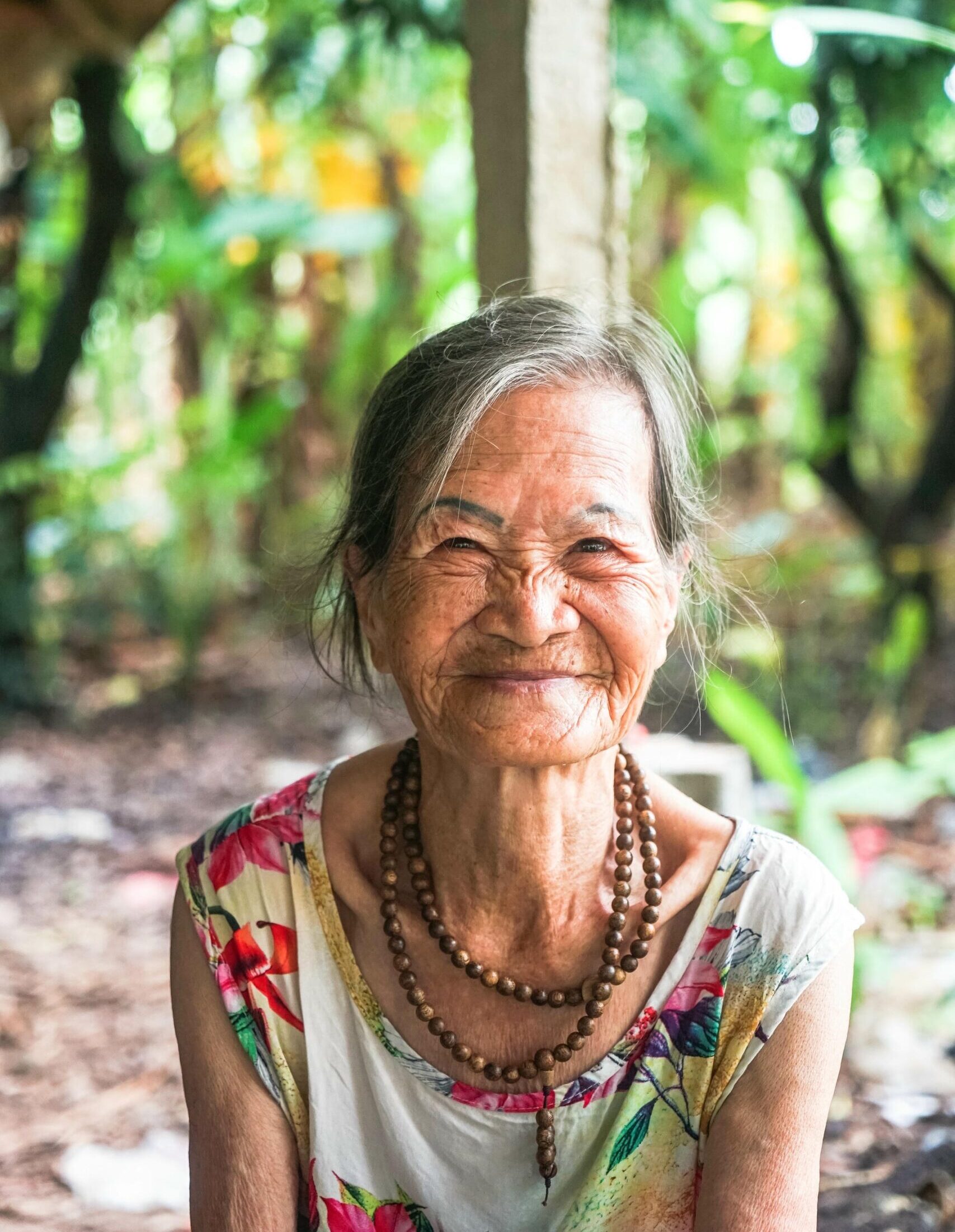
Do they feel lonely? Sometimes. Many of their friends and relatives live in the city. Some families spend a day a week visiting their people in town, while others prefer to make friends with dogs and cats. When you walk through the village, you’ll see how close the locals are with their pets, these animals are true family members to them.
Best Things To Do on Banana Island
Discover the Island on two wheels or on foot
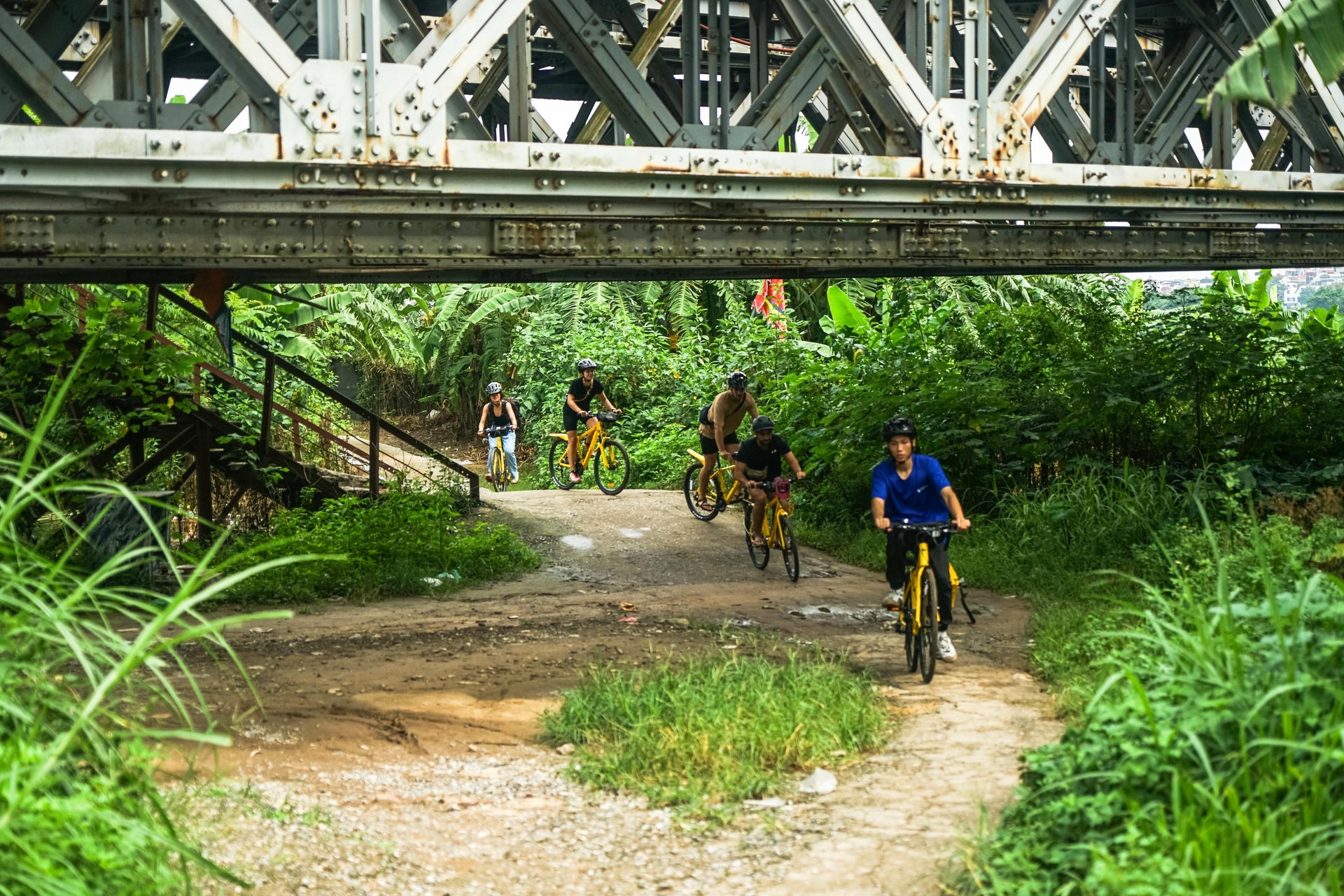
Remember that staircase I mentioned earlier, the one halfway across the Long Bien bridge? That’s your gateway to Banana Island. You can walk down or carry your bike with you. Cycling or walking is the best way to explore the island as its paths are small, narrow and often a bit muddy.
However, I recommend that you should end your exploration by 6pm. There’s almost no public lighting on the island. Even with a flashlight, it can be dangerous if you’re not familiar with the roads. You may ride into the riverbanks and have an accident.
Try Your Luck at Banana Harvesting
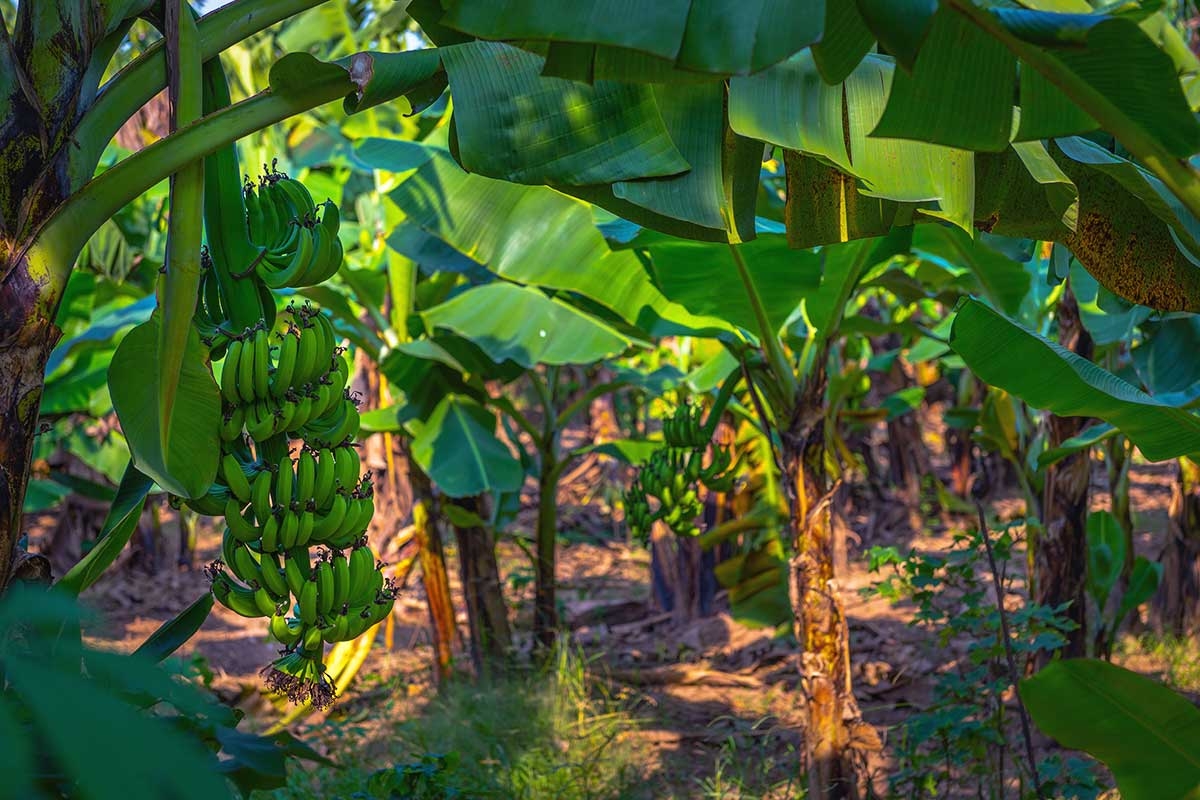
I can’t promise this (and neither can anyone else), but if the locals happen to be working in the fields and you approach kindly, you might get invited to join a bit of farm work of harvesting bananas, helping cut banana trunks.
Just keep in mind that residents speak only Vietnamese and don’t touch plants or crops without permission.
Photograph the Vast Green Landscape
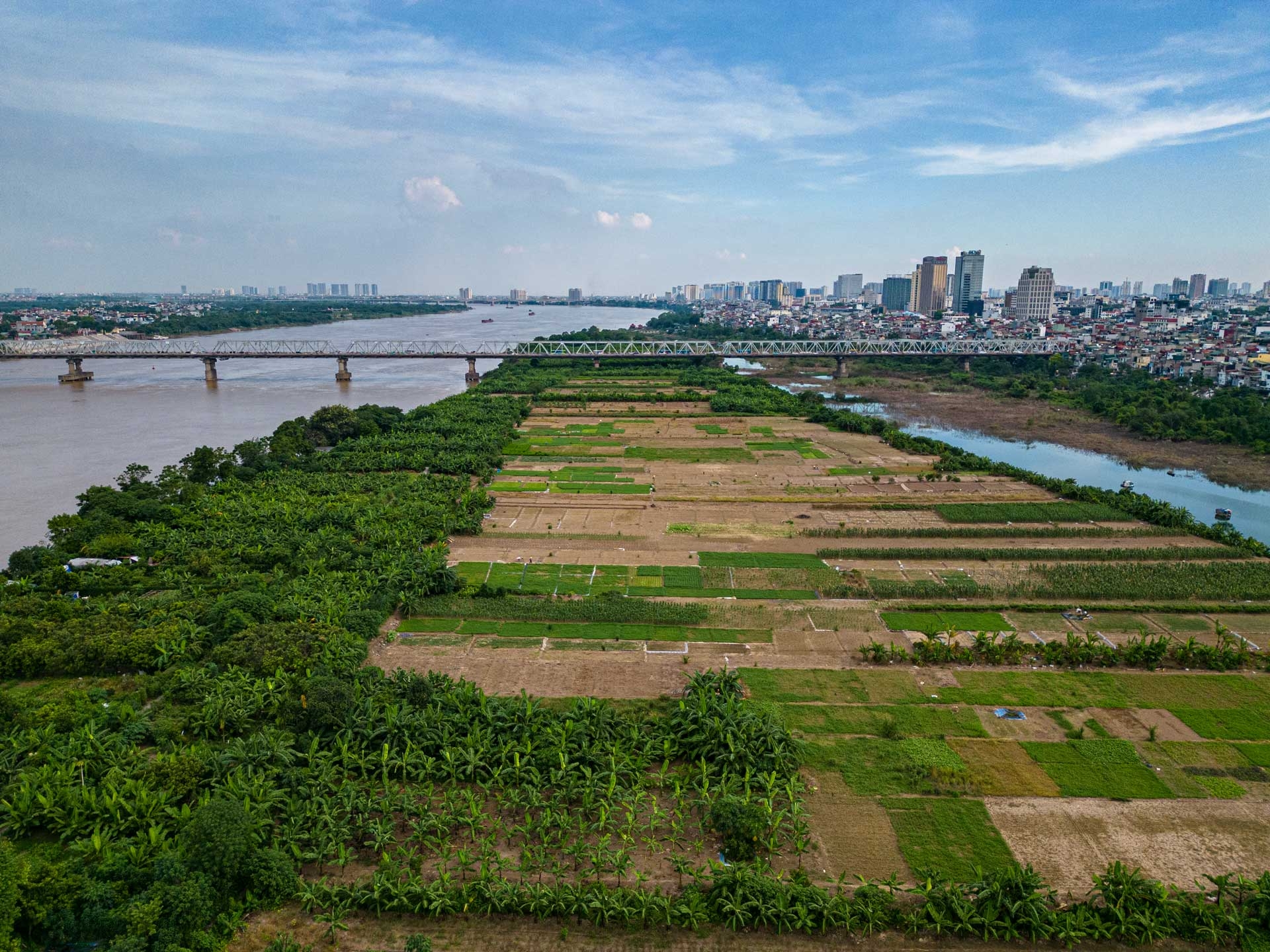
Banana Island is a dream for anyone who loves nature photography. The island is entirely green, with layers of banana trees, cornfields, and patches of wild grass stretching toward the horizon.
Some great photo angles include:
- The winding dirt paths between banana trees
- The Red River shoreline during golden hour
- The rush of Long Bien Bridge above the greenish trees
- Reflections of the sky in the small ponds scattered around the island
Bring sturdy boots, you’ll probably step into mud at some point.
Take a Dip in the Hidden Swimming Pool
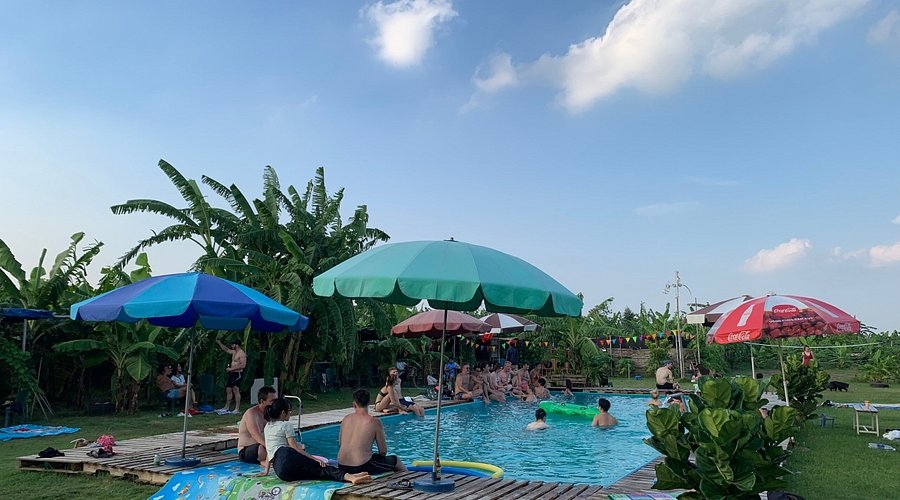
Yes, Banana Island really has a swimming pool right in the middle of the greenery. It’s a manmade pool with quite enough facilities.
- Entrance fee: 100,000 VND (~4 USD)
- Drinks: 25,000 – 30,000 VND (~1–2 USD)
- Address: Banana Island, Yen Phu, Tay Ho, Ha Noi
It’s one of the most unusual “jungle swimming” experiences you can have in Hanoi.
Ride you through all the tranquil paths on the Banana Island with Jackfruit Adventure
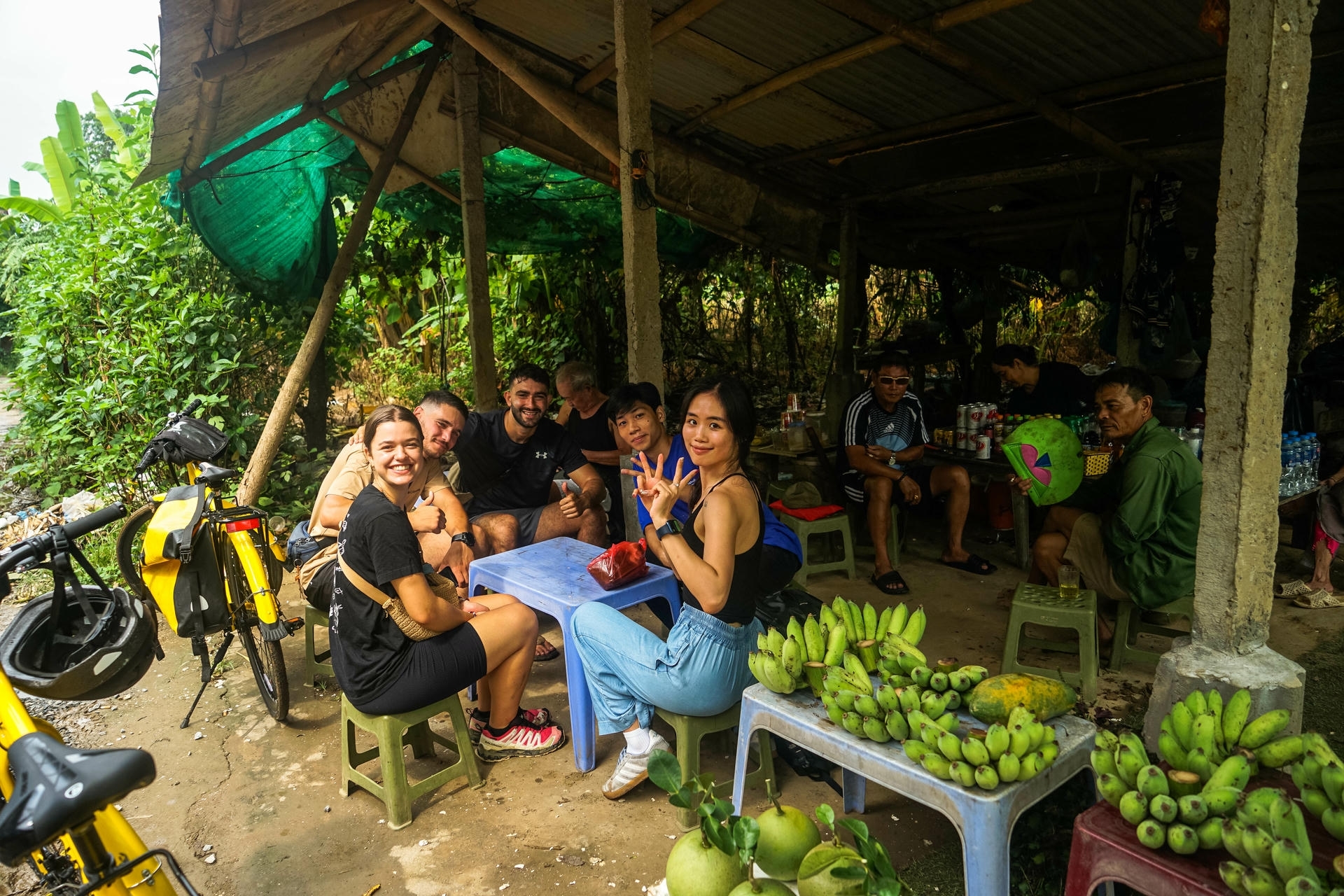
If you’re looking for a companion to guide you through all the winding paths and show you every iconic spot on Banana Island, hop on a bike with Jackfruit Adventure. Our cycling tours in Hanoi were designed to uncover the hidden gems of the capital: whether they are decade-old stalls, wartime apartment blocks, ancient Hanoi neighbourhoods or a lesser-known “forest” in the heart of the city like Banana Island.
Leave the handbook at home and come join Jackfruit on an unforgettable journey to conquer Hanoi in the most authentic way. Pack your backpack, bring your curiosity, and get ready as the adventure awaits!