

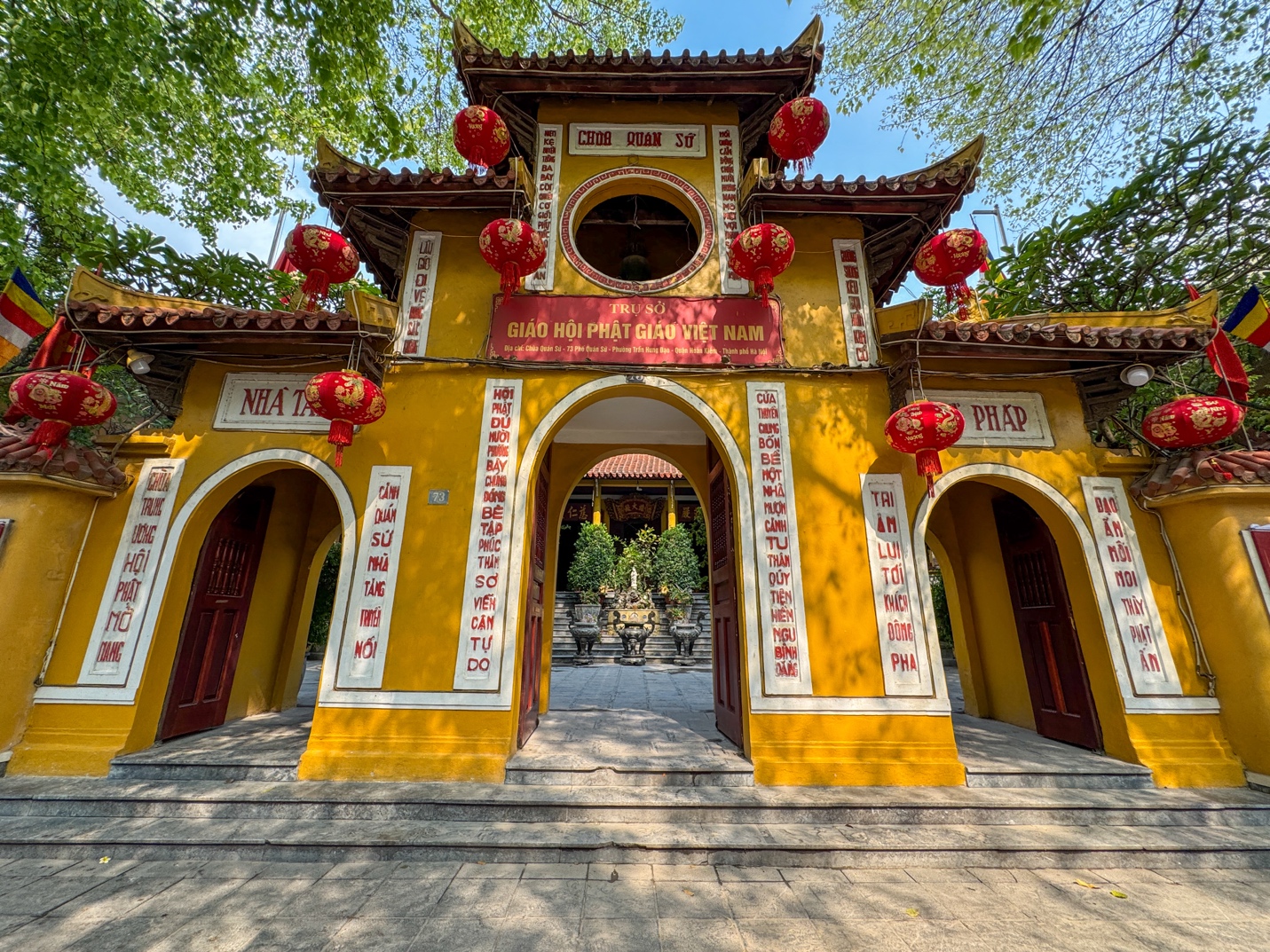
Quan Su Pagoda in Hanoi sits on one of the busiest streets in the city, yet most people walk past it without giving it much thought.
I did the same the first time. I was heading toward Hoan Kiem Lake when I noticed a few people carrying flowers and incense disappearing through a gate on Quan Su Street. Out of curiosity, I followed them inside. Within a minute, the atmosphere felt completely different from the road I had just left behind.
Outside, motorbikes squeezed through traffic and people rushed between offices, cafés, and shops. Inside, the pace slowed noticeably. A few elderly women sat quietly beneath the trees. Someone was arranging offerings near the main hall. The sounds of the city were still there, but they felt distant.
That first visit made me realize something about Hanoi. Some of the city’s most interesting places aren’t necessarily the ones that appear on every travel itinerary. Quan Su Pagoda isn’t famous because it’s the largest temple in Vietnam or the most visually spectacular. People come here because it remains an active part of everyday life.
For many Hanoi residents, Quan Su Pagoda is simply part of life. Some stop by before an exam or a job interview. Others come during the Lunar New Year, on full moon days, or whenever they feel the need to light a few sticks of incense and clear their mind. On a random morning, you’ll see a mix of elderly worshippers, office workers, and families quietly making their way through the gates.
For visitors, the pagoda offers something different. Beyond the history and architecture, it’s a chance to observe a side of Hanoi that doesn’t usually make it into travel brochures.
The Story Behind Quan Su Pagoda
Quan Su Pagoda has been part of Hanoi for centuries, dating back to the time when the city was still known as Thang Long.
Back then, Thang Long was the political heart of the kingdom and regularly welcomed envoys from neighboring countries. Some of these delegations stayed in the capital for extended periods while handling diplomatic affairs.
According to historical accounts, a residence was established in this area to host foreign envoys during their stay. Many of them practiced Buddhism, so a small place of worship was later built nearby, allowing them to continue their religious activities while living in the capital. That small temple eventually developed into what is now Quan Su Pagoda.
In fact, the name itself reflects those origins. “Quan Su” can be understood as a place associated with diplomatic envoys, preserving a connection to the international exchanges that once took place here centuries ago. It’s a detail many visitors never learn, but it gives the pagoda a rather unusual history compared to many other temples in Hanoi.
Of course, the city around it has changed dramatically since then.
The royal capital became a colonial city. French architecture appeared. Wars reshaped entire neighborhoods. The neighborhood around Quan Su Pagoda has changed countless times over the centuries. Old buildings disappeared, new ones appeared, and the streets became busier with every passing decade. Yet somehow, the pagoda remained part of the landscape. Even today, tucked among government offices and modern buildings, it still feels like a place people genuinely use rather than simply visit.
These days, Quan Su Pagoda serves as the headquarters of the Vietnam Buddhist Sangha, and many important Buddhist ceremonies are held here throughout the year. But when I visited, what stood out wasn’t its official status. It was the everyday scenes happening around me.
A woman carrying flowers walked quietly toward the main hall. A few elderly worshippers sat talking beneath the trees. Someone stopped by to light incense before heading off to work. None of it felt staged or designed for visitors.
That’s probably why the pagoda doesn’t feel like a historical attraction in the usual sense. Despite its long history, it remains closely connected to daily life in Hanoi, much as it has been for generations. It’s still being written every day by the people who continue to use it.
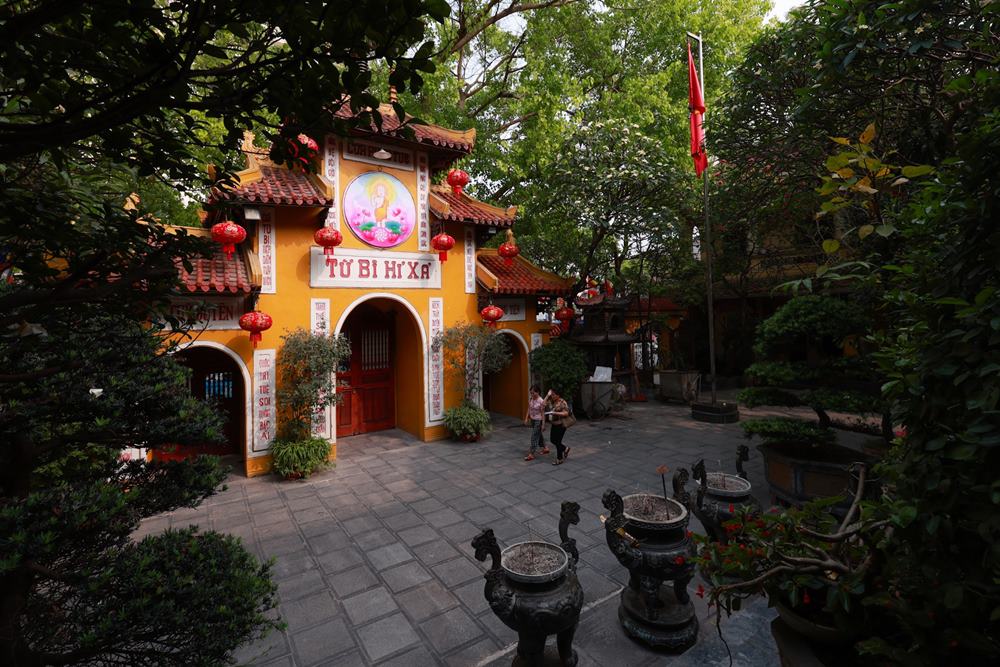
Location: 73 Quan Su Street, Cua Nam Ward, Hanoi 10000, Vietnam
Walking Through Quan Su Pagoda
A Quiet Entrance Hidden in Plain Sight
The Courtyard Where Hanoi Slows Down
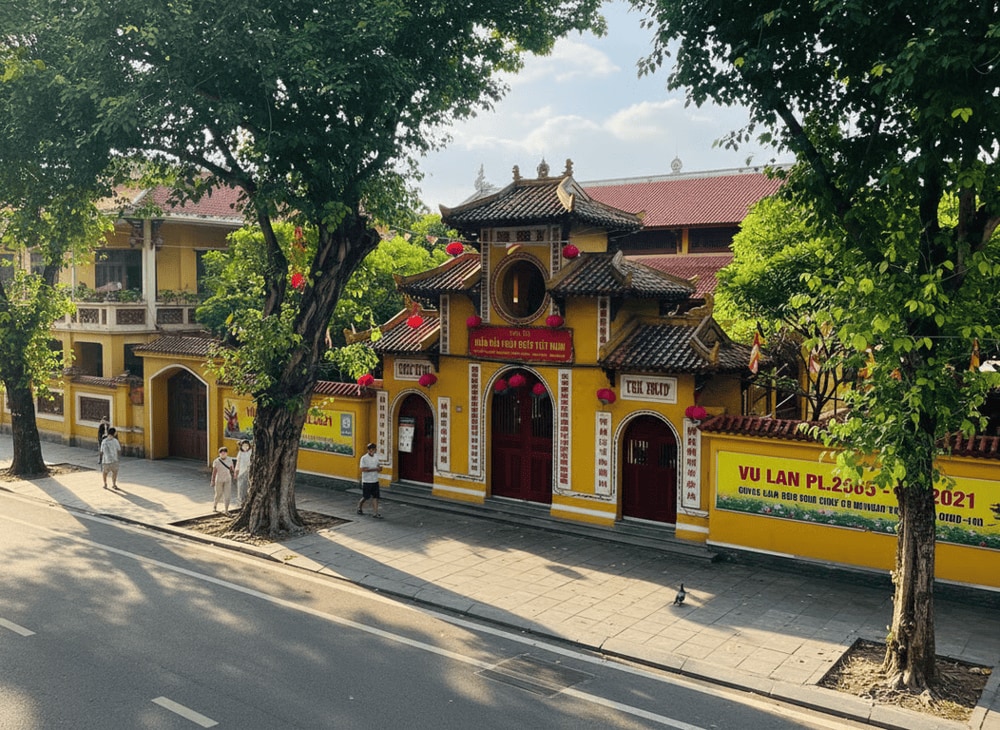
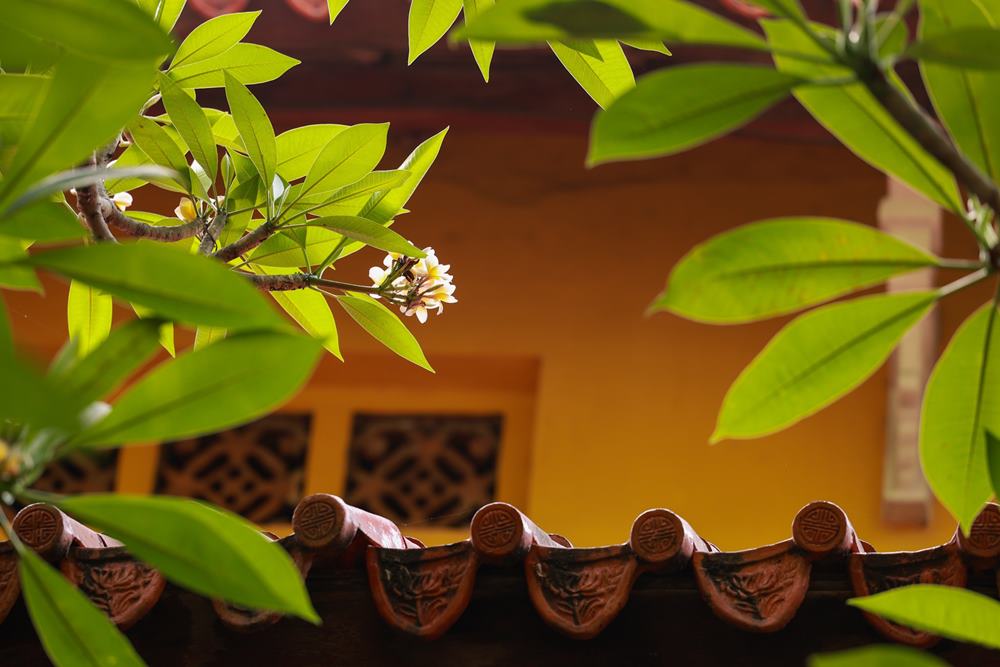
The courtyard was where I ended up spending more time than I expected.
A few minutes after entering, I found myself standing beneath the shade of the trees, watching people come and go. Some carried flowers. Some held bundles of incense. Others seemed to know exactly where they were heading, moving through the grounds with the familiarity of someone who had been here many times before.
What I noticed was that nobody appeared to be in a hurry. An elderly man sat quietly on a bench for several minutes before entering the prayer hall. A woman stopped to adjust the fruit offerings she had brought with her. Nearby, a monk crossed the courtyard carrying a broom, completely unbothered by the small number of visitors walking around.
Outside the walls, traffic continued as normal. Inside, the atmosphere felt noticeably slower. Not silent, not isolated from the city, just calmer than the streets a few meters away.
Inside the Main Prayer Hall
The main prayer hall is where most visitors naturally gravitate.
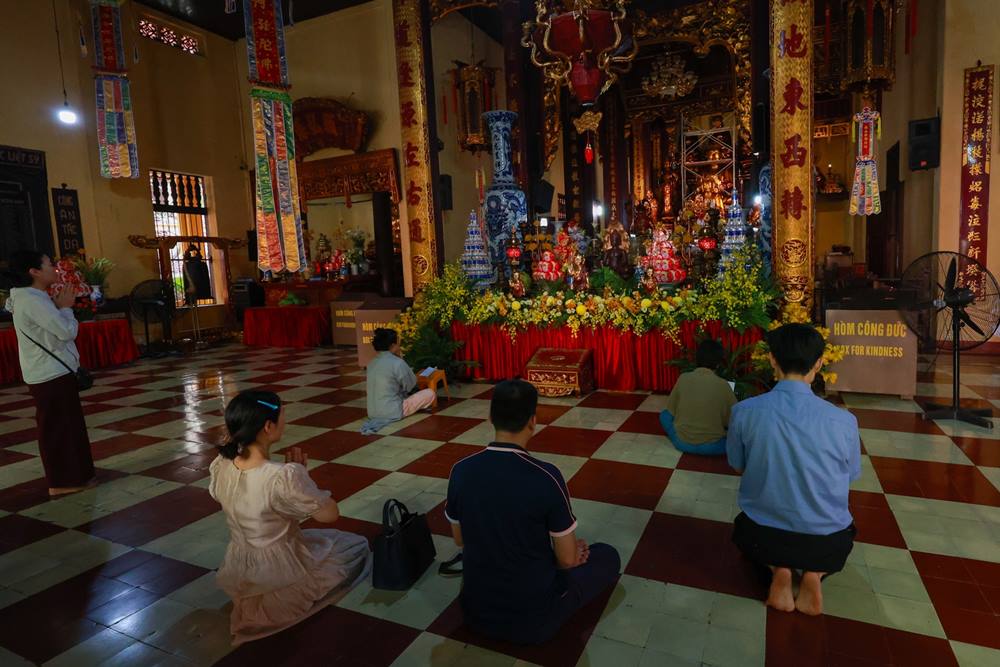
The smell of incense becomes stronger the moment you step inside. Rows of Buddha statues sit above the altars, surrounded by flowers, candles, and offerings left by worshippers throughout the day.
I remember pausing near the entrance for a moment before walking further in. Not because anyone told me to, but because everyone else seemed to move more slowly here. Some people stood with their hands clasped together in prayer. Others knelt quietly before the altar. A few visitors simply looked around before finding a place to sit.
Even if you’re not religious, it’s hard not to pick up on the atmosphere of the room. Conversations become quieter, footsteps slow down, and people generally seem more aware of the space around them.
The Small Details Most Visitors Miss
Some of my favorite memories of Quan Su Pagoda have nothing to do with the architecture. They’re the kinds of moments that are easy to overlook if you’re only stopping for a quick photo.
A monk sweeping leaves from a pathway. Fresh lotus flowers resting beside an altar. The sound of a bell ringing briefly somewhere deeper inside the complex. A family lighting incense together before heading back out to the street.
None of these things are particularly remarkable on their own. Yet they’re what I remember most when I think back on my visit.
Trust me, the longer you stay, the more you realize that Quan Su Pagoda isn’t a museum piece or a preserved historical attraction. It’s a place people continue to use every day.
What to Wear and Bring When Visiting Quan Su Pagoda
Quan Su Pagoda is open to visitors, but it’s worth remembering that this is first and foremost a place of worship.
You don’t need to dress formally, but clothing that covers your shoulders and knees is generally appreciated, especially if you plan to enter the prayer hall. Lightweight long pants or a simple shirt are usually enough.
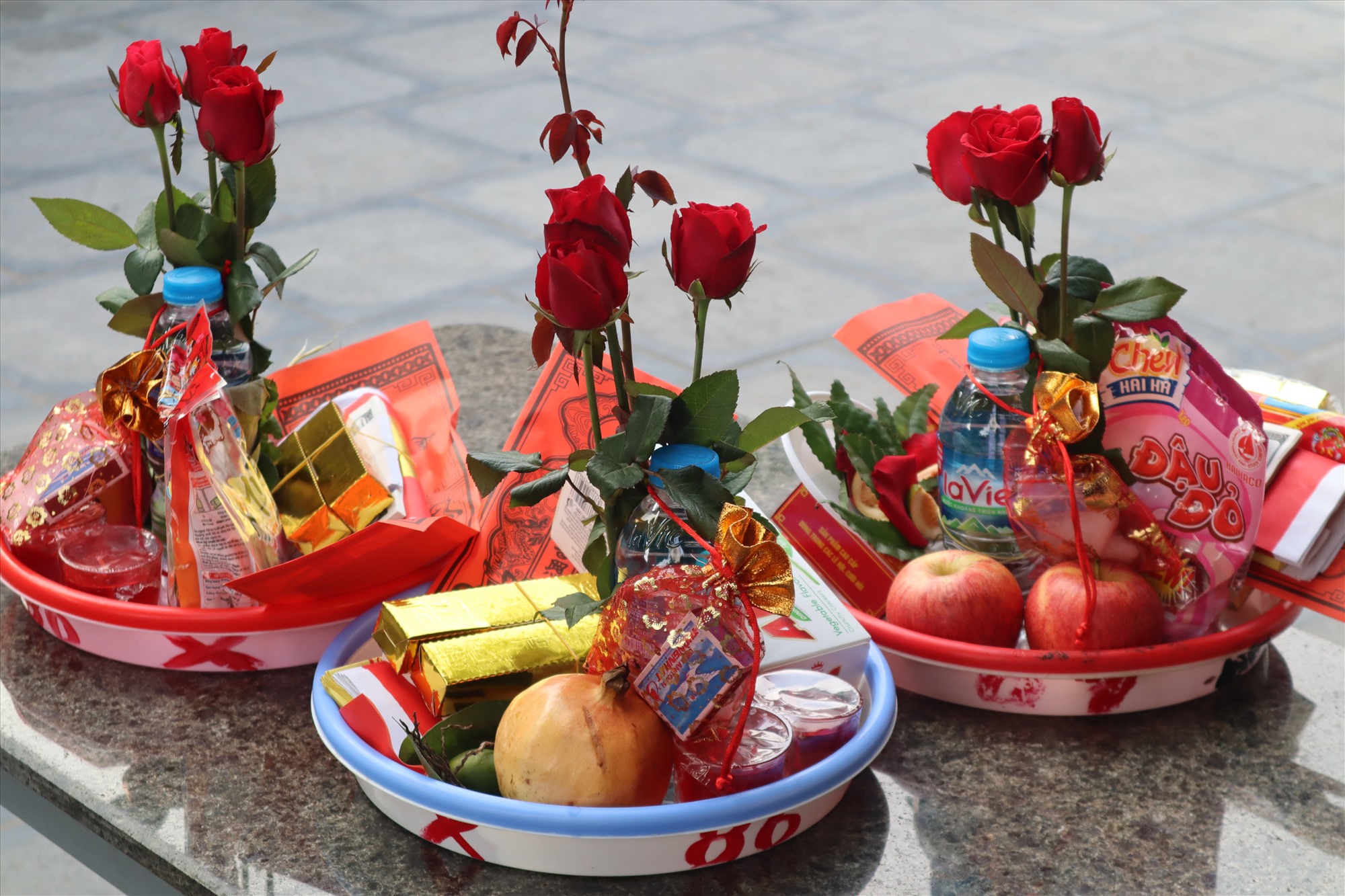
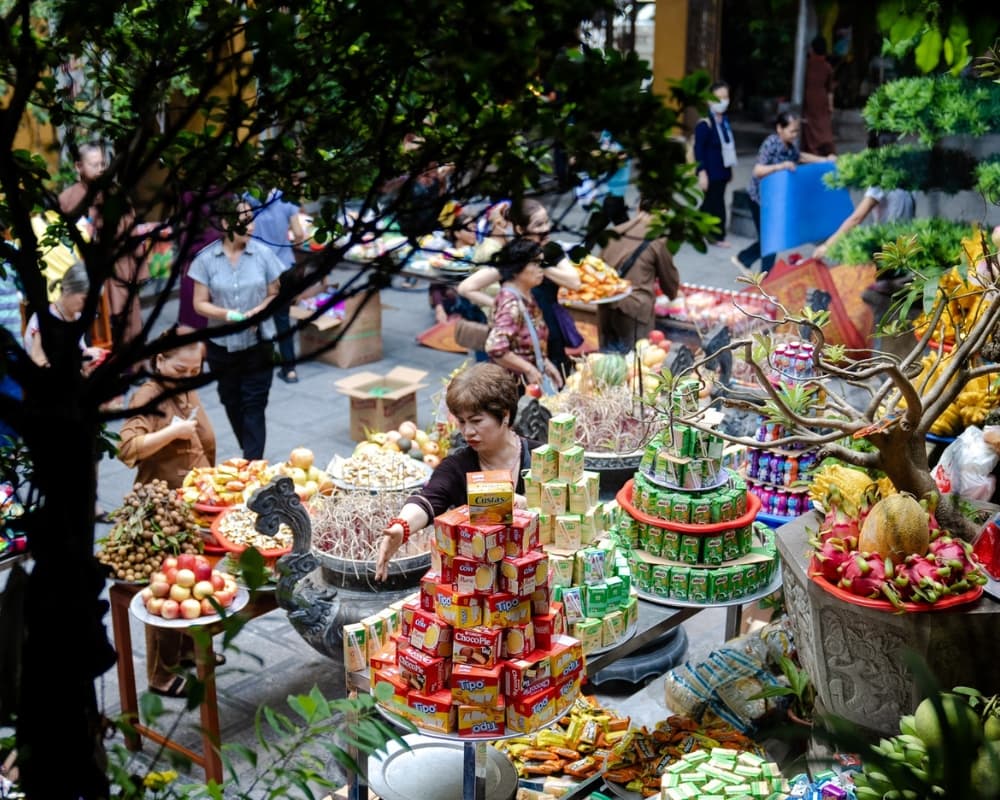
Many local worshippers bring small offerings such as incense, flowers, or fruit. If you’re coming to pray, you’ll see stalls nearby selling these items. If you’re visiting mainly to learn about the pagoda or explore its history, there’s no expectation that you bring anything at all.
A respectful attitude matters far more than any offering.
What Locals Come Here to Pray For
Like many temples and pagodas across Vietnam, Quan Su Pagoda attracts people for all sorts of reasons.
Some come before exams. Some visit before opening a new business or starting a new job. Others pray for good health, family wellbeing, or simply a smoother year ahead.
I visited on an ordinary weekday morning and was surprised by how many different people passed through the gates. Office workers stopped by before heading to work. Elderly residents arrived carrying flowers and fruit. A young couple spent a few minutes at the altar before quietly leaving.
Not everyone seemed to be asking for something specific, though. Quite a few people simply sat for a while, lit incense, and left. In a city as busy as Hanoi, that alone can be reason enough to visit.
Why Quan Su Pagoda Matters to Modern Hanoi
Hanoi changes quickly. New cafés appear every month, old buildings disappear, and entire neighborhoods can feel different within a few years.
You can see this constant evolution reflected in the city’s broader cultural and tourism landscape, as highlighted by the Hanoi Department of Tourism.
Yet Quan Su Pagoda remains one of those places that has stayed woven into the daily life of the city. Part of that comes from its role as the headquarters of the Vietnam Buddhist Sangha, which makes it one of the country’s most important Buddhist institutions. Major ceremonies and religious events take place here throughout the year.
But beyond that, it’s also a neighborhood pagoda. People still stop by on their way to work. Families still come during important moments in their lives. Worshippers still return on full moon days and during Tet, just as previous generations did. That combination of national importance and everyday relevance is what makes Quan Su Pagoda different from many historical sites around Hanoi.
The Best Time to Visit Quan Su Pagoda
While Quan Su Pagoda is open throughout the year, the atmosphere can feel quite different depending on when you visit.
Early Morning
If you’re looking for the most peaceful experience, early morning is hard to beat. The crowds are smaller, the air is cooler, and the pagoda feels especially tranquil as the city is only beginning to wake up. This is often when local worshippers come to offer incense before starting their day, creating an atmosphere that feels both authentic and unhurried.
Lunar New Year
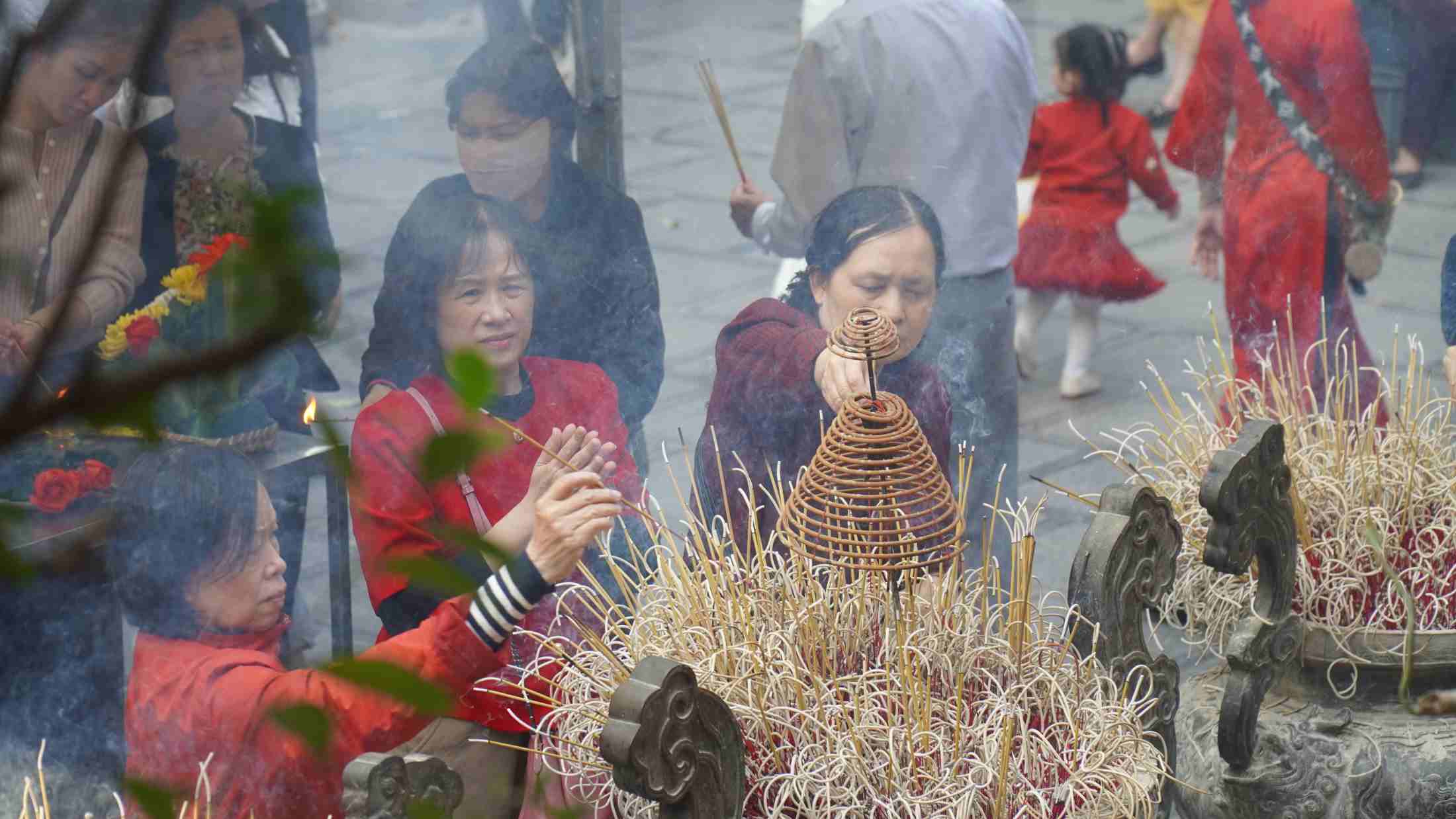
During Tet, or Lunar New Year, Quan Su Pagoda becomes much livelier. Many Vietnamese families visit at the start of the year to pray for health, happiness, and good fortune in the months ahead. The pagoda is beautifully decorated, and the energy feels festive while still maintaining its spiritual character. If you want to witness an important cultural tradition, this is one of the most meaningful times to visit. However, it will be very crowded during this time, so if you don’t like waiting in line, consider visiting at another time.
Full Moon Days
Full moon days hold special significance in Vietnamese Buddhist practice, so Quan Su Pagoda often sees a larger number of worshippers during these periods. The scent of incense fills the air, offerings become more abundant, and the pagoda feels particularly vibrant. While it may be busier than usual, visiting on a full moon offers a deeper glimpse into the religious life that continues to shape the pagoda today.
One Last Thing
What stayed with me most after visiting Quan Su Pagoda wasn’t the architecture or even the history. It was the reminder that some of the most meaningful parts of Hanoi are often the easiest to miss.
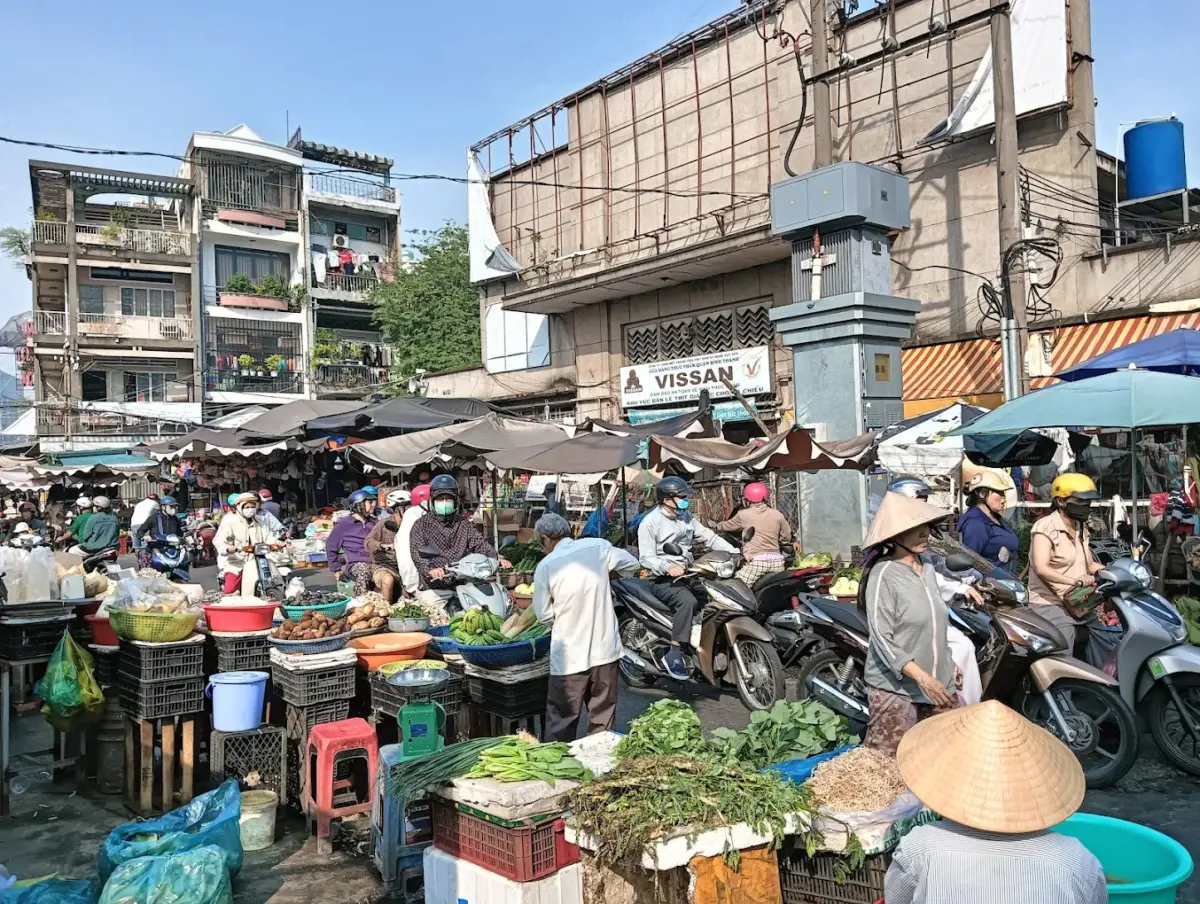
The city has a way of hiding its stories in plain sight. Sometimes they’re found inside a centuries-old pagoda tucked between busy streets. Other times, they’re hidden in narrow alleyways where families have lived for generations, in small neighborhood markets that never appear on travel itineraries, or in quiet corners of the city that most visitors pass without noticing.
That’s why I always think Quan Su Pagoda is more than just a temple visit. It’s a good reminder to slow down and look beyond the obvious.
If exploring the pagoda leaves you curious about the everyday side of Hanoi, consider spending some time beyond the main attractions. Walking through the city’s hidden alleyways, meeting local residents, and discovering neighborhoods that rarely make it into guidebooks can reveal a side of Hanoi that feels just as authentic as its famous landmarks.
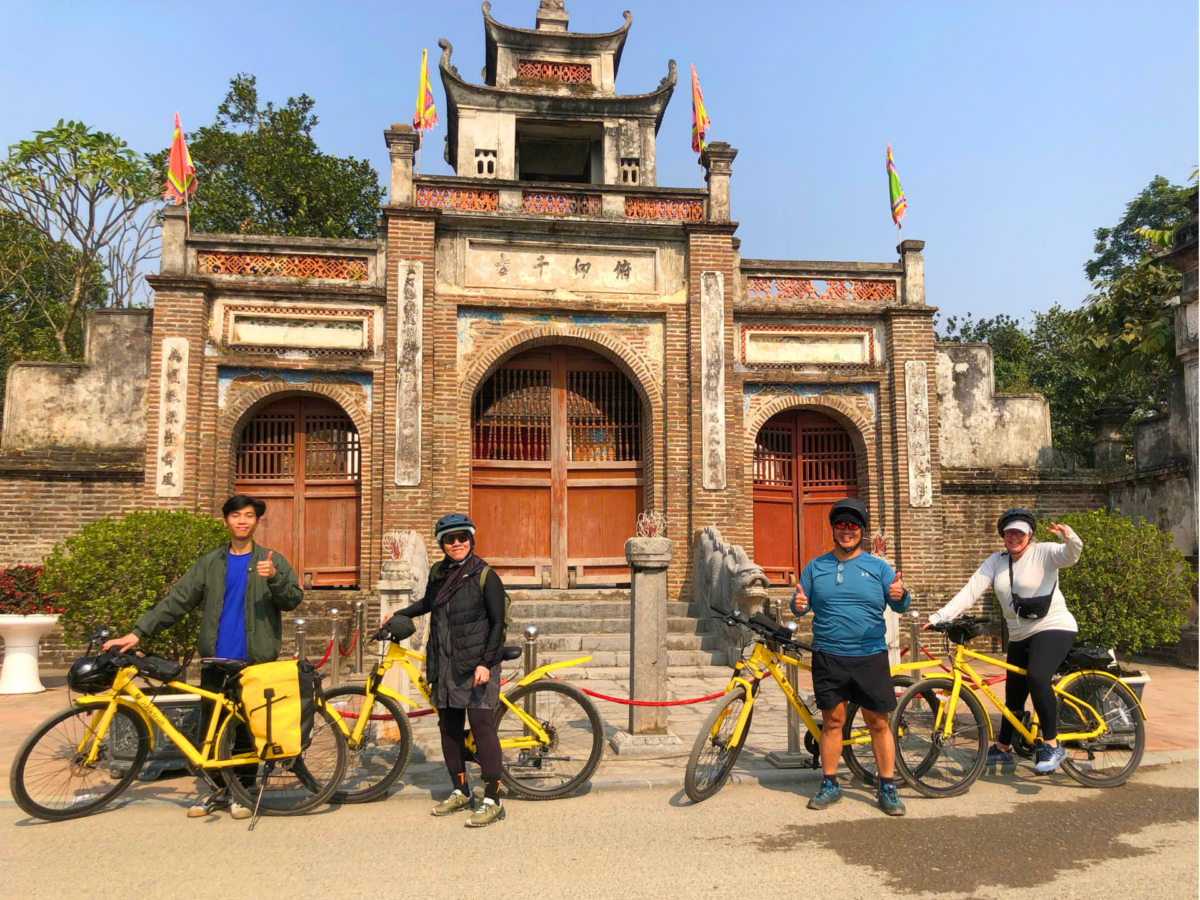
The same curiosity that leads people to places like Quan Su Pagoda often leads them beyond Hanoi’s main attractions as well. If you’d like to discover more of the city’s hidden stories, joining a cycling tour with Jackfruit is one of the best ways to do it. Moving at a slower pace allows you to explore quiet alleyways, local neighborhoods, and everyday corners of Hanoi that many visitors simply pass by without noticing.
Because in the end, Hanoi isn’t only about the places you visit. It’s about the stories you discover between them.