

Table of Contents
If you’re in Hanoi and looking for a place that helps you understand Vietnam in a more authentic and grounded way, I usually take people to the Vietnam Museum of Ethnology. Every time I bring foreign friends here, I feel a quiet sense of pride. It’s one of those places that tells Vietnam’s story through the real, everyday lives of its 54 ethnic groups.
Some people search for it as the ethnology museum in Hanoi, and others even type ‘ethnologisches museum von Vietnam’ before visiting. But what they’re really looking for is something deeper, a way to understand Vietnam in a more human, more lived-in way. And this museum does that very naturally, without trying to explain too much or overcomplicating the narrative. It simply opens a door into the diverse soul of this country.
Vietnam Museum of Ethnology: An Incredible Journey Into 54 Ethnic Groups
1. Vietnam Museum of Ethnology, Hanoi: How to Get There and Essential Tips
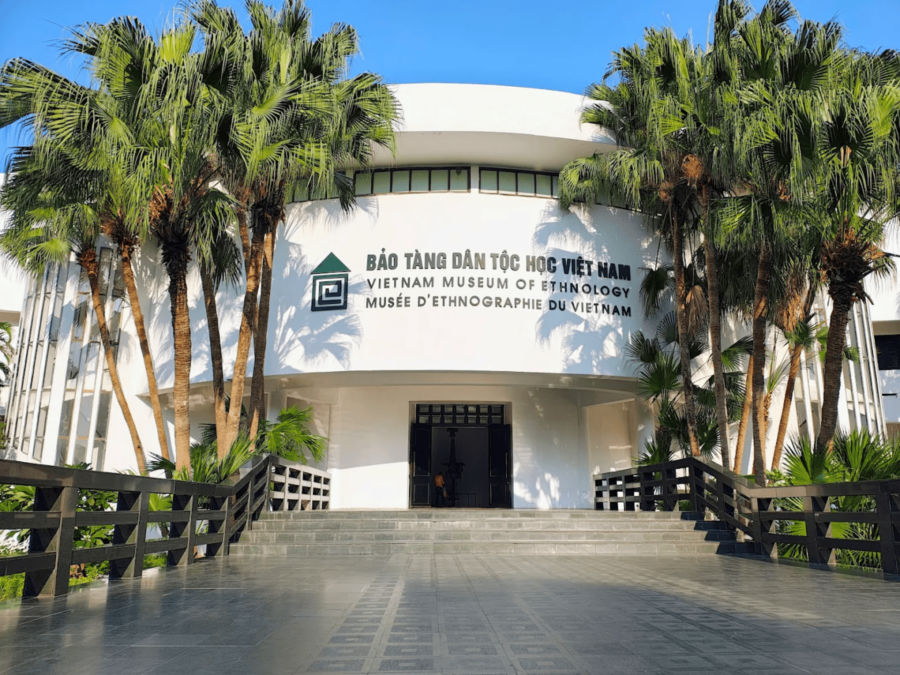
When I go there, I usually just grab a Grab or hop into a taxi because it’s the simplest way, especially if I’m starting from the chaotic streets of the Old Quarter. The museum is located in Cau Giay District, about 7-8 kilometres from Hoan Kiem Lake.
If you prefer a local budget-friendly adventure, there are buses too (like Bus 14 or 38), but I don’t often take them since they take more time and feel a bit less straightforward if you aren’t familiar with the city’s routes.
To help you plan your day seamlessly, here are the essential practical details:
- Ticket Price: Around 40,000 VND for adults, with discounts for students and children (bring your student ID if you have one).
- Opening Hours: From 8:30 to 17:30.
- Important Note: The museum is strictly closed on Mondays.
If I were going with you, I’d suggest coming either early in the morning, right when the gates open, or later in the afternoon, around 14:30 on a weekday. The atmosphere is significantly quieter, giving you more breathing room to move slowly and really take things in.
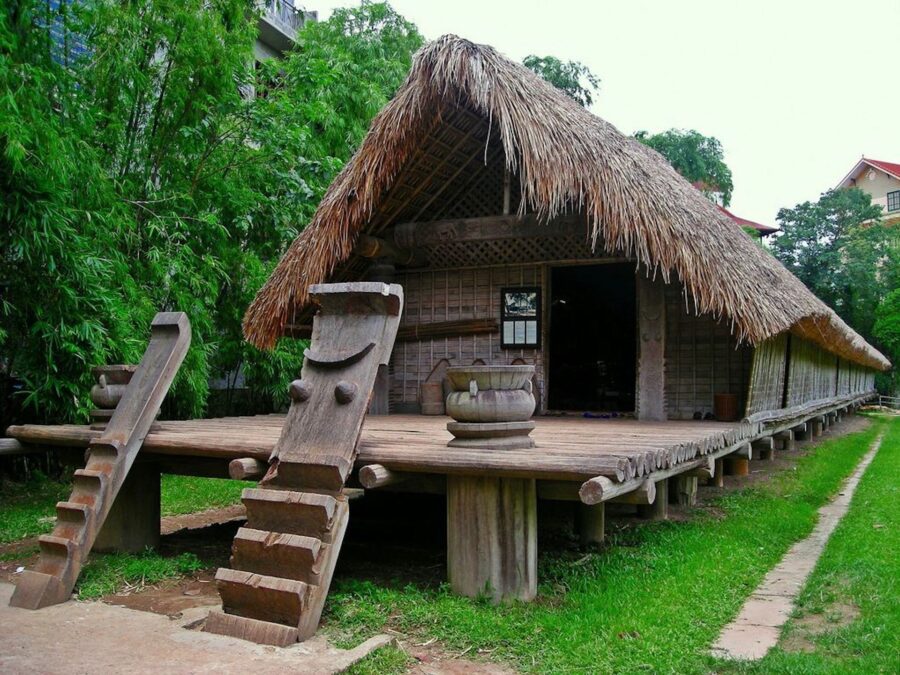
I also always recommend wearing comfortable shoes, ideally sneakers or sturdy sandals. The outdoor area is quite expansive, and you’ll find yourself walking on gravel paths and climbing up wooden stairs between different traditional houses.
2. Inside the Vietnam Museum of Ethnology in Hanoi: Exploring the Three Main Spaces
Whenever I walk through the gates, I feel like each space tells Vietnam’s story from a different, beautifully nuanced angle. The museum is divided into three main areas, each offering its own way of seeing the culture.
– The Bronze Drum Building
This is your first stop right after checking tickets: the main indoor galleries. You’ll easily spot its circular shape, inspired by the ancient Dong Son bronze drum, a classic icon of Vietnamese heritage.
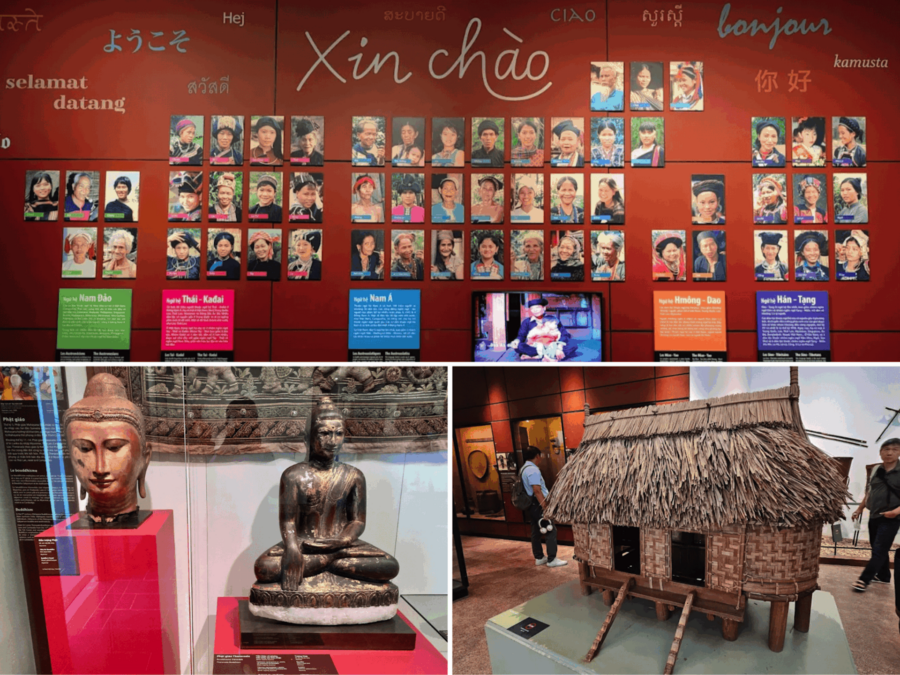
Inside is a massive cultural archive with thousands of genuine artefacts and old photos tracing the roots of Vietnam’s 54 ethnic groups. The layout flows naturally by language families, making it easy to map out who’s who, from the lowland Viet majority to the remote mountain tribes.
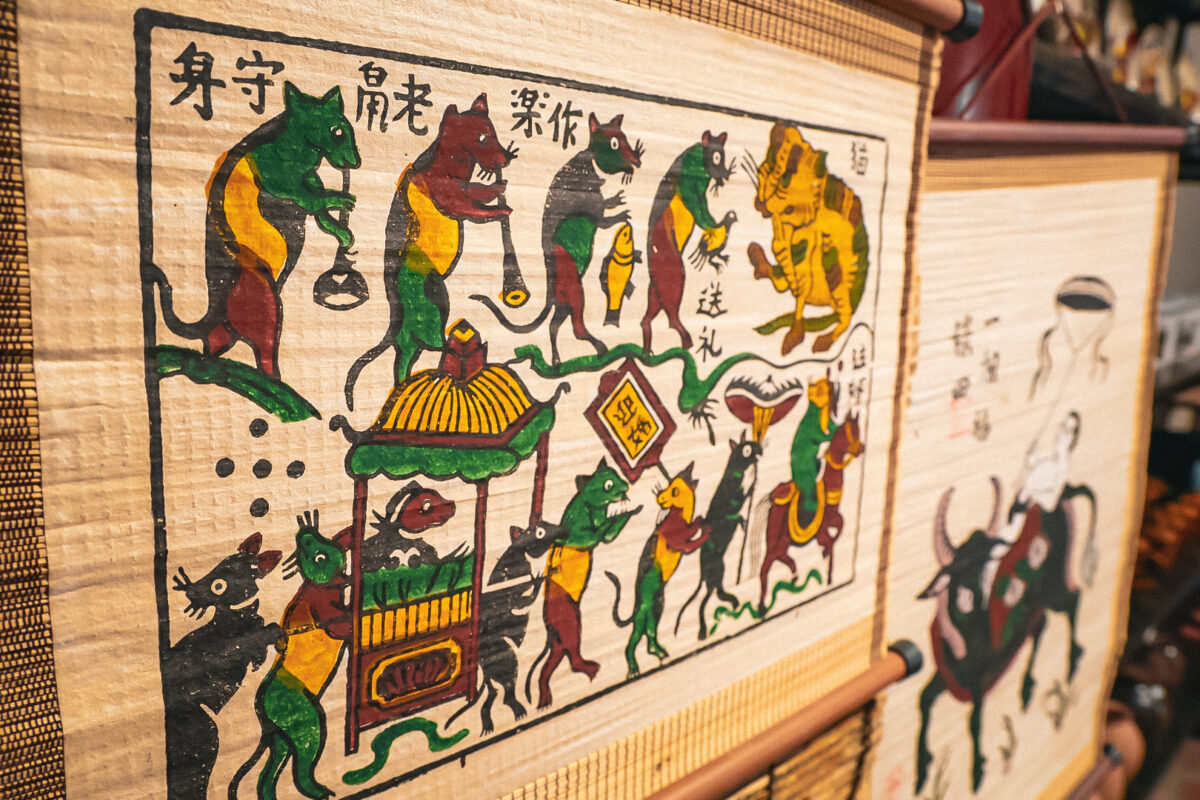
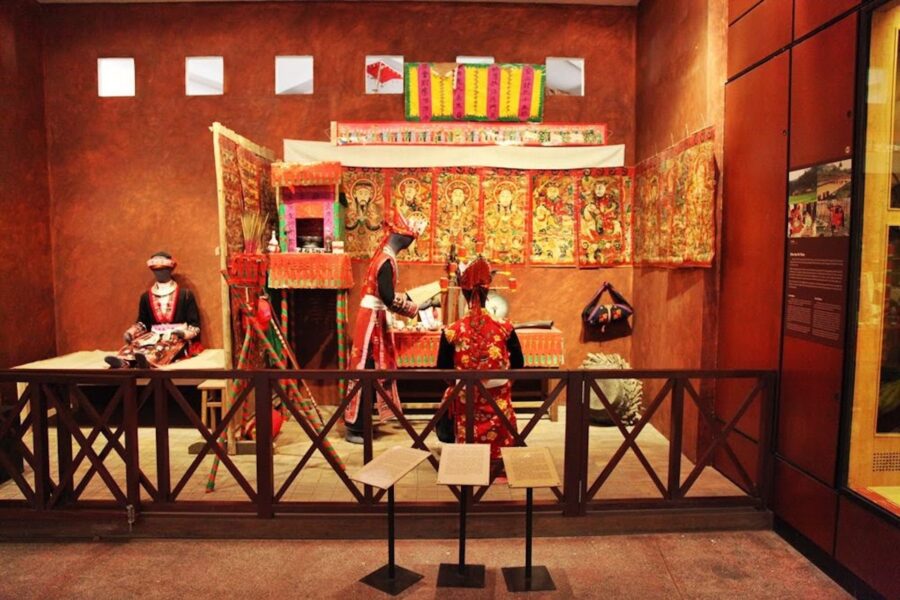
What I love here is how they display everyday life, from hand-woven skirts and farming tools to shaman ritual gear. Plus, all the signs are translated into English and French, so it never feels overwhelming or confusing.
Don’t skip the upstairs gallery either. They change the exhibits there quite often, focusing on specific themes like traditional weaving, folk medicine, or wedding rituals. It’s the main reason why coming back a second time still feels fresh.
– The Architectural Garden
Right next to the garden sits a modern, kite-shaped building that stands out completely from the rest of the museum. This space feels like a gentle expansion of your journey, pulling you back for a moment to see how Vietnam’s traditions connect with a much larger Asian picture.
Wandering through these quiet galleries, you’ll come across hand-woven textiles, delicate shadow puppets, and sacred folklore art from Thailand, Laos, Cambodia, and Indonesia.
What I love about this section is that nothing feels foreign. Instead, you start to notice how these cultures share the same invisible threads, whether it’s the ancient rhythm of wet-rice farming or a deep, generational respect for ancestors. It is a peaceful, beautiful way to wrap up the exhibition before heading outside.
– The Southeast Asia Exhibition (The Kite Building)
Right next to the garden sits a sleek, kite-shaped building. This space widens the lens, placing Vietnam’s local history into the broader context of our neighbouring countries.
Strolling through these modern galleries, you’ll stumble upon textiles, shadow puppets, and sacred art from places like Thailand, Laos, Cambodia, and Indonesia.
It’s a lovely way to wrap up, showing that while each country has its own distinct flair, we all share those deep, ancient threads like the rhythm of rice farming and respect for our ancestors.
3. Water Puppet Show: A must-see experience at the Vietnam Museum of Ethnology, Hanoi
One of the most special, lively experiences at the Vietnam Museum of Ethnology, Hanoi, is the water puppet show.
While you can easily find puppet theatres in the Old Quarter, the vibe at the museum hits differently. It’s much more rustic, open-air, and stays true to how the art form started in the 11th century, when rice farmers would perform right on the flooded paddies to celebrate a good harvest.
- Schedule: The shows are hosted regularly, mostly on weekends (Saturdays and Sundays) at specific intervals (usually 10:00, 11:30, 14:30, and 16:00).
- Ticket Price: Around 70,000 to 90,000 VND (separate from the main museum admission).
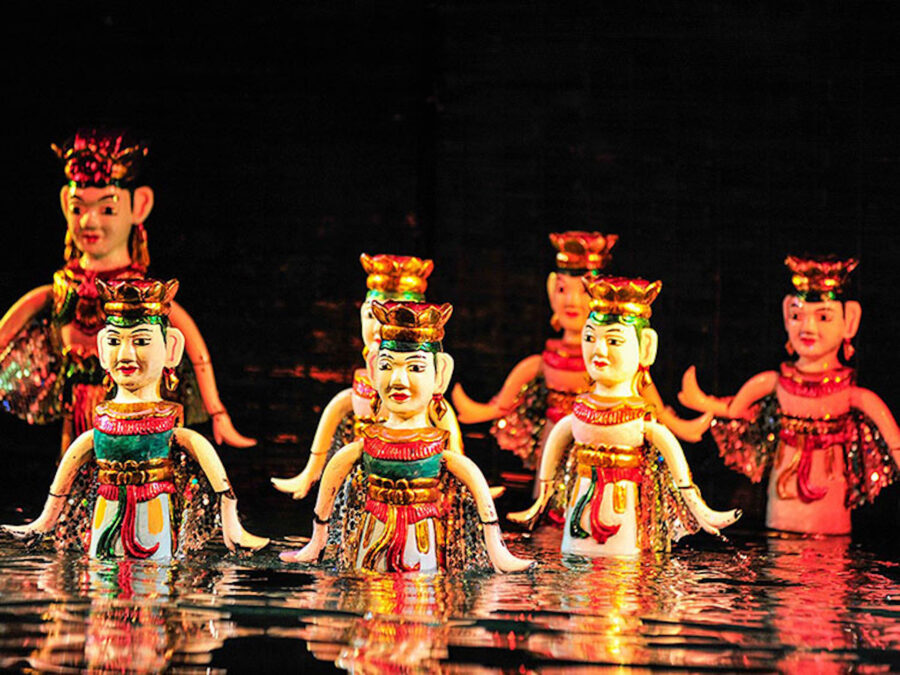
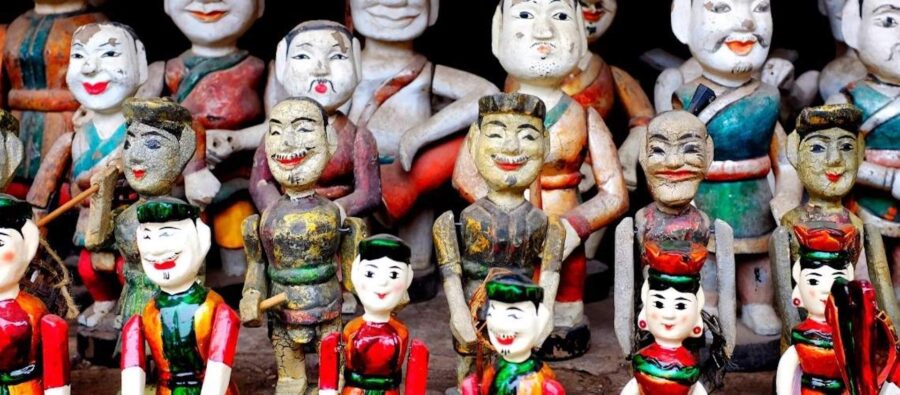
Once the live folk orchestra starts playing, the wooden puppets come alive, splashing across the water. The puppeteers stand waist-deep behind a bamboo screen, controlling everything with hidden rods.
The stories are simple, light-hearted glimpses into village life, like a cheeky fox chasing ducks or a lazy farmer fishing. For me, it’s the perfect finale. It takes all that quiet history inside and turns it into something bright, loud, and full of life.
After the museum: seeing Hanoi differently
The Vietnam Museum of Ethnology is not just a standard tourist landmark; it feels more like a quiet, respectful introduction to the deep stories, traditions, and everyday human rhythms that still shape modern Vietnam today. It gives you the context you need to look at the country with deeper appreciation and empathy.
After spending a few hours soaking in the history at the ethnology museum in Hanoi, I usually like to slow things down a bit, step away from the usual tourist trails, and experience the city in a more local, grounded way.
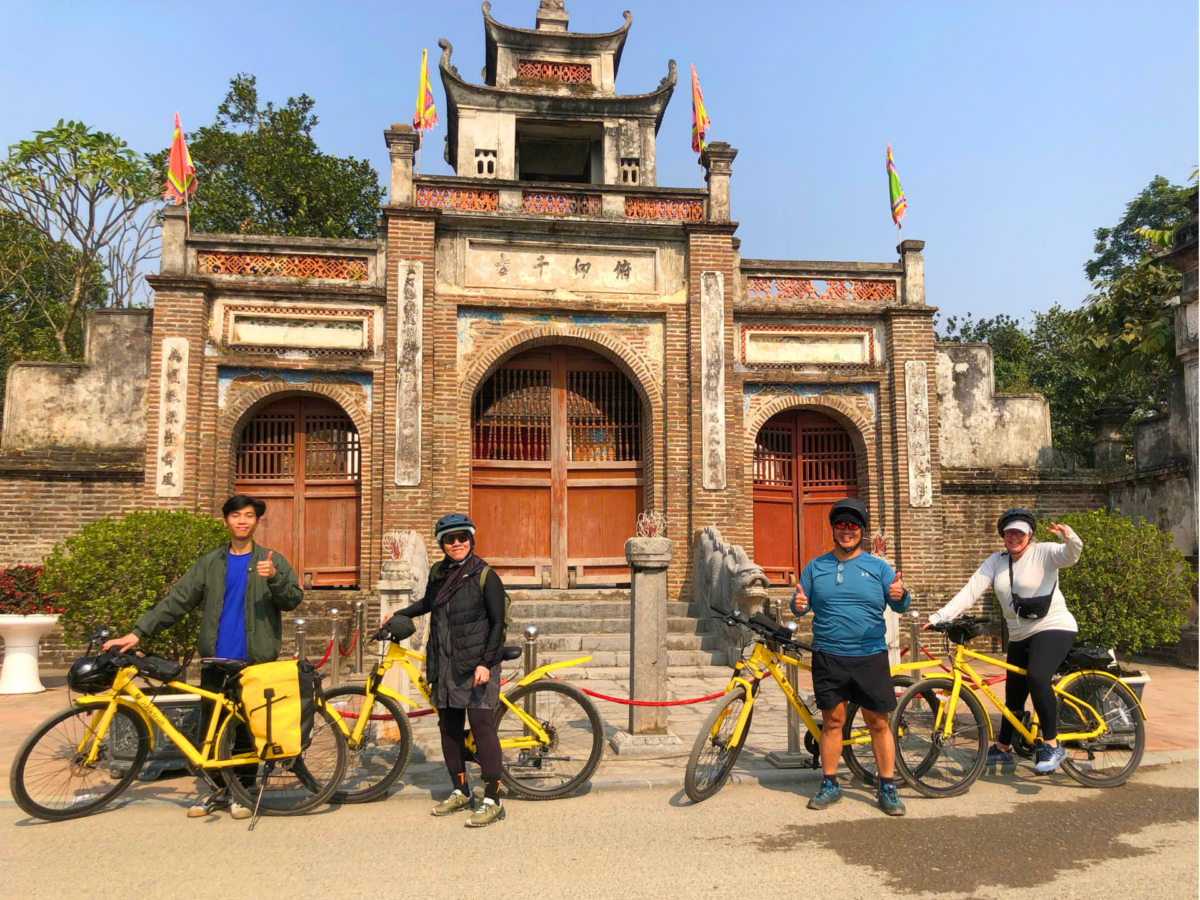
Sometimes, I highly recommend joining a Hanoi Cycling Tour. Hopping on a bicycle allows you to ride through the quieter, shaded streets near West Lake, cut through small, winding alleyways, and notice the beautiful, unscripted everyday rhythm of Hanoi, the street vendors prepping their baskets, neighbours chatting over iced green tea, and old houses tucked away from the main roads.
It is the perfect way to process everything you just learned at the museum, seeing those ancient cultural threads come alive right in front of your eyes on the streets of Hanoi.