

Table of Contents
Xin chào! If you’re traveling through Vietnam with me, there’s something I always love to share first: our stories with Vietnamese mythology.
These are the tales we grow up with, the ones that begin with “ngày xửa ngày xưa…” (once upon a time) and slowly become part of how we see the world. In many ways, Vietnamese mythology is where it all begins, shaping how we understand our origins, our values, and the spirit of this land. And through these Vietnamese legends, that sense of identity is passed down from one generation to the next.
As you journey across Vietnam, you’ll start to recognize these stories in real life: in the shapes carved on temple roofs, in the dishes prepared during festivals, in the lakes, mountains, and even in the way people celebrate together.
So before we begin, here are 5 Vietnamese legends I’d love to tell you, each one connected to something you’ll encounter along the way:
1. Vietnamese mythology origins: The Legend of Lạc Long Quân and Âu Cơ.
2. Vietnamese legends in Hanoi: Hoàn Kiếm Lake – The Legend of Lê Lợi and the Magical Sword.
3. The Legend of Lang Liêu: The origins of bánh chưng, a traditional cake in Tết.
4. Symbols in Vietnamese mythology: The Turtle, the Dragon, the Unicorn, and the Phoenix.
5. The Legend of Mai An Tiêm: The origins of Vietnamese watermelons.
Now, come closer, I’ll tell you the first one the way we all heard it growing up…
Discover Vietnamese Through Mythology Stories with Jackfruit
1. Vietnamese mythology origins: The Legend of Lạc Long Quân and Âu Cơ
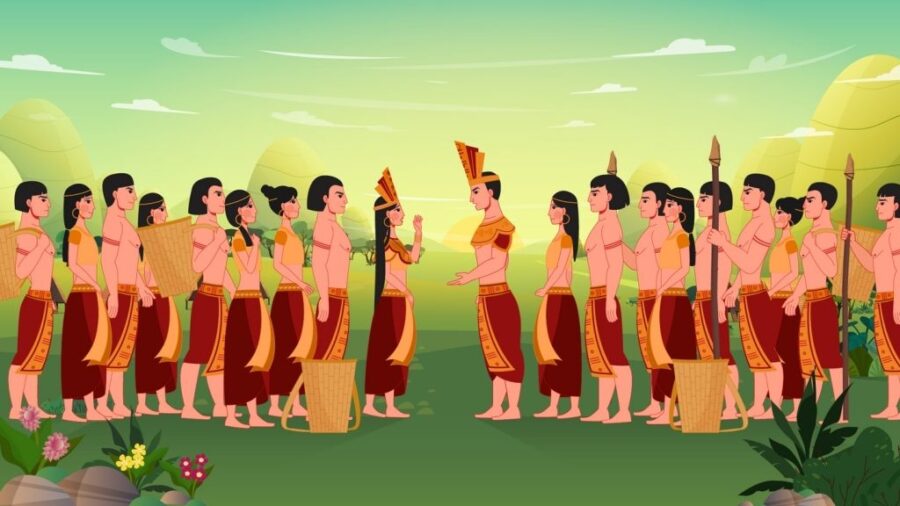
If you travel with me long enough, this is always the first story I’ll tell, because for us, it’s where everything begins. This is one of the most important stories in Vietnamese mythology. Ngày xửa ngày xưa (once upon a time), there was Lạc Long Quân, a powerful lord of the sea, and Âu Cơ, a gentle fairy from the mountains. Together, they gave birth to 100 eggs, which later became 100 children. But coming from two different worlds, they chose to part ways. Fifty children followed their father to the coast, and fifty followed their mother to the highlands. And that’s how, as we like to say here, Vietnam began.
For locals, this is one of the most meaningful Vietnamese legends, carrying a simple but powerful message. No matter where you go in Vietnam, north or south, mountains or sea, people believe they share the same roots. That’s why you’ll often hear the phrase “con Rồng cháu Tiên” (children of the dragon and the fairy). It reflects a strong sense of unity, something that still shapes how people see community, family, and belonging today.
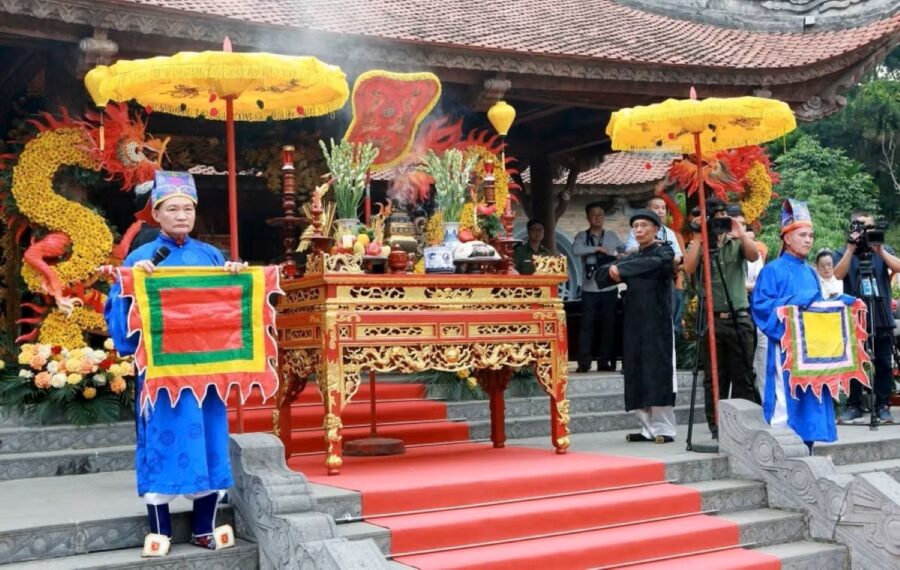
Every year, in Phú Thọ Province, people gather at the Hùng Kings Temple on the 10th day of the third lunar month for the Hùng Kings Festival. It’s a time when locals come together to remember their origins and honor the earliest generations of the country.
If you happen to visit during this time, the atmosphere is especially lively, with ceremonial processions, traditional performances, and dragon and lion dances filling the temple grounds. Walk around for a while, and you’ll begin to see how a story from Vietnamese mythology still feels present in everyday life.
2. Vietnamese legends in Hanoi: Hoàn Kiếm Lake – The Legend of Lê Lợi and the Magical Sword
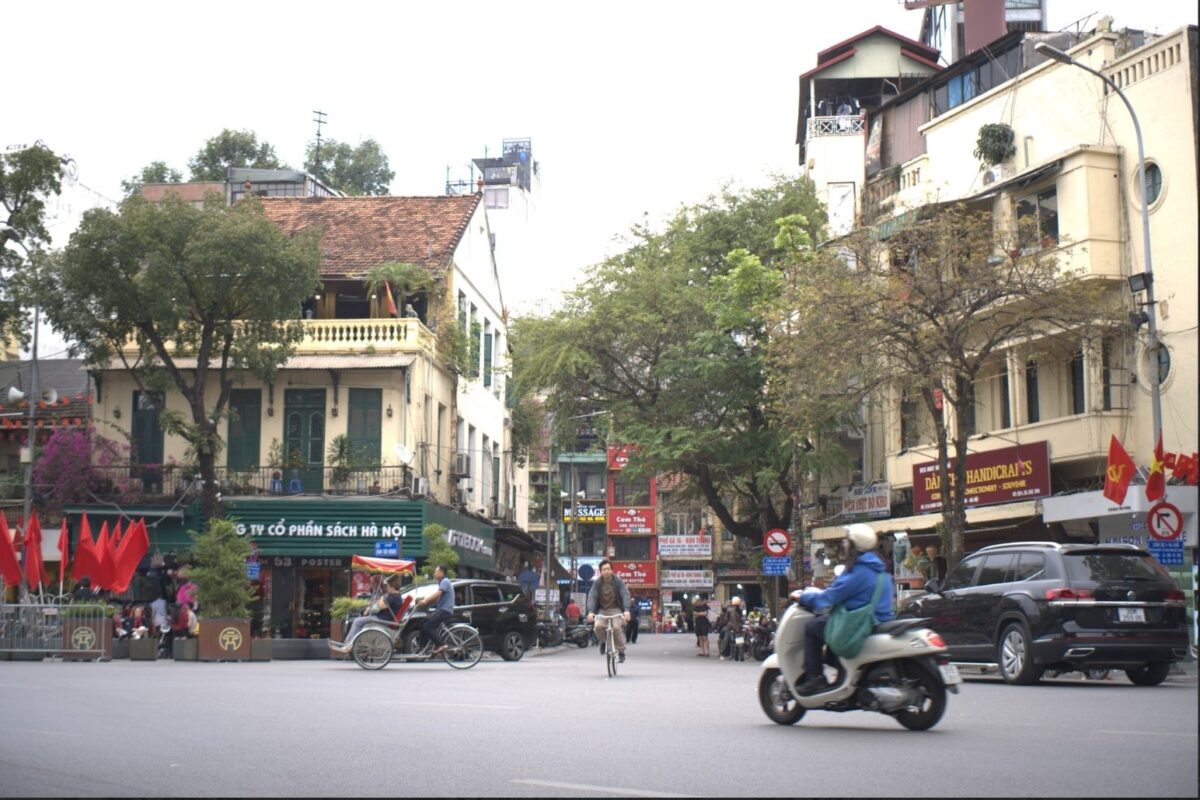
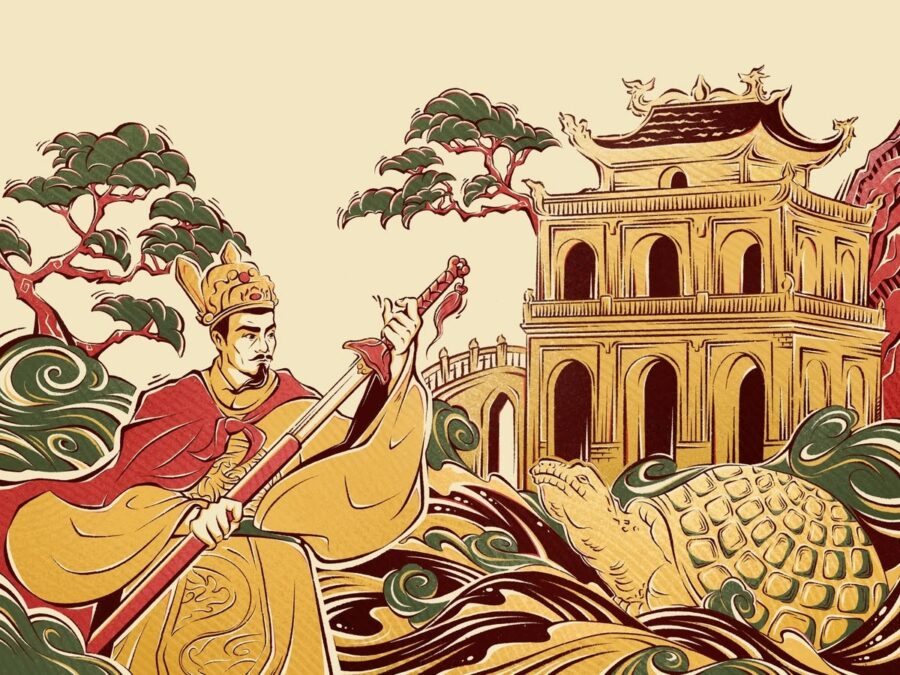
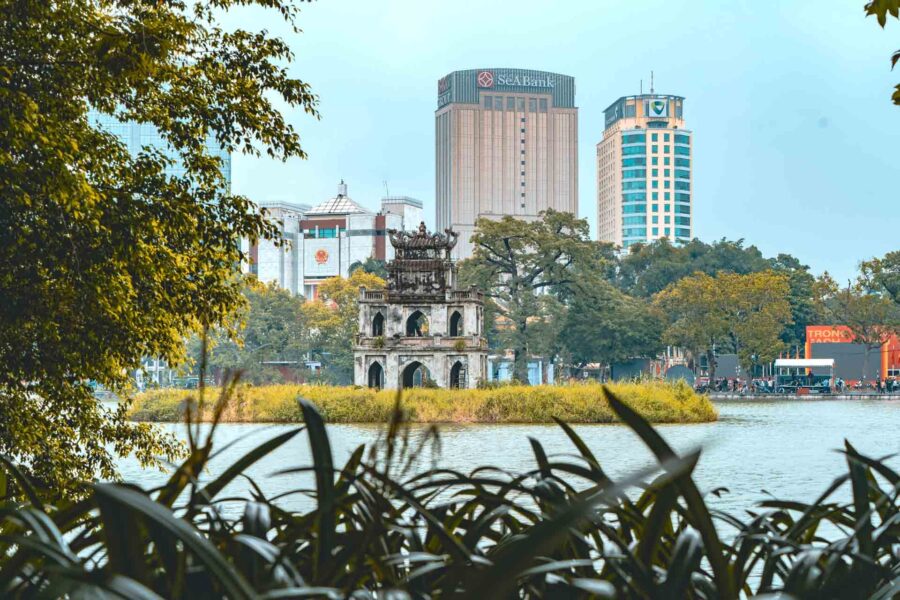
If you’re walking with me around Hoàn Kiếm Lake (in Hanoi), I’ll probably slow down a bit and say, “Alright, this place comes with a story.” This is one of the most well-known Vietnamese legends, and you’ll hear it often when exploring the capital. Ngày xửa ngày xưa (once upon a time), when Vietnam was under threat from the Ming army, there was a man named Lê Lợi. His struggle was not easy at first, until one day, he came across a magical sword. From that moment on, everything began to change. Victory after victory followed, and eventually, he drove the invaders out and became emperor.
But the story doesn’t end there. Years later, while boating on this lake, Lê Lợi encountered a giant turtle rising from the water. The turtle asked him to return the sword to its true owner, the Dragon King. And just like that, he gave it back. Since then, the lake has been called Hoàn Kiếm (Lake of the Returned Sword). Like many stories in Vietnamese mythology, it blends history with legend, which is why locals still feel a strong connection to this place.
For people in Hanoi, this legend adds a quiet layer of meaning to everyday life. You’ll notice how locals still speak of the turtles here with respect, sometimes calling them “cụ rùa” (elder turtle), as a kind of guardian of the lake. Come early in the morning, you’ll see people walking, practicing tai chi, or simply sitting by the water. With the story in mind, the whole scene feels a bit more special, as if the past and present are gently meeting in the same space.
3. The Legend of Lang Liêu: The origins of bánh chưng bánh dày, a traditional cake in Tết
If you spend time in Vietnam during Tết (the Lunar New Year), this is one of those Vietnamese legends you’ll likely hear while families gather in the kitchen. Ngày xửa ngày xưa (once upon a time), there was a prince named Lang Liêu, the son of a Hùng King. As the king grew older, he asked his sons to prepare a meaningful offering; the one who created the most thoughtful dish would become the next ruler. While the other princes searched for rare and luxurious foods, Lang Liêu chose something simple and familiar: rice.
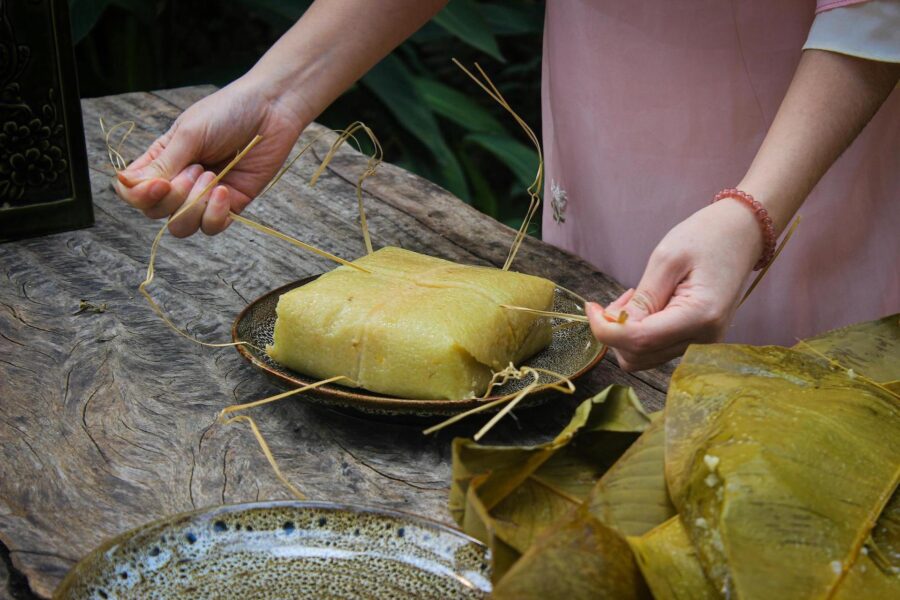
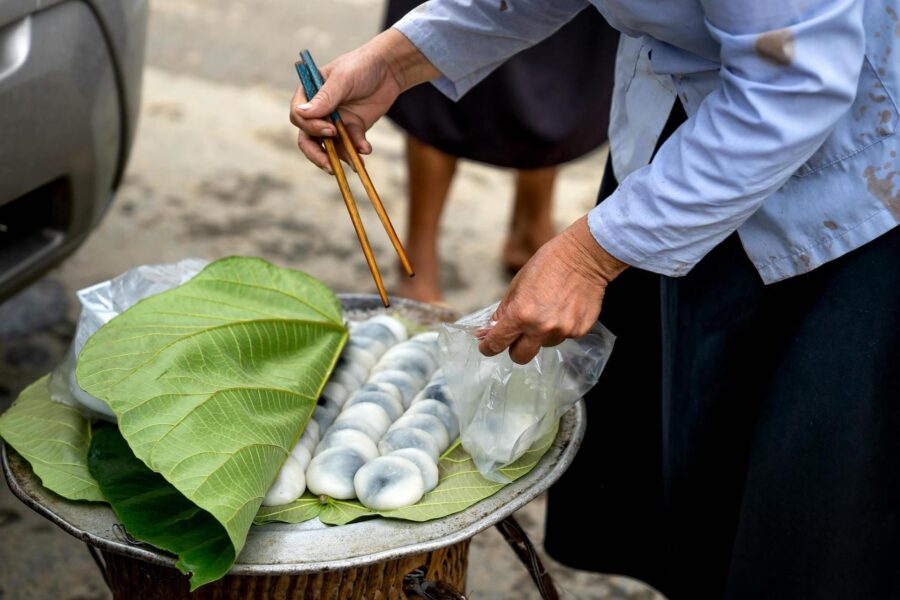
From this, he created two cakes. Bánh dày (a round sticky rice cake) symbolized the sky, and bánh chưng (a square sticky rice cake filled with mung beans and pork) represented the earth and all living things. Like many stories in Vietnamese mythology, the meaning mattered more than the ingredients. The king recognized this and chose Lang Liêu as his successor. Even today, the story reflects important values in Vietnamese culture, simplicity, respect for nature, and appreciation for everyday life.
During Tết, bánh chưng and bánh dày become one of the most important foods you’ll see across the country. It is carefully prepared and placed on family altars as an offering to ancestors. If you visit at the right time, you may have the chance to join a local family as they wrap the cakes in lá dong (a type of green leaf) and cook them slowly overnight. It’s a quiet but memorable experience, where one of the oldest Vietnamese legends is not just told, but truly lived.
See more: 10 Traditional Tet Dishes Vietnamese People Eat for Tet.
4. Symbols in Vietnamese mythology: The Turtle, the Dragon, the Unicorn, and the Phoenix
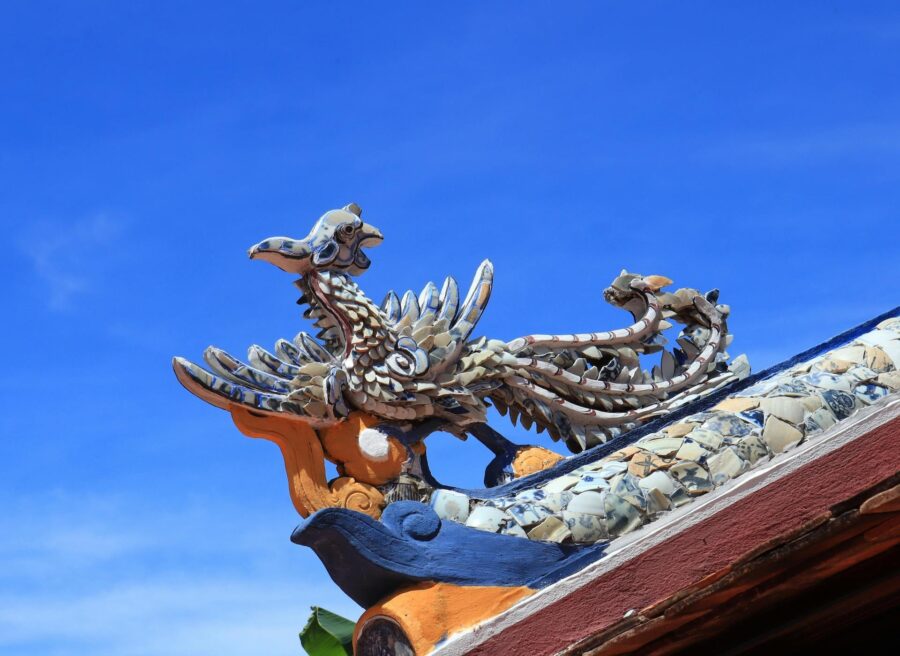
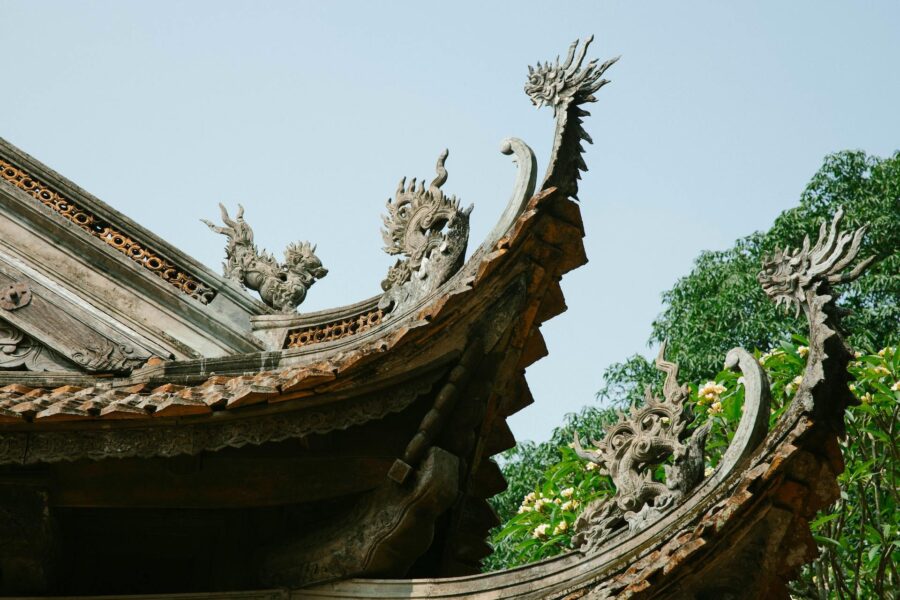
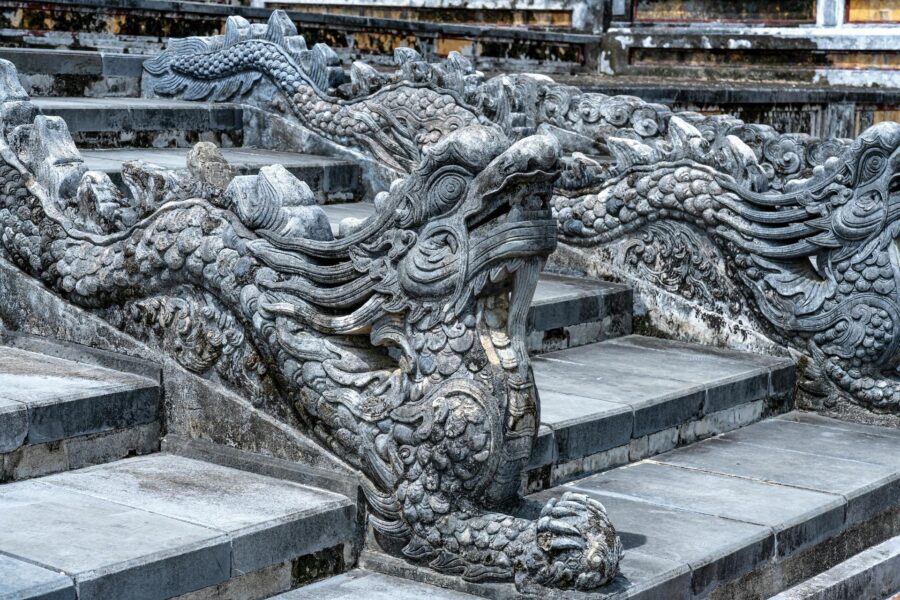
As we travel around Vietnam, you might start noticing certain creatures appearing again and again, on temple roofs, at entrances, or even during festivals. These are not just decorative details; they come from Vietnamese mythology and carry deep symbolic meaning. Ngày xửa ngày xưa (once upon a time), people believed that four sacred creatures represented the balance of the natural world: the Turtle, the Dragon, the Unicorn, and the Phoenix.
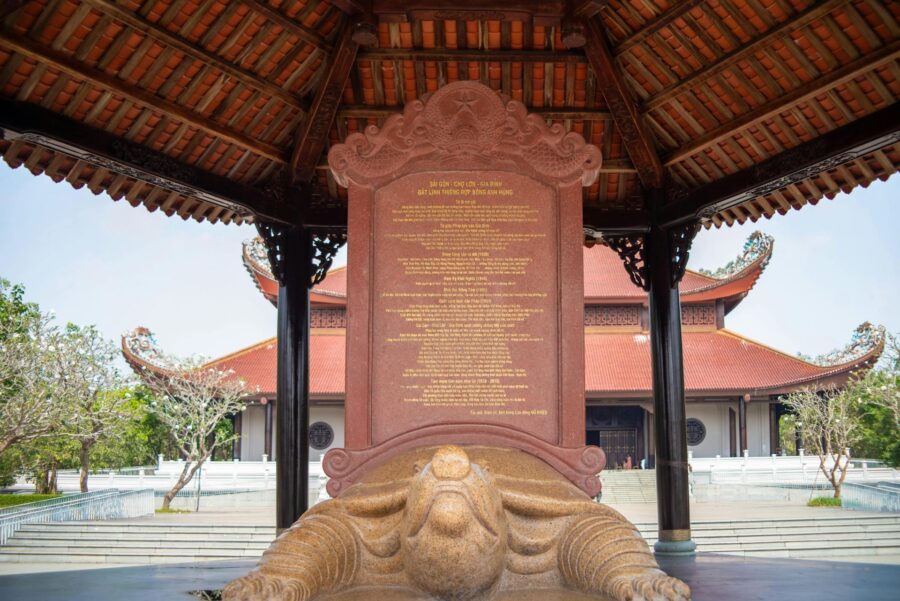
Each of these animals tells its own story. The Dragon is a symbol of power, prosperity, and good fortune, often linked to water and rainfall, which are essential for agriculture. The Unicorn, a mix of different animals, is believed to bring good luck and protect places from negative energy, which is why you’ll often see it near entrances. The Phoenix represents grace and harmony, and you’ll commonly spot dragon and phoenix motifs together at weddings, symbolizing balance and happiness. Meanwhile, the Turtle, the only real animal among them, stands for wisdom, longevity, and knowledge. You can even see stone turtles at the Temple of Literature in Hanoi, carrying the names of scholars from centuries ago.
As you explore Vietnam, these symbols quietly appear in everyday life, from ancient temples to festive decorations during Tết (Lunar New Year) and the Mid-Autumn Festival. Like many Vietnamese legends, they are more than just stories from the past. They continue to shape how people think about luck, protection, and harmony, adding an extra layer of meaning to the places you visit.
5. The Legend of Mai An Tiêm: The origins of Vietnamese watermelons
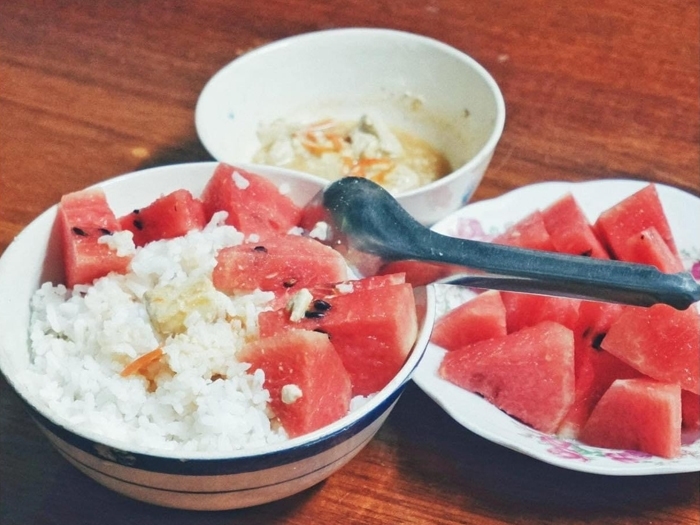
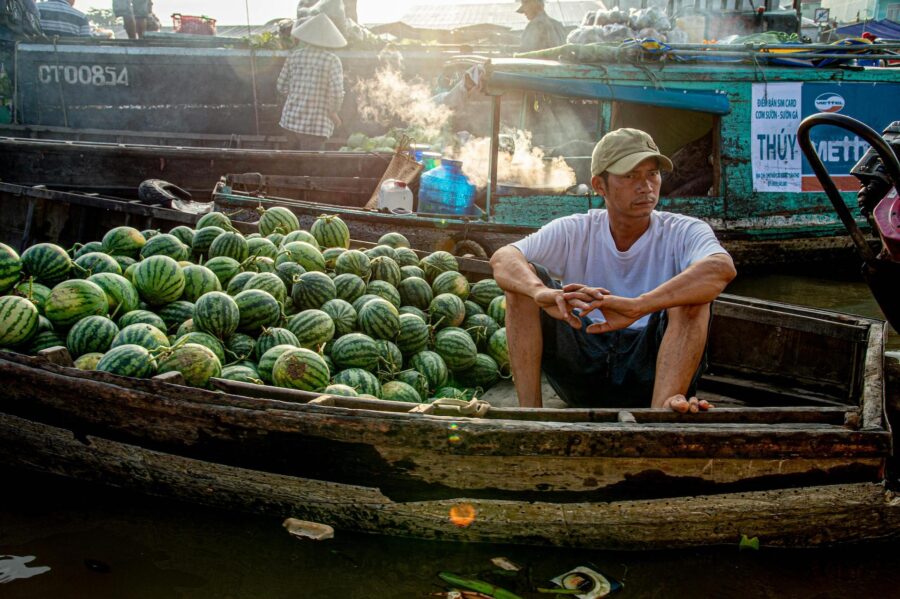
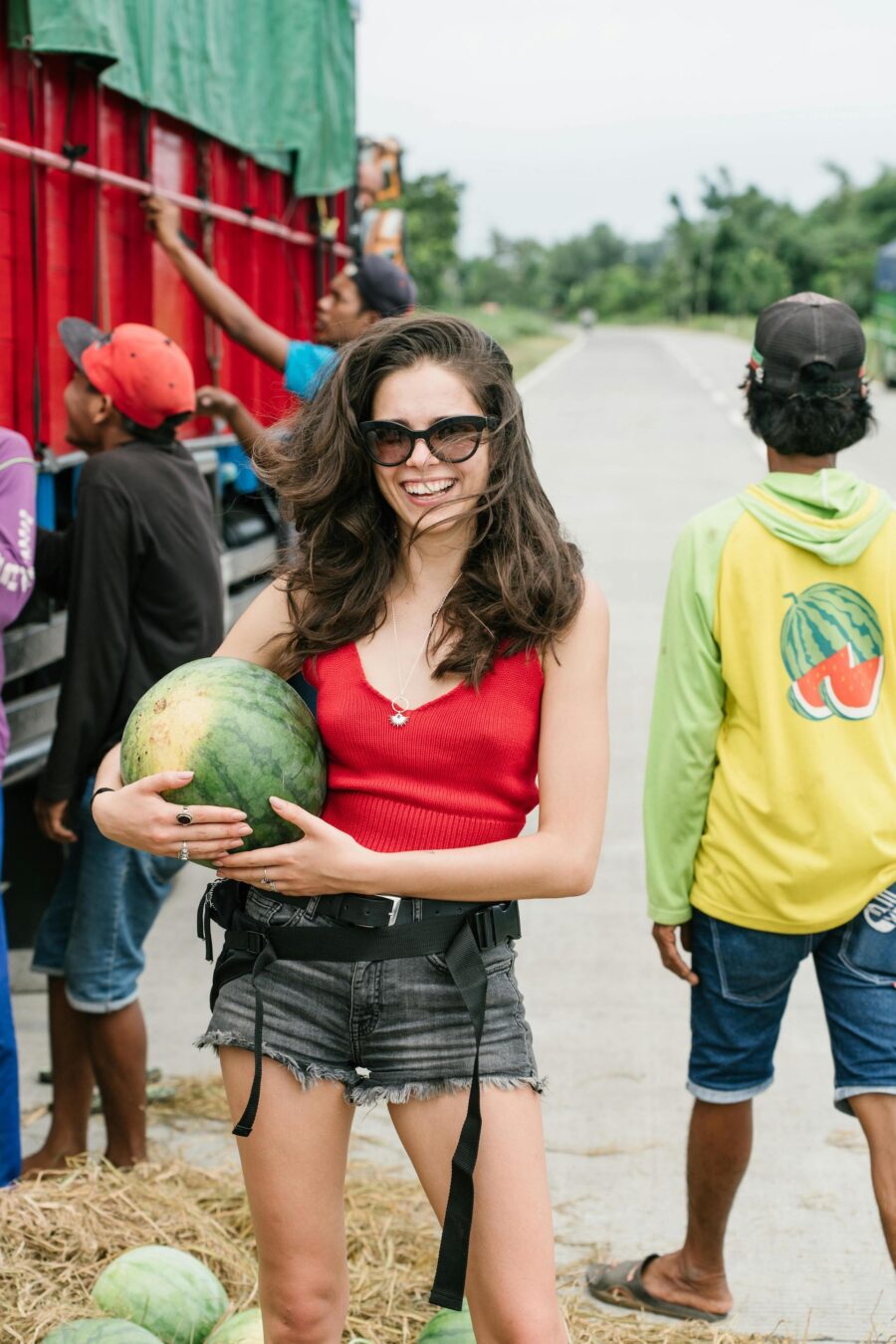
If you travel through Vietnam, especially in the summer, you’ll see watermelons everywhere, fresh, sweet, and always refreshing. Behind this familiar fruit is one of the lesser-known but meaningful Vietnamese legends. Ngày xửa ngày xưa (once upon a time), there was a man named Mai An Tiêm, an adopted son of a Hùng King. He was known for his strong character and belief that only what he earned through his own effort truly belonged to him.
But not everyone appreciated his words. Some people twisted them and told the king, who believed Mai An Tiêm had become arrogant. As a result, he and his family were sent away to a deserted island. Life there was harsh, but instead of giving up, Mai An Tiêm chose to start over. One day, he discovered some strange seeds dropped by birds. He planted them, and over time, they grew into the fruit we now know as watermelon.
From there, he traded the fruit with passing boats and slowly rebuilt his life. When news reached the king, he realized his mistake and invited Mai An Tiêm back. Like many stories in Vietnamese mythology, this legend carries a simple message about resilience, independence, and perseverance. Today, when you enjoy a slice of watermelon in Vietnam, especially during Tết (Lunar New Year), it’s not just a fruit, it’s a small reminder of a story about starting over and making the most of what you have.
From stories of dragons and fairies to magical swords, sacred creatures, and humble rice cakes, these Vietnamese legends offer more than just folklore. They give you a deeper way to understand the places you visit, the food you taste, and the traditions you see along the way. When you travel through Vietnam with these stories in mind, the experience becomes a lot more meaningful, like you’re seeing the country through a local lens.
Discover Vietnam through its stories
From stories of dragons and fairies to magical swords, sacred creatures, and humble rice cakes, these Vietnamese legends offer more than just folklore. They give you a deeper way to understand the places you visit, the food you taste, and the traditions you see along the way. When you travel through Vietnam with these stories in mind, the experience becomes a lot more meaningful, like you’re seeing the country through a local lens.
If you’re curious to explore these stories beyond the page, join us on a ride through the city with Jackfruit Adventure. Our cycling tours are designed to connect you with the real Vietnam, where history, culture, and everyday life come together naturally. On the Tour de Hanoi, you’ll cycle through the Old Quarter, past Hoàn Kiếm Lake and hidden corners of the city, while in the Tour de Saigon, you’ll ride through iconic landmarks, local markets, and lively streets, seeing a different side of Vietnam that most visitors miss.
Among these journeys, Saigon’s Untold Tales City Night Ride offers a more intimate way to experience the city after dark. As the streets begin to glow and the daytime rush fades, Saigon reveals a quieter, more mysterious side of itself.
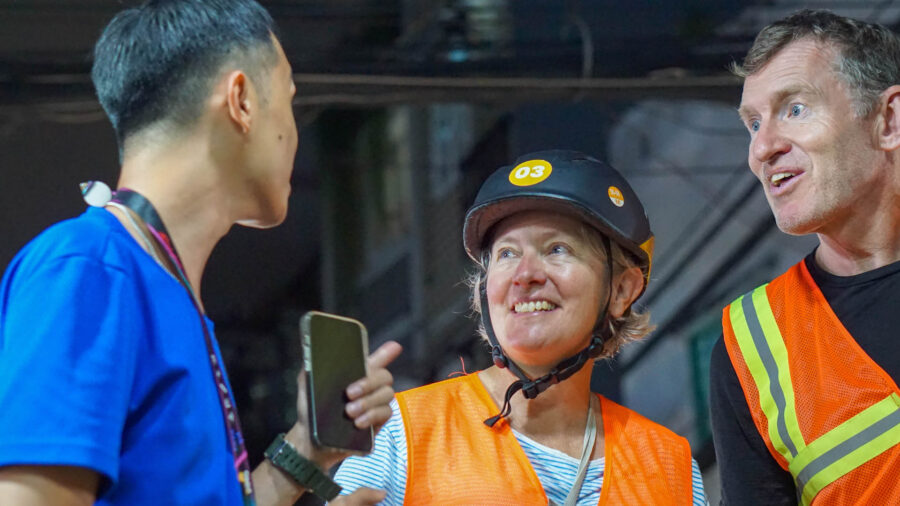
You’ll cycle through districts layered with history and rumor, stopping not just to see, but to listen to stories of old fortunes, hidden lives, and places that seem ordinary until you know what once happened there. It’s a ride that turns familiar streets into something else entirely, where every corner holds a story waiting to be told.