

Table of Contents
Nobody who grew up in Hanoi thinks of bánh mì as a food destination. We think of it as breakfast. As the thing you grab on the way out the door, still half-asleep, from a cart that’s been parked in the same spot since before you were born.
I’ve been eating hidden bánh mì in Hanoi my whole life without ever calling it that. It was just the cart on the corner. The woman who knew my order without asking. The sandwich wrapped in paper so thin it soaked through before I finished walking to the bus stop.
The hidden bánh mì in Hanoi I’m talking about isn’t hidden in the dramatic sense. It’s not behind a secret door or at the end of a treasure map. It’s hidden in plain sight – available to anyone who wanders off the tourist trail, wakes up early enough, and resists the pull of somewhere with a sign out front.
This is what that version of Hanoi tastes like, and why it matters.
What “Hidden” Actually Means When It Comes to Bánh Mì in Hanoi
When food writers talk about hidden bánh mì in Hanoi, they usually mean spots that haven’t been written about yet – places that will inevitably get discovered, photographed, and quietly changed by the attention.
But when I use the word, I mean something different. I mean the places that have no interest in being found by anyone outside the neighborhood. No English menu. No QR code (maybe). No social media. The vendor isn’t hiding, she’s just not performing. She shows up, makes sandwiches, sells out, goes home. The same thing, every day, for decades.
That kind of hidden bánh mì in Hanoi is a different category entirely. It’s not undiscovered. It’s just not trying to be discovered. And there’s a world of difference between the two.
The truly hidden bánh mì in Hanoi exists in the economy of the neighborhood – serving the same people, at the same time, for the same price, year after year. That reliability is its own kind of art.
The Culture Behind Hidden Bánh Mì in Hanoi
Breakfast Is Sacred and Fast
Hanoians don’t linger over breakfast. Morning is for movement – getting children to school, motorbikes into traffic, the day started. The hidden bánh mì in Hanoi exists precisely because it fits this rhythm perfectly. You stop, you get your sandwich in under two minutes, you go. No seats required. No waiting for a menu. No performance.
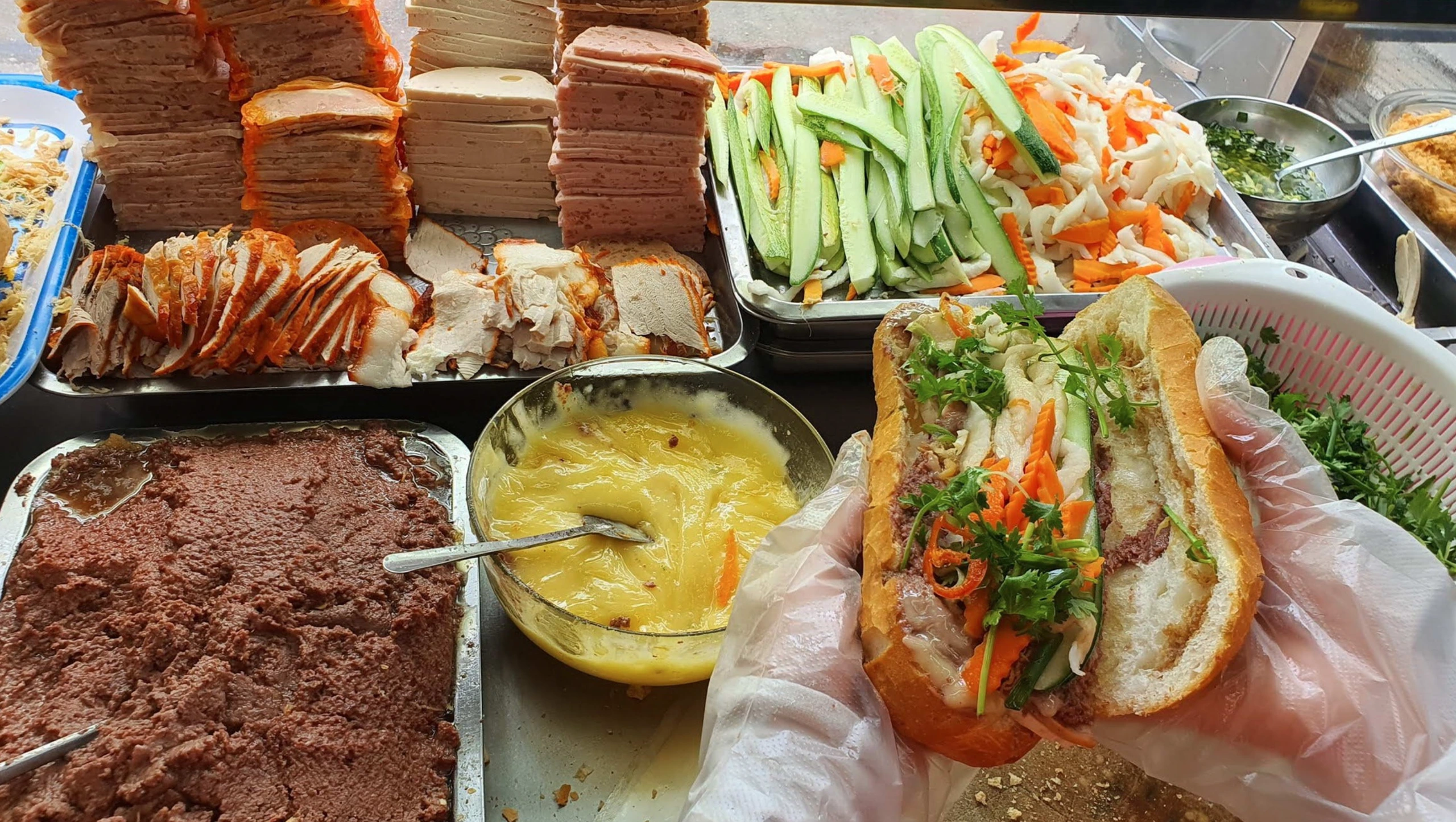
The best vendors I’ve known can assemble a bánh mì with their eyes essentially closed. Bread split, pâté spread, cold cuts layered, pickles scattered, chili tucked in at the side, paper wrapped – done. The whole thing in thirty seconds. Faster on busy mornings.
That speed isn’t laziness. It’s mastery.
The Alley Economy
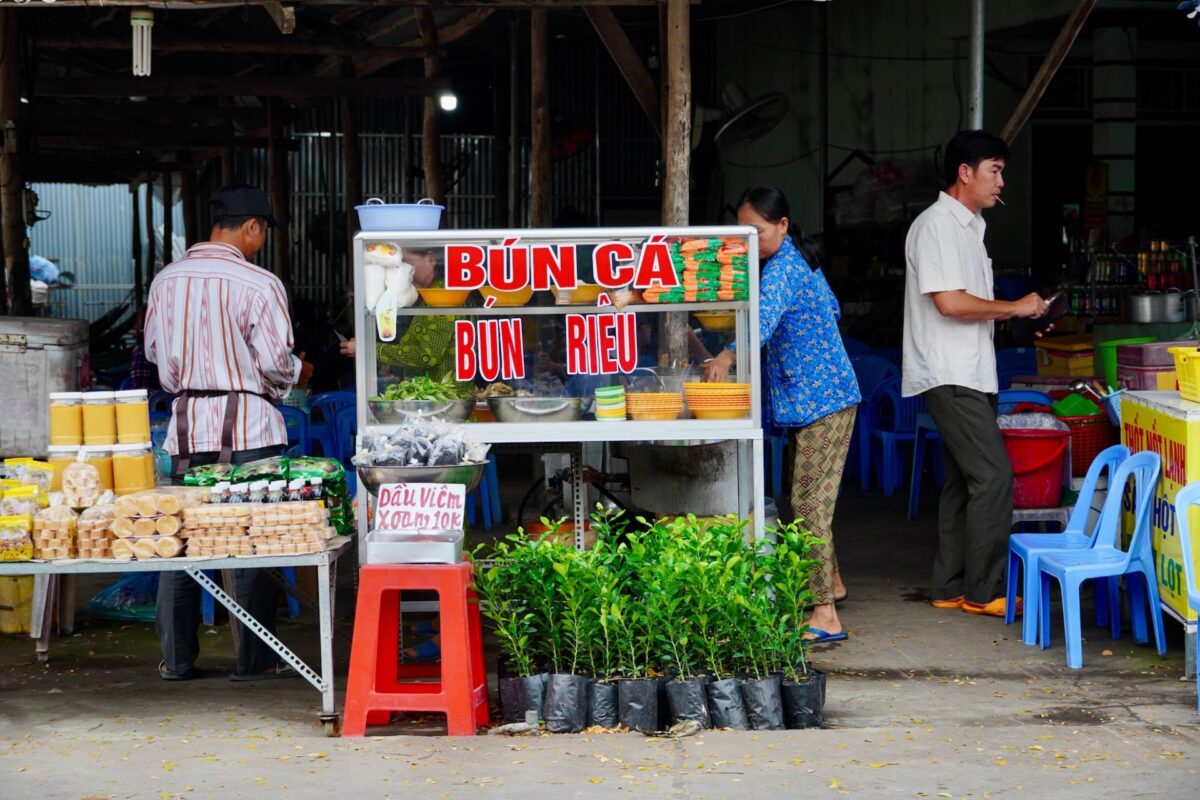
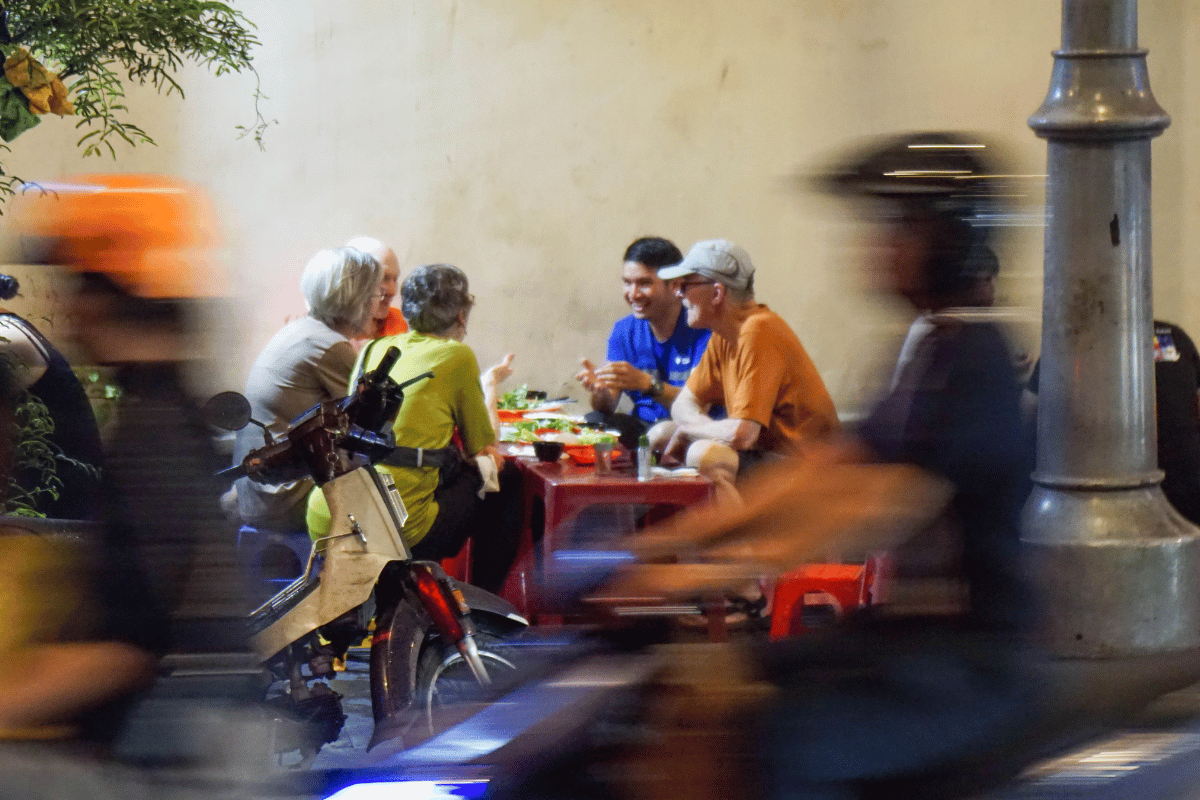
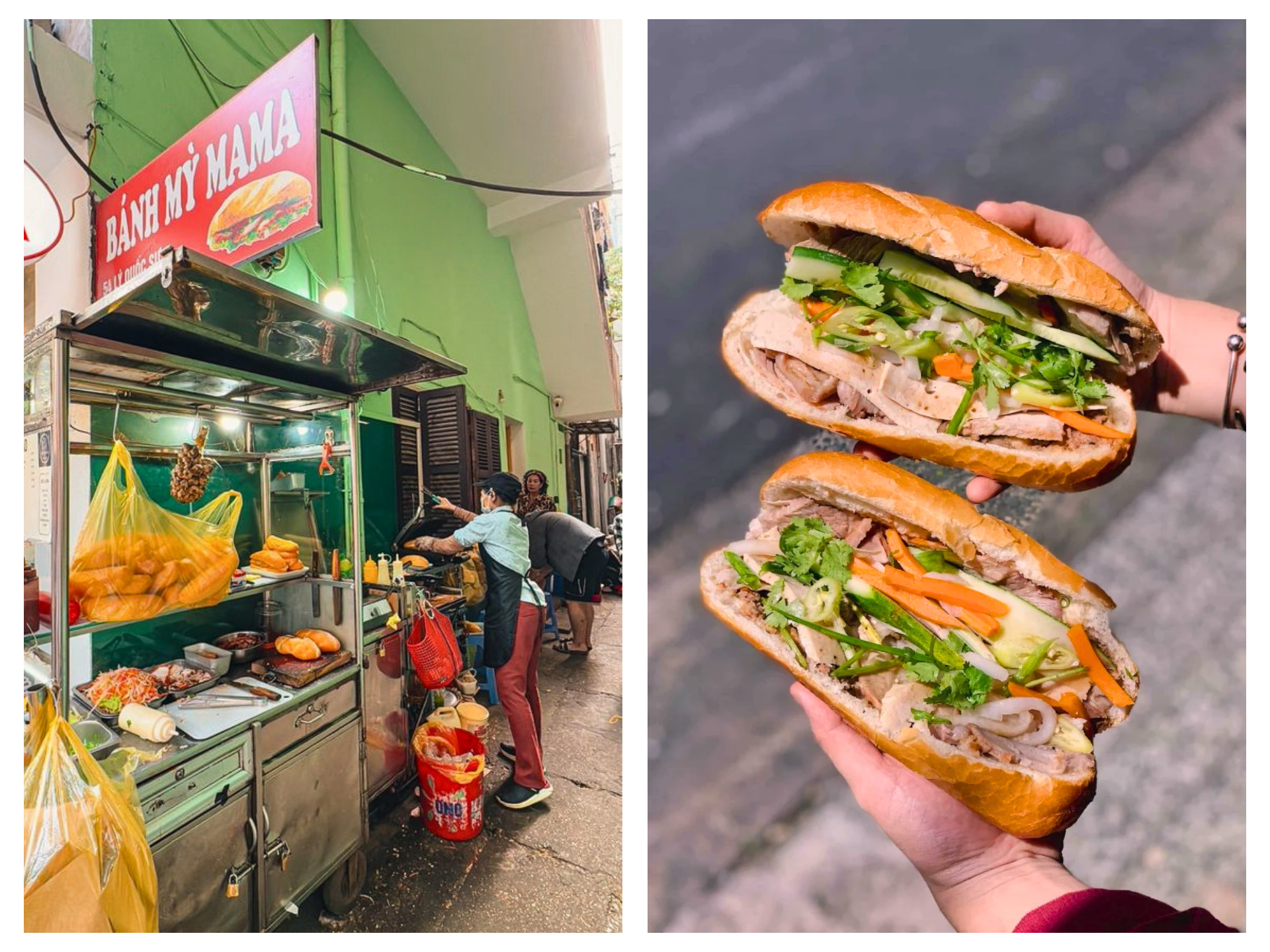
Most of the hidden bánh mì in Hanoi doesn’t operate from a rented space. There’s no lease, no shopfront, no overhead in the conventional sense. A vendor claims a spot – beside a wall, at the mouth of an alley, under a tree that’s been there longer than any of the surrounding buildings – and through sheer daily presence, that spot becomes theirs.
Everyone in the area knows it. People navigate by it. “Turn left at the bánh mì cart” is a real Hanoi direction. The cart doesn’t need a name.
This informal economy has sustained hidden bánh mì in Hanoi through decades of change. While restaurants open and close, these carts persist. They have lower costs, loyal customers, and no need to compete for visibility. The neighborhood keeps them alive.
Why Hidden Bánh Mì in Hanoi Tastes Better Than the Famous Versions (Sometimes)
This is a question worth asking directly: is the hidden bánh mì in Hanoi actually better, or is this just nostalgia talking?
Both things can be true. But I think there are real reasons the hidden version is often superior.
The bread is fresher. Famous spots with high turnover often pre-slice bread hours in advance. Neighborhood carts buy from local bakers early in the morning and sell through their stock before it loses its snap. The timing is tighter, which means the crust is at its best.
The vendor has nothing to prove. This is the one I keep coming back to. The woman making hidden bánh mì in Hanoi for her neighborhood doesn’t need you to like it. She’s not chasing reviews or protecting a reputation. She’s just making the sandwich she’s always made. That absence of self-consciousness produces something more honest, and often more delicious.
How to Find Hidden Bánh Mì in Hanoi
There’s no list I can give you, because the whole point is that these places resist lists. But I can tell you how to find them.
- Wake up early. The hidden bánh mì in Hanoi operates before 9 a.m. By mid-morning the bread is past its best and most carts are already packing up. If you want the real version, you set an alarm.
- Walk into residential neighborhoods. The further you get from the Old Quarter and the tourist corridors, the more intact the neighborhood food culture becomes. Go toward the areas where people actually live – the blocks full of schools and small markets and houses that don’t have guesthouses on the ground floor.
- Follow the smell. Fresh bread baking and charcoal grilling are not subtle. Your nose will do a better job than any app.
- Look for motion, not signage. A cart surrounded by people eating standing up is a better sign than any painted board. The hidden bánh mì in Hanoi doesn’t advertise. It just draws people who already know.
- Don’t overthink the ordering. Point at what looks good. Hold up fingers for quantity. Smile. The vendor has navigated this exact interaction hundreds of times and will guide you through it without making you feel lost.
And don’t stress about the money either – hidden bánh mì in Hanoi is genuinely one of the cheapest, most honest transactions in the city. If you want to know exactly what to expect before heading out, How Much Does Hanoi Street Food Cost? Incredible Dishes & Real Local Prices has everything broken down in real local terms.
Exploring Hanoi’s Hidden Pulse by Your Senses
The hidden bánh mì in Hanoi won’t be in any guidebook – not the good ones, and certainly not the ones written by people who only spent a week here. It lives in the early mornings, in the alleys, in the thirty-year relationship between a vendor and a neighborhood that never needed to be written about to be real.
If you find it, consider yourself lucky. Eat it standing up or wandering the streets. Don’t photograph it before you take a bite. And if it’s as good as the ones I grew up with, go back the next morning and go back the morning after that.
That’s how regulars are made.
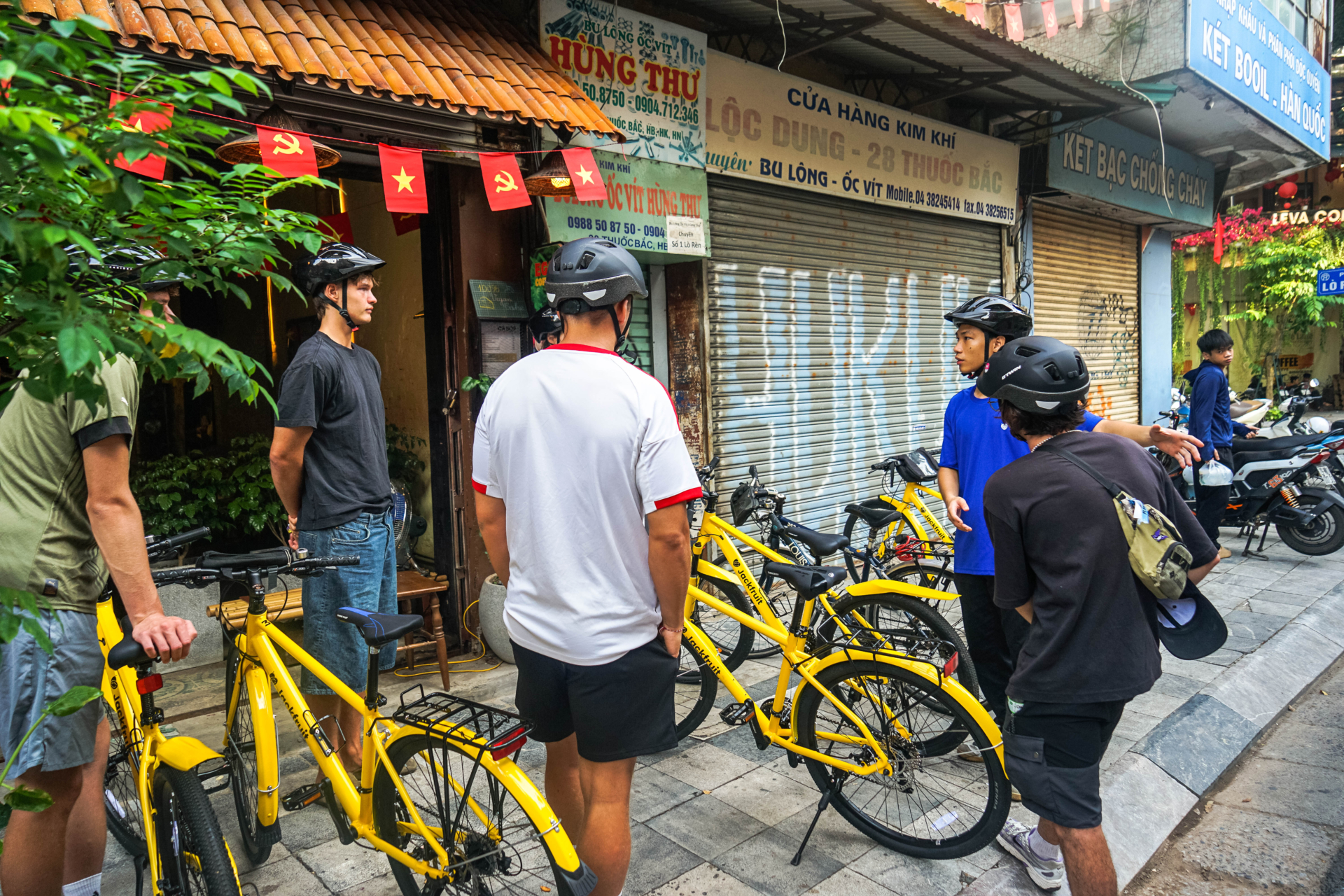
If you want someone to show you where to look, to walk you through neighborhoods that most visitors never reach and introduce you to the food culture that Hanoians actually live inside, contact Jackfruit Adventure today!