

Table of Contents
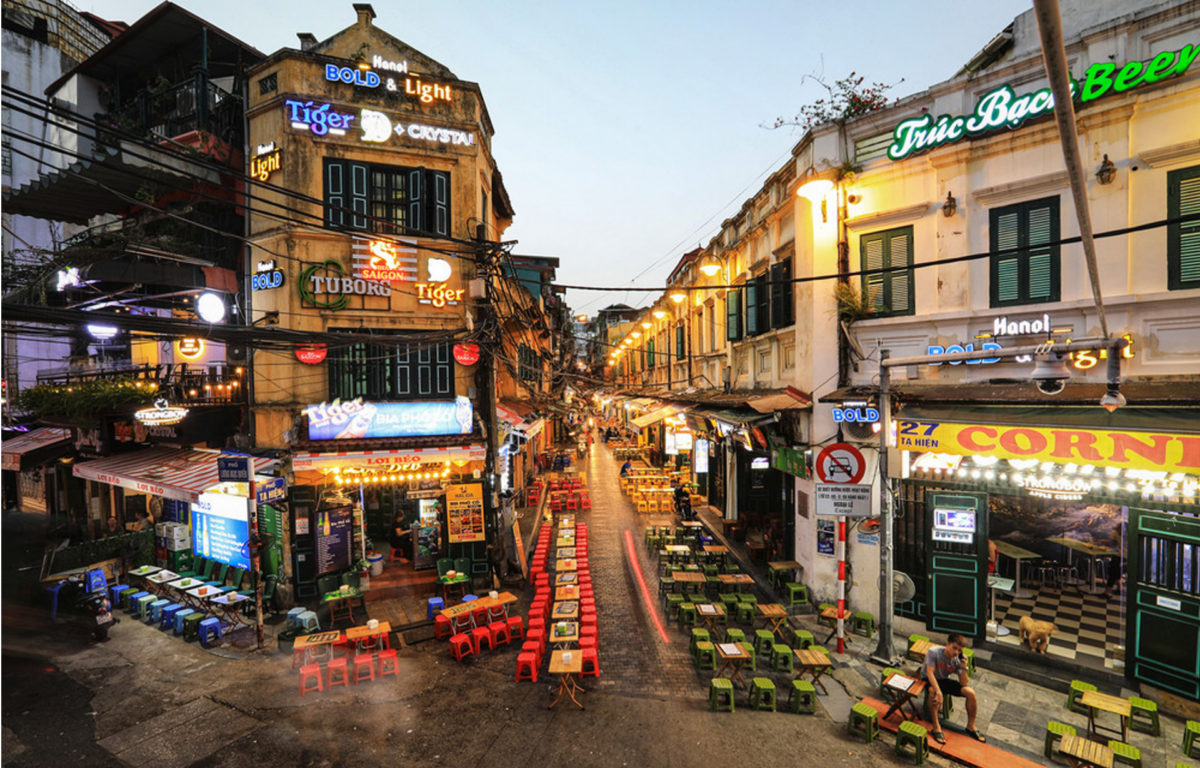
Every year, as the cold winds of January sweep through the narrow alleys of Hanoi, a very specific scent begins to drift from every kitchen. It’s the smell of woodsmoke, sticky rice, and the earthy aroma of dong leaves being steamed for hours on end. For us Vietnamese, that scent means only one thing: Tet is coming.
Tet, or the Lunar New Year, isn’t just a date on the calendar. It’s a feeling. It’s the frantic rush to clean the house, the vibrant yellow of apricot blossoms, and most importantly, the overwhelming abundance of food. If you ever find yourself in a Vietnamese home during this time, you’ll realize that we don’t just “eat”; we celebrate our history and our hopes for the future through a specific set of Tet dishes.
In this guide, I’ll walk you through the traditional tet dishes that grace Vietnamese tables every Lunar New Year. These are the foods I grew up with, the ones my family still prepares religiously, and the flavors that make Tet feel like home. Whether you’re planning to visit Vietnam during Tet or simply curious about our culinary traditions, you’ll discover the stories, symbolism, and recipes behind these beloved dishes.
Why Food Matters So Much During Tet
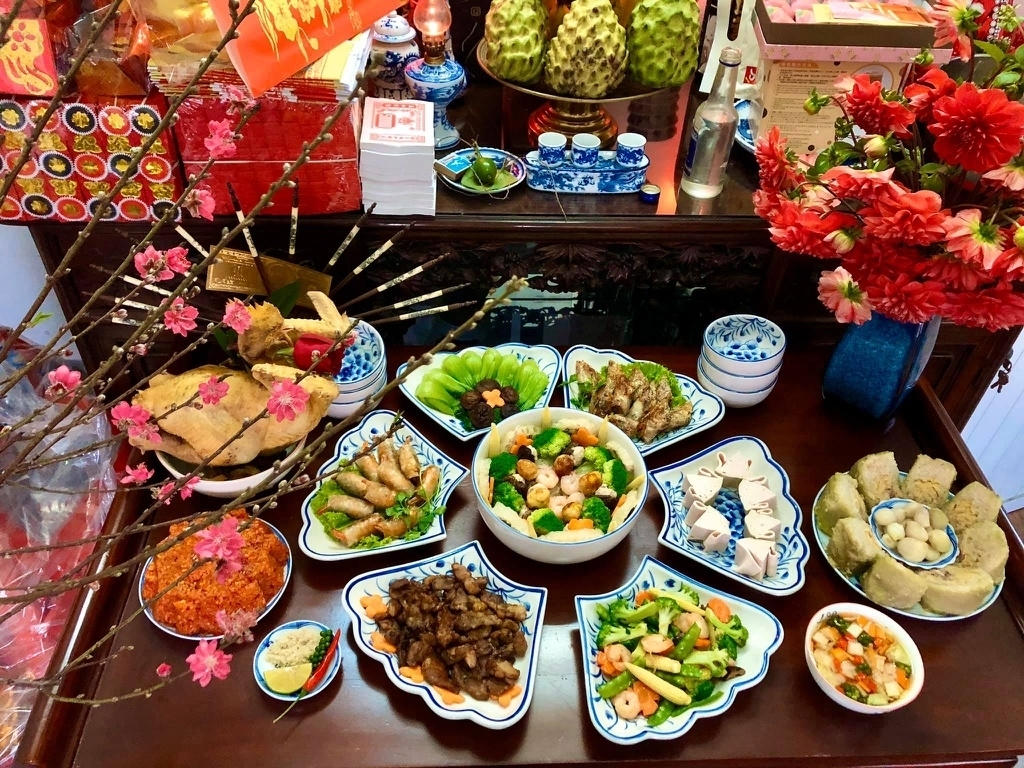
Before diving into specific tet dishes, let me explain something important: in Vietnamese culture, food during Tet isn’t just sustenance. Every dish carries meaning. The round shape of bánh chưng represents the earth. The green color symbolizes growth and prosperity. Even the way we arrange food on the ancestral altar follows centuries-old traditions. Food preparation is just one of many Activities to prepare for Tet Holidays – Lunar New Year Celebrating, each with its own cultural significance.
My grandmother used to say, “Show me what someone eats during Tet, and I’ll tell you where they’re from.” She was right. Northern families have their specialties, Southern families have theirs, and Central Vietnamese households add their own unique twist to traditional tet dishes.
1. Bánh Chưng: The King of Tet Dishes
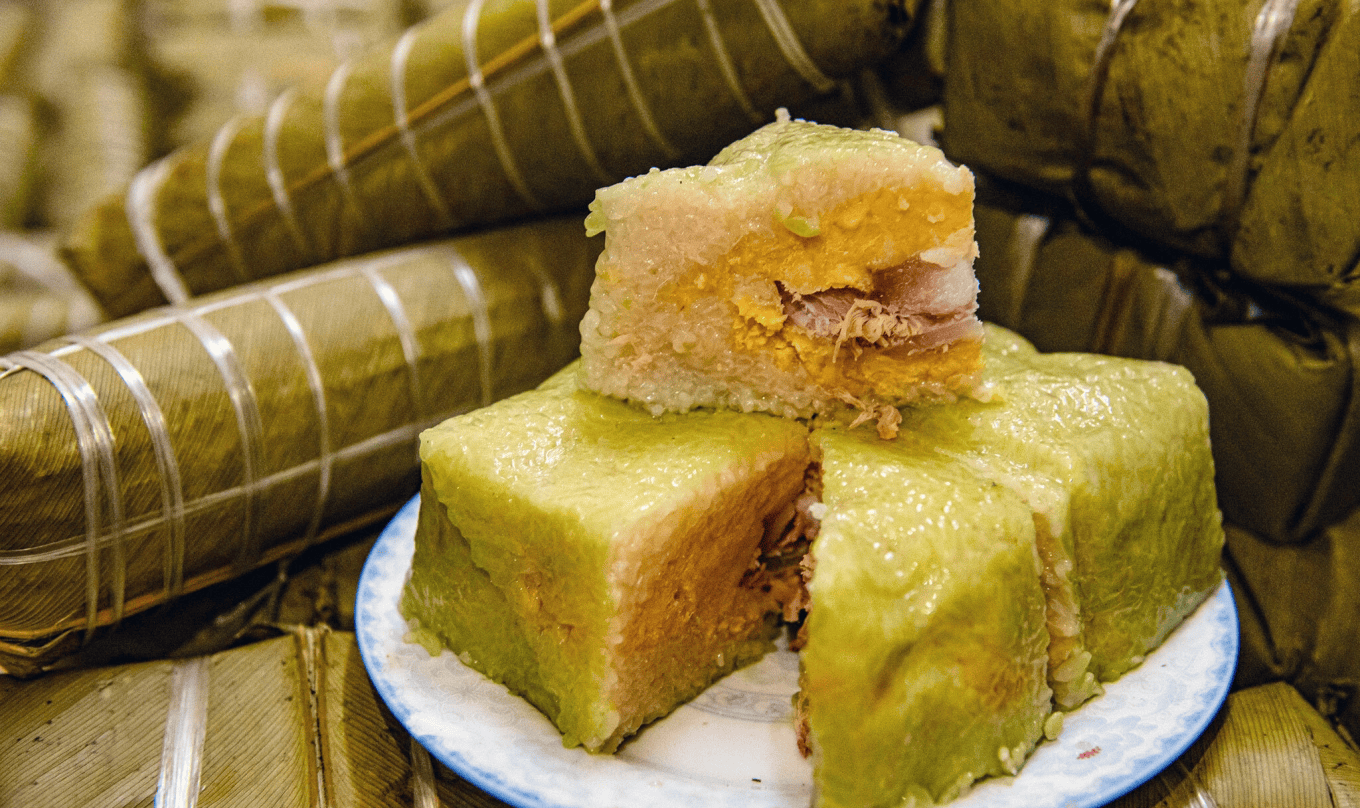
If there’s one dish that defines Tet in Northern Vietnam, it’s bánh chưng. This square sticky rice cake isn’t just food – it’s a symbol of our connection to the land and our ancestors.
Making Bánh Chưng: A Family Affair
I’ve helped make bánh chưng since I was seven years old. The process takes almost an entire day, sometimes stretching into the night. We soak glutinous rice for hours, prepare mung bean filling, marinate pork belly with fish sauce and pepper, and carefully wrap everything in dong leaves (a type of wild leaf that gives the cake its distinctive green color).
The wrapping technique alone takes years to master. My mother can fold the perfect square in under two minutes. Me? I still need supervision, and I’m in my twenties.
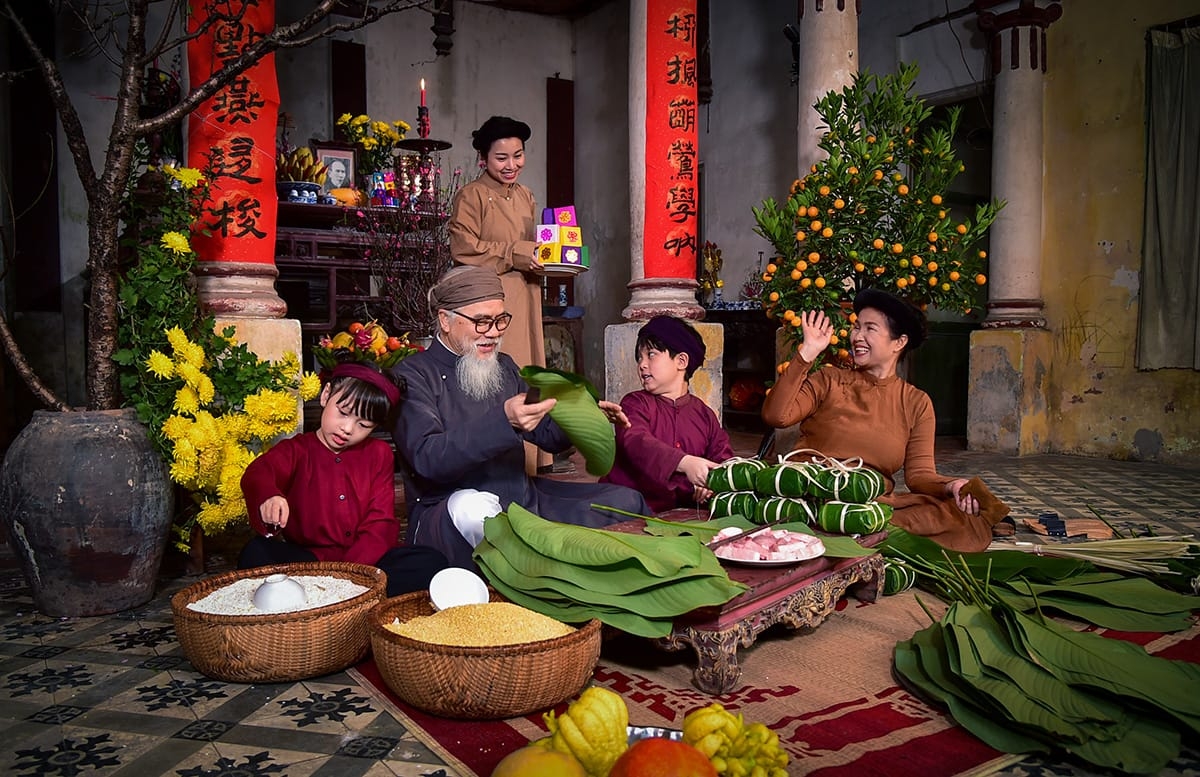
But the real magic happens during the cooking. We boil the cakes for 10-12 hours, keeping the fire burning through the night. In my childhood home, family members would take turns watching the pot, adding wood to the fire, making sure the water level stayed constant. Those overnight vigils, sitting around the fire sharing stories, are some of my favorite Tet memories.
If you want to witness the art of bánh chưng making on a grand scale, visit Tranh Khúc village in Hanoi Thanh Tri district. This traditional craft village has been making bánh chưng for hundreds of years, and during peak Tet season, the entire village transforms into a bustling production hub where skilled artisans wrap thousands of cakes daily, keeping centuries-old techniques alive.
The Symbolism Behind the Square
According to legend, bánh chưng’s square shape represents the earth, while its round counterpart, bánh dày, represents the sky. Prince Lang Liêu created these cakes to honor his parents and demonstrate that the most precious offerings come from the heart, not from exotic ingredients.
Today, bánh chưng remains one of the most essential tet dishes on every Northern Vietnamese altar and dining table.
2. Bánh Tét: The Southern Cousin
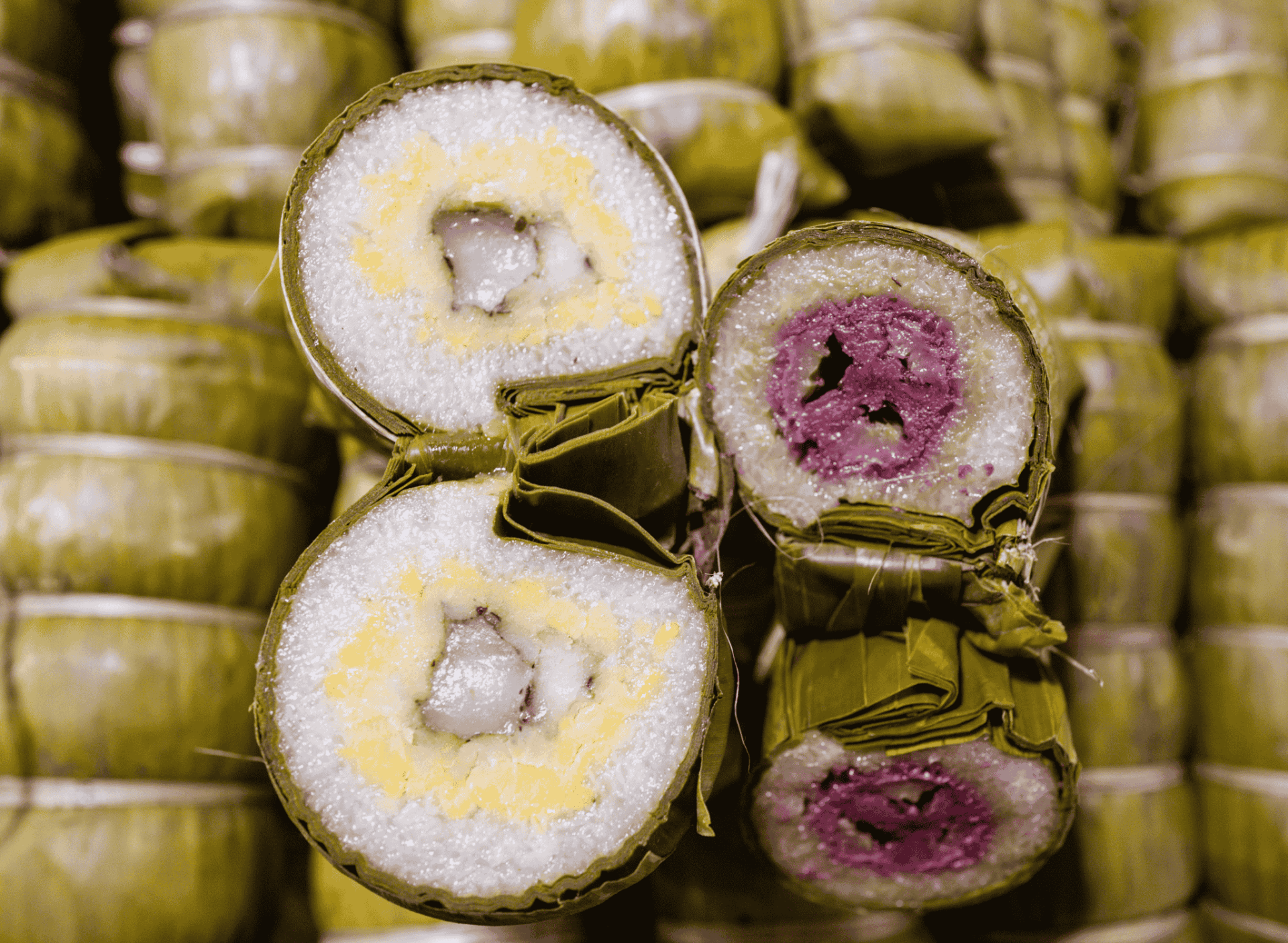
Travel south, and bánh chưng transforms into bánh tét – a cylindrical sticky rice cake with similar ingredients but a different shape and slightly sweeter taste.
My Southern friends insist bánh tét tastes better because the cylindrical shape allows for more even cooking. I won’t take sides in this friendly North-South rivalry, but I will say that both versions deserve their place among iconic tet dishes.
The preparation process mirrors bánh chưng, though banana leaves replace dong leaves in most Southern regions. Some families add coconut milk to the rice, creating a richer, more fragrant cake that pairs beautifully with pickled vegetables.
3. Thịt Kho Tàu: Braised Pork and Eggs
Every Vietnamese household has their own recipe for thịt kho tàu, but the fundamentals remain the same: pork belly braised with hard-boiled eggs in a caramelized sauce made from coconut water, fish sauce, and sugar.
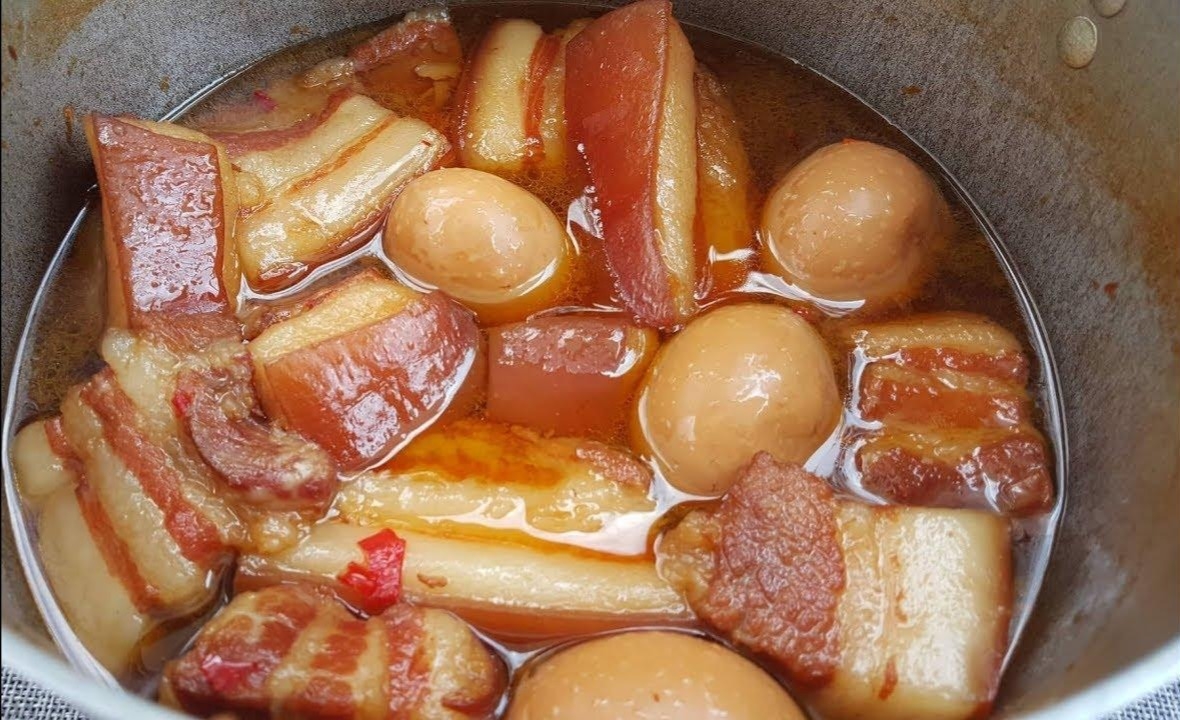
I learned to make this dish from my mother, who learned from her mother, who probably learned from her mother. The secret, according to my grandmother, is patience. You can’t rush caramelization. You can’t hurry the braising. Good thịt kho tàu develops deep, complex flavors over hours of slow cooking.
This dish represents prosperity and abundance. The rich, savory-sweet sauce symbolizes a sweet, successful year ahead. Plus, it’s one of those tet dishes that actually tastes better on day two and three, which is perfect since Tet celebrations last well beyond New Year’s Day.
4. Giò Chả: Vietnamese Pork Rolls and Sausages
Walk through any Vietnamese market before Tet, and you’ll see vendors selling mountains of giò (pork rolls) and chả (sausages). These aren’t your typical deli meats – they’re carefully crafted traditional tet dishes made from ground pork, fish sauce, and various spices, then wrapped in banana leaves and boiled until firm.
Giò Lụa: Silky Pork Roll
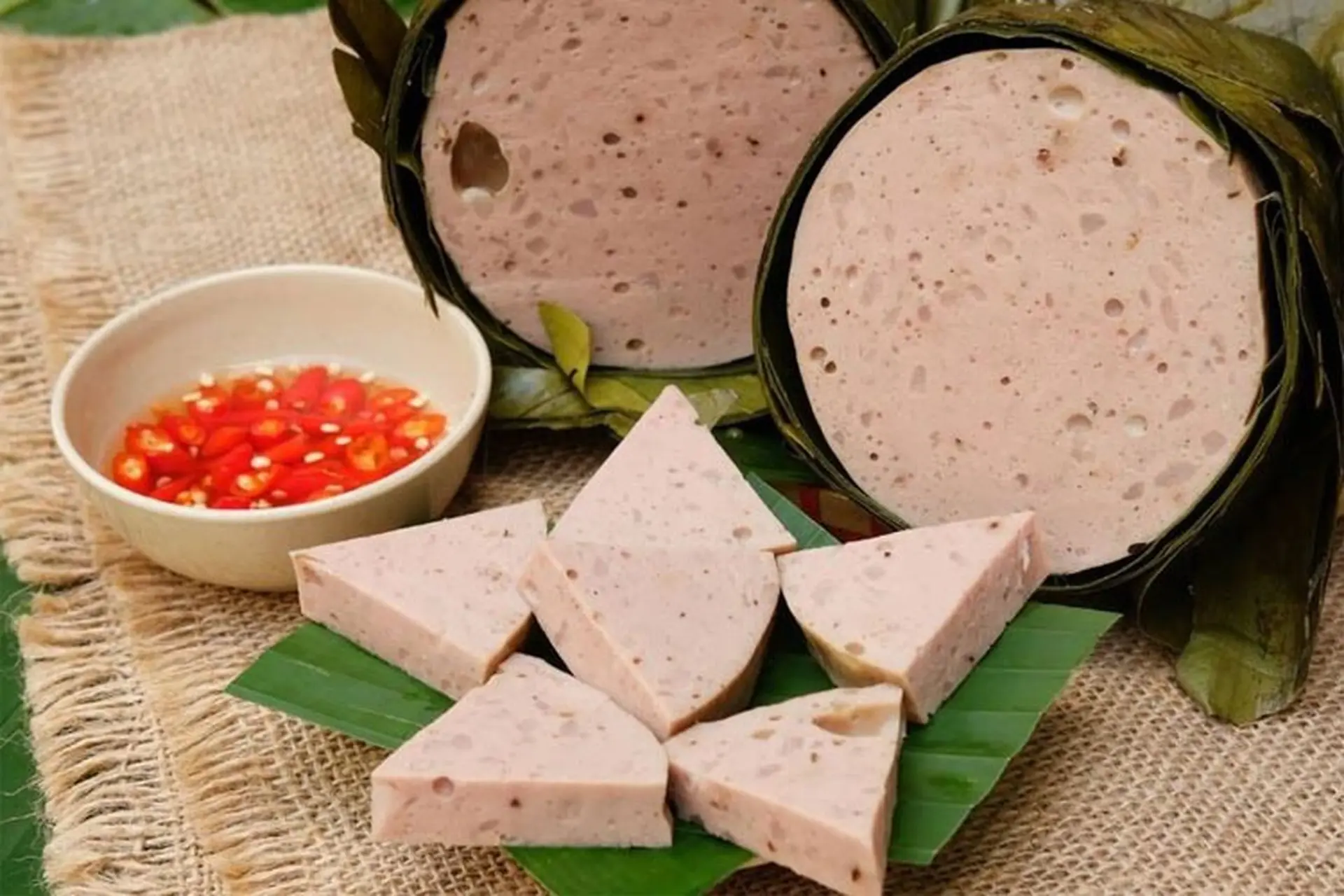
Giò lụa, also called chả lụa, has an incredibly smooth, almost silky texture. Making it requires pounding pork until it becomes a paste – traditionally done with a mortar and pestle, though most modern families use food processors.
My aunt still insists on the traditional method. She says the texture is different, more refined. I can’t tell the difference, but I appreciate her dedication to preserving traditional techniques.
Chả Quế: Cinnamon Pork Sausage
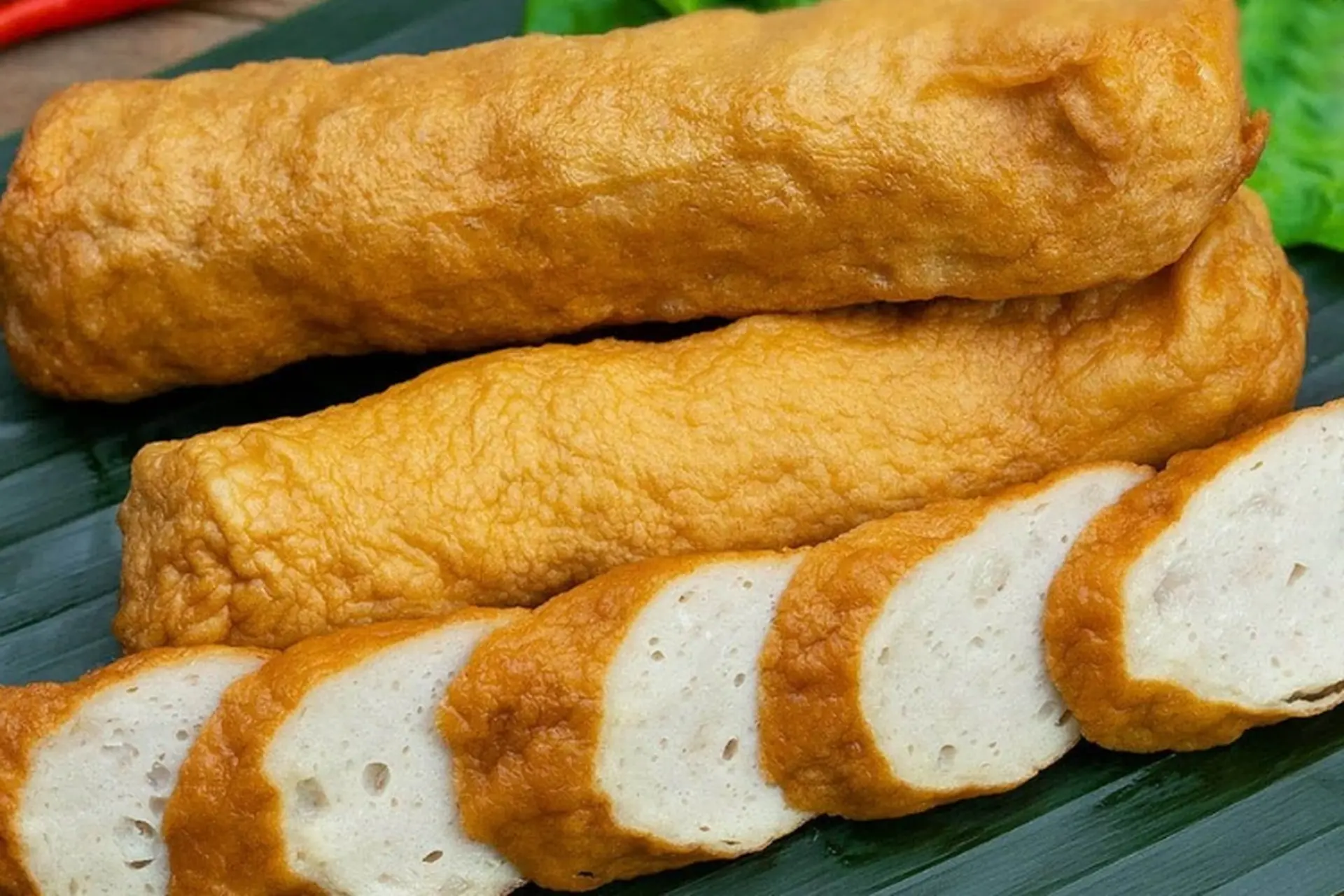
Chả quế incorporates cinnamon into the pork mixture, creating a fragrant sausage with warm, spicy notes. It’s one of my favorite tet dishes to eat cold, sliced thin and served with pickled vegetables and fresh herbs.
5. Dưa Hành: Pickled Vegetables
You can’t eat rich, fatty tet dishes without something acidic and crunchy to balance the flavors. That’s where dưa hành comes in – pickled shallots and vegetables that cut through the richness of braised pork and sticky rice cakes.
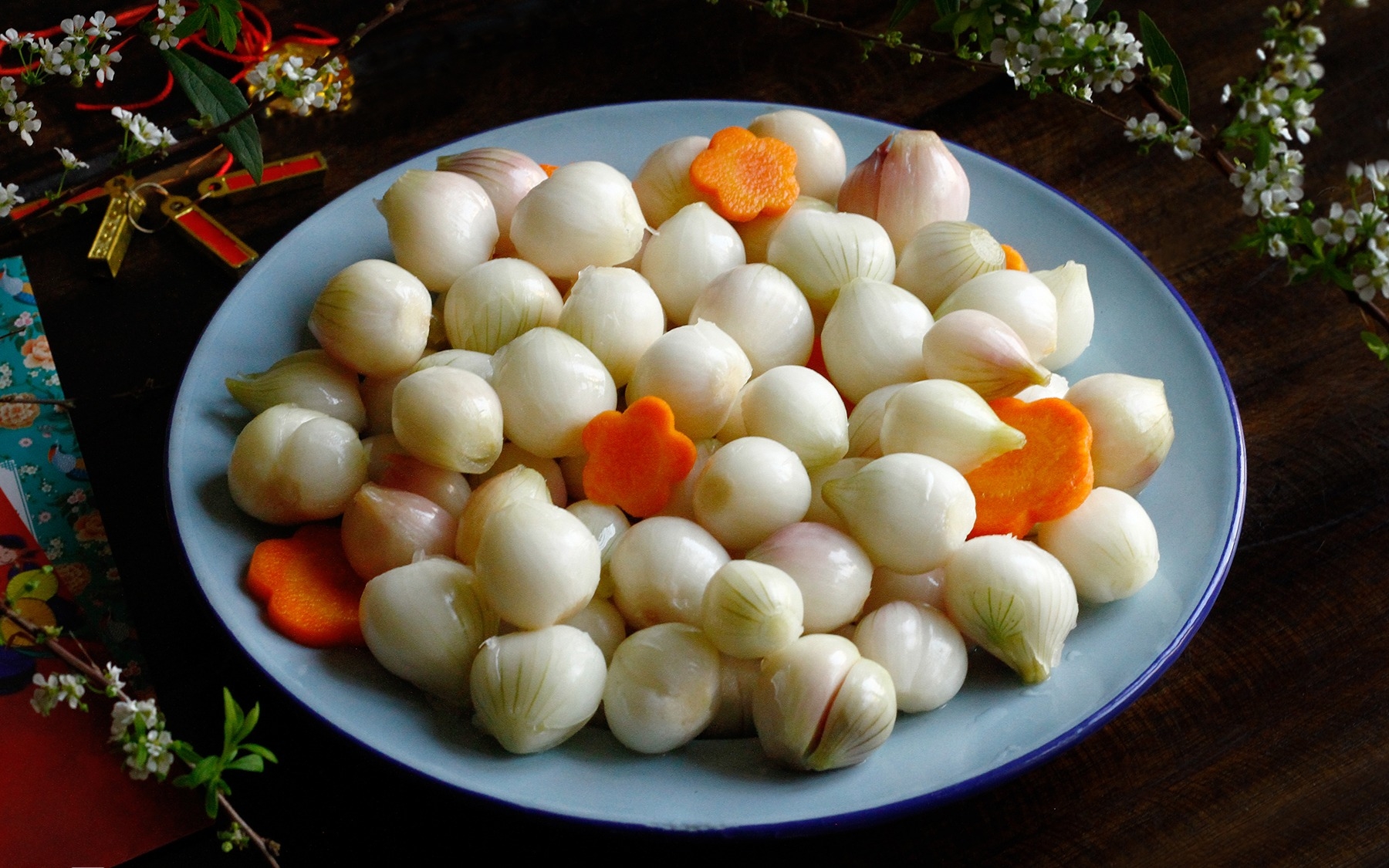
Every family has their own pickling recipe. My grandmother makes hers with white radish, carrots, and whole shallots, seasoning the brine with sugar, vinegar, salt, and a touch of fish sauce. The vegetables turn pink after a few days, creating a beautiful, Instagram-worthy jar that tastes as good as it looks.
These pickles aren’t just side dishes – they’re essential components that make other tet dishes more enjoyable. The crunch, the tang, the slight sweetness all work together to refresh your palate between bites of bánh chưng and thịt kho.
6. Canh Măng: Bamboo Shoot Soup for Balance
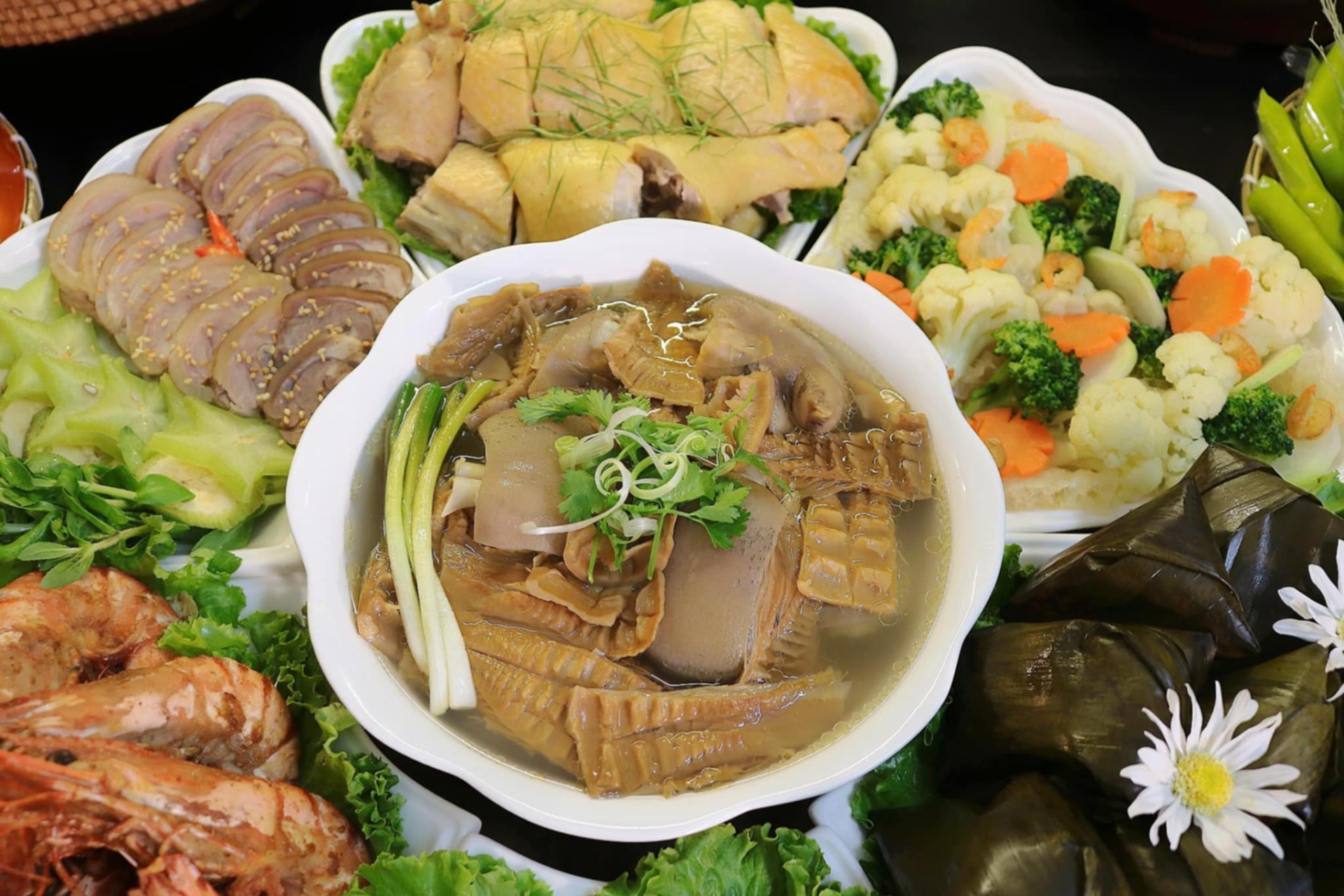
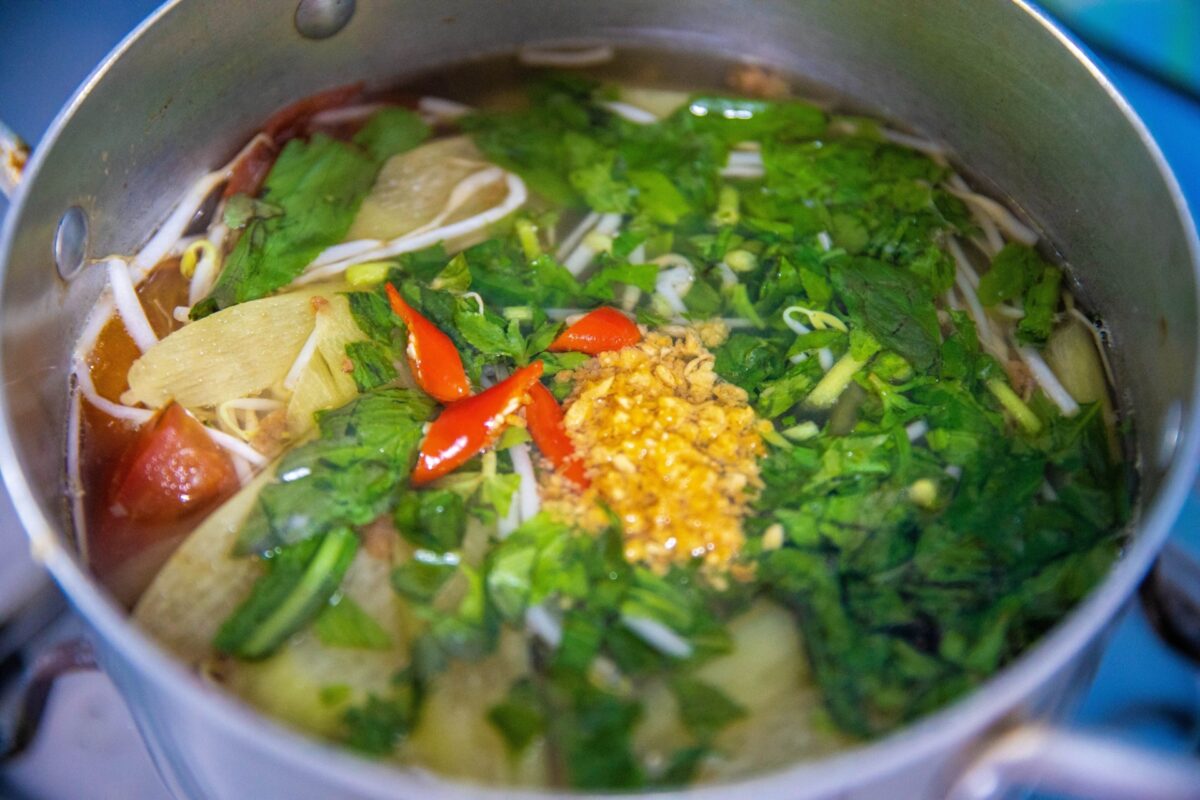
After days of eating rich tet dishes like bánh chưng and thịt kho, we desperately need something light and refreshing. That’s where canh mang comes in – a clear soup made with dried bamboo shoots and pork ribs that’s become one of my favorite parts of the Tet menu.
The soup itself is simple: pork ribs simmered until the broth is clear and sweet, bamboo shoots added for their distinctive tangy flavor, and just salt and pepper for seasoning. Some families add a touch of fish sauce, but my mother keeps it minimal. The beauty of canh mang is its simplicity = it’s a palate cleanser among all the heavier foods.
7. Xôi Gấc: Red Sticky Rice
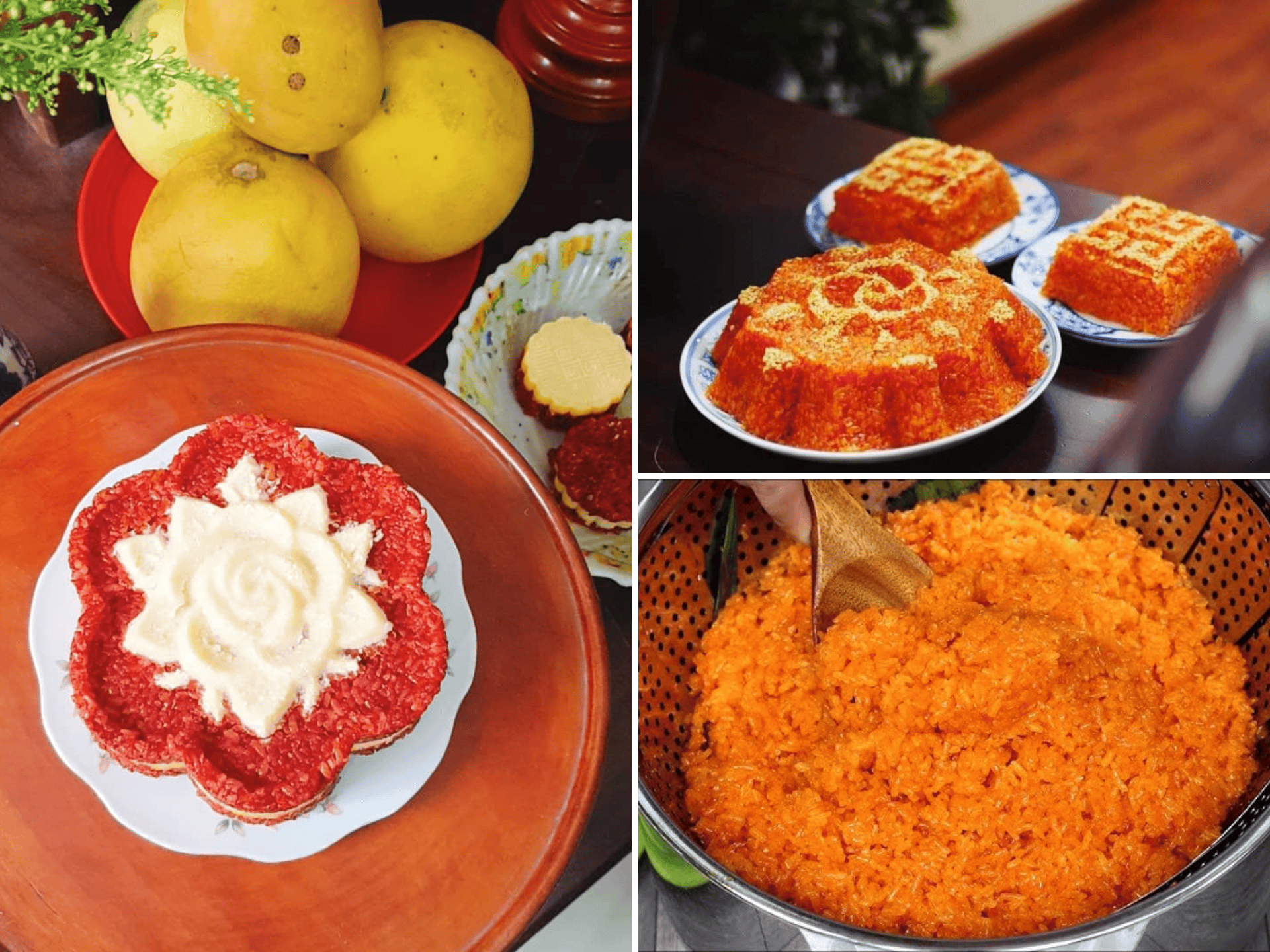
One of the most visually striking tet dishes, xôi gấc gets its brilliant red color from gấc fruit (baby jackfruit). The vibrant color represents luck and happiness – red is considered the luckiest color in Vietnamese culture.
Making xôi gấc requires soaking glutinous rice in gấc seeds and pulp until the rice absorbs the deep red color. The result is both beautiful and delicious, with a slightly nutty flavor and stunning presentation.
I remember my mother arranging xôi gấc on the ancestral altar, the red rice glowing like rubies in the candlelight. It’s one of those tet dishes that engages all your senses – sight, smell, taste, and the emotional connection to tradition.
8. Mứt: Candied Fruits and Seeds
No Tet celebration is complete without Mứt – the colorful candied fruits, vegetables, and seeds displayed in decorative boxes and offered to guests.
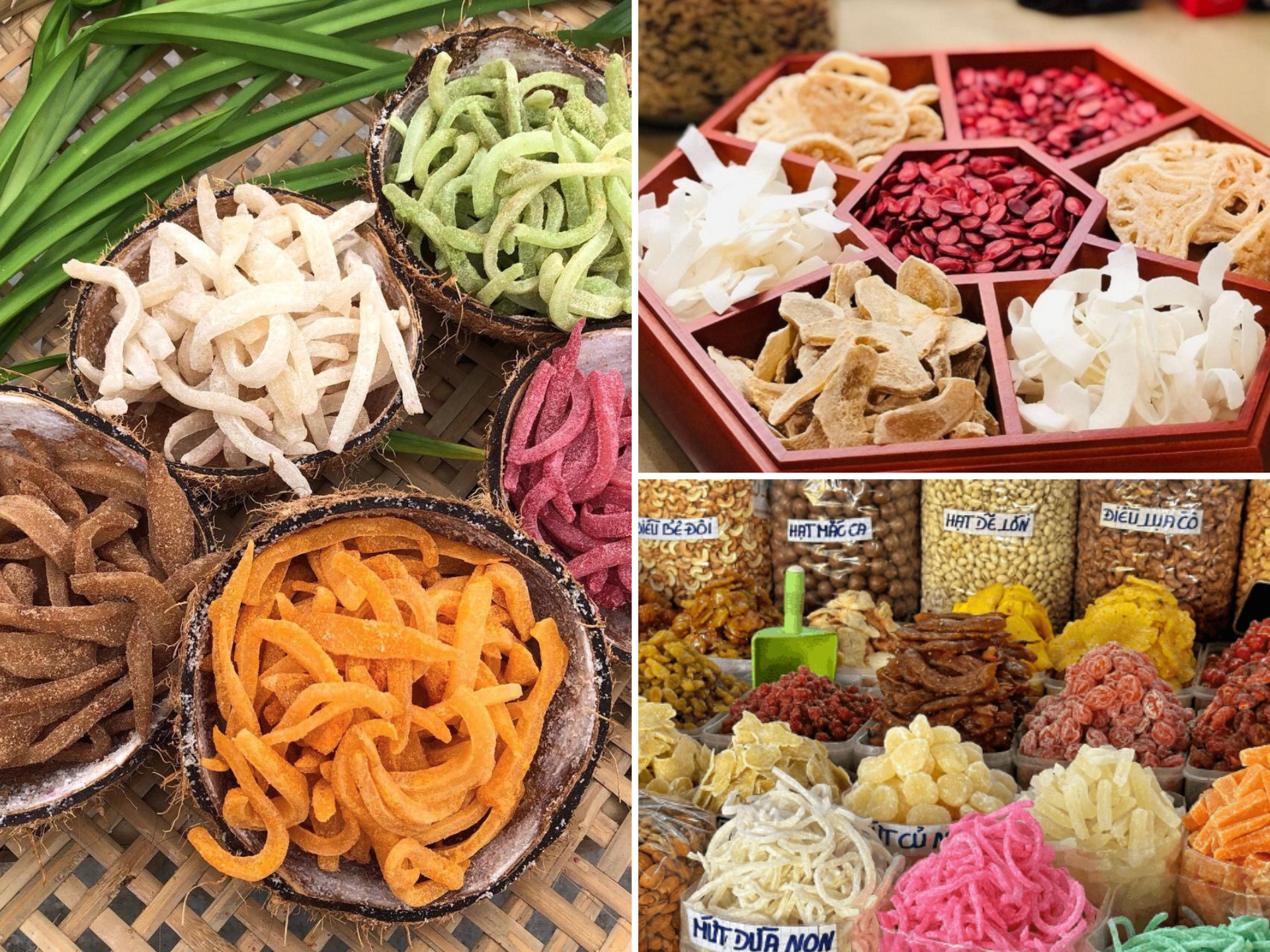
Common Types of Mứt
The variety of Mứt available is staggering. You’ll find:
- Mứt gung (candied ginger)
- Mứt dừa (candied coconut)
- Mứt sen (candied lotus seeds)
- Mứt cà chua (candied cherry tomatoes)
- Mứt bí (candied winter melon)
- Mứt mơ (candied apricots)
These sweet treats aren’t just snacks – they’re conversation starters. When guests visit during Tet, you offer them Mứt along with tea, and everyone samples different varieties while catching up on life.
I have a soft spot for candied ginger. It’s spicy, sweet, and warming – perfect for cool January evenings in Hanoi.
9. Gà Luộc: Boiled Chicken
A whole boiled chicken, perfectly cooked and presented, is standard on most Tet altars. This isn’t your average poached chicken – it’s prepared with precision to ensure the skin stays intact and the meat remains tender.
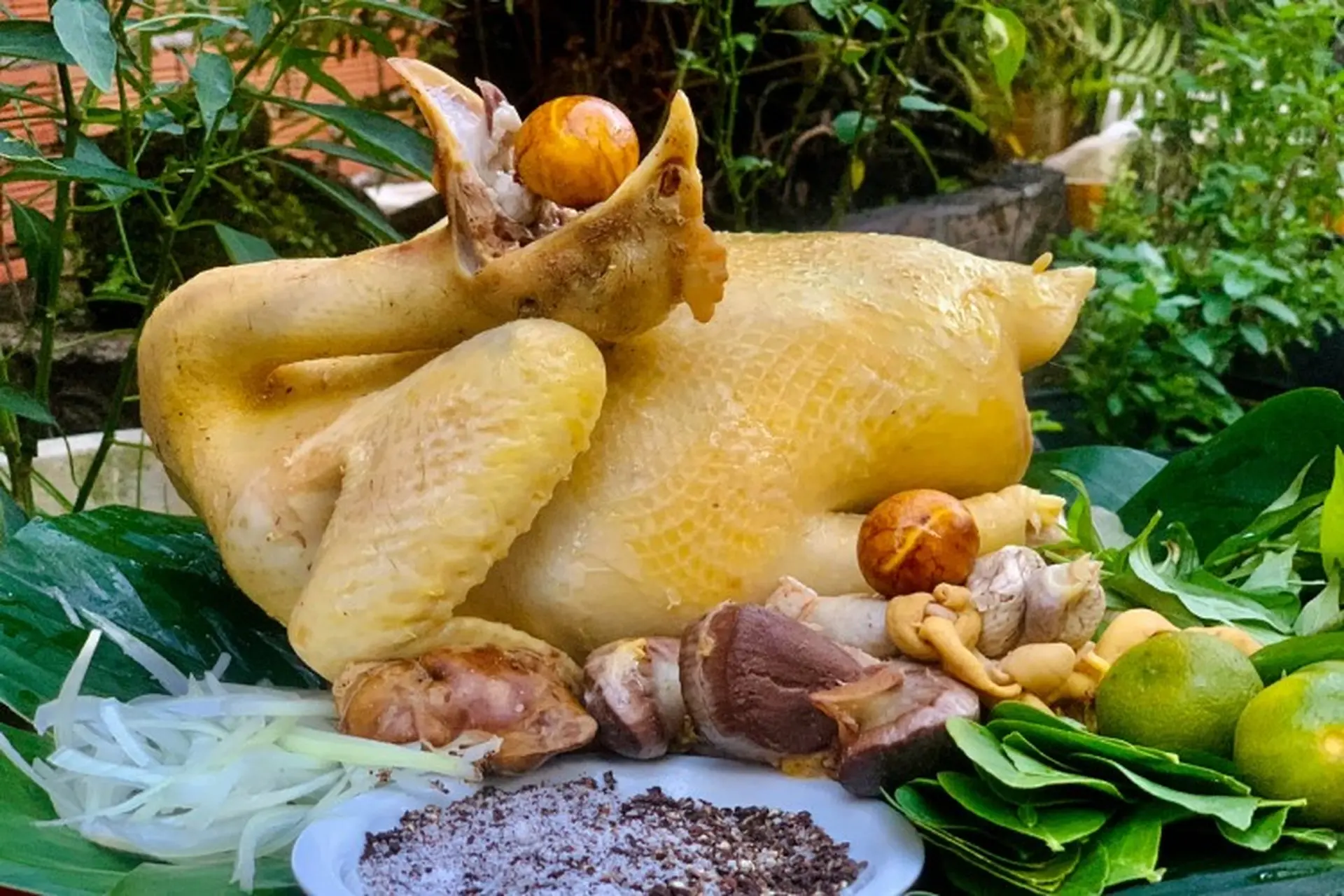
The preparation involves specific techniques: massaging the chicken with ginger and salt, controlling water temperature to prevent the skin from tearing, and sometimes adding a touch of turmeric to achieve that golden-yellow color.
Among tet dishes, boiled chicken represents family completeness and togetherness. The whole bird, intact and unblemished, symbolizes the family unit remaining whole and prosperous throughout the year.
10. Nem Rán: The Golden Celebration Rolls
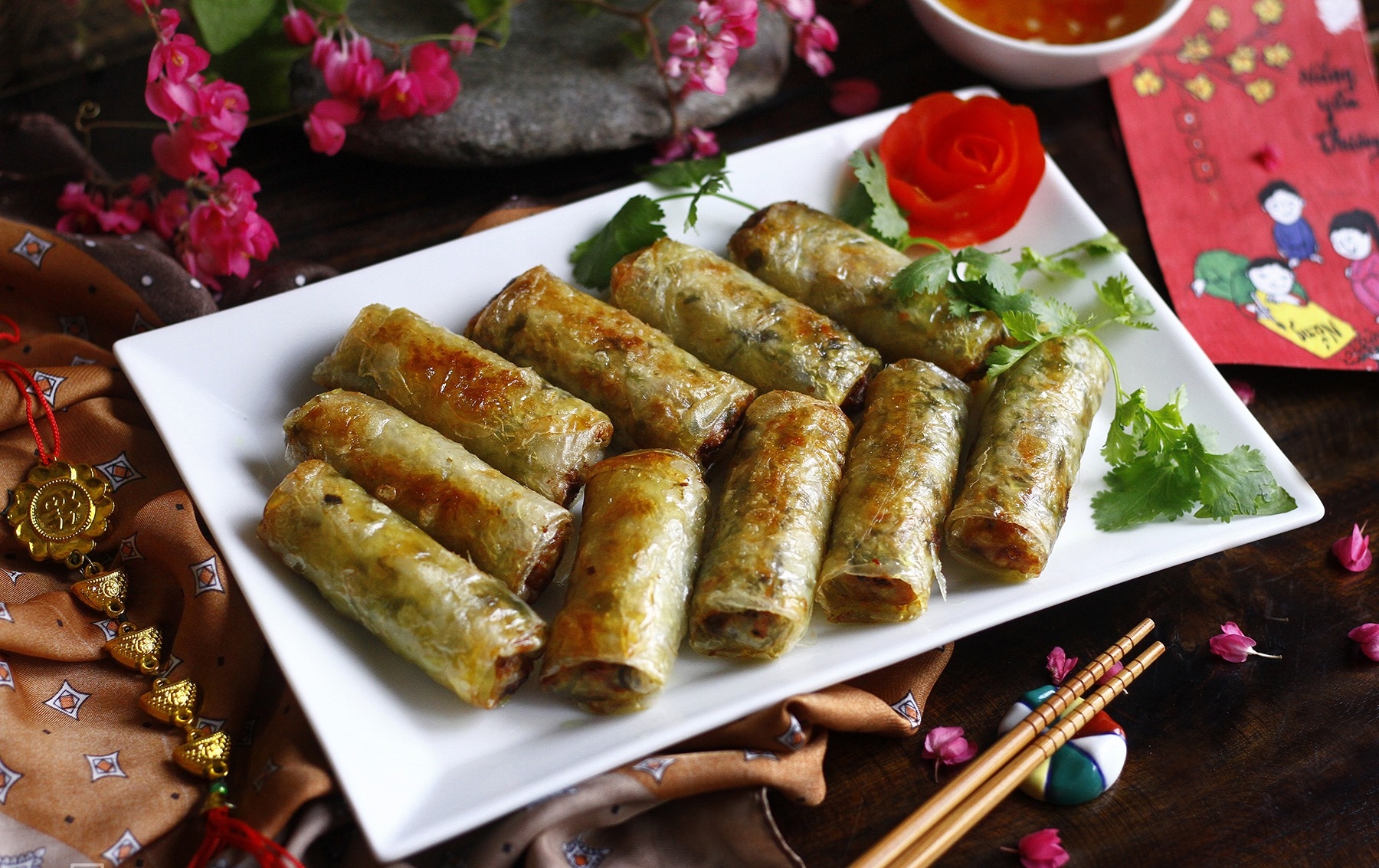
What makes nem ran so essential among tet dishes isn’t just the taste – it’s the process. Making spring rolls forces families to work together, to slow down, to talk and laugh while our hands stay busy. I’ve heard family stories, gossip, advice, and jokes during nem rán preparation that I wouldn’t have heard otherwise.
The filling comes together in a huge basin: the ground pork and crab, minced vegetables, soaked mushrooms and noodles (chopped into short pieces), beaten eggs to bind everything, and a generous amount of fish sauce, pepper, and sometimes a pinch of sugar.
Regional Variations in Tet Dishes
Vietnam stretches over 1,000 miles from north to south, and tet dishes vary significantly by region.
1. Northern Tet Dishes
Northern families focus on bánh chưng, giò, and pickled vegetables. The flavors tend to be more subtle, less sweet than Southern cuisine.
2. Central Tet Dishes
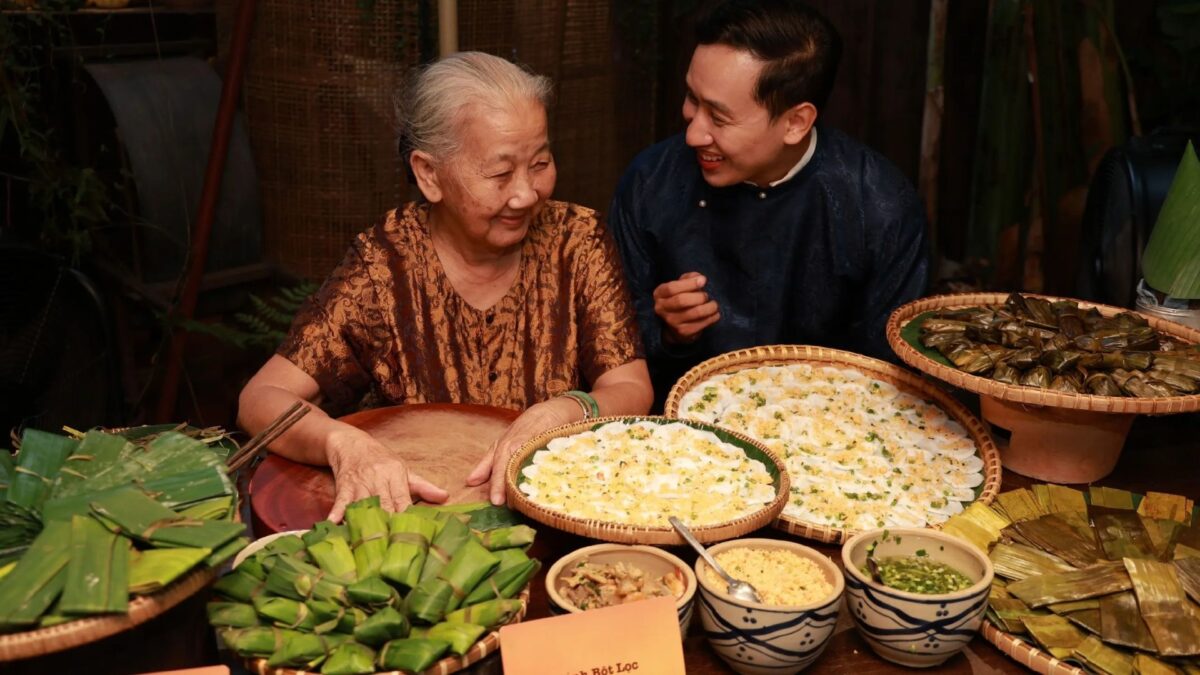
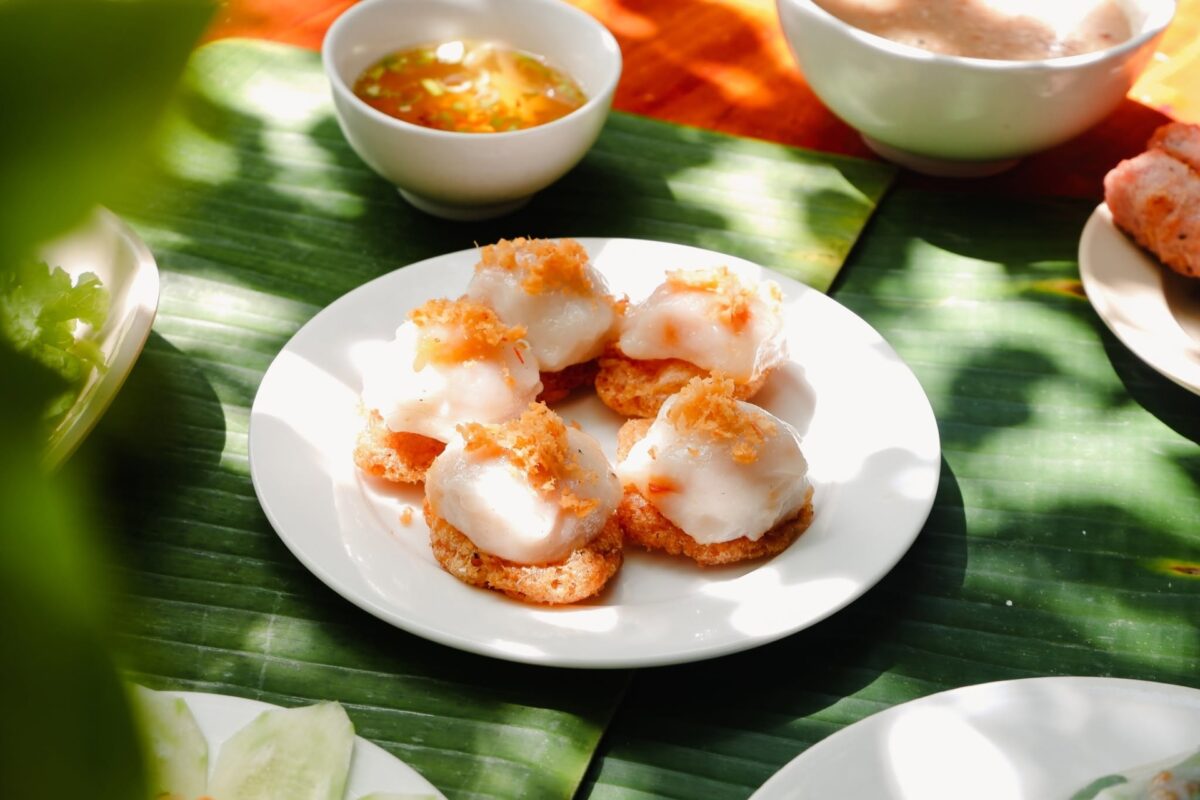
Central Vietnam adds its own specialties, like bánh bèo (steamed rice cakes) and nem (fermented pork). Huế, the former imperial capital, has particularly elaborate Tet preparations.
3. Southern Tet Dishes
Southern tables feature bánh tét, sweeter versions of traditional dishes, and tropical fruits unavailable in the north. My Southern friends always emphasize the importance of fresh fruits during Tet – watermelon, dragon fruit, and pomelo feature prominently.
Modern Changes to Traditional Tet Dishes
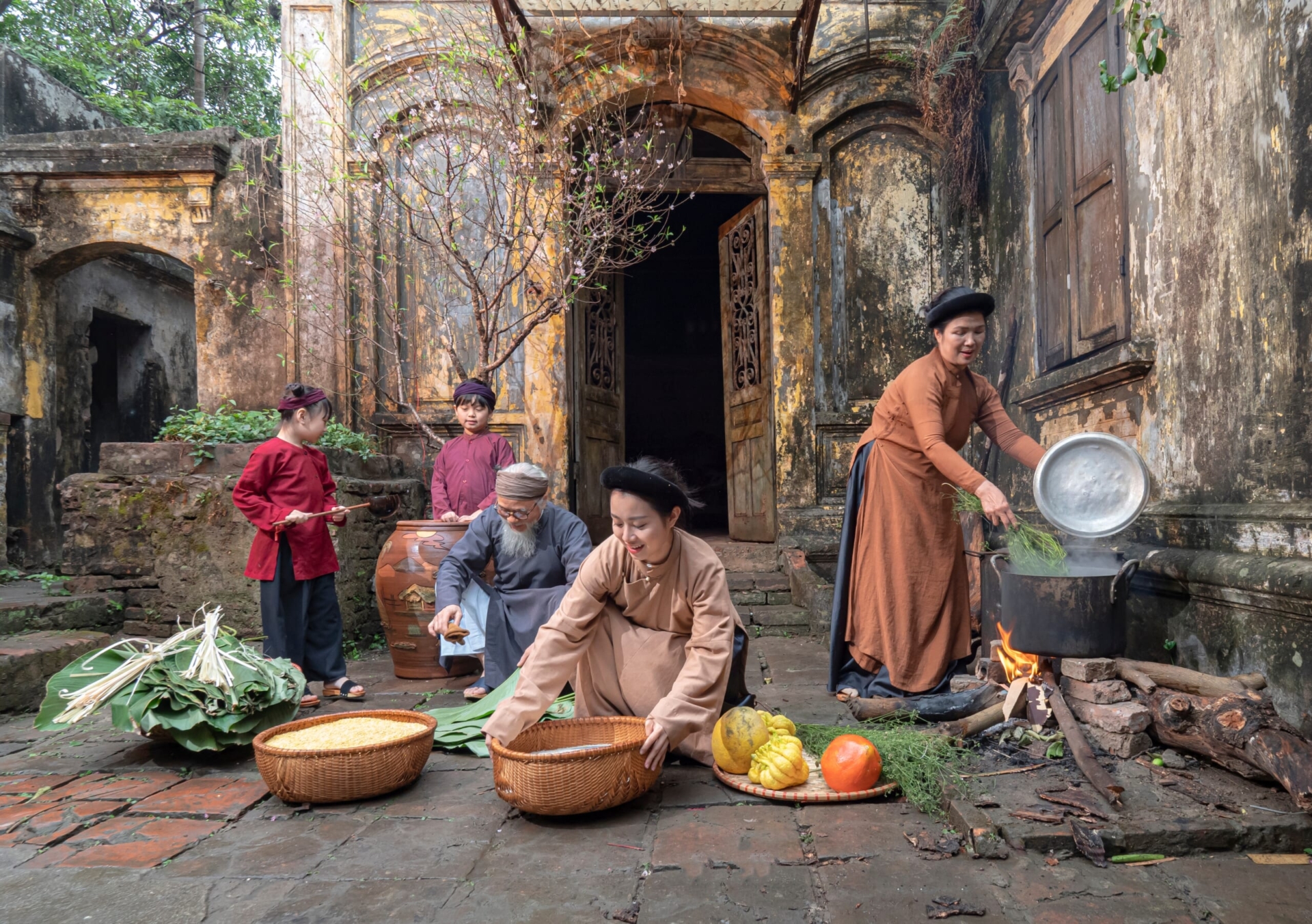
I’ll be honest: fewer young Vietnamese people make tet dishes from scratch these days. Urban life is busy, apartments are small, and keeping a fire burning for 12 hours to cook bánh chưng isn’t practical when you live in a high-rise.
But that doesn’t mean traditions are dying. Instead, they’re adapting. Many families now buy professionally made bánh chưng from trusted vendors. Some use pressure cookers instead of open fires. Others focus on mastering one or two dishes rather than preparing the entire traditional spread.
What matters is maintaining the connection to our culture and passing down the significance of these foods to the next generation.
How to Experience Tet Dishes as a Visitor
If you’re planning to visit Vietnam during Tet, experiencing authentic tet dishes requires some planning. Most restaurants close during the holiday, and locals celebrate with family at home. Before you go, make sure to learn some Vietnamese Tet Wishes to Say Happy New Year in Vietnam to properly greet your hosts and show respect for local customs.
Your best option is connecting with local families through cultural experiences. At Jackfruit Tours, we offer special Tet experiences where you can join Vietnamese families for traditional celebrations, learn to make tet dishes in local homes, and understand the cultural significance behind each food. These intimate experiences provide authentic insights you won’t find in restaurants or guidebooks.
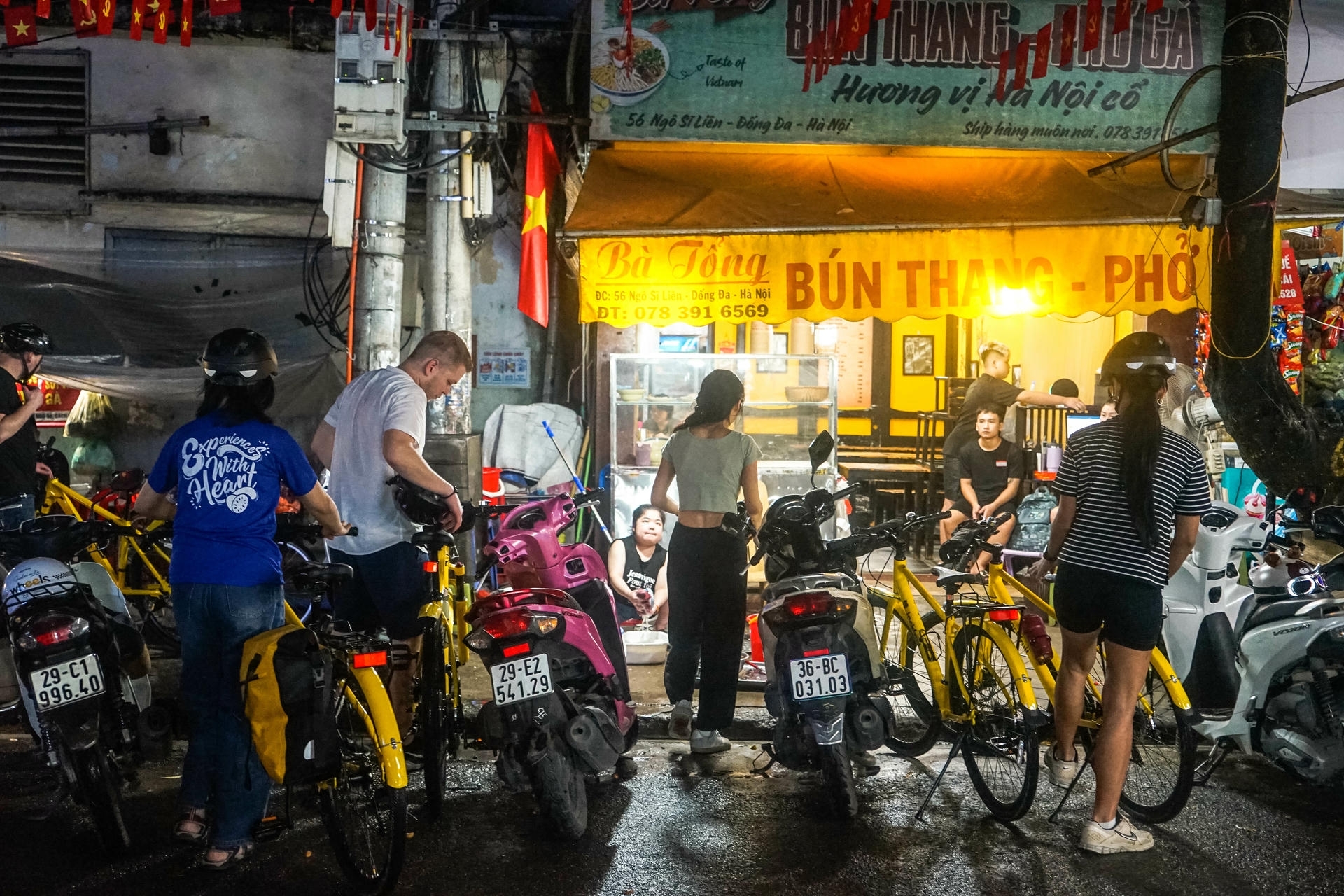
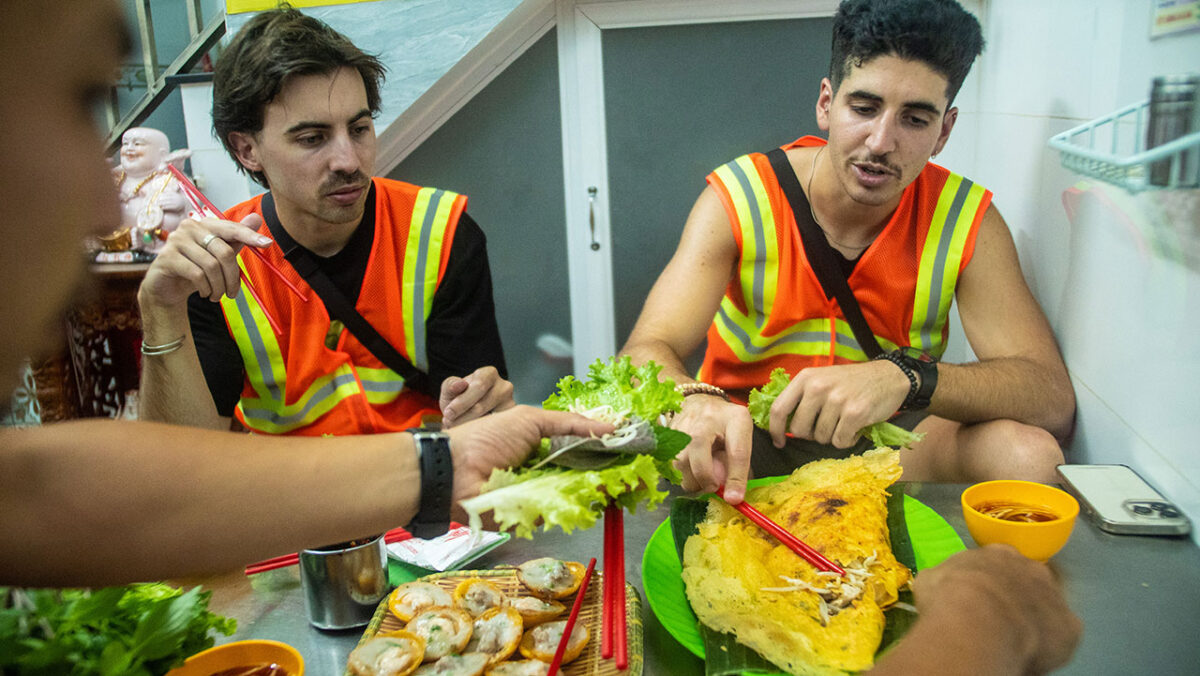
For food lovers visiting outside the Tet period, don’t miss the chance to explore Vietnam’s incredible street food scene on two wheels. Our Hanoi Foodie Night Ride: Cycle, Eat, Repeat takes you through the bustling Old Quarter to discover authentic Northern Vietnamese flavors, while the Saigon Foodie Night Ride showcases Southern cuisine’s unique sweetness and tropical influences. These cycling tours offer the perfect way to experience the regional differences in Vietnamese food culture we’ve discussed throughout this guide.
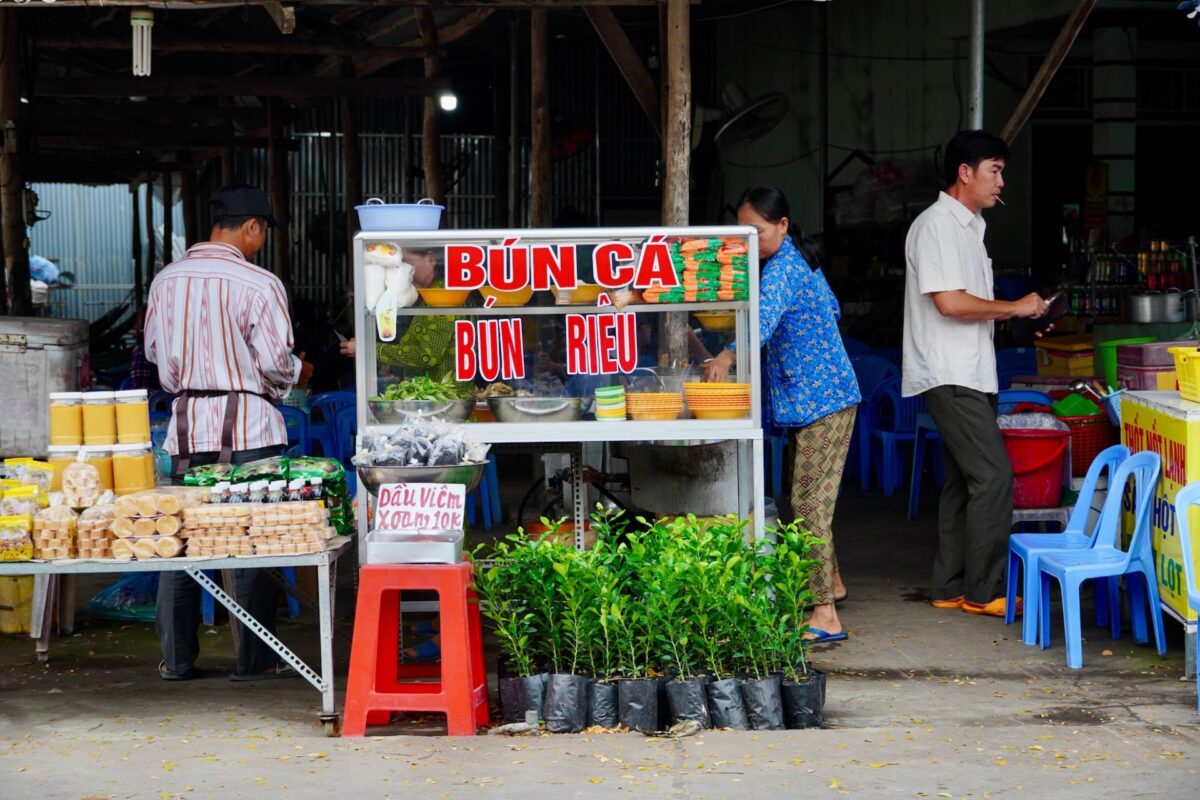
Alternatively, visit Vietnam just before Tet (late January or early February, depending on the lunar calendar). Markets burst with activity, vendors sell fresh ingredients for tet dishes, and you can observe families preparing for the celebration.
Taste the Stories, Share the Tradition with Jackfruit Adventure
Traditional tet dishes are more than recipes passed down through generations – they’re edible narratives of who we are as Vietnamese people. Each bite of bánh chưng carries the weight of ancient legends. Every spoonful of thịt kho tàu tastes of family resilience and hope. The tang of dưa hành on your tongue? That’s the flavor of balance, of understanding that life’s richness needs contrast to be fully appreciated.
These dishes haven’t survived centuries because they’re trendy or Instagram-worthy. They’ve endured because they do something profound: they transform ordinary ingredients into bridges between the past and present, between the living and those who came before us, between strangers and family.
Whether you’re Vietnamese diaspora searching for that half-remembered taste of childhood, or a traveler hungry for authentic cultural immersion, tet dishes offer something rare: a direct connection to the soul of Vietnamese culture. Not the sanitized, tourist-friendly version, but the real thing – messy, time-consuming, imperfect, and absolutely worth it.
The beauty is that you don’t need to wait for Tet to start exploring. The techniques, the flavors, the stories behind these dishes are accessible year-round. But if you can time it right, experiencing Tet in Vietnam is like being invited into the intimate heart of a culture that usually keeps its most precious traditions behind closed doors.
Contact us to explore our Tet cultural experiences and secure your spot for an unforgettable Vietnamese New Year. Your journey into the heart of Vietnamese culture starts with a single bite. Let’s make it count!