

Table of Contents
If you’ve read our previous article on Hoa Lo Prison, you probably already know the basics. Once known as Maison Centrale and later nicknamed the “Hanoi Hilton,” this site stands as one of Hanoi’s most powerful historical landmarks.
But history here doesn’t end with names and dates. Today, I want to share more with you about stories few people talk about, and the details most travelers often miss. And I believe the 7 stories I’m about to share will make your visit to Hoa Lo Prison even more meaningful and memorable.
Uncover 7 Hidden Things You Might Miss at Hoa Lo Prison
1. Hoa Lo Before It Became One of Hanoi’s Darkest Places
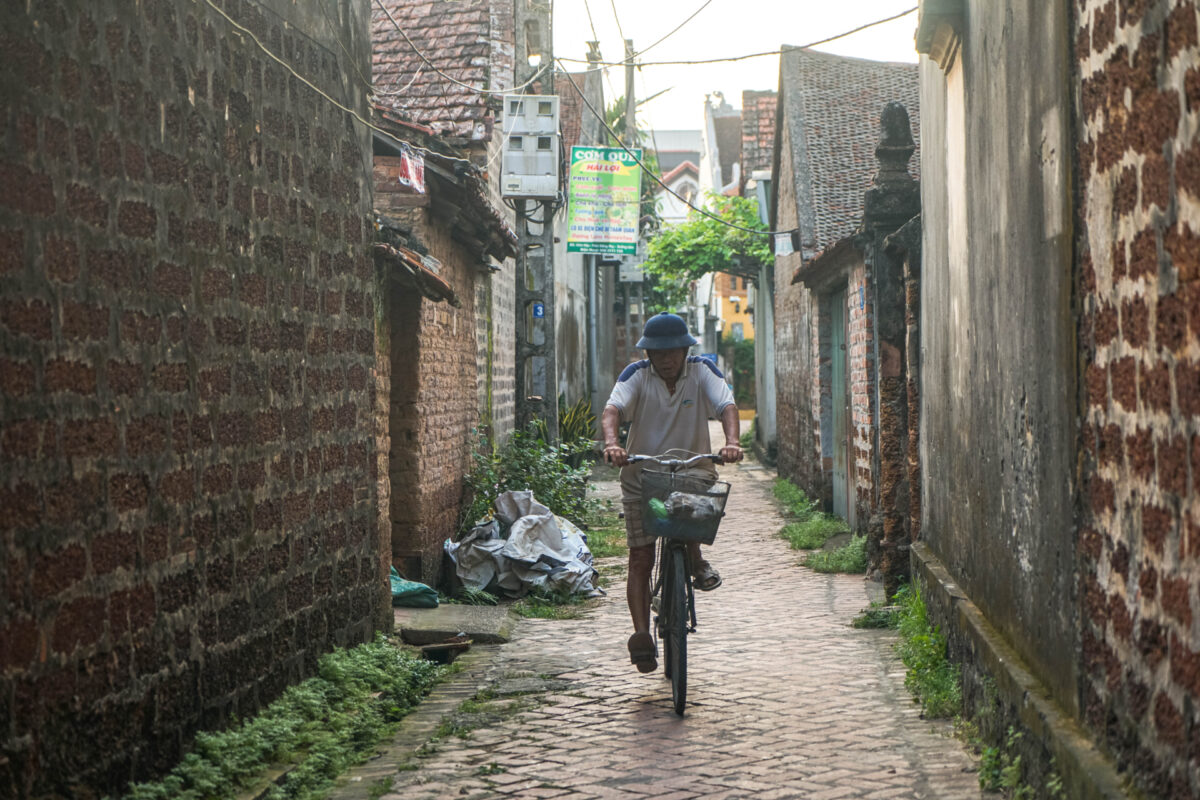
Before becoming a notorious prison, Hoa Lo was once a small craft village in ancient Thang Long. It was part of Phu Khanh, a cluster of craft villages known for pottery and fire stoves. The name ‘Hoa Lo’, meaning Village of the Fire Stove (‘Hỏa’ is Fire, ‘Lò’ is Stove), came from this long tradition of working with clay and fire.
Daily life revolved around pottery making. Kilns burned for hours, filling the area with the smell of damp earth and smoke. Artisans produced simple but essential items like pots, jars, bricks, and tiles that supported everyday life across the city. Families lived and worked side by side, passing down their craft through experience rather than formal teaching. Fire was not just a tool but the heart of the community.
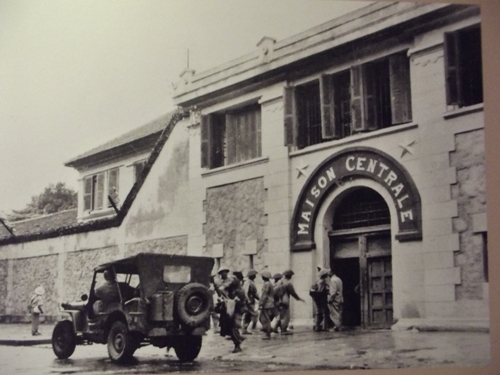
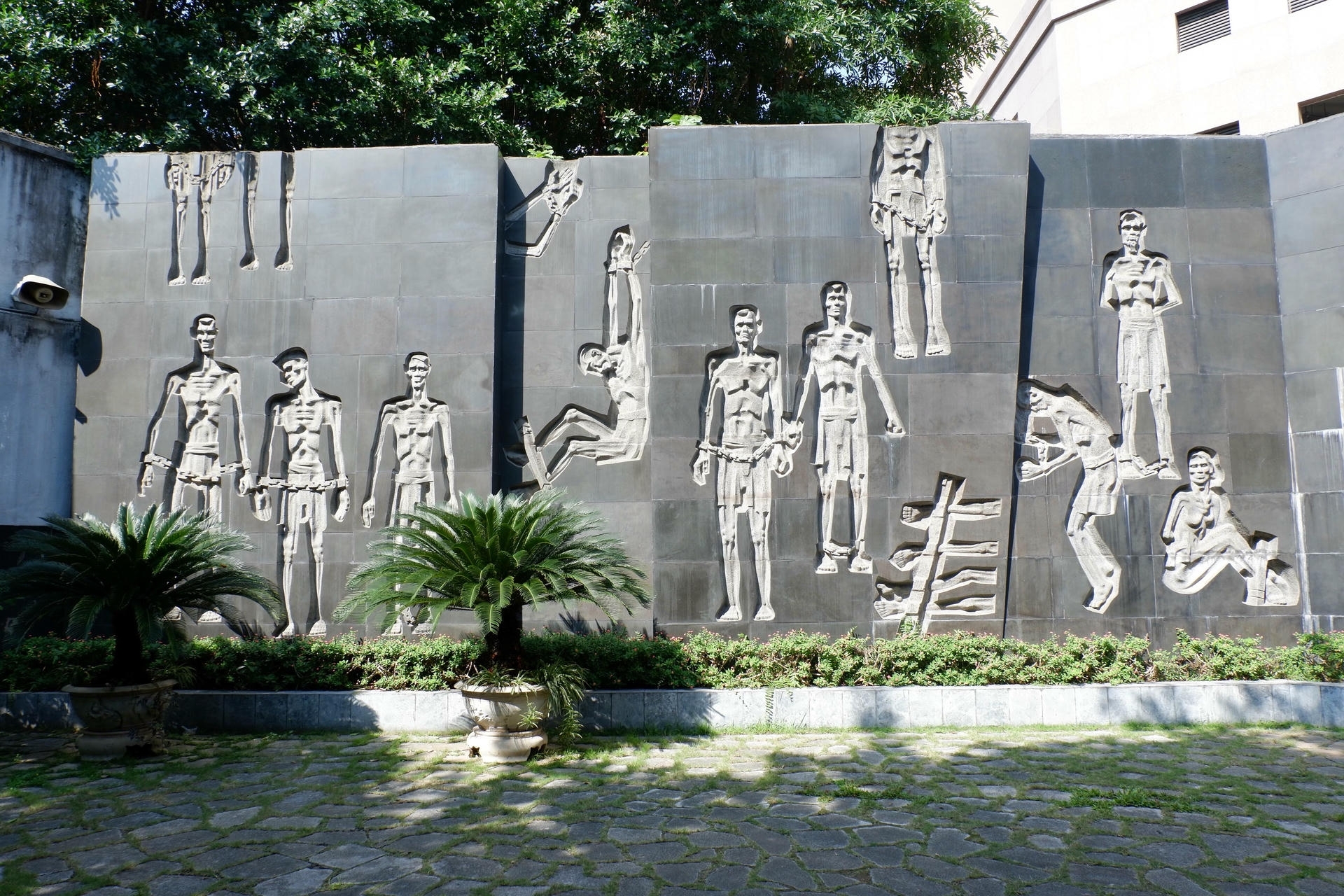
In 1896, French colonial forces forced residents to leave and cleared the area to build a prison complex, including Maison Centrale, now known as Hoa Lo Prison. Many Vietnamese revolutionaries were imprisoned, tortured, and executed there, though they held on to their ideals and hope.
Although the craft village disappeared, the name Hoa Lo remains as a quiet reminder of the artisans and everyday lives that once shaped this part of Hanoi before history transformed it forever.
2. Hoa Lo Prison and Its Three Lives Over Time
The Birth of Hoa Lo Prison
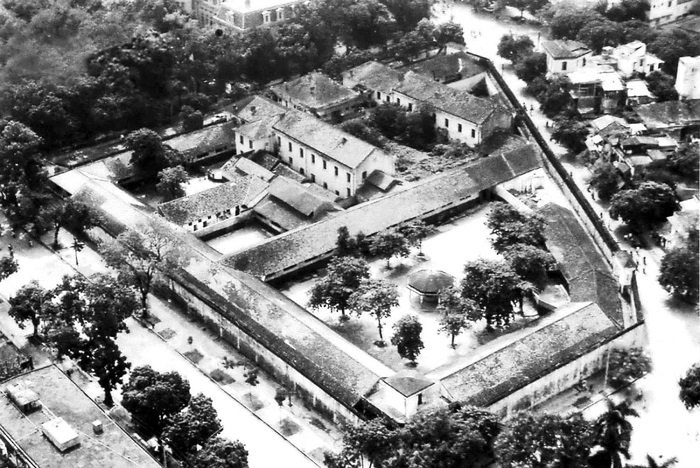
Hoa Lo Prison was built on land that once belonged to Phu Khanh village, an area known for pottery and fire stoves. The village was also called Hoa Lo, meaning Village of the Fire Stove. In 1896, French colonial forces forced residents to leave and cleared the area to build a prison complex known as Maison Centrale. Many Vietnamese revolutionaries were imprisoned, tortured, and executed here, though they remained committed to their ideals and resistance.
A Detention Camp During the Vietnam War
After North Vietnam was liberated, the prison later became a detention center for American pilots during the war from 1964 to 1973. Several well known prisoners were held here, including Douglas Peter Peterson and John McCain. During this time, American prisoners nicknamed the prison the Hanoi Hilton and later stated they were not mistreated.
A Landmark Museum Today
In 1993, Hoa Lo Prison was officially turned into a museum. Preserved as a powerful historical site, it now tells the story of Vietnam’s struggles through two major wars. Today, visitors can explore the prison to better understand the hardships of the past and the resilience of those who fought for independence and peace.
3. Only 2% Remains: Hoa Lo Prison Today
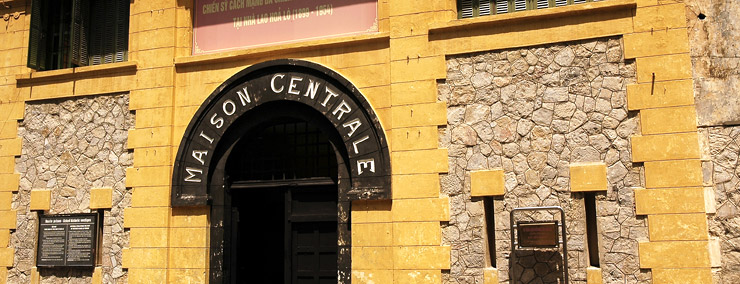
Up to this day, only a small portion of Maison Centrale remains, about 2,000 square meters along Hoa Lo Street, preserved as the new identity ‘Hoa Lo Prison Memorial’ or just Hoa Lo Prison. Originally spanning 12,908 square meters, Hoa Lo Prison was built like a fortress. Its four-meter-high stone walls, topped with barbed wire and later electric fencing, created an intimidating look outside that seemed impossible to jailbreak. The main entrance was narrow and framed by heavy, iron doors.
The reason only a small part of Hoa Lo Prison remains as a museum is largely due to rapid urban development in Hanoi during the early 1990s. As the city expanded and land in the central area became increasingly valuable, most of the former prison complex was demolished to make space for commercial and residential projects, most notably the Hanoi Towers complex. At the time, preservation was limited, and priority was given to modernization rather than conserving the entire historical site.
As a result, only the southeast corner of the prison was retained, including the main gate, sections of the outer walls, and several cell blocks. These surviving structures were later restored and repurposed as the Hoa Lo Prison Memorial, allowing at least part of the prison’s history to be preserved and shared with future generations.
4. The 1945 Jailbreak Through Sewer System That Shook Hoa Lo Prison
One of the most daring stories from Hoa Lo Prison is the mass escape of over 100 political prisoners in August 1945. The original sewer gate used in this escape is now on display in the men’s courtyard. Prisoners, weakened by harsh living conditions, squeezed through the narrow tunnels, a testament to their ingenuity and determination.
Even while imprisoned at Hoa Lo, communist fighters closely followed events outside the prison. In early March 1945, news spread that Japan was preparing to overthrow French control in Indochina. On the night of March 9, Japanese troops took over Hoa Lo Prison, throwing the French prison system into chaos. Sensing a rare opportunity, Party members inside immediately began planning an escape.
The first attempts involved tearing blankets into ropes and trying to climb the prison walls. While the men made preparations, a group of women also attempted to escape on March 11. However, the plan failed when Japanese soldiers discovered them, forcing the women to retreat to their cells. Despite this setback, they refused to give up.
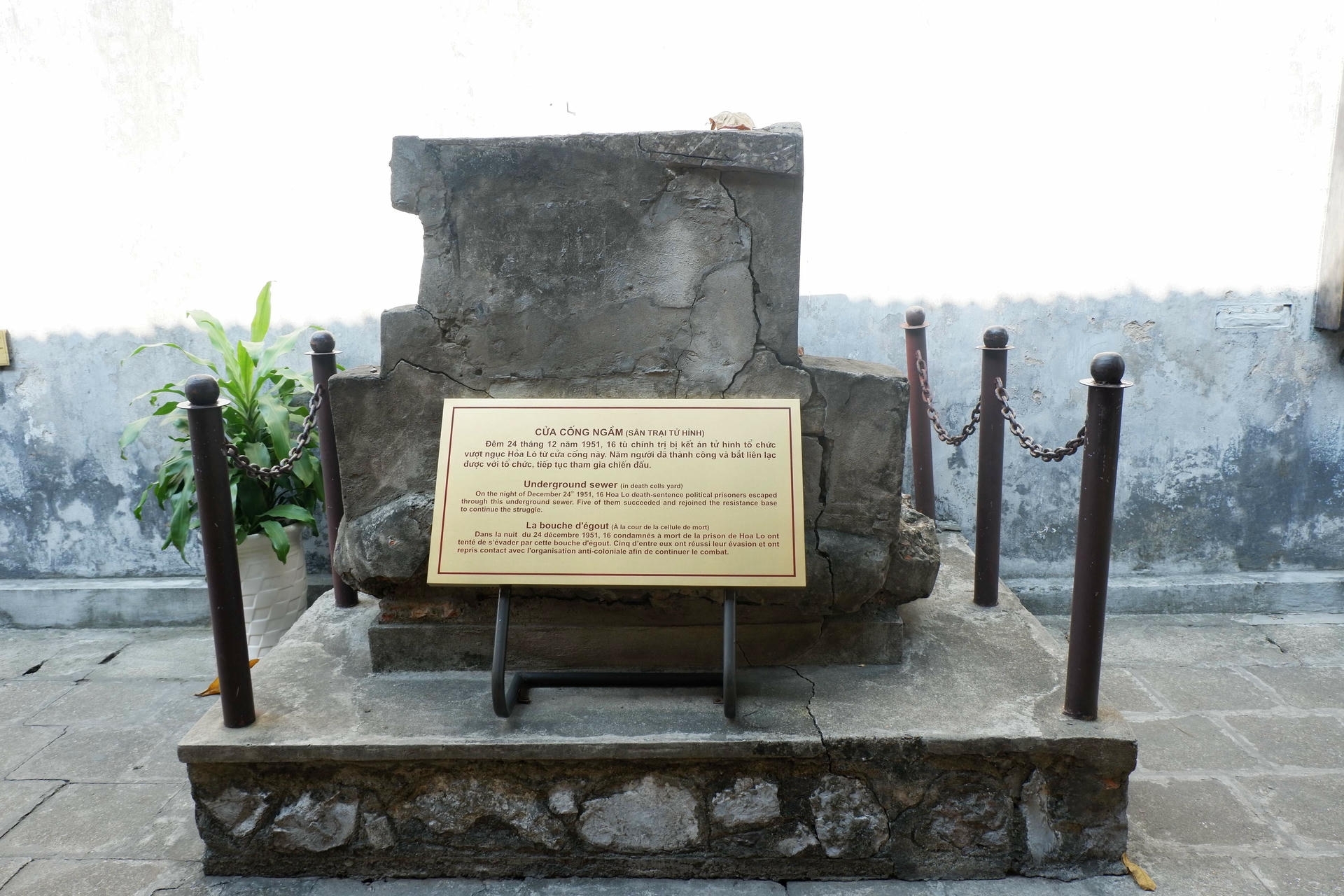
After reassessing the situation, the prisoners realized the best chance of escape was through the commoner section, where security was weaker. From there, they discovered a manhole leading to the underground sewer system. Crawling through filthy, narrow tunnels filled with waste and insects, they followed the flow of water until they spotted daylight above. Reaching the street brought overwhelming relief and success.
Through this daring method, 29 prisoners escaped at first, with many more following in the following days. In total, over 100 political prisoners are believed to have regained their freedom, later rejoining the revolutionary movement. It remains one of the most remarkable escape stories in Hoa Lo Prison’s history.
5. Story of Female Prisoners
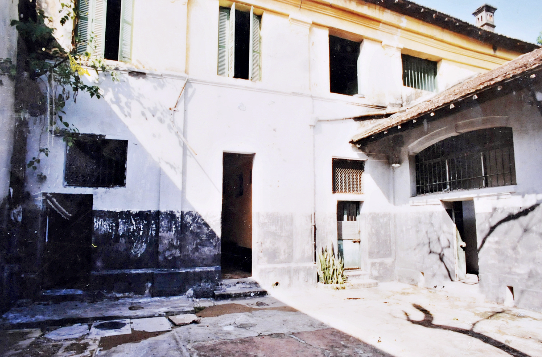
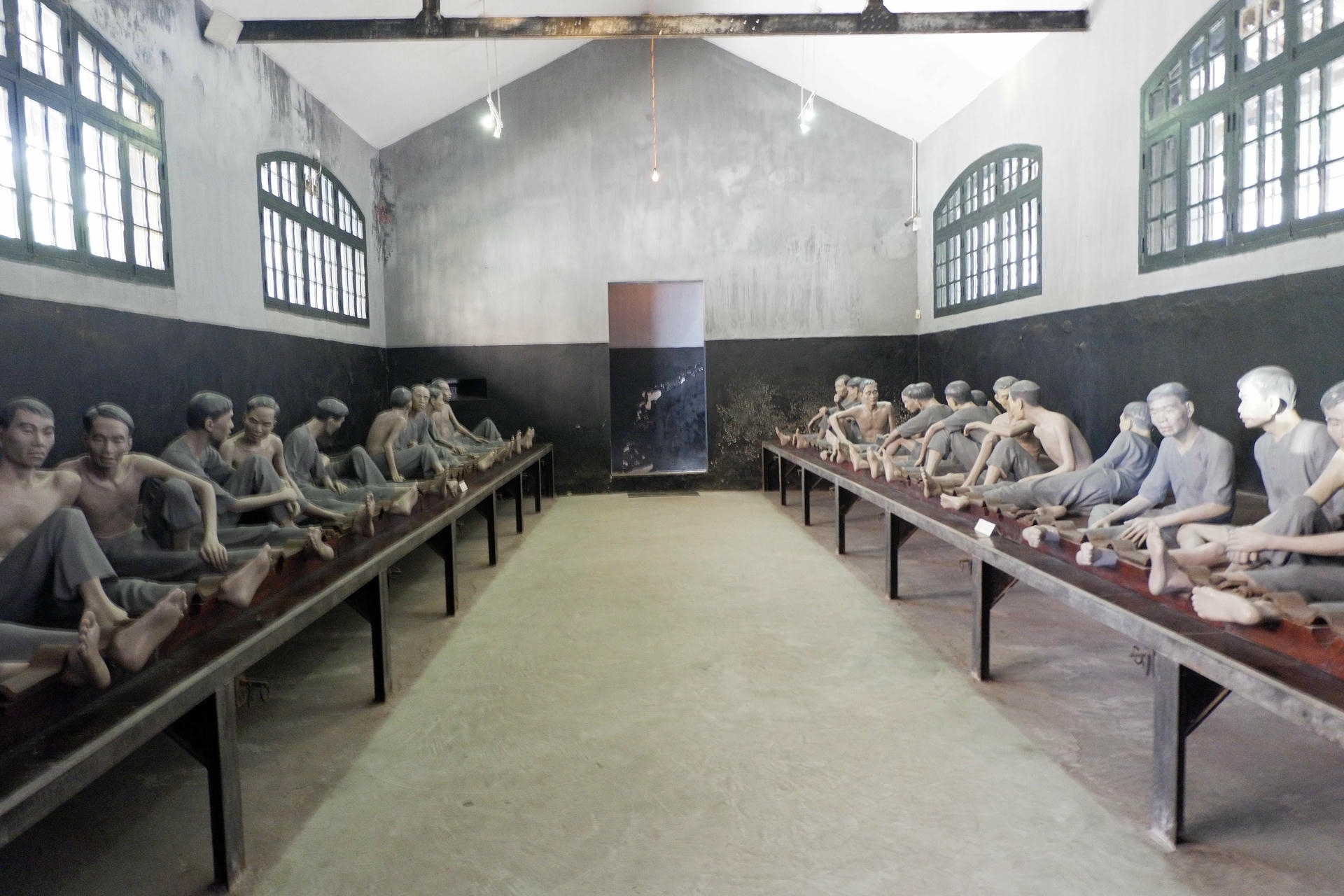
The women’s detention area covered just 270 square meters, including small cells, a room for mothers with young children, a communal cell, a bathing area, and a tiny courtyard. At times, up to 300 female prisoners were confined here. Conditions were cruel: cramped cells, little water, poor sanitation, and meager rations. Despite these hardships, the women showed remarkable resilience, supporting one another and resisting the oppressive system.
Education became an act of defiance. The women secretly organized political classes in small groups of 10 to 15 people. Those who could read and write taught others, despite French policies that denied Vietnamese people access to proper education. To hide their studying documents, they carefully removed bricks from the walls to create tiny storage spaces, covering them with clothes, sand, and anything else that might avoid the guards’ attention.
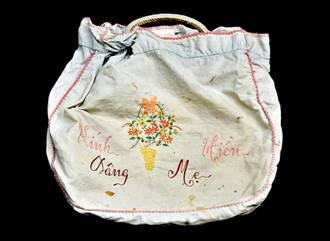
To cope with hard times in prison, the women found comfort through making accessories such as steel rings, coconut comb. Some even crafted handmade bags as a gift for fellow prisoners. In 1953, one woman named Tran Thi Tue embroidered a white cloth bag with a message about her mother, expressing her hope of one day returning home and being reunited with her.
6. Even Students Were Locked Up at Hoa Lo Prison
Hoa Lo Prison was not reserved solely for revolutionaries or Communist fighters. Many ordinary people, including students and civilians, were imprisoned simply for being suspected of resistance or expressing ideas the colonial authorities feared.
In the shadows, they became a vital force in the struggle to “transform the national prison into a revolutionary school,” demonstrating that believing in any idea or method would lead to success. After escaping Hoa Lo Prison, they continued to participate in the struggle for national liberation, protecting, building, and developing the country. They were also the ones who opened political classes while imprisoned, teaching and conveying the political vision of the resistance forces to other prisoners.
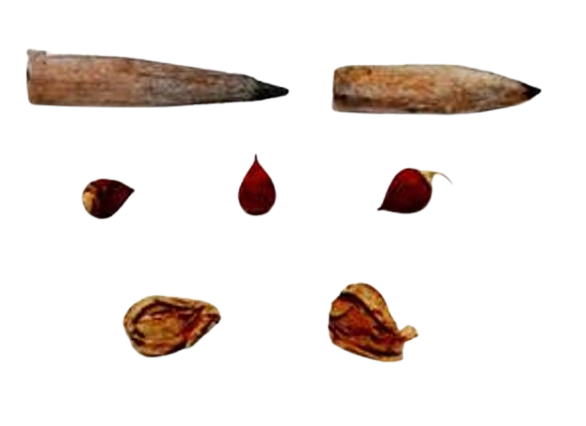
After escaping or being released, these former prisoners continued their fight for national liberation and later played important roles in protecting and building the country. Their determination proved that even in the harshest conditions, belief and unity could turn a prison into a revolutionary school.
7. Art and Optimism Behind the Walls of Hoa Lo
Despite the harsh conditions, prisoners at Hoa Lo Prison never lost their optimism. Revolutionary and patriotic fighters constantly looked for ways to improve daily life behind bars, forming groups like the Activities Committee, Order Committee, Diplomatic Committee, and especially the Arts Committee. These groups helped maintain morale and unity among prisoners.
The Arts Committee played a key role in organizing cultural activities during holidays and Lunar New Year. Performances included traditional opera, short plays, poetry recitals, singing lessons, and simple games. Preparing for these events required great secrecy. Prisoners smuggled in colored paper, foil, glue, and bamboo tubes, which were hidden carefully during the day. At night, women worked together to make costumes like ‘áo dài’ and props for performances, then quietly rehearsed.
On New Year’s Eve, the main prison cell was transformed into a small stage. Women gathered wherever space allowed, some sitting under floorboards, others standing guard at the doorway to avoid alerting prison guards. These performances brought rare moments of joy, strengthened solidarity, and helped prisoners endure the brutality of prison life.
Some Tips for Your Enjoyable Time at Hoa Lo Prison
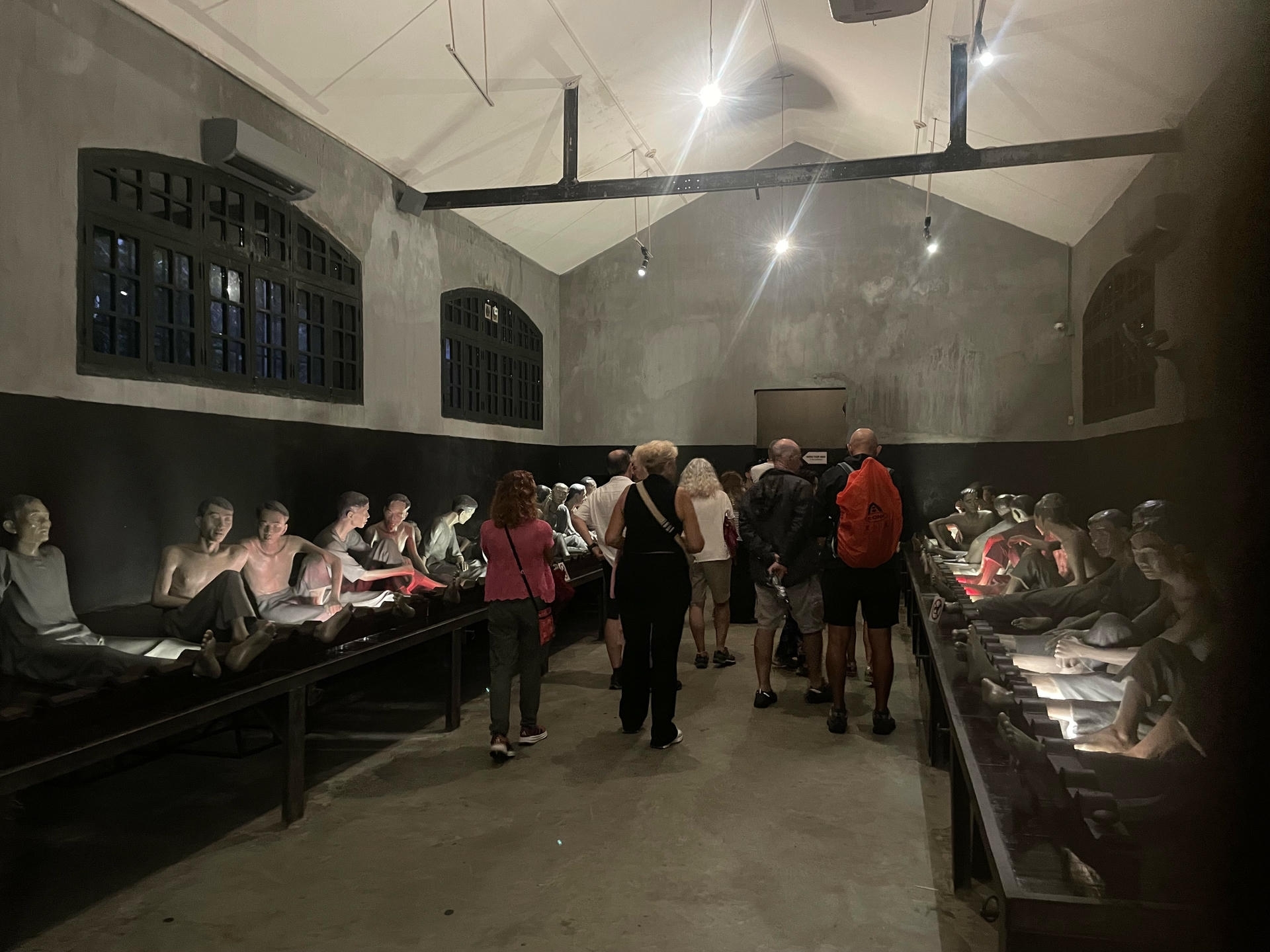
- Keep it simple: Bring only the essentials; large bags and restricted items must be checked at the entrance.
- Hands off history: Please don’t touch or move any artifacts, they’re precious and prefer not to be handled.
- Dress respectfully: Modest clothing helps honor the site’s historical importance.
- Be quiet here: Use soft voices and stay mindful in memorial areas.
- No food, drinks, or smoking: Help keep the museum clean and smoke-free.
- Offerings with care: Flowers or incense may be placed only in designated memorial areas.
- Safety first: Do not bring explosives or flammable items; store luggage properly.
- Park properly: Use the designated parking areas for personal vehicles.
- Follow staff guidance: They are here to assist, especially during emergencies. You can choose to hire a guide who will lead you through all the key stops, or opt for a self-guided experience with an audio headset. The headset rental is priced at 50,000 VND.
Save Your Seat for More Than Just This One Striking Hoa Lo Prison with Jackfruit

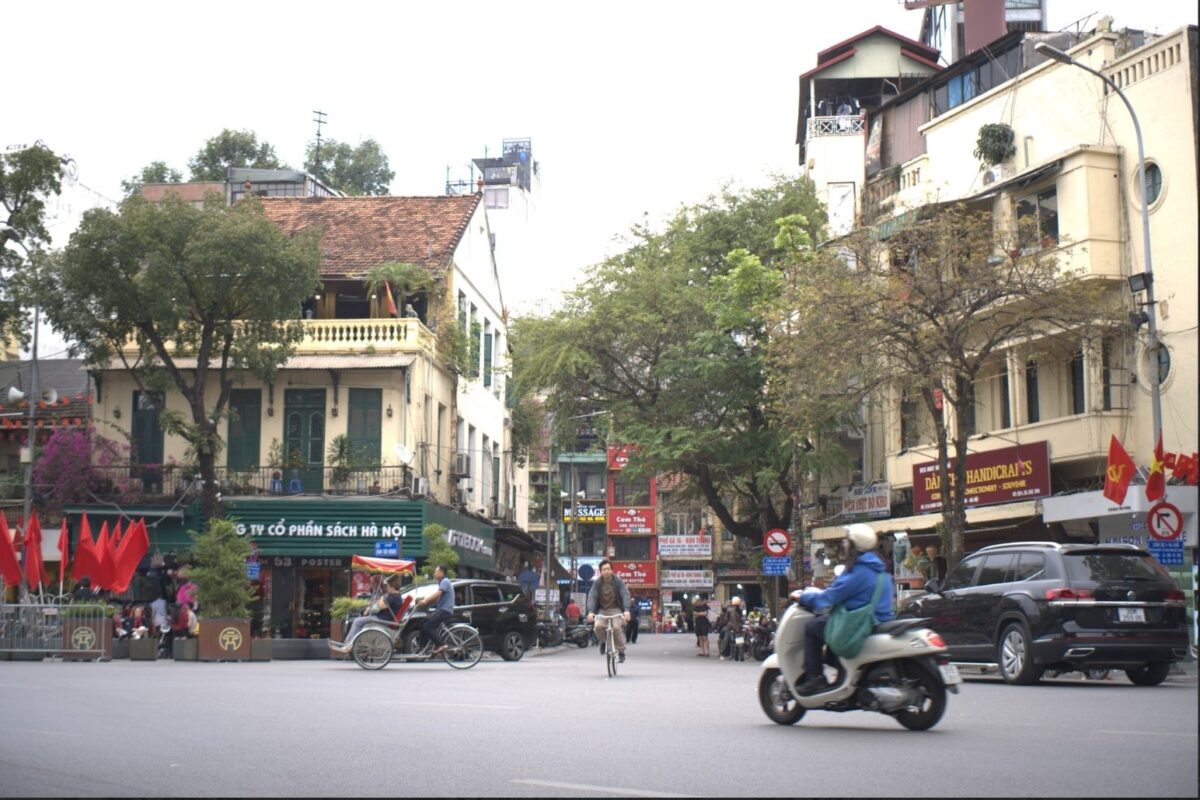
I’m sure the history, architecture, and haunting exhibits of Hoa Lo Prison are enough to send a chill down your spine. But Hanoi has plenty of “cooler,” lesser-known gems waiting quietly in hidden corners of the city. Our cycling tours in Hanoi are designed exactly for that, guiding you through the secret alleys, local hangouts, and cultural spots that most visitors never get to see.
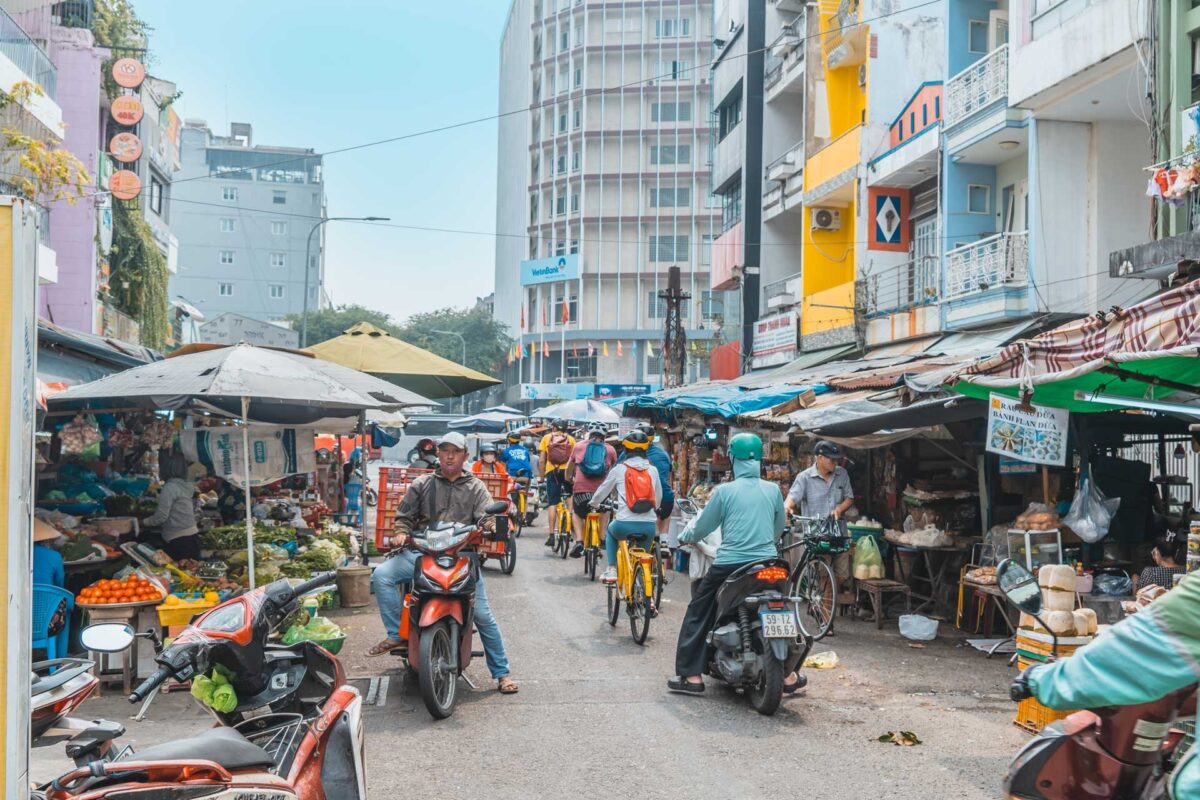
If you’re heading to Ho Chi Minh City, don’t miss our Saigon City cycling tours for a similar blend of discovery and adventure. Curiosity is a gift, and there’s no better time than now while you still have time for new stories. Reach out to us and let Jackfruit be your first crewmate on the journey.