

Table of Contents
As someone who was born and raised amidst the chaotic, beautiful streets of Hanoi, I often get asked by travelers where they can find the true soul of this city. They want to know where to escape the roaring motorbikes and the non-stop hustle of the Old Quarter. My answer is always the same: you need to walk through the botanical gardens of the Presidential Palace and spend an hour at the Ho Chi Minh Stilt House.
For us locals, this isn’t just another stop on a tourist itinerary. The Ho Chi Minh Stilt House is a symbol of humility, a sanctuary of peace, and a profound piece of living history. It reflects the deeply ingrained values of our beloved Uncle Ho, who chose to live in a modest wooden dwelling rather than a grand palace.
If you are planning your journey to Vietnam’s capital, stepping into this serene complex is an absolute must. In this guide, I will take you on a personal walkthrough of the Ho Chi Minh Stilt House Hanoi, sharing local insights, historical context, and practical travel tips to make your visit truly unforgettable.
What Is the Ho Chi Minh Stilt House?
The Ho Chi Minh Stilt House – known in Vietnamese as Nhà Sàn Bác Hồ – is a simple two-storey wooden structure built on stilts in the grounds of the Presidential Palace in the Ba Dinh district of Hanoi. President Ho Chi Minh lived and worked here from 1958 until his death in 1969, using it as his primary residence for over a decade.
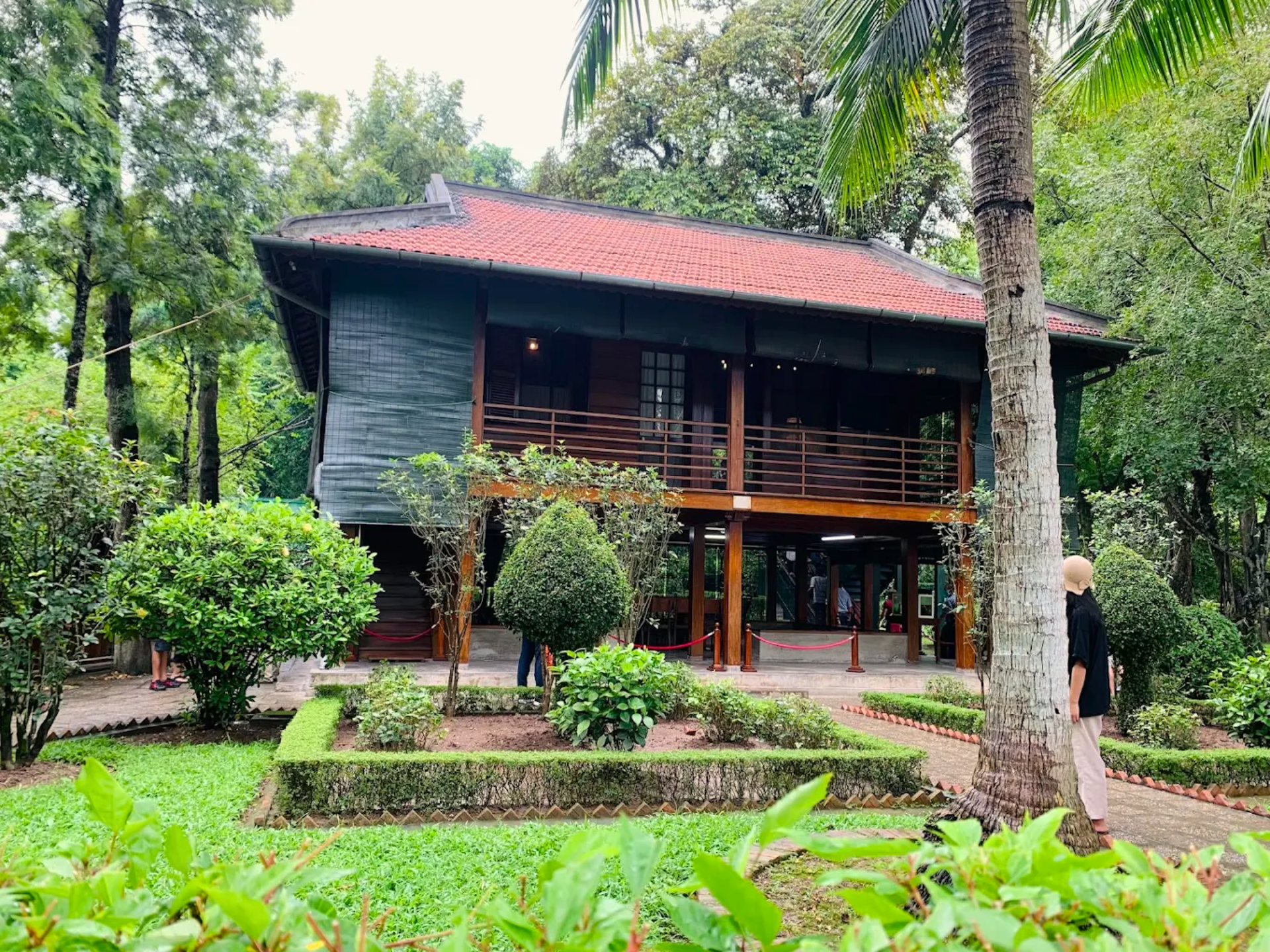
The house was designed by architect Nguyen Van Ninh and inspired by the traditional stilt homes of Vietnam’s ethnic minority communities in the northwestern highlands – a deliberate architectural choice that spoke volumes about who Ho Chi Minh was and what he stood for. While the French colonial palace nearby had served as the Governor-General’s residence and was offered to him as the head of state, Uncle Ho famously declined to live in it, choosing instead this modest structure on the edge of the compound’s garden pond.
For Vietnamese people like me, this choice is still something we talk about. The Ho Chi Minh Stilt House isn’t just a building – it’s a statement.
Inside the Ho Chi Minh Stilt House: What You’ll Actually See
The Ground Floor
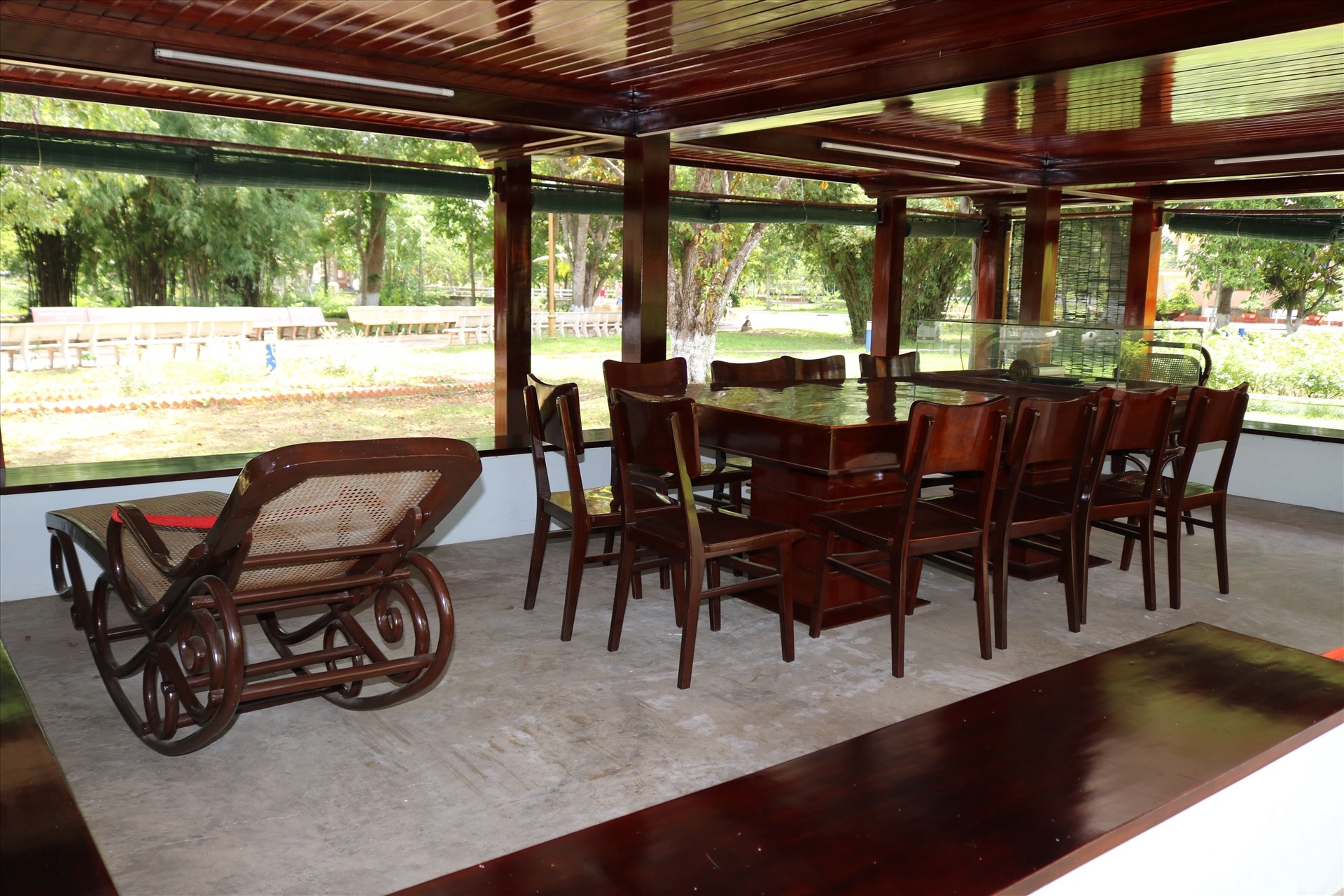
The ground floor of the Ho Chi Minh Stilt House is open on all sides, almost like a shaded pavilion. This is where Ho Chi Minh held meetings with the Politburo and received important guests, including foreign delegations. The open-air design is intentional – it’s airy, unpretentious, and completely at odds with how heads of state typically operate.
A simple wooden table and chairs sit in the center. There are no marble floors, no ornate decorations. Looking at it, you might forget for a moment that this is where some of the most consequential decisions in Vietnamese 20th-century history were made.
The Upper Floor
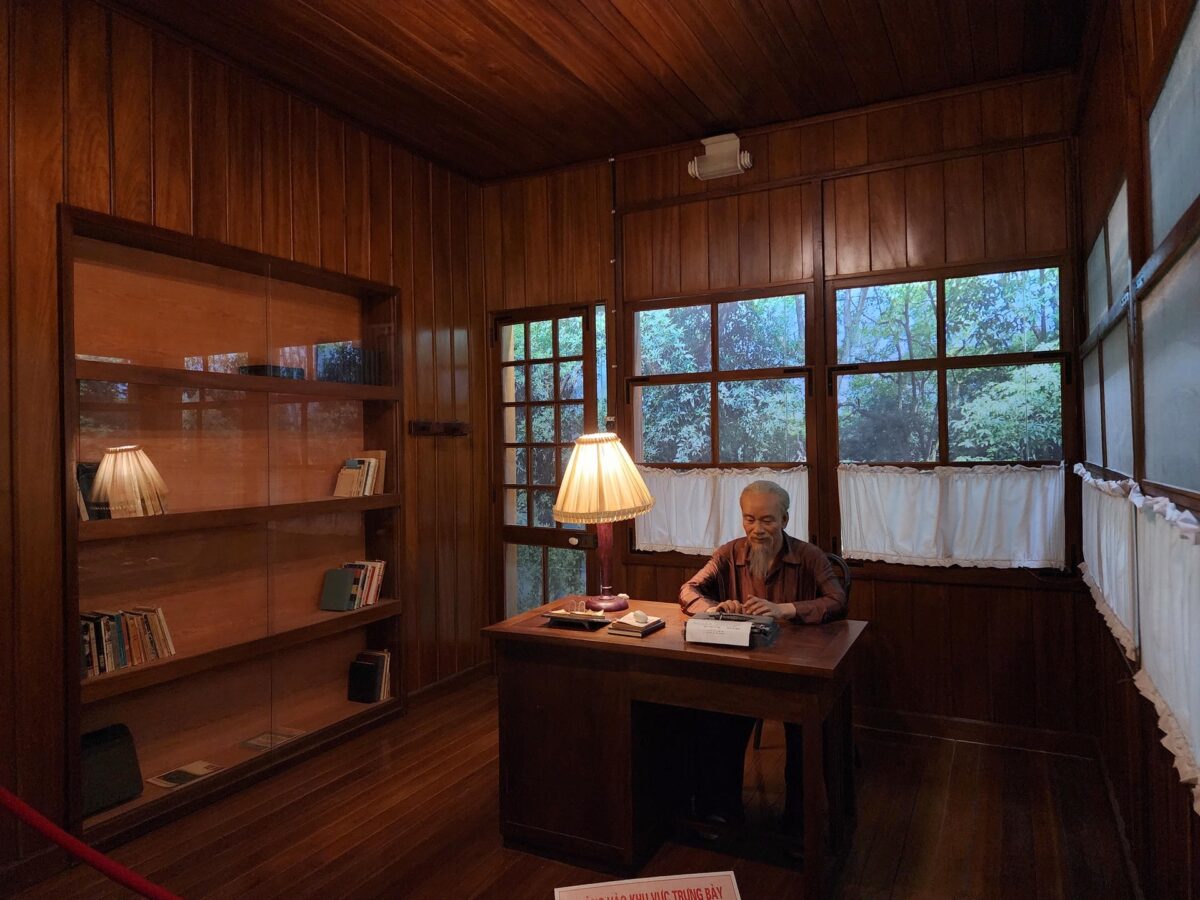
Climb the narrow wooden stairs to the second floor and you’ll find two small rooms: a bedroom and a study. Both are meticulously preserved exactly as they were when Ho Chi Minh used them.
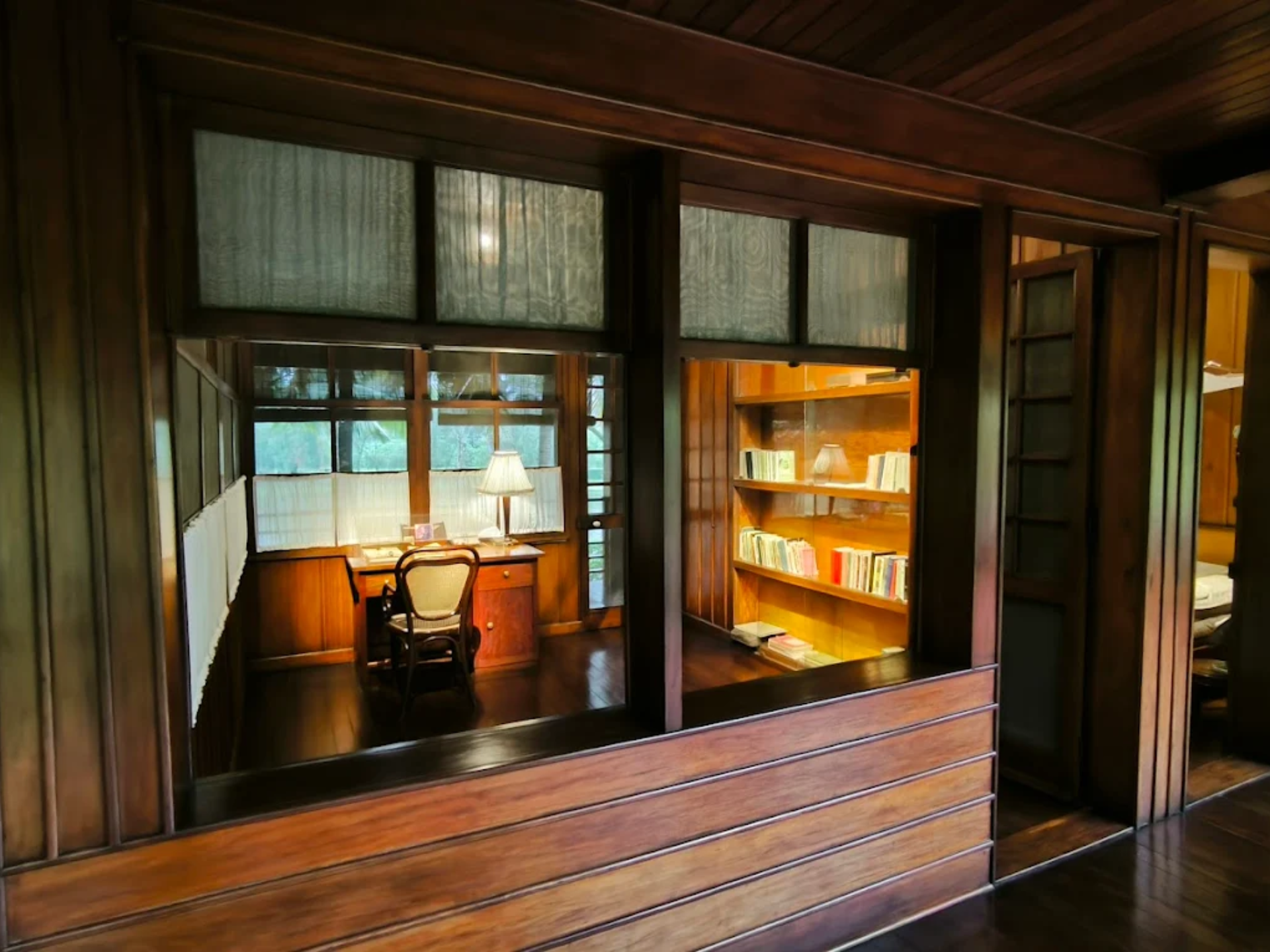
The bedroom is strikingly spare – a single bed with a woven mat, a mosquito net, a small bedside table with a few books. The study has a writing desk, bookshelves, and a small radio that Ho Chi Minh used to listen to international news broadcasts. A pair of rubber sandals – the kind worn by ordinary Vietnamese workers – sits near the door.
Seeing those sandals for the first time, I remember feeling a quiet kind of pride. The Ho Chi Minh Stilt House manages to humanise a figure who could easily have become just another distant historical icon.
The Garden and the Pond
The Ho Chi Minh Stilt House Hanoi doesn’t exist in isolation – it’s part of a carefully preserved landscape that includes a small ornamental pond, fruit and flower gardens, and walking paths lined with tropical trees.
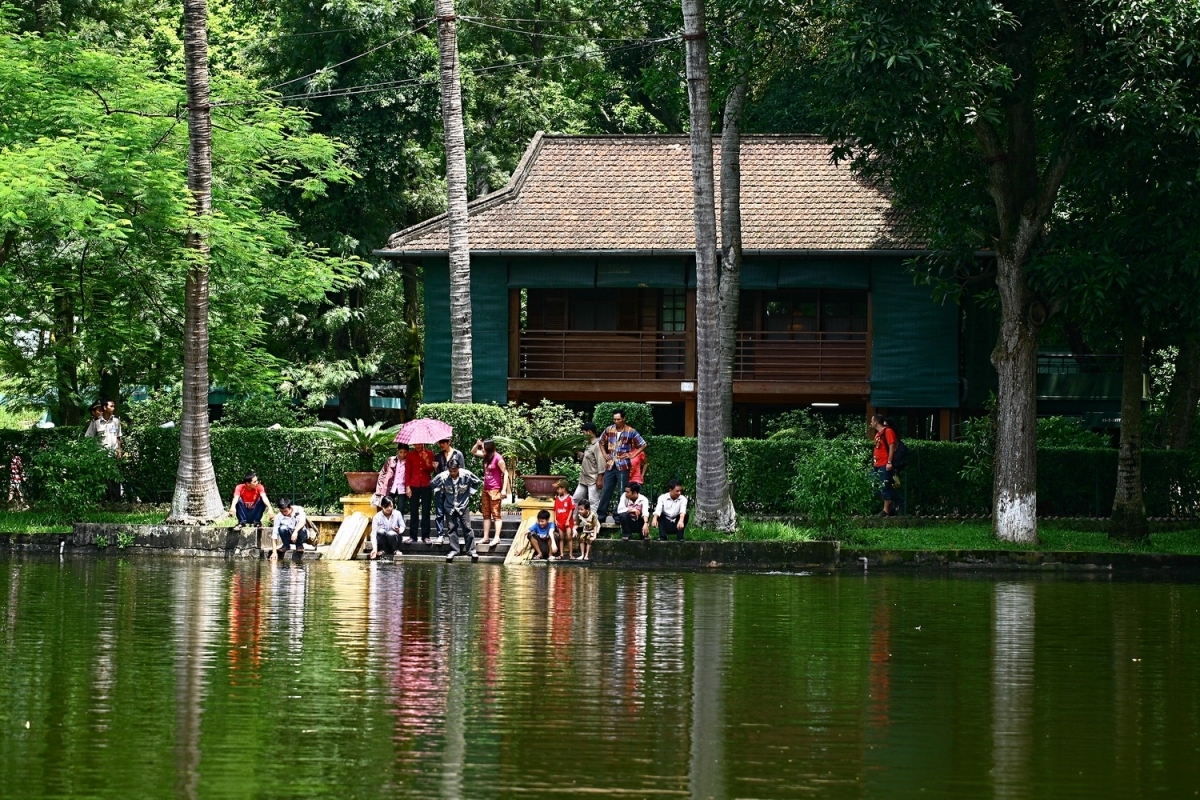
Ho Chi Minh tended this garden himself. He planted trees, fed the carp in the pond, and took early morning walks along its paths. Several of the trees on the grounds are labelled with their origins, many of them gifts from other countries – a small but telling detail about his international relationships and the kind of diplomacy he practised.
Visiting in the early morning, when the compound is quieter and the light is soft, you can almost feel the daily rhythms he maintained here. The Ho Chi Minh Stilt House and its surroundings are one of the few places in Hanoi where you’re encouraged to slow down and simply absorb.
Practical Information: Planning Your Visit
Location
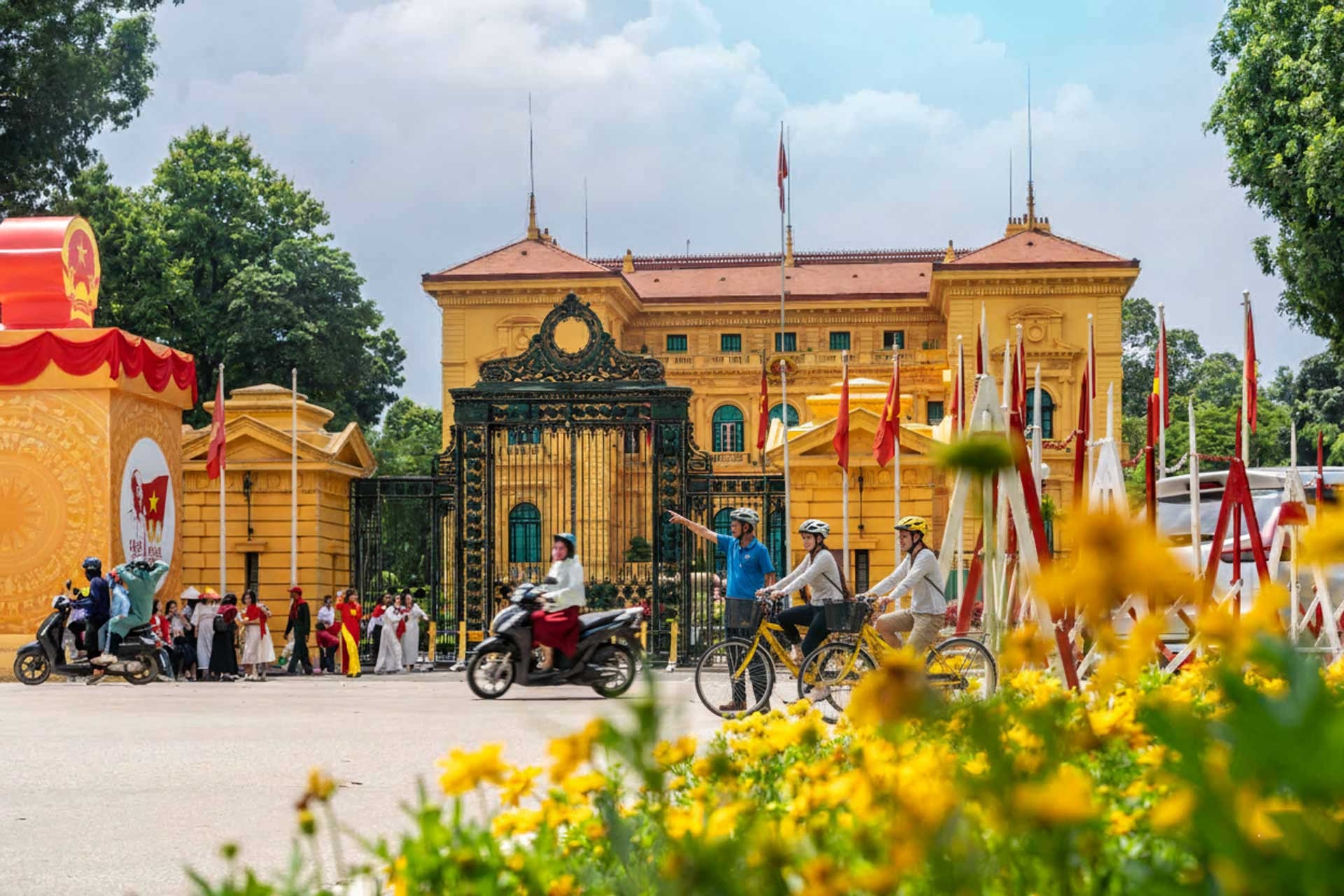
The Ho Chi Minh Stilt House is located at 1 Hoang Hoa Tham Street, Ngoc Ha Ward, Ba Dinh District, Hanoi. It sits within the Presidential Palace Complex, roughly 10 minutes from Hoan Kiem Lake by taxi.
Opening Hours
- Tuesday to Thursday: 8:00–11:00 AM and 2:00–4:00 PM
- Saturday and Sunday: 8:00–11:00 AM and 2:00–4:00 PM
- Closed on Mondays and Fridays
- Closed on public holidays and for occasional maintenance periods
Note that hours can change seasonally and during national events, so always verify current hours before visiting.
Entrance Fees
The entrance ticket to the full Presidential Palace complex – which includes the Ho Chi Minh Stilt House Hanoi, the gardens, and the other residences – costs around 40,000 VND (roughly $1.60 USD) for adults. Children under 15 are often free. Separate tickets may be required for the Ho Chi Minh Museum.
Dress Code
This is a place of deep cultural and historical significance for Vietnamese people. Modest dress is expected – no sleeveless tops, no shorts above the knee.
Photography
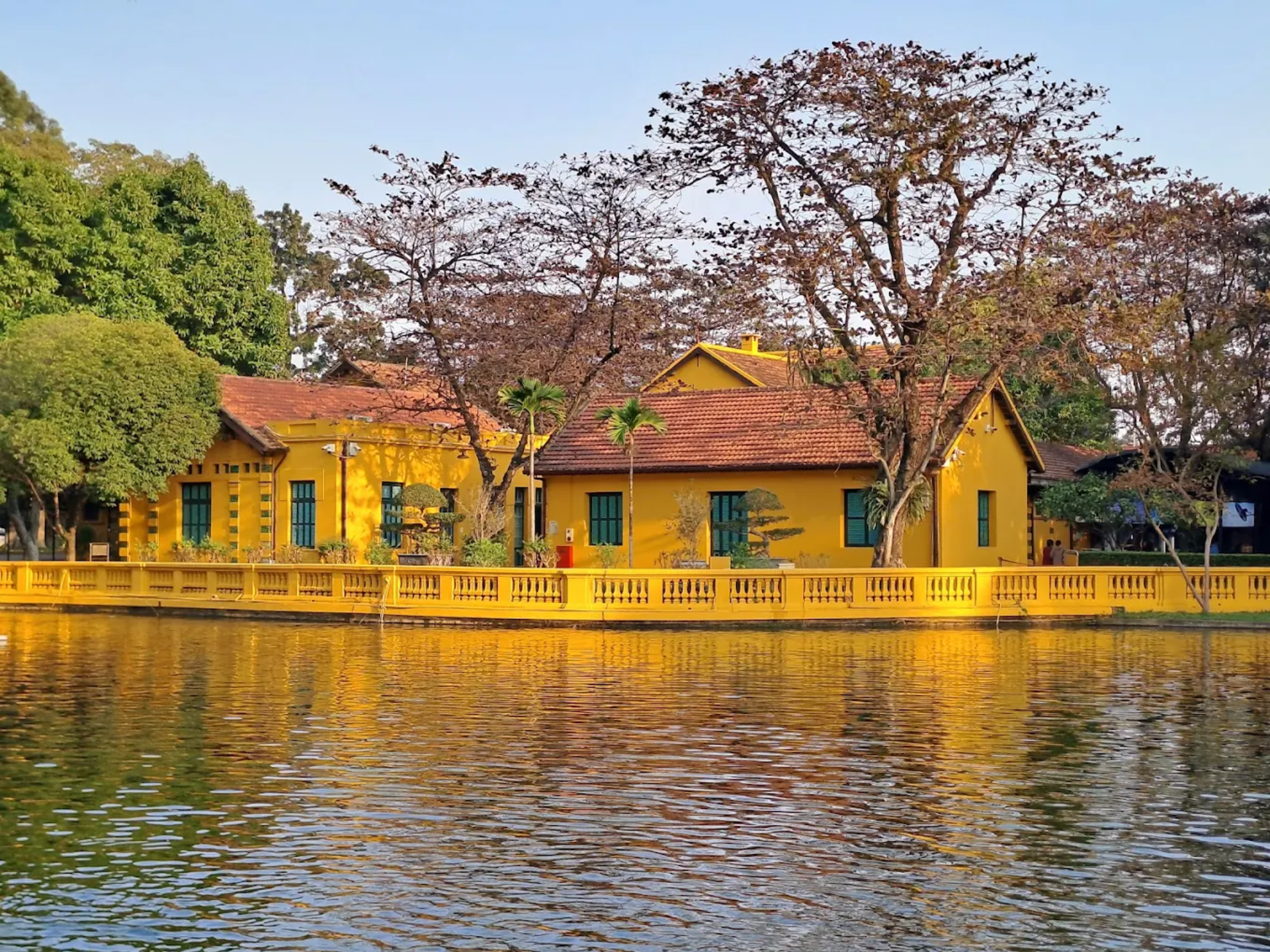
Photography is permitted in the gardens and exterior areas. Inside the stilt house itself, photography is generally not allowed – a rule that’s strictly enforced and honestly, I think, adds to the respectful atmosphere of the visit.
Getting There
- By taxi or ride-hailing app (Grab): The easiest option, especially in Hanoi’s heat.
- By bicycle: A pleasant option if you’re staying in the Old Quarter or Ba Dinh area.
- By city bus: Bus lines 22A, 22B, and 45 stop nearby, though bus schedules can be inconsistent.
Best Time to Visit
Hanoi’s weather plays a big role in how enjoyable your visit will be. The Ho Chi Minh Stilt House gardens are at their most beautiful between October and April, when the weather is cooler and drier and the light is clear and golden in the mornings.
Summer visits (May to August) are doable but hot and humid – I’d suggest arriving right when the gates open at 8:00 AM to beat both the heat and the larger tour groups that tend to arrive mid-morning.
If you’re in Hanoi for Vietnamese National Day (September 2), the area around Ba Dinh Square – just outside the complex – takes on a completely different energy, with ceremonies and gatherings that give the Ho Chi Minh Stilt House site an added layer of significance.
Why the Ho Chi Minh Stilt House Still Matters

I’ve been to the Ho Chi Minh Stilt House with friends, with my family, with foreign colleagues visiting for the first time. The reaction is almost always the same: quiet surprise, followed by genuine reflection.
People expect a monument. They find a home.
What strikes visitors most consistently isn’t the historical importance of the site – it’s the scale of the life that was lived here. The rubber sandals. The single bed. The books. The fish in the pond that he fed by hand every morning. These details accumulate into something more powerful than any speech or portrait.
For Vietnamese people, the Ho Chi Minh Stilt House in Hanoi is a place of deep national reverence. We grow up learning about Uncle Ho in school, seeing his image on currency and in public buildings, hearing stories from grandparents who lived through the years of independence and reunification. Coming here as an adult, with some distance and perspective, I find it’s less about hero worship and more about understanding a particular kind of moral consistency that’s rare in any era of leadership.
The house is the argument. Words weren’t needed.
Tips for Getting the Most Out of Your Visit
- Go early. The first hour after opening is the most peaceful and the light in the garden is beautiful.
- Walk slowly. The grounds reward attention. Look at the labelled trees, read the small plaques along the paths, notice the proportions of the stilt house against the surrounding greenery.

- Hire a local guide or join a small group tour. The context makes an enormous difference. Many of the most moving details only come alive when someone who knows the history tells them to you in person. Our Tour de Hanoi: Old Quarter, Iconic Landmarks & Hidden Corners includes a stop at the Presidential Palace to Hanoi Train Street, the Old Quarter’s hidden corners, and more, all in one guided day.
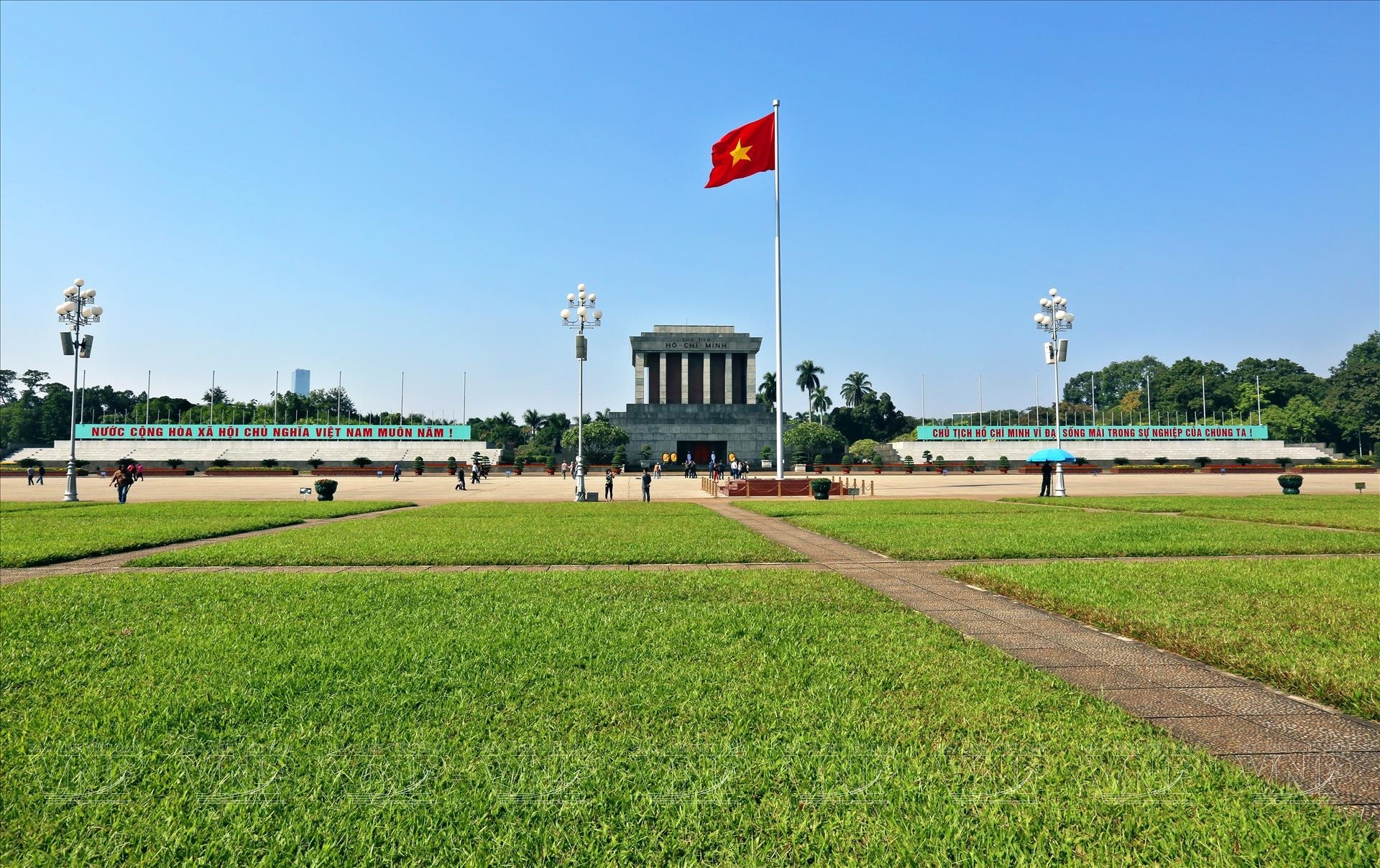
- Pair it with Ba Dinh Square. The square where Ho Chi Minh read the Declaration of Independence on September 2, 1945, is a five-minute walk away. Visiting both in the same morning gives you a real sense of the geography of those historical moments.
A Journey into the Heart of Vietnamese Identity
The Ho Chi Minh Stilt House is, in my honest view, the single most quietly powerful place in Hanoi. It isn’t dramatic. It doesn’t demand your attention. It earns it, slowly, through the accumulation of small, specific, human details that add up to something much larger than any grand monument could manage.
Whether you’re visiting Hanoi for the first time or the fifth, the Ho Chi Minh Stilt House in Hanoi deserves more than a checkbox on your itinerary. Give it a slow morning. Walk the garden. Look at the fish in the pond. Climb the narrow stairs. Stand in that small bedroom and think about the choice that was made to live there.
You’ll leave understanding something about Vietnam that no guidebook can give you.