

Table of Contents
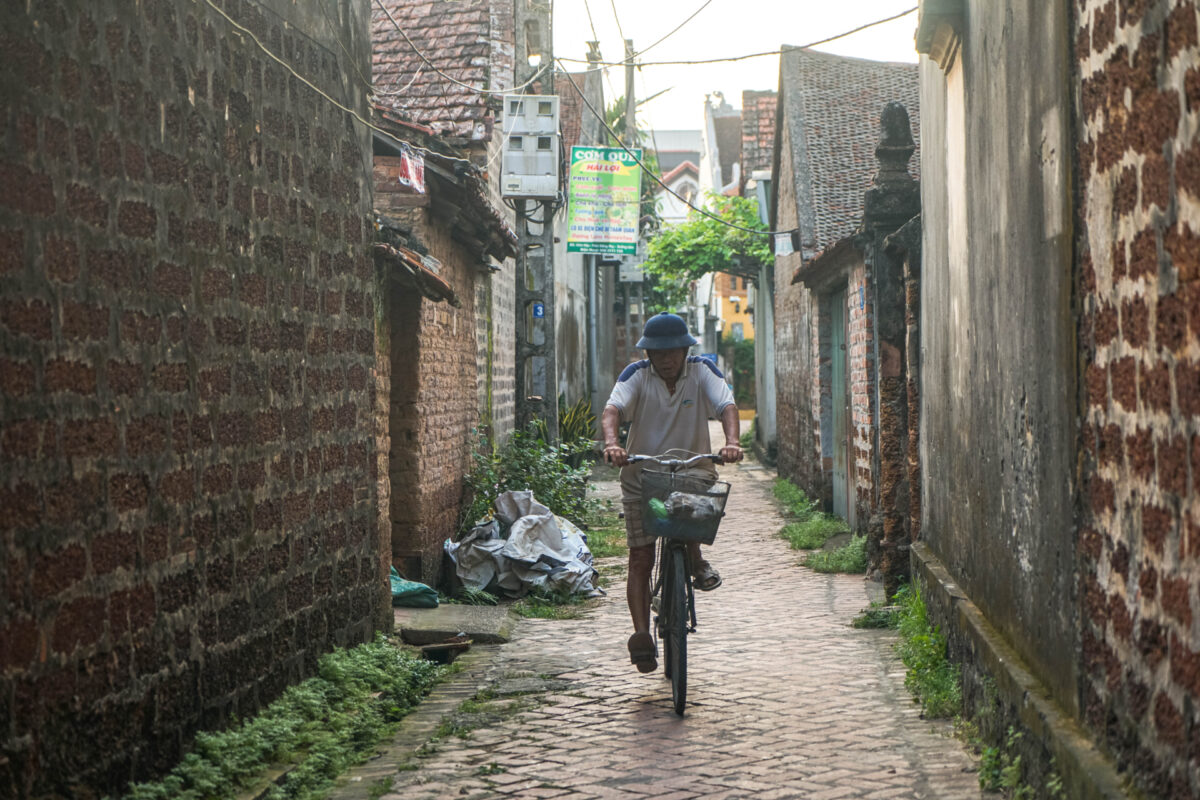
When speaking about the earliest capital of the Viet people, we cannot avoid Thang Long (Hanoi’s ancient name). Long before modern streets and skyscrapers appeared, this land was surrounded by craft villages that supplied food and goods to the royal court. One of those villages still lies quietly near the ancient citadel of Co Loa Citadel, where the legendary king An Duong Vuong once ruled. Hidden inside Co Loa Commune is a small village called Mach Trang. The village is known as the home of a very special kind of rice noodle – Mach Trang noodles.
The noodles here are not the bright white strands often seen in markets. They carry a gentle ivory color, slightly chewy, slightly crisp, delicate but firm. Not just an iconic food aged in the ancient time, Mach Trang noodles holds a mighty story about how it once was a King’s favorite and its fate in the modern Vietnam.
A Mistake Turned Into One Genius Choice
According to local stories, Mach Trang noodles appeared during a royal celebration many centuries ago. The tale takes place during the reign of the king called An Duong Vuong, when the king held a grand wedding feast for his beloved daughter My Chau.
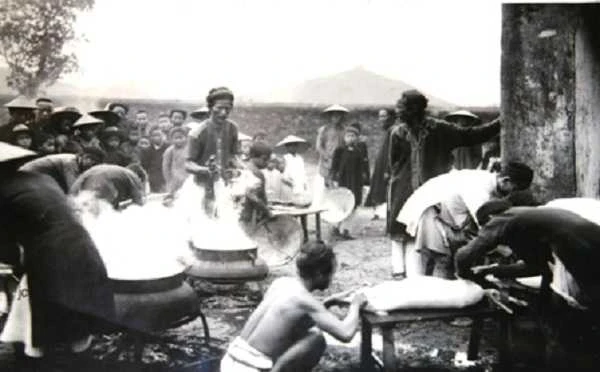
A royal cook was preparing dishes for the feast when something unexpected happened. While working with rice batter, he watched the soft dough slowly slip through the tool he was using. Thin strands fell directly into boiling water, forming long, thick noodles. The cook did not know what to do with them at first. Thinking quickly, he stir fried the cooked strands with celery to create a simple dish.
What began as a moment of improvisation turned into something remarkable. When the dish reached the royal table, the king loved it. From that moment, the noodle dish was remembered as a food worthy of royalty. Locals later called it “bun tien vua” as noodles fit for a king.
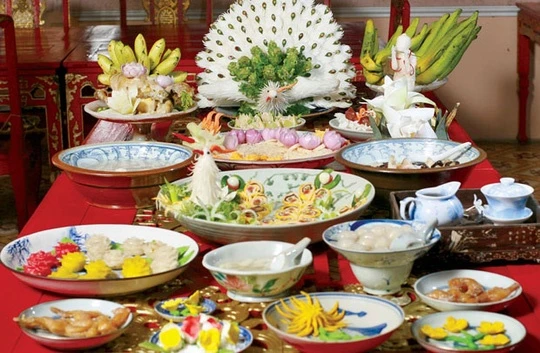
Even today, the story lives on. Every year on the 13th day of the eighth lunar month, people in Co Loa still prepare Mach Trang noodles with celery as part of a traditional offering. Two bowls are placed carefully. One for the king. Another for the ancestors. It is less about the food but about how that one coincident moment formed a historical figure.
The Village That Carries A Legacy
Finding the truth behind the legend leads to the kitchens and courtyards of Mach Trang today. Making Mach Trang noodles is not easy. The process begins with soaking rice carefully before grinding it into flour. The mixture is washed again and again until the water runs completely clear. Only then can the batter be pressed into thin strands.
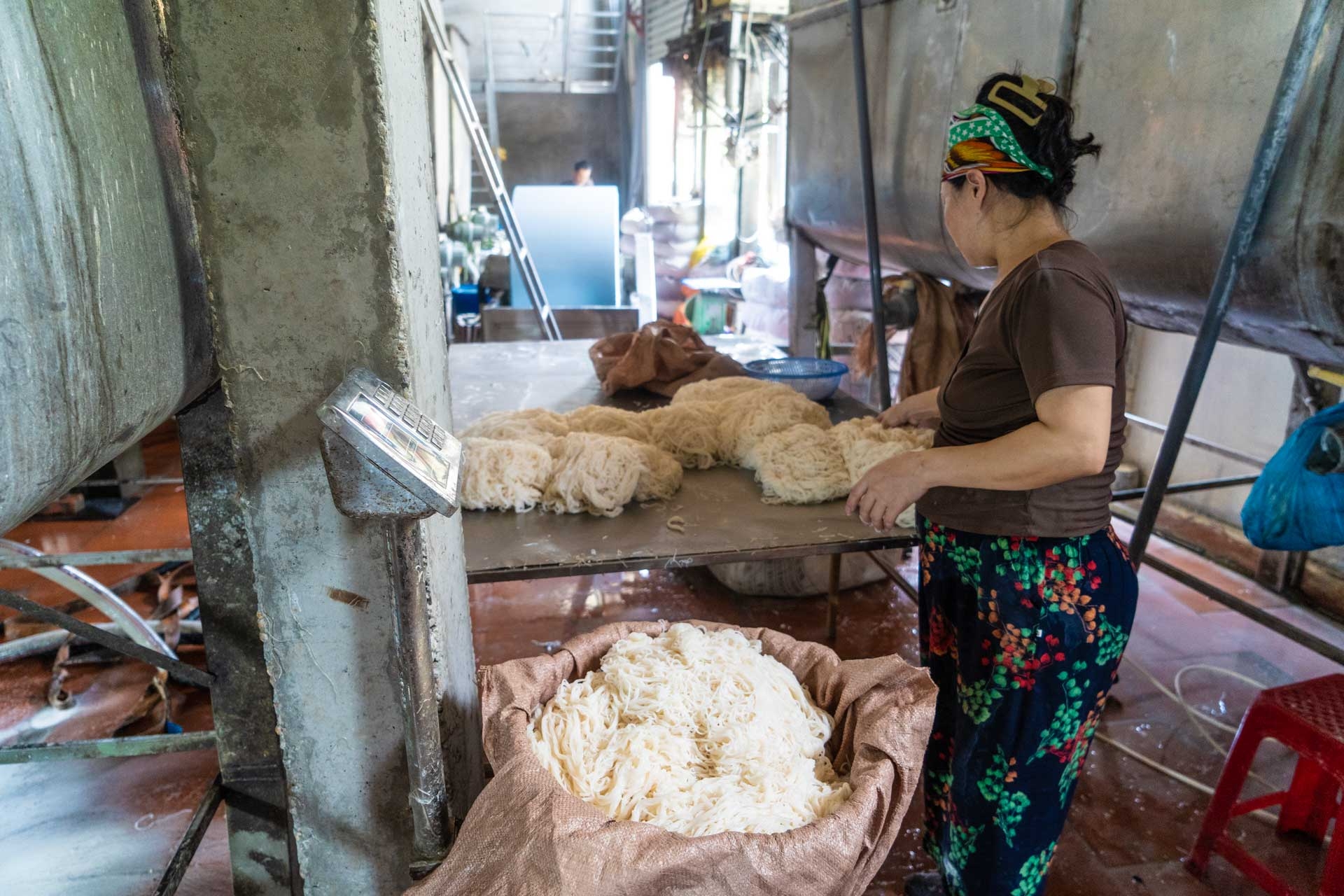
Spend a full day in the village and you will still notice the small human gestures that technology cannot replicate. Hands quietly testing the texture of the dough. Steam rising from well used pots in the early morning darkness. Noodles lifted carefully from boiling water, just as they were decades ago.
Despite all that work, the price remains modest. Around eight to ten thousand VND per kilogram. One kilogram of rice usually produces three to four kilograms of Mach Trang noodles when made by traditional methods. The profit is small, which is why many families in the village have gradually left the craft behind.
Out of hundreds of households in Mach Trang, only a handful still continue the tradition. Among them are an elderly couple, Nguyen Van Trung and Dang Thi Vu, both over sixty years old.
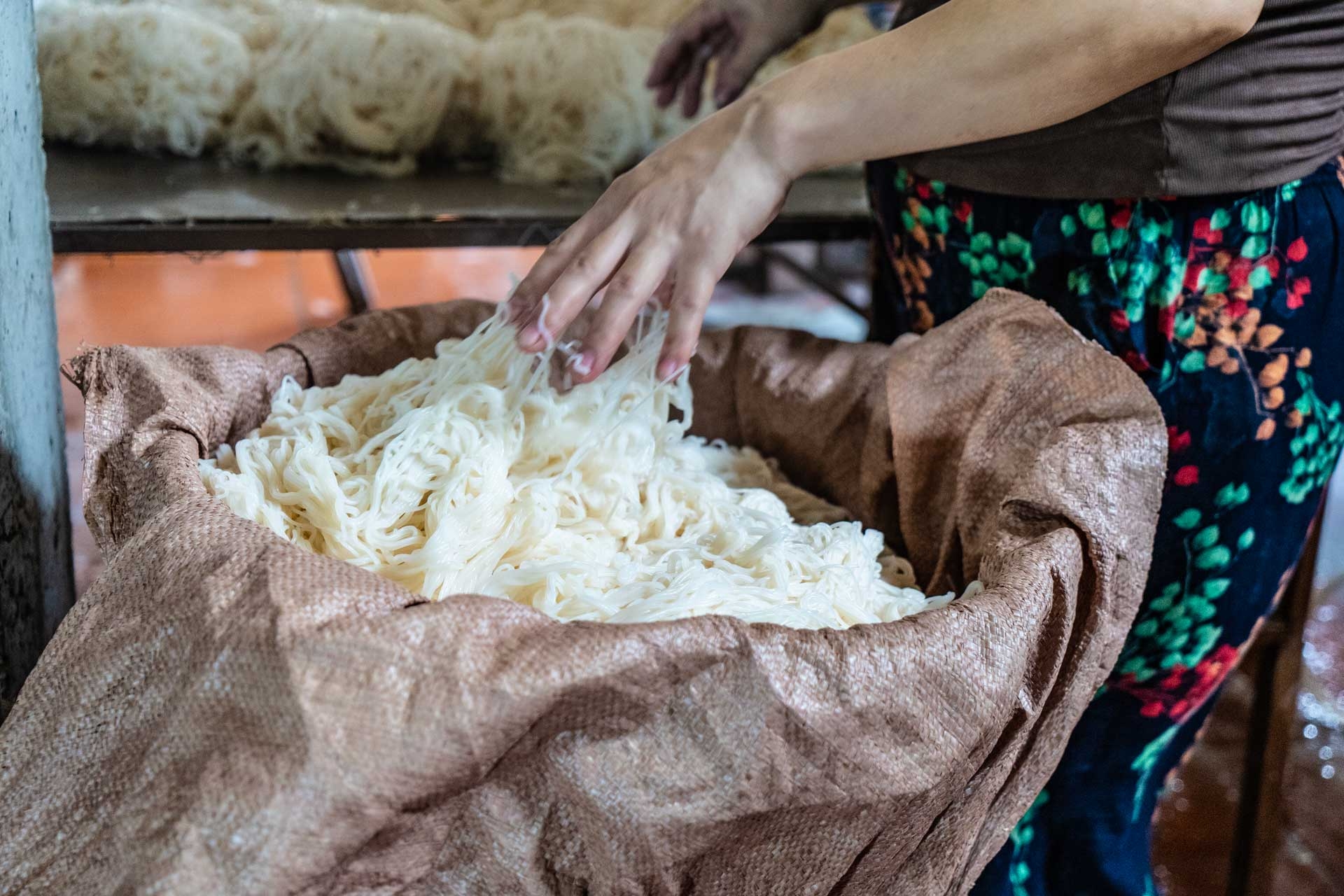
When asked why they continue, the answer is rarely about money.
For them, making Mach Trang noodles is tied to memories. It reminds them of their mothers and grandmothers who worked through the night, steaming rice batter in quiet kitchens before laying the noodles out to dry in the morning sun.
We always recall how beautiful our childhood was. Something we grew up with and cannot easily let go.
The Duty Is Not Personal, but Ours
Keeping the craft alive has never been the responsibility of just one family. It belongs to the village, and in many ways, to all of us Vietnamese.
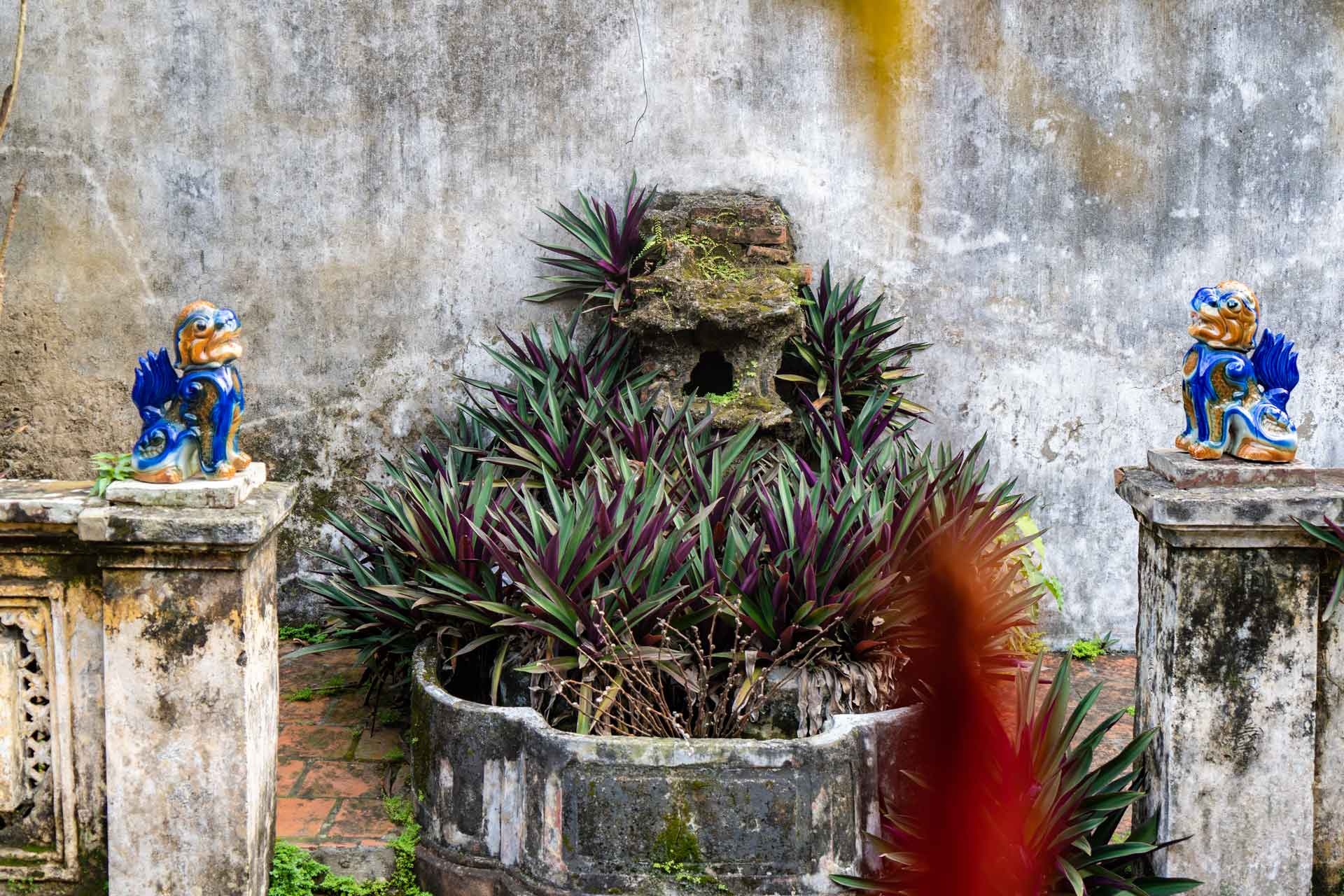
In recent years, local authorities around Co Loa Commune have begun making efforts to support the remaining artisans. Modern tools and machines have been introduced to reduce the physical burden of the work, allowing older craftsmen to continue their trade without carrying the full weight of the labor their parents once endured.
Using the traditional technique, one kilogram of rice yields only about two kilograms of Mach Trang noodles, far less than modern methods. The strands are firmer, more delicate, and unmistakably different, but they require patience, experience, and time.
Many domestic brands have offered collaborations to bring Mach Trang noodles to a wider market and generate profit. While I cannot truly know the artisans’ reasons for their decisions, it seems clear that their choices are not driven by profit alone. For those who quietly carry the weight of this tradition, there is hope that a brighter future will come while the craft they protect continues to live on.
The Tradition Deserves An Honor Even in Modern Day
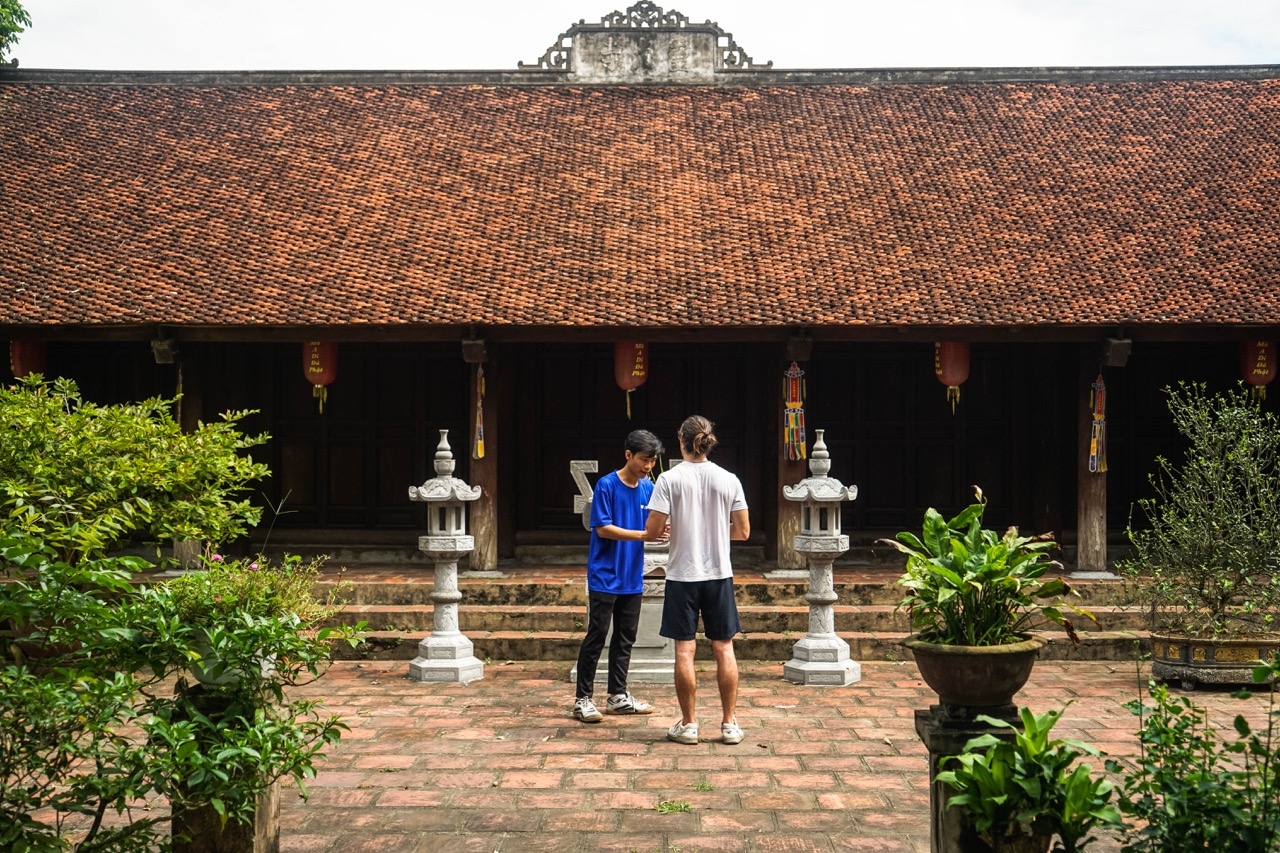
In today’s world, even the most beautiful things can disappear if their value cannot be measured in profit. The cost of living has never felt heavier, and traditions often struggle to find their place in such a fast-moving age. Yet I believe that through unity, care, and shared pride, Mach Trang noodles will not fade away. Instead, they will gently find their way blending harmoniously with the rhythm of modern Vietnamese life, carrying the spirit of our past into the future.
In small corners of Vietnam, quiet cultural traditions still happen every day. For travelers looking to experience authentic local life, these lesser-known moments can be the most meaningful. Our Saigon city tours are what show the unseen lifestyle to ones who are not familiar with Ho Chi Minh city. Book a tour with Jackfruit Adventure now to uncover more folk secrets under modern buildings.