

Table of Contents
Every year, as the calendar turns its final pages and the northeast monsoon brings that signature bone-chilling mist to the streets of the capital, my heart begins to look for a specific shade of pink. It isn’t the neon pink of modern billboards or the soft pastel of a summer dress. It is the deep, resilient pink of the Bích Đào – the peach blossoms that signal the arrival of the Lunar New Year.
For us Hanoians, the holiday doesn’t start when the calendar says so. It starts the moment we see the first bicycle, heavily laden with gnarled branches and exploding buds, weaving through the chaotic traffic. Hanoi’s Đào vendors before Tet are more than just merchants; they are the nomadic messengers of spring, carrying the soul of the city on two wheels.
In this article, I’ll take you through my personal experience with these vendors, share what I’ve learned about choosing the perfect đào branch, and show you why this tradition remains the heart of Hanoi’s Tết celebrations.
The Arrival of Đào Season: When Hanoi Changes Its Face
The First Signs of Tết
Around mid-January, I started noticing the subtle changes in my neighborhood. Small trucks loaded with peach branches begin appearing at dawn, their drivers having traveled overnight from Nhật Tân village – the spiritual home of Hanoi’s đào. The vendors stake their claims on street corners, setting up temporary shops that will become landmarks for the next few weeks.
Hanoi’s Đào vendors before Tết operate on a tight schedule. The peach trees are cut when their buds are perfectly timed to bloom during the Tết holiday, which requires generations of knowledge and a bit of weather luck. Too early, and the branches won’t develop properly. Too late, and they’ll bloom before the holiday arrives.
The Geography of Peach Blossom Vendors
The vendors cluster in specific areas throughout Hanoi. I’ve mapped them out over the years through my explorations:
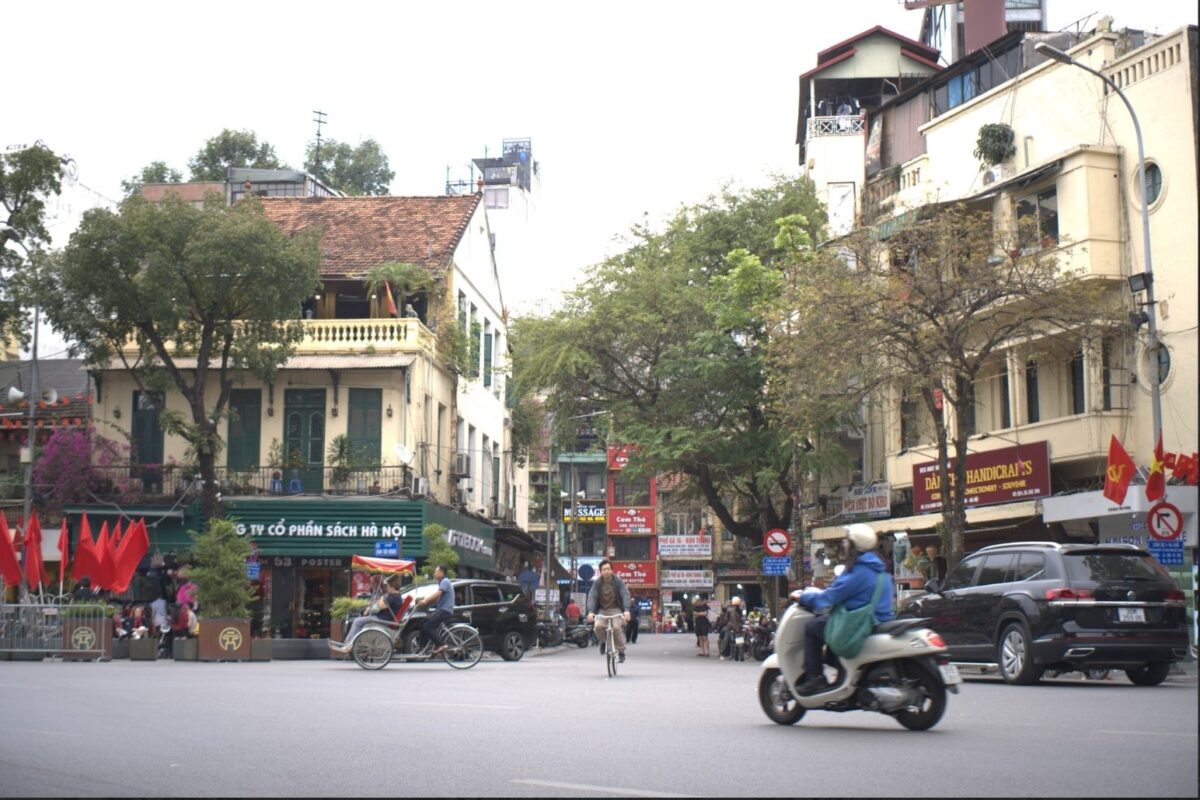
- The Old Quarter Hub: Streets like Hàng Lược, Hàng Mã, and around Đồng Xuân Market become peach blossom corridors. Here, Hanoi’s Đào vendors before Tết create an almost tunnel-like effect, with branches arching overhead.
- West Lake Area: Near Nhật Tân, where many branches originate, vendors set up shop early. The proximity to the source means fresher branches and often better prices.
- Scattered Neighborhood Spots: Every district has its local vendors, often longtime residents who’ve claimed the same corner for decades.
If you want to explore more flower markets in Hanoi, check out The 5 Flower Markets Hanoi You Need to Know.
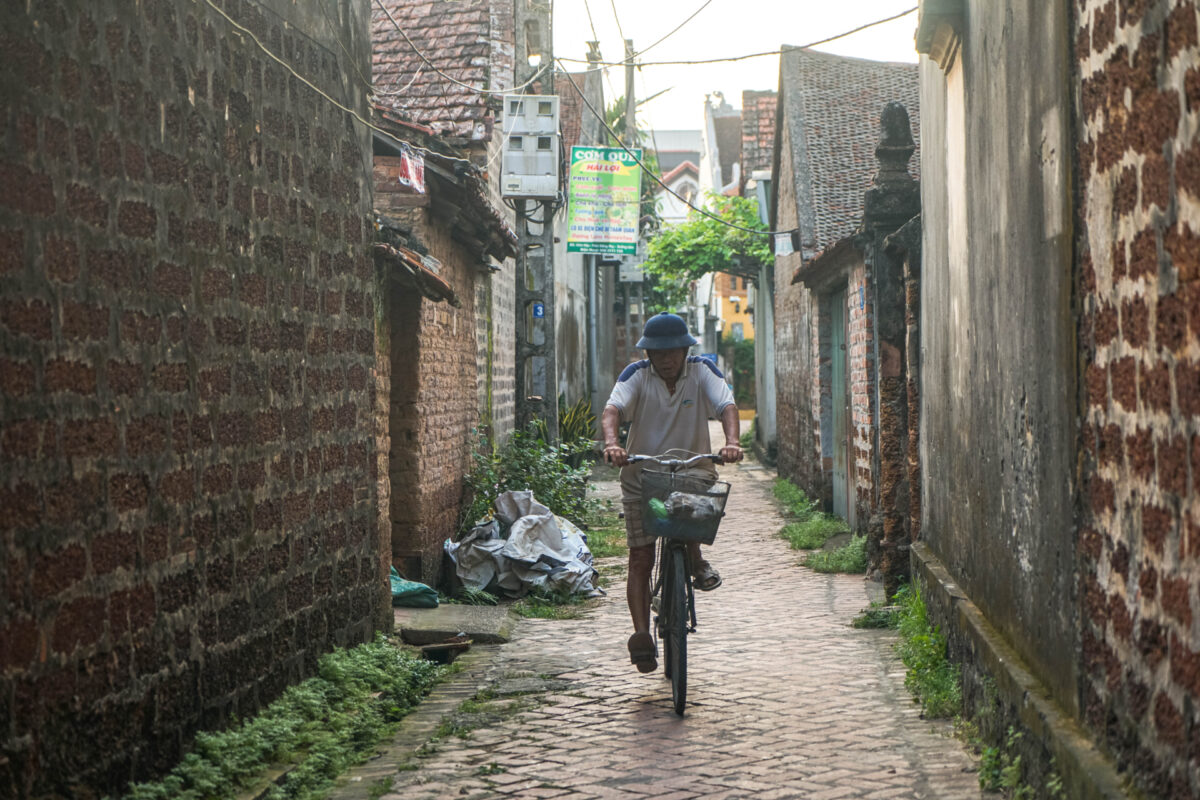
I prefer exploring by bicycle – it’s the best way to navigate the crowded streets and truly experience the transformation of the city. There’s something magical about cycling through these peach-lined streets, the pink blossoms creating a canopy overhead. If you want to experience Hanoi at its most authentic during Tết season, join our Hanoi Cycling Tour!
Understanding the Art: What Makes a Perfect Đào Branch
The Vendor’s Expertise
I’ve learned that Hanoi’s Đào vendors before Tết are artists as much as merchants. They understand the aesthetics of Vietnamese culture deeply. When I ask a vendor near my home what makes a good branch, she launches into an explanation that sounds like poetry.
“First, the shape must be natural but elegant,” she explains, tracing the curves of a branch with her weathered hands. “We look for branches that create a balanced form – not too straight, not too curved. The Vietnamese eye appreciates subtle asymmetry.”
The ideal branch should have:
- Natural curves that suggest movement and life
- Multiple levels of branches creating depth
- A mix of buds in different stages – some tight, some just opening
- Healthy, vibrant bark without cracks or disease
- Proportional thickness appropriate to its height
The Different Types of Đào
Not all peach blossoms are created equal, and Hanoi’s Đào vendors before Tết offer several varieties:
| Type of Đào | Color & Characteristics | Meaning in Culture |
| Bích Đào | Deep, dark pink/red; many petals. | Represents luxury and bold energy. |
| Đào Phai | Pale, delicate pink. | Represents elegance, purity, and subtle beauty. |
| Đào Thất Thốn | Dark wood, deep red flowers. | The “King” of peaches; very rare and expensive. |
| Đào Rừng | Wild peach from the mountains. | Represents a rugged, natural spirit. |
I personally prefer đào phai for its subtle elegance, though I admit the vibrant đào thụ creates a stunning visual impact in modern apartments.
The Daily Rhythm: A Week in the Life of Đào Vendors
Morning: The Golden Hours
I wake up early during đào season – around 5 AM – to observe the vendors at their busiest. Hanoi’s Đào vendors before Tết know that serious buyers come in the morning when the branches are freshest and the selection is best.
The streets are already alive with activity. Vendors spray water on their branches to keep them fresh, the droplets catching the early light. Customers arrive on motorbikes, carefully eyeing the merchandise. There’s a particular etiquette to this shopping: you don’t touch the branches without permission, you take your time deciding, and you always bargain with respect.
Afternoon: The Lull and the Stories
By afternoon, the frantic morning pace has slowed. This is when I like to chat with the vendors, learning their stories. Many have fascinating backgrounds – former farmers who moved to the city, children of đào growers who inherited the business, or entrepreneurs who saw an opportunity in this seasonal trade.
Hanoi’s Đào vendors before Tết form a temporary community each year. They help each other with supplies, share meals, and watch each other’s merchandise. Mrs. Lan tells me about the vendor network: “We’re competitors, yes, but we’re also colleagues. If someone needs to leave their stall, neighbors watch it. If someone runs out of twine or water, we share.”
The afternoon is also when vendors perform maintenance – pruning dead leaves, adjusting branches in water, protecting their merchandise from the harsh winter sun that could cause premature blooming.
Evening: The Second Rush
As office workers finish their day, the streets fill again. Hanoi’s Đào vendors before Tết experience a second wave of customers around 5-7 PM. These are often people buying smaller branches for their offices or as gifts.
The evening light transforms the vendor stalls into something almost otherworldly. String lights illuminate the pink blossoms, creating Instagram-worthy scenes that have become iconic symbols of Tết preparation. I often bring my camera during these hours, capturing the interplay of light, flowers, and human faces.
The Economics: Understanding Prices and Negotiations
Price Ranges and Factors
One question I’m always asked by foreign friends is: “How much should I pay for đào?” The answer is complex. Hanoi’s Đào vendors before Tết price their branches based on multiple factors:
- Size and height: Small branches for desks start around 150,000-300,000 VND (~$6 – $12 USD). Medium branches for homes range from 400,000-1,000,000 VND (~$15 – $39 USD). Large, statement branches for businesses or wealthy homes can cost millions of VND (starting from $80 – $100 USD and up).
- Quality and aesthetics: A perfectly shaped branch commands a premium. Vendors know which branches are special and price accordingly.
- Timing: Early in the season (2-3 weeks before Tết), prices are higher. As Tết approaches, vendors become more flexible, especially on the last days when they want to sell everything.
- Location: Vendors in tourist areas or wealthy neighborhoods charge more than those in local residential areas.
The Art of Bargaining
Bargaining is expected, but there’s a respectful way to do it. I’ve learned this through years of watching and doing:
Start by genuinely examining the branch – vendors can tell if you’re serious. Ask about the origin, the variety, when it was cut. This shows respect for their expertise. Make a realistic offer – not insultingly low. Expect to settle around 10-20% below the asking price for average branches, less for exceptional ones.
The Selection Process: My Personal Method
What I Look For
After years of experience, I’ve developed my own criteria when visiting Hanoi’s Đào vendors before Tết:
- The overall silhouette: I step back and view the branch from different angles. Does it have a pleasing shape? Will it fit in my home’s space?
- Bud distribution: I want a mix – some buds ready to open within days, others that will bloom throughout the Tết holiday, extending the enjoyment.
- Branch flexibility: Gently touching (with permission), I check if the wood is alive and flexible, not dried out and brittle.
- Root or cut quality: If it’s a potted tree, I check the root health. If it’s a cut branch, I examine the cut itself – clean cuts preserve better.
- The vendor’s care: How has this branch been treated? Is it sitting in clean water? Has it been protected from wind and sun?
Common Mistakes to Avoid
I’ve made plenty of mistakes over the years. Here’s what I’ve learned NOT to do:
- Buying too early: Unless you have expertise in care, buying more than a week before Tết risks the branch blooming too soon or dying.
- Ignoring the base: A beautiful top on a diseased or poorly cut base won’t last.
- Choosing only based on current appearance: Those tightly closed buds might never open, while slightly open ones might be past their prime.
- Forgetting to ask about origin: Branches from reputable growing areas like Nhật Tân generally perform better than those from unknown sources.
The Care and Keeping: Making Your Đào Last
What the Vendors Taught Me
Hanoi’s Đào vendors before Tết are generous with advice if you ask respectfully. Here’s the collective wisdom I’ve gathered:
- Water management: Change the water every two days. Add a bit of sugar or a special preservative solution that vendors often sell.
- Temperature control: Keep the branch in a cool location, away from direct sunlight and heaters. Excessive warmth triggers rapid blooming.
- Trimming: Recut the base at an angle every few days to improve water absorption.
- Misting: Lightly spray the branches with water once a day to maintain humidity.
- Pruning: Remove any dead leaves or failed buds to keep the branch healthy.
Troubleshooting Common Problems
Even with good care, problems arise:
- Buds not opening: The branch was likely cut too early. Try moving it to a warmer spot and ensuring good water absorption.
- Premature wilting: Check the water – is it clean? Is the branch actually absorbing it? You might need to recut the base.
- Brown edges on petals: Usually caused by low humidity or excessive heat. Increase misting and move to a cooler location.
The Cultural Significance: Why This Matters
More Than Just Decoration
For locals like me, Hanoi’s Đào vendors before Tết represent something deeper than commerce. The peach blossom is laden with cultural meaning in Vietnamese tradition.
The flower symbolizes renewal, the triumph of spring over winter, and the hope for prosperity in the new year. In Vietnamese belief, the pink blossoms ward off evil spirits and bring good fortune. Having đào in your home during Tết isn’t optional – it’s fundamental to proper celebration.
I remember my grandfather explaining: “The peach blossom is the spirit of Tết made visible. When we bring it into our homes, we’re inviting the new year’s energy inside.”
The Vendor’s Role in Tradition
These vendors are cultural custodians. They maintain connections between urban Hanoians and agricultural traditions. Many city dwellers, including younger generations, know about Nhật Tân village and peach cultivation only because of these vendors.
Hanoi’s Đào vendors before Tết also serve as informal educators. I’ve watched them explain to young couples, buying their first branch together, the proper way to select and care for đào. They share stories about the symbolism, the regional variations, and the changes they’ve witnessed over decades.
The Modern Evolution: Changes I’ve Witnessed
New Trends and Adaptations
The đào trade has evolved significantly during my lifetime. Hanoi’s Đào vendors before Tết have adapted to changing customer preferences and urban lifestyles:
- Smaller branches: As apartments replace traditional houses, vendors now stock more compact branches suitable for limited spaces.
- Pre-arranged bouquets: Some vendors create ready-made arrangements, saving time for busy professionals.
- Delivery services: Many vendors now offer delivery via phone or social media, though I still prefer selecting in person.
- Hybrid varieties: Grafted branches with both blossoms and small fruits have become popular, offering visual variety.
- Social media marketing: Younger vendors actively use Facebook, TikTok, and Instagram, posting photos of their best branches and taking online orders.
Despite these changes, the core experience remains wonderfully traditional. The best vendors still insist on the old ways – personal selection, expert advice, and quality over quantity.
Beyond Đào: The Complete Tết Flower Market
The Supporting Cast
While peach blossoms dominate, Hanoi’s Đào vendors before Tết often sell complementary flowers and plants:
- Kumquat trees (quất): The golden fruits symbolize wealth and prosperity. Many homes have both đào and quất.
- Apricot blossoms (mai): More common in southern Vietnam, but increasingly available in Hanoi for those who prefer yellow to pink.
- Gladiolus (lay ơn): Bright, cheerful flowers that symbolize victory and strength.
- Orchids: For those seeking elegance and longevity in their Tết displays.
I usually buy a small kumquat tree to accompany my đào branch. The pink and gold combination is visually stunning and culturally appropriate.
Practical Tips: Your Guide to Shopping Like a Local
Timing Your Purchase
Based on my years of experience, here’s my advice on when to buy from Hanoi’s Đào vendors before Tết:
- Three weeks before Tết: Selection is excellent, but prices are highest. Only buy if you’re experienced in care or buying for early display.
- Two weeks before: The sweet spot – good selection, moderate prices, and if you buy branches with tight buds, they’ll bloom perfectly during Tết.
- One week before: Prices start dropping, but the best branches are gone. Good for budget buyers or those wanting branches that bloom immediately.
- Final days: Bargain prices, but quality is unpredictable. Vendors want to sell everything, so you can negotiate heavily.
What to Bring
When I shop for đào, I come prepared:
- Cash: Most vendors don’t accept cards or electronic payment
- Measuring tape: To ensure the branch fits in my intended space
- A friend with a car or large motorbike: Transporting large branches requires planning
- Photos of my home: Helpful for discussing size and style with vendors
- Patience: Rushing this purchase never works well
Communication Tips
Even if you don’t speak Vietnamese fluently, these phrases help:
- “Cây này bao nhiêu tiền?” (How much is this tree?)
- “Cây nào nở đẹp nhất?” (Which tree blooms most beautifully?)
- “Cắt khi nào?” (When was this cut?)
- “Giảm giá được không?” (Can you reduce the price?)
Most vendors appreciate any attempt to speak Vietnamese and are remarkably patient with language learners.
Why This Tradition Endures
After all these years of observing and participating in this annual ritual, I understand why Hanoi’s Đào vendors before Tết remain such a vital part of our city’s identity. They represent continuity in a rapidly changing world, connecting urban life to agricultural traditions, and individual homes to shared cultural values.
Every year when I bring my carefully selected branch home, place it in water, and watch it bloom during the Tết holiday, I’m participating in something my ancestors did for generations. The peach blossom in my living room is a bridge across time, a declaration that despite modernity’s rush, some things remain worth preserving.
Hanoi’s Đào vendors before Tết are more than merchants – they’re tradition-keepers, artists, educators, and community members. They transform our streets each year, reminding us that renewal is possible, that spring always follows winter, and that beauty and hope can bloom even in the coldest season.
If you visit Hanoi during the weeks before Tết, make time to wander through these temporary gardens that appear on our streets. Talk to the vendors, touch the branches (politely), breathe in the subtle fragrance of peach blossoms. You’ll understand why we return year after year, why this tradition endures, and why the sight of pink petals means home to me and millions of other Hanoians.