

Table of Contents
The first time I truly understood what a Hanoi temple meant to our city, I was 12 years old, standing in the courtyard of Quan Thanh Temple with my grandmother. She pointed to the massive bronze statue towering above us and said, “This has watched over our family for three hundred years. When your great-great-grandfather was born, this statue was already ancient”.
That moment changed everything. These weren’t just old buildings, they were witnesses to our entire history.
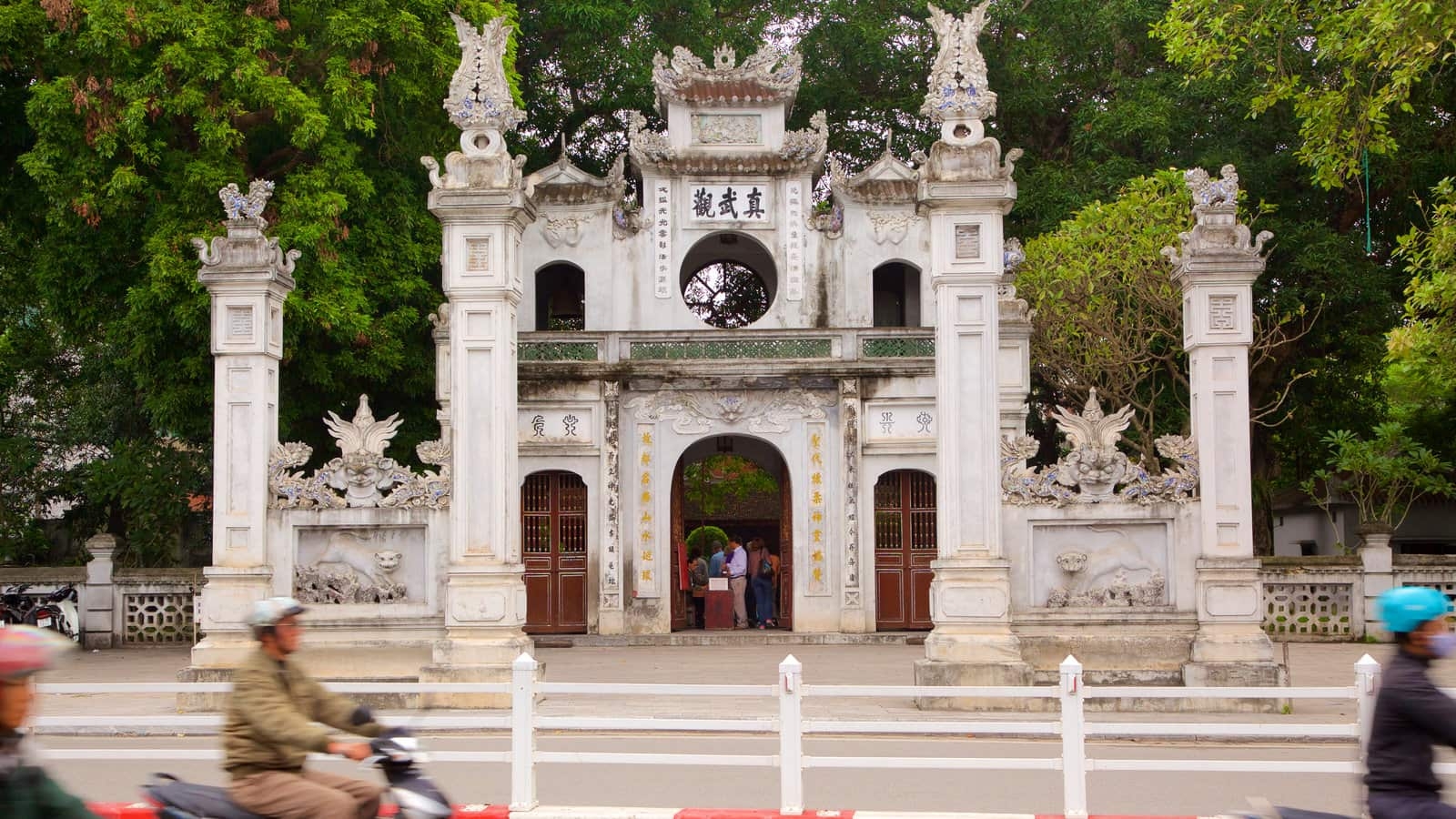
I’ve spent my whole life walking these streets, and I can tell you this: if you want to understand Hanoi’s soul, you can’t just look at the French architecture or taste the street food. You need to step through the wooden gates of our temples, breathe in the sandalwood incense, and feel the weight of centuries beneath your feet. Every Hanoi temple holds stories that textbooks miss – legends whispered by grandmothers, rituals passed down through generations, and a spiritual rhythm that keeps this chaotic city centered.
Whether you’re visiting for the first time or returning to dig deeper, I want to share what I’ve learned from a lifetime of Hanoi temple visits. This is an invitation to see these sacred spaces the way we locals do – as living, breathing parts of our daily lives.
Why Hanoi Temples Feel Different
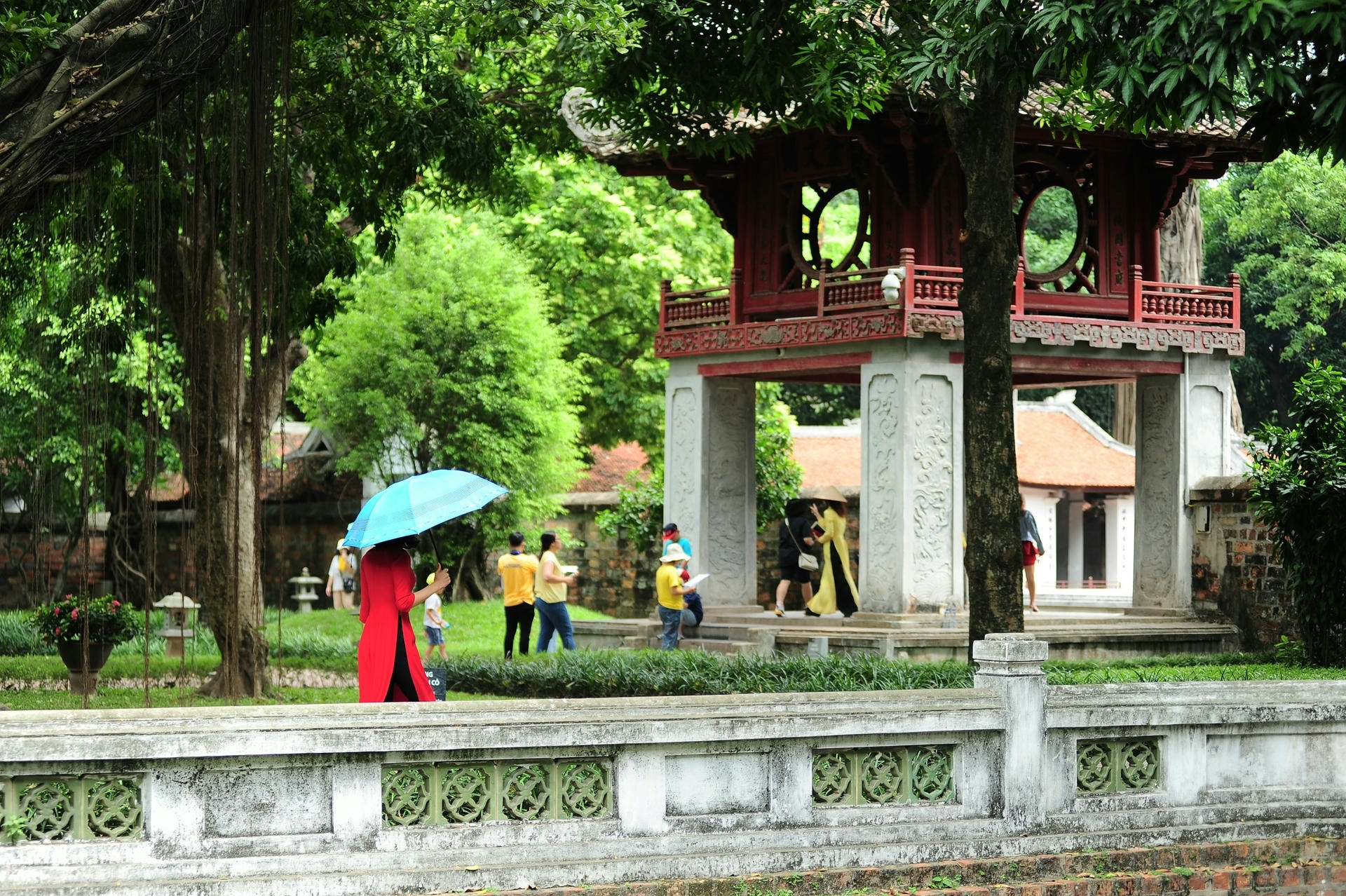
Walking into a Hanoi temple is like entering a spiritual melting pot. We Vietnamese don’t separate our beliefs into neat categories. Buddhism, Taoism, Confucianism, and ancestor worship all blend together in what my aunt calls “the Vietnamese way” – practical, inclusive, and deeply personal.
You’ll see this everywhere. At the Temple of Literature, a Confucian institution, you’ll find Buddhist incense burners. At Tran Quoc Pagoda, a Buddhist site, you’ll spot Taoist symbols carved into pillars. And almost every temple, regardless of its primary religion, has an altar for local heroes and ancestors.
My mom once explained it perfectly over morning pho: “If a deity can help my family, why wouldn’t I pray to them? The gods don’t care about our labels”. This open-hearted approach defines every Hanoi temple you’ll encounter.
7 Essential Stops on Your Hanoi Temple Tour
1. Temple of Literature: Where Knowledge Lives
- Address: 58 Quoc Tu Giam Street, Van Mieu Ward, Dong Da District, Hanoi
- Opening Hours: 8:00 AM – 5:00 PM daily
- Ticket Price: 70,000 VND ($2.66 USD) for adults
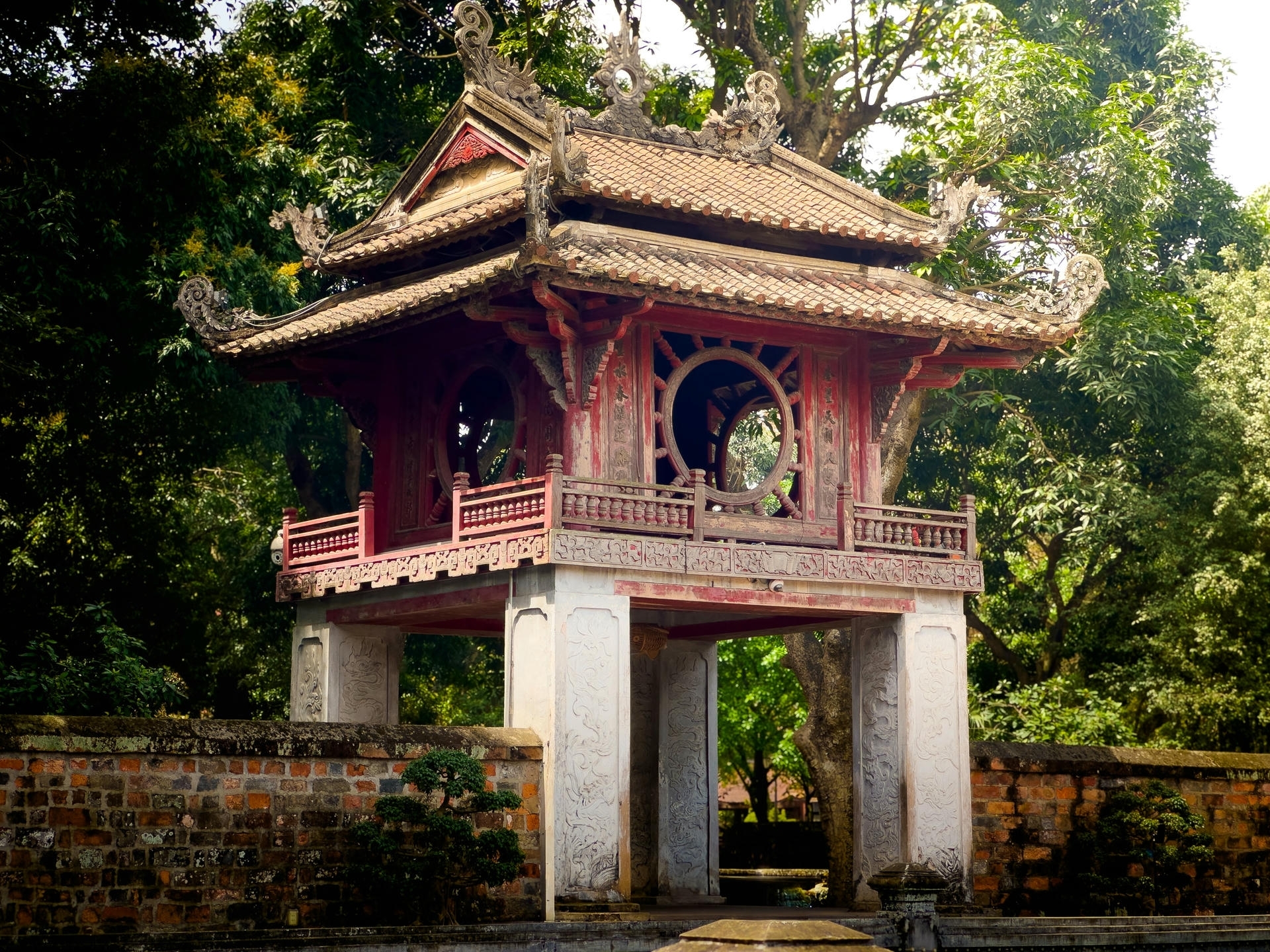
You cannot talk about a Hanoi temple without starting at Van Mieu – Quoc Tu Giam, the Temple of Literature. Built in 1070 as Vietnam’s first university, it educated our nation’s scholars for almost a thousand years. The stone stelae mounted on turtle backs, inscribed with doctorate graduates’ names, are UNESCO-recognized treasures that make me proud every single time I see them.
But here’s what the guidebooks miss: this Hanoi temple is actually a journey through five distinct courtyards, each with its own energy. The first courtyard feels formal and manicured, perfect for photos. But push deeper into the fourth and fifth courtyards, where students actually studied, and you can almost hear the debates echoing through time.
My insider knowledge:
- Visit at 8 AM on Tuesday or Wednesday to avoid the graduation ceremony crowds.
- The Khue Van Cac (Pavilion of the Constellation of Literature) is so iconic it appears on our 100,000 VND banknote. Stand directly beneath it and look up, the symmetry is breathtaking.
- During exam season, you’ll see hundreds of students praying at the turtle stelae for good luck. We used to rub their heads, but that’s technically forbidden now to preserve them.
I came here before every major exam in high school. Whether it was the prayers or just the calming ritual, something worked.
2. The Four Sacred Guardians: Thăng Long Tứ Trấn
Most tourists hit one or two temples and call it done. But if you want to see Hanoi like a local, you need to understand the Thăng Long Tứ Trấn, the four sacred temples built to protect the ancient citadel’s four cardinal directions. Each Hanoi temple in this sacred quartet guards against specific evils while honoring different deities. Together, they form an invisible spiritual shield around our city.
Bach Ma Temple (East Guardian)
- Address: 76 Hang Buom Street, Hoan Kiem District, Hanoi
- Opening Hours: 9:00 AM – 5:30 PM daily (Mondays closed)
- Ticket Price: Free (donations welcome)
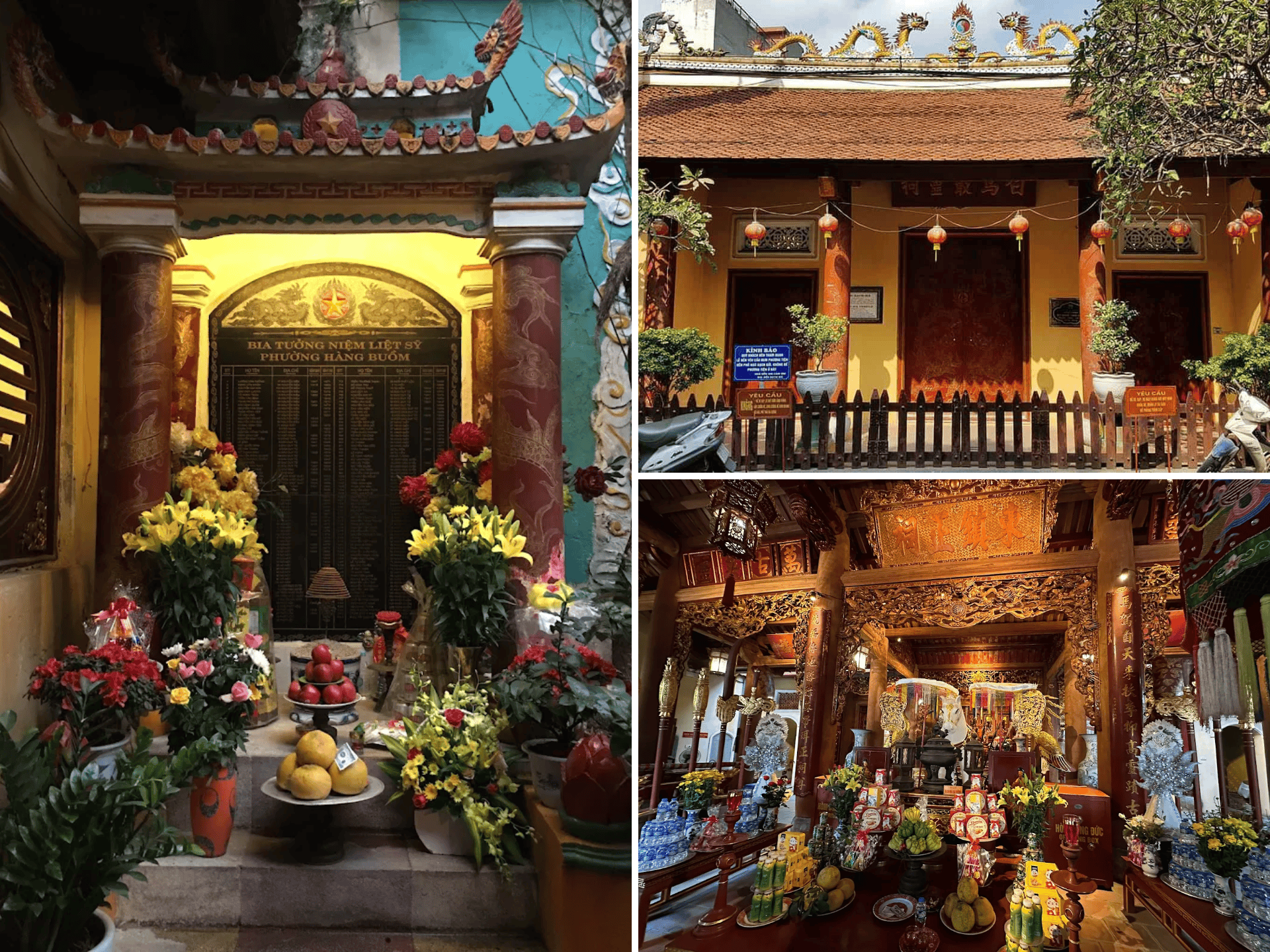
Hidden in plain sight on Hang Buom Street in the Old Quarter, Bach Ma is Hanoi’s oldest temple. Legend says a white horse appeared to King Ly Thai To in the 11th century, showing him exactly where to build the city walls. We’ve been here ever since.
This Hanoi temple’s interior glows with red-lacquered funeral palanquins and woodwork so intricate you could study it for hours. I love visiting during evening prayers around 5:30 PM, when the temple keeper sometimes plays traditional music on the đàn bầu. The sound echoes off the narrow alley walls, creating this pocket of tranquility in the Old Quarter’s chaos.
Insider tip: Come during the Tet holiday if you want to see Vietnamese folk religion at its most vibrant – flowers everywhere, families praying together, and enough incense smoke to make the whole block smell like sandalwood for days.
Quan Thanh Temple (North Guardian)
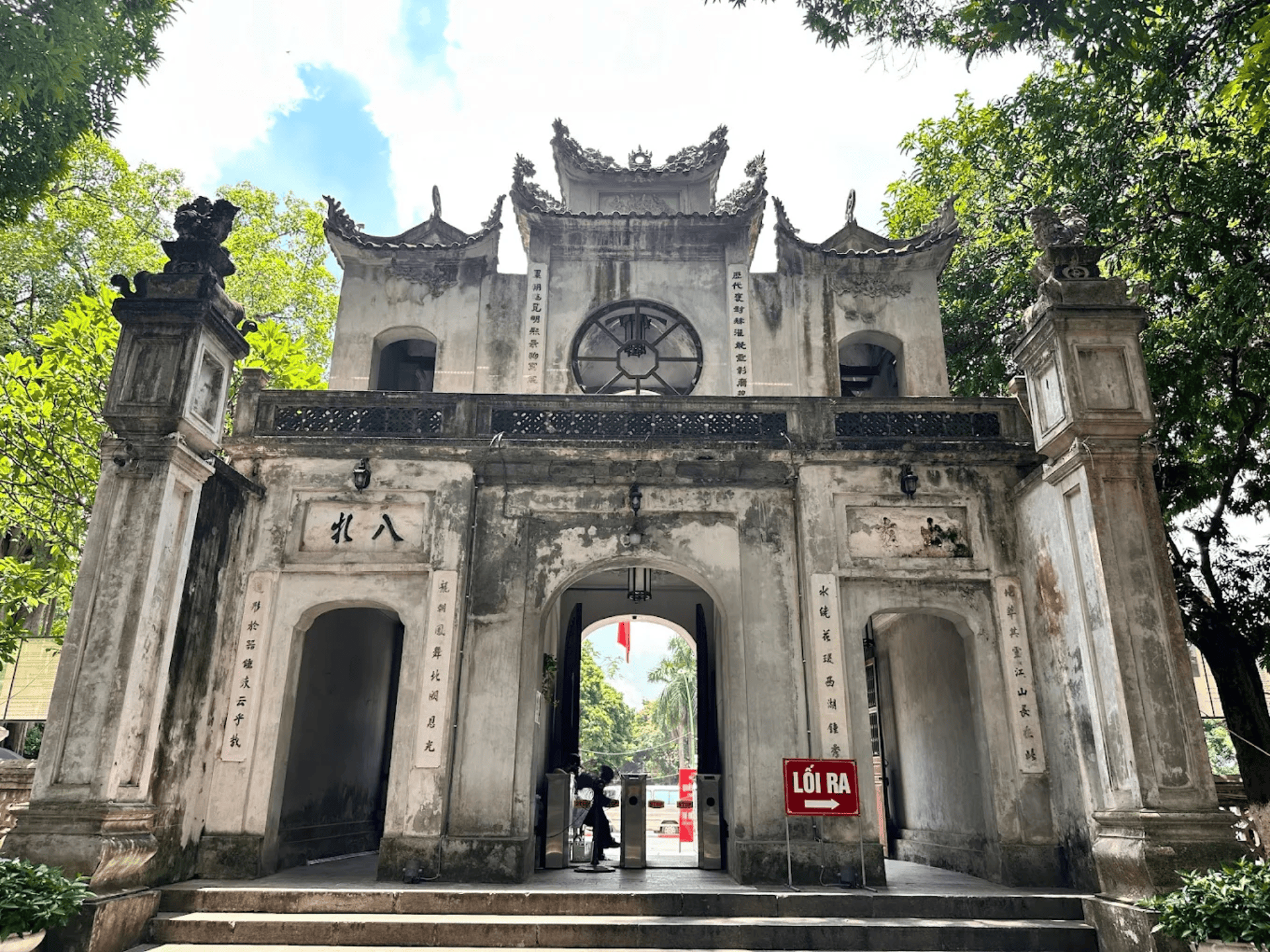
- Address: 190 Quan Thanh Street, Quan Thanh Ward, Ba Dinh District, Hanoi
- Opening Hours: 8:00 AM – 5:00 PM daily
- Ticket Price: 10,000 VND ($0.40 USD)
Sitting at the edge of West Lake, Quan Thanh Temple honors Huyen Thien Tran Vu, the deity controlling the northern direction. Built in the 11th century and restored multiple times, this Hanoi temple represents our ability to maintain sacred spaces despite centuries of upheaval.
The centerpiece is stunning: a four-ton bronze statue of Tran Vu cast in 1677. It’s one of the finest examples of Vietnamese bronze casting I’ve ever seen. Every detail – the folds in his robe, the individual strands of his beard, the fierce expression – was crafted by hand over three hundred years ago.
What I love here:
- The temple grounds include gardens perfect for escaping Hanoi’s heat.
- Ancient stone stelae with inscriptions detail the temple’s entire history – Vietnamese on one side, Chinese characters on the other.
- Combine your visit with a walk around West Lake; the path is ideal for cycling or strolling.
Voi Phuc Temple (West Guardian)
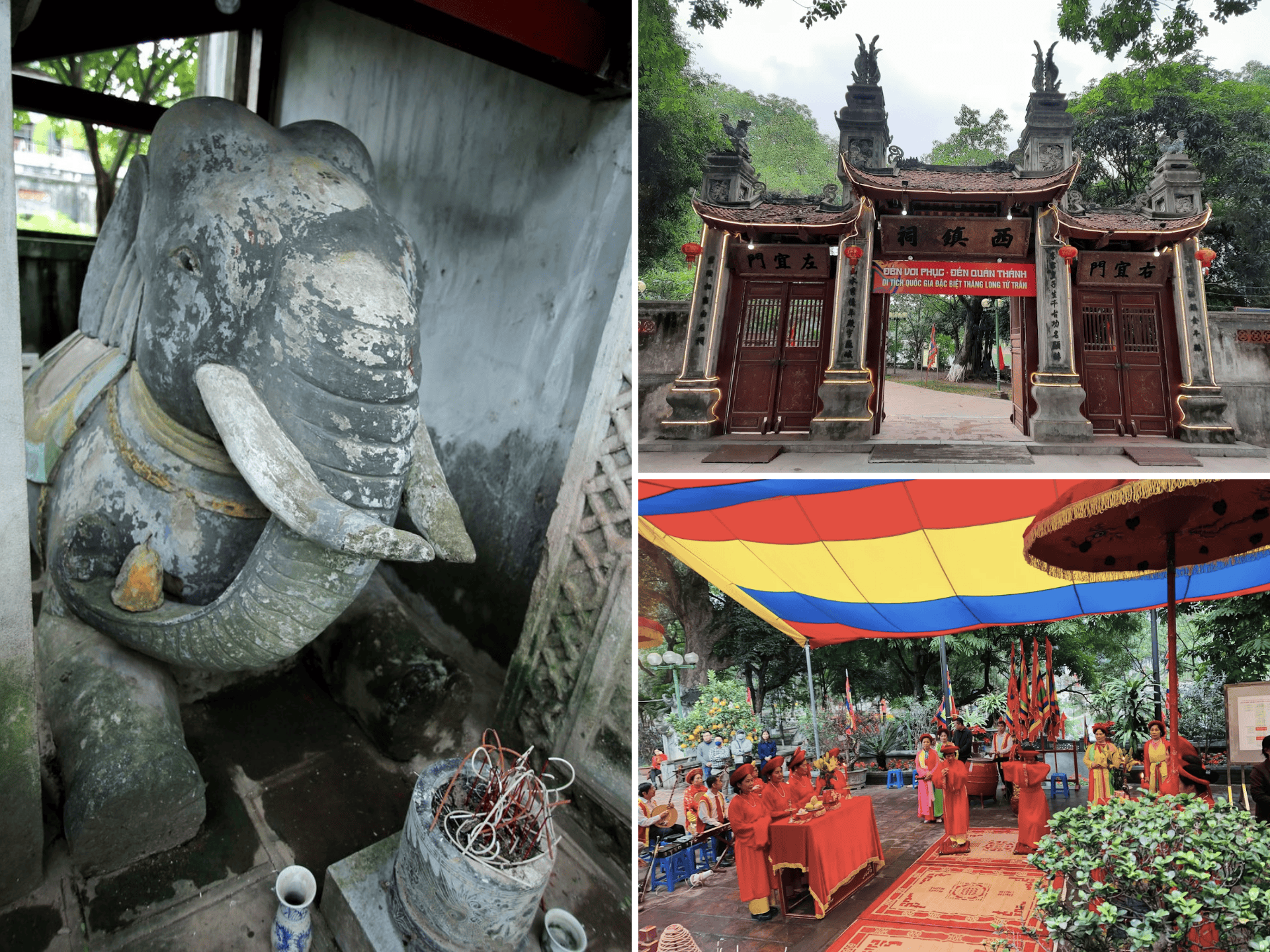
- Address: 362 Kim Ma Street, Ngoc Khanh Ward, Ba Dinh District, Hanoi (near Thu Le Park)
- Opening Hours: 6:00 AM – 6:00 PM daily (hours may vary)
- Ticket Price: Free (donations welcome)
Notes:
- Opening hours can be irregular, mornings and early evenings work best.
- Don’t expect English signage, navigation requires curiosity and asking locals.
Tucked near Thu Le Zoo, the “Kneeling Elephants” temple is dedicated to Prince Linh Lang, who fought Chinese invaders with his legendary war elephant in the 11th century. Both prince and elephant displayed such bravery they’re now worshiped together – a uniquely Vietnamese approach to heroism.
This temple rarely sees tourists, which makes it special. The ancient trees surrounding the grounds create this peaceful canopy that makes you forget you’re in a city of eight million people.
Kim Lien Temple (South Guardian)
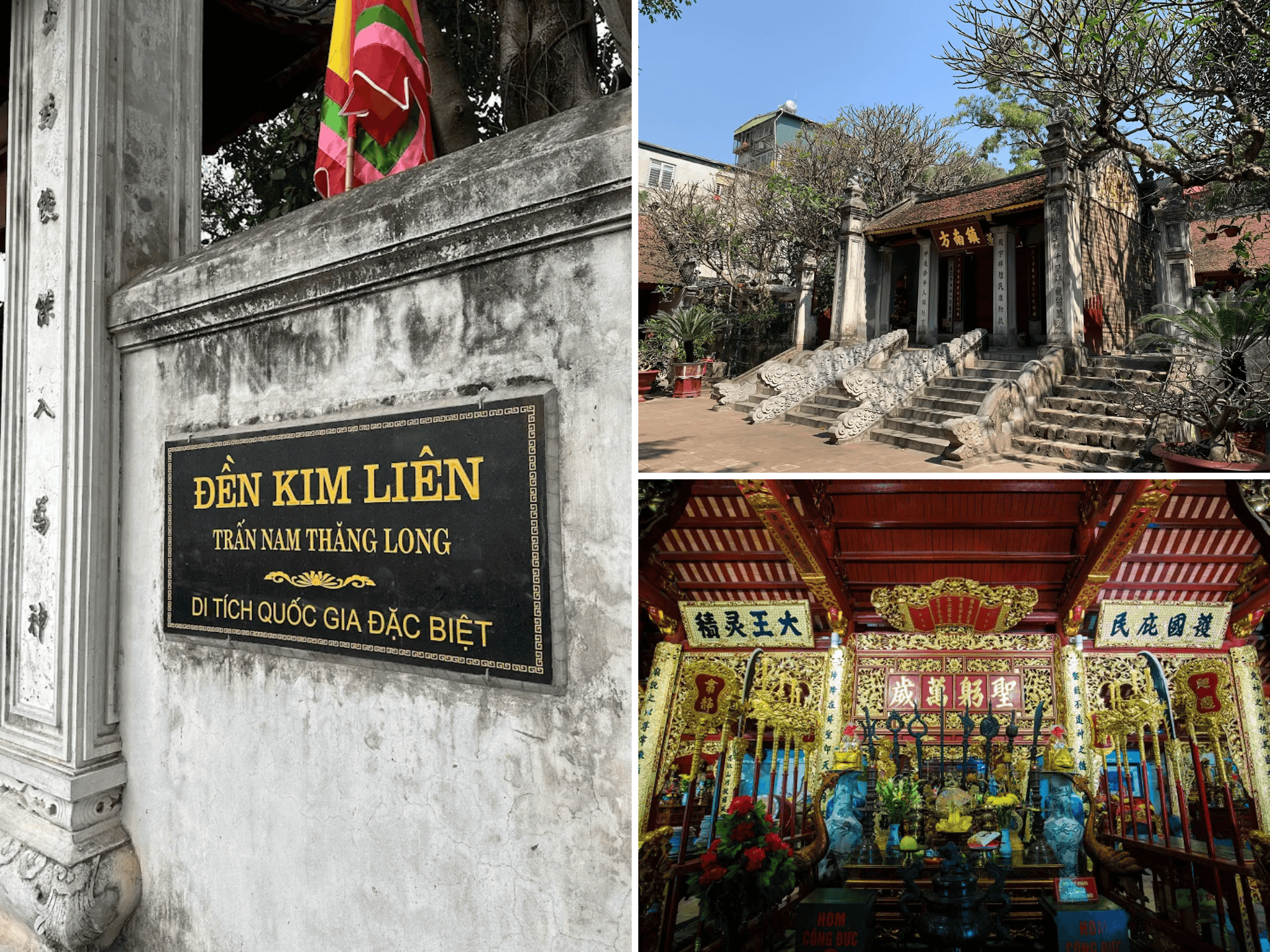
- Address: 148 Kim Hoa Street, Phuong Lien Ward, Dong Da District, Hanoi
- Opening Hours: 8:00 – 11:00 AM and 2:00 – 5:00 PM daily
- Ticket Price: Free (donations welcome)
Located in Dong Da district, Kim Lien is often missed by tourists, which is honestly a shame. The temple features some of the most beautiful stone carvings and architectural details from the Le Dynasty. The Mother Goddess worship here is particularly strong – you’ll see elaborate offerings and ceremonies, especially on the 1st and 15th of each lunar month.
What strikes me every visit is how these four Hanoi temples still function as spiritual anchors for their neighborhoods. They’re not museums, they’re where my neighbors go to pray, where festivals happen, where communities gather. Understanding the Thăng Long Tứ Trấn means understanding how spirituality shapes Hanoi’s geography and daily life.
3. Tran Quoc Pagoda: The Ancient Witness
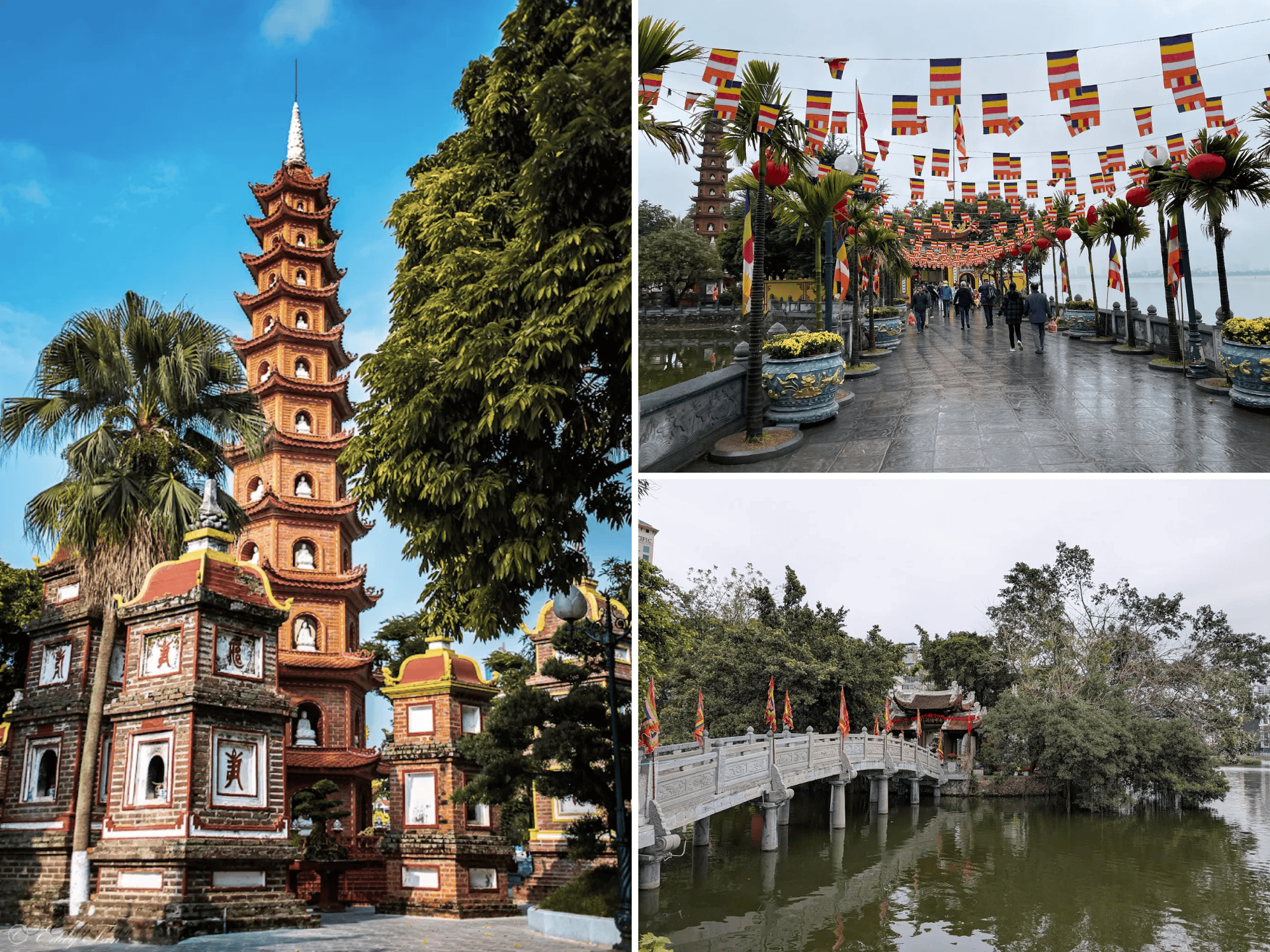
- Address: Thanh Nien Street, Yen Phu Ward, Tay Ho District, Hanoi
- Opening Hours: 7:30 – 11:00 AM and 1:30 – 5:00 PM daily
- Ticket Price: Free (donations welcome)
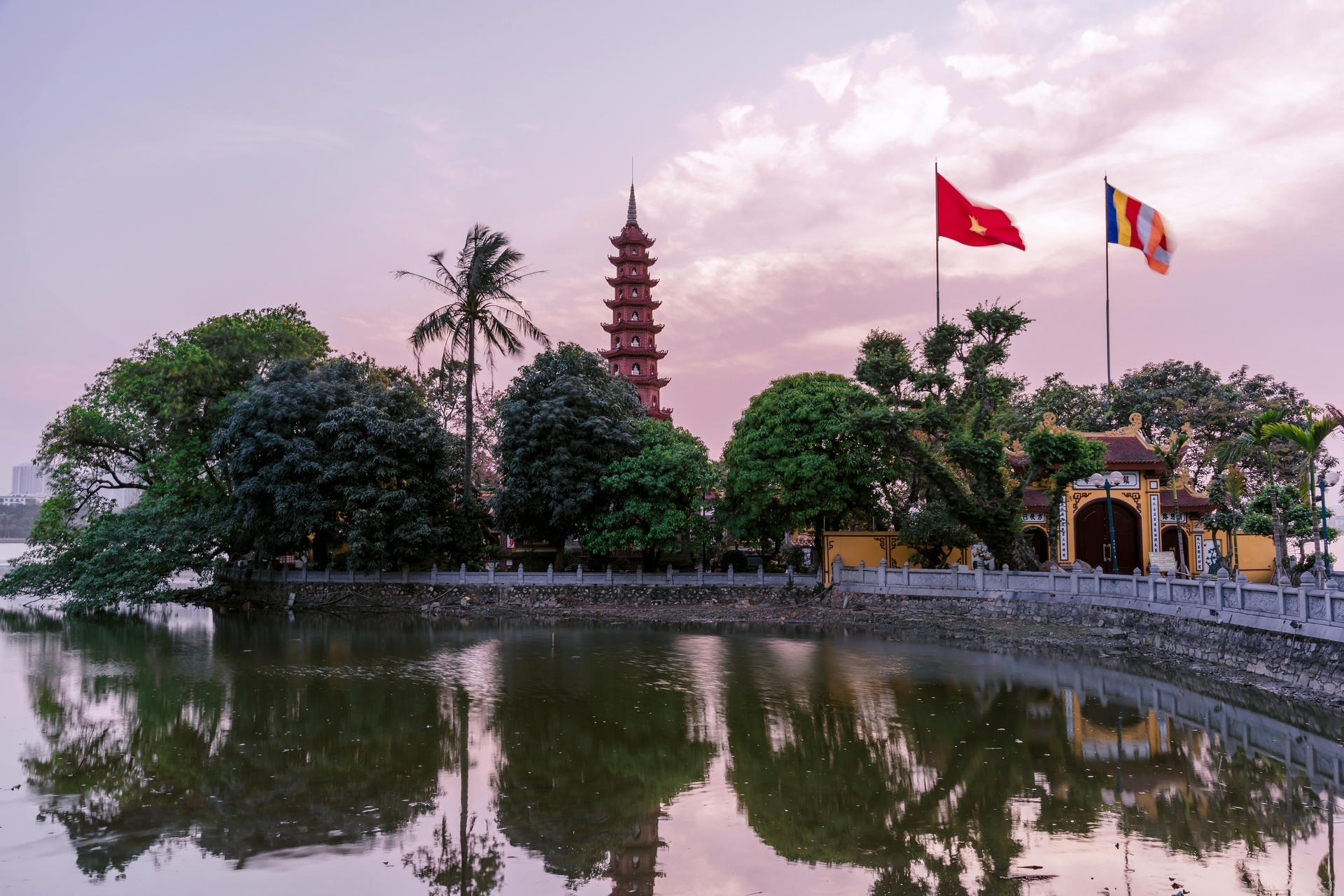
On a small island connected to the eastern shore of West Lake sits Tran Quoc Pagoda, the oldest Hanoi temple at over 1,500 years. That number always gives me chills. This pagoda predates most European cathedrals, predates the French language as we know it, predates so much of what we consider “ancient”.
The eleven-story stupa rising against the sky is relatively new (built in the 1800s), but it’s become this iconic Hanoi temple’s signature feature. I come here at sunset whenever life feels overwhelming. Watching that red stupa reflect on the water while the sun dips behind West Lake’s skyline is perhaps the most “Hanoi” moment I can share with anyone.
Essential insights:
- Inside grows a Bodhi tree from a cutting of the original tree under which Buddha achieved enlightenment – a gift to Vietnam in 1959.
- Full moon ceremonies are hauntingly beautiful if you’re respectful during worship.
- This is the most photographed Hanoi temple, but remember it’s an active place of worship. Keep voices low and shoulders covered.
4. One Pillar Pagoda: The Lotus Dream
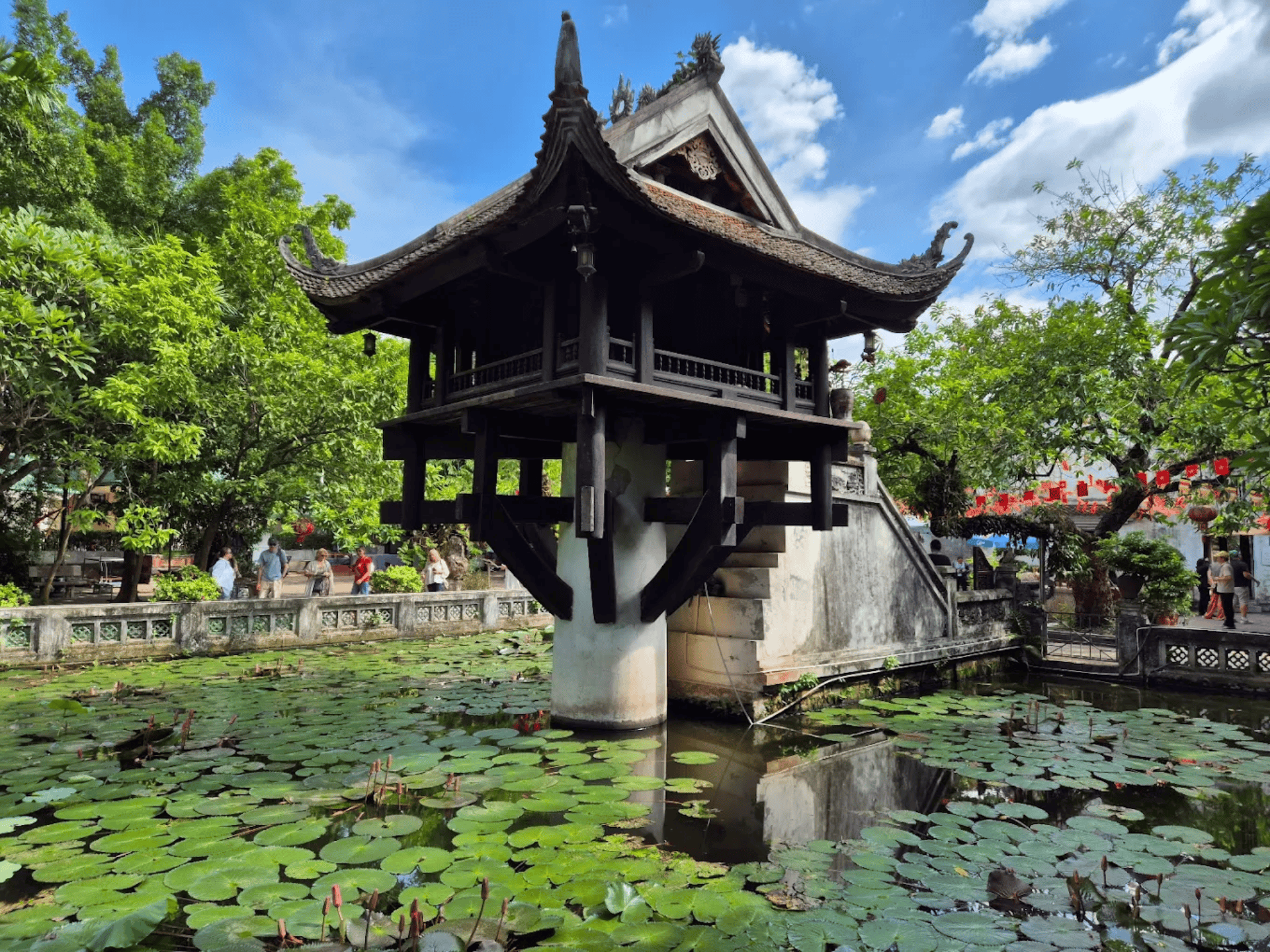
- Address: 2RPM+79G, Chua Mot Cot Street, Doi Can Ward, Ba Dinh District, Ha Noi
- Opening Hours: 7:00 AM – 6:00 PM daily
- Ticket Price: Free
Chua Mot Cot, the One Pillar Pagoda, might be Hanoi’s most photographed temple after Tran Quoc. Built in 1049 by Emperor Ly Thai Tong, it’s designed to resemble a lotus blossom rising from water – a Buddhist symbol of purity emerging from mud.
The story behind it touches my heart every time: The emperor, aging and childless, dreamed that Avalokitesvara (the Goddess of Mercy) handed him a baby boy while seated on a lotus flower. Shortly after, his wife bore him a son. Grateful beyond measure, he built this pagoda to express his thanks.
Real talk:
- The pagoda is tiny. You’ll see everything in ten minutes.
- Free to enter the grounds; small donations appreciated.
- It sits next to the Ho Chi Minh Mausoleum complex, easy to combine visits.
- Best photos come from the side angle, capturing the pillar’s reflection in the pond.
What moves me most is resilience. The French destroyed the original structure in 1954 when they withdrew from Vietnam. We rebuilt it exactly as it was. That stubbornness, that refusal to let sacred spaces die, that’s Hanoi in its purest form. We’ve been knocked down repeatedly throughout history, and we keep rebuilding our temples, our culture, our identity.
5. Ngoc Son Temple: The Jade Mountain
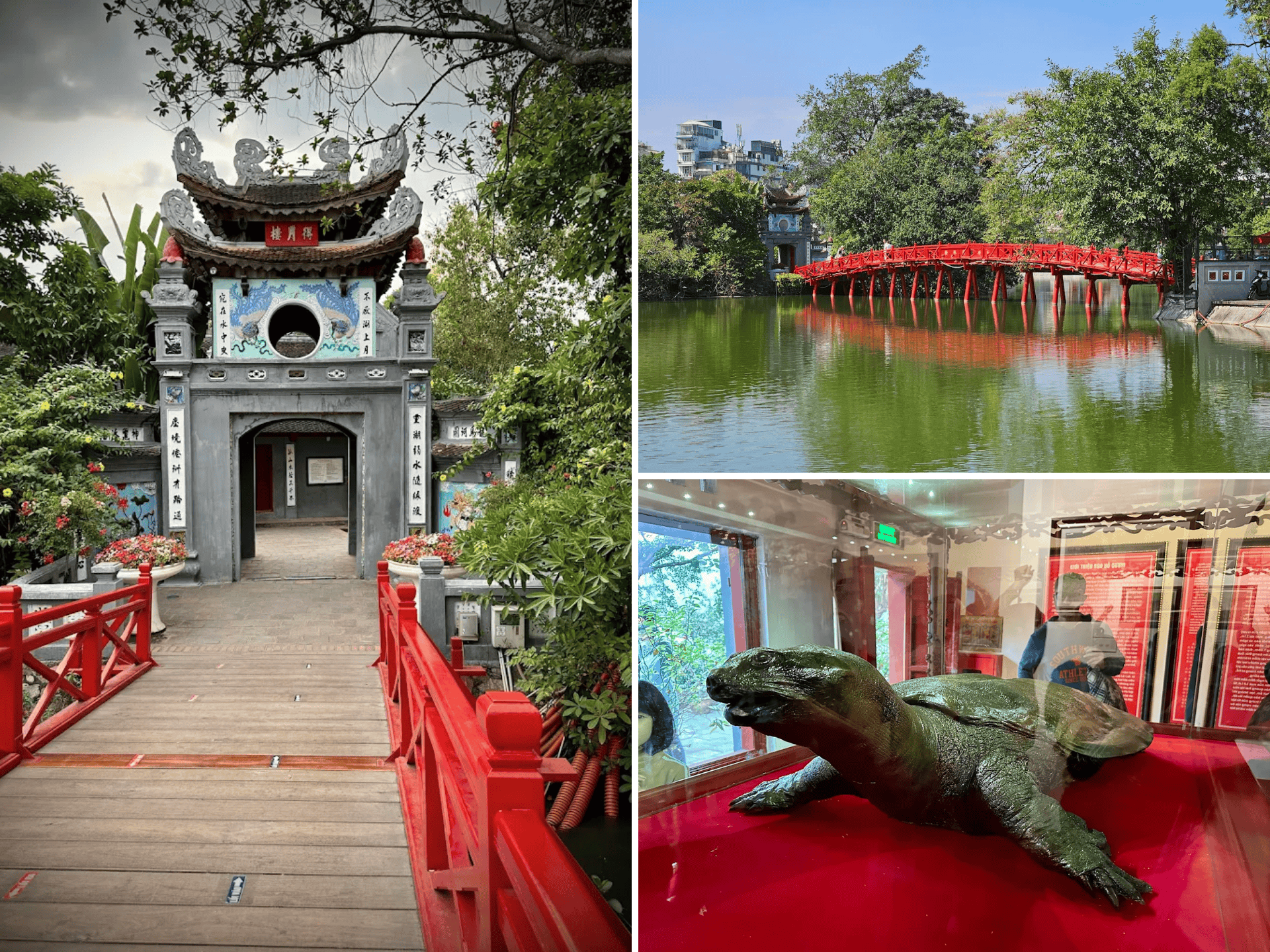
- Address: Dinh Tien Hoang Street, Hang Trong Ward, Hoan Kiem District, Hanoi (on Jade Island in Hoan Kiem Lake)
- Opening Hours: 7:00 AM – 7:00 PM daily
- Ticket Price: 30,000 VND (approximately $1.20 USD)
Located on an island in Hoan Kiem Lake’s northern end, Ngoc Son Temple is reached by crossing the iconic bright red The Huc Bridge. Every tourist photo of Hanoi seems to include this bridge, and honestly, I understand why. The composition – red bridge, green water, ancient temple – is impossibly beautiful.
But I don’t just go for the views. Ngoc Son Temple honors Tran Hung Dao, the brilliant general who defeated Mongol invasions in the 13th century. There’s also the preserved body of a giant soft-shell turtle inside, directly connecting to Hoan Kiem Lake’s famous “Returned Sword” legend.
My recommendations:
- Visit at 7 AM if you want it nearly empty. By 9 AM, tour groups flood in.
- The best photos happen from the bridge looking back toward the temple, especially during golden hour.
- Combine your visit with watching elderly locals do tai chi by the lakeside, the Old Hanoi energy is electric.
6. Quan Su Pagoda: The Working Temple
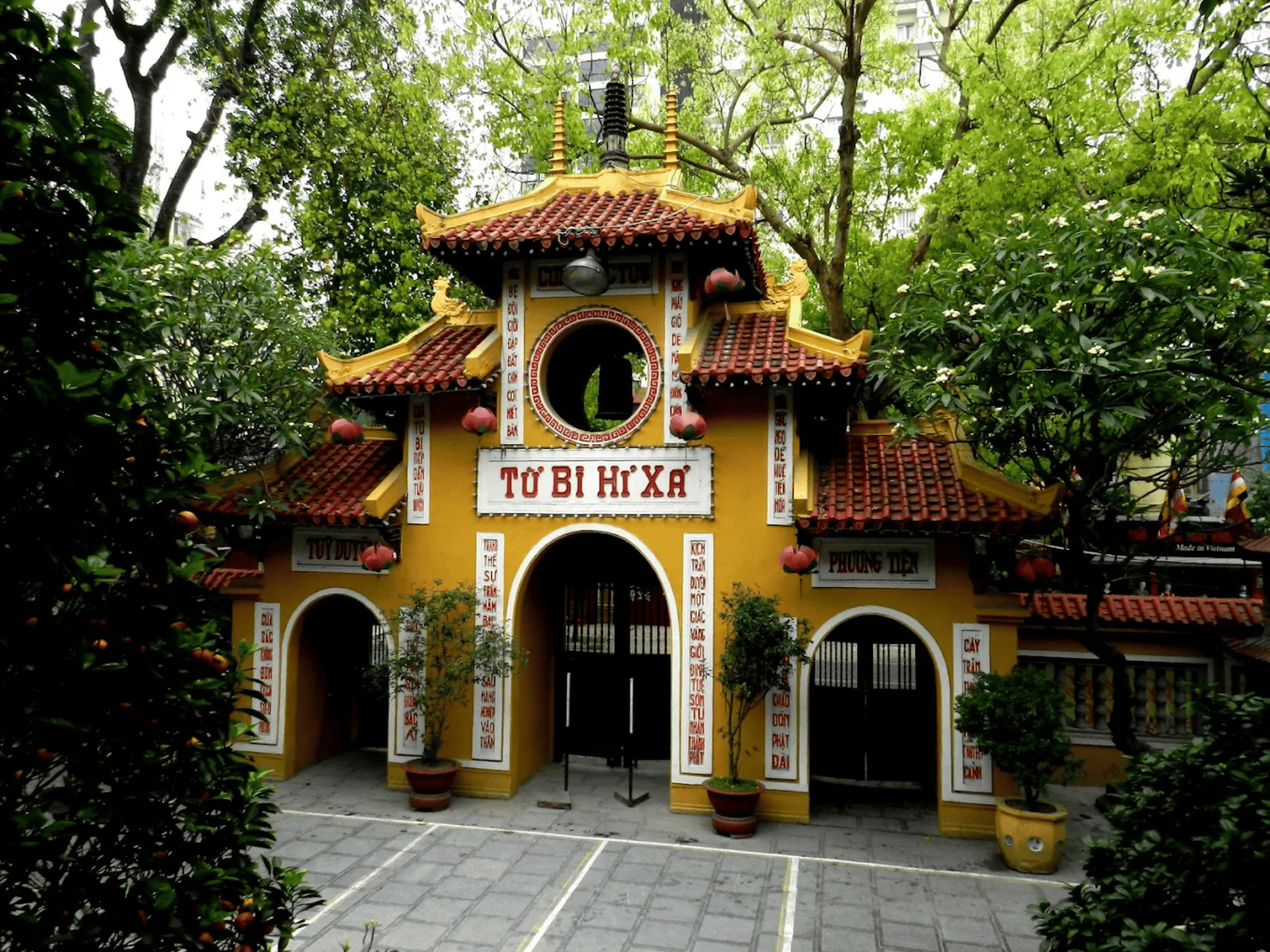
- Address: 73 Quan Su Street, Hang Trong Ward, Hoan Kiem District, Hanoi
- Opening Hours: 7:30 AM – 11:30 AM and 1:30 PM – 5:30 PM daily
- Ticket Price: Free (donations welcome)
If you want to see a Hanoi temple functioning as an active religious center rather than a tourist attraction, visit Quan Su Pagoda. This is the headquarters of the Vietnam Buddhist Sangha, where monks actually live, study, and worship daily.
The atmosphere here feels “lived-in” rather than museum-like. You’ll often hear monks chanting, smell vegetarian food being prepared for ceremonies, and see genuine worshipers going about their spiritual practice. It’s located right in the city center on Quan Su Street, yet somehow maintains this contemplative energy.
What to know:
- Morning chanting sessions (around 5:30 AM) are profound if you’re an early riser.
- The pagoda hosts Buddhist lectures and meditation classes, and foreigners are welcome.
- Dress modestly, this is an active monastery.
7. Tay Ho Temple: The Mother Goddess Power
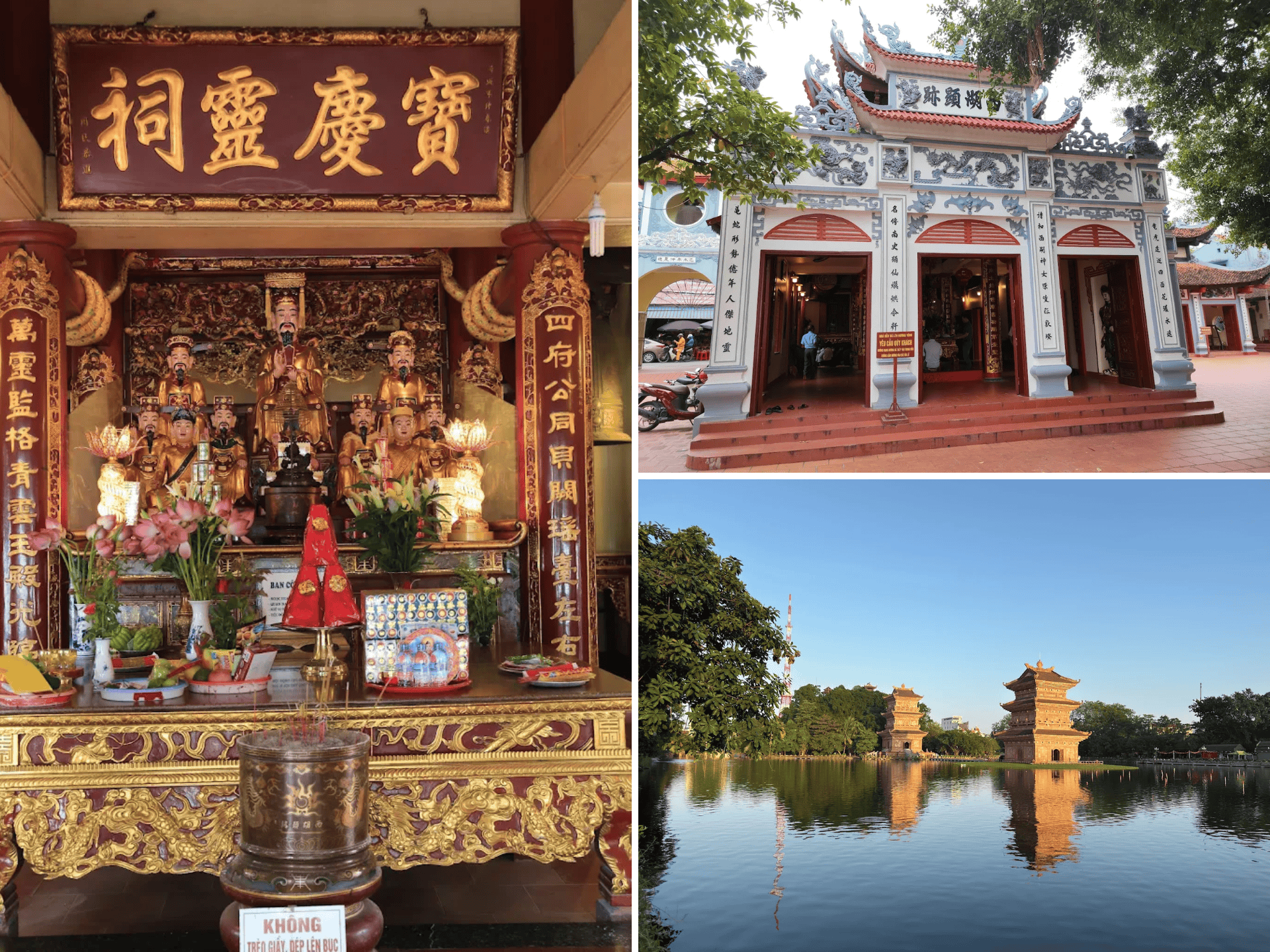
- Address: 52 Dang Thai Mai Street, Quang An Ward, Tay Ho District, Hanoi (on the western shore of West Lake)
- Opening Hours: 5:00 AM – 6:00 PM daily
- Ticket Price: Free (donations welcome)
This isn’t a Buddhist pagoda but a temple dedicated to Mother Goddess Lieu Hanh, one of the Four Immortals in Vietnamese folklore. Situated on a peninsula jutting into West Lake, Tay Ho Temple represents a different spiritual tradition, Đạo Mẫu (Mother Goddess worship), that’s deeply woven into Vietnamese culture.
The experience: Go on the 1st or 15th day of the lunar month. It will be crowded, chaotic, and loud, the complete opposite of a serene Buddhist pagoda. But you’ll witness real Vietnamese folk religion in action: people offering elaborate trays of fruit, flowers, food, and joss paper to the Mother Goddesses. Women perform ritual dances. Mediums enter trance states to channel divine messages.
While Hanoi is the spiritual heart of the north, the south has its own unique charm. If you visit Ho Chi Minh City, you can check out the Top 7 Iconic Oldest Temples in Ho Chi Minh City to see how the architecture and rituals evolve as you move down the country.
Essential Temple Etiquette: The Unspoken Rules
I see many well-meaning visitors accidentally causing offense through small mistakes. Here’s what you need to know to show respect at any Hanoi temple:
Dress Code (Non-Negotiable)
Cover shoulders and knees. Period. Tank tops, short shorts, mini skirts – save them for the beach. Most temples will turn you away if you’re dressed inappropriately, and honestly, I support that. These are sacred spaces, not fashion runways.
I always carry a light scarf in my bag. Even if you’re dressed fine, having a scarf lets you cover up quickly if a temple has stricter requirements than expected.
The Entrance Ritual
- Remove shoes when required: Signs or a pile of shoes at the entrance make this clear. Yes, even if the floor looks dirty. I carry baby wipes for post-temple foot cleaning.
- Walk clockwise: When circling altars or Hanoi temple grounds, move clockwise. It’s traditional and shows you’ve done your homework.
- No hats inside: Remove hats before entering inner sanctuaries. It’s a sign of respect across most Asian cultures.
Offering Incense the Right Way
If you light incense (usually 5,000-10,000 VND for a bundle):
- Hold sticks at chest height with both hands
- Bow three times toward the main altar
- Place incense gently in the burner
- Don’t wave the sticks around or blow on them, let them burn naturally
Locals pray for three things: Sức khỏe (health), Bình an (peace), and Tài lộc (prosperity). You don’t need to be Buddhist to participate. The gods appreciate sincerity, not religious affiliation.
What Never to Do
- Don’t point: If indicating something, use your whole hand, palm up. Pointing, especially with feet, is incredibly disrespectful.
- Don’t point your feet at altars: If sitting on temple floors, keep feet tucked or pointed away from sacred objects.
- Ask before photographing worshipers: Architecture shots are fine. Photographing someone mid-prayer without permission is intrusive.
- Keep voices down: These are contemplative spaces. Loud conversations feel jarring.
- Don’t touch religious objects: Unless you see locals doing it and understand the context, keep your hands to yourself.
My grandmother used to say, “The spirits notice everything”. Whether you believe that or not, the living people around you certainly notice your behavior.
Timing Your Hanoi Temple Visits
Best Seasons
- Autumn (September-November): Perfect weather – mild temperatures, clear skies, fewer crowds than spring. This is when I take most visitors around.
- Spring (February-April): Beautiful but packed, especially around Tet (Lunar New Year). Hanoi temples overflow with worshipers praying for fortune. Culturally fascinating but physically exhausting.
- Summer (May-August): Hot and brutally humid. Early morning visits (before 8 AM) are essential. Afternoons feel like breathing through a wet towel.
- Winter (December-January): Chilly and drizzly but atmospheric. The mist adds mystery to lakeside temples. Bring layers and embrace the moody beauty.
Best Times of Day
- Dawn (5:30-7 AM): When locals worship. Peaceful, authentic, with incredible light for photography. You’ll see Hanoi waking up, street vendors setting up, exercises in courtyards, incense smoke thick in the air. This is my favorite time.
- Mid-morning (9-11 AM): Tour groups arrive. Decent for major temples like the Temple of Literature where crowds are inevitable anyway.
- Afternoon (2-4 PM): Often empty because of heat. Great for contemplation, challenging for photos (harsh light).
- Dusk (5-6 PM): Evening prayers begin. The lighting is gorgeous, and there’s something magical about temples as day transitions to night.
Special Days to Consider
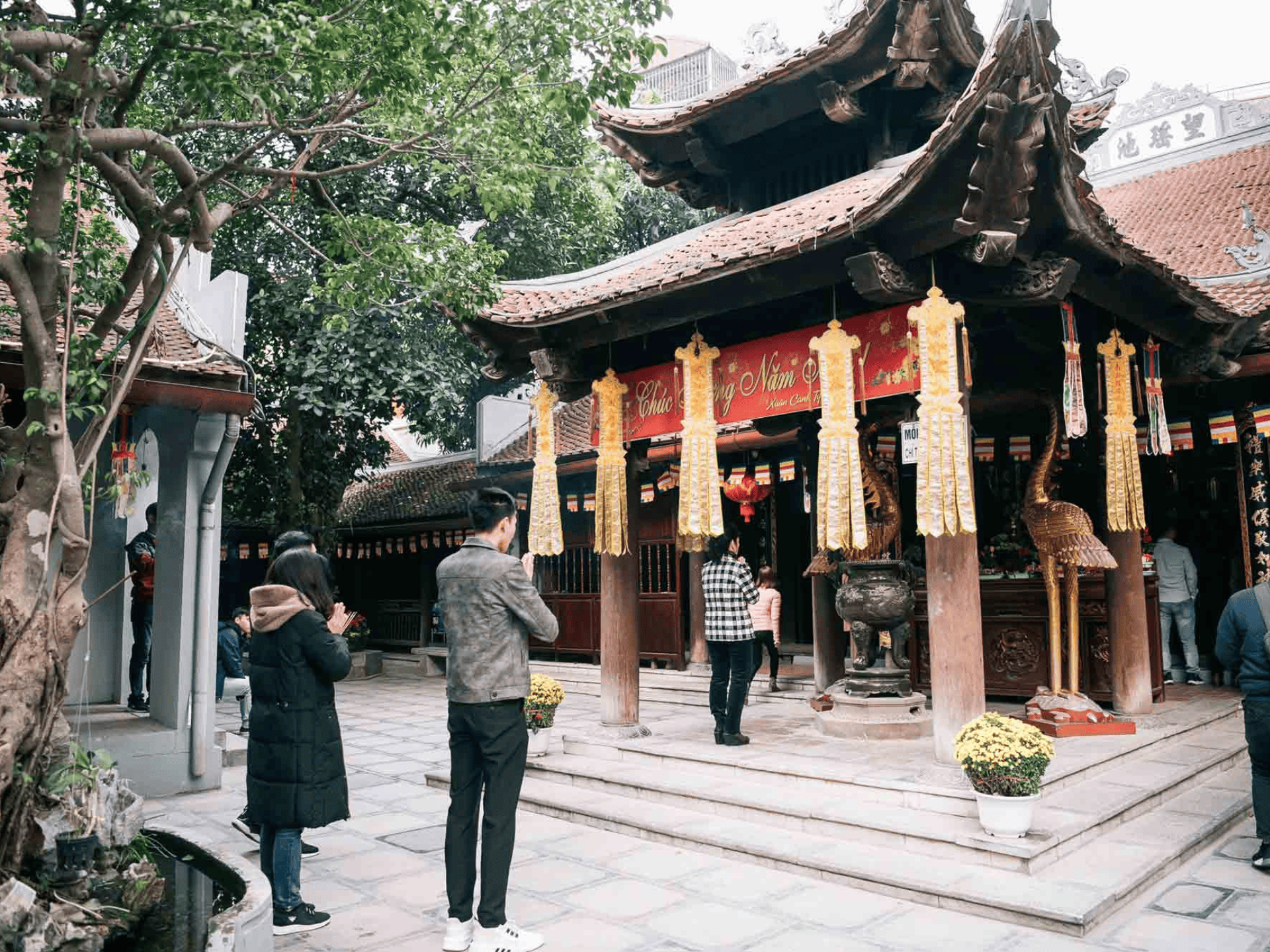
- Full moon days: Hanoi temples host special ceremonies. Expect crowds but witness authentic religious practice. These fall roughly every 15 days on the lunar calendar.
- Tet (Lunar New Year): Overwhelming but unforgettable. Every Hanoi temple overflows with flowers, offerings, and worshipers. Either embrace the chaos or avoid temples entirely during this week.
- Buddhist holidays: Vesak (Buddha’s birthday), usually in May, features major celebrations – lanterns, vegetarian food stalls, ceremonies at every pagoda.
I’ve learned to check the lunar calendar before planning temple visits. Stumbling into a major ceremony unprepared can feel intrusive, even if everyone’s welcoming.
Discover Your Sacred Moment in Hanoi Temples
Visiting a Hanoi temple isn’t about ticking off attractions on a list, it’s about connecting with a living spiritual tradition that spans centuries. Whether you’re standing in awe before the Lotus on a Pillar, watching the sun paint Tran Quoc’s stupa in gold, or sitting quietly as morning prayers echo through Quan Su, I hope these sacred spaces touch you the way they’ve always touched me.
These temples have endured wars, foreign occupation, revolution, and the relentless march of modernization. Yet they stand strong, not just as monuments to the past, but as vital threads in our daily lives. They answer something deep within us: the need to belong to something greater than ourselves, to honor our history, to find stillness beneath the city’s beautiful chaos. Every Hanoi temple carries stories that have waited centuries to be told.
They’re waiting for you now.
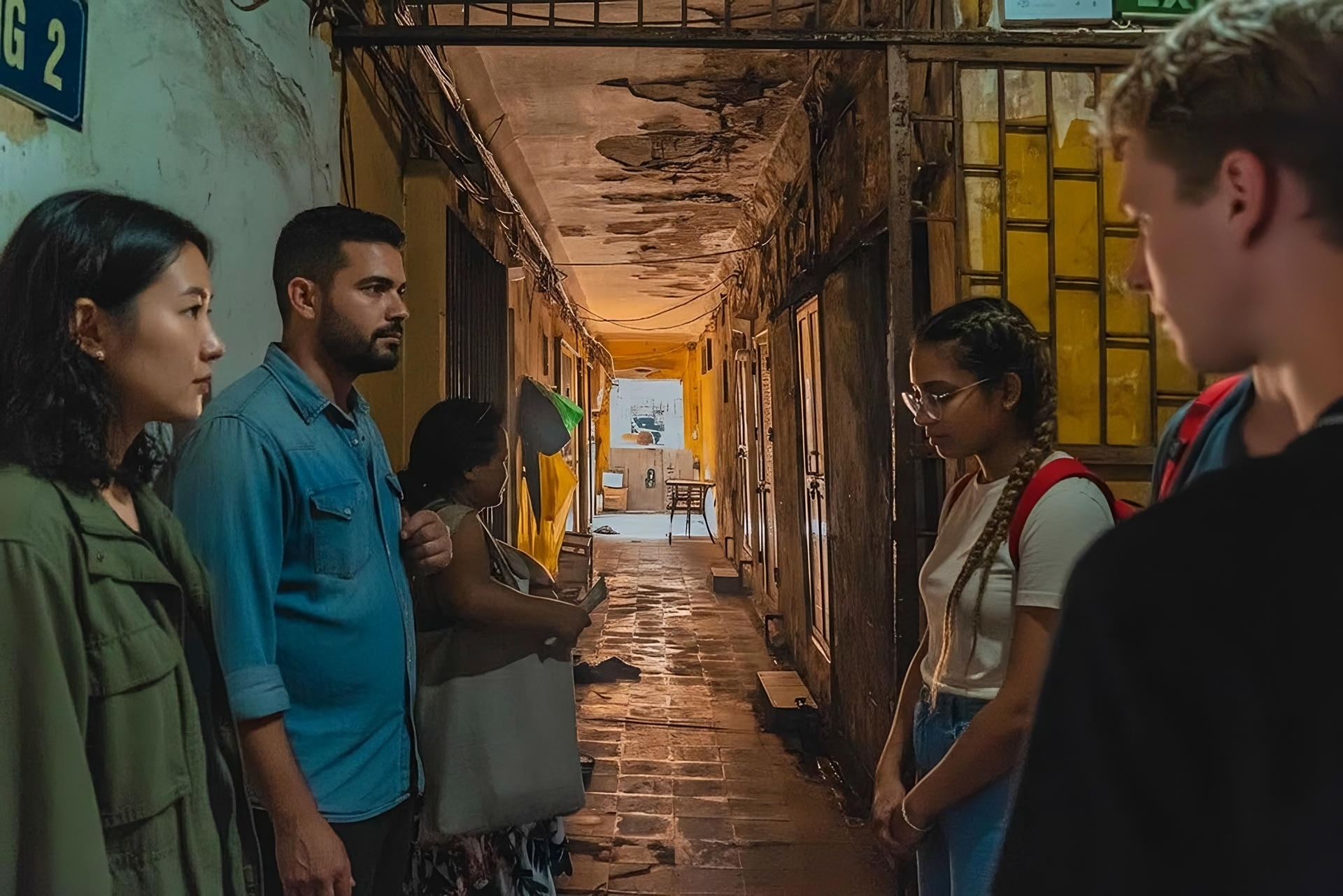
At Jackfruit Adventure, we do more than point out historic buildings. We bring you into the heart of these sacred spaces, share the legends locals whisper, and introduce you to the people who keep these traditions alive. Love diving into history and uncovering hidden stories? Then our Cycling Tour Hanoi Off the Beaten Path: Last Emperor’s Hidden Mansion, Black Market & Untold Stories is perfect for you.