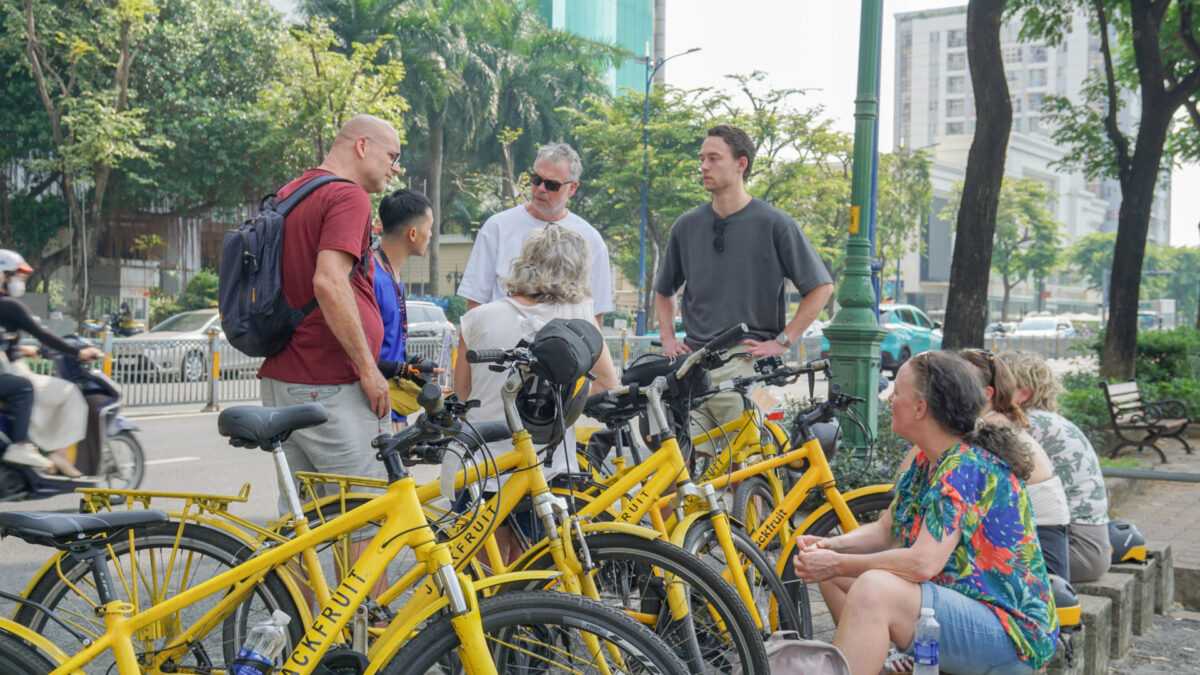


The first time I took the metro in Saigon, I remember standing still for a moment, just noticing how different everything felt.
No horns. No rush of motorbikes brushing past your shoulder. No need to mentally calculate how to cross the street in one piece. Just a quiet, air-conditioned space where people moved more slowly, more deliberately, like the city had decided to take a deep breath underground.
If you’re searching for a metro guide that explains things in a simple way, this Saigon metro guide is exactly that. Not in a technical “transport system manual” kind of way, but more like how a local friend would explain the metro to you over coffee before your first ride. In this metro guide, I’ll walk you through everything step by step – from finding the station entrance (which is honestly more confusing than taking the train itself sometimes) to understanding tickets, platforms, and what the experience actually feels like once the train starts moving through the city.
What You Should Know Before Following This Saigon Metro Guide
Before you start following this metro guide step by step, there are a few things I wish someone had told me earlier.
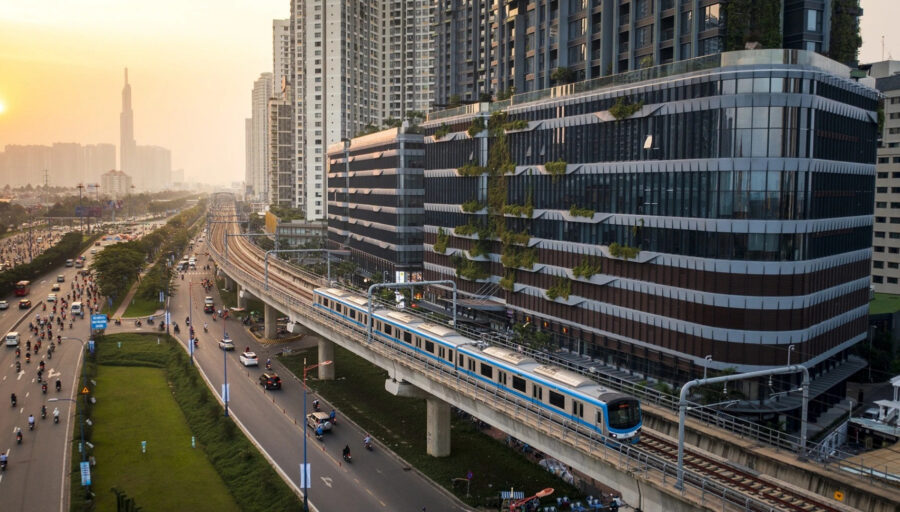
The first is that the metro in Saigon is still very new, and because of that, it doesn’t behave like a fully developed system yet. At the moment, there’s only one main line running from Ben Thanh in District 1 all the way to Suoi Tien. So if you’re expecting something like Tokyo or Seoul, where you can go anywhere underground, this isn’t that kind of system – at least not yet. If you want to get a clearer picture of how the line actually runs through the city, you can take a look at this Ho Chi Minh City Metro Map before planning your route.
But that doesn’t make it less useful. It just means you need to think of it differently.
I don’t use the metro for everything. Most days, I still rely on Grab or just walking short distances. But when I know I’m heading in the same direction as the metro line, especially during peak hours, I almost always choose it. Not because it’s dramatically faster, but because it’s more predictable. You don’t have to think about traffic, or whether a 15-minute ride will suddenly turn into 40.
Another thing worth knowing before following this metro guide is how different the atmosphere feels once you enter the station. Above ground, Saigon moves fast and a bit chaotically. Down here, everything feels more controlled. People queue more naturally, the space is quieter, and there’s less of that constant background noise you get used to outside.
That contrast can feel a bit strange at first. I remember my first ride, I kept looking around like I was in the wrong place, because it didn’t feel like the Saigon I knew. But after a while, it becomes something you appreciate, especially on days when the heat and traffic feel a bit overwhelming.
So before you dive into this Saigon metro guide, just keep this in mind: the metro isn’t here to replace the city’s usual way of moving. It’s just another option. And sometimes, it’s the most comfortable one.
Metro Ticket Prices in Saigon
One of the first practical questions people usually ask when reading a metro guide is simple: how much does it actually cost?
And honestly, the first time I saw the ticket prices, I thought I misunderstood something. Compared to how modern the system feels, it’s surprisingly affordable.
Right now, metro fares in Saigon are calculated based on distance, which means the price depends on how far you travel along the line. But even for the longest route, it still feels very reasonable, especially if you’re used to using ride-hailing apps during busy hours.
Here’s a general breakdown:
| Distance | Price (VND) | Approx. USD |
| Short trips (1-2 stops) | 7,000 – 10,000 | ~$0.30 – $0.40 |
| Medium distance | 10,000 – 15,000 | ~$0.30 – $0.40 |
| Full line (Ben Thanh – Suoi Tien) | 15,000 – 20,000 | ~$0.60 – $0.80 |
There are also a few other options depending on how often you plan to use it. If you’re only taking the metro once or twice, a single-ride ticket is the easiest choice. But if you find yourself using it more regularly, a rechargeable card or even a day pass can save you time and make the process smoother.
From my experience, I started with single tickets just to understand how everything worked. It gave me time to get used to the machines, the gates, and the overall flow without feeling rushed. Once it became familiar, switching to a card made things a lot easier, especially during busier hours when you don’t want to spend extra time figuring things out.
Another small thing worth mentioning is that while the prices are low, the experience itself doesn’t feel “cheap.” The trains are clean, the air-conditioning works well (which matters more than you think in Saigon), and overall it feels like you’re getting a much more comfortable ride than what you paid for.
So if you’re planning your trip and wondering whether the metro is worth trying, the cost definitely isn’t something you need to worry about. If anything, it’s one of the easiest parts of the whole experience.
Step-by-Step Metro Guide for First-Time Riders
Step 1: Finding the Station (The Part No One Talks About)
This sounds simple, but honestly, it’s the part that confused me the most the first time I followed this metro guide.
If you’re heading to an elevated station, it’s usually easy because you can see the tracks stretching across the city from far away. But underground stations, especially around District 1, are a completely different story. Some entrances blend into the sidewalk so naturally that you can walk straight past them without noticing.
I actually did that on my first ride.
I remember staring at Google Maps, standing in the heat, thinking, “Wait… the station should literally be here.” Turns out it was – just hidden behind a row of signs and parked motorbikes that completely blocked the entrance from where I was standing.
One thing I’d strongly recommend before following this Saigon metro guide is researching your destination station in advance, not just the station you’re departing from.
For example, if you want to visit Suoi Tien Theme Park, you should already know which station to get off at before boarding. The same goes for places like Thao Dien, Ben Thanh, or the university area near Thu Duc. Because right now, the metro system is still new, and if you don’t know exactly where your destination connects to the line, it’s surprisingly easy to miss your stop or end up exiting at the wrong station.
Before my second or third ride, I started checking the station list beforehand instead of trying to figure everything out during the journey itself, and honestly, it made the whole experience much less stressful.
Honestly, after getting lost once or twice, I learned not to stress about it. If you don’t see the entrance right away, just slow down and have a look around. More often than not, it’s closer than you think. Like many things in Saigon, finding your way sometimes comes down to noticing the little details rather than following the map perfectly
Step 2: Entering the Station
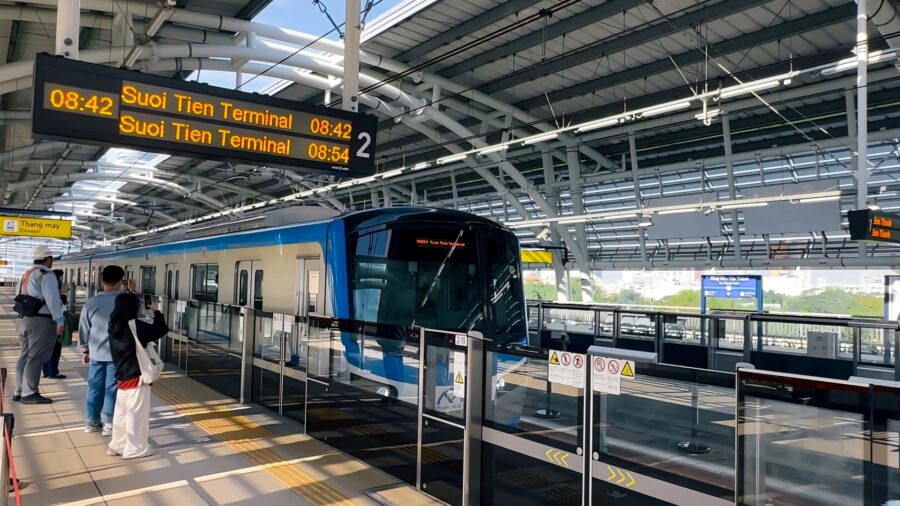
Once you find the entrance, the transition feels almost immediate.
You either go down into the station or up to the platform, and within a few seconds, the entire atmosphere changes. The noise fades, the temperature drops, and everything starts to feel more structured.
I still remember that first moment clearly, stepping away from the heat and traffic outside into a space that felt calm and controlled. It’s not dramatic, but after spending time on Saigon streets, you notice the difference right away.
Some stations are bigger than you’d expect, with multiple levels, escalators, and elevators. If you’re not in a rush, take a second to look around and get your bearings. It makes the next steps much easier.
Step 3: Buying a Ticket (Take Your Time Here)
This is probably the only part where things feel slightly awkward at first.
There are different machines, different payment options, and not everything is instantly obvious, especially if you’re using it for the first time. The system works, but it takes a moment to understand what you’re actually supposed to press.
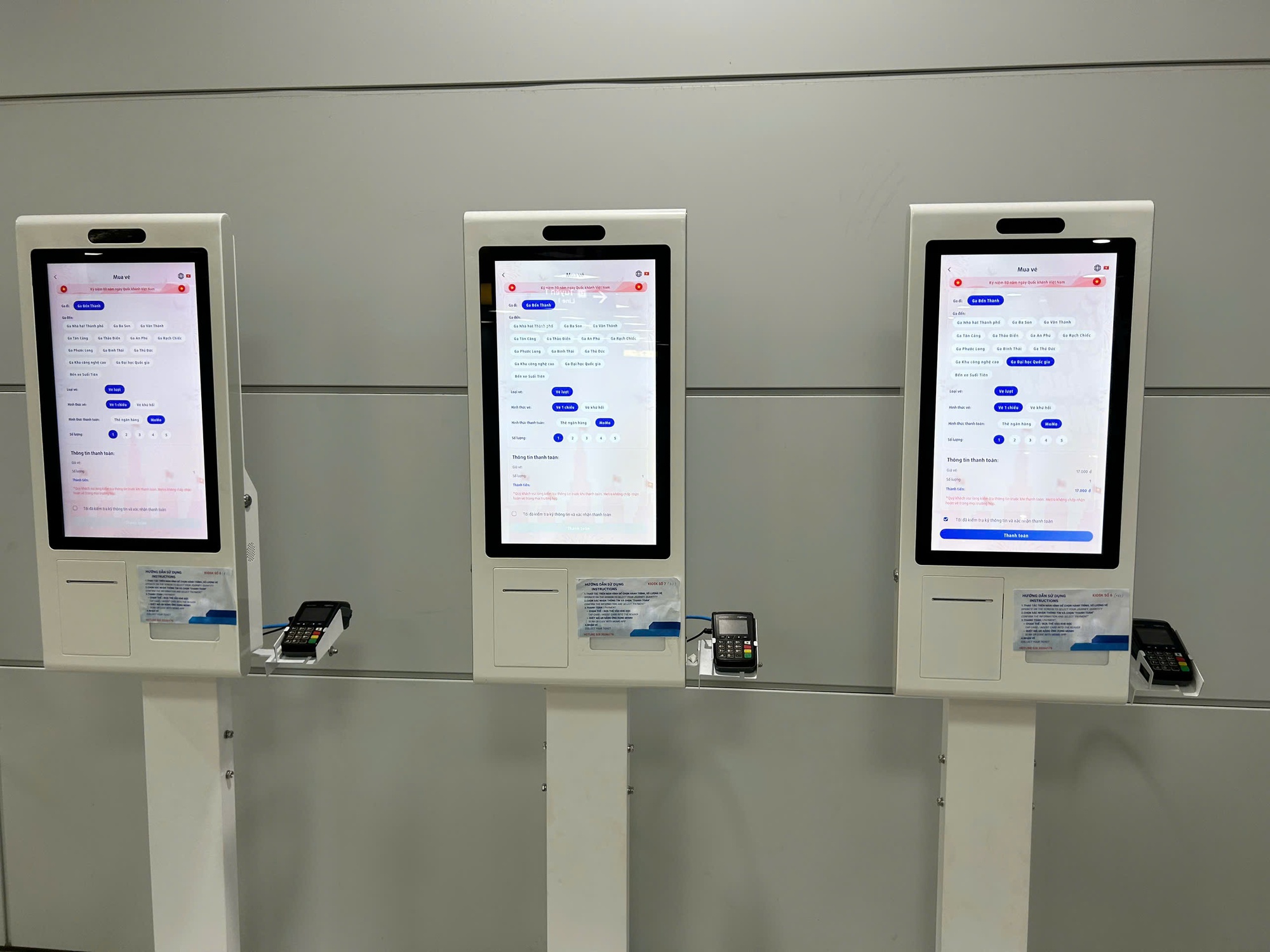
If you buy tickets in person, you can purchase them at the counter or use the automatic ticket vending machines inside the station. Just choose your destination, pay by cash or card, and the machine will give you a ticket or QR code. You can also buy tickets online through supported apps (you can download the “HCMC Metro HURC” app on Google Play or Apple Store) and scan the QR code directly at the gate, which honestly feels much easier once you’re already familiar with the system.
I remember standing there for a bit longer than I’d like to admit, just watching how the person in front of me did it. That turned out to be the easiest way to figure things out.
If you want to keep it simple:
- Start with a single-ride ticket
- Use card payment if possible
- Follow the instructions slowly, step by step
There’s usually staff nearby, so if something doesn’t make sense, you can always ask. No one expects you to get it right immediately.

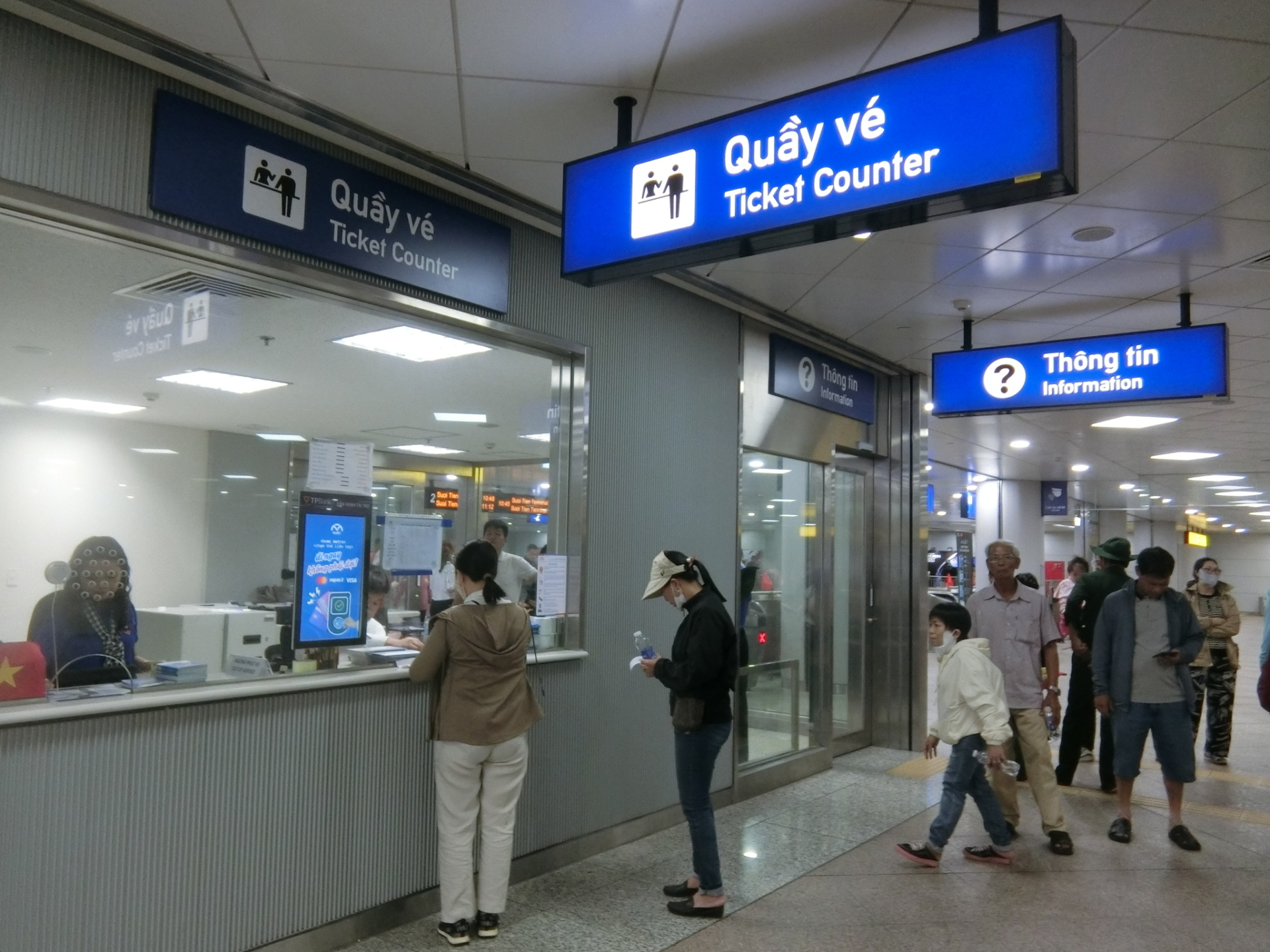

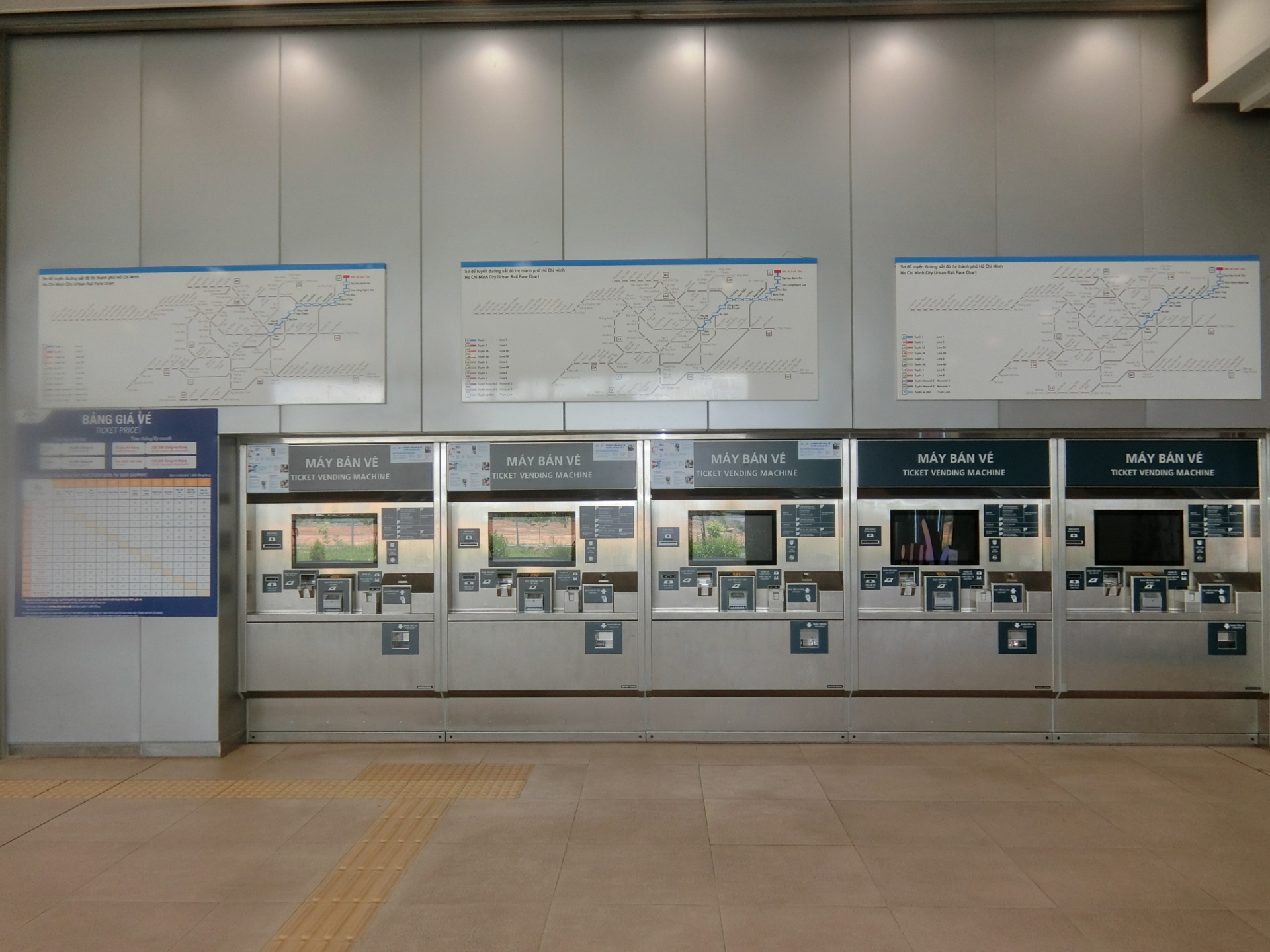 Metro guide: The ticket vending machine includes multiple functions, such as a display screen, bill and coin slots, a keypad, and a receipt dispenser. The electronic screen also allows passengers to select their destination station and shows the fare for the trip
Step 4: Passing Through the Gate
Once you have your ticket, things become much more straightforward.
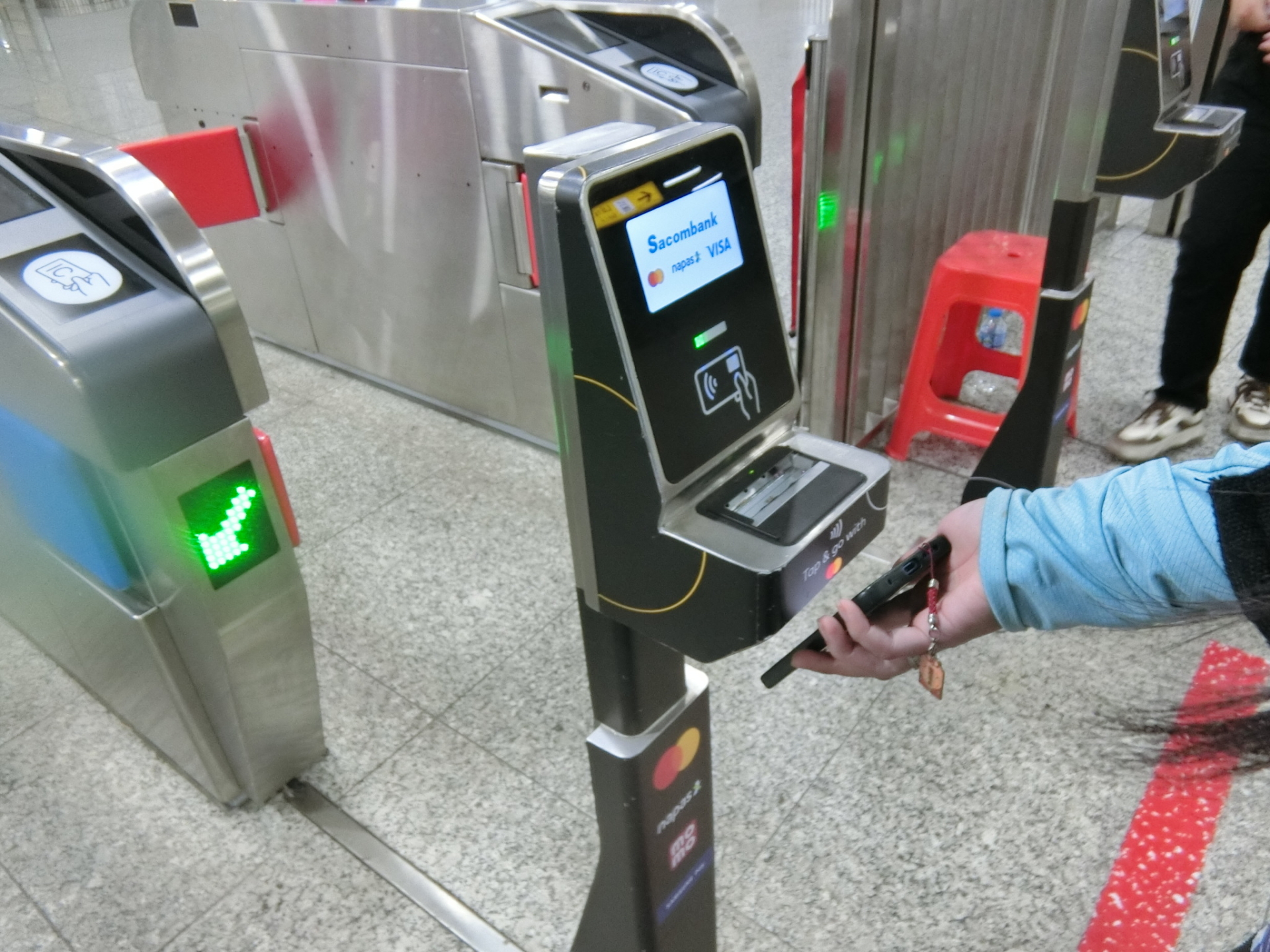
You walk up to the gate, scan your QR code or tap your card, wait for the barrier to open, and then step through. It’s a small action, but it’s also the moment where you feel like, “Okay, I’m actually doing this now.”
One thing I learned from experience is not to rush or be careless with the ticket. I once folded mine absentmindedly and had to scan it twice before it worked properly.
It’s a small detail, but keeping your ticket in good condition will save you a bit of unnecessary stress.
Step 5: Finding the Right Platform
Inside the station, everything is much clearer than outside.
There are signs pointing you in the right direction, showing the platform number and the final destination of each train. The system is designed to be intuitive, but only if you actually take a moment to read.
The first time I used it, I almost followed the crowd automatically, then stopped and realized I hadn’t even checked if they were going the same direction as me.
Since then, I always pause for a few seconds, double-check the direction, and then move. That small habit makes a big difference.
Step 6: Waiting for the Train
Waiting for the metro in Saigon feels surprisingly calm.
People stand behind the safety line, usually forming a loose queue without anyone really organizing it. There’s no pushing, no rushing forward at the last second, just a quiet understanding of how things work.
The first time I stood there, it felt slightly unfamiliar, almost like I had to adjust my own pace to match the space around me. After a while, though, it becomes natural.
And honestly, it’s one of the few moments in the city where everything feels a bit slower.

Step 7: Getting On the Train
When the train arrives, everything happens in a smooth, predictable way.
The doors open, people step out first, and then everyone else moves in. There’s no need to rush, the timing is consistent, and you don’t feel like you’re going to miss it if you take an extra second.
Inside, the space is clean and simple. Seats run along the sides, leaving room in the middle for standing passengers. During off-peak hours, you’ll probably find a seat easily. During busier times, just stand and hold onto the rail.
But what I always look forward to isn’t just sitting down, it’s what comes next.
Step 8: Watching the City from Above
After a few stops, the train moves onto the elevated tracks, and this is where the experience changes completely.
You start seeing Saigon from a different angle, not from inside the traffic, but just above it. It’s not high enough to feel distant, but it’s enough to give you space to observe.
I remember the first time this happened, I stopped looking at my phone without even realizing it. The city looked familiar, but also slightly different, more layered, more open.
If you can, try to stand or sit near the window, especially during the day. It’s one of those small details that turns a simple ride into something more memorable.

Step 9: Getting Off and Exiting
When you arrive at your stop, the process is simple, but it still requires a bit of attention.
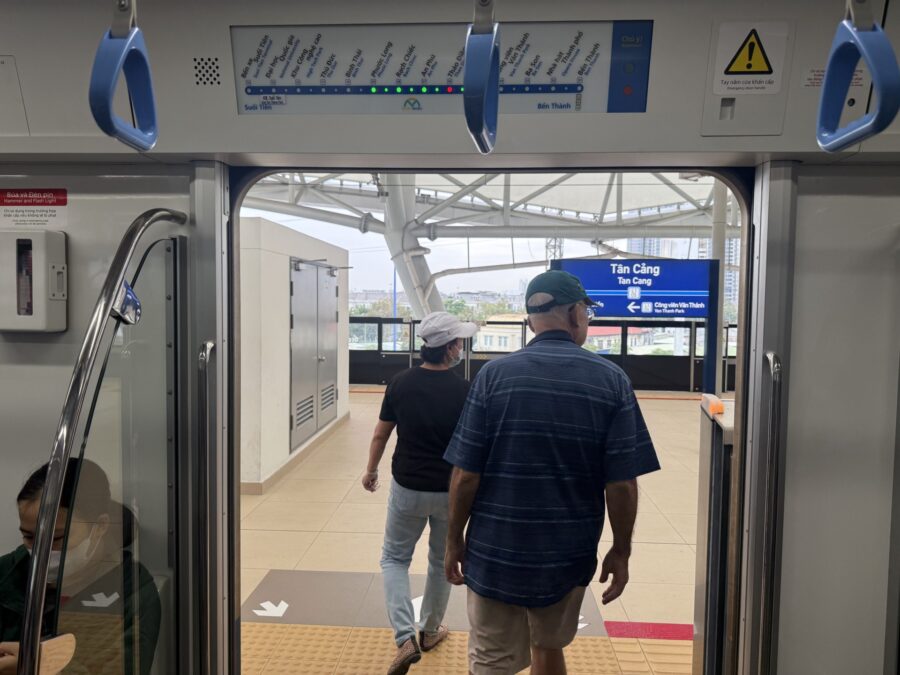
Follow the signs to the exit, scan your ticket again if needed, and then choose the right way out. This last part matters more than most people expect.
I once picked an exit without checking properly and ended up on the opposite side of a wide road with no easy way to cross. What should have been a short walk turned into a much longer one.
Since then, I always take a second to check which exit makes the most sense before leaving the station.

Common Mistakes First-Time Riders Make
This metro guide might make it sound complicated at first, but honestly, the metro itself isn’t difficult, but the first time can feel slightly awkward in small ways.
From what I’ve experienced, most people tend to rush a bit too much. I’ve done that too – trying to follow the crowd without really checking the signs, then stopping halfway because I wasn’t sure I was going the right way.
Ticket machines are another moment where things slow down. Not because they’re complicated, but because they’re unfamiliar. The first time, I remember just standing there for a bit, quietly watching how someone else used it before trying myself.
It’s also surprisingly easy to get the train direction wrong if you don’t double-check the destination. And finding the station entrance isn’t always as obvious as you’d expect – I’ve walked past one before without even noticing.
None of these are big mistakes. They’re just part of being new.
The metro isn’t hard to use – it just takes a bit of patience the first time.
From Metro Views to Street-Level Saigon
The metro gives you a completely different way to move through Saigon – calmer, more predictable, and just slightly removed from the constant motion of the city above. For a brief moment, everything feels more structured, almost like you’re observing Saigon from a distance rather than being part of it.
But the moment you step back onto the streets, that feeling shifts again. The noise returns, the pace picks up, and suddenly you’re back in the middle of it all – the kind of energy that makes the city feel alive in the first place.
And if you’re curious about experiencing that side of Saigon more closely, not just passing through but actually understanding how it moves, how people live and interact within it, then exploring the city through a city tour in Ho Chi Minh City is one of the most natural ways to do it.

Ready to try the metro in your own way?
Your first ride might feel a little unfamiliar, maybe even slightly awkward in small ways. You might hesitate before scanning your ticket, or double-check the direction one more time than necessary.
I’ve been there too, and honestly, that’s part of the experience this Saigon metro guide can’t completely prepare you for.
But if you give yourself a bit of time, you’ll start noticing the small things – the way people naturally form a line, the quiet inside the train, the shift in perspective when the city opens up outside the window.
And somewhere along the way, without really trying, you’ll feel a bit more comfortable moving through it.
Because sometimes, understanding a place like Saigon doesn’t come from doing everything right, it comes from letting yourself experience it, one small step at a time.