

Table of Contents
Set in the heart of Hanoi, the Vietnam Military History Museum is an interesting historical site for anyone who wants to learn about Vietnam’s past. The museum displays tanks, fighter jets, weapons and many photos that show the country’s long journey to independence. A visit here can give you a basic look at military history and a deeper understanding of the strength and spirit of the Vietnamese people.
What Made the Vietnam Military History Museum So Intriguing to Me!
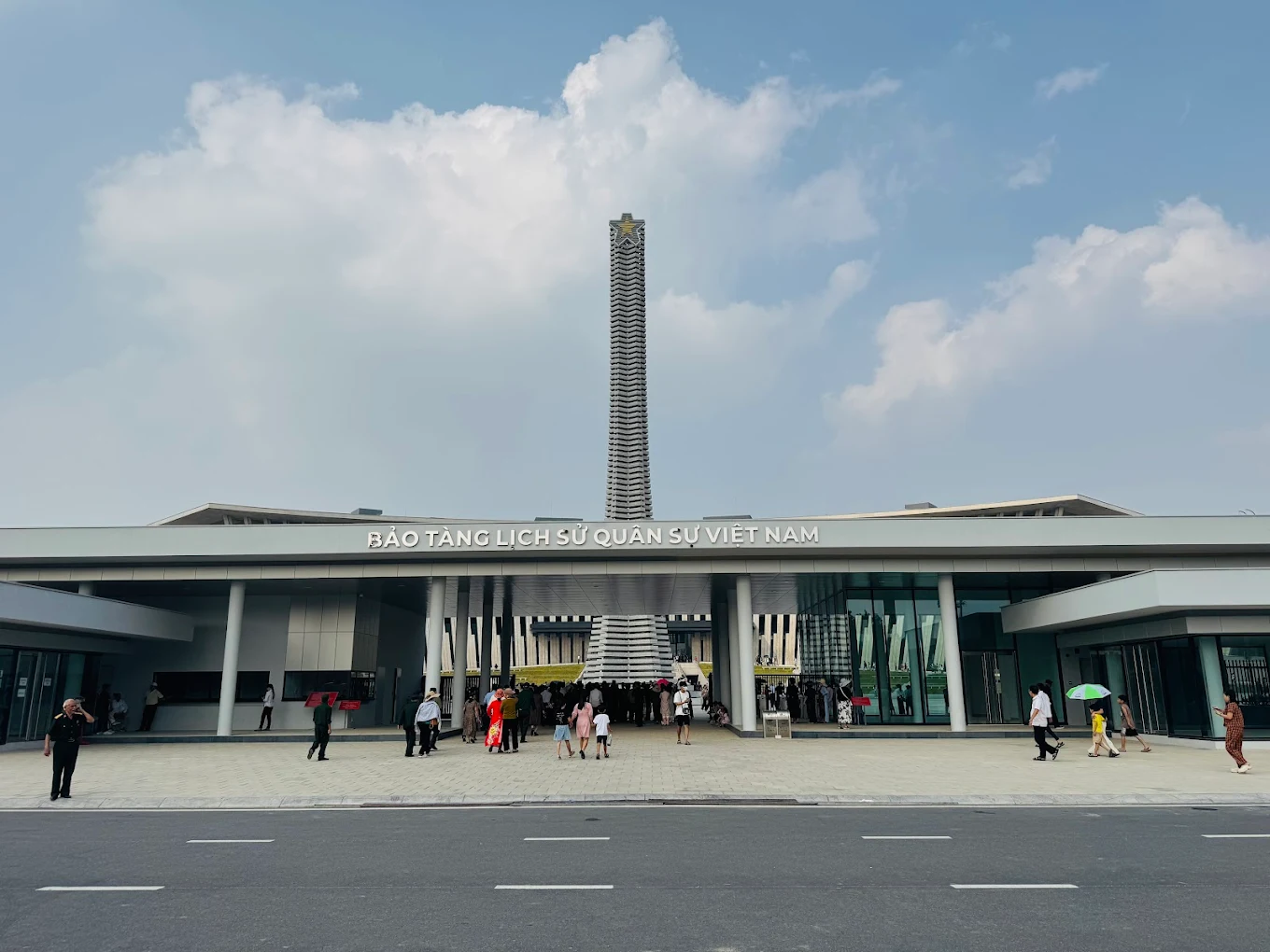
There are certain places you visit simply because they’re famous, and then there’s a unique site that caught my attention – “the Vietnam Military History Museum”. I honestly didn’t expect to feel that way at all…
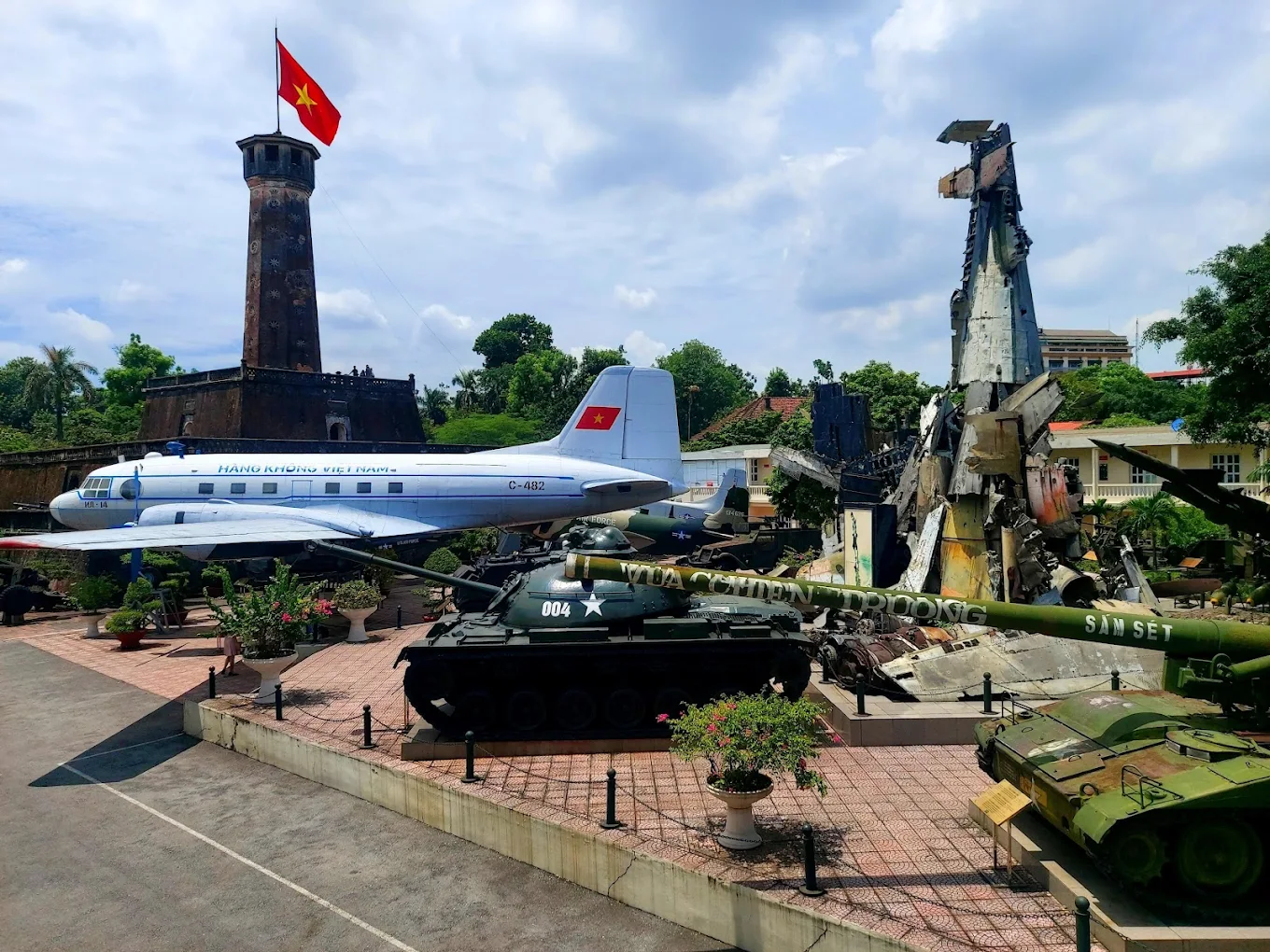
But the moment I stepped inside, it proved me completely wrong! You’ll soon notice that this isn’t a quiet gallery: it’s a dramatic outdoor yard filled with real tanks, fighter jets, artillery, and a towering sculpture built from aircraft wreckage. Standing there feels like stepping into a living chapter of Vietnam’s heroic past.
What truly captivated me was the emotion behind everything on display, as each room reveals stories of resilience, sacrifice, and the long journey Vietnam took to protect its independence. If you’re curious about Vietnam’s history or simply love meaningful travel experiences, this museum is one place you shouldn’t skip!
Let’s dive into this place with me!
Where is the Vietnam Military History Museum?
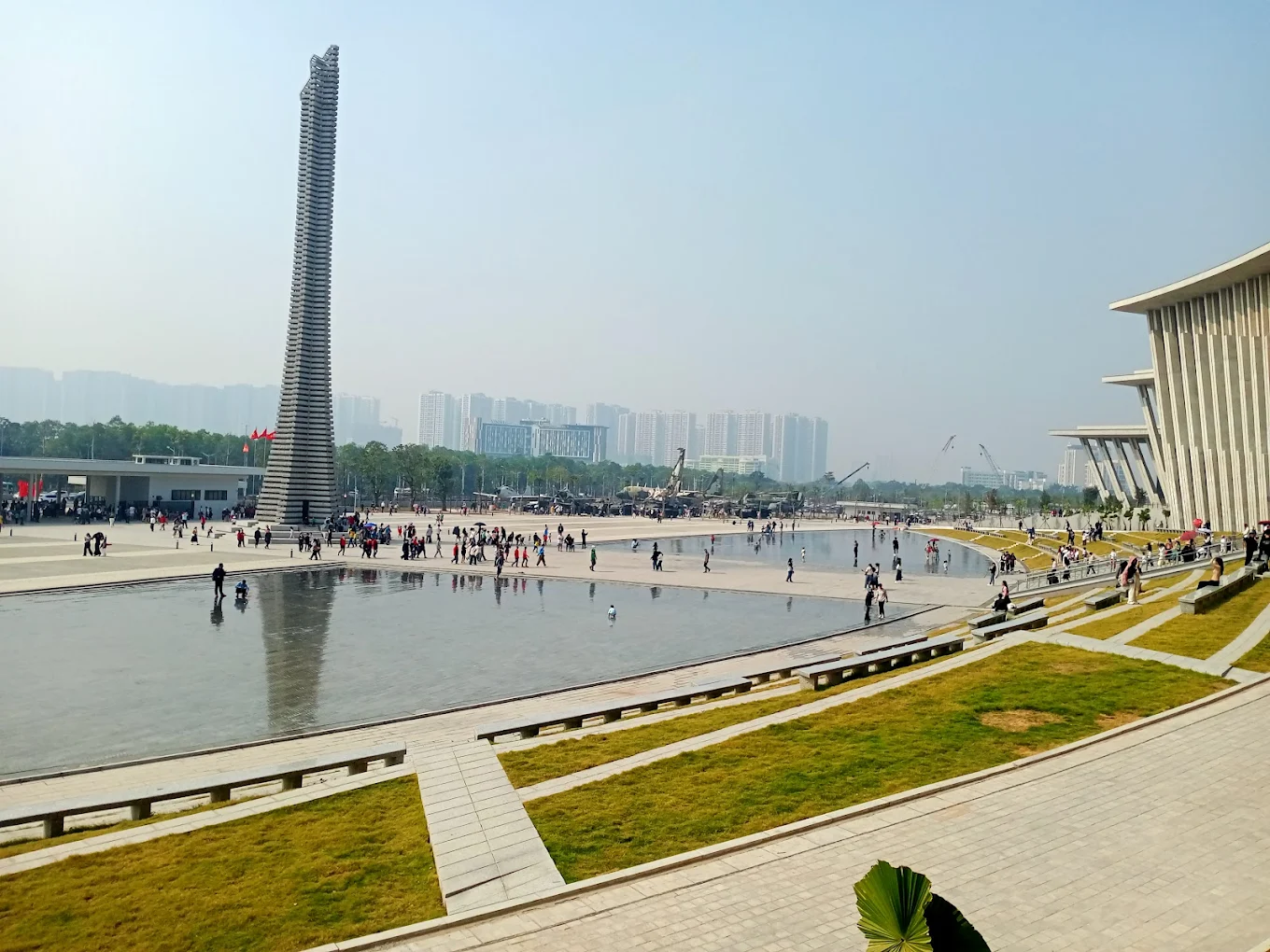
For a smooth visit, here are some things to keep in mind about the Vietnam Military History Museum
- Address: 28A Điện Biên Phủ, Ba Đình District (located beside the Hanoi Flag Tower)
- Opening hours: 8:00 AM – 4:30 PM (Closed on Monday and Friday)
Entrance Fees
- Standard ticket: ~40,000 VND (~$1.45)
- Free entry: Children under 16, seniors 80+, people with severe disabilities, war veterans, national guests, etc.
- 50% discount: Students (with ID), visitors aged 16–18, seniors 60–80, people with disabilities, ethnic minority groups in special hardship areas.
The Story Behind the Vietnam Military History Museum
Before stepping inside the Vietnam Military History Museum, I thought I was simply visiting another historical site in Hanoi. But the deeper I dug into its origins, the more fascinating the story became. This museum is a defining symbol of Vietnam’s efforts to safeguard its cultural and military heritage even during its most turbulent years.
The museum’s roots date back to 1945, when President Hồ Chí Minh signed Decree No. 65/SL-TN on the preservation of cultural heritage. During this time, Vietnam was still battling for its freedom, the government immediately understood the importance of protecting documents, images, and wartime relics for future generations. Between 1945 and 1954, the Ministry of Defence worked tirelessly to collect everything it could (from battlefield photographs to soldiers’ personal belongings), knowing these items would one day tell the nation’s story.
After the victory of 1954, the General Military Commission (now the Central Military Commission) officially initiated the project to create a dedicated museum. On July 17, 1956, the Vietnam Military History Museum was born, becoming one of the very first major museums in the country.
Over the decades, the museum expanded its collection to tens of thousands of artefacts, including various nationally treasured items such as the legendary MiG-21 fighter jets and the historic T-54B tank. Interestingly, a few years later, Vietnam has developed an extensive network of military museums across the country, each one preserving the legacy of a different branch or region of the armed forces, as well as giving every visitor an opportunity to explore a different perspective of Vietnam’s journey of national defence.
Why It Looks This Way: Revealing the Story Behind the Museum’s Unique Design
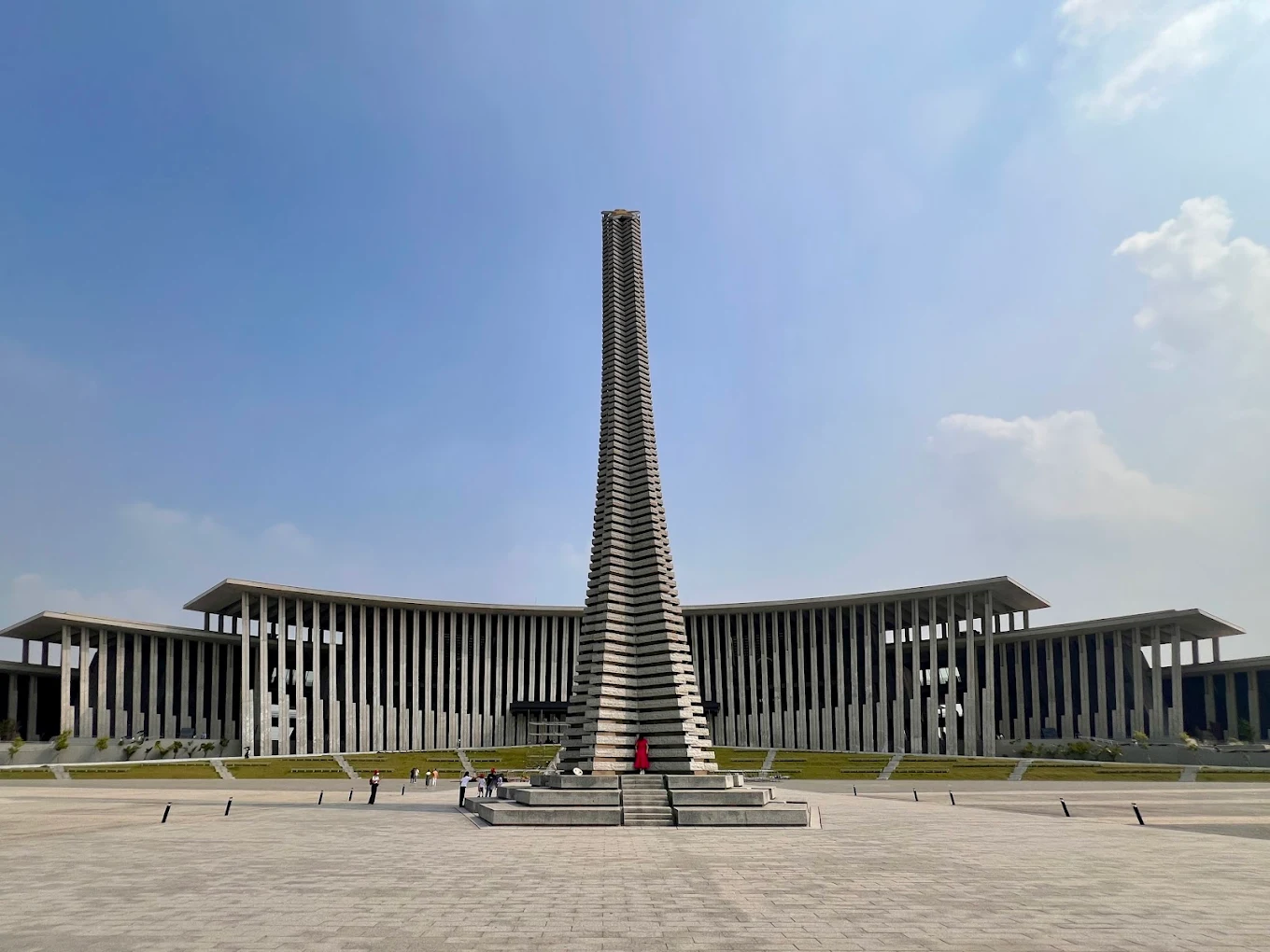
What struck me the moment I walked into the grounds of the Vietnam Military History Museum was how seamlessly the architecture blends modern design with a deep respect for history. The museum embraces a simple contemporary style with clean lines, open spaces, and a layout that allows the story of Vietnam’s military past to unfold naturally as you move from one section to the next. Plus, the iconic wing-shaped form was intentionally designed to remind the Vietnamese of the legendary crossbow of King An Dương Vương, symbolising Vietnam’s ancient heritage and enduring spirit.
The museum was built on an impressive 74.3-hectare site, with about 38.66 hectares dedicated to functional exhibition areas. Its main building rises across four above-ground floors and one semi-basement, totalling over 64,000 square meters of floor space: a scale that matches its role as one of Vietnam’s most important cultural and military institutions. With a construction footprint of 23,198 m² and a total main-building floor area of 64,640 m², the Vietnam Military History Museum stands as a landmark dedicated to preserving and promoting the nation’s military heritage, serving the needs of researchers, students, visitors, and culture lovers both at home and abroad.
What’s Inside the Vietnam Military History Museum
As I walked deeper into the Vietnam Military History Museum, I quickly realised just how massive and thoughtfully curated the exhibition space is. The museum showcases more than 1,000 artefacts, each carefully preserved and presented using modern, highly interactive technology. You’ll notice how rooms transition from bright, airy spaces to darker, more dramatic zones, depending on the exhibits’ themes. Furthermore, modern multimedia systems and directional audio installations are integrated throughout, allowing visitors to interact with displays rather than just observe them!
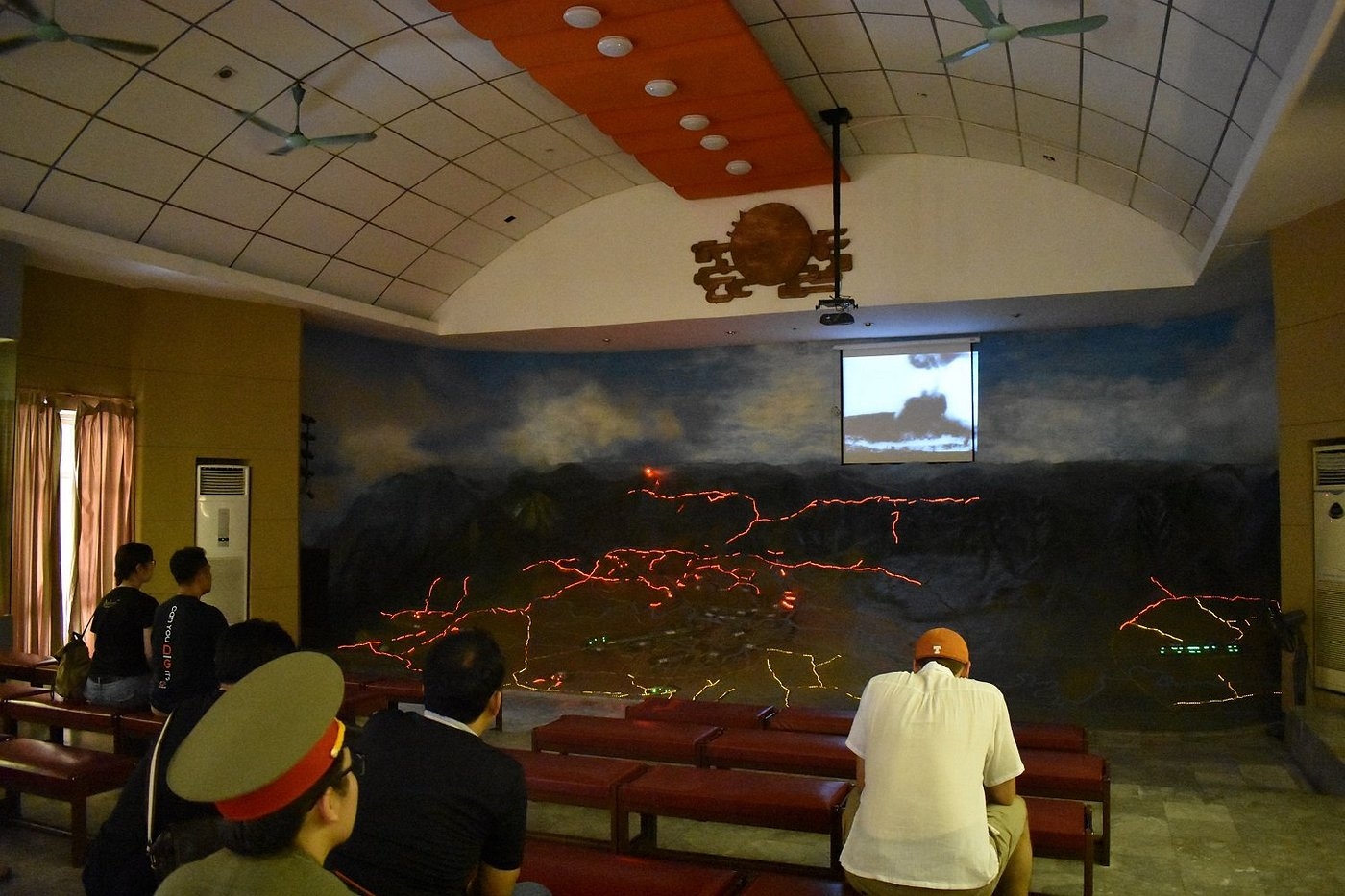
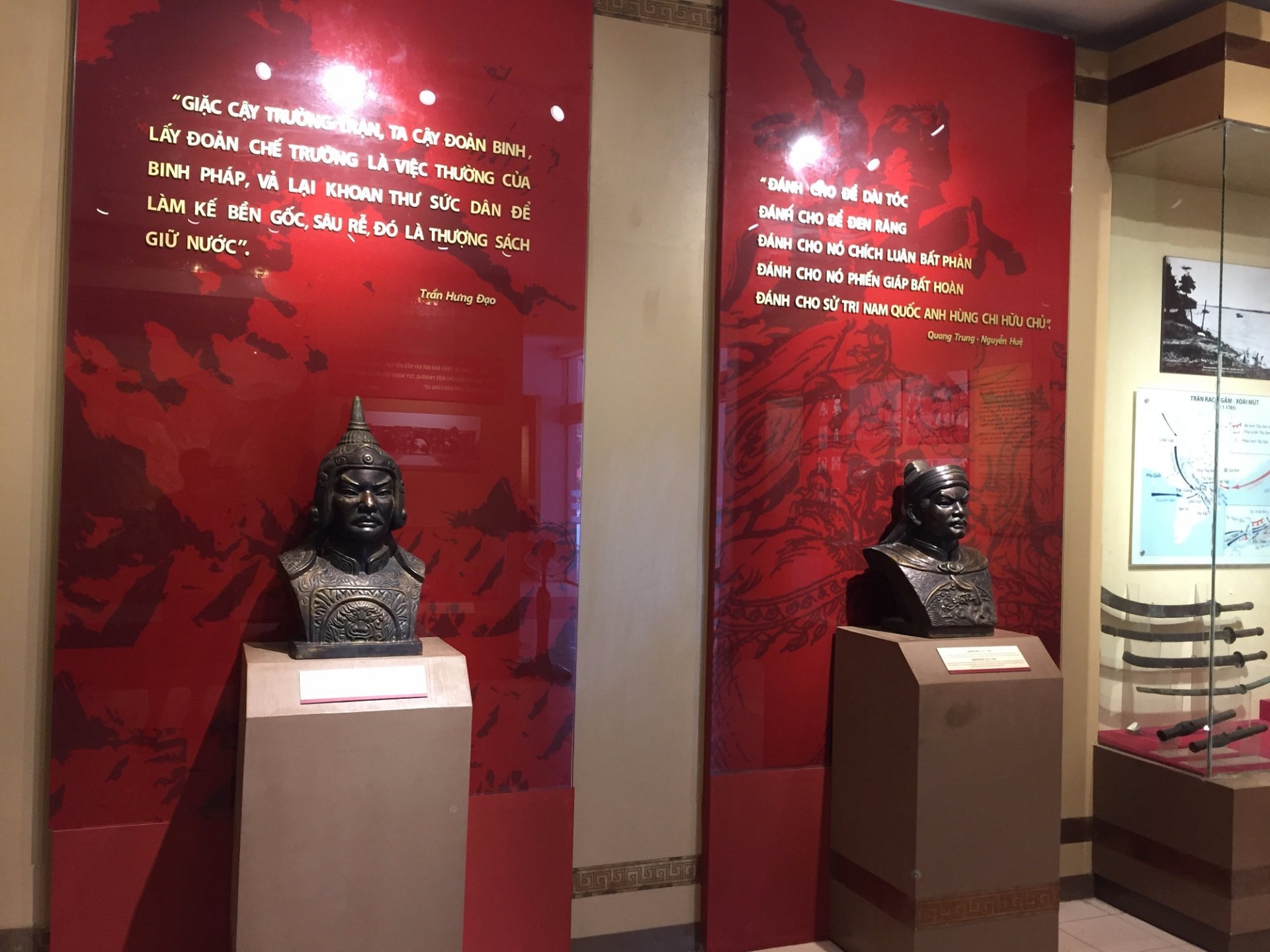
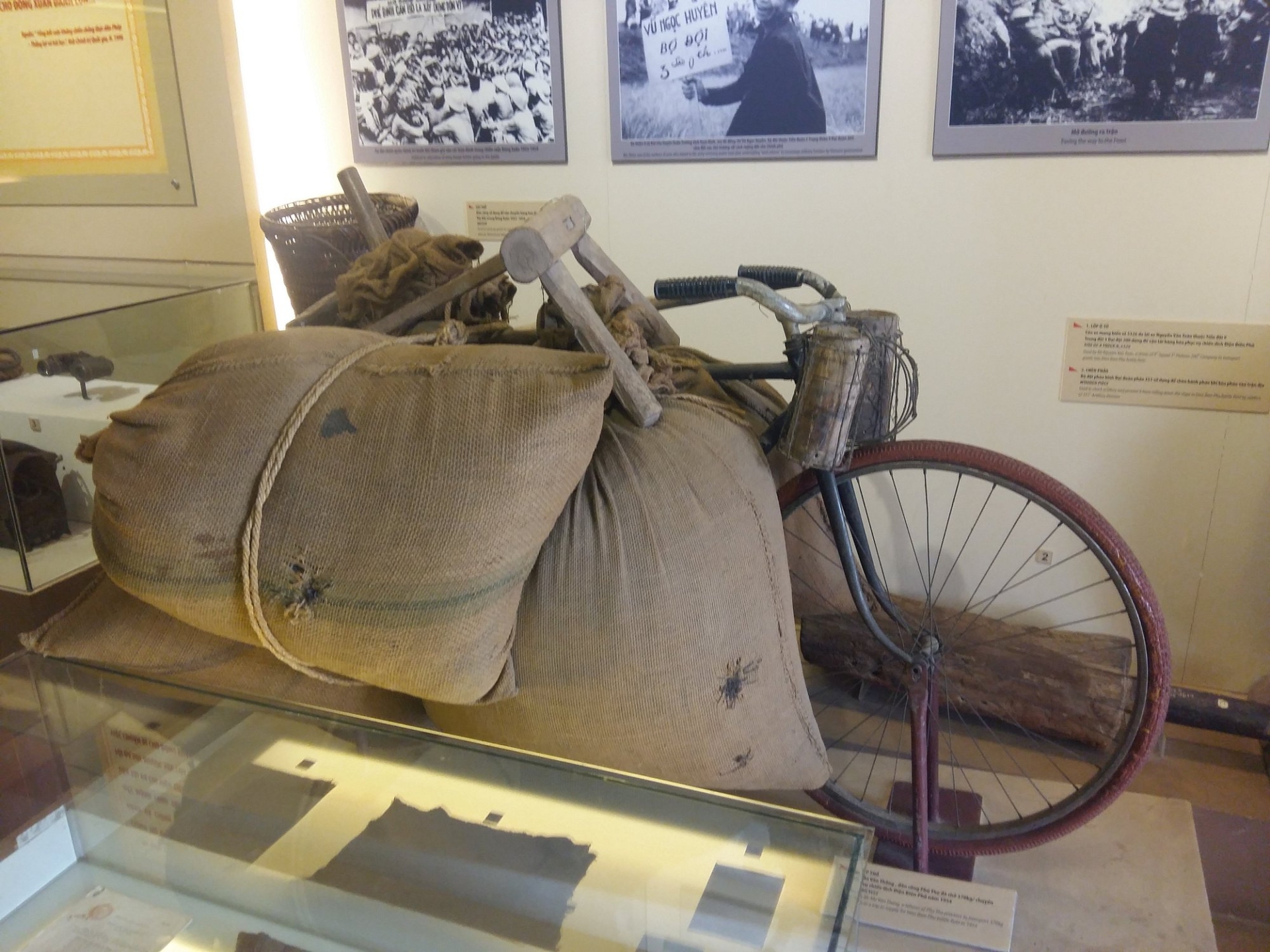
You might be surprised to know that this’s not just a typical “stand back and observe” kind of museum. Here, everything is super innovative. From 3d compass models, large interactive touchscreens to explore battles and maps, to historical photos, voice guides or even QR codes that can help you with more details of this amazing museum!
1. Six Themed Exhibition Zones
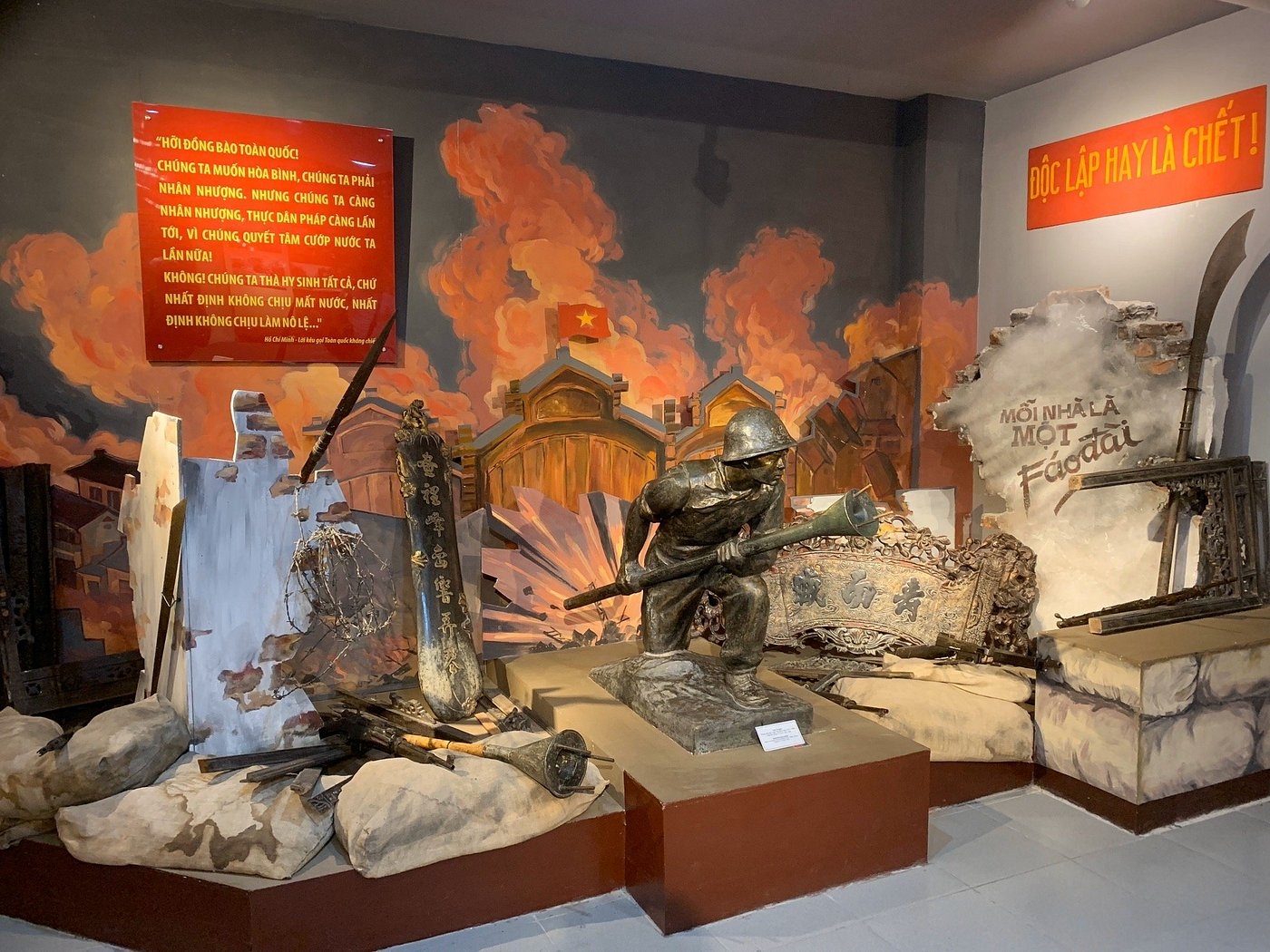
One of the things I enjoyed most at Vietnam Military History Museum is the entire place is strategically organized into 6 chronological themes, making it effortless to follow Vietnam’s military journey from ancient times to the contemporary era. Each zone just likes a chapter of an epic historic tale:
- Buổi đầu dựng nước và giữ nước (The early days of nation-building and defense)
- Bảo vệ độc lập dân tộc từ năm 939 đến năm 1858 (Vietnam’s long fight to preserve independence across centuries)
- Chống thực dân Pháp, giành độc lập dân tộc từ 1858–1945 (The resistance against French colonialism)
- Cuộc kháng chiến chống Pháp 1945–1954 (The First Indochina War and the historic victory at Điện Biên Phủ)
- Cuộc kháng chiến chống Mỹ 1954–1975 (The Vietnam War era, from North–South division to reunification)
- Xây dựng và bảo vệ đất nước sau 1975 đến nay (National reconstruction and modern defense efforts)
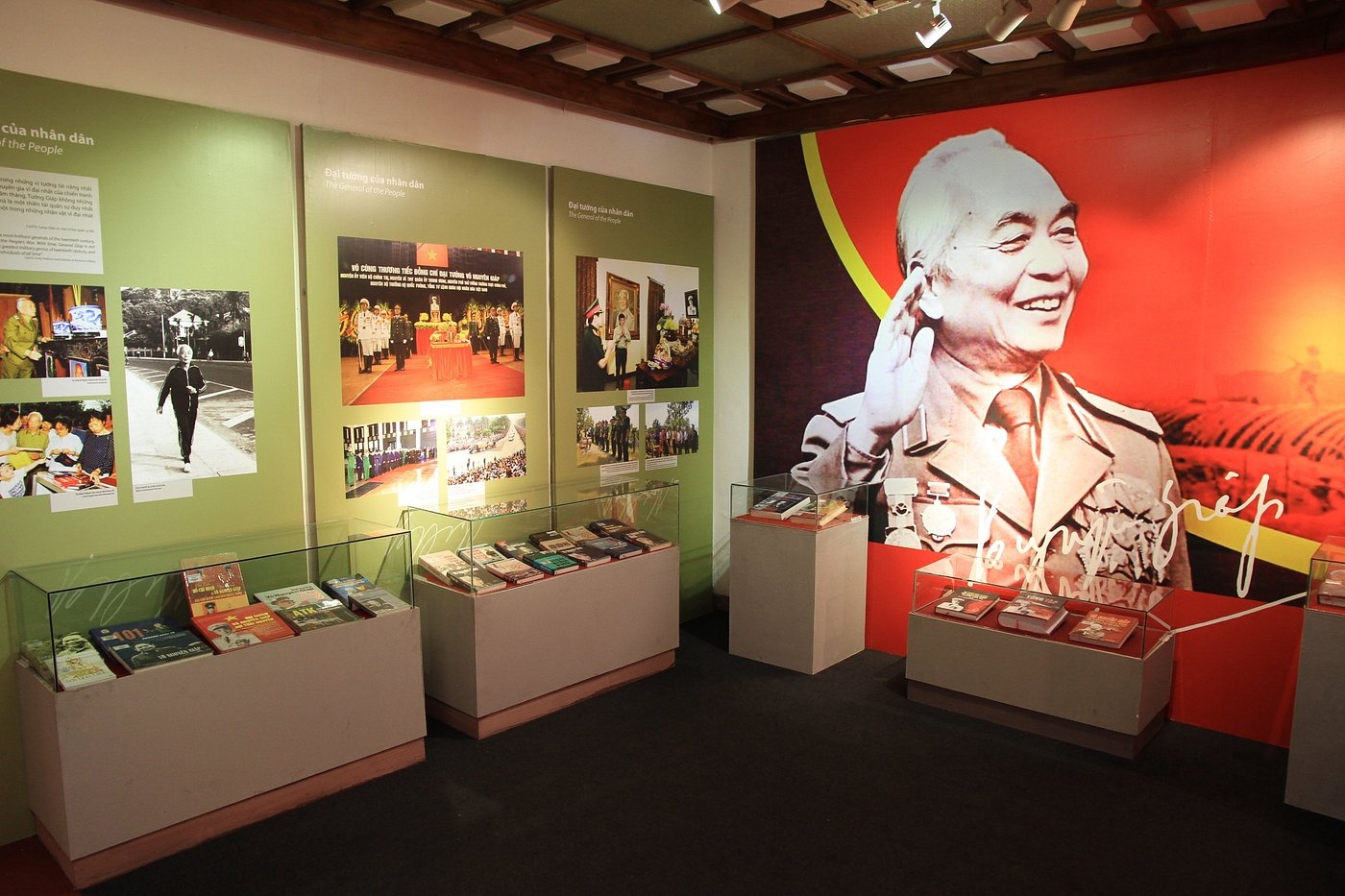
2. Four National Treasures You Absolutely Shouldn’t Miss
Among the thousands of artefacts, the Vietnam Military History Museum is also home to 4 officially recognised national treasures, and seeing them up close is honestly breathtaking.
1. MiG-21 No. 4324
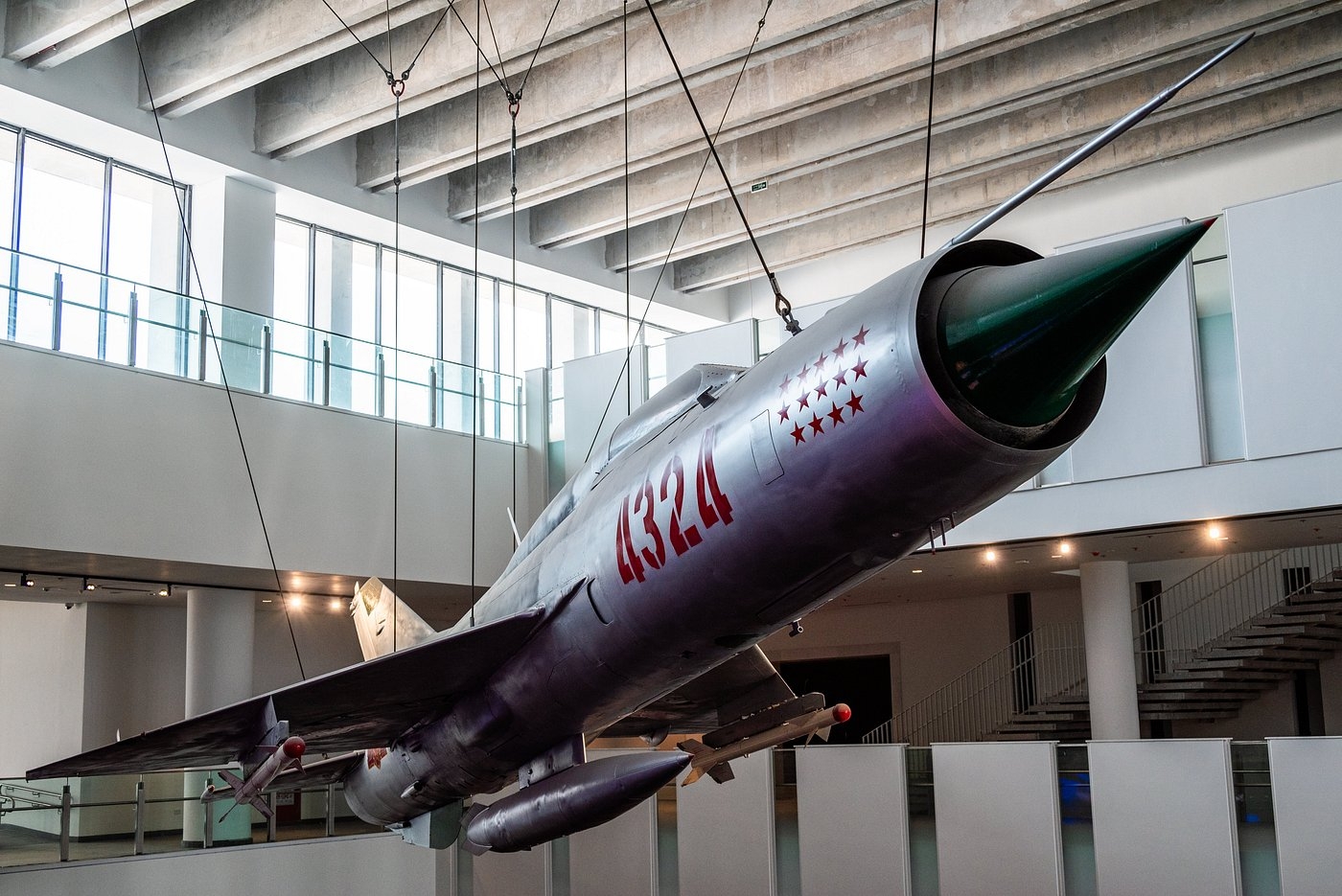
This one is impossible to miss. Hung dramatically in the main lobby, the aircraft looks like it’s taking off right above your head. The upward angle, the lighting, the scale; it all creates the illusion that it’s still defending Vietnam’s skies. It’s no wonder this aircraft is considered a national treasure.
2. MiG-21 No. 5121
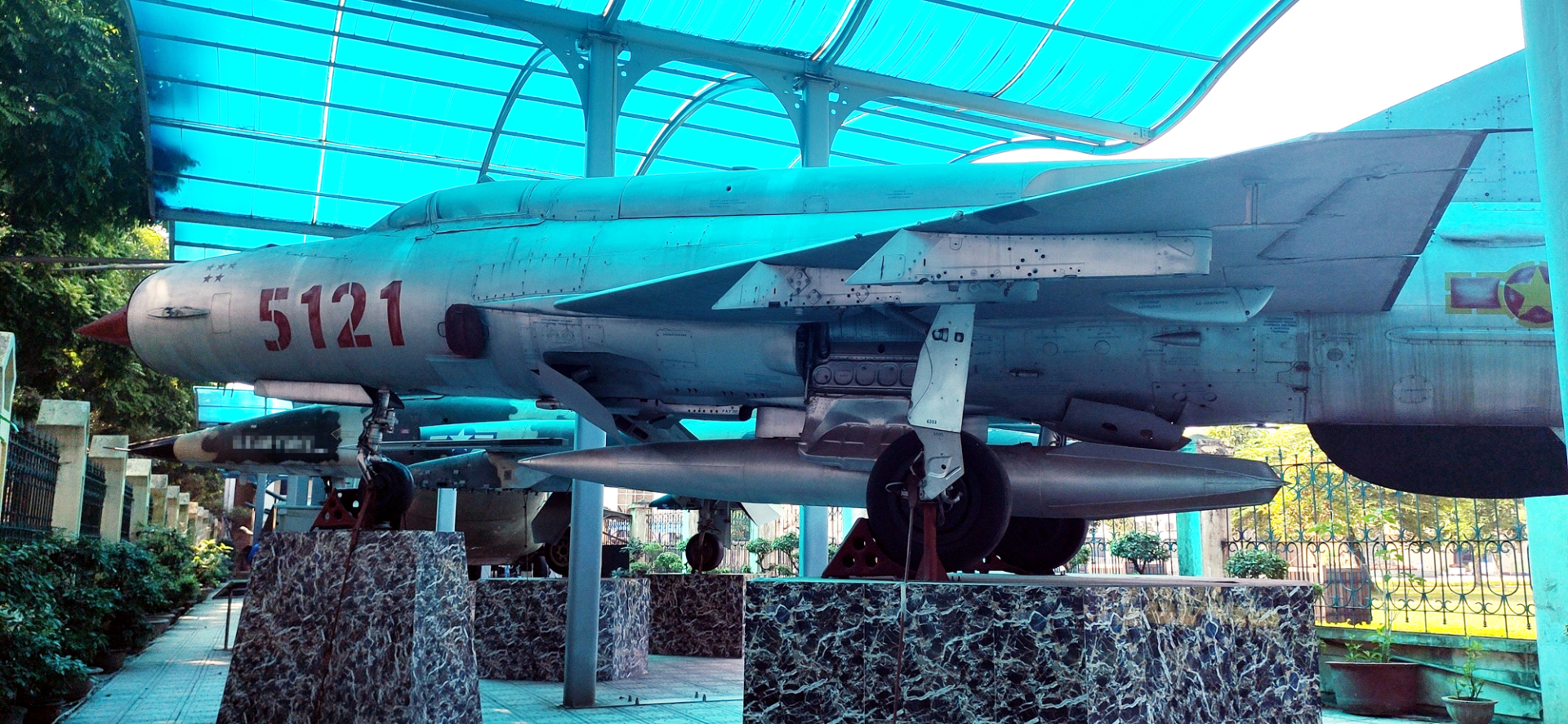
Another legendary fighter jet that played a crucial role during the war. The closer you get, the more you notice its battle-worn details such as scratches, panels, markings, and each part carrying its own story.
3. The “Determination to Fight” Campaign Map
This is the actual command map used during Hồ Chí Minh’s campaign. Standing in front of it, imagining the strategies and decisions that changed the country’s destiny, gave me goosebumps.
4. T-54B Tank No. 843
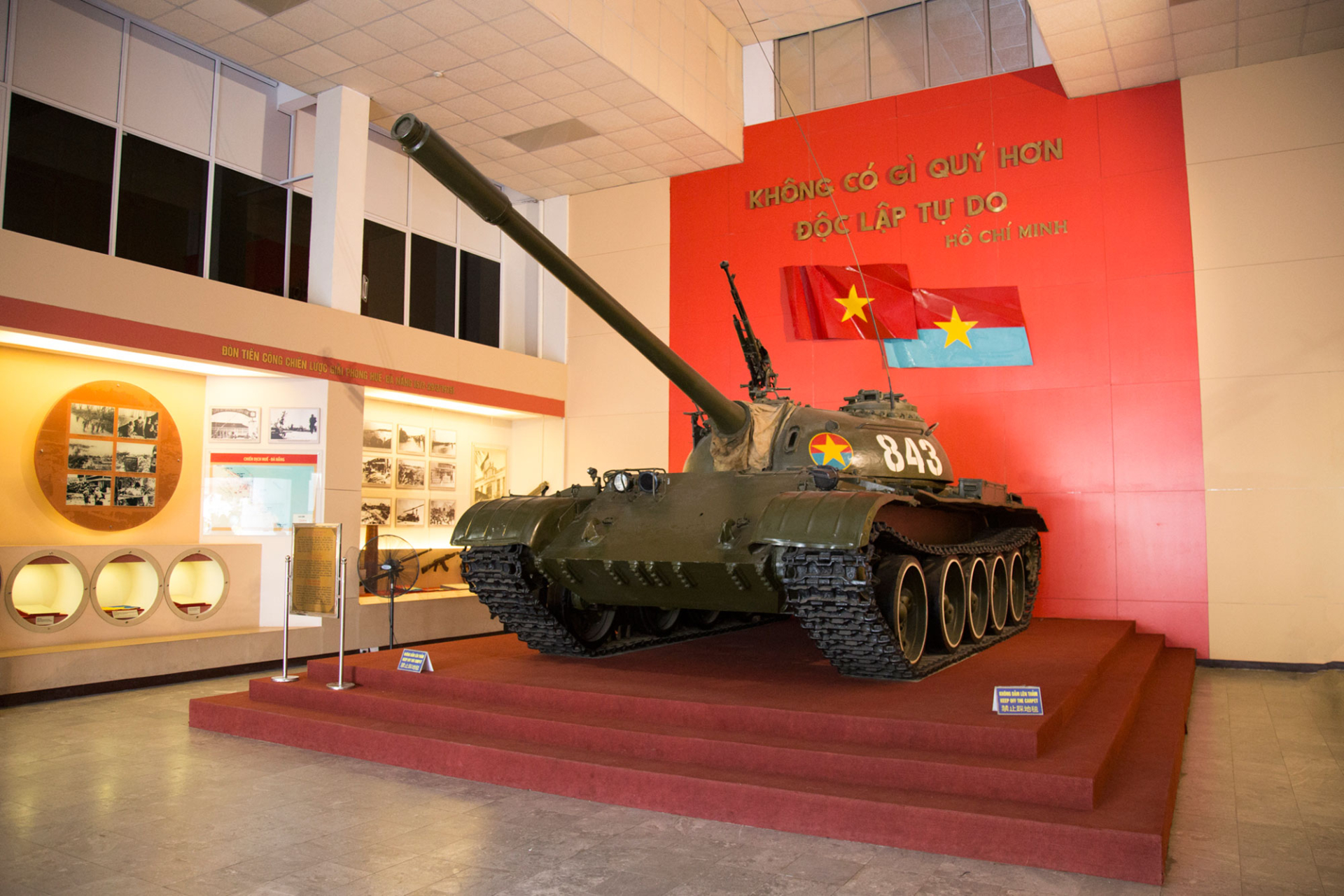
T-54B Tank No. 843 is one of the most iconic symbols of the Liberation of Saigon. On the morning of 30 April 1975, this tank (belonging to the 203rd Tank Brigade) advanced toward the Independence Palace. Today, Tank No. 843 is preserved and displayed at the Vietnam Military History Museum as a powerful reminder of the country’s reunification.
4 Top Experiences at the Vietnam Military History Museum
1. Explore the Outdoor Aircraft & Tank Zone
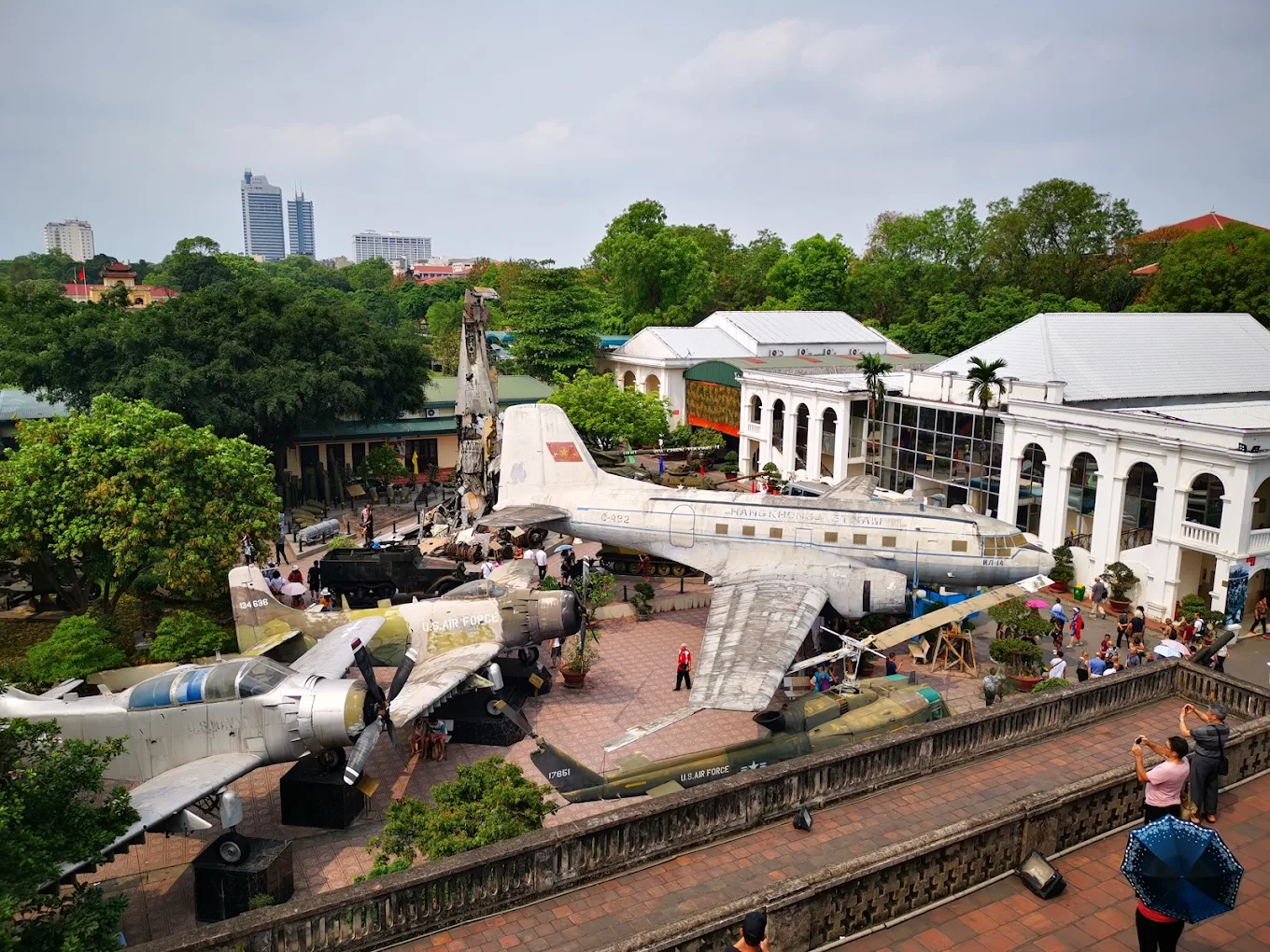
The first thing that quickly grabbed my attention at the Vietnam Military History Museum was the massive open-air display filled with real aircraft, tanks and artillery. Personally, walking among the MiG fighters towering above, the T-54 tanks sitting heavily on the concrete and anti-aircraft guns angled toward the sky as if still on duty.
I found myself stopping at each display, trying to imagine the noise and the stories behind them. It’s definitely a one-of-a-kind experience!
2. Discover Vietnam’s Military Evolution Through Galleries
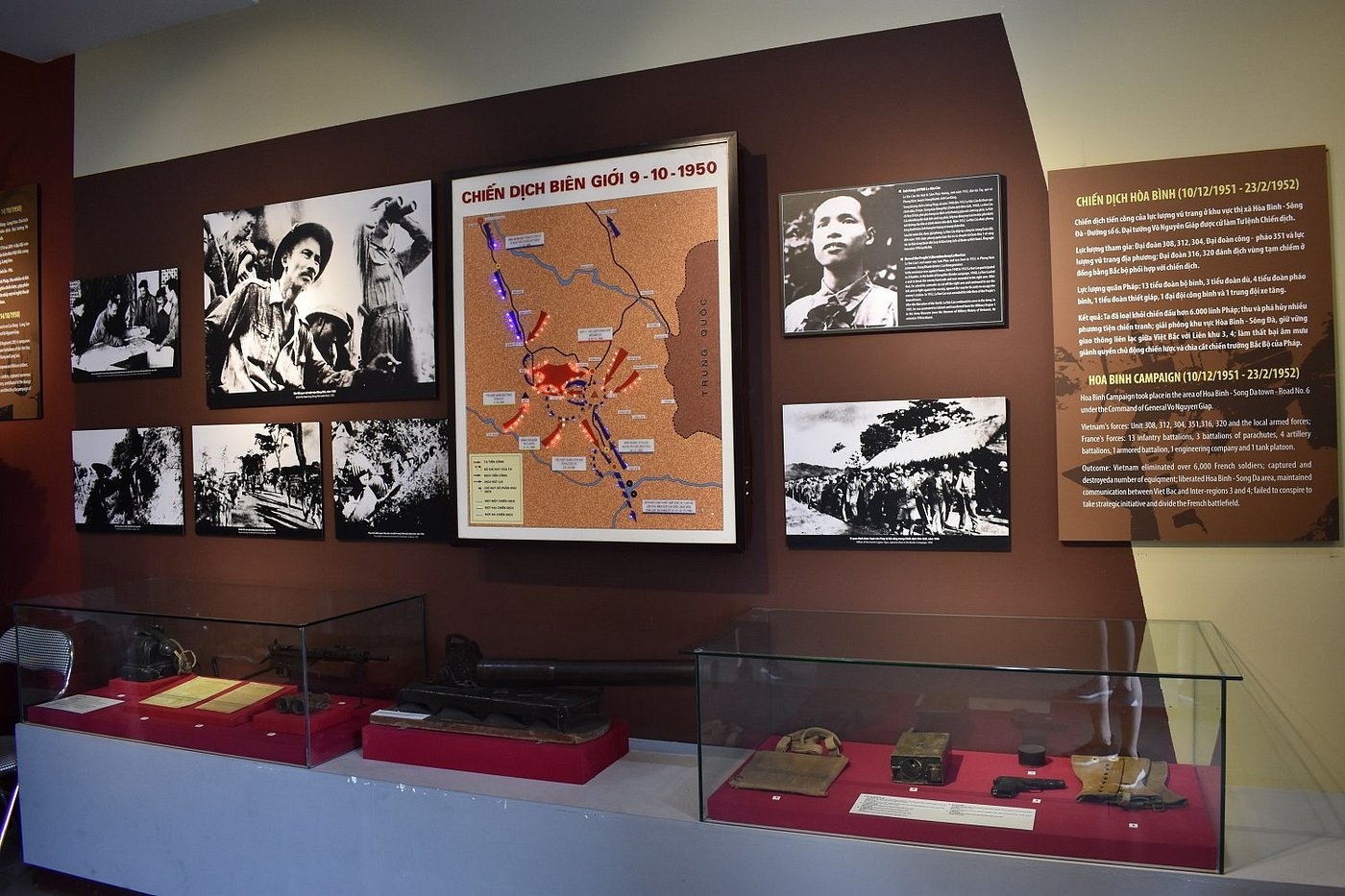
Inside the museum, each gallery guides you through a different chapter of Vietnam’s history, from ancient dynasties to the modern era. I loved how the exhibition layout made it so easy to follow the storyline since every room shifts in eras and atmosphere depending on the period it represents.
One moment, you’re looking at bronze weapons used a thousand years ago, and the next, you’re standing in front of detailed maps and documents from the anti-colonial resistance. For me, wandering through these galleries felt like watching history unfold step by step.
3. Take photos at the “Wreckage Monument” and Flag Tower
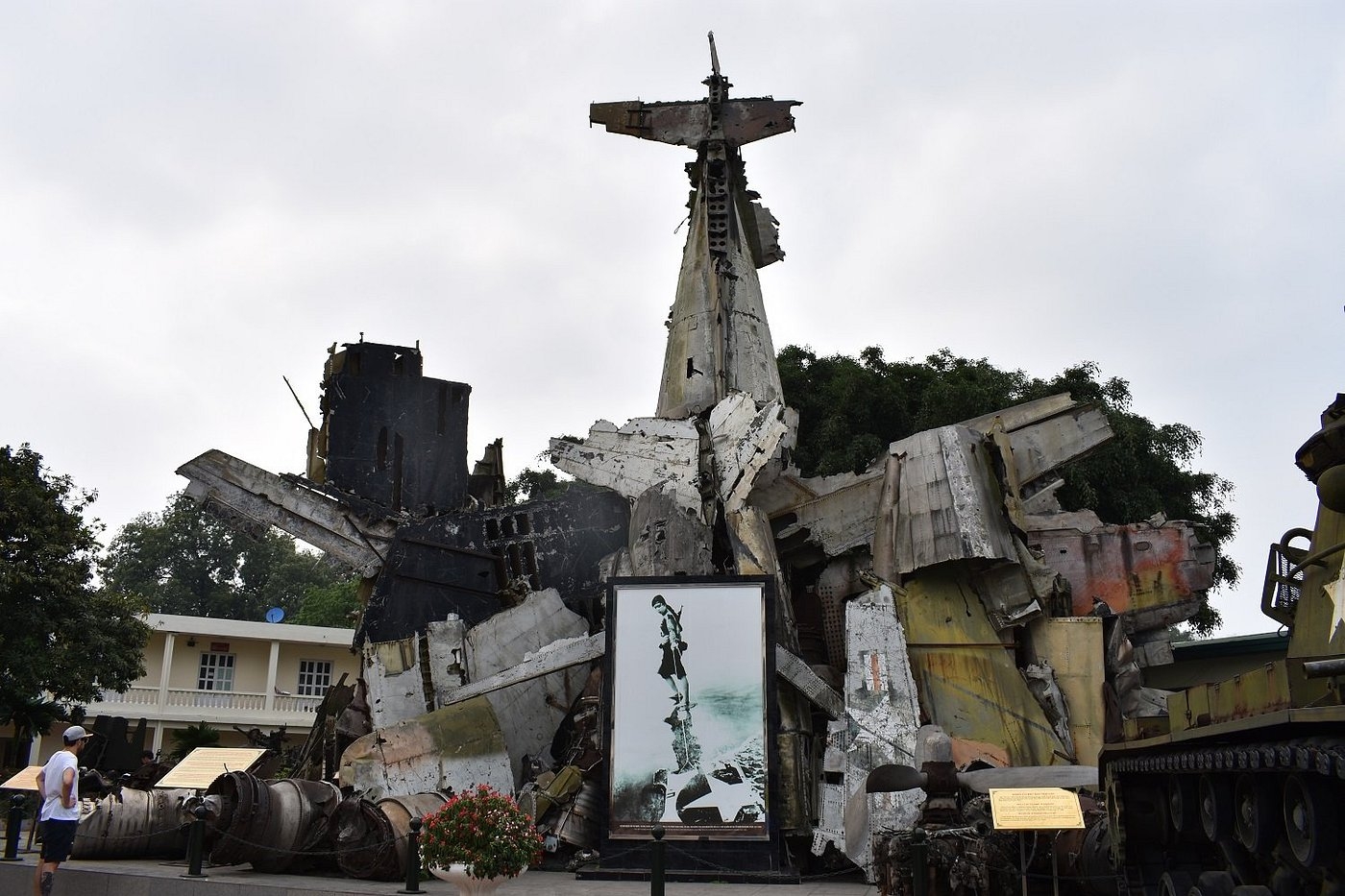
If you’re a big fan of historic photography, don’t miss the opportunity to snap the wreckage sculpture outside! It’s a towering assemblage of drowned aircrafts, shaped into a dramatic structure that represents resilience and remembrance.
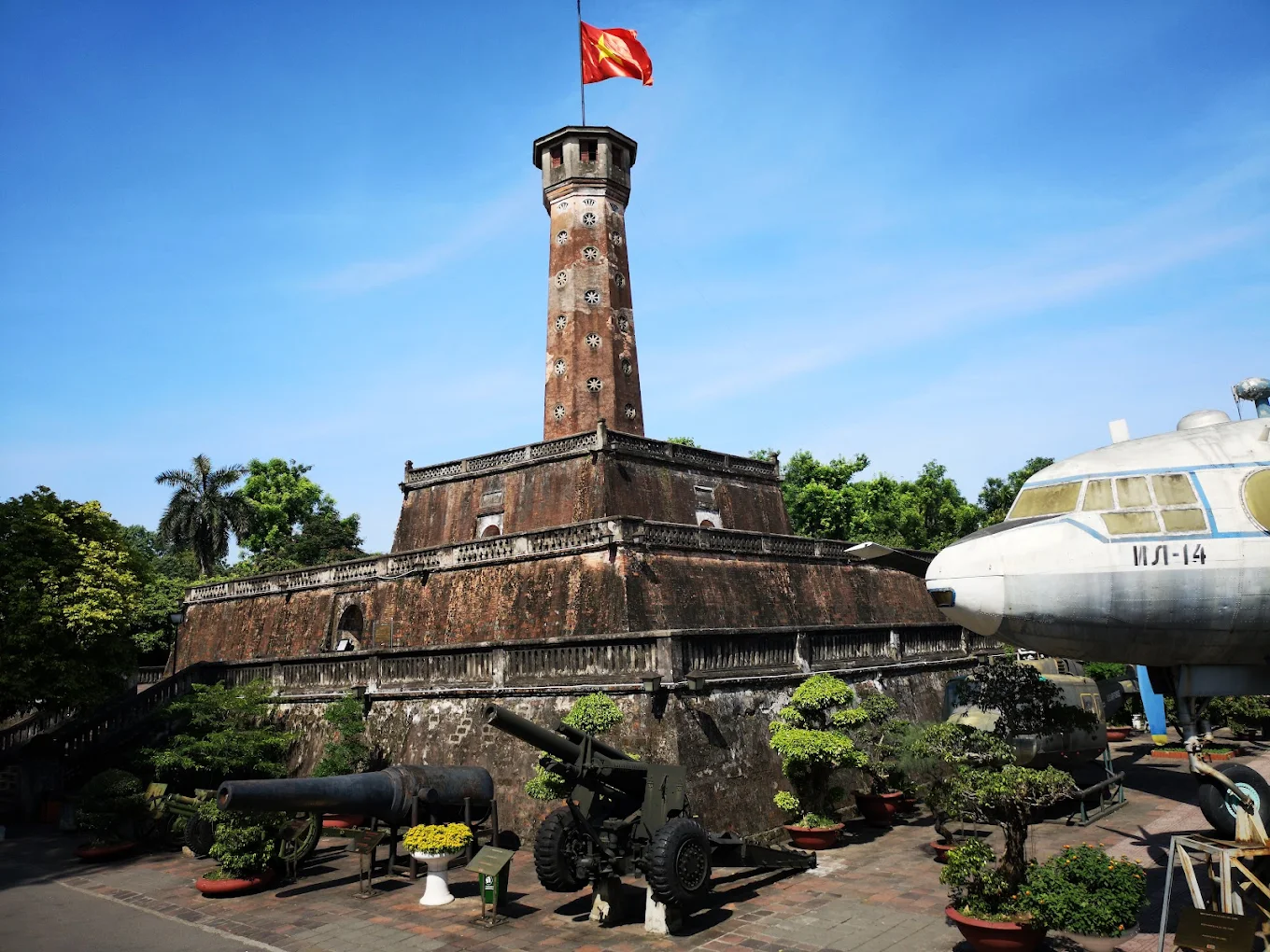
Right beside this sculpture stands the Hanoi Flag Tower, which is one of the oldest surviving structures in Hanoi. The contrast between the ancient brick tower and the modern museum creates a gorgeous visual frame, especially if you’re visiting near golden hour.
4. Read Personal Stories & Soldier Biographies
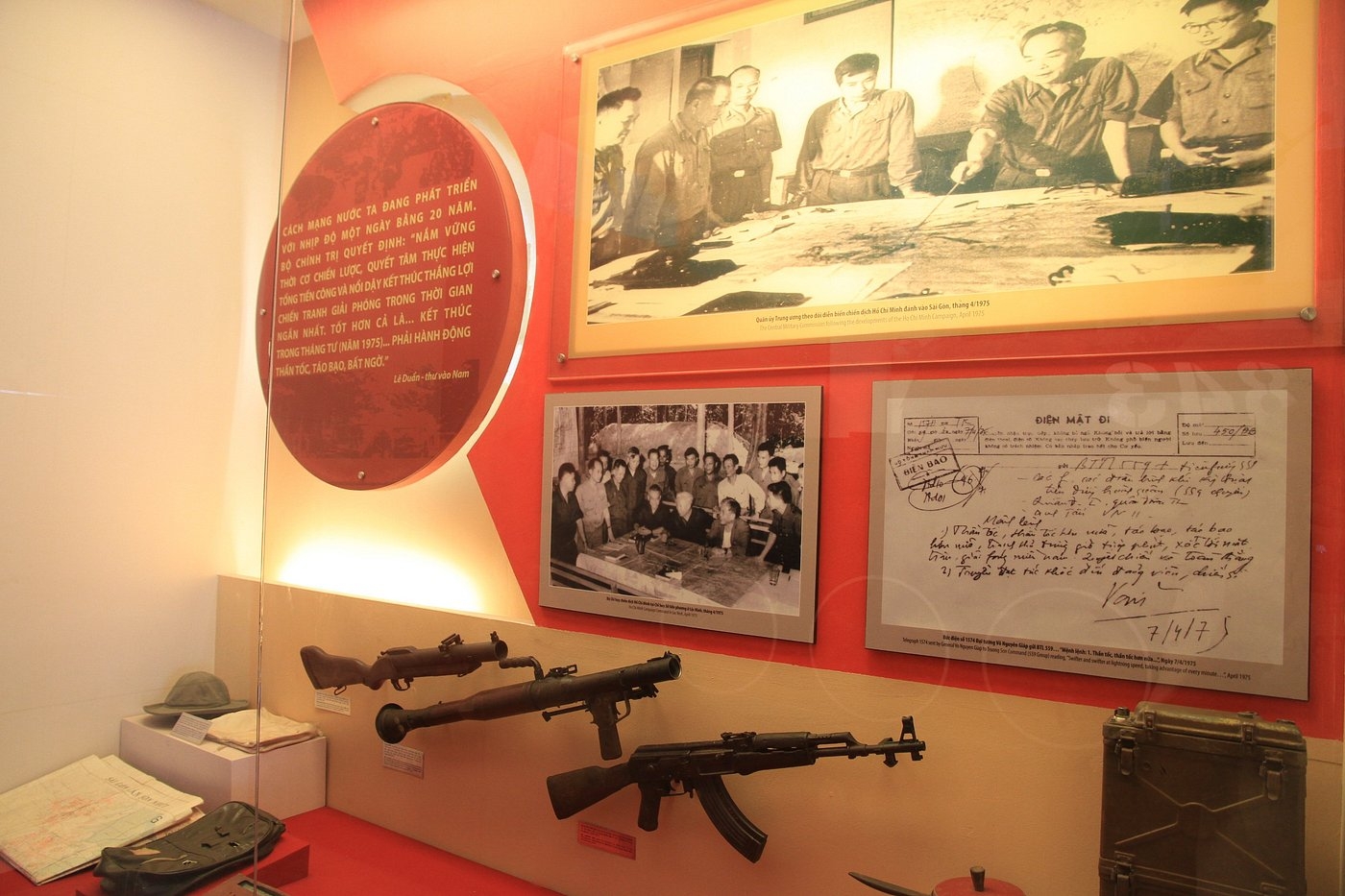
Last but not least, one of the most emotional parts of my visit was reading the personal letters and viewing the biographies of soldiers. These small items are displayed thoughtfully, with detailed captions that tell you who they were, what they fought for, and sometimes even the last words they wrote to their families.
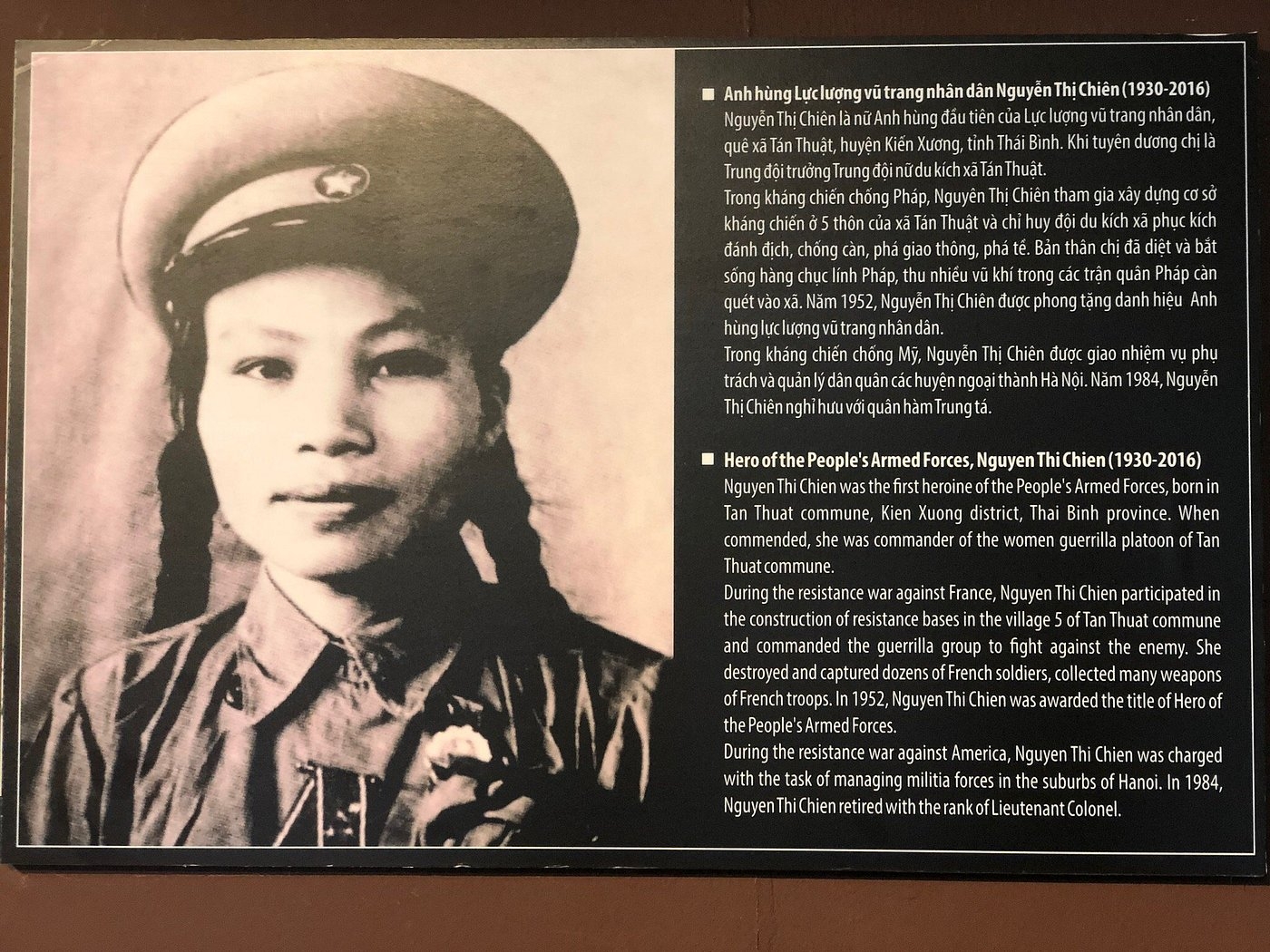
The human side of history is what truly stayed with me. In a place filled with tanks and fighter jets, it was the tiny handwritten notes and faded fabric that reminded me of the real people behind every battle.
6 Wonderful Insider Tips for Visiting the Museum
For the best experience at the museum, here are the six tricks I wish I had known earlier:
1. Avoid Mondays and Fridays
The museum is closed on these two days, so plan your itinerary accordingly!
2. Visit in the morning for the best lighting
If you want great photos of the aircraft yard, wreckage sculpture, and Flag Tower, morning light is softer and shadows are less harsh.
3. Wear comfortable shoes and bring water
I recommend wearing comfy, friendly-walking sneakers, as you’ll be walking across several floors and spacious galleries (while a few indoor spaces are air-conditioned). Also, staying hydrated is ultimately necessary.
4. Take your time in the main lobby
The MiG-21 No. 4324 (a national treasure) is suspended above, worth viewing from multiple angles and floors.
5. Combine your visit with other Ba Đình attractions
The Ba Đình Square, One Pillar Pagoda, and Lenin Park are all within a 5–7 minute walk, making it perfect for a half-day itinerary.
6. Photography is allowed outdoors, but be mindful indoors
Some galleries may restrict the use of flash or photography around sensitive documents.
How to Get to the Vietnam Military History Museum
1. Walking
I found it super convenient to walk to the Vietnam Military History Museum if you’re from both the Ho Chi Minh Mausoleum and Ba Đình Square. If you’re already exploring Ba Đình, you can easily add the museum to your route.
2. By Taxi/Grab
Booking a Grab is the easiest option. It’s fast, inexpensive, and drops you right at the entrance. Just type “Vietnam Military History Museum” into the app, and you’re good to go. Most rides within central Hanoi cost no more than a cup of coffee!
3. By Bus
There are plenty of convenient routes that stop near the Vietnam Military History Museum, including 71B, 74, 87, 88, 107, 157, E05, E07, E09. These routes are very easy to get to the museum no matter where you’re coming from.
4. By Motorbike
There’s motorbike parking close to the museum entrance, so if you’re renting a bike for the day, this is a hassle-free stop. Just follow the signs or the parking attendants as they’ll usually wave you in the right direction.
How My Visit to the Museum Led Me to Jackfruit Adventure’s Hidden-Gems Tour!
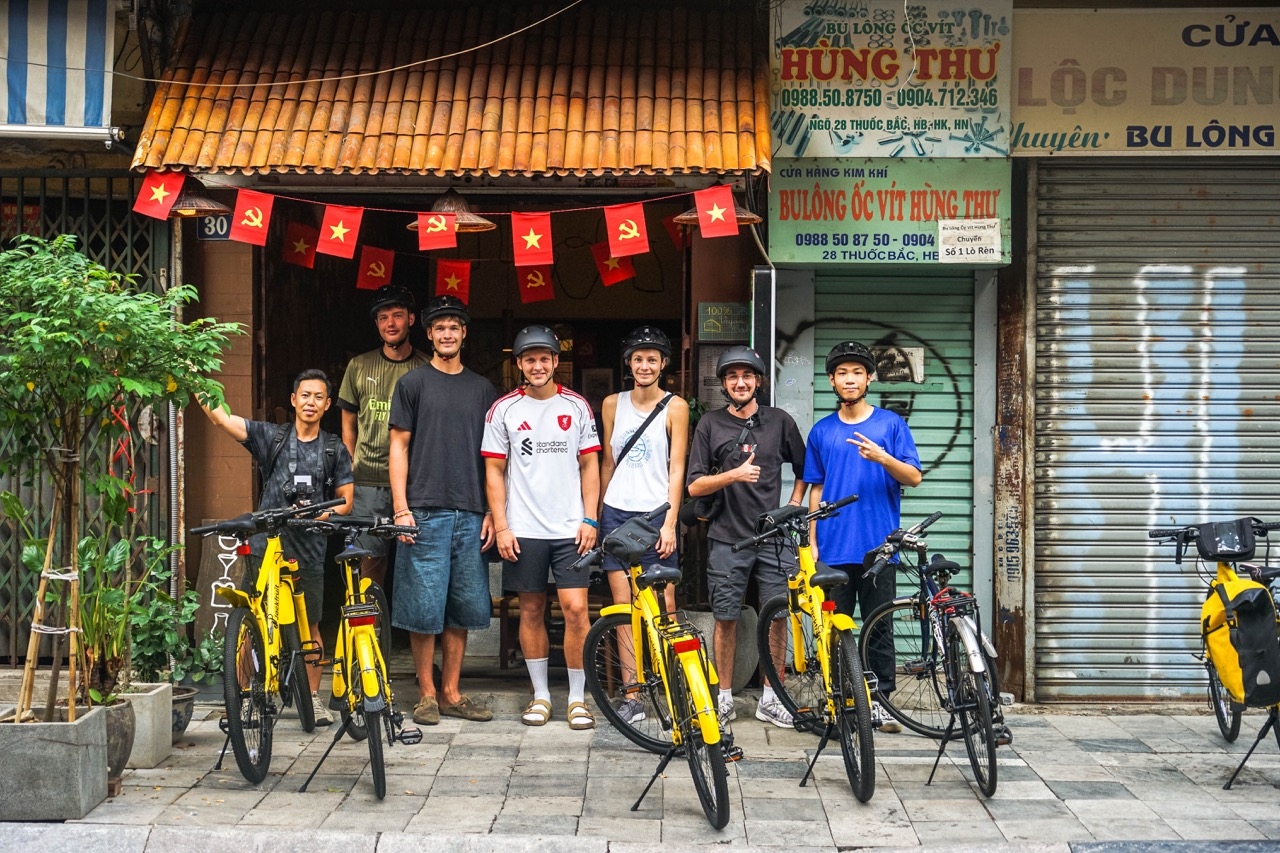
After spending a day exploring the Vietnam Military History Museum, I felt that Ba Đình District is only the beginning of Hanoi’s legends. Once you step outside iconic landmarks, Hanoi opens up into countless hidden corners that feel almost like little “treasure troves” waiting quietly for someone to notice them.
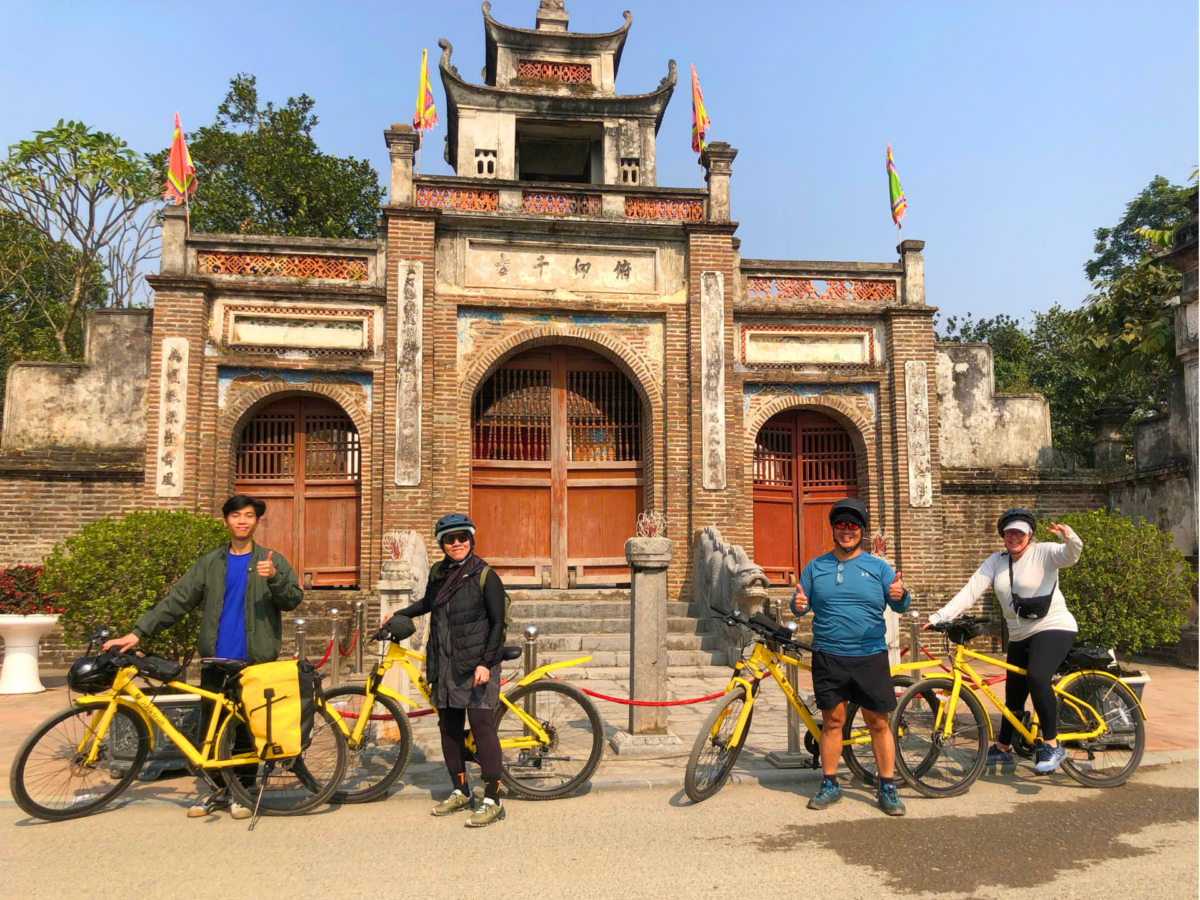
I wouldn’t have discovered many “local spots” on my own if I hadn’t joined the Hanoi Off The Beaten Path cycling tour with Jackfruit Adventure. It wasn’t a typical tourist ride at all but more like being guided through Hanoi’s secret backdrops; as we biked through forgotten wartime apartments, quiet alleys, old French villas or charming riverside paths.
I didn’t expect a cycling tour to broaden my perspective this much, but it truly did. If you love going beyond the usual attractions and want to see Hanoi from a different angle, this experience might surprise you the same way it surprised me!