

Table of Contents
The Hanoi Opera House is one of those places that instantly transports you through a mix of French grandeur, Vietnamese artistry, and a century of stories tucked behind its ivory façade. Right in the heart of the French Quarter, this landmark still pulses with life through operas, ballets, symphonies and cultural events. From surprising historical details to insider tips that most tourists miss, here’s everything you should know to make your visit unforgettable.
Where is the Hanoi Opera House & Best Time to Visit
1. Where Is the Hanoi Opera House?
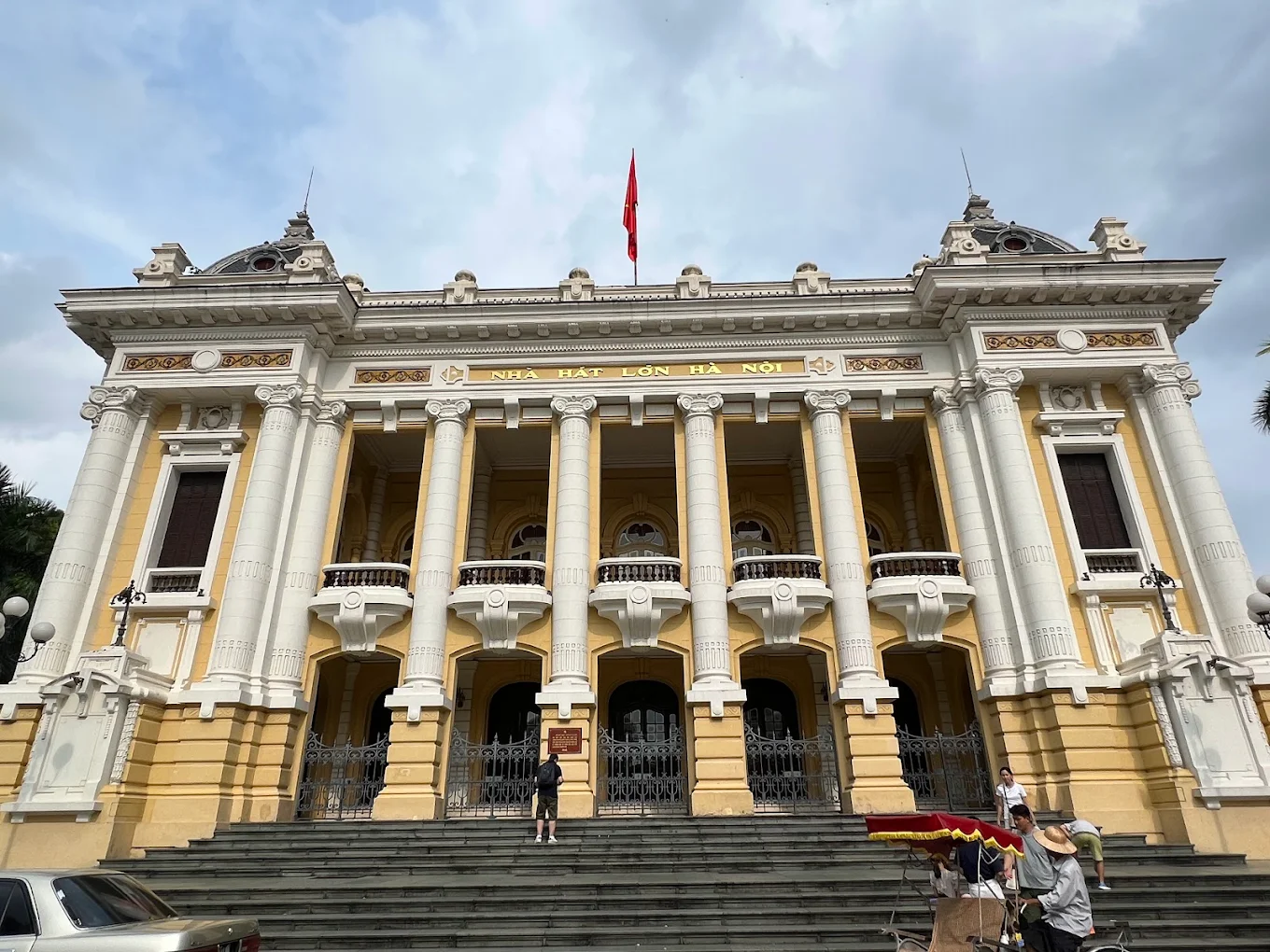
The Hanoi Opera House stands proudly in the heart of the French Quarter, its prime location placing it within walking distance of some of Hanoi’s charming landmarks, such as Hoàn Kiếm Lake or the Vietnam National Museum of History.
- Address: 1 Tràng Tiền, Phan Chu Trinh Ward, Hoàn Kiếm District
- Opening hours: 7:00 AM – 5:00 PM.
- Performances: evening (usually after 7 PM).
2. How to Get There & When to Go?
How to Get There
- By taxi or Grab: 5–10 minutes from the Old Quarter (around 20,000–40,000 VND).
- By cyclo or bicycle: If you’re in the Hanoi Old Quarter, you’ll find cyclo drivers around Hoàn Kiếm Lake. Just hop on for a scenic ride to reach the Hanoi Opera House.
- By foot: If you’re staying in the Old Quarter or near Hoàn Kiếm Lake, simply walk along Đinh Tiên Hoàng Street toward Tràng Tiền Plaza – the Opera House is just a safe, lively 10–15-minute walk from there.
Best Time to Visit
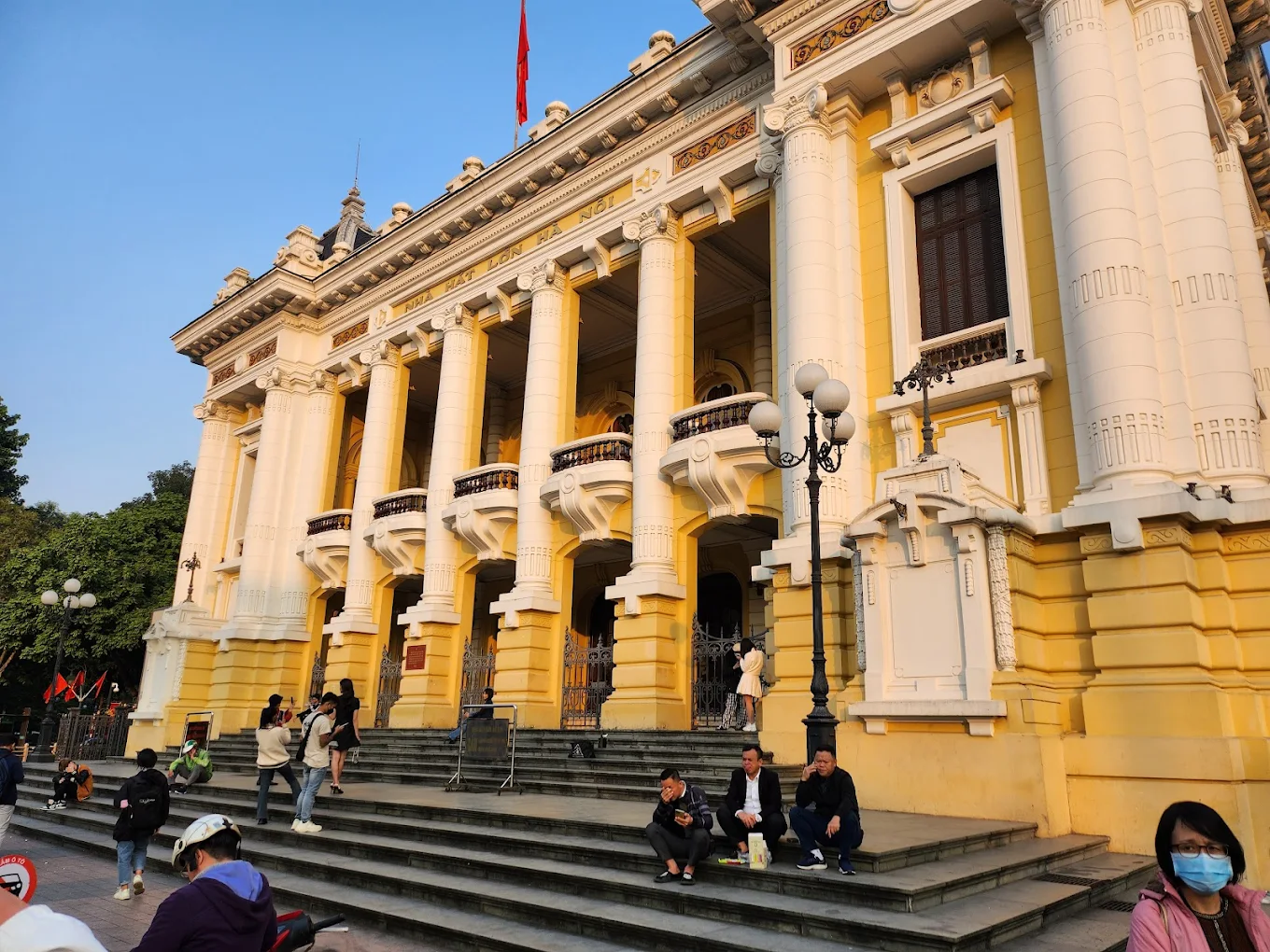
- Golden hour (4:30 – 6:00 PM): The façade glows in sunlight, ideal for photography.
- Evenings (after 7:00 PM): When performances begin and the Opera House glows beautifully at night.
A Last Chance to Experience Its Magic Before Restoration!
Before diving into its history, stunning architecture and world-class performances, there’s something that you should know: the Hanoi Opera House is about to begin a new chapter!
To celebrate its 115th anniversary, the Hanoi Opera House recently introduced a special immersive project titled “115 năm Nhà hát kể chuyện – Di sản cất lời bằng ánh sáng và công nghệ” (“115 Years of the Opera House – Heritage Speaks Through Light and Technology”). This extraordinary show combines light, sound, and digital art to honour its century-long journey as Hanoi’s cultural icon.
- Show period: November 22 – December 31, 2025
- Organised by: Hanoi Opera House & Hexogon Vietnam
According to the Ministry of Culture, this project will be the Opera House’s final major event before it temporarily closes for a large-scale restoration, which is expected to last approximately two years. The renovation aims to preserve its historic French architecture while modernising its facilities for future generations.
If you’re planning to visit Hanoi soon, now is truly the perfect time to experience the Hanoi Opera House before it transforms!
The Story Behind Hanoi’s Iconic Opera House
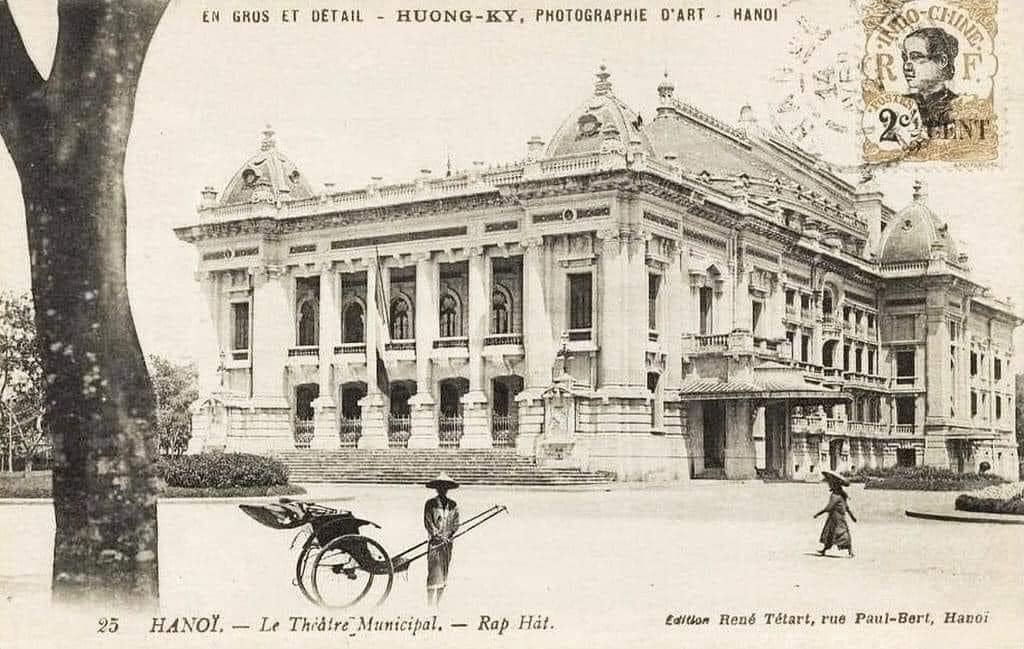
Standing proudly at the heart of Hanoi, the Hanoi Opera House is far more than an architectural gem; it’s a living chronicle of Vietnam’s journey through many years. Built between 1901 and 1911 by the two French architects Harlay and Broyer, the building was inspired by the legendary Palais Garnier in Paris. It’s hard not to imagine the early 1900s here, when the French and the Opera House ruled Hanoi came alive with glamorous nights, elegant gowns, European operas and classical performances reserved for the elite and the city’s most privileged few.
Yet, beyond its ornate façade of Corinthian columns and grand balconies, this theatre would soon witness a different kind of drama – not of music or dance, but of a nation’s revolution!
How the Hanoi Opera House Was Built and Evolved Through Time
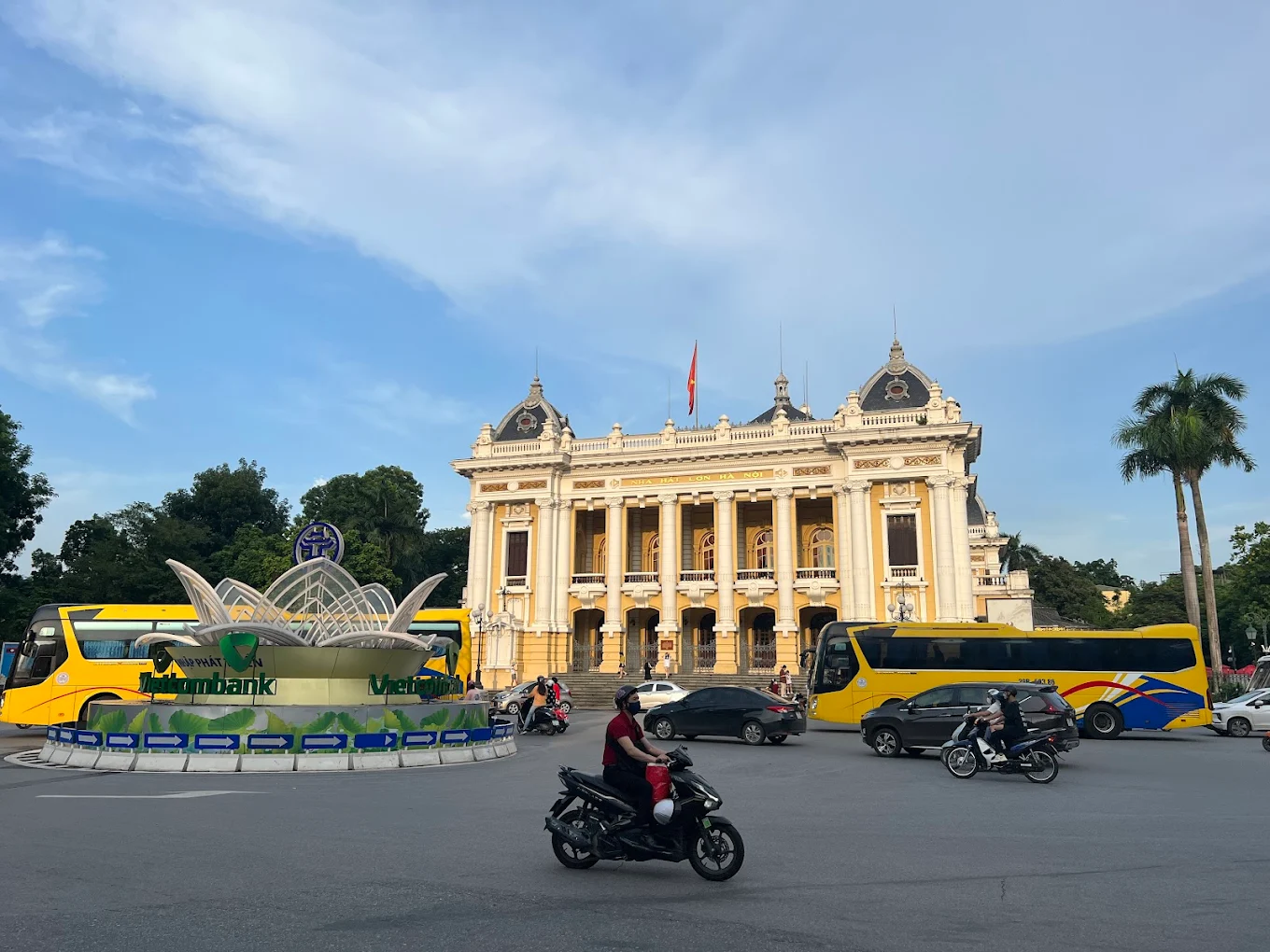
1899: The Dream Begins
In 1899, Hanoi’s city council approved the construction of a grand opera house on reclaimed marshland in Thạch Tân and Tây Luông villages. Two French architects Harley and Broyer took charge, designing a structure with a blend of French neoclassical elegance and tropical charm, laying the foundation for one of Southeast Asia’s most iconic colonial landmarks.
1901–1911: Construction of a Colonial Jewel
Construction began on June 7, 1901, led by Harlay and engineer Travary. Inspired by Greek Corinthian architecture and the Paris Opera, the building rose with grand staircases, velvet-lined halls, and 870 seats. Soon, Hanoi Opera House became the cultural heart of French Indochina, where operas and concerts entertained the colonial elite.
1945–1946: A Stage for Revolution
The Hanoi Opera House became a witness to Vietnam’s most important historical events:
- August 17, 1945: The Việt Minh held a historic rally for independence, followed weeks later by the Liberation Army’s arrival.
- September 16, 1945: The square hosted the “Golden Week” rally, where citizens donated gold and valuables to support the new government.
- October 1945: The Southern Resistance Day was held at the Opera House Square to unite the nation in the fight for freedom.
- March 5, 1946: The first National Assembly of the Democratic Republic of Vietnam convened at the Opera House.
- September 2, 1946: The Opera House welcomed President Hồ Chí Minh, who attended the meeting marking one year since the republic’s founding.
- October 28, 1946: The Second National Assembly approved Vietnam’s first constitution, turning the Opera House into a symbol of independence and governance.
I could almost feel history breathing through the walls – from a colonial theatre to a revolutionary landmark, the Hanoi Opera House transformed into the stage where Vietnam’s independence story was written.
1994–1997: Restoration and Revival
After decades of wear, a government-approved restoration began in 1994 and was completed in 1997. The Hanoi Opera House’s golden details, chandeliers, and crimson velvet were meticulously restored, now enhanced with modern lighting and sound systems that revived its former grandeur.
Present Day: The Beating Heart of Hanoi’s Culture
Today, the Hanoi Opera House stands as both a heritage site and a living art form, hosting numerous Vietnamese and international concerts that bridge the elegance of the past with the vibrancy of modern Hanoi.
Journey Through the Timeless Architecture of Hanoi Opera House
Exterior: The Grandeur That Welcomes You
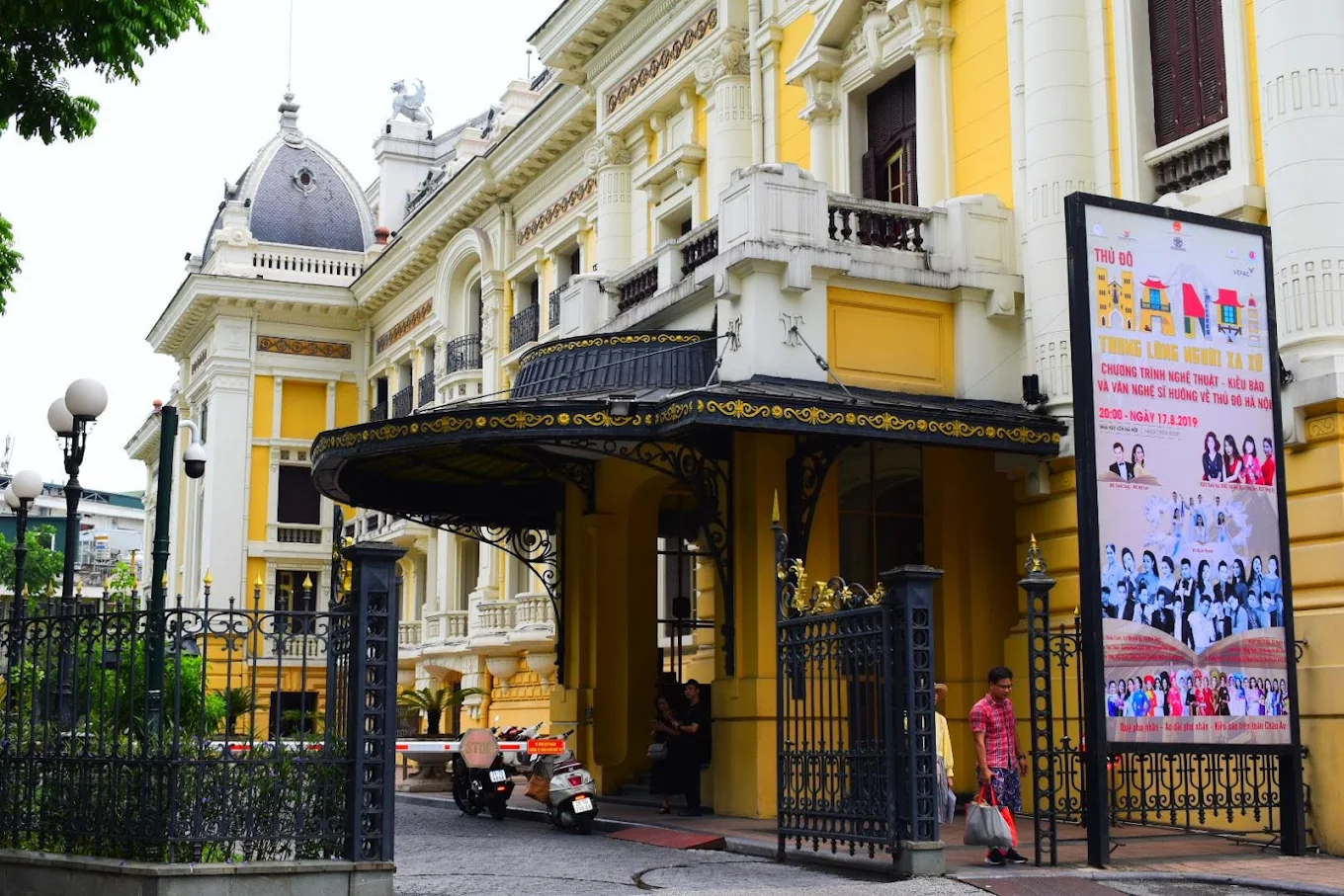
The Hanoi Opera House immediately caught my attention with its yellow-and-white neoclassical façade, glowing softly under the sun. I couldn’t help but admire the Corinthian columns, the arched windows, and the intricate floral details that flawlessly capture the charm of the 19th-century Parisian architecture.
Standing at the foot of its broad front staircase, facing August Revolution Square (Quảng Trường Cách Mạng Tháng Tám), I understood why so many visitors come here during golden hour to snap some photos! The warm light wraps around the Opera House like a gentle spotlight, bringing every column and carving to life.
Interior: Where Elegance Meets Acoustics
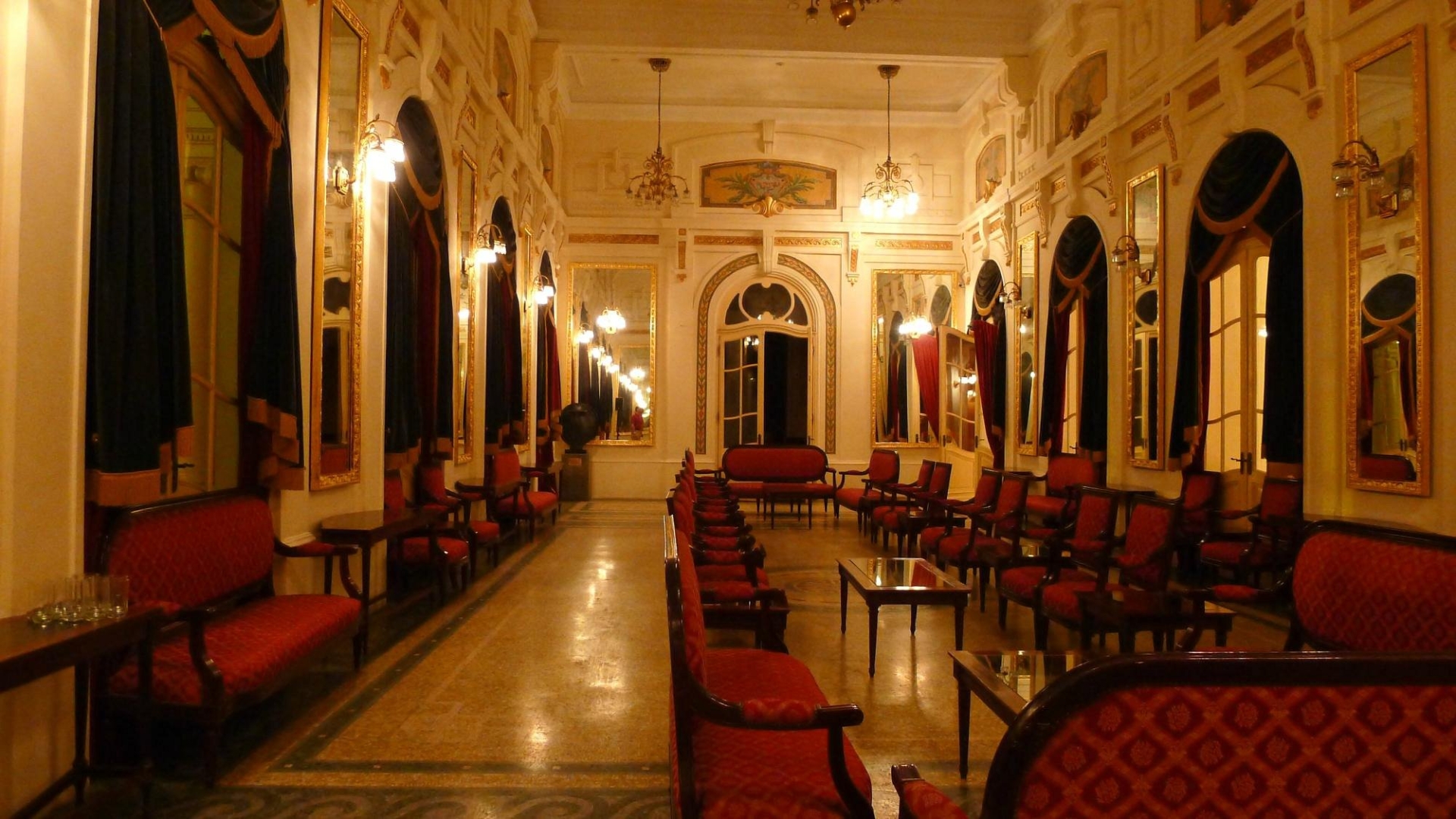
As I step inside, the air seems to change completely! Entering here, you’ll be surrounded by plush red velvet seats, polished marble floors, and domed ceilings adorned with frescoes, which evoke the era of European grandeur.
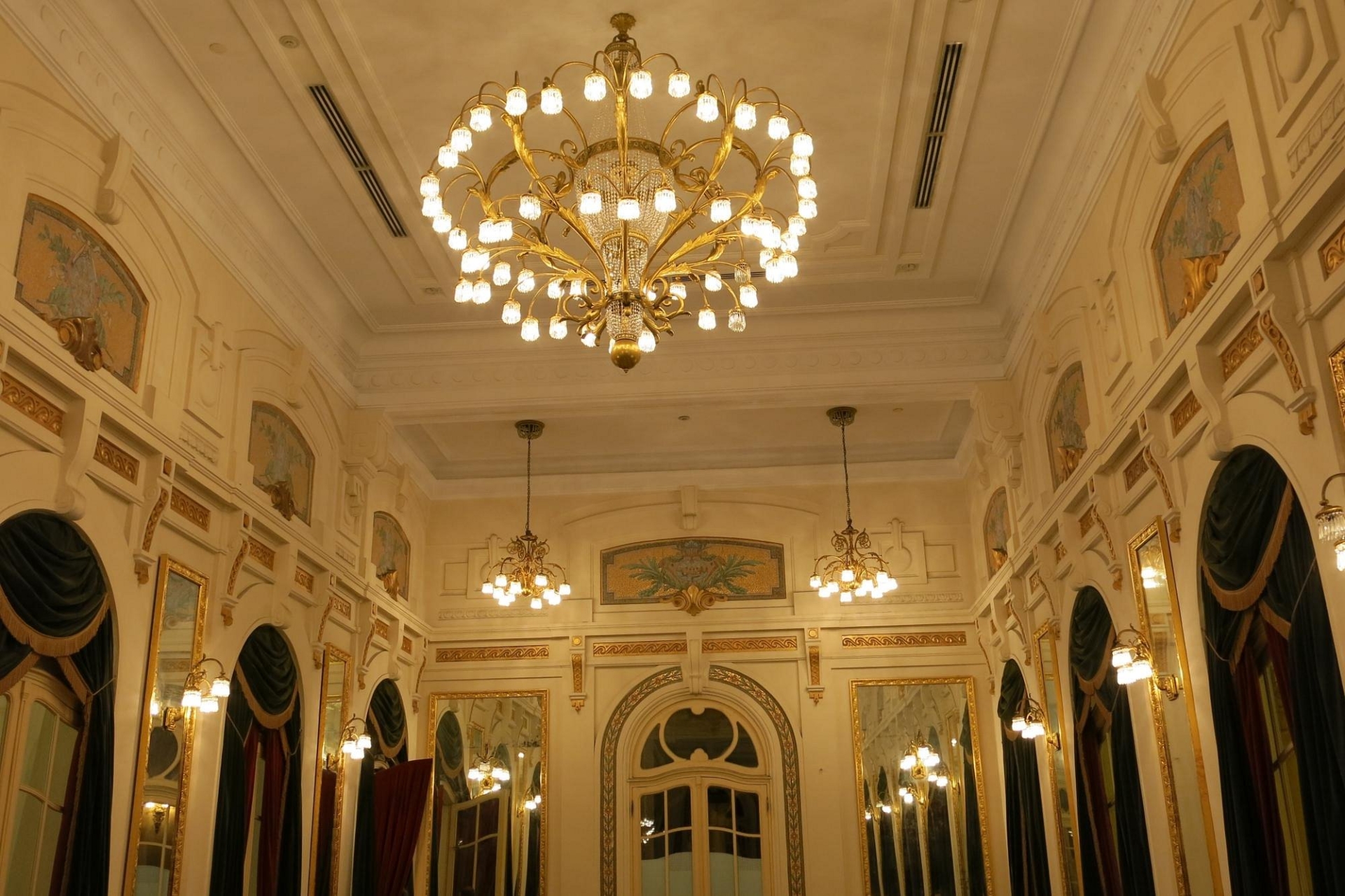
Looking up, you’ll quickly notice some crystal chandeliers glitter like constellations, accompanied by golden decorations, which bring a hint of Parisian charm. Honestly, the interior of Hanoi Opera House feels like a space that will totally immerse you in them!
The Main Lobby (Sảnh Chính)
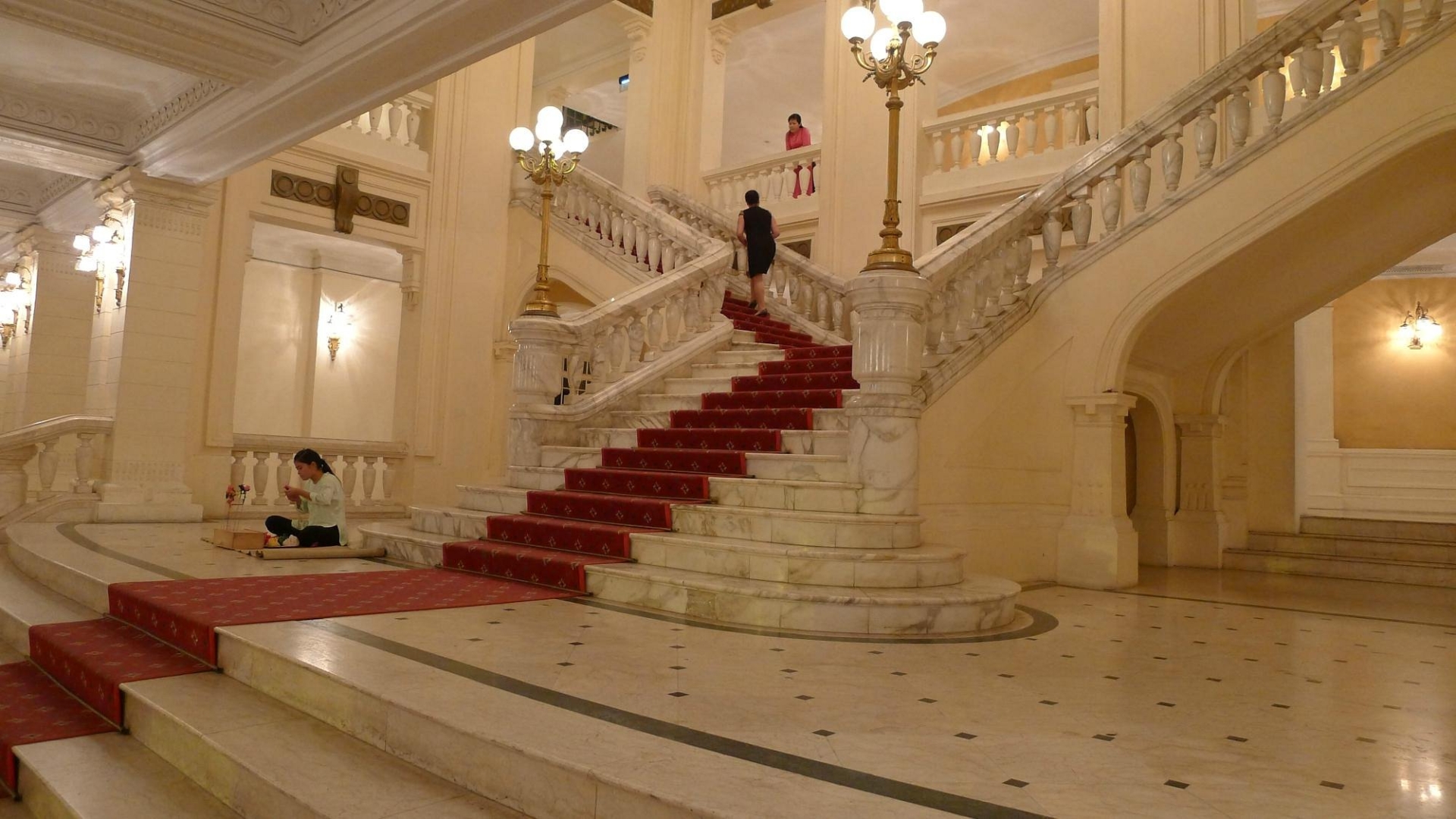
The moment I step into the main lobby of Hanoi Opera House, I feel wrapped in quiet grandeur. The Italian stone floor gleamed beautifully under soft lights that reflected off gold-gilded bannisters and the twin staircases, which felt like something from a royal ball. I couldn’t help but pause here, just to take it all in before wandering further inside!
The Mirror Room (Phòng Gương)
Next, I make my way to the Mirror Room, the one that is reserved for grand receptions and diplomatic gatherings. The Mirror Room glows with a silent kind of luxury, its walls lined with gilded mirrors and the soft haze of crystal chandeliers. These days, this room hosts intimate concerts or art exhibitions, but standing here, I felt as though I’d slipped into another century!
The Auditorium (Thính Phòng)
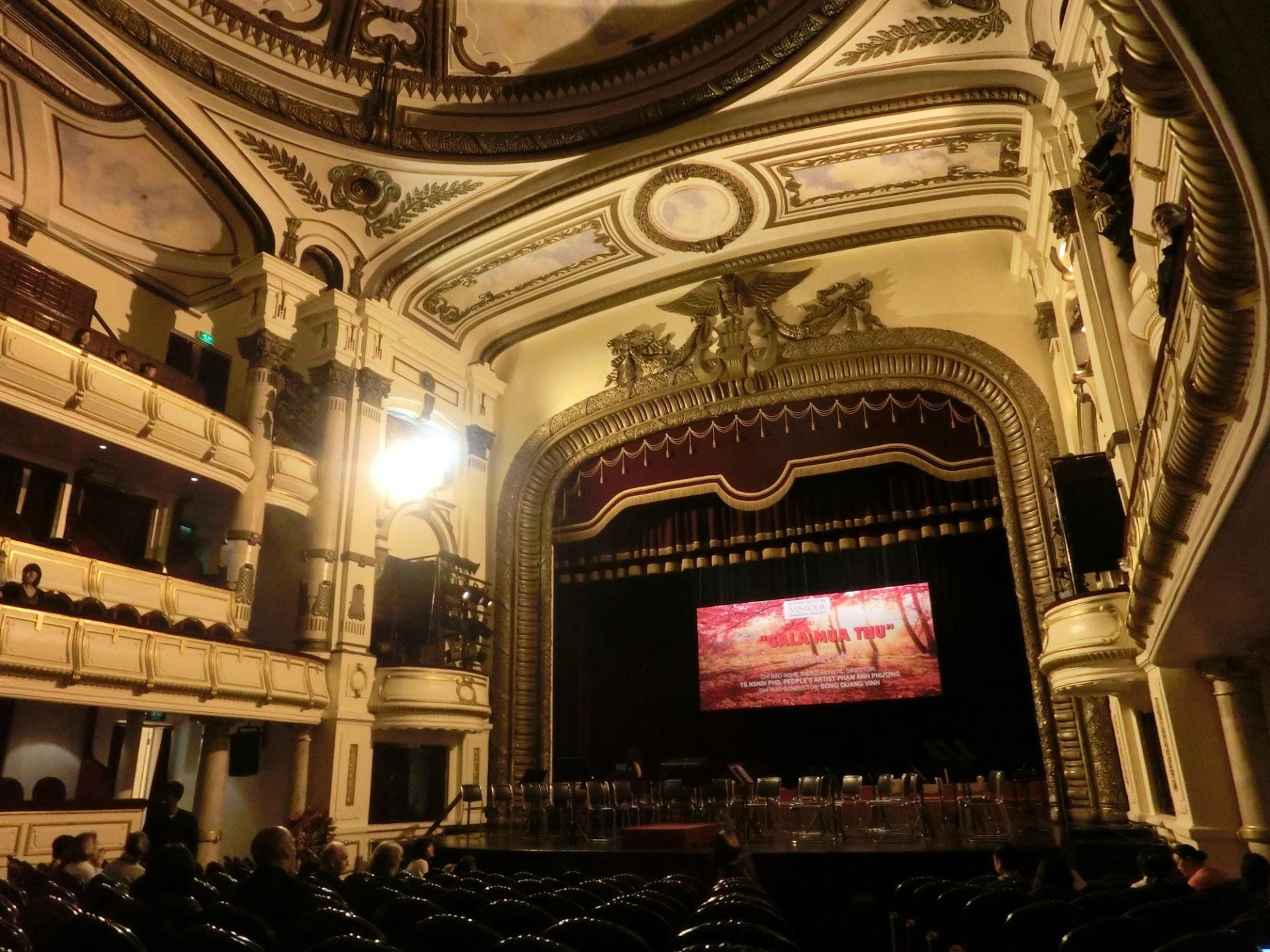
Let’s move to the next spot, which is the main auditorium! The auditorium truly feels like the heart of the Hanoi Opera House. Its sweeping horseshoe shape wraps around the stage like an embrace, drawing every eye toward the velvet-red curtain that guards the world beyond. And when the orchestra begins to play, the sound rises and folds through the space, every note hanging in perfect balance as if the building itself is holding its breath to listen.
The Seating Plan (Sơ Đồ Chỗ Ngồi)
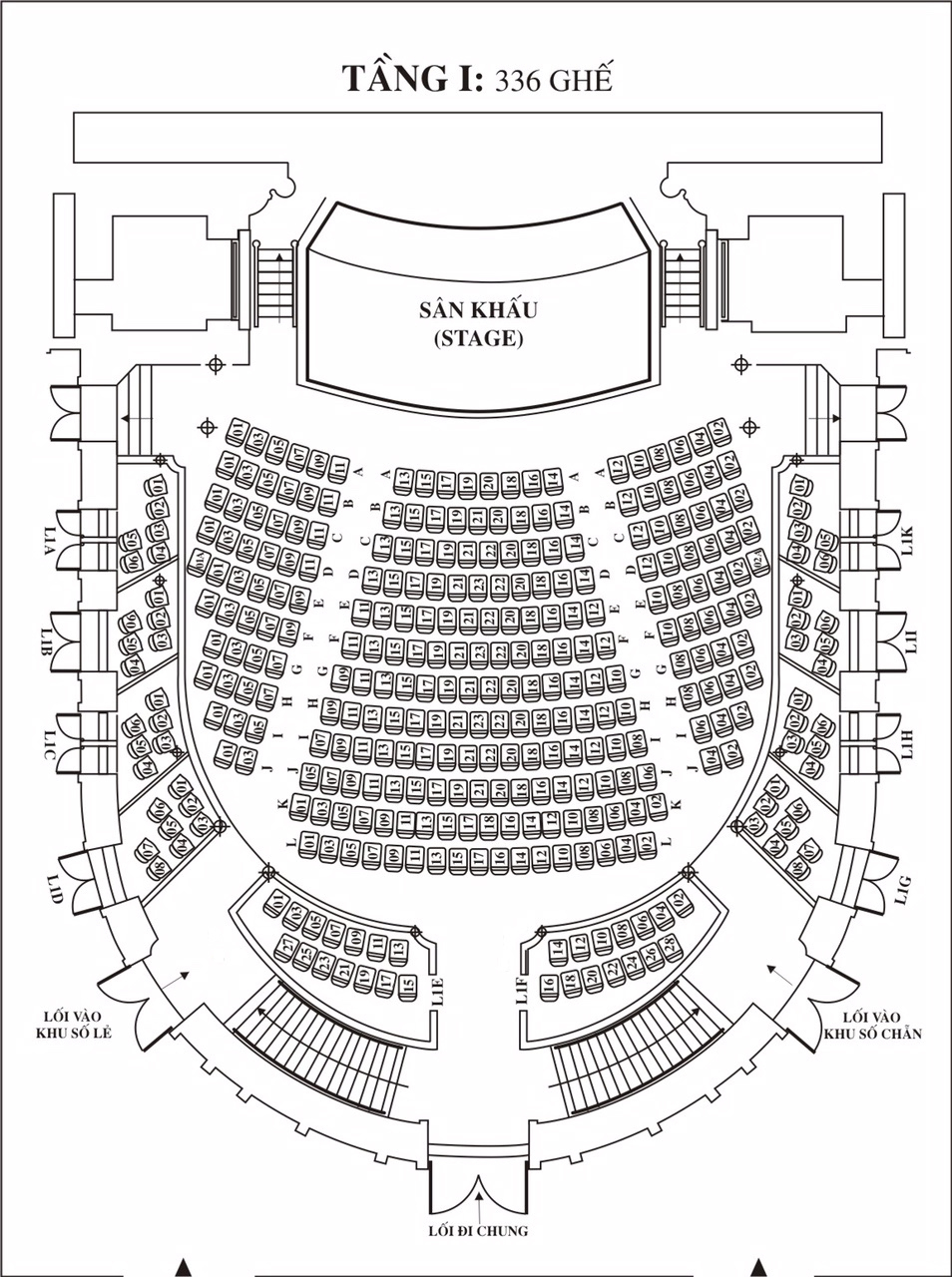
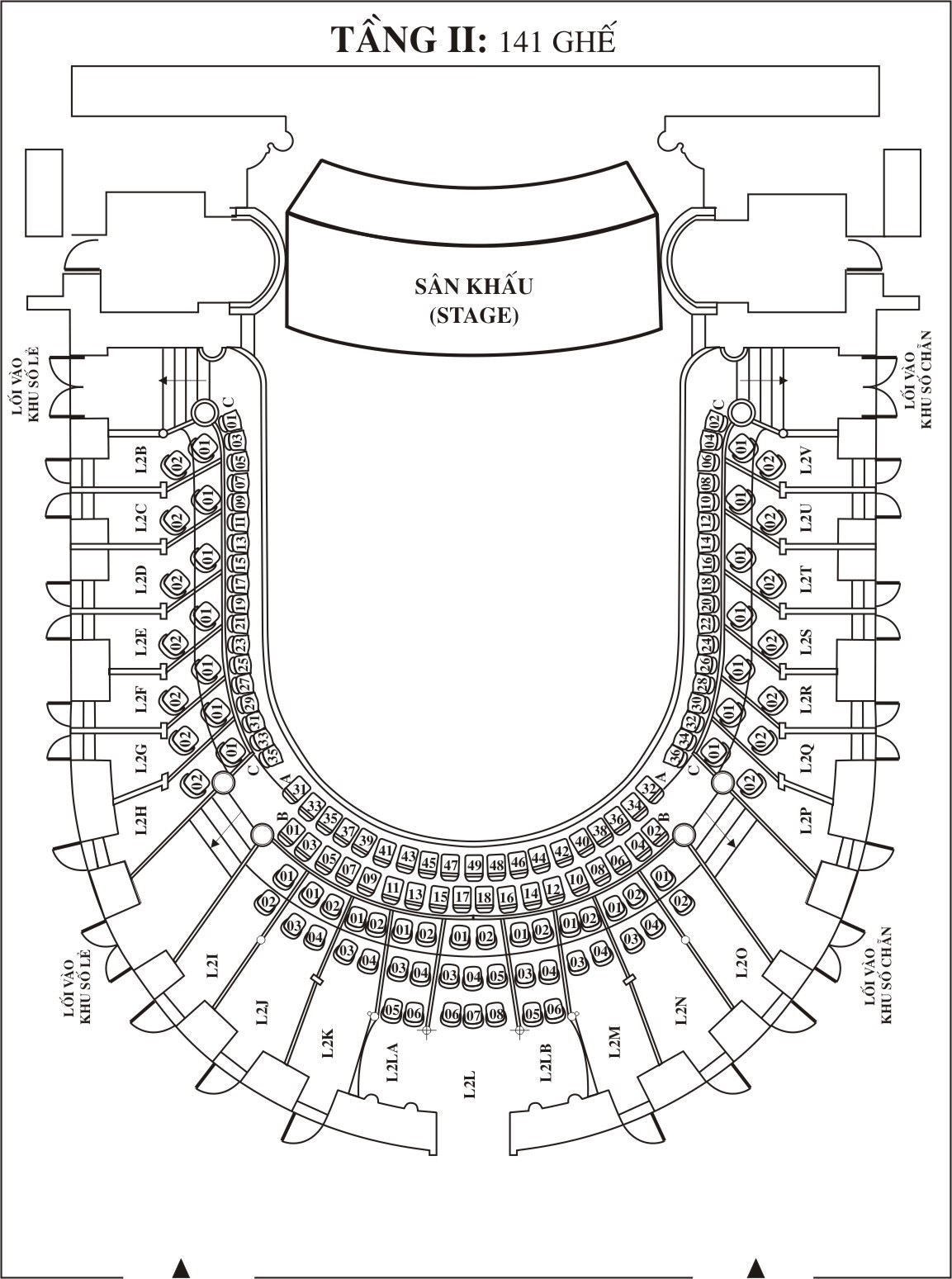
With just around 600 seats, the Hanoi Opera House strikes a balance between intimacy and European grandeur. From the ground floor, you can almost feel the heartbeat of the performance, while from the balconies you’re treated to a breathtaking panorama of the entire hall. Whenever you sit, the sound always embraces you in perfect harmony.
Seating overview
- Tầng I (Ground Floor): 336 seats
- Tầng II (First Balcony): 141 seats
- Tầng III (Second Balcony): 109 seats
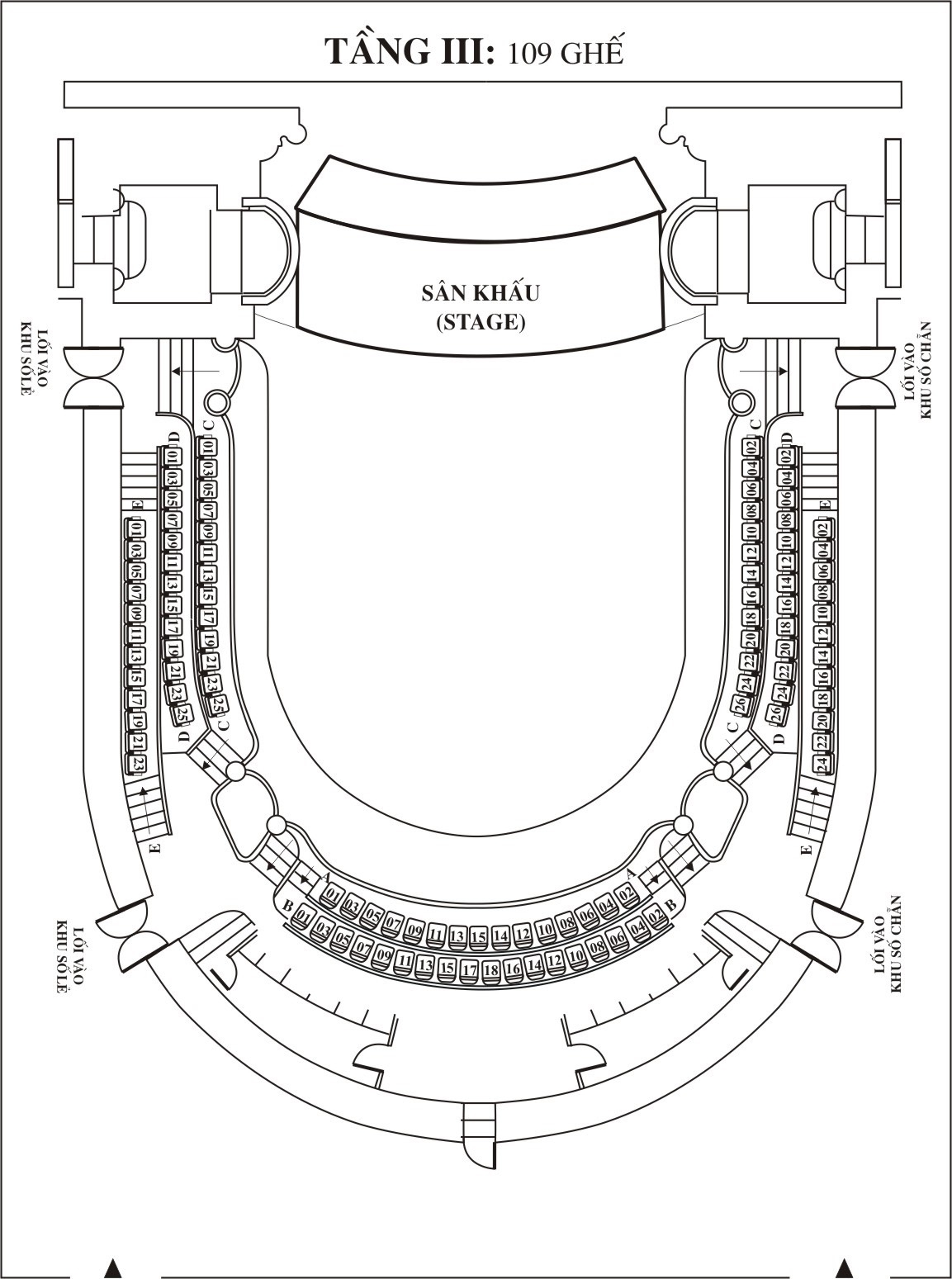
If you’d like to see what the opera house looks like inside, you can explore it through a Hanoi Opera House 360° virtual tour. It’s a great way to explore the architecture, rooms, and seating layout before your actual visit!
What You Can See at the Hanoi Opera House
Inside the Hanoi Opera House, the real magic begins when the lights dim and the audience falls silent, immersing themselves in the performance. I still remember that first moment when the music filled every corner of the hall like a living, breathing story.
The shows here are wonderfully diverse, from musical concerts by top Vietnamese singers, live shows that blend pop and classical flair, plays inspired by local literature to graceful ballets, majestic symphonies performed by the Vietnam National Symphony Orchestra, art festivals or national celebrations.
Visiting the Hanoi Opera House: A Practical Guide
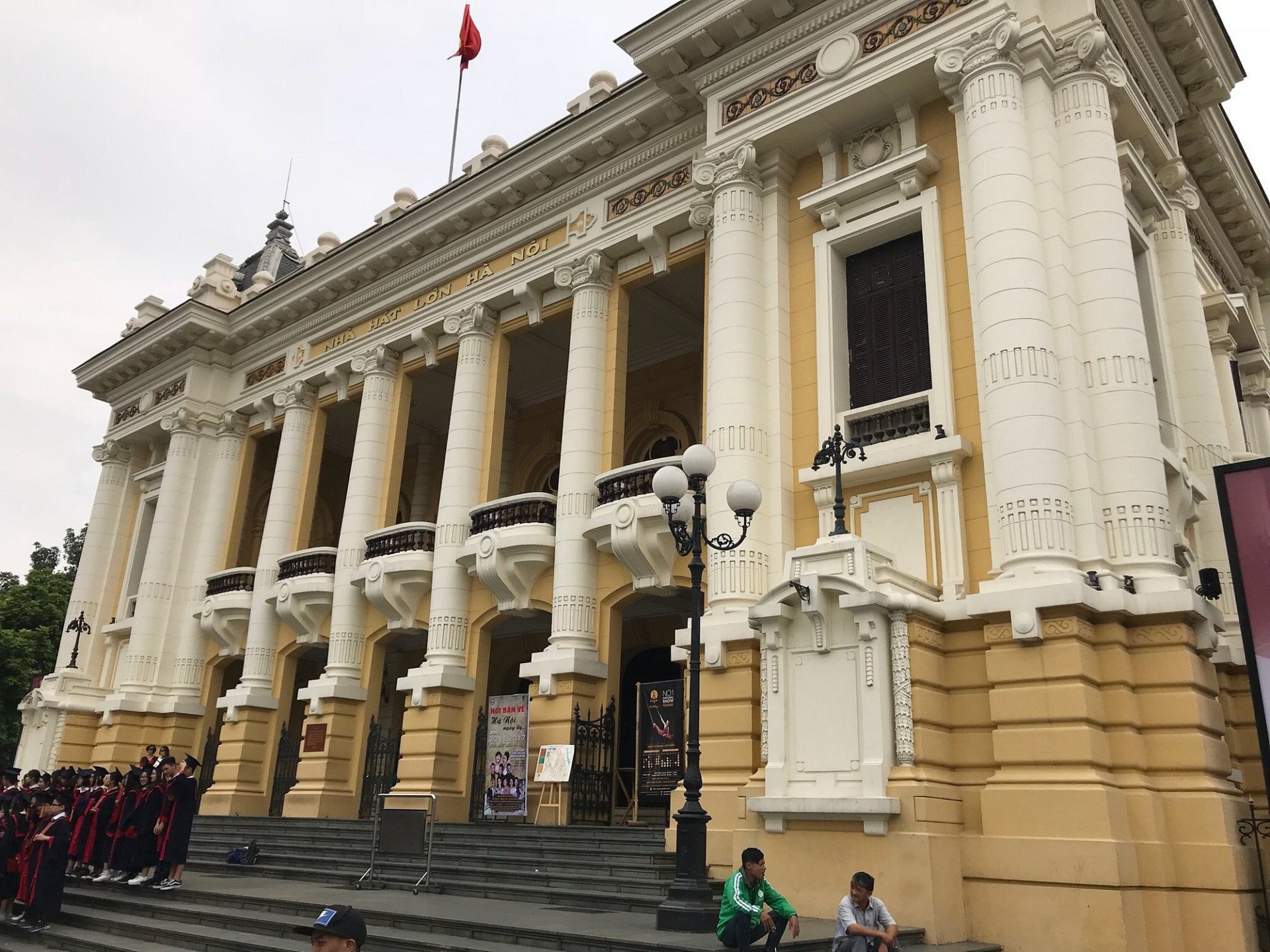
1. Tips for Visiting the Hanoi Opera House
- Book early: Tickets often sell out quickly, so it’s best to reserve online or contact the Opera House in advance.
- Arrive early: Arrive at least 20–30 minutes before showtime to settle into your seat.
- Photography: Photos are not permitted during performances, but you are welcome to take pictures of the lobby and exterior.
- Language tip: Most program details are in Vietnamese, so consider using a translation app to understand the show better.
- Best seats: The ground floor centre offers the clearest view and best acoustics, while balcony seats provide stunning panoramic views.
- Respect performance etiquette: Turn off your phone, avoid talking, and applaud only at appropriate times.
2. Booking Tip for Foreign Visitors
Booking tickets for the Hanoi Opera House can be a bit confusing at first (especially since the official website is mainly in Vietnamese), but it’s actually quite simple once you get the hang of it. Here’s how to do it step by step:
1. Check the Performance Schedule
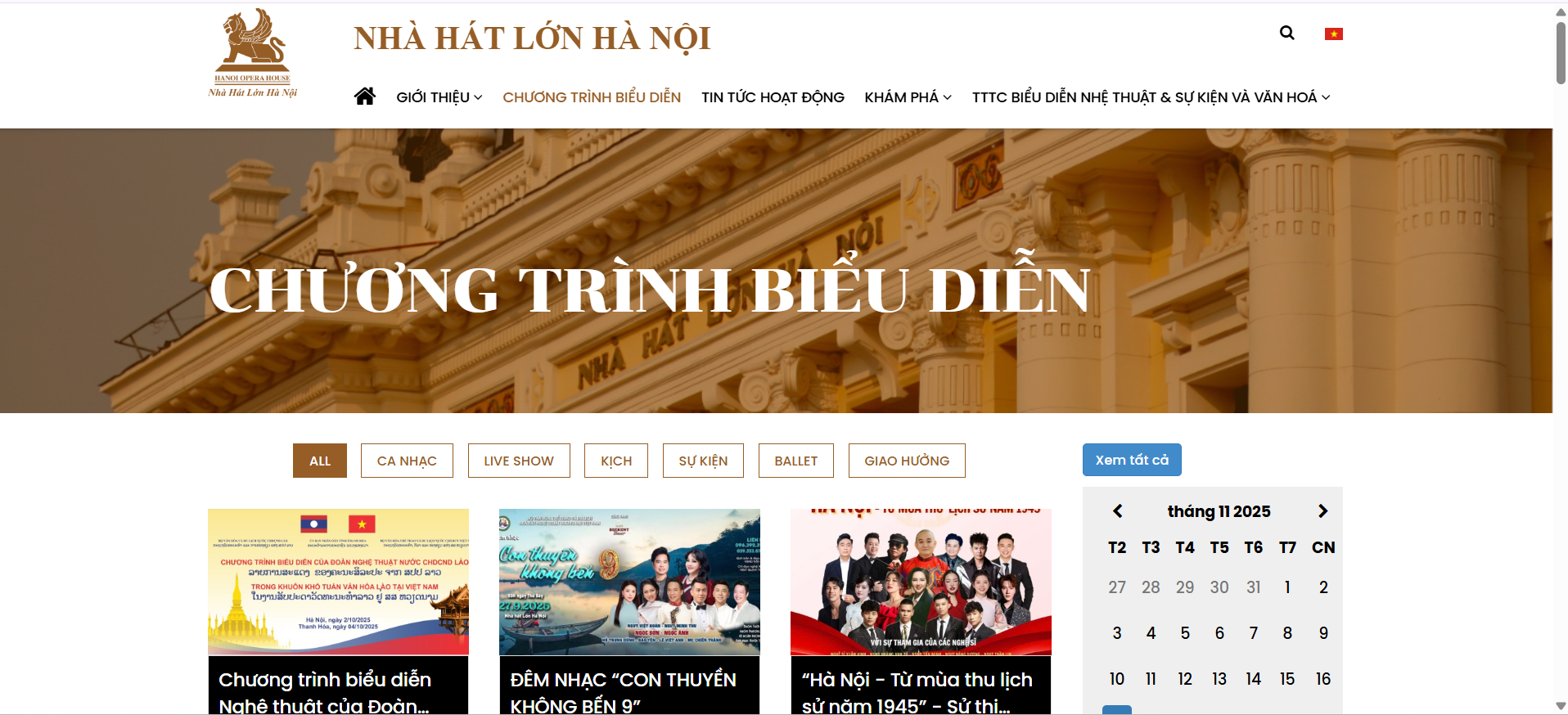
First, visit the official website’s “Chương trình biểu diễn” landing page (which means “Performance Schedule”) at this link: https://hanoioperahouse.org.vn/chuong-trinh-bieu-dien/. Next, you can browse through the upcoming shows; most titles appear in Vietnamese, and some are in English.
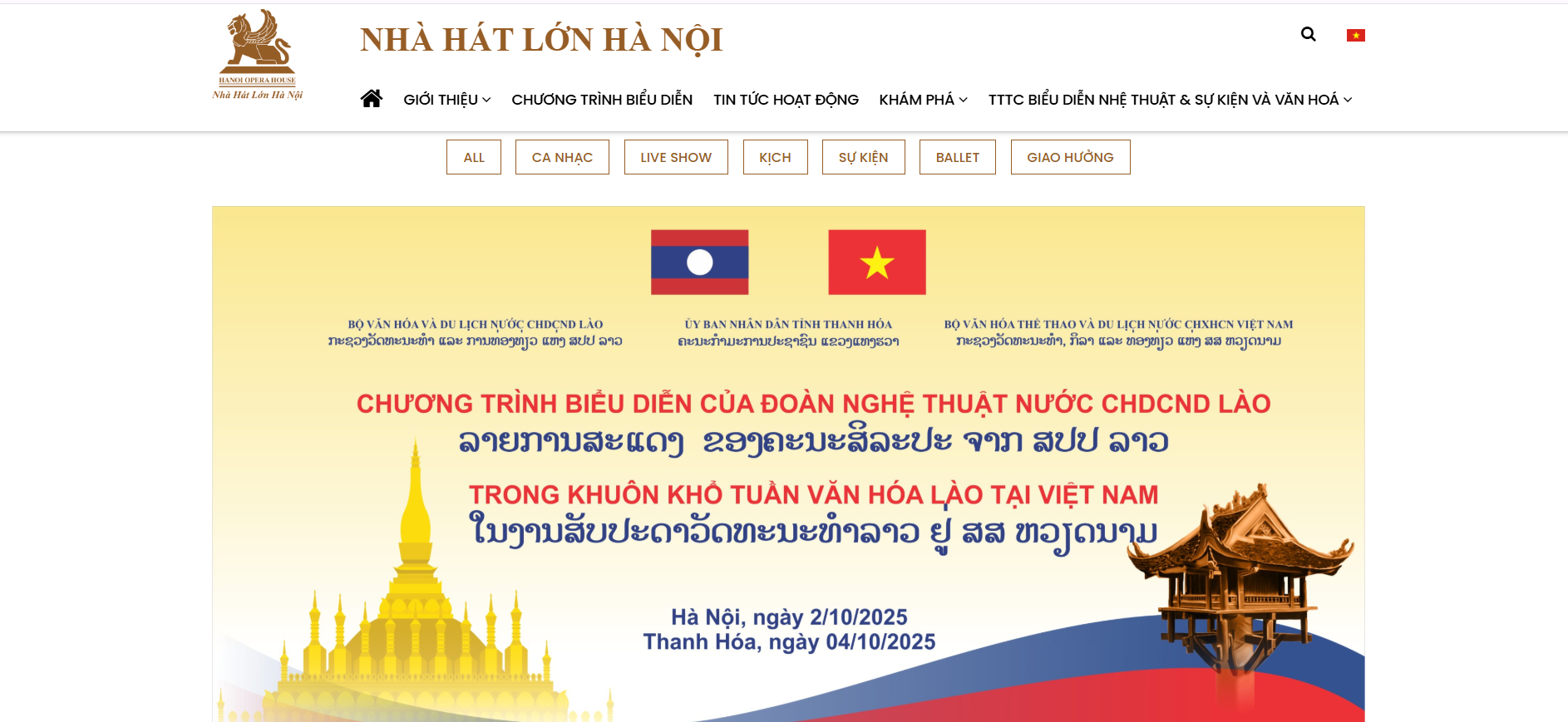
Once there, click on the title of any show that catches your eye. Each program includes a detailed description of the show, ticket prices, artist names and show highlights. Plus, you’ll find the exact date and time clearly shown on the event poster.
Since the website is entirely in Vietnamese, I suggest using a translation app (like Google Translate) to read the content easily. This way, you can fully understand the theme, the storyline and featured performers before booking your seat at Hanoi Opera House.
2. Find the “Liên hệ” (Contact) Link and Fill in the “Gửi Phản Hồi” (Feedback) form
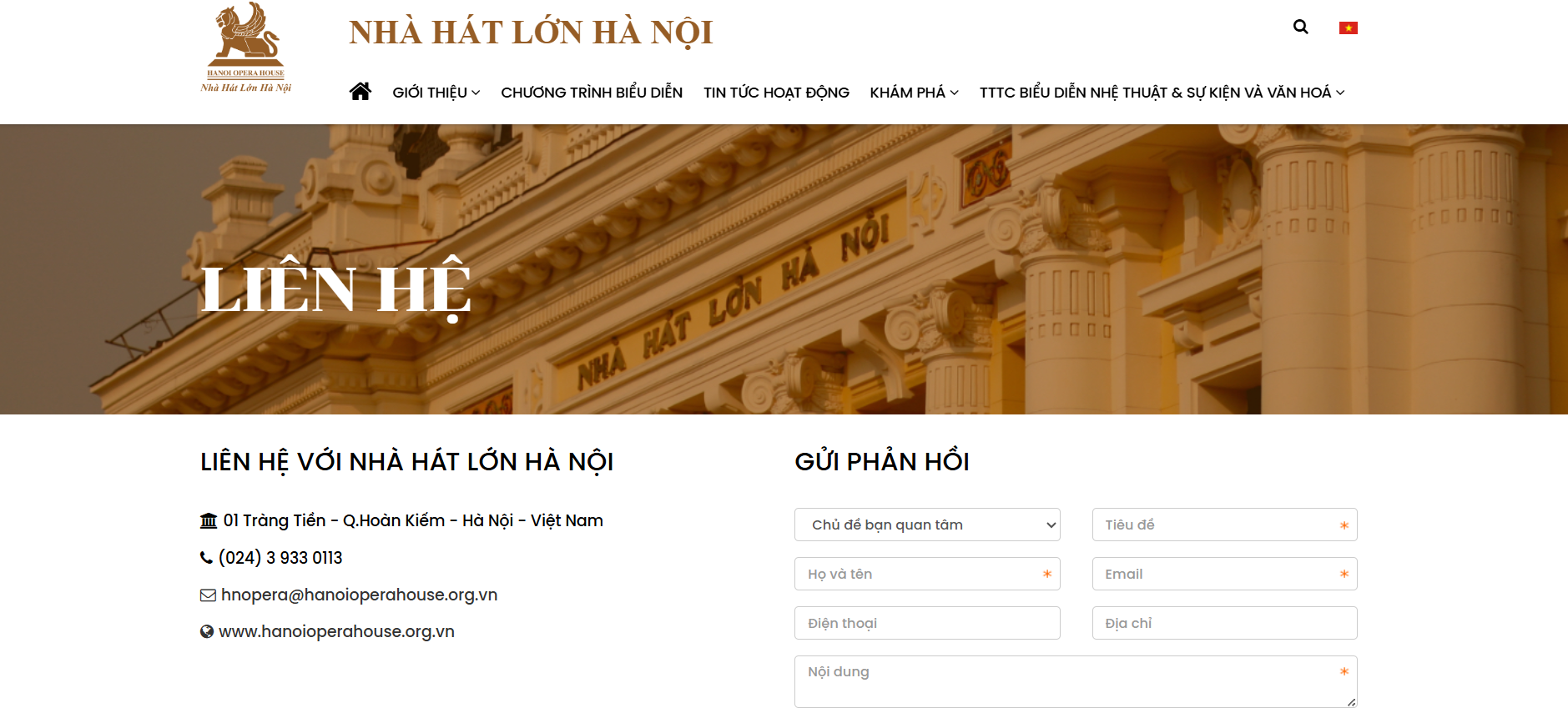
Under each program’s title or ticket price (“Giá vé”), click “Liên hệ”, which means “Contact.” This will lead you to the Opera House’s official contact information and “Gửi Phản Hồi (Feedback)” form, where you can submit your inquiry directly.
Here’s how to fill it out:
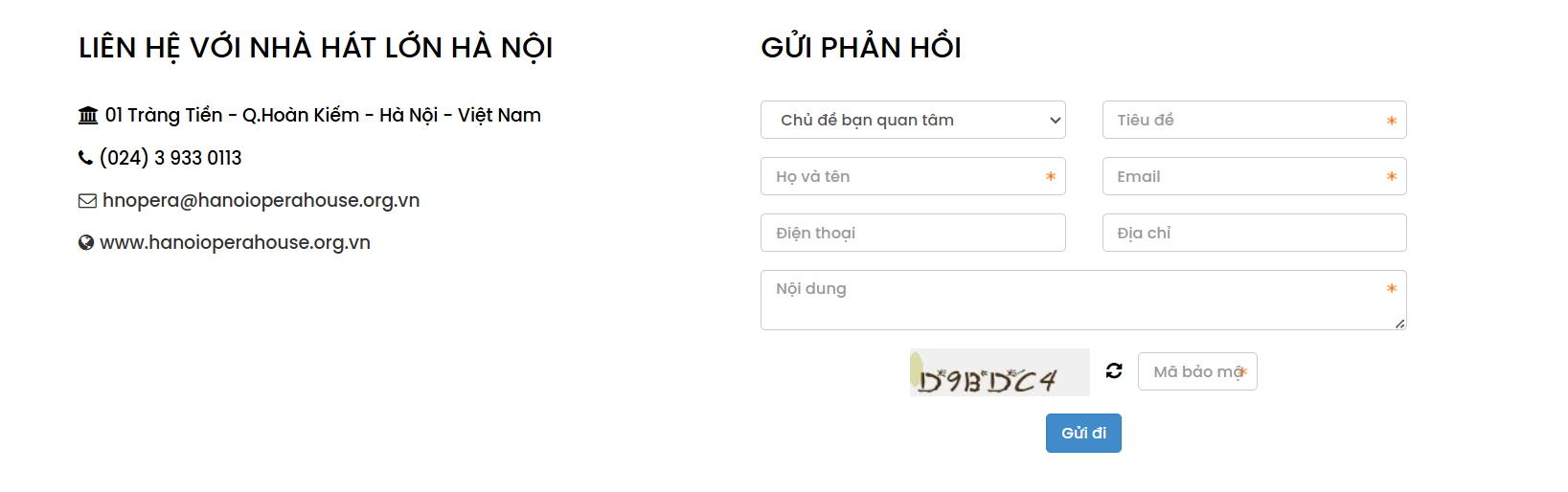
- Select your topic from the drop-down list (“Chủ đề bạn quan tâm”).
- Enter your name (Họ và tên) and email address so the staff can reply.
- Add a subject (Tiêu đề) and your message (Nội dung) – whether it’s about ticket bookings, event information, or general feedback.
- Fill in your phone number and address if needed for follow-up.
- Type the security code (Mã bảo mật) shown in the box, then click “Gửi đi” (Send) to submit.
Once submitted, your message goes directly to the Opera House’s admin team. You can expect a response via email within a few working days.
Official Contact Details:
- Address: 1 Tràng Tiền, Phan Chu Trinh Ward, Hoàn Kiếm District
- Phone: (024) 3 933 0113
- Email: [email protected]
- Website: https://hanoioperahouse.org.vn/
3. Send an Email or Call to Reserve Tickets (Alternative Option)
If you can’t access or submit the “Gửi Phản Hồi” (Send Feedback) form, there’s an easier way by contacting the Hanoi Opera House admin team directly by email or phone.
In your message, remember to include the following details:
- Your name and the number of tickets you’d like
- The show title, date, and time you wish to attend
- Any seating preference (if applicable)
- Ask about the ticket price and payment method (bank transfer or pay on-site)
4. Confirm and Collect Your Ticket
Once payment is arranged, you’ll receive a confirmation or e-ticket by email. Simply show it at the box office or entrance on the day of the performance.
4 Amazing Things to Do at Hanoi Opera House
1. Watch a Live Performance Under the Lights
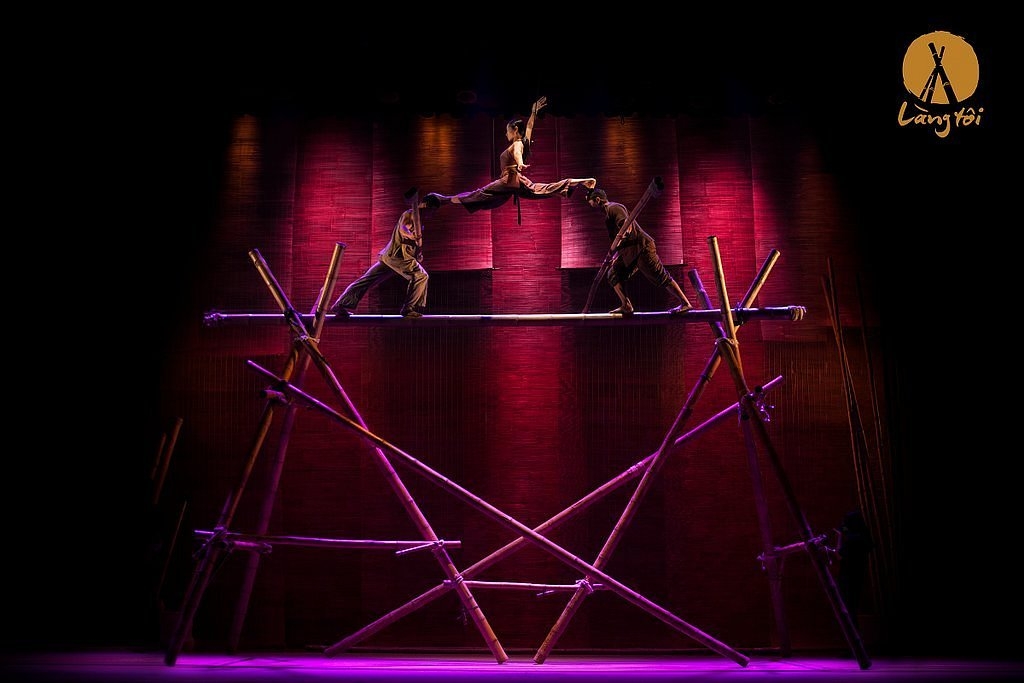
When coming to the Hanoi Opera House, travellers can enjoy world-class performances by the Vietnam National Symphony Orchestra, where the music fills the grand hall with breathtaking acoustics. On other nights, the stage hosts modern dance, ballet or Vietnamese folk performances, blending traditional instruments with contemporary jazz or electronic beats. This is truly one of the best things to do in Hanoi at night, offering visitors a chance to witness the city’s vibrant blend of culture, art, and modern creativity in one unforgettable evening.
2. Check In and Marvel At the Hanoi Opera House’s Architecture
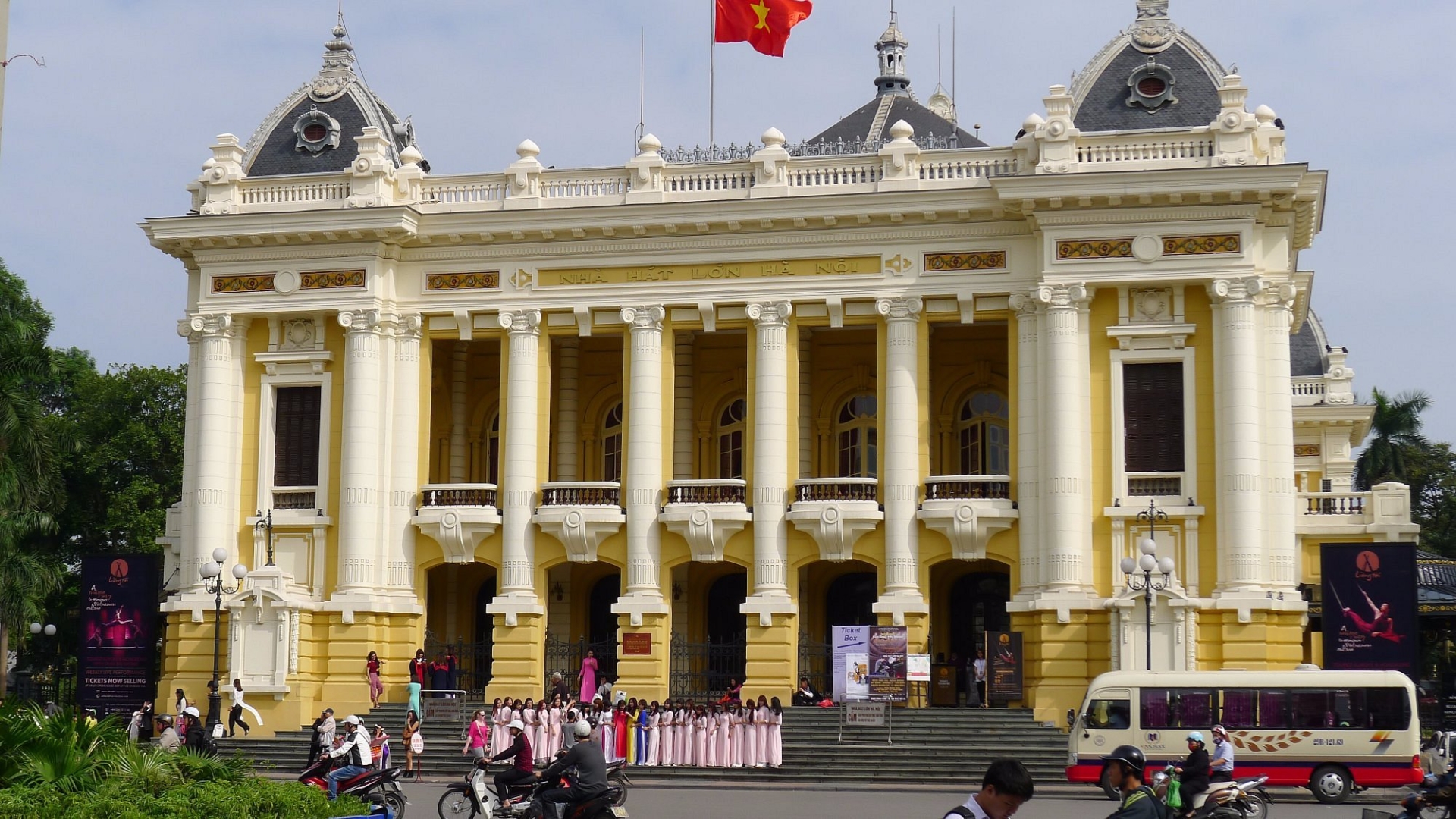
Before stepping inside, take a moment to admire the Opera House’s yellow-and-white neoclassical façade, framed by Corinthian columns, French-style balconies, and intricate sculptures that radiate timeless elegance. Every corner of the building exudes sophistication, from the sweeping staircases to the elaborate carvings that capture the essence of early 20th-century European design.
That’s why the Hanoi Opera House is a masterpiece of colonial architecture and a proud emblem of the city’s artistic soul. It’s also one of the most amazing things to do in Hanoi for couples!
3. Take Night Photos from the August Revolution Square
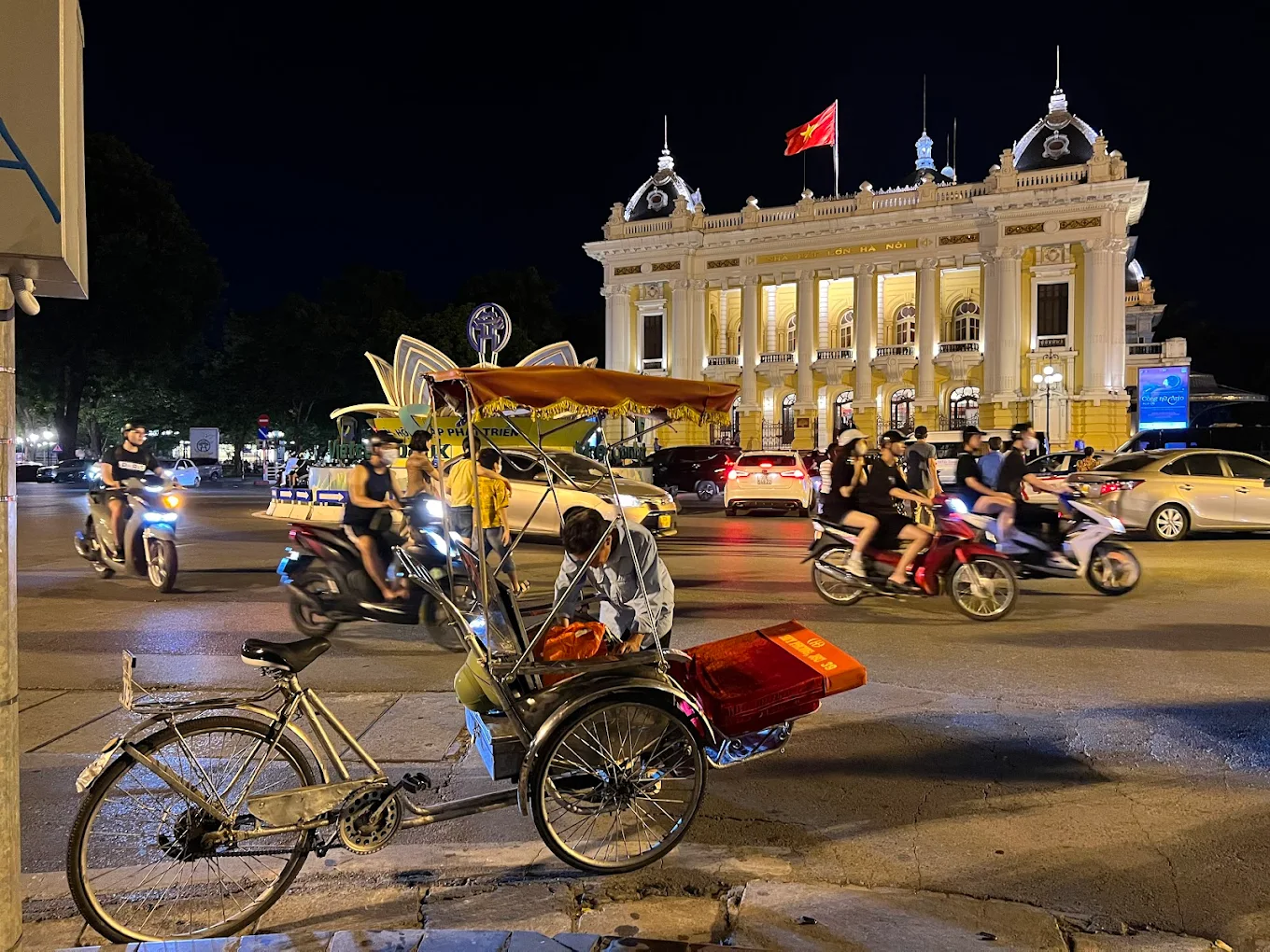
By night, the Hanoi Opera House transforms completely. Its golden lights shimmer across August Revolution Square, and the nearby streets come alive with street artists sketching, the flow of motorbikes or the occasional live busker. It’s an ideal setting for you to spend time capturing long-exposure shots of Hanoi’s vibrant nightlife, truly one of the coolest things to do in Hanoi for photography lovers and night explorers alike.
- Address: Tràng Tiền Street, located right in front of the Hanoi Opera House
- Best time to visit: Between 7:00 PM and 9:00 PM, when the square is most lively but not overly crowded
4. Experience Hanoi’s Nighttime Cuisine
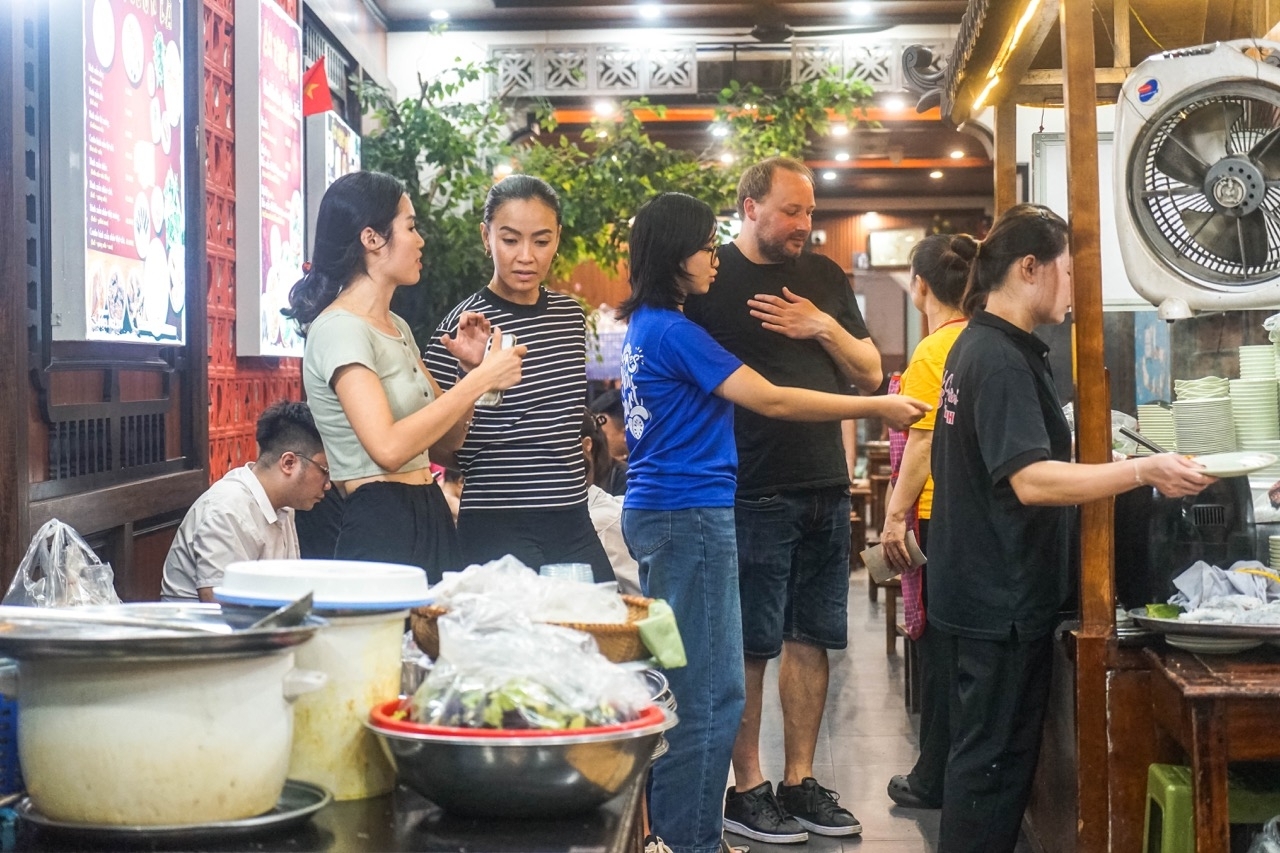
After a day of art, culture, and performances at the Hanoi Opera House, spend the following evening discovering another side of the city: its incredible food scene! For those who love to explore beyond the usual tourist paths, our crew can take you on the Hanoi Foodie Night Ride. This unique night food tour combines cycling and street food discovery, taking you through Hanoi’s hidden alleys and lively neighbourhoods under the glow of streetlights.
Along the way, you’ll stop to sample local favourites like bún chả, sticky rice, and bánh mì, followed by Hanoi-style doughnuts and freshly pressed sugarcane juice. Each stop reveals a deep connection to the city’s culture and an immersive journey into Hanoi’s bustling night rhythm for food lovers and adventurers alike.
Hidden Gems Around Hanoi Opera House
1. The French Quarter
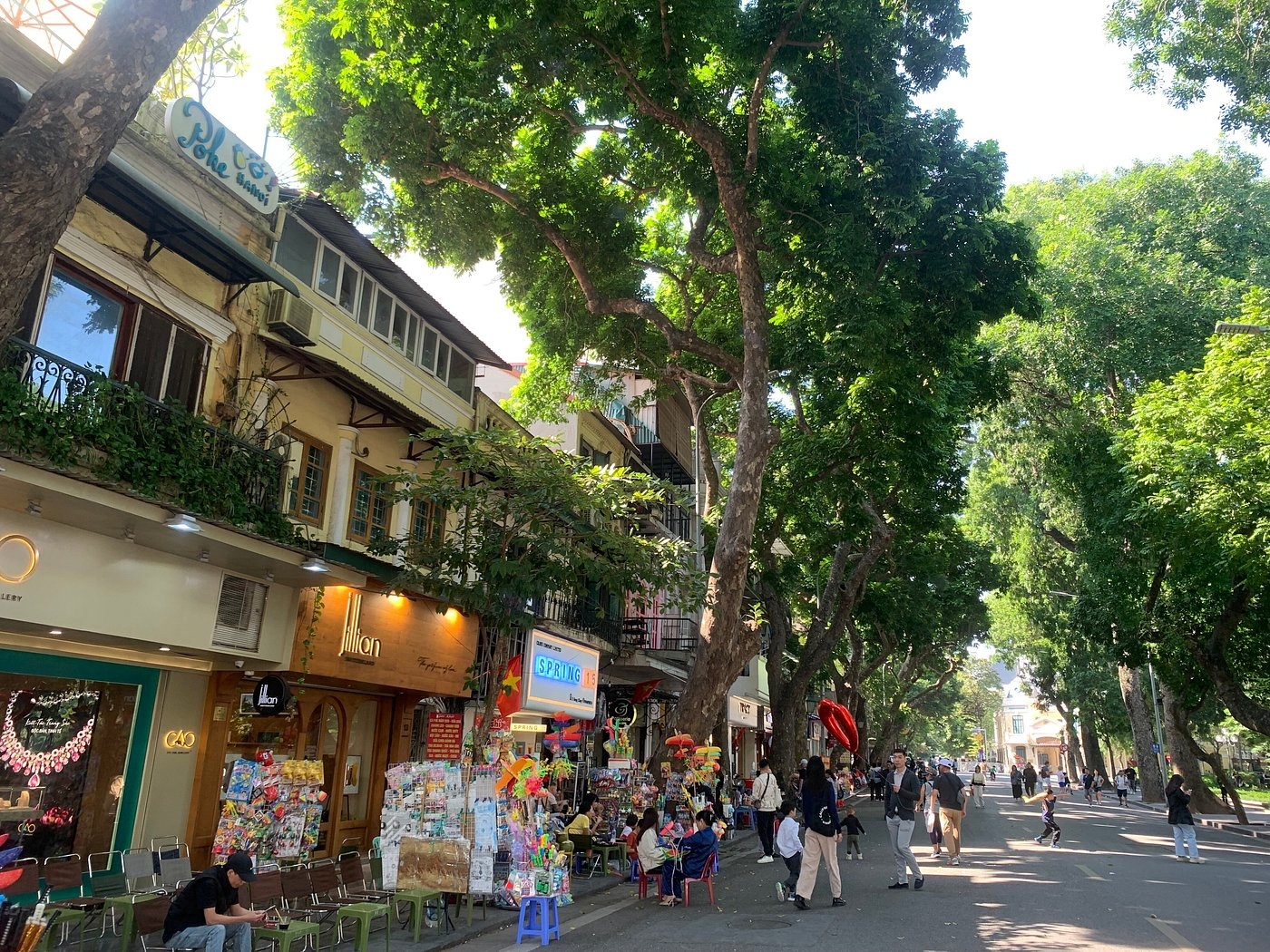
Just a short 6-minute walk from the Opera House, the French Quarter is where Hanoi’s colonial charm truly comes alive. Lined with elegant villas, tree-shaded boulevards, and embassies, this area showcases the city’s architectural heritage from the early 20th century.
The wide avenues and quiet streets make it perfect for a stroll or photo walk. Visitors can enjoy a coffee at one of the area’s chic cafés, explore boutique art galleries, or simply admire the romantic fusion of Vietnamese life and French design. As you wander deeper into the nearby lanes, you’ll also discover some of the best street food in Hanoi, bring the perfect balance between culture and cuisine.
- Address: Tràng Tiền, Hoàn Kiếm District
- Best time to visit: Morning or late afternoon
2. Vietnam National Museum of History
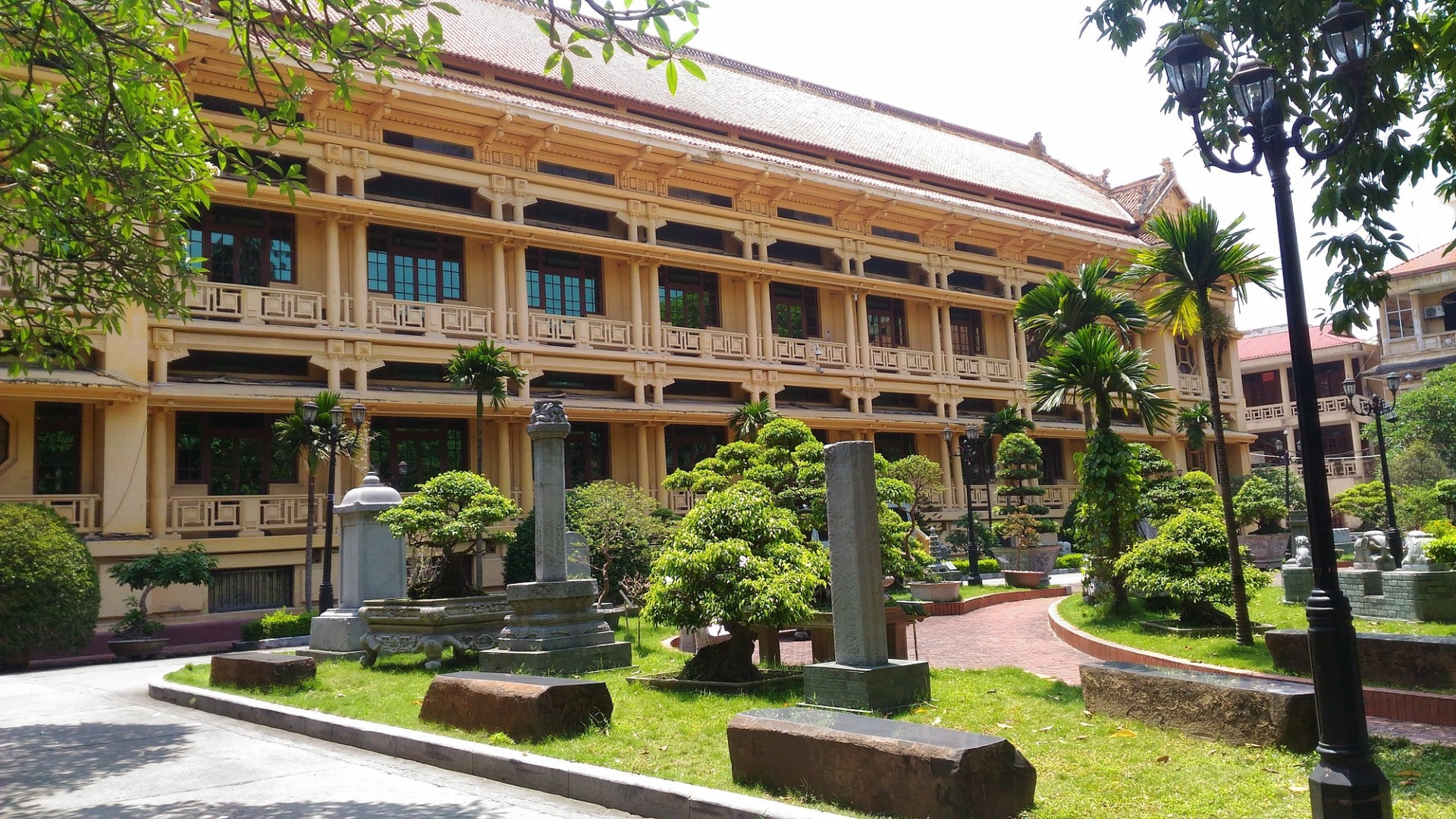
Only a 3-minute walk from the Hanoi Opera House, the Vietnam National Museum of History offers a fascinating journey through the country’s past. The Vietnam National Museum of History preserves and displays more than 200,000 archaeological relics from the Palaeolithic and Neolithic eras, as well as remarkable artefacts of the Đông Sơn culture, ceramics from traditional Vietnamese kilns, bronze items from the Lê and Nguyễn dynasties, and exquisite Champa stone sculptures.
The museum also features foreign ceramics from China, Japan, India, and Southeast Asia, reflecting Vietnam’s long history of cultural exchange. Hence, exploring this peaceful museum is one of the best things to do in Hanoi, ideal for those who want to slow down and connect with Vietnam’s rich cultural heritage and history.
Did You Know?
The Vietnam National Museum of History actually manages the Hanoi Opera House! Both sites are only a few minutes’ walk apart, as the museum sits just behind the Opera House. That’s why both addresses appear on the official website:
- Address 1: 1 Tràng Tiền Street, Hoàn Kiếm District → This is the actual location of the Hanoi Opera House.
- Address 2: 216 Trần Quang Khải Street, Hoàn Kiếm District → This is the principal office of the Vietnam National Museum of History, which oversees the Opera House’s management and cultural programs.
If you’d like to learn more about the Vietnam National Museum of History, please visit their website at https://baotanglichsu.vn/en. This website is available in English and French, offering detailed insights into Vietnam’s cultural heritage and historical collections.
3. Tràng Tiền Plaza or Tràng Tiền Street
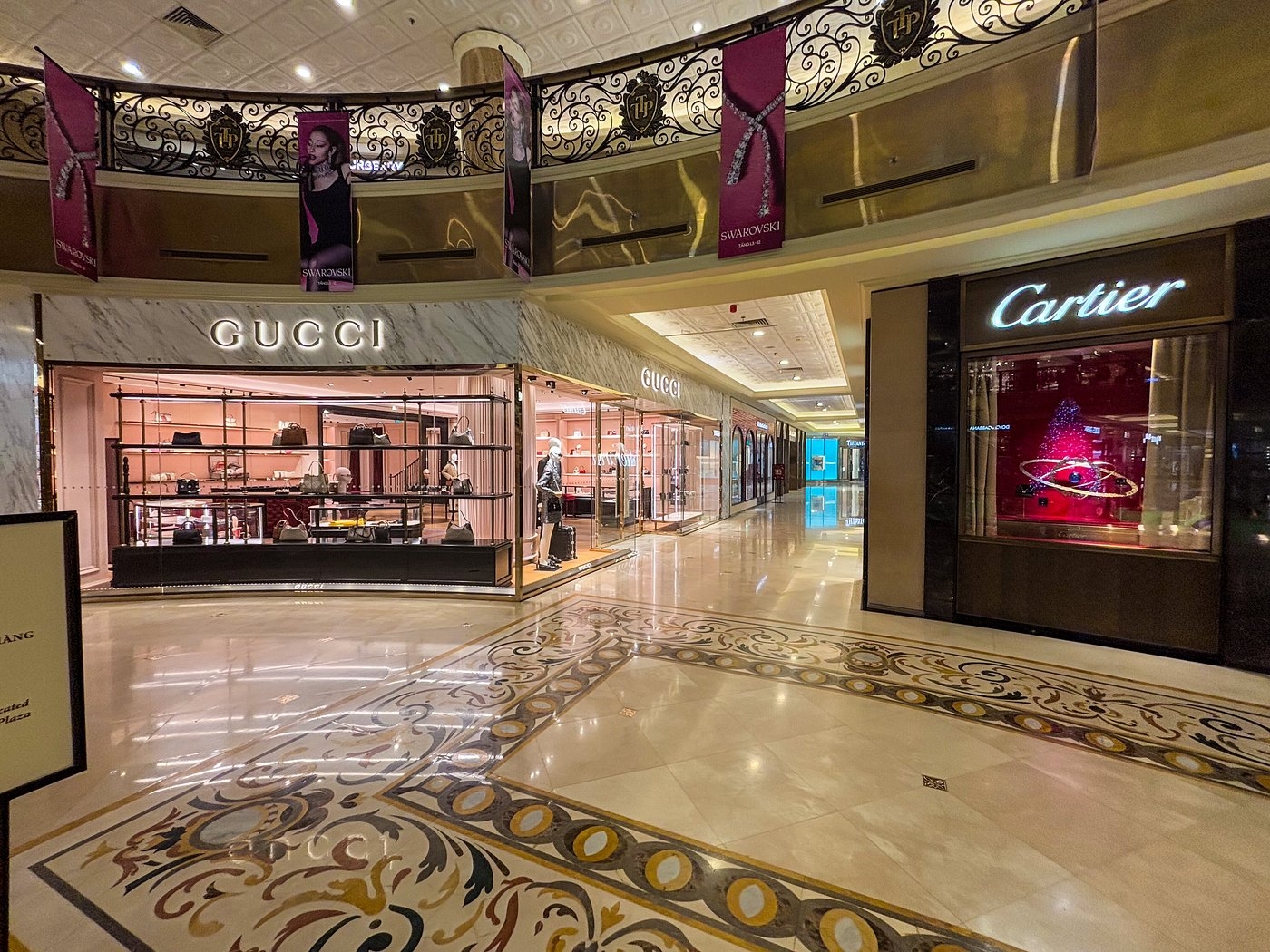
A 10-minute walk leads you to Tràng Tiền Plaza, one of Hanoi’s most famous shopping destinations. This luxurious mall features international brands, air-conditioned comfort, and a glimpse of Hanoi’s modern side. Beyond shopping, the mall offers a variety of cafés and restaurants where visitors can sample local delicacies or international favourites, making it an ideal place to unwind, watch the world go by, or soak up Hanoi’s lively atmosphere.
- Address: 24 Hai Bà Trưng, Tràng Tiền Ward, Hoàn Kiếm District
- Opening hours: 9:30 AM – 9:30 PM
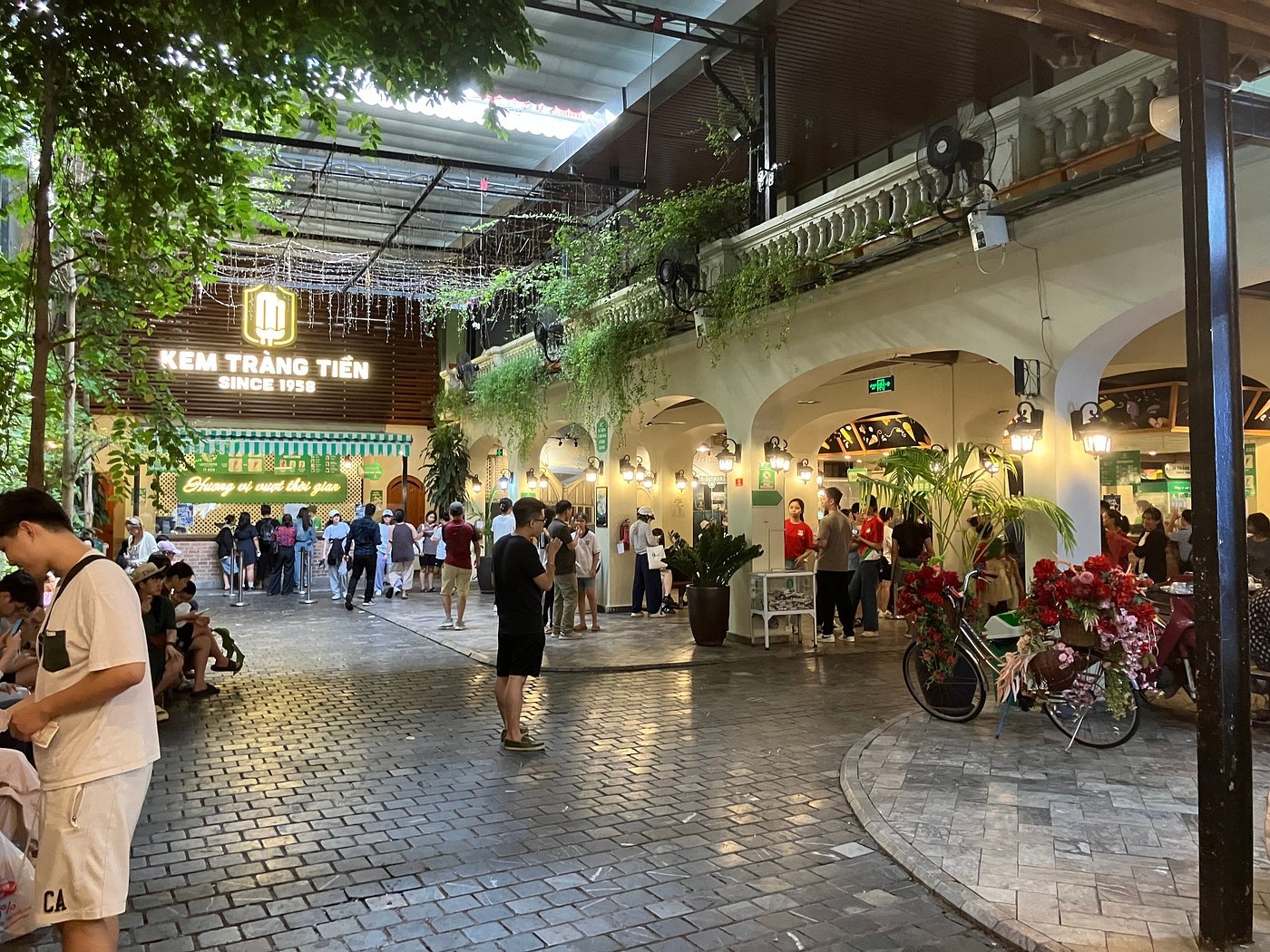
But if malls aren’t your thing, simply stroll along Tràng Tiền Street, where you can stop by the iconic Tràng Tiền Ice Cream shop, a local favourite since the 1950s. As you wander, browsing shop windows or savouring coconut ice cream, this street reveals Hanoi’s unique blend of tradition and modern life.
- Address: 35 Tràng Tiền, Hoàn Kiếm District
- Opening hours: 7:30 AM – 11:00 PM
4. Hoàn Kiếm Lake
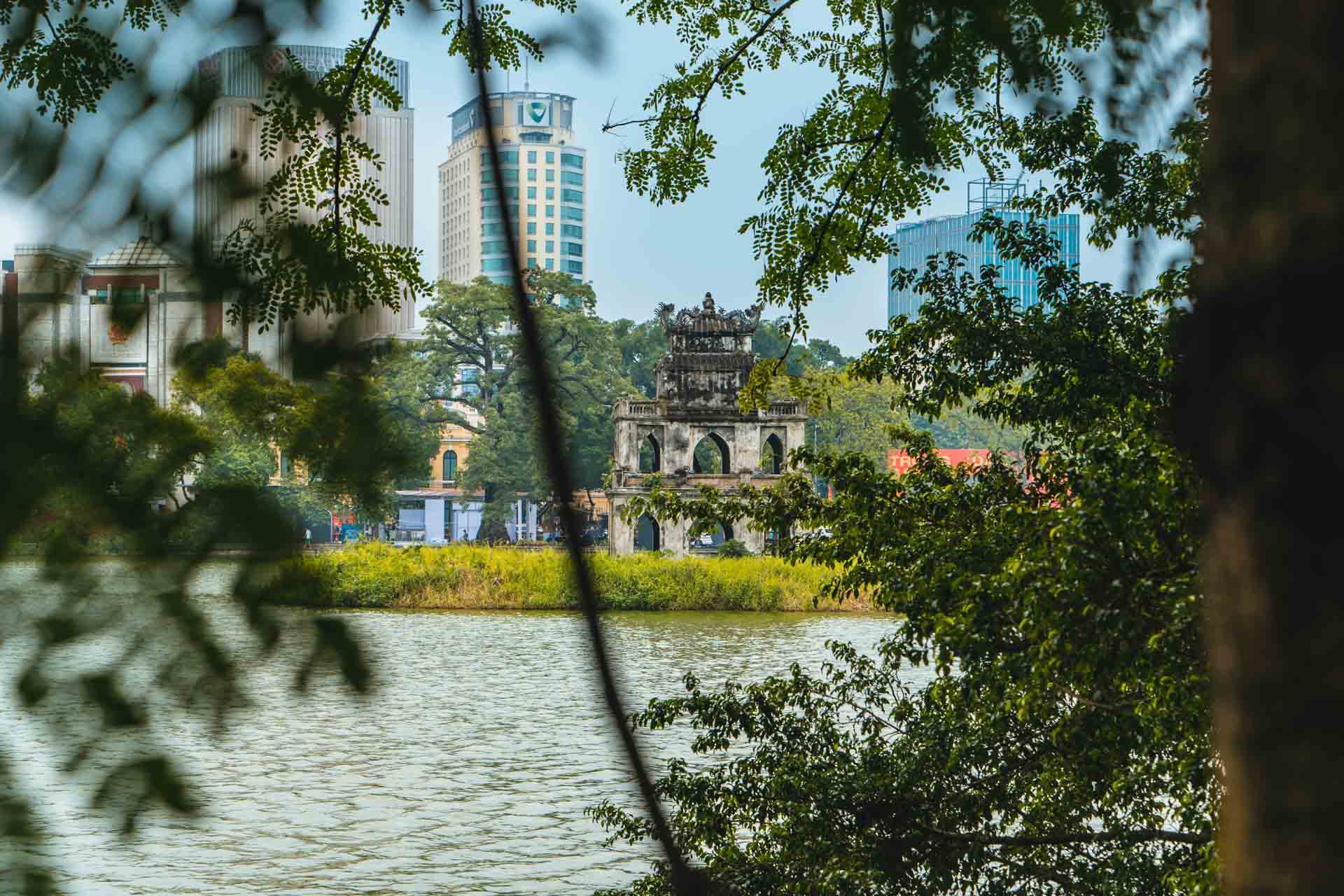
Hoàn Kiếm Lake, the cultural heart of Hanoi, is only a 13-minute walk from the Hanoi Opera House. In the early morning, locals gather along the promenade for tai chi, gentle jogging, or a quiet coffee by the water.
As evening falls, the lake glows with reflections from nearby cafés and lanterns, creating a romantic atmosphere that feels worlds away from the busy traffic. Visiting Hoàn Kiếm Lake after the Hanoi Opera House lets travellers experience the perfect balance between Hanoi’s artistic sophistication and its timeless, everyday charm.
5. Vietnamese Women’s Museum
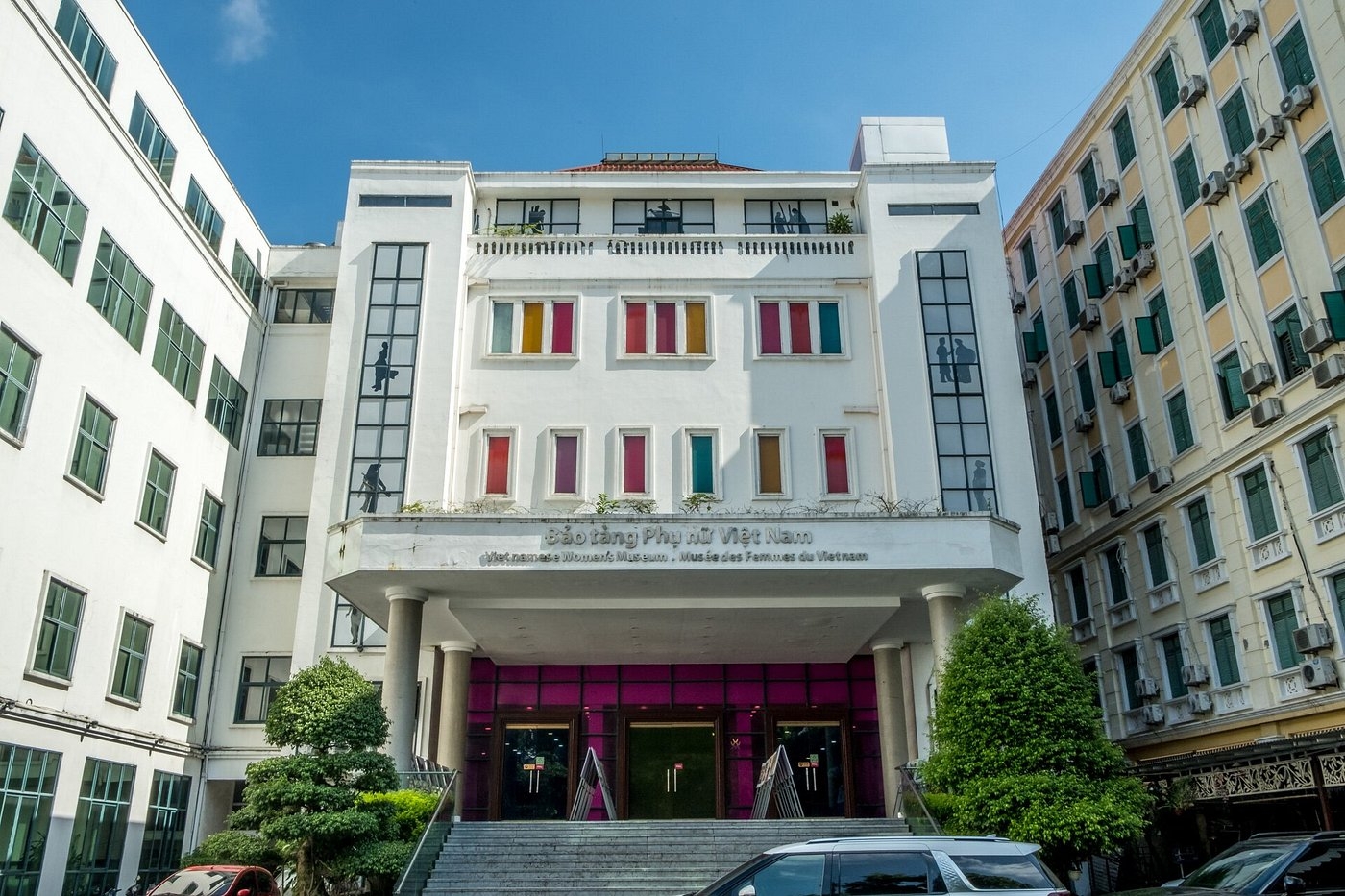
A short stroll of 10 minutes from the Opera House brings you to the Vietnamese Women’s Museum, where visitors can explore the remarkable stories of Vietnam’s women across generations. This thoughtfully curated museum celebrates the vital role of women throughout Vietnamese history and society: from courageous wartime heroines to contemporary leaders, artisans, and everyday women whose stories shape the nation.
Visitors can explore vibrant traditional costumes, delicate handicrafts, and powerful personal narratives that highlight both the resilience and grace of Vietnamese women.
- Address: 36 Lý Thường Kiệt, Trần Hưng Đạo Ward, Hoàn Kiếm District
- Opening hours: 8:00 AM – 5:00 PM daily
6. Đinh Lễ Street
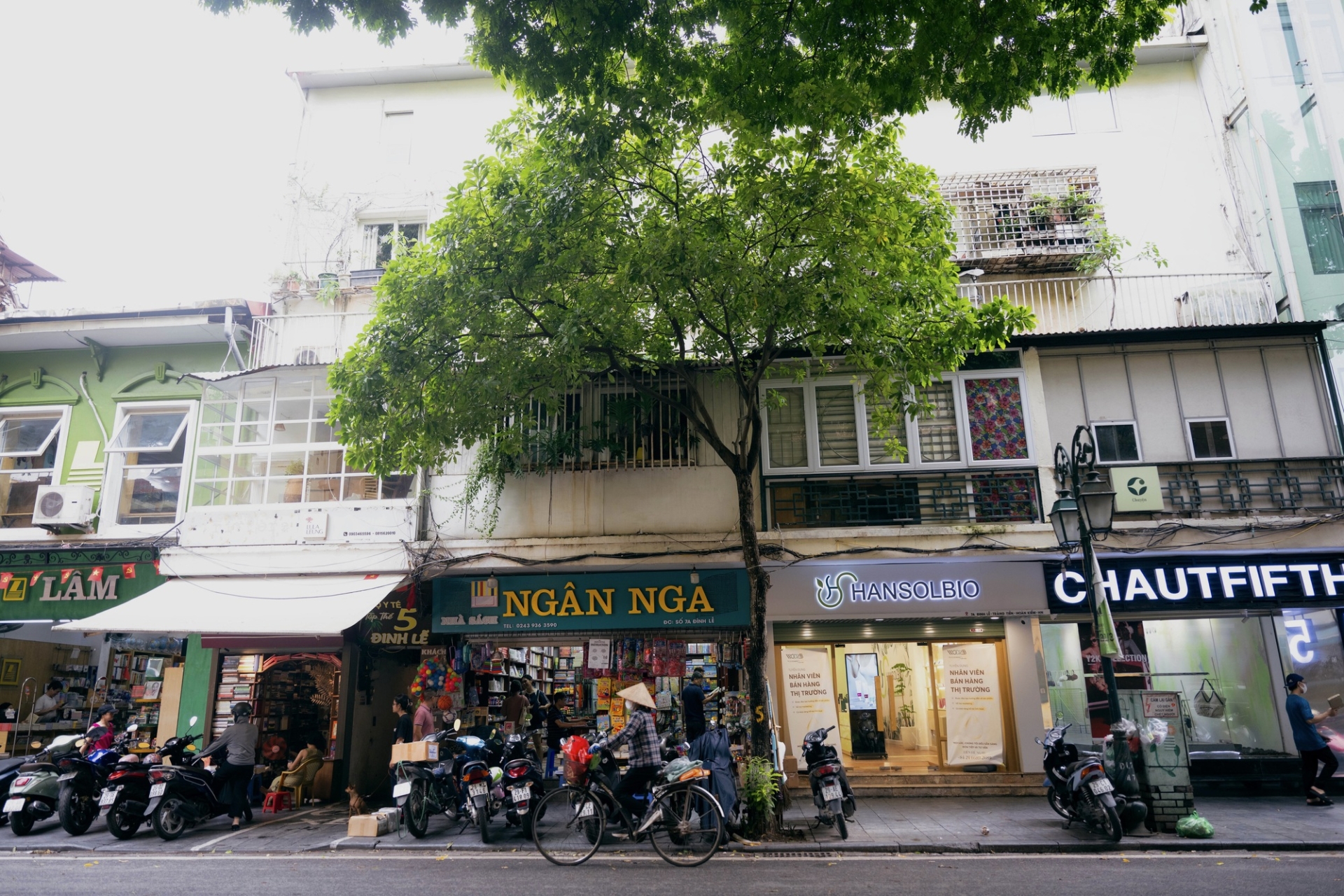
Known as Hanoi’s Book Street, Đinh Lễ Street is a paradise for bookworms and curious travellers. Just a short walk from Hoan Kiem Lake, this narrow lane is lined with small bookstores stacked floor-to-ceiling with Vietnamese and foreign titles. The scent of old paper, the friendly shopkeepers, and the nostalgic vibe make it an experience in itself. If you’re looking for a local travel guide, a translated novel, or a quiet retreat from the city’s energy, Đinh Lễ Street is the perfect hidden gem to round off your Hanoi Opera House visit.
Here are a few must-visit stops along the way:
- Mao Bookstore (2nd Floor, 5 Dinh Le, Trang Tien Ward, Hoan Kiem District, opens from 9:00 AM – 5:00 PM)
- Gian Don Bookstore (1 Dinh Le, only opens 24/7 on Friday, Saturday and Sunday)
- Lam Bookstore (3 Dinh Le, opens from 8:00 AM – 10:00 PM)
- Ngan Nga Bookstore (7 Dinh Le, opens from 8:00 AM – 9:30 PM)
- Kim Dong Bookstore (15 Dinh Le, opens from 7:00 AM – 7:00 PM)
Discover Hidden Corners Beyond the Hanoi Opera House with Jackfruit Adventure!
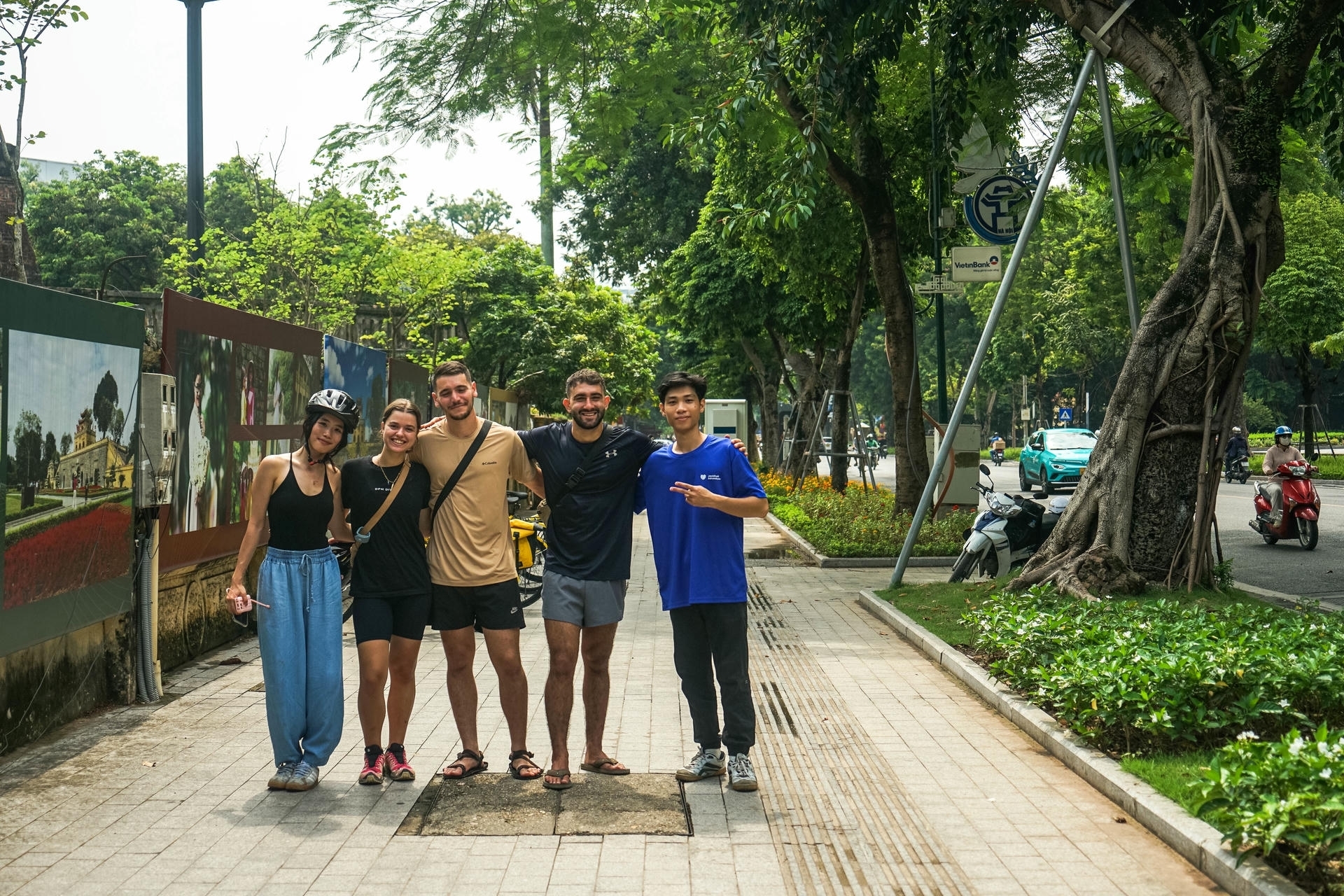
The Hanoi Opera House doesn’t just stand as a monument to heritage and elegance; it also serves as a splendid gateway into the rich history of the capital city. But what if you could trace that incredible tale not only through one grand building, but across the streets and hidden alleys of Hanoi itself?
With Jackfruit Adventure Tour De Hanoi cycling tour, every turn reveals another layer of the city’s charm. Starting from the Hanoi Opera House, the ride winds through tree-lined boulevards and the grand façades of the French Quarter before slipping into quiet alleys where daily life hums at a leisurely pace. Along the way, we may pause for local coffee, meet welcoming locals, and watch the sun fade over Hoàn Kiếm Lake, a journey that captures Hanoi’s charm in motion.
If the Hanoi Opera House draws you in, let its charm be the beginning of your journey, not the end!