

Table of Contents
Team building activities for large groups work best when 100+ people are divided into smaller teams, given clear roles, and guided through a structured flow instead of being pushed into one giant game. For a company group of 100, 150, or 200+ participants, the challenge is not simply “finding a fun activity.” The real challenge is movement, timing, safety, briefing, team division, scoring, weather backup, transport, and making sure every participant has something meaningful to do.
At Jackfruit Adventure, large group programs in Vietnam are usually built around stations, team captains, facilitators, route control, simple instructions, and a strong closing moment. That structure matters because large teams can lose energy fast if people are left waiting, confused, or watching only a few people participate.
That is why the best team building activities for large groups should be easy to explain, scalable across many teams, and flexible enough for different energy levels. For more program ideas designed specifically for big company groups, Jackfruit’s guide to large group team building activities in Vietnam is a useful starting point.
Jackfruit Adventure supports companies with corporate event services in Vietnam, including team building, company retreats, MICE programs, incentive travel, CSR activities, cultural experiences, outdoor challenges, and group activities across Vietnam.

Why team building activities for large groups need a different design
Team building activities for large groups cannot be planned like small-group games. With 100+ people, even a five-minute delay at each station can quickly turn into 30 minutes of waiting. If one instruction is unclear, ten teams may interpret it differently. If the venue is too narrow, the group energy drops before the activity starts.
Large groups also need more roles. In a group of 10, one person can lead the challenge. In a group of 150, the program needs team captains, station leaders, timekeepers, scorekeepers, photographers, runners, facilitators, and people supporting logistics. The best large group format gives active and quieter people a way to contribute.
This is also why the activity needs a real purpose. Harvard Business School Working Knowledge explains that team psychological safety helps people speak up, take interpersonal risks, and contribute ideas without fear. For large groups, safety is not only emotional; it is also logistical. People need to know where to go, what to do, who to ask, and how their role matters.
Quick comparison: which large-group activity fits your company?
| Activity | Best group size | Best for | Why it works for 100+ people |
|---|---|---|---|
| CSR Carnival Fair | 100–300+ | CSR, culture, community impact | Many booths create many roles, so everyone can contribute |
| City Quest Challenge | 80–200 | Outdoor energy, local discovery | Teams spread across checkpoints instead of crowding one space |
| Survival Island Mission | 60–150 | Strategy, leadership, outdoor teamwork | Tribes of 8–12 keep the big group manageable |
| Large Group Cooking Challenge | 80–150 | Food, culture, soft collaboration | Separate stations allow prep, cooking, plating, and presentation roles |
7 team building activities for large groups in Vietnam
1. Outdoor Station Rotation Challenge
An Outdoor Station Rotation Challenge is one of the most practical team building activities for large groups because it keeps 100+ people moving through multiple activity zones instead of gathering everyone around one single game.
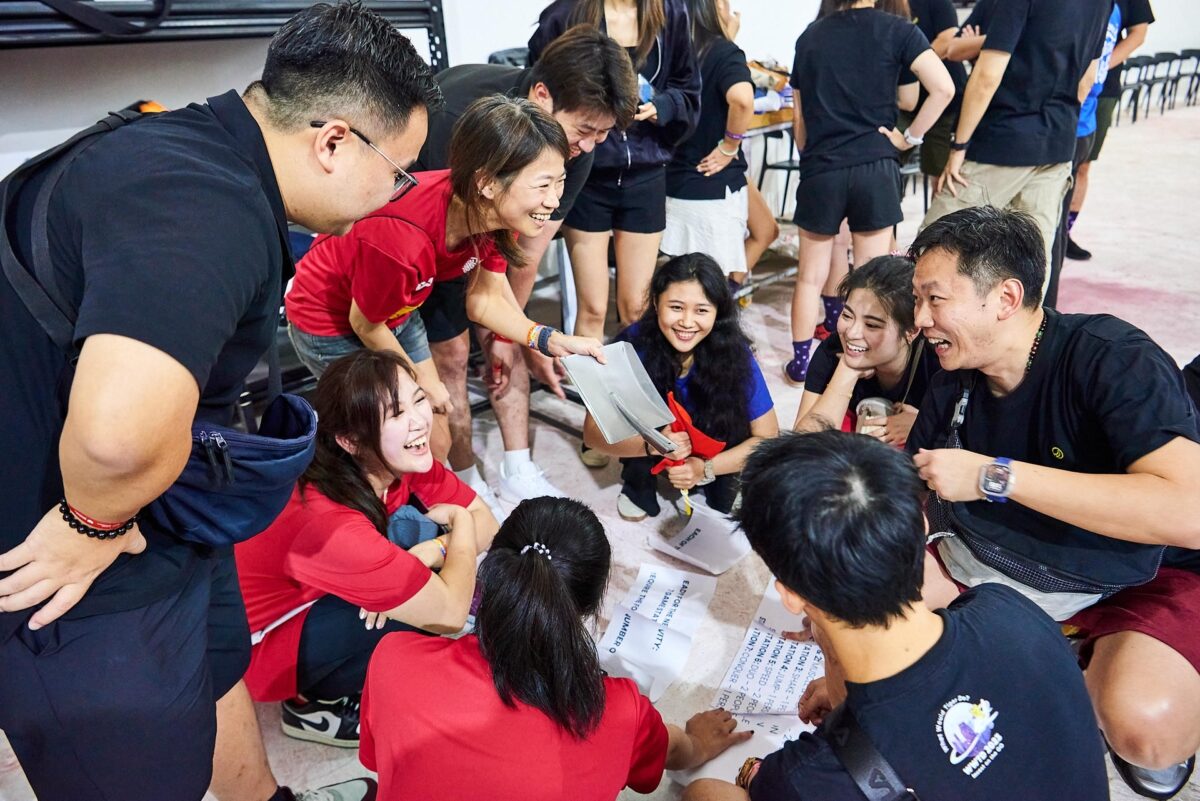
Before the event, the group is divided into smaller teams of around 8 to 12 people. Each team receives a route card, score sheet, or team passport, then rotates through 5 to 8 stations. Each station can focus on a different teamwork skill, such as coordination, communication, balance, strategy, leadership, or problem-solving.
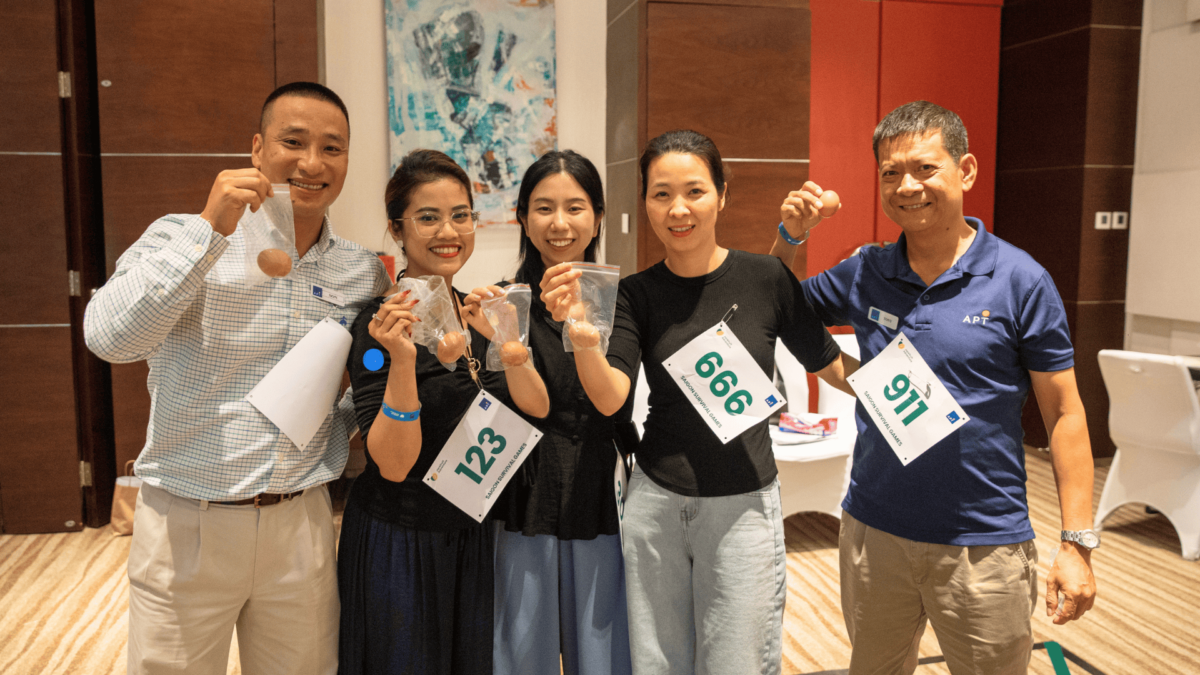
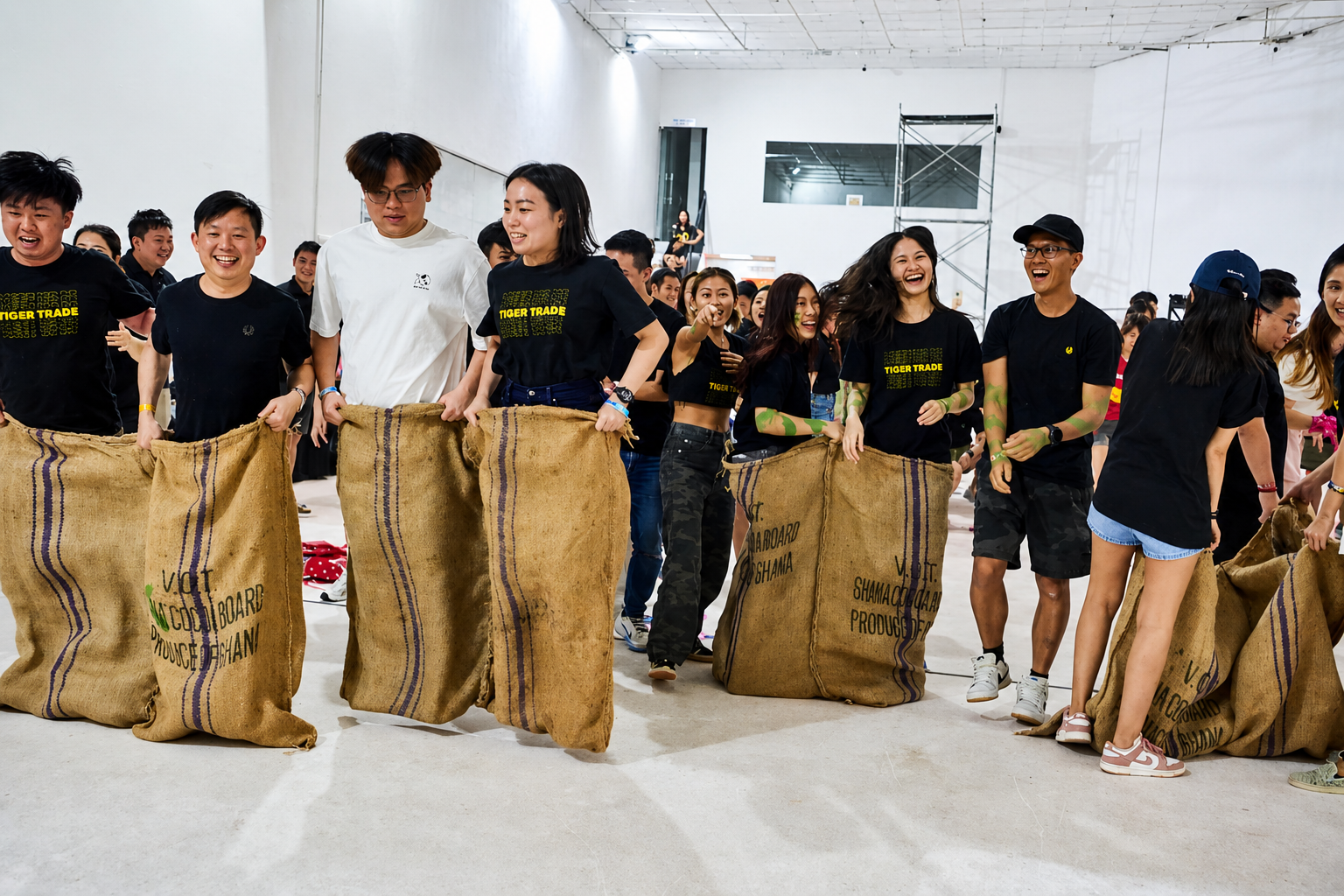
For a Jackfruit Adventure program, the station mix can include simple but high-energy challenges such as sack races, bamboo pole challenges, coconut carrying races, blindfolded navigation, tug of war, water transfer games, puzzle missions, or Vietnamese culture-inspired tasks. The key is to make each challenge short, clear, and easy to repeat so every team gets the same experience without long waiting time.
Best for: annual company events, outdoor retreats, resort team building, beach programs, large corporate groups, and teams that want high energy without complicated rules.
Recommended duration: 2 to 4 hours.
Why it works: it gives large groups structure, movement, and momentum. Every participant has a clear role, every team stays active, and the event feels organized instead of crowded.
2. City Quest Challenge Across Public Landmarks
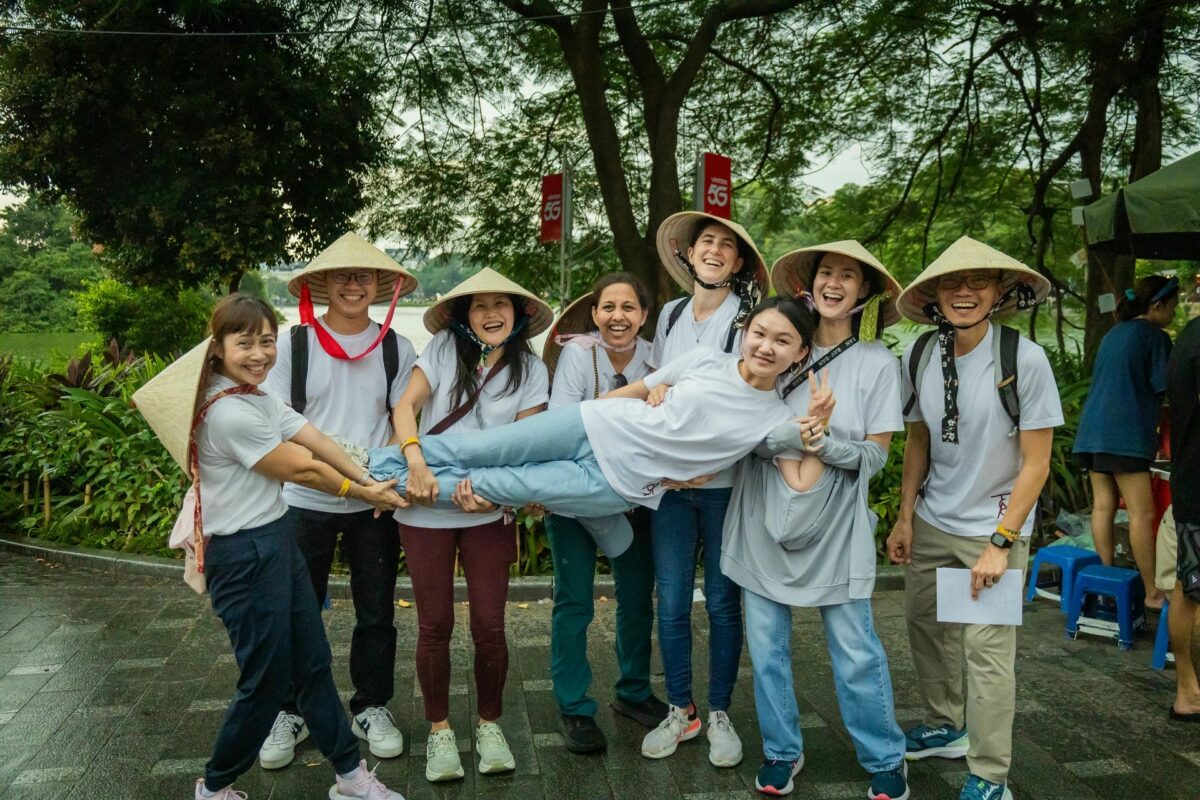
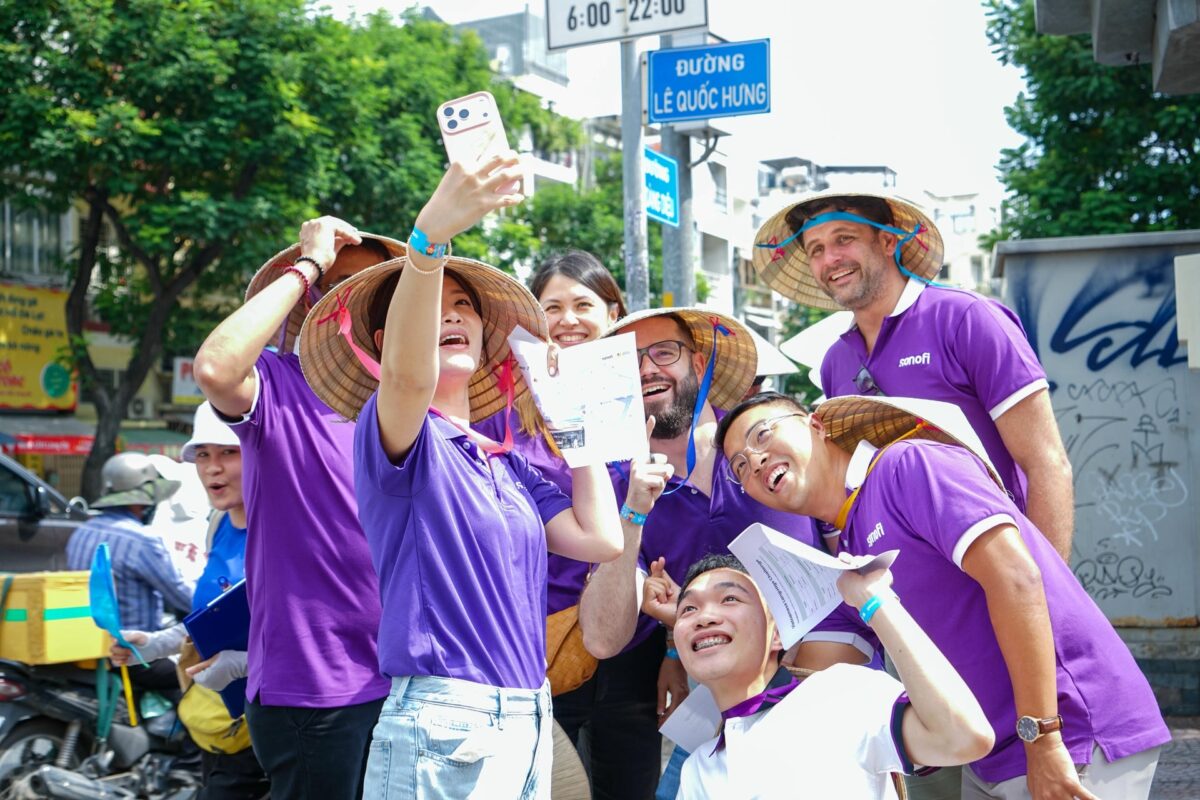
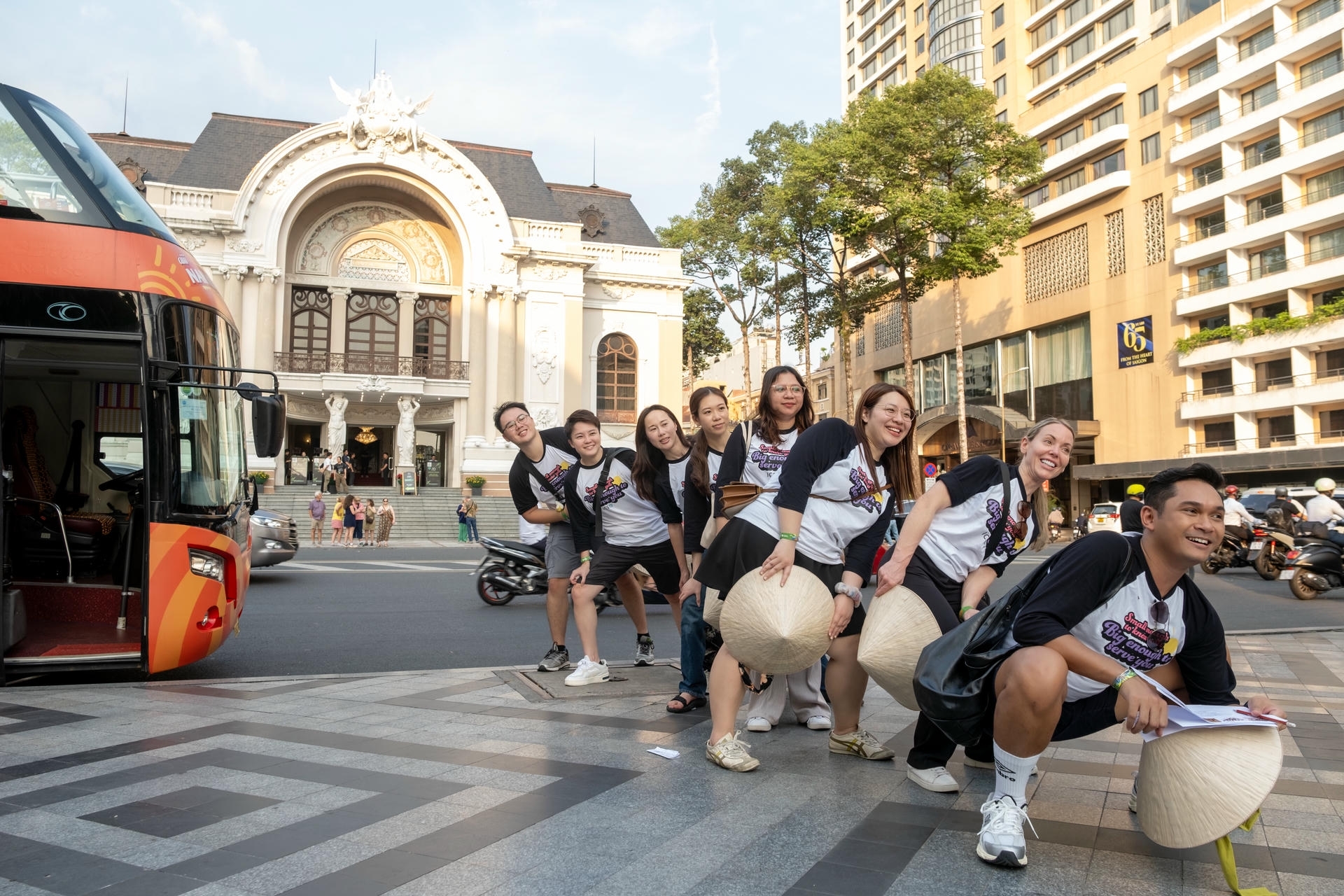
A City Quest Challenge works well for large corporate groups because teams can spread across a route instead of crowding one venue. Armed with a city map and clue booklet, teams unlock checkpoints hidden among public landmarks, local markets, cultural sites, or popular open spaces.
In Ho Chi Minh City, public areas around Nguyen Hue Walking Street, Ben Thanh Market, Notre-Dame Cathedral area, or riverside routes can support different checkpoint styles. In Hanoi, the Old Quarter, Hoan Kiem Lake, and nearby cultural streets can create a walking quest with history, navigation, and teamwork.
At each stop, teams complete short challenges inspired by Vietnamese culture and daily life. They may solve a riddle, identify local ingredients, take a team photo, learn a basic Vietnamese phrase, or recreate a local scene.
Best for: active teams, city-based events, company retreats, and groups that want to explore Vietnam beyond a meeting room.
Recommended duration: 3 to 4 hours.
Why it works: the route spreads the crowd, keeps teams moving, and gives participants a shared city story instead of one static activity.
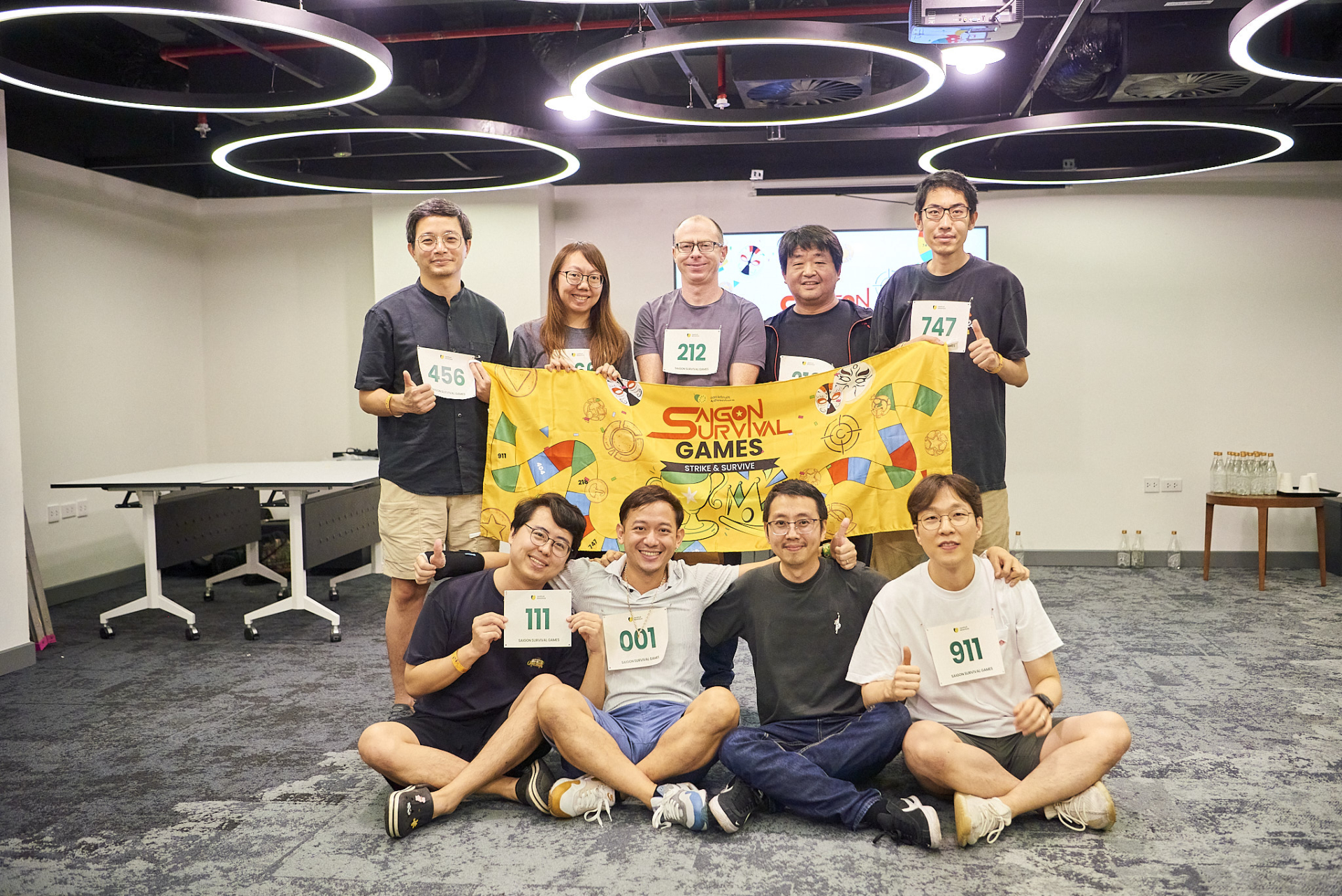
3. Team Survival Mode on an Isolated Island
Team Survival Mode is one of the most energetic team building activities for large groups when the company wants strategy, leadership, and outdoor challenge. The storyline is simple: participants are stranded and must work together to survive until rescue arrives.
Jackfruit’s large group activity guide recommends dividing participants into tribes of 8 to 12 people. Each tribe creates a name, flag, and identity before moving through survival missions such as building a shelter, collecting resources, communicating from afar, or creating a simple boat concept.
This works especially well for 60 to 150 participants, and it can be adapted for 100+ groups with multiple facilitators and parallel stations. The key is to make the challenge feel adventurous without making it unsafe or too physically intense.
Best for: outdoor retreats, leadership groups, active teams, and companies that want a high-energy day.
Recommended duration: half-day to full-day.
Why it works: smaller tribes make a large group feel manageable. People can lead, support, build, communicate, or solve problems depending on their strengths.
4. Large Group Cooking Challenge with Local Ingredients
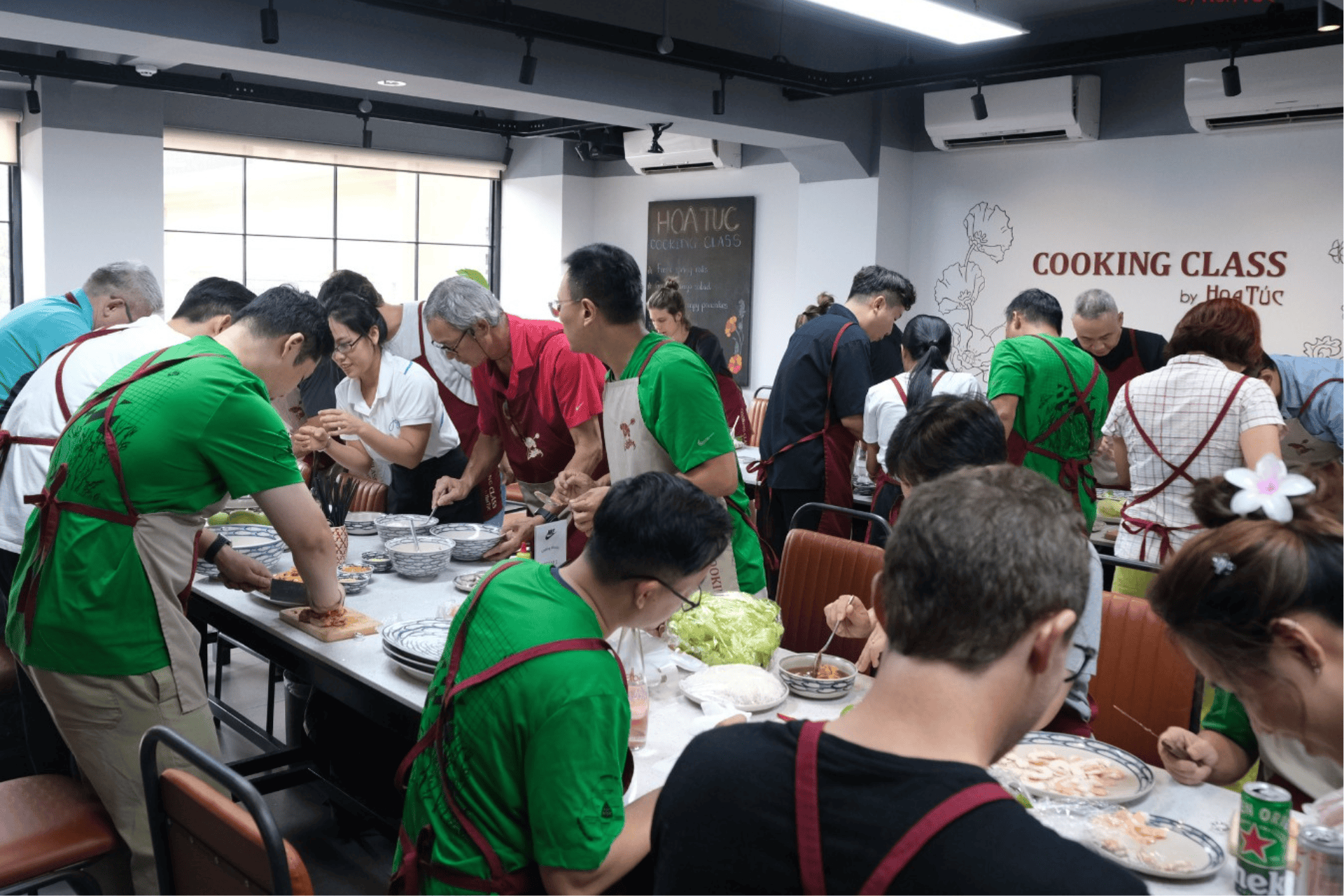
A cooking challenge is a practical option for companies that want team building activities for large groups with culture, food, and easy participation. Not everyone wants to run, race, or compete outdoors, but most people can join a food-based challenge in some way.
The experience can begin with ingredient briefing, team division, cooking stations, plating, storytelling, and tasting. Some participants prepare ingredients, some cook, some decorate, some present the dish, and others support timing and cleanup.
The why matters here: food gives large groups an easy conversation bridge. People who do not usually talk at work can still ask, taste, laugh, compare, and collaborate around the same table.
Best for: mixed-age teams, international groups, indoor backup plans, and culture-focused events.
Recommended duration: 3 to 4 hours.
Why it works: it creates many small roles inside one shared outcome, which is exactly what large groups need.
5. Build-a-Gift or Build-a-Bike CSR Challenge
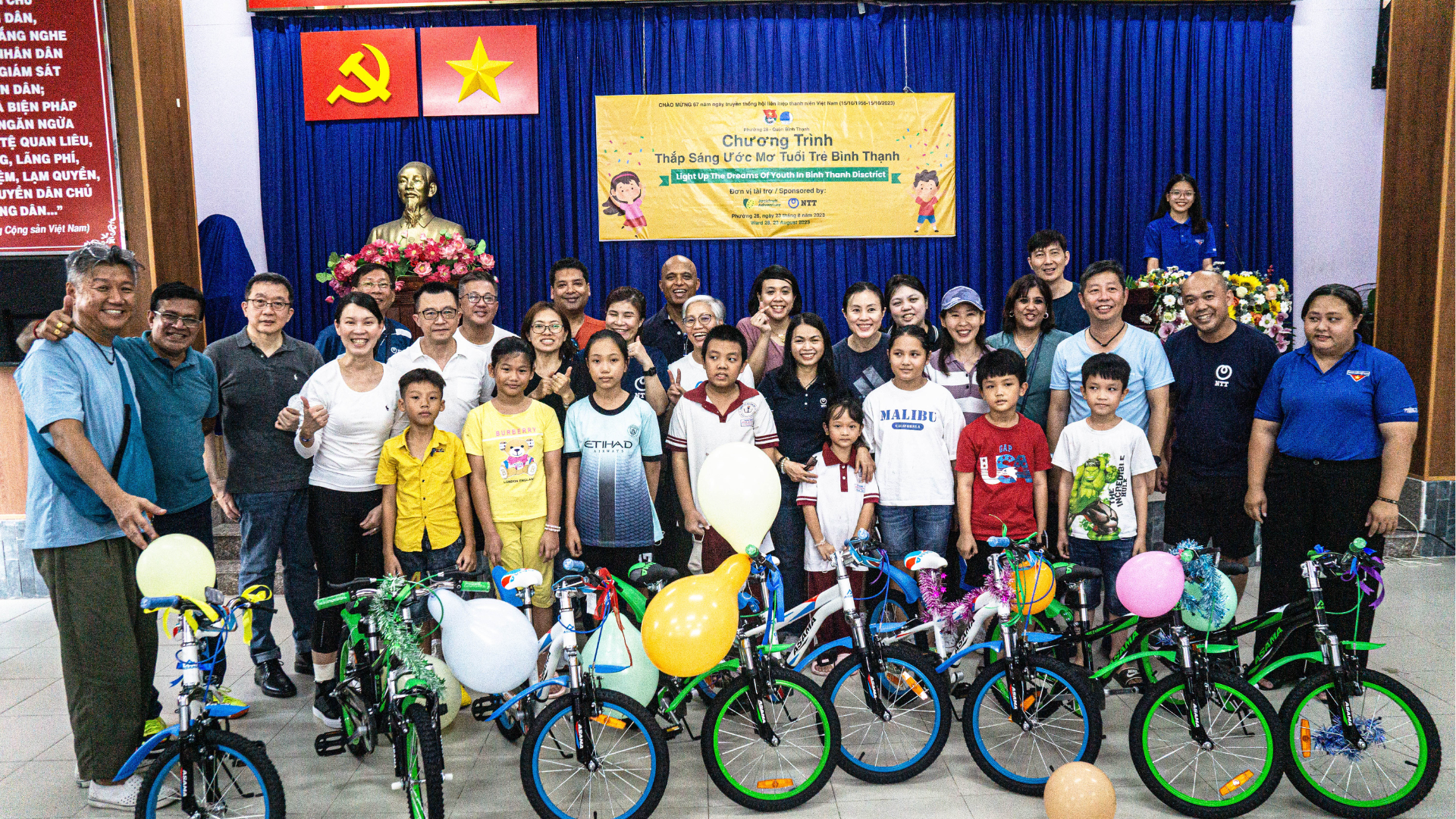
Build-a-Gift or Build-a-Bike activities work well when the company wants a hands-on CSR format with a clear final result. Teams assemble useful items, decorate gift sets, prepare care packages, or build bicycles that can later be donated through a local partner.
For 100+ people, the activity can be divided into stations: assembly, quality check, decoration, message writing, packing, and presentation. This keeps the program organized and prevents too many people from waiting for one task.
This is one of the most practical team building activities for large groups because it balances structure and emotion. Participants can see what they created together, and the final handover gives the event a meaningful closing moment.
Best for: CSR programs, annual company days, large corporate retreats, and teams that want a tangible outcome.
Recommended duration: 2.5 to 4 hours.
Why it works: every station has a purpose, and the group can see a visible result at the end.
6. Culture Relay with Vietnamese Daily-Life Challenges
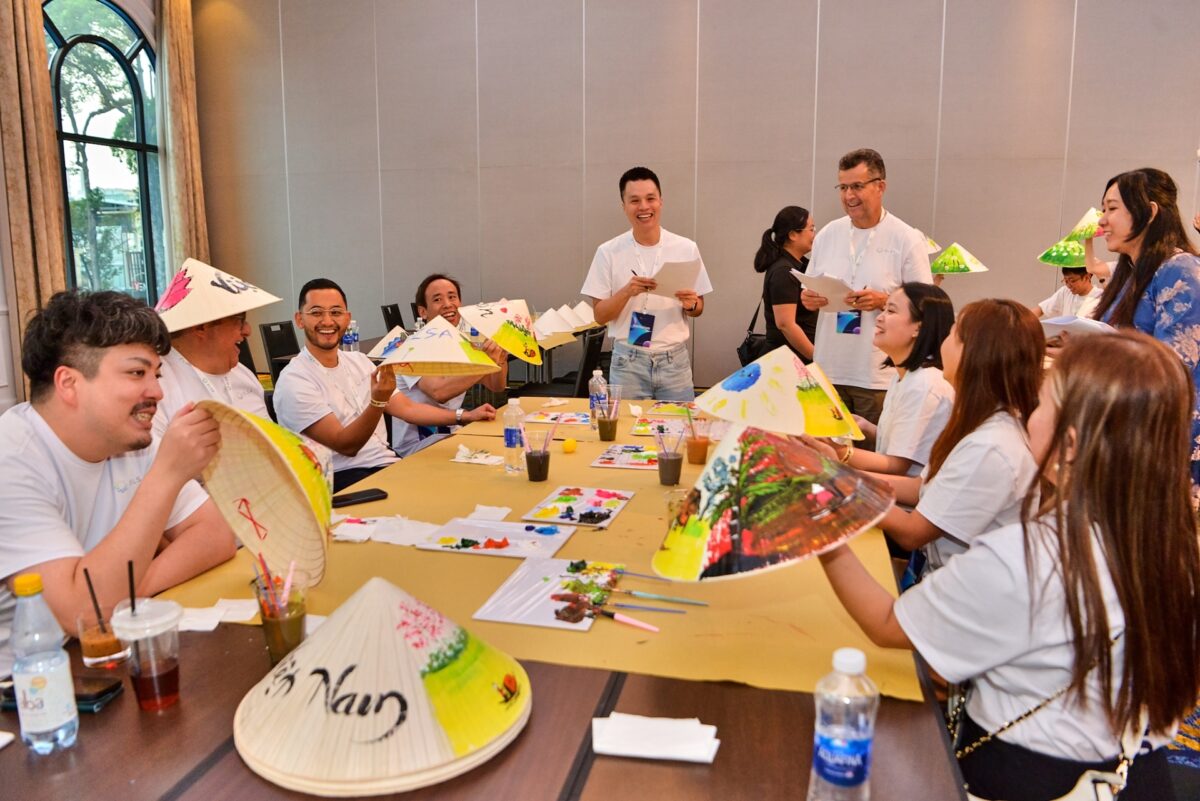
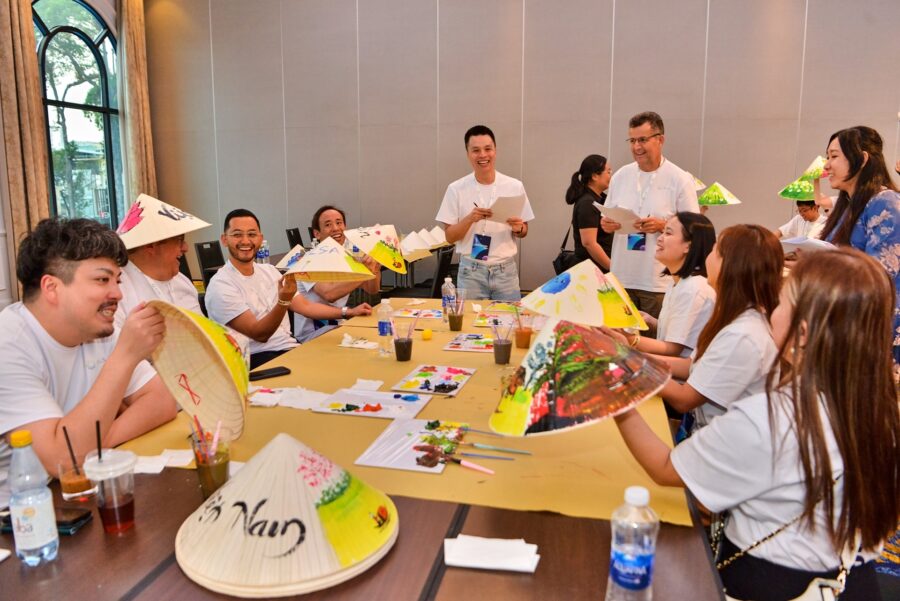
A Culture Relay is a flexible format for large groups because each station can focus on one simple challenge. Teams rotate through tasks inspired by Vietnamese daily life, food, language, craft, music, or local problem-solving.
One station may ask teams to identify herbs used in Vietnamese dishes. Another may ask them to learn a short phrase. Another may involve a simple craft, riddle, balance challenge, or photo mission. The goal is not to test expertise; the goal is to create movement, laughter, and cultural curiosity.
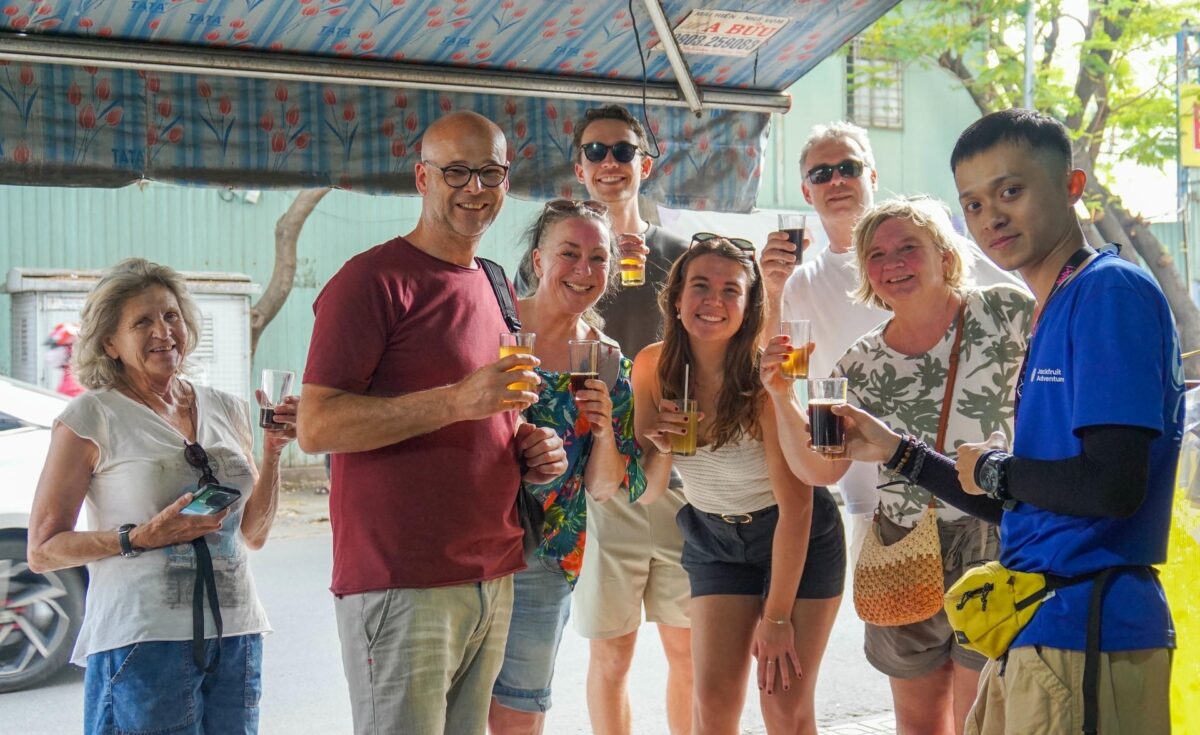
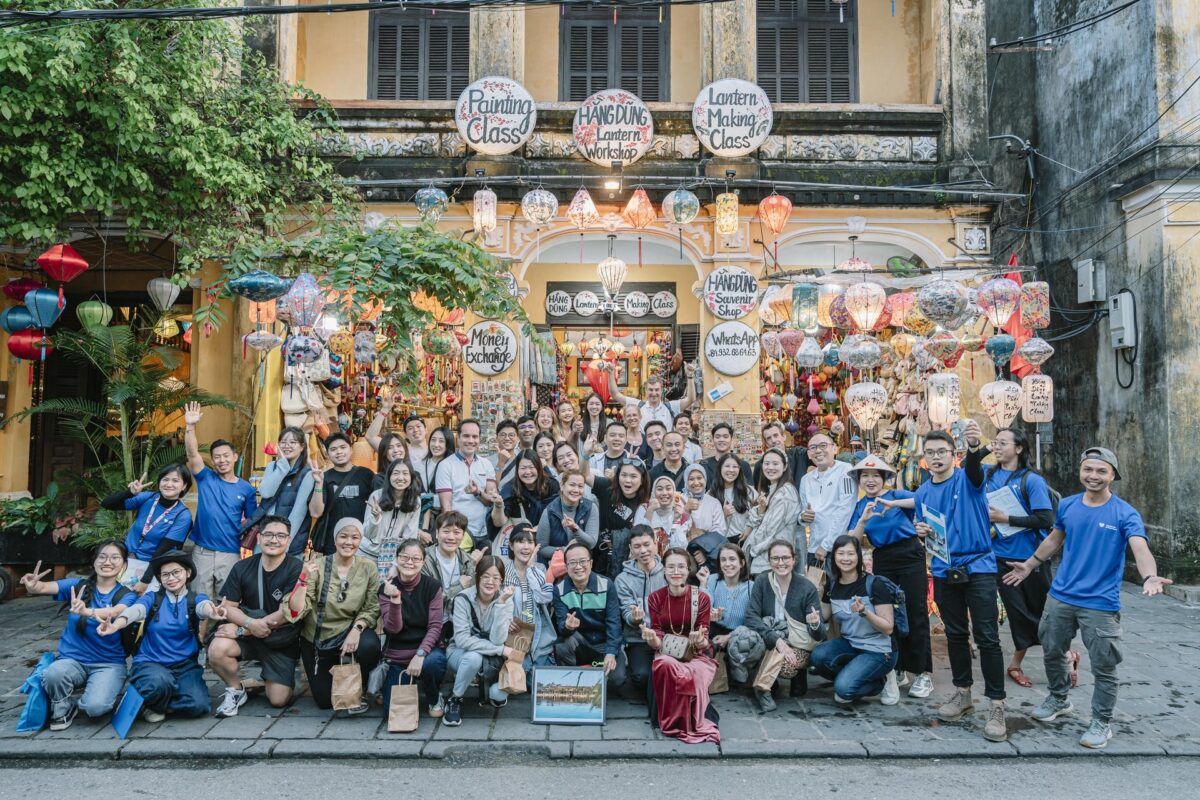
This format works well in Ho Chi Minh City, Hanoi, Da Nang, and Hoi An because each destination can shape the theme. In Hoi An, the relay may lean into lanterns and craft. In Ho Chi Minh City, it may lean into markets, street food, and urban stories.
Best for: international groups, MICE programs, indoor-outdoor hybrid events, and teams that want culture without a lecture.
Recommended duration: 2 to 3 hours.
Why it works: short stations keep energy high and make the activity easy to scale for 100+ participants.
7. Large Group Reflection Wall
A Large Group Reflection Wall helps turn a big, active event into something employees actually remember. After the main activity, each team adds a short message, photo, drawing, value card, or commitment to one shared wall.
The wall can answer simple questions: What did we learn today? Who helped the team move forward? What did this activity show us about communication? What should we bring back to work on Monday?
For 100+ people, this is a useful closing format because not everyone can speak on stage. The wall gives every team a voice without turning the final session into a long series of speeches.
Unlike the other large group activities in this list, the Reflection Wall is not designed to be a full 2 to 4 hour main program. It works best as the final reflection layer after a larger activity, such as a CSR challenge, outdoor team race, station-based program, or company retreat session. That is why the duration is shorter: the physical activity has already happened, and this part helps the group slow down, capture lessons, and connect the experience back to work.
Best for: closing ceremonies, leadership messages, company culture events, and full-day team building programs.
Recommended duration: 30 to 45 minutes as a closing activity after the main program.
Why it works: it turns energy into meaning. Employees leave with a shared visual memory, not just scores and photos.
Guest story: When 100+ people turned into many small teams
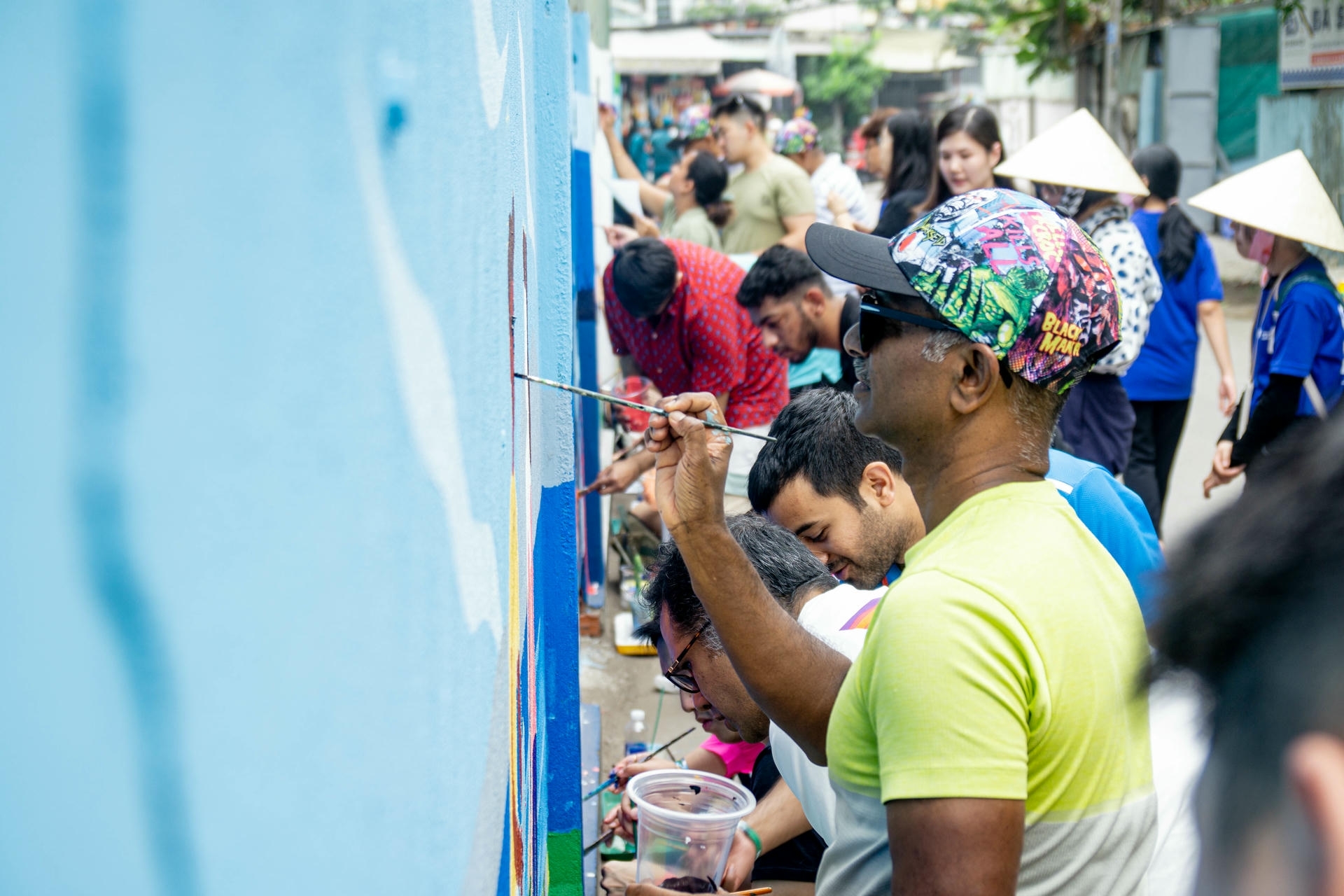
A large corporate group came to Jackfruit Adventure with one concern: they did not want 100+ employees standing around while only a few people played. The solution was to divide the group into smaller teams, each with a clear job, a captain, and a facilitator-supported flow.
For a CSR-style event, teams prepared booths, managed games, welcomed children, arranged gifts, and supported the final sharing moment. In a Microsoft CSR program, Jackfruit’s internal team planned the layout, selected booths, and coordinated with Bung Sang orphanage, Ga Sai Gon orphanage, and Anh Sang shelter, with around 60 children joining the fair.
This kind of structure works especially well for companies that want the day to feel meaningful, not just entertaining. Jackfruit’s purpose-driven team building in Hanoi page shows how CSR and meaningful local activities can become part of a team building program instead of being treated as an extra add-on.
The strongest moment was not a single winning team. It was seeing a large company group move as many small teams with one shared purpose.
Common mistakes when planning team building activities for large groups
The first mistake is choosing an activity that only works for 20 people. If 100+ people have to watch one small challenge, the energy disappears quickly.
The second mistake is making instructions too complicated. Large groups need simple rules, visible signs, short briefings, and team captains who understand the flow before the activity starts.
The third mistake is forgetting transition time. Moving 150 people from lunch to briefing to stations takes longer than expected. A good agenda needs buffer time between every major step.
The fourth mistake is treating facilitators as optional. Strong team building activities for large groups need enough facilitators to manage stations, answer questions, keep scores, and support safety.
The fifth mistake is ending only with awards. Large groups need a closing reflection, group photo, CSR handover, or shared story moment to make the event feel complete. Google’s re:Work guide on team effectiveness highlights why structure, clarity, and psychological safety matter when teams need to work well together.
What should companies prepare before booking?
Before booking team building activities for large groups, prepare your estimated group size, preferred city, event date, time available, indoor or outdoor preference, physical ability level, transport plan, meal timing, and main objective.
If the group is 100+ people, also ask about team division. A good structure is usually 8 to 12 people per team, depending on the activity. This keeps communication manageable and gives each team enough people to share roles. For lighter activity formats, Jackfruit’s guide to fun team bonding games in Vietnam can help organizers compare games that are easier to explain and scale.
For outdoor programs, check weather backup, water stations, restroom access, shaded areas, bus parking, first-aid support, and how participants will move between activity zones. These details may sound small, but they decide whether the day feels smooth or stressful.
If your program includes CSR, local community activities, or sustainability goals, it is also worth checking how the event manages waste, transport, supplier coordination, and social responsibility. The Event Industry Council Sustainable Event Standards gives a helpful framework for thinking about environmental and social responsibility in events.
FAQs about team building activities for large groups
The best team building activities for large groups include CSR carnival fairs, city quest challenges, survival missions, cooking challenges, build-a-gift activities, culture relays, and reflection walls. The right choice depends on group size, venue, timing, and event purpose.
Yes. Jackfruit Adventure designs customized corporate team building and group activities across Vietnam. For 100+ people, the program should be planned with clear team division, facilitators, route control, logistics, and safety support.
For many large group formats, 8 to 12 people per team works well. This keeps teams large enough to share roles but small enough for everyone to participate.
Large groups usually need a spacious indoor hall, outdoor field, riverside venue, resort area, school yard, community space, or city route with multiple checkpoints. The best venue depends on whether the activity is indoor, outdoor, CSR-based, or city-based.
A simple large group activity can last 2 to 3 hours. A more complete program with briefing, stations, scoring, reflection, and transport usually works best as a half-day or full-day event.
Choose activities with different roles instead of only physical challenges. CSR fairs, cooking challenges, culture relays, and reflection walls allow people to contribute through planning, hosting, creativity, communication, and support.
Yes. CSR activities are often especially suitable for large groups because many participants can manage booths, prepare gifts, host games, welcome guests, and support logistics. Big numbers can create bigger community impact when the event is well organized.
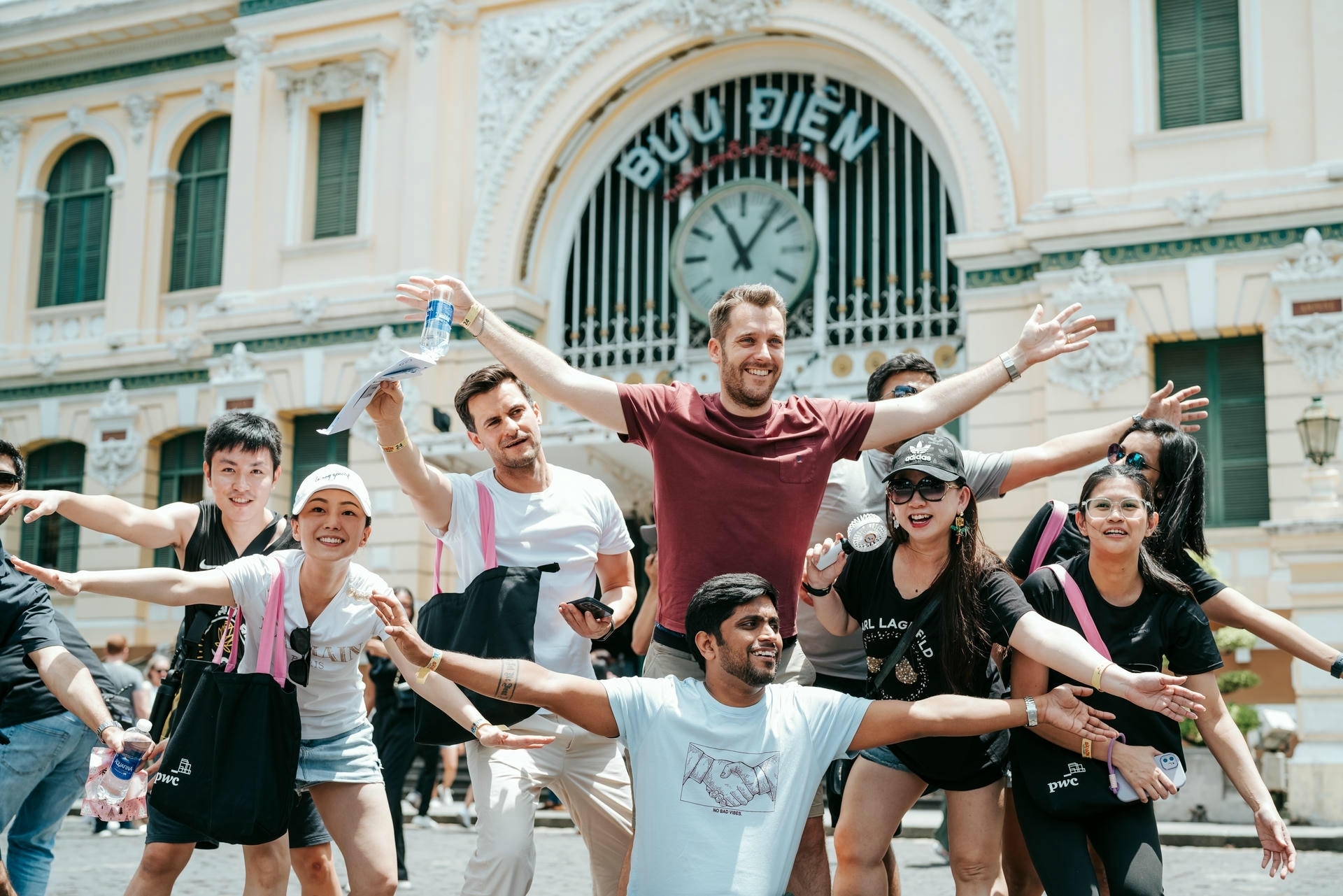
The best team building activities for large groups are not the loudest games. They are the activities where 100+ people know where to go, what role they play, and why the experience matters.
Jackfruit Adventure helps companies design large group team building in Vietnam with the right mix of facilitation, logistics, local culture, CSR impact, and shared reflection. Tell the team your group size, destination, date, and event goal, and Jackfruit Adventure can help build a program that feels organized, meaningful, and memorable.