

Table of Contents
As a Hanoian who has spent years navigating the labyrinthine alleys of this city, I’ve realized that the heartbeat of Hanoi isn’t found in its modern skyscrapers or buzzing shopping malls. It is found in the peeling yellow paint, the rusted iron balconies, and the stately shutters of an old building in Hanoi.
Hanoi was once called the “Paris of the East”, and walking through the French Quarter on a cool morning – coffee in hand, motorbikes weaving past – you begin to understand why. The French colonial period, stretching roughly from the 1880s to 1954, left behind a remarkable architectural legacy that still defines the city’s skyline, its neighborhoods, and honestly, its entire mood.
In this guide, I want to take you on a walk through the most beautiful old buildings in Hanoi that the French left behind, the grand public monuments you’ll find in every guidebook, and a few quieter gems that most visitors walk right past. Whether you’re a first-time traveler or someone who’s visited a dozen times, this city always has another layer to reveal.
A Brief History: How French Architecture Shaped Hanoi
Before we start wandering, it helps to know a little context. French architects began reshaping Hanoi’s streetscape in earnest from the 1890s onward. The city was transformed from a traditional Vietnamese capital into a colonial administrative center – boulevards were carved through old neighborhoods, ponds were filled in, and an entirely new district of public buildings and villas rose south and east of Hoàn Kiếm Lake.
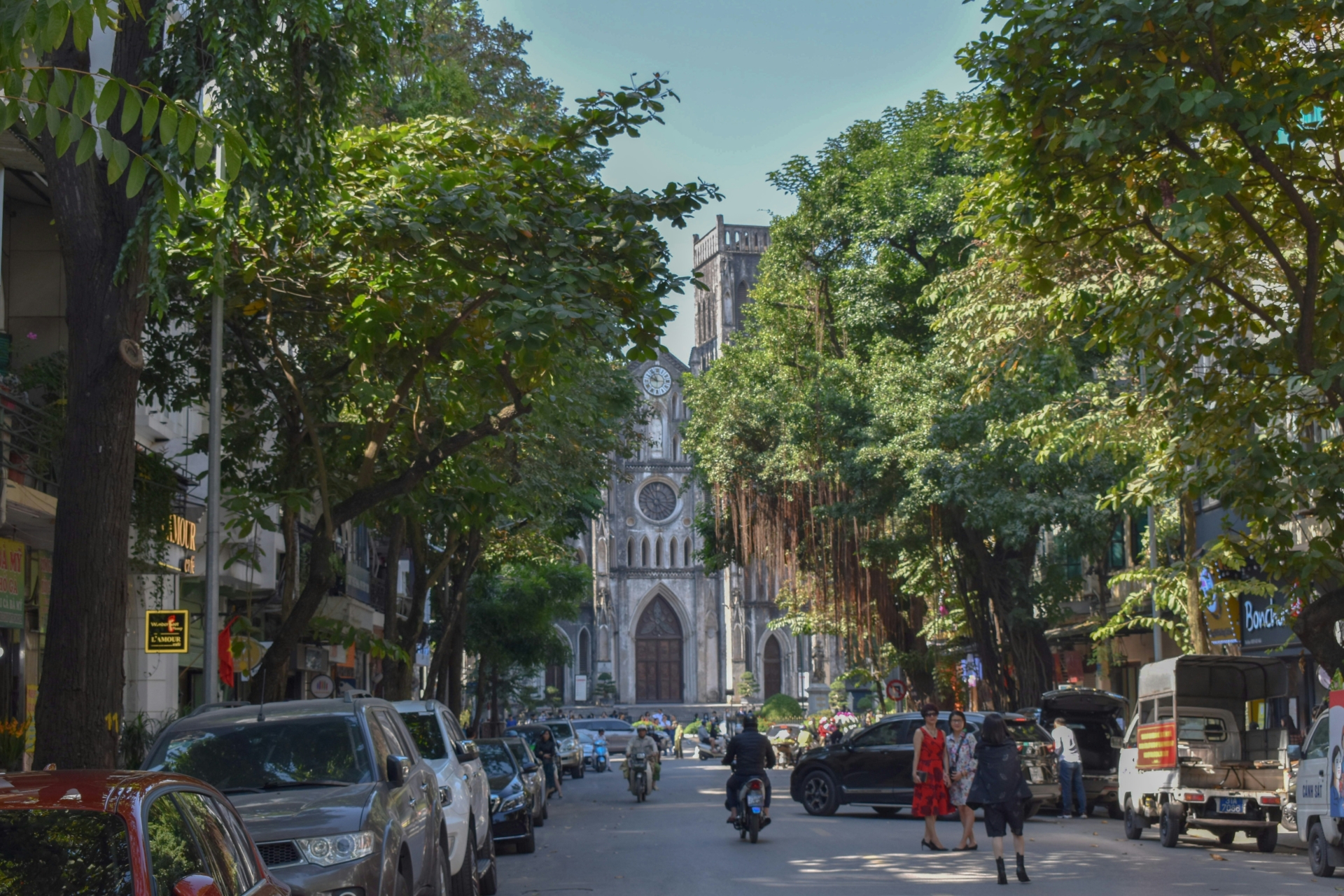
What makes the old buildings in Hanoi particularly fascinating is that this wasn’t a simple copy-paste of Parisian architecture. By the early 20th century, French architects – most notably Ernest Hébrard – began developing the Indochine style, a deliberate fusion of French neoclassical structures with Vietnamese and Chinese decorative elements. The result was something entirely unique: buildings that look vaguely European from a distance but reveal distinctly local details up close – curved roof edges, ornamental lotus patterns, and ventilation systems adapted for the tropical heat.
Today, statistics show there are nearly 3,000 French colonial buildings in Hanoi, including colonial public buildings, villas, and townhouses built between 1890 and 1930. The most recognizable features? Two-storey structures painted in light yellow lime, with blue wooden shuttered windows that practically glow in the afternoon sun.
The Grand Icons: Must-See French Old Building in Hanoi
1. Hanoi Opera House
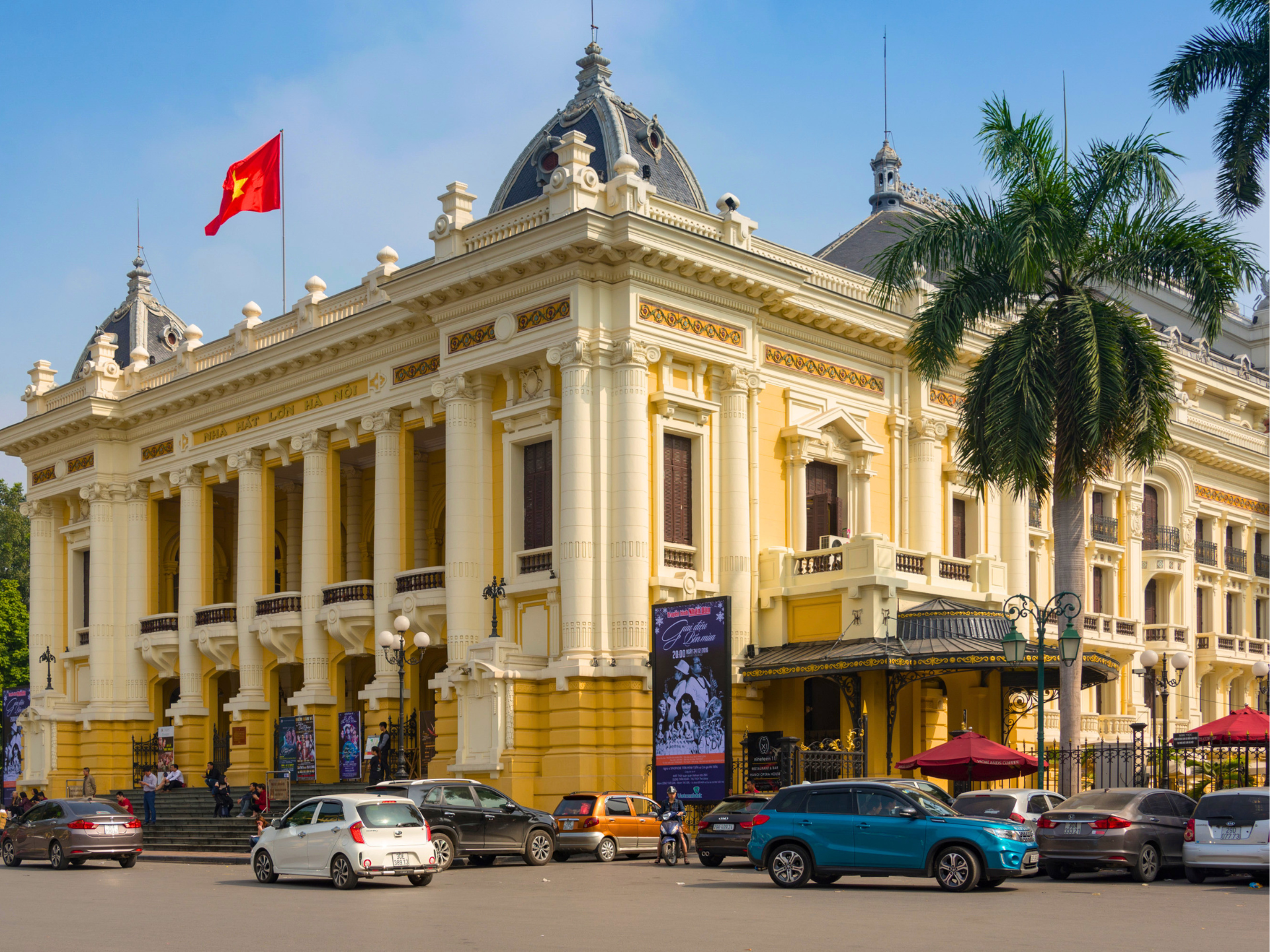
You cannot talk about an old building in Hanoi without starting at the Opera House (Nhà Hát Lớn). Modeled after the Palais Garnier in Paris, this is perhaps the most opulent example of colonial architecture in Southeast Asia.
Completed in 1911, it stands as a testament to the “Belle Époque”. When I walk past it at night, when the yellow floodlights hit the white marble columns and the shuttered windows, it feels like stepping back a century. It wasn’t just a place for high society, it has been the backdrop for the pivotal political shifts of our nation.
Local Tip: Don’t just take a photo from the outside. Check the schedule for a traditional Vietnamese bamboo circus or an orchestral performance. Stepping inside this old building in Hanoi is like entering a time capsule of velvet and gold leaf.
2. St. Joseph’s Cathedral
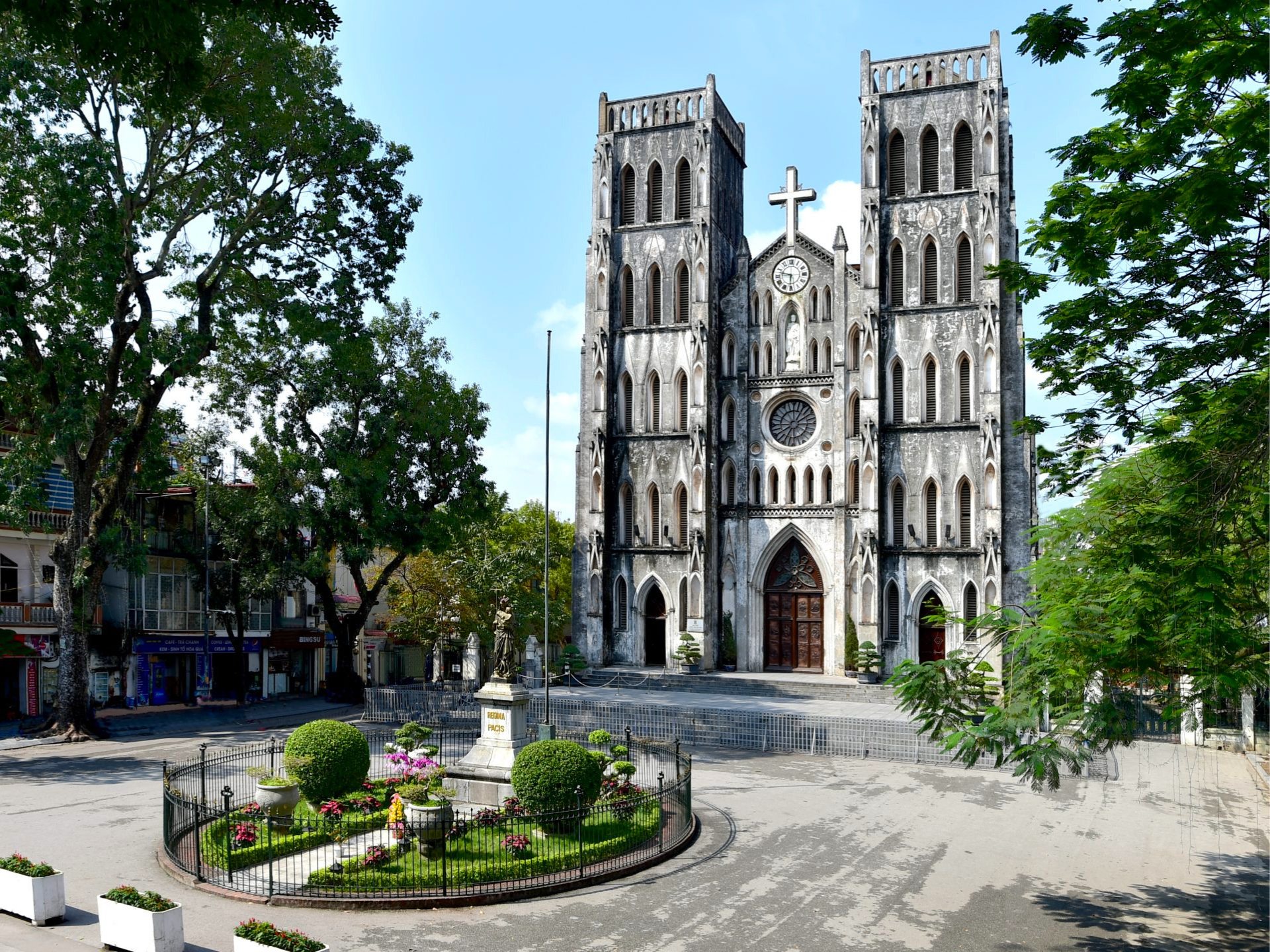
Inaugurated in 1886, St. Joseph’s (Nhà Thờ Lớn) is the oldest church in the city. Unlike the sunny yellow of other structures, this old building in Hanoi has a dark, weathered stone look that gives it a mysterious, ancient vibe.
To a Hanoian, “Nhà Thờ” is a verb. We say “Let’s go Cathedral” (Ra Nhà Thờ đi), which means sitting on the sidewalk, drinking lemon tea (Trà Chanh), and seeds-cracking.
Local Tip: The main doors are often closed except during Mass. If you want to see the stunning stained glass inside this old building in Hanoi, arrive at 5:00 PM on a weekday or during the multiple services on Sunday. Also, explore the small side alleys like Nhà Chung or Lý Quốc Sư nearby, they are packed with hidden boutiques and the best Phở 10 Lý Quốc Sư in town.
3. The Presidential Palace
Completed in 1906, the Presidential Palace is perhaps the most “French” old building in Hanoi. With its bright mustard walls and Baroque ornamentation, it was designed to show the power of the Governor-General of Indochina.
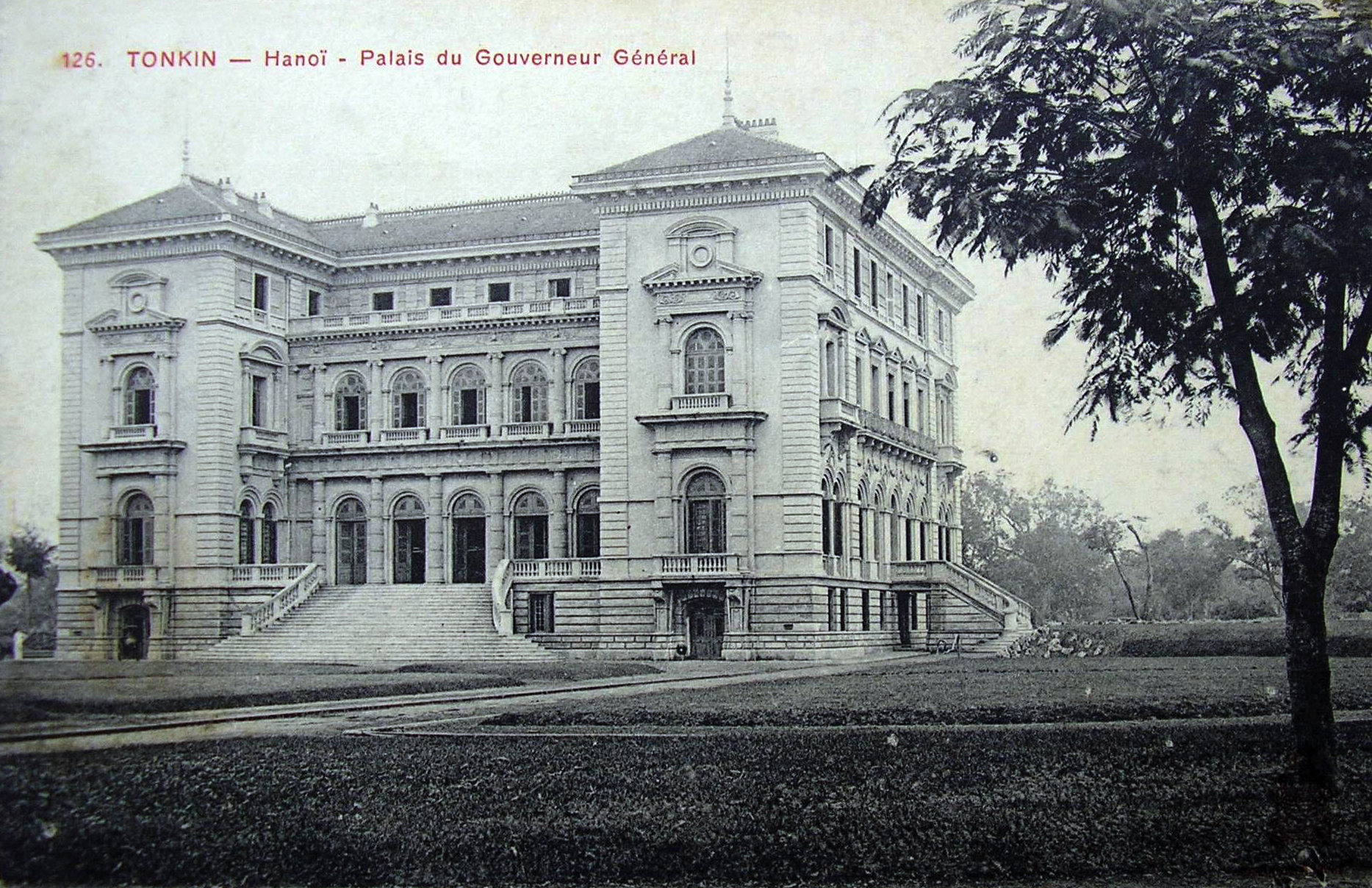
However, the reason we locals love this site isn’t just the architecture, it’s the story of Uncle Ho’s Stilt House located in the back garden. Ho Chi Minh refused to live in the palace, finding it too grand and disconnected from the people. He chose to live in a simple wooden house instead.
Note: You cannot enter the main palace building, as it is still used for state receptions. However, the best photo angle is from the mango-lined path (Xoài Path) in the gardens. The contrast between the yellow old building in Hanoi and the lush green tropical trees is breathtaking in the late afternoon sun.
In the autumn (September-November), the street is covered in yellow leaves. This is the best time to join our Tour de Hanoi: Old Quarter, Iconic Landmarks & Hidden Corners to experience the breeze and the heritage of each old building in Hanoi at a slow pace.
4. Sofitel Legend Metropole
Just a short walk from the Opera House is the Metropole. Opened in 1901, this old building in Hanoi has survived the transition from the colonial era to the subsidy period and into the modern age.
When you walk into the lobby, you can smell the “old wealth”, a mix of polished wood and expensive perfume. This old building in Hanoi famously housed Charlie Chaplin on his honeymoon and Graham Greene while he wrote The Quiet American.
Even if you aren’t staying there, you can join the “Path of History” tour (usually available for guests, but sometimes open to visitors with a booking at the bar). It takes you into the wartime air-raid shelter discovered under the Bamboo Bar in 2011. It is a haunting reminder that every old building in Hanoi has layers of history literally buried beneath it.
5. The National Museum of History
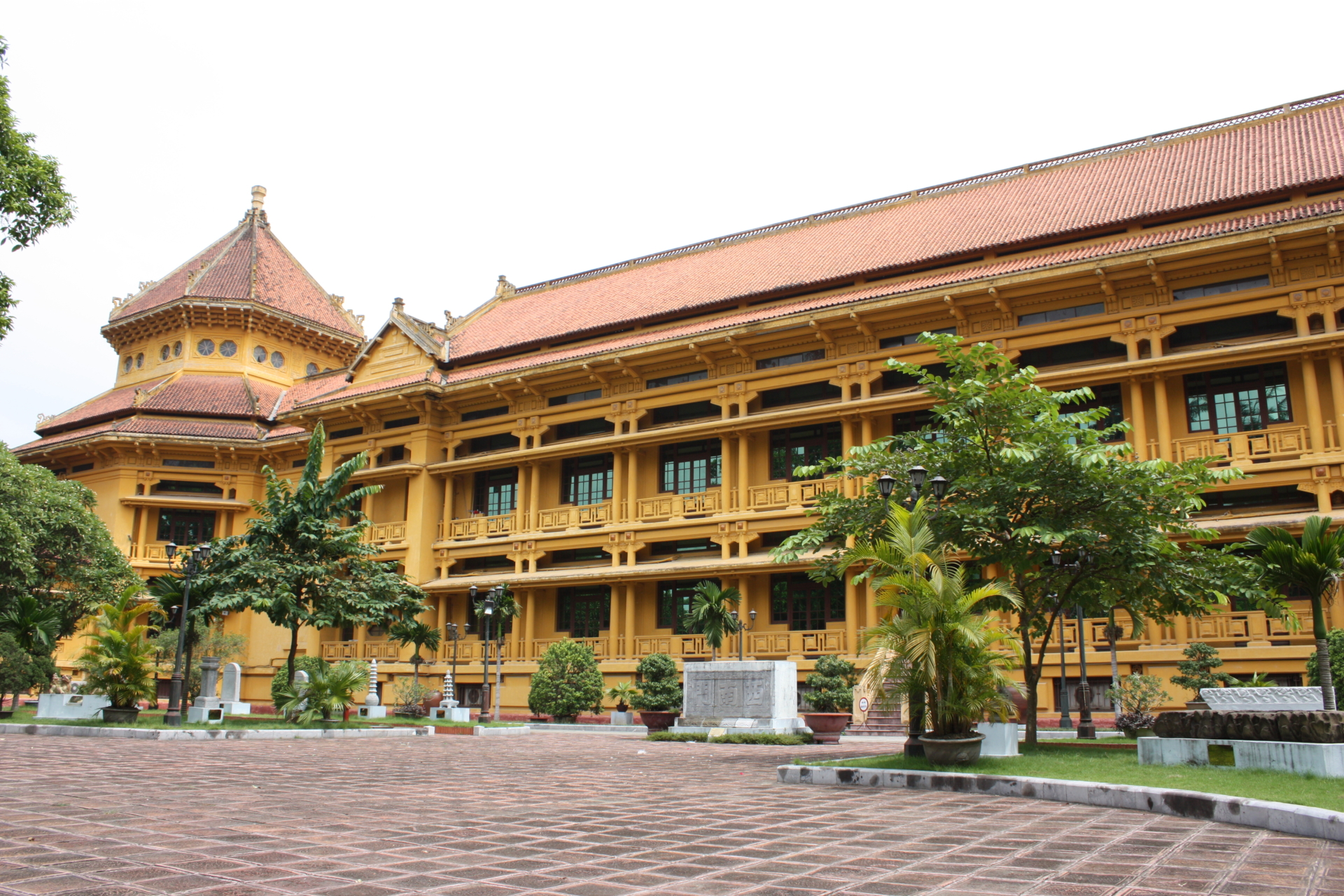
If you want to see the genius of architect Ernest Hébrard, go here. Completed in 1932, this old building in Hanoi was the first to truly integrate Vietnamese elements – like the octagonal roof resembling a pagoda – into a French structure.
The museum houses artifacts from the Dong Son culture to the Nguyen Dynasty, but the building itself is the primary artifact. The natural ventilation system of this old building in Hanoi was so well-designed that it remains cool even without modern air conditioning.
The outdoor area has a collection of Champa stone carvings that are rarely crowded. It’s the quietest old building in Hanoi to visit if you need to escape the city’s chaotic traffic for an hour.
6. The State Bank of Vietnam
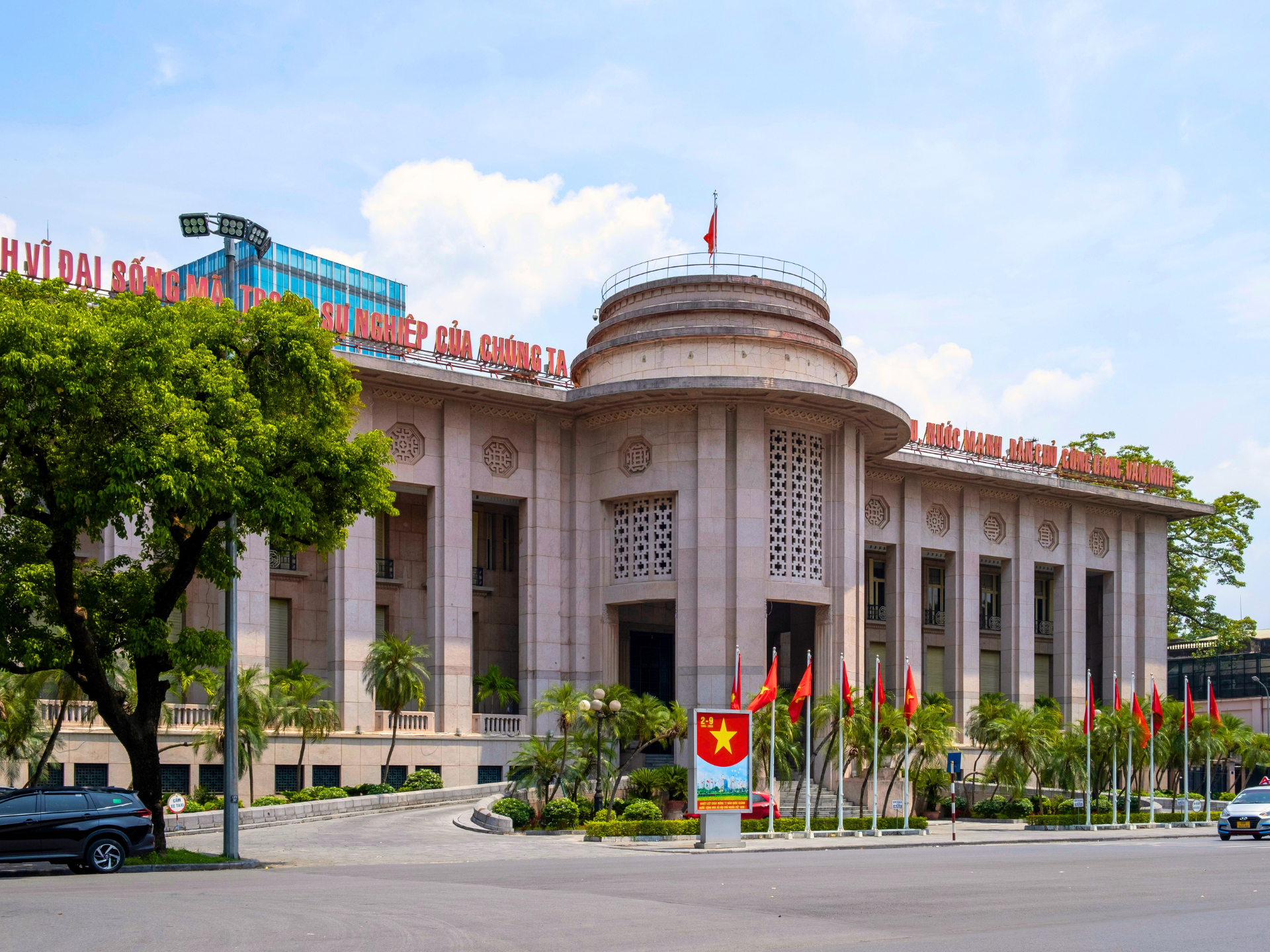
Standing at the end of the “green” Ly Thai To street, the State Bank (formerly the Bank of Indochina) is a fortress of Art Deco. It was built in 1930 and looks much more modern and “solid” than its Neoclassical neighbors.
The window grills of this old building in Hanoi feature the lotus flower, a subtle nod to Vietnamese identity during a time of colonial rule.
7. Chu Văn An High School
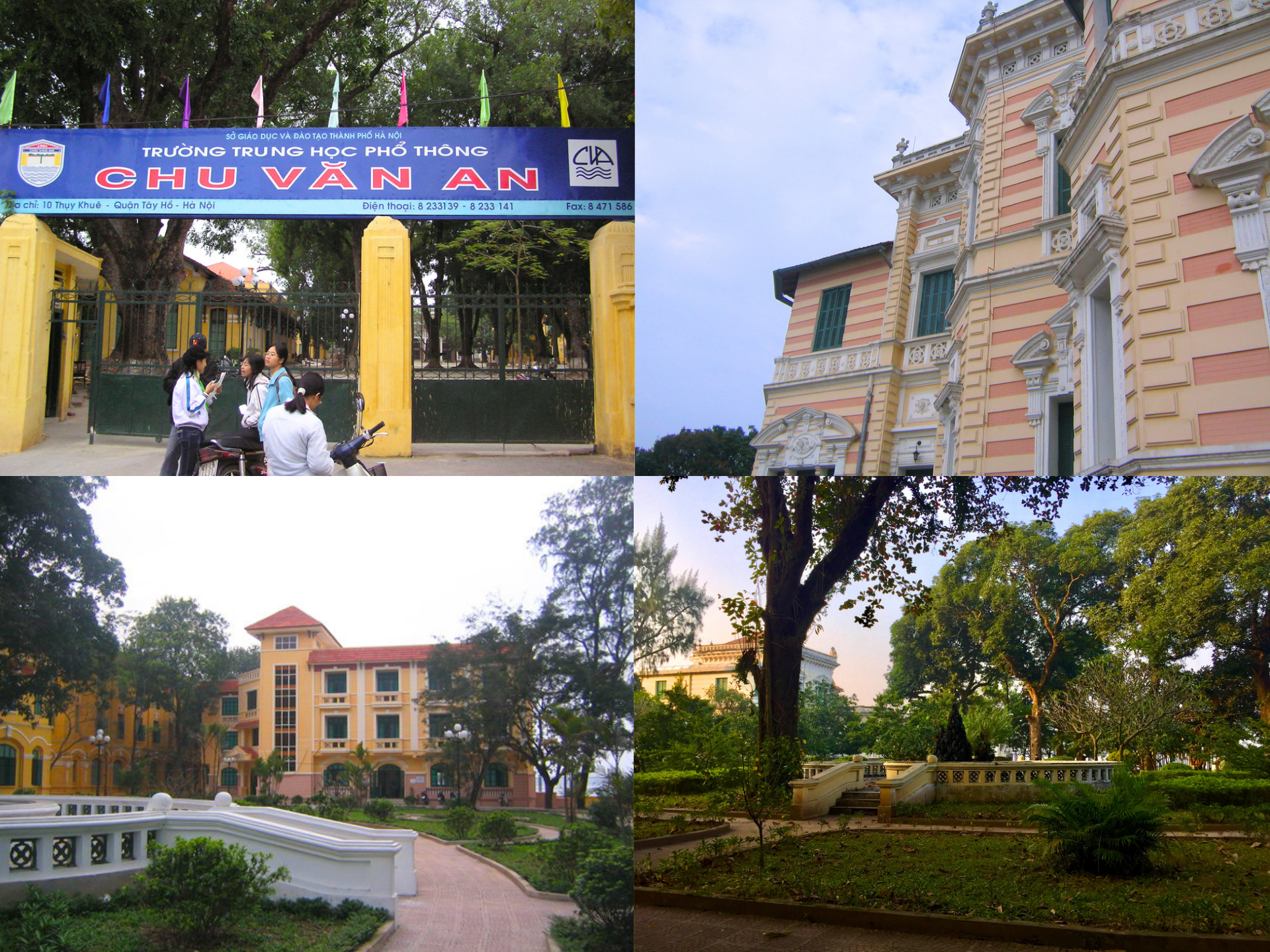
Founded in 1908, this school is where many of Vietnam’s top leaders and intellectuals were educated. The “Bâtiment A” is a gorgeous red-brick old building in Hanoi that sits right on the edge of West Lake.
Local Tip: Since it’s a functioning school, you can’t just wander in during class hours. However, the best view is from the Thanh Niên road side at sunset. Watching the sun go down over West Lake with the silhouette of this old building in Hanoi in the foreground is a core Hanoi memory.
8. The Ministry of Foreign Affairs
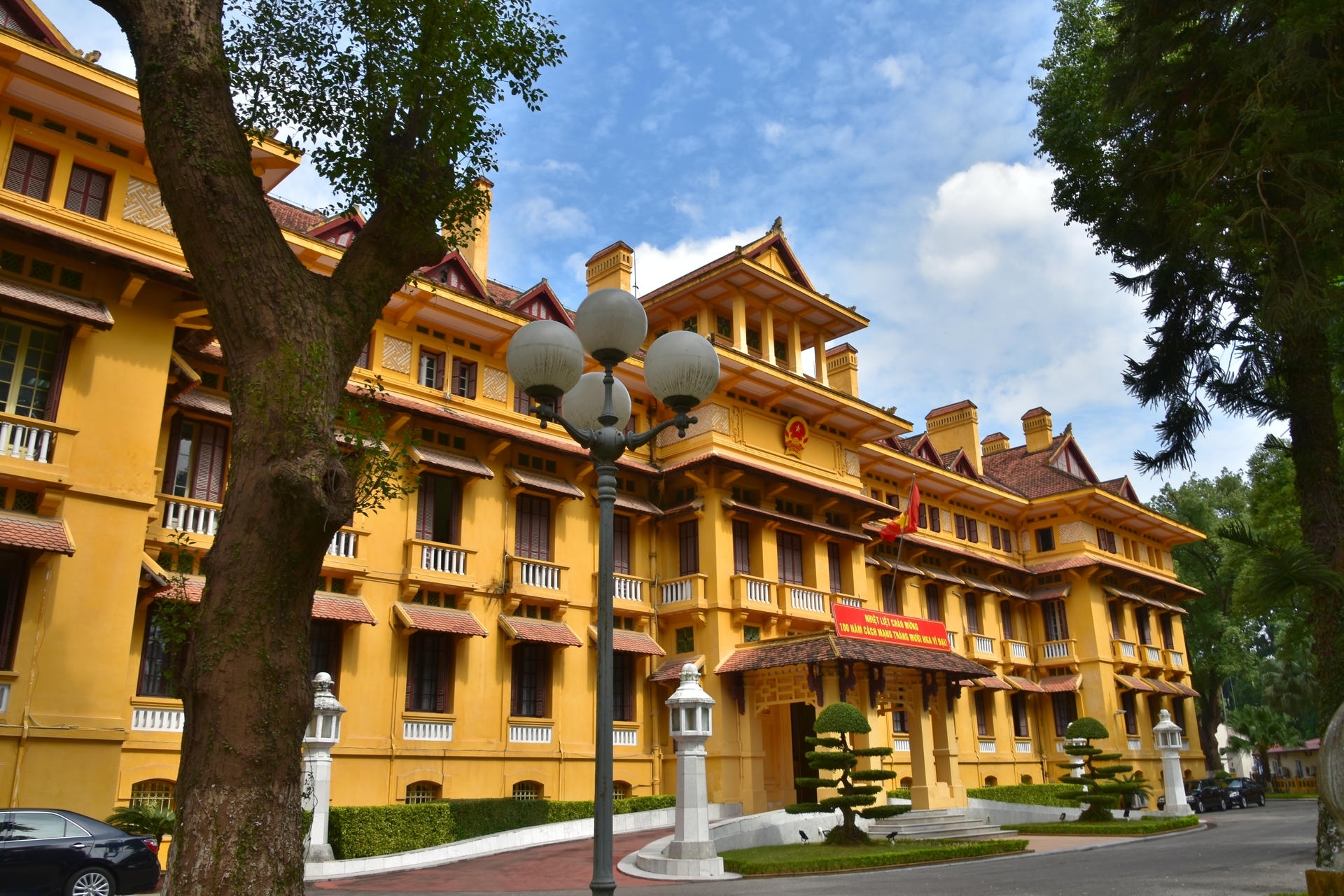
Designed by French architect Ernest Hébrard, the Ministry of Foreign Affairs building has a distinctive Indochine style that blends Eastern traditions and Western modernity. Nearly 100 years old, it is one of the rare examples of French colonial architecture in Hanoi that remains largely untouched.
Locally, this old building in Hanoi is nicknamed “the house of 100 roofs” – a reference to its complex, tiered roofline that draws heavily from Vietnamese temple architecture. It’s not open to the public, but walking slowly along Ton That Dam Street gives you a good look at the exterior.
9. The State Bank of Vietnam
The headquarters of the State Bank of Vietnam, formerly the Indochina Bank of France, was built in 1928 in the neoclassical style. With its prime location, open façade, and bright interiors, the State Bank of Vietnam is now considered the most perfect Art Deco style building in Hanoi.
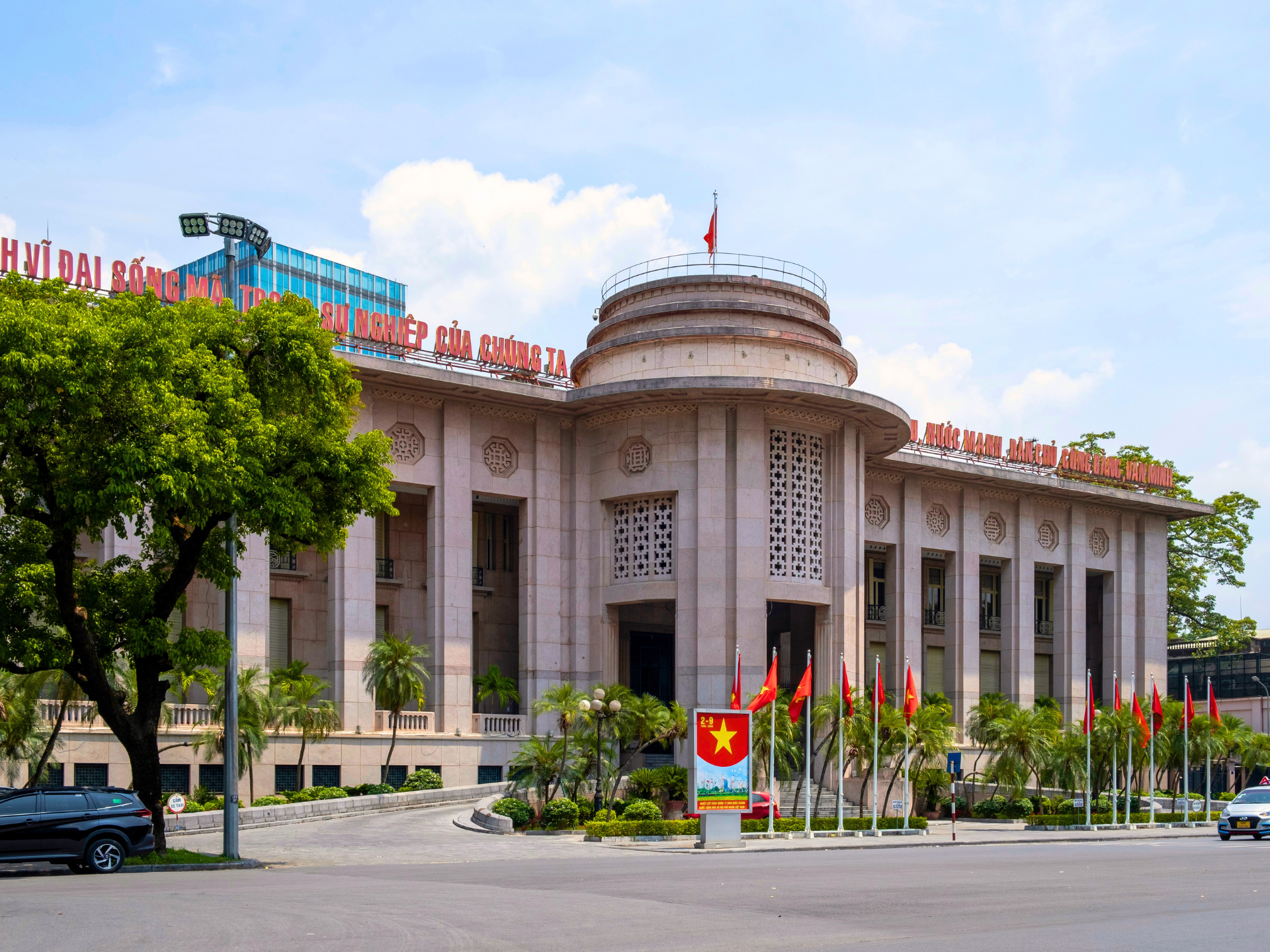
It’s a working bank, so you can’t wander inside freely, but even the exterior is worth slowing down for. The clean geometric lines and massive columns make it feel like a piece of 1920s Paris somehow relocated to Southeast Asia.
10. Hỏa Lò Prison
No honest account of the old buildings in Hanoi left by the French can skip Hoa Lo Prison. It was designed by architect Auguste-Henri Vildieu and inaugurated in 1899, and is known around the world as the “Hanoi Hilton.”
Built to hold Vietnamese political prisoners, it later held American POWs during the Vietnam War. What remains today – only a fraction of the original structure survived urban development – is a sobering museum. I’ve been here multiple times, and every visit leaves me with something new to think about. It’s not a comfortable experience, but it’s an important one.
How to Explore an Old Building in Hanoi Like a Pro
To truly appreciate an old building in Hanoi, you need to look past the surface. Here are my insider tips:
- The “Upstairs” Rule: In the Old Quarter, the ground floor is always a messy shop. Look up! The second floor is where the original French balconies, decorative cornices, and shutters of the old building in Hanoi are preserved.
- Cafe Culture: Many of the best cafes in Hanoi (like Cafe Đinh or Cafe Giảng) are located inside an old building in Hanoi. You often have to walk through a dark, narrow hallway to find a stunning colonial courtyard inside.
- Respect the Residents: Many villas are now “multi-family” homes where 5-10 families live together. Be polite if you enter a courtyard, a smile and a “Xin Chao” go a long way.
Preserving the Soul of Hanoi
Whether you’re an architecture lover, a history buff, or simply someone who enjoys a good slow walk through a beautiful city, the old buildings in Hanoi have something extraordinary to offer. From the operatic grandeur of the Opera House to the faded elegance of a forgotten colonial villa on Phan Dinh Phung, every structure tells a piece of a story that is still unfolding.
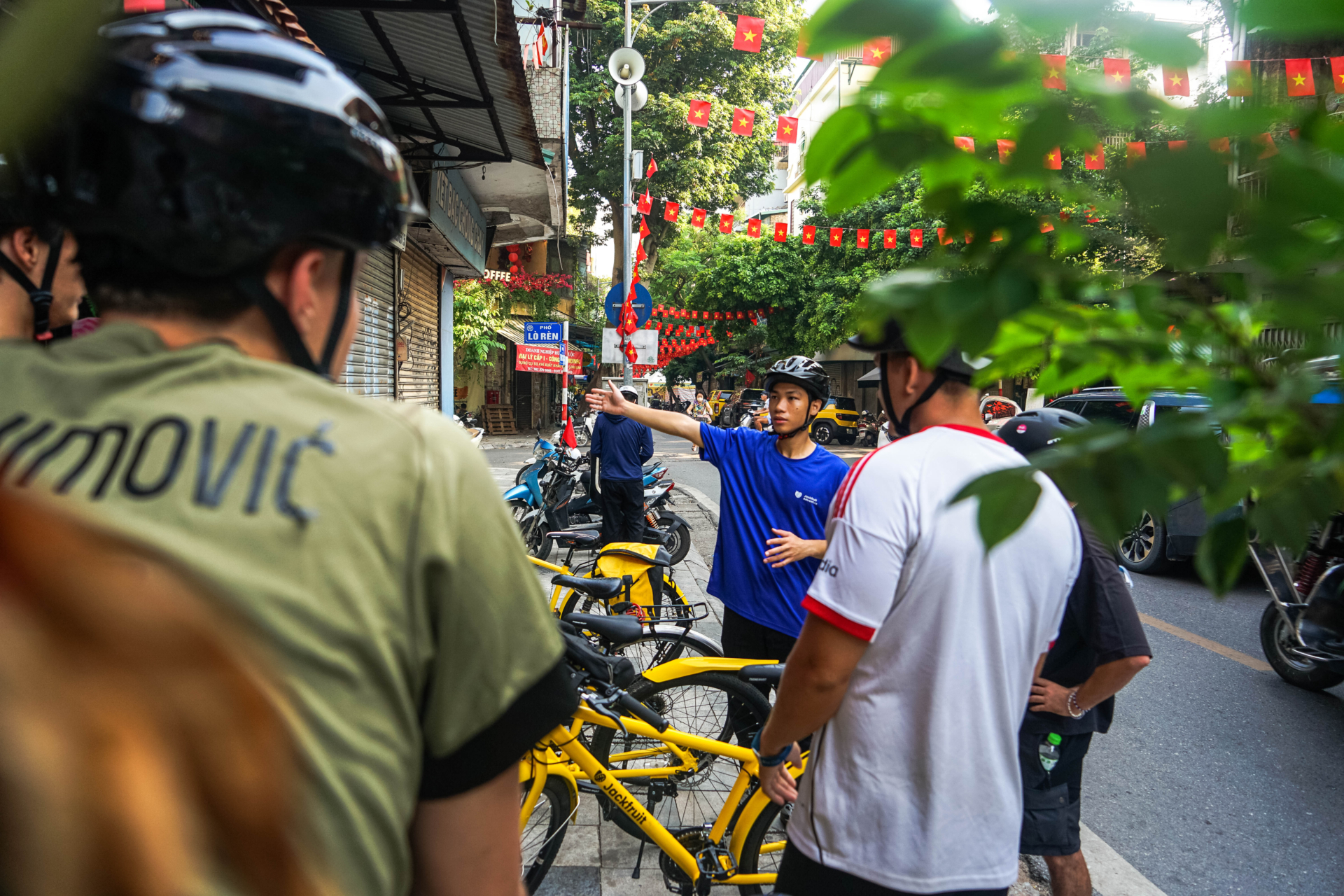
Take your time with them. Look up at the rooflines. Notice the way the afternoon light hits those yellow walls. Ask a local what the building used to be – you’ll almost always get a fascinating answer.
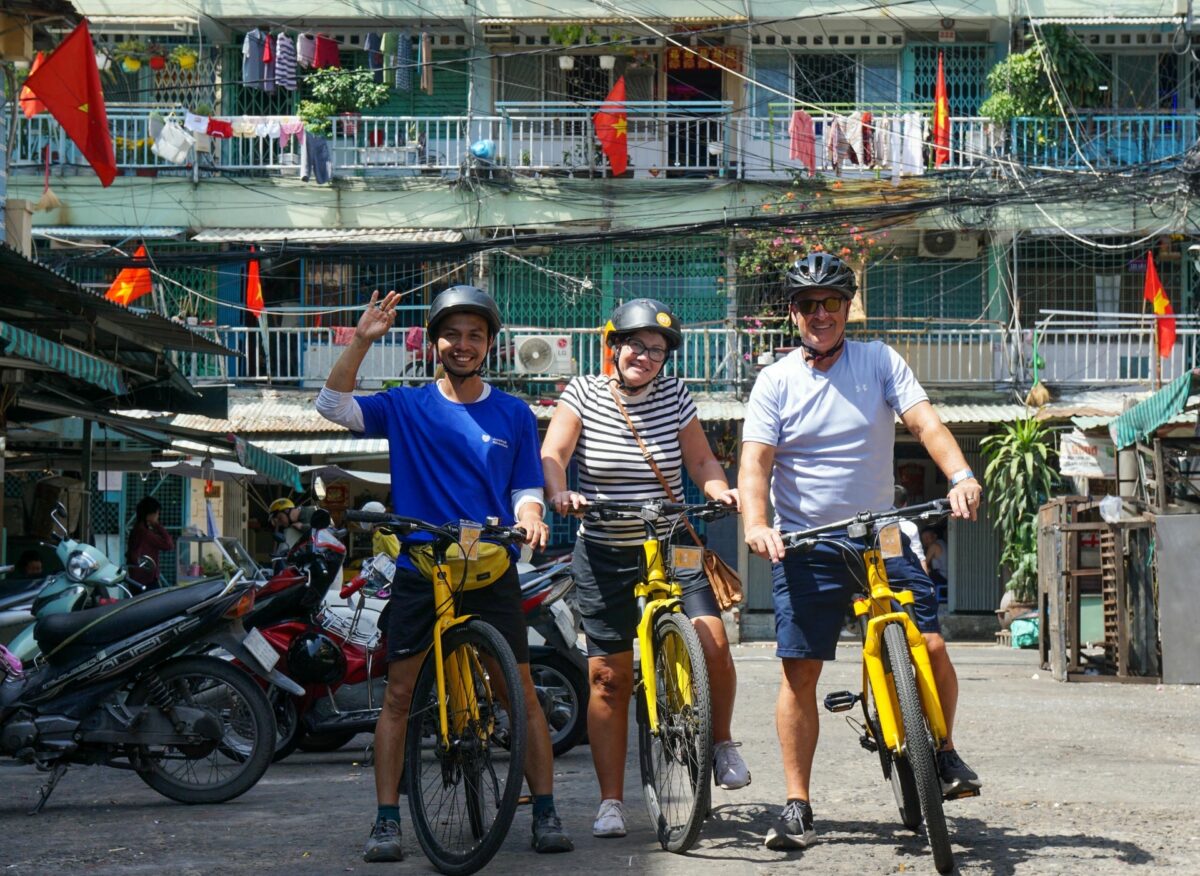
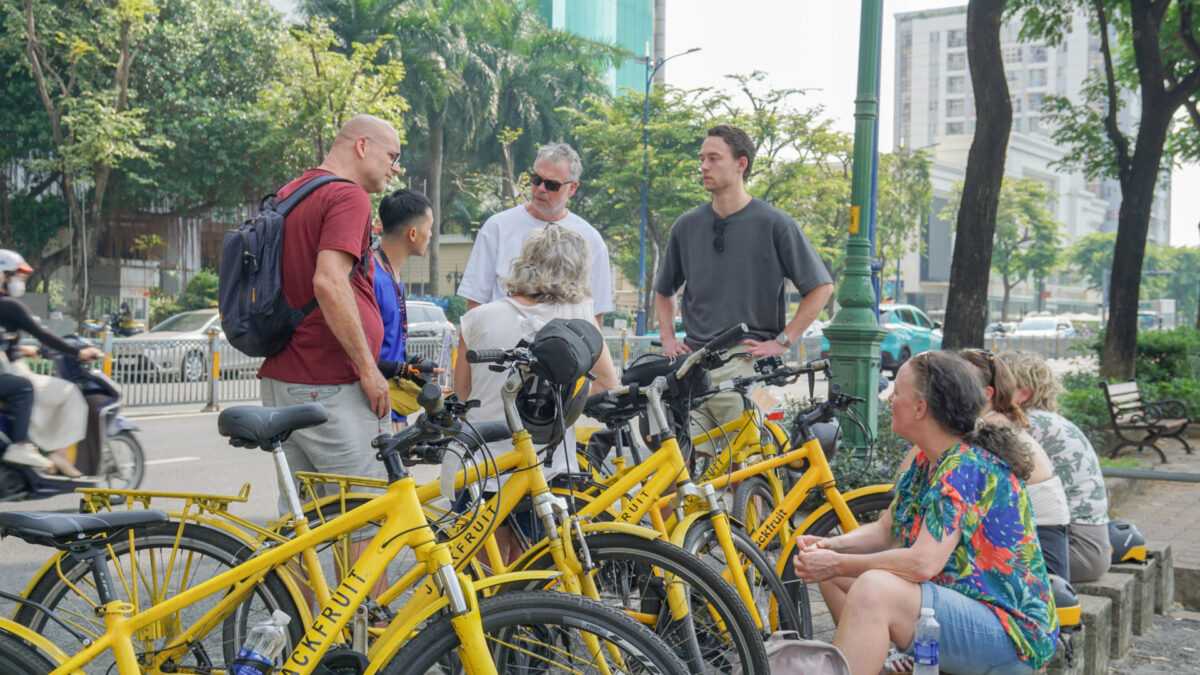
If you want to experience Hanoi’s French colonial legacy with the depth it deserves, consider joining a guided walking or cycling tour of the French Quarter. A knowledgeable local guide can open up layers of history that you’d never find on your own – and help you see the old building in Hanoi in front of you not just as architecture, but as living memory. Ready to go deeper? Jackfruit Adventure knows the way, contact us today!