

The first time you try to take a bus in Vietnam, it rarely feels straightforward.
It’s not because the system is complicated, but because nothing really announces itself clearly. You might find yourself standing on a busy street, looking at traffic that never seems to pause, wondering where exactly the bus will stop and how you’re supposed to get on. There’s no obvious line, no countdown screen, sometimes not even a proper sign that confirms you’re in the right place.
I remember the first time I tried to take a bus in the city on my own. I got there early, thinking I needed extra time to figure things out. But instead of clarity, I just felt more unsure. People around me didn’t look like they were “waiting” in any structured way. They were just standing, sitting, occasionally glancing at the road like they already knew something I didn’t.
Then the bus arrived, slowed down for a moment, and everything happened quickly. A few people stepped forward, got on without hesitation, and within seconds, the bus moved again.
That moment made me realize something important: using a bus in Vietnam isn’t about following clear instructions. It’s about observing, adjusting, and slowly understanding how things flow. And once you get used to that rhythm, it becomes one of the most natural ways to experience public transport in Vietnam.
What to Know Before Taking a Bus in Vietnam (and Why It Still Matters)
Before you take your first bus in Vietnam, it helps to shift your expectations a little. Transportation in Vietnam, especially public transport – does have structure, there are routes, stops, and schedules, but in reality, people don’t rely on them in a rigid way. Most locals don’t check exact times before heading out. They just know that a certain bus will come “around now,” and that’s enough.
I grew up seeing this everywhere. People don’t rush to catch the exact minute. They position themselves in the right place, stay aware, and trust the flow of the system. At first, this can feel confusing if you’re used to strict schedules, but over time, it actually makes things feel more flexible and less stressful.
And even though Vietnam now has plenty of modern transport options like ride-hailing apps, buses still quietly play an important role in daily life. In cities like Ho Chi Minh City or Hanoi, buses connect neighborhoods that tourists rarely think about. They’re used by students heading to school, workers commuting across districts, and older locals who have been taking the same route for years.
That’s why buses still matter. They’re not just a cheaper option. They reflect how people actually move through the city when they’re not trying to optimize everything.
Types of Bus in Vietnam
When people talk about bus in Vietnam, they often think it’s just one system, but in reality, there are a few different types, and each one feels quite different once you actually use them.
Public Buses
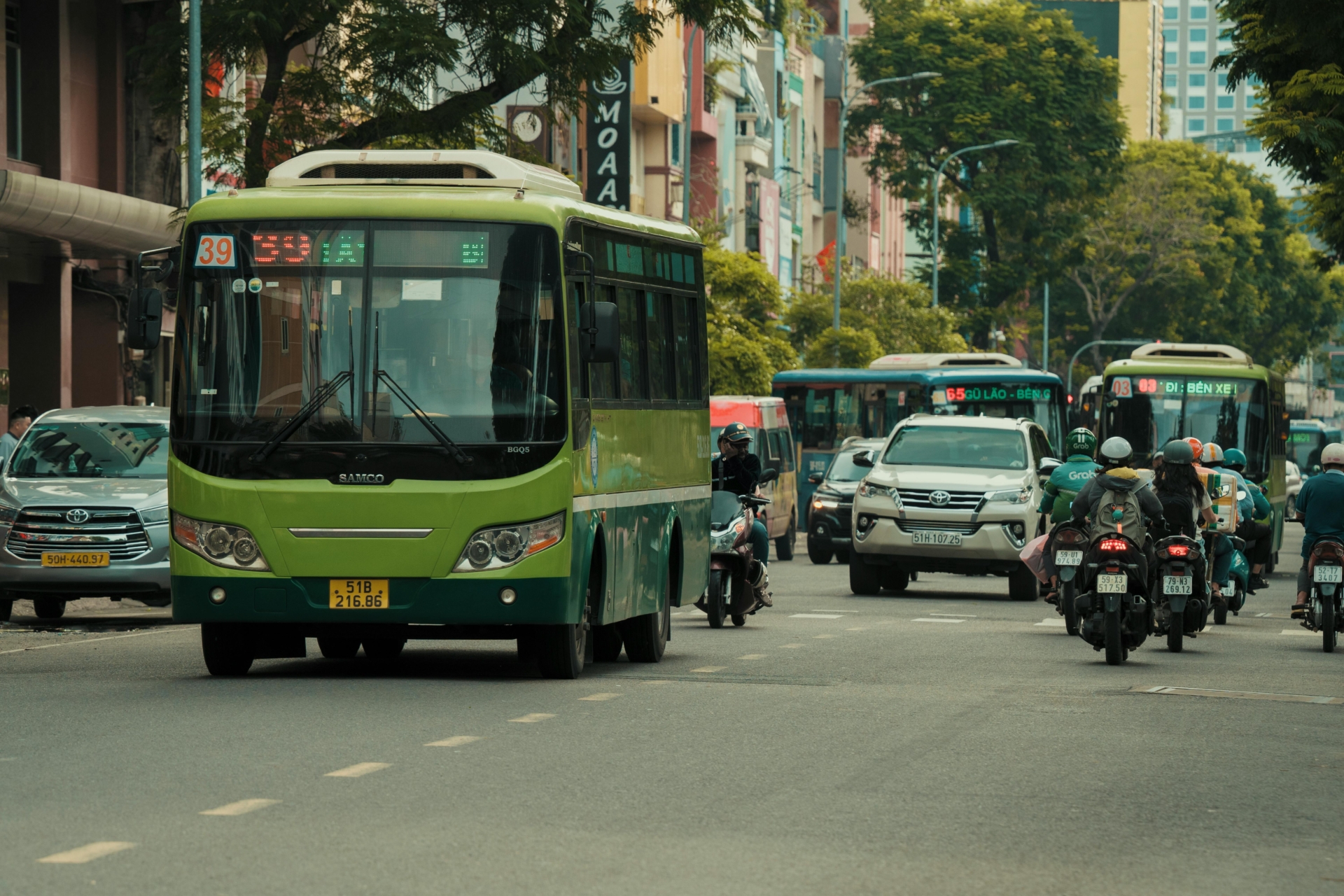
When most locals talk about taking a bus in Vietnam, they usually mean the public city buses – the green, blue, or yellow buses constantly moving through the streets of cities like Ho Chi Minh City or Hanoi.
Honestly, I used to ignore them completely.
For the longest time, I thought public buses in Vietnam were confusing, uncomfortable, and mostly used by students or older locals. But after using them more often, especially on days when I didn’t want to deal with traffic or expensive ride-hailing prices, I started realizing they’re actually one of the most underrated parts of public transport in Vietnam.
The traditional public buses are usually very affordable, often costing only around 10,000 VND per ride. You simply get on through the front door, tell the conductor where you’re going (or just show your destination on Google Maps if your Vietnamese isn’t great), and pay directly on the bus.
Some buses feel older and more chaotic, especially during rush hour, but others are surprisingly comfortable.
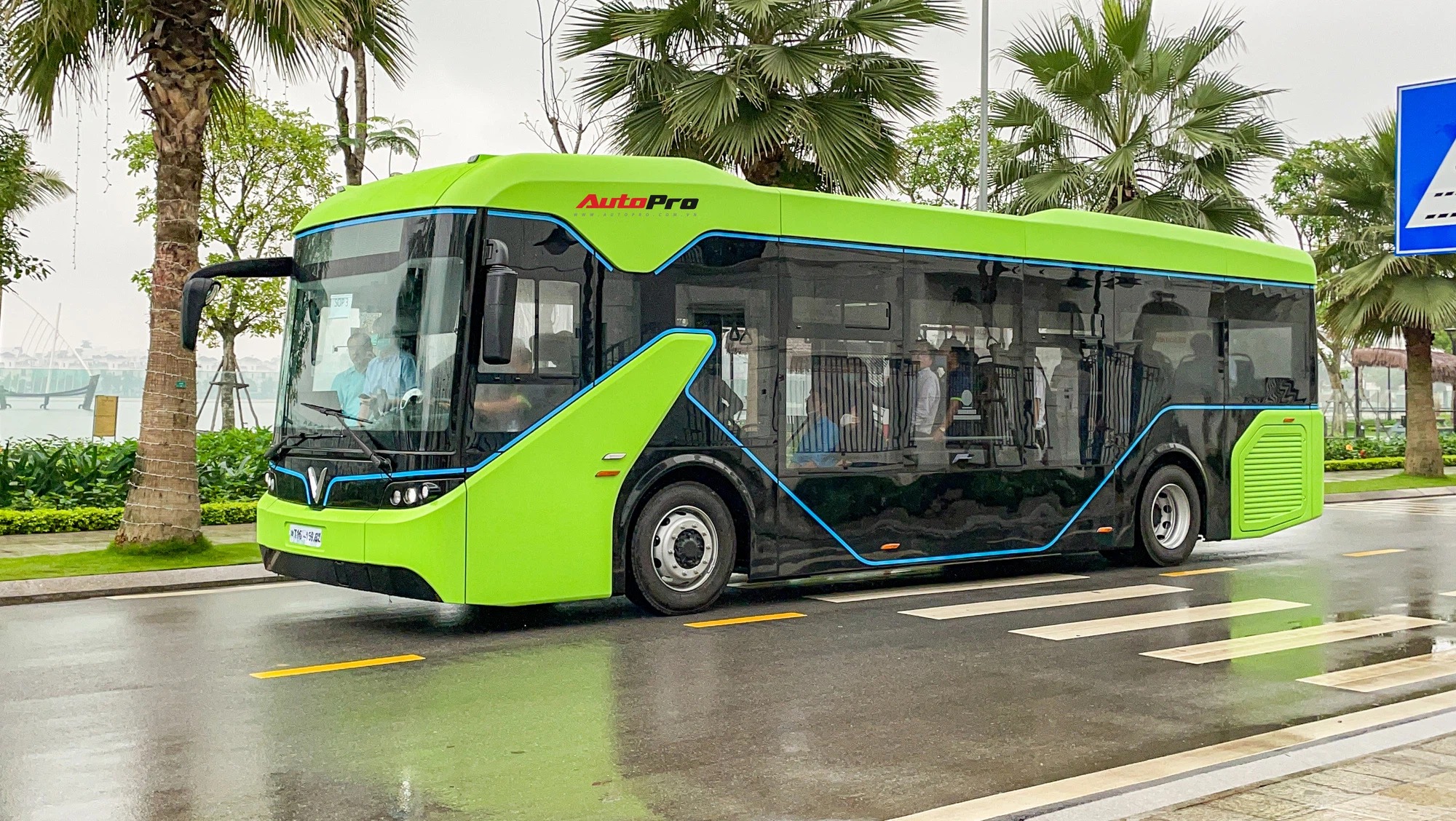
And then there’s VinBus, which feels completely different. VinBus is Vietnam’s newer electric bus system, and honestly, the first time I got on one, it didn’t even feel like the kind of public bus I was used to. The buses are quieter, cleaner, air-conditioned, and much smoother compared to many traditional city buses. Some even have USB charging ports and electronic screens showing the upcoming stops.
What I personally like most about public buses in Vietnam is that they show you a very normal side of the city. You’re not moving through tourist areas anymore. You’re seeing students going home, office workers half-asleep after work, grandparents carrying groceries, and everyday life unfolding quietly around you.
Airport buses
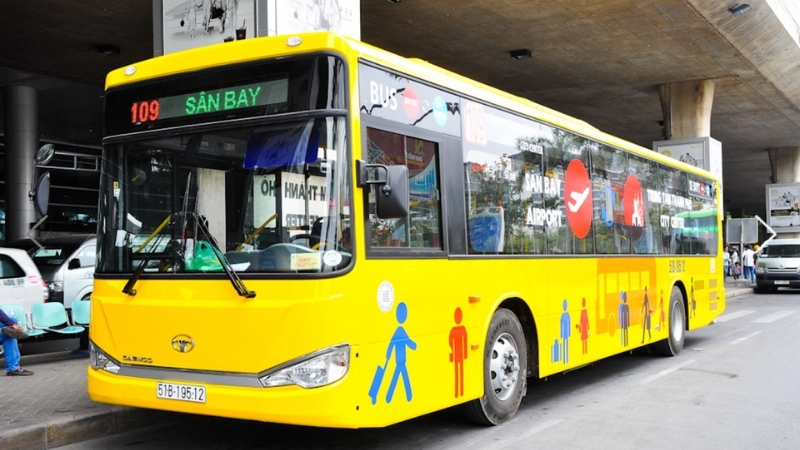
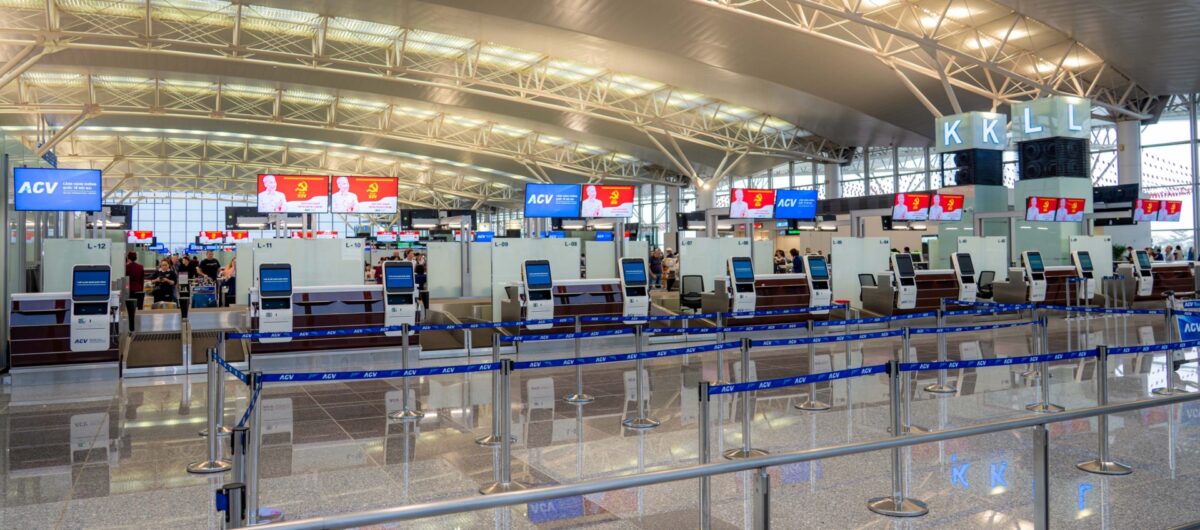
Airport buses are usually the easiest place to start if you’re new to public transport in Vietnam. Compared to regular city buses, they feel more predictable. The stops are clearer, there’s more space for luggage, and you don’t have to figure out too many things at once. The first time I recommended someone to try the bus system, I always suggest starting with an airport route first, just to get comfortable.
Intercity and Sleeper Buses
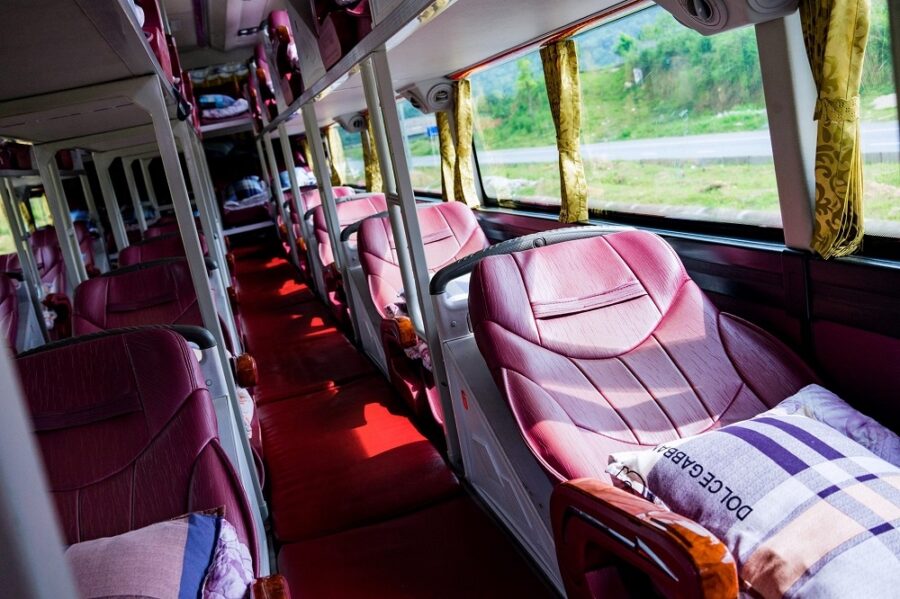
Then there are intercity and sleeper buses, which are a completely different experience. The first time I took a sleeper bus, I remember stepping inside and feeling slightly confused because there were no seats in the usual sense, just narrow beds arranged in rows. Everyone was either lying down or settling into their space for a long journey. It felt unusual at first, especially being asked to remove my shoes before stepping in, but after a few hours, it started to make sense. For longer trips between places like Da Lat or Nha Trang, this kind of setup is actually practical in a way you don’t expect.
In the next sections, I’ll focus more specifically on how to take public buses in Vietnam, from using Google Maps and understanding bus routes to a few small local tips that can make your first ride feel much less overwhelming.
How to Take a Bus in Vietnam
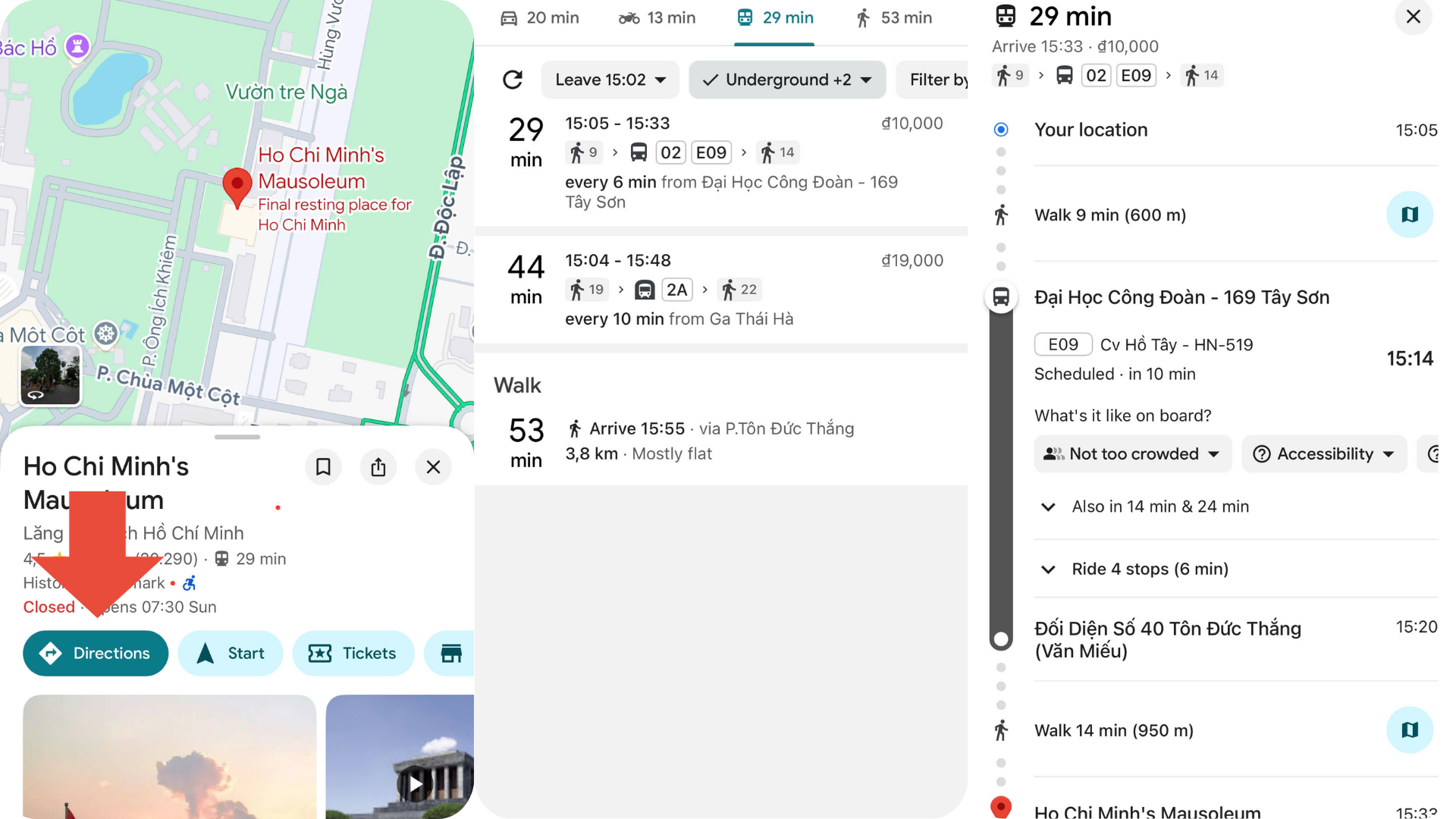
Taking a bus in Vietnam isn’t actually difficult, but the first time can feel slightly overwhelming because everything moves fast around you. What helped me most was realizing that you don’t need to understand the whole system perfectly right away. You just need to know the next step.
Most of the time, I start with Google Maps. It’s honestly the easiest way for foreigners to understand public transport in Vietnam, especially in bigger cities like Ho Chi Minh City or Hanoi.
Usually, I do it like this:
- Open Google Maps
- Type in where you want to go
- Tap the “Directions” button
- Choose the public transport icon
- Google Maps will then show different bus routes, bus numbers, estimated travel time, and where to get on and off, then just choose the route that best suits you.
What’s helpful is that the app also tells you how many stops you’ll pass before getting off, which saved me from missing my stop more times than I’d like to admit.
The app gives you structure, but the reality on the street always has a bit more flexibility.
Finding the bus stop can feel uncertain at first. Some stops are clearly marked, with route numbers and seating areas, while others are just a sign by the roadside that’s easy to miss. The way I learned was not by reading signs, but by watching people. A small group standing in one place, occasionally looking down the road, is often a better indicator than any map.
When the bus arrives, things move quickly. It doesn’t wait long, so you need to step forward with a bit of confidence. I’ve missed buses before simply because I hesitated, thinking I needed to double-check something. But once you understand that the system expects you to be ready, it becomes much easier.
Paying is probably the simplest part. After you get on, a conductor will come to you, ask where you’re going, and collect the fare. You hand over cash and receive a small paper ticket. There’s something very direct about this interaction. It’s quick, human, and doesn’t depend on any machines or apps.
Getting off requires a bit more attention. Stops are not always announced clearly, so I usually keep an eye on my surroundings. Over time, you start recognizing certain streets or intersections, and you don’t need to check your phone as often.
Bus Ticket Prices in Vietnam
One of the reasons buses remain such an important part of public transport in Vietnam is how affordable they are. Even now, after taking them many times, I still find it surprising how little you pay for the distance you travel.
| Type of Bus | Price (VND) | Approx. USD |
These fares generally apply to both Vietnamese locals and foreign travelers. |
| Pubic bus |
|
$0.20 – $0.40 | |
| Airport bus | 20,000 – 50,000 | $0.80 – $2.00 | |
| Sleeper bus | 200,000 – 500,000 | $8 – $20 |
It changes the way you think about moving around. You don’t feel like every trip needs to be optimized or minimized. Sometimes, you just take the bus because it’s there and it works.
A Different Side of Vietnam You Only See on the Bus
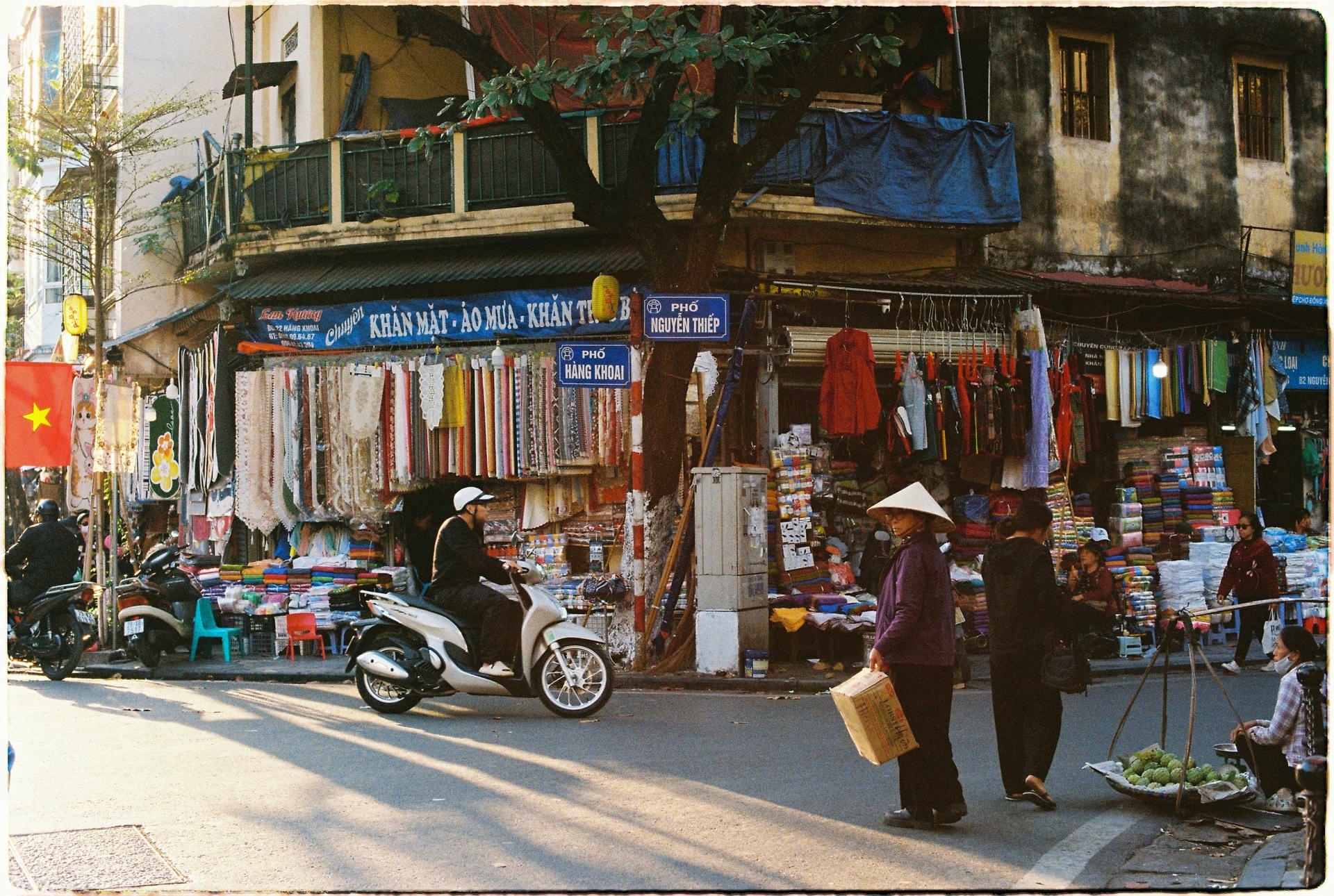
One of the things I didn’t expect when I started taking buses more often was how much it changed the way I saw the city.
When you move around by motorbike or taxi, everything feels fast and direct. You go from one place to another, and whatever happens in between becomes background. But the bus doesn’t move like that. It slows things down, stops often, and gives you time to notice details you would normally ignore.
I remember one afternoon in Hanoi when I missed my stop but decided to stay on instead of getting off immediately. The bus kept moving through neighborhoods I normally would’ve passed without thinking twice about. Not tourist areas, not famous streets, just everyday parts of the city quietly existing on their own rhythm.
Sitting by the window, I started noticing small moments I would’ve completely missed on a motorbike – a street vendor preparing for the evening rush, people gathering around tiny plastic tables for iced tea, kids running in and out of narrow alley entrances beside the main road, someone relaxing in a hammock just a few steps away from the traffic.
Nothing about it was meant to be impressive. That’s what made it feel real.
And that’s when I understood something simple: the bus doesn’t just take you somewhere, it lets you notice everything happening in between.
Some Small Notes That Make Everything Easier
After a few rides, there are small things you start doing automatically.
- Carrying small cash makes paying easier and avoids slowing things down.
- Not relying too much on exact schedules helps you stay relaxed when things don’t go exactly as planned.
- Paying attention to direction, not just the bus number, prevents you from going the wrong way.
- Most public buses announce upcoming stops through speakers or screens. When your stop is close, press the stop button and move toward the door so you’re ready to get off smoothly.
- Most importantly, you stop worrying about making mistakes. Missing a stop or taking the wrong route once is not a problem. It’s part of learning how the system actually works.
A Slower Way to Understand the City
Taking a bus in Vietnam might feel unfamiliar at first, but it becomes easier much faster than you expect. Once you understand the rhythm, it turns into one of the simplest and most affordable ways to move through the city.
But what I’ve come to realize over time is that every way of moving in Vietnam gives you a slightly different version of the same place. The bus shows you the in-between moments, the everyday flow that you don’t usually plan for.
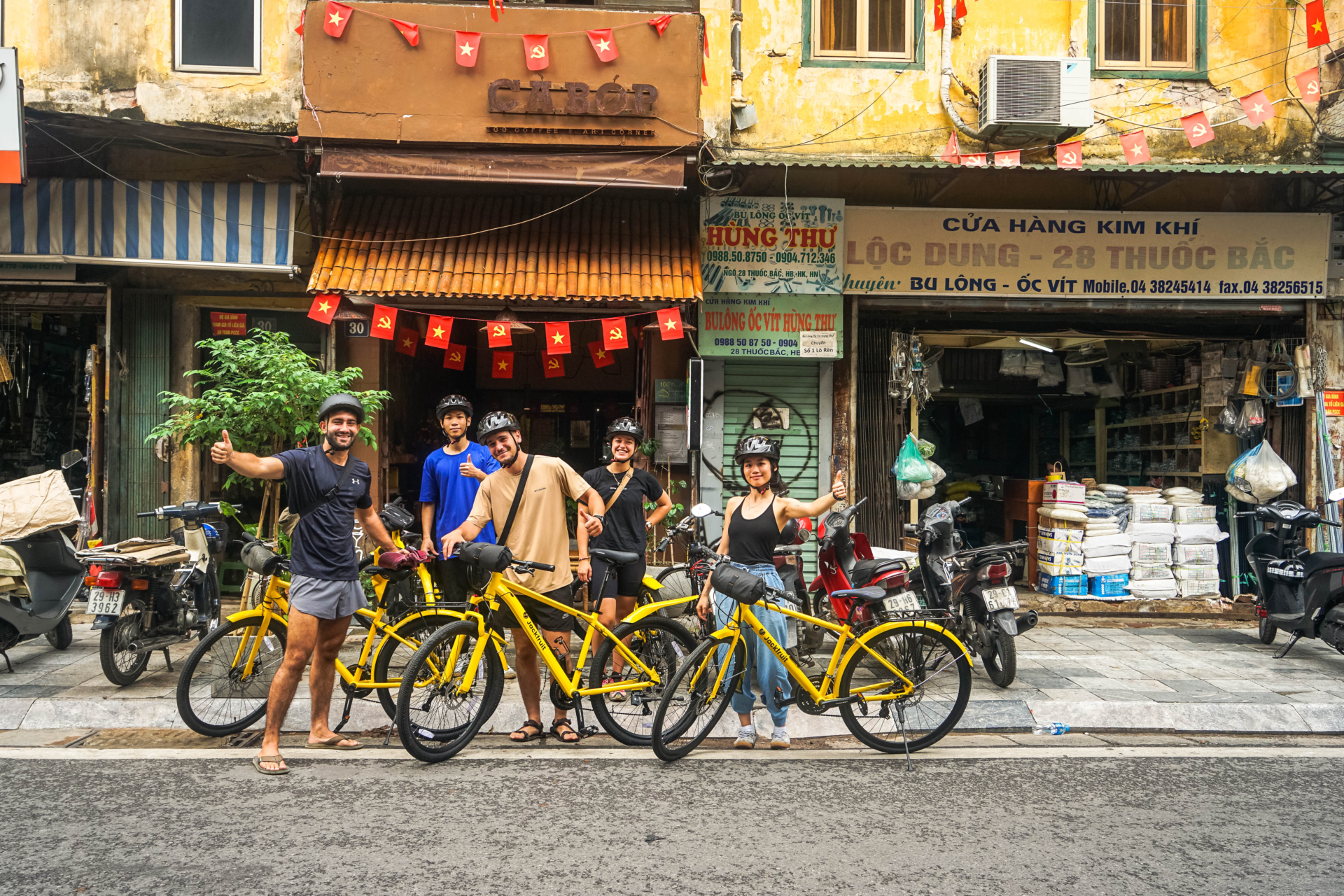
And once you start noticing those details, you might find yourself wanting to explore the city in a different way, something a bit slower, a bit closer. That could mean cycling with Jackfruit and weaving through smaller alleys, or even sitting back on an car ride and letting someone else guide you through the stories behind each street.
There’s no single “right” way to get around here. But the more ways you try, the more layers of the city you start to see.
Ready to try the bus in Vietnam your own way?
Your first ride might feel a little uncertain, and that’s completely normal. You might pause longer than needed, double-check your route, or hesitate before getting on.
But that’s part of the experience.
Give yourself time. Watch how people move. Follow the rhythm instead of trying to figure everything out immediately. Because sometimes, understanding a place doesn’t come from doing everything right, but from allowing yourself to learn along the way.