

Table of Contents
If you’ve spent even five minutes scrolling through Vietnam travel photos on Instagram, you’ve definitely seen it: an explosion of crimson red, a sea of “bouquets” made from bamboo sticks fanned out like giant flowers blooming under the tropical sun. It’s mesmerizing, vibrant, and unmistakably Vietnamese.
This is Incense Village Hanoi, or as locals call it, Quang Phu Cau.
I was born and raised right in the heart of Hanoi, and I’ve watched my city transform faster than a motorbike weaving through rush hour traffic. But when I want to reconnect with the “old soul” of the North, I head 35 kilometers south to Ung Hoa district. Every time foreign friends visit, they ask me, “Is it really that red in person?”
The answer is yes, and no. It’s so much more than just a color. It’s a scent that fills the air, the rhythmic sound of bamboo being chopped, and generations of craftsmanship passed down for over a century. If you’re planning to visit Quang Phu Cau incense village in Hanoi, let me show you around – not as a tourist guide, but as a local who knows where the best tea is served and which hidden corners hold the real magic.
What exactly is Incense Village Hanoi?
More Than Just a Tourist Spot
Before we get into the Instagram-worthy photos, let’s talk about what this place really means. In Vietnam, incense isn’t just something you buy at a shop, it’s the bridge between the living and our ancestors. Whether it’s a full moon ceremony, a funeral, or Lunar New Year (Tet), the smell of burning incense is what we call “the scent of home”.
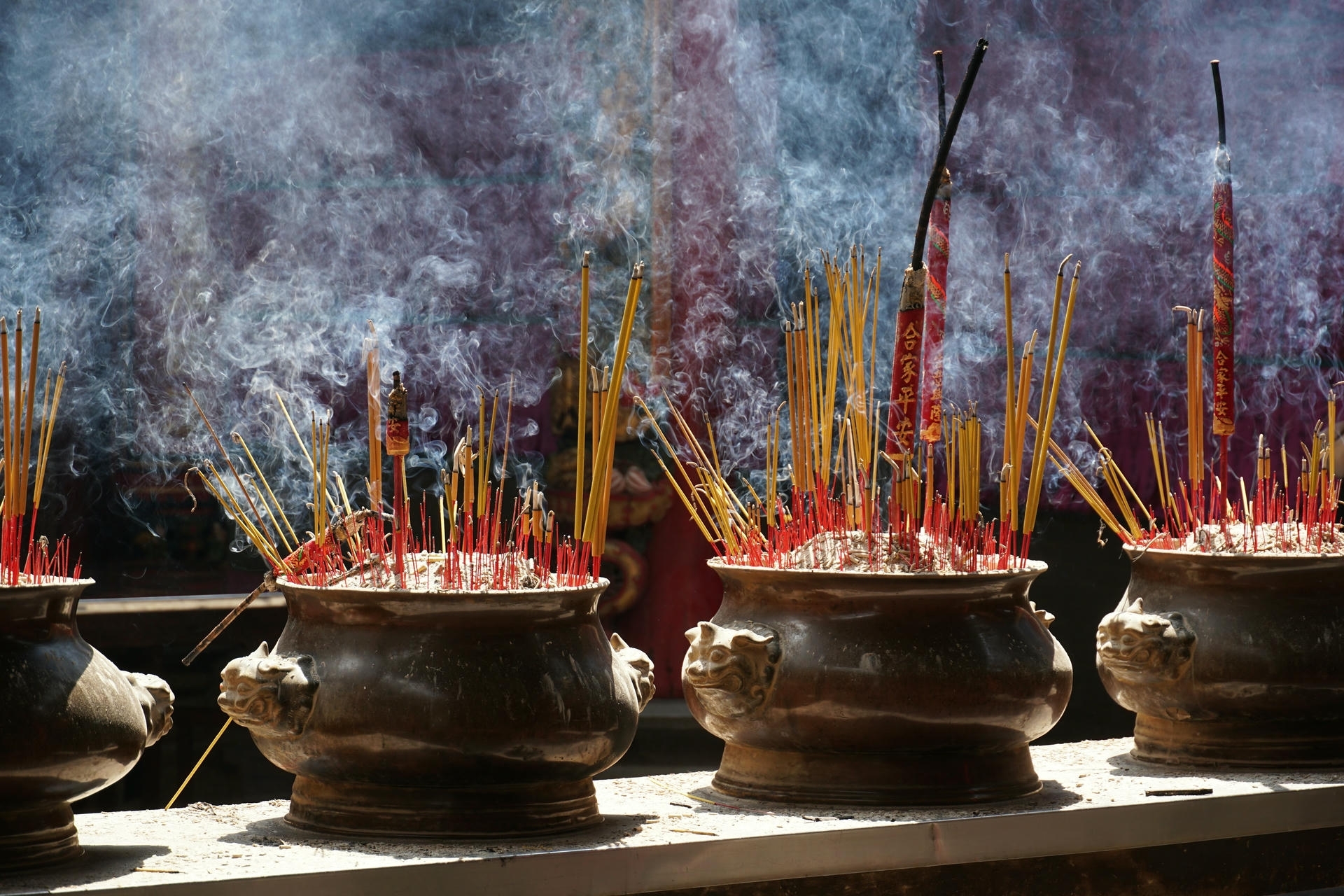
This is a real, working village where people wake up at 4 AM to prepare bamboo sticks, where grandmothers bicker over the perfect ratio of sawdust to fragrance powder, and where the entire community smells like the inside of a temple.
Quang Phu Cau has been making incense for over a century. The village is tucked away in Ung Hoa District, about 35 kilometers southwest of Hanoi’s Old Quarter. What began as a few families making incense for local pagodas has grown into Vietnam’s largest incense-making hub, supplying temples and homes nationwide and even exporting to Taiwan, Japan, and beyond.
Here’s something the guidebooks won’t mention: this village nearly disappeared in the 1990s. Young people left for office jobs, complaining the work was too hard and the smell too overwhelming. Then in the 2010s, photographers stumbled upon the village and started sharing those stunning aerial shots of colorful incense bundles drying in the sun. Almost overnight, tourism injected new life into the dying craft. Now many young people have come back home, taking over family businesses with fresh perspectives while honoring the old ways.
The Art Behind Every Stick
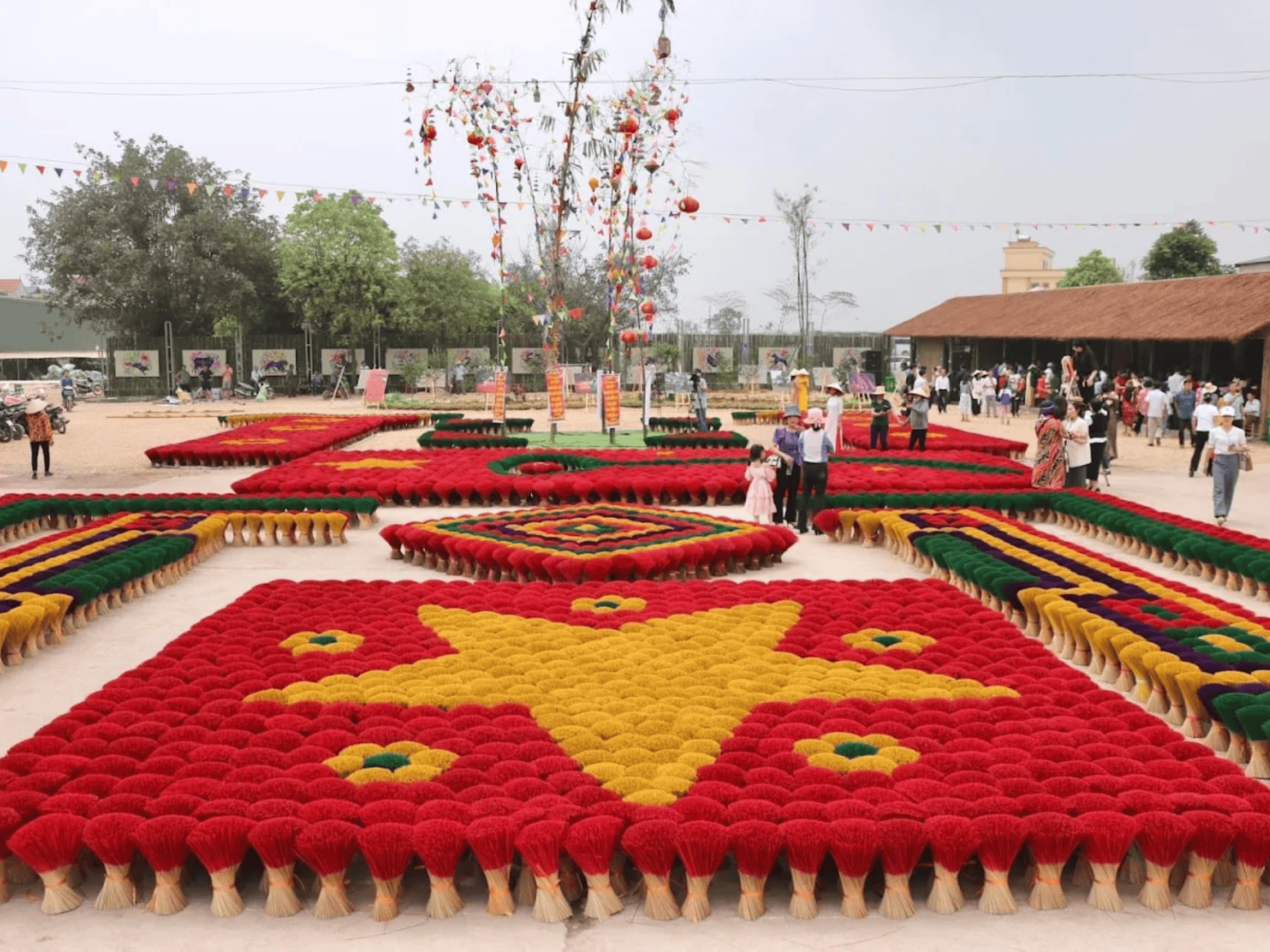
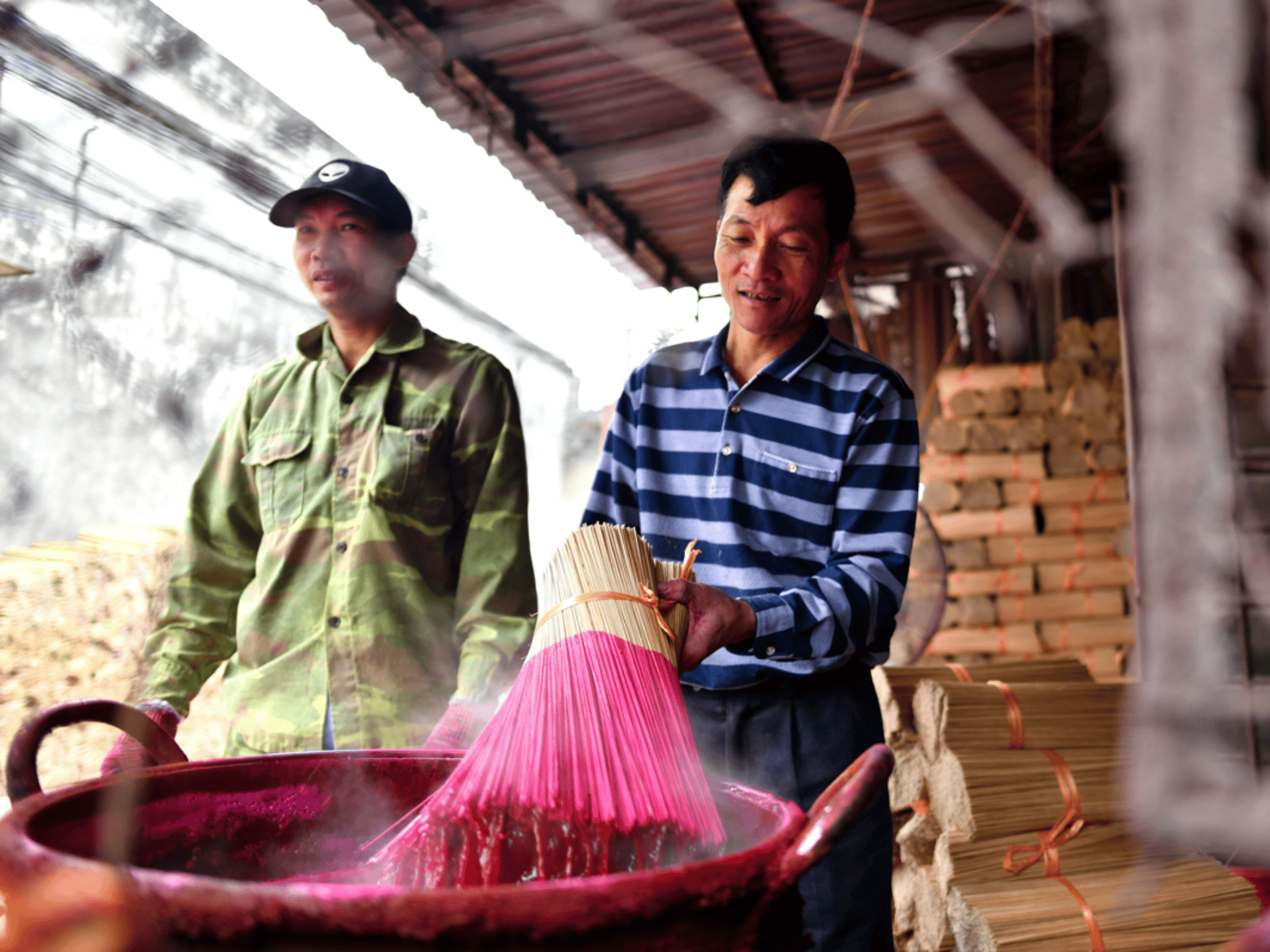
It all starts with bamboo. Workers split bamboo poles into thin sticks, each roughly 30 centimeters long. Then comes the coating – a carefully mixed blend of sawdust (usually from cinnamon or agarwood trees), glutinous rice powder as a binder, and natural dyes. The fragrance comes from essential oils: sandalwood, agarwood, cinnamon, or jasmine, depending on what’s been ordered.
Every family in Quang Phu Cau guards their secret formula. The mixture has to be smooth but not too wet, sticky but not clumpy. Getting it just right takes years of trial and error.
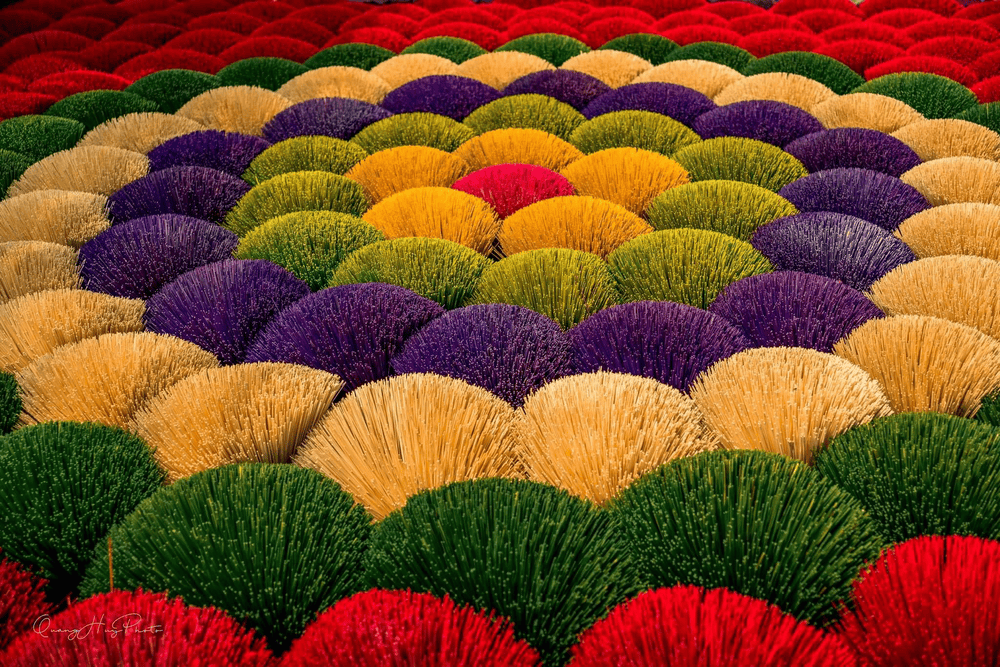
After coating, bundles of 100 or 200 sticks get tied together and spread out to dry. This is when the real magic happens, when the village transforms into that explosion of reds, yellows, pinks, greens and purples you’ve seen all over social media. But timing is critical. Too much sun and the incense cracks. Rain destroys everything.
Getting to Quang Phu Cau: The Local Commute
I always tell people that the journey to the quang phu cau Incense Village Hanoi is half the fun. You have a few options depending on your “adventure level”.
By Motorbike (The Hanoian Way)
If you’re comfortable on two wheels, this is the most flexible way. It takes about an hour to an hour and fifteen minutes. You’ll head out toward Ha Dong and follow National Highway 21B.
Pro Tip: Use Google Maps, search Lang Huong Quang Phu Cau for the direction, but watch the road. The traffic in the outskirts can be unpredictable with trucks and roaming livestock!
By Bus (The Budget Way)
You can take bus number 91 from the Yen Nghia bus station. It’s incredibly cheap, but it takes time. You’ll get a very “local” experience, though you might find yourself squished between bags of vegetables headed to the market.
By Taxi or Grab/Xanh SM
If you want to avoid the dust and the heat, the best way to get there is by booking a Grab/Xanh SM or taking a regular taxi. From central Hanoi, you’re looking at roughly 300,000 VND ($12-13 USD) for a one-way trip from the Old Quarter. The journey usually takes about an hour, depending on traffic.
Timing is Everything: When to Visit
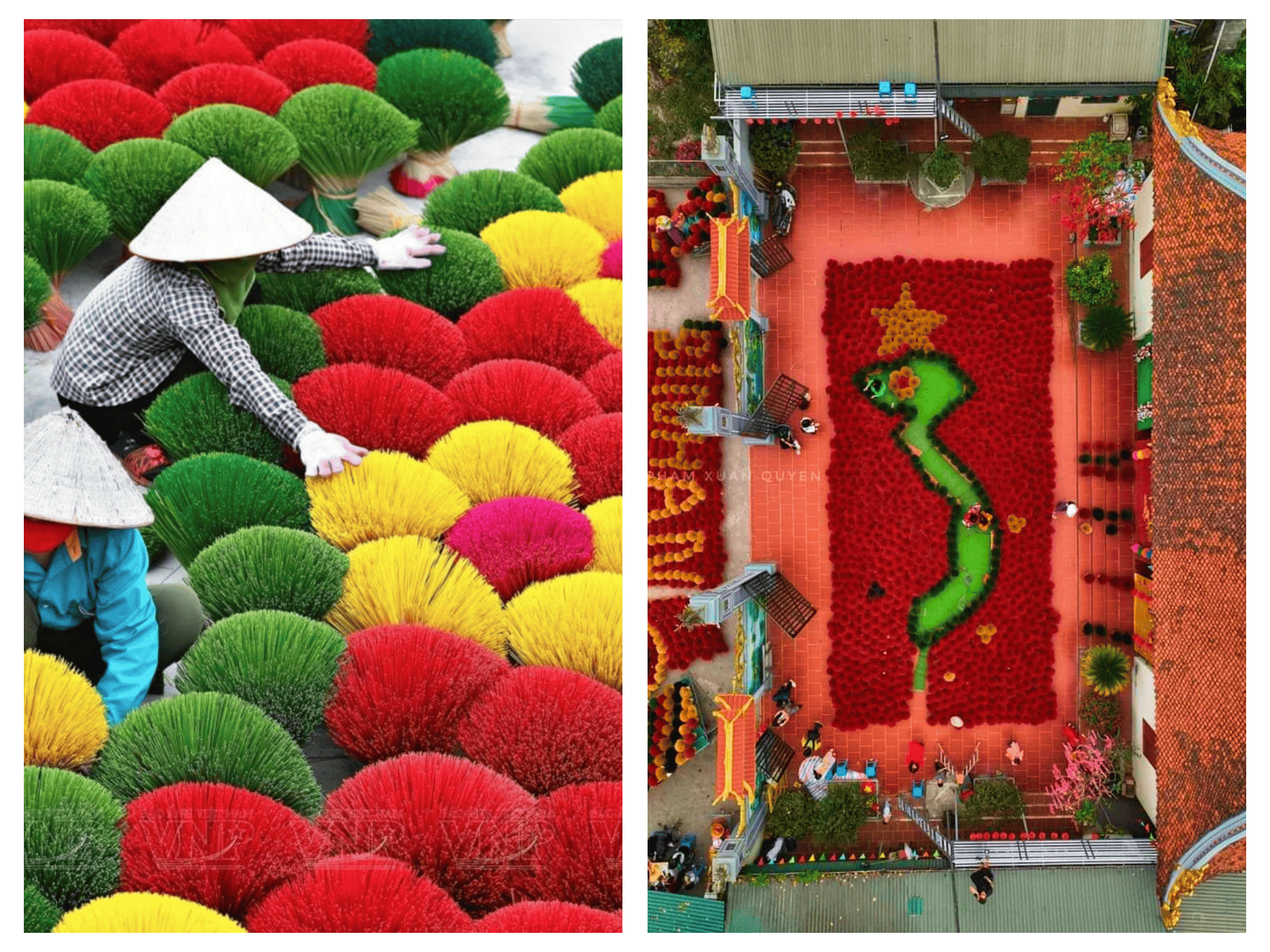
You definitely don’t want to show up at Hanoi’s Incense Village on a rainy day. Why? Because the incense needs sun to dry! Without sunshine, the villagers won’t lay out the incense, and those iconic colorful “bouquets” you came to see will be hidden away under plastic tarps.
- The Best Time of Day: Aim to arrive between 10:00 AM and 2:00 PM. That’s when the sun is strongest and the villagers have spread out all the incense sticks to dry. The overhead light also makes the red dye really pop in photos.
- The Best Season: The months leading up to Tet (Lunar New Year) – typically December and January – are when things get crazy busy. The entire village becomes a beehive of activity since every household in Vietnam needs incense for the New Year celebrations.
- Summer (May to August): Sure, it’s hot, but you’ll get clear blue skies that create a stunning contrast with the red, green, or yellow incense sticks.
Check out The Best Time to Visit Hanoi for Beautiful Weather and Amazing Offers if you want to plan an entire amazing trip to Hanoi.
What You Should Know Before Visiting Incense Village Hanoi
Respect the Workspace
This isn’t a museum, it’s people’s homes and livelihoods. I cringe every time I see tourists wander into courtyards without asking, rearrange incense sticks for a better shot, or literally step on drying incense to get their photo. Please don’t be that person.
Always ask before entering someone’s workspace. If you don’t speak Vietnamese, just point to your camera and give a questioning look – that usually does the trick. Most families are totally fine with you watching and taking photos, but they really appreciate being asked first.
Don’t touch the incense unless you’re invited to. Those bundles represent hours of work and someone’s paycheck. I’ve watched tourists accidentally knock over bundles or leave footprints all over drying sticks. If you mess up, apologize sincerely and offer to pay for the damage.
Dress Practically
Wear shoes you don’t mind getting dirty, the sawdust and dye powder get absolutely everywhere. I always throw on old sneakers that I can easily wash later.
The village roads are uneven and sometimes muddy, especially during the rainy season. Save the nice sandals for another day. Flip-flops are fine in dry weather, but closed shoes let you explore more freely without worrying about what you might step in.
Bring a hat and sunscreen if you’re visiting on a sunny day. There’s basically no shade in the drying areas, and you’ll probably spend a lot of time in open courtyards. I learned this lesson the hard way after getting badly sunburned while photographing those colorful incense bundles one summer afternoon.
Supporting the Community
One thing that really bugs me is tourists who spend an hour shooting photos but leave without buying a single thing. These families are trying to make a living here, not running a free photography studio for Instagram.
Incense bundles run 50,000-200,000 VND depending on size and type. That’s literally $2-$8 USD for something that directly supports local artisans and makes a pretty unique souvenir. I always buy at least one bundle when I visit, even though my house is basically overflowing with incense at this point.
If you want a deeper experience, some families offer informal workshops where you can actually try making incense yourself. The experience typically costs 200,000-300,000 VND ($8-$12 USD) and takes about an hour. You’ll leave with dusty hands, incense powder in your hair, and a whole new appreciation for how physically demanding this work really is.
Photography Tips at Incense Village Hanoi
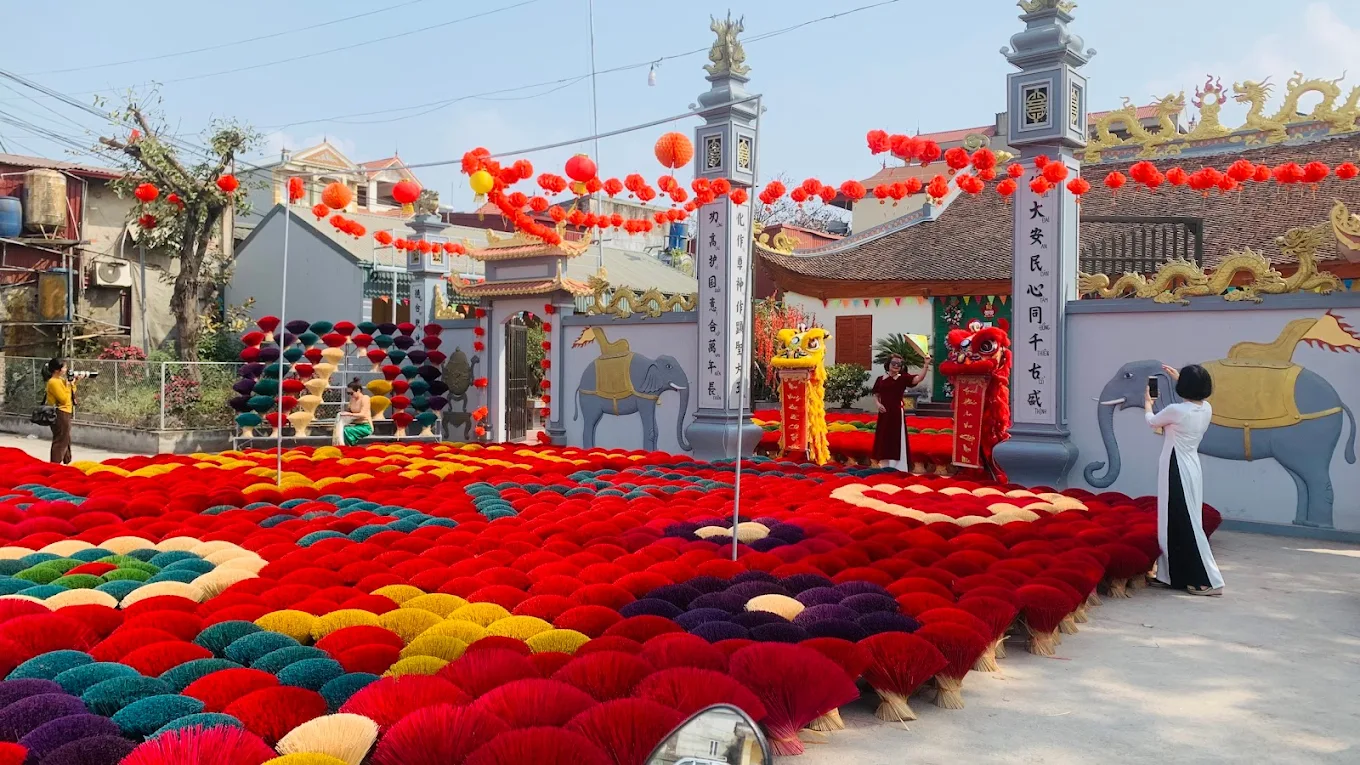
I’ve seen plenty of travelers make the same mistakes at Quang Phu Cau Incense Village. As a local, I want you to capture amazing photos, but I also want my neighbors to actually enjoy having you visit!
- Wear Contrasting Colors: The incense is bright red, so if you show up in red, you’ll basically blend in and disappear. Go for white, yellow, or light blue to really stand out against the backdrop.
- Ask Before Entering: Remember, these are people’s front yards and workspaces, not a public park. A simple “Xin chào” (hello) and pointing to your camera is usually all it takes to get a smile and permission.
- The “Photo Fee”: Some of those perfectly arranged “flower” displays are now specifically set up for tourists. You’ll likely pay around 50,000 to 100,000 VND ($2-$4). Please don’t haggle over this, it takes them hours of labor to arrange those sticks in photogenic patterns instead of just piling them up to dry.
- Watch Your Step: Those bundles are incredibly fragile. Knock one over and you’ve just destroyed hours of someone’s work.
Bringing the Incense Home
Choosing Good Incense
If you’re going to buy incense at Incense Village Hanoi (and honestly, you should), here’s how to spot the quality stuff:
- Look for even coating – the paste should cover the bamboo stick uniformly without any lumps or bare spots. Handmade incense will naturally show slight variations, which is totally normal, but the overall quality should be consistent throughout the bundle.
- Smell before buying. Good incense has a clear, pleasant fragrance. Cheap incense smells harsh, chemical, or just way too strong. An old craftsman once told me, “If the unlit incense gives you a headache, burning it will be even worse”.
- Check the dye. Natural dyes tend to be slightly muted, while synthetic dyes are often neon-bright. Neither is necessarily better quality-wise, but natural dyes are more traditional and burn cleaner.
Using Incense at Home
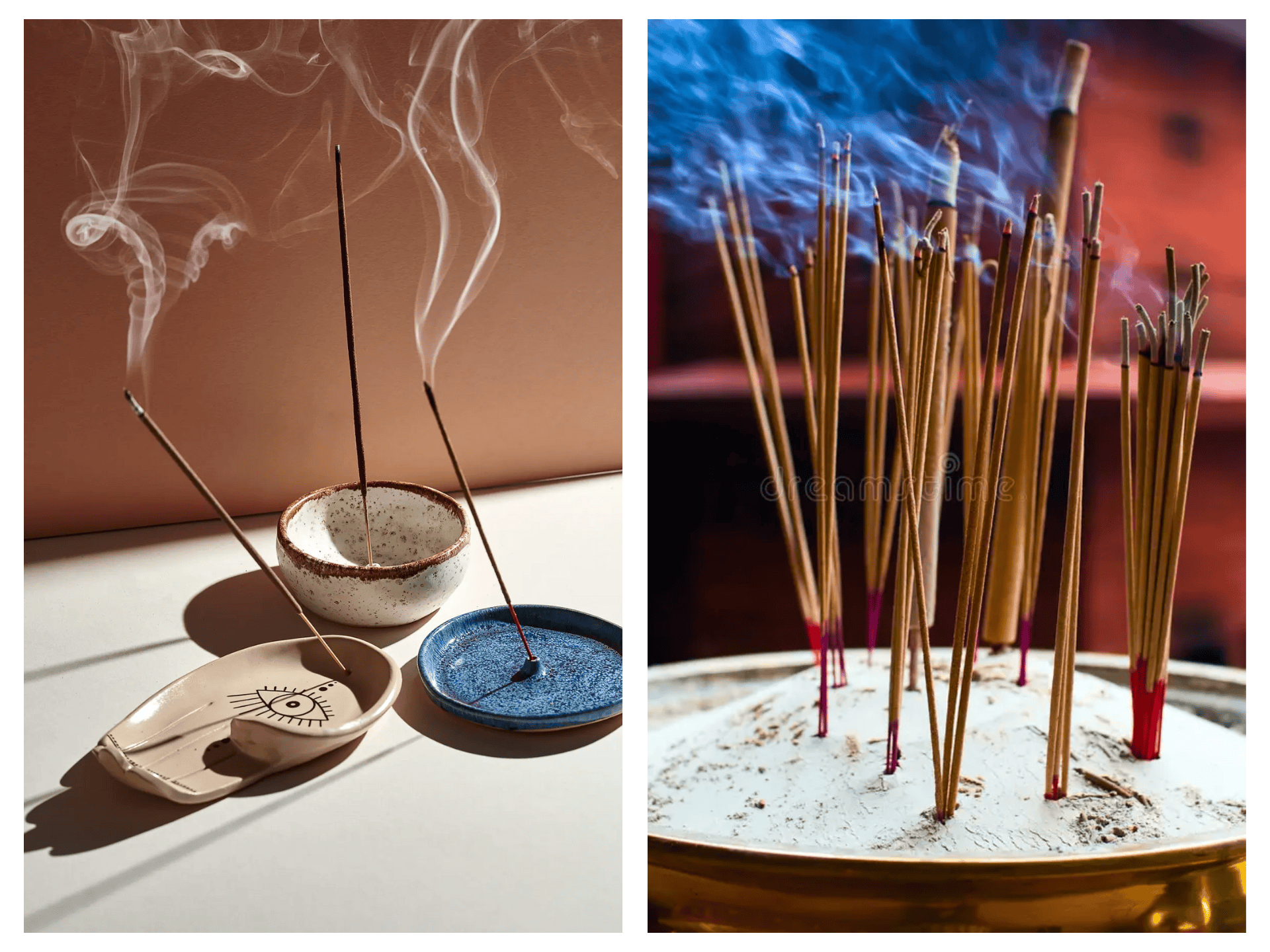
Vietnamese incense serves both spiritual and practical purposes. In temples and on family altars, it’s an offering – a prayer made visible. But you don’t need to be Buddhist or even religious to enjoy it.
I burn incense while I’m working, certain scents genuinely help me focus. Sandalwood and agarwood are calming and work great for meditation or yoga. Lighter scents like jasmine or lotus are better for living spaces.
Always use a proper incense holder and put it on a fire-safe surface. Never leave burning incense unattended. And open a window for ventilation, that romantic idea of a smoke-filled room? Not actually pleasant or healthy in reality.
One bundle of Hanoi incense typically contains 100-200 sticks. If you burn one stick daily, a single bundle lasts for months. At 50,000 VND ($2 USD), that’s incredible value for a handmade, traditional craft.
Making the Most of Your Visit to Incense Village Hanoi
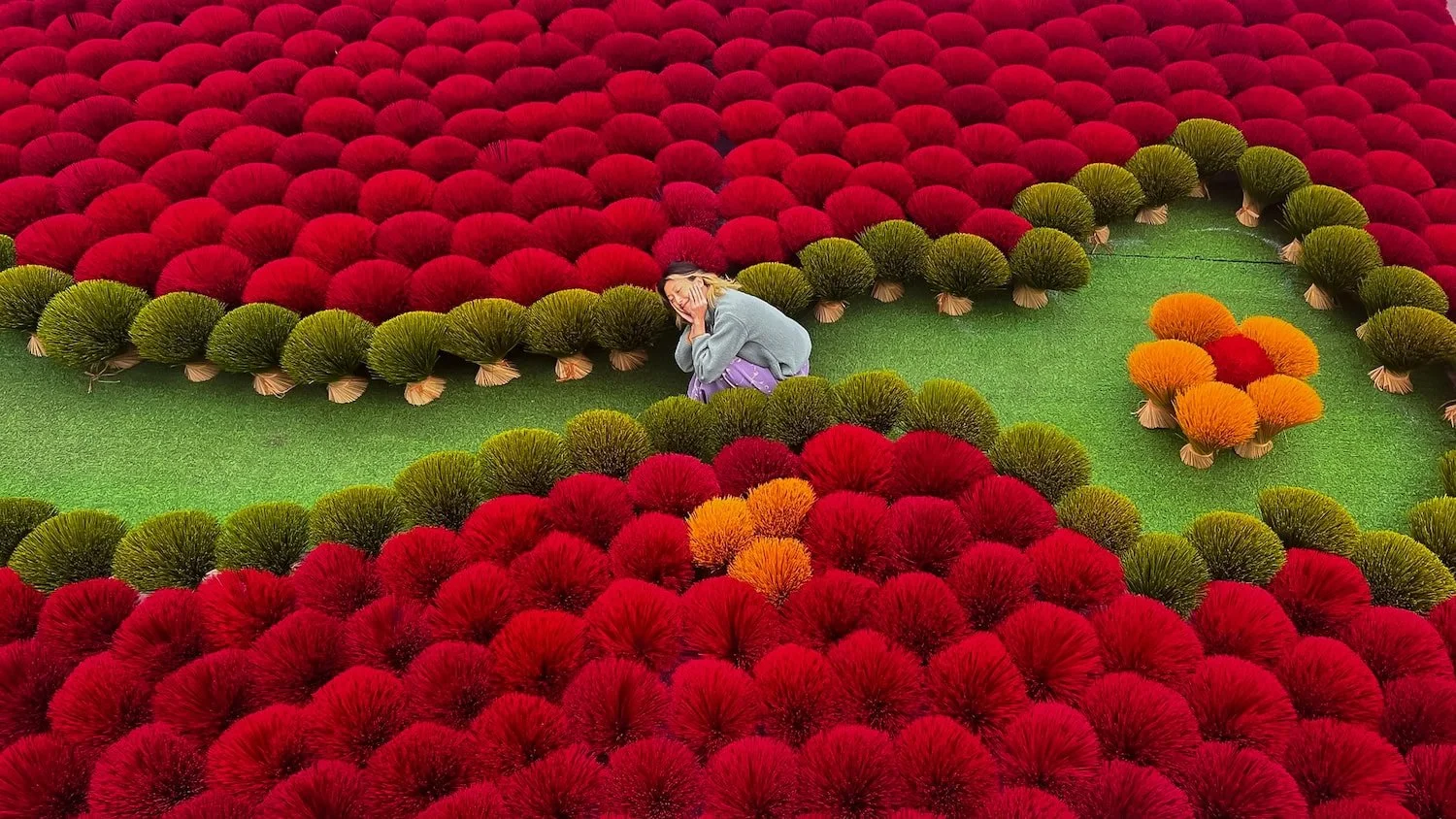
I know I’ve thrown a lot of information at you, probably more than you expected. But that’s because Quang Phu Cau Incense Village deserves way more than just a quick stop for Instagram photos.
Give yourself time to wander without any real agenda. Sit in a courtyard and just watch family work. Try striking up a conversation with someone, even if it’s mostly hand gestures and smiles. Buy your incense from a small producer instead of only hitting up the main shops. Pay attention to how the smell shifts throughout the day as different families burn sample batches.
This village taught me that some things simply can’t be rushed or mass-produced. Every single stick of incense represents human hands, family recipes passed down through generations, and careful timing. In our world of Amazon Prime and instant everything, there’s something genuinely profound about watching someone practice a craft the exact same way their great-great-grandfather did.
Plan Your Visit to Incense Village Hanoi with Jackfruit Adventure
Whether you go solo, with a tour, or with friends, Incense Village Hanoi rewards those who show up with curiosity and respect. Bring your camera, absolutely, but also bring your willingness to step into someone’s workspace, someone’s tradition, someone’s everyday life. That’s where the real beauty is – not just in the vibrant colors, but in the stories behind them.
If reading this has gotten you excited about exploring the real Hanoi beyond the typical tourist spots, you’re ready for an adventure. While you can totally visit Quang Phu Cau Incense Village on your own using the tips I’ve shared, sometimes having a knowledgeable guide turns a good experience into something truly unforgettable.
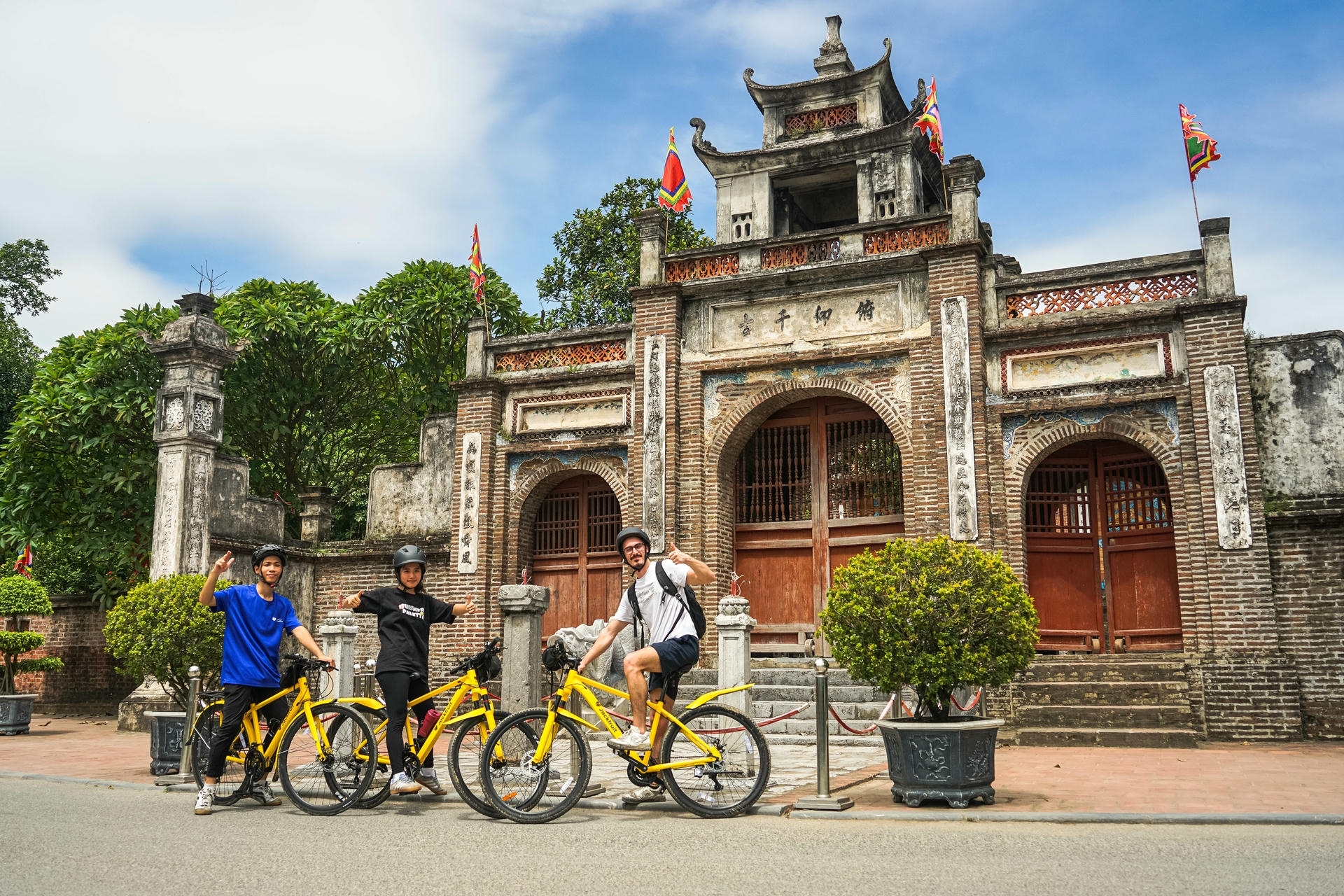
If you’re looking for an experience that feels more like visiting a friend than following a tour group, reach out to Jackfruit Adventure today! We offer private tour guides and Cycling tours to spots like Ride to the Lost Kingdom: Cycle Hanoi to Ancient Cổ Loa, or you can customize your own route based on what you’re interested in.
Show up early, stay curious, and don’t be afraid to get a little sawdust on your shoes. That’s how you’ll know you actually experienced the village, not just photographed it.