

Table of Contents
Something is shifting in the way people travel to Vietnam. Not in a loud, headline-grabbing way – more like a quiet current that keeps getting stronger. Travelers are asking different questions before they book. They want to know where the money goes, who their guide actually is, whether the village they’re visiting actually benefits from having them there.
That’s what travel trends 2026 sustainable travel looks like from where I’m standing – someone who grew up here, watched tourism reshape entire towns, and has seen both the good and the damage it can do. Sustainable travel trends 2026 aren’t just a marketing trend anymore. They’re changing the real economy of places like Ha Giang, Con Dao, and the Mekong Delta in ways that actually matter. If you’re planning to visit Vietnam this year or thinking about what responsible travel even means here, this piece is for you.
What’s Driving the Travel Trends 2026 Sustainable Travel Movement?
Numbers Don’t Lie – Travelers Have Changed
Let’s start with the data, because it’s striking. According to a 2026 survey by Agoda, 77% of Asian travelers now prioritize sustainability when planning a trip. In Vietnam specifically, that number jumps to 81% – meaning the overwhelming majority of Vietnamese travelers are factoring eco-consciousness into their decisions. That’s not a fringe movement. That’s the mainstream.
What’s behind this shift? A few things have collided at once. The post-pandemic years gave people time to reflect on what travel actually means to them. Climate change has become impossible to ignore – travelers are seeing their favorite destinations altered by floods, droughts, and overtourism. And a new generation of travelers has grown up with environmental awareness baked in from the start.
The result is a global reset in expectations. The travel trends 2026 sustainable travel conversation is no longer about sacrifice – it’s about seeking something more real, more connected, and more responsible.
Vietnam’s Bold Response
Vietnam’s government hasn’t been sitting still. The national tourism strategy for 2026 targets 25 million international visitors and 150 million domestic trips – but crucially, Deputy Minister Ho An Phong made it clear that growth won’t be pursued “at all costs”. The emphasis is on quality, balance, and sustainability over raw numbers.
That’s a meaningful policy shift. It signals that Vietnam wants to be a leader in travel trends 2026 sustainable travel, not just a high-volume destination. And the industry is responding. As of mid-2026, over 70 tourism units nationwide have earned VITA Green certification – the country’s first official sustainable tourism recognition.
The Top Sustainable Travel Trends 2026 to Know Before You Go
1. Slow Travel Is Replacing the Highlight-Reel Rush
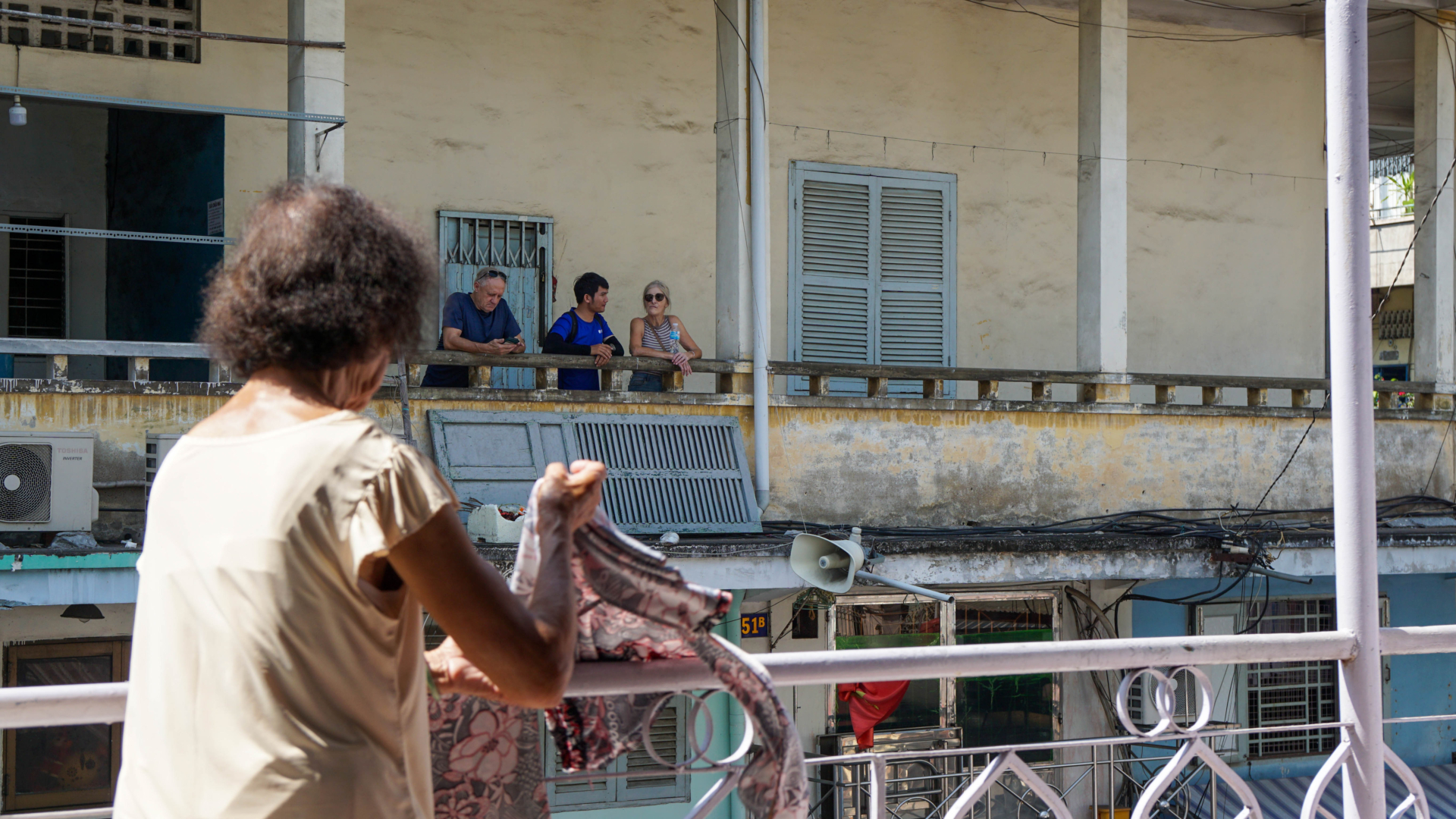
One of the defining sustainable travel trends 2026 is the rise of slow travel. Visitors are trading packed 10-day itineraries – Hanoi, Ha Long, Hoi An, Saigon, done – for extended stays in fewer places. They’re spending a week in one neighborhood, taking cooking classes, joining morning market runs with local vendors, cycling the same road twice because they want to notice something they missed the first time.
From where I stand, this is the best thing to happen to Vietnamese tourism in years. When someone stays four or five nights in Hanoi instead of rushing through in two, they eat at the banh mi stall around the corner rather than a tourist restaurant. They leave money with real people, in real communities. They come home with memories, not just photos.
Slow travel is fundamentally a travel trend 2026 sustainable travel choice – it reduces carbon footprint (fewer flights, longer stays), supports local economies more deeply, and creates richer experiences for everyone involved.
2. Community-Based Tourism Is Booming
Across Vietnam, community-based tourism (CBT) is one of the most powerful sustainable travel trends 2026 in action. Instead of visiting villages as passive observers, travelers are participating – learning how to make rice paper in Hoi An, weaving with H’mong families in Ha Giang, or fishing with boat communities in Halong Bay.
In Ha Giang, H’mong and Dao families are opening wooden stilt houses to guests. Visitors learn traditional weaving, join farming activities, and share meals made with locally grown food. The money goes directly to the household, not a middleman. This is what travel trends 2026 sustainable travel looks like when it’s working properly.
3. Low-Carbon Transport Is Gaining Ground
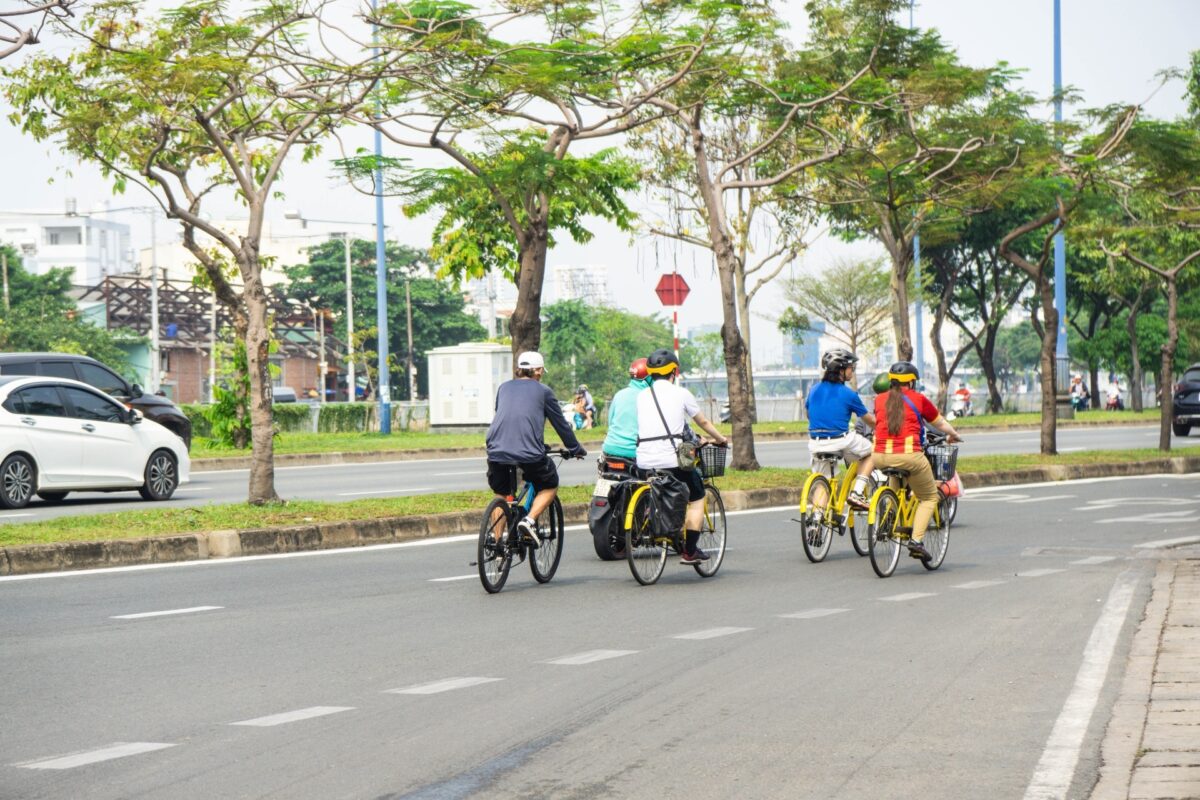
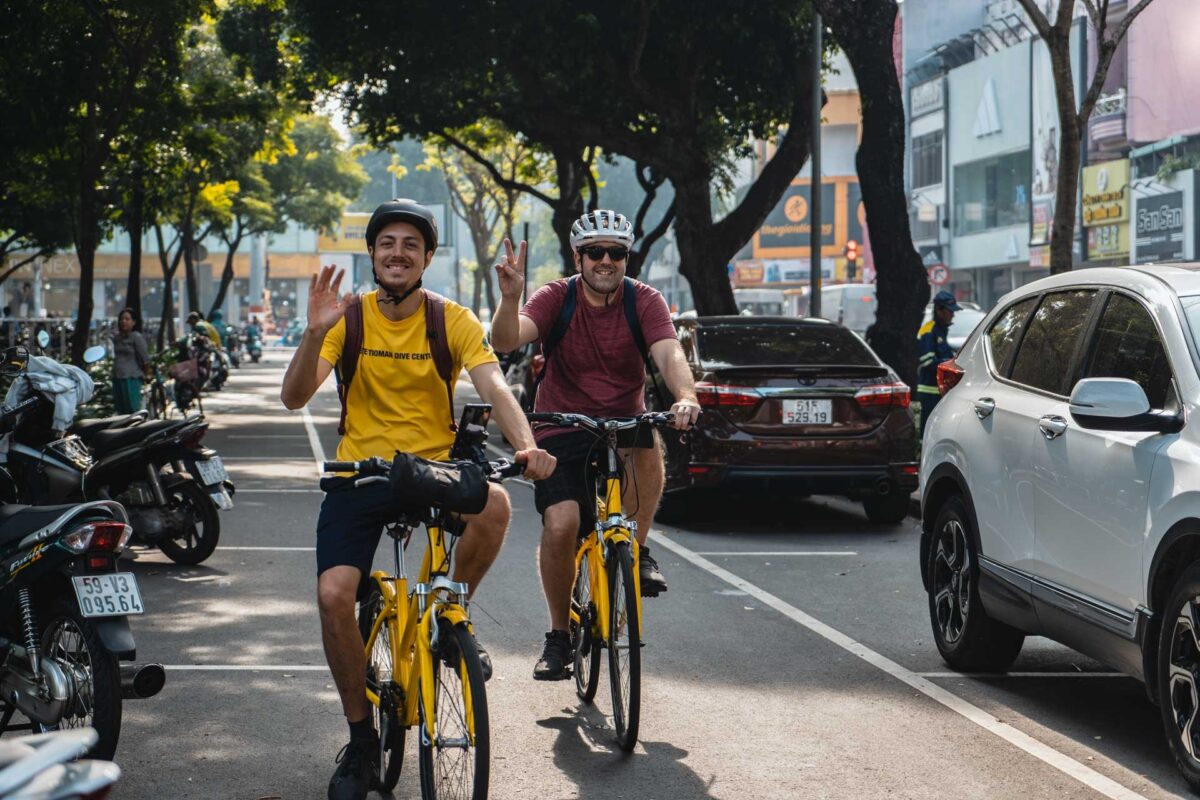
Cycling has always been part of Hanoi’s DNA – it’s how this city moved before the motorbike era took over. But today, cycling tours aren’t just nostalgic. They’re genuinely one of the most responsible ways to explore Vietnam.
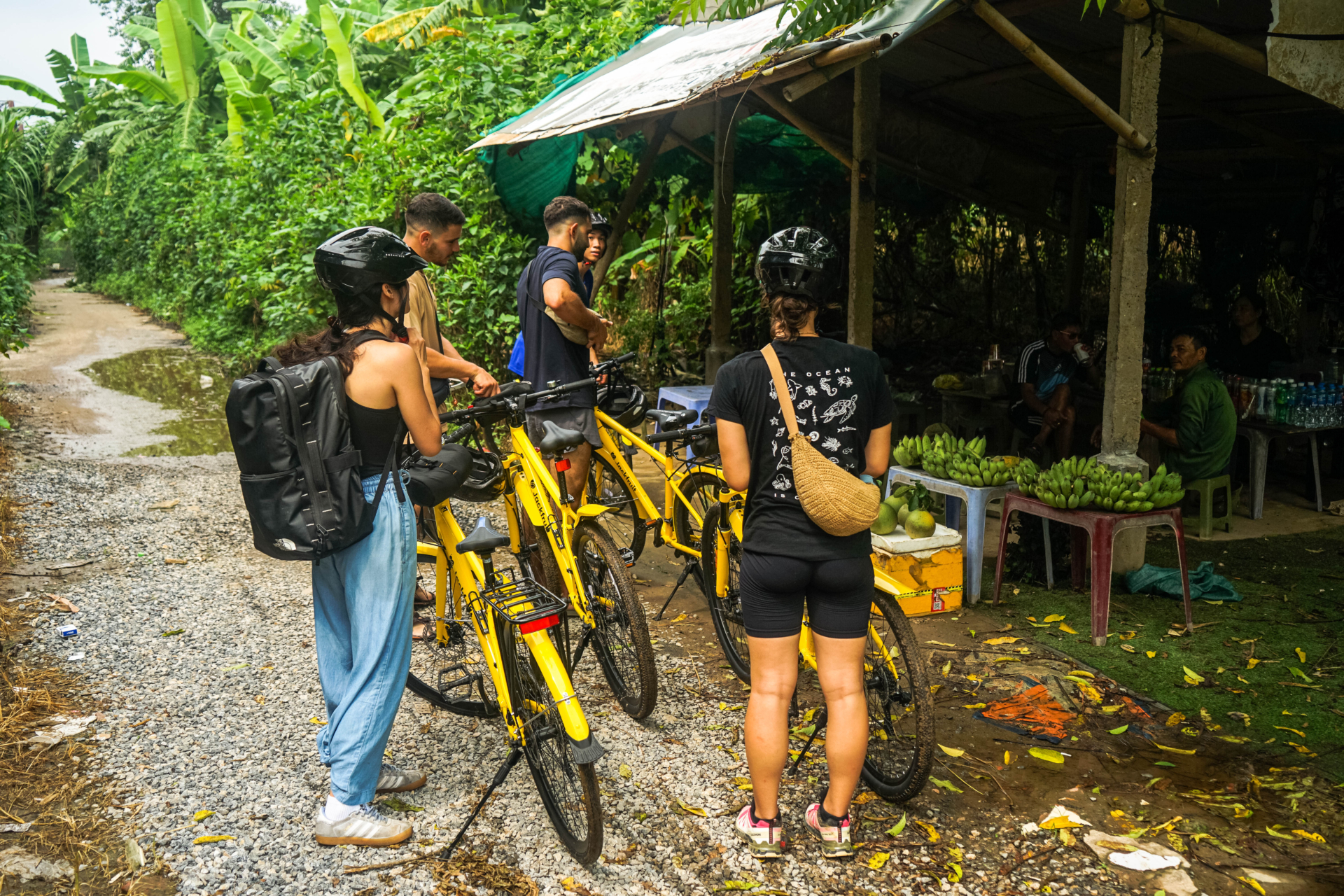
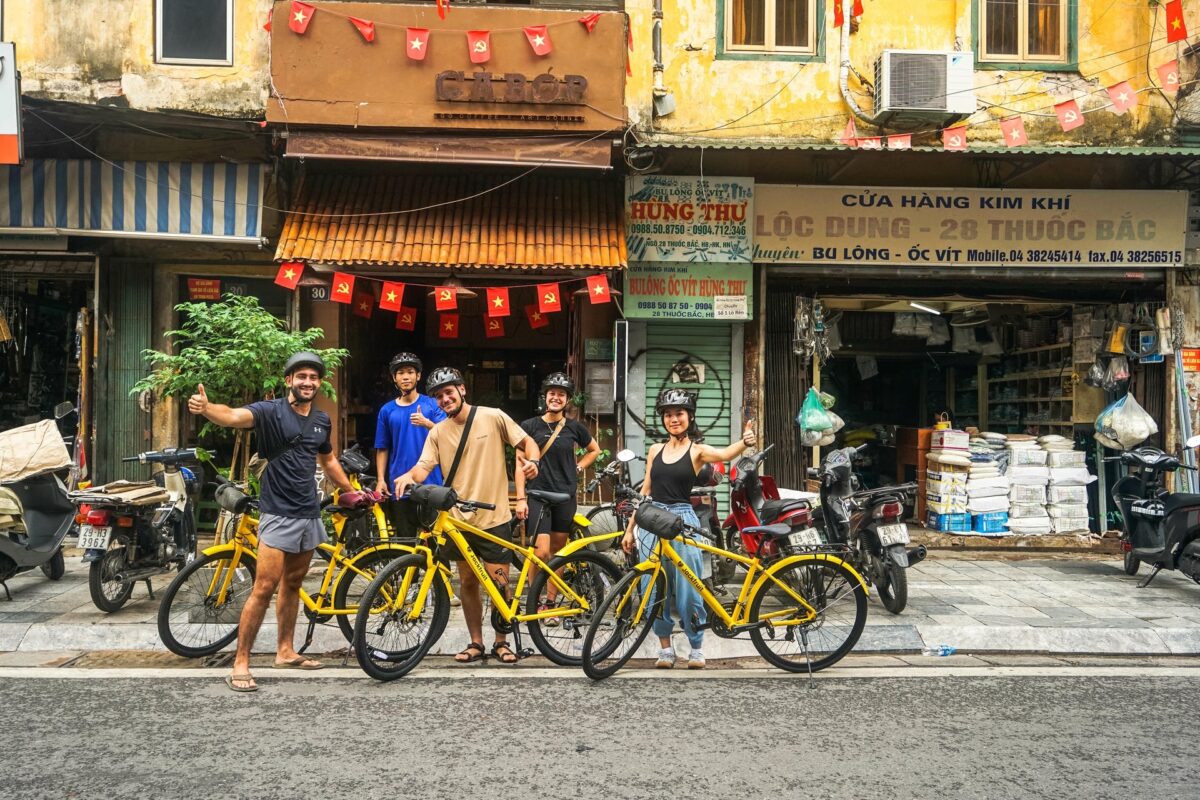
Companies like Grasshopper Adventures are now running certified sustainable cycling routes through Central Vietnam, connecting coastal towns via backroad routes with local homestay stays in between. Here in Hanoi, tours that take you through the West Lake neighborhood, the ceramic mosaic mural, or out to the villages along the Red River are quietly becoming standard practice among environmentally minded visitors. Our own Tour de Hanoi: Old Quarter, Iconic Landmarks & Hidden Corners does exactly this – weaving through ancient city gates, Dong Xuan Market, Hoan Kiem Lake, and the Imperial Citadel of Thang Long, all from the seat of a bicycle.
For travelers focused on travel trends 2026 sustainable travel, choosing cycling or walking tours over air-conditioned coaches isn’t just better for the environment – it’s objectively a better experience.
4. Eco-Certified Accommodations Are the New Standard
The days of “eco” being a greenwashing buzzword are fading. In 2026, travelers are doing their homework before they book. They’re looking for hotels and guesthouses with genuine credentials – solar panels, water recycling systems, plastic-free policies, and locally sourced menus.
Vietnam has responded with a growing network of VITA Green certified properties. Beyond the certification, you’re also seeing a wave of smaller, family-run guesthouses adopting sustainable practices not because they’re required to, but because guests are asking for it and rewarding them with bookings.
If you’re traveling this year and want to align with the travel trends 2026 sustainable travel movement, simply ask your accommodation about their practices. The good ones will have a real answer.
5. Carbon-Conscious Itinerary Planning
This one is newer and more nuanced. Travelers – particularly from Europe and North America – are now building carbon footprints into how they plan their trips. They’re offsetting long-haul flights, choosing multi-destination itineraries that make the most of one long trip rather than multiple short ones, and preferring trains over domestic flights where possible.
Vietnam’s infrastructure is catching up. High-speed rail development is progressing, and the options for low-carbon travel between Hanoi and other cities are expanding. For travelers committed to the sustainable travel trends 2026 agenda, this is genuinely good news. You can also read more about how to get around responsibly in our guide to the Top 5 Best Eco-Friendly Transportation Options for Travelers in Vietnam.
Sustainable Travel Companies Making It Real in Vietnam
I’m always cautious about dropping company names without reason – but in the context of sustainable travel companies, it matters who you book with.
At the Vietnam International Travel Mart (VITM) Hanoi 2026, leading operators showcased serious green commitments. Vietravel launched a “New Generation” product line with full ESG integration, featuring routes like “Ben Tre – Net Zero Passport” and community-based domestic tourism itineraries. Vietluxtour introduced cycling-based heritage tours through Ninh Binh as part of their broader “Green Tourism” ecosystem.
What this tells me, as someone working in the industry, is that sustainable travel companies in Vietnam are no longer operating at the margins. They’re competing at the top of the market and winning bookings because of their sustainability credentials, not in spite of them.
When choosing who to book with, look for operators who are transparent about where your money goes, who clearly employ local guides, and who can articulate what “eco-friendly” actually means in the context of their tour. Vague claims don’t count. Specifics do.
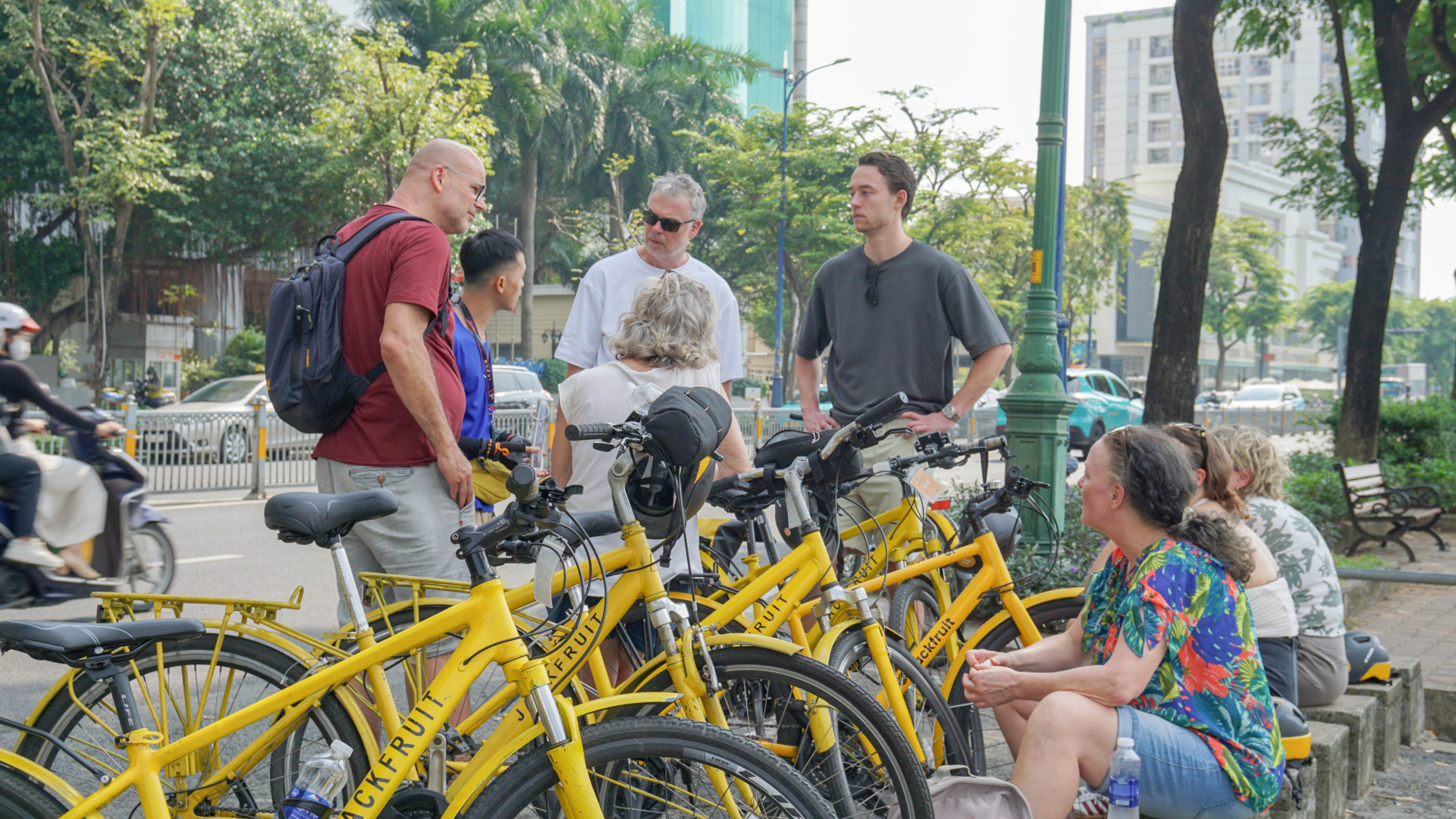
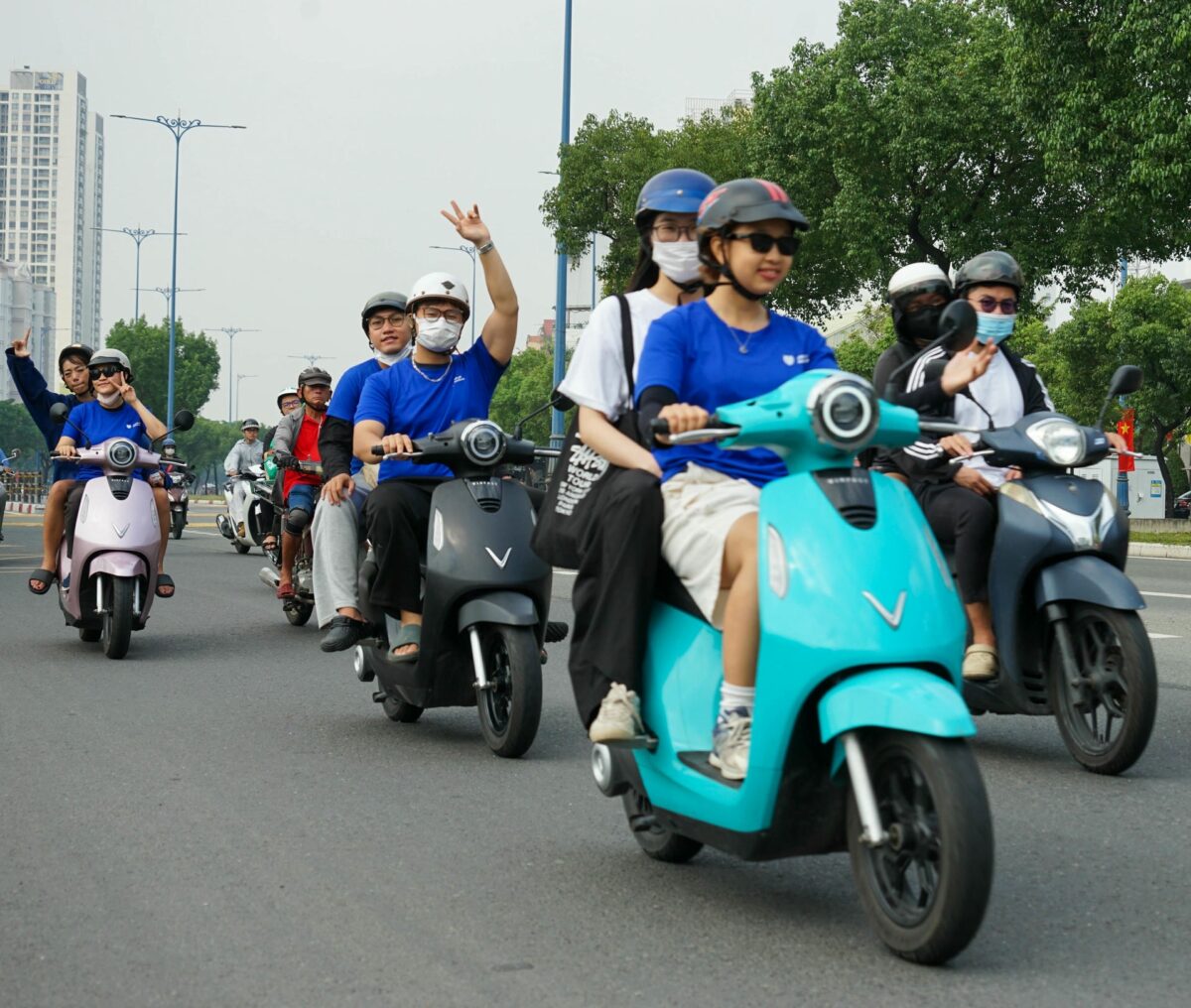
Here at Jackfruit Adventure, every cycling tour and local experience we run is built around that same principle: local first. Our guides are locals. Our lunch stops are family-run kitchens. When we take guests out on a cycling tour, we’re not performing sustainability – we’re just doing what we’ve always done, and it happens to align with what the travel trends 2026 sustainable travel movement is asking for. In Saigon, we also run Electric Tours and neighbourhood rides like our 2-Hour Saigon Off-the-Beaten Path: Hidden Alleys through District 4 – a low-emission way to experience the city’s most authentic street life without adding to its traffic or pollution.
Practical Tips: How to Actually Travel Sustainably in Vietnam
Reading about travel trends 2026 sustainable travel is one thing. Doing it is another. Here’s what I tell every guest who asks me how to make their Vietnam trip more responsible:
- Choose local over global. This applies to where you eat, where you sleep, what tours you book, and even what souvenirs you buy. A meal at a bún chả shop run by a grandmother and her daughter does more for the local economy than a buffet at a hotel chain.
- Use your feet and a bicycle. Vietnam’s cities and rural roads were made for cycling. Don’t rush past everything in a van. Slow down. The best moments happen at 15 km/h.
- Ask your tour operator real questions. How much of this booking goes to the local community? Are your guides from this region? What happens to your waste? Good sustainable travel companies will welcome the questions.
- Carry reusable bags, bottles, and chopsticks. Single-use plastic is still a significant issue across Vietnam, particularly in less-touristed areas. Being prepared means you’re not adding to the problem every time you buy a coffee or grab street food.
- Extend your stay. The single most sustainable thing most international visitors can do is fly less frequently and stay longer. One 14-day trip to Vietnam beats three 5-day trips – for your carbon footprint and for the depth of experience you’ll take home.
Why Vietnam Is the Right Place for Sustainable Travel Right Now
I’m biased, obviously. But I also think I’m right.
Vietnam in 2026 sits at a fascinating intersection. It’s one of the most visited countries in Asia – international arrivals jumped 18% in early 2026 alone – but it hasn’t yet reached the saturation point of places like Bali or Phuket. There’s still space for travel trends 2026 sustainable travel to shape how tourism develops here, rather than trying to undo damage that’s already been done.
The landscapes are extraordinary – limestone karsts, terraced rice fields, ancient temple complexes, 3,000 kilometers of coastline. The culture is alive and distinct in ways that reward slow, attentive travel. And the communities who make their living from tourism are increasingly aligned with sustainability, not because it’s fashionable, but because it protects the places they love.
For travelers who take sustainable travel trends 2026 seriously, Vietnam isn’t a compromise. It’s an ideal.
Vietnam Is Ready – Are You Traveling the Right Way in 2026?
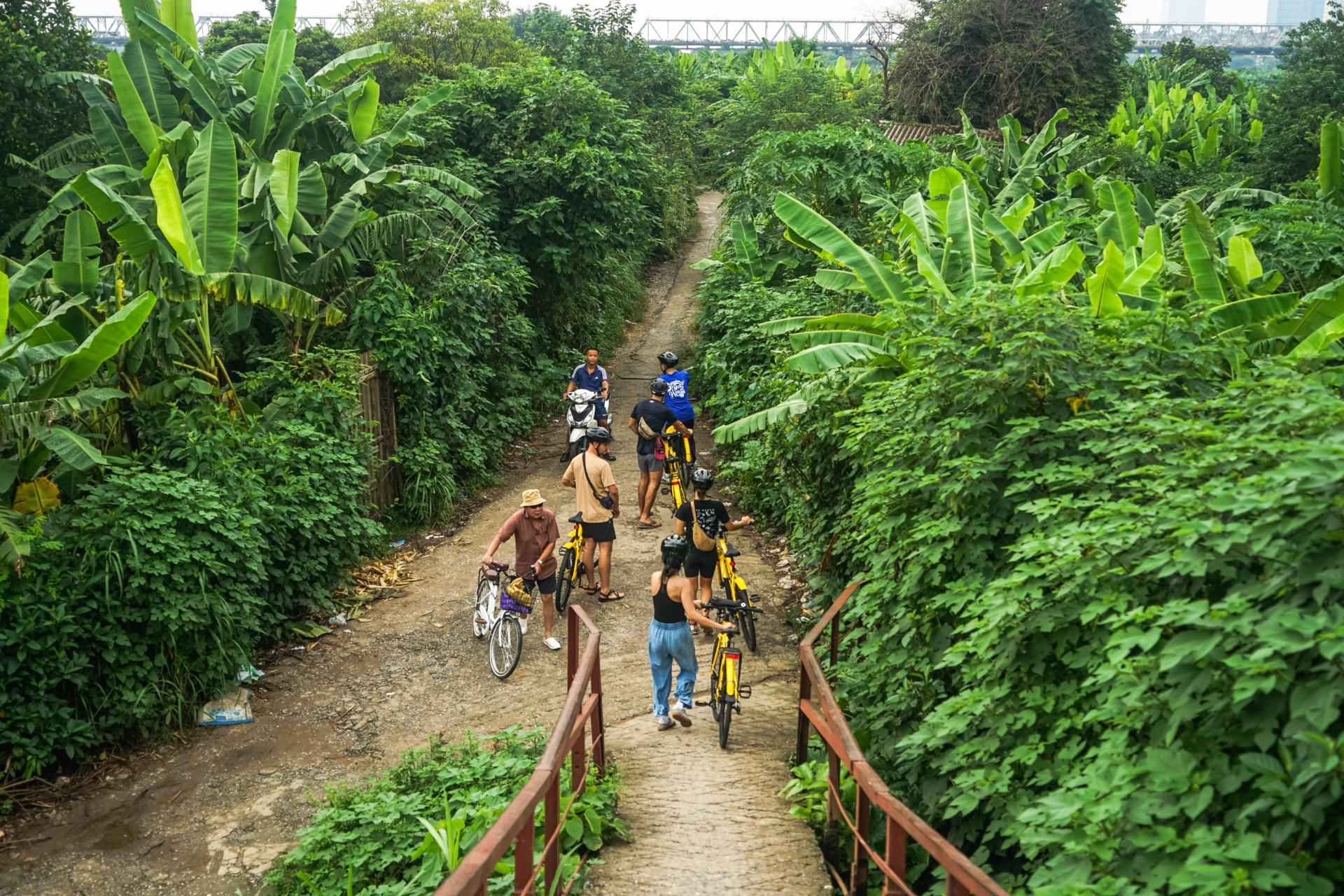
The travel trends 2026 sustainable travel shift is real, it’s accelerating, and it’s changing what good tourism looks like everywhere – including right here at home. What I’ve seen on the ground in Vietnam over the past year is encouraging: more travelers asking the right questions, more operators building products that deserve those questions, and a government policy framework that supports meaningful, quality-led growth.
Choosing to travel sustainably doesn’t mean giving up beauty or comfort or adventure. It means being thoughtful about where your money goes, how you move through a place, and what you leave behind. Done well, it means coming home with something deeper than a photo album.
If you’re ready to experience travel trends 2026 sustainable travel through the backstreets, rice paddies, and local kitchens of Vietnam, Jackfruit Adventure’s cycling and local experience tours are a great place to start. We’ll show you a Vietnam that most tourists rush past – and you’ll be glad you slowed down.