

Table of Contents
Most travelers come to Vietnam with a few banknotes in their pocket. Maybe it is a red 50,000 VND note for a bowl of phở, or a green 100,000 VND note for a taxi ride. At first, Vietnamese đồng can feel a little confusing, with many colors, many values, and many zeros.
But when you look closer, Vietnamese money is more than something used to pay for food, transport, or souvenirs. Like money in every country, it is also part of history, culture, and daily life. The idea of Vietnamese Currency Exhibited in museums or cultural displays helps visitors see how each banknote and coin can tell a small story about a certain period, from the economy and politics to printing techniques and design styles.
In Ho Chi Minh City, the exhibition “Vietnamese Currency – A Journey Through the Flow of National History” helped visitors see Vietnam’s history through its money. It was a meaningful cultural and educational exhibition, especially for travelers who want to understand Vietnam through simple but important details of everyday life.
Vietnamese Currency Exhibited in Ho Chi Minh City
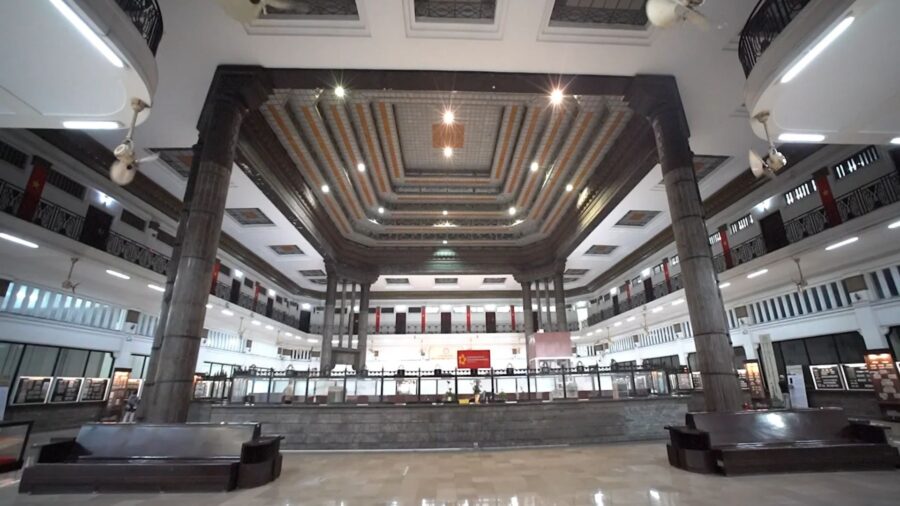
The exhibition was organized by the State Bank of Vietnam, Region 2 Branch, and took place at No. 8 Vo Van Kiet Street, Saigon Ward, Ho Chi Minh City. Its main purpose was to show the formation and development of Vietnamese currency and explain how money has been connected with the country’s history through different periods.
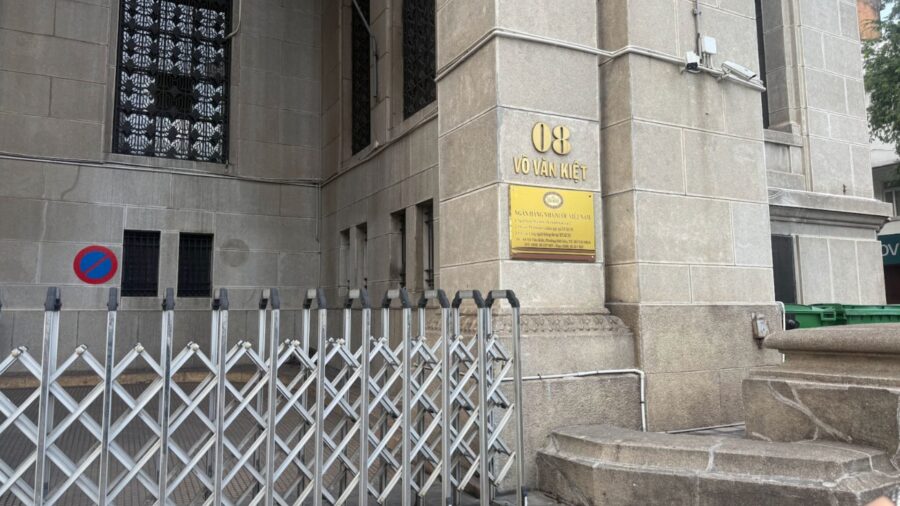
This was also the first time a large-scale collection of Vietnamese currency was introduced widely to the public. With more than 1,500 artifacts, the exhibition gave visitors a rare chance to see how Vietnamese money changed from the colonial period to modern times.
Through the theme of Vietnamese Currency Exhibited, visitors could learn more about Vietnam’s journey from the French colonial period to the struggle for independence, wartime, reunification, and modern development. The exhibition not only reflected the country’s history of struggle, construction, and growth through the story of its currency, but also showed how money can become a symbol of national sovereignty, independent spirit, and socio-economic progress.
Inside the Vietnamese Currency Exhibition
One of the most interesting aspects of the Vietnamese Currency Exhibited in Ho Chi Minh City was the diversity of artifacts on display, covering more than a century of monetary history. The exhibition displayed more than 1,500 Vietnamese currency artifacts, dating from 1875 to the present day. It was a large collection that included many different types of money and related objects.
Some of the most notable groups of artifacts included:
- Indochina currency
- “President Ho” banknotes, also known as Cu Ho banknotes
- Resistance currency
- Treasury notes and credit notes
- Ration coupons and vouchers
- Coins
- Modern polymer banknotes
For foreign travelers, this wide range of objects made the exhibition easier to understand. It showed that Vietnamese currency was not always only paper banknotes or modern polymer notes. In different historical periods, people used many forms of payment and exchange depending on the country’s political, economic, and social situation.
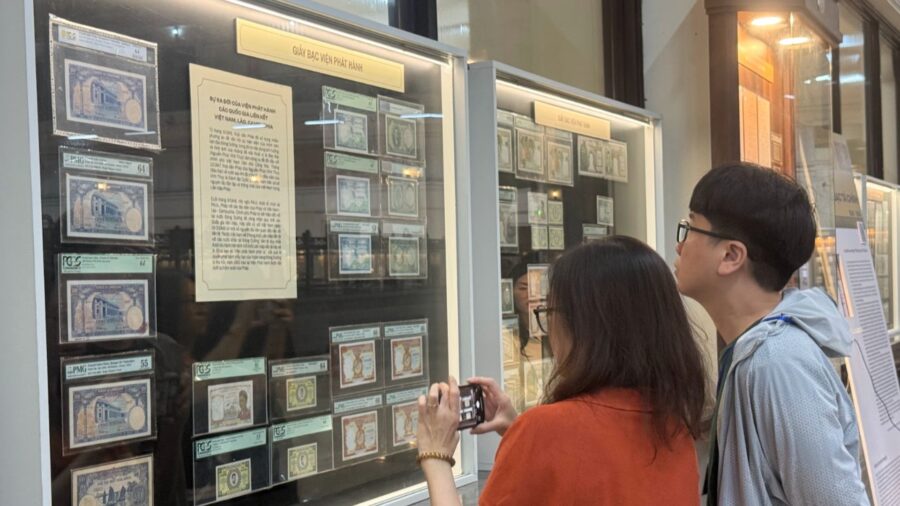
The exhibition space was arranged in historical order. This helped visitors follow the development of Vietnamese currency step by step. The layout did not only show how the appearance of money changed over time. It also helped explain why each type of money was created, how it was used, and what it meant in its historical context.
Instead of presenting money only as collectible items, the exhibition placed currency within the wider story of Vietnam’s national history. Because of this, each banknote became a small historical document, helping tell the story of Vietnam’s economy, society, and people across many periods.
Exhibition Space Arranged along The Flow of History
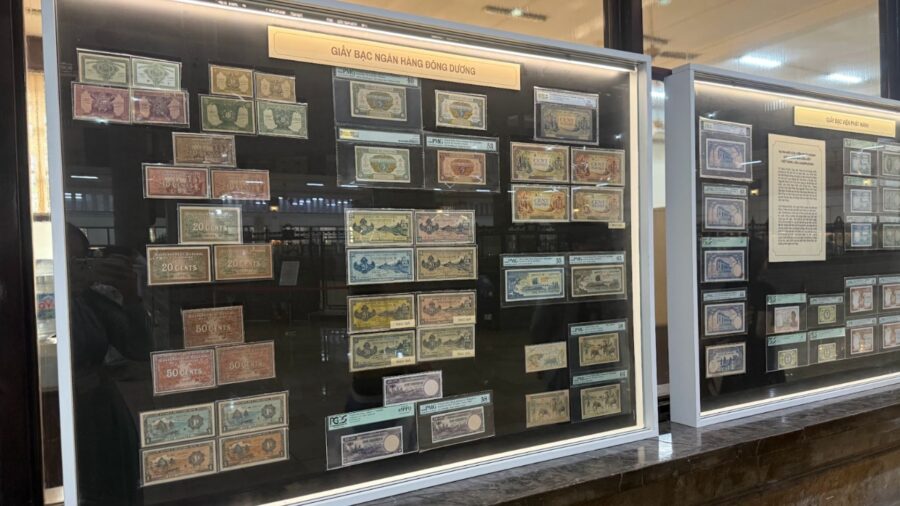
1. Indochina currency during the French colonial period
One important part of the exhibition was Indochina currency, which was connected with the period when Vietnam was part of French Indochina.
During this time, money reflected the colonial administration system. The design of Indochina banknotes often had a European style, with layouts, images, and printing techniques influenced by France. These banknotes were used for trade and daily transactions, but they also represented the control of the colonial government.
The materials and printing quality of these banknotes were often carefully made because currency played an important role in managing the economy and trade. For international travelers, this section helps connect money with other French colonial influences still visible in Vietnam, such as architecture, administration, and urban planning in cities like Hanoi and Ho Chi Minh City.
Indochina currency also helps visitors understand that money can show who held political and economic power at a certain time. In this period, currency was not only a tool for buying and selling. It was also part of the colonial system.
2. Financial notes and “President Ho” banknotes from 1945 to 1954
The period from 1945 to 1954 was very important in Vietnamese history. After Vietnam declared independence in 1945, issuing its own currency became a strong symbol of national sovereignty.
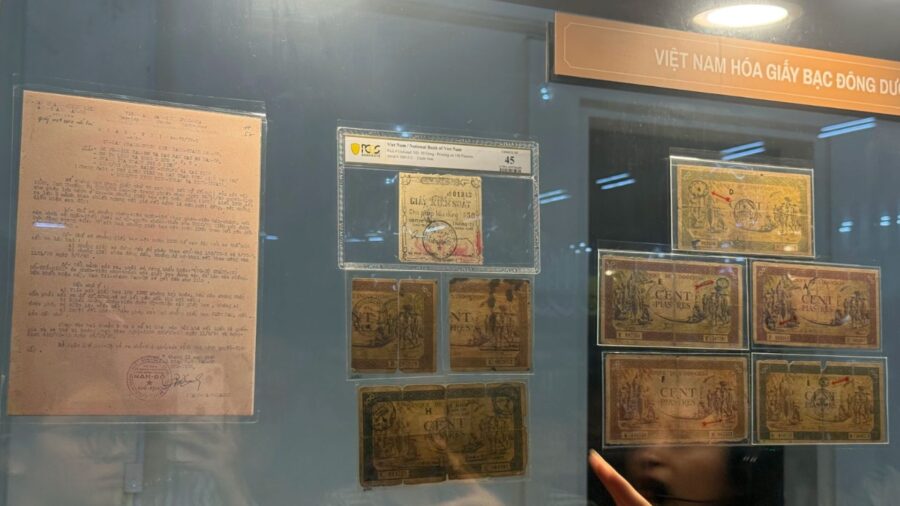
In the exhibition, the financial notes and “President Ho” banknotes, often called Cu Ho banknotes, showed Vietnam’s effort to build an independent financial system during a difficult time. These banknotes were not only used to exchange goods. They also carried strong emotional and political meaning. They represented trust in the new government and the country’s desire for independence.
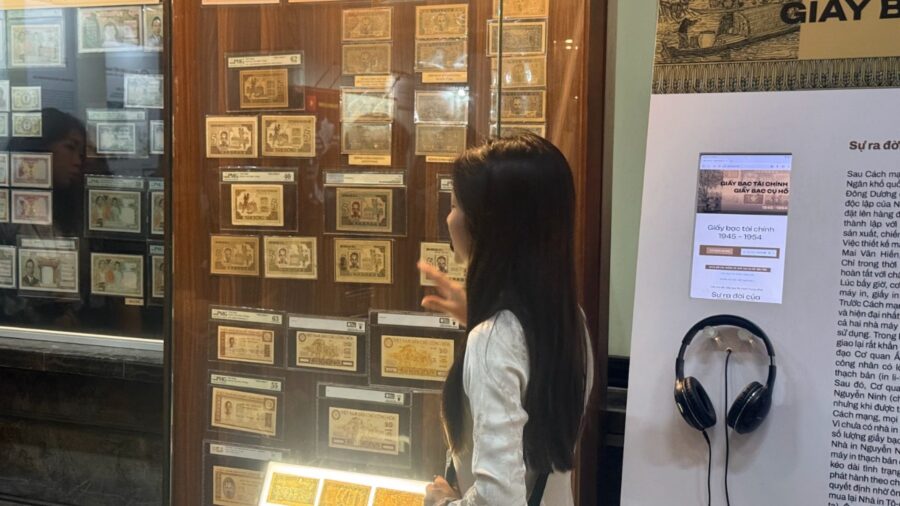
The designs from this period were often connected with President Hồ Chí Minh, revolutionary symbols, and messages of national spirit. Compared with colonial money, the images changed clearly. Instead of showing foreign power, Vietnamese money began to express national identity and independence.
The materials used during this period also reflected the difficult conditions of the time. Some banknotes could not be produced with the same modern techniques used in peaceful periods. As a result, some notes had simpler materials, printing methods, and finishing. However, this simplicity is part of their historical value. It shows the real conditions of a country that had just gained independence and was facing many challenges.
For travelers, this section is one of the clearest examples of how Vietnamese currency became more than money. It became a symbol of independence, self-reliance, and national belief.
3. Resistance currency and money in wartime
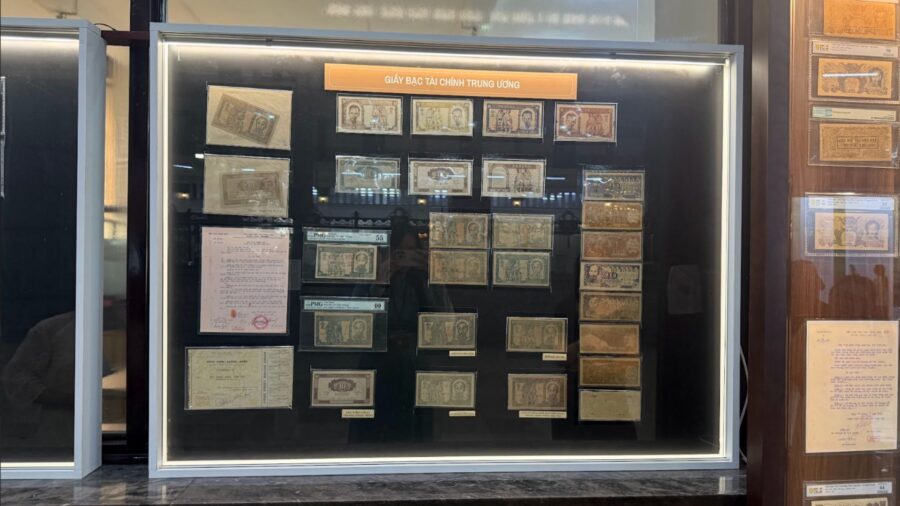
Another important part of Vietnamese Currency Exhibited was resistance currency. This type of money was connected with periods when Vietnam was going through war and national resistance.
During wartime, money still had to serve daily life. People needed to buy food, exchange goods, pay for services, and support local economies. However, producing and circulating money in such conditions was not easy.
Resistance currency often reflected limited resources, difficult printing conditions, and the need for practical use. The design could be simpler than official currency made in stable periods. The materials could also be different because of wartime shortages and security concerns.
However, these banknotes had great meaning. They showed that economic life continued even during difficult times. They also showed the effort to maintain trust, organization, and financial activity in areas affected by war.
For international visitors, resistance currency helps make history more human. It shows that war was not only fought on battlefields. It also affected markets, families, workers, farmers, and everyday exchanges.
4. State Bank of Vietnam notes from 1951 to 1975
The period from 1951 to 1975 was connected with the formation and operation of the State Bank of Vietnam during wartime. Currency from this period shows the role of the state in organizing the economy and keeping money in circulation under difficult conditions. These banknotes were not only payment tools. They were also symbols of a financial system that was being built and strengthened.
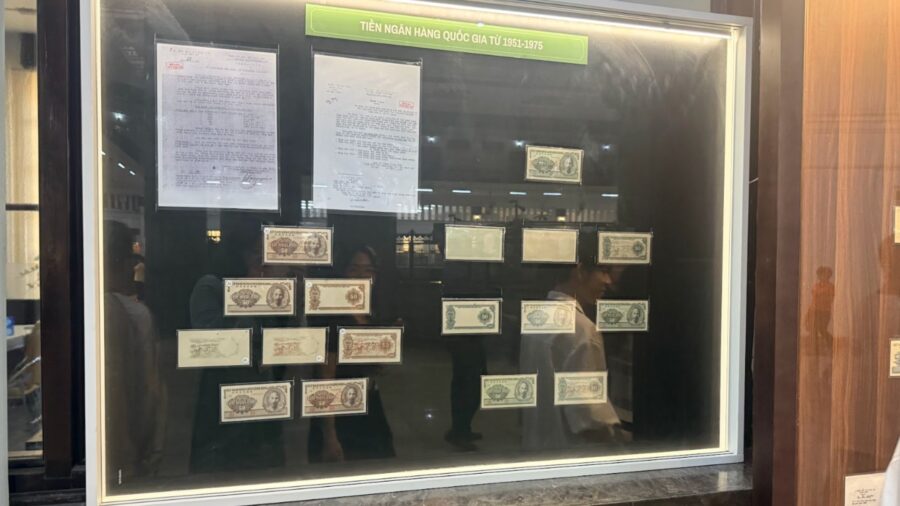
The designs often included images of workers, farmers, agriculture, industry, or national symbols. These images reflected the goals of economic development, encouraged public spirit, and highlighted the role of working people in society. The materials and printing techniques also reflected the wartime situation. Money needed to be printed for daily use, but production had to fit the available materials, technology, and security conditions of that period.
This part of the Vietnamese currency exhibition helped visitors see how money was linked to both national defense and economic construction. Even in a difficult period, currency continued to support daily life and express the country’s direction.
5. Treasury notes, credit notes, ration coupons, and vouchers
The exhibition did not only display banknotes and coins. It also introduced other important financial objects, such as treasury notes, credit notes, ration coupons, and vouchers. These objects may look simple, but they are very useful for understanding daily life in Vietnam during different periods.
Treasury notes and credit notes show how financial trust and payment systems worked in certain historical contexts. They were connected with public finance, local exchange, and economic management.
Ration coupons and vouchers tell a different story. They reflect periods when goods were limited or controlled. Instead of freely buying everything with cash, people sometimes used coupons or vouchers to receive necessary goods.
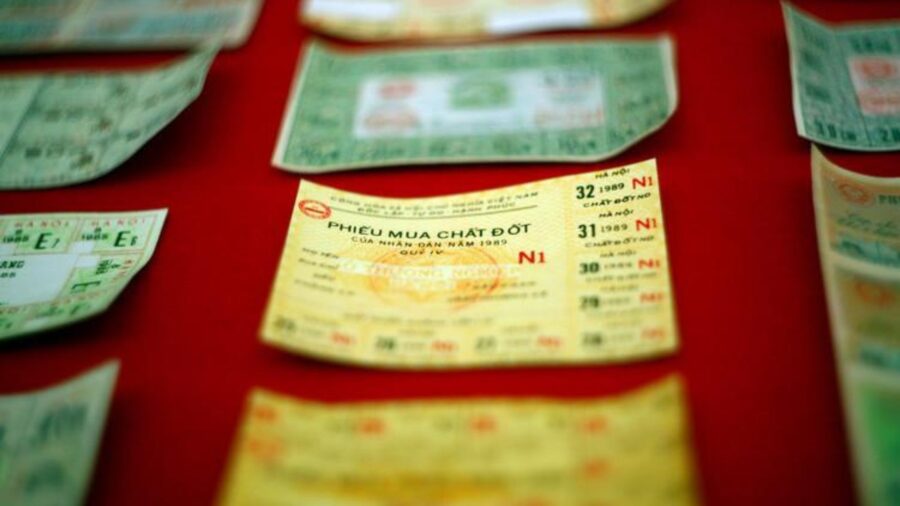
For travelers, these items are especially interesting because they show the relationship between money and daily survival. They help visitors understand how ordinary people managed food, goods, and basic needs in difficult economic conditions. This section also reminds us that history is not only about leaders, wars, or big political decisions. It is also about how families lived, how markets worked, and how people adapted to change.
6. Currency after 1975 and the reunification period
After 1975, Vietnam entered a new period of national reunification. This was a time of major changes in the economy, administration, and social life. Currency from this period reflected the process of reorganizing the financial system across the whole country.
As part of Vietnamese Currency Exhibited, the exhibition introduced money from 1975 to 1978, a short but important period. During this time, Vietnam needed to unify its monetary system to support economic management after the war. The design of money in this period continued to focus on national images, labor, and reconstruction. These banknotes were used for daily transactions, but they also represented the spirit of rebuilding the country after years of conflict.
For foreign travelers, this period helps explain why money is closely connected with the idea of national unity. After reunification, currency became one of the tools used to create a more connected national economy.
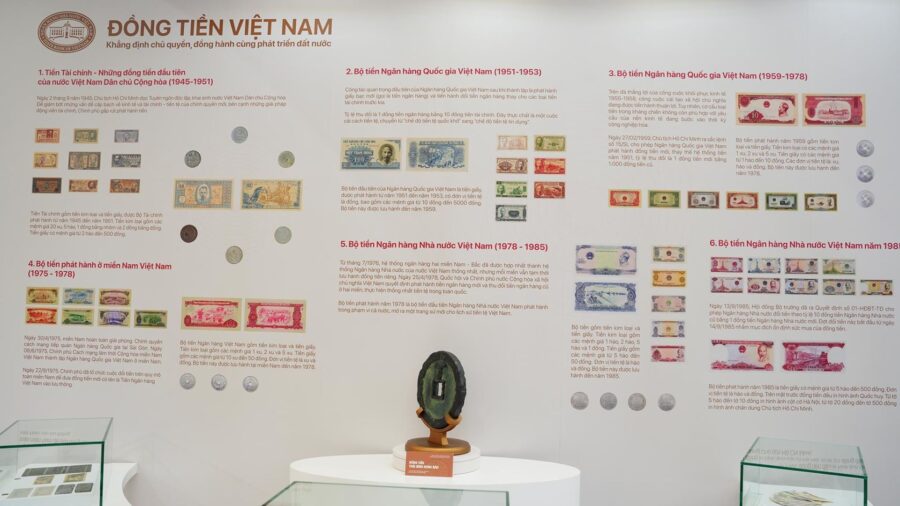
7. Vietnamese currency from the post-war period to today
The section on Vietnamese Currency Exhibited from after 1975 to today helped visitors connect history with present-day Vietnam. This period shows how Vietnamese currency changed in design, material, and security features. One important development was the introduction of polymer banknotes in modern Vietnamese currency. Compared with traditional paper notes, polymer notes are more durable, harder to tear, and better for anti-counterfeit features. This is why many Vietnamese banknotes today are made from polymer.
Modern Vietnamese banknotes often show President Hồ Chí Minh on the front. On the back, they usually feature important buildings, landscapes, economic projects, or cultural symbols of the country. This means the banknotes are not only used for payment, but also help present images of Vietnam to both local people and foreign visitors.
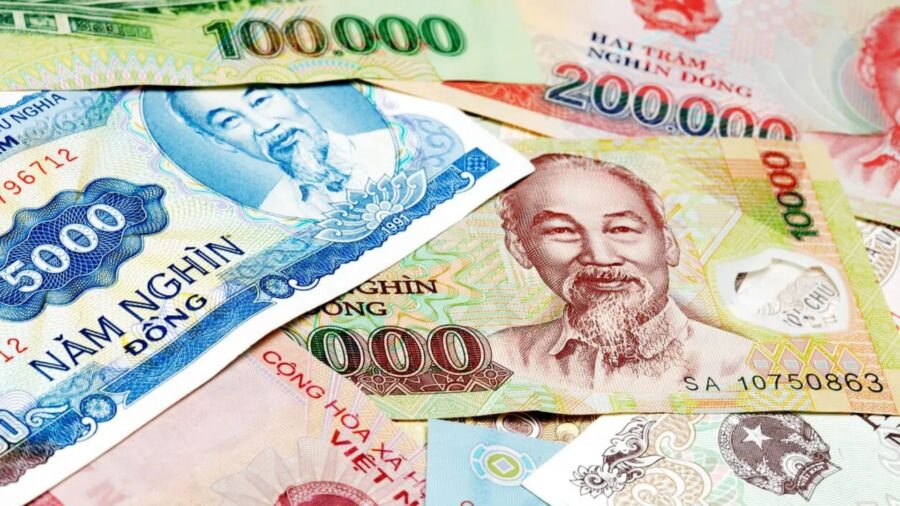
For international travelers, this section is easy to relate to because it connects the historical artifacts in the exhibition with the Vietnamese đồng they use during their trip. When visitors hold a modern Vietnamese banknote, they are not only holding a payment tool. They are also holding a small image of Vietnam’s development, identity, and national memory.
8. Coins and the changing forms of Vietnamese money
Coins were also part of the exhibition. Although many travelers today mostly use Vietnamese banknotes, coins are still important in the history of Vietnamese currency. Coins help show earlier forms of exchange, different production methods, and changes in daily payment habits. They also reflect the materials and technologies available in each period.
Compared with paper or polymer banknotes, coins have a different physical feeling. They are heavier, more durable, and often associated with older systems of small-value transactions. By including coins in the exhibition, the organizers helped visitors understand that Vietnamese money has appeared in many forms across history. Each form has its own use, meaning, and connection to daily life.
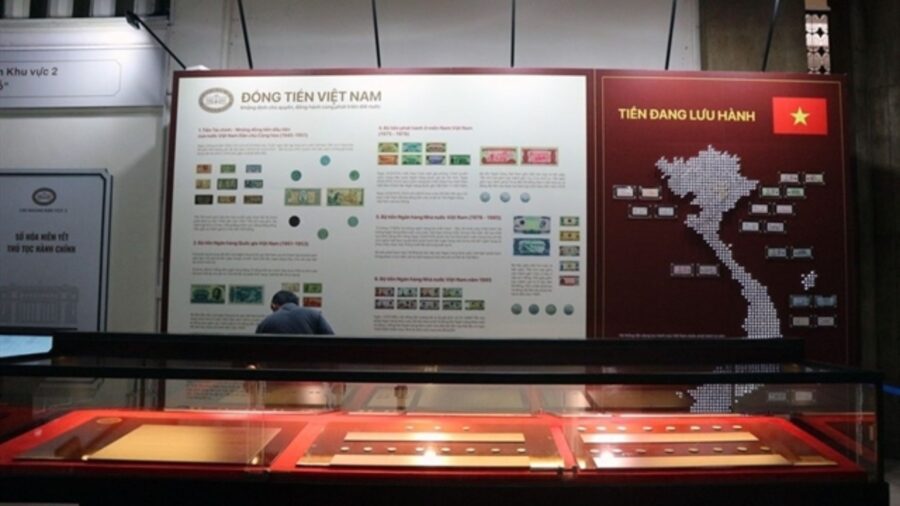
A digital space for modern visitors in Vietnamese Currency Exhibited in Ho Chi Minh City
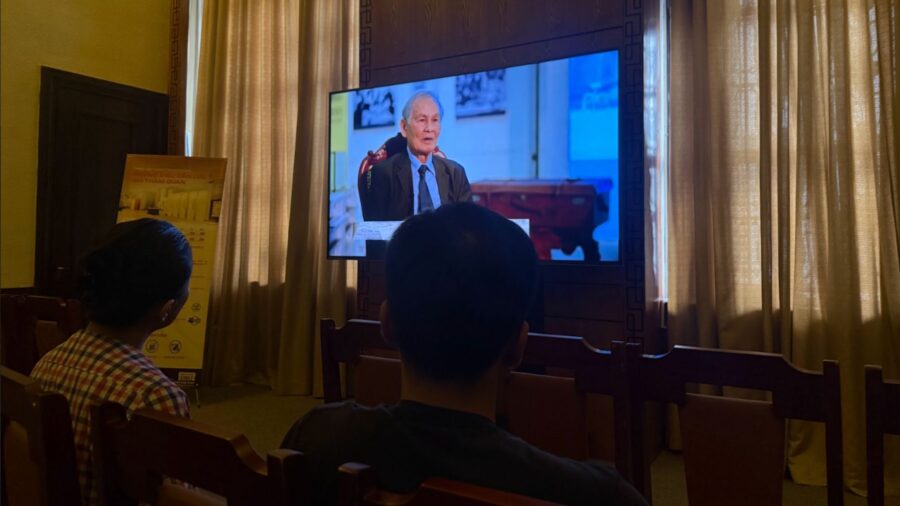
Besides traditional artifacts, Vietnamese Currency Exhibited also included a digital space for modern visitors. This area used interactive screens and digital technology to provide more information about the history of the State Bank of Vietnam, the State Bank headquarters in Hanoi, and the development of Vietnam’s banking system.
The digital space made the exhibition easier to access, especially for young visitors and international travelers. Instead of only reading information boards, visitors could interact with the content, view images, and learn more about important historical milestones.
The combination of real artifacts and modern technology helped make the exhibition more engaging. Old banknotes, coins, credit notes, vouchers, and historical documents were presented through a clearer and more visitor-friendly storytelling method.
This digital element also showed that the story of Vietnamese currency is not frozen in the past. It continues to connect with the present and with the way modern visitors learn about history.
Vietnamese Currency Exhibited in Ho Chi Minh City: The Meaning for Travelers
The exhibition “Vietnamese Currency – A Journey Through the Flow of National History” was meaningful because it helped the public look at Vietnam’s history through a very familiar object: money. Through more than 1,500 artifacts, the exhibition showed that money is not only an economic tool. It also reflects national sovereignty, historical conditions, social life, printing techniques, design art, and public trust in a financial system.
The journey of Vietnamese currency also reflects the country’s struggle, construction, and development. From colonial money to “President Ho” banknotes, from resistance currency to modern polymer notes, each period tells a part of Vietnam’s national story.
The Vietnamese đồng can be seen as:
- A symbol of national sovereignty
- A sign of independence and self-reliance
- A reflection of Vietnam’s economic and social development
For Vietnamese visitors, Vietnamese Currency Exhibited offered a chance to look back at the country’s development through objects that were once connected with many generations. For international travelers, it offered a simple and clear way to approach Vietnamese history without starting from complex historical concepts. A small banknote can tell many stories: when it was issued, who used it, what society needed at that time, what stage the country was going through, and what people believed in.
This is the main value of the exhibition. It reminds visitors that history is not only found in books, museums, or large monuments. History can also be found in small, familiar objects that have passed through the hands of millions of people
At Jackfruit Adventure, we see Vietnamese Currency Exhibited in Ho Chi Minh City as a simple way to understand Vietnam through everyday objects. From old Indochina notes to “President Ho” banknotes, vouchers, coins, and polymer money, each item tells part of the country’s journey. This is also the spirit of our city tours: taking travelers beyond famous landmarks to discover local stories, hidden corners, and the real Vietnam.