

Table of Contents
If you’re looking for where you can find banh ram it in Vietnam, the short answer is Central Vietnam: Huế above all, then Đà Nẵng and Hội An. But the longer answer depends on where you’re traveling, how far off the tourist trail you’re willing to go, and what version of the dish you’re hoping to find. This guide covers all of it, from the street stalls of Huế where the dish originated to what you can realistically expect if you’re searching for it in Hanoi or Ho Chi Minh City.
What Is Banh Ram It?
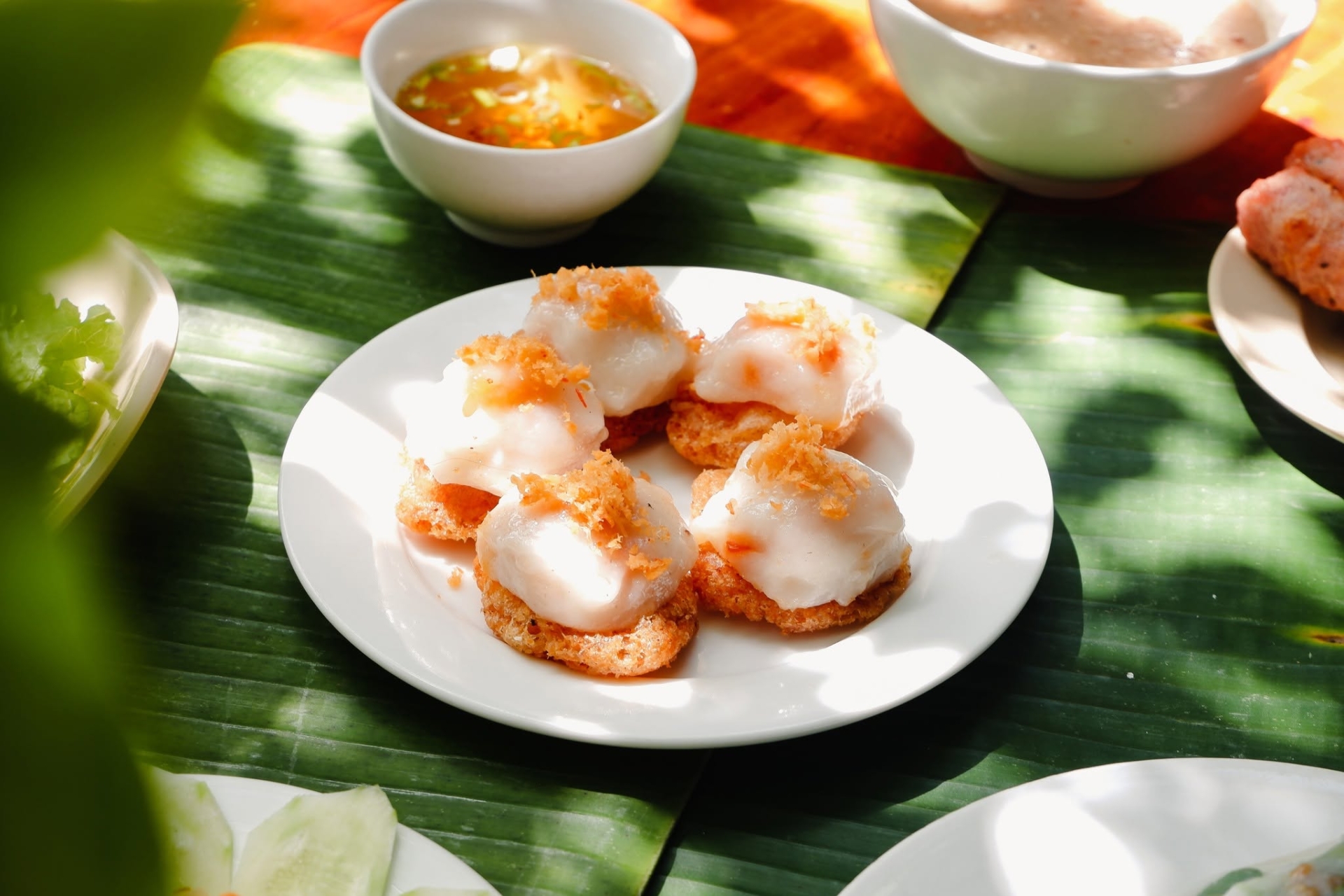
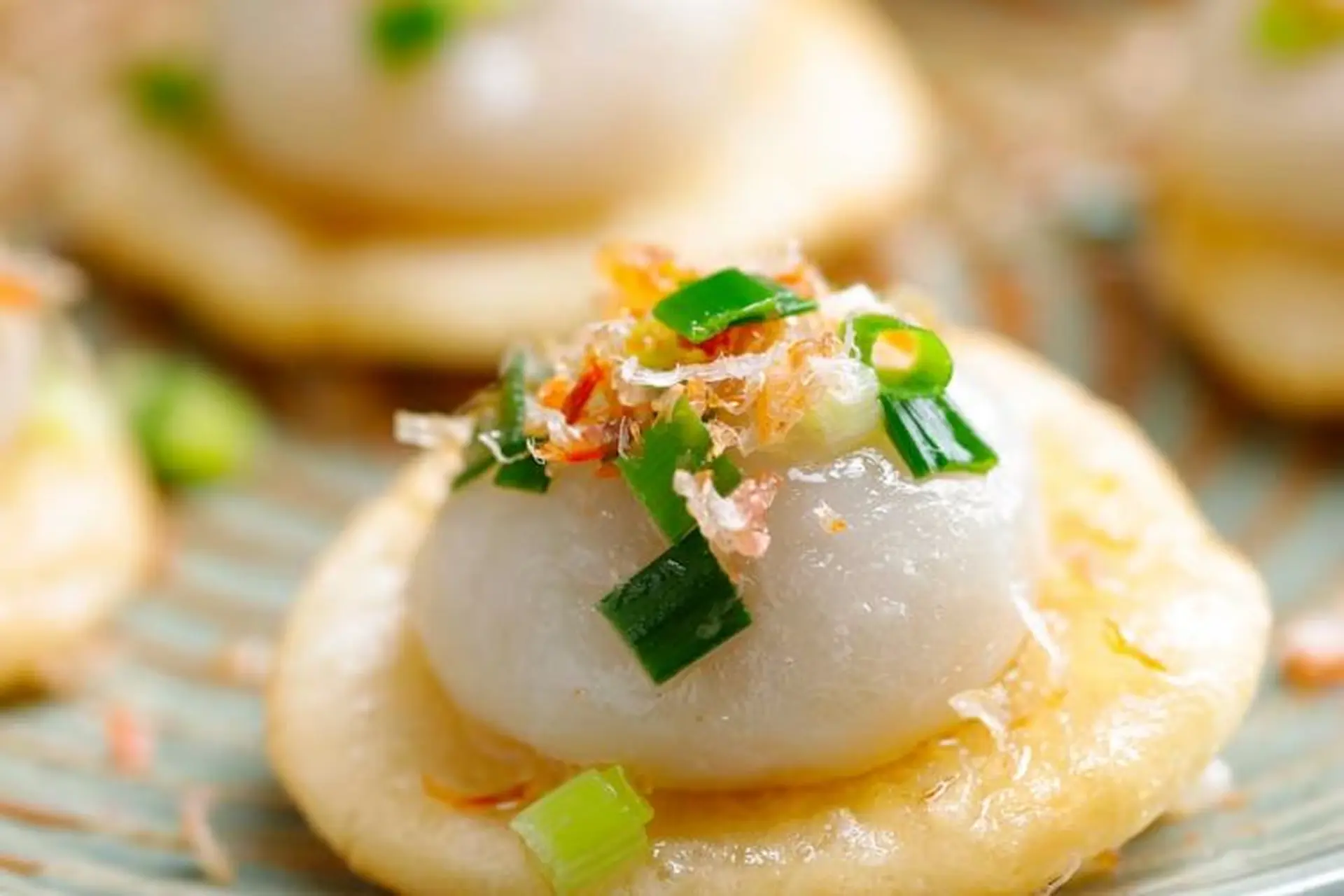
Banh ram it is a Central Vietnamese dish built around a simple but brilliant idea: place a soft, chewy steamed dumpling on top of a crispy fried rice cake, then eat them together in a single bite.
The name tells you exactly what you’re getting. Bánh ít refers to the dumpling on top, made from glutinous rice dough wrapped around a filling of braised pork belly and small river shrimp. Bánh ram is the base, a flat, golden-fried rice cake that shatters when you bite into it. Two textures that seem like opposites, stacked into one piece of food.
Here’s what each component brings to the dish:
- The base (bánh ram): Made from glutinous rice flour blended with a small amount of regular rice flour, pressed flat and deep-fried until golden and crisp.
- The dumpling (bánh ít): Smooth, elastic glutinous rice dough encasing a savory filling of shrimp and braised pork belly.
- The dipping sauce: A sweet and tangy nước mắm that cuts through the richness and ties everything together.
When you take a bite, you get all three layers at once: the crunch of the base, the chew of the dumpling, the umami hit of the filling before the dipping sauce rounds it all out. It’s the kind of dish that’s hard to explain until you’ve actually tried it, which is probably why people who’ve had it once tend to go looking for it again.
Where Is Banh Ram It Originally From?
Banh ram it comes from Huế, the former imperial capital of Vietnam and the birthplace of many of the country’s most refined dishes. Once served within the walls of the Huế Citadel as part of the Nguyễn dynasty’s royal court cuisine, it gradually made its way out of the palace and into the city’s everyday food culture, becoming the street-side breakfast staple it is today.
While the dish has since spread across Central Vietnam, from Quảng Bình down through Đà Nẵng, Huế remains its true home. You can find it at Huế-style restaurants in other parts of the country, though the flavor often adapts to local tastes the further you travel from its origin.
Where You Can Find Banh Ram It in Vietnam
Huế — The Hometown of Banh Ram It
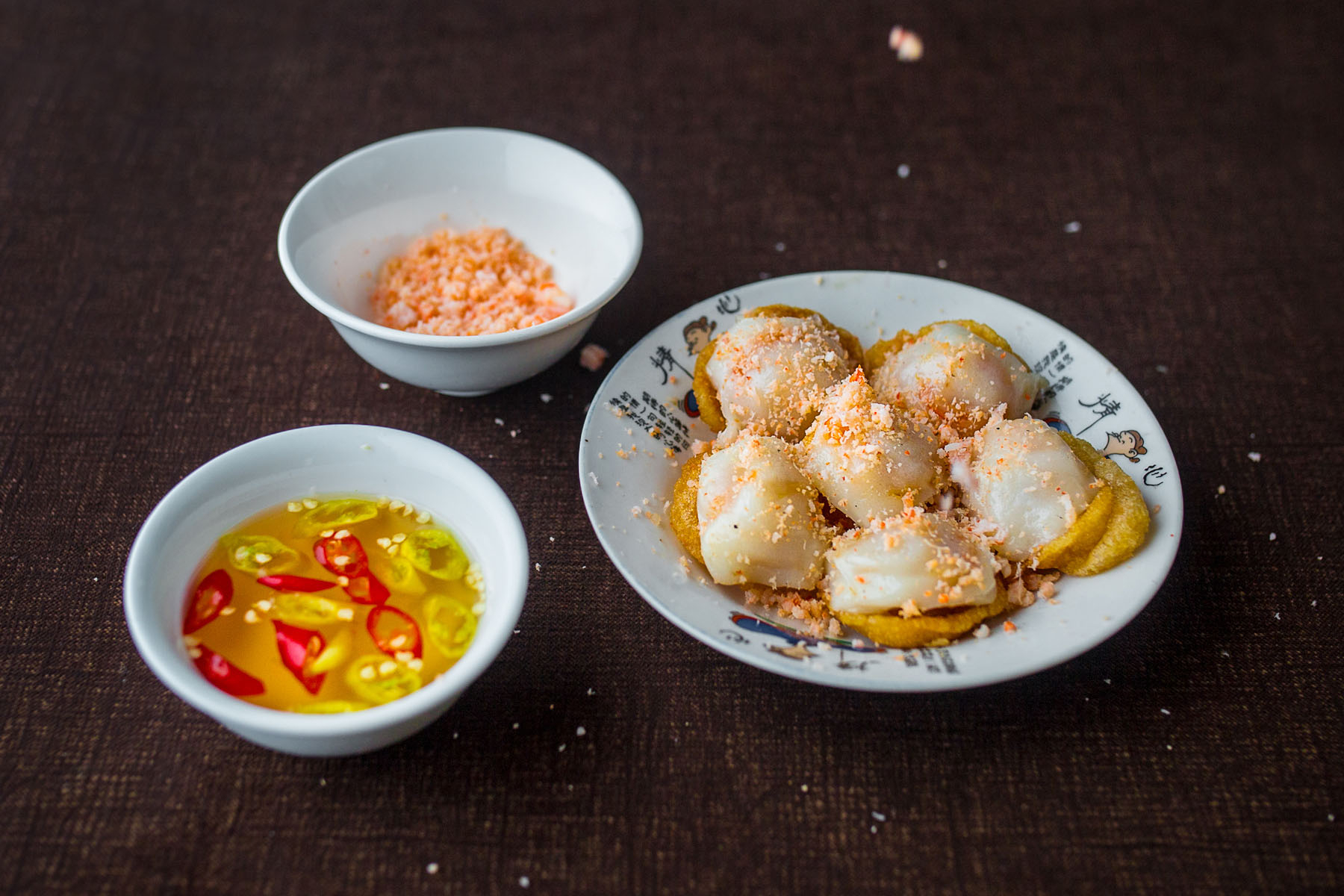
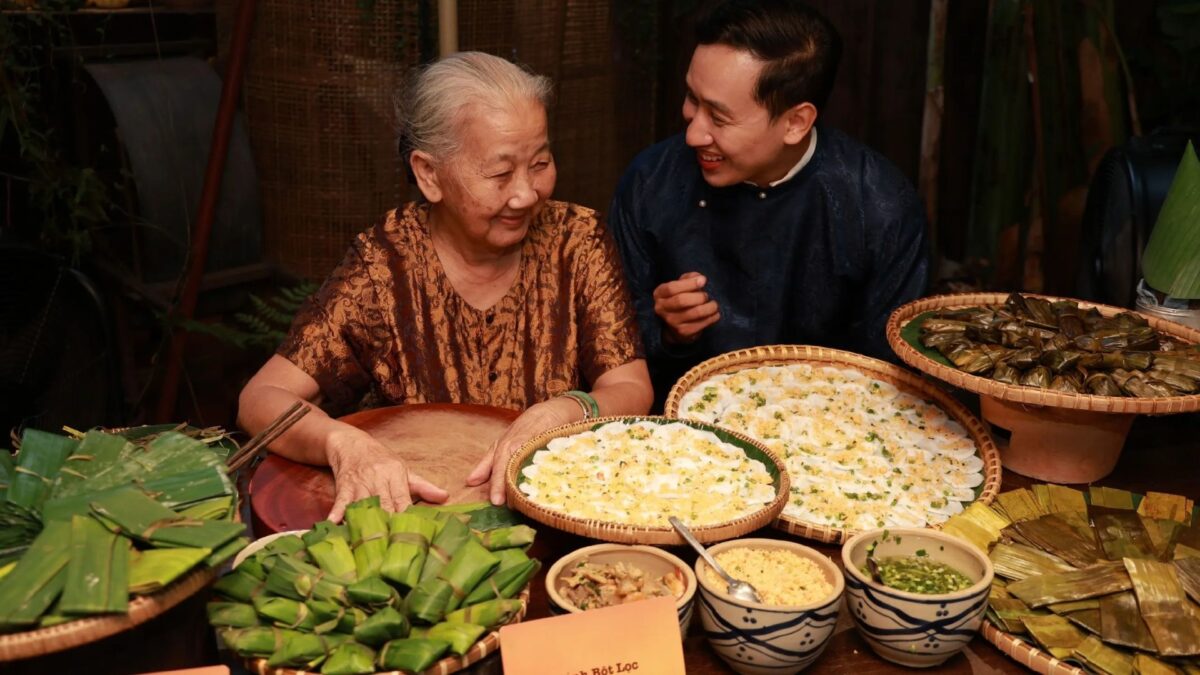
In Huế, banh ram it is everyday food. You’ll find it at local eateries, street-side stalls, and bánh Huế shops across the city — often sharing a menu with bánh bèo, bánh nậm, and bánh bột lọc. If a shop sells those, there’s a good chance banh ram it is on the menu too.
Locals typically eat it as a breakfast or mid-afternoon snack rather than a full meal. A plate of ten pieces at a street-side stall runs around 35,000–40,000 VND (roughly $1.40–$1.60 USD).
A few specific spots worth seeking out:
- Bánh O Lé: Kiệt 104, Kim Long, Huế
- Quán Bèo Nậm Lọc Huế Xưa: 1 Nguyễn Bỉnh Khiêm, Phú Xuân Huế
- Bánh Chi: 65 Nguyễn Trãi, Thuận Hòa, Huế
If Huế is on your trip, this is hands down where you can find banh ram it in Vietnam, not just because it’s the most widely available, but because this is where the dish was born, and where you’re most likely to taste it the way it was meant to be eaten.
Đà Nẵng — The Easiest City to Find It as a Traveler
Đà Nẵng is the most traveler-friendly city in Central Vietnam, and that extends to finding banh ram it. Local bánh Huế shops are scattered across the city, and most of them serve bánh ram it alongside bánh bèo, bánh nậm, and bánh bột lọc.
One practical tip: search for bánh Huế or bánh bèo nậm lọc rather than banh ram it specifically. Many Đà Nẵng shops bundle these dishes together on the same menu, so looking for the category will turn up more results than searching for the dish alone.
A plate of 4–6 pieces typically runs 20,000–35,000 VND (around $0.80–$1.40 USD).
A few spots to check out:
- Bếp Quảng: 10 Hà Khê, Thanh Khê, Đà Nẵng
- Bánh Gói Gia Truyền Ông Cọ: 90 Núi Thành, Hòa Cường, Đà Nẵng
- Bánh Bột Lọc Huế Bé Tâm: 12 An Thượng 24, Ngũ Hành Sơn, Đà Nẵng
Đà Nẵng won’t give you quite the same density of options as Huế, but it’s a solid place to find banh ram it in Vietnam — especially if you’re already in the city for the beaches or on a Da Nang–Hội An itinerary.
Hồ Chí Minh City — Can You Find It in the South?
Yes, but with some caveats.
Banh ram it is not a common dish in Hồ Chí Minh City, but it does exist at restaurants specializing in Huế cuisine. Your best strategy is to look for places with bánh Huế or đặc sản Huế on the signage or menu, these are the spots most likely to have it, often served as part of a mixed platter alongside bánh bèo, bánh nậm, and bánh bột lọc.
Expect to pay noticeably more than in Central Vietnam. A mixed set at a sit-down restaurant typically runs 65,000–70,000 VND (around $2.50–$2.80 USD), compared to under $1.50 at a street stall in Huế or Đà Nẵng. Quality also varies more here — it depends heavily on whether the kitchen is run by someone from Central Vietnam who knows the dish well.
A few spots that have been reported by locals:
- Góc Huế: 155 Nguyễn Thái Bình, Bến Thành, District 1
- Bếp Huế: 89 Thạch Thị Thanh, Tân Định
- Bánh Bèo Huế O Trinh: 126 Bùi Thị Xuân, Bến Thành, District 1 (budget-friendly option; a set of 6 pieces at around 35,000 VND / ~$1.40 USD)
If Hồ Chí Minh City is your only stop in Vietnam and you’re wondering where you can find banh ram it without traveling north, these are your best bets, just keep expectations realistic and treat it as a preview rather than the full experience.

And while you’re in the city, the food scene has plenty more to offer: from bún chả in Ho Chi Minh City to hidden coffee shops only locals know. If it’s your first time, 3 Days in Ho Chi Minh City: An Unforgettable Itinerary Beyond the Tourist Trail is a good place to start planning
Hà Nội — A Northern Detour Worth Making for Central Food Lovers
Banh ram it is not a Hà Nội dish, and it shows. Even Nét Huế, the largest Huế restaurant chain in the city, doesn’t carry it on their menu. Your options are limited to a small number of Central Vietnamese specialty restaurants, and finding a good version takes more effort than it would in Huế or Đà Nẵng.
When you do find it, expect a mixed set alongside other bánh Huế varieties, priced noticeably higher than in Central Vietnam. Quality is inconsistent; it depends heavily on the cook, and many Hà Nội kitchens quietly adjust the recipe to suit Northern palates: less chili, a lighter dipping sauce, a slightly different texture on the bánh ram. This isn’t carelessness. It’s a business decision. A restaurant in Hà Nội serves mostly Northern customers who grew up with lighter, less pungent flavors, and a dish that tastes “too Central” simply won’t sell as well.
One spot worth knowing:
- Bún Bò O Xuân: 5D Quang Trung, which serves a set at 65,000 VND (around $2.50 USD). It’s not the most obvious place to look for bánh ram ít in Hà Nội, but it’s a reliable option if you’re in the city and don’t want to wait until you reach Central Vietnam.
That said, if finding authentic banh ram it in Vietnam is the goal, Hà Nội is the longest detour on this list. Save your appetite for Huế.
In the meantime, the capital has its own Northern classics worth tracking down: bánh cuốn and bún đậu mắm tôm are good places to start, and breakfast in Hanoi is a ritual worth experiencing on its own terms.
Tips for Finding the Best Banh Ram It
- Go early. Most street-side stalls sell out before 10 a.m. Banh ram it is a breakfast and mid-morning snack food. If you show up at noon hoping to find it at a local stall, you’ll likely be too late.
- Look for small stalls, not restaurants. Look for small stalls, not restaurants. The best banh ram it is almost always made by a local family running a street-side operation with a short menu. A sit-down restaurant with ten pages of dishes and English translations is rarely where you’ll find the most carefully made version, because bánh ram ít requires precise timing between the frying and serving. A family stall making 30 plates a morning has every incentive to get it right. A restaurant turning over 200 covers a day does not.
- Search for bánh bèo first. Banh ram it and bánh bèo are almost always sold together. If you can’t find banh ram it directly, searching for quán bánh bèo or bánh bèo nậm lọc will lead you to the same places, and the menu will likely have both.
- Eat it immediately. The bánh ram base is only crispy for a short window after frying. Leave it sitting for twenty minutes, and the crunch disappears, taking half the point of the dish with it. If a stall is making it fresh to order, that’s a good sign. If a pre-made plate has been sitting out, it’s worth asking for a fresh one.
One pattern worth knowing: stalls that sell out earliest are usually the ones worth finding. In Huế and Đà Nẵng, the best bánh Huế spots rarely advertise; they don’t need to. If you walk past a stall before 9 a.m. and see locals eating standing up with a plate of mixed bánh, that’s your signal to stop. The stalls with English menus and tourist photos out front almost never have the freshest banh ram it.
Not Going to Central Vietnam? Here’s Where to Find Banh Ram It
Where you can find banh ram it in Vietnam: Banh ram it is worth going out of your way for, and if you can make it to Central Vietnam, Huế is where the search ends. But Vietnam’s street food story doesn’t begin or end in one region.
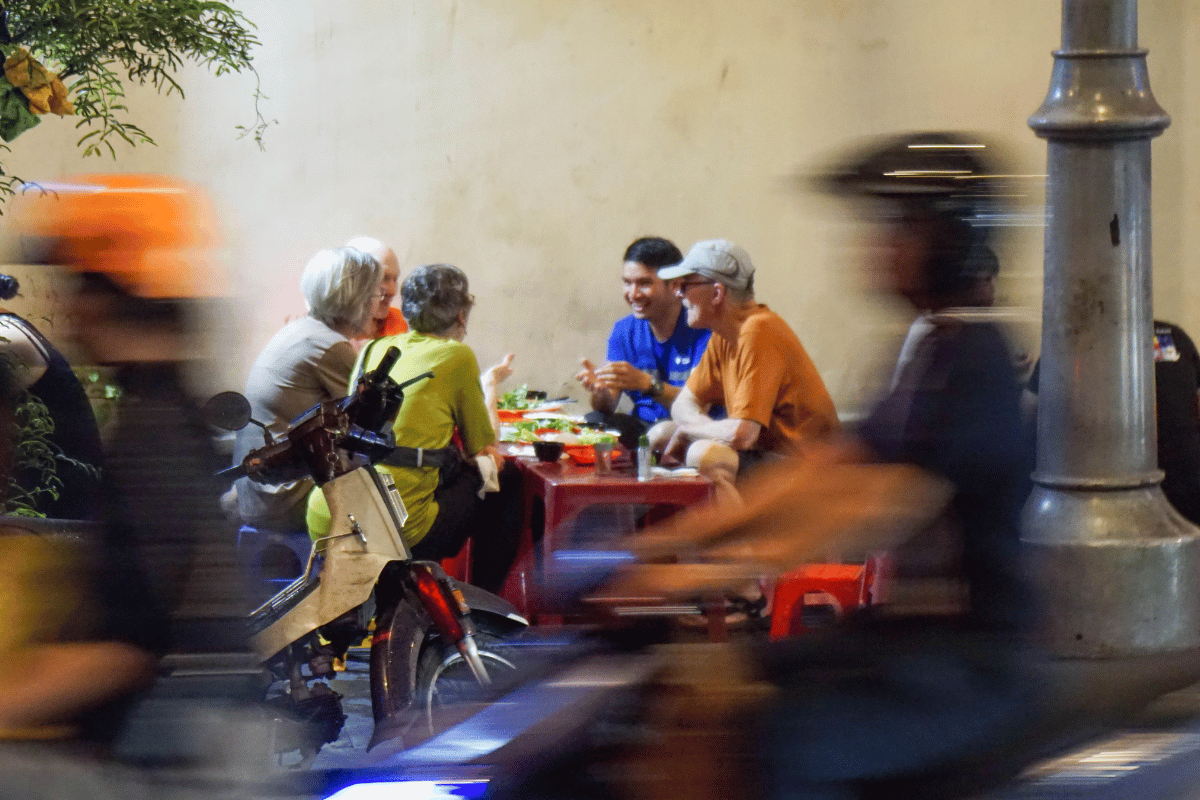
Not heading to Central Vietnam just yet? Ho Chi Minh City has its own after-dark food scenes worth exploring. Jackfruit Adventure runs evening food tours in the city by bicycle, through the kind of streets most visitors never find on their own.

FAQs About Banh Ram It
Is banh ram it only found in Huế?
No — but Huế is where you’ll find it most easily and at its best. The dish has spread to Đà Nẵng, Hội An, and other parts of Central Vietnam, and you can occasionally find it at Huế-style restaurants in Hà Nội and Hồ Chí Minh City. Outside of Central Vietnam, availability is limited and quality varies significantly.
Is banh ram it the same as bánh ít trần?
No. They’re different. Bánh ít trần is a steamed dumpling served on its own, without the fried rice cake base. Bánh ram ít is specifically the combination of the two: the dumpling (bánh ít) placed on top of the crispy fried cake (bánh ram). The pairing is what makes it distinct.
What is the difference between banh ram it and bánh bèo?
Both are Central Vietnamese rice cakes, but they’re quite different in form and texture. Bánh bèo is a small steamed rice cake served in a shallow dish, topped with dried shrimp and scallion oil. Banh ram it is a two-component dish — a soft glutinous rice dumpling with a pork and shrimp filling, placed on top of a crispy fried rice cake. Bánh bèo is light and delicate; banh ram it is richer and more textural.
How much does banh ram it cost in Vietnam?
At a street-side stall in Huế or Đà Nẵng, a plate of 4–6 pieces costs between 20,000–40,000 VND (roughly $0.80–$1.60 USD). At restaurants in Hà Nội or Hồ Chí Minh City, expect to pay 65,000–70,000 VND ($2.50–$2.80 USD) for a mixed set. It’s one of the more affordable street foods in Vietnam.
Is banh ram it gluten-free?
The dish is made primarily from glutinous rice flour, which is naturally gluten-free despite its name. However, the dipping sauce (nước mắm) and some fillings may contain soy sauce or other ingredients with gluten. If you have a gluten intolerance, it’s worth checking with the vendor about the specific ingredients used.
No — but Huế is where you’ll find it most easily and at its best. The dish has spread to Đà Nẵng, Hội An, and other parts of Central Vietnam, and you can occasionally find it at Huế-style restaurants in Hà Nội and Hồ Chí Minh City. Outside of Central Vietnam, availability is limited and quality varies significantly.
No. They’re different. Bánh ít trần is a steamed dumpling served on its own, without the fried rice cake base. Bánh ram ít is specifically the combination of the two: the dumpling (bánh ít) placed on top of the crispy fried cake (bánh ram). The pairing is what makes it distinct.
The dish is made primarily from glutinous rice flour, which is naturally gluten-free despite its name. However, the dipping sauce (nước mắm) and some fillings may contain soy sauce or other ingredients with gluten. If you have a gluten intolerance, it’s worth checking with the vendor about the specific ingredients used.