

Table of Contents
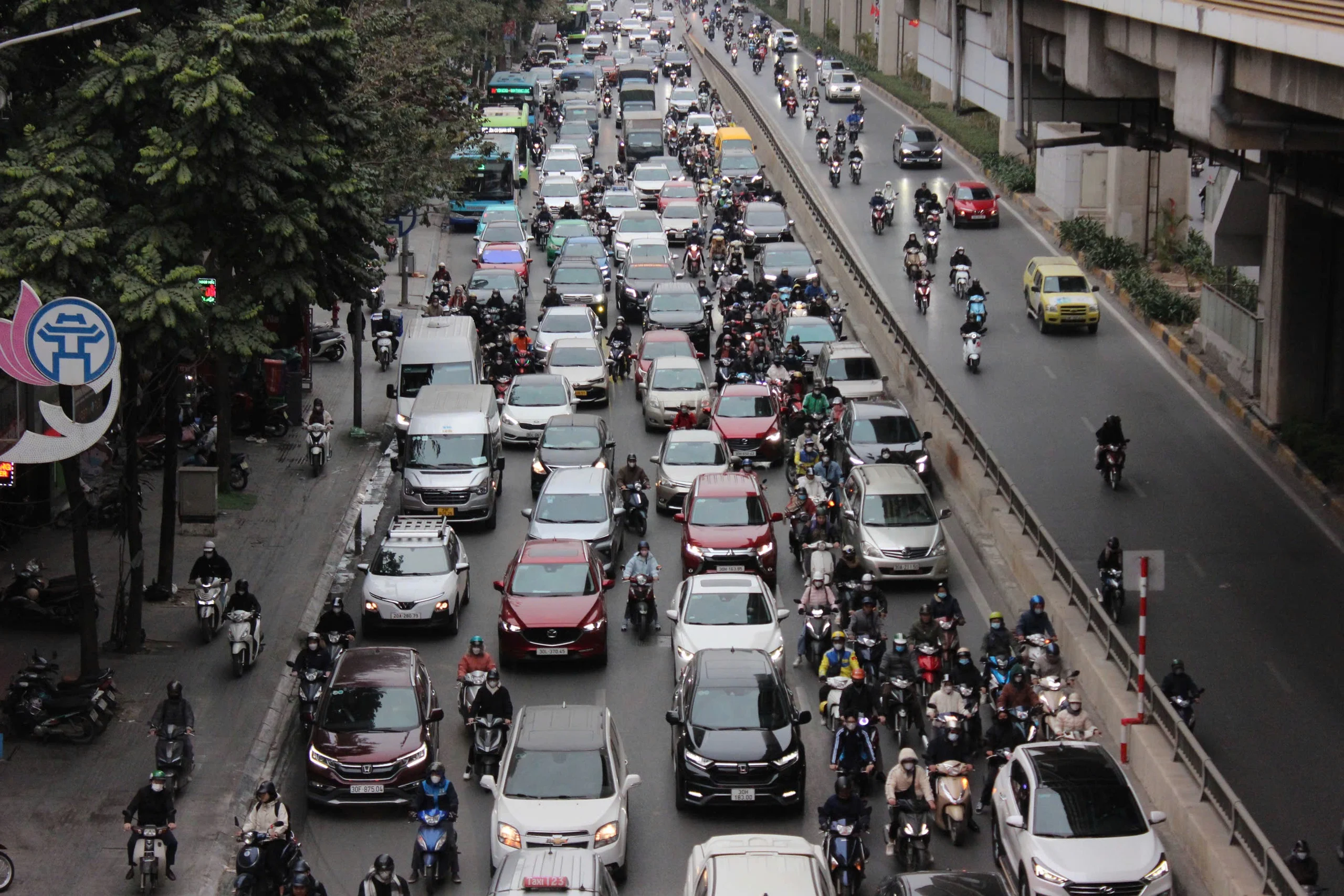
As the clock strikes 5:30 PM, the energy in this city shifts entirely. The low hum of engines turns into a roaring symphony, and the streets transform into a mesmerizing, flowing river of motorbikes.
For an outsider, standing at the Nga Tu So intersection during rush hour looks like pure, unadulterated chaos. You might look at the sea of vehicles and think that taking a bicycle into that mix is a terrible idea.
But as a local who has navigated these streets for years, I am here to tell you a different story. The truth is, cycling in Hanoi during peak traffic isn’t just a physical challenge, it is a beautifully orchestrated dance.
If you want to truly understand the heartbeat of this city, you have to get right into the veins.
Cycling in Hanoi During Rush Hour: What It Actually Feels Like
I want to be real with you here. Cycling in Hanoi during peak traffic is not relaxing. It is not leisurely. But it is – in its own chaotic way – thrilling.
You will be riding in close proximity to thousands of motorbikes, all moving with an informal, unspoken rhythm. There are no designated bike lanes on most major roads. What exists is a kind of organic choreography – everyone watches for everyone else, speed is kept low, and as long as you move predictably, people flow around you.
The key word is predictably. Cycling in Hanoi is genuinely manageable if you keep a steady line, don’t make sudden moves, and never assume you have the right of way – even when you technically do.
What Actually Works in Your Favor
- Bicycles are slower and smaller, so motorbikes tend to weave around you rather than compete with you
- Many central streets have lower speed limits during rush hour
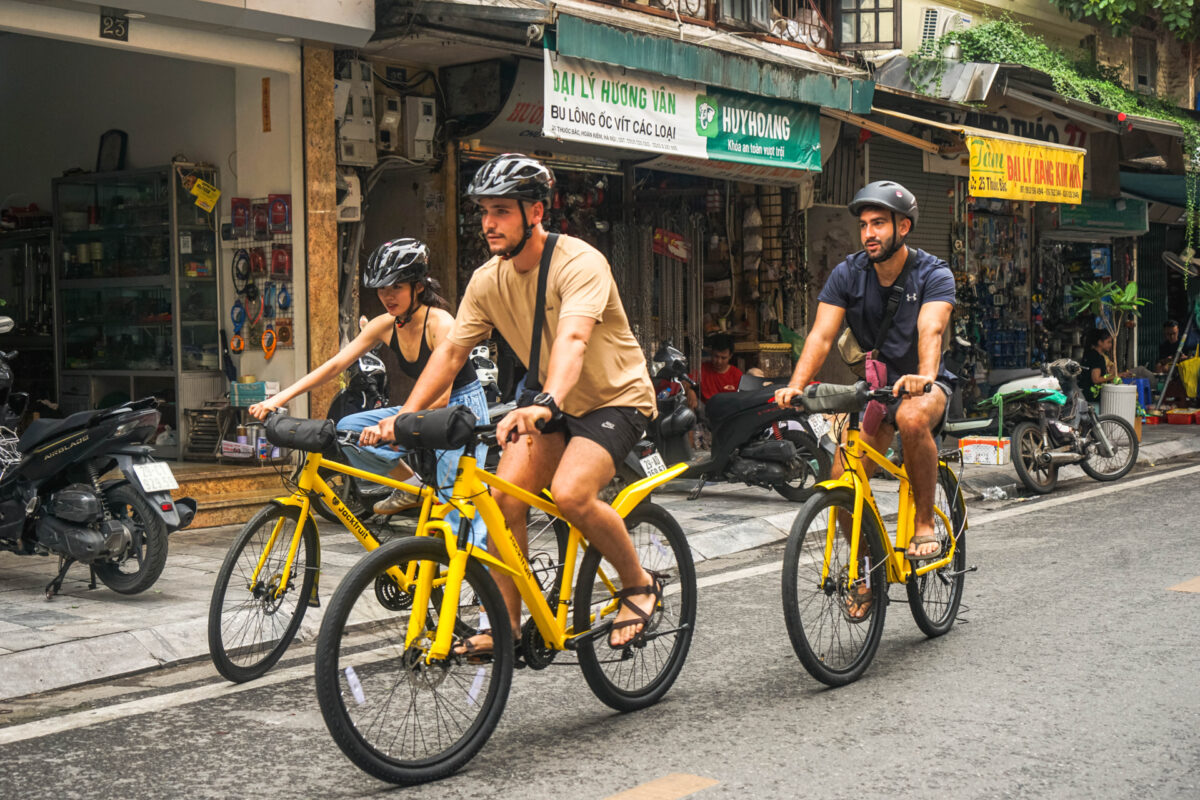
- The Old Quarter streets are narrow enough that cycling in Hanoi’s historic core is actually safer – cars barely fit, so speeds drop naturally
- Locals are accustomed to sharing space with cyclists, especially in residential areas
What Works Against You
- Air pollution peaks during rush hour – a mask is not optional
- Large boulevards have fast-moving buses and trucks that won’t slow down for a bicycle
- Intersections are lawless by any Western standard – traffic lights are suggestions, not commands
- The heat and humidity during peak commute hours can be genuinely exhausting
The Best Times for Cycling in Hanoi (According to Someone Who Lives Here)
If I had to give one piece of advice about cycling in Hanoi, it would be this: time your ride. Not to avoid the city – but to meet it at its best.
- Early morning is pure magic. Between 5:30 AM – 7:00 AM, Hanoi wears a completely different face. The streets around Hoan Kiem Lake fill with locals doing tai chi, badminton, and morning walks. The roads are quiet. Cycling in Hanoi at this hour feels like having a secret relationship with the city – one that most visitors never discover.
- Midday is underrated. Between 11:00 AM – 1:00 PM, many residents are eating lunch or resting. Cycling in Hanoi at midday is perfectly manageable – the main challenge is heat, not traffic.
- Evening, post-rush, is a hidden gem. After 7:30 PM, Hanoi’s streets take on a social glow. Night markets, street food vendors, and families out for evening strolls make cycling in Hanoi an experience that’s part transport, part cultural immersion.
Best Routes for Cycling in Hanoi: Local Picks
Not all roads are created equal. Here are the routes I actually recommend for anyone serious about cycling in Hanoi, whether you’re a nervous first-timer or a confident urban rider.
The West Lake Loop (Hồ Tây)
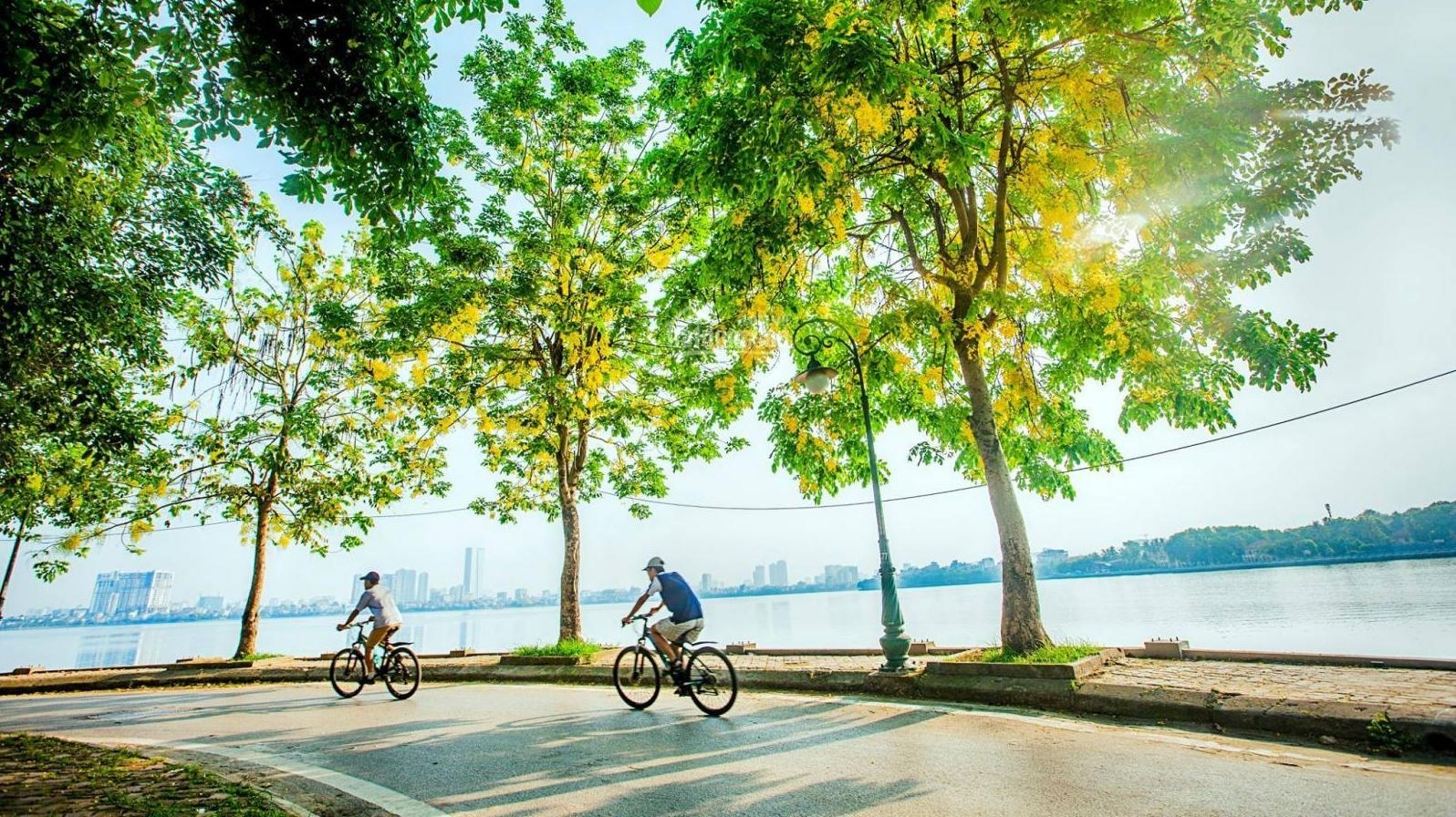
This is the go-to for good reason. The road circling West Lake (Thanh Nien Street and Lac Long Quan Street) is wide, has lower traffic during off-peak hours, and offers beautiful waterside views. It’s roughly 18 kilometers around the full lake and perfect for a morning or evening ride.
Cycling in Hanoi around West Lake also puts you near Tay Ho’s cafe strip – a perfect excuse to stop for a cold cà phê trứng (egg coffee) halfway through.
The Old Quarter Streets
Yes, the Old Quarter can feel overwhelming. But cycling in Hanoi’s 36 ancient streets on a Sunday morning – when the area becomes a pedestrian zone – is one of the best urban cycling experiences in Southeast Asia. The streets are narrow and atmospheric, the architecture is layered with history, and without motorbikes clogging every inch, it feels almost peaceful.
The Red River Dyke Road
For something more rural and scenic, the dyke roads running along the Red River are excellent. Less traffic, long straight stretches, and on clear days you get views of the flood plains and vegetable gardens on the river islands. This is where cycling in Hanoi starts to feel like an actual escape from the city, not just a way to cross it.
What You Actually Need for Cycling in Hanoi
Gear matters more than people think. Cycling in Hanoi isn’t technical mountain biking, but being unprepared will make the experience miserable. Not sure where to begin? Our A Guide to Explore Hanoi on Bikes – Cycling in Hanoi covers everything from bike types to neighbourhoods worth exploring.
- A helmet – non-negotiable. Many rental shops include them; always ask
- A pollution mask or at minimum a cloth face cover for peak-hour rides
- Sunscreen and water – Hanoi’s humidity makes dehydration sneak up on you fast
- A phone mount or simple map screenshot – GPS apps drain your attention and your battery
- Light, breathable clothes – not lycra. You’ll blend in better and stay cooler
If you’re not bringing your own bike, rental shops are clustered around the Old Quarter and Hoan Kiem area. Expect to pay between 50,000 and 120,000 VND (1.90 – 4.56 USD) per day for a basic city bike. Electric bikes and higher-quality road bikes are also available at most rental spots near West Lake.
Practical Safety Tips for Cycling in Hanoi’s Traffic
After years of cycling in Hanoi – including more than a few close calls – here are the ground rules I never break:
- Move with the flow, not against it. Even if traffic looks chaotic, there is an underlying rhythm. Don’t fight it.
- Make eye contact at intersections when possible. A brief moment of acknowledgment with a driver goes a long way.
- Never brake suddenly in the middle of a lane. Signal your slowdowns early with gradual deceleration.
- Stick to the right side of the road – motorbikes will overtake on the left.
- If an intersection looks too chaotic, dismount and walk your bike. No shame in it. Even locals do it.
- Avoid main boulevards during peak hours (7–9 AM and 5–7 PM) unless you have prior experience with high-density traffic.
- Always lock your bike when parked – theft is low but not zero, especially near tourist areas.
So, is Cycling in Hanoi During Peak Traffic Worth It?
Honestly? My answer is: it depends on what you’re after.
If you want a relaxing ride where you coast along taking photos without a care in the world, then no – don’t attempt cycling in Hanoi at 8 AM on a weekday. You’ll be stressed, sweaty, and probably lost.
But if you want to genuinely understand what this city feels like from the inside – not from a tour bus window or a taxi backseat – then yes. Cycling in Hanoi, even in its most overwhelming moments, gives you access to a version of this city that very few visitors ever see. You smell the food stalls. You hear the conversations. You feel the pulse of a city that never stops moving.
That’s not something you can get any other way.
Ready to Explore Hanoi on Two Wheels?
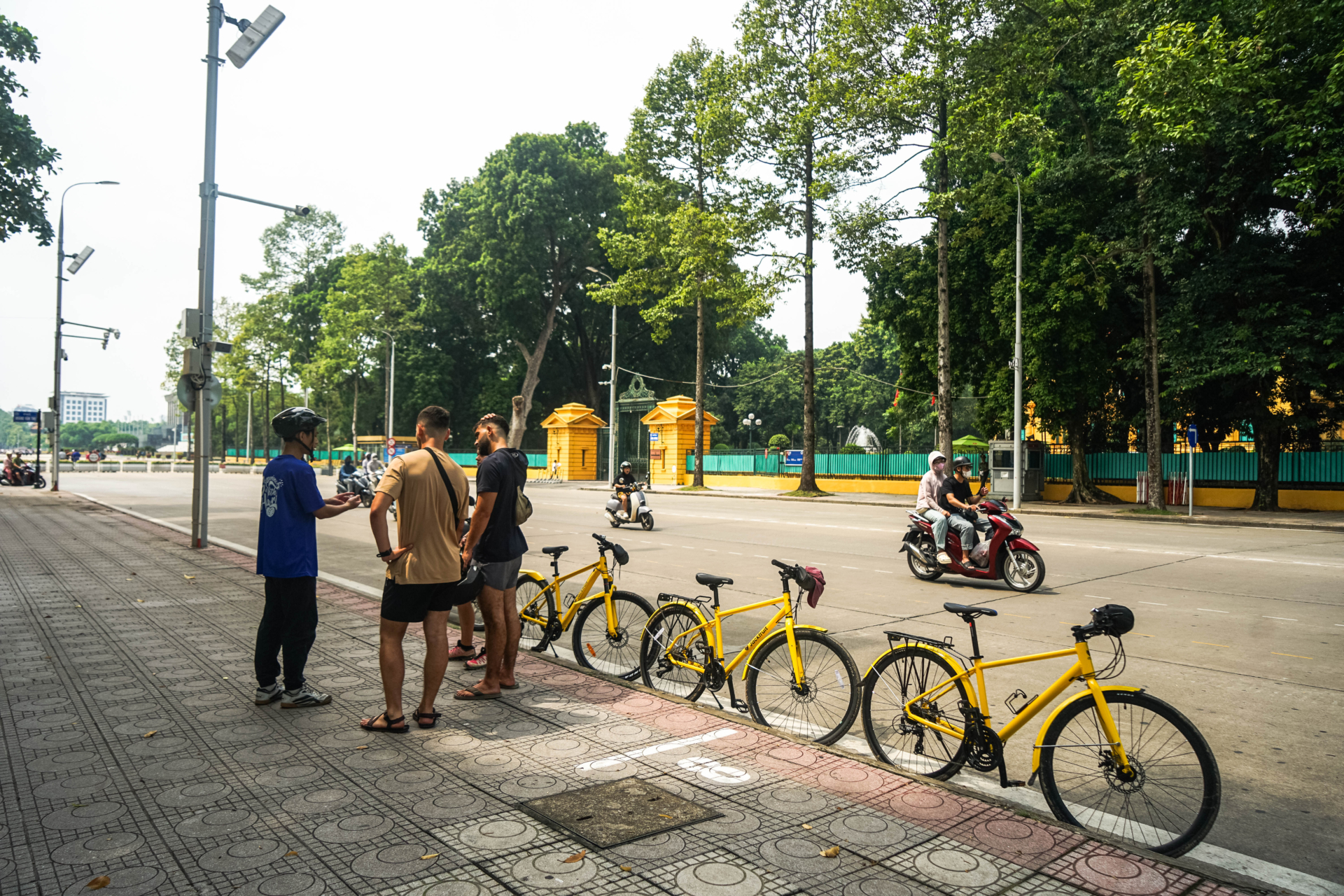
Don’t navigate it alone. Join one of Jackfruit Adventure’s Hanoi Cycling Tour expertly guided cycling experiences and discover Hanoi’s streets, stories, and flavors with a local who knows them by heart. New to cycling in Hanoi? Start easy with our Hanoi Foodie Night Ride: Cycle, Eat, Repeat – only 15km, loads of food stops, and zero pressure.