

Table of Contents
If you saw a pitch-black, square-shaped object wrapped in dried banana leaves sitting on a wooden tray in a Vietnamese market, “delicious” might not be the first word that pops into your head. It looks humble, almost mysterious. But as a local who has spent years unwrapping these little treasures, let me tell you: the Gai cake (Bánh Gai) is a masterclass in flavor and texture that puts modern patisserie to shame.
I remember my grandmother coming home from the market in Hai Duong, the humid air thick with the scent of rain and earth. She’d reach into her woven bag and pull out a bundle of Gai cake, still slightly warm. We’d sit on the porch, peel back the layers of banana leaf, and bite into that sticky, sweet piece of history.
In this guide, I’m taking you behind the scenes of my favorite childhood snack. We’ll explore what makes a Gai cake so special, how it’s made, and why you absolutely need to try one on your next trip to Northern Vietnam.
What exactly is a Gai cake?
Let me start with the basics, because gai cake is not always easy to explain to someone who has never seen one. At its core, gai cake – known in Vietnamese as bánh gai – is a type of sticky rice cake wrapped in dried gai leaves (ram leaves or Boehmeria nivea, a plant in the nettle family). The leaves give the cake its distinctive deep black color and a mild, grassy, slightly herbal aroma that you simply cannot replicate with any other ingredient.
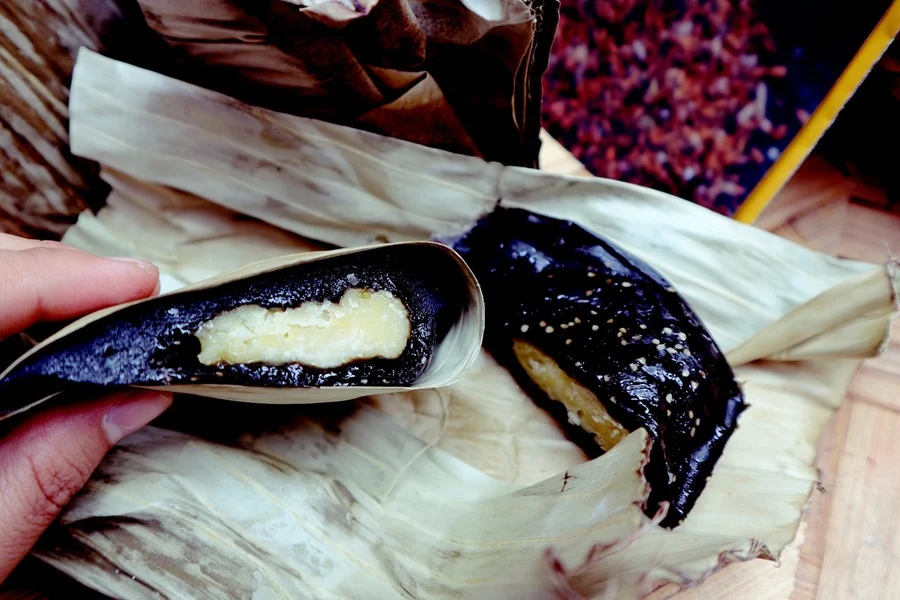
The filling inside a traditional gai cake is where the real magic happens. Imagine sweet mung bean paste, finely shredded coconut, and sometimes a touch of lard – all bound together and sealed inside a layer of chewy glutinous rice dough that has been colored and flavored by the gai leaf extract. The whole thing is then steamed and wrapped tightly in dried banana leaves or layers of the gai leaves themselves, giving it that distinctive dark, almost lacquered appearance.
A well-made gai cake should be:
- Chewy but not gummy – the dough should have a satisfying resistance
- Slightly sweet and fragrant from the filling
- Subtly herbal and earthy from the gai leaf
- Compact and firm enough to hold its shape when unwrapped
This is not a flashy dessert. It is not drizzled with sauce or piled high with toppings. Gai cake is quiet and confident in the way that only the best traditional foods are.
The Secret is in the Leaves: The “Gai” in Gai cake
You can’t have a Gai cake without the ramie leaf. As a kid, I used to watch the village elders harvest these heart-shaped leaves. They aren’t naturally black, they are green! The magic happens during the processing.
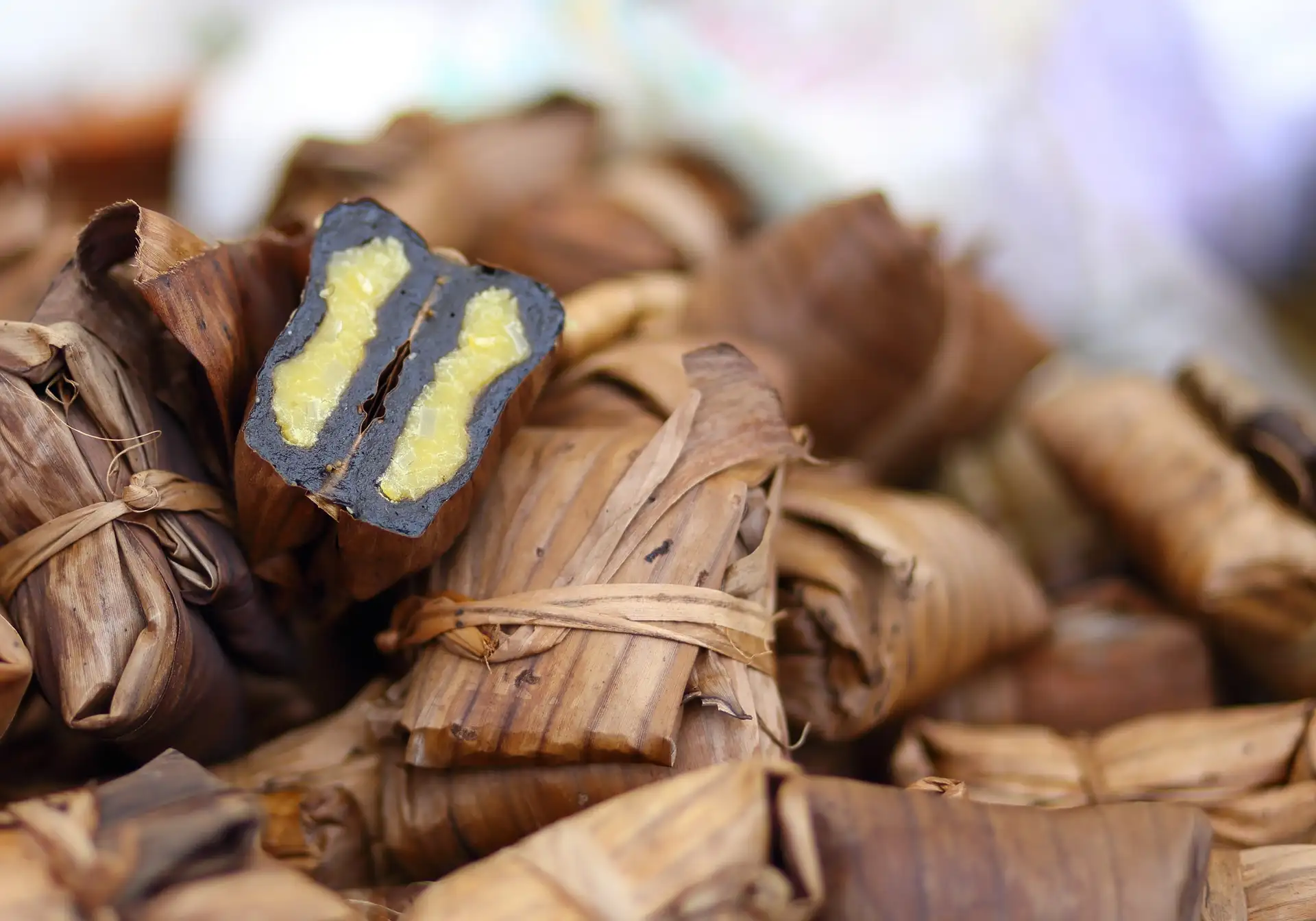
To get that rich black hue for the Gai cake, the leaves must be:
- Dried: Sun-dried until they are crisp.
- Boiled: Softened in water until they break down.
- Pounded: This is the hard part. The leaves are ground into a fine paste and then mixed with glutinous rice flour.
It’s this natural pigment that gives the Gai cake its unique herbal aroma. It doesn’t just provide color; the ramie leaf is also known in traditional medicine for its cooling properties. So, in a way, eating a Gai cake is actually doing your body a favor!
A Symphony of Flavors: What’s Inside?
While the crust is the “face” of the cake, the filling is where the personality lies. A traditional Gai cake filling is a carefully balanced mixture.
- Mung Beans: These are steamed and mashed until they are as smooth as silk.
- Sugar: Just enough to sweeten the deal without being cloying.
- Shredded Coconut: For a bit of tropical crunch.
- Lotus Seeds: Often preserved in sugar, these add a nutty, floral note.
- Winter Melon Jam: Provides a subtle, translucent sweetness.
Some regions even add a small piece of pork fat. Before you go “ew”, hear me out! The fat is cured in sugar until it becomes clear and loses its “meaty” taste. It adds a luxurious, melt-on-the-tongue texture that makes the Gai cake incredibly moist.
Where to Find the Best Gai cake Today
Ninh Binh: The Home Province
If you are serious about Gai cake, Ninh Binh is where you need to go. Almost every market in the province sells it, and there are dedicated shops that have been producing Gai cake for decades. Look for cakes that are still slightly warm – that means they were made fresh that day. Cold, pre-packaged versions can be good, but nothing beats a warm one.
On Tran Hung Dao street in Ninh Binh city, there are several vendors who sell Gai cake alongside other local specialties like com chay (scorched rice) and nem nuong. Grab a package of Gai cake and a bottle of local rice wine and you have the perfect afternoon snack.
Hanoi: The City Option
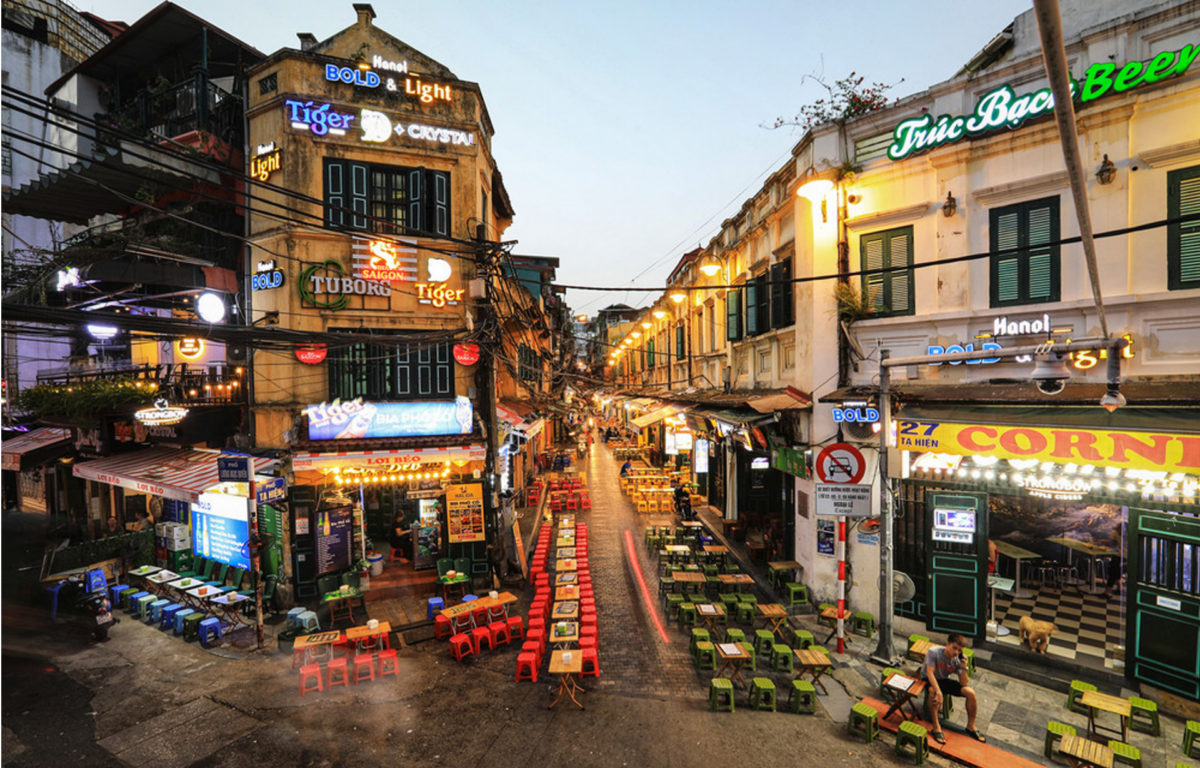
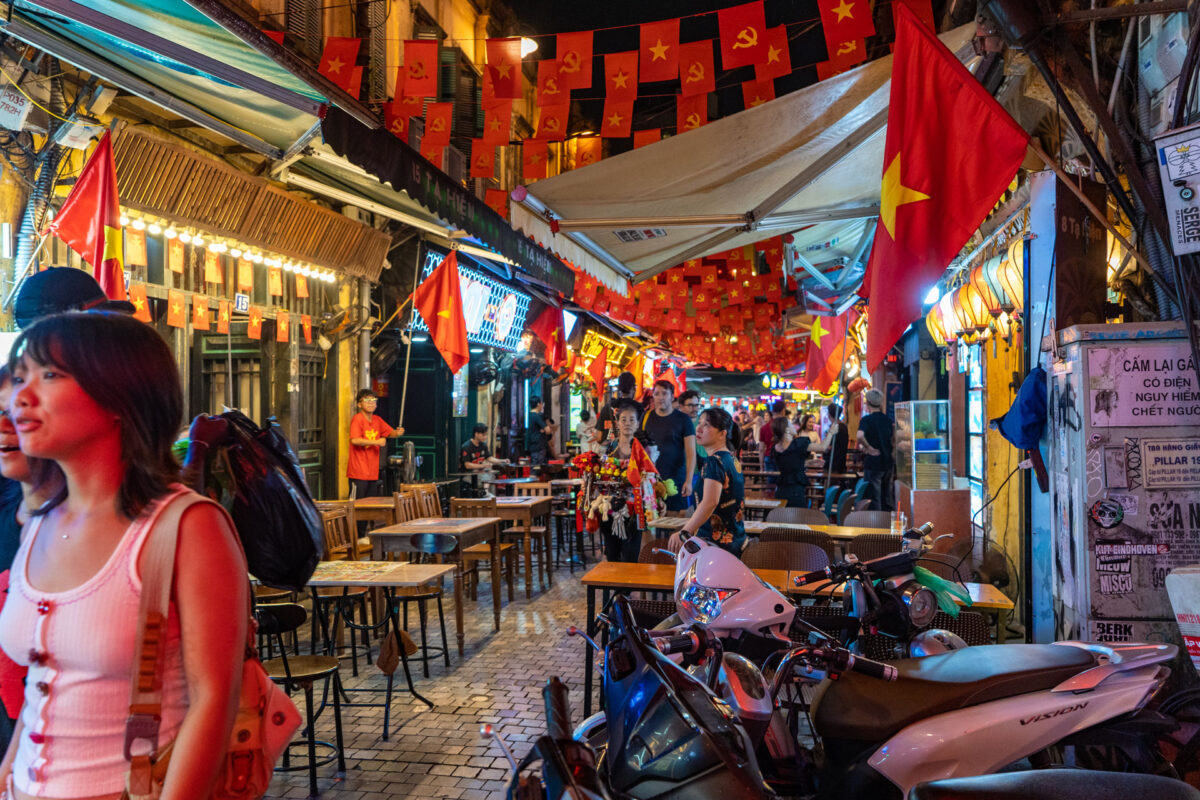
In Hanoi, Gai cake has become widely available in recent years. You can find it at the Old Quarter weekend night market, at specialty food shops in the Hoan Kiem district, and at a growing number of traditional cake stalls in Dong Xuan market. The quality varies widely – some sellers import directly from Ninh Binh or Hai Duong, which is what you want, while others sell cheaper imitations made with food coloring instead of real gai leaf.
How do you tell the difference? Smell it first. Real Gai cake has a herbal, slightly grassy scent. If it smells purely sweet with no leafy undertone, it was probably made with artificial coloring. The real thing also tends to be slightly uneven in color – handmade, not factory-perfect.
Hai Duong: The Artisan Route
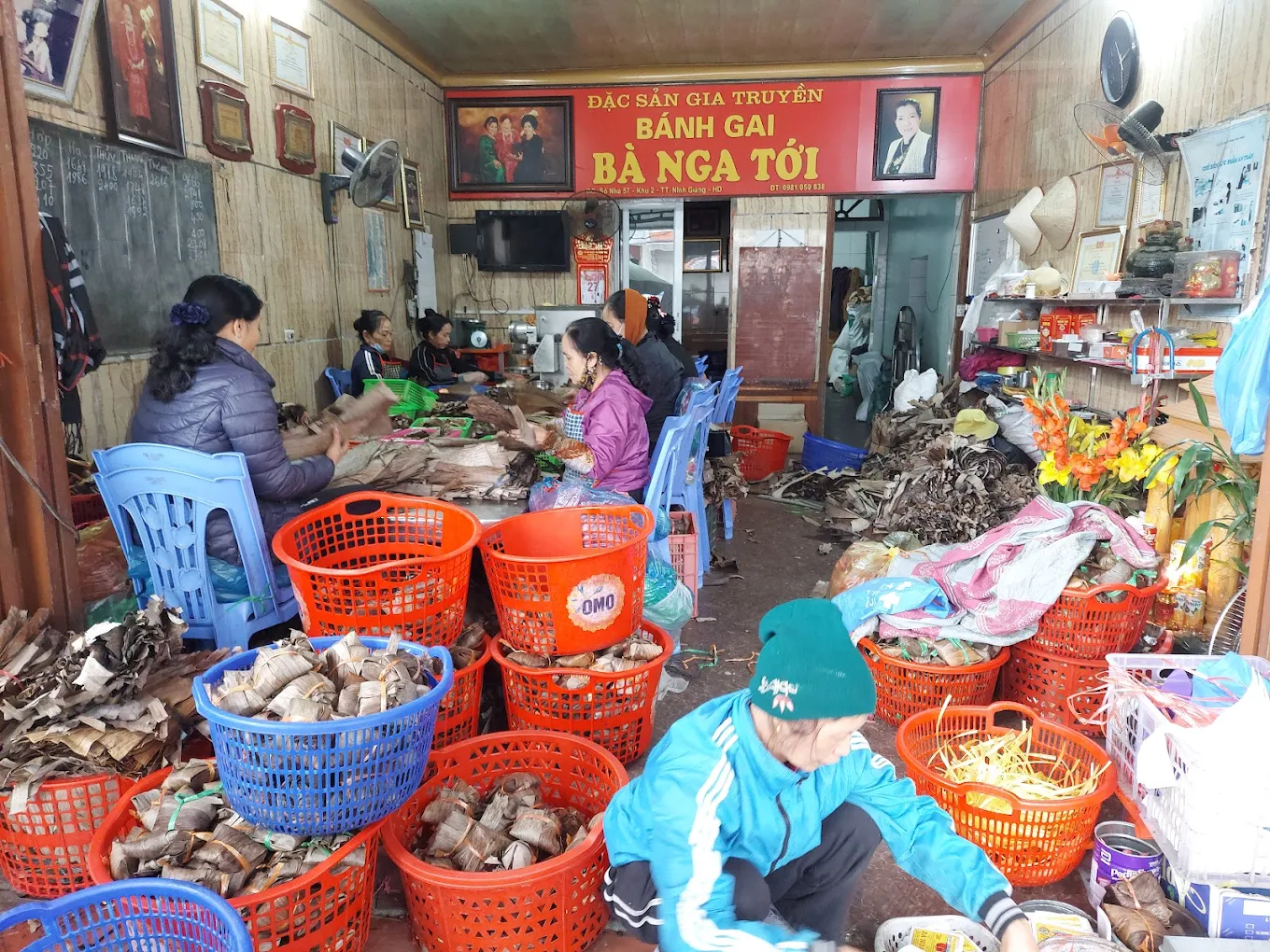
For those willing to make the journey, Hai Duong province – about 60 kilometers east of Hanoi – is the other major center of Gai cake production. There is a traditional brand called Bà Nga Tới in Ninh Giang town, Hai Duong province. You can give it a try when coming to this peaceful province.
The Labor of Love: How We Make Gai cake
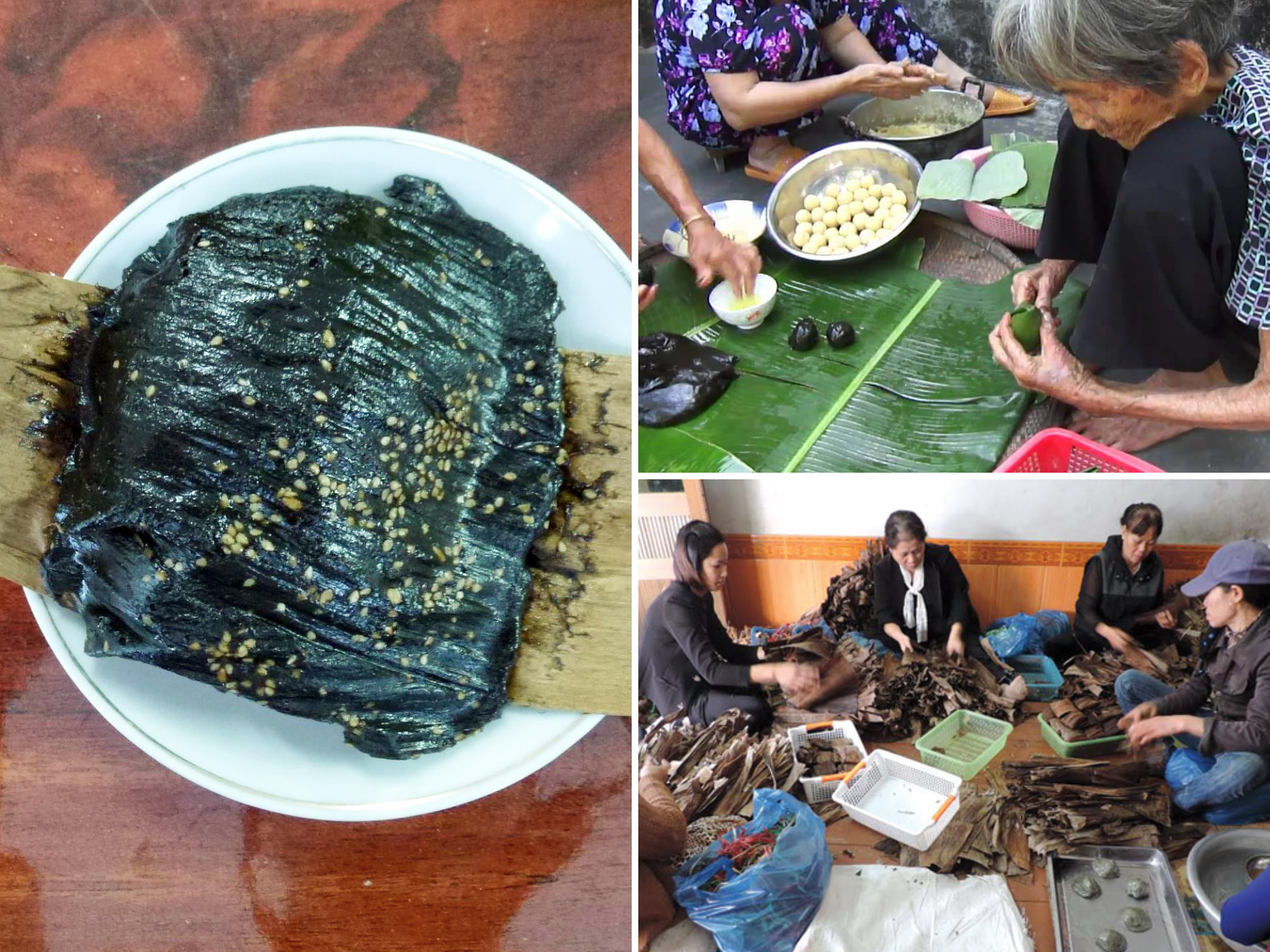
Making a Gai cake is not for the faint of heart. It is a multi-day process that requires patience and a lot of elbow grease. This is why, historically, these cakes were reserved for special occasions like the Lunar New Year (Tet) or weddings.
- Preparing the Dough: The rice must be high-quality “nếp cái hoa vàng” (yellow-flowered glutinous rice). It’s soaked, ground, and mixed with the ramie leaf paste.
- The Filling: Mung beans are hulled, steamed, and pounded. This requires a rhythmic strength that only years of practice can provide.
- Wrapping: This is where the skill shows. The cake is placed on a piece of oiled banana leaf, then folded into a neat, tight square. If the wrap is too loose, steam gets in and ruins the texture. If it’s too tight, the Gai cake won’t expand properly.
- Steaming: The cakes are steamed for about 2 to 3 hours. The smell that wafts from the steamer-a mix of toasted banana leaf and sweet rice-is the scent of my childhood.
The Ritual of Eating a Gai cake
You don’t just “eat” a Gai cake, you experience it. There is a specific etiquette to unwrapping it.
First, you’ll notice the banana leaf is dry and dark. As you peel it back, the sticky rice might cling to the leaf. We usually use a thin piece of string (often stripped from the banana leaf itself) to “cut” the cake into four or six pieces. Using a knife is okay, but the string gives you a cleaner cut and keeps the sticky dough from sticking to the blade.
The first thing you taste is the chewiness of the crust. Then comes the sweetness of the mung bean. It’s best enjoyed with a hot cup of green tea. The bitterness of the tea cuts through the richness of the Gai cake, creating a perfect balance.
It pairs beautifully with:
- Green tea – the bitterness cuts through the sweetness perfectly
- Iced cha (Vietnamese leaf tea) – a classic combination
- Unsweetened soy milk – a breakfast pairing you see often in the north
And please, eat it slowly.
Local Pro Tip: Don’t eat the cake the moment it comes out of the steamer. A Gai cake is actually better after it has cooled down and “set” for a few hours. This allows the flavors to meld and the texture to become perfectly firm yet chewy.
Why Is the Gai cake Wrapped in Banana Leaves?
You might wonder why we use dried banana leaves instead of something modern like plastic wrap. The reason is twofold: flavor and preservation.
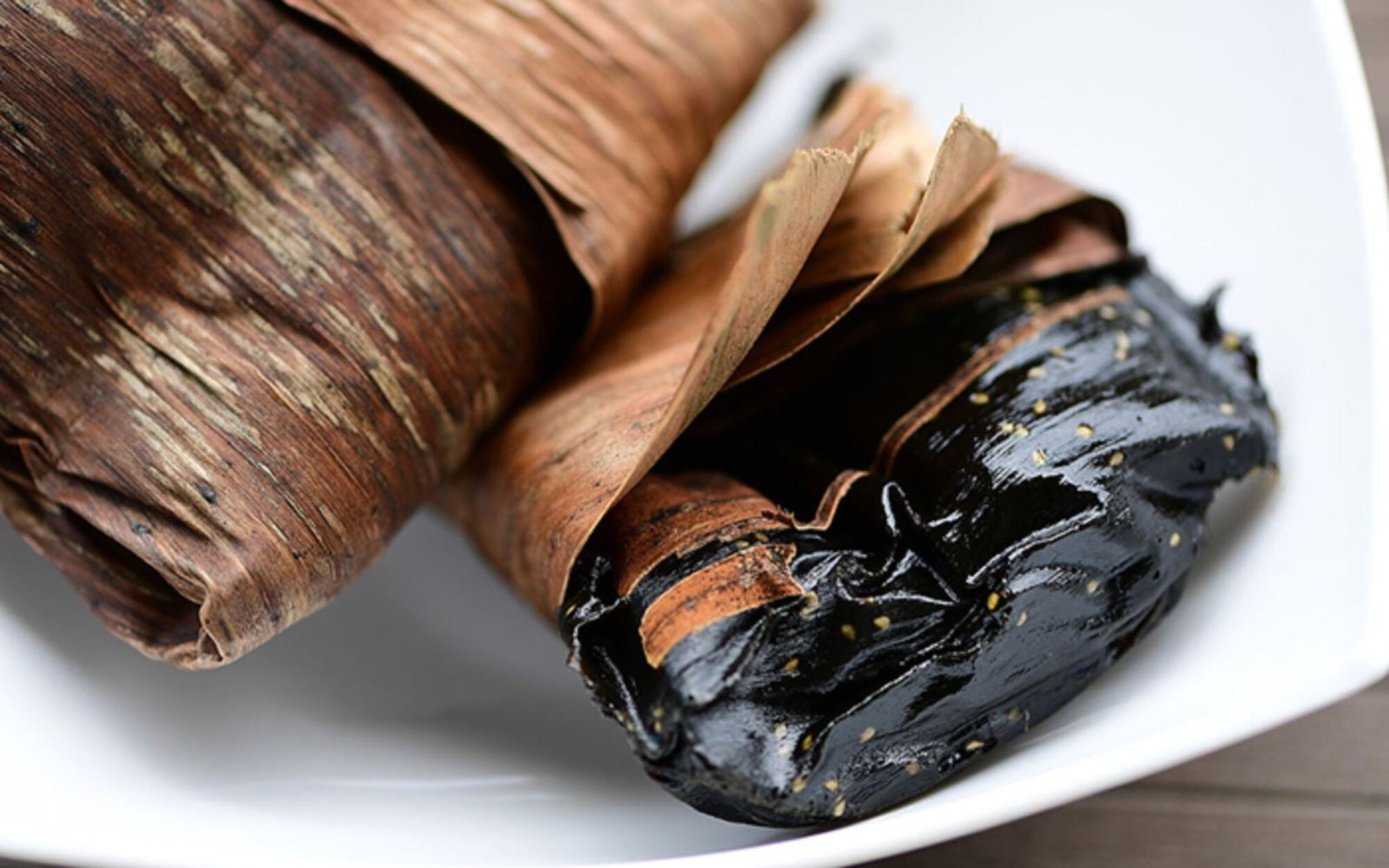
The dried leaf imparts a subtle, smoky fragrance to the Gai cake during the steaming process. Furthermore, the banana leaf acts as a natural preservative. A well-made cake can stay fresh at room temperature for 3 to 5 days, which was essential in the days before refrigeration.
Curious about the other treats that come wrapped in nature’s packaging? There’s a whole world beyond the dark, chewy crust of a gai cake. You can learn more about Vietnamese leaf cakes and the nostalgia they hold in my featured story: Why Vietnamese Leaf Cakes Are My Favorite Childhood Memory.
Frequently Asked Questions About Gai Cake
❓Is gai cake vegan?
A cake often contains lard in the filling and sometimes a small piece of fatty pork. However, many vendors now offer vegetarian versions that use only mung bean paste and coconut. Always ask before buying if this matters to you.
❓How long does gai cake last?
At room temperature, a freshly made gai cake will keep for 2–3 days in a cool spot. Refrigerated, it can last up to a week, though the texture suffers. If you are buying gai cake as a gift or souvenir, look for vacuum-sealed packages, which can last several weeks.
❓Can I make gai cake at home?
Yes, but it is genuinely challenging. The hardest part is sourcing fresh or dried gai leaves outside of Vietnam – they are not commonly available in international markets. If you are based in Vietnam, you can find them at most traditional markets in the north. There are good recipes available online from Vietnamese food bloggers, and the process is deeply satisfying if you have the patience for it.
Enjoy Vietnam beyond the Gai cake
Gai cake is not a trend. It is not going to go viral on social media anytime soon, and that is honestly fine. It has existed for centuries without needing anyone’s approval, and it will continue to exist long after food trends have come and gone.
What gai cake offers is something rarer than novelty: it offers continuity. It connects you – as a local, as a visitor, as a curious eater – to a food tradition that has been shaped by real people, real landscapes, and real love over many generations.

If you are exploring Vietnamese food culture and you have not yet made gai cake part of your story, I hope this article changes that. Try one. Eat it slowly. Notice the color, the texture, the quiet herbal depth. And if you want a guide to help you navigate the best of what Vietnam has to offer, from traditional dishes to so much more. Contact Jackfruit Adventure for Ho Chi Minh and Hanoi Cycling Tours or personal guide.