

Table of Contents
There’s a smell I can’t explain without bringing up my grandmother’s kitchen.
Every Tết, she’d spend two full days standing over a pot of boiling water, checking and re-checking the bánh chưng – our family’s most sacred Vietnamese leaf cake. The banana leaves would turn a deep, wet green. Steam would creep into every corner of the house. As a kid, I genuinely believed that smell was the New Year.
Vietnamese leaf cakes are everywhere in our country. You’ll spot them stacked high at morning markets, swinging from hooks at roadside stalls, or nestled inside a vendor’s basket balanced on a shoulder pole. But they’re not just food. Each one is a little bundle of memory, season, and identity – tied shut with a strip of bamboo string.
In this guide, I’ll walk you through the most iconic varieties, share what makes each one worth knowing, and point you toward the best ways to eat them like a local. Whether you’re planning a trip to Vietnam or just trying to make sense of what you’re looking at next time you pass a street stall, keep reading.
What Are Vietnamese Leaf Cakes, Exactly?
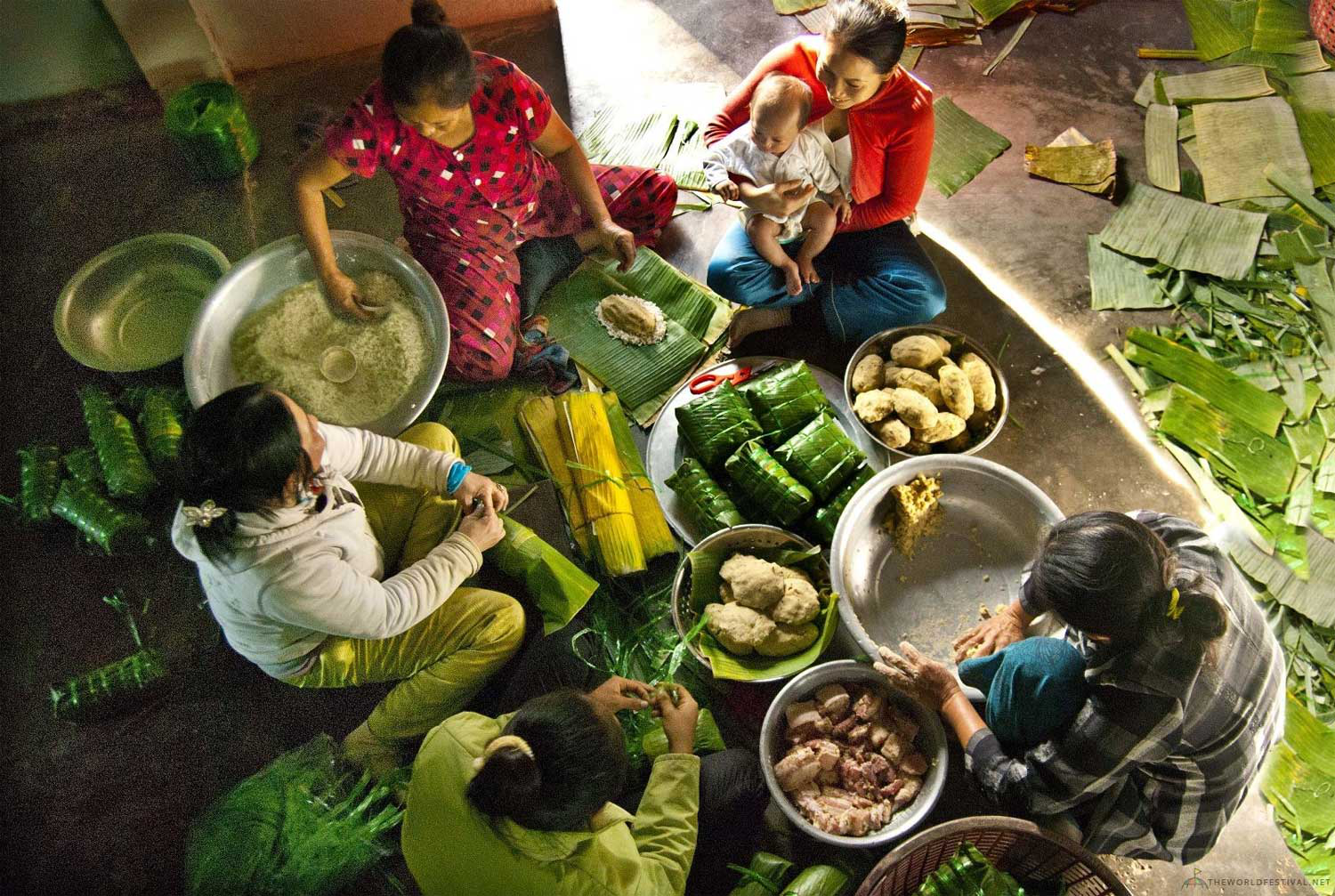
At their core, Vietnamese leaf cakes are sticky rice or rice flour preparations – wrapped in natural leaves, then steamed or boiled until done. But the leaf is never just packaging. It adds fragrance, shields the cake during cooking, and often tells you what’s inside before you’ve even started unwrapping.
The most common wrappers you’ll come across:
- Banana leaves – the everyday workhorse of Vietnamese leaf cake culture. Pliable, wide, and gently fragrant.
- Dong leaves (Phrynium placentarium) – the go-to for bánh chưng and bánh tét. They lend a distinctly earthy, slightly grassy note to the rice.
- Pandan leaves – used mostly for color, plus a faint aroma that lands somewhere between vanilla and fresh-cut grass.
- Lá gai leaves (ramie leaves) – a specialty of northern mountain communities, these stain the rice a deep, almost inky black.
The fillings are just as varied as the wrappers: mung bean paste, pork fat, shredded coconut, sesame, shrimp, or just plain sugar. What goes inside depends entirely on where you are and what time of year it is.
The 7 Most Iconic Vietnamese Leaf Cakes You Need to Know
1. Bánh Chưng – The Square Cake of the North
If you ask any northern Vietnamese person which cake matters most, they’ll say bánh chưng without hesitation. This square Vietnamese leaf cake is made from glutinous rice, yellow mung bean, and fatty pork, all wrapped tightly in dong leaves into a neat rectangle and boiled for 8–12 hours.
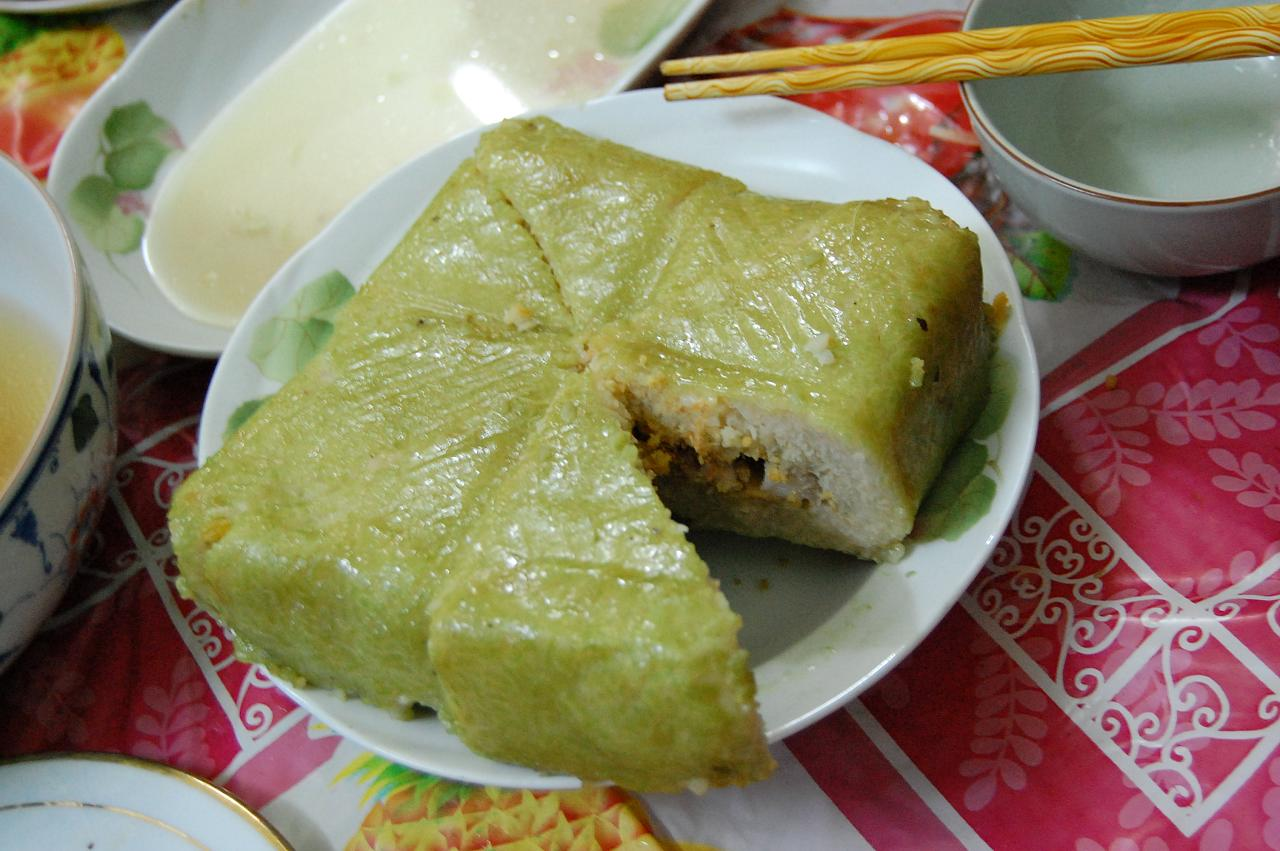
The story goes back thousands of years. According to legend, a Hùng King’s son invented this cake to represent the earth (square) as an offering to his father. His brother made a round cake for the sky. The son won the throne. Bánh chưng has been on every Tết table ever since.
When you unwrap one fresh from the pot, the rice is dense and slightly translucent. The filling is savory and rich. You eat it in slices, sometimes pan-fried until the outside crisps up. It’s deeply filling – one slice and you’re done.
Where to find it: Any market in Hanoi. During Tết, families make it at home.
2. Bánh Tét – The Cylindrical Cake of the South
Bánh tét is bánh chưng’s southern cousin – same idea, different shape and a slightly different filling. This Vietnamese leaf cake is rolled into a long cylinder using banana or dong leaves, tied tightly with string, and boiled.
The south has its own variations: some use coconut milk in the rice for a richer flavor, others add banana or black-eyed peas. You can find both savory (thịt mỡ) and sweet (chuối) versions at any Tết market in Hội An, Đà Nẵng, or Sài Gòn.
I always loved how bánh tét looks when you slice it crosswise – a perfect circle of jade-green rice with a yellow center. It’s almost too pretty to eat. Almost.
3. Bánh Lá – The Thin Steam Cake of Huế
Huế cuisine is refined, layered, and borderline obsessive about detail. Bánh lá – a thin, silky steamed rice cake folded inside a banana leaf – is a perfect expression of that character.
The dough is made from rice flour, and the filling is a delicate mixture of shrimp and pork. The whole thing is steamed until the leaf presses its pattern into the white surface of the cake. You dip it in a sweet fish sauce (nước chấm) before eating.
This particular Vietnamese leaf cake is one of the reasons I always recommend that food lovers spend at least two days in Huế. You won’t eat it this good anywhere else.
4. Bánh Nậm – Flat and Fragrant from the Central Coast
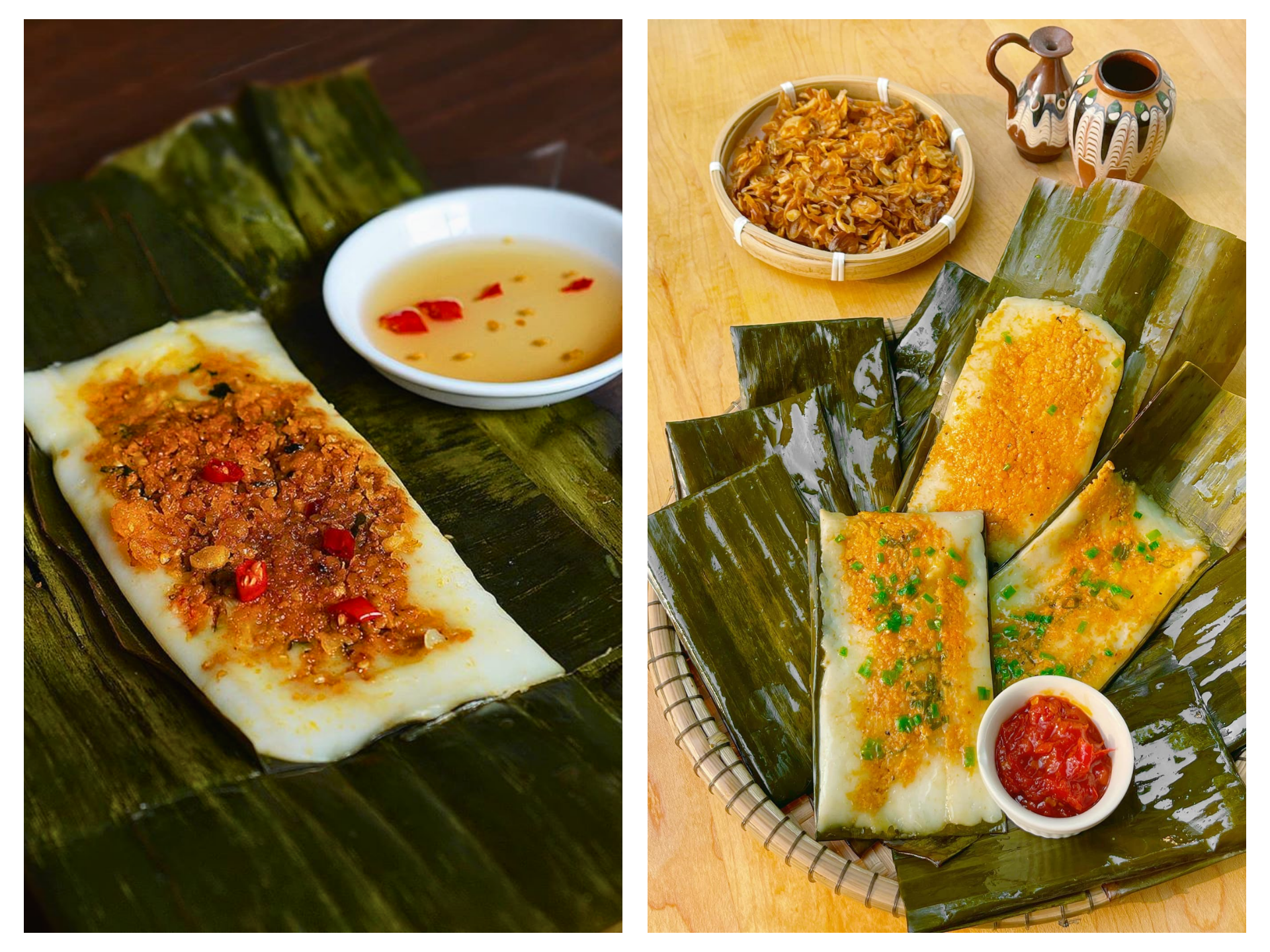
Bánh nậm looks like a small green pillow. It’s a flat, rectangular Vietnamese leaf cake from Huế and the central coast, made from rice flour mixed with a light shrimp-and-pork filling, then steamed inside a banana leaf.
The texture is completely different from bánh lá – softer, almost gelatinous, with a silky smoothness that makes it disappear in three bites. The banana leaf keeps the moisture in and adds a faint green warmth to the flavor.
You’ll find bánh nậm sold by the dozen, often alongside bánh lá and bánh bèo at breakfast stalls in Huế.
5. Bánh Ít Lá Gai – Black Cake from the Mountains
This is the Vietnamese leaf cake that surprises people the most. Made in the northern highlands and some central provinces, bánh ít lá gai gets its jet-black color from lá gai (ramie leaves), which are boiled, drained, and pounded into the glutinous rice dough.
The result is striking: a small, dark pyramid filled with mung bean paste and coconut, wrapped in banana leaf, and steamed. The color is almost gothic, but the taste is earthy, slightly bitter, and unexpectedly complex.
I first had one at a market near Mộc Châu, bought from a Thái woman who made them every morning. She laughed when she saw my face after the first bite – clearly, the look of surprise is familiar to her.
6. Bánh Gai – The Sweet Black Cake of the North
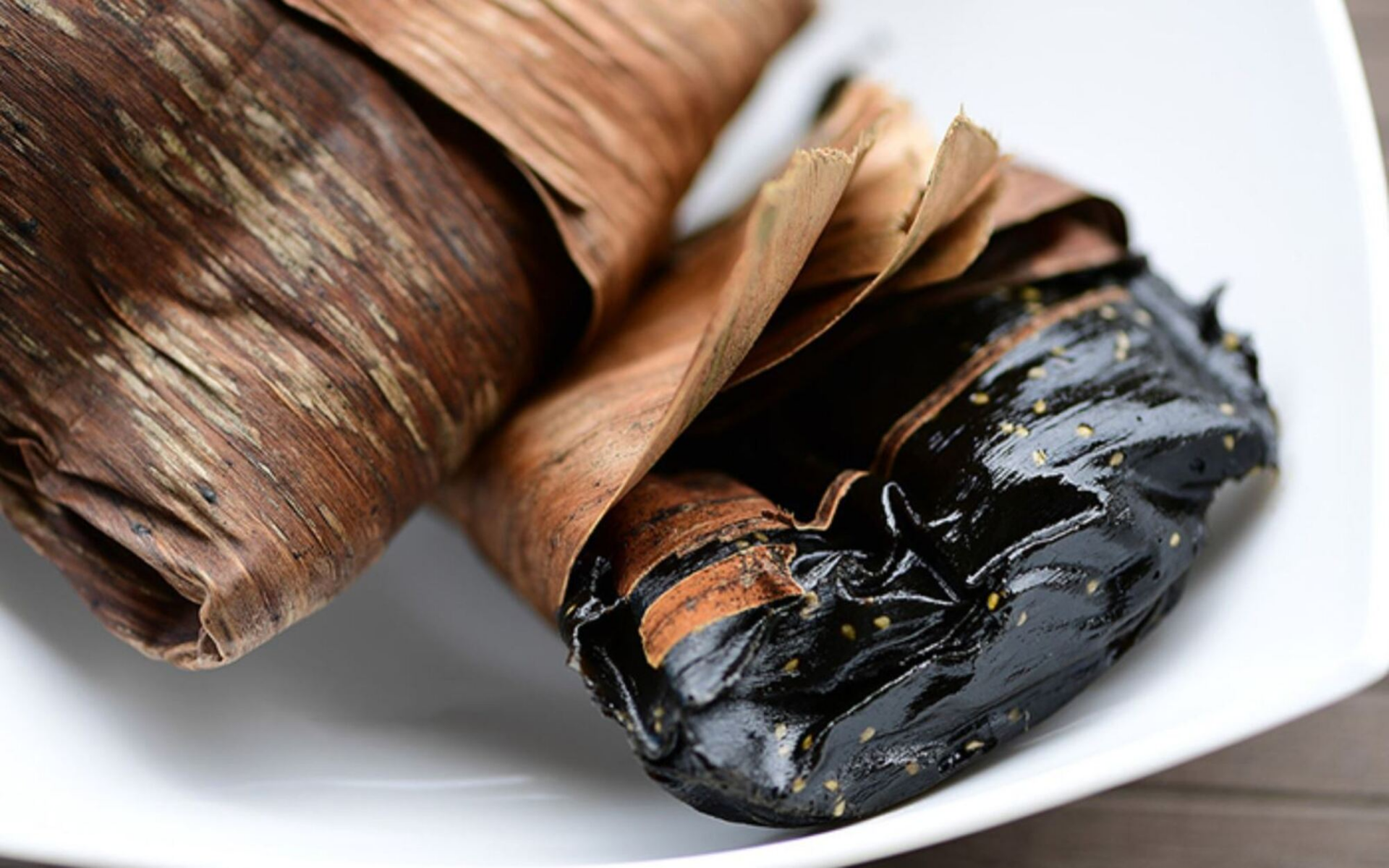
Bánh gai is the lowland version of the black leaf cake tradition. Popular in Hà Nam and Hải Dương provinces, this Vietnamese leaf cake is made from glutinous rice flour mixed with dried lá gai, stuffed with a sweet filling of mung bean, coconut shreds, and lard, then wrapped in banana leaf and steamed.
Unlike its highland cousin, bánh gai tends to be sweeter and denser. It’s a famous souvenir from the Red River Delta – you’ll see them wrapped in foil or sold in neat boxes at bus stations and tourist shops.
7. Bánh Tro – The Lye Water Cake
Bánh tro (also called bánh gio in the north) is a uniquely textured Vietnamese leaf cake made from glutinous rice soaked in lye water – traditionally made from the ash of burned straw or wood. The alkaline treatment transforms the rice into something semi-translucent, slightly golden, and with a texture that’s more jelly than grain.
It’s usually sweet (eaten with palm sugar syrup) and wrapped in a triangular dong leaf parcel. The taste is mild and clean, almost neutral – the syrup does most of the flavor work.
This cake is especially popular during the Đoan Ngọ festival (the 5th day of the 5th lunar month), when families eat bánh tro and sour fermented glutinous rice to “kill the worms” – a traditional folk belief about digestive health.
Regional Variations: How Geography Shapes the Cake
One of the most fascinating things about Vietnamese leaf cakes is how dramatically they change as you move through the country.
- The North leans toward savory, glutinous rice cakes with mung bean and pork, shaped with precision and tied with craft. Bánh chưng defines the identity of northern Vietnamese cooking – square, serious, and full of meaning.
- The Central region (especially Huế) brings a more delicate sensibility. Cakes here are smaller, thinner, and layered with refinement. The use of banana leaf is more ornate, and the flavors balance savory and sweet in ways that feel almost musical.
- The South embraces coconut milk, tropical fruits, and a sweeter profile. Banana is a common filling. The cakes are more casual, more abundant, and served at any hour – not just festivals.
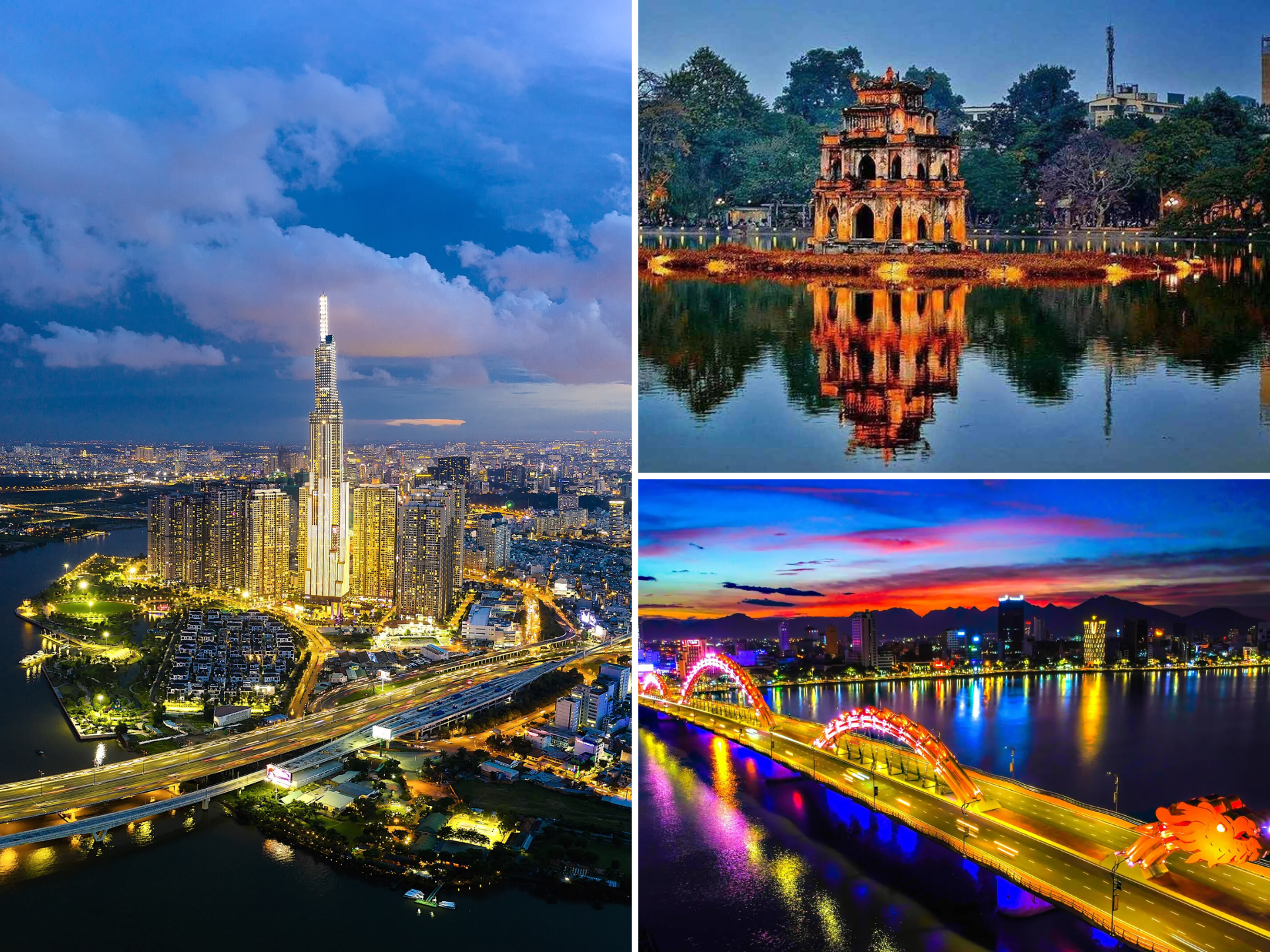
This regional diversity is part of what makes Vietnamese leaf cakes such a rewarding subject to explore. You could eat a different version every day for a month and still not cover them all.
When and Where to Eat Vietnamese Leaf Cakes
At the Morning Market
Markets are the best place to discover Vietnamese leaf cakes you’ve never heard of. In Hanoi, try the stalls around any local market before 8am. In Hội An, the central market on Trần Phú Street has vendors selling bánh nậm, bánh lá, and bánh ít from early morning.
During Festivals
Vietnamese leaf cakes are deeply tied to the lunar calendar:
- Tết Nguyên Đán (Lunar New Year): bánh chưng, bánh tét
- Đoan Ngọ (5th month festival): bánh tro, bánh gio
- Rằm tháng 7 (Ghost Month): various sticky cakes as offerings
If you time your trip around any of these festivals, you’ll see leaf cakes everywhere – stacked in temples, sold on every corner, made by hand in home kitchens.
The Art of Eating: Don’t Forget the Sauce!
You might think that Vietnamese leaf cakes are a complete meal on their own, and often they are. However, for the savory varieties like Bánh Giò (a pyramid-shaped rice dough cake with minced pork and wood ear mushrooms), we locals love to level them up.
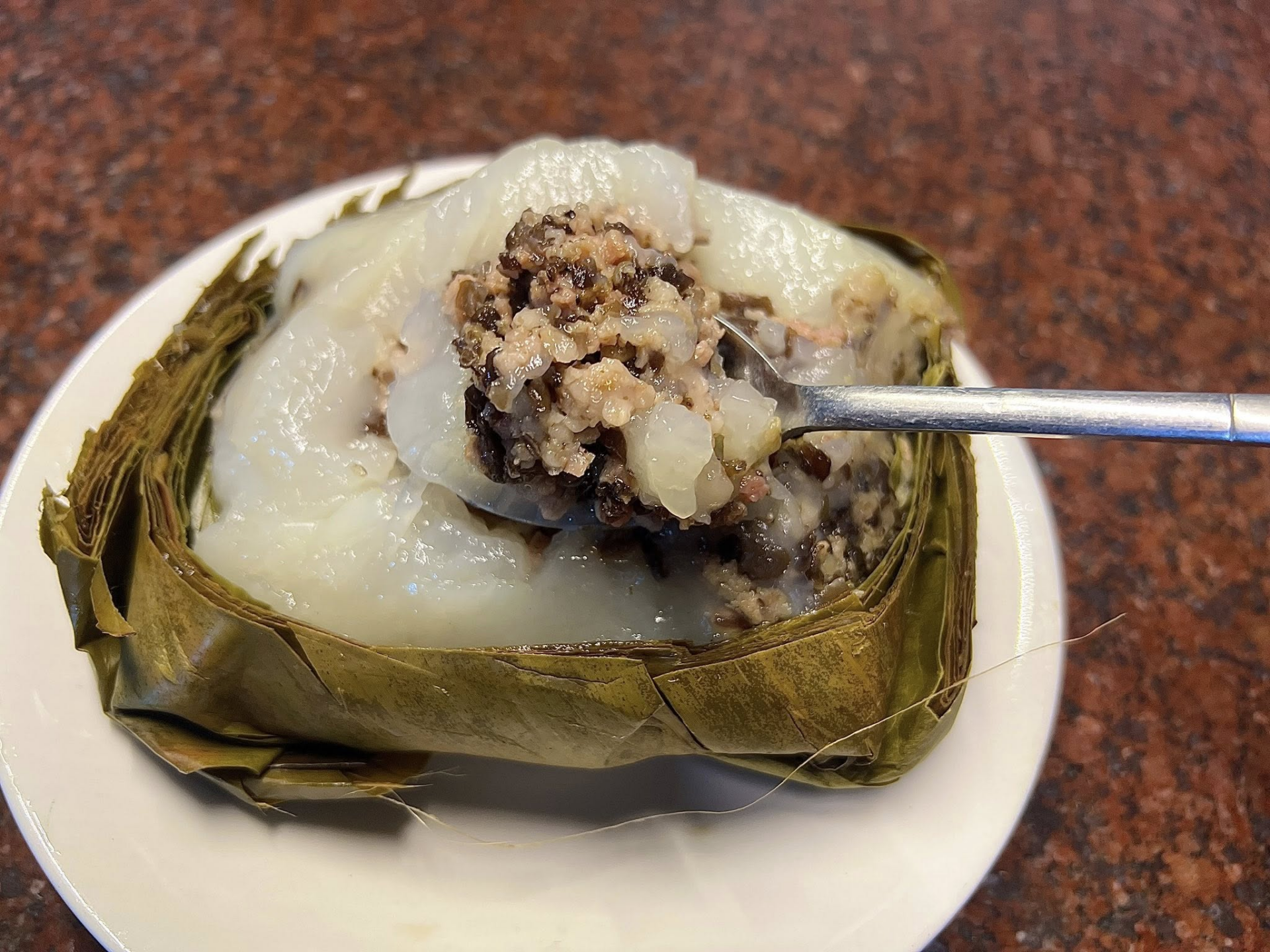
In Hanoi, we often eat Bánh Giò with a side of silk sausage (giò lụa), some pickled cucumbers, and a generous squeeze of chili sauce. The contrast between the soft, melting dough and the crunchy pickles is what makes our street food so special. If you join one of our food tours, I’ll show you exactly how to mix the toppings for the perfect bite.
Common Questions About Vietnamese Leaf Cakes
- Are they gluten-free? Most Vietnamese leaf cakes are made from glutinous rice or rice flour, which are naturally gluten-free. However, always check the specific filling if you have a severe allergy!
- Can I bring them home? The dry-leaf versions like Bánh Gai can last a few days, but the fresh steamed ones like Bánh Nậm should be eaten immediately. They don’t handle long flights well!
- How do I know if the leaf is edible? Important rule: The leaf is almost never edible! It is there for flavor and protection. Always peel it back and discard it before diving in.
Savor Vietnamese leaf cakes with Jackfruit Adventure
From the solemn bánh chưng of Tết to the delicate folds of Huế’s bánh lá, vietnamese leaf cakes offer one of the most layered and regionally diverse food experiences in the country. Each one is a small package of history, landscape, and culinary skill – and eating your way through them is one of the most authentic ways to understand Vietnam beyond the postcard.
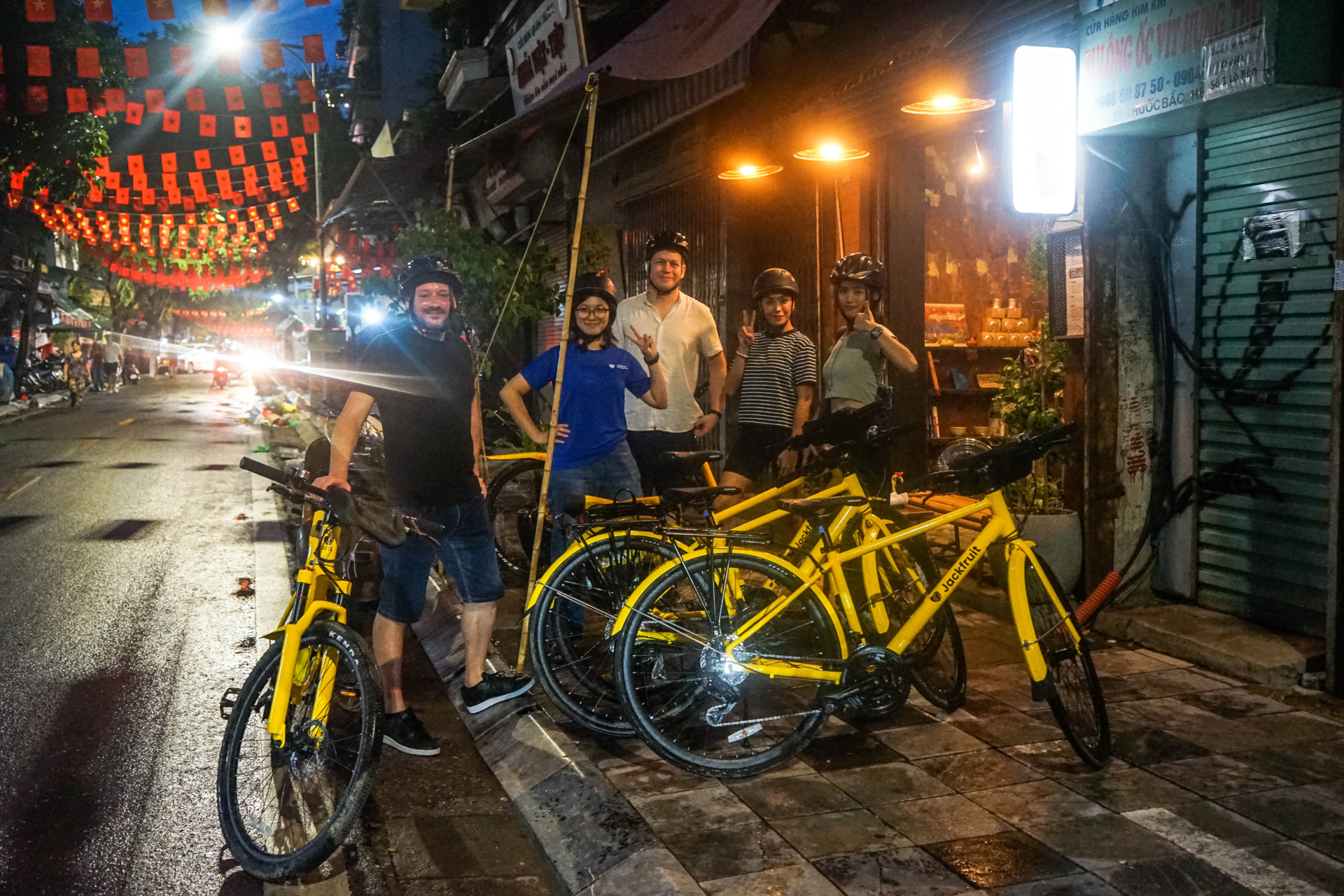
If you’re planning a trip and want to go deeper than the tourist trail, consider joining a food-focused tour that puts you in front of the real vendors, the real kitchens, and the real stories. Jackfruit Adventure’s Vietnam Cycling Tours specializes in exactly that – connecting curious travelers with the local food culture that makes Vietnam unforgettable.