

Table of Contents
If you want to understand Vietnamese street food beyond Phở and Bánh Mì, bun dau mam tom is a unique dish you shouldn’t miss. Simple, affordable with unmistakably bold flavours, this Northern dish brings together rice vermicelli, crispy fried tofu, pork, fresh herbs and a signature pungent shrimp paste dipping sauce.
It may look humble, but for locals, bun dau mam tom is a comfort food at its most honest, and a true test of your food adventure in Vietnam.
What is Bun Dau Mam Tom? A Local Guide to First-Time Travellers
If you’re travelling in Vietnam and keep hearing people whisper about bun dau mam tom, you’re not alone. This dish has a reputation for its strong aroma, bold flavours and a very “Vietnamese” personality. As a local, I can tell you this straight away: bun dau mam tom doesn’t try to win you over instantly; it grows on you with every bite!
Let me walk you through it the way a local would.
1. Where Did Bun Dau Mam Tom Come From?
Originally, bun dau mam tom comes from Northern Vietnam, especially Hanoi, This dish started as a filling, wallet-friendly street dish for workers, students and families – something that’s “tailored” to be quick, and satisfying rather than fancy.
Back then, bun dau mam tom was eaten on low plastic stools, on sidewalks or in small alleys. As people moved South and Vietnamese food culture spread, bun dau mam tom followed along. Today, you can find this Northern classic everywhere, from street stalls to air-conditioned restaurants.
2. What’s In a Traditional Bun Dau Mam Tom Platter?
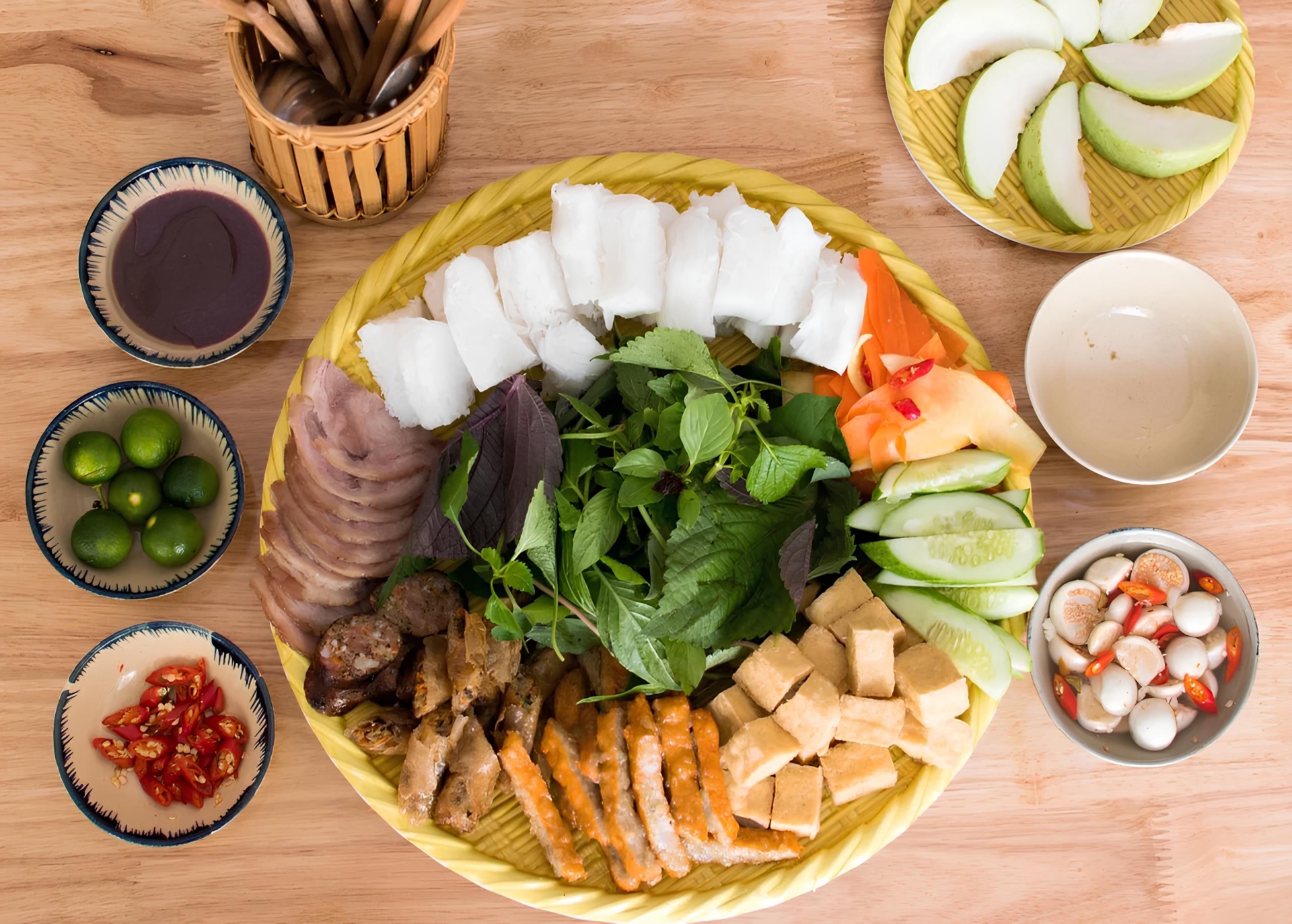
A traditional bun dau mam tom platter usually arrives on a flat tray. Every component is laid out separately, so you can mix, dip, and eat at your own pace.
Here’s what you’ll typically find:
- Bún (rice vermicelli sheets) – Soft, neutral and slightly chewy.
- Đậu hũ chiên (fried tofu) – Golden, crispy on the outside, fluffy inside.
- Thịt luộc (boiled pork belly or pork leg) – Tender slices with both lean meat and fat.
- Rau thơm (fresh herbs & vegetables) – Including perilla leaves, Vietnamese balm, lettuce, cucumber.
- Mắm tôm (fermented shrimp paste) – Usually mixed at the table with sugar, lime, chili and a little hot oil until it turns frothy.
- Cà pháo (pickled figs) – Lightly sour and crunchy, helping cut through the richness of the pork and shrimp paste.
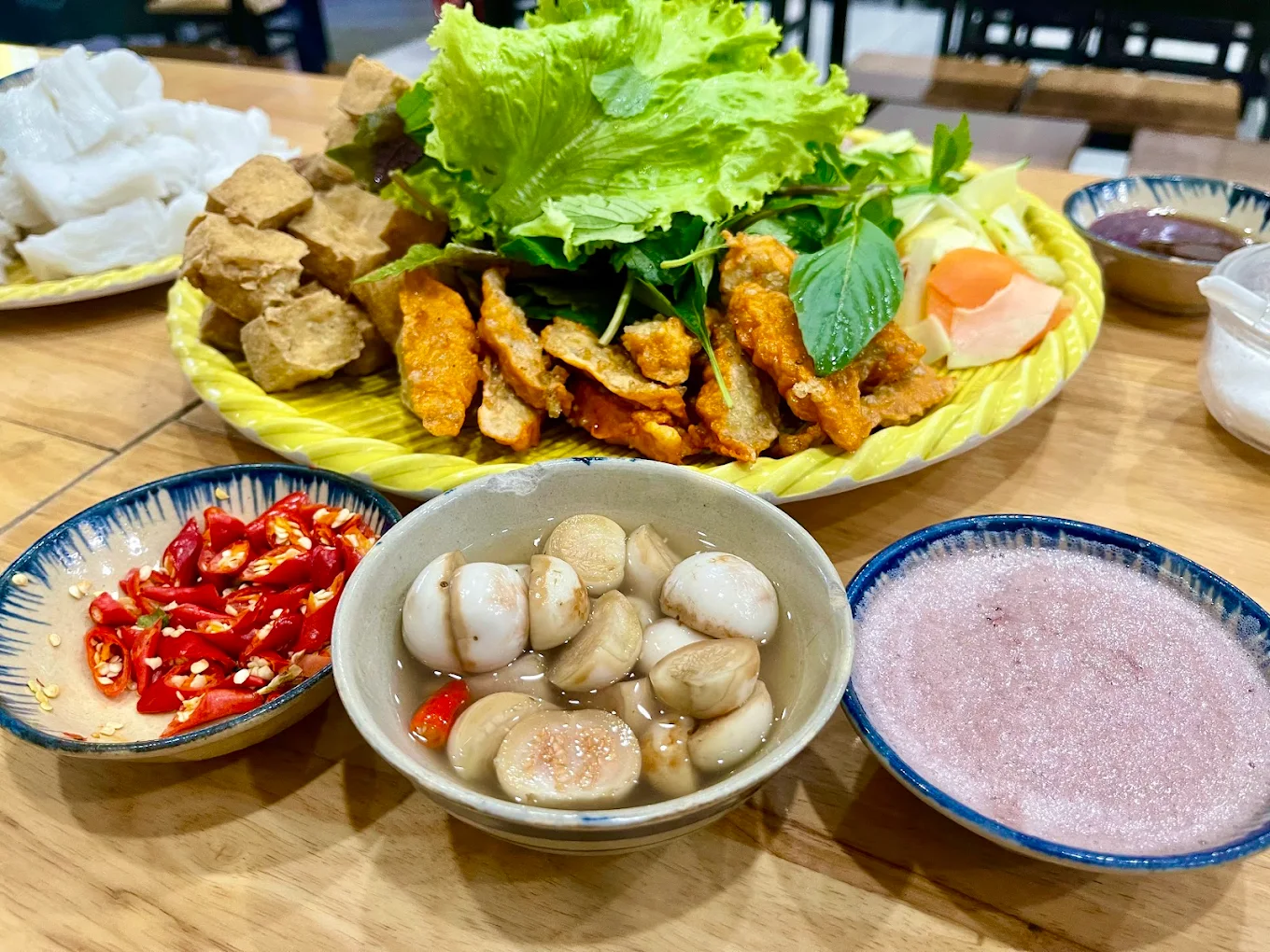
At some stalls, some platters also include extras like fried spring rolls, pork sausage, or fermented pork roll.
3. What Does Bun Dau Mam Tom Taste Like?
This is the question that my foreign friends always ask! And honestly, it’s hard to answer in one sentence.
The smell of shrimp paste is quite sharp and “intimidating”, but the taste is much more balanced than what you think. If you mix it properly, you get a salty, savoury taste with a hint of sweetness and a funky finish.
For first-timers, the first bite may be a bit shocking. But by the second, third and fourth bite, many people start to realize why locals love bun dau mam tom so much.
Northern vs Southern Bun Dau Mam Tom – What’s the Difference?
When eating bun dau mam tom in both Hanoi and Saigon, you’ll start to notice an interesting difference: it’s the same dish, but it feels like 2 completely different personalities. As a local, the difference between Northern and Southern bun dau mam tom isn’t about better or worse – just different tastes and habits.
1. Shrimp Paste
- Northern style: Dark purple, thick, very pungent and salty. Normally, it will be mixed lightly with sugar, calamansi or lime, and a bit of hot oil.
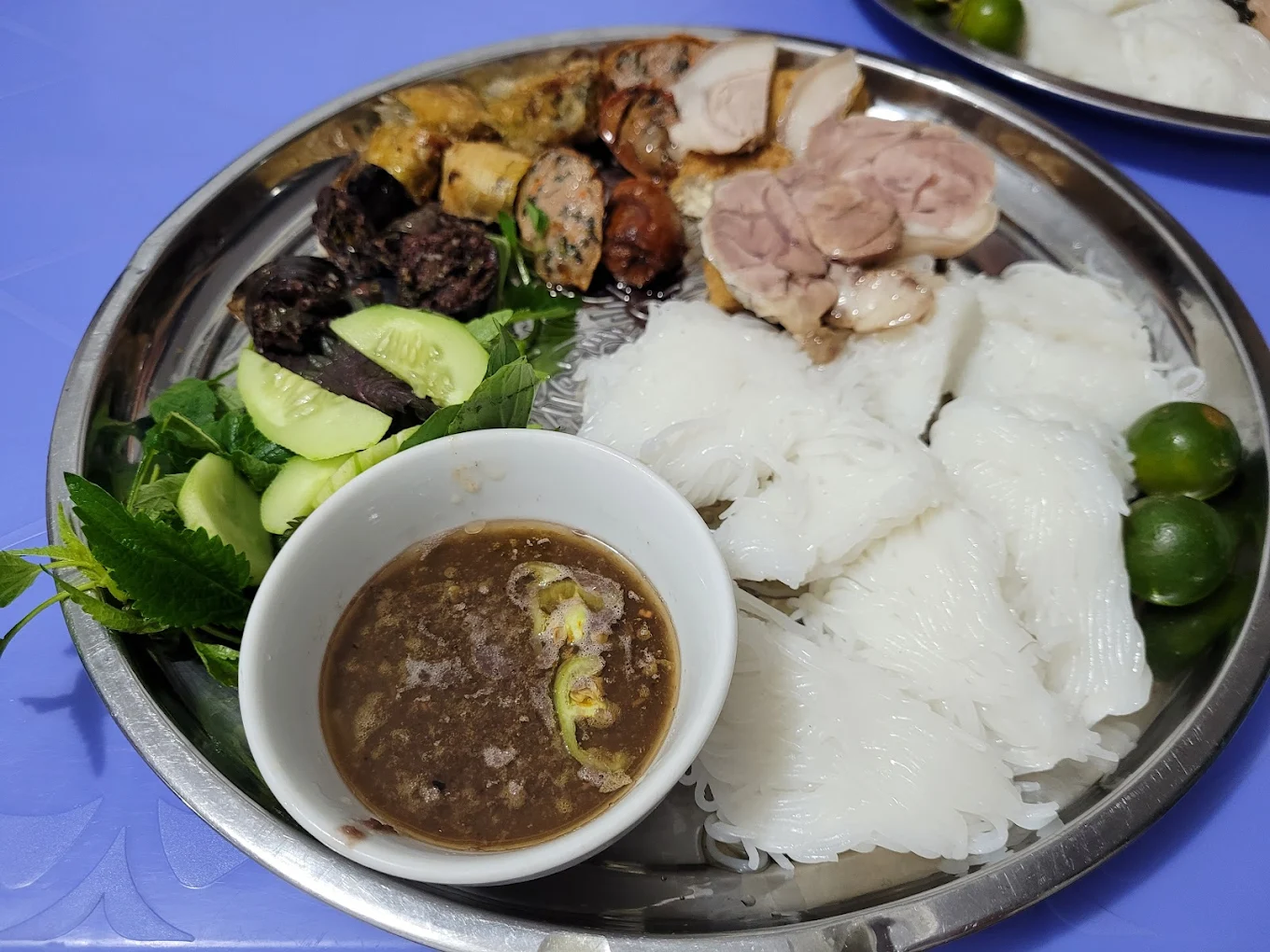
- Southern style: Lighter in color, more diluted, with more calamansi juice and sugar. The flavour is milder, sweeter, easier for first-timers.
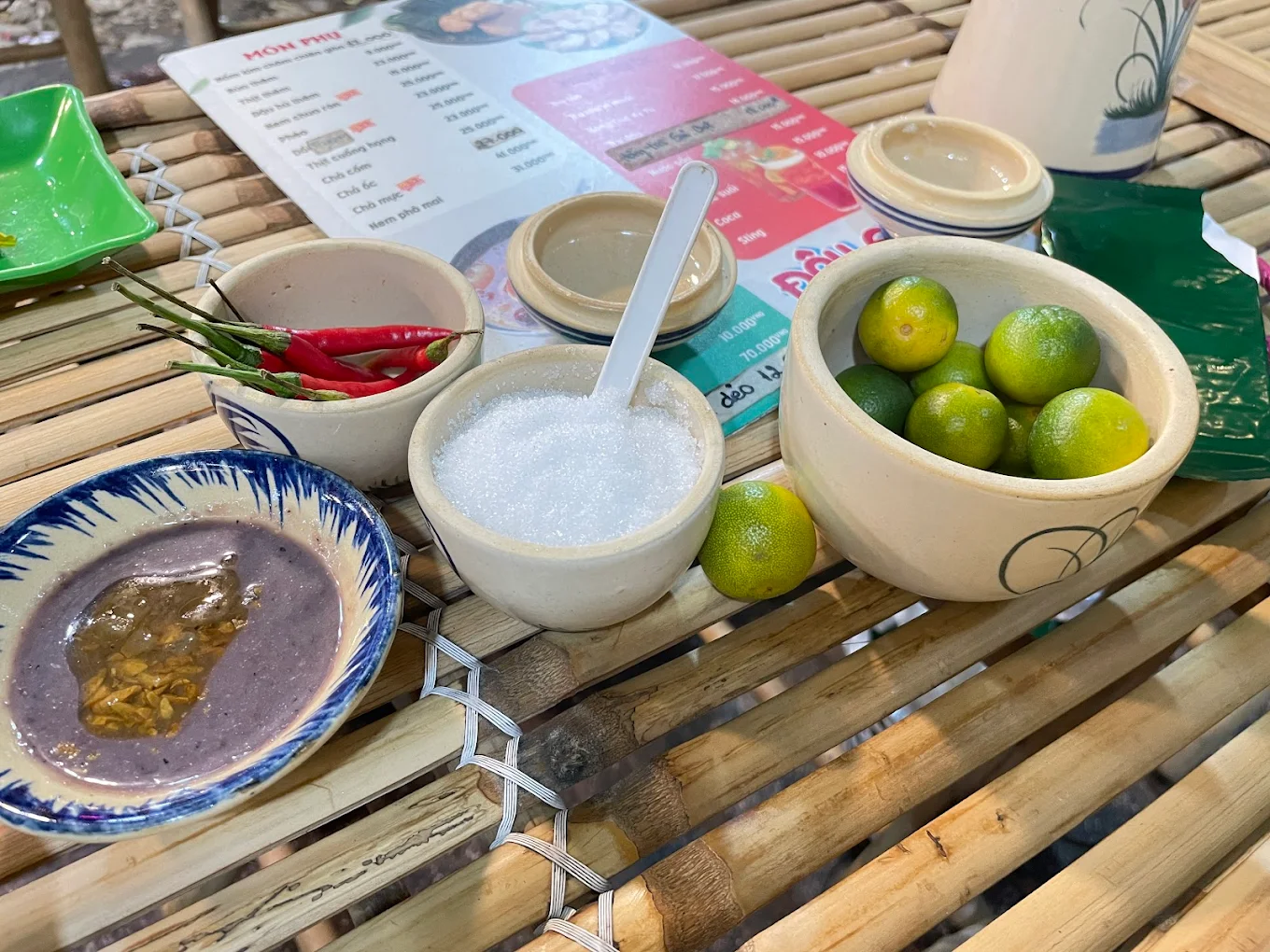
In the South, many people skip shrimp paste and choose sweet-and-sour fish sauce or chili sauce instead, especially if they aren’t ready for fermented flavours.
2. Tofu
- Northern-style bun dau mam tom traditionally used “đậu mơ” (Mơ village tofu) – a delicate tofu that fries up golden outside but stays soft and creamy inside.
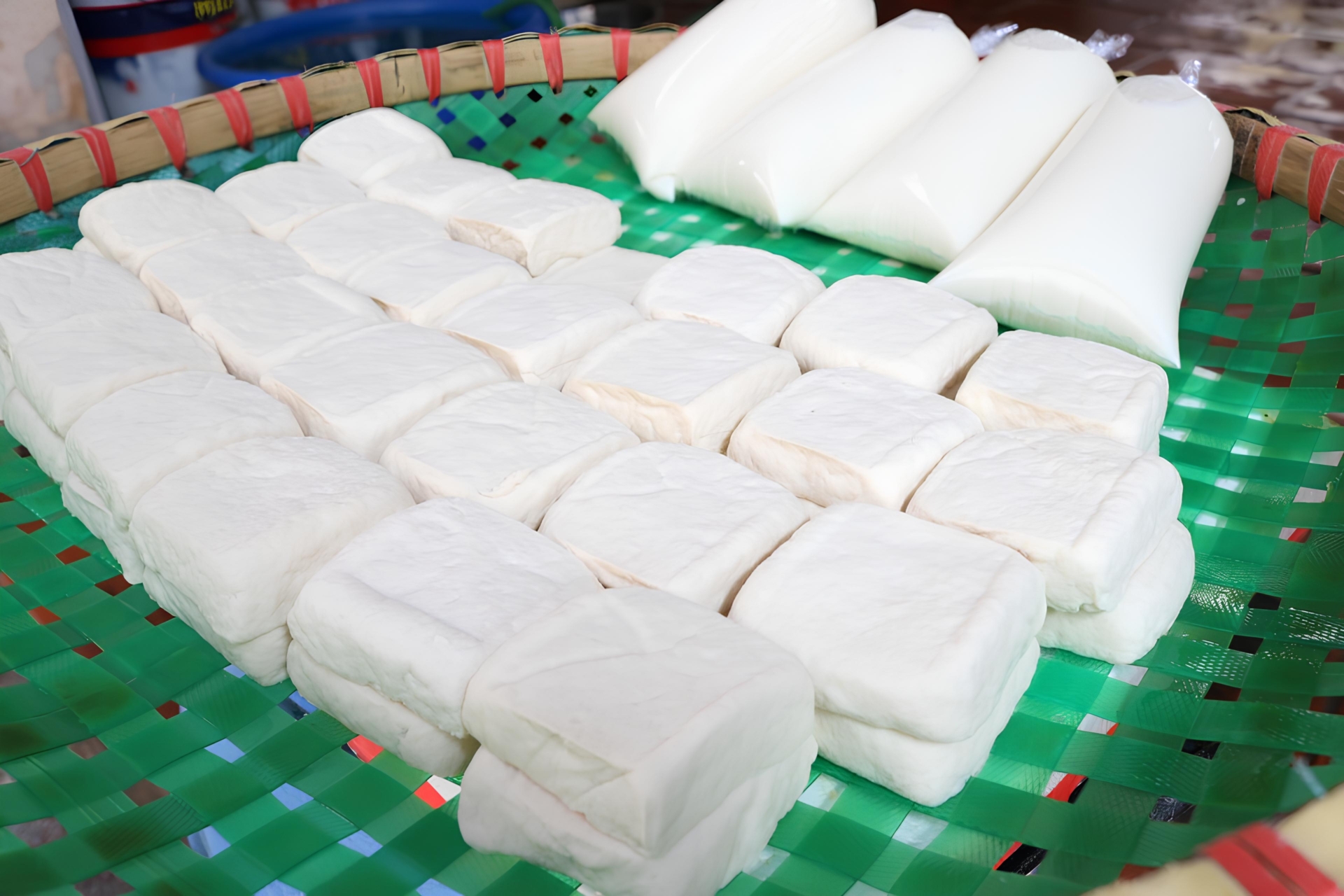
- Southern versions are less bound by tradition, favoring variety with extra toppings (e.g.,crispy pork sausage, boiled pork hock, fried fermented pork rolls…), lighter shrimp paste, and a more relaxed eating style.
3. How It’s Eaten
- Northern style: Ingredients are eaten separately, with every component dipped directly into the shrimp paste to fully enjoy its distinct flavours.
- Southern style: Ingredients are often wrapped together in rice paper, or eat the vermicelli alongside the other toppings, instead of keeping each ingredient separate as Northern diners do.
So… Which Style Should You Try First?
If you want the original, intense, no-filter experience, Northern-style bun dau mam tom is the real deal. However, Southern-style bun dau mam tom is a great start if you prefer something gentler and sweeter.
How to Eat Bun Dau Mam Tom Like a Local?
Trying bun dau mam tom for the first time can feel a bit confusing. But as a local, I can tell once you know how to eat it properly, bún đậu mắm tôm suddenly makes sense – here’s how locals enjoy it!
- Mix the shrimp paste with lime (or calamansi), sugar, chili, and hot oil until slightly foamy.
- Dip fried tofu lightly into the shrimp paste first.
- Dip boiled pork next, using only a small amount of sauce.
- Add rice noodles and fresh herbs to balance each bite.
- Combine one protein + noodles + herbs, then dip again if needed.
- Eat slowly and sip iced tea or calamansi tea between bites.
👉 If the flavor is too strong, add more lime/sugar or switch to fish sauce.
5 Best Places to Eat Bun Dau Mam Tom in Saigon
1. Đậu Homemade
- Address: 1 Nguyễn Văn Tráng, Phạm Ngũ Lão Ward, District 1
- Opening hours: 10:00 AM – 9:00 PM
- Price range: $3.70–$12.25
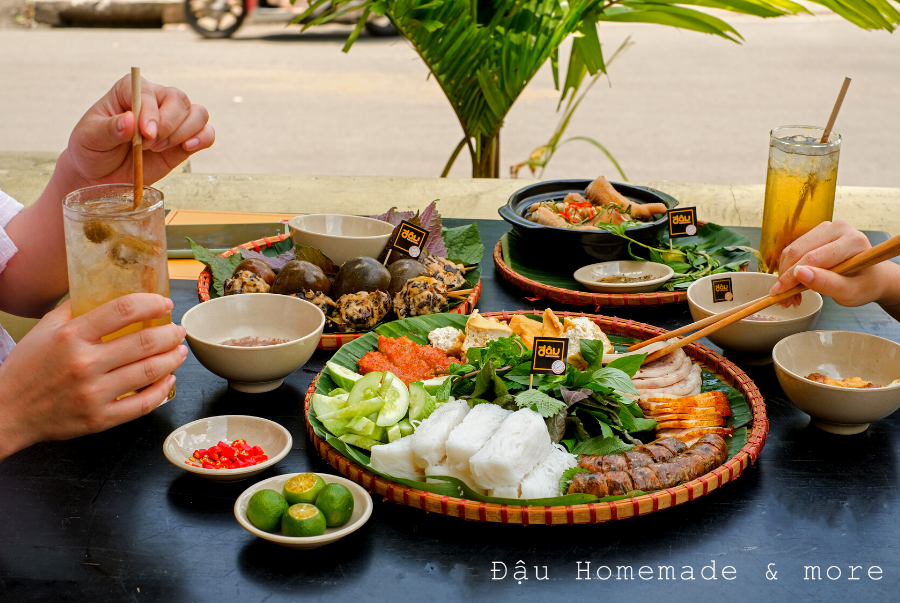
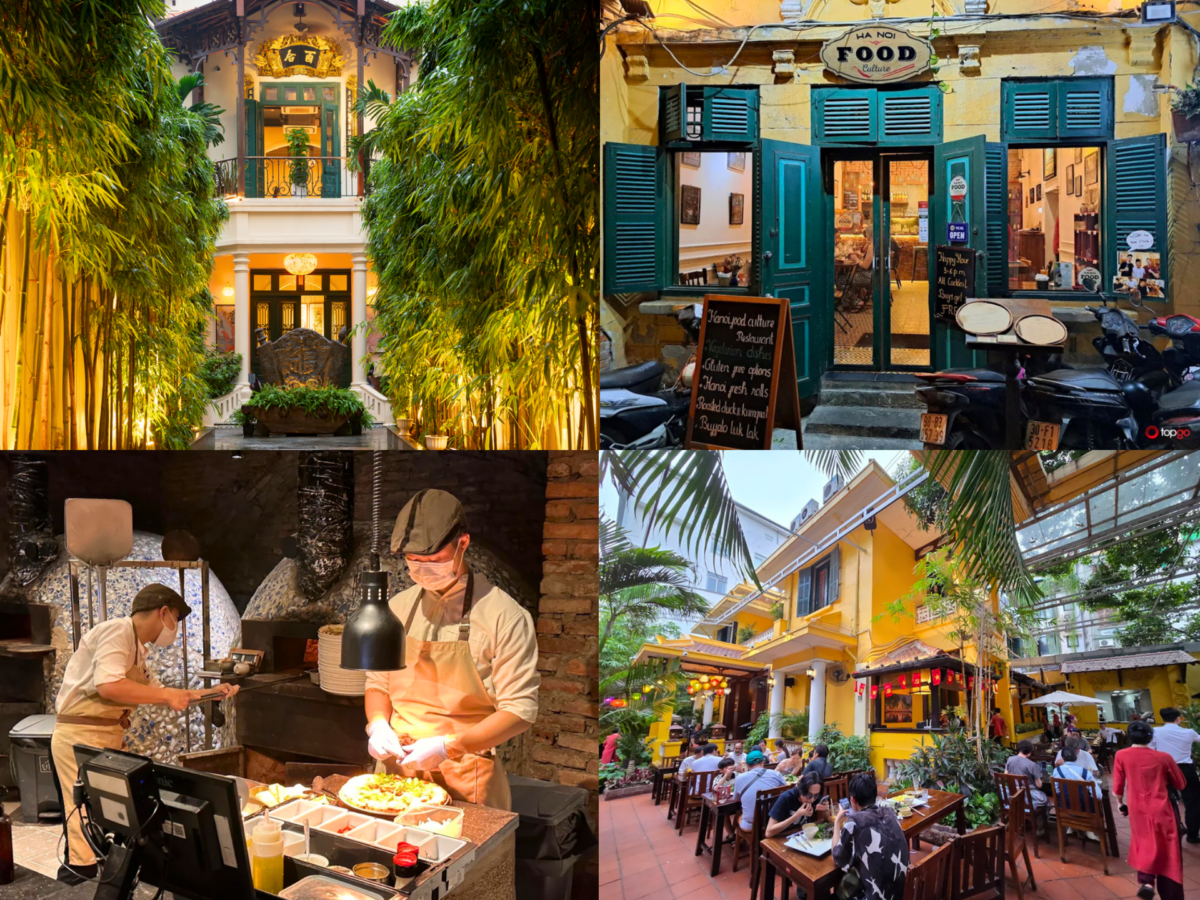
Đậu Homemade is often my first suggestion for travellers trying bun dau mam tom in Saigon for the first time. This place is famous for bun dau mam tom along with a cozy, old-Hanoi vibe that makes the space feel visually inviting.
Beyond the signature bun dau mam tom, Đậu Homemade also serves a variety of other local favourites, including Hạ Long-style squid cakes, lemongrass-jumquat chicken feet, crab hotpot with brisker or ginger-steamed stuffed nails.
Plus, this famous eatery has several branches, so I always tell my friends to pick the most convenient location.
2. Hẻm Đậu – Bún Đậu Mắm Tôm
- Address: 140E Lý Chính Thắng, Ward 7, District 3
- Opening hours: 9:00 AM – 9:30 PM
- Price range: $2.40–$4.45
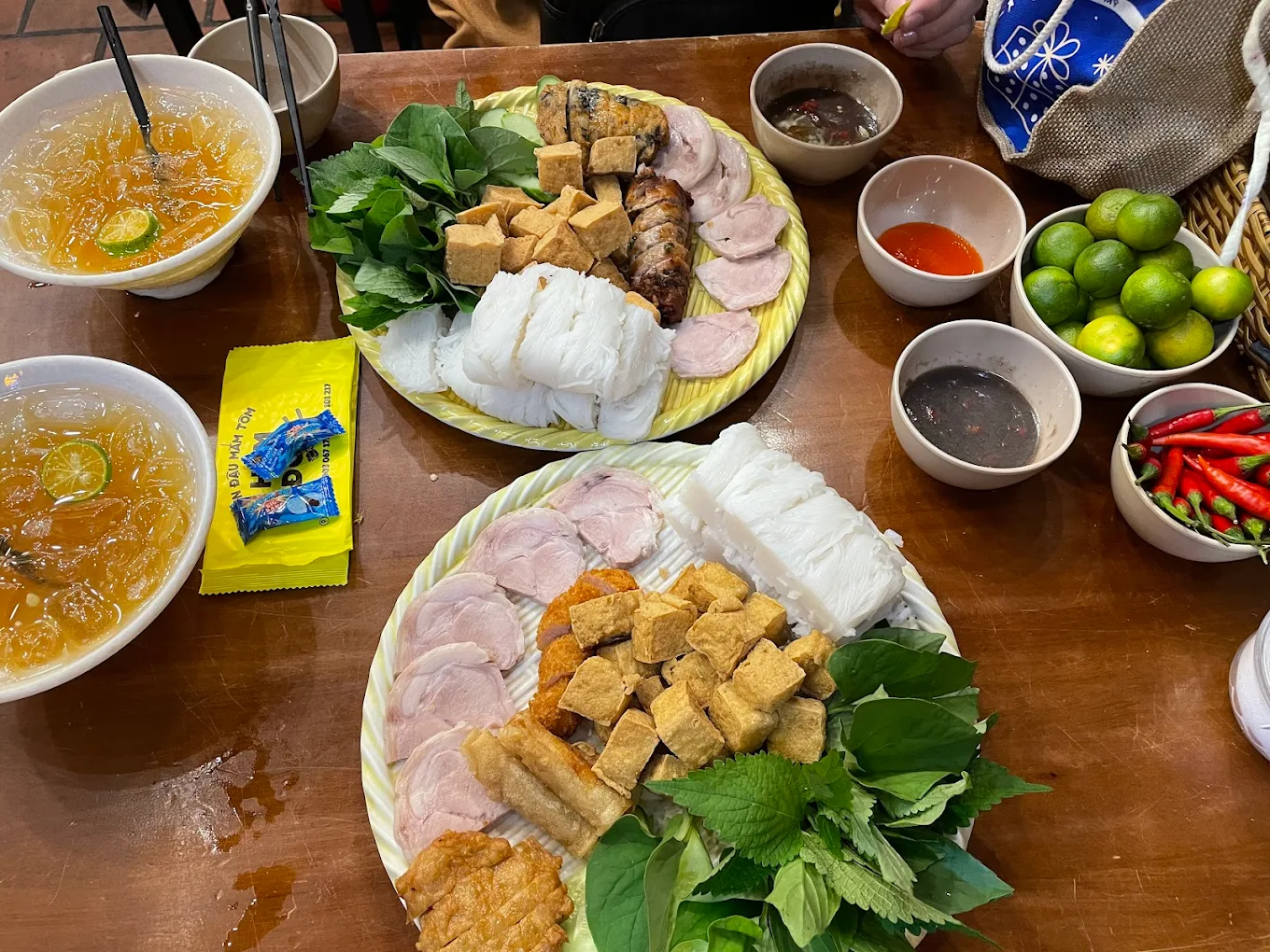
Hẻm Đậu has a slightly more local, casual vibes. The space may not be fancy, but that’s the part of the charm. The bun dau mam tom here leans closer to Northern style, with stronger shrimp paste flavour and less sweetness.
I like this place when I want something that feels authentic but not intimidating. It’s a good middle ground between street-style and restaurant comfort. Also, the prices here are pretty wallet-friendly with welcoming staff!
3. Bún Đậu Mắm Tôm Xồm
- Address: 6 Lê Lợi, Ward 1, Gò Vấp District
- Opening hours: 10:30 AM – 12:00 AM
- Price range: $2.25–$8.05
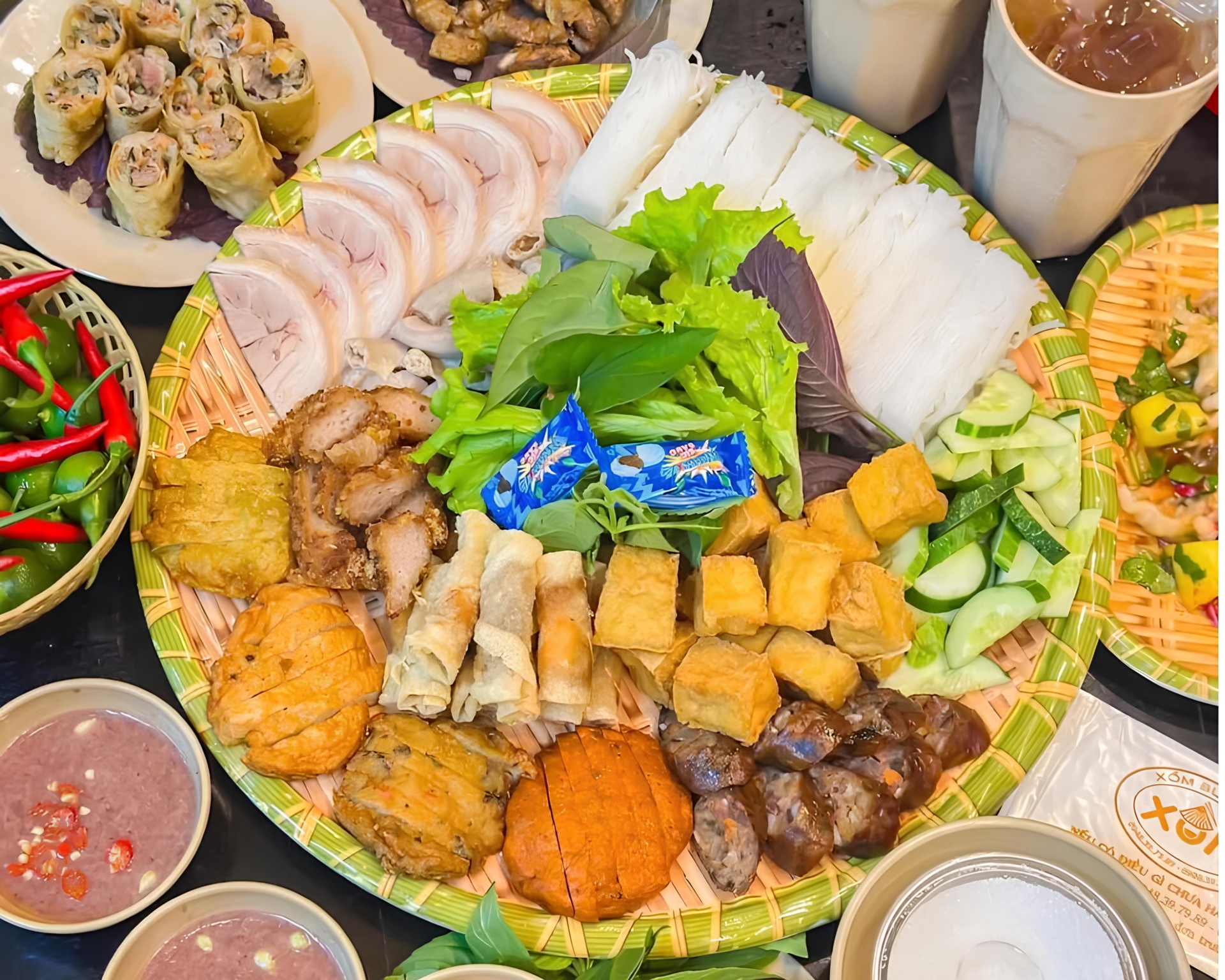
If you’re staying away from the city center or craving late-night bun dau mam tom, then this spot is a solid choice. Bún Đậu Xồm is pretty popular for Gò Vấp locals and known for generous platters, bold flavours, as well as a mix of familiar local dishes like seafood spring rolls, Thai-style chicken feet, fried offal or grilled snail patties.
The shrimp paste here is quite bold, so I’d recommend it if you’re already comfortable with fermented flavours.
4. Bún Đậu Quang Gánh
- Address: 50 Trần Quang Diệu, Ward 14, District 3
- Opening hours: 10:00 AM – 9:00 PM
- Price range: $1.50–$2.50
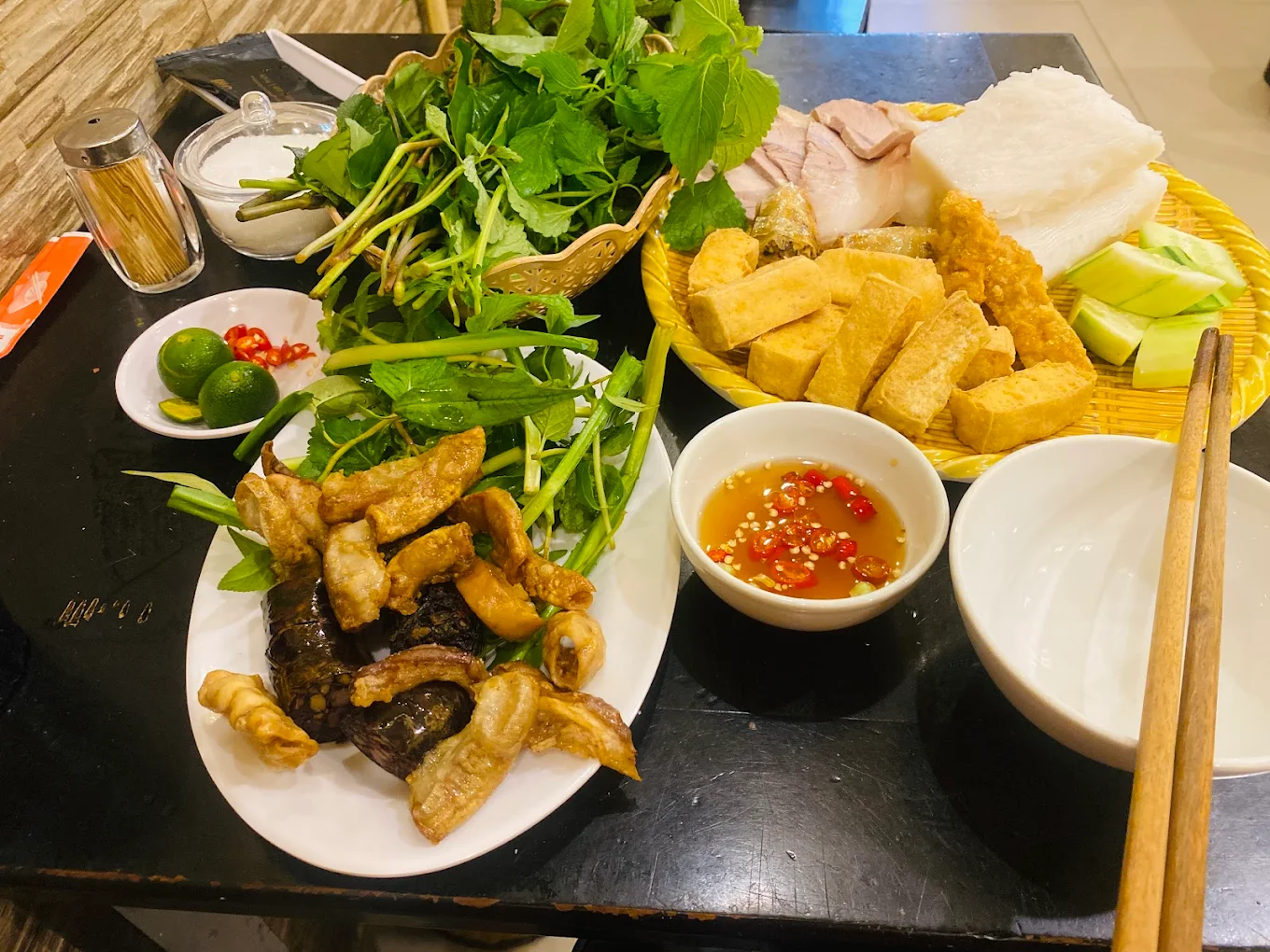
The fourth place I want to introduce to you guys is Bún Đậu Quang Gánh, located on Trần Quang Diệu Street. This is one of those places I recommend when you want bun dau mam tom that feels close to the original Northern street style. True to its name, “quang gánh” is inspired by simplicity, traditional flavors without unnecessary extras.
Apart from bun dau mam tom, this eatery brings together a variety of other local specialties, such as Hanoi-style grilled pork with fried spring rolls, steamed pork hock, fried fermented pork rolls, fried pork offal or even West Lake–style shrimp fritters.
So, if you already know you can handle fermented shrimp paste and want something more authentic and less toned-down, Bún Đậu Quang Gánh is a solid stop in District 3.
5. Bún Đậu A Vừng
- Address: 6A Lương Hữu Khánh, Phạm Ngũ Lão Ward, District 1
- Opening hours: 9:00 AM – 10:00 PM
- Price range: $1.50 to $6
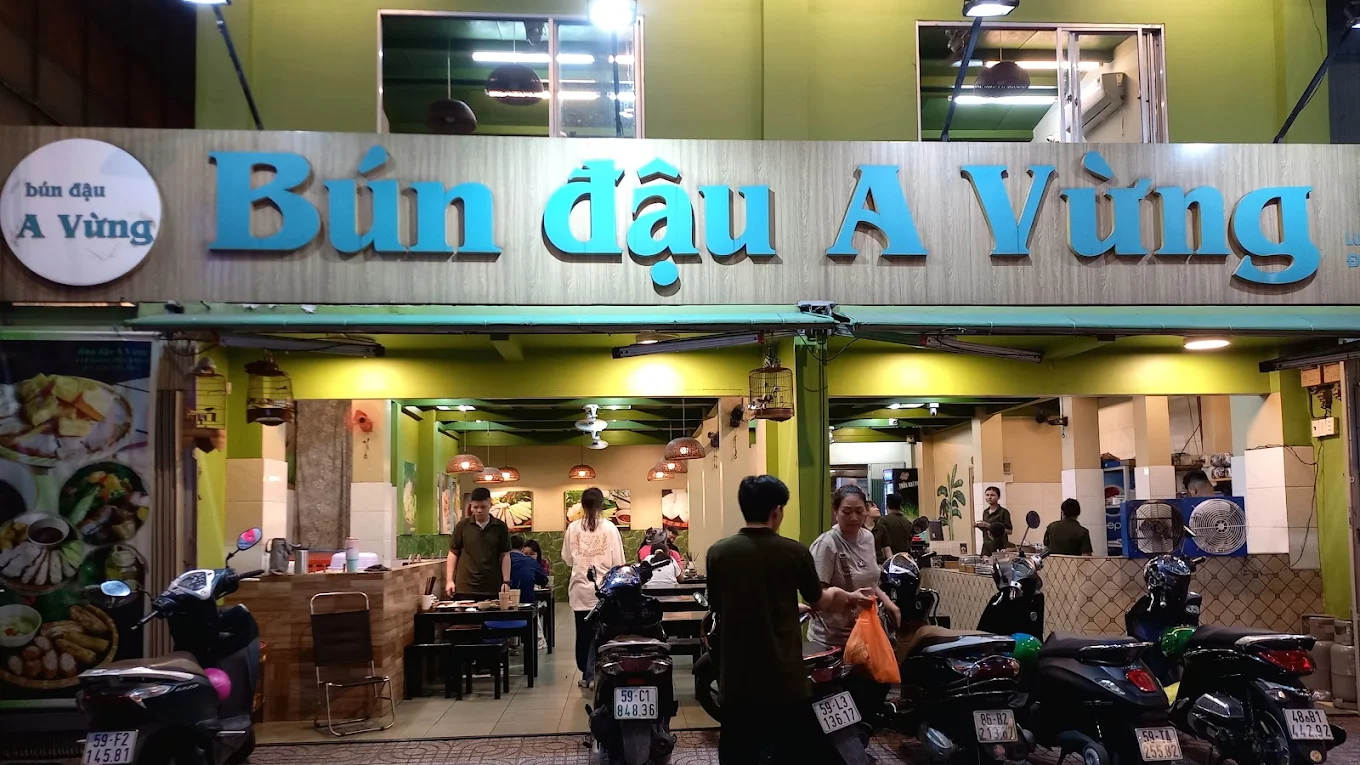
Although Bún Đậu A Vừng is located near the backpacker district, it still feels comfortably local, which is why I keep recommending it. The space is casual and warm, the platters are neatly arranged and the ingredients always feel fresh and well-prepared.
What I like about this place is how beginner-friendly everything is. The shrimp paste is usually mixed lighter and slightly sweeter, and staff are happy to offer alternatives if you’re hesitant. Portions are reasonable, service is quick but not pushy, and the overall vibe feels relaxed rather than chaotic.
For those who want to try something other than bún đậu mắm tôm, there are a few other delicious options to consider, such as seafood crab cake, mixed boiled offal, fried clam roll, crispy fried pig’s ears, or perilla-leaf clam cakes.
5 Best Places to Eat Bun Dau Mam Tom in Hanoi
1. Bún Đậu Mắm Tôm Cô Hoa
- Address: 25 Ấu Triệu, Hàng Trống Ward, Hoàn Kiếm District
- Opening hours: 6:30 AM – 10:00 PM
- Price range: $1.20–$2.05
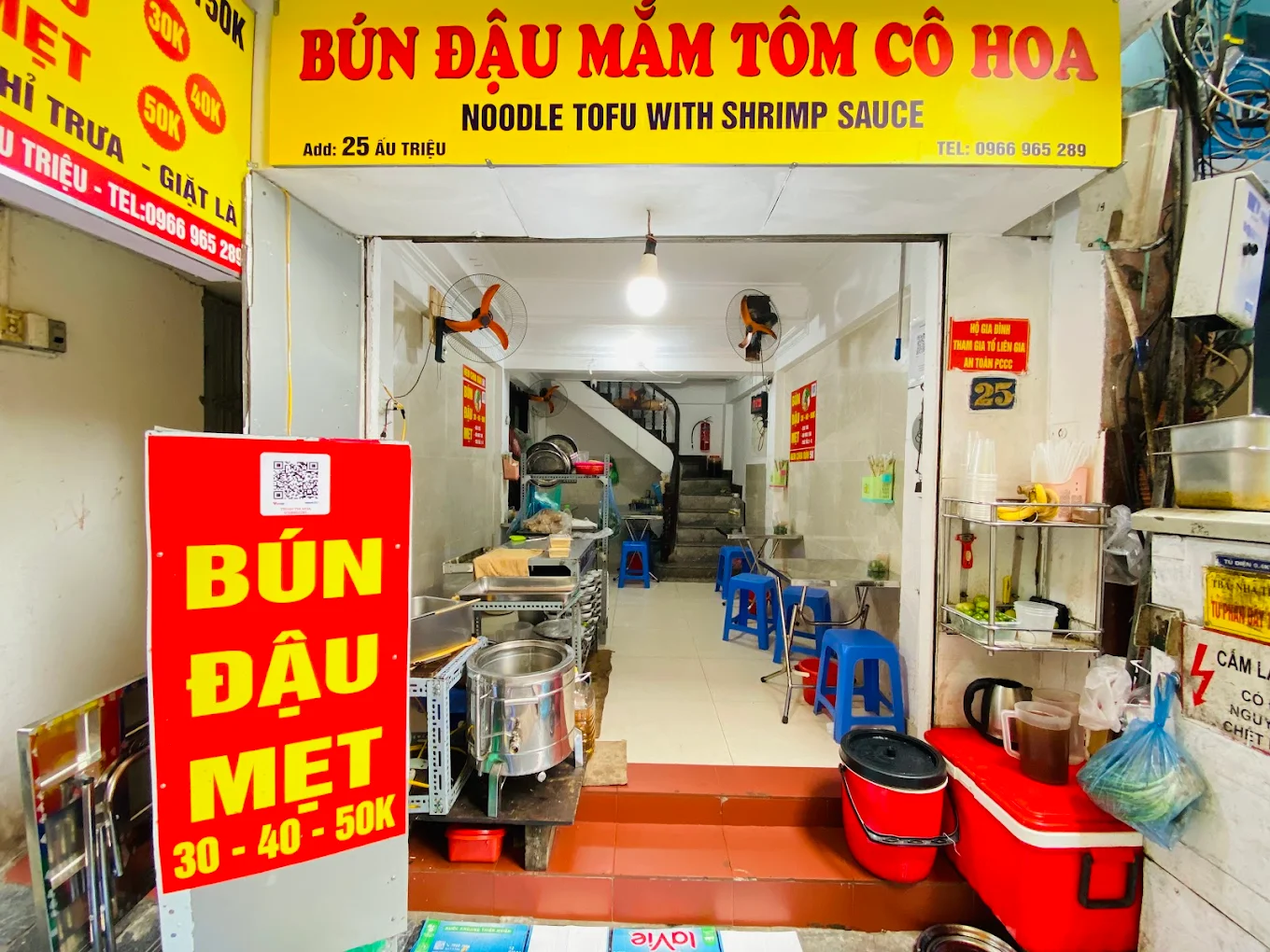
If you want to experience the authentic bun dau mam tom, Hanoi is where it all begins. One of the first places I want to introduce is Cô Hoa Bún Đậu Mắm Tôm Eatery. This is the most convenient place to try this dish, especially if you’re staying near Hoàn Kiếm Lake. I like this spot since it opens early and keeps the flavours very classic.
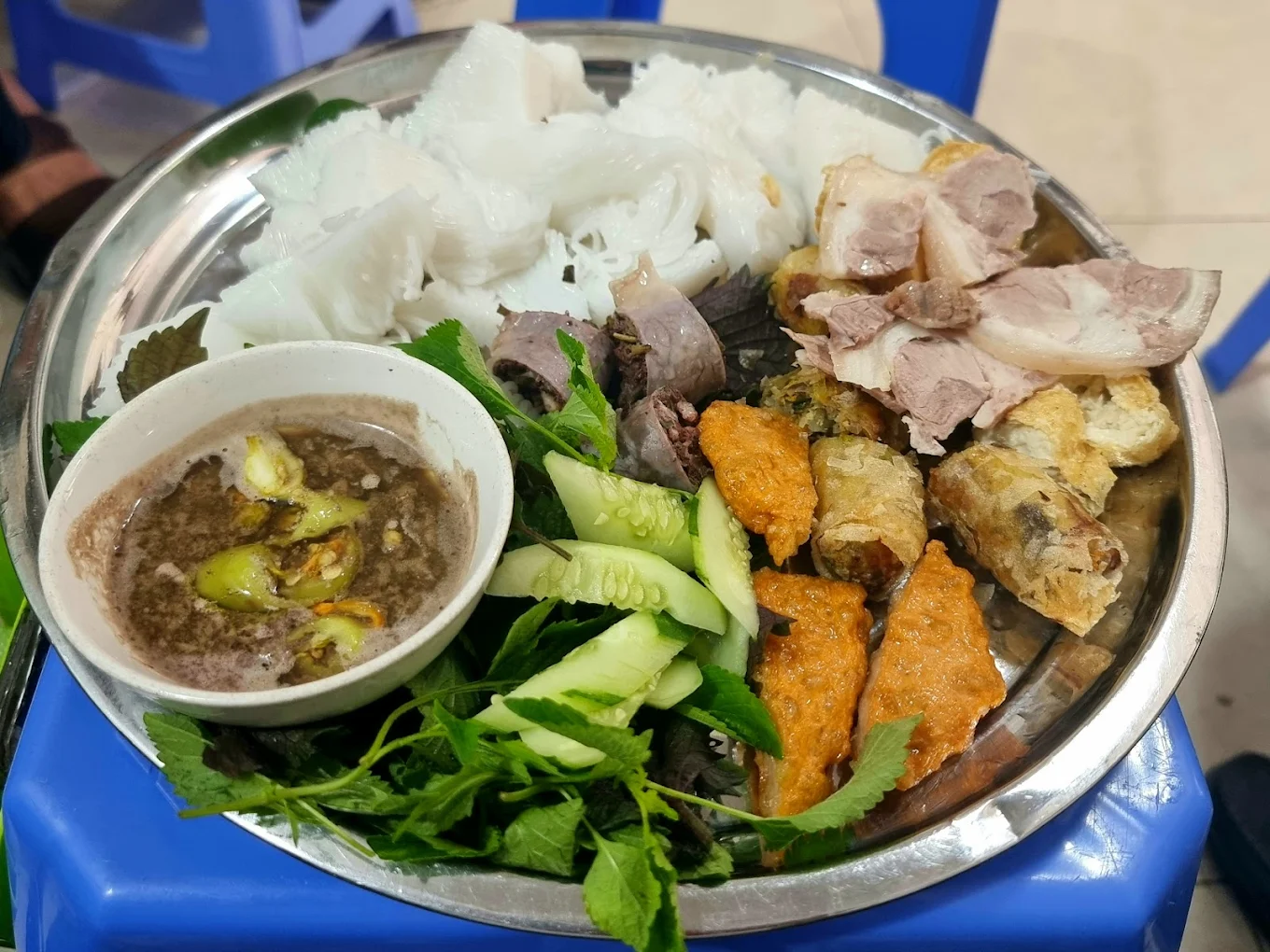
The shrimp paste here is dark, pungent and mixed just enough to stay bold without being overwhelming. Also, the fried tofu arrives hot and crisp and the overall portion feels very “Hanoi” – not flashy but satisfying.
2. Bún Đậu Mẹt Đông Thái
- Address: 11 Đông Thái, Hàng Buồm Ward, Hoàn Kiếm District
- Opening hours: 8:00 AM – 10:00 PM
- Price range: $0.80–$4.10
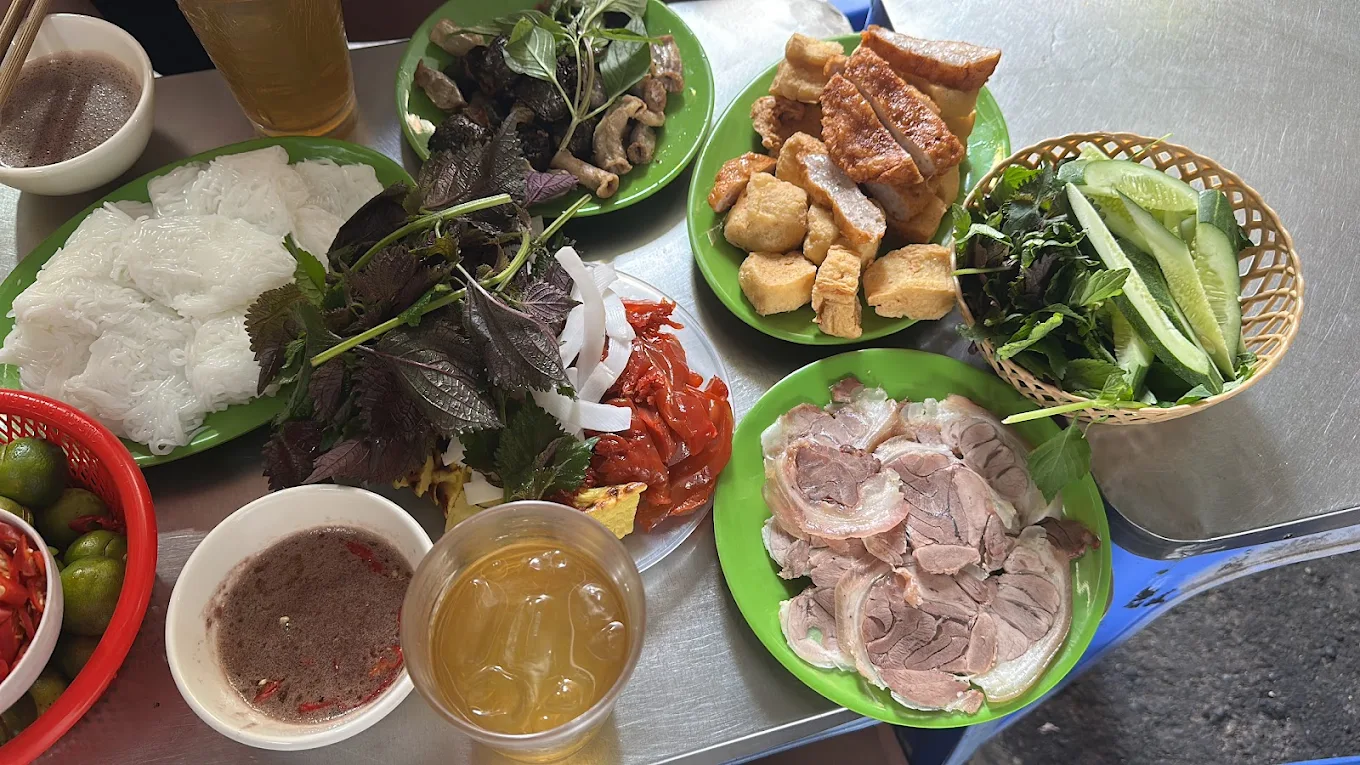
Located right in the Old Quarter, this is a spot I often recommend to travellers who want a proper bun dau mam tom experience between sightseeing stops. The platter here is generous, with neatly arranged tofu, pork, noodles, and herbs.
What stands out for me is the balance. The shrimp paste isn’t too aggressive, making it easier for first-timers, but it still keeps that signature Northern depth. It’s busy most of the day, which is always a good sign when it comes to street-style food in Hanoi.
3. Bún Đậu Cây Đa Thụy Khuê
- Address: 235B Thụy Khuê, Thụy Khuê Ward, Tây Hồ District
- Opening hours: 10:00 AM – 9:30 PM
- Price range: $0.80–$2.25
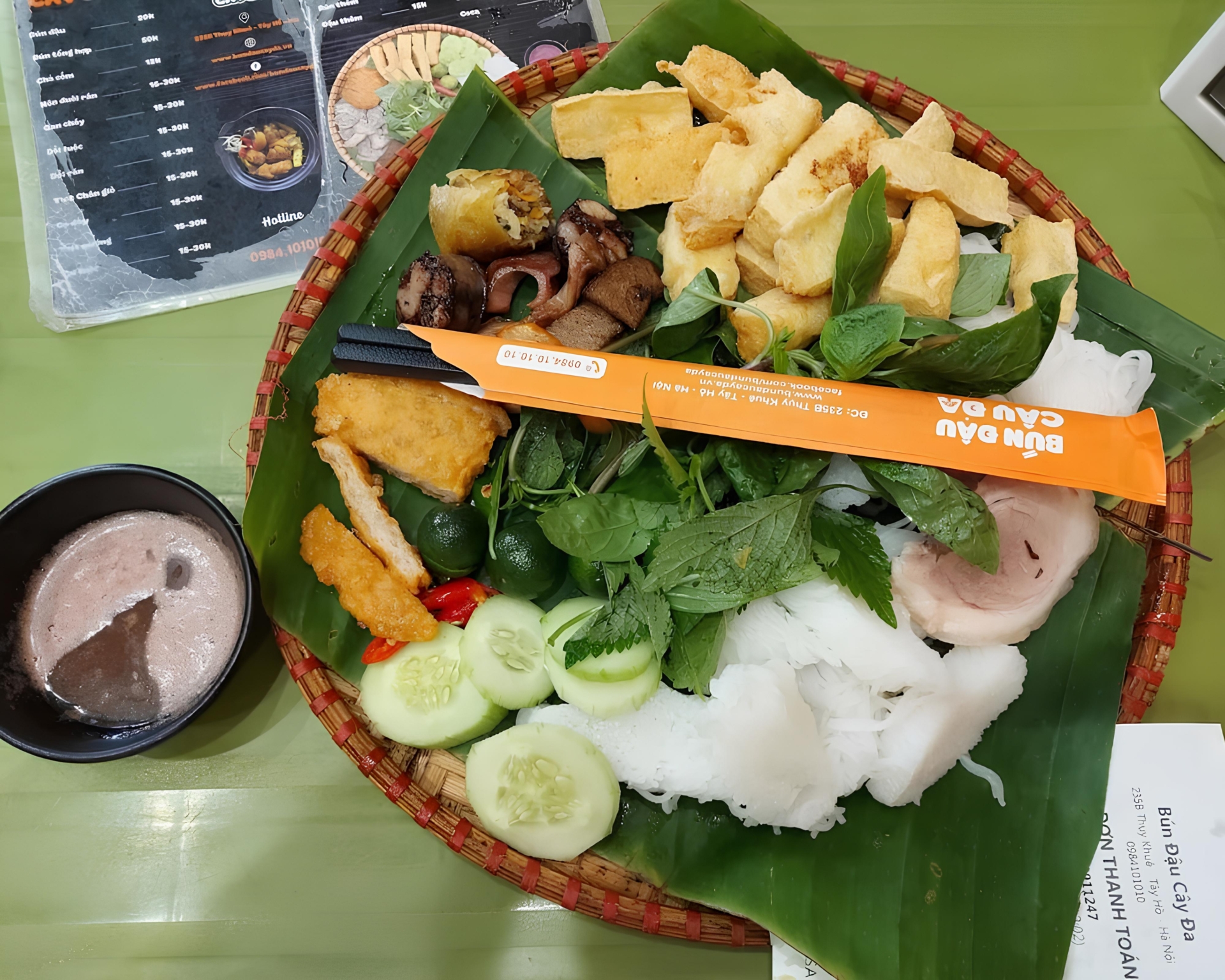
Up next is another local eatery worth checking out, which is Bún Đậu Thụy Khuê.
As one of the longest-running and most well-known spots in Tây Hồ area, Bún Đậu Thụy Khuê wins over diners over with its generous platters featuring perfectly crispy fried tofu, fragrant green rice sausage, thinly-sliced pork hock and shrimp paste mixed to just the right balance.
Beyond the classic components, the menu also includes fried spring rolls, crispy pork sausage, and fried small intestines, giving diners more options to choose from. Also, the space is spacious and clean, making it a cozy dining place for groups of friends and families.
4. Bún Đậu Cô Tuyến Hàng Khay
- Address: 27/31 Hàng Khay, Tràng Tiền Ward, Hoàn Kiếm District
- Opening hours: 9:00 AM – 9:00 PM
- Price range: $1.20–$8.15
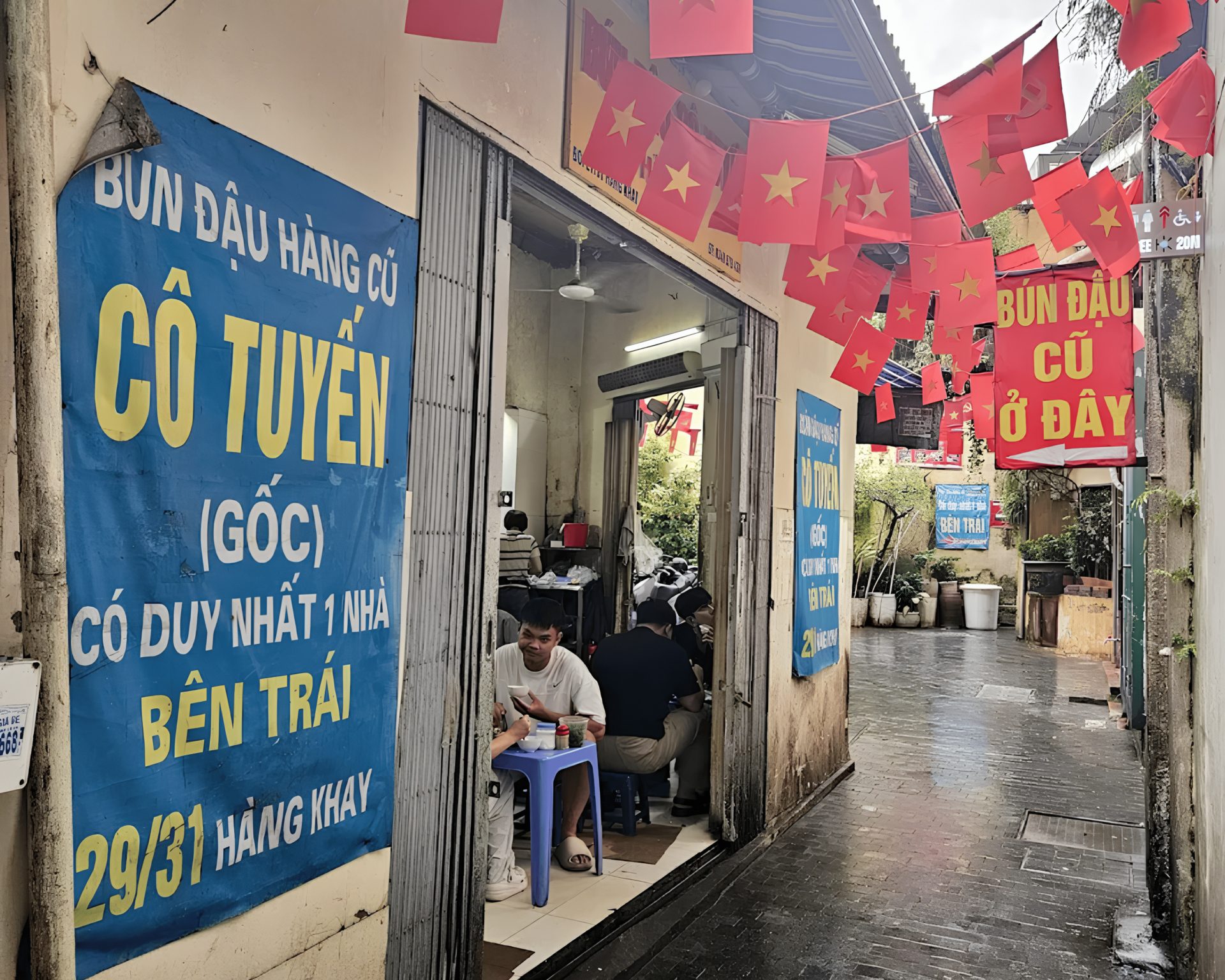
For Hanoians, Bún Đậu Cô Tuyến Hàng Khay is one of the most iconic bun dau mam tom spots in Hanoi. The shop is tucked away in a small alley,not very spacious, but tidy and well-organized. The moment you sit down, you can tell the seller care deeply about their food.
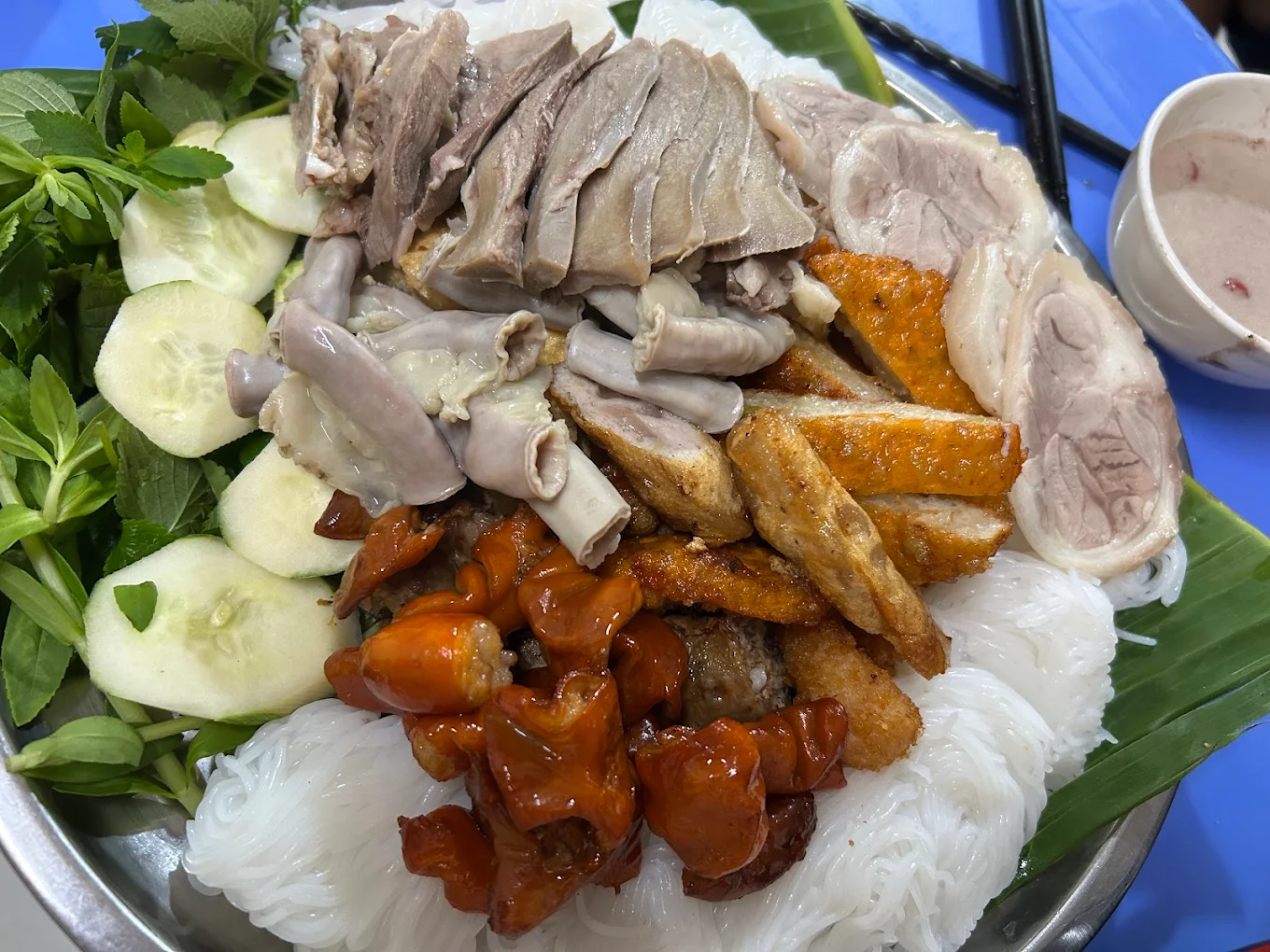
The flavor here is very “Hanoi”. The shrimp paste here is rich and fragrant, the tofu is perfectly fried, and the toppings are impressively diverse – from chả cốm, tofu, pork, fried rolls, even offal – all carefully selected and prepared. Whenever I eat here, it reminds me why bun dau mam tom doesn’t need fancy presentations to be unforgettable.
5. Bún Đậu Gốc Đa
- Address: 4 Ngõ Gạch, Hàng Buồm Ward, Hoàn Kiếm District
- Opening hours: 7:30 AM – 11:00 PM
- Price range: $2–$4.50
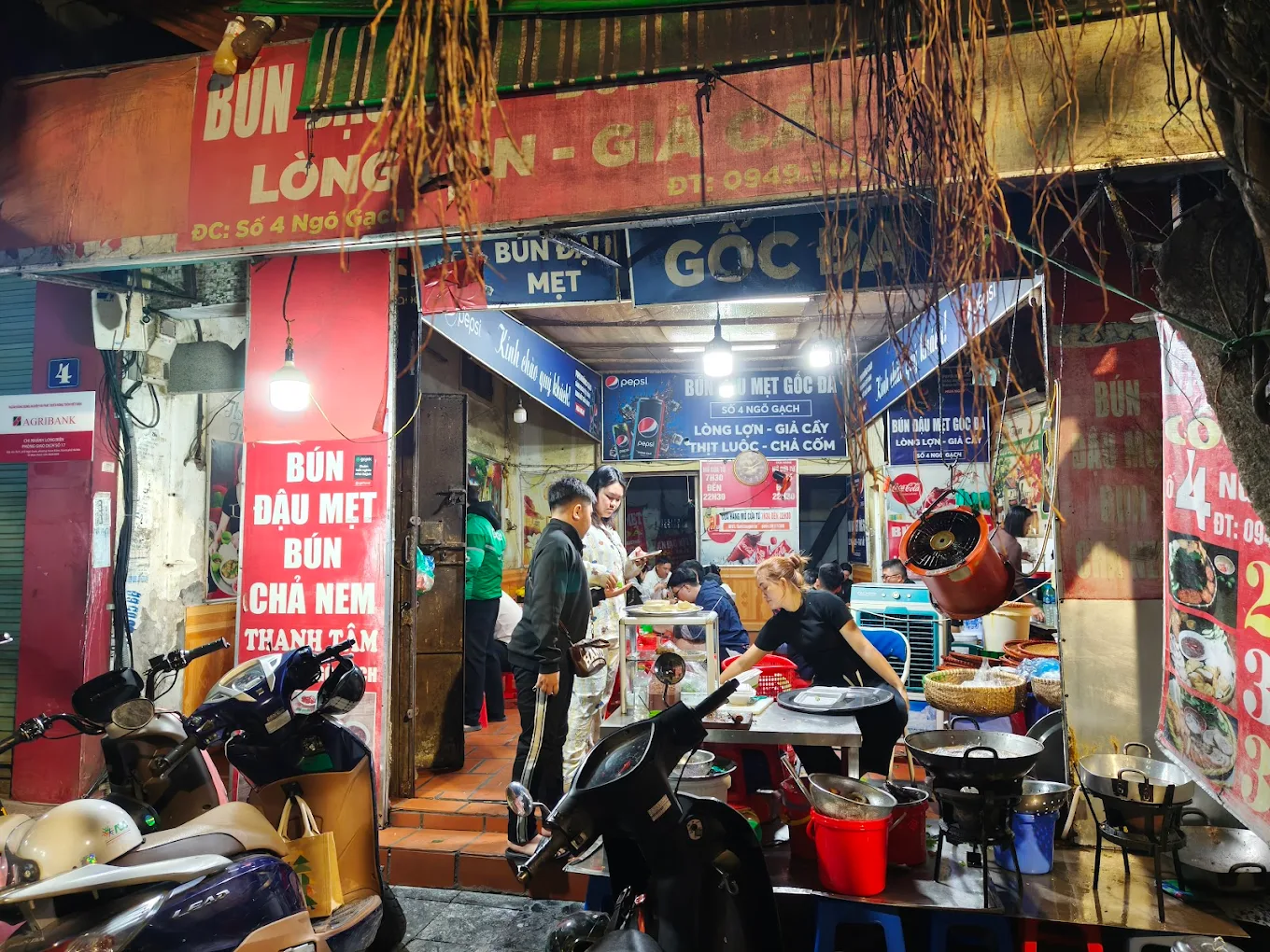
The next bún đậu spot in my personal top five is Bún Đậu Gốc Đa. Here, a full platter comes with everything you’d expect: fresh noodles, hot crispy tofu, chewy green rice sausage, crunchy pork sausage, fried spring rolls, boiled pork, and lots of herbs. Most local diners come here especially for the shrimp paste dipping sauce, which is skillfully mixed, not overly salty, with a distinctive aroma that sets it apart.
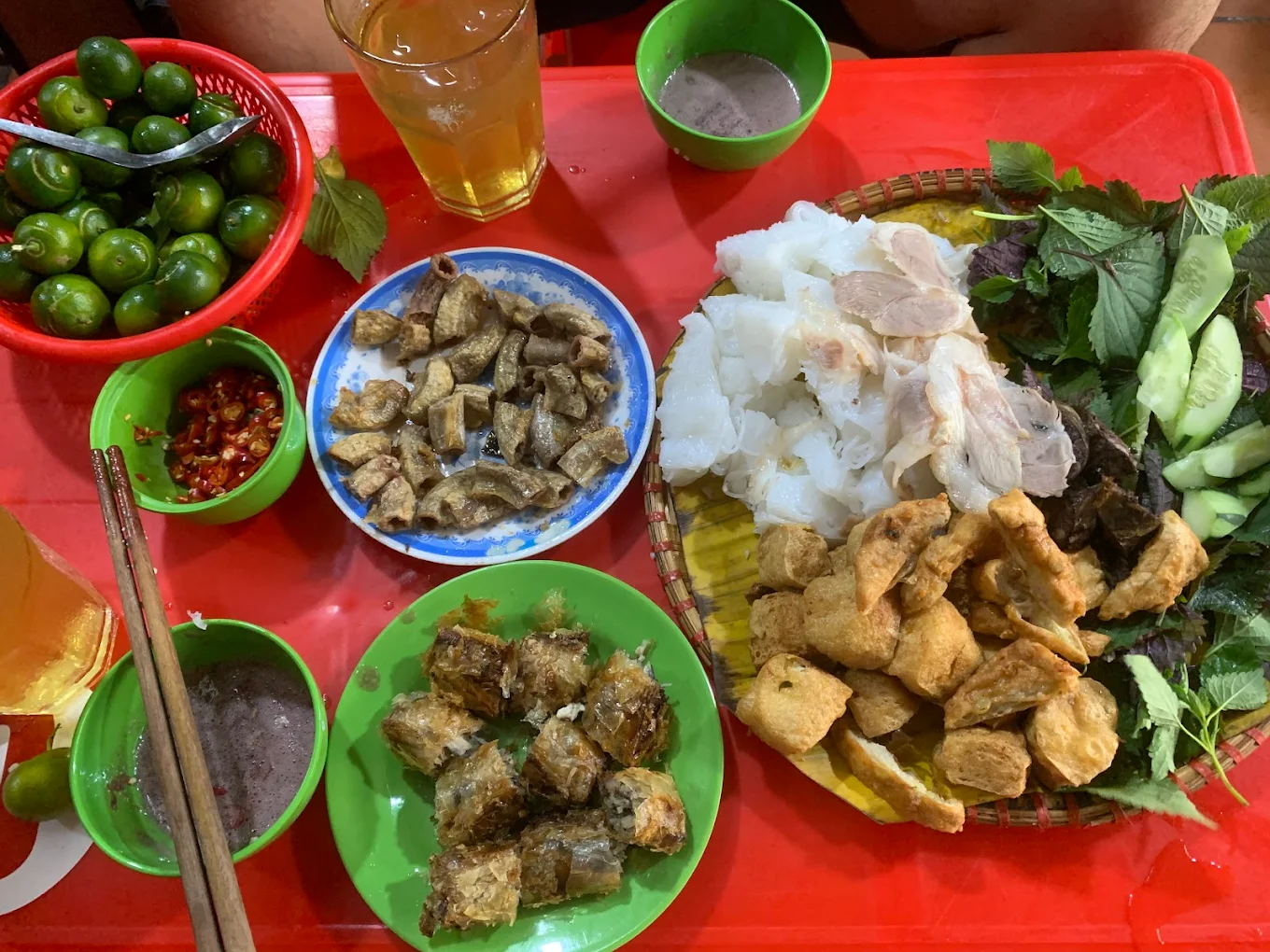
Despite being a sidewalk eatery, Bún Đậu Gốc Đa at No. 4 Ngõ Gạch is neatly arranged and kept very clean. The staff are warm and attentive, making it a go-to spot for many visitors looking to enjoy bún đậu when they’re in Hanoi. This is a place I’d highly recommend for anyone wanting to experience a traditional and distinctive taste of Hanoi’s food culture.
Local Tips for First-Time Trying Bún Đậu Mắm Tôm
1. How Much Does Bun Dau Mam Tom Cost?
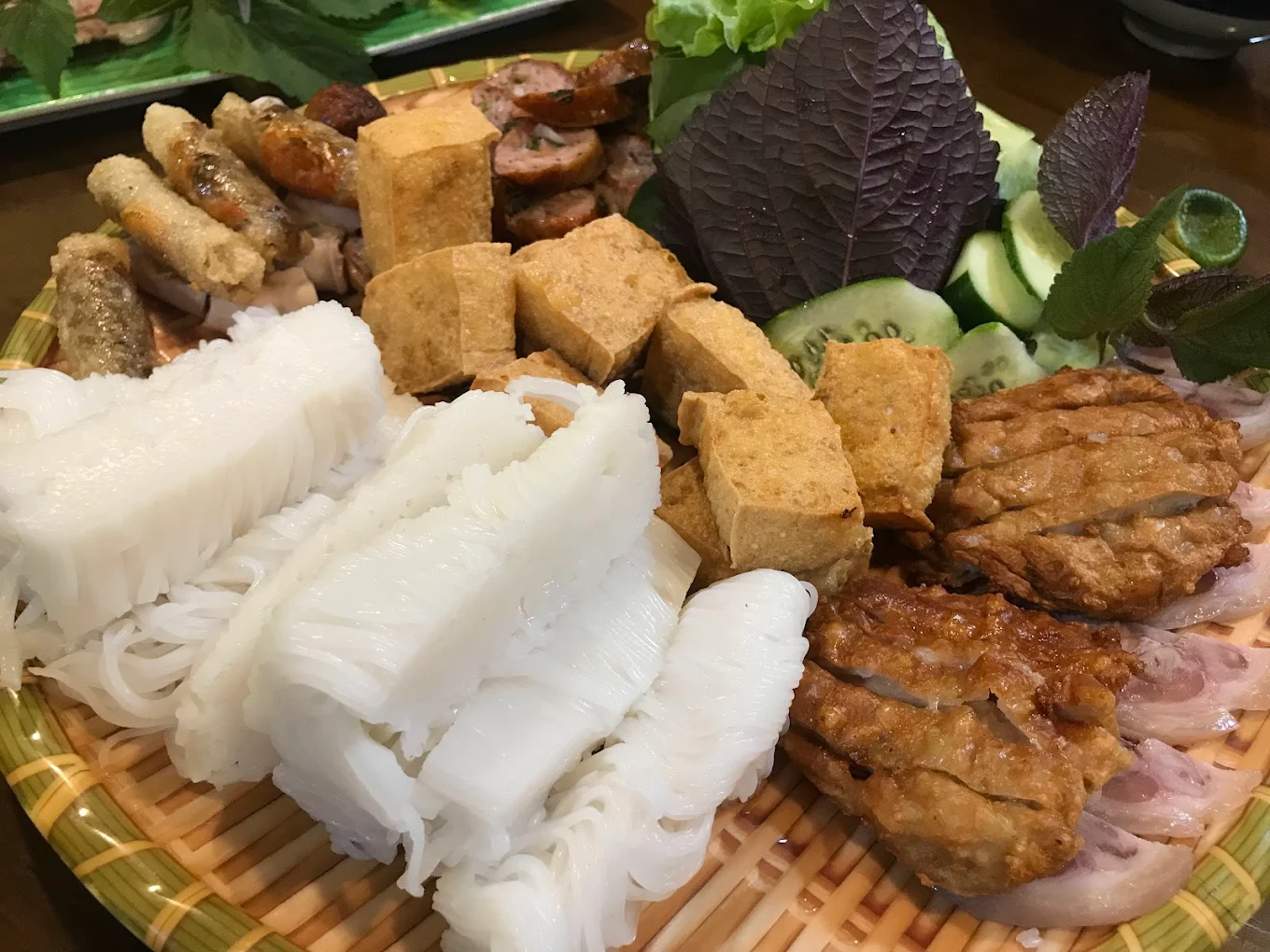
Whenever travellers ask me what to try, bun dau mam tom is high on my list (thanks to how affordable it is). Back home, this local favourite costs around $1.80–$2.50 (45,000 – 60,000 VND), while larger or more “loaded” platters with extra pork, fried intestines, or Chả Cốm can go up to $4.00–$8.00 (100,000 – 200,000 VND).
2. Can You Eat Bun Dau Without Mam Tom?
Absolutely! And no, locals won’t judge you for it!
Don’t worry since many stalls now offer other alternatives like nước mắm pha (fish sauce with lime and chili) or plain fish sauce on the side. Even some locals eat bun dau mam tom with fish sauce, especially when they’re not in the mood for strong flavours.
3. Best Time of Day to Eat Bun Dau Mam Tom?
As a local, I rarely eat bún đậu mắm tôm early in the morning, as it can feel a bit heavy on an empty stomach. The best time to enjoy it is from late morning to mid-afternoon (typically between 10:30 a.m. and 4 p.m) when your digestion is ready for bolder flavors. Many people treat bun dau mam tom as a casual Vietnamese lunch: filling, flavorful, and satisfying without being overly heavy.
For visitors, I recommend trying this dish before dinner, when your stomach is still “fresh” and your senses aren’t overwhelmed by other foods.
How I Discovered Bun Dau Mam Tom on Two Wheels with Jackfruit!

As I tucked into my last bites of bun dau mam tom under the neon glow of Saigon’s alleyways, I realized something about street food in Vietnam: each taste tells a story, every smoky lane harmonizes with local rhythm, and what might seem strange at first becomes unforgettable once you really experience it.
That sense of discovery is exactly why I love exploring Saigon on two wheels after dark, especially on the Saigon Foodie Night Ride with team Jackfruit. Riding through the backstreets and late-night food spots, I found a slower, more intimate side of the city – one that unfolds bite by bite. The ride was less about checking off dishes and more about shared moments, hidden street stalls, and the energy of Saigon at night.
So, if you’re curious about bun dau mam tom and other Vietnamese street eats, there’s no better way to taste the city than to pedal with friends, locals, and fellow food lovers into the night, discovering a side of Saigon that lingers long after your last bite!